Search:ensemble modern

Styles
All
Ensemble Modern - Melencolic Medley
  • Sad Core-Meditation On Sadness I
  • Daisy, Daisy
  • Le Chant De Zidane-Tuba Mirum
  • Face Core-Meditation On Sadness Ii
  • Nekropolis
  • Hope Core-Meditation On Sadness Iii
  • Lullaby Of The Unborn
pre-order now11.04.2025

expected to be published on 11.04.2025

25,00
Steve Reich & Ensemble Modern & Synergy Vocals - Music For 18 Musicians: Tokyo Opera City, Tokyo, Japan, May 21st, 2008
  • A1: Pulse Sections I-Iv
  • B1: Pulse Sections V-X

A stunning version of Steve Reich's masterpiece of musical minimalism Music for 18 Musicians' (1974-1976) performed live at Tokyo Opera House in 2008 by The Modern Ensemble and Synergy Vocals featuring the composer as guest performer.

In the 1960s, with Terry Riley and Philip Glass, Reich gave pulse back to experimental music, he discovered tape-based techniques of looping and phasing using recordings of fragments of speech, and then molecules of musical material.

(...)When Steve Reich released Music for 18 Musicians (ECM, 1978), it was a consolidation and major leap forward in the pulse-based music that the minimalist progenitor had been exploring on earlier compositions including Four Organs' (1969), a piece that relied on nothing more than a six-note chord, yet was a near flat-out sonic assault. 18 Musicians was an altogether more complex and sophisticated work, with a broader textural palette based largely on tuned percussion—piano, vibraphone, marimba and xylophone—but also working with maracas, voice, strings, and clarinets to create a sweeping, hour-plus long suite that was hypnotic, melodic, and eminently accessible. With the mathematical precision by which its eleven sections and wrapping Pulses' develop, it's a demanding suite to play (...)"

out of Stock

Order now and we will order the item for you at our supplier.

21,81

Last In: 6 years ago
Sean Khan Presents - The Modern Folk & Jazz Ensemble

Sean Khanpresents

The Modern Folk & Jazz Ensemble

12inchAJXLP774
ACID JAZZ
24.05.2024

With the brand new single 'Solid Air' (featuring Rosie Frater-Taylor), we announce the eponymous album from 'The Modern Jazz & Folk Ensemble', out on 24 May on Acid Jazz. It follows the release of two singles ‘I’ve Got a Feeling’ (with Jacqui McShee) and the spellbinding version of Nick Drake’s ‘Parasite’ (featuring Kindelan),

Led by the trail blazing London based saxophonist Sean Khan, the album pays tribute to the sounds of the late ‘60s and early ‘70s folk revival, recast and reimagined in a jazz setting, with featured guest vocalists, including compositions by Pentangle, Sandy Denny, John Martyn and Nick Drake.

Featured singers include the legendary Pentangle lead singer Jacqui McShee, acclaimed singer-guitarist Rosie Frater-Taylor on the back of her recently released and critically acclaimed ‘Featherweight’ album on Cooking Vinyl, plus emerging artist Kindelan from vibrant Leeds folk and jazz scene.

Sean Khan is known as one of the UK’s premier saxophonists, driven by a serious work ethic and urge to create new sounds. The Modern Jazz and Folk Ensemble is his follow up to Supreme Love: A Journey Through John Coltrane released on BBE Records. His distinctive playing can be heard throughout, as he successfully connects the dots between Coltrane and Nick Drake

pre-order now24.05.2024

expected to be published on 24.05.2024

26,68
illo.trio - illo.trio

illo.trio

illo.trio

12inchILL-001
Illo.Trio
12.05.2026

illo.trio is a young ensemble and a representative of the modern jazz scene in the spirit of British group GoGo Penguin and Swedish trio E.S.T.
The band explores an unconventional and fresh sound. In their work, they combine elements of classical and pop music, jazz and minimalism, neo-classical influences, and even post-rock. Familiar musical formulas take on anew, unexpected character.
Band members:
-Nikolay Khomenko - keyboards
-Alexey Bausin - double bass
-Viktor Kulish - drums

pre-order now12.05.2026

expected to be published on 12.05.2026

26,01
Sokratis Votskos Quartet - Pajko, Fire In The Forest On The Mountain LP

A few words for the album
Moment’s Aeternity:
a 12/8 composition celebrating the raw power of the “moment”, marked by whirling improvised moments between drums, bass clarinet and Harris P’s Armenian duduk.

Pajko, fire in the forest on the mountain:
in Sokratis own words: “I have a really vivid memory as a child. I was staring at the Djena mountain from my window in Archangellos which sits on the Pajko mountain. A little beam of light shone far in the horizon; it was a fire that in my little eyes looked as if the giants of Almopia were trying to communicate with each other using phryktoria (a way of contacting through fire in Ancient Greece).”

Footprints of some Giant Steps:
While the classic compositions of two true Jazz Giants- Wayne Shorter and John Coltrane- are certainly different, they do both connect in a mystical way. Rearranged in 5/8 combining half of each melody and half of each one’s chord progression, keeping the form of the piece for improvisation, still in 5.

Oson Zeis Fainou (Seikilo’s Epitaph):
found in a tomb stone in the Northeast of Greece, this is the only melody saved from the ancient times. It is accompanied by lyrics contemplating the meaning of life:
Ὅσον ζῇς φαίνου
μηδὲν ὅλως σὺ λυποῦ πρὸς ὀλίγον ἐστὶ τὸ ζῆν τὸ τέλος ὁ xρόνος ἀπαιτεῖ.
‘’While you live, shine
don’t feel blue for anything because our life is short and time demands an end.’’

Here is to Oghene K:
’’Hey man, where is the groove?’’, he would say, just to trigger another wave of inspiration for Sokratis. Oghene was a true force of nature, a well of kindness, a masterful artist that left this world too early. This one is for him.

Balkan Riff (for Milcho Leviev):
Milcho Leviev (1936-2019), was a long-time friend and collaborator and a true inspiration for expression, creativity and colorfulness. Expressing the deep sentiments evoked by the Balkan sound and history, this is a sorrowful dialogue between bass clarinet and contrabass.

Spirits of Djena:
one of the most esoteric and personal moments of the album. Composed and recorded during the challenging times of the COVID-era, you can hear the baritone and tenor saxophone firmly grounded on a crispy, hypnotizing contrabass groove.

Sokratis Votskos Quartet
Kostas Anastasiadis / Giorgos Klountzos - Chrysidis: Drums
Leandros Pasias: Piano
Vaggelis Vrachnos: Contrabass
Sokratis Votskos: Soprano Saxophone, Bass Clarinet and Compositions


Sokratis Votskos is a jazz saxophonist, clarinetist, composer, educator, and bandleader from Greece. Deeply invested in unearthing the folk sounds and heritage music of Greece and Eastern Europe, he weaves these into modern jazz compositions though the use of melodies, polyrhythms, and his reedy, timeless tone. He leads the Sokratis Votskos Quartet, he is one half of Kolida Babo and member of the Reggetiko Project. A highly regarded sideman and ensemble player, he has worked extensively with renowned jazz musicians with several highly acclaimed releases (MiC, Jazzman, Walt Disney and now Fair Weather Friends Records).

He has performed his music in numerous venues and festivals worldwide from Vinterjazz in Copenhagen, to the EFG London Jazz Festival where he performed at the legendary Ronnie Scott’s alongside Greg Foat.

He is also an archaeoacoustics researcher and enthusiast, having completed his Master studies on the field of ancient ritualistic caves of Greece research.

Leandros Pasias was born in Thessaloniki, Greece. At age 10 was introduced to piano, continuing his studies at the Modern Conservatory of Thessaloniki and later at the Conservatorium van Amsterdam in the department of jazz piano.Ηe holds a classical harmony diploma and a BA at the Department of Music Studies at the Aristotle University of Thessaloniki. In 2020 he received jazz improvisation lessons from Aaron Parks.

With a series of appearances in multiple international jazz festivals, Leandros has collaborated with a wide range of musicians from Nicolas Masson and James Wylie to Marina Osk, Ivo Papasov and Haris Lambrakis, among others.

A member of the Yako Trio, he released “OdesSea” on Fair Weather Friends Records (2021).

Vangelis Vrachnos was born in Thessaloniki, Greece, in 1989. While he started playing the bass at the age of 12, alongside his brother, his studies would commence a few years later. Introduced to double bass at the age of 23, he undertook jazz double bass studies at the Codarts Αcademy of Rotterdam. He has participated in several festivals such as the Technopolis and Odessa international jazz festivals. Since returning to his hometown, in 2015, he has been a founding member of Mordana and Yako Trio and has collaborated with a series of musicians like James Wyllie, Sokrates Votskos and Dimitis Agelakis, among others.

Kostas Anastasiadis is a tireless researcher, that has been diligently studying Tradition and its evolution, creating a fresh amalgam of sound moods. His mature improvisational virtuosity highlights a uniquely individual artistic expression and was recognized with the ̈Unique Individual Stylist" award by the PIT (Percussion Institute of Technology) in Los Angeles, California. He has been associated with various ensembles that have garnered significant interest in the global music scene. As an educator, he is the founder of "The Harmony of Rhythm" musical method, which aims to explore and establish the elements that constitute the concept of rhythm.

Giorgos Klountzos-Chrysidis was born in Thessaloniki in 1991. Following studies at the Modern Conservatory of Thessaloniki, he moved to France and the Conservatoire de Nice. With performances at well-known festivals like Nice Jazz Festival, Nuits du Sud and Jazz à Vienne, he had the opportunity to meet the American drummer Leon Parker, who encouraged him to move to Paris, where he spent the next two years under his tutoring and guidance.

In 2016, came a defining moment in his career as he traveled to New York for the first time. He participated in the quartet of saxophonist Diego Rivera for a series of performances and attended lessons by Rodney Whitaker and Randy "Uncle G" Gelispie at Michigan's State University.

Collaborations include Xavier Davis, Ricky Ford, Nicolas Masson, Diego Rivera, Craig Bailey, Baptiste Herbin, Marc Abrams, Pantelis Stoikos, Antonis Anissegos, David Lynch, Ziad Rajab and Ivo Papasov, among others.

pre-order now18.05.2026

expected to be published on 18.05.2026

30,67
VISIBLE CLOAKS - PARADESSENCE
  • 1: Apsis
  • 2: Skylight
  • 3: Disque (Ft. Motion Graphics)
  • 4: Balloon
  • 5: Slippage
  • 6: Zinna
  • 7: Telescoping (Lockgroove Version)
  • 8: Shapes (Ft. Yoshio Ojima And Satsuki Shibano)
  • 9: Thinking (Ft. Félicia Atkinson, Yoshio Ojima And Satsuki Shibano)
  • 10: Swirl
  • 11: Steel
  • 12: Intarsia (Ft. Ioana Elaru)
  • 13: System (Ft. Componium Ensemble)
also available

SILVER VINYL[23,49 €]


,Paradessence", das dritte Album von Visible Cloaks, ist ein Werk der Entstehung und Illusion. Die vierzehn Songs des Albums verschieben, heben und schimmern vor einem schwach leuchtenden Hintergrund der Nacht, einem höhlenartigen Raum, der durch spärliche hyperreale Darstellungen der natürlichen Welt geformt wird. Die Arrangements sind gleichzeitig grandios und zerbrechlich, sowohl eine Umkehrung als auch eine Kulmination dessen, was zuvor kam, und so abenteuerlich wie alles, was sie bisher produziert haben. Seit ihrer Umwandlung von Cloaks zu Visible Cloaks im Jahr 2014 haben Spencer Doran und Ryan Carlile eine komplexe Matrix gegensätzlicher Konzepte entworfen: organisch und künstlich, zufällig und bewusst, authentisch und repliziert. Der Albumtitel, der aus dem satirischen Portmanteau des Autors Alex Shakar aus ,paradox" und ,essence" stammt, spiegelt diese Spannungen direkt wider: Die Paradessence von Konsumgütern ist der ,schismatische Kern", der ihre Attraktivität ausmacht (in Shakars Beispiel ist Kaffee begehrt, weil er gleichzeitig entspannend und anregend wirkt). Der Balanceakt von Paradessence verleiht diesen Spannungen eine größere Dringlichkeit, da das Leben im 21. Jahrhundert durch eben diese Spannungen neu geordnet wird. Stille ist ein wichtiger Charakter in Paradessence, der nicht nur in der Gestaltung des Klangs zu spüren ist, sondern auch in dem Druck, den er auf alles und alles, was entsteht, ausübt. Die Gruppe ließ sich vom Konzept des ,positiven Raums" des Architekturtheoretikers Christopher Alexander beeinflussen, einer Idee, dass der Form der Leere um ein Objekt herum die gleiche Aufmerksamkeit geschenkt werden kann wie der Konstruktion des Objekts selbst. Wir hören, wie Klänge ihre eigene Stille in sich tragen, zwischen Existenz und Nicht-Existenz oszillieren und wie Mikroorganismen Lebenszyklen durchlaufen. Die Instrumente, die Paradessence untermauern, haben etwas Kollektives an sich. Sie bewegen sich wie eine Herde, so wie wenn der Wind über ein Feld voller Blätter weht und die Luft in der Abwesenheit von Bewegung sichtbar wird; mehrere Arten leben in derselben Melodie zusammen, treten hervor, ziehen sich zurück und verwandeln sich im Laufe von mehreren Minuten. ,Anstatt Stücke zu schaffen, die horizontal als Umgebungen funktionieren", sagt Doran, ,wollten wir sie als lebendes Material konzipieren, das sich im Raum verändert und ständig im Fluss ist." Die Songformen entfernen sich von der Atmosphäre und tendieren zur reinen Abstraktion. Utopismus schwebt am Rande; eine Beziehung zu imaginären Zukünften, die weder naiv, zynisch noch nostalgisch ist. Die Welt, die Visible Cloaks im Laufe der Zeit aufgebaut haben, wird oft von Mitwirkenden physisch umgesetzt, von denen eine vertraute Besetzung für Paradessence zurückkehrt. Motion Graphics (Joe Williams) ist auf ,synthetic woodwinds" zu hören und hat das Album mitgemischt, wobei er ihm mit seinem charakteristischen Glanz Kontur verliehen hat. Die miteinander verbundenen Stücke ,Shapes" und ,Thinking" wurden zusammen mit den Innovatoren der Umweltmusik Yoshio Ojima und Satsuki Shibano entwickelt, die auch mit dem Duo an der generationsübergreifenden FRKWYS-Kollaboration serenitatem gearbeitet haben. Das letztere Stück enthält einen von Ojima verfassten gesprochenen Text, der von Shibano auf Japanisch und von der Komponistin und langjährigen Freundin Félicia Atkinson auf Französisch gelesen wird. Das Componium Ensemble, Dorans Projekt für ,unbestimmte Kammermusik" mit selbstspielenden Software-Instrumenten, bildet die Grundlage für ,System" in einem Moment von Pessoa-scher Heteronymie. Auf dem Album ist auch Ioana Selaru zu hören, eine rumänische Komponistin und Violinistin, die ,Intarsia" mit ihrer Stimme und ihrem Streicherspiel bereichert. Doran beschreibt ihre Zusammenarbeit als ,eine Übung in illusorischer Präsenz", die sie gemeinsam aus ,der Idee entwickelt haben, ihr reales Instrumentenspiel virtuellen Instrumenten gegenüberzustellen, um die Grenzen zwischen synthetischen Streichinstrumenten und denen, die in der Realität existieren, zu verwischen". Selarus energiegeladene Darbietung in ,Intarsia" ist ein deutlicher Beweis für den dramatischen Kern von Paradessence: ein dringliches skulpturales Unterfangen, ein Instrument und eine menschliche Stimme, moduliert von einem Meer synthetischen Wachstums. Doran beschreibt, wie für ihn ,dieses Verschieben zwischen dem Realen und dem Virtuellen etwas ganz anderes einfängt, etwas Seltsames und Unbeschreibliches, das ein fester Bestandteil des Lebens in der digitalen Moderne ist, sowohl online als auch im realen Leben". Es ist elektronische Musik, die nicht nur durch ihre wechselnden Formen eine abstrakte Darstellung unserer aktuellen Traumrealität heraufbeschwört, sondern auch imaginäre Räume schafft, die emotional nuanciert sind und zu Momenten der Anmut führen.

pre-order now22.05.2026

expected to be published on 22.05.2026

22,27
VISIBLE CLOAKS - PARADESSENCE

,Paradessence", das dritte Album von Visible Cloaks, ist ein Werk der Entstehung und Illusion. Die vierzehn Songs des Albums verschieben, heben und schimmern vor einem schwach leuchtenden Hintergrund der Nacht, einem höhlenartigen Raum, der durch spärliche hyperreale Darstellungen der natürlichen Welt geformt wird. Die Arrangements sind gleichzeitig grandios und zerbrechlich, sowohl eine Umkehrung als auch eine Kulmination dessen, was zuvor kam, und so abenteuerlich wie alles, was sie bisher produziert haben. Seit ihrer Umwandlung von Cloaks zu Visible Cloaks im Jahr 2014 haben Spencer Doran und Ryan Carlile eine komplexe Matrix gegensätzlicher Konzepte entworfen: organisch und künstlich, zufällig und bewusst, authentisch und repliziert. Der Albumtitel, der aus dem satirischen Portmanteau des Autors Alex Shakar aus ,paradox" und ,essence" stammt, spiegelt diese Spannungen direkt wider: Die Paradessence von Konsumgütern ist der ,schismatische Kern", der ihre Attraktivität ausmacht (in Shakars Beispiel ist Kaffee begehrt, weil er gleichzeitig entspannend und anregend wirkt). Der Balanceakt von Paradessence verleiht diesen Spannungen eine größere Dringlichkeit, da das Leben im 21. Jahrhundert durch eben diese Spannungen neu geordnet wird. Stille ist ein wichtiger Charakter in Paradessence, der nicht nur in der Gestaltung des Klangs zu spüren ist, sondern auch in dem Druck, den er auf alles und alles, was entsteht, ausübt. Die Gruppe ließ sich vom Konzept des ,positiven Raums" des Architekturtheoretikers Christopher Alexander beeinflussen, einer Idee, dass der Form der Leere um ein Objekt herum die gleiche Aufmerksamkeit geschenkt werden kann wie der Konstruktion des Objekts selbst. Wir hören, wie Klänge ihre eigene Stille in sich tragen, zwischen Existenz und Nicht-Existenz oszillieren und wie Mikroorganismen Lebenszyklen durchlaufen. Die Instrumente, die Paradessence untermauern, haben etwas Kollektives an sich. Sie bewegen sich wie eine Herde, so wie wenn der Wind über ein Feld voller Blätter weht und die Luft in der Abwesenheit von Bewegung sichtbar wird; mehrere Arten leben in derselben Melodie zusammen, treten hervor, ziehen sich zurück und verwandeln sich im Laufe von mehreren Minuten. ,Anstatt Stücke zu schaffen, die horizontal als Umgebungen funktionieren", sagt Doran, ,wollten wir sie als lebendes Material konzipieren, das sich im Raum verändert und ständig im Fluss ist." Die Songformen entfernen sich von der Atmosphäre und tendieren zur reinen Abstraktion. Utopismus schwebt am Rande; eine Beziehung zu imaginären Zukünften, die weder naiv, zynisch noch nostalgisch ist. Die Welt, die Visible Cloaks im Laufe der Zeit aufgebaut haben, wird oft von Mitwirkenden physisch umgesetzt, von denen eine vertraute Besetzung für Paradessence zurückkehrt. Motion Graphics (Joe Williams) ist auf ,synthetic woodwinds" zu hören und hat das Album mitgemischt, wobei er ihm mit seinem charakteristischen Glanz Kontur verliehen hat. Die miteinander verbundenen Stücke ,Shapes" und ,Thinking" wurden zusammen mit den Innovatoren der Umweltmusik Yoshio Ojima und Satsuki Shibano entwickelt, die auch mit dem Duo an der generationsübergreifenden FRKWYS-Kollaboration serenitatem gearbeitet haben. Das letztere Stück enthält einen von Ojima verfassten gesprochenen Text, der von Shibano auf Japanisch und von der Komponistin und langjährigen Freundin Félicia Atkinson auf Französisch gelesen wird. Das Componium Ensemble, Dorans Projekt für ,unbestimmte Kammermusik" mit selbstspielenden Software-Instrumenten, bildet die Grundlage für ,System" in einem Moment von Pessoa-scher Heteronymie. Auf dem Album ist auch Ioana Selaru zu hören, eine rumänische Komponistin und Violinistin, die ,Intarsia" mit ihrer Stimme und ihrem Streicherspiel bereichert. Doran beschreibt ihre Zusammenarbeit als ,eine Übung in illusorischer Präsenz", die sie gemeinsam aus ,der Idee entwickelt haben, ihr reales Instrumentenspiel virtuellen Instrumenten gegenüberzustellen, um die Grenzen zwischen synthetischen Streichinstrumenten und denen, die in der Realität existieren, zu verwischen". Selarus energiegeladene Darbietung in ,Intarsia" ist ein deutlicher Beweis für den dramatischen Kern von Paradessence: ein dringliches skulpturales Unterfangen, ein Instrument und eine menschliche Stimme, moduliert von einem Meer synthetischen Wachstums. Doran beschreibt, wie für ihn ,dieses Verschieben zwischen dem Realen und dem Virtuellen etwas ganz anderes einfängt, etwas Seltsames und Unbeschreibliches, das ein fester Bestandteil des Lebens in der digitalen Moderne ist, sowohl online als auch im realen Leben". Es ist elektronische Musik, die nicht nur durch ihre wechselnden Formen eine abstrakte Darstellung unserer aktuellen Traumrealität heraufbeschwört, sondern auch imaginäre Räume schafft, die emotional nuanciert sind und zu Momenten der Anmut führen.

pre-order now22.05.2026

expected to be published on 22.05.2026

23,49
VARIOUS - ELECTRONIC MUSIC ANTHOLOGY - HOUSE MUSIC SESSIONS LP 2x12"
  • 1: George Morel - Let's Groove
  • 2: Barbara Tucker - Beautiful People (Original Radio Edit)
  • 3: Wamdue Project - King Of My Castle (Roy Malone's King R
  • 4: I:cube - Metamorphik
  • 5: Cassius 1999 (Radio Edit)
  • 6: Superfunk - Come Back (Supamix)
  • 7: Cheek - Venus (Sunshine People)
  • 8: Motor City Drum Ensemble - Raw Cuts #3
  • 1: Mézigue - Du Son Pour Les Gars Sûrs
  • 2: Moloko - Sing It Back (Mousse T.'s Feel Love Mix)
  • 3: Soha - Eve
  • 4: Bob Sinclar - Gym Tonic (Wh
  • 5: Kings Of Tomorrow Feat. Julie Mcknight - Finally
  • 6: Joe Smooth - Promised Land
  • 7: St Germain - What's New

Mit The House Session setzt die renommierte Electronic Music Anthology von Wagram ihre stilprägende Reise durch die elektronische Clubkultur fort. Nach erfolgreichen Ausgaben zu Deep House und Techno widmet sich diese Edition dem Herzstück elektronischer Musik: House Music. Kuratiert vom französischen Electronic-Aushängeschild FG Radio versammelt die Compilation zeitlose Klassiker, moderne Favoriten und inspirierende Genre-Perlen. Mit dabei sind zentrale Namen wie George Morel, Cassius, Motor City Drum Ensemble, Mézigue, Moloko, Soha, Bob Sinclar, DJ Gregory, Joe Smooth und St Germain - Artists, die House in unterschiedlichen Epochen maßgeblich geprägt und weltweit auf die Dancefloors gebracht haben. Zwischen funkigen Grooves, soulful Vocals, pumpenden Basslines und eleganten French-Touch-Momenten entfaltet The House Session ein breites Spektrum an Sounds, das sowohl Sammler als auch DJs anspricht. Eine hochwertige Anthologie, die den Spirit von House Music - warm, energiegeladen und zutiefst euphorisierend - perfekt einfängt.


[g] 7Cheek - Venus (Sunshine People) [DJ Gregory Remix]

pre-order now29.05.2026

expected to be published on 29.05.2026

23,49
COLE BERLINER - THE BLACK DOOR
  • 1: The Black Door
  • 2: A Western Sun
  • 3: Poppies
  • 4: Bongo Syndicate
  • 5: Bugle Call
  • 6: Country Tea
  • 7: Window Leans Left
  • 8: The Light
  • 9: Cathedral
  • 10: Death Of Stars

Guitarist/composer Cole Berliner"s writing, arranging and playing highlights an album of rich-grained, acoustic, west coast parlor music and modern electro-acoustic instrumentals in the challenger tradition of Bert Jansch"s Avocet, Marc Ribot"s Saints and Jim O"Rourke"s Bad Timing. Initially conceived as solo acoustic guitar tunes, Cole"s songs demanded the dynamics of an acoustic ensemble - a departure from his work with Kamikaze Palm Tree and Sharpie Smile. His arrangements form intricate passages for acoustic, electric and lap steel guitars, acoustic/electric bass, piano, drums, percussion, violin, viola, horns, woodwinds and synthesizers; Cole himself is on guitar and lap steel (plus synths and percussion on a few songs), mixing and co-producing alongside Cesar Maria.

pre-order now29.05.2026

expected to be published on 29.05.2026

26,68
Quinteplus - Quinteplus

Quinteplus

Quinteplus

12inchVAMPI349
Vampisoul
10.04.2026

This first-time reissue of Quinteplus’ 1971 album revives a key moment in Argentine jazz, featuring crisp trumpet and tenor sax, electric piano-driven funk and modal grooves, and a tight, spacious rhythm section. It showcases prominent figures like Jorge Anders and “Pocho” Lapouble.

==================================

Quinteplus was born in Buenos Aires at the end of the 1960s, emerging directly from the ideas and experiments of the legendary Agrupación Nuevo Jazz. Founded in the early ’60s, this collective brought together some of the most forward thinking figures in Argentine jazz functioned as a creative lab where musicians questioned where jazz could go next. Among the key ideas discussed was the fusion of jazz with Argentine folk styles such as zamba, chacarera, malambo, cueca, and candombe, as well as a deeper look into African rhythms as a bridge between musical worlds.

Two members of that collective, keyboardist Santiago Giacobbe and bassist Jorge “Negro” González, carried those ideas forward when they formed Quinteplus in 1969. The group came together naturally: all the musicians already knew each other and had played in different projects around the Buenos Aires scene. They shared a strong admiration for Julian “Cannonball” Adderley’s quintet, along with a clear goal—to develop a modern jazz language grounded in local Argentine rhythms.

From the start, Quinteplus stood out for its openness and adventurous spirit. Rhythm was central, and so was experimentation. The band belonged to a generation of Argentine jazz musicians eager to explore electric instruments and new textures, anticipating what would soon be known as jazz-rock. This was happening in Buenos Aires at the very same time Miles Davis was opening new doors with “In a Silent Way” and “Bitches Brew”. Giacobbe introduced one of the first Fender electric pianos in Argentina, while González pioneered the amplification of the upright bass and even developed a hybrid electric, boxless version of the instrument. Trumpeter Gustavo Bergalli, meanwhile, maintained close ties with the emerging Argentine rock scene, collaborating with Luis Alberto Spinetta and appearing on Almendra’s first album.

In 1971, Quinteplus recorded its first and only studio album for EMI. The original lineup featured Jorge Anders on tenor saxophone, Bergalli on trumpet, Giacobbe on keyboards, González on upright and electric bass, and Norberto “Pocho” Lapouble on drums and percussion—who also illustrated the album’s iconic sleeve. The record is a refined showcase of the band’s musical vision: original compositions, fluent jazz language, folk-derived rhythms, funky electric textures, tight ensemble playing, and standout brass solos. Though critically praised, the album received little label support and sold modestly, eventually becoming a sought-after collector’s item.

Quinteplus disbanded in 1973, their music was perhaps too bold and unconventional for its time.

In Stock

On Stock and ready to ship

23,11
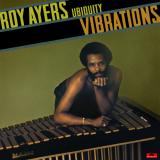
Roy Ayers Ubiquity - Vibrations

Roy Ayers Ubiquity

Vibrations

12inchVAMPI322
Vampisoul
12.06.2026
  • 1: Domelo (Give It To Me)
  • 2: Baby I Need Your Love
  • 3: Higher
  • 4: The Memory
  • 5: Come Out And Play
  • 6: Better Days
  • 7: Searching
  • 8: One Sweet Love To Remember
  • 9: Vibrations
  • 10: Moving, Grooving
  • 11: Baby You Give Me A Feeling

Step into the golden era of soul-jazz with the long-awaited vinyl reissue of “Vibrations” by Roy Ayers Ubiquity — a record that captures the unmistakable warmth, groove, and sophistication that defined Roy Ayers’ sound at its peak.

Originally released in 1976, “Vibrations” stands as a cornerstone in Ayers’ catalog, marking a moment where his signature blend of jazz, funk, and soul reached a refined, deeply cohesive form. Building on the foundations laid in earlier works, this album presents a tighter, more focused musical vision without sacrificing the lush textures and emotional depth that made his music resonate worldwide.

Roy Ayers was a pioneering vibraphonist, composer, and producer whose influence stretches far beyond jazz into R&B, neo-soul, and hip-hop. Often referred to as the “Godfather of Neo Soul,” Ayers crafted a sound that feels both timeless and forward-thinking, pairing silky vocals with hypnotic grooves and rich instrumental arrangements. His work throughout the 1970s helped shape the sonic DNA of modern Black music, and “Vibrations” is one of its purest expressions.

The album flows effortlessly between moods: from the jazz-inflected elegance of ‘Searching’ to the irresistible funk pulse of ‘The Memory,’ the dancefloor-ready ‘One Sweet Love to Remember,’ and the laid-back, atmospheric title track ‘Vibrations.’ Each track showcases a masterful balance between musicianship and groove, brought to life by a stellar ensemble of collaborators who elevate every moment.

Beyond its original impact, “Vibrations” has taken on a second life through hip-hop. Its grooves, breaks, and melodies have been extensively sampled by generations of producers and artists, becoming a foundational source for crate diggers and beatmakers alike. Tracks from the album have been reinterpreted and flipped by influential names such as A Tribe Called Quest, J Dilla, Dr. Dre, and Common, cementing its legacy as a vital bridge between 1970s soul-jazz and contemporary hip-hop culture.

After almost two decades out of print, we are pleased to present this much-needed vinyl reissue of an essential album in Roy Ayers’ career. Whether you’re discovering it for the first time or returning to a beloved classic, this album remains an essential piece of musical history. Pressed on 180g vinyl.

pre-order now12.06.2026

expected to be published on 12.06.2026

27,31
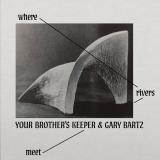
Your Brother’s Keeper & Gary Bartz - Where Rivers Meet LP
  • A1: Cauldron
  • A2: Ground Loop
  • A3: Eclipse
  • A4: Solar Flare
  • B1: Locris
  • B2: Petrichor
  • B3: Mantra

Gary Bartz und das neue Londoner Ensemble Your Brother’s Keeper präsentieren mit "Where Rivers Meet" ein tiefgründiges und intuitives Studioalbum, das die seltene Begegnung zweier Generationen von Jazzmusikern einfängt. Das Album, das pünktlich zum 20-jährigen Jubiläum von Brownswood erscheint, vereint Bartz' Tradition mit der jungen, pulsierenden Szene Londons. Das Ergebnis ist Musik, die sich mit Offenheit und Intensität entfaltet, getragen von tiefem Zuhören und gemeinsamer Improvisation.

Im Zentrum des Projekts steht Bartz, eine der einflussreichsten Vertreter des modernen Jazz. Der Saxophonist, dessen Karriere sich über mehr als fünf Jahrzehnte erstreckt, machte sich einen Namen durch Auftritte mit Charles Mingus, Max Roach und Art Blakey, bevor er sich Miles Davis in dessen elektrisierender Phase der frühen 1970er-Jahre anschloss. Mit seinen gefeierten Aufnahmen mit der NTU Troop wurde er schnell zu einer prägenden Figur des Spiritual Jazz und schuf ein Werk, das Generationen von Musikern und Zuhörern gleichermaßen begeistert. Sein Spiel – lyrisch, tiefgründig und unverkennbar gefühlvoll – zählt nach wie vor zu den markantesten Stimmen des Jazz.

Das Album markiert zudem die Gründung von Your Brother’s Keeper, einem neuen Kollektiv um Schlagzeuger und Produzent Jake Long (Maisha), dessen musikalischer Dialog und die Improvisation tief in der Musik verwurzelt sind. Mit Ali MacSween (Piano, Synthesizer, modulare Effekte), Axel Kaner-Lidstrom (Trompete), Twm Dylan (Kontrabass), Tim Doyle (Percussion) und Chelsea Carmichael (Tenorsaxophon) sowie Long am Schlagzeug spiegelt die Gruppe eine Szene wider, die den Sound des zeitgenössischen Jazz im letzten Jahrzehnt maßgeblich geprägt hat.

pre-order now19.06.2026

expected to be published on 19.06.2026

30,46
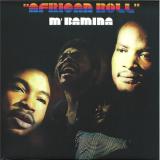
M’BAMINA - AFRICAN ROLL

Gatefold Sleeve

M’Bamina – African Roll (1975)
The story of an album born between Africa, Italy, and the nightclub culture of the 1970s
In the heart of 1970s Italy — a country undergoing profound social change and a music scene just beginning to open itself to distant sounds and cultures — an extraordinary, almost improbable story took shape. It is the story of a group of young African musicians who found their way to Europe, of a Turin nightclub that became a crossroads for communities and experimenters, and of an album which, released in small numbers and largely unnoticed at the time, is now considered a rare jewel of Afro-fusion.
The band called themselves M’Bamina — an ensemble of musicians from Congo, Cameroon, and Benin, who arrived in Italy in the early Seventies. Settling between northern Italy and the Pavia area, they began performing in small clubs and community events, bringing with them a vibrant rhythmic heritage: African polyrhythms, call-and-response vocals, funk-infused bass lines, and Caribbean or Afro-Latin colours absorbed along their musical journeys. Their raw, contagious energy on stage quickly drew attention.
Meanwhile, in Turin, another story was unfolding. There was a venue becoming almost legendary: Voom Voom, one of the city’s liveliest nightclubs, run by Ivo Lunardi. The club attracted an eclectic crowd — students, artists, foreigners, night owls — and Lunardi quickly understood that the dancefloor wasn’t just a place for music, but a melting pot for a new kind of cultural energy. Out of this vibrant atmosphere came his idea: to turn the club’s name into a small independent record label, Voom Voom Music, capable of capturing the spirit of those years and giving voice to unconventional projects.

When Lunardi heard M’Bamina, he immediately sensed that this was the sound he had been searching for: fresh, different from anything circulating in Italy at the time, and capable of blending African tradition with funk and European sensibility. He brought them into the studio.
Production was handled by Lunardi along with Christian Carbaza Michel, while the engineering was entrusted to Danilo Pennone, a young sound technician with a sharp, intuitive ear.
The recording sessions — held in Turin in 1975 — produced a remarkably warm and direct sound. The music feels almost live: grooves rooted in African tradition, but open to funk-rock structures and modern arrangements. It is a natural fusion, never forced. Tracks move between tribal rhythms, funk basslines, light electric guitars, congas and Afro-Latin percussion, with call-and-response vocals and melodies that echo both Congolese tradition and the lineage of Latin jazz. Not by chance, one of the album’s most striking tracks, Watchiwara, reinterprets a Latin standard through M’Bamina’s own rhythmic language.

The album was titled African Roll — a name that was already a statement of intention. It is African music that “rolls,” that moves, adapts, transforms within a new geographic and cultural setting. It is not strictly Afrobeat, nor Congolese rumba, nor Western funk: it is a spontaneous, hybrid blend, shaped more by lived experience than by any calculated aesthetic program.
When African Roll was released, the world around it barely noticed. Distribution was limited, and 1970s Italy had yet to develop a cultural framework for receiving such music. The national music press rarely paid attention to African or “world” productions. The album slipped into silence — though the band’s own story did not.

M’Bamina continued performing across Europe and Africa, even sharing a stage in Cameroon with none other than Manu Dibango. By the late Seventies, they moved to Paris, signed with Fiesta/Decca, and recorded a second LP, Experimental (1978). Meanwhile, the peculiar record they had made in Turin began to resurface quietly among vinyl collectors, Afro-funk enthusiasts, and DJs hunting for forgotten grooves.
That is when the album’s fate began to shift.

Over the decades, African Roll emerged as an almost unique document: a snapshot of an intercultural Italy before the word “intercultural” even existed, a fragment of migrant history, a spontaneous experiment in musical fusion born far from major industry circuits but rich in authenticity. Original copies began commanding high prices on the collector’s market, and the album became recognized as one of the hidden classics of European Afro-fusion from the 1970s.
Today, more than fifty years later, this reissue finally restores visibility and dignity to a project that deserves to be heard, studied, and celebrated. It is not simply an album: it is the testimony of a rare cultural encounter, born in an Italy unaware of how fertile such exchanges would one day become.

It is the story of a visionary producer, an extraordinary band, and a fleeting moment in which music, migration, and nightlife came together to create something genuinely new.
African Roll is — now more than ever — the sound of a bridge: between continents, between eras, between cultures. A record that, after rolling far and wide, has finally come home.

In Stock

On Stock and ready to ship

23,49
VARIOUS - JAZZ HOUSE VIBES LP 2x12"

Various

JAZZ HOUSE VIBES LP 2x12"

2x12inch3508796
Wagram
03.07.2026
  • 1: Bellaire - Jazzy Things
  • 2: The Mighty Bop Feat. Duncan Roy - Too Deep
  • 3: Soldiers Of Twilight - Believe (Martin Solveig Vocal Du
  • 4: Motor City Drum Ensemble - Raw Cuts#3
  • 5: Tour-Maubourg - Amicalement Vôtre
  • 6: Russ Gabriel - Jelba
  • 7: Folamour - Ya Just Need 2 Believe In Yaself
  • 1: St Germain - What's New
  • 2: Kazam Feat. Carel - Lifted
  • 3: Jon Cutler Feat. E-Man - It's Yours
  • 4: Dj Deep - Learn 2 Love
  • 5: Kings Of Tomorrow - Vibes
  • 6: Limbo Experience - Illusion (Rollercone Remix)
  • 7: Nu Frequency Feat. Ben Onono - Fallen Hero (Motor Cit

Mit Künstlern wie Bellaire, Tour-Maubourg, Folamour, Kings Of Tomorrow, The Mighty Bop, Motor City Drum Ensemble, St Germain, Kazam und DJ Deep entfaltet sich auf "Jazz House Vibes - The Finest Selection Of..." ein facettenreicher Sound zwischen soulful Deep House, warmen Jazzharmonien und eleganten, organischen Arrangements. Ob sanfte Piano-Melodien, feine Bläserstrukturen oder pulsierende Beats - Jazz House Vibes vereint Klassiker und moderne Produktionen zu einem stimmigen Gesamtbild voller Atmosphäre und musikalischer Tiefe. Eine hochwertige Vinyl-Compilation für alle, die House nicht nur als Clubmusik, sondern als stilvolles, emotionales und zeitloses Klanguniversum erleben wollen. Rediscover the perfect balance between jazz and house, captured on a brand-new vinyl release that is as elegant as it is timeless ! INCLUDING : Bellaire - Tour-Maubourg - Folamour - Kings Of Tomorrow The Mighty Bop - Motor City Drum Ensemble - St Germain Kazam - DJ Deep...

pre-order now03.07.2026

expected to be published on 03.07.2026

22,27
Pugilist - Maternal

Pugilist

Maternal

12inchSNF140
Shall Not Fade
23.02.2026

Shall Not Fade welcomes Pugilist for SNF140 "Maternal".

If you don't already know (and love!) Pugilist's prolific output, you need to get to know! The Naarm/Melbourne based DJ, producer and Rinse resident has released on Martyn's 3024, Melbourne's killer Modern Hypnosis, Silent Era's Of Paradise, Samurai, Rupture, ZamZam, J:Kenzo's Artikal, Sub Basics' Temple of Sound, Whities/AD93, Al Wooton's Trule, Banoffee Pies, Best Intentions and now his own buy on sight Ruff Kutz imprint.

'Maternal' is four blissey dubwise house blurring cuts. Embracing, medicinal, lush & corrective. Vibrations for heads and feet.

'Title track 'Maternal' is deep grooving infectious and honeyed house. Hypnotic, pulsating with head-meltingly warm padwork. 'Bona Fide' sees Pugilist team up with UK duo Mystic State. Drums sidestep with jazz swing while graceful piano and an ensemble of pads are topped with an introspective vocal sample dialing for your subconscious. The B1 'Anomaly' is a stepper - FWD charging drums backed with sub low pulses all brought together by trumpet echoes and woozy melodics. Finally comes 'Marigold', a soulful jungle excursion > early hours business, caressed nostalgic percussion, brushed rhythms, fleeting guitar licks and undulating vibes.

In Stock

On Stock and ready to ship

14,71
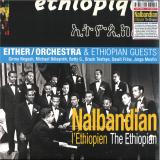
NALBANDIAN THE ETHIOPIAN & EITHER/ORCHESTRA - NALBANDIAN THE ETHIOPIAN (ETHIOPIQUES)

The Éthiopiques series returns! Essential archive recordings from an extremely fruitful period in Ethiopian music.

Before “Swinging Addis” took over the world, there was Moussié Nerses Nalbandian — the Armenian-born composer who shaped modern Ethiopian music. Mentor, arranger, and pioneer, he laid the foundations of Ethio-jazz.

This Éthiopiques volume revives his forgotten legacy, recorded live by Either/ Orchestra First issue ever with new exclusive photos and in depth liner 8-page insert.

“Ethiopian jazzmen are the best musicians that we have seen so far in Africa.
They really are promising handlers of jazz instruments.”

Wilbur De Paris
(1959, after a concert in Addis Ababa)

አዲስ፡ዘመን። *Addis zèmèn* **A new era.**
The time is the mid-1950s and early 1960s, just before "Swinging Addis" bloomed – or rather boomed – onto the scene. Brass instruments are still dominant, but the advent of the electric guitar, and the very first electronic organs, are just around the corner. Rock’n'Roll, R’n’B, Soul and the Twist have not yet barged their way in. Addis Ababa is steeped in the big band atmosphere of the post-war era, with Glenn Miller's *In the* *Mood* as its world-wide theme song, neck and neck with the Latin craze that was in vogue at the same period. Life has become enjoyable once again, with the return of peace after the terrible Italian Fascist invasion of Ethiopia (1935-1941). The redeployment of modern music is part and parcel of the postwar reconstruction. *Addis zèmèn* – a new era – is the watchword of the postwar period, just as it was all across war-torn Europe.
The generation who were the young parents of baby boomers** were the first to enjoy this musical renaissance, before the baby boomers themselves took over and forever super-charged the soundtrack of the final days of imperial reign. Music is Ethiopia's most popular art form, and very often serves as the best barometer for the upsurge of energy that is critical for reconstruction. Whether it be jazz in Saint-Germain-des-Prés or the *zazous* who revolutionised both jazz and French *chanson* after the *Libération*, be it Madrid's post-Franco Movida, or Dada, the Surrealists and *les années folles* that followed World War I, the periods just after mourning and hardship always give rise to brighter and more tuneful tomorrows. Addis Ababa, as the country's capital, and the epicentre of change, was no exception to this vital rule.

**Two generations of Nalbandian musicians**
Nersès Nalbandian belonged to a family of Armenian exiles, who had moved to Ethiopia in the mid-1920s. The uncle Kevork arrived along with the fabled "*Arba Lidjotch*", the** "*40 Kids*", young Armenian orphans and musicians that the Ras Tafari had recruited when he visited Jerusalem in 1924, intending to turn their brass band into the official imperial band. If Kevork Nalbandian was the one who first opened the way of modernism, pushing innovation so far as to invent musical theatre, it was his nephew Nersès who would go on to become, from the 1940s and until his death in 1977, a pivotal figure of modern Ethiopian music and of the heights it. Going all the way back to the 1950s. Nothing less. And it is Nersès who is largely to thank for the brassy colours that so greatly contributed to the international renown of Ethiopian groove. While the younger generations today venture timidly into the genealogy of their country's modern music, often losing their way amidst a distinctly xenophobic historiographical complacency, many survivors of the imperial period are still around to bear witness and pay tribute to the essential role that "Moussié Nersès" played in the rise of Abyssinia's musical modernity.
Given the year of his birth (15 March 1915), no one knows for sure if Nersès Nalbandian was born in Aintab, today Gaziantep (Turkiye/former Ottoman Empire) or on the other side of the border in Alep, Syria... What is certain is that his family, like the entire Armenian community, was amongst the victims of the genocide perpetrated by the Turks. Alep, the place of safety – today in ruins.
Before Nersès then, there was uncle Kevork (1887-1963). For a quarter of a century, he was a whirlwind of activity in music teaching and theatrical innovation. *Guèbrè Mariam le Gondaré* (የጎንደሬ ገብረ ማርያም አጥቶ ማግኘት, 1926 EC=1934) is his most famous creation. This play included "ten Ethiopian songs" — a totally innovative approach. According to his autobiographical notes, preserved by the Nalbandian family, Kevork indicates that he composed some 50 such pieces over the course of his career. This shows just how much he understood, very early on, the critical importance of song as Ethiopia's crowning artistic form. Indeed, for Ethiopian listeners, the most important thing is the lyrics, with all their multifarious mischief, far more than a strong melody, sophisticated arrangements or even an exceptional voice. (This is also why Ethiopians by and large, and beginning with the artists and producers themselves, believed for a long time — and wrongly — that their music could not possibly be exported, and could never win over audiences abroad, who did not speak the country's languages).

Last but not least, one of Kevork's major contributions remains composing Ethiopia's first national anthem – with lyrics by Yoftahé Negussié.
Nersès Nalbandian moved to Ethiopia at the end of the 1930s, at the behest of his ground-breaking uncle. Proficient in many instruments (pretty much everything but the drums), conductor, choir director, composer, arranger, adapter, creator, piano tuner, purveyor of rented pianos,... he was above all an energetic and influential teacher. From 1946 onwards, thanks to Kevork's connexion, Nersès was appointed musical director of the Addis Ababa Municipality Band. In just a few years, Nersès transformed it into the first truly modern ensemble, thanks to the quality of his teaching, his choice of repertoire, and the sophistication of his arrangements. It was this group that would go on to become the orchestra of the Haile Selassie Theatre shortly after its inauguration in 1955, which was a major celebration of the Emperor's jubilee, marking the 25th anniversary of his on-again-off-again reign.

At some point or other in his long career, Nersès Nalbandian had a hand in the creation of just about every institutional band (Municipality Band, Police Orchestra, Imperial Bodyguard Band, Army Band, Yared Music School…), but it was with the Haile Selassie Theatre – today the National Theatre – that his abilities were most on display, up until his death in 1977. To this must be added the development of choral singing in Ethiopia, hitherto unknown, and a sort of secret garden dedicated to the memory of Armenian sacred music, and brought together in two thick, unpublished volumes. Shortly before his death (November 13, 1977), he was appointed to lead the impressive Ethiopian delegation at Festac in Lagos, Nigeria (January-February 1977).

His status as a stateless foreigner regularly excluded him from the most senior positions, in spite of the respect he commanded (and commands to this day) from the musicians of his era. Naturally gifted and largely self-taught, Nerses was tirelessly curious about new musical developments, drawing inspiration from the very first imported records, and especially from listening intensely to the musical programmes broadcast over short-wave radio – BBC *First*. A prolific composer and arranger, he was constantly mindful of formalising and integrating Ethiopian parameters (specific “musical modes”, pentatonic scale, and the dominance of ternary rhythms) into his “modernisation” of the musical culture, rather than trying to over-westernise it. It even seems very probable that *Moussié* Nerses made a decisive contribution to the development of tighter music-teaching methods, in order to revitalise musical education during this period of prodigious cultural ferment. Flying in the face of all the historiographical and musicological evidence, it is taken as sacrosanct dogma that the four musical modes or chords officially recognised today, the *qǝñǝt* or *qiñit* (ቅኝት), are every bit as millennial as Ethiopia itself. It would appear however that some streamlining of these chords actually took place in around 1960. It was only from this time onward that music teaching was structured around these four fundamental musical modes and chords: *Ambassel*, *Bati*, *Tezeta* and *Antchi Hoyé*. A historical and musical “details” that is, apparently, difficult to swallow, especially if that should honour a *foreigner*. Modern Ethiopian music has Nersès to thank for many of its standards and, to this day, it is not unusual for the National Radio to broadcast thunderous oldies that bear unmistakable traces of his outrageously groovy touch.

In Stock

On Stock and ready to ship

22,06
Various - Classic Classic Chapter 02 (2x12")

Following Volume 1, this second instalment of Classic’s 30th Anniversary series dives even deeper into the label’s visionary, genre-bending catalogue—balancing pioneering remixes, cult favourites, and future classics.

Once again, this 2x12” release is beautifully presented in a raw reverse board sleeve, a tactile nod to Classic’s earliest releases. Inside, are deep teal and green GMUND card stock inner sleeves with embossed detailing elevate the package into a collector’s item worthy of the music it holds.

Record One opens with one of the most revered remixes in house history. Isolee’s ‘Beau Mot Plage’ (Freeform Reform Parts 1 & 2), originally licensed from Germany’s Playhouse and lovingly reworked by Freeform Five’s Anu Pillai with a live ensemble. It’s a sprawling, euphoric journey that helped define Classic’s international reach and is still widely regarded as one of the greatest house records ever pressed.

Up next is Greenskeepers’ off-kilter banger ‘Bang in Your Face?’, showcasing the quirky, ‘G-swing’ sound for which James Curd and his crew became known for during their long-standing relationship with the label.

On the flip, Pépé Bradock’s jaw-dropping rework of Iz & Diz’s ‘Mouth’ takes center stage—a remix composed entirely from human sounds, equal parts sensual and surreal. Universally praised, it’s a masterclass in sonic innovation and remains one of the most acclaimed house remixes of all time.

The side closes with Markus Nikolai’s beloved ‘Bushes’, The First Re-Creation (Version 1.2) by Classic co founder Derrick Carter—a distinctive and maximalist edit that draws out the Latin horns, strings, and quirky vocals, turning a cult hit into a distinctly ‘Classic’ anthem.

Record Two captures Classic’s renewed energy in the 2010s.

Folamour’s ‘Devoted To U’ from his Umami LP is a 10-minute odyssey in groove—warm, progressive, and cinematic, with soaring piano lines and narrative richness.

Then comes Crazy P’s ‘One True Light’, shimmering with spacey textures, cosmic energy, and the deep, effortless groove the band has perfected over decades.

On Side D, we have Girls of the Internet’s lush and emotionally rich ‘When U Go’, blending soulful vocals with clean, spacious production that balances melancholy with movement.

Closing out Volume 2 is Sophie Lloyd’s now iconic ‘Calling Out’, featuring the unstoppable vocal force of Dames Brown. A modern gospel-disco-house anthem, the track glows with raw energy, live instrumentation, and spiritual fire—cementing its place as one of Classic’s defining moments of the last decade.


d B2. Markus Nikolai - Bushes (Derrick Carter's First Re-Creation) Version 1.2


d B2. Markus Nikolai - Bushes (Derrick Carter's First Re-Creation) Version 1.2


d B2. Markus Nikolai - Bushes (Derrick Carter's First Re-Creation) Version 1.2


d B2. Markus Nikolai - Bushes (Derrick Carter's First Re-Creation) Version 1.2


d B2. Markus Nikolai - Bushes (Derrick Carter's First Re-Creation) Version 1.2

In Stock

On Stock and ready to ship

22,48
Lucy Duncombe & Feronia Wennborg - Joy, Oh I Missed You

Lucy Duncombe and Feronia Wennborg compose a modern symphony for virtual choir on 'Joy, Oh I Missed You', muddling sound poetry with Nuno Canavarro and ‘Systemische'-style machine-damaged surrealism. Like a mashup of Lee Gamble's 'Models', Akira Rabelais' 'Spellewauerynsherde' and Robert Ashley's timeless 'Automatic Writing’ screwed to perfection.

Duncombe and Wennborg have been chewing over ‘Joy, Oh I Missed You’ for four long years, working their process until they were "queasily intimate" with their arsenal of artificial voice tools. Tracing the history of the technology, from voice synthesisers and chatbots to AI voice analysis tools, the duo experiment relentlessly to develop a digital-age response to IRL extended vocal technique - think François Dufrêne, Yoko Ono or Phew. Less interested in replicating human sounds exactly, they instead test how various tools might cough up their own idiosyncratic tics as they stretch and stutter through attempts to mimic their "fleshware" counterparts.

Duncombe's got prior form here, most recently re-synthesising her voice on the brilliantly oily 'Sunset, She Exclaims' 45 for Modern Love, following a stunner for 12th Isle in 2021. Wennborg brings along experience from her tenure as one half of microsound duo soft tissue, whose 2022 LP 'hi leaves' (Students of Decay) was a haptic treasure. These approaches mesh remarkably well on their first collaborative full-length, with Duncombe's eerie bio-electronic incantations providing the ideal foil for Wennborg's carbonated hardware processes. It's not completely clear where the human voice ends and the zeroes and ones begin on 'Your Lips, Covering Your Teeth', as rolling cyborg syllables tumble over OS-startup womps and surprisingly svelte outcroppings of glassy, synthetic glitches. The music is surprisingly mannered, a sonic reflection of the cover, where a mouth is pixellated until only colour swatches remain. Duncombe and Wennborg trace the gradual erosion of their voices, leaning into the chaos as their various tools veer off into unique patterns of failure.

What sounds like a far-off, ghosted folk rendition (we're reminded of the Icelandic laments that Rabelais chewed up on 'Spellewauerynsherde') is offset by gnarled, bitcrushed machine faults and pneumatic lip smacks on the brilliant 'Residue', and on 'Brushed My Hair', the duo massage the voice until it sounds like a flute. Assembling stutters and barks and sighs into a celestial chorus alongside time-stretched moans, they create a levitational atmosphere on 'Smell It', freezing the energy from bizarre pitch steps to configure a zonked vocal ensemble.

'Joy, Oh I Missed You’ is an album that, like its source material, constantly morphs, testing the boundaries of its concept repeatedly without bubbling over into conceptual goo. In fact, it's remarkably euphonious, even at its most theoretically abrasive; Duncombe and Wennborg wring out uniquely angelic formations through a process of trial and error that packs a surprising, hefty emotional punch.

In Stock

On Stock and ready to ship

28,99
The Jade - Love Harder LP 2x12"

The Jade

Love Harder LP 2x12"

2x12inchLMNK86LP
Lovemonk
15.08.2025

Having carved out a place in the contemporary club scene with releases on Glitterbox/Defected, Boogie Angst & Lovemonk Records amongst others, Madrid's Casbah 73 recently shed his skin and is now ready to introduce The Jade, a live ensemble that prioritises emotion, excitement and the art of the song. Led by Oli Stewart (Casbah 73), the project brings together a remarkable group of players. At its core, this is about people: musicians in dialogue, shaping rhythms and melody, singing songs from the heart, that shared pulse based on a timeless musical vocabulary.

Opening with the exuberant 'Let The Light In', this is sizzling hi-jazz and sunny soul, shot through with a dose of funky Afro-Latin rhythms for good measure. Josh Hoyer leads the charge, delivering a powerhouse vocal performance, while Nia Martin and Deborah Ayo bring that gospel glow. As, indeed, they continue to do so throughout, especially on the deep, soulful standout 'When Love Left' or the shimmering, street soul meets Brit-funk feel of 'Change!' Experience the spontaneity and playful nature of tracks like 'Si No Me Quieres Esperar' (with Cuban maestro Ale Gutiérrez on vocals) infused with funky Latin and Brazilian rhythms, as well as sparkling, alien disco dub in the form of 'Space Lines'. There's no-holds, hands-in-the-air, fluid disco club grooves on 'What It Takes' and driving, riotous soul-jazz on 'Being Seen'. Just when you think you've got it figured out, the band change it up and stretch out with beautiful jazz-funk instrumentals like 'At The Queensboro' or lush sonic gem 'On That Strange', a track that feels like a long, blissful afternoon fading into evening, with things left unspoken in the air and mystery in its kinky grooves.

The Jade's sound is post-pout, studs up, raw soul, free from modern dancefloor tyranny.It's intimate disco, dead-selfie freedom, Afro-Latin jazz-dance and Iberian funk all rolled into one, rooted in emotion and shot through with a healthy dose of funky bad ass groovism. Genres that blend and bleed into each other following one simple idea: songs and the expressive power of live instrumentation.

In Stock

On Stock and ready to ship

28,53
Items per Page:
N/ABPM
Vinyl