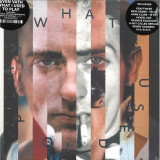
Amy Dabbs might be one of the hardest working artists in the game right now. Making it in the current electronic music landscape is not an easy thing, which might be why this talented artist is so heavily invested in her musical output. With releases on Aus Music, Shall not Fade and her own Dabbs traxx, a monthly residency on Rinse FM and a tour schedule that seems to get busier by the minute, we’re happy to see her hard work is paying off. Add to that some support by artists such as Special Request, The Blessed Madonna, Jaguar and Cinthie and you know this Berlin-based artist is right where she belongs: in the spotlight.
With a love for all things high energy – including, but not limited to house music and breaks – Amy knows how to set fire to a dancefloor (or record for that matter). Her music has been described by Resident Advisor as “Elegant and soulful drum & bass, that’ll still catch the ears of house heads.” So here you go, house heads: Amy Dabbs on Heist. The ‘Only breaks can love your heart’ EP is packed with feelgood energy and comes with a Dam Swindle remix that has the duo laying down some pleasantly unexpected breakbeats on an altogether rush-inducing record.
Right from the start, you know you’ve got an anthem on your hands with ‘Everything alright’. The gorgeous vocals by Aika Mal give you that right amount of emotive, ravey energy and come wrapped in a package of solid breaks and mesmerizing chords. With a hint of acid and a couple of meticulously crafted breakdowns you’ll be singing along with this track before you know it.
The Dam Swindle remix drops the tempo a little bit, but with its 140 bpm, warm broken beat and UK bass, the duo delivers a curveball of a track with a lot of crossover appeal. They went for a more stripped back approach that combines introverted percussion with bouncy keys that complement the vocals perfectly for an altogether irresistible remix.
‘Crush’ is a signature Amy Dabbs tracks, with driving 909 percussion, female vocal chops, ethereal pads and classic strings. It’s a warmhearted affair laced with Amy’s feelgood DNA. On the flip you’ll find ‘Eleven eleven twenty two’; a classic deep house track with subtle hints of UKG in its sampling and bass. The pads and leads are moody and the skippy percussion gives this track the kind of energy you’d welcome when pulling an all-nighter.
Rounding off the EP, we’ve got the ep title track ‘Only breaks can love your heart’; another showcase of Amy’s knack to make house aficionados dance to drum and bass. There’s a certain contrast in pace – raging drums versus dreamy chords that makes you feel at ease listening to a fast-paced track like this. The vocals are equally hazy with a subtle 90’s and 00’s RnB feel. Bassface guaranteed on this one!
Suche:eq why
- A1: Inhalation / Вдох
- A2: 1981
- A3: Ambinature / Амбинатура
- A4: Binaural / Бинауральный
- A5: Choral / Хорал
- A6: Quiescence (Grain Version) : Покой (Гранулярная Версия)
- A7: Stone / Камень
- B1: Aurora (Feat. Alek Fin) / Аврора (Совместно С Алек Фин)
- B2: Grainy Dialogue / Зернистый Диалог
- B3: Soviet Power / Советская Власть
- B4: Echo / Эхо
- B5: Childhood (Alternative Version) (Feat. Alek Fin) / Детство (Альтернативная Версия) (Совместно С Алек Фин)
- B6: Mirror (Synth Version) / Зеркало (Синтезаторная Версия)
Now in its eleventh year and following hype for recent releases from Osaka's Kiji Suedo (Hosek EP & Riot album) and Edinburgh's George T (Roll On, King's Cross single), Edinburgh's Hobbes Music label burrows deeper into experimental ambient terrain with brand new signing Galun. With a discography over 15 years deep, Galun brings no shortage of his own props.
Galun is the solo project of Moscow musician, artist, and producer Sergei Galunenko (currently based in Tallinn), who has performed at numerous prestigious Russian events and collaborated on projects internationally in a career spanning more than 15 years, with a discography to match, turning his attention to myriad styles: IDM, funk, techno, juke, post rock, beatboxing, free improvisation, drone.
“In my project, Galun, I do not use musical instruments,” he explains. “All the sounds are produced with only the use of my voice through beatbox and special vocal skills. Some effects are used to produce electronic sounds.”
Hot on the heels of the new Golos album (out now via Berlin's One Instrument) plus a remix for US collaborator Alek Finn via Nevada's Mystery Circles label, Galunenko’s eighth studio album, Glagol (or Glagolь / Глаголь in Russian) is an ambient collection, recorded between 2013 and 2022. The title is an old Russian word which translates as ‘Speak’.
"This album consists of tracks written in different periods, so it turned out to be diverse," he says. "There are classic ambient tracks, as well as experimental ones in search of new possibilities for voice processing."
Why "glagol"? “Since the music on this album is 90 percent processed voice, it's a form of conversation for me," he reveals, “where I talk about my thoughts and mood, so speak music, while using my voice, is an amazing way of expressing.”
Five singles will be released on streaming platforms only, at intervals, over summer, with the full album released on digital 25.8.23 and a limited edition cassette plus lathe cuts out from 8.9.23.
"How gorgeous is that?! I have heard the rest of the LP and it is all equally gorgeous" DEB GRANT played ‘Mirror’ (New Music Fix show, BBC 6 Music, 17.8.23)
"'Glagol' translates as 'speak', an apt title when you consider 90 percent of the noises contained on it originated as recordings of his own voice, and that lends the ambient experiments here a very human, tactile feel. Closing tune 'Mirror' is a serene masterpiece, '1981' is an evocative phase-fest, the stuttery 'Stone' is endearing and enrapturing and Galunenko generally displays a knack for communicating clear emotions through abstract sounds. Recommended." ELECTRONIC SOUND
‘Really beautiful’ AVALON EMERSON (US)
‘Really loving the Galun tracks!’ INTERGALACTIC GARY (NL)
‘Super!’ JD TWITCH (Optimo, UK)
'Wow, this sounds amazing. Loving the atmosphere here, ambient with some groove somehow, really feeling this one.' DAN CURTIN (US/DE)
"Sounds great. Looking forward to getting into this properly" LORD OF THE ISLES
‘Wicked. It’s great stuff’ DRIBBLER (Pikes, Ibiza // Paradise Lost, Red Light Radio, Pure; SP)
‘Very nice, will play on Cashmere Radio here in Berlin. Keep up the good musical works x ALEX VOICES (DE)
‘Sounds really nice. The sort of thing I’d absolutely listen to on streaming etc’ AUSTIN ATO (UK)
‘Excellent stuff as always’ PAT BENSBERG (The Eccentric Selection, Phonic FM, UK)
‘Digging this one! Right up my street and just the ticket for my Radio Buena Vida show’ TOM CHURCHILL (UK)
- 01: Son Of A Gun
- 02: Rory Rides Me Raw
- 03: You Think You're A Man
- 04: Dying For It
- 05: Molly's Lips
- 06: Teenage Superstars
- 07: Jesus Wants Me For A Sunbeam
- 08: Sex Sux (Amen)
- 09: Slushy
- 10: Monsterpussy
- 11: Bitch
- 12: No Hope
- 13: Oliver Twisted
- 14: The Day I Was A Horse
- 15: Dum-Dum
- 16: Hairy
- 17: Lovecraft
- 18: Dying For It (The Blues)
- 19: Let's Get Ugly
- 01: Sex Sux (Amen)
- 02: Slushy
- 03: Monsterpussy
- 04: Bitch
- 05: No Hope
- 06: Oliver Twisted
- 07: The Day I Was A Horse
- 08: Dum-Dum
- 09: Hairy
- 10: Lovecraft
- 11: Dying For It (The Blues)
- 12: Let's Get Ugly
silver & gold 2x12"[32,56 €]
The Vaselines have long been celebrated by musicians and music enthusiasts across genres and across the globe, including super-fan Kurt Cobain. Emerging in the mid-eighties under the wing of The Pastels' Stephen McRobbie, The Vaselines came to define the sly wit and irresistible pop hooks of the era's Scottish indie scene. Sub Pop's remastered reintroduction of The Way of The Vaselines is an opportunity for those already familiar with the Scottish band's brief career to delve deeper into their body of work, while those new to their music can experience firsthand why so many hold them in such high regard. Originally mastered from a cassette tape (and since remastered on much better equipment in the new millennium), The Way of The Vaselines compiles the band's two EPs (Son of a Gun and Dying for It) and their sole LP release (Dum-Dum). This 2023 edition is the first ever vinyl release of The Way of The Vaselines, which originally came out on CD in 1992.
- 01: Son Of A Gun
- 02: Rory Rides Me Raw
- 03: You Think You're A Man
- 04: Dying For It
- 05: Molly's Lips
- 06: Teenage Superstars
- 07: Jesus Wants Me For A Sunbeam
- 08: Sex Sux (Amen)
- 09: Slushy
- 10: Monsterpussy
- 11: Bitch
- 12: No Hope
- 13: Oliver Twisted
- 14: The Day I Was A Horse
- 15: Dum-Dum
- 16: Hairy
- 17: Lovecraft
- 18: Dying For It (The Blues)
- 19: Let's Get Ugly
- 01: Sex Sux (Amen)
- 02: Slushy
- 03: Monsterpussy
- 04: Bitch
- 05: No Hope
- 08: Dum-Dum
- 09: Hairy
- 10: Lovecraft
- 11: Dying For It (The Blues)
- 12: Let's Get Ugly
- 06: Oliver Twisted
- 07: The Day I Was A Horse
black 2x12"[30,46 €]
The Vaselines have long been celebrated by musicians and music enthusiasts across genres and across the globe, including super-fan Kurt Cobain. Emerging in the mid-eighties under the wing of The Pastels' Stephen McRobbie, The Vaselines came to define the sly wit and irresistible pop hooks of the era's Scottish indie scene. Sub Pop's remastered reintroduction of The Way of The Vaselines is an opportunity for those already familiar with the Scottish band's brief career to delve deeper into their body of work, while those new to their music can experience firsthand why so many hold them in such high regard. Originally mastered from a cassette tape (and since remastered on much better equipment in the new millennium), The Way of The Vaselines compiles the band's two EPs (Son of a Gun and Dying for It) and their sole LP release (Dum-Dum). This 2023 edition is the first ever vinyl release of The Way of The Vaselines, which originally came out on CD in 1992.
The show, which rolled over the open-air stage of the Greek Theatre night after night in the late summer of 1963, attracted fans as if on a pilgrimage to the mountains of Hollywood. Many who could not get hold of a map climbed the surrounding trees to be able to admire the Calypso man at least from a distance.
Also on the lookout and with sound equipment at the ready were the people of the company RCA, which released the eagerly awaited album the following year. Some of the songs like the wriggling "Zombie Jamboree", "Look Over Yonder" and the wonderfully dripping Schmonzette "Try To Remember" were previously only available as studio versions. Most of the other numbers were brand new and sounded for the first time in a sparkling live atmosphere, which is authentically reproduced on this record.
Here a laugh as a receipt for a casual saying, there a rumble of boards, then again concentrated silence of a spellbound listening audience - something like this only happens on stage.
For Belafonte connoisseurs, these recordings are regarded as the crowning glory of the artistically highly productive phase of the years 1959 to 1963. Of the many good albums, this is one of the best.
Personnel: Harry Belafonte (voc); Howard Roberts (cond); William Eaton (clavietta); Ernest Calabria, Jay Berliner (g); John Cartwright (b); Percy Brice (dr); Ralph MacDonald (perc), choir and orchestra
The Counts formed in Michigan in 1964 as the Fabulous Counts, releasing two singles, ‘Jan Jan’ and ‘Get Down People’ on the Moira label in 1968 and 1969 that became R&B chart hits. This led to the album “Jan Jan”, issued by Cotillion in 1969.
Snapped up by Westbound, the line-up that recorded “What’s Up Front That Counts” included Mose Davis (Organ), Leroy Emmanuel (guitar), Demetrius Cates (sax) and Andrew Gibson (drums). Although tenor player Jim White is on the front cover, he left the band shortly before the album was recorded. Extended, mostly instrumental tracks like ‘Why Not Start All Over Again’ and the title track are now recognized as some of the juiciest funk ever laid down in the studio. Shorter tracks like ‘Rhythm Changes’, ‘Thinking Single’ and ‘Bills’ are equally sweet. What gives the album such powerful musical chemistry was the fact that the Counts were jazz players weaned on the likes of Miles Davis who were also into the funk of James Brown and Sly & The Family Stone so every track features groove-driven interplay. One might argue this is the sound that Miles Davis was trying to find on his early 70s albums.
The Counts were to tour with Funkadelic and record more singles and albums but it is this 1971 offering that is, and remains, an all-time classic. Indeed, the track ‘What’s Up Front That Counts’ has been sampled by artists like Queen Latifah and Eric B & Rakim, keeping the music of the Counts firmly in the minds of a young contemporary audience.
Out of print on vinyl for nearly two decades, Ace is proud to reissue this beauty
Irish DJ and producer, Ben Prophet, has caught the attention of some of the electronic scene’s most influential names in recent years. Currently residing in the underground music hub of Newcastle, his dark and exhilarating tracks have proven to captivate dancefloors. Now the artist is set to embark on his most monumental release to date, with the four track EP ‘From Dusk’. Staying distinctly true to himself, the EP channels Prophet’s love for bassline, electronica, and techno, whilst placing a key focus on mechanical vocals that add a mind-bending element that listeners can get lost in. ‘From Dusk’ will be released to the world via HAAi and Alice Pelly’s Radical New Theory label, a proven base for projecting emerging talent.
‘From Dusk’ is an EP that serves as a bold declaration. Prophet was determined to take listeners on a journey across the four tracks. Never resting on his laurels, the artist ventured into many corners of the dance world, whilst maintaining a core signature sound. Opener ‘Telepathy’ Sees Prophet build an emphatic, heavy hitting techno track, centring around a manipulated spoken-word vocal. It’s a sound that holds nothing back and is showcased again on ‘Down The Rabbit Hole’. Equally dark in its design, Prophet once more places distorted vocals at the forefront, this time displaying an industrial take on breakbeat. On the flip side, we see ‘Ocarina’ and title track ‘From Dusk’ turn the dark energy on its head with a distinctly melodic approach which adds a touch of psychedelia and high emotion to the EP. What’s clear is there’s something on ‘From Dusk’ for anyone that loves club music.
Speaking on the release, Prophet states:“HAAi has been one of the biggest inspirations for my sound, so to have become friends and to release my music on her label Radical New Theory is a massive moment for me. I’ve taken a different approach on each track, but each has my signature sound and is ready for the dance floor.”
HAAi also offers an insight into why she wanted to release ‘From Dusk’ on Radical New Theory: “Ben Prophet’s tracks have such a driving force and a dark energy to them, which is so powerful in the club. I’m extremely excited to get this record out in the world.”
Prophet’s previous releases ‘Hyper Funk EP’ and ‘King Of Rock’ on Chapeau music and Happy Wax Records respectively reached dancefloors across the world with regular plays from the likes of Mall Grab, Skream and VTSS. His gritty and energetic productions are born for the peak-time dance floor where its power creates intoxicating effects. No longer a hidden gem of the North East, the artist's music has gathered serious momentum and ‘From Dusk’ might well be the record that makes Ben Prophet a household name.
‘From Dusk’ is the third release on Radical New Theory, a label created in 2020 by HAAi and Alice Pelly which aims to shine a light on unique emerging talent, and the inevitable stars of tomorrow. Last year the label released LUXE’s debut ‘Belonging EP’ which was championed by MaryAnn Hobbs on BBC 6Music, and the artist has since gone on to tour across Europe. Whilst Ozzy, who released the labels first record ‘Een’, has since released on Barnt’s Schalen imprint. Radical New Theory was born out of a love for the craft of dance music and the careful consideration of what they release ensures the highest standards. A safe space for emerging talent, be sure to keep your eyes out for what comes next from the label
Habibi Funk is excited to share “Marzipan” - our first full length contemporary release courtesy of Beirut’s multi-instrumental phenom Charif Megarbane, also known as the man behind prolific Cosmic Analog Ensemble. The LP is a journey into Charif’s styling, one he terms “Lebrary”: a vision of Lebanon + Mediterranean expressed through the kaleidoscopic sonics of library music. Drawing from artists that encapsulates the HF sound, such as Ziad Rahbani, Ahmed Malek and Issam Hajali, Charif translates these influences into an LP that is equally at home in ’23. We always wondered why Charif’s music stayed under the radar for so long, that all changes with “Marzipan”.
Charif Megarbane, the staggeringly prolific producer, instrumentalist, and all-around musical mastermind returns with full LP “Marzipan.” Following his previous release of EP “Tayara Warak” in 2022, “Marzipan” is a sonic journey that seeks to capture the full scope of Megarbane’s habitus. As a composer and producer, Megarbane touts hugely versatile, sometimes volatile musicianship — his 100+ catalogue of projects (including legendary groups like the Cosmic Analog Ensemble, Free Association Syndicate, Monumental Detail, etc.) features a huge domain of sonic direction. This collection was previously developed in Megarbane’s own Hisstology label which hosts a wealth of collaborative efforts. Now, Habibi Funk represents Megarbane under his own name. Megarbane finds a sonic through-line in his surrounding soundscapes as he draws on the chaotic energy of the crowded Beirut metropolis (“Souk El Ahad”), the warm atmosphere of the Lebanese countryside (“Chez Mounir”), or the lushness of a Mediterranean beach resort (“Portemilio”). Reflecting the aural composition of his direct surroundings into kaleidoscopic instrumentation provides a unique insight into how one musical phenomenon transposes sight into sound. Habibi Funk is thrilled to share “Marzipan” and finally throttle this under-theradar phenomenon into the solo spotlight. Despite the magnitude of his catalog, Megarbane’s LP sounds as fresh—as resolutely inspired—as a debut record. “Marzipan” continues down the winding path he trod on EP “Tayyara Warak” (released Decmber, 2022) which features solid footing in the hectic city sounds Megarbane hears as home. Despite his obvious musical acumen, Megarbane’s greatest talent seems to be his open ears. In many ways, “Marzipan” is a cartographic feat — it travels and traces a journey across many dimensions (both sonic and physical). Megarbane’s instrumental catalogue is vast: toy glockenspiel, harpsichord, pedal steel, a classic Wurlitzer, et al are used liberally on the record. The resultant sound is as sprawling as the musician’s instrumental dexterity. “Marzipan’s” closing track “Bala 3anouan” can be translated loosely to “without address” — a fitting final word. Despite the entire record being a sincere testament to Megarbane’s environmental approach to music-making, the record is not bound to any particular coordinates, or any particular sound for that matter. The vastness of his influences — beloved artists like Ahmed Malek and Issam Hajali (both Habibi Funk veterans); West African funk deep cuts; European cinematic scores; et al — result in a record of somewhat unparalleled expansiveness. Floating melodies and frantic rhythmic interludes both find natural homes across “Marzipan.” The record is tinged with psychedelic elements—fuzz-drenched guitar, sliding microtonal interludes, hypnotic rhythmic breakdowns. Reflecting on his creative process, Megarbane cites a stream of consciousness approach: “It’s a very spontaneous, playful, and diary-like approach and workflow…I trust my instinct because instinct is based on experience.” Lead single “Souk El Ahad” opens the roll-out with a raucous energy, out June 12. Megarbane abstracts busy city sounds into a psychedelic framework, casting technicolor hues on everyday experience. Following is second single “Pas de Dialogue” out June 23. The track jerks the listener towards a more meditative state with lulling harpsichord and expanding, cinematic sound. “Marzipan” will be available physically and digitally everywhere on July 14, 2023. Be sure to listen for focus track “Chez Mounir” that captures the warmth of community in a joyful, laidback groove.
Uncover greater insight into the world of Charif Megarbane in the booklet accompanying the LP
Santana's self-titled debut album announces the arrival of a new Guitar God. Made during the legendary bandleader's most fruitful and creative period, the classic 1969 set functions as an accessible entry point into the tangy worlds of Latin music by way of an intoxicating blend of Afro-Cuban percussion, jazzy tempos, exotic leads, bluesy riffs, and psychedelic accents.
Indeed, separation between Carlos Santana's fluid fills, spicy solos, and broiling grooves and pianist Gregg Rolie's soulful Hammond organ runs allows the music to come alive with a newfound freshness and radiance. Songs simmer, with each passage bursting forth with vibrant colour. Just like the equally essential follow-up Abraxas, Santana also lays claim to one of the biggest (and unfortunate) production gaffes in music history.
For nearly four decades, copies were produced with the left and right channels reversed, meaning that everything was placed in a backwards manner. This even extended to compilations on which individual songs from Santana were included. Rest assured that, in addition to boasting reference audiophile sonics, this 180g 45RPM 2LP set gets all the specifications exactly right. And with a record of this magnitude, you want everything to be perfect.
Bound by natural chemistry and earthy spirituality, the record's innovative synthesis of myriad styles goes beyond anything that came before – as well as nearly everything that's followed. Playing with the finest band that the iconic guitarist ever had, Santana doesn't water down any exotic roots or simply incorporate mainstream Western styles into a Latin framework. This is a true hybrid, responsible for opening up borders, transcending cultural divides, and, most importantly, exhilarating the senses.
Released just weeks after the band blew minds at Woodstock, the groundbreaking record stands alongside Miles Davis' Bitches Brew and Jeff Beck's Beck-Ola as a pillar of rock fusion. Featuring the Top Ten radio smash "Evil Ways" and jam favorite "Soul Sacrifice," it hasn't aged a day. Hear like never before why Rolling Stone says Santana is #149 on its list of the Greatest Albums of All Time.
Nirvana's third LP is a masterpiece of late UK sixties popsike turning into symphonic pop, but not having received proper promotion despite being equally good as, if not better than their previous releases, it also marked the end of the collaborations between Patrick Campbel-Lyons and Alex Spyropoulos back in 1969.
Nirvana presented it to Island boss Chris Blackwell under the title of Black Flower. Blackwell, however, decided to turn it down for release, but gave the masters to Campbell-Lyons and Spyropoulos so they could find a new label to release the album. That was to happen in the USA through Metromedia Records in 1969. At that time, the label's owner went through a scandal due to the payola days, which left Nirvana's third offering without any promotion - as a result of that, very few copies were pressed. There was also a UK release on PYE and it was even released by Metromedia in Japan. However, for years it remained as "the lost" Nirvana release, with the added fact that none of the released editions launched the album under its original title of Black Flower but under the rather cryptic Dedicated To Markos II (read why in the liner notes!).
Musically, this is Nirvana at their best. The tune that should have been the title track, Black Flower, is an incredible piece of symphonic psychedelia and probably the best produced Nirvana track ever. Campbell-Lyons and Spyropoulos were backed for the occasion by Spooky Tooth, who played on many tracks of the album, and big orchestral arrangements mesmerize the listener in one of the duo's darkest offerings. This song aside, the rest of the album was deemed as sounding too much like a French soundtrack by Island, which may do at some points –without that being a bad thing,– but there is a lot more to it, since Nirvana have not lost that popsike edge that characterised their sound in their two previous outings.
This is also a record that was widely acclaimed in the hip hop scene. And samplers of it have been used by several artists, most notably DJ Shadow used Love Suite in his 1996 debut album Endtroducing.
The Wah Wah edition has been remastered from the original tapes by Roger Prades @ Prades Mastering and comes with a bonus 7" EP and a four page colour insert with liner notes by Malcom Dome, plus a sheet with the lyrics of the songs. First ever official vinyl reissue since 1970 in a limited edition of 500 copies only!
- A1: Logic System - Unit
- A2: Kraftwerk - Computerwelt (2009 Remastered
- B1: Whodini - Magic's Wand
- B2: Rocker's Revenger - Walking On Sunshine (Feat Donnie Calvin
- C1: Klein & Mbo - Dirty Talk (European Connection
- D1: Liaisons Dangereuses - Los Niños Del Parque
- D2: Yello - Bostich
- E1: The The - Giant
- F1: The Residents - Kaw-Liga
- G1: Clan Of Xymox - Stranger
- G2: A Split - Second - Flesh
- H1: Severed Heads - Dead Eyes Opened
- H2: The Weathermen - Poison!
- I1: New Order - Blue Monday
- J1: Anne Clark - Our Darkness
- J2: 16 Bit - Where Are You?
- K1: Phuture - We Are Phuture
- K2: Model 500 - No Ufo's (Vocal
- L1: Frankie Knuckles Feat Jamie Principle - Your Love
- L2: Quest - Mind Games (Street Mix
- M1: Jasper Van't Hof - Pili Pili
- N1: Guem Et Zaka Percussion - Le Serpent
- N2: Hugh Masekela - Don't Go Lose It Baby
- O1: Sly & Robbie - Make 'Em Move
- Q1: The Ecstasy Club - Jesus Loves The Acid
- R1: Foremost Poets - Reason To Be Dismal?
- S1: Lhasa - The Attic
- S2: A Guy Called Gerald - Voodoo Ray
- T1: M/A/R/R/S - Pump Up The Volume - Usa 12" Mix
- T2: Bobby Konders - Nervous Acid
- U1: Meat Beat Manifesto - Helter Skelter
- V1: Raze - Break 4 Love
- W1: Sueño Latino With Manuel Goettsching Performing E2-E4 - Sueño Latino (Paradise Version
- X1: Off - Electrica Salsa
- O2: Brian Eno - David Byrne - Help Me Somebody
- P1: Primal Scream - Loaded (Andy Weatherall Mix
For this uniquely personal retrospective spread over twelve vinyl discs, Sven Väth takes us back to the early days of his DJ career. On What I Used To Play we meet great pioneers of electronic music, gifted percussionists, obscure wave bands, and innovative producers of a bygone 'new electronic' era. Rough beats and irresistible grooves from the identification stage of house, techno, and acid remind us not just how far electronic music has evolved over the past four decades, but how great it was to dance to EBM, techno, and house for the very first time.
If there is one protagonist of the electronic music scene who has remained curious, innovative and at the very cutting edge of music for over four decades, it's Sven Väth. His multi-layered artist albums and Sound of the Season mix compilations have been defining the genre for over two decades, and even today, he is constantly on the lookout for the next top tune to add to the highlights of his next set. At least, that's the case when he's not producing them himself as an artist or remixer. "Actually, it's always been part of my DNA to think ahead," and nothing had been further from his mind than looking back at his past, but when in spring of 2020 the international DJ circuit had to be scaled down to virtually zero, the 'restless traveler' suddenly had time. Time to stop and reflect on "how it actually was back then, at the very beginning of my career..."
"It was a great trip and with every track, beautiful memories came flooding back".
In the London apartment, he had just moved into, Sven has set up a "little music room", where he cocooned himself for several days, "to look way back for the first time and review my musical journey through the eighties, so to speak."
The interim result was six thematically oriented playlists with a grand total of 120 tracks from 'early 80s' to 'Balearic late 80s', together with excursions into afrobeat, European new wave, and EBM sounds and a few epochal techno/house tracks from the USA in between. From these 'Best of Sven Väth's favorites', the project What I Used To Play crystallized. Sven remembers how the Cocoon team reacted to his proposal: "They found the idea of making a compilation out of it MEGA from the beginning and everyone said 'Sven, go for it', but then, of course, the work really started, namely, to clear the rights and to get clean sounding masters of the up to 40-year-old tracks. There was also disappointment, of course. We couldn't clear certain titles because the rights holders in the USA had fallen out with each other or simply disappeared from the scene. In short, it wasn't easy, but now I can safely say we got the most important tracks."
Finally, after two years of research, curation, design, and administrative fine-tuning, the "little retrospective" from 1981 to 1990 is available. The exquisitely packaged, and three-kilo heavy box set is not only physically impressive, WIUTP is also the definitive record of Sven Väth's musical development. On each of the twenty-four sides of vinyl, you can trace track by track, what influenced him during which phase, and how he took off as a DJ from his parents' Queen's Pub straight into the spotlight at Dorian Gray. There and at Vogue (later OMEN), Sven became the style-defining player in the DJ booth that he still is today.
1981 - 1990: Future Sounds of Now
In the early eighties, the crowd in clubs like Vogue and Dorian Gray danced to what nowadays we call 'dance classics' - mainly disco, funk, soul, and chart pop. It was up to a new generation of DJs, including Sven Väth, the youngest protagonist in the Rhine-Main area at the time, to create their own club-ready music mix. Good new tracks and potential floor-fillers were rarities that had to be sought out and found, in order to prove oneself worthy.
Without MP3s, internet streaming, or other digital download possibilities, music didn't just gravitate to the DJ, instead, it had to be tracked down. In well-stocked record stores in Frankfurt and Wiesbaden or even in Amsterdam, London, or New York, Sven and friends sourced the material for countless magical nights. On WIUTP we can follow Sven's very personal journey through this wild, innovative era in which synth-pop, funk, hip-hop, and disco were successively replaced as 'club music' by house, techno, acid, and breakbeat. By the end of the decade, it was clear to see that these once exotic 'fringe' phenomena would soon become 'mass' phenomena.
Early 80s
Dirty Talk by the Italian-American duo Klein & M.B.O. represents the most innovative phase of the Italo-disco genre in the early eighties like no other track. Mario Boncaldo (I) and Tony Carrasco relied entirely on the original synthetic drum and percussion sounds of the Roland TR-808, coupled with the raunchy vocals of Rossana Casale and guitar accents of Davide Piatto. Of course, other tracks from this period were also influential in style, most notably Unit by Logic System, which worked as the perfect soundtrack to the laser lighting system at the legendary Dorian Gray club. With stomping beats and robotic rap interludes, Bostich by Yello also belongs on Sven's eternal playlist - after all, it caught the attention of Afrikaa Bambaataa, who invited the Swiss duo to perform at the Roxy in New York in 1983.
EBM Wave - Mid 80s
From today's point of view, the almost ten-minute-long, downtempo track Giant by Matt Johnson's band project The The, would probably not be considered an obvious club classic. However, a closer (re)listen reveals the rhythmic intricacies of the percussion overdubs by JG Thirlwell (aka Foetus) on Johnson's composition, and it becomes clear why this exceptional piece of music is one of Sven's absolute favorites. Other classics from this phase include Kaw-Liga by the mysterious The Residents, the hypnotic-synthetic Our Darkness by Anne Clark (and David Harrow), and last but not least, the somber, monotonous anthem Where Are You? by 16Bit, one of Sven Väth's projects together with Michael Münzing, Luca Anzilotti from 1986.
US House - Late 80s
You certainly can't talk about Chicago house without mentioning Frankie Knuckles. The resident DJ at the Warehouse not only gave the name to an entire genre, but also produced epochal floor fillers on the Trax label like the timeless Your Love, sung (and moaned) by Jamie Principle. Acid house protagonists Phuture also hail from Chicago, and on We Are Phuture (also released on Trax) we hear the chirping acid sounds of the legendary Roland TB-303 in full effect. Another featured classic is No UFO's by Detroit's Model 500 aka Juan Atkins, who is rightly considered the 'Godfather of Techno' even if the genre-defining track from 1985 still breathes with the spirit of hip-hop and electro from the first breakdance era.
Afrobeat
Le Serpent, by Algerian-born Abdelmadjid Guemguem, is a track that sounds completely different from everything else on WIUTP. Made in 1978, it's a monumental, rousing groove created without bass or synths, just with five congas! Even though Guem sadly passed away in 2021, his immortal, acoustic beats are understood all over the world and will continue to enrich many thousands of DJ sets for years to come. Another classic that not only Sven appreciates beyond measure is Hugh Masekela's Don't Go Lose it, Baby. In addition to being one of the most important jazz pioneers, the trumpeter and freedom fighter from Johannesburg was very experimental, integrating electronic sounds into his music in later years, in a similar vein to Miles Davis and Herbie Hancock. Dutch jazz pianist Jasper van't Hof's afrobeat project Pili Pili has also aged well. The trance-like, almost sixteen-minute-long track of the same name, manages to fill a whole side on the seventh of twelve vinyl discs in the WIUTP box.
UK-US-Euro - Late 80s
Time for a change of scene, in the truest sense of the word, and from a musical perspective, this section is like landing on another planet. First up is Andrew Weatherall's classic remix of Primal Scream's Loaded, featuring the iconic Peter Fonda sample (lifted from the 1966 biker film Wild Angels) that came to personify the mood triggered by the British Second Summer of Love in the late eighties: "We wanna be free to do what we wanna do, and we wanna get loaded...". This period also saw the emergence of M/A/R/R/S whose only single, 1987's Pump Up The Volume, became a club classic with support from DJ legend CJ Mackintosh. In this most eclectic of sections, we also encounter New York house and reggae producer Bobby Konders and his seminal Nervous Acid.
Balearic - Late 80s
Those who know him, know that Sven had already lost his heart to the 'magic island' of Ibiza as a teenager, so with that in mind, the WIUTP project couldn't end without a Balearic chapter. Inspired by Manuel Göttsching's E2-E4, the immortal, eponymously titled Sueño Latino belongs in there without question. Equally popular on the island was, and still is Break 4 Love by Raze, which thinking about it, would also fit perfectly into the house chapter. Last, but not least, there's an overdue reunion with Sven Väth himself, in his role as frontman of the successful Frankfurt trio OFF. Together with Michael Münzing and Luca Anzilotti (later of Snap!) this 'Organization For Fun' created the off-the-wall club hit Electric Salsa in 1986 which incidentally turned into an international chart smash, putting Sven in the enviable position of having to decide between pop stardom and a DJ career. Well, we all know how that decision turned out and the rest, as they say, is history. A not insignificant part of his story is What I Used To Play. Enjoy!
One of These Nights occupies an important, unique place in the Eagles' discography given it represents the final album the group made before releasing the bajillion-selling Their Greatest Hits (1971-1975) compilation. The timing is telling. A coming-out party for Glenn Frey and Don Henley's songwriting skills, the studio record – the band's fourth, and its first to hit #1 on the charts – signifies the group's ascent to superstar status. Home to three massive singles (the title track, "Lyin' Eyes," and "Take It to the Limit") and nominated for four Grammy Awards, the quadruple-platinum 1975 effort solidified the Eagles' Southern California-reared sound and made the band a household name.
Mastered from the original analog tapes, pressed on MoFi SuperVinyl, and limited to 10,000 copies, Mobile Fidelity's UltraDisc One-Step 180g 45RPM 2LP vinyl box set takes One of These Nights to the limit. And then some. Playing with reference sonics and a practically indiscernible noise floor thanks to MoFi SuperVinyl's special formula, it provides a rich, dynamic, transparent, and three-dimensional view into a release that moved country-rock ahead by leaps and bounds – and paved the way for the Eagles' ascendancy to global superstardom. The opportunity to zero in on the particulars of the Eagles' golden harmonies, distinct vocal timbres, and cohesive interplay has never been better.
Visually, the premium packaging and presentation of the UD1S One of These Nights pressing befit its esteemed status. Housed in a deluxe box, it features beautiful foil-stamped jackets and faithful-to-the-original graphics that illuminate the splendour of the recording. From every angle, this UD1S reissue exists as a curatorial artefact meant to be preserved, touched, and examined. It is made for discerning listeners that prize sound quality and production, and who desire to fully immerse themselves in the art – and everything involved with the album, from the renowned cover art to the meticulous finishes. As much as any Eagles LP, the connection between the imagery and the music and the band on One of These Nights runs deep. No wonder it led to a Grammy Nomination for Best Album Package.
Devised by West Texas artist Boyd Elder, the striking skull-and-feathers themed piece gracing the front of One of These Nights represents where the Eagles have been and where they were headed. Album art director Gary Burden explained: "The cow skull is pure cowboy, folk, the decorations are American Indian-inspired, and the future is represented by the more polished reflective glass beaded surfaces covering the skull." Moreover, Elder had met the group years earlier when Henley and company performed at one of his gallery openings in California. MoFi's UD1S box set allows Elder's vision (and Burden's debossed treatment of the image) to pop and appear as if it was a stand-alone object.
Of course, what's inside the sleeves, and in the grooves, proves equally compelling. Though One of These Nights marks the final appearance of band co-founder Bernie Leadon on an Eagles LP and contains three of his tunes, the record's tremendous success owes to Frey and Henley's timeless contributions. Taking the next step in their maturation and evolution, the pair crafted several songs while living together as roommates in a rented house in which they converted a music room into a recording studio.
The duo's bond and chemistry pulse throughout the record – particularly in the tight arrangements, tasteful instrumental flourishes, and seamless blending of the folk, country, and rock elements. The musical combinations and partnership not only produced the Eagles' first million-selling single (the slow-dancing "Take It to the Limit," co-written with bassist-vocalist Randy Meisner) and the Frey-led cheating classic "Lyin' Eyes," but the famed title track, which nods to the era's nascent disco scene as well as Kenneth Gamble and Leon Huff's Philly soul platters.
Frey named "One of These Nights" as his favorite Eagles composition of all-time; Meisner's high harmonies alone send the track into a galaxy of its own. Speaking of the latter, Leadon's instrumental "Journey of the Sorcerer" ventures into another universe and was soon used by Douglas Adams as the theme to his "The Hitch-hiker's Guide to the Galaxy" radio series. Inspiration and creative experimentation also dragged the Eagles into the blues. Another Frey-Henley gem, the self-probing "After the Thrill Is Gone" serves as a response song to B.B. King's signature track and more evidence the band was turning the lens inward for lyrical narratives. Like everything on One of These Nights, the song confirms the Eagles were breathing rare musical air.
More About Mobile Fidelity UltraDisc One-Step and Why It Is Superior
Instead of utilizing the industry-standard three-step lacquer process, Mobile Fidelity Sound Lab's new UltraDisc One-Step (UD1S) uses only one step, bypassing two processes of generational loss. While three-step processing is designed for optimum yield and efficiency, UD1S is created for the ultimate in sound quality. Just as Mobile Fidelity pioneered the UHQR (Ultra High-Quality Record) with JVC in the 1980s, UD1S again represents another state-of-the-art advance in the record-manufacturing process. MFSL engineers begin with the original master recordings, painstakingly transfer them to DSD 256, and meticulously cut a set of lacquers. These lacquers are used to create a very fragile, pristine UD1S stamper called a "convert." Delicate "converts" are then formed into the actual record stampers, producing a final product that literally and figuratively brings you closer to the music. By skipping the additional steps of pulling another positive and an additional negative, as done in the three-step process used in standard pressings, UD1S produces a final LP with the lowest noise floor possible today. The removal of the additional two steps of generational loss in the plating process reveals tremendous amounts of extra musical detail and dynamics, which are otherwise lost due to the standard copying process. Every conceivable aspect of vinyl production is optimized to produce the most perfect record album available today.
MoFi SuperVinyl
Developed by NEOTECH and RTI, MoFi SuperVinyl is the most exacting-to-specification vinyl compound ever devised. Analogue lovers have never seen (or heard) anything like it. Extraordinarily expensive and extremely painstaking to produce, the special proprietary compound addresses two specific areas of improvement: noise floor reduction and enhanced groove definition. The vinyl composition features a new carbonless dye (hold the disc up to the light and see) and produces the world's quietest surfaces. This high-definition formula also allows for the creation of cleaner grooves that are indistinguishable from the original lacquer. MoFi SuperVinyl provides the closest approximation of what the label's engineers hear in the mastering lab.
The old adage about Elvis Presley is that his soundtrack work never held a candle next to his studio albums. Though true for a majority of his film-related outings, the traditional notion is forever disproved by his Blue Hawaii set. Originally released in 1961 in support of the film in which he starred, the triple-platinum LP spent nearly five months at the top of the Billboard album charts; outsold his two prior studio efforts; and ultimately, remains the second-best-selling soundtrack of the musical-dominant 1960s. And now, it has received sonic treatment befitting rock royalty.
Recorded before the King started to burn out on soundtracks and go into a creative tailspin, Blue Hawaii presents him in tremendous voice. The newly uncovered layers of detail, body, emotionalism, and tonality on this SACD bring that treasured element – as well as the brilliance of the arrangements and accompaniment – to light like never before. Presley's warm crooning alone warrants unmitigated attention. It's not for nothing that this record – replete with panache, whimsy, romance, and seriousness – forever altered the course of his career.
Much like the film itself, the music on Blue Hawaii subscribes to a feel-good aesthetic. Presley plunges into a stylistic deep end with equal parts fearlessness and fun. He delves into early rock ‘n' roll ("Rock-A-Hula Baby"); touching balladry ("Hawaiian Wedding Song"); playful rumba ("Beach Boy Blues"); relaxing luaus ("Hawaiian Sunset"); and naturally, island-inspired fare ("Ku-U-I-Po"). It becomes immediately evident that the King is enjoying himself and committed to the mission. Is Blue Hawaii all serious art? No, but it was never intended to be. Rather, it serves as a showcase of Presley's outgoing personality and chameleon-like ability – like that of Frank Sinatra – to inhabit different roles and entertain.
Of course, Blue Hawaii remains timeless for another reason: The inclusion of the timeless, gorgeous, and still-untouchable staple "Can't Help Falling in Love." Penned by Hugo Peretti, Luigi Creatore, and George David Weiss, the love song quickly transformed into an international standard – with Presley's definitive version hitting No. 2 on the charts and ultimately becoming the closing song to his concerts. Ranked among the 500 Greatest Songs of All Time by Rolling Stone, its conviction, sentiment, and depth testify on behalf of why Presley still reigns as the King.
However subtly, the staple also underscores another reason Blue Hawaii should never be overlooked in Presley's canon: the ace musicians involved in its creation. Guitarists Scotty Moore and Hank Garland; drummer D.J. Fontana; percussionist Hal Blaine; pianist Floyd Cramer; bassist Bob Moore; and iconic gospel backing vocalists the Jordanaires all contribute masterful performances. Hearing them with such expressiveness, openness, and realism on this 2LP 45RPM & SACD should forever alter how Presley's 1961 soundtrack – the finest of his career – is viewed. As he sings in the title track, dreams come true, indeed.
The Belgian minimal synth band's three releases – a cassette and two vinyl EPs – were all titled »Against The Dark Trees Beyond«. This compilation collects the songs from these records.
"They were interesting times, the early eighties. Against a backdrop of cold war and economic crises, the DIY attitude of the earlier punk movement had spawned near countless new genres where artists and bands broke the three-chord guitar mould and experimented with new content matter, singular song structures and – in many cases – new instruments. Synthesizers became affordable and were no longer the sole privilege of rock millionaires. All around the globe, musical creativity boomed as never before, and Belgium was no exception: Digital Dance, Snowy Red, The Names, Pseudocode, Marine, 1000 Ohm, De Kommeniste, M.Bryo & D.M.T., De Brassers, Struggler, Siglo XX are but a few legendary names of bands and artists who started making a name for themselves.
In Leuven, things were happening as well. Until then, the music scene in this rather provincial town had been dominated by straightforward rock and blues acts. Not for much longer, though: in places like Arno'z and (later) The Gladhouse, where young budding artists met with kindred spirits, bands were often formed on the spot and, more importantly, started to make ripples.
Ludo Camberlin and Karel 'Bam' Saelemaekers already had a certain track record in Leuven's burgeoning music microcosm. But what they shared would become the cornerstone of A Blaze Colour (Against The Dark Trees Beyond): a fascination for new forms and instruments, a penchant for sonic adventure and a profound love for gripping songs. The full band name, by the way, was inspired by a phrase from the Irish-American novelist J.P. Donleavy, a writer who belongs in the definitely-worth-checking-out section.
After appearing on the first No Big Business LP (1981) with the instrumental 'Fisk', A Blaze Colour's first proper release, as was so often the case in those days, was a self-produced cassette. The music – which would later be dubbed 'minimal' – was characterized by the use of basic rhythm machines (Boss Dr. 55, mainly) and analog synthesizers (for the synth geeks: Korg Delta and MS20, Roland SH-2 and Jupiter IV, and the infamous Casio VL-1). Camberlin’s vocals, meanwhile, displayed an aloofness totally in sync with the zeitgeist. Equally important, though: all five tracks on this cassette were bona fide songs with a clear sense of structure, aided by a sonic mastery that demonstrated a high level of experience: 'Means To An End' started out as a proto-industrial track before bursting out into a moroderesque finale. The remix of 'Fisk' was as sprightly as the next river salmon, while 'Or Lie Again' proved the perfect soundtrack to a nightly walk through wet deserted streets. On the other hand, 'Through With Life', rife with disturbing sound effects countered by a slow portamento, could have been a prize track on a post punk 'Lamb Lies Down On Broadway'. And in true dramatic fashion, 'Follow The Signs' was the perfect ending of this five-song cycle: a driving sequencer and gripping chord progression coupled with a simple but powerful vocal line. Considering the limited technical means the duo was working with, this was no less than a triumph.
A few months later, the band released a seven-inch single on its own ABLACO label. 'Dark Trees Beyond', a quirky pop song, was coupled with 'Addict Of Time', a dark and brooding spoken word piece. Not the kind of single to storm hit parades, but it didn't go unnoticed. The Minny Pops' Wally van Middendorp, who had founded the Plurex label in 1978, invited A Blaze Colour to his studio in the Netherlands, to record an EP. It would prove to be a massive step forward: recording in a semi-professional studio offered great possibilities, the recently acquired TR-808 drum machine allowed for a broader rhythm palette, and the three new tracks (next to the re-recording of 'Through With Life') showed a band on the top of their game: 'The New Ones' was a wry and haunting song built around a live drum loop and an ominous bass pattern, while 'Nowhere Else' was a near-pop track with very un-minimal vocal harmonies. And it's a mystery why 'Altitude' – another instrumental – was never used in a stylized, high-profile detective soundtrack.
Another song from these sessions, the revved-up 'Cold As Ever' turned up on the high-profile Plurex "Hours" compilation, where it shone brightly, next to songs of a.o. X-Mal Deutschland, Nasmak, Minny Pops and Section XXV.
Meanwhile, Camberlin had already carved out a bit of a reputation for himself as a producer, while Saelemaekers was a respected graphic designer. It remains uncertain if this played a big part in the end of A Blaze Colour, but the fact remains: as studio recordings go, 'The Ultimate Fight' on the "No Big Business 2" compilation, was to be their swan song. What a way to go, though: maybe their best song ever, this was a synthetic bastard funk groove, complete with shout-out chorus and punch-drunk middle-eight. It shut a door, for sure, but it did so with a resounding bang.
So there it is and there it was. Short, sweet, visionary, pioneering and highly influential. And as anybody listening to this first ever compilation will be able to assess probably one of the most colourful electronic acts of its time.
On a more a personal note, A Blaze Colour proved to be instrumental in my own coming of age as a lyric writer, when Ludo and Bam graciously adopted some of my earlier writings, warts and all. To hear them translated into songs was no less than magic, and it certainly gave me the confidence to start our own band a bit later. And the magic continued when Ludo became our producer and Bam designed our record sleeves. But that’s another story, obviously. Because this is the place and the time to dive back into the wondrous world of A Blaze Colour!"
Bart Azijn (Aimless Device)
London-based leftfield electronic label BleeD makes a worthy return from a lengthy sabbatical, reinvigorated with a diverse collection of tracks from Berlin-based talent, Lårry. Having previously established trusted relationships with leading artists including Daniel Avery, DJ Nobu and Peder Mannerfelt, BleeD ably assists in delivering on the promise of one of the most notable young talents currently working on the fringes of contemporary techno. Thus far showcased on impeccably curated labels such as Uncertainty Principle, Super Hexagon, Fusion Diagnostics and Awkwardly Social, their flair for surgical sound-design and off-kilter arrangements puts them in good company with equally exciting contemporaries such as FFT and Panarorman/Patrick Conway.
The EP covers a lot of ground across 6 tracks, from the gloomy atmospherics of 'Plunicceteh' and 'CMml CoE3", and the peak-hours stomp of 'systems_component' on the A-side, to the warmer and more uplifting B-side tracks, 'Ria Ilso', 'We Are We Are' and 'Over The Why'. It's a fine showcase of an artist with a broad range of influences who with each successive release is carving out a genuinely unique sound.
It’s almost four years since their last opus - two years since the most-recent run
of live shows. Now, Bitchin Bajas return from whatever kind of rare ether they
occupy when they’re at home, bearing the riches of the whole cosmos in their
hands. And strictly OG as well - on cassette only.
‘Switched On Ra’ is the outcome of a typical Bajas exercise: pouring some out
for the pioneers that came before (as they’ve done with Bitchitronics and their
participation in the annual Chicago performance of ‘In C’ over the years). It’s a
nice way to get a flow - they play a little of themselves, then some for the
pioneers, then a little more for the band. Before long, they’re playing with the
inspirations twined, as they can only come from within.
For ‘Switched On Ra’, this meant a deep delve into the song-book of one of their
soul-predecessors, Sun Ra, whose music is literally written in the Bajas DNA.
Digging into this music sounded wild on paper: the drone synth group taking on
the Arkestra harmonies and Ra’s loose grooves? The trick was to get that sense
of rhythm to translate across the spectrum from Ra to Bajas, in a way that
worked for them both.
Their rearrangements of the tunes went good - up and down the EQ band, they
were finding the round sounds and jagged edges that brought Ra’s music into
their own thing. Then at the last minute, there was another twist - why not pay
tribute to the Queen herself, and think of the arrangements with a Wendy Carlos
vibe? A little side homage? After all, ‘Switched on Bach’ was visionary, bringing
analogue synths from the outside all the way into the mainstream in the late 60s -
and this take on Ra is meant to take him to new ears everywhere.
Sun Ra of course was his own kind of original keyboard visionary, using electric
keyboards in the late 40s and 50s to fill a role in jazz that had traditionally been
played on acoustic piano only. Once he’d done so, he took his writing in
directions inspired by the electricity, places no one had thought to go before
then.
Bitchin Bajas have been content to dominate in a microtonal world, usually
without a single chord to be found anywhere. But here, they step up righteously,
their vibe triangulated as they bring Ra’s music forward with some Wendy C
style, making an unexpected space for all to thrive. There’s a real feeling of joy
as these collected signals bounce off the tape and through the speakers into
your space.
To get this unique colloid exactly right, Bitchin Bajas used nineteen different
keyboards. They abstained from deploying their arsenal of reed and woodwind
instruments: everything had to be on the keys. This meant Yamahas, Rolands,
Korgs, Casios, a MicroMoog and of course their trusty Ace Tone organ. They
even broke out the Crumar DS-2, to have some of Ra’s chosen tone in the mix.
Then Jayve Montgomery added an EWI as a solo voice on a few tunes, just to
get some air-blown signal (and a natural shout out to EWI master Marshall Allen)
in there, after all. It felt like somewhere in the universe, Ra was decreeing it.
Twisted and irreverent, The Rabbits combined ear-splitting guitar shrapnel with one of punk’s greatest-ever snot-nosed vocalists. With hints of PIL or Chrome, but beamed in from a parallel dimension and filtered through the warped lens of visionary loner Syoichi Miyazawa. First-ever vinyl release, fully remastered from the band’s original early ’80s cassette releases, and housed in a sturdy tip-on sleeve. Includes a double-sided, printed insert. Edition of 500
Singer-songwriter Syoichi Miyazawa’s tale is a confounding one.
He grew up in a small town in Yamagata Prefecture (in northern Japan), loved Dylan and The Beatles, and had very little exposure to, or interest in, underground music. And yet, shortly after 24-year-old Miyazawa arrived in Tokyo in 1978, he began performing solo shows at tiny clubs in the city, singing and playing guitar. His performances quicky devolved from brisk acoustic jaunts to lengthy, heavy dirges sung in a snot-nosed wail over a blown-out electric guitar detuned to produce a kind of sonic sludge.
At one of his earliest gigs, a mutual friend introduced him to Endo Michiro, who would soon become the legendary front man of Japanese punk icons The Stalin. It turned out Miyazawa and Endo had attended Yamagata University at the same time just a few years earlier, but hadn’t known each other at school. In Tokyo, they became fast friends, moved into the same apartment building, and for years were inseparable. Endo played guitar and drums on Miyazawa’s debut release, the “Christ Was Born in a Stable” flexi disc. But while Endo was social and outgoing, Miyazawa preferred to be alone, avoiding concerts unless he was performing.
Despite these antisocial tendencies, Miyazawa came to despise playing solo. In 1982, an eccentric high school student named Chika introduced herself at one of Miyazawa’s gigs, and Miyazawa asked if she’d play bass. She agreed and drafted two of her friends to play second guitar and drums. The Rabbits were born.
Miyazawa wrote the tunes, and had a clear vision for the group, but struggled to get the sound he wanted from the other members. His second guitarist was more of a fusion player, and Miyazawa took great pains to get him to tone down the shredding. The group quickly went through multiple line-up changes. Frustrated with the sound of their first proper recording (self-released as the “X1(x)” cassette), Miyazawa spent a full year mixing their second cassette, “Winter Songs,” on his own.
The hard work paid off — the sound of “Winter Songs” is striking, and unlike anything the band’s peers produced. There’s liberal use of delay on the vocals, giving the music a psychedelic feel, but the guitars are caustic, cutting through the mix like metal shrapnel. The rhythm section seems on the verge of teetering out of control throughout, an overdriven and pummeling current below abrasive slabs of guitar and vocals. Even at their most aggressive, though, The Rabbits had strong pop sensibilities, complete with cooing backing vocals and the occasional harmonica solo. Miyazawa delivers his borderline nonsensical lyrics with equal amounts of menace and gaiety, consistently riding that fine line as only a natural oddball can. At times, the band sounds like a distant cousin of PiL, Chrome or The Homosexuals, but beamed in from a parallel dimension and filtered through Miyazawa’s warped lens.
Although The Rabbits briskly sold all 500 copies of the "Winter Songs" tape, live audiences at the time seemed dumbfounded by the group, and would stare at them in silence. After two years together, The Rabbits called it quits in 1984.
When asked if any of the many legendary groups (Les Rallizes Desnudes, G.I.S.M., etc.) he shared stages with left an impression, Miyazawa recently revealed that he always left the venue as soon as he finished performing, so he never caught any of the other bands…
All of which is to say —
The Rabbits are one of the great punk bands of the early ’80s, but their leader had no interest in the punk scene and always thought he was making “normal” music. They rubbed shoulders with a slew of notable groups of the era, and their singer was best friends with arguably the most famous Japanese punk of all time, but Miyazawa shunned fraternization and purposefully distanced himself from his peers.
Could this be why so few underground music fans are familiar with the group, even in Japan? Why they seem to have been written out of the official history of Japanese punk? One can never know for sure, but Mesh-Key hopes to remedy this travesty by offering this compilation, the first-ever official LP by The Rabbits, to a new generation of punk and psychedelic music connoisseurs.
credits
Far over on the west coast of the USA we find a room full of drum
machines, samplers and keyboards. Hard at work is Israel ‘Iz’ Gravning aka Tone Scientist, who’s been using this Seattle studio to produce genre-defying future music for more than 25 years.
An avid student of jazz fusion, hip hop, house, techno and others, he
was galvanised to build his own studio after hearing jungle and drum & bass on a trip to London in 1995. His musical course thus intersected with the collectives then pushing new dancefloor sonics rooted in the rich tradition of Black music – like Nuyorican Soul over on the east coast, and the new broken beats of IG Culture, Dego and Bugz In The Attic in London. Then, in the early 2000s, Iz put out a handful of EPs under different aliases, including ‘Lion Dub’ on the Guidance sublabel Subtitled, but soon stepped back from the public stage. That’s not to say he stopped making or playing music, though. Far from it. Fast forward two decades and our very own Walrus, chilly but happy in the depths of a Toronto winter, happened across ‘Lion Dub’ in the legendary Play The Record store. Intrigued, he tracked Iz down and discovered he had been active all this time. A short email exchange later and this 2xLP of archive material was born.
These six tracks explain fully why Iz calls his studio the ‘Time Machine’: vintage equipment and instruments converse with up-to-date software; classic sounds and textures twist into fresh configurations; and Iz’s own creativity and musicality sings to us from a location beyond the trappings of time or genre.
All music written, produced and mixed by Israel Gravning aka Tone
Scientist in Seattle/Washington between 2005 - 2008 except for “Things
Ally is psyched to be releasing The Cakekitchen's dark and powerfully
catchy fourth LP, Stompin Thru The Boneyard, on vinyl for the first time in
the US!
Originally released on CD domestically by Merge Records in 1994, Graeme
Jefferies has remixed and remastered the original album creating a more even
and equally stirring effect. Mac McCaughan (Merge / Superchunk) cites this as
one of his favorite iterations of the band, and for good reason. "Tell Me Why You
Lie" ranks among the best of Jefferies' edgy pop songs, while the multi-part "Hole
in My Shoe" finishes with a sterling instrumental segment. "The Mad Clarinet" is a
highly textured acoustic piece featuring another NZ legend, Alastair Galbraith, on
violin. The album ends with the perfect closer, "Another Sad Story," which is not
just another song, but one of the finest melancholy earworms you'll ever
experience. NZ pop at its finest!
We are proud to present he latest from Turbo Recordings Executive Honcho Tiga, a massive ode to passive-aggressive income remixed by Héctor Oaks, Der Zyklus, and Decius.
“No one wants to work their body anymore,” says the Montreal merrymaker from atop a throne in the exact shape of a digital wallet. “I get it. Who wants their surplus sweat equity vacuumed up off the dance floor by corporate parasites when the real future’s in decentralized skanking? But that’s why people in my position - the top one-percent in terms of nightlife and hospitality take-home pay - have to offer real benefits to risking it all in the clubs. I’m talking dance-move insurance, competitive drink ticket packages, and - most of all - the kind of brick-and-mortar bangers Rhythm Nation was founded upon back in 1814.”
While gratingly content with the original version, Tiga has nonetheless chosen to flood the Marketplace of Ideas with a plurality (3) of voices he feels will optimally position this release in today’s unforgiving Neo-Centrist landscape. This stunning grassfed vinyl 12” opens with a remix by Berlin-based vinyl-only DJ Héctor Oaks, who has been described as “operating at the absolute vanguard of rave.” Please remember that describing people this way is basically injecting them with Imposter Syndrome.
The release also features a remix by Der Zyklus, an alias of Gerald Donald, the epochal genius from Drexciya, Dopplereffekt, Japanese Telecom, Abstract Thought, Zerkalo, Zwischenwelt, and many other fantastic projects. Finally, Decius closes out the EP with all the British Mischief you might expect from UK luminaries from Trashmouth Records, Fat White Family, and Paranoid London.
"I’ve designed my entire life around the concept of ease,” adds Tiga. "I never wanted to work for a law firm. I wanted to make beats for a law firm. I’ve always been selfemployed, and that why my street cred’s off the street charts. And I’ve let as much of
that freedom trickle down to the audience as I can. Because when it comes to music,
there’s no such thing as an acceptable minimum wage. You gotta know that you gotta
give it all you got or you’re gonna get got.”