Terrazzo is a new VA label formed by Northern Irish selector Holly Lester (Duality Trax) and prolic label entrepreneur/producer Steffan Todorović (Gestalt Records/Coymix/Hidden Assets/Abdul Raeva). The label’s debut EP journeys through a variety of club sounds with Dylan Forbes, Eric OS, Anderson and underground heavyweight Harrison BDP rolling out 4 cuts of euphoriainducing prog, broken beat-infused tech, heady minimal an contemporary Detroit techno.
Cerca:eric d
It might seem tongue-in-cheek on the surface, but the fact that the title of Eldritch Priest's sprawling debut vinyl release, Omphaloskepsis, is the Greek translation for “navel-gazing” unlocks something essential to the Vancouver-based composer and writer's singular outlook.
Perhaps even more telling is the title of Priest's 2013 book Boring Formless Nonsense: Experimental Music and the Aesthetics of Failure (Bloomsbury), whose 300-odd pages read as though you've been dosed with potent hallucinogens. Throughout the text Priest addresses—celebrates, even—the titular elements via various musical examples, including that of his peers. What's so bewildering it is that his descriptions of how boredom, formlessness, and nonsense manifest are laced with the very tactics he's depicting. Passages tie themselves in knots, footnotes engulf the “primary text,” he even deliberately misleads the reader.
The restless stasis of Omphaloskepsis could be regarded as an extension of this book's wayward spirit. Things unfold fairly slowly and consistently but it'd be a stretch to describe it as properly contemplative. Like attempting to meditate with a high fever, any sense of tranquility is constantly derailed as one succumbs to queasy agitation. The piece's foundation is a seemingly endless guitar melody; an organic meander that neither seems to repeat or offer any concessions to narrative directionality. Priest unfurls this rambling cantus firmus in a rich, clean, jazz-like tone, but as it's played, it's repeatedly tangled with snarls of dense digital processing and shadowed by stumbling virtual “band.” These strident interjections blatantly contrast with the guitar, yet they aren't so violent as to offer more than a faint itch of distraction. As such, the distinctive amorphousness that this piece asks us to inhabit for its 54-minute duration leaves a strong impression, but also feels utterly intangible.
In addition to his recorded forays, Priest's disorienting music has also been performed by top-tier interpreters such as the Arditti Quartet, Quatuor Bozzini, Philip Thomas, Anton Lukoszevieze, and Continuum. While living in Toronto he co-founded the collective neither/nor with John Mark Sherlock, which featured a cross section of musician-composers playing each other's work including Eric Chenaux, Doug Tielli, Eric KM Clark, Heather Roche, and Rob Clutton. “Though the name refers specifically to a loosely knit group of composers and performers,” remark's the collective's website “neither/nor is also a sensibility that refuses art’s messianic pretensions and the gaping maw of commercialized society, opting instead for art’s right to be esoteric.” In 2021, when Eric Chenaux and Martin Arnold relaunched their neither/nor-adjacent Rat-drifting imprint, an album by Priest, Many Traceries, was among the first to be released. Perhaps unsurprisingly, Priest was a student at the University of Victoria, a school that's come to be known for fostering such staunch individualists as Arnold, Linda Catlin Smith, Allison Cameron, and Anna Höstman.
As a scholar, Priest writes from a 'pataphysical perspective and deals with topics such as sonic culture, experimental aesthetics and the philosophy of experience. Priest brings these interests to his job as an Associate Professor in the School for the Contemporary Arts at Simon Fraser University, interests that also inform his work as a member the experimental theory group The Occulture. In addition to Omphaloskepsis, his new book, Earworm and Event: Music, Daydreams and Other Imaginary Refrains,
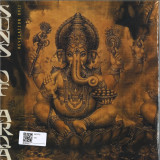
Suns of Arqa is a sonic mission created by luminary Michael Wadada, who began in 1979 after receiving higher guidance in Jamaica while working with roots reggae chanter Prince Far-I. It is a prolific traveling music collective that has seen over 200 collaborators, meant to connect people from all cultures and walks of life through a “deeply spiritual vibration that merges cultures, faiths and musical genres”. Wadada combines ancient Hindustani raga systems with Piobaireachd and Nyabinghi roots drumming, creating ritualistic world music infused with dub and reggae.
The lyrics combine both mystical and sensory elements, often including prayer and referencing a higher power but finding root in experiences common to all people- memory, sight, and physical sensation.
Their first album, Revenge of the Mozabites, was a collaboration between Wadada and On-U Sound creator Adrian Sherwood. Following its 1980 release,Peter Gabriel invited them to perform at the first WOMAD festival. Today, the record is regarded by some as a cult classic. Over the years they have played at many major music festivals including Glastonbury, Big Chill, Telerama Dub Festival, and Transmusicales, and released over 40 albums on Virgin, EMI, Interchill Records, Antler Subway, Red Rhino, and their own label, Arka Sound.
Suns of Arqa has had a seminal influence on the World Beat sound, and continued to make appearances at seasonal festivals and sacred ritual spaces all over the world until 2021. Michael Wadada passed away in the midst of planning their U.S. tour for this release. The record is a compilation of some of Wadada’s and Sleepers Record’s favorite old Sun of Arqa tracks, mixed by Youth and Adrian Sherwood, and mastered by Eroc (drummer of Grobshnitt).
Notable collaborating artists include: Guy Called Gerald, UK producers Youth and John Leckie, Greg Hunter, 808 State's Graham Massey, Finley Quaye, Sounds From the Ground, Bryn Jones aka MuslimGauze, Adrian Sherwood, John Cooper-Clarke, The late great Professor Stanley Unwin, Eric Random, New age guru Tim Wheater, Astralasia, Prince Far-I, The Orb's Alex Patterson, Zion Train, and Gaudi.
"And although the Great Spiritual being Michael Wadada has returned to source and his body to earth at our time, his music is alive and will continue to be a great force for higher spiritual realms and raising vibration through occult frequencies...Suns of Arqa will continue to raise the vibration of the hearts and minds of humanity" – Angela aka Angel-Eye (Wadada's wife and bandmate)
Piano, synthesizer enthusiast, composer, and arranger, Eric Borders aka Captain Supernova, makes first release under new moniker, E. Lundquist. Pushing the boundaries of funk fusion, it’s as much 70s library music, as it is Pink Floyd and The Flaming Lips at times. It often feels as if the planet is going to unfold.
Borders, born and raised on the westside of Los Angeles, is known for his cinematic and cosmic compositions that push jazz into a different time and space. ‘Multiple Images’, the debut release as E. Lundquist, is the composer's first attempt at making a Library Style record. A genre that lends itself well to the Sci-Fi and Jazz Fusion vibes that Borders has been known for in the past. The music often plays as if it is the soundtrack to something happening both simultaneously in and out of this universe.
“As we finished the record it sort of evolved from a library piece into a full fledged album with a mix of different inspirations from blaxploitation, 70s funk, soundtrack, themes, cinematic, and contemporary jazz-funk. It only felt right to break away from the fictional character and give this music a composer name as if you read it on the back of a KPM record. Then E. Lundquist was born.”
The new name pays homage to old family bloodlines, and is the last name of his biological grandfather. While Eric Borders was his given name, Borders has no actual blood relation to his family, it was the name his father had adopted from his Step-grandfather. The name of the album “Multiple Images” is an ode to one of Lundquist’s favorite Library tracks by Brian Bennett “Images”.
Few groups arrive as fully formed as EPMD did. This dropped as the third single from the album of the same name, and further cemented their distinctive aesthetic: Slow rhyming, trading lines rather than the rappers being confined to their own verses, and backings that were ruthlessly funky and simple at the same time.
They’d go on to be labelmates with Public Enemy when Def Jam picked up their contract in 1990, and to compare and contrast the two is illuminating. While PE at that time were making waves with the Bomb Squad’s breathless, kitchen sink approach to production, EPMD were equally adored for taking the opposite approach.
Here, there’s a sprinkle of drums from Kool & The Gang’s oft-sampled ‘Jungle Boogie’, paired with a very recognisable portion of Eric Clapton’s ‘I Shot the Sheriff’. And that’s pretty much it – the two samples are linked, looped and left to their own devices. Such was Erick and Parrish’s confidence in their own rhyming ability and strong voices, no further embellishment was needed.
That confidence extends to the subject matter. While their debut album and later projects were heavy with concepts – the ‘Jane’ series – and notable guest verses, this was the third straight single of pure brag rap. Two MC’s, one beat, a whole heap of lyrics about how good they were. It’s something you can’t do unless you truly are special, and this duo most certainly were.
Paired with the classic instrumental version, which didn’t make it to the US 7” releases – it’s only on a hard-to-track-down French 7” pressing from 1989 – this this is a timely reminder of how breathtakingly perfect hip-hop can be.
So strong was EPMD’s epochal debut album ‘Strictly Business’ that it spawned three all-time classic singles, providing part of the soundtrack to, arguably, the height of the original Golden Age. When discussing the landmark artists of that era – Public Enemy, Boogie Down Productions, Eric B & Rakim – the duo of Erick Sermon and Parrish Smith are certainly in the conversation. And when it comes to all-time duos, they might be at the head of the table.
The original release of ‘I’m Housin’ came in 1989, and the only previous 7” release was confined to the UK – it now fetches sky-high prices. Hence this reissue couldn’t be more timely, showcasing just how fresh E Double E and PMD sound over even the most rudimentary but feverishly catchy of beats.
That was their genius – trading ‘slow flow’ punchlines over deceptively simple backings – and that’s exactly what you get here. The loop of Aretha Franklin’s indelible 1971 gem ‘Rock Steady’ does all the heavy lifting musically, the only adornment a brief vocal snippet taken from their own ‘It’s My thing’ – EPMD is a world premiere.
At a time when sampling was still in its infancy, and before producers started to pride themselves on obscurity, and on chopping up samples creatively, this was the approach of many a hip-hop song, and rap was none the poorer for it. When you have voices as distinctive and strong as EPMD, less is more.
Comet presents the first release from its new Disco Highlife series, featuring remastered originals by Ghanaian legends Ebo Taylor & Pat Thomas and disco reedits by LeonxLeon and Leo Nanjo.
Founder of Comet Records, Eric Trosset, started working with those great heroes of West African music, back in 2010. Taking on the role of manager/publisher, Comet teamed up with Strut Records
and musician/producer Ben Abarbanel Wolff to revive Ebo Taylor‘s international career with a string of album releases: Love & Death, Appia Kwa Bridge and Life Stories. In 2014, he collaborated with
Pat Thomas & The Kwashibu Area Band on a new album, gathering together the old ‘pals’ (Ebo Taylor, Pat Thomas, Tony Allen) in producer Kwame Yeboah’s studio in Accra.
It is with great pleasure that Comet launches this new series. Let's make this beautiful and timeless music the soundtrack to an unforgettable summer!
On side A, comes “Enye Woa” by Pat Thomas, originally released in 1988 on Nakase Records and taken from the album Me Do Wiase. It’s killer disco cut, and as innovative a piece of highlife as it
was 30 years ago. Paris-based producer LeonxLeon has been cooking up songs in his Parisian home-studio since 2013. He did a remarkable remix of Cerrone's "Funk Makossa" and more recently released his new Rokanbo EP on Cracki Records. His remix of “Enye Woa” is a classy modern disco cut with funky bass and spacey synths.
On side B is “Atwer Abroba” by Ebo Taylor, a stand out up-tempo track from the album Twer Nyame, originally released in 1978 on Philips West African Records. Tokyo-based multi
instrumentalist/producer/arranger Leo Nanjo formed the first Japanese afrobeat group, Kingdom
Afrorocks. Since the band broke up in 2014, Leo has been producing and arranging music with various collaborations, such as DJ Muro, Pushim and Misia. This is a trippy afro-futurist, broken
beat reedit with highlife grooves flying to deep space
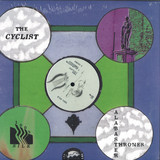
Last Year's Altered Mind Opus, Sapa Inca Delirium, Showcased The Cyclist At His Most Eclectic, Spanning Ayahuasca Break-beat And Rave Jungle Pop, But His Latest Ep Returns To The Uniquely Kinetic And Shredded Mode Of Churning Electronic Rhythm He Both Named And Perfected: 'tape Throb.' Alabaster Thrones Collects Four Of Andrew Morrison's Recent And Most Vibrantly Blasted House Constructs, Tracked At His Home Studio In Birmingham, Uk During 'the Height Of Mania - A Time When I Had No Time.' The Context Translates: This Is Urgent, Accelerating Music, Shifting Gears At High Speed In Dim Twisting Tunnels. The Title Is 'a Deflation Of Grandiosity' Cribbed From Ulysses ('...a Noble Race, Rulers Of The Waves, Who Sit On Thrones Of Alabaster, Silent As The Deathless Gods'), Though Morrison's Meaning Is More Personal: 'it's A Reminder To Level Yourself And Think Of All Those Around You.' A Captivating Capsule Of Ravaged Forward Motion For A Ravaged Forward-moving Age. Mastered By Eric Hanson. Design By Britt Brown.
When Dorian Paic, Tobi Neuman And Patrick Ense Took A Lunch Break From Their Studio Session They Met House Legend Eric D. Clark Randomly At The Burger Joint. After A Quick Chat They Took Him Over To Tobi's Studio And Recorded This Delicious 12 For Us. Einzelkind Founded La Peña In 2007 As A Label For Friends To Meet Up, Live, And Release The Music They Love - And Here We Have The Perfect Example Of Such A Serendipitous Event.
Backed Up By A Juicy Mfdp Club Mix This Release Gives A Nod To The Golden Era Of House Music And Album Cover Art.
What Ya Doin´!
The Viennese label forTunea finishes 2017 with another rendition of their forTunea Cookies recipe. The ingridients on the A-side were added by Klaus Benedek and the newest member of the forTunea bunch, Lukas Poellauer. - Splattered is another typical melancholic KB trip. A chopped hookline, heavy reverbed synths and a vocoder are the signature features in this track. Lukas delivers us on the other hand his interpretation of - Underground house music with Chicago and UK influences. The B-side gets a little spicier. Jakobin & Peletronic serve with - Morning Glory some funky seeds on the plate. Last but not least the Schampus Ghost teams up with Anemona to the baking session. What they are adding to the cookies What they are adding to the cookies Well, it is certanly not sugar. ;-) It is for the better not to unveil the secret ingridient. But lets just say, their tune has some cool disco-techy vibes innit. All in all an enjoyable treat
Already support by Iron Curtis, Blueshift, Dubble D, Paul Cut, Rainer Trüby, Manuel Sahagun, Roman Rauch, Franksen, Claudio Ricci. Tyree Cooper, Sarah Wild, Bart Ricardo, Janefondas, The Soulbrozerz, Eric Davenport, BTO Spider, Jaymz Nylon, Snooba
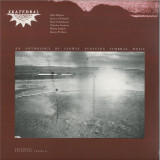
XKatedral Anthology Series II (An Anthology Of Slowly Evolving Timbral Music), featuring exclusive music from Kali Malone, Jessica Ekomane, Mats Erlandsson, Theodor Kentros, Wilma Hultén, and Maria W Horn.
"XKatedral Anthology II is the second instalment in a series of archival releases dedicated to presenting music by composers affiliated with XKatedral working within the realm of slowly evolving harmonic and timbral music. This double-vinyl set contains an array of pieces dating from 2018 - 2020. This collection of pieces focuses on the use of synthetic sound and algorithmic composition languages as tools for precise work within the realm of spectral exploration. In addition to this, the electronic instrumentation in many of the pieces is augmented by acoustic instruments.
The first piece on side A is Kali Malone’s Music for Low Quartet. This piece is an adaptation of the composition “Rose Wreath Crown” originally released on The Sacrificial Code in 2019. In this iteration, the music is scored for two double basses played by Vilhelm Bromander and Zach Rowden, and sine tone electronics performed by Malone herself. The recording of this piece was made at EMS in 2019.
Closing side A is Jessica Ekomane’s ‘First Light’. This computer music piece focuses exclusively on digital sound, layering razor sharp synthetic textures into an otherworldly dynamic weave. The music heard here is a reworked version of a piece originally commissioned by Semibreve in 2020.
Side B contains the work ‘Hands Melt In The Sun’ by Mats Erlandsson. This composition is built from electronically processed tuned zithers and synthetically generated tones arranged in a series of chordal inversions over a sustained fundamental tone. This music, written as a love-letter to the localized drone tradition of Stockholm in the years 2008-2012, was composed and recorded in seven days while in residence at Ställbergs Gruva in Bergslagen, in the summer of 2018.
Opening the second half of the collection is Rough Draft v.7 by Theodor Kentros. Kentros’ compositional practice usually combines acoustic and electronic source material and in this piece he molds the sound of the Buchla 200 and a collection of recorded wind instruments into a molten mass of sound. In its original form, this music was presented as a multichannel immersive work and even in the current stereo configuration it retains some of that enveloping sense of depth.
The second piece on side B, Inertia, is by Wilma Hultén, who makes her debut on record here. An exclusively synthetic piece, Inertia utilizes internal digital feedback in a sealed synthetic system to manifest a harmonic field that swells and abates throughout the length of the piece, interspersed by small gestural elements.
Closing Anthology II is Maria W Horn's work ‘Dies Irae’ for female vocal quartet, pitched glass and synthesis. ‘Dies Irae’ uses a modified form of traditional tonal harmonic language to invoke an uncanny and restless middle ground between the classical western polyphonic vocal tradition and contemporary electronic music. The version heard here is a live recording from Eric Ericssonhallen in Stockholm on May 30th 2020. Performing the piece here are the vocalists Katarina Henryson, Lisa Holmgren, Vilma Ogenblad and Paula Wegmann, as well as Maria herself on glass and electronics."
After their recent LP Mirages (Kraak Records, 2025) with French turntablist Guilhem’All, the group continues to explore collaborations with artists and instruments from diverse musical traditions. Building on decades of uncompromising acoustic exploration, Razen delves deeper into their practice with five improvisational pieces that unfold slowly in time and space. The duo’s radical core - Brecht Ameel and Kim Delcour - finds in Van der Harst a longtime kindred spirit, united by the impact of sound, intonation, and the sheer joy of playing.
To be released on April 24 via VIERNULVIER Records, the artwork for Stained Glass Starling was created by American visual artist Robert Beatty (Oneohtrix Point Never, Christina Vantzou, The Weeknd, Tame Impala). The physical release comes with a 16-page booklet including artwork and an interview.
A long-standing artistic kinship lies at the heart of this project, with first encounters dating back to the early 2000s in Belgian musical improv theatre. Van der Harst’s lifelong experience in improvised music and music theatre, spanning back to the 1980s, combined with a vast arsenal of rare and historical instruments, opens new tonal territories within the Razen universe.
These explorations are not incidental: his family roots in the former Dutch East Indies — through his great-grandfather — provide a quiet backdrop to his enduring affinity for Asian musical traditions. Instruments such as erhu, Javanese kacapi, and others introduce timbres
that bring the music its most pronounced Asian inflections to date.
Yet despite this shift in colour, the underlying ethos remains unmistakably Razen. Working from sound rather than form, the ensemble approaches music as painters approach a canvas: adding layers, contrasts and shades with care. There is no soloist’s ego here; all voices are equal, echoing principles found in gamelan traditions.
Over the decades, Razen and Dick Van der Harst have crossed paths repeatedly, notably through cult theatre productions by Belgian theatre maker Eric De Volder, including Zwarte vogels in de bomen (2002) and Huis der Verborgen Muziekjes I–II (2000–2006). Recording an albumtogether had long been a shared aspiration — a wish that crystallised after a 2024 concert at Concertzaal Miry in Ghent, part of the Ruiskamer series by VIERNULVIER Art Centre.
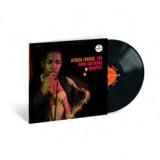
VERVE ACOUSTIC SOUNDS SERIE: komplett analog von Ryan K. Smith bei Sterling Sound von den
Originalbändern gemastert, QPR-Pressung (180 g), stabiles Tip-On-Gatefold (Stoughton Printing), wattierte Innenhülle.
“Africa/Brass”, im September 1961 veröffentlicht, war Coltranes erstes Album für das noch junge Label Impulse! Records. Das Werk markierte einen Wendepunkt in der Karriere des Saxofonisten und gilt laut dem
“AllMusic Guide to Jazz” als “Schlüsselwerk für das Verständnis des Weges, den John Coltrane in seiner
letzten Schaffensphase mit seiner Musik einschlug”. Für das im Studio von Rudy Van Gelder aufgenommene
und von Creed Taylor produzierte Album erweiterte Coltrane sein Quartett zu einem großen Ensemble mit
bis zu sechzehn Musikern. Coltranes leidenschaftliche, freie Improvisationen auf dem Tenor- und Sopransaxofon stehen dabei in reizvollem Kontrast zu dem kompakten, rhythmischen Sound des Blechbläser-lastigen
Orchesters unter der Leitung von Cal Massey. Die Arrangements für die Big Band wurden von Eric Dolphy
und McCoy Tyner erst während der Proben im Studio angefertigt
- A1: Point To A Point Blank
- A2: Automatic Teller
- A3: End Of The Great Credibility Race
- A4: Too Much
- A5: Killer's Kiss
- A6: Continental Cats
- A7: Instrumental Bonus Track
- B1: Spanish Fly By Night
- B2: The Roof
- B3: Your Beaten Heart
- B4: Turning Tricks
- B5: Wine & Depression
- B6: Quarter To Four
Back in 1990 the New Bomb Turks got together as four Ohio State University students who just wanted to rock. 10 years later they are already on their 7th studio album: Nightmare Scenario.
New Bomb Turks return to their snaggle-toothed first mistress — hard-driving, no-holds-barred American punk rock. With the guitar jive of Chuck Berry, the blinding ferocity of Motörhead and the snot of The Dead Boys, singer Eric Davidson and his backing trio fire off a dozen grenades of authentic old-school three-chord riff-rock in little over a half-hour, with nary a pause for breath between tracks. You can’t quibble with the four-on-the-floor intensity of tunes like opening salvo Point To A Point Blank. It was recorded over four days and nights, the only break being a jaunt over to a bar to see a reunited Real Kids, their first show in years, which floored the band and only added more mezcal to the fire.
Nightmare Scenario is available as a limited edition of 500 individually numbered copies on violet vinyl and includes an insert.
- 1: You And Me
- 2: Living Death
- 3: Night Light
- 4: My Victim
- 5: Labyrinth
- 6: Heavy Metal Hurricane
- 7: Hellpike
- 8: Riding A Virgin
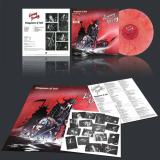
- 9: Vengeance Of Hell
- 10: Watch Out! (Bonus Track)
When asked about the founding fathers of German thrash metal, band names such as Kreator, Sodom, and Destruction come to mind. Perhaps even Tankard. The name Living Death is usually not among them. There is a simple reason for this. Similar to the Swiss band Hellhammer, Living Death from Velbert were simply a tad too extreme for most fans and the press. Thorsten “Toto” Bergmann's truly shrill vocals and the poor production of the first two (legendary) albums did not make it easy for the public to adequately assess the band's musical significance. Living Death was founded in 1981 by the two Kelch brothers, Reiner on guitar and Dieter on bass. In the early days, guest drummer Eric sat behind the drums. The line-up was completed by Frank Fricke on second guitar and the aforementioned singer Thorsten “Toto” Bergmann. Living Death recorded their first demo with three tracks in 1981, which earned them a deal with the Belgian label Mausoleum Records. A year later, their debut album “Vengeance of Hell” was released, which actually suffered from its very thin (and treble-heavy) production (in 1985, the record was re-released as a remix – with slightly improved results). However, the below-average production should not obscure the fact that “Vengeance of Hell” offers a few timeless thrash metal classics with “My Victim,” “Heavy Metal Hurricane,” “Hellpike,” and the title track “Vengeance of Hell.” The raw, unpolished sound of Living Death sounds more contemporary than ever today, 30 years after its initial release. This only proves that it took the music world three decades to catch up with Living Death.
2026 Repress
Chicago deep house pioneer Merwyn “Merle” Sanders needs no introduction to true heads.As one half of the legendary Virgo Four (alongside Eric Lewis) and under a slew of aliases, Merwyn helped shape the sound of late ’80s deep and acid house. Their records, now considered foundational, continue to echo across dancefloors and DJ sets worldwide.In the late ’90s, after years of trying to release more material through Trax Records, Merwyn took matters into his own hands. He self-produced his first 12” under the Merle alias — a record that sadly flew under the radar at the time, with most copies eventually destroyed. But one track survived and thrived: “Fannie Likes 2 Dance.” What started as a quiet release became an underground classic, highly sought after by DJs and collectors alike.
Now, Still Music and Jerome Derradji proudly present the full reissue of this cult favorite — featuring the two original mixes along with a never-before-heard unreleased remix by Merle himself.
This special edition comes housed in a full sleeve, complete with a detailed backstory written by Jerome Derradji about the track’s origins and legacy. A true slice of Chicago house history, back where it belongs — on wax.
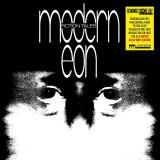
Reissued on vinyl for the first time, this is the sole and acclaimed album by seminal Liverpool post-punk/new wave band. Released in 1981 on Dindisc, the record showed the influence of the so-called "New Liverpool Scene" that sprang up in 1979-1980 around 'Eric's Club'. Modern Eon moved in the same milieu of influential local acts such as Echo & the Bunnymen, The Teardrop Explodes, Orchestral Manoeuvers in the Dark and Dead Or Alive. A small cult soon to be rediscovered !
Wie Amerika selbst ist auch die Geschichte von Chess Records eine Geschichte von Chancen in neuen Ländern, in denen Grenzen zwischen Hautfarbe und Kultur überwunden wurden, um Rhythm and Blues-Musik
zu schaffen, die Zuhörer auf der ganzen Welt beeinflusste. Das beeindruckende Künstleraufgebot von Chess
– und seine Gründer – haben den Blues von Volksmusik zu populärem Sound weiterentwickelt und verändert.
Chess Records wurde 1950 von den polnischen Einwanderern Leonard und Phil Chess gegründet und entstand im Süden Chicagos, aber der Einfluss ist weltweit und über Generationen der Popmusik hinweg spürbar
– von Acts der British Invasion wie den Beatles, den Rolling Stones und Eric Clapton, die Chess-Künstler
als ihre Vorbilder nannten, bis hin zu den heutigen Stars wie Beyoncé, Jack White, Questlove und Bruce
Springsteen.
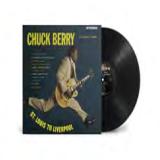
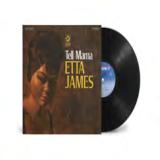
Am 17.04.2026 erscheinen die Alben von Chuck Berry ”St. Louis To Liverpool” und Etta James ”Tell
Mama” im Rahmen des 75.ten Bestehen von Chess Records
Wie Amerika selbst ist auch die Geschichte von Chess Records eine Geschichte von Chancen in neuen Ländern, in denen Grenzen zwischen Hautfarbe und Kultur überwunden wurden, um Rhythm and Blues-Musik
zu schaffen, die Zuhörer auf der ganzen Welt beeinflusste. Das beeindruckende Künstleraufgebot von Chess
– und seine Gründer – haben den Blues von Volksmusik zu populärem Sound weiterentwickelt und verändert.
Chess Records wurde 1950 von den polnischen Einwanderern Leonard und Phil Chess gegründet und entstand im Süden Chicagos, aber der Einfluss ist weltweit und über Generationen der Popmusik hinweg spürbar
– von Acts der British Invasion wie den Beatles, den Rolling Stones und Eric Clapton, die Chess-Künstler
als ihre Vorbilder nannten, bis hin zu den heutigen Stars wie Beyoncé, Jack White, Questlove und Bruce
Springsteen.
Am 17.04.2026 erscheinen die Alben von Chuck Berry ”St. Louis To Liverpool” und Etta James ”Tell
Mama” im Rahmen des 75.ten Bestehen von Chess Records