Black Truffle is pleased to announce a new solo album by Eiko Ishibashi, her first for the label, following on from the duo recording Ichida alongside bassist Darin Gray. Hyakki Yagyō (Night Parade of One Hundred Demons) was produced for the ‘Japan Supernatural’ exhibition at The Art Gallery of New South Wales, Sydney focusing on ghost stories and folklore from the Edo period onwards. As with The Dream My Bones Dream (Drag City, 2018), the album is a response to troubling questions about Japanese history, and the influence of the past upon the present, but finds Ishibashi shifting further away from her earlier piano-led songwriting and showing a deepening interest in electronics and audio collaging.
The two sidelong parts of Hyakki Yagyō feature layered synthesisers, acoustic instrumentation, recited verse and field recordings, at times densely mixed but always with a subtle interplay of changing elements. The influence of European and American forerunners as diverse as Alvin Curran, David Behrman and Strafe Für Rebellion can be traced, yet at the same time Ishibashi evokes the flute and string sounds associated with Japanese storytelling, and draws directly on the subversive literary tradition of Kyoka (‘mad poetry’) with a verse by the 15th-century poet Ikkyū Sōjun repeated throughout the album. Revisiting what has gone before, re-thinking what is possible musically, as a way of articulating what else might be possible in the future.
As Ishibashi’s liner notes make clear, the album reflects an attention to persistent dangers, myths and evasions in Japanese culture – as well as the lurking uncertainties that might threaten positive change. This would seem to be manifested in the emerging melodies soon met by dissonance, erratic collisions and near silence, as well as the eerie manipulation of the double-tracked vocals. Ishibashi’s underlying concerns ring true more widely of course. Hyakki Yagyō is a work of multiplicities, and mystery, a landscape where nothing is as it seems at first, and everything is vulnerable to sudden violent interruptions.
The album was produced with regular collaborators Jim O’Rourke (double bass) and Joe Talia (percussion), and features dancer and choreographer Ryuichi Fujimura performing Ikkyū’s satirical tanka. O’Rourke’s immersive mix creates a three-dimensional effect, with Ishibashi’s various sound sources enmeshing and interacting in captivating ways.
Pressed on coloured vinyl and presented in a deluxe package with an inner sleeve featuring and artist portrait and liner notes from Eiko Ishibashi. Cover and label design by Shuhei Abe.
Back cover design by Lasse Marhaug. Mixed and mastered by Jim O’Rourke.
key selling points:
- Black Truffle is pleased to announce a new solo album by Eiko Ishibashi, her first since her acclaimed 2018 Drag City release The Dream My Bones Dream.
- This album finds Ishibashi shifting further away from her earlier piano-led songwriting and showing a deepening interest in electronics and audio collaging.
- Hyakki Yagyō (Night Parade of One Hundred Demons) was produced for the ‘Japan Supernatural’ exhibition at The Art Gallery of New South Wales, Sydney focusing on ghost stories and folklore from the Edo period onwards and is a response to troubling questions about Japanese history, and the influence of the past upon the present.
- Produced with regular collaborators Jim O’Rourke (double bass) and Joe Talia (percussion), O’Rourke’s immersive mix creates a three-dimensional effect, with Ishibashi’s various sound sources enmeshing and interacting in captivating ways.
- The two sidelong parts of Hyakki Yagyō feature layered synthesisers, acoustic instrumentation, recited verse and field recordings, at times densely mixed but always with a subtle interplay of changing elements, hinting at an influence of European and American forerunners as diverse as Alvin Curran, David Behrman and Strafe Für Rebellion.
- Pressed on coloured vinyl and presented in a deluxe package with an inner sleeve featuring an artist portrait and liner notes from Eiko Ishibashi. Mixed and mastered by Jim O’Rourke.
quête:erratic
If Galaxy Lane’s first EP didn’t send the portals of time and space upside down, then the second EP will throw you down a vortex of hypnotic grooves juxtaposed with eerily erratic rhythms built in outer space.
The first of two EP’s to be trusted in the hands of Lone Romantic, ‘Night’ and ‘Later That Night’ will explore the concept of capturing moments in time.
Maybe Galaxy Lane can best summarise…
“I want people to really feel the mistakes in this music, the dirt, the rough and raw approach, the ‘sitting on the floor surrounded by wires at 3am messing with synths’ approach. That to me is the magic of this music, the interaction of man and machine, to hear the nuances, the tweaking of knobs and pushes of faders. I think we have lost that somewhat with digital technology, and have lost a lot of feeling in the process”
‘Night’ will propel the listener into ethereal textures layered over rough and raw beats, as outlined on opening track ‘Deep Space Nine’. If that sets you up for thinking this will be a dreamy ride, ‘Communication’ hits hard at the rear of the spaceship, coming at you with intergalactic bleeps, zaps and back cracking rhythms made for getting down.
Side 2 sets off on an exploration of wild eyed boundary flexing in the shape of ‘Enter The Light’. Pushing the machines to near breaking point whilst just hanging on, it’s a track that shows what can be done when the spaceship is left to drive itself, you can do nothing more than go with it and and see what happens.
‘Snow Day’ is perhaps the perfect way to round us back in. A more calmer, smoother ride, it’s unmistakable polyrhythms soothing the soul and setting us up for the next chapter…
If Galaxy Lane’s first EP didn’t send the portals of time and space upside down, then the second EP will throw you down a vortex of hypnotic grooves juxtaposed with eerily erratic rhythms built in outer space.
The first of two EP’s to be trusted in the hands of Lone Romantic, ‘Night’ and ‘Later That Night’ will explore the concept of capturing moments in time.
Maybe Galaxy Lane can best summarise…
“I want people to really feel the mistakes in this music, the dirt, the rough and raw approach, the ‘sitting on the floor surrounded by wires at 3am messing with synths’ approach. That to me is the magic of this music, the interaction of man and machine, to hear the nuances, the tweaking of knobs and pushes of faders. I think we have lost that somewhat with digital technology, and have lost a lot of feeling in the process”
‘Night’ will propel the listener into ethereal textures layered over rough and raw beats, as outlined on opening track ‘Deep Space Nine’. If that sets you up for thinking this will be a dreamy ride, ‘Communication’ hits hard at the rear of the spaceship, coming at you with intergalactic bleeps, zaps and back cracking rhythms made for getting down.
Side 2 sets off on an exploration of wild eyed boundary flexing in the shape of ‘Enter The Light’. Pushing the machines to near breaking point whilst just hanging on, it’s a track that shows what can be done when the spaceship is left to drive itself, you can do nothing more than go with it and and see what happens.
‘Snow Day’ is perhaps the perfect way to round us back in. A more calmer, smoother ride, it’s unmistakable polyrhythms soothing the soul and setting us up for the next chapter…
Calum Gunn has spent the past few years becoming a key figure in the European electronic avant-garde. As well as releasing his own music through labels like Entr'acte, FLUF and Tsuku Boshi, the Berlin-based Gunn also helms Conditional Records, one of the most forward-thinking computer-music imprints to emerge in recent times.
Gunn's Addenda EP, his debut drop for Central Processing Unit, contains some of his most dynamic work to date. While his commitment to experimentalism remains, these four tracks represent a clear shift in focus for Gunn - namely that, for perhaps the first time in his career, he is making music that is club-friendly. A whole host of dancefloor innovators are recalled when listening to Addenda - particularly Autechre, Analord-era AFX and several of Mark Pritchard's projects as well as Gunn's contemporaries Rian Treanor and Renick Bell.
These tracks never sit still, their rhythms constantly evolving and turning themselves over. Addenda's first two cuts use metronomic hi-hats to keep these ever-changing grooves in check. With its thwacking kicks and snares, opener 'Esephony' enters the fray with the heft of an early Wiley riddim. Atop these drums we find squeaky half-melodies interlocking and breaking apart, meaning that the overall effect is not dissimilar to the tweaking beats that Pritchard came up with as part of Africa Hitech. 'Esephony' is followed by 'Moebu', another track that harks to grime through its fluttering lead synth. The way that this single-note line snakes above a slow, steady drum pulse pitches 'Moebu' halfway between Last Japan and rRoxymore.
Gunn increases the tempo in Addenda's second half. 'Ternenmarz' introduces itself with more blarts of bass, but whereas these were steady on 'Esephony' they now jump around unexpectedly. Gunn holds the erratic kicks in place with twittering hats and snares - indeed, when you factor in its gnarly synth lines, 'Ternenmarz' steers closer than any other cut here to the high-grade electro drops that CPU has made its name with. Closer 'Pins' supercharges the snap of 'Esephony' to 145 bpm before Gunn softens up the track with reverb-drenched synths that nod to the sombre post-grime of Mr. Mitch's Gobstopper Records.
With the Addenda EP, Calum Gunn has achieved something that proves elusive to so many producers - making club tracks that are at once innovative and immediate, their experimental tendencies serving to elevate their dancefloor impact.
RIYL: Rian Treanor, Africa Hitech, Autechre, Renick Bell, Brainwaltzera
“Cryptic, twilight emissions from Villalobos and Loderbauer; their synthetic compound of electronics and ouroboros jazz has walked from ECM and Perlon over to Mana.
Developing a sound that tends to drift along as otherworldly atmospheres and strange fusion, Vilod evade easy categorisation, even compared to Villalobos’ already experimental and genre-twisting solo minimal offerings. He and Loderbauer pull away the backbone inherent to the structure of that dance music, and The Clouds Know refines a deft and subtle musical noir built on ambient cues, sparks and claps of electricity, brushed drums, black voids and subterranean bass swoops. There's a twinkle in the eye and moments of deadpan levity, but the overall mood here is sober and introspective. Emotions run deep.
Through studio mastery and an enigmatic language the album forms a fascinating sonic and sensory work with few compromises. With erratic rhythms notably submerged—techno remains as an irregular pulse in the belly of the beast—fields of crisp, uncanny detail expand greatly. Humid environments appear, dense with the chatter of synthesised insects and the gentle rain of drums and whispering cymbals, enchanting the listener in focus or sublimating into layers of ambience depending on your disposition - and the quality of your stereo field.”
‘Rain, spit, ice, neon, plants, steam, mercury and soil. This is dream music categorised by a language of senses; visual, poetic, and abstract sound that draws on techno and dub ambient.
‘Somewhere between pastoral impressionism and cyber-noir, its surface evokes the tensions of a fluctuating, fizzing atmosphere, pictures emerging and dissolving in the mind’s eye. Thick layers of field recording flood tracks fabricated from erratic, oddly distanced rhythm.
‘The sensation whilst listening is not unlike hearing the world from a place within the body; swimming in the bloodstream, cutting through the turbulent landscape secure in a metal tube.
‘Or being over-exposed to lushly textured environments with the anatomy far receded; an out-of-body experience where subtler senses are heightened and the landscape begins to take on surreal qualities.’
Mighty DNAonDNA (Heteroerotic Asphyxiation, Oiwa) manufactures STRICTLY STRICTLY's magical 3rd release and offers nothing than power, power, power: Erratic opener THE//GRIND pushes you into the flow with restless UK-ish breaks before HAIFA slaps you hard with its violent rhythm and epic bassline. DON'T MOVE on the B-side chases you with its 145bpm acid breaks to finally eject you struggling for breath. A dangerous adventure!
For the second release on the Galaxiid imprint, a label of electronic music archeology and quality, we are transported to the strange sonic world of an elusive 90s pioneer. Solar X's 1997 album X-Rated will be released for the first time on vinyl, as well as reissued digitally, with new artwork by the Japanese artist Keiichi Tanaami. Two worlds connecting sonically, visually and culturally.
Solar X enjoyed a burgeoning career in post-Perestroika Moscow making playful, low-tech electronica from Soviet analogue instruments, which he masterfully configured to forge animated compositions and dancefloor rarities. Fascinated by chaos and complexity, his music explores the ways in which our minds can be manipulated by structure - an endeavour quite plausibly linked to his other career as a lecturer and researcher of AI, information theory and cognitive science, his interest in which was in turn triggered by his young experiments in computer music.
Solar X gained international attention at a time when Russia was (quite unfairly) seen as a vacuum for electronic music, but was exploding in the period of piracy, poverty and freedom following the collapse of the USSR. Young Russians had benefited from the soviet education system and there was a strong DIY computer programming and music scene, fuelled by hackers, gear freaks and party animals. Viewed from today, the album is reborn at a time of further political and social strife, which many see as fuelling the huge creativity and radical thinking of modern Russia's young creatives.
X-Rated treats tempo and form as fluid concepts, administering sudden changes to its sonic landscape with disorienting effect, underlain with a subtle dose of humour and experimentation. Downtempo trip-hop sits alongside frenetic IDM and blistering electro, all bound together by peculiar melodic inflections and lively distortions. Warm, trippy harmonies and robotic synths are offset with angular drums, shifting erratically through moods and genres with cunning intent. Much like his contemporaries from the era, it's his ability to breathe life into a humble production setup that makes his music so compelling some twenty one years later.
The track titles are from a book of call girl cards in London phone booths, that reached the artist in Moscow in 1995. "I liked the titles from these cards, which were self-promoting and offering pleasure (e.g. "Mistress awaits you"). So, I thought since my tracks also offered some kind of pleasure, they might as well advertise this through their titles.'
Label head Nina Kraviz was introduced to the work of the 83 year old sensei Keiichi Tanaami by Ukawa Naoshiro, founder of Dommune in Tokyo, one of the brightest figureheads for the arts in Japan, responsible for the graphic design of the cover. In September 2017 Nina played for the opening of Tanaami-san's first exhibition in Moscow at Gary Tatintsian Gallery. Nina performed a live sound palette, to accompany the looping 7 minute animation, of experimental music from the Soviet Union, Russian pioneers of electronic music like Species Of Fishes and SolarX, Soviet-time pioneer Lev Termen, Kuryochin, avant-guard rock mixed with some Stockhausen and just pure abstract sounds, as well as treasured artists like Biogen.
Tanaami's illustrative work has strong sexual elements, so out of the five art pieces Nina selected and commissioned for Galaxiid, the first fits perfectly for 'X-rated'. The vertical line of text on the left is the traditional form for Japanese covers of foreign releases. The cover, together with the accompanying poster and sticker, are printed in Japan to ensure the highest print quality and purity of the colours.
Matt Edwards launches Stranger in The Night with his first solo material since 2017.
The Rekids offshoot will release regular music by four artists, namely Radio Slave, King
Britt, Anthony Rother and Fred P, who will each drop three EPs over the next year.
'With Rekids being 100% focused on releasing music for dance floors I felt the need to
create a new platform to explore a wider musical vision and invite some of my all-time
electronic musical heroes to be a part of the series,' says Matt Edwards.
Both numbers near the 12-minute mark but each track portrays a different aesthetic.
Opening with precision drums and crystalline notes, 'Ground Control' makes a nod
towards the hi-tech soul sound of Detroit and drives forward using a sultry bassline, erratic
chords and the occasional icy stab as an array of contrasting sounds operate in unison.
On the flip, a syncopated rhythm lays the foundation for 'Last Communication' whilst a
tantalising melody joins poignant synths, constructing a profound and hypnotising journey.
Norwegian techno label PLOINK returns with ‘Kambodsja Work’ EP from co-founder Thomas Urv.
With over two decades of experience running techno events in Norway, Thomas Urv and Miss Mostly’s PLOINK set up as a label in 2014 and has since acted as a platform for an array of talent hailing from Scandinavia. Artists like Prins Thomas, Mental Overdrive, KSMISK, Christian Tilt, +plattform, and more have all made contributions to the imprint, which releases mind-bending techno out of its base in the idyllic city of Bergen.
Erratic subs, floating pads and unearthly vocals form ‘Trump Is Cartman’, leading into the pumping kick and metallic FX of ‘Sockets Below’. Next up, ‘Cambodian Chipher’ reveals industrial drums and electric piano before moving into the shuffling beat, rolling bass and rhythmic drones of ‘Ustaoset2019’.
- A1: Ich Will Dir Helfen
- A2: A La Manière (With Roya Arab)
- A3: Ondine
- B1: Aspiration (With Mona Soyoc)
- B2: One Of These Days (With Hafdis Huld)
- B3: Théorème
- B4: Mortel Battement / Nocturne (With Alain Bashung)
- C1: Organique
- C2: The Watcher (With Mona Soyoc)
- C3: Qu’est-Ce Qui M’a Pris (With Philippe Poirier)
- D1: Xr 116 / Messe Rouge
- D2: Untitled
- D3: Ondine (Alt Take)
- D4: Piasong
The sensitive mountain » (la montagne sensible) is the nickname Alain Bashung came up with for Arnaud Rebotini. At the height of his fame, after the success of Fantaisie Militaire in 1998, Bashung readily agreed to create an album with Rebotini. The two men didn’t know each other; their record label had introduced them. Bashung brought in “Mortel Battement” and “Nocturne,” two poems by Jean Tardieu, which he recited in a voice simultaneously warm and flat, and Arnaud produced an impressionist soundscape that ended with an apocalypse of metal. Bashung was so proud of their collaboration that he offered to give several interviews to promote the record. Today, listening back to this moving Léo Ferré influenced "talking singing" exercise, it’s hard not to hear the template for L'Imprudence, the album that Bashung went on to record with Rebotini two years later. In a similar way, the album Organique sparked a productive partnership between Rebotini and filmmaker Robin Campillo, which resulted in their being awarded a César for Best Original Music in 2018. The director, who trusted Rebotini to create the soundtracks for his films Eastern Boys and 120 Beats per Minute, never kept his love for the 2000 record a secret.
Yet it’s an understatement to say that when it was released, Organique was not in the spirit of times. That year was all about the French touch. The funky samples of Modjo’s “Lady” and Superfunk’s “Lucky Star” ruled the sweaty dancefloors. Although Rebotini was familiar with the electronic scene, he had something else in mind when he set about creating Organique. Under his own name or under the pseudonyms Aleph, Avalanche, Black Strobe, Maison Laffitte, and of course Zend Avesta, he had already released several quite bizarre and experimental techno, house, or jungle maxi singles on pioneering labels like P.O.F., Source, and Artefact, run by his friend Jérôme Mestre’s, whom he had met back when both were working as record salesmen at Rough Trade’s ephemeral Parisian store. It was at Artefact, still financed at the time by Barclay and Universal, that he naturally proposed this record project, which was a bit "different." It was his first real album.
Arnaud Rebotini has never hidden his love-hate relationship with the electronic scene. He’s a fan of rave music, Rex, and later Pulp, but he listens mostly to metal and contemporary music, mainly American minimalists such as Terry Riley, Philip Glass, Steve Reich. He wanted to mix this genre with a more French aesthetic inspired by Debussy, whose unconventionality fascinates him. From the first suspended guitar note of Organique, you can pick up another influence, possibly poppier. In the style of Mark Hollis, the erratic leader of Talk Talk, whose only solo album’s silences and dissonances left their mark two years earlier, we hear the fingers touching the keys of the clarinet on “Ondine.” The instruments have presence, character. Nothing is smooth. Everything is organic.
Although it’s sometimes labeled as electronica because of Rebotini’s career, there’s nothing digital about Organique. No "pro tools" editing or samples, only programmed drums and some synth layering. And his guest vocalists. Playing the role of electro producer, he invited Bashung, of course, to join him on the album, but also Roya Arab, who Rebotini first spotted while she was playing in Archive, and her sister Leila, Gus Gus alum Hafdis Huld, Kat Onoma’s Philippe Poirier on the “Samuel Hall” inspired track “Qu’est ce qui m’a pris,” and former KaS Product member Mona Soyoc.
The frustration of a tour where he had "little to do on stage," the desire to sing himself, and the creation of the Black Strobe project, a haunting mix of blues and rock, stopped Zend Avesta from putting out another album. Eighteen years later, the Organique we rediscover today has lost nothing of its strangeness, nor beauty. When it came out, Bashung said, "What is interesting for a musician is to feel that you have a piece of wasteland in front of you, something to clear.” That remains true today.
As An Undisputed Heavyweight And One Of The Leading Figures Within The Electronic Music Scene, Icicle's Recognized As A Highly Respected Producer - Among Other Ventures Through Steaming Releases Via Hospital Records, Critical Music And Shogun Audio. Propelling His Technically Advanced Production Style Into The 140 Bpm Spectrum, It's A Sight To Behold As Dj Youngsta Reveals The Next Ace Up His Sleeve. The Uk-based Veteran Conveys His Awe-inspiring Take On Dubstep With Four Tracks On A Twelve-inch Platter - Vehemently Battle-tested As A Dubplate And Ready To Off At A Dance Floor Near You.
We Are Immersed In Dense, Granular Fog. 'raising The Dead' Begins The Ritual With Hypnotism And Anxious Unrest. Eerie Lead Melodies Lure Listeners Onwards As Relentless Percussion Takes Hold. Rigorously Increasing The Intensity With Mesmeric Style To The Ruthless Beat Of The Drums - Fragmented Vocals Flicker Through The Mist. As Ethereal Spheres Seem To Vacate, A Disturbed Melody Guides A Path Into The Low-frequency Behemoth That Is 'nt'. Driven By Its Intense Groove And Sonorous Sub-bass Emissions, The Erratic Lead Staccato Does The Rest To Keep Us Fiercely Bouncing To Icicle's Percussive Pulse.
As If It Could Get Any Hotter, We Flip To A Promising B-side Only To Be Proven Wrong Twice. Initiating The Ceremony With 'shout Me' - Haunting Female Choirs Entrance Amidst The Thunderous Sense Of Anticipation. Evolving From Intricate Breaks To Straight Shut-down Maneuvers Without Skipping A Beat. In A Final, Fulminant Outburst, 'noughties Riddim' Goes On To Wrap Up The Masterpiece In A Most Mischievous Fashion. Cutting Through The Noise, Profoundly Satisfying Mid-range Distortion Surges Flare Up In The Distance, While Continuous Pressure Continues To Evoke Cries For Rewinds.
Matt Edwards' R-Time Records welcomes back Sir Lord Commix with five silky cuts for the fourth 'Retroactive' release.
Amoon Andrews' outfit Sir Lord Commix returns with the fourth instalment of re-released gems that have been in high demand on the vinyl market. Born out of Rekids, R-Time Records has previously released twelve of Commix's cuts, yet his treasure trove discography keeps on giving, spanning two decades.
Released on Ugly Music in '96, 'World Of Groove' is a smooth house cuts with an abundance of soulful stabs and driving percussion whilst hypnotic melodies and sweeping cosmic strings envelope 'Life Cycle', which first appeared on Cynic in '05. 'Cosmic Jive' - from the highly sought after 'Evidence' vinyl of '97 - pumps a reverberated kick amongst shimming chords and rising bleeps.
Appearing on an extremely rare release on Hard Up, 'Under Seige' has an off-kilter rhythm and erratic yet funky slapping bass melody. Finally, the release concludes with an ethereal cut titled 'Beyond Reach' complete with liquid breaks, floating arps and shining melody (originally from a Talahachi VA in 2014).
Loya is a new project by French producer Sébastien Lejeune, which allows him to research his
own cultural heritage, as a native of La Réunion.
For the past five years, Loya has been exploring the musical environment of the sister islands of the
Mascarenes (Indian Ocean), breaking down the boundaries between electronic music and
traditional music in a globalized world. Growing up in the great melting pot of La Reunion, Loya was
exposed to a number of cultures and rhythms that fueled his curiosity.
Settling in metropolitan France in the mid-90s, Loya's first encounter with electronic music
happened upon discovering acts such as Autechre, Plaid and Boards of Canada. Soon, Loya was
drawing from Intelligent Dance Music and bleep techno to build complex rhythm arrangements and
ethereal melodies. Throughout this research, Loya gradually managed to tame the erratic nature of
his machines to summon states of trance that reminded him of the music he grew up listening to as
native of the Mascarene.
From this route through the meanders of contemporary electronic music, Loya developed a
trademark sound based on triple time beats, pointillist sound design and a taste for experimentation.
Such distinctive features can already be heard on his first self-produced album Eruption, released
in 2014 and the EP Indian Ocean, released in 2016 on Mawimbi Records, although Corail is his
most accomplished work and a testament of his clear talent.
Exploring the blue depths of the Indian Ocean with the fluency of a native, the ten compositions of
Corail unfold like an archipelago. Showcasing the talents of traditional musicians such as Mauritius
ravanne icon Menwar and Madagascan accordion master Régis Gizavo, Corail finds a fine balance
between the soft, velvety ripples of modular synthesizers and the rawness of frantic percussion
motifs and local field recordings.
Planet Battagon are innovators in Droid Jazz. Electronics, jazz and outer-national sounds ain't no new thing. But following in the extra terrestrial sounds and cosmic mythology of Sun Ra, Planet Battagon are not reaching for the cosmos but simply made of it. Droid consciousness is the starting point but what's consciousness got to do with it. The droid's need culture, music and art and of the highest and most experimental of that lies Droid Jazz.
Originating on Lord Battagon's home planet the group are documenting the folklore and jazz stylings of the Trans-neptunia neighbourhood out on the edgelands of the solar system. This debut release follows on from a Lord Battagon outing on the Atlantic Jaxx label. 'Who's out on Quaoar' is taken from the Ltd Ed 12' 'Battagon Symphony', part one of 'The Rough Guide to Trans-Neptunia'. The release also features 'Salacians of Neptunia', a homage to the early droid cultural pioneers and the chant like 'Moon of Dysnomia' that is played ceremonially to temper the erratic saline tides of the aforementioned moon especially during its retrograde period. Droids and saline do not mix well and OntheCorner are releasing these 'Rough Guides to Trans-Neptunia' after intercepting distressed transmissions prior to a
devastating saline tide.
The Noise Droids of Planet Battagon are:
Jack Baker - Acoustic Drums
Martin Slattery - Bass Clarinet,Alto Sax & FX
Oli Savill - Percussion
Mickey Ball - Trumpet
Nathan Curran (Tugg) - Synth Bass, Syn Drums, FX & Conductor
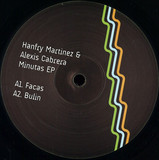
Moss Co., sister label to Archie Hamilton's Moscow imprint, returns with its 10th release, a four tracker from Hanfry Martinez & Alexis Cabrera that is both club ready and forward thinking in equal measure. A cross-continent collaboration, the 'Minutas' EP plays perfectly to the strengths of Tenerife's Hanfry and Argentina's Alexis, emanating the precise sound that Moss Co. loves to champion.
'Facas' leads the way with an unabashed breakbeat and zephyr-like hook, leaving space for playful midbass tones and experimental keys, behaving in a purposefully erratic manner. 'Buli´n' follows with driving, dissonant synths that maintain momentum as a weighty and funk-laden bassline enters the fray.
On the flip is title track 'Minutas', rich in sparkling frequencies, snappy percussive programming and the kind of lazy bass motif that is primed for the beaches of Mamaia. 'Copeti´n' closes the EP with a hazy bassline and gentle, rolling subs complimented via crystalline drum patterns and tripped out FX processing.
Following a string of well-received EPs on Cin Cin, Exit Strategy and Get Physical, Belfast's LOR readies his debut, self-titled album 'Lunar Orbit Rendezvous'. This will mark the first release on his newly minted label LOREC. A technique used in Apollo lunar missions, 'Lunar Orbit Rendezvous' charts a journey to the moon and back. A bold album, both in concept and sound, it's the work of an artist coming into his own.The title track and first single 'Lunar Orbit Rendezvous' prepares the album for lift off. It's a track that carries the technical tension of crucial operations, with gnarly acid pulses and happily erratic synths sparring over a steadfast electro beat while vocal samples collapse into themselves. 'Lunar Orbit Rendezvous' comes accompanied by a video from Studio Crême, whose design and video work has been championed by the likes of James Holden, Warp and Simian Mobile Disco. Using a hyper detailed black and white render of a NASA grade rocket, the video brings the optical journey of 'Lunar Orbit Rendezvous' to life The 'Lunar Orbit Rendezvous'
Feldermelder's "The Sound Of" is a collection of tracks created in hotel rooms around the world. These little anthems tell stories about places filled with a sense of purpose, a particular emptiness, or a feeling of transit. Places that have fallen out of snyc with the rest of the world. "The Sound Of" is a homage to personal moments worth keeping alive in one's memory.
The flexi disc features the track "Harmony" and was an insert in Zweikommasieben Magazine #14. The screen-printed inlay by Mathias Forbach / Fichtre features an index of sounds and frequencies used in the composition. The flexi disc comes with a download code for four additional tracks.Feldermelder's influences range from the decomposed structure works of old pioneers of Electronic Music to classical Jazz, electronic and analog music from the now, before and tomorrow. The diversity of the music that inspires him, finds reflection in his own sonic adventures, forming his ever evolving sound, combining as map and compass to guide his artistic outbursts. Feldermelder is co-founder of -OUS records and member of the art collective encor.studio. He has been performing internationally with his recent audiovisual live show "Erratic" and the AI-driven installation "Initiation", among others.
Beware of the blazing sun when she's orange and transparent.
Overwhelmed with the ecstacy of flight, Icarus soared into the sky like a bird, or rather a god. Drawn by desire for the heavens, he ascended higher and higher towards the sun. When the heat melted the wax on his wings, he fell from the sky and vanished into the dark blue ocean, where feathers, still today, ride the waves of the Icarian Sea. Aimed at dancefloors in sleazy bathhouses, seedy basements and soiled warehouses, Icarus Traxx' first offering takes us back to the mythical days of anonymous, muscular power house. Delivering no less than three takes of 'Commandment' (plus two acapellas), the 12 inch, starring the enigmatic voices of Jesse B. Simple and Charlotte B. Good, supplies a choice cut for every disc jockey.
'Jack 88 Tape Mix' starts things off with a vigorous kick, prosperous strings and the spirited voice of Jesse B. Simple. The oracle proclaims celebration times. Addicted to Jesse's vocal delivery The acapella will guide you through your most ecstatic moments.
The lights go out on 'Get Your Life' just before it wakes you up with a slap to the face. Again, it's Jesse in the vocal booth, groaning his mantra to 'dance, jack and get your life to this' on a bed of erratic kicks, jittery acid and vexed rave stabs.
On the flipside, the celestial Charlotte B. Good glides into the room. Her sensual Spanish stanza gracefully inhabits 'Spanish Fly Reprise', made for horny, high as a kite early mornings. Charlotte alerts you that your time to snatch up your one true love on the dancefloor has nearly expired.. Like a siren, she lures you into her universe with sweet lamenting whispers. Better think twice before you follow.
The long awaited answer from the notorious southern-hemispherian sound system, Subtle Sound System. This debut release from their record label aptly named Subtle Recordings is bringing some heavy weight straight out of Christchurch, New Zealand, first up with local legend Headland. Exquisitely imprinted 'no holds bar' by the masterful Optimal Media in a full art sleeve, this 180 gram, vinyl only, no-repress recording superbly ushers in a new beginning for the sound system and is another pillar of foundation to the future sound of bass music.
Headland, with his atmospheric soundscapes, sparatic drums, jarring percussion and punishing basslines, has been taking his unique sound to the world for the past few years and has sequentially been picked up by some of the most forward thinking labels in the bass music scene. From notoriety like Innamind Recordings and Zam Zam Sounds, Headland is one of the most noteworthy artists on the scene today and is a staple in sets from artists including, Samba, Mala, VIVEK, Commodo, Sleeper, just to name a few. Headland's infamy continues on Subtle Recordings debut release with the two outstanding tracks, Quiver and Deathbed.
From a spacious beginning, Quiver quickly builds pressure, manifesting into a track that by the end of, you'll have to regroup your crew as all would have been taken on their own solo journey. Navigate through high level percussion, sonic stabs, sub-temperate basslines and menacing vocals, all encompassed within a 130 bpm landscape where the richters leave you feeling vulnerable and insignificant. Quiver is a force of nature not to be taken lightly. After setting the stage, this behemoth pushes to another level, with erratic note changes and misplaced beats, before opening up to a plateau of relative safety within rolling basslines and familiar haunts. Recollecting yourself, you are once again thrust into unknown territory. A barrage of death blows commences until eventually you find yourself on the other side, disorientated, demoralised, but thankfully unharmed. With support from dons like Gantz, Boofy, J Kenzo, Mr K, Quiver has begun to leave its mark through the next frontier of bass music.
A usually silent, still and chilly affair, Deathbed is anything but, with its uplifting groove, conscious beat scape and warm bassline. But don't get too cosy, cause this assortment of frequencies is cold. Foreboding basslines. Wholesome mids. Trademark Headland accents. Deathbed builds in monumental 140 bpm splendure, in a simplistic formation, that will have you calling home to tell Mum of your triumphant return. Bask in all the glory as the track sheds back into its essential ingredients before collapsing into a well rewarded breakdown. Another confident drop will re-immerse you within the ride, reminiscent of what has been conquered and celebrated in the dystopian sound Headland has crafted in this atmospheric masterpiece. Banging dancefloors worldwide by artists like, Commodo, VIVEK. Deathbed produces the goods for an old fashioned shelling.
While notorious in the Chicago streets, RP Boo's music had been unfairly confined to a few white labels and self-released mixtapes until his two archival Planet Mu LPs Legacy and Fingers, Bank Pads & Shoe Prints introduced broader audiences to his sonic history, some of it fifteen years after it was first recorded. I'll Tell You What! is the next step in his mission, and the first time he's released an album of contemporary material. The title, a favorite maxim of his, welcomes listeners to sit down and let him narrate in the unforgettable abstract fashion he's known for. He explores familiar motifs such as the cosmos, movement, and opposition, using densely interwoven vocals, unpredictable percussion, and evil humming bass as his tools of choice. RP Boo's music doesn't follow the traditional rules that most compositions do. Layering decades of samples from yesteryear to the present over his commanding vocal cut-ups, he transports the listener to their own realm of the space-time continuum. The main difference between this record and his prior work is now we hear Boo tell new stories about preaching his gospel outside of Chicago, from his experiences frantically touring the globe over the last five years. The words 'things ain't been the same / since I hopped the plane' are repeated on top of engine sounds and rumbling bass on Flight 1235, a glorious paean to his new jet-setting adventures. The spirit of competition runs through RP's veins as much as blood does, something you can't unlearn when you've been making music for Chicago's footwork circuit as long as he has. The local culture has served as a shelter from the violence that has plagued the city, pitting kids against each other with their feet rather than weapons. On At War Boo reminds us 'we are at war in the streets', a double meaning to both the mayhem in this world and the sweetness of rivalry on the dance floor. Another battle-themed track Cloudy Back Yard, one of the spacier moments on this album, is an abstract on the state of footwork's home. Chicago remains the backyard of this artform even though it's left the porch and traveled to new neighborhoods worldwide. Back at home though, competition among the DJs and dancers continues, and as the man himself says, 'with all this hate, there's smoke, and it's cloudy'. I'll Tell You What! throws more than a few curveballs into the mix. Footwork has always borrowed from hip-hop, and many vocal tracks are almost condensed raps, dating back to the street chants pioneered on Dance Mania Records in the ghetto house days. On Bounty, Boo grabs the mic and brazenly lays down a full-on verse of terror over a thick atmosphere of his signature sweltering low-end and erratic Roland R-70 patterns. While he's most famous for his confrontational battle anthems, his melancholy moments are just as powerful. You get the best of both of those worlds on U-Don't No, with soulful samples finishing his own cocky sentences, one of the most elegant tracks RP has made to date. Deep Sole closes the record out, with the words 'It's always beautiful at the end' looping over waves of hypnotic synthesis, confidently looking death straight in the eyes.
Left of centre experiments from the Dutch underground of yesteryear. Muziekkamer was the name of the home recording studio that gave birth to the twelve tracks on 'Popmuziek', an intriguing document of sketch arrangements and primitive, fairytale sampling wave cuts. This is music which excels due to its inherent naivety; the limitless ambition of 'Black Box' almost sounding like a precursor to the 90s ambient techno of Likemind or Stasis. On 'Being Home Tonight' we can hear an early form of what the likes of Tolouse Low Trax have been bringing to the forefront of contemporary club culture whilst the erratic art-rock of 'Walkman' mirrors what Leven Signs & co were doing over the pond. In trying to create something which represented 'intrusiveness' as a contrast to an earlier ambient tape the trio incidentally blurred the lines between various musical fashions to come. An amazing snapshot of time and place!
Another Alias returns with the second installment of White of My Eyes. WOME002 continues along the path laid out by
001, but takes it a step further into varied moods from the sledgehammer-esque 'Heave' to the melancholy 'Creep on
The Couch. While keeping with his off-kilter rhythms and erratic synth work.
A double album of dirty, raw, bone-grinding Techno from post apocalyptic survival times by Franziska Lantz released on Global Warming Records, London 2017 Loaded with heavy distortion, fat textures, harsh beats, relentless rhythms, moody synths and erratic melodies, this sound is bursting with rawness and urgency. Harness your speakers and dance!
GILA steps out of the shadows with a huge release.
Two massive,cold metallic techno drillers from the trench, with acidic nuances and big room bravado attached.
106 Slipper is the A-Side, a weighty, slow tempo,morphing banger. Driven by punishing percussion,this is a polyrhythmic take on techno from the trenches. Receiving love from Mary Anne Hobbs, OPTIMO & Hudson Mohawke. Trench Cadence, the B-Side, is a drum line procession sent through a meat grinder, picking up erratic IDM aesthetics, and a Villalobos' who gives a fuck'mentality.
Hard and built for the club.
*The No Man Is An Island EP is a single cut from the debut album of the same name by Aalko, a new project by Kebko Music founder Akiko Kiyama. Renowned for her minimal techno track featured in Richie Hawtin's seminal DE9 Transitions album, the Japanese producer reveals her another side under this new alias. The project has already created a stir as Aalko has garnered support from Gilles Peterson on his BBC 6 Music radio show and premiered a live performance at MUTEK's Tokyo launch, where she drew the audience into an inspiring frenzy.
Aalko is a culmination of Kiyama's recent practices in a wider musical spectrum that go beyond the confines of her minimalistic techno characteristics. It conjures her distinctive soundscape where a variety of styles coexists: she demonstrates her knack for breaks, ambient and irregular time signatures, her acute ears for unadulterated tone and texture of sounds standing out in sharp relief.
Taking a floor-oriented side out of the No Man Is An Island cassette album, this single cut features three tracks that work wonders in a DJ context. "Body & Soul" is an erratic rhythm experiment jumping between several beat styles. "Mixture" offers Kiyama's unique interpretation on syncopated dynamics of breaks. Wrapping up the EP is 'B.I.C', a long-awaited exclusive track that ranked among Gilles Peterson's top 20 tracks of 2017. Its dubby functionality makes it a powerful tool that can work at various stages of the night.
These tracks give the nod to Kiyama's peculiar self full of sonic idiosyncrasies, showing no fear of breaking accepted conventions.
For the fourth release on 6dimensions, Steve Bicknell has delved into the catalogue of the Lost Recordings series on his previous imprint; Cosmic.Steve Bicknell's Awakening The Past feature three tracks from Why And For Whom, the first of Bicknell's Lost Recordings releases. Originally released in 1996, Why And For Whom Has been named one of the best UK Techno records of all time with Bicknell being billed as a 'criminally underrated producer'.With the re-release of these tracks in 2017, it is clear to see that the tracks have stood the test of time. All four-tracks on Awakening The Past were previously untitled but have been renamed with a focus on the human condition. With the 6dimensions label being founded on the principles of the 'human mind's natural make-up' it seems a natural decision to rename the tracks to suite the label ethos. Although one quarter of Awakening The Past was released 20 years ago, Bicknell's focus on mood shows coherence between his work then and now. The era of production can be distinguished in the EP, however, this is only eminent through a difference in recording technique. More importantly, the mood of older and newer productions are indistinguishable from each other and display Bicknell's unrelenting dedication to his own focus on concept of aesthetic. Physical Life' opens the EP with a rawness that is carried through the EP. With tape hiss underpinning the track, Bicknell's signature bass grumbles hold together hi-hats which progressively filter in and out over the course of the track. Bicknell's use of filters carries through onto the second track of EP, 'Natural Vibrations' boasts an erratic and high-pitched 303 sequence that shows a bit of experimentalism before the EP steps back into Bicknell's more familiar techno odysseys. 'Fearing The Minds Fears' paints a tense atmosphere, lashings of motoric modular synth are added with little fuss as the track title confirms its significance. Finally, 'Conscious Awakening' drives the EP to a close with dizzying pace: it's here that Bicknell's ability to control the emotion of the listener is really evident.
* Once again, providing a context for exciting new producers to release their debut 12', Cold Recordings is proud to now bring you 'Cocktail Party Effect'. Hailing from a musical family Eric Baldwin, the currently Berlin based but British pro- ducer, shows off his colours here with a diverse, rhythmical, experimental - but always dance floor savvy - EP of 4 killer cuts, all rolling out between 125-130bpm.
* The title track 'Battered' leads the EP , kicking things off with a glitching set of electronics , setting a curious mood ,be- fore dropping into a crazed rhythmical explosion, fidgety and erratic, but somehow glued together in a fluid, propelling motion. 'OOYFM' takes things into slightly more typical UK bass music territory, rolling out techno ingredients, a grimey UK bassline with broken-beat rhythmical dynamics that also hint at UK-Garage influences.
* Flip the vinyl for the second half of the EP and you'll find 'Intens' taking up a stance that sits somewhere between dancehall and techno, rolling and smashing its way as it goes along, while descending electronic motifs cascade in sympathy. Finally the EP closes with 'I Kno3' which pulls back on the instant gratification factors but hits out instead with a moody, bass driven and percussively expressive exit track.
With this album Cypress Hill turned towards a more tranquil, sedate, slower, spooky sound with beats. The dark mood of this album reflects the strife within the band during this era, when member Sen Dog temporarily left the band to pursue other projects.
On this album both Wu-Tang Clan members RZA and U-God make appearances on "Killa Hill Niggas". Also notable was track "No Rest For The Wicked" which ignited the feud between Cypress Hill and rapper Ice Cube, who they claimed, stole material from the band.
At the time this album was well received by critics worldwide.
Q - 4 Stars - Excellent - "The production is sophisticated, incorporating Indian sitar and sloping, almost psychedelic bass grooves to create a vaguely threatening ambient hardcore."
Melody Maker - Bloody Essential - "...resonates with freakish cheese-wire paranoia...a gobsmacking paradox of expansive claustrophobia.... The funk patters like an erratic heartbeat, the voices are stretched to bursting with menace and loathing and mockery..."
Your Planet Is Next: a bold threat! Are we talking about Earth The apocalypse Well, with the Doomsday Clock set 30 seconds closer to catastrophe following recent political happenings, Arvid Wretman might be on to something. Or is it a message for planets beyond; a warning of our inevitable interplanetary colonialism in light of the above Wretman's celestial, machine-driven other worldly tracks suggest an attempt to communicate beyond the realms of E*rth.
Making his recorded debut in 2014 with a limited edition self-released cassette tape, Your Planet Is Next quickly caught the ears of those paying attention. He followed up with Junk Yard Connection's debut long player, featuring a more refined set of electro productions that bounced jovially, chugged menacingly and punched erratically and since then; has released a more dusty, experimental cassette offering on Opal Tapes as well as a fantastically lighthearted and life affirming EP for Studio Barnhus (featuring a cover of Cher's 'Believe', believe it or not!)
Fast forward to 2017 and Arvid crash lands on planet Acid Waxa (rumoured to be something of a spiritual home coming) in slick Scandinavian style with I Just Disco; 4 irresistible cuts spanning acid, house, electro and outsider pop at it's most charming and with a tour of the UK to boot!
dedicated to promote young and evolving artists and to present musical diamonds in the rough, raster-noton is curating the unun series which name refers to the chemical elements 111-119. »unalloyed, unlicensed, all night!« is jesse osborne-lanthier's first release on raster-noton, and the ninth and final release of this series.jesse osborne-lanthier is a berlin / montreal based, canadian electronic music producer and multidisciplinary artist. his erratic research process incorporates the urgency of dance music and conceptual electronics by disassembling their grammar and acting through it. refusing to follow the etiquette of a particular musical genre, he explores many creative practices in order to generate clashes of mood, expectation and technique.
»unalloyed, unlicensed, all night!« was recorded by osborne-lanthier a mere two hours before a live set in paris. its specific purpose was to generate a response from the audience, to stimulate their bodies through sound. the toolbox for this task was stocked with automatic call-and-response music tropes drawn from EDM, big-room house, trance, and online production tutorials. between the producer's idiosyncratic by-the-numbers process and the rushed nature of the composition, the final product is rendered unpredictable; each signifier transforms into a distorted ghost of itself. this allows for unexpected responses to manifest on the dance floor as well as in the listener's space of existence.
With his sophomore album Ghost People appearing on 2011's end of the year charts for the likes of Mixmag (#6), Clash Magazine (#9), DJ Magazine (#9), Data Transmission (Album of the Year), Martyn returns to Brainfeeder to release a follow-up 12' this March.
The 12' leads with "Hello Darkness", previously unreleased and exclusive to the release, Martyn shuffles through a rhythmic bassline and feeling of, indeed, darkness from the very first beat. In typical Martyn fashion, the track skips its way through genre conventions, landing in a flux between 2-step, driving techno and old rave (the latter specifically heard in his ethereal and scaling upper melodies). "Hello Darkness" could lend itself to the rawest, grittiest warehouse, yet simultaneously breeds a subtle feeling of elation and release, and keeps the listener guessing with a variety of quirky sound collages.
It also features a remix of "Bauplan", Night Slugs bosses L-Vis 1990 and Bok Bok bringing the most sinister corners of London into their remix, with a heavy grime lean and a pervading feeling of tension. Erratic samples (sounds of a tweeting bird one moment, the cocking of a gun the next) appear in-between a snap beat, metallic stabs and an apocalyptic build-up of percussion and synths. Pulsing in and out of a highly volatile atmosphere, almost as if the track is alive and breathing, this "Bauplan" almost feels like an unrelated beast until Martyn's melody lines start to unfold halfway through the track.
To finish there is an exclusive remix of "We Are You In The Future", a favourite from the Ghost People LP amongst critics and DJs across the board. Techno's notorious man in the red mask - Redshape - steps up to create a deep and dark Detroit interpretation of Martyn's freewheeling, sci-fi-enhanced joyride. Laced with ominous vocal samples ('It may be an accidental side effect of the drug'), the future takes on a slightly more dystopian feel with Redshape's melancholic strings, unpredictable percussion builds and a lingering, creeping reinterpretation of the track's original melodies. A definitive nod to the epic work of Derrick May and Carl Craig, with a hint of Kenny Larkin's intricate builds.
"By the time the imitators catch up, he'll be light years ahead." DJ Mag