Martha and Jessica Kilpatrick (aka Waterbaby) had a creative upbringing in South London – spending their days singing in Southwark Cathedral Choir or experimenting with recording ideas onto cassette tapes, such as trying to make their out-of-tune family piano and a flute sound like an electric guitar. Eventually settling together in an attic flat in Peckham, the sisters became quiet, mystical forces in the underground London scene, emerging in and out of the sanctuary of their studio to perform their hypnotic live show with artists as varied as Kedr Livansky, James K, TAAHLIAH, and Dorian Electra. The sisters’ insular and feminine sonic world showcases inventive song structures backed by dizzying layers of production – all crafted on their stash of lost & found analogue gear in their South East London studio, squashed between Hyperdub’s headquarters and a mechanic’s garage. In a world where the analogue and the digital seem to be in constant headlock, Waterbaby effortlessly solve the equation – operating in a space where Cocteau Twins-esque anachronism meets the sharper edge of contemporary experimental electronica. Press: “The 10-track album is a window into the duo’s alternate reality, where folklore and mysticism blend together to create a kaleidoscopic dreamworld of experimental electronica." – Dazed “The sisters often go to magical places with their celestial compositions … Across the album’s 10 tracks, there’s a great deal of artistic ambition within the arrangements.” - Loud & Quiet "Like a distorted transmission from somewhere out of time, Waterbaby serve as our conduits, lightning rods for pop music and art of a more mystical variety." - Fact Mag "Their long-awaited debut 22° Halo' locates their sound somewhere between the nebulous chamber pop of Cocteau Twins, the meticulous synths of Air, and the speculative electronics of Arca or Oneohtrix Point Never
quête:esq
Mostly known for his work as founder, vocalist and main songwriter for The Legendary Pink Dots, Edward Ka- Spel has long forged an equally prolific career as a solo artist given to sometimes exploring similar sonic realms as his group but clearly working at such a pace the need to channel ideas and songs in this capacity must be enforced. And just as well too, because Edward Ka-Spel is one of those rare and exceptional artists whose high workrate doesn’t betray a keen sense of quality control. Long known as somebody unafraid to venture wherever he pleases, his work has for a few decades now long traversed the more outward-bound or so-called ‘fringe’ areas of electronic music, psychedelia, hypnotic rock, kosmische sounds and the avant-garde. Heartily sewn into all of this is Edward’s fantastic grasp of spinning a twilight tale or spiralling deep into the mind’s recesses to craft a song from comparatively nimble melodies and words of Kafka-esque proportions. It’s a strikingly rich blend that’s always deserved far more attention than the cult audience it thankfully at least has.'Tales from the Trenches' is the second release by Edward for Lumberton Trading Company. Following on from the abstract-flavoured ‘Permission to Leave the Temple’ 10” released at the start of 2023, this LP collects eight tracks of a personal nature mostly pinned into place by some refined electro rhythms, molten cosmic textures, plaintive strings, introspective keys and a late night hue that sways effortlessly between the beautiful, haunted and even, a couple of times, a steam-pumped and sweat-ravaged dancefloor. Limited to 500 only, 'Tales from the Trenches' delivers exactly as the title indicates. Everything may at first feel ominous or sombre in tone, but there’s also a glimmer of hope laid bare in all its sun-drenched glory poking between the cracks.
In addition to the now classic digital release 'Sacred Love' will see the light of day in 7" vinyl format (45 rpm) in two versions.
An Afro-American track with a Tony Allen-esque super afrobeat rhythm opens side A (Logo Side) in a hypnotic jazz
version performed by singer Giulia La Rosa, who also wrote the lyrics, vaguely reminiscent of Nina Simone's "See-Line
Woman".
The B side (This Side) is a 'Clapping Version' without drums which will certainly give free rein to DJs of the genre who want
to mix different grooves.
"Sacred Love" is also Galathea's new album due in January 2024. Massimo Napoli's new project once again sees the
collaboration of his friend producer and bass player Salvo Dub, as well as a combo of respectable musicians: singer Kadi
Koulibaly - originally from Burkina Faso - already featured on the first album, pianist Mario Pappalardo, percussionist
Sergio Spitaleri, drummer Luciano Cantone.
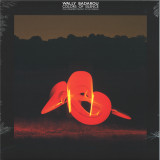
Synth pioneer and musical polymath, Wally Badarou is a genius. But you know that already. A vinyl version of his majestic Colors Of Silence has been craved by the Balearic cognoscenti ever since its low-key 2001 release. Indeed, when we first started work on Be With, we asked some pals with exquisite taste what their dream release would be. We asked Balearic legend Moonboots and, without hesitation, he said Colors Of Silence by Wally Badarou. We didn't know Wally had made this album. And most still don't. But that's about to change.
Colors Of Silence is ostensibly a new age album. As ever though, Wally's sophisticated synth textures and expressive keyboard runs are so full of character, so full of life, that this work of art transcends any easy genre categorisation. It's simply stunning, throughout. It sounds like A.r.t. Wilson or Suzanne Kraft, with traces of CFCF and Jonny Nash. But it was made a good decade earlier than the work of these modern giants. Sometimes, it doesn't seem far from some Larry Heard albums.
Island Records founder Chris Blackwell's friend Nathalie Delon asked Wally to provide music for the yoga DVD she was to release. Lack of time on both sides made them agree on using "quality demos" Wally had in his ideas bank. It's understandable why Colors Of Silence remains somewhat of a lost gem. As Wally explains: "Total lack of promotion made it an 'intimate' release, which was exactly what I was looking for: just a buzz-maker and time-buyer that would allow me to concentrate on the real thing as soon as I'd have time, which could also turn into a rare collecting item later, once the final versions made their way to success. You never know."
Over the years, Colors Of Silence has become a true cult record for the ambient/Balearic heads.
The beguiling but brief "Dance In The Dust" is the shuffling, hyper-percussive, hypnotic opener. It gives way to the deep serenity of "Amber Whispers". It's a gliding, divine, mini melodic masterpiece. It'll make you swoon in its extreme beauty. The bright and breezy "Where Were We" follows, a tropical, reggae-tinged bounce through the islands.
The uptempo groove is maintained on the keys-drizzled soca-funk of "The Lights Of Kinshasa" before Side A is rounded out with "Pictures Of You". It starts with stately, melancholic, unadorned piano and this alone would make for a beautiful song. But Wally always gives us that bit extra and he effortlessly introduces warm, dreamy pads and minimal, slo-mo percussion to augment a frankly stunning piece of work.
Ushering in Side B, Wally's mesmeric piano playing is to the fore again, in the intro to uber-chilled "Serendipity For Two". The playing becomes more mellifluous as the track progresses and adds warmth through exotic percussion, woodwind, sweeping synths and digi-drums. It has echoes of, er, Echoes. It segues seamlessly into the more propulsive, wavy "Smiles By The Millions". If you're not nodding and grinning along widely to the gently throbbing bassline underpinning this, we can't help you. The meditative "Higher Still" follows, cinematic in feel and ever so slightly sinister with the strings. It sounds particularly Badalamenti-esque, if you ask us.
That unmistakable, almost peculiar Badarou funk - so lyrical, so texturally rich and so rhythmically spacious - is all over "Oriental". Next up, "Days To Wonder" brings the serenity back, insistent yet melodic keys, as if played in a place of worship, coupled with birdsong, conjure a kind of instant nostalgia for halcyon days of youth. The contemplative "Dawn Of Europa" is a sombre, beatless, ambient journey whilst the glorious, too-brief "Crystal Falls" features soft percussion and sparkle before fully glistening with some gentle head-nod beats. Wally brings this incredible collection to a mellow, tender close with the graceful "Purple Lines".
There can be few artists more under-appreciated given their vast influence than Wally Badarou. His solo work practically defined the sound of the Balearic DJs of the 1980s, and thus the more sophisticated sound of dance culture thereafter. A synth specialist, Badarou was the long-time associate of Level 42. He was one of the Compass Point All Stars (with Sly and Robbie, Barry Reynolds, Mikey Chung and Uziah "Sticky" Thompson), the in-house recording team of Compass Point Studios responsible for a series of albums in the 1980s recorded by Grace Jones, Tom Tom Club, Mick Jagger, Black Uhuru, Gwen Guthrie, Jimmy Cliff and Gregory Isaacs. Badarou's keyboard playing could also be heard on albums by Robert Palmer, Marianne Faithfull, Herbie Hancock, M (Pop Muzik), Talking Heads, Manu Dibango and Miriam Makeba. He also produced Fela Kuti. Phew!
Meticulously remastered and cut by both Simon Francis and Cicely Balston respectively, it has been pressed to the highest possibly quality at Record Industry in Holland. Special thanks must go to Apiento from Test Pressing who first introduced us to Wally and facilitated all those early zoom meetings. It couldn't have happened without his help. Not least on pulling the art together, too, which features striking original photography by Mads Perch. Benji Roebuck of Roebuck Press did his thing brilliantly in art working the whole package to completion. All in all: essential.
For much of this album, his 16th in 26 years, Hiatt reunites with his best band, the Goners, and takes a giant leap back to his still-hungry days as a jag-edged, Costello-esque rocker while hewing to the soulful, blues-based songwriting he perfected on 1987's Bring the Family. The withering pub rock of 1979's Slug Line--as well as a nod to fallen hero Dale Earnhardt--seeps into the title track, while the roaring guitar, courtesy of the brilliant Sonny Landreth, and tight rhymes of "All the Lilacs in Ohio" suggest the streetwise edge of 1983's Riding with the King. But it's with ballads such as "Something Broken" and "Come Home to You" that Hiatt's musicianship, songwriting, and deeply soulful vocals truly convince and offer the most moving moments on this, his most memorable album in many years.
On his debut 45, Junior Scaife shows us he's a vocal heavyweight whose prowess on the mic is tantamount to the pen. Backed by house band The Penrose Scholars and co-written by producer Anthony Masino, 'When My Heart Beats' is a bouncy stepper with feel-good vibes and groove in equal measure, serving up a Brenton Wood-esque blast of sunshine and soul. On the flip is 'Moment to Moment', a gorgeous, bluesy ballad with a vocal performance that transcends the trappings of lesser tunes, giving it a depth and serious-ness that takes you by the heart and mind to a place where longing and love reigns supreme.
KOU is the new project by Apolline Schöser (half of Nina Harker) & Thomas Coquelet.
Apolline & Thomas have been performing since 2022 under the KOU guise with 24 electronic harmoniums. Producing dense layers of tones & overtones. On their debut album KOU steers in another direction. The harmonium appears occasionally, but more prominent are delicate guitar pluckings, distant vocal effects, synths, flutes, piano strokes, a touch of musical magic and Apolline’s jazz not jazz vocals.
As soon as the needle drops it’s clear we are jump-cutting straight to the other side of the mirror. Cats purr, a woman sings as if asleep, drum machines stutter and warp and Alvin Lucier is not 'sitting in a room that is not different to the one you are not in now’. If you’re already confused, join the club. But, it’s the good kind of confused, a bewildering experience akin to the first time hearing the Faust Tapes or watching Inland Empire. Wait though, as pigeons coo and the tape machine clunk-clicks a gorgeous weirdo version of Roger's and Hart’s Blue Moon emerges to let you know this isn’t just dada splurge, there’s a genius pop sensibility at work here too. Side two takes us further into the murk with mournful detuned brass, stoned Joan La Barbara-esque vocalese and a droning Farfisa hymn, before ending with another too-tempting snatch of DIY pop. Some of the references are recognisable. All kinds of 70s/80s European art prog - think early Battiato, Pierot Lunaire’s Gudrun, Lucia Bosè and Gregorio Paniagua's Io Pomodoro etc etc. There’s a strong whiff of 90s us goof-off surrealism too- Bongwater, Siltbreeze, Royal Trux’s Twin infinitives, the damaged folkier side of Alastair Galbraith, Half-Japanese, early Beck even all feel relevant.
Like an oddball group of friends you might meet by chance and end up weirding-out with for days, the minds behind this deliciously odd music allow you to stay for a while in their strange subcultural world. You might not want to live here forever but a short trip, while it lasts, rewires your brain for the better.
Perth-born, Naarm-based duo Special Feelings, aka Naomi Robinson and Poli-Pearl, are stepping up on Bradley Zero’s Rhythm Section label with their first long player – released on November 10, 2023. Across its 9-tracks, Special Feelings combines the electrically improvisational feel of live performances, with snappy broken beat-esque percussions and house-inspired looping synth hooks. Tapping into the infectious collaborative spirit of Naarm’s jazz community, Special Feelings are joined by a crew of the city’s rising artists.
Early iterations of Special Feelings’ music drew on psychedelic sun-dappled rock, with Naomi playing guitar and singing alongside Poli-Pearl on the drums. Over the years, this has shapeshifted into Naomi on bass and rhythms, with Poli-Pearl helming synths and keys – rooted in the sounds of Perth’s and London’s jazz of the moment, intertwined with Brainfeeder-nodding electronica. Today, Special Feelings’ influences span from the deep grooves of Moodymann to the freewheeling horns of Emma Jean Thackray to the stepping drums of Kaidi Thatham, and beyond.
Both Naomi and Poli-Pearl are self-taught multi- instrumentalists and producers; Naomi got her start playing in high school dream pop bands, before moving to Naarm to immerse herself in its musical communities, and study classical guitar at the University of Melbourne.
Clear vinyl, limited to 700 copies. Upon hitting play on the opening prologue track of BATS, it's safe to assume that we're about to embark on quite the journey - with GAMA BOMB as our intrepid tour guides. From the tombs of Egypt to the faded glamour of old Hollywood, Philly, Domo, John, Joe and James lead us through new sonic landscapes and all manner of novel adventures on what they themselves call their "weirdest" album yet. Sonically, GAMA BOMB manage to stay true to their distinctive thrash sound, honed to perfection over two decades at the frontline of headbanging and fist-pumping. There are nods to heavy metal titans such as Judas Priest and Iron Maiden, there's even a sliver of Bad Brains-esque punk attitude, and more familiar influences such as Tankard and Sodom are still evident. But if you think GAMA BOMB are serving up something run of the mill then you've clearly not accounted for a blazing saxophone solo (courtesy of Irish sax man Gavin Kerins) or a star-turn from hip hop pioneer The Egyptian Lover who raps on - naturally - Egyptron. BATS is an album that could only be borne from GAMA BOMB; on this, their eighth studio album, they have embraced their inner absurdities, they've taken a trust fall into each other's arms, relying on the idiosyncratic glue that has bound them together over the last 21 years to propel them forwards.
Flora Yin Wong’s ravishing interiority finds lucid expression on an absorbing second album for Modern Love, manifesting her instrumental storytelling in a syncretic bind of supernatural themes with hyperrealist, concrète sound design.
Through ten parts, Flora crystallises the ennui that followed an uncanny, disorienting trip to East and Southeast Asia. “On an unexpected stopover in Hong Kong after five years away, my friends took me to a Bazi reader one night - something I was curious about, but much of a ritual for them - ” Flora recalls. “My father told me that when I was born, he had obtained an auspicious reading that since stayed like a guiding talisman with me. It was almost past midnight but people were still lined up, rather shaken and visibly upset, to see the old man. He had kind eyes and asked me why I was there and I said I was at a crossroads. He asked me my time and date of birth, and told me to pick one of his four little white canary birds as a vessel for divination.”
This was the final stretch of an ultimately aimless few months across the continent, including a 20 year overdue return with her father to his adoptive family in his hometown Kuala Lumpur - for many reasons, ended up as a strange and uncanny trip. She spent solitude in a haunted house during the quiet snowfall of Kyoto, where she might have offended some spirit... and nights in mountain temples with South Korean monks, and an equally strange feeling return to the Island of the Gods.
“It culminated in what felt like a final disillusionment with Asia - sudden deaths and a breakdown in beliefs - somewhere I never really have or will be able to connect with. The process of the reading summoned a final blow to my gut - an overwhelming sense of rootlessness, and understanding that all there is is emptiness and entropy. No birth-divined protection, just a measurement of the night sky based off nothing and everything.”
Heavy with a sense of nightmarish dissociation and grief, Flora read about Giuseppe Tartini’s ‘Violin Sonata in G Minor’, aka the Devil’s Trill Sonata, a notoriously tricky c.18th composition which attempted to transcribe music heard in a dream, which the composer felt he could never fully bring into reality. It’s this soporific motif that binds and underpins ’Cold Reading’, finding Flora chasing the dragon of fleeting fantasy through passages of etched melancholy, pinched with hypnagogic jerks that linger in the memory.
From her use of the ‘Devil’s Trill’ Sonata in ‘All My Dreams are Nightmares’ through evocations of subtropical humidity in the Bryn Jones-esque, resonant hand-played percussion of ‘Konna’ and ‘Banjar’, to a breathtaking dreampop denouement ‘Nectar Dripping’ and the Enya-like lush of ‘Beautiful Crisis’, Flora blooms her ideas with an openended ambiguity so often missing from so called Ambient music, ushering the listener into a soundworld that disturbs and displaces, just as much as it calms.
In 2022, Fixed Rhythms released Marcela Dias Sindaco’s “Rio de Janeiro 3025 EP”. Now the label is proud to welcome her back for a brand new 10 track sequel entitled “Cidade Fantasma”. Vintage synths borrowed from her father, her icy but inviting spoken Portuguese lyrics, her characteristically straight to the point and funky yet mysterious electro…it’s all woven together in this brilliant exhibit of an artist who hears dance music in a singular way and who masterfully delivers her vision to the listener. All you need are your ears. The moment of understanding is instantaneous when you listen.
Off World presents the final album in its trilogy of surreal and spacious leftfield electronics. "A stellar project headed by Sandro Perri, one of the most singular producers in contemporary music" (Boomkat), this third volume is another distinctive collection of tracks constructed from semi-improvised ensemble recordings made over the past decade with a varied cast of coconspirators. Drew Brown, Matthew Cooper, Susumu Mukai and Andrew Zukerman join Perri again on a variety of synths and machines, along with violinist Jesse Zubot (Tanya Tagaq, Fond Of Tigers). Perri also continues to add organ and piano to the mix, while Volume 3 notably features first-time Off World contributors Nicole Rampersaud on trumpet and Martin Arnold on guitar, both mainstays of Toronto's vibrant improv and out-music scenes. The Quietus calls Off World "genuinely explorative_the musical equivalent of a Dali-esque landscape" which through all sorts of genre-defying twists and turns, at times evokes "offkilter, late Miles Davis ambience". Off World 3 doubles down on that jazz-adjacent trope in certain respects, while holding fast to Pitchfork's dictum that Perri "cultivates his own genreless brand of futurism." Marked by longer tracks than previous collections, three of the album's five songs clock in around the 10-minute mark, where overtly improvised instrumental playing wends its way across alternately bubbling and woozy electronic beds. "Impulse Controller" is a languidly skewed rhumba where ambling melodic undercurrents and dubby electronic pointillism provide a dulcet promenade for Rampersaud's Miles-esque trumpet excursions. "Ludic Loop" see-saws along in a slow synthy two-step, punctuated by Perri's restrained piano chords and Arnold's fried electric guitar. "Empasse" is perhaps most reminiscent of earlier Off World collections, though again slowed and stretched, with oozing synth bass ostinatos counterposed by ambient layers of viola and violin filigree from Zubot. These three centerpiece longform tracks each highlight one of the album's instrumental improvisers, and taken together, make for the most scintillating sedate and ruminant album in the trilogy. Off World 3 sounds as sui generis as ever, but in wrapping up the series, Perri sprinkles the project's emblematic alien surrealism with decidedly anthropic elements and temporalities. This final volume in the trilogy could also be seen as a re-statement of Perri's politico-aesthetic mission, as aptly celebrated by Pitchfork and its glowing 8.0+ reviews of Perri's 2018/2019 solo albums In Another Life and Soft Landing (released between Off World 2 and the present volume): a uniquely purposeful, subtly detailed cannon of songs "busy, vibrant, and bursting with life, but that aren't ever in a rush to get anywhere."
Polish jazz rebels sneaky jesus are back with their second studio album For Chaching Taphed.The highly imaginative quartet out of Wroclaw comprising Maciej Forreiter (Guitar), Matylda Gerber (Saxophones), Ben Łasiewick i(Bass) and Filip Baczyński (Drums) have won fans around the world for their restless, quirky brand of jazz which takes in breakbeats, twisting chord progressions and improvisation as well as a wealth of musical influences.
The band have been touring their asses off ever since they surprised the world with their debut album For Joseph Riddle in 2021. From out of nowhere their debut LP of 500 copies sold out in a month and they quickly went on to sell close to 1,000 CDs of the album. Fast-forward to 2023 and the band are sharing stages with artists such as Ill Considered and Theon Cross.
For Chaching Taphed was created in complete isolation. The group locked itself in a barn at the Museum of Agricultural Technology in Piotrowice Świdnickie. It worked on its sophomore output surrounded by machinery, trucks and carriages. These new compositions mirror the abstract conversations which the group frequently has just for fun. Contrary to For Joseph Riddle, this album is simple and does not rely on ongoing grooves. This enabled the group to be much more experimental. The band was joined by friends Flautist Mariya Mavko on Piękno Niemożliwe (Impossible Beauty) and her playing is sampled in Hipotetyczny Taras (Hypothetical Terrace). Pięciu Pszczelarzy (Five Beekeepers) closes the album featuring EABS' Jakub Kurek on trumpet. His fiery solo is one of the most intense moments of the album.
Spacer Po Nadodrzu (A walk around Nadodrze) opens the album and is inspired by one of the districts of Wrocław. It is a sonic story depicting a walk through Nadodrze late at night. A steady bass rhythm imitates a careful pace and the responding sax line is a spooky theme that might pop to oneʼs head in a moment of uncertainty.
The album's first single Krztusiec (Whooping Cough) finds the group diving head first into their most recent influences. The trackstarts with drum improvisation, rolling into a solid hip-hop backbeat provided by Ben Łasiewicki on Bass and Drummer Filip Baczyński. Sax and Guitar weave steady but dissonant lines, written by Maciej Forreiter after many hours spent listening to the Ethiopian jazz greats. The track takes off right after that. Matylda Gerber delivers a fiery Sax solo, while the group picks up the tempo and quickens the groove. The essence is the middle section, a dubby collective improvisation. Forreiter, Gerber and Baczyński take turns playing both classic dub phrases and fierce avant grade lines. Łasiewicki keeps everybody in check with a steady bassline. The energy slows down until Baczyński's drum solo, which explores phrasing detached from the rest of the tune.
Second single Chiński Sprzedawca Smażonych Kasztanów (Chinese roasted chestnut seller) is a fusion of breakbeats, energized songo rhythms and motifs inspired by South African melodies. Presenting the group with spacious and rhythmic horn lines, guitarist Maciej Forreiter wrote a chord progression while Beniamin Łasiewicki and Filip Baczyński took care of the rhythm section. This first part of the track suddenly drops out and explodes into the dramatic main motif which includes double sax and fierce guitar playing in harmony, plus the rhythm section playing more and more jungle-esque. Powerful guitar and sax solos feature before we return to the main theme with a completely different rhythmic backdrop.
W Klatce z Bykiem (In a cage with a Bull), starts like a race. The music plays with an incredible nerve and when the theme is right on edge it suddenly stops. It is followed by an animalistic growl on the saxophone and a doom metal-esque bash of downtuned, distorted guitars and heavy drums. In this heavy fashion it slowly approaches the finishing line hitting one final metallic clang.
Piękno Niemożliwe (Impossible Beauty) features wonderful flute playing of Mariya Mavko (Kadabra Dyskety Kusaje). Her work in the opening motif evokes sounds of Polish and Ukrainian folklore. This brief mellow moment serves as a contrast to the usual frantic sounds of sneaky jesus. It is an appreciation of thepolish jazz music of the past, intrinsically-linked to folklore. The band took this idea and reworked it into their own unique style.
Hipotetyczny Taras (Hypothetical Terrace) is built on top of a lengthy vamp in an unusual 7/8 time-signature. The bass anchors the quartet in a simple line, while the rest of the quartet share an emotional conversation. This track is the most open of the whole project and it ends accordingly. The final burst is a call back to the basics ofspiritual jazzand the whole band shows every emotion simultaneously and gracefully fades out.
Pięciu Pszczelarzy (Five Beekeepers) is For Chaching Taphed's conclusion and is a non stop assault of heavy horn lines, punk rhythms and noise. The band is joined by the extraordinary trumpeter Jakub Kurek from EABS, who blends in perfectly with sax and guitar. His exchange of solos with Maciej Forreiter is a combination of classic jazz phrasing and discordant clatter. In the same fierce manner the whole group works within the motif, switching up accents and breaks.
In the short space of two years, sneaky jesus has gone from ambitious upstart looking to break out from its home city playing spit and sawdust venues, to touring Europe as well as prestigious Jazz clubs such as Jassmine in Warsaw. In the process, it has delivered two full-length albums that don't stay in lane or pander to established jazz sub-genres as so many groups do. Some artists make the same record twice or even more than that, but not sneaky jesus. For Chaching Taphed shows the band as restless, experimental, fun, irreverent but purposeful as never before.
“A lot of over-hyped improv / jazz projects out there at the moment and Sneaky Jesus are genuinely excellent and out on their own. Drawing on the expansive atmospherics of a barn as the recording's setting, the album immediately pulls you in with the unsettling 'Spacer Po Nadodrzu' and lifts off on 'Krztusiec', effortlessly moving from angular, abrasive jazz to trippy dub and cinematic intrigue. Tempos shift and intensities shift naturally. The whole set warrants a deep listen from start to finish and watch out for two great guest features from flautist Mariya Mavko and Jakub Kurek bringing some mad fuzz licks to the boisterous closer. Brilliant album.”
Quinton Scott — Strut Records
12” black vinyl, standard sleeve, limited to 500 copies, download card included. The long sold-out ‘Random Acts of Total Control’ EP by French outfit Unschooling is now being reissued by London-based label and promoters Bad Vibrations. The five-track EP was originally released in 2021 and deals in an energetic, lo-fi post-punk that revels in calculated discord. Their chaotic ensemble of complex mathy guitar lines, dissatisfied vocals and twitchy rhythm sections have drawn comparisons to such contemporaries as Omni, Crack Cloud and Women, but all wrapped up in a Contortions-esque No Wave spontaneity. Unschooling emerged with their self-released nine-song ‘Defensive Designs’ cassette in 2019 which made a splash in the French indie scene (and is now also being reissued on vinyl for the first time by Bad Vibrations). Its follow-up, the ‘Random Acts of Total Control’ EP, solidified their reputation further afield and established them as one of the most exciting new acts in the current school of post-punk revivalists. The band have since toured heavily around UK and Europe and appeared at Great Escape, Green Man, Wide Awake, Le Printemps De Bourges, Levitation France, Dot to Dot and more. Tracklist: 1) More Is More 2) Boo Boo Dragon 3) Social Chameleon 4) No Shoes 5) NYE
McKowski is pleased to confirm details of his debut solo album: ‘Notes From The Boneyard’, a new release that arrives courtesy of the Deltasonic label.
In anticipation of the record, the Irish songwriter and multi-instrumentalist has unveiled the single “Return of Pygmy Pony”.
“Return of Pygmy Pony” is one of 10 cinematic tracks, alongside previous single “Lake”, that comprise upcoming album ‘Notes From The Boneyard’. Envisioning a fictional world known as ‘The Boneyard’, McKowski’s debut will promise a purely instrumental album of atmospheric folk and otherworldly soundscapes to capture your imagination and seep into your soul.
Utilising a unique blend of acoustic guitars, strings, analog synths, and electronic toys, Mckowski creates a haunting and evocative journey across its transient 35 minutes. Gifted with the talents of some old allies, ‘Notes From The Boneyard’ sees guest musicianship from the likes of Steve Wickham (viola), Howe Gelb (guitar), Laura Mcafadden (cello), Dave Murphy (pedal steel), with St Francis Hotel also adding further elements of atmosphere and production.
With one foot rooted in a dark woodland and the other foot stepping into unknown territory, the end result is a must-listen for fans of soundtracks, the surreal, or simply those searching for the unexpected. Like the wooden beauty of Angelo Badalementi’s ‘Straight Story’ mixed with the dark synth undertones such as Carpenter-esque Moog; it’s the ideal companion for those pensive days and long nocturnal hours.
Dreams are made and displaced on Mark Fell & Rian Treanor’s oneiric electro-acoustic inception 'Last Exit', borne from long days in the family garden, and assembled into a mesmerising masterpiece of minimalist modal rhythm and atmospheric exploration, into rapt smallsound detailing in breathtaking form. It’s a bit like listening to Virginia Astley’s ‘From Gardens Where We Feel Secure’, with washes of Autechre seeping into the mix from outside.
‘Last Exit…’ originally appeared in a different form as a cassette release for our Documenting Sound series in 2021, and was edited this year by Mark and Rian for this new expanded and altered edition, mastered by Rashad Becker. It renders a painterly,psychedelic, and diaristic depiction of sublime atmospheric tension, occasionally ruptured by their typical, asymmetric rhythm impulses in a form that rudely transcends their respective aesthetics. Across four parts, they kern, juxtapose and diffract synthesised percussion and field recordings into polymetric arrangements riddled with timbral nuance of a highly unpredictable nature.
While patently inflected with nods to Indonesian gamelan, Ugandan folk, Indian Carnatic classical, Morton Feldman-esque minimalism, free jazz improvisation and a sort of rhythmic cubism that speaks to their mutual, voracious listening habits and tastes, the results are arguably without direct compare. Attentive listeners will recognise, however, that ‘Last Exit’ effortlessly transcends their respective styles, achieving a new high watermark of imaginary future-hyperfolk expressed in a sort of personalised but highly relatable meta-musical language.
Seriously, they’re working beyond known conventions here; opening to a sublime frisson of Feldman-esque keys, birdsong and distant car engines, and closing to a combo of just-intoned drone and wafts of distant ballroom music. The 80 minutes in between feel like returning to a dream, with flashes of FM strings dabbed to sloshing rhythms and domestic detritus, tilting into a nervously tentative tension ruptured with abstract dance dynamism and angular free jazz ballistics.
The rejigged recordings also reflect the fidelity of memory recall, expressing an altered perspective on their time spent in the multigenerational family’s Rotherham garden during spring/summer 2020, replete with their mum/grandmother on piano and overheard singing and in convo, but now fraught with a more melancholic, distempered quality that makes for a genuinely unforgettable listening experience. A long-form isolationist fantasy, consider it crucial listening if yr into Robert Ashley's 'Automatic Writing', Graham Lambkin, Autechre or Nuno Canavarro.
SoHaSo keeps finding lost gems in the rich soil of the Dutch electronic underground. You might know P.A. Presents from his epic Entangled EP (1995) or his many releases on U-Trax. When SoHaSo informed if he had any dusty DAT tapes laying around from that particular period in the 90s, Peter Aarsman started digging. And found plenty of goodies. Here's six tracks which will beam you right back the last century, when names like Carl Craig, Drexciya and Bola were household names among the lovers of funky, melancholic electronica. Whether it's moody strings, otherworldly melodies or syncopated break beats, P.A. delivers on his Lost Voices EP. Like on the 4Hero-esque Drum 'n Tech or the mysterious and jumpy electro vibes on Vice. On Drop It and closing track Lost Voices the Dutch producer goes into full club modus. This is techno that used to fill up warehouses in windy harbor neighborhoods. Be sure to check the Drexiyan remix by Proxyan, who masters the art of deduction on his skeleton-like remix of Vice.
The Two Sides Of Mary Wells is the seventh studio album by soul singer Mary Wells, released in 1966. Wells' career had drastically changed from just six years before when the then-teenage Wells first recorded songs for Motown. This album mixed traditional pop with more earthier and uptown soul songs. Wells released a modest hit with the Motown-esque "Dear Lover", which hit the top ten of the R&B charts.
It also includes some great interpretations by Wells of classic tracks as: "Satisfaction", "In The Midnight Hour", "My World Is Empty Without You" and "The Boy From Ipanema" a.o.
The Two Sides Of Mary Wells is available as a limited edition of 750 individually numbered copies on translucent yellow coloured vinyl.
Before the Odysee, there was the Iliad; a tale of the golden age of heroes and warriors.'
The idea behind the new Iliads series is to return to the sound of the golden age of Jungle/Drum & Bass, and more specifically the original ‘heroes’ of the Odysee label.
This second in the series pays homage to the unique sound of the Mirage releases. The influence of these releases on the SD sound that followed has often been overlooked, principally because it was assumed that the ‘Mirage’ moniker was simply another pseudonym for Source Direct, when in actual fact it was a lethal combination of the powerful engineering and arrangement skills of Jim Baker (Source Direct) and the sound selection and co-production of Odysee’s founder, Tilla Kemal (T-Mirage).
Face In The Shadows immediately opens with that slightly darker feel, with tracks like Feel My Dreams and Stonekiller in mind. The trademark SD style of break switches (aptly named ‘call & response) are immediately evident, although the Funky Mule gives the track its primary momentum. The sound selection is eerie, focusing on the 70’s Film-Noire, and deep Electro in line with Tilla’s particular preferences. The spoken word quotes are also unmistakably ‘Mirage-esque.’
Regenesis is a classic Odysee B-side track; lighter, more experimental and Jazzy in it’s feel. It showcases intricate and crisp rolling break work, and a beautifully refined selection of real stand- out musical quotes; from the sweet R&B-esque vocal ad-libs to the lush 70’s style sleaze of the Rhodes rolls. The interaction of these elements is the glue that holds this tune together.
The Darkness Within is the final track of the E.P. and it is the arrangement of samples that really emulates the ‘Mirage’ sound. Tilla & Jim were very particular about grouping sounds to work with & answer each other in each section of a tune. Samples were often sourced from obscure Film OST’s or rare electro albums which had sample diggers scratching their heads for many years! This track is dubbed out deeper, with a punching & rolling Soulpride features as the hero break and a repetitive deep chord stab forming the foundation of the tune.
Look out for the final instalment Volume III, where we will be focusing on the dystopian Jazz sound of the Hokusai releases!