2024 Repress
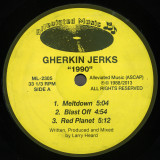
Recorded in 1989, this is one of the rare and sought after recordings by Larry Heard. Never been available since 1990 and a departure from his more familiar style that he released as Mr Fingers, Fingers Inc. and The It). Gherkin has been an outlet for his more experimental and techno-orientated productions. 6 tracks on this record, and everyone seems to have their own favorite... but worth mentioning are the dramatic opener ''Meltdown'', the cosmic ''Saturn V'' and the incredible extra terrestial ''Strange Creatures''. Tracks that are the foundation of the house we live in! - essential!
Buscar:essé
- A1: Hot With Fleas
- A2: Nation
- A3: Unleash Your Sword
- A4: Jetlag
- A5: Contempt
- B1: Bad Mood Guy
- B2: Dressed In Air
- B3: Rabbi Nardoo Flagoon
- B4: Heaven Is What Heaven Eats
- B5: Mad Dad Mangles A Strad
- C1: Bad Mood Guy (Day 1)
- C2: Unleash Your Sword (Day 1)
- C3: Canine (Day 1)
- C4: Nature 10 (Terse)
- C5: Contempt (Day 1)
- C6: I've Always Hated Severed Heads (Live)
- D1: Hot With Fleas (12" Remix)
- D2: Nation (Nyc Mix)
- D3: Canine (12" Remix)
Futurismo present a deluxe vinyl package of the never before reissued 1987 avant industrial album: Bad Mood Guy by Severed Heads.
With an oeuvre of electronic experimentation that dates back to 1979, Australia’s Severed Heads rawly garnered everything from the sources around them: the sounds of the city, tape loops, old machines, distortion.
Although essentially one man, chief noisemaker Tom Ellard, he was joined here by film maker/homebrew video synthesizer operator Stephen Jones, and effects producer Robert Racic: who had worked with New Order. The result is a punishing view of pop, all crunching rhythms and electronic juxtapose. By incorporating popular tropes such as consistent rhythms, melodic vocal lines and drum machines this was perhaps as near to alittle “boogie-oogie-oogie” as Severed Heads were likely to get, but the outcome is a striking hybrid of the avant-garde, EBM and Synth-pop, an industrial vortex in which the sounds of the 20th century are sucked in and spat out around a monstrous dance beat.
Never pandering to expectations, Ellard saw dance music as a benchmark area where exploration was still possible. Big ideas and big sounds, notto mention big headaches when the original CBS mixes were left in a taxi cab. Whilst many of their contemporaries persisted without dignity, Bad Mood Guy’s cool melancholy assured a fanbase in America and dance floor loyalty with ‘Hot With Fleas’, which dares to sit alongside classics like ‘Dead Eyes Opened’. The unique inventiveness inherent in Severed Heads work makes this release essential for fans of Throbbing Gristle, Kraftwerk, Skinny Puppy and Cabaret Voltaire.
This remastered version of the original CD contains lost original versions and remixes and comes with a fold-out artzine booklet with liners by Ellard.
With their profound take on electronic music, Animistic Beliefs have steadily solidified their spot in the global underground. Influenced by cultural concepts such as ancestry, animism and mythology, as well as the languages of political techno, punk, bubbling and IDM, Linh Luu and Marvin Lalihatu consistently translate their visions into sensitive productions as well as high-octane live performances. On MERDEKA, the artists explore and embrace their cultural heritage in all of its pride, pain and complexity. It symbolizes Animistic Beliefs' breaking free, coming to terms with their changing selves and letting go of external expectations. The record rethinks childhood memories, confronts the generational trauma left by (post-)colonialism, and re-connects Linh and Marvin â?? respectively of Vietnamese-Chinese and Dutch-Moluccan descent â?? with their formative cultures. MERDEKA marks their first step in an overall departure from western club music. For its layered sound, Animistic Beliefs once again draw from the past, present and future of global club music, creating a sonic space where fast techno, warped breakbeats and ambient soundscapes make way for the augmented influence of (Southeast Asian) tribal music. The record incorporates Indonesian scales and recordings of the Tahuri (a wind instrument made out of a conch shell), Totobuang (Gamelan-like gongs) and Tifa drums, known as â??the Moluccan heartbeatâ??. In true Animistic Beliefs fashion, MERDEKA will set fire to sweltering clubs and (sleepless) dreams. Yet, for the artists, it is essential to amplify the stories that spark that flame and keep it burning. The release of MERDEKA follows CACHE/SPIRIT, their ongoing collaboration with visual artist Jeisson Drenth, which extensively explores the artistsâ?? intersectional identities. As such, the latest album is the next step within a bigger, introspective investigation. More unapologetic than ever, MERDEKA embodies a turning point on Animistic Beliefsâ?? ongoing journey towards self-acceptance â?? fuelled by the sound of urgency.
Repress!
10 years since the consumerist musings of Tesco, Matthew Herbert reanimates his Wishmountain project and heads deep underground to find the source material for Stonework: 1000 metres down.
Like many of Herbert’s projects, Wishmountain releases revolve around specific, material sound palettes, and for this latest album he’s drawn from a sample library created as a commission for the Stone Techno festival, which took place at the UNESCO World Heritage Zollverein mine in Essen, Germany. Working with sound recordist Lorenzo Dal Ri, Herbert and Dan Pollard captured a varied and wide variety of hits, tones, textures and one-shots from the frozen-in-time remnants of the Ruhr region’s coal-mining industry and from specific materials in the nearby Ruhr Museum and Mineralien-Museum. A sample library created by Matthew and Dan of the recordings was also used for the Stone Techno series, from which tracks have been commissioned by the likes of Luke Slater, Megan Leber, Ben Sims and KiNK drawing from the same sounds heard on this album.
These stone-cast sounds lend themselves to the Wishmountain framework – skeletal, quasi-industrial techno with an angular impulse and a subtle swing. Much like the breakthrough hit, 1996’s ‘Radio’ (made using samples of a broken radio), the limitations on the source material sharpen the focus of the music. What started out as a practical hardware restriction in the early 90s became a purposeful way of working for Herbert – one which carried through the 1999 album Wishmountainisdead to 2012’s Tesco with its sampling of the British supermarket chain’s 10 most popular products.
Musically, Stonework is consistent terrain for Wishmountain – austere and forbidding in one sense, playful and irreverent in another. But from a club music perspective, which Wishmountain absolutely is, it offers DJs a variety of rhythmic formations within the tool-like minimalism of the arrangements, opening up intriguing possibilities for mixing into, out of, or somewhere in between. For every 4/4 thrust and jerk there is a fractured, snaking meditation pivoting around other time signatures.
Crystal clear in its creative intention and simultaneously successful as surface-level club music, Stonework: 1000 Metres Down is a natural continuation for one of Herbert’s most celebrated, albeit intermittent, aliases.
Mindgames is a new Samurai Music affiliated label aiming to capture the essence of the sound that magnetised label head Presha into Jungle/Drum and Bass in the mid 90’s. Experiencing this musical development as it happened lit a flame of passion and drive that forged a focused musical path that continues unabated today.
94/95 were pivotal years for Jungle with new approaches to production and musical shades that shaped how the music progressed. Light and Dark musical hues were working side by side more frequently in these years as the music found its way, and Mindgames will reflect this.
With the resurgence of artists absorbing this sound and creating updated versions with added production finesse, Mindgames mission is to enlist current-day producers who have successfully captured and reimagined the vibe and feel of these years into new forms that underline the foundation of our sound.
Alice In Chains’ “Rainier Fog” is a haunting auditory journey that immerses listeners in a dense atmosphere of introspection and melancholy. Released in 2018, the album’s title track, “Rainier Fog,” encapsulates the band’s signature grunge sound, blending gritty guitar riffs with Layne Staley’s successor William DuVall’s soulful vocals. The music unfolds like a misty landscape, mirroring the album’s title inspired by the ominous Seattle weather. The lyrics evoke a sense of longing and reflection, weaving a narrative that navigates through personal struggles and the passage of time. The song’s dynamic shifts create an emotional ebb and flow, accentuated by Jerry Cantrell’s masterful guitar work. “Rainier Fog” stands as a testament to Alice In Chains’ ability to capture the essence of the Pacific Northwest’s moody ambience while delivering a powerful and resonant musical experience.
After the fall of the Deep City label, Rocketeers bandleader Frank Williams set up shop under the name of his twin daughters Saadia and Giwada and got to work reinventing the Miami Sound. Tracked between 1968-1970, this LP gathers 15 of Saadia's funkiest and deeply soulful moments, featuring Pearl Dowell, Joey Gilmore, Little Beaver, Frank Williams' Rocketeers, Robert Moore, Brother Williams, and Sam Baker. Your next sample, first dance, workout jam or closing credits is buried in here somewhere.
Super Funky Forest Green and Blue Splatter Vinyl.
After the fall of the Deep City label, Rocketeers bandleader Frank Williams set up shop under the name of his twin daughters Saadia and Giwada and got to work reinventing the Miami Sound. Tracked between 1968-1970, this LP gathers 15 of Saadia's funkiest and deeply soulful moments, featuring Pearl Dowell, Joey Gilmore, Little Beaver, Frank Williams' Rocketeers, Robert Moore, Brother Williams, and Sam Baker. Your next sample, first dance, workout jam or closing credits is buried in here somewhere.
In the 1970s, Robert Cahen turned to the burgeoning field of video art, where he became a pioneering artist. He was originally trained in musique concrète, his creative background, and joined the Groupe de Recherches Musicales in 1972. The pieces on this record were composed in the GRM studios between 1971 and 1974. They testify to a lively inspiration and imagination combined with a precocious formal mastery that already carries the seeds of later developments, which the artist cleverly and inventively deployed in the field of visual arts. (François Bonnet, Paris, 2022)
--
«La nef des fous» (1974), 12’00
There are pieces of music whose title is obviously a mere label given afterwards to a finished product. And others, on the contrary, which develop in spiral around a bundle of images and impressions condensed into a few words. This is the case indeed with La nef des fous. However, this work by Robert Cahen oddly wraps itself around its title, with bends, breaks, and an impetus driven further every time to close a new circle, for such is the very essence of the spiral. This, at least, is the way I perceive the form of the work, with its theme-chorus which, in part one, both ponctuates and disrupts the emerging musical curve in various ways and at irregular intervals, as well as its broader and more open second part, which closes with a recollection of the beginning of the work. The challenge of a musical form justified by the topic it illustrates, right down to its gaps, its wanderings and its twists, and which would confer upon it the necessity of a profound logic, that of insanity, is the challenge attempted by Robert Cahen. In such a genre as tape music, so careful with respect to form, one can appreciate its audacity. La nef des fous, or Unity through heterogeneity, or Each to their own madness, but all in the same boat. This means that if we can listen to each of these sound characters, “broken chants”, which create the work for themselves, through the singularity of their delirium, we can also, from one to the other, trace the continuous chanting of a music that is inherently and spontaneously poetic, a music that carries “the unconscious under its skin” (Christiane Sacco). (Michel Chion, January 1976)
«Masques 2» (1973), 08’34
Concert version (for tape only) of an audiovisual work entitled Masques, in which the faces of old dolls and «masks», filmed during the Basel Carnival, were projected in 16mm. Masques 2 is a metaphorical version of Masques in which music is featured in its arcane musicality.
Through its concrete and suggestive music Masques 2 aims to bring to light hidden memories, buried within us, thus enabling an awakening, the resurgence of events from our own history. (R. C.)
«Plurielles» (1971), 08’35
Premiered at the Paris Biennale, 24 September 1971. Suite based on the score of a TV film directed by Sophie Talmon.
«Persona» (1971), 08’34
Premiered at the Paris Biennale, 24 September 1971.
«Passé composé» (1971), 05’29
A discreet but essential figure in the field of musical creation, Horacio Vaggione has been crafting an ambitious, precise and highly significant body of work for over the last fifty years, coupled with a demanding research activity. This disc offers four purely electroacoustic pieces which illustrate, each in their own way, this singular and fascinating grammar developed by Horacio Vaggione, a complex but fertile grammar which establishes a very special relationship between structure and texture, between matter and formula, to create a fascinating musical space, made up of polyphonies and metamorphoses. (François Bonnet, Paris, 2022)
--
«Schall» (1994), 07’30
Schall exclusively uses piano sounds sampled and processed with various digital techniques. The sound palette focuses on several shapes of various sizes which reiterate, altered to varying degrees, throughout the process. The granular paradigm is clearly assumed here, as is also that of the interactions between various temporal scales. Basically, there is a concern for the articulation of micro-events. The piece essentially plays with low-intensity frames, composed of various planes and punctuated by stronger objects, in a kind of polyphonic dialogue between proximity and distance. (H. V.)
«Rechant» (1995), 15’51
Initially, a few brief sounds of instrumental origin — percussions, flutes, strings. Processed by means of various digital techniques, projected on various temporal scales, analyzed and re-synthesized, worked in their parts (in their saliences), articulated in their edges as well as in their interactions, these sounds show, as Bachelard would say, «pluralism under identity». I thus tried to compose morphologies by targeting properties contained in the material and by projecting them on temporal perspectives of all sizes. The title, an allusion to the old polyphonic technique, refers to the iterative content of these morphologies as well as to the modalities of their interweaving. (H. V.)
«24 Variations» (2001), 09’50
The word «variations» applies here to the morphological transformations of the material, as well as to the various contexts in which these transformations appear. The result can be heard as a continuous interaction between sound particles of different sizes, composed of several layers, reflecting a preoccupation with detailed articulation spanning different time scales. (H. V.)
«Gymel» (2002), 09’25
In Gymel I tried to compose a space-trajectory using layered sounds, produced by morphological operations (splits, clusterings) that spread out from location to location in variously dense objects. The space was treated through phase-decorrelation, a technique which I use extensively, both to create spaces and to locate sounds and movements within a polyphonic (stratified) context. (H. V.)
EP compilation of essential UK house cuts recorded between 1987 - 1990. TIP!
Before British house and techno found its’ distinctive groove at the turn of the 1990s, one act led the way: Bang The Party, a trio who emerged from London’s vibrant underground party scene in the mid 1980s and proved, beyond any doubt, that UK producers could make music every bit as magical as the pioneering productions put forward by their counterparts in Chicago, Detroit and New York.
By the time long-running DJs and party promoters Kid Batchelor and Leslie Lawrence joined forces with trained engineer Keith Franklin at legendary North-West London reggae studio Addis Ababa in 1987, they’d spent years as DIY dance music activists in Britain’s capital city. They channelled these experiences and their love of imported house and techno sounds into a new project, Bang The Party, in the process becoming the first British act to appear on Transmat, a reflection of the quality and authenticity of their music.
The latest Rush Hour Reissue Series release offers a snapshot of some of the numerous gems nestled in the Bang The Party catalogue, delivering a much-deserved celebration of one of Britain’s most significant early acid house collectives. It features four fully remastered cuts recorded and released between 1987 and 1990 – on-point and far-sighted club workouts that sound as fresh and timeless now as they did when Britain was sweltering under its infamous ‘second summer of love’.
Fittingly, the EP begins with ‘I Feel Good All Over’, the group’s ground-breaking debut single. Dedicated to their home city and one of the earliest UK interpretations of house music, the track exists in the grey area between Chicago house and New York ‘garage house’ – all jaunty organ stabs, jacking Windy City beats, restless bass and soulful vocalizations. ‘Jacques Theme’, which follows, originally nestled on the B-side of that single release. An early, acid-flecked expression of hip-house with a British twist, breakdance-friendly bongo patterns and a dose of Larry Heard-inspired deep house dreaminess, the track remains an under-appreciated classic whose rap verses reflect the popularity of hip-hop in London at the time.
1988’s ‘Release Your Body’, Bang The Party’s most celebrated early release, was reissued in the United States by Transmat, reflecting the strong working relationship between Derrick May and Kool Kat Records’ Neil Rushton. A hypnotising affair propelled forwards by sweat-soaked drum machine beats, jacking fills and an addictive bassline, the track offers another near perfect distillation of the band’s Black American musical influences while delivering something genuinely new and fresh.
Rounding off the EP is a choice cut from Bang The Party’s sought after 1990 album Back To Prison. Doused in the star-lit synth sounds of the Motor City with jaunty organ stabs inspired by the kind of New Jersey jams championed at East Orange institution Club Zanzibar, ‘Let It Rip’ is a superb slice of deep house soul featuring a lead vocal every bit as emotive as anything laid down by Robert Owens. Like the rest of Bang The Party’s output, it has stood the time better than anything laid down by their London contemporaries.
Following their contribution to the 2022 International Women’s Day compilation, and a co-production credit on “Dreaming is Essential” by Byron Yeates, Eoin DJ drops their first release on Radiant Records, Total Body. The 4-track EP is replete with mind-bending, lustrous tracks waiting to be spun out to sweatbox dancefloors.
“Total Body” invites movement from its first seconds. Layers and layers of snares, shakers and rhythmic synth stabs build tension before the pulse of a rolling bassline cements the elements into a cohesive hard house groove. Fragments and chops of sensx’s vocals wrap in and around the sonic field, leaving wisps of reverb and echo in their wake before repeating the track’s Total Body mantra in the breakdown. The result is a lushly-scored density of sound, with a relentless stomp that never feels overcrowded or too heavy.
Angel D’lite’s remix takes a more skeletal approach to “Total Body”: a snare and clap march beneath chiming vocal stabs, rumbling low end and rolling breakbeats, flipping the original into a modern bass-heavy hybrid number. The rhythmic synth from the original, reversed and efex’d, ushers us in, and then out of the track, around extra bass stabs and pitch shifted “Total Body” chops.
On the B side, “Ultra Soft” lifts off with a firm kick and a rolling 3-note bassline. Despite the title, the track hits harder than “Total Body” and sings with Eoin DJ signatures: swirling funnels of processed vocals, rich, ear-itching textures, stripped back percussion and rave-ready samples are sprinkled with 303s, to create a track that sits comfortably with both classic trance and techno and contemporary “Progressive” dance music.
The EP’s closer, a remix of “Ultra Soft” by Byron Yeates, compresses the astrally-inclined scale of the original track into shining slices of sound. A playful, chiming melody starts off the track alongside the kick, working through precise grooves, knife-sharp snares, a throbbing bass and chopped-up, smokey vocals. The result: 6 minutes of total embodiment from the Radiant Records boss.
Four essential cuts from Ghana & Cape Verde, compiled by Arp Frique...
Music is a great connector, bringing people together in many ways. On his journey in music so far, Arp Frique has been fortunate to meet many beautiful artists. The songs on this first edition of "Radio Familia" are deeply connected to the musicians he performs with. Join the music family on a trip through exciting sounds from Ghana and Cape Verde and listen to their story in both words and music.
Arp Frique never played a show without including Americo Brito’s epic song “C’est Dudu”. The song originally appeared on his album “Fidjo Di Mizeria” from 1989 but he had been performing his anthem for years and it came in many shapes and forms. After spending a lot of time in Paris, he (like many others in those days) got inspired by new records from Guadeloupe and Martinique, especially “kadans”. Incorporating latin piano motifs borrowed from salsa and merengue and a bold choice to sing in French, the song and album became an instant success for Americo in and outside the clubscene (note: DJs were not the primary source of dance music in those days, bands played all night to keep the dancers moving). The addition of C’est Dudu to this compilation became especially relevant since Americo recently passed away. Fortunately, his anthem just like all his other music will remain with us for decades to come.
While going through the archives with Americo Brito for the Radio Verde compilation, he introduced Arp Frique to a band called Imilux Star, of course again well connected with Americo. This Cape Verdean band residing in Luxemburg (where there is a substantial Cape Verdean community) definitely added a different flavor to the musical pallet the islands are famous for: heavy syncopated rhythms coming from the drum computer. They released two albums which both became very popular in their scene and the track “Yolanda” from their 1988 album “Jota Dê” got to Arp Frique’s attention too late to add to the Radio Verde comp. The band is still performing to this day in the Luxemburg-Cape Verdean live circuit.
While Arp Frique was on the road with his lead singer Mariseya, they talked much and deep about Ghanaian music (especially highlife) and he learned a lot about the community from Ghana in the Netherlands, mostly in Amsterdam and The Hague. Mariseya’s dad, Nana Adomako Nyamekye, came to see their liveshow while in the UK which was very special to them considering he is one of the highlife artists Arp Frique has grown to be very fond of. His deeply funky and bubbly bass driven song “Obra Twa Owuo” is about life and death, telling us we should all love each other as we still have life to live. Originally released on “Ano Plan” from 1982, the album is filled with philosophical advice. In his own words: “A message to all humans that something awaits us all at the end of life. Let’s live together with love.
Bnnyhunna, from the Ghanaian community in the Netherlands, joined Arp Frique’s live experience several times playing keyboards and synthesizers. His dad Elvis Kwasi Ankomah, just like him, developed a high level of musicianship while performing regularly in church. The song “Fa Wokoma Mame” (give me your heart) from his only studioalbum “Mfa Menko” released in 1995 is about showing his love to a lady but only if she puts her trust in him completely. The album talks about love, pain, relationships and life. Having worked with artists like Daddy Lumba, Nana Ampadu, Amakye Dede and many other hiplife and highlife legends, he still plays in church every week and has been doing so ever since he was 15 years young.
"Ultra-textured arrangements that radiate quiet power, locking listeners into a distorted landscape before evaporating without any fanfare."
Resident Advisor
"Both reflective and rapturous...focuses on altering the DNA of traditional Japanese instruments and building something new from it, without losing the essence."
Bandcamp Daily Acclaimed Japanese musician 99LETTERS joins Phantom Limb for new album Zigoku / 地獄, seamlessly processing traditional Japanese instrumentation into pitch-black techno and quasi-industrial sound design.
“This album is made with the theme of human death,” 99LETTERS (Osaka producer Takahiro Kinoshita) writes of Zigoku / 地獄 Eng: hell, his first album for Phantom Limb. “Even if I eventually end up in hell when I die, it might be a more peaceful place than I had imagined. The whole album may represent the world of death that I desire.”
Though the music of Zigoku / 地獄 is ostensibly programmed with dark, disorientating, disturbing sound design, 99LETTERS continues his now-characteristic practice of sampling, processing and disguising traditional Japanese instrumentation to develop a sound world both organic and unsettling. The very real presence of beauty, culture, and folklore remains throughout the record, in attendance as a kind of heaven to offset the willful hell of Kinoshita’s craft.
Appropriately - and in his typically cryptic language - Kinoshita speaks of human interference with reality and morality as key themes of the album: “Everyone has a good and bad person within them, which can be deceived by misinformation and superstition. The bad side can be ferocious and can easily hurt people. Sometimes I think that the present age is a complicated and difficult era to live in, and that this era may be hell.”
- A1: Venice 100720, Hands In Soil
- A2: Mighty Stillness
- A3: Love Dedication (For Annelise)
- A4: Flutestargate
- A5: Transcendental Bounce, Run To It
- B1: Maha Rose North 102021, Breathwork
- B2: Taaaud
- B3: Spacia
- B4: Am I Dreaming?
- C1: Etheric Windsurfing, Flips & Twirls
- C2: Boom Bap Spiritual
- C3: Woo, Acknowledgement
- C4: Sandra's Willows
- C5: One For Derf
- D1: Conversations
- D2: Essence, The Mermaids Call
- D3: Eightspace 082222
yellow 2x12"[32,35 €]
An evolved, ecosystemic love expression of Carlos Niño"s self-described "Spiritual, Improvisational, Space, Collage" expression - (I"m just) Chillin", on Fire is the prolific percussionist/producer"s most singular, intentional work ever, featuring a vibrant and abundant gathering of his "friends" (i.e. the highly skilled and accomplished musicians and improvisers that make up Niño"s extensive network of collaborators)
- A1: Bertocucci Feranzano - Xtc Love (Original Mix)
- A2: Dj Buzz Fuzz - Frequencies (Xs 4 All Mix)
- A3: Dj Buzz Fuzz - Jealousy Is A M.f
- B1: Bertocucci Feranzano - Xtc Love (Dither Remix)
- B2: Dj Buzz Fuzz - King Of Da Beats
- B3: Dj Buzz Fuzz - Dreamgirl (Original Mix)
- B4: Dj Delirium & Dj Buzz Fuzz - Immortality
Buzz Fuzz, a.k.a. Mark Vos, is considered one of the most prominent DJs and producers in the international hardcore scene for over 30 years. He started his deejay career in 1987, mixing hiphop and swingbeat at the Zorba in Amsterdam. In 1991, he became inspired by a live performance of The Prophet and decided to focus solely on hardcore house. Within a few years, Buzz Fuzz became a headliner on festivals like Hellraiser, Thunderdome, Dance Valley and Multigroove.
Together with DJ Dano, The Prophet and DJ Gizmo he formed the infamous “Dreamteam”, and in both 1997 and 1998 he was named
‘Best Hardcore/House Producer.
A selection of his best tunes, including “XTC Love” and “Jealousy Is A MF”, are compiled on the album Hardcore Legends, which is part of the brand-new series by Be Yourself Music, focusing on groundbreaking and essential artists in the Hardcore scene. The album features the brand-new remix of “XTC Love” by Dither, which was presented during Dither’s DJ set at Thunderdome 2022 in Utrecht (NL).
Repress!
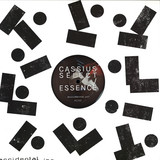
Cassius Select returns to Accidental Jnr with another 12' to follow on from last years '90 / HERD' EP. He once again straddles the genres somewhere between techno, bassline and hardcore. ESSENCE is a huge rave cut of broken snare beats and shuffled kicks alongside Select's trademark idiosyncratic vocal snippets. The B-side offers up SHAOLIN SOCCER a post-dubstep wobble at a house tempo followed by HYPE HOUR another piece of broken suedo rave hardcore.
The EP is something of a gift to his brothers for their musical influence on him as the Australian based producer explains in his own words:
Much of my musical upbringing is related to my family, I owe my early influences to my two older brothers. skimming off their mix CDs, sculpting out what 'cool' meant. the eldest is a drummer and in retrospect, i think a lot of the Cassius project is maybe an attempt to impress him again. shaolin soccer is in reference to the 90s blockbuster of the same name, where we derived a lot of our own interpersonal humour. i keep going back to that world we built between the 3 of us. in the simplest way this is a gift to the both of them.'
First time on vinyl for this legendary live performance by SF post-punks Toiling Midgets. Originally called 'Mark Left The Building' because Mark Eitzel on vocals, literally left the band half way through the show. Essential listening for essential music nerds
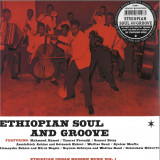
- A1: Wallias Band - Muziqawi Silt
- A2: Alemayehu Eshete And Hirut Beqele - Temeles
- A3: Samuel Belay - Aynotchesh Yerefu
- A4: Ayalew Mesfin - Hasabe
- A5: Seyoum Gebreyes And Wallias Band Muziqa Muziqa
- B1: Getatchew Mekurya -Yegenet Muziqa
- B2: Mahmoud Ahmed - Kulun Mankwalesh
- B3: Tamrat Ferendji - Antchin Yagegnulet
- B4: Asselefetch Ashine And Getenesh Kebret - Amiak Abet Abet
Repress.
"Urban Ethiopian music stands out within the African continent thanks to its creativity and originality. Whatever the shade -- pop, blues, jazz or soul -- it comes from a fusion of local musical traditions mixed with an echo of Western music. It bewitched Ethiopia during the Swinging Addis decade before recently winning the favors of a well-informed audience all over the world. This first vinyl volume of Ethiopian Urban Modern Music presents some of the Ethiopian grooves & jewels drawn from the essential CD Ethiopiques series directed by Francis Falceto and published by Buda music;
SOURCED FROM THE ORIGINAL MASTER TAPES: 2LP SET PRESENTS 1991 ALBUM IN 45RPM SPEED FOR FIRST TIME.
PCM Digital Master to Analog Console to Lathe.
Dire Straits never made a big to-do about its final run. In classic understated British fashion, the band simply let its music speak for itself. And how. Originally released in September 1991, On Every Street became the group’s swan song – a lasting testament to the influence, musicianship, and integrity of an ensemble whose merit has never been tainted by cash-grab reunions or farewell treks. It remains an essential part of the Dire Straits catalog and a blueprint of the distinctive U.K. roots rock the collective played for its 15-year career.
Sourced from the original master tapes, housed in gatefold packaging, and pressed at RTI, Mobile Fidelity’s 180g 45RPM 2LP set of On Every Street presents the album like it has always been meant to be experienced: in reference-grade audiophile sound. Recorded at AIR Studios in London and produced by Dire Straits leader Mark Knopfler, it features all of the band’s sonic hallmarks – wide instrumental separation, visceral textures, seemingly limitless air, broad soundstages, atmospherics that you can almost reach out and feel. Each element is made more vibrant, physical, and lifelike on this collectible reissue, which marks the first time this 60-minute work has been available at 45RPM speed.
Afforded generous groove space and black backgrounds, the songs from On Every Street burst with nuanced details and vibrant colors. Dire Straits’ playing appears to float, their intricate performances organized amid hypnotic, fluid, three-dimensional arrangements. Mobile Fidelity’s definitive-sounding set also brings into transparent view Knopfler’s finely sculpted guitar lines, expressive tones, and laid-back vocals – as well as the balanced accompaniment from his band mates. Here’s a record on which you can hear the full blossom and decay of individual notes, and imagine the size and shape of the studio. It is in every regard a demonstration disc. And it happens to be filled with timeless fare.
Remarkably, On Every Street almost never came to light. Dire Straits initially dissolved in September 1988 after touring behind its blockbuster Brothers in Arms and suffering the departure of two members. At the time, Knopfler professed his desire to work on solo material; bassist John Illsley also explored side projects. But Knopfler’s decision in 1989 to form the country-leaning Notting Hillbillies reignited a spark to reconvene his primary band and craft a fresh batch of songs. Six years removed from Brothers in Arms, Knopfler, Illsley, keyboardist Alan Clark, and keyboardist Guy Fletcher teamed with A-list session pros – steel guitarist Paul Franklin, percussionist Danny Cummings, saxophonist Chris White, guitarist Phil Palmer included – to create what still stands as an unforgettable farewell.
The platinum record brings the band full circle in that it returns Dire Straits to a quartet formation; finds the group refreshingly out of step with the era’s prevailing trends; and sees Knopfler and Co. knocking out song after song with the deceptive ease of a punter tossing back a pint at a pub. That subtle cool, clever poise, and innate control – signature traits that no other band ever matched – dominate On Every Street. Knopfler’s clean, virtuosic six-string escapades unfurl with dizzying melodicism and economical efficiency. Led by his winding fills and focused solos, Dire Straits traverse a hybrid landscape of rock, jazz, country, boogie, blues, and pop strains with near-faultless prowess.
More than any other entry in the group’s oeuvre, On Every Street welcomes quick detours down back alleys and into the depths of human souls. What makes it more brilliant is its staunch refusal to cater to commercial expectations or take advantage of prior successes; every passage feels true, every measure echoed in the service of song. It’s evident in the humorous satire of “Heavy Fuel,” closeted desperation of the witty “Calling Elvis,” and shake-and-bake bounce of “The Bug.” It pours from the album’s darker corners, as on the high-and-lonesome melancholy of the title track and bruised emotionalism of “When It Comes to You.”
Hinting at the open-minded approaches and boundless curiosity he’d embrace as a solo artist, Knopfler doesn’t limit himself when it comes to style or subject matter. Look no further than “You and Your Friend,” a shuffle whose all-inclusive lyrics encourage an array of interpretative meanings. Another of the album’s deep cuts, “Iron Hand,” comes on as one of the band’s most memorable moments – the narrative addressing the abuses of power at the 1984 Battle of Orgreave during the U.K. miners’ strike. Given cinematic heft by the expert production, the true-fiction account puts into perspective the richness, poetry, and depth of On Every Street.
“Every victory has a taste that’s bittersweet,” sings Knopfler on the title track. At least that bittersweetness seldom sounded so damn good on record.