We are thrilled to welcome back Aldo Cadiz to Beatwax Records with his brand-new EP “Amandorada.”
Years after his highly acclaimed debut album on Beatwax, Aldo returns with a stunning follow-up that once again showcases his unique sound signature — a perfect blend of hypnotic grooves, deep rhythmic precision, and timeless underground energy.
“Amandorada” captures the essence of Cadiz’s refined production style: warm textures, intricate percussion, and that unmistakable Latin-influenced pulse that has made him a favorite among DJs and music lovers worldwide.
This EP marks not only a reunion between Aldo Cadiz and Beatwax Records but also a new chapter in our shared musical journey. We couldn’t be happier to have him back on the label, delivering another powerful statement of cutting-edge electronic music.
Don`t sleep on this. Already making waves and getting hammered by all the big players in the scene.
>>> comes in 4c Sleeves
Search:essé
- B2: Grazia Vitale – Poi (1975)
- D4: Daniel Sentacruz Ensemble – Vivo Solo Con Te (1982)
- A1: Cinzia Peloso – Sciogli Le Catene (1980)
- A2: Linda’s Night – Cucciolona (19??)
- A3: Daniela Guerci – Non Ti Resisto Più (1979)
- A4: La Comune Idea – Cuore Di Serpente (1981)
- B1: Tony Ferri – Stella D’oriente (1979)
- B3: Sara Bongiovanni – Casablanca (1985)
- B4: Solimar – Veliero (1980)
- B5: Coscarella & Polimeno - Station To Station 2025 (2025)
- C1: Cap – Alla Porta Del Tempo (1982)
- C2: Francisca – Non Dico No (1983)
- C3: Hyper Drive Band – Hyper Mix (1985)
- C4: Linnel Jones – We’ll Cry Out (1986)
- D1: Jairo – Night Woman (1985)
- D2: Ilaria Berlato – Vincerò (1985)
- D3: Alex P.i. – Free Love (1985)
- D5: Miro – Tu Non Lo Sai (1984)
Everyone knows the story of American disco.
But few are aware that, between the late 1960s and the late 1980s, Italy wrote a parallel one — spontaneous, surprising, and incredibly creative.
It is a story that spans two distinct seasons: the Italian disco of the 1970s — melodic, handmade, sometimes naïve yet always original — and the emerging Italo Disco of the 1980s, electronic, futuristic, and lightheartedly projected toward the future.
Two different languages, yet both driven by the same desire for freedom and modernity. Discoteca Sound — Italian Discoteca Underground 1975–1986 brings together 18 rare tracks — including two previously unreleased — that tell this story of transition: from the orchestral and sentimental disco of Italian dance halls to the synthetic and visionary sound of the first drum machines.
A journey through private archives, local labels, regional studios, and forgotten voices — the sonic map of a country that has always danced, but to its own rhythm. From Mediterranean disco to the first Italo Disco, from the dim lights of provincial dance halls to the early home synthesizers, each track opens a window onto an Italy that dreamed of the dance floor as a universal language of connection during the brief season of revolutionary utopias.
This compilation celebrates ten years of work by Disco Segreta — a decade dedicated to the research, recovery, and appreciation of Italian disco and electronic culture. An act of justice owed to all those artists who had their moment yet were never remembered by history — bringing back to light an essential, still too little known part of our musical heritage.
Because dancing today remains, more than ever, a living act of memory.
Limited edition 2LP, features 2 previously unreleased tracks and a new 2025 version of Coscarella & Polimeno – Station to Station.
f Grazia Vitale – Poi (1975) Previously Unreleased
q Daniel Sentacruz Ensemble – Vivo Solo Con Te (1982) Previously Unreleased
f Grazia Vitale – Poi (1975) Previously Unreleased
q Daniel Sentacruz Ensemble – Vivo Solo Con Te (1982) Previously Unreleased
f B2. Grazia Vitale – Poi (1975) Previously Unreleased
q D4. Daniel Sentacruz Ensemble – Vivo Solo Con Te (1982) [Previously Unreleased]
[f] B2. Grazia Vitale – Poi (1975) [Previously Unreleased]
[q] D4. Daniel Sentacruz Ensemble – Vivo Solo Con Te (1982) [Previously Unreleased]
[f] B2. Grazia Vitale – Poi (1975) [Previously Unreleased]
[q] D4. Daniel Sentacruz Ensemble – Vivo Solo Con Te (1982) [Previously Unreleased]
The Éthiopiques series returns! Essential archive recordings from an extremely fruitful period in Ethiopian music.
Before “Swinging Addis” took over the world, there was Moussié Nerses Nalbandian — the Armenian-born composer who shaped modern Ethiopian music. Mentor, arranger, and pioneer, he laid the foundations of Ethio-jazz.
This Éthiopiques volume revives his forgotten legacy, recorded live by Either/ Orchestra First issue ever with new exclusive photos and in depth liner 8-page insert.
“Ethiopian jazzmen are the best musicians that we have seen so far in Africa.
They really are promising handlers of jazz instruments.”
Wilbur De Paris
(1959, after a concert in Addis Ababa)
አዲስ፡ዘመን። *Addis zèmèn* **A new era.**
The time is the mid-1950s and early 1960s, just before "Swinging Addis" bloomed – or rather boomed – onto the scene. Brass instruments are still dominant, but the advent of the electric guitar, and the very first electronic organs, are just around the corner. Rock’n'Roll, R’n’B, Soul and the Twist have not yet barged their way in. Addis Ababa is steeped in the big band atmosphere of the post-war era, with Glenn Miller's *In the* *Mood* as its world-wide theme song, neck and neck with the Latin craze that was in vogue at the same period. Life has become enjoyable once again, with the return of peace after the terrible Italian Fascist invasion of Ethiopia (1935-1941). The redeployment of modern music is part and parcel of the postwar reconstruction. *Addis zèmèn* – a new era – is the watchword of the postwar period, just as it was all across war-torn Europe.
The generation who were the young parents of baby boomers** were the first to enjoy this musical renaissance, before the baby boomers themselves took over and forever super-charged the soundtrack of the final days of imperial reign. Music is Ethiopia's most popular art form, and very often serves as the best barometer for the upsurge of energy that is critical for reconstruction. Whether it be jazz in Saint-Germain-des-Prés or the *zazous* who revolutionised both jazz and French *chanson* after the *Libération*, be it Madrid's post-Franco Movida, or Dada, the Surrealists and *les années folles* that followed World War I, the periods just after mourning and hardship always give rise to brighter and more tuneful tomorrows. Addis Ababa, as the country's capital, and the epicentre of change, was no exception to this vital rule.
**Two generations of Nalbandian musicians**
Nersès Nalbandian belonged to a family of Armenian exiles, who had moved to Ethiopia in the mid-1920s. The uncle Kevork arrived along with the fabled "*Arba Lidjotch*", the** "*40 Kids*", young Armenian orphans and musicians that the Ras Tafari had recruited when he visited Jerusalem in 1924, intending to turn their brass band into the official imperial band. If Kevork Nalbandian was the one who first opened the way of modernism, pushing innovation so far as to invent musical theatre, it was his nephew Nersès who would go on to become, from the 1940s and until his death in 1977, a pivotal figure of modern Ethiopian music and of the heights it. Going all the way back to the 1950s. Nothing less. And it is Nersès who is largely to thank for the brassy colours that so greatly contributed to the international renown of Ethiopian groove. While the younger generations today venture timidly into the genealogy of their country's modern music, often losing their way amidst a distinctly xenophobic historiographical complacency, many survivors of the imperial period are still around to bear witness and pay tribute to the essential role that "Moussié Nersès" played in the rise of Abyssinia's musical modernity.
Given the year of his birth (15 March 1915), no one knows for sure if Nersès Nalbandian was born in Aintab, today Gaziantep (Turkiye/former Ottoman Empire) or on the other side of the border in Alep, Syria... What is certain is that his family, like the entire Armenian community, was amongst the victims of the genocide perpetrated by the Turks. Alep, the place of safety – today in ruins.
Before Nersès then, there was uncle Kevork (1887-1963). For a quarter of a century, he was a whirlwind of activity in music teaching and theatrical innovation. *Guèbrè Mariam le Gondaré* (የጎንደሬ ገብረ ማርያም አጥቶ ማግኘት, 1926 EC=1934) is his most famous creation. This play included "ten Ethiopian songs" — a totally innovative approach. According to his autobiographical notes, preserved by the Nalbandian family, Kevork indicates that he composed some 50 such pieces over the course of his career. This shows just how much he understood, very early on, the critical importance of song as Ethiopia's crowning artistic form. Indeed, for Ethiopian listeners, the most important thing is the lyrics, with all their multifarious mischief, far more than a strong melody, sophisticated arrangements or even an exceptional voice. (This is also why Ethiopians by and large, and beginning with the artists and producers themselves, believed for a long time — and wrongly — that their music could not possibly be exported, and could never win over audiences abroad, who did not speak the country's languages).
Last but not least, one of Kevork's major contributions remains composing Ethiopia's first national anthem – with lyrics by Yoftahé Negussié.
Nersès Nalbandian moved to Ethiopia at the end of the 1930s, at the behest of his ground-breaking uncle. Proficient in many instruments (pretty much everything but the drums), conductor, choir director, composer, arranger, adapter, creator, piano tuner, purveyor of rented pianos,... he was above all an energetic and influential teacher. From 1946 onwards, thanks to Kevork's connexion, Nersès was appointed musical director of the Addis Ababa Municipality Band. In just a few years, Nersès transformed it into the first truly modern ensemble, thanks to the quality of his teaching, his choice of repertoire, and the sophistication of his arrangements. It was this group that would go on to become the orchestra of the Haile Selassie Theatre shortly after its inauguration in 1955, which was a major celebration of the Emperor's jubilee, marking the 25th anniversary of his on-again-off-again reign.
At some point or other in his long career, Nersès Nalbandian had a hand in the creation of just about every institutional band (Municipality Band, Police Orchestra, Imperial Bodyguard Band, Army Band, Yared Music School…), but it was with the Haile Selassie Theatre – today the National Theatre – that his abilities were most on display, up until his death in 1977. To this must be added the development of choral singing in Ethiopia, hitherto unknown, and a sort of secret garden dedicated to the memory of Armenian sacred music, and brought together in two thick, unpublished volumes. Shortly before his death (November 13, 1977), he was appointed to lead the impressive Ethiopian delegation at Festac in Lagos, Nigeria (January-February 1977).
His status as a stateless foreigner regularly excluded him from the most senior positions, in spite of the respect he commanded (and commands to this day) from the musicians of his era. Naturally gifted and largely self-taught, Nerses was tirelessly curious about new musical developments, drawing inspiration from the very first imported records, and especially from listening intensely to the musical programmes broadcast over short-wave radio – BBC *First*. A prolific composer and arranger, he was constantly mindful of formalising and integrating Ethiopian parameters (specific “musical modes”, pentatonic scale, and the dominance of ternary rhythms) into his “modernisation” of the musical culture, rather than trying to over-westernise it. It even seems very probable that *Moussié* Nerses made a decisive contribution to the development of tighter music-teaching methods, in order to revitalise musical education during this period of prodigious cultural ferment. Flying in the face of all the historiographical and musicological evidence, it is taken as sacrosanct dogma that the four musical modes or chords officially recognised today, the *qǝñǝt* or *qiñit* (ቅኝት), are every bit as millennial as Ethiopia itself. It would appear however that some streamlining of these chords actually took place in around 1960. It was only from this time onward that music teaching was structured around these four fundamental musical modes and chords: *Ambassel*, *Bati*, *Tezeta* and *Antchi Hoyé*. A historical and musical “details” that is, apparently, difficult to swallow, especially if that should honour a *foreigner*. Modern Ethiopian music has Nersès to thank for many of its standards and, to this day, it is not unusual for the National Radio to broadcast thunderous oldies that bear unmistakable traces of his outrageously groovy touch.
- A1: Viaje Al Sol
- A2: The Maestro
- A3: Esferas De Cristal
- A4: Mama
- A5: Cascabel
- A6: Juguentes Rotos
- B1: Sigilo
- B2: Orquesta Sinfonica Angustia
- B3: Toro De Falaris
- B4: Perdon De Judas
- B5: Viento Androide
- B6: Corpus De Sangre
- A1: Dellarge - Viaje Al Sol (Silent Servant Remix) 7
- B1: Dellarge - Cascabel (Pedro Vian Remix) 7
lim. 150 blue transparent 180 Gr LP + 7" + Poster / incl. Silent Servant Remix
A cross-cutting label exploring the boundaries between different disciplines based on deep listening and music research, Modern Obscure Music is set to release 'INRI' (INDUSTRIA NACIONAL DEL RUIDO INFINITO) on the 1st December, the new album from Dellarge.
Inspired by the scenic beauty of his studio's surroundings at Lake Pátzcuaro in Michoacan, Mexico, Alejandro Barba, aka Dellarge, delves deep into the depths of his artistic consciousness to craft a spiritual album that encapsulates the essence of the place. 'INRI' stands for Industria Nacional del Ruido Infinito (National Industry of Infinite Noise) and serves as a vessel for Dellarge's innermost self-expression and reflections on the potential of humanity.
A multifaceted artist and veteran of the music industry for over two decades, his latest musical creation is an intimate and personal album and a departure from previous Techno/EBM-orientated Dellarge releases. 'INRI' (INDUSTRIA NACIONAL DEL RUIDO INFINITO) offers a mesmerizing blend of ambient, futuristic, and industrial sounds that transport listeners into a realm of mysticism, futurism, and duality and stands as a testament to Dellarge's artistic growth and his ability to transcend boundaries, offering listeners an immersive experience that connects them to his world.
Drawing inspiration from numerous sources, Dellarge found creative fuel in books such as 'El Arte de los Ruidos' by Luigi Russolo, 'Manifiestos y Textos Futuristas' by F.T. Marinetti, and science fiction classics including 'Congreso de Futurología' by Stanislaw Lem, 'Neuromancer' by William Gibson, and 'Dune' by Frank Herbert. Musically, he delved into the works of Coil, Michael Bundt, The Threshold Houseboys Choir, krautrock legends CAN and Popol Vuh, early Kraftwerk, Arthur Brown, Yello, Esquivel, The Residents, and Hector Lavoe for inspiration.
When asked about the creative process behind the album, Dellarge revealed a disciplined routine that involved immersing himself in the sounds, focusing on minute details that connected with the vivid world he envisioned. Ethereal tracks such as 'Viento Androide' and 'Viaje al Sol' offer a glimpse of a hopeful future, while darker compositions such as 'Corpus de Sangre' and 'Toro de Falaris', explore the wickedness and compassion within humanity. Each piece in the album represents a unique sonic journey.
'Viaje al Sol', the first single to be taken from the album, is set for release on the 27th October, and is also available as an EP which includes a remix from Juan Mendez aka Silent Servant. The remix is also included on the digital version of the album and available on 7" vinyl alongside an exclusive reworking of 'Cascabel' by the founder of Modern Obscure Music, Pedro Vian.
To mark Grid's second anniversary back in 2023, the label brought together 13 tracks from the bass scene's most forward-thinking artists, all of which sank you into deep sonic chambers. Now, six of those tracks are available on wax for the first time in what is an essential sampler featuring boundary-pushing contributions from forward-thinking artists. Sister Zo opens with the percussive pressure of 'EMP,' Ronan lays down a lithe rhythm that befits its 'Shadowbox' title and Seekersinternational drill down into warped low-end chaos. There is a deftness to Jonny From Space's tumbling perc and E-Unity brings clean lines and a futuristic sheen to his deep dub workout 'Of All The Places I Could Be'. Tammo Hesselink brings ambient soundscaping with his floating delight, 'Paint Reduce Trick.' This is high-quality, original music that moves both mind and body.
Originally released in 1972, Toni Tornado's self-titled debut is a landmark in Brazilian soul and funk - a gritty, groovy record that helped define the sound of the Black Rio movement. Blending deep soul, psychedelic funk, and bold orchestration, this album channels the revolutionary energy of James Brown with the tropical swagger of Rio's streets. From the urgent rhythms of 'Torniente' to the undeniable strut of 'Mané Beleza' and 'Tornado,' Toni's music pulses with a fierce sense of pride and liberation. It's the sound of a new cultural identity taking shape - where African-American soul met Afro-Brazilian reality. Often compared to the legendary Tim Maia, Tornado brought his own explosive edge to Brazil's growing soul scene. By the 1970s, other Brazilian musicians, such as Banda Black Rio, Cassiano, Gerson King Combo, Jorge Ben and Gilberto Gil, began making soul records. DJs started throwing soul-only parties. Toni Tornado's voice carries grit and passion, his grooves hit hard, and his message is crystal clear - Black is beautiful, and the funk is real. Back on vinyl for a new generation, this reissue is more than a collector's gem - it's a time capsule from an era when music moved bodies and minds. Essential listening for fans of vintage soul, global funk, and revolutionary sounds. Reissue on 180g vinyl.
2025 Repress
Re-issue of essential Larry Heard album from the early 2000's... Love's Arrival! Now in DJ friendly triple vinyl package adding some of the favorites from CD release like 'Deja Vu' and 'Missing you (Jazz Cafe Mix)' to the vinyl package. And bonus... 'Luminous Energy' from the same sessions.
Oleg Makovskiy – Inward Currents EP LOK Black
LOK Black welcomes Oleg Makovskiy with Inward Currents EP, a deep exploration of refined minimal grooves and subtle rhythmic tension. Makovskiy crafts a fluid sonic journey through intricate percussion, warm textures, and hypnotic drive—perfect for late-night selectors and deep-space dancers alike.
Spanish producer Alex Font steps in on remix duties, reimagining The Soul with his signature swing and immersive groove, delivering a timeless reinterpretation that completes this elegant package.
A sophisticated addition to the LOK Black catalogue—essential for fans of stripped-back, soulful minimalism.
- A1: Borai & Denham Audio - Make Me
- A2: Smoke City - Mr. Gorgeous (And Miss Curvaceous) (Mood Ii Swing Vocal Mix)
- B1: Chris Raven - I Know You Love Me Too (Bruce Norris Remix)
- B2: Grooveyard - Mary Go Wild
- C1: Dave Swayze - Last Flight To Paris
- C2: Joe Goddard - Music Is The Answer (Hot Since 82 Remix)
- D1: Just A Man - I'm Sorry (Original Club Mix)
- D2: Teddy Pendergrass - Life Is A Song Worth Singing (Jamie Jones Remix)
Since 2020, 12 Inch Lovers have been releasing new samplers every year, eagerly anticipated by collectors. These samplers have now become a staple and are easily added to vinyl collections across Europe. They offer timeless classics and rare tracks that are often hard to find elsewhere.
With Samplers 11 & 12, they surprise again with a mix of modern classics and tracks that have never been released on vinyl or are difficult to find. By adding unique and exclusive tracks, the 12 Inch Lovers samplers remain innovative and high-quality. They are a must-have for DJs, collectors, and fans of contemporary classics!
SAMPLER 12
A1) Borai & Denham Audio - Make Me (original release 2023)
Released in 2023 on the British label Room Two Records (catalogue R212001) on twelve inch vinyl, Make Me combines breakbeat, house and speed garage with high energy, featuring clear use of Amen breaks, rumbling sub bass and sharp rave sounds. At the heart of the track lies an instantly recognisable vocal hook from the mid eighties, a sample taken from Donna Allen - Serious (1986). The result feels like a long forgotten rave anthem from the nineties wrapped in a modern sound.
The original twelve inch pressing quickly became a highly sought after collector's item and received a limited pink vinyl repress in 2025. This track, first issued only on orange vinyl in 2023, was officially re released once all samples were cleared. It has every ingredient of a future classic, a true underground anthem for fans of modern UK rave and jungle energy.
A2) Smoke City - Mr. Gorgeous (and Miss Curvaceous) (Mood II Swing Vocal Mix) (original release 1997)
Originally released in 1997 on the album Flying Away by Smoke City. The Mood II Swing Remix, produced by New York house duo John Ciafone and Lem Springsteen (also the producers behind Ultra Naté - Free), takes the song straight to the dance floor with a smooth groove, soulful vocals and a deep, hypnotic flow.
The iconic line "Cool and calm, Mr Gorgeous..." remains untouched, while the remix enriches the original Latin and trip hop influences of the band with that distinctive late nineties house atmosphere. The result is a timeless club favourite, almost nine minutes of pure vibe (the Mood II Swing Vocal Mix runs 9minutes and 20 seconds), adored by DJs who like to bring a touch of soul to their house sets.
Released on Jive Records, the track received great praise. Music Week highlighted its "tight ay ay ay hook" and noted that the Mood II Swing and Hyperspace mixes made it a real standout. The original version reached number one in Italy in 1997, and the Mood II Swing Remix has since gained cult status in the Belgian club scene and beyond as the perfect marriage between soul and dance floor energy.
B1) Chris Raven - I Know You Love Me Too (Bruce Norris Remix) (original release 1997)
Christian Raabe, better known as Chris Raven, is a German producer who made his name in the late nineties progressive trance scene.
The Bruce Norris Remix of I Know You Love Me Too (Additive Records, catalogue 12AD 027) first appeared in late 1997 and was officially released in early 1998. The remix builds an euphoric atmosphere witha beautiful melody, dreamy pads and powerful drums, all typical of the progressive trance sound of that period.
The track gained extra attention when it appeared on Northern Exposure 3: Expeditions by Sasha and John Digweed in 1999. Many fans first discovered it there (especially the Van Bellen Remix version), helping to cement the cult status of I Know You Love Me Too within the progressive and trance community.
B2) Grooveyard - Mary Go Wild (original release 1996)
One of the most recognisable and iconic club tracks in Belgian and Dutch underground house history is without a doubt Mary Go Wild, released in 1996 on EC Records. The track quickly became the defining anthem of the rave scene in the Low Countries.
With a raw groove around 133 BPM, pumping four to the floor drums and the hypnotic vocal sample "Mary... go wild!", the record set dance floors ablaze in the nineties. Producer Jeroen Verheij, also known as Secret Cinema (from the classic Timeless Attitude), perfectly captured the raw energy of the European house movement of that era.
To this day Mary Go Wild stands as a symbol of pure rave power, a timeless anthem that, as one Discogs collector put it, "still works on any dance floor." Original twelve inch pressings on EC Records and later issues on Blanco Y Negro are highly sought after, and the track remains a staple in retro house and classic DJ sets.
C1) Dave Swayze - Last Flight To Paris (original release 2000)
Dave Swayze, best known for his classic Goldwave, has several hidden gems to his name, and Last Flight To Paris is certainly one of them. Released in November 2000 on the Belgian label Yeti Records, the track is a subtle blend of trance and progressive house. It is known for its emotional melody, dreamy build up and strong percussion, built on the foundation of progressive trance but with thewarmth and groove of house.
At the time, Last Flight To Paris was frequently played by progressive trance DJs and soon became a cult favourite among vinyl collectors within the genre. Original pressings on Yeti Records are now extremely rare and much sought after. The mix of emotion, euphoria and timeless club energy makes Last Flight To Paris a hidden treasure from the late trance era of 1999 and 2000.
C2) Joe Goddard - Music Is The Answer (Hot Since 82 Remix) (original release 2017)
This remix by Hot Since 82 (Daley Padley, from Barnsley in the north of England) for Music Is The Answer by Joe Goddard is partly based on the original classic Celeda - Music Is The Answer (in the Danny Tenaglia Remix). It was released in February 2017 as a digital exclusive through Domino Records.
Hot Since 82 reworked the original, a vocal house track by Hot Chip member Joe Goddard, into a deep, grooving house track with a warm rolling bass line. The soulful vocals of Joe Goddard (featuring SLO) take on a subtle melancholic tone in his remix, creating a modern house classic filled with emotion and drive.
The remix became a major club favourite in 2017 and 2018, supported by leading names in the tech house scene and heard at festivals around the world. Interestingly, this popular version had never been released on vinyl, which only increased its cult status among collectors. Music Is The Answer (Hot Since 82 Remix) remained a digital classic for years, until now, finally available in this long awaited vinyl edition.
D1) Just A Man - I'm Sorry (Original Club Mix) (original release early 2000s)
The French project Just A Man consists of brothers Hervé and Nicolas Subrechicot. Their track I'm Sorry is an emotionally charged house record that perfectly captures the early 2000s club atmosphere.
Released in 2003, the song combines soulful male vocals with a warm, rhythmic production that blends UK garage and classic club house influences. The Original Club Mix (6 minutes and 14 seconds) builds gradually towards a powerful, uplifting climax, carried by rich chords and an irresistible groove.
Although I'm Sorry stayed somewhat under the radar at the time, it is regarded by connoisseurs as a hidden gem, a perfect balance of melody and groove. The twelve inch vinyl release (on RKG / Motor Music, 2003) is now hard to find and highly prized among vinyl and house collectors, which only adds to its appeal.
I'm Sorry embodies the pure sound of early 2000s vocal house: sincere, funky and danceable, with that unmistakable UK garage touch, even more evident in the G Box Garage Club Remix on the same EP. An unfairly overlooked track that has always remained a true timeless classic since the very beginning of 12 Inch Lovers.
D2) Teddy Pendergrass -Life Is A Song Worth Singing (Jamie Jones Remix) (original release 2019)
In 2019 Jamie Jones breathed new life into the classic soul song by Teddy Pendergrass with a contemporary house rework. The remix was released in March 2019 as part of the digital EP Mixmag Presents: Teddy Pendergrass - The Remixes, issued in honour of the documentary If You Don't Know Me, a film about the rise of Teddy Pendergrass, the first African American male artist to achieve five consecutive platinum albums in the United States during the seventies.
Jamie Jones stayed true to the feel good essence of the 1978 original but wrapped it in a modern club sound, with pulsing synths, a warm rolling groove and a tight four to the floor beat providing the perfect base for Teddy's powerful and instantly recognisable voice.
The result is a captivating, soulful house track that effortlessly bridges past and present without losing the emotional power of Pendergrass's vocal delivery.
Despite its widespread popularity in the international club scene, where it became a favourite among DJs who love to blend soul with house, this remix never had a physical vinyl release. Until now, with its long awaited appearance on 12 Inch Lovers Sampler 12.
2026 Repress
If ever an album could transport you to the hazy sunshine and imagined halcyon paradise of Southern California in the mid-1980s, could capture the early evening warmth of hanging at an inclusive boogie jam as it approaches “magic hour” in Santa Ana or Anaheim, then it’s Vaughan Mason and Butch Dayo’s Feel My Love. A brilliantly produced deep slung, low rider funk classic originally released on Salsoul in 1983. It’s a masterpiece of “funk love music”.
Yes, this is indeed a perfectly formed five track “mini LP” of unparalleled heat, but there’s one song here that, above the rest, represents Orange County boogie-funk. A straight killer beloved by all that have had the pleasure of moving to it. A track that can fill up a dance floor within seconds of its starting. That song is the eternal title track, “Feel My Love”.
This is a work of art that made people fall in love with the funk. It transcends the limitations of genre. “Feel My Love”’s deceptive simplicity makes it perfect to drop during a house set, a classic funk party or at a west coast rap jam. It’s sexy, deeply emotional, melancholic, hopeful, passionate and just radiates so, so much raw energy. This is music.
The rest of the record is hardly filler though. Opener “Oh, Love” is a dizzying, emotional slow jam. With heaven-sent vocals riding gorgeous, sweeping keys that alternate between sweet twinkling lines and funk-fuelled stabbing. It’s sensational. A rollerskating jam named “Rollalong Songs” is an ultra-swish piece of dance floor dynamite. Its slick drums, staccato piano and neck snapping claps underscore Dayo’s buoyant vocals. It’s essentially “Bounce, Rock, Skate, Roll Part II”.
The flip begins with “Party On The Corner”. Smoother than silk vocals, day-glo synths, a bubbling bassline and guitar licks that surely received the Prince seal of approval. It’s another example of how Vaughan Mason and Butch Dayo flirt with perfection so routinely. The most majestic closer, the kaleidoscopic, cow-bell-assisted synth-funk heater “You Can Do It” is a proto-rap groover that truly smokes.
This prized LP is a stone cold jam and finding original copies on vinyl at affordable prices has been tough for years. Mastered brilliantly by Simon Francis, cut by Pete Norman and with lovingly reproduced artwork, this fresh Be With reissue ensures this legendary LP now sounds, looks and feels as sensational as it should.
2026 Repress
The undisputed Godfather of Boogie, Leroy Burgess’s Logg project is his grand masterpiece.
The self-titled LP, originally released on Salsoul in August 1981, is one of the greatest albums of the post-disco era. It’s one of Be With’s favourite ever LPs and so it’s a complete honour to be giving it our reissue treatment. With all the touchstones of Burgess’s finest work - breezy grooves, undulating synths, funk-drenched bass and life-affirming lyrics - delivered with gospel-derived vocals and harmonies - it’s a record to uplift both body and spirit.
Already a cult soul figure as lead singer of seminal vocal group Black Ivory, Leroy Burgess cut his teeth as arranger, vocalist and songwriter with legendary producer Patrick Adams on essential late-70s projects like Phreek and Dazzle. He went on to define the essence of “boogie”: the vibrant underground dance sound that stood in contrast to commercial disco. With its reduced speed - mid-90 to under 110 BPM - the cool boogie of Burgess has the disco bounce, just more laidback.
All six tracks here could have been stand alone 12" hits. Indeed, some of them were. But together they are also an incredibly cohesive album, where all the compositions are deeply relevant to each other. In short, it’s essential; a thrilling showcase for Burgess’s finest arranging and production work - with his vocals at their euphoric peak alongside the inventive rhythm section of Aaron (Sonny) T. Davenport on drums and James Calloway on bass.
Opener “(You’ve Got) That Something” is a balmy sunshine groover with an insistent chorus whilst the timeless vocal of “Dancing Into The Stars” - married to percolating synth and airtight drums - showcases the chemistry between Burgess and the rhythm section.
The fusion of funk and gospel-influenced harmonies which propels “Something Else” is remarkable - deep, joyous and bouncy. Infamously mixed by Larry Levan, “I Know You Will” is an easy glide, all rollicking electric piano underpinned by a precise and relentlessly upbeat groove. “Lay It On The Line” radiates smooth, understated brilliance, elevated by interstellar keys and finally album-closer “Sweet To Me” is a chilled-out gem of profound soulful elegance.
Logg has long been a hit with the likes of Kenny Dope and Dam-Funk whilst, in the last decade, MCDE and Harvey Sutherland have routinely cited it as a huge influence. Accordingly, finding original copies on vinyl at affordable prices has been a thankless task. This fresh Be With reissue ensures this legendary record now sounds, looks and feels as sensational as it deserves to.
Mastered brilliantly by Simon Francis, cut by Pete Norman and with lovingly reproduced artwork, we think this is a reissue that does justice to this classic LP.
Kutiman joins Batov Records’ Middle Eastern Grooves Series with explosive double-sider
Batov Records is thrilled to announce the debut of pioneering producer, multi-instrumentalist, and multidisciplinary artist Kutiman on its highly collectable Middle Eastern Grooves 45s series. The release features two essential, souk-fuelled, psych-funk heaters: “Haraka” and “Khamsin”.
A prolific musical force, Kutiman delivers the goods on “Haraka” (“movement”), layering neck-snapping rock drums, irresistible psychedelic basslines, and haunting organ riffs, with microtonal-bending synths and tabla-inspired percussion.
On the B-side, “Khamsin” (“heatwave”) continues the trip with another heavy dose of Middle Eastern psych and funk, culminating in a blistering guitar solo in his signature Middle Eastern style by longtime collaborator Uri Brauner Kinrot (Ouzo Bazooka, Boom Pam), who also contributes beguilingly languid bass guitar riffs.
Both tracks showcase Kutiman’s distinctive ability to fuse regional traditions with modern grooves, marking a bold new addition to the label’s standout series.
We keep the fire burning with PAN009, a scorching slice of Latin soul from Puerto Rico’s own Nacho Sanabria, better known as El Sabor De Nacho. Originally released in 1973, his version of “Que Se Sepa” takes the Roberto Roena classic and injects it with a new energy — fiery brass, driving percussion, and that unmistakable swagger that defines the golden age of salsa.
Born in Cataño, Puerto Rico in 1929, Nacho Sanabria grew up surrounded by the rhythms of bomba and plena, performing on stage as early as age nine. After relocating to New York in the late 1940s, he became a key figure in the Latin dance scene, performing with groups like Sonora Boricua, Orquesta Panamericana, and later Rafael Cortijo’s Combo. By the mid-1960s, Sanabria formed his own band, El Sabor De Nacho, combining tight horn arrangements, sharp percussion, and his signature charismatic delivery. His 1970s recordings — including Alma Primitiva and Salsa Caliente — stand as shining examples of Puerto Rican salsa at its peak.
Sanabria’s version isn’t a straight cover — it’s his own Puerto Rican interpretation, full of character and swing. The rhythm section stays tight and earthy, the horns punch with intent, and his vocal delivery brings that effortless charm only a seasoned bandleader could deliver. A proper Latin soul mover that sits somewhere between the barrio and the dancefloor, perfect for warm evenings and deeper DJ sets.
Rescued from obscurity and lovingly restored for today’s floors, PANORAMA Records continues its mission to reintroduce rare and essential music to new generations. From deep funk, jazz and global grooves to Latin dancefloor heat, the label’s 45s series shines a light on overlooked gems that still sound fresh today. Supported by tastemakers like Gilles Peterson, Patrick Forge, and the Mr Bongo DJs, this one’s destined to move both hips and feet.
- A1: Cookin’ Gumbo Feat. Juli Giuliani & Dj Swet
- A2: Krewe
- A3: The Struggle
- A4: Do It! (Skit)
- A5: Lagniappe
- A6: Lifetime Stories
- A7: Quimbombó Feat. Tumbakin
- B1: Boss Says No! Feat. Samuel Marthe
- B2: Praia De Moreré
- B3: Old School, No? (Skit)
- B4: Dave’s Groove Feat. Escandaloso Expósito
- B5: Vitamina Feat. Cecé
- B6: Thank You 02 37
Rooted in the New Orleans tradition and the essence of hip hop, Hip Horns Brass Collective unleashes its powerful sound in KREWE, their debut album. KREWE takes the brass band genre beyond its boundaries, diving into the underground with danceable rhythms like boombap and bounce, full of influences such as afrobeat, gospel and funk. The lyrics, filled with references to hip hop culture, flow in an explosive mix of English, Spanish, and Catalan, sharing their love for the tradition of rap and African American music. KREWE is a manifesto of the positive side of hip hop, a tribute to the unstoppable strength of the collective that a brass band represents in contrast to the solitude of the individual, and a homage to the legacy of hip hop and the vibrant tradition of New Orleans
Since the recent reissue of Sylvia Striplin's one album for Uno Melodic Records, demand has been building again for two of the key tracks back together again on 12' single. Huge on disco, rare groove, two step scenes these track capture the essence of the period of music and genius of producer Roy Ayers. First released in 1980, both tracks became signature tracks for Roy's Uno Melodic label. Sylvia previously sang with Roy at Polydor, sang lead momentarily with Aquarian Dream and one album with Eightes Ladies.
A cult artifact from the dawn of German techno returns. Cyber Space Tracks Vol. 3 – The Quadrant EP by Jack U. Rebels is a raw, deep dive into the early ‘90s underground.
Originally pressed in 1992 on the seminal techno label Timeplan, this EP has long been a coveted gem among techno purists and collectors. Jack U. Rebels —an alias of key players from the German rave movement—channeled the spirit of rebellion and freedom into a sound that was both cerebral and physical. From hypnotic synth lines to cavernous, dubbed-out drum workouts, The Quadrant EP captures a formative moment in techno history—when genre lines blurred and the rave was still wild.
Lovingly remastered and faithfully reissued, this edition brings back the original energy while giving the tracks the sonic space they always deserved.
Coming From... Returning To... proudly presents this essential reissue— returning it to turntables where it belongs.
- A1: Scratch Pad 1
- A2: Messij Received
- A3: God's Gift
- A4: Tentative
- B1: Canada 2048
- B2: Wiped Out
- B3: Body In Motion (Body Plus Mix)
- B4: Onyx (Dark Side Of The Moon)
- C1: Messij Received (Wstwgbe Mix)
- C2: Canada (Drunken Auslander Mix)
- C3: Tentative (Woffenfum Mix)
- D1: Messij (Bobbing Boat Mix)
- D2: Body In Motion (Timeless Techno Mix)
- D3: Doh-T (Am / Fm Mix)
- E1: 95 Future Echoes
- E2: Turbine
- E3: Pencil Neck
- E4: Messij 2005 (New Science Mix)
- F1: Canada (Tim Reaper Remix)
- F2: Messij (Sherelle's Messij In A Bottle Hardcore Remix)
- F3: Doh-T (Mantra Remix)
- F4: Canada (Niknak Remix)
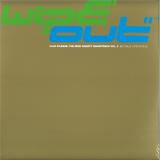
The legacy of wipE′out′′ has transcended time and cemented itself as a true transgenerational phenomenon. Launched in 1995, it didn’t just revolutionise the gaming industry, it created a bridge between the gaming ecosystem and the raver community. Its futuristic aesthetics and forward-thinking sound left a mark not only on mainstream audiences but also on the most demanding corners of the underground.
Decades later, the game’s impact is still alive. The release in 2023 of The Zero Gravity Soundtrack on Lapsus Records proved once again that wipE′out′′’s accompanying audio will go down in history as much more than just an anti-gravity racing game soundtrack.
This is why we decided to go deeper into the slipstream and build the second volume you’re now holding in your hands. Drawn from the original archives of Tim Wright, aka CoLD SToRAGE, this new collection surfaces unreleased cuts, pieces that couldn’t fit on the first edition, and a suite of self-authored ambient reworks that translate pure velocity into wide-screen atmospherics engineered for the long straights, the drone of airbrakes, the blue hour between checkpoints. It also reconnects the circuit, gathering selections and variants tied to later chapters of the saga — wipE′out′′ HD and wipE′out′′ Pure — plus alternative mixes that, until now, only existed in the Sega Saturn dimension of the franchise.
Finally, the material takes a leap into the future in the hands of four remixers especially chosen for this release: Tim Reaper, SHERELLE, Mantra, and NikNak, who collectively forge links between CoLD SToRAGE’s pioneering musical vision, the sound world of the game, and the contemporary breakbeats and drum & bass vanguard.
Expect the DNA you remember — accelerated breaks, trance-vector synths, jungle influences, sub-bass rumbling neatly beneath the craft’s hull, and at times even echoes of classic hardstyle — now revealed with new angles and air. The previously unheard material carries the same aerodynamic design sense that made these tracks feel faster than the track map itself, while the ambient versions open the field of view with melodies hovering at the lip of overdrive. Without a doubt, here you’ll find a strong sense of nostalgia. But this isn’t just nostalgia; it’s also proof that this sound world continues to evolve when you ease off the throttle.
For the faithful — crate-digging ravers, speed-run obsessives, and design nerds — this is an essential expansion pack: compiling rarities, restoring context, and reframing the emotional core of wipE′out′′ for late nights and early mornings alike. Bridging memory and momentum, club and console, rush and afterglow. Strap in.
Detailed tracklist, with annotations by Tim Wright aka CoLD SToRAGE
· Scratch Pad 1: “This track was composed using incomplete tracks that were developed around the time of the first wipE′out′′. It’s so long because it was used for a marathon-length Psygnosis promotional video.”
· Messij Received: “Messij was a firm favourite with wipE′out′′ fans, so it made sense that there’d be more where that came from — this was one of those re-workings.”
· God’s Gift: “I was always very fond of Erasure’s track Love to Hate You with the canned crowd FX sounds. God’s Gift was a tongue-in-cheek reference to how some musicians think they are just that. This was way before I even played live as CoLD SToRAGE.”
· Tentative: “I wasn’t sure about introducing some wacky beats and distorted sounds into one of the tracks, because it was kinda heading away from the other tracks, hence Tentative — but it turned out OK.”
· Canada 2048: “When wipE′out′′ 2048 was launched I decided to re-make Canada as a kind of tribute, but in a slightly new-tech, laid-back way, using Propellerhead Reason and all software synths.”
· Wiped Out: “Based on a few riffs from a MIDI file unused at the time of the original wipE′out′′ game compositions, this featured on my debut album MELT.”
· Body in Motion (Body Plus Mix): “A more trippy interpretation of Body in Motion that featured on non PlayStation versions of the game e.g. Sega Saturn.”
· Onyx (“Dark Side of the Moon”): “Onyx was my sole contribution to wipE′out′′ Pure on the Sony PSP handheld gaming console. This version was something I developed in a darker style, that eventually erupts into a crescendo.”
· Messij Received (WSTWGBE Mix): “Like I say, Messij was a hit with most wipE′out′′ fans, so when I was asked to compose more music for non-PlayStation versions, I adapted this tune into a parallel-universe version for PC and Sega Saturn. By the way, WSTWGBE refers to Who Said This Was Going To Be Easy?”
· Canada (Drunken Ausländer Mix): “In early 2018 I released a fresh album called Ch'illout′′, a re-working of many of my wipE′out′′ tracks in an ambient, Sunday-morning vibe style — it was a few years’ work, here and there.”
· Tentative (Woffenfum Mix): “Another chilled re-working of one of my wipE′out′′ tracks, the mix named with a nod to a good friend of mine, Carl Woffenden — someone who I've worked with for many years in the games industry.”
· Messij (Bobbing Boat Mix): “A nice cheesy computer blip-blop start belies its deep and upbeat chilled-out melodic finale.”
· Body in Motion (Timeless Techno Mix): “Another classic track given the chilled-out vibe mix, as featured originally on my Ch'illout′′ album. This one’s a really trippy, deep-space take on the original.”
· DOH-T (AM / FM Mix): “The idea with this chilled-out mix was to imagine all the melodic parts of this varied track being broadcast on terrestrial radio, so each theme drifts in and out through the radio static.”
· ’95 Future Echoes: “Originally developed as a companion album for wipE′out′′ HD, this track actually has its roots in a tiny loop of a song that never progressed to anything special back in the mid-’90s when I was composing for the original game.”
· Turbine: “Also from my wipE′out′′ HD album, it leans heavily into the upbeat, uplifting tunes from the original game, but also steals a bit of vibe and energy from The Prodigy, with those distorted flute sounds.”
· Pencil Neck: “This excerpt from my wipE′out′′ HD album features lots of sounds centre-stage and forward from Propellerhead Reason’s Subtractor virtual synth. I learned to love this more than my JD-800!”
· Messij 2005 (New Science Mix): “Yet another take on the track that still raises a smile, this time through a mix of samples from the original and Propellerhead Reason — the ‘new science’ when compared to an Amiga 1200 running Bars and Pipes.”
2025 Repress
Amotik recruits Norway's Kameliia and Dallas-based Decoder for the third split EP on his increasingly essential AMTK+ label.
Kameliia's hypnotic and atmospheric music has appeared on the likes of Overbalance and Unterwegs, where she has previously flexed her sophisticated take on sound design and heady soundscapes with driving and physical grooves. Decoder recently started his new Toca label with Jay York and has previously appeared on labels like Subsist, Float and Jeff Mills' legendary Axis.
Kameliia kicks off with the heavy and thumping 'Beyond', combining forceful drums and a slow, mystical synth lead that encourages you to follow it deep into the night. '8-12' is another perfect fusion of the head and body with supple percussion smeared with balmy and cosmic chords for a classy and immersive cut.
Decoder opens the B-side with 'Kalpavriksha', a twitchy and paranoid cut laced with bleeps and pulses, crafting a futuristic soundscape that grows ever more intense. 'Swayambhu' brings experimental shades with its tightly interlaced drums and synths beneath an unsettling synth line that whistles like a storm. Closing the release is the excellent 'Velinattu,' a buoyant track that's warm and full of delicate percussive layers.
dungeon acid review 25-09-03 by Joakim Cosmo A acid house style EP by swedish acid techno pioneer on swedens oldest underground label? Making a acid house EP in 2025 that makes a difference is a challenging task but this one just nails it. Here you see a softer and more musical side of Dungeon Acid in the shape of 5 dark yet hopeful Acid House tracks. Despite the classic form and ingredients it somehow avoids feeling retro but I guess this is what happens when you let a true grand master do it combined with a selector and label boss beyond the ordinary. It's like a paralell universe version of what Acid House could have become, and its a beautiful vision. A1-101-303 starts off with a dreamy, moody dubby and slightly romantic track that is just utterly beautiful in all its simplicity. The elegance and easy touch strikes me instantly. Nails the essence of the genre. One more like this and im buying it. The way A2-Unlock rewind builds up gives me goosebumps. So hypnotic and dark and experimental and the way it progresses to the ravey chord-break. The sounds and effects and details feel so alive and on the fly. In the record store this is where id already go "ok, im having this one" B1-Lonely Acid boy is yet another simple yet super atmospheric track. The contrasts between the rough robotic parts and the jazzy live solos ontop just gets to me. The roughness in the mix, that second beat with the hi-hats and extra bass, the fact that its so loud and sudden, is just great. And then we get to B2-Shnukki and all of a sudden, a romantic melodious electro track with a asian touch and acid bassline, that somehow goes well together with the other tracks. This one isnt my favourite or what I would buy the record for, but it would probably be the one I discover years later. Typical Borft Records to think that far ahead. The EP ends with B3-Chiliflex BB come on and this one starts with more late 80's ravey chords but the further you get into the track the more disharmonic, tweaky and punky it becomes. Things dont really fit together yet they do. To sum it up, these tracks are raw, funky, gutsy, streety, visionary, full of contrast and a bit challenging, just like acid house should be, but often isnt. I think Dungeon Acid and Borft Records nails it here. I'd buy doubles of this.