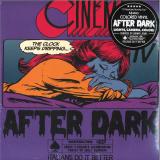
Two worlds collide in the third release from the downtempo dedicated, Truffle101. Based out of Brighton UK, Acid Chaz shares a melting pot of sounds, wandering between Trip Hop and Dub, whilst Argentinian born and raised Keny G handles things on the flip side. Warm and charming sounds from this producer on the rise. Six cuts for the slower days.
Search:eve 6
- 1: From Here To Eternity
- 2: Flaming Torch
- 3: You've Got To Pay
- 4: No Solution
- 5: Inbetweens
- 6: Out There In The Night
- 7: Curtains For You
- 8: Programme
- 9: Someone Who Cares
- 10: Miles From Nowhere
- 11: Instrumental
A year after their acclaimed self-titled debut album, The Only Ones followed up with Even Serpents Shine. The sophomore album was met with positive reviews, that “Even Serpents Shine doesn’t boast an out-of-the-box classic tune along the lines of “Another Girl, Another Planet” from the debut, but in many respects, this is the more consistent album, achieving a similar degree of thematic and melodic variety while generat- ing a more coherent sound and feeling.”
Even Serpents Shine features remastered audio and is avail- able as a limited edition of 1000 individually numbered copies on flaming coloured vinyl.
Audio taken from a live performance by Anar Band (Jorge Lima Barreto and Rui Reininho) with E.M. de Melo e Castro in November of 1978 at Cooperativa Árvore, Porto. The performance was filmed. A segment was included in »Obrigatório Não Ver«, a weekly programme presented by Ana Hatherly on Public Television’s Second Channel. It was not possible to determine the exact date of the event, and no documentation seems to be available in the relevant archives.
»Encontro que Tenho« and »Profissões«: these titles are specific to this release. Having failed to locate the respective poems after a thorough search in E.M. de Melo e Castro’s body of work, it was deduced both texts were created for the occasion.
Even without a full contextualisation, the sound transmits the spirit of cultural agitation proper to these sessions. When this show happened, Anar Band were Jorge Lima Barreto (ARP Odyssey synthesizer) and Rui Reininho (Ibanez double-neck guitar), with the addition of E.M. de Melo e Castro, whom we shall call a poet but whose creative intervention was far reaching. Besides poetry, also continued his efforts in linking up diverse artistic areas (painting, drawing, collage, performance, video) and his official training in textile engineering. He was one of the artists featured in Henri Chopin's »OU Revue« in 1966, establishing his natural connection to the European concrete/visual/sound-poetry avant-garde. Melo e Castro was also proficient in the agitation of minds and political awareness. A good example in »Profissões«, where initially separate professionals (an intellectual, a fisherman, a soldier, a factory worker) are gradually mixed in a show of interdependency. Symbolically, through his words one listens to a transformation of society, although the same conclusion arises twice: surplus always finds its way to the hands of the capitalists.
That was the state of affairs many were looking to change, an economic and social malaise that the 1974 Revolution in Portugal fully uncovered, when dissident voices could finally be heard in public. Each in his own way, all three participants in this recording were non-believers in the structure of society such as it was presented. Through his books and press writings, mainly concerned with Jazz, Jorge Lima Barreto pushed his way into Portuguese artistic and critical circles since the late 1960s. Consciously and unwittingly, he collected enemies and pointed them by name, people he labelled as reactionary, people who delayed progress, social and cultural mixes, the avant-garde; they even delayed the chaos from which new forms and attitudes arise.
Rui Reininho, a non-conformist by heart, experienced incomprehension from an early age. His anarchic ways, a tendency to baffle others, were revealed through the choice of clothes and accessories, public behaviour, and »real life« performances. Just as Lima Barreto, and even together with him, he enjoyed provoking the extremes: Maoists on one side, right-wing conservatives on the other. He translated leftist books and joined Anar Band precisely on the day a duck or swan or goose (one of them) was thrown on stage in Porto, 1976.
This record documents a concrete action, a snapshot of the agitation, something we have no problem calling punk activism, something which allowed two people with little to no musical training to play and record music. By then, Anar Band had managed to release their only LP in 1977. It’s this performance, however, that reveals the naked rawness of the music: improvisation, mutual listening, and choice of intervention between both musicians and Melo e Castro, clearly sensing when the synth has to change tone, the voice has to make pauses, the guitar punctuates both and finds the space to… scream. The sound was captured by the film crew, adding to the rawness: the instruments are palpable, the voice often too close to the mic. Everything was preserved. First time on disc.
- 1: A Hard Rain's A-Gonna Fall - The Staple Singers
- 2: Everything Is Broken - Bettye Lavette
- 3: Just Like Tom Thumb's Blues - Nina Simone
- 4: Gotta Serve Somebody - Natalie Cole
- 5: It Ain't Me Babe - Maxine Weldon
- 6: It's Alright Ma (I'm Only Bleeding) - Billy Preston
- 7: The Mighty Quinn - Solomon Burke
- 8: Rainy Day Women #12 & 35 - Merry Clayton
- 9: Shelter From The Storm - Cassandra Wilson
- 10: The Times They Are A-Changin' - The Brothers & Sisters Of Los Angele
- 11: Tomorrow Is A Long Time - Harry Belafonte
- 12: Baby I'm In The Mood For You - Odetta
- 13: Don't Fall Apart On Me Tonight - Aaron Neville
- 14: If Not For You - Sarah Vaughan
- 15: George Jackson - Jp Robinson
- 16: When He Returns - Jimmy Scott
- 17: I Threw It All Away - The Bo-Keys
- 18: Down Along The Cove - Johnny Jenkins
- 19: Every Grain Of Sand - Lizz Wright
- 20: Blowin' In The Wind - The Caravans
Ace’s small but ever-evolving “Black America Sings…” series has been quiet of late, but it springs back into action this month with the 2-LP and CD releases of “Highway Of Diamonds” – a second dip onto the catalogue of Bob Dylan, as reimagined by some of the foremost African-American artists of the 20th century.
From almost the start of his songwriting career, Dylan’s words and music have impacted on black American music, with ‘Blowin’ In The Wind’, speaking to an America that was still mostly segregated and becoming an anthem for all colours and creeds. As Dylan’s own career progressed, so did the number of covers he received, with a significant amount coming from what might be termed ‘non-traditional’ sources such as those heard here.
The 20 songs on “Highway Of Diamonds” continue the story that was told in part on the earlier “How Many Roads” compilation, with an almost entirely different selection of artists lending their voices to some of the best songwriting of the 20th century, and an almost entirely different selection of songs (with the exception of ‘Blowin’ In The Wind’ itself, which provides a common thread linking the story told across the two sets).
Big names from the worlds of soul, gospel and jazz, timeless songs and, for many, new ways of appreciating ever-durable material make “Highway Of Diamonds” as essential a purchase as its predecessor.
As ever, the great audio is complemented by a handsomely illustrated package on both CD and double vinyl, with a plethora of illustrations and in depth song-by-song-and-track-by-track annotation by Ace legend Tony Rounce.
- Primrose
- The Playground
- Mrs. Bean
- Grass
- Saturday
- Big Green Tree
- Tinker (She Heard The News)
- Everything Is Green
- Sixties
- Sun
- Carballo
Originally released in 1999, Everything Is Green is the debut album from Brooklyn based The Essex Green, a seminal band within the Elephant 6 collective. Combining chiming guitars, warm harmonies, and subtle psych-pop textures, the album stands as a timeless document of late-90s indie pop creativity. This official vinyl reissue brings back the band's beloved debut in a beautiful transparent lime pressing, giving fans and collectors a chance to experience its delicate, sun-drenched melodies on wax for the first time since their original release in 1999. A must-have for those discovering the Elephant 6 universe or revisiting a modern classic of indie pop. For fans of: The Apples in Stereo, The Olivia Tremor Control, Camera Obscura.
Tiger Stripes debuts on Rekids with ‘I Heard It Through the Bassline’.
Stockholm’s Tiger Stripes appears on Matt Edwards’ Rekids for the first time with the ‘I Heard It Through The Bassline’ two-tracker. The EP starts with the aptly named title track, defined by its deeply infectious bass, which propels forward along tight house grooves and classy gospel vocals. ‘I Heard It Through the Bassline’ is followed by Tiger Stripes’ ‘Everybody’s Doing It’, a stylish, low-slung people mover with the air of a vibey, dim-lit establishment or introspective late-night journey through the city.
Strange Idols label founder Tiger Stripes is a prolific producer, remixer, and DJ who has been active since the early 2000s. He’s collaborated with artists like Kerri Chandler and Jerome Sydenham and released music via heavyweight underground imprints, including Hot Creations, Get Physical, and Sydenham’s Ibadan. Now, he moves the needle again with the ‘I Heard It Through the Bassline’ EP on Rekids.
Earl Morgan and Barry Llewellyn joined by Naggo Morris in 1978, with the genius engineer Sylvan Morris and the mighty Niney the Observer at the controls, and a crack band featuring Sly Dunbar. Every Day Life and Mr. Do Over Man Song are crucial, tip-top Heptones.
First-ever vinyl edition of Magic Castles' 2014 cult album The Lore Of Mysticore. A hypnotic blend of shimmering psych pop, hazy drones, and kaleidoscopic guitar textures, this record captures the Minneapolis band at the height of their creative powers. Originally released in 2014, The Lore Of Mysticore stands as one of the most compelling documents of the contemporary psychedelic underground. Minneapolis-based Magic Castles craft a hypnotic and immersive sound that blends shimmering psych-pop, hazy drones, and kaleidoscopic guitar textures into expansive, sun-drenched songs. This first-ever vinyl edition brings the band's beloved debut album to wax for the very first time, offering fans a chance to experience its swirling, cinematic beauty in a format that truly does it justice. Essential listening for fans of The Brian Jonestown Massacre, The Asteroid #4 and Spacemen 3
- Mighty Idy #1
- Bad Attitude
- Baby Boom
- Out Of Our Tree
- From Home
- Shirt Loop (Not Recorded For Sire Lp)
- Boy From Nowhere (Not Recorded For Sire Lp)
- When I Get Off (Not Recorded For Sire Lp)/Destroyer
- He's Waitin' (Not Recorded For Sire Lp)
- Do Not Enter
- I Don't Know When To Stop (Not Recorded For Sire Lp)
- Mighty Idy #2
*13 ripping songs totalling 33 minutes from the original 20-song 65 minute master reel tapes, recorded in early February 1978 for producers Flo & Eddie, the night before DMZ (the raw-assed pre-Lyres outfit that never made it!) spent 3 days trapped by a blizzard recording their Sire album. **4 page insert with info, pics and Rick Coraccio's ultra-detailed journal on how it all went down! ***LP includes DOWNLOAD CODE Kapital Ink zine: "In the annals of R&R history, as far as local American rock'n'roll scenes go, Boston is hardly ever looked upon in the same shining light as, say, NY, Detroit, San Francisco or even Austin or Seattle. Unlike those other towns, there's never even been a definitive book about the scene. Maybe it's because Boston is a perennial hard-luck place (just witness the Red Sox) with a serious New York inferiority complex hanging over its head. Boston is ignored by the industry at large, despite the fact that the city has spawned countless heavyweights in both a commercial (Aerosmith, Boston, the Cars) and aesthetic (Modern Lovers, Real Kids, Mission Of Burma) (Crypt editor note: and DMZ!! and LYRES!!) sense. Boston was the first US city to directly reflect the influence of the Velvet Underground, as epitomized by the Modern Lovers, who've proven to be almost as influential in their own right. Fast forward to the days of hardcore, and Boston was one of the pre-eminent strongholds of shave-head mania, shoring up its rep as an angry, intolerant New England outpost. Naturally the town has produced more than its share of local legends: Willie Alexander (who actually was in the Velvet Underground, albeit when the band was on its Lou Reed-less last legs); Jonathan Richman (geekus supremus no small thing considering the subsequent indie hordes, to whom he's a savior); and most of all, the great Real Kids, (Crypt editor note: and DMZ!! and LYRES!!) who could've been the equivalent of the MC5, Stooges or Flamin' Groovies in the annals of American rock if it hadn't been for a series of bad breaks but let's not get into that because it'll only reinforce Boston's eternal self-pitying plight. The fact is, the scene in Boston was more or less built by a string of bands who are so organically-interconnected that it seems like an act of God."
- 5: Flyin' High
- 1: Further On Up The Road
- 2: Dimples
- 3: Driftin' And Driftin
- 4: All Your Love
- 6: How Did I Ever Get This Blue
- 7: I'm Burnin' Up
- 8: When I Was Your Man
- 9: Rumour Has It
- 10: Feels Like Rain
- 11: Memphis, Tennessee
- 1: Hole In Your Soul (With Bobby Rush)
- 2: Dead End Street
- 3: Begging For Change (With Shemekia Copeland & Ronnie Baker Brooks)
- 1: Call Your Bluff
- 2: The Blues Is My Biography
- 3: The Harmonica Man
- 1: Real Good Friends
- 2: How You Living?
- 3: Ballad Of The Million Men
- 1: Toxic Love
- 2: Return Of The Roaches
- 3: The Harmonica Man (Instrumental)
Featuring special guests Bobby Rush, Shemekia Copeland, Ronnie Baker Brooks, and The Sons of Blues, the record reflects Billy's lifelong journey through the music he loves. "Every song on this album has special meaning to me," Billy says. "This is the most important work I've ever done - and the best work I've ever done as well." Over his remarkable 50-year career, he has earned numerous awards and accolades, including an Emmy award, three GRAMMYr nominations, and induction into the Blues Hall of Fame. His career reads like a "Who's Who" of the Blues world. Mentored by legends such as James Cotton, Junior Wells, Willie Dixon, and Big Walter Horton, Branch has built an enduring legacy both as a performer and a teacher. In addition to releasing 15 albums with his acclaimed band, The Sons of Blues, he has contributed harmonica to more than 300 recordings by artists including Koko Taylor, Willie Dixon, Eric Bibb, Johnny Winter, Taj Mahal, Keb' Mo', Son Seals, and Big Head Todd, among many others.
Waiting is the essence of travel. Patience is its own reward.
Two people. A Telecaster guitar with a few effect pedals. A drum machine. An audio interface is connected to a laptop. The ingredients are simple yet effective.
But any suggestion of four-track cassette machines and vintage bedsit productions is quickly dispelled by digital dubbiness and refined arrangements. A tail of reversed echos. The crystalline flourish of octave-pitched delays. Riddled hi-hats tickle and taunt. A bass drum asserts its space.
Winkler's guitar patterns have a fragmented, almost haphazard connotation. Searching in a shimmer of reverb. Until the beat, the framework, sets in to reveal structure. Intentionality. Reihse's programmed rhythms go just to the point of a groove, holding the moment of tension, knowingly delaying the gratification. Beats that have scratchy patina anda subtly playful edge; their crispness stands in contrast to the contemplative drift of the guitar. Is it a trance? Or a dance? Yes.
There are some apparent references here: a good portion of Les Disques du Crépuscule, some kraut-esque electronica, even a smidgen of Morricone / Spaghetti Western, blending into a kind of Musique Noir – yet these serve as a set of orientational coordinates, rather than quotations.
This is so far the most assured release by Periode, perhaps eschewing some of the naiveté that was wilfully cultivated in earlier output – there is no cheeky cover version this time. And no singing either. The nine pieces have the quality of a series, a variation on a mood, or a subset of moods. What emerges is an inviting swagger in the face of bleakness. There is a profound melancholy, but it is not the darker kind, and does not exclude humour.
First impressions may suggest that this is purely nocturnal music. Yet it equally evokes the harsh sunlight and baking summer heat. Or a rainy day. And transportation: the music suggests the motion of travel, even if that travel only happens within the mind. And waiting. Waiting while doing nothing much. Because that's all you can do. (Alexander Paulick)
- 1: Hello, There
- 2: Gideon's Bible
- 3: Adelaide
- 4: Big White Cloud
- 5: Cleo
- 6: Please
- 7: Charlemagne
- 8: Bring It On Up
- 9: Amsterdam
- 10: Ghost Story
- 11: Fairweather Friend
'Vintage Violence' is John Cale's first post-Velvet Underground album and was originally released in 1970. Cale's signature sound with the Velvets was purposefully rough and aurally challenging, but 'Vintage Violence' is a startlingly user-friendly piece of mature, intelligent pop with a smooth, satin finish. The Welsh rocker shows a pop craftsman at work on ten tracks that reference everything from Country Rock to Beach Boys harmonies to The Band-style Americana and beyond.
A1 Hello, There
A2 Gideon's Bible
A3 Adelaide
A4 Big White Cloud
A5 Cleo
A6 Please
B1 Charlemagne
B2 Bring It On Up
B3 Amsterdam
B4 Ghost Story
B5 Fairweather Friend
- A1: Gnaahh
- A2: Up In Flames
- A3: Hands In The Air
- B1: Lifestyle
- B2: Is There Love In Space
- B3: If I Could Fly
- C1: The Souls Of Distortion
- C2: Just Look Up
- C3: I Like The Rain
- D1: Searching
- D2: Bamboo
- 180 GRAM AUDIOPHILE VINYL
- GATEFOLD
- HIS 10TH ALBUM, AVAILABLE ON VINYL FOR THE FIRST TIME
Joe Satriani is a 15-time Grammy Award nominee and has sold over 10 million albums, making him the biggest-selling instrumental rock guitarist of all time. Satriani accompanied Mick Jagger as lead guitarist for his first solo tour and Satriani briefly toured with Deep Purple as the lead guitarist, joining shortly after the departure of Ritchie Blackmore in November 1993.
He has worked with a range of guitarists during the G3 tour, which he founded in 1995. Satriani has been the guitarist for the supergroup Chickenfoot since joining the band in 2008.
Is There Love in Space is the tenth studio album by Joe Satriani, originally released in 2004. The album reached the top 100 in several countries. A lawsuit was filed by Satriani accusing the band Coldplay of plagiarizing substantial original Portions' of his song If I Could Fly' on their 2008 song Viva la Vida'. The case was eventually dismissed, with both parties allegedly agreeing to an undisclosed settlement.
Is There Love in Space is now finally available on vinyl for the first time.
Not of This Earth is the first studio album by guitarist Joe Satriani. Originally released in 1986, this all-instrumental album was making ripples in the guitar-playing community not long after it was issued. It’s easy to see why: superior compositions, a signature style, a unique tone, and playing that’s out of this world. The fiery sound of “Not of This Earth” and “Hordes of Locusts” is tempered by the cool, dark tone of “Driving at Night”. There isn’t a weak track on this disc, even though the world’s most commercially successful solo guitar performer was still maturing when he released it.
Available as a limited edition of 1500 numbered copies on transparent blue vinyl.
- A1: The Whip Hand
- A2: Aegis
- A3: Dyslexicon
- B1: Empty Vessels Make The Loudest Sound
- B2: The Malkin Jewel
- B3: Lapochka
- C1: In Absentia
- C2: Imago
- C3: Molochwalker
- C4: Trinkets Pale Of Moon
- D1: Vedamalady
- D2: Noctourniquet
- D3: Zed And Two Naughts
Noctourniquet And then everything went black, at least for a while, at least for The Mars Volta. In the months and years following their fifth full-length, Octahedron, Omar kept on at his usual fearsome creative pace. In fact, he ramped up his output considerably, starting up his own Rodriguez Lopez Productions label and releasing a slew of solo albums. It was a practice he’d begun shortly after De-Loused’s release, with his solo debut A Manual Dexterity: Soundtrack Volume One, but as the decade reached its close, Omar grew to rely upon his solo recordings as an outlet for his prolific creativity, these albums often exploring musical pastures far beyond even The Mars Volta’s wide-ranging parameters. Before choosing to release music under his own name, Omar would always play it to Cedric first, to see if the frontman thought it had potential to become Mars Volta music. Shortly after Octahedron’s completion, Cedric flagged one batch of tracks Omar had cut with Deantoni Parks, a brilliant drummer and composer who’d briefly occupied the Mars Volta drumstool in-between Jon Theodore and Thomas Pridgen’s tenures, and whose volcanic creativity and unique, unpredictable approach to rhythm and composition had quickly made him one of Omar’s favourite artistic foils.
As with the music that made up Octahedron, the new tracks Cedric had optioned for The Mars Volta often veered far from the riotous, Grand Guignol visions of their earlier releases. It possessed the punchy, song-based focus of Octahedron, though this was a considerably darker, more menacing strain of pop, with synthesisers figuring heavily in the productions. Cedric took the tracks in 2009 and set about writing songs to the music. But no more new Mars Volta music would be heard until 2012. The years that passed in-between were nonetheless momentous, and busy, witnessing an unexpected reunion of the members of At The Drive-In, and Cedric joining his own side-project, Anywhere. But there wasn’t any sign of life within the Mars Volta until Omar, Cedric and their bandmates took to the road for a series of live shows in the spring of 2011, billed as The Omar Rodriguez-Lopez Group, debuting the songs that would become Noctourniquet. The album followed the next year, and it remains one of The Mars Volta’s finest, its electronic textures staking out unfamiliar but fertile new ground.
An unsettling, subtly turbulent listen, Noctourniquet found Cedric sketching out a story about “some sort of device that stops the darkness from bleeding”, drawing influence variously from the nursery rhyme Solomon Grundy, the Greek myth of Hyacinthus and the song Birth, School, Work, Death by British underground rockers The Godfathers. It was an album of dystopian futurism, signalled by the paranoid cyber-rock of opener The Whip Hand and its unnerving chorus, “That’s when I disconnect from you”. But it was also an album of inspired, unexpected moves and uncanny invention, like how Dyslexicon seemed to eerily evoke Blondie’s Rapture, before rushing headlong into its bruising chorus, tempos shifting restlessly throughout like quaking earth beneath the listener’s feet, or how Aegis put a brave new spin on The Mars Volta’s trademark rewiring of salsa’s overdriven passions, or how Cedric had never sounded as scary as he did on The Malkin Jewel’s mutant burlesque shuffle. Tracks like Molochwalker were sleek and concise in a way The Mars Volta had never really attempted before – which was all part of Omar’s plan.
“It had all been guitar, guitar, guitar, overdubs, everything fighting for space in the same frequency,” he explains. “So for Noctourniquet, it was all about subtracting elements, of sticking to how I made demos.” Deantoni’s presence helped revivify the group, playing against cliché and expectation, and taking each song in unexpected directions. “I’d beatbox a rhythm for him to play, to go with my guitar part, and he’d come back with three or four alternate options. It was so great.” Similarly, Cedric had never sung better than on Noctourniquet, staking out a fearsome spectrum from the chilling Tom Waitsian growl of The Malkin Jewel to the keening, beautiful vocalisation on Vedamalady, rising to match some of Omar’s most deft, most immediately effective and melodic songs yet. Indeed, Noctourniquet is the sound of a band discovering new ways to do familiar things, renewing their commitment to their mission, finding fresh inspiration a decade in, and shaking off any complacency that might have come with ten years of acclaim and success.
- A1: Los Mirlos - Sonido Amazonico
- A2: Juaneco Y Su Combo - Linda Nena
- A3: Los Hijos Del Sol - Carinito
- A4: Los Destellos - Patricia
- A5: Los Diablos Rojos - Sacalo Sacalo
- A6: Los Riberenos - Silbando
- B1: Compay Quinto - Diablo
- B2: Los Destellos - Elsa
- B3: Ranil Y Su Conjunto Tropical - Mala Mujer
- B4: Manzanita Y Su Conjunto - Agua
- B5: Los Destellos - Para Elisa
- B6: Juaneco Y Su Combo - Ya Se Ha Muerto Mi Abuelo
- C1: Los Ilusionistas - Colegiala
- C2: Los Diablos Rojos - El Guapo
- C3: Manzanita Y Su Conjunto - El Hueleguiso
- C4: Juaneco Y Su Combo - Vacilando Con Ayahuasca
- C5: Los Hijos Del Sol - Linda Munequita
- D1: Grupo Celeste - Como Un Ave
- D2: Los Destellos - Constelacion
- D3: Los Wembler's De Iquitos - La Danza Del Petrolero
- D4: Chacalon Y La Nueva Crema - A Trabajar
- D5: Los Shapis - El Aguajal
- D6: Los Mirlos - La Danza De Los Mirlos
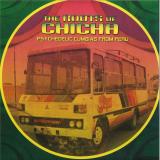
The Roots of Chicha, compiled by Barbès Records, was originally released in 2007 and became the first recording to popularize psychedelic cumbia around the world.
From the late 60's through the 80's, Peruvians invented a new popular musical hybrid inspired by music from the Americas. In 1968, Enrique Delgado released his first record on Odeon with his new group, Los Destellos, single-handedly creating Peruvian cumbia. He codified the genre early on by using the electric guitar as the primary melodic instrument, and mixing cumbia rhythms with folkloric huaynos, criollo voicings, Cuban guarachas and guajiras, rock, boogaloo, surf, psychedelia, oriental music, classical music, and bits and pieces from Brazil, France, Chile... All Peruvian cumbia bands for the next thirty years would end up drawing from the exact same sources (Grupo Celeste, Los Mirlos, Juaneco Y Su Combo, Manzanita Y Su Conjunto...).
This new wave of Peruvian cumbia came to be known as chicha. Chicha is originally the name of an alcoholic drink, made of fermented maize, which the Incas were especially fond of. In the past thirty years, however, the word has taken on a pejorative connotation. Peruvian cumbia started being called chicha in the late 70s, around the same time that the music came to be viewed as the expression of the slums – the pueblos jovenes. Little by little, the word became an adjective, and people now talk of chicha culture, chicha press, chicha architecture, even of a chicha president, and none if it – you guessed right – is meant as a compliment. Chicha suggests corruption, shady deals, and cholos – a derogatory term for a person of Andean heritage that, of late, is being reclaimed and worn as a badge of honor by the very cholos it was supposed to demean in the first place.
- A1: Wolfram Feat Desire – Sad Ibiza Song
- A2: Orion – Call A Psychic
- A3: Mothermary – Coming For You (Nicolaas Remix)
- A4: Double Mixte – Chateau D'eau
- B1: Love Object – Epicurus
- B2: The Operator – Danser
- B3: Talvi - The Day We Met Never Ended For Me
- B4: Kid Moxie & Nina* – Waiting For Tonight
- C1: Farah – Losing My Religion
- C2: Sally Shapiro – Moonlight Dance (Tommy '86 Remix)
- C3: Glüme – Dangerous Blue
- C4: Cigar Cigarette – Come Correct
- D1: Desire – Silver Machine
- D2: Causeway – I'm Falling Apart
- D3: Esper Star – Boys Of Summer
- D4: Juno Francis – Romantica
- E1: Sally Shapiro – Purple Colored Sky
- E2: Club Intl Feat Logan Avidan – Hazel Eyes
- E3: Mesh Kimono – Afterburn
- E4: Dlina Volny – Saturday
- F1: Annie-Claude Deschênes – Electric Light
- F2: Cameron Romance – Meet You On The Other Side
- F3: Joon – I Think They Call It Love
- F4: Lovelock Feat Orion – Riders On Dark Horses
- F6: Pynkie & Social Media – Zoom
- F7: Body Double – Telescope
- F5: Double Mixte – Am I A Fool To Love You
15 years since their fantasy disco scene-defining 1st volume, Johnny Jewel’s IDIB lasso Sally Shapiro, Desire, Farah, Lovelock and the kreme of their field for a 27-song, 2-hour re-up
Where previous volumes took their sweet time to arrive, ‘Volume 4’ graces the ‘floor only two years since the last, and nobody’s complaining. From its slo-mo, dry-iced covers of Jennifer Lopez’ ‘Waiting For Tonight’, Don Henley’s ’Boys of Summer’ and even flipping R.E.M.’s ‘Losing My Religion’, thru to exclusive pearls by our disco queen crush, Sally Shapiro, and Johnny Jewel as Desire, it’s the ideal soundtrack for late summer into silly season.
Two years after their debut on Berlin-based Mannequin Records, Parisian duo Leroy Se Meurt returns with their second full-length album, Hier Pour Toujours. Far from any sense of nostalgia, this record offers no illusion of hope—history repeats itself, the future looks bleak, and their brand of electronic punk is the perfect soundtrack to it all.Drum machines dictate the pace while synths saturate the space, looping sequences grind relentlessly, and vocals lead this machine orchestra straight into the heart of the chaos. Drawing from their roots, Leroy Se Meurt pushes their fierce electronics further than ever—experimenting with bold slogans, spoken passages, and powerful sing-along choruses.The album opens with Pas Ma Croix, a commanding anthem built for the stage. It flows into Du Plafond à La Terre, driven by a monstrous electro beat and bassline, flirting with emotional vulnerability in its chorus before exploding into a synth solo. Alevlere Karşı once again taps into the duo’s EBM-meets-Turkish vocals signature style, hitting the mark with dancefloor precision.The title track, Hier Pour Toujours, closes side A with a more intimate, drumless moment—solemn but no less intense.That brief calm is shattered by Déviance, marking the return of guitars and an eruptive chorus brimming with raw energy. From there, the album launches into the furious Révolte Ardente, with its syncopated rhythm and vocals drenched in distortion, and continues with Pro Déclin, a stripped-down rhythmic skeleton carrying anti-growth mantras straight to the point. In a world clouded by confusion, the most direct messages often land the hardest.For a change of scenery, Fütürsüz dives into John Carpenter-esque territory—no drums, eerie night-streaked synths, and, for the first time in the band’s history, nearly clean vocals.Closing the record, Encore crawls at a BPM so slow it’s nearly in reverse. But what it lacks in speed, it makes up for in weight—a crushing incantation capable of toppling sound systems.With Hier Pour Toujours, Leroy Se Meurt isn’t offering optimism, but rather persistence. Nothing is settled yet—and perhaps, just perhaps—there’s still light at the end of the tunnel.
- Blink
- Waiting Game
- Telling Me
- Lonely Rose
- Sweet Time
- Tides
- Like This
- What Would I Do
- Without Her Loving You
- Missing Out
- Resting Blues
British singer-songwriter Lucy Kitt unveils her highly anticipated second album, Telling Me, a deeply personal collection that shifts focus from introspection to storytelling, capturing the lives and struggles of those closest to her. Drawing from her love of 70’s Laurel Canyon folk, 90’s indie rock, and country music, Kitt crafts narratives that blend her own experiences with compassionate observations of loved ones. Based on a raw acoustic “three chords and the truth” style of songwriting that ripples throughout, the album expands with full-band arrangements that give a huge range and richness to the sound.
Though influenced by American musical traditions, the Essex-native maintains her distinctive voice and authenticity, ensuring the music remains unmistakably her own. Following her 2018 debut Stand By, this new record represents a more mature approach to songwriting, written during her early 30s and completed in the 2021 lockdown – a storybook of songs capturing that moment in time.
Musically, Telling Me showcases Kitt's stripped-down acoustic foundations, while incorporating fuller arrangements that blend her love of Nick Drake, Bob Dylan, Gram Parsons, Joni Mitchell and Joan Baez, with music she loved as a teenager such as The Lemonheads and Veruca Salt. The album features collaborations with an impressive roster of musicians, including Jay Starkey on drums, Nashville-based pedal steel virtuoso Spencer Cullum, Treetop Flyer’s Sam Beer and longtime collaborator Pat Kenneally on drums and piano.
Recorded between 2021-2023 at London's Lightship 95 studio at Trinity Buoy Wharf, the album was co-produced and engineered by Dave Holmes, with some musicians contributing remotely from Nashville and London.
Kitt's commitment to authenticity extends to every aspect of the album, from the down-to-earth, home-based album artwork which represents her life right now as a musician and a working mum, with all the wonderful chaos that comes along with it. Also her decision to maintain her natural accent throughout her vocals. "I have always retained my authentic self in my songs," she explains. "Always singing with my own accent, despite the influences of all the bands and artists over the years."
Kitt has been songwriting and performing for over 20 years, starting in a riot grrl band in her teens in her hometown of Romford, Essex, before evolving into the thoughtful folk storyteller she is today. A semi-finalist at the BBC Young Folk Awards in the early 2000s, she has performed at major festivals including Glastonbury and Cambridge Folk Festival, building a reputation for intimate, lyrically-focused performances.
Telling Me is a resplendent collection of songs, capturing the human experience with great empathy, honesty and musical sophistication that has become Lucy Kitt's signature.