Dream Dancing have been on the hunt for something special and find it with the return of Blueless.
On the A side, two highly sought after tracks originally released on her own Capture Records in 2007.
'Groove Me' is a stunning emotive deep tech house moment which will raise the hairs on your neck on every listen.
'OK' enters more club territory, still keeping within the soulful spectrum. Restored and remastered from Blueless' own vault.
On the B side, 'Trueness' and 'Outsounding' are both fresh from the studio, offering organic rhythms, effortlessly gliding with classy musical atmospheres and warm rolling grooves.
Almost 20 years between the productions, Blueless remains true to her unique soulful style with these much welcomed heartfelt, timeless and deep sounds.
Something old, something new, all Blue!
Suche:eve 6
Anushka Chkheidze + Robert Lippok’s »Uncontrollable Thoughts« on Morr Music is the duo’s debut joint release. The Netherlands-based Georgian composer and the German sound artist from Berlin first met in 2019 in the context of a workshop programme that took place in Tbilisi, and later worked with Eto Gelashvili, Hayk Karoyi, and Lillevan on the massive »Glacier Music II« music and book project, released in 2021. This led them to engage in a less conceptually driven form of musicking and real-time composition that corresponds with their respective environments. They draw on traditions such as minimal music or late 1990s and early 2000s electronica to integrate subtle beats with elegiac organ drones, playful melodies with lush textures. The first document of an ever-shifting intergenerational dialogue, »Uncontrollable Thoughts« is a product of mutual listening outside time.
Though Chkheidze and Lippok had access to professional studios, they chose to rent a simple rehearsal space, equipped with only the bare essentials—bass and guitar amps as well as a small PA—to maintain immediacy in their working process. The music they made together corresponded to and drew on the respective possibilities and shortcomings of this studio, much like their collaboration in general is characterised by the care with which they approach each other's talents and ideas. While both had loosely defined roles—Chkheidze was responsible for the free-flowing beat programming and the evocative distortion came courtesy of Lippok, for example—they individually contributed in different ways to their joint process, which is as free of hierarchies as it is limitless. Hence, the duo’s focus on spontaneity and out-of-the-moment emergence makes them organically move beyond tried and tested conventions, resulting in music that seems to suspend time altogether.
When the first chimes on »Bird Song« announce a piece that sets rattling kickdrums against a backdrop of layered drones and rhizomatically entangled melodic elements, it becomes clear why »Uncontrollable Thoughts« carries this title: The album follows the constant detours of the subconscious of its makers, letting them explore moments of ecstasy such as on »Rainbow,« melancholy with »Field,« and the interplay of suspense and release through the ten-minute-long title track. But the different pieces also tie into one aother in various ways. The dirge-like organ drones on which »Rainbow Road« ends reappear in the beginning of »Uncontrollable Thoughts,« much like Chkheidze’s gentle yet emphatic piano chords on »Field« seem to provide the starting point from which the artist develops the striking motifs of the final piece »Opening«, whose title itself suggests that the record as a whole can and should be enjoyed as a loop. All this creates a unique, idiosyncratic temporal logic.
While there is much that sets Chkheidze and Lippok apart as solo artists, the major shared leitmotif in their respective bodies of work is the sonic engagement with space. »Uncontrollable Thoughts« is hence best understood as an extension of this practice; as an album that maps the geographies of their minds in motion, tracing musical movements as they melt into each other.
Recital releases The Holy Restaurant, the new full-length album by Derek Baron, and their first solo LP since Curtain (Recital, 2020).
The album is built from years of miniature transcriptions of improvisations, functioning in many ways as a sister to Curtain. Half-thoughts and mistakes are revisited, gilded, and illuminated. The floorboards of the album are laid with piano, organ, string pads, while serrated accruements (distortions, flourishes, and recording interferences) step and drop overhead. The resulting conflux, as Baron notes in the accompanying booklet “becomes the point and the problem to explore.”
The second track “Oven Girls” opens with us galloping on a horse in some video-game meadow on a bed of MIDI strings. Abruptly, a helicopter soars over us and we transition to a latticed guitar and woodwind exploration. The album rolls on in this fashion, juxtaposing musical half-sentences within a museum of sounds rag-picked from history and daily life. Emotional interviews with Midwestern friars who build and sell caskets are set against gothic piano and guitar duets. On “Music in the Casket,” A disorienting and hilariously epic guitar solo erupts. The penultimate titular piece, “The Holy Restaurant,” sets a text written by Baron’s grandfather. A small chorus voices his words, echoing the humanistic storytelling of “Blue” Gene Tyranny’s A Letter From Home. Under sunlit piano progressions, a fleet of smokey trumpets emerges.
Running throughout the album is a series of “traces”: short melodic phrases painted over again and again with different real and MIDI instrumentation. The “luxurious asceticism of doubling” as Baron puts it. They explain, “Part of the allure for me is that the ‘original’ material is itself kind of thin, sketchy, meaningless, maybe calling attention to itself only by way of a felicitous mistake. Hearing, transcribing, and learning what was basically only ever played first on accident becomes the guiding concern.”
The album’s shifting, variegated forms and voices pass quickly; the record feels both comforting and elusive, suitable for any hour of the day.
The Holy Restaurant features guest players Ed Atkins, Lucy Liyou, Quentin Moore, Emily Martin, Dominic Frigo, Jacob Wick, and several of Baron’s family members. It is released in a limited edition vinyl pressing of 200 copies, accompanied by a booklet of effusive program notes by the composer, alongside an assemblage of photographs, scores, and artwork.
For the third time, they had been sent to this forsaken land. It was neither east nor west, neither north nor south. They said it had once been a kingdom, somewhere in the heart of the old continent, something they had pieced together from the ruins scattered across jagged hills sprouting here and there from the ground. Everyone else went islands, dived to the seabed, drilled at the poles, and explored waste in the east, but these two were sent here again, as if someone were trying to get rid of them, just to keep them out of the way.
What were they really supposed to find here? They wandered the land, aimless and bored, like the last bird watching from the sky. Sometimes they landed, took samples for the lab, and then caught a nap by the river bend. They avoided the hot fumes of active volcanoes. Compared to those on other planets, these were more like small, whispered fumaroles, but even so, they had to be careful.
They felt as if they had stepped into a scene from a movie they had once glimpsed. A mad and exhausted conqueror screamed and wildly flailed his arms on a ridiculous wooden raft in the middle of a raging river. It was somewhere in the south of this planet, deep in the jungle. There were many movies made on this planet, but only fragments of the reels survived, and this one quickly became iconic.
When a trumpet sounded in the distance and flooded the land with a booming murmur, when all the fumaroles hissed together, and when wind rolled in, covering the land in heavy fog, both of them knew the third expedition would not be like the previous ones.
At that moment, Kult Masek and Petr Vrba were flying over the land that was once called České středohoří.
- A1: Nineteen Sixty Five
- A2: Wholesale Anthem
- A3: I Appreciate You
- A4: Dodge This!
- A5: The Joy Is Ours
- B1: Trophy Life
- B2: It Opens If You Turn The Handle
- B3: His Story
- B4: Most Undo Tomorrow
- C1: Nineteen Sixty Five (Instr )
- C2: Wholesale Anthem (Instr )
- C3: I Appreciate You (Instr )
- C4: Dodge This! (Instr )
- C5: The Joy Is Ours (Instr )
- D1: Trophy Life (Instr )
- D2: It Opens If You Turn The Handle (Instr )
- D3: His Story (Instr )
- D4: Most Undo Tomorrow (Instr )
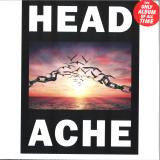
Thank You For Almost Everything is the sophomore album for Headache, a collaboration between writer and poet Francis Hornsby Clark and music-producer Joseph Thornalley aka Vegyn. This new album follows on the surprise underground success of their debut: The Head Hurts But The Heart Knows The Truth (released 31 May 2023) releasing on Vegyn's own PLZ Make It Ruins label. The debut record has streamed over 19.4 million times on Spotify alone and sold over 8,000 physical copies worldwide. The debut gained its popularity entirely organically with zero marketing or PR spend. Since its release, Headache has built a dedicated global fanbase, with several fans even going so far as to get lyrics or the project's logo tattooed on themselves. Thank You For Almost Everything continues the original's distinct style of Trip-Hop / Downtempo Electronica but combining with its own unique (and now imitated) AI-voiced spoken word. For this new album, Headache steps away from the hum-drum of Blighty and instead focuses his gaze to sunnier shores. Recalling personal histories of ruffled hair and school cafeterias, ancient unsolved Albionic riddles, Rome's changing seasons and its poignant graffiti, arguments with girlfriends at luxury hotel beachfront restaurants, and what it truly feels like to be alive in this inscrutable but beautiful world. The project features a further collaboration with artist Cali Thornhill DeWitt who returns to design the packaging and cover for this new album. This double 12" vinyl release, like the first, includes the instrumental versions exclusive to the vinyl version. The album, mixed and mastered by Margo Broom at RAK Studios, will use a similar surprise drop strategy as with the first album. "Follow up to the 2023 debut that gained its popularity entirely organically with zero marketing or PR spend. "Total Streams Since Release (31 May 2023): 19,413,173 (Spotify alone) "Previous vinyl album sold over 8,000 physical copies worldwide. "2nd Disc contains instrumental versions exclusive to vinyl format
CENTRAL's new release is already here! On the B-Side, DJ KAWASAKI has edited the extra-hit “Samurai” to make it an even hotter dance track!
Both sides of the album are perfect for the field!
CENTRAL, a salsa band that has suddenly gained attention after releasing two singles and a full-length album last year, but is actually a group of seasoned salsa veterans, has already released a new single! This time around, CENTRAL has released a cover of “Brazilian Rhyme,” one of Earth, Wind & Fire's many classic songs that still remains a dance floor favorite, with a Latin arrangement that is full of CENTRAL's signature style. The groovy bass, shimmering electric piano, percussion, and outstanding horn arrangement make you want to dance and scream, “This is CENTRAL! The B-Side features DJ KAWASAKI's edit of “Samurai,” a definitive mellow salsa track that has now become a WANT-requested item from all over the world, sublimated into an even hotter dance track!
This summer, dance hard to CENTRAL's salsa!
2025 Repress
It was only in 2018 that New York techno mainstay Joey Beltram revealed that he was the man behind 'SW37', a record which had been an underground classic since it first started doing the rounds in 1998. It remains an evergreen favourite almost 30 years on, which is why Damon Wild's Synewave is reissuing it here. The A-side is gloppy, dubby techno with impish percussion darting about the mix and drunken hits bring an off-kilter edge. On the flip, 'SW37B' is stripped back to pure deep techno serenity with deft ambient pads and a sense of unrelenting meditation that locks you in the here and now.
Barac and Alex Font deliver a mesmerizing 2x12" – four deep, transcendent tracks that blur the lines between rhythm and ritual. This is music carved from emotion and space, where minimalism meets soul, and every detail breathes intention. The sonic quality is exceptional – raw yet refined, warm yet weightless. A meditative pulse runs through it all, inviting the listener inward.
Each cut is a journey, crafted with precision and soul, rich in atmosphere and unmistakable in identity. This collaboration isn't just a meeting of minds – it’s a shared vision, etched into wax. A record that doesn’t shout, but resonates. Timeless and essential. Almost 30 min Playtime, 180g 2x12inch, Fullcover print.
There is a new artist from Japan followed by the name Kakeru who is giving his Shaw Cuts debut with ãRaw CourageÒ, telling the story of an emperor besieged by an army who then entrusts his child to the Black Dragon Clan heading off to a dangerous journey.
An attempt to usurp the Ming Emperor's throne by the sinister martial artist simply known as ãold monster" and his armies results in most of the palace being massacred. ãQuagmireÒ and its vibrant percussive pattern carried by a heavy broken kick and a driving bassline help the emperorÕs infant son to escape and put in care of the Black Dragon Clan.
En route they are attacked by government forces but rescued by two knights. They prove to be a valuable addition to the party in subsequent encounters with their pursuers. ãMirror ForestÒ and its laid-back atmosphere, mysterious vocal snatches and shining pads carried by an expressive drum pattern help the travellers parrying every sneaky attack on their journey.
Trying to head to the White Dragon Clan in order to seek for help, the squad has to masquerade and take several battles, always protecting the baby in tow. The razor-sharp percussions, corrosive bass and thrashing kick of ãSwayingÒ tremendously supports the warriors in each fight.
Finally they make it to the temple of the White Dragons where they show their Black Dragon seal as a sign of solidarity. But all of a sudden the mood changes. ãBroken BubblesÒ and its menacing atmosphere built up by a monstrous sub bass, reduced but impactful drums and subtle synth elements underline the potential threat. Did they walk into a trap? Is there enough energy left for one big fight? Raw courage is vital now.
In between the folds of ceremony and commonality lies a perennial spring of musical expression.
A statement along the time continuum, or a testament to the resilient resourcefulness embedded in that truth, forms the philosophical approach of this album – the first outing of Dídac.
Studying an extensive archive of instruments, artifacts, and field recordings at the Musée d’ethnographie de Genève—a space steeped in folkloric gesture – Dídac encountered a cosmos of liturgical music and folk song. Anchored in reverance for tradition and transformation alike, this album navigates the old-world Mediterranean lore through a post-modern ambient lens, threading drone, gentle rhythm, electroacoustic textures and the crude tactility of archival material into one woven tapestry.
Under the guidance of Dr. Madeleine Leclair, Dídac was invited to work within one of the world’s most extensive ethno- musicological archives—L’AIMP. In the saturated basements and tape-lined backrooms of the museum, he submerged himself in the sounds of ritual and rural life: wax cylinders from the Eastern Mediterranean, tapes of liturgical hymn, the worn edges of communal song.
In a makeshift studio on the fourth floor of the museum, he sifted through the hours of material he collected, gradually discovering that the archive was no static source – It did not dictate; rather, it served as a companion—offering not answers, but questions. Not a beaten track, but a cluster of sonic clues and riddles. Samples do appear occasionally, tenderly interwoven into the dialogue of the songs. In Dídac’s self-titled debut, the past is not worn as ornament or kitsch; it is listened to and responded to. The museum, its archives, and the visit to Geneva became a foundational culisse of sorts, igniting a myriad of rough cuts and improvisational outtakes.
Dídac, or Diego Ocejo Muñoz, was born in Madrid in 1994 to a family of both Catalan and Castilian origin.
Brought up in a religious household, the influence of the Catholic Church innately shaped the social fabric, schooling and daily life. This lingering dominance led the adolescent Diego into a path of rejection of everything sacramental, promptly resorting to subversion in the shape of grafitti, skateboarding and underground music. Only later in life, after a rigorous venture as an acid and electro producer, the Church re-emerged before him in new light, invoking a deep fascination for its mysticism, iconography and choral tradition.
Spain in general and Catalonia in particular, has long served as a crossroads of the eastern–western Mediterranean continuum, with many of its cultures sharing aspects of way of life and ceremony. At the MEG, Diego found himself puzzled with this realization, resulting in a sonic amalgamation that reaches farther away from the rugged mountains of Catalonia than you might perceive at first encounter.
The deeply embedded memory of rite and public ceremony, religious hymn and landscape—sieved through the undercurrent of personal re-emergence, forms the emotional topography of this album. The record does not trace this landscape; it inhabits it. Its repetitive mysticism and ambient, wide-eyed gaze could possibly evoke (perhaps redundant) comparisons to artists such as Dimitris Petsetakis, or Popol Vuh’s late 70’s cinema scores.
The delicate lines between the sacred and the secular – between memory and re-invention – serve as a cipher to understanding this album in its entirety. Titles like Malpàs Mines or Pantocrator’s Portal Outro nudge toward a folkloric and devotional bedrock—places where labor and spirituality coexist, where names preserve both dust and veneration.
Nevertheless, this is far from mere nostalgia. It is a reclamation — singing alongside the spirits of the past, nurturing what still hums beneath the soil. It is an intimate reflection on tradition, rebellion, adolescence, ceremony and fantasy – a pastoral contemplation on what once was and what is to be.
An electrified meeting of minds, Candy Girl is a lost 1975 session by jazz pianist Mal Waldron, recorded in Paris with core members of the mighty Lafayette Afro Rock Band, the American funk unit who had made France their home and whose deep grooves would later be mined by generations of hip-hop producers.
By 1975, Waldron was a decade into his self-imposed exile from the United States—a transformed musician who had reassembled his sound in Europe and Japan after a devastating breakdown in the early '60s. His post-1969 output had stripped jazz down to its core elements: modal intensity, locked grooves, and hypnotic repetition. Candy Girl doesn’t interrupt this trajectory—it extends it, wrapping Waldron’s minimalist mantras around the funked-up chassis of the Lafayette rhythm section.
Originally released in microscopic quantities on the Calumet label and long shrouded in obscurity, Candy Girl was recorded spontaneously in the studio of French producer Pierre Jaubert, whose Paris HQ had become the workshop for both avant-garde jazz (Archie Shepp, Art Ensemble of Chicago, Steve Lacy) and psychedelic funk (Lafayette Afro Rock Band AKA Ice). This session finds Waldron jamming freely with bassist Lafayette Hudson, drummer Donny Donable, and keyboardist Frank Abel on clavinet, Moog and more—laying down raw, unfiltered instrumental funk with an experimental edge.
Highlights include the low-slung vamp of “Home Again”, the crisp, break-laden groove of “Red Match Box”, and the mesmeric swirl of the title track “Candy Girl” —a minor-key electric piano waltz with hints of cosmic soul. There's even a deep cut for the crate diggers: the somber yet meditative “Dedication to Brahms”, where Waldron deconstructs the Romantic composer’s third symphony into a sparse jazz reverie.
Unlike his polished sessions for Japanese labels or the avant-garde swing of his earlier Prestige work, Candy Girl feels more spontaneous, even accidental — and that’s part of its power. It’s a document of Waldron as bandleader, collaborator, and explorer, captured in the midst of a vibrant, cross-cultural scene in mid-70s Paris. Never officially issued with a cover and barely released at all, Candy Girl is a rare convergence of two underground traditions: Waldron’s Euro-exile electric jazz and the raw, sampled-future funk of the Lafayette Afro Rock Band. Now finally resurfaced, it deserves its rightful place in both stories.
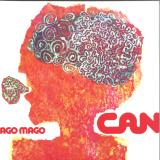
Seit langer Zeit kursierten die Can LPs nur als Bootlegs, jetzt gibt es endlich die offiziellen Vinyl Reissues via Spoon Records! Das in nur drei Monaten aufgenommene Doppelalbum (Gatefold) der Band erschien 1971 und entstand noch auf Schloss Nörvenich. Es gehört zum Weltkulturerbe der jüngeren Musikgeschichte, so wie "Sergeant Pepper" von den Beatles, "Electric Ladyland" von Hendrix oder das Bananenalbum-Debüt von Velvet Underground. Die sieben hier versammelten Titel bestimmen bis heute die DNA der Populärmusik. "Tago Mago" nimmt eine Sonderstellung im Werk der Band Can ein. Sie ist der Mount Everest, die höchste Verdichtung eines schieren Ausdruckswillens, der weder stilistische Kleinkrämerei, noch musikalische Genre-Grenzen akzeptierte und das war, was "nur nach sich selbst klingt, wie nichts zuvor und danach" ("sounds only like itself, like no-one before or after" (Julian Cope, "Krautrocksampler"). Tatsächlich wurde "Tago Mago" gerne als "magische Platte" bezeichnet, eine geheimnisvolle Reise ins düstere Herz einer bis dahin nicht gehörten Musik.
Das 1970 veröffentlichte, selbstbetitelte Debüt von Funkadelic war eine radikale Kollision von psychedelischem Rock, Gospel, Blues und Soul - ein chaotisches, genreübergreifendes Statement, das die Möglichkeiten der schwarzen Musik neu definierte. Wo Motown auf Hochglanz und Crossover-Appeal abzielte, stürzten sich Funkadelic kopfüber in Verzerrungen, Improvisationen und spirituelle Zweideutigkeiten, mit einem Sound, der so düster und unberechenbar war wie die Ära selbst. Unterstützt von einer wilden jungen Band, lehnte das Album Konventionen zugunsten von rohem Groove und existentiellem Lärm ab. Als Teil der Westbound Records Reissue Serie von Org Music stellt diese Ausgabe die volle Wirkung des Albums wieder her. Die Deluxe-Doppel-LP, die von Dave Gardner direkt vom analogen Band mit 45RPM neu gemastert wurde, bietet das bisher beeindruckendste Hörerlebnis dieses Klassikers. Gardner und die Restaurationsspezialistin Catherine Vericolli archivierten und restaurierten die Original-Masterbänder in den 54 Sound Studios in Ferndale, Michigan, mit Unterstützung des hauseigenen Ingenieurs Nick King. Neben CD, Kassette und digitalen Formaten ist auch eine einfache LP-Ausgabe erhältlich, die von hochauflösenden Bandüberspielungen geschnitten wurde. Funkadelic waren zu ihrer Zeit eine klangliche Revolution mit bleibendem Einfluss, ihr selbstbetiteltes Album ist ein bahnbrechendes Zeugnis für Musik ohne Regeln und Freiheit ohne Grenzen.
- A1: We Just Couldn't Say Goodbye
- A2: There Ain't No Sweet Man That's Worth The Salt Of My Tears
- A3: Just Like A Butterfly That's Caught In The Rain
- A4: You Know - I Know Everything's Made For Love
- B1: Glad Rag Doll
- B2: I'm A Little Mixed Up
- B3: Prairie Lullaby
- C1: Here Lies Love
- C2: I Used To Love You But It's All Over Now
- C3: Let It Rain
- D1: Lonely Avenue
- D2: Wide River To Cross
- D3: When The Curtain Comes Down
- Oath
- Run On
- Reflection
- Hear The Wind Sing
- Hourglass
- Moonlight Drawing
- Holy Winter
- We All Shine
- Time Goes By
- Ashes In The Snow
- Everlasting Light
Gold Vinyl[42,23 €]
Als MONO zum ersten Mal die Idee eines Live-Konzerts mit Orchesterbegleitung hatten, schien dies ein einmaliger Traum zu sein, der einzigartige Umstände, ein riesiges Team gleichgesinnter und großzügiger Mitwirkender und eine Menge Glück erfordern würde. Genau zehn Jahre nach Beginn ihrer Karriere war dies ihr mit Abstand ehrgeizigstes Projekt. Sie flogen aus ihrer Heimat Japan - wo sie zu dieser Zeit ironischerweise weniger bekannt und erfolgreich waren als in den Vereinigten Staaten und Europa - nach New York City, wo sie ein Orchester zusammenstellten, einen historischen Veranstaltungsort in der Nähe des Lincoln Centers sicherten und auf sich selbst setzten, um einen wirklich unvergesslichen Abend zu gestalten. Das Konzert war nicht nur ein voller Erfolg, sondern begründete auch einen wesentlichen Teil der Identität von MONO: die orchestrale Live-Performance. Seit dieser magischen Nacht in NYC im Jahr 2009 haben MONO mehr als drei Dutzend Live-Konzerte mit einer Vielzahl von Orchestern in fast ebenso vielen Ländern weltweit gegeben. Ihr letztes solches Konzert in Japan lag jedoch mehr als 15 Jahre zurück. Ein Vierteljahrhundert nach Beginn ihrer legendären Karriere sind MONO endlich nach Hause zurückgekehrt. ,Forever Home: Live in Japan with Orchestra PITREZA" feiert MONOs 25-jähriges Jubiläum mit der ,OATH"-Orchestral-Welttournee, die in den letzten Monaten des Jahres 2024 20 Konzerte in Europa, Asien und den Vereinigten Staaten von Amerika umfasste. ,Forever Home" wurde vor ausverkauftem Haus im Spotify O-EAST in Tokio aufgenommen und präsentiert ein 12-köpfiges Orchester unter der Leitung des Orchesterdirektors und häufigen Kollaborateurs Chad McCullough, das MONO bei der Aufführung ihres aktuellen Albums ,OATH" in voller Länge begleitet. Das 100-minütige Konzert endet mit zwei der bekanntesten Songs der Band - ,Ashes in the Snow" und ,Everlasting Light" -, die eine Hommage an den ersten Orchester-Live-Auftritt vor 15 Jahren in New York City darstellen. ,Forever Home" wurde von Matt Cook, dem langjährigen Tontechniker von MONO, aufgenommen und gemischt und fängt die ehrwürdige Gruppe in ihrer natürlichen Umgebung und in ihrer transzendenten Höchstform ein. Mit der symphonischen Begleitung des japanischen Orchesters PITREZA verwandeln MONO einen Raum in Tokio in ein grenzenloses Meer - launisch, kontemplativ und überwältigend. Die physischen Formate von ,Forever Home" sind angemessen umfangreich und besonders. Das von dem langjährigen Art Director und Mitarbeiter Jeremy deVine entworfene 2xCD-Set ist in einer vierfachen Gatefold-Hülle verpackt und enthält einen Konzertfilm in Spielfilmlänge auf hochauflösender Blu-ray, unter der Regie von Yusaku Mitsuwaka. Es ist ein atemberaubendes Werk der Multi-Kamera-Kinematografie, das das Live-Erlebnis von MONO perfekt einfängt. Die 3xLP im Dreifach-Klappcover ist auf audiophilem schwarzem Vinyl oder als limitierte farbige Vinyl-Variante erhältlich. Sowohl das CD- als auch das LP-Format enthalten jeweils ein umfangreiches 28-seitiges, vollfarbiges Archiv-Fotobuch, das das gesamte Konzert dokumentiert. Das sind MONO. Das ist "Forever Home".