Released by Hegoa Records and Night School Records.
Greatest Heads is the fourth album by the radical Basque- Berlinesque group Al Karpenter. A deconstruction of structured “rock” music, here Al Karpenter re-imagine “the band” to explore the intersection between Free music, afro-beat, the avant garde and gonzo rock.
If Theodore Adorno wrote “To Write Poetry after Auschwitz is Barbaric” in 1949, Al Karpenter attempts to answer the difficult question today; what kind of music can be done in the face of a genocide? Álvaro Matilla, Marta Sainz, Enrique Zaccagnini & Mattin’s response to the planet’s slipping into a vortex of hate is to create a music ecstatic, a music of protest bursting with multiple musical languages and glossaries, full of overlapping histories and thrilling tensions.
Greatest Heads posits a plurality of musics both in opposition and intertwined: Al Karpenter play rock instruments pulled apart in the studio in post-production. Distorted rhythm chunks bit-crushed and dissipated, segments of freedom oppressed by waves of sound invading from every direction. The interplay between the chief instrumentalists and renowned, storied sound artist Mattin creates something akin to ESP freedom-seekers Cro Magnon playing in Miles Davis’ early 70s groups, The Los Angeles Free Music Society tightening up into a clenched fist of plunderphonics and runaway percussion.
We Are All Karpenters opens Greatest Heads with the most straight-forward song refrain of the record accompanied by a band that soon crash into eruption, imagining Sun City Girls in full free rock mode.
The modulating synth sound soon sucks the band into its wake to create a spine-chilling climax of distorted sound, made fully orgasmic with mastering engineer Rashad Becker’s attention to detail. On Izugarrizko Buruak (Greatest Heads), Matilla intones in Basque over a mangled distorto-beat. A Brand New Astraphobia creates a black space for a heavily processed guitar to blow up before falling to earth at night, a gentle figure serenading the coming end.
On Side B, the band begins by being masticated by a brutal phaser, squelching and stretching the music into new territories. The overt message of Stop The Genocide! is besieged by violence before Worm City aggressively samples the ghosts of soul music, mixing in noise bursts, prepared piano and swiping, abstracted sound. Epic closer Perfect Love feels like a beat poetry performance on a burnt world, still grasping for community, for home, for some sort of human love. A Mad love, then; an angry love fuelled by solidarity and collaboration.
The band’s cascading layers of references and polyglottal musics attempt to create the perfect lover, alive with rage and disorientating ecstasy: Al Karpenter.

Suche:eve 6
A first-time 7-inch release of Free Soul-style covers of classics by Bill Withers and Tania Maria!
Mallorcan DJ and trackmaker Pepe Link brings an exciting new 7-inch release! This limited-edition Japanese release includes specially edited versions by Pepe himself.
Side A features a Balearic-flavored cover of Bill Withers' 1977 classic "Lovely Day," featuring the soulful vocals of Glen Anthony Henry. Side B presents "Vem Menina", a devilishly slick samba-bossa nova version of the Brazilian funk classic 'Come With Me' by Tania Maria, poured over with flamenco guitars and the effortlessly beautiful voice of Brazilian singer Marta Santamaria.Especially for this release, Pepe himself handled the editing, making this the first-ever 7-inch release as a Japan-exclusive edition!
- Krystal Ball
- Psychosis Is Just A Number
- Ceo Of Personal & Pleasure
- Life's A Zoo
- Red Flag To Angry Bull
- Panglossian Mannequin
- Deep Sight
- When Dogs Bark
- Crocodile Cloud
- Favorite Sun
When NYC-based experimental dance punks Guerilla Toss, active since 2011, were in Vermont recording their new full-length album You're Weird Now, frontwoman Kassie Carlson would prepare what she called 'punk lunch': a communal meal made by raiding the studio fridge for whatever was left and assembling a sandwich from the most random ingredients imaginable. Regularly joining punk lunch were two legends from their own corners of the weird music world: Stephen Malkmus (Pavement, The Jicks) and Trey Anastasio, Phish guitarist and owner of The Barn; the recording studio where Guerilla Toss were making You're Weird Now, with Malkmus in the producer's seat. Engineer Bryce Goggin, who has worked with Malkmus since Crooked Rain, Crooked Rain, and Ben Collette, Phish's longtime engineer at The Barn, were also part of the crew. While the idea of the guy from Phish and the guy from Pavement sitting around with Guerilla Toss, congenially assembling sandwiches from random foodstuffs dug up from the depths of a studio fridge, might seem absurd, it also makes total sense. Because really, if there's any band that serves as the natural bridge between slacker punks who saw Pavement way before you did, wild-eyed wooks who've seen Phish more times than you ever will, and even the eccentrics in '90s drip following former GT tourmates Primus-it's Guerilla Toss. A band so imaginative and unapologetically themselves, they're basically the real-life manifestation of a utopian, post-snob world where all musical ideas are worthy of expression and everyone is welcome. You're Weird Now powers this message. Guerilla Toss' fifth album and second for Sub Pop is a hugely creative and joyful statement about the joy of creativity. With You're Weird Now Guerilla Toss reclaim the word "weird" for everyone brave enough to let their freak flag fly and stay true to their artistic vision no matter what-a way riskier act than it's ever given credit for, and one that requires a certain amount of serene self-confidence that it takes time and effort to cultivate and sustain. And they do so with the enthusiastic support of their musical predecessors: a standout moment arrives with "Red Flag to Angry Bull," which builds to a campfire sing-along-worthy outro featuring Malkmus and Carlson duetting over a chatty, classically Phish-y (there's really no better word for it) solo from Anastasio. The band hopes the message of You're Weird Now will resonate not only with music heads but anyone who struggles with feeling weird in a world where it will always be hard to be different. At the end of the day, it's all about the spirit of punk lunch: there's room for everyone because music is for everyone. "Everyone loves and appreciates music," says Carlson. "If you don't like music, you're kind of an asshole." That's not weird-that's just true.
- The Sink Thank You
- Beers With My Name On Them
- Why I Bought The House
- Travel Safe
- Cobalt Room: Good Work / Silver Saab
- Voice Memo
- Like Another Planet Instrumental
- Country Girls
- Falls
On the cover of 8 Tips for Full Catastrophe Living, the new album by Asher White, The Statue of Liberty is in pieces but not destroyed - in progress, being built, not yet complete. Her torch is on the ground, her head somewhere out of frame. Before she was a symbol, she was metal, and living, sweating people riveted her together. The spirit of de/construction characterizes 8 Tips, White's 16th LP overall and first since signing to Joyful Noise. Like White's previous albums, 8 Tips for Full Catastrophe Living darts boldly among varied musical styles. Doom metal splits open into bossa nova; psychedelic rock and power pop flip into industrial techno. Each song emerges from its composite parts in the studio: White doesn't draft or demo before recording, but builds out her pieces sculpturally, sound by sound. "It's forever collage, forever assemblage," she says of her music. "To me, it has more to do with J Dilla, L.A. beat, and musique concrète than pop songwriting." The record's quick turns and vivid contrasts reflect White's cultural voraciousness. A writer, painter, and sculptor as well as a musician, she gathers materials constantly, always digging for new ideas in every possible form. The films of Claire Denis, the novels of Clarice Lispector, and the memoirs of Eve Babitz all funnel into White's reflection of 21st century disaster capitalism. 8 Tips is also White's first album to have been mixed outside her Providence studio; after recording it herself, she brought tracks to Seth Manchester (Lightning Bolt, Battles, The Body) who gave the album its brawny, unruly charge. "I was interested in making something that serves dually as a self-help book and a chronicle of self-destruction," says White. Overlaying autobiography onto character vignettes, 8 Tips for Full Catastrophe Living wrenches open the idea of apocalypse - an abrupt disaster rained down on uncomplicated innocents - and peers inside at its bursting, devastated particulars. Apocalypse is slow and uneven. Nations falter as do individual people, clinging fast to their old, dilapidated self-preservation strategies. What saved you in the past might destroy you in the future. Flip it around, shake yourself loose, ruin the person you've known yourself to be, and you might get the chance to become something else. "There have been so many end times, many other apocalypses." White says. "People were writing self-help tips, and people were partying." We have survived catastrophe before. Out of the ruins, people made work - art, books, culture. "I was interested in making something that sounds like a self-help book, but it's actually about self-destruction," says White. "In full catastrophe living, you just have to do a bunch of whippets. This album is mostly about doing whippets. I'm not even kidding."
- We Really Done It This Time
- Hahaha
- Orangutan
- Roll The Dice
- I Work So Hard
- Slifer The Sky Dragon
- Everything
- Gum (Do You Want Some?)
- Our World Is Falling Apart
- I Need To Know
- Jibby's Theme
Hahaha _ Will Paquin's debut full-length album, out this September _ is the sound of Paquin breaking out of the bedroom. It's loud, raw, and full of life. Much of the album feels a time capsule _ a collection of ideas and sounds that Paquin has been quietly nurturing for years. Now, for the first time, they've come together in a cohesive whole, shaped by the passage of time and Paquin's current perspective. "This album is kind of like re-centering what I actually like and what I want to put out to the world," he explains. Hahaha is a celebration of shared energy, of chaos, of the kind of laughter that erupts when you're fully alive in the moment. It's a guitar-forward, psych-laced, garage-rock catharsis.
- A1: Floodbound
- A2: Cure Your Ills
- A3: ? | I'm No Good Without You
- A4: For A While
- A5: Golden Vanity
- A6: Rainmaker, Sunseeker
- B1: The House On The Hill
- B2: Ruby Red
- B3: She Never Sleeps
- B4: The Hanging Stars
- B5: Hang Me High
- B6: Crippled Shining Blues
- B7: Running Waters Wide
*Long overdue reissue of the first album by The Hanging Stars to coincide with their tour support slot with Edwyn Collins – initial 300 copies come with 12 x 12 print*
“In late-Sixties California, the Byrds and Flying Burrito Brothers combined traditional country music with hippy rock to great success. The influence lingered and whatever cultural relevance it has this is a delightful, transporting listen” – The Times 4/5
London-based psych-folk outfit The Hanging Stars re-release their much-loved debut album Over the Silvery Lake on Crimson Crow. Blending folk pastoralism with swampy 60s Americana, they sound like the missing link between the California desert sun and the grey skies of London Town. The album was recorded between LA, Nashville and Walthamstow, with each of these vastly different places leaving an indelible mark on the songs.
Now signed to the Loose Records label and fronted by London-based songwriter, singer and guitarist Richard Olson (The See See, Eighteenth Day of May), The Hanging Stars are essentially a loose collective of people who weave together a blissed-out psychedelic tapestry. The rest of the core band is made up of Sam Ferman on bass and Paulie Cobra on drums, Horse on pedal steel and Patrick Ralla on banjo, guitar. They jam rather than write and hang out rather than rehearse, harnessing a kind of tipsy euphoria resplendent with luscious arrangements and glorious vocal harmonies.
During 2015, prior to this album’s original release the band released two critically acclaimed singles via The Great Pop Supplement (both of which also appear on the album). “Golden Vanity” was premiered by The Line of Best Fit who said; “you'd be forgiven for thinking you'd just unearthed a rare deep cut from the late 60s/early 70s boom of psychedelia infused Americana” and “The House on The Hill” was described by The Guardian as; "a hazy, desert-dream of a song, nicely sharpened with steely-eyed guitars, Mersey-laced harmonies and just a whiff of the Gun Club”.
There are a number of allusions to nature and the weather on the album, borne in part out of the contrasting surroundings in which it was produced. The band’s fascination with Americana led them to record some of the material Stateside, laying down some of the parts at Battle Tapes Studios in Nashville (Lambchop, Paperhead), as well as at Vision Quest Studios in Los Angeles with Rob Campanella. His work with The Quarter After, The Brian Jonestown Massacre, Beachwood Sparks The Tyde, and GospelbeacH was a perfect match to capture their sound and they even had San Franciscan legend Chrystof Certik step in on lead guitar for a couple of tracks.
Following the LA recordings, a trip to the Californian desert provided the core notion of what they wanted to produce - a shard of light that they clung on to whilst recording the rest of the album in the significantly more rain-soaked atmosphere of Walthamstow, London, under the watchful eye of Brian O'Shaughnessy at Bark Studios (The Clientele, Comet Gain). As the band explained at the time: “Ultimately we hope you can hear both the sand and the rain in this record.”
The Hanging Stars place themselves firmly as part of a long folk tradition encompassing European and North American influences – as a continuation rather than a pastiche of these styles. This is the sound of a band really coming in to their own, fully formed and in no doubt of their vision. With Over the Silvery Lake they succeeded in producing a record, which has the country, blues and folk traditions at its heart.
- 1: Ich Kann Gar Nichts
- 2: Vom Anderen Stern
- 3: Joker
- 4: Lalelu
- 5: Schattenboxer
- 6: Knock Dich Selbst Aus
- 7: Schrott
- 8: Versailles
- 9: Hands Down
- 10: Nie Wieder Verlieren
- 11: Seltsame Welt
Was tun die Menschen um uns herum? Wie tun sie’s? „Wollen wir das nicht alle die ganze Zeit verstehen?“, fragt Alli Neumann, die mit ihrem dritten Studioalbum methaphorisch als funkelnder Stern auf hartem Asphalt landet. Als „ROQUESTAR“ muss sie sich dort erstmal orientieren. Inspiriert von David Bowies Ziggy Stardust, der fürs Seltsamsein bekannt wurde und sich was traut, auch um gesehen zu werden, blinkt Alli zwischen Auffallen und Anpassung. Die Musikerin bewegt sich längst fließend in dieser Dualität und changiert zwischen den Polen – man will ja doch von allen geliebt werden, oder?! Die Musikerin spielt mit diesem ambivalenten Gedanken, der unlösbar scheint und liefert mit ihrem Album „ROQUESTAR“ 12 Songs, die von genau diesem dringlichen Hunger nach Anerkennung getrieben sind. „Sie erzählen von dem Willen, geliebt zu werden.“ Eine Wahrheit und auch psychosoziale Utopie, vielleicht, „in der sich viele wiederfinden“, meint Alli, und ja doch schambehaftet daherkommt, weil deutlich wird: Wir sind schrecklich abhängig vom Außen, von dem wir so oft die Schnauze voll haben. Mit „Ich kann gar nichts“ schreibt Alli genau dagegen an: Eine selbstironische Hommage an die Imperfektion – wider jeder Erwartung. Geliebt werden wollen, trotz oder gerade wegen ... Rockstar sein, Alli sagt: „everybody’s favorite misfit“. Wie es geht, das mit dem Lieben, das ja auch immer damit einhergeht, wie es um die Liebe zu sich selbst steht, zeigt sich in der Gleichzeitigkeit ihrer Songs: Während Alli in „Vom anderen Stern“ zu Funk eine neue Liebe als Eskapismus zeichnet, „Baby lass dich fallen, um fliegen zu lernen“, erinnert sie in der Grungerock-Ballade „Nie wieder verlieren“ daran, wie giftig es sein kann, sich für einen Menschen aufzugeben. Auf „ROQUESTAR“ scheint alles in Bewegung. Es sind Anstöße, die die Musikerin gibt. Manchmal Anklagen, Aufforderungen, aus denen Sehnsüchte sprechen, nur nie Antworten. Auch weil das nicht zu Alli, der Artist, passen würde, die sich doch so gerne bewegt, wie die Welt, durch die sie fliegt. Durch Genres und Formate – als Musikerin, Schauspielerin, auf Bühnen, auch im Fernsehen, eine Künstlerin, die sich erfährt, (er)lebt, ein bunter Hund, Alli liebt, auch ihre Integrität. Und während die Songs in sich und auch im Miteinander organisch aufgehen, hört man mit etwas Genauigkeit zwei ungewöhnliche Instrumente spielen. Zwei barocke, die Allis „ROQUESTAR“-Modus musikalisch markieren. Zusammen mit ihrer Produzentin Novaa lässt sie Cemberlo und Fagott sich an vorherrschende Synthie- und Kraut-Pop-Sounds schmiegen, während das Fagott von den allermeisten aus der Popmusik verbannt wird. Sich wirklich zeigen, das kann Alli. „Being loved for not being loved“, beschreibt sie selbst, nur immer als Versuch. Bemerkenswert ist, dass die Musikerin bei ihrem Tempo und ihren Kurven der vergangenen Jahre nie Splitter ihres Ichs verloren hat. Während sie also 2025 zwischen den Zeilen über eine „ROQUESTAR“-Identität textet, ist sie es längst: Ein Stern, der vom Himmel auf den Boden einer steinigen Realität fällt, sich umschaut und unaufhörlich probiert. Im ewigen Gerangel zwischen laut und leise, Kraut und Folklore, Protest und Rückzug. Zwischen amüsiert und politisch, Großstadt und Landleben, 80ies und Barock. Alli und ihre Musik strahlen manchmal gleißend hell und manchmal gedimmt hinein in diese Welt, aber leuchten, das tun sie wirklich immer.
Zur Feier des 20-jährigen Jubiläums ihrer ursprünglichen Veröffentlichung kündigt Robyn eine besondere 2-LP-Vinyl-Neuauflage ihres ikonischen, selbstbetitelten Albums von 2005 an.
Weithin als ein Schlüsselmoment der modernen Popmusik angesehen, erscheint diese Jubiläumsausgabe auf Coke-Bottle-Vinyl und enthält das originale Tracklisting.
Ein Muss für langjährige Fans und Sammler gleichermaßen – diese Veröffentlichung rückt ein Album ins Rampenlicht, das die Zukunft der Popmusik entscheidend mitgeprägt hat.
- Gasoline
- If You Can Hold Your Breath
- Trophy
- What Is Sleep?
- Bad Tattoo
- Every Sister
- Bodies
- Caffffeine Or Me?
- This, Plus Slow Song
- New Martini
- Wake Up, Decide
- It's 98 Stop
- New New
- The New Hangout Condition
- On Cutting
- Die Die
- Today Or Tomorrow
- There Are Ghosts
- The Same Stars
- Diazapam
- The Last Wars
- Bass Sounds
- Up Nights
- Fatal Strategies
- Outside Is The Drama
- Not To Call The Police
- Cherry Coke
- Remembering To Forget
- Hard Song
- First Time
- Dating Is Stupid
- Starfifish
- Schwinn
- Remembering Reprise
- Death Kit
- Nerve
- Cherry Coke (7" Version)
- The Schwinn (7" Version)
- Operation: Sand
- Empty There
Die ersten fünf Jahre von Karate, verpackt im klassischen Numero-Stil und kommentiert von Frontmann Geoff Farina. Diese Collage aus DC-Posthardcore, De Stijl und Django Reinhardt umfasst auf fünf LPs ihr selbstbetiteltes Debütalbum, In Place of Real Insight", The Bed Is In The Ocean", 7"-Singles aus dieser Zeit und eine bisher unveröffentlichte Demoaufnahme aus dem Jahr 1993. Insgesamt 41 Geschichten aus dem späten Millennium über nächtliche Radtouren um 2 Uhr morgens, Punk-Hauspartys, Nacktbaden, unglückliche Tattoos und Pendeln auf der Interstate 95, allesamt remastered von den Originalbändern und verpackt in robusten Tip-On-Hüllen für den anspruchsvollen Karate-Fan.
- The First Lovesong
- A Tuxedo Sewn For Two
- Candy From A Stranger
- Two Little Pigs
- Speak To Me In Music
- With You I Can Hear My Own Voice
- I Want To Want You Again
- Got-Jfk
- Wedding In Brooklyn
- For Skye
- Increasingly Obsolete
- On A Pier, On The Hudson
- Wedding In Leipzig
- Lej-Got
- You Have One New Message
- Just For One Moment
- The Last Lovesong
"Songs For Other People's Weddings" ist ein Begleitalbum zum gleichnamigen Buch von Jens Lekman und dem preisgekrönten Bestsellerautor David Levithan, das am 5. August 2025 über ABRAMS erscheint. Das Projekt wurde von der überraschenden Nebenkarriere des beliebten schwedischen Künstlers als Hochzeitssänger inspiriert, die zufällig zustande kam, nachdem Fans seinen Song "If You Ever Need A Stranger (To Sing At Your Wedding)" aus dem Jahr 2004 wörtlich nahmen und ihn einluden, auf ihren Hochzeiten aufzutreten. "Songs For Other People's Weddings" ist ein fiktives Werk über J, einen unglücklich verliebten Musiker, der nebenbei als Hochzeitssänger arbeitet. J trifft sich mit Paaren vor ihrem großen Tag, um mehr über die intimen, seltsamen Dinge zu erfahren, die sie zusammengebracht haben, um einen originellen Song zu schreiben, den er ihnen auf ihrer Hochzeit vorträgt. Aber trotz Js Vorliebe, die perfekten Worte für andere zu finden, scheint er nicht in der Lage zu sein, dasselbe für seine eigene Liebe zu seiner Freundin V. zu tun. Lekman bemerkt: "Die Idee, ein erzählerisches Konzeptalbum (eine Rockoper?) zu machen, fühlte sich verboten an. Was für mich normalerweise ein Zeichen dafür ist, dass ich auf dem richtigen Weg bin. Als ich mich mit dem Genre der narrativen Konzeptalben beschäftigte, wurde mir klar, dass eines meiner Lieblingsalben, Frank Sinatras "Watertown", genau das war - eine Platte, die eine chronologische Geschichte über die Länge einer LP erzählte. Da ich nie ein Fan von Musicals oder Rockopern war, diente mir dieses Album als Inspiration. Ich schrieb das Album, während das Buch noch in Arbeit war, und an einigen Stellen begann ich mir vorzustellen, was zwischen den Kapiteln des Buches geschah. Das Buch und das Album waren schließlich miteinander verflochten, gingen aber auch ihre eigenen Wege. Das Buch gab die Struktur der Geschichte vor, aber das Album schlich sich manchmal hinter die Kulissen. Geschichten aus den Liedern fanden ihren Weg in das Buch und umgekehrt." "Songs For Other People's Weddings" folgt der Beziehung von J und V und verändert sich musikalisch, während das Paar durch die Höhen und Tiefen der Liebe navigiert - wobei jede neue Hochzeit ihren eigenen klanglichen Hintergrund bietet. Das Album ist eine orchestrale, romantische Sammlung, die sich zwischen pastoralen Streichern, verträumtem Pop, sanftem Jazz-Saxophon und traurigen House-Beats bewegt. "Die Figur des J kann seine eigenen Emotionen nicht aus seinen Liedern heraushalten, und Jens unterstreicht dies auf eine Weise, die den Hörer immer wieder überrascht", sagt Levithan. "Oft wird er von Matilda Sargren begleitet, die Vs Gefühlen und Gedanken eine Stimme gibt. Ursprünglich sollte sie nur auf den Demos singen, aber als sie anfing, V zu singen, war es keine Frage, dass sie auf dem endgültigen Album zu hören sein würde. Wenn Jens und ich unsere Arbeit getan haben, erzählen der Roman und das Album beide Seiten von Js und Vs Geschichte - und die Spannung entsteht dadurch, wie diese Seiten zusammenpassen." Lekman fügt hinzu: "Auch wenn es in dieser Geschichte um eine Beziehung geht und darum, wie sie sich in den Beziehungen und Hochzeiten anderer widerspiegelt, denke ich, dass es vor allem eine Liebesgeschichte über Musik und ihren Wert in einer Zeit ist, in der sie von Tech-Unternehmen abgewertet und in Inhalte verwandelt wird. Ihre Fähigkeit, zu beruhigen und zu verbinden und ihre Rolle in den Übergangsmomenten unseres Lebens, wie zum Beispiel bei Hochzeiten. Es ist ein Liebeslied an Liebeslieder."
Falling Ethics returns with its 26th release, delivering a no-compromise dose of high-energy techno from none other than Sev Dah. With FEX026, the Bosnian-born artist unleashes a blistering four-track EP that fuses raw intensity, relentless groove, and razor-sharp precision-signature trademarks of his ever-evolving sound.
- Memory Eraser
- The Derelict
- Sorrowed
- Periastron
- Apastron
- No Light
- Collapsar
- Remnants
- A Nothing Expands
LTD PERIASTRON ED[24,79 €]
Gothenburg/Malmö-based post rock power trio Barrens return with Corpse Lights, the band's second full-length release following their critically-acclaimed 2020 debut Penumbra. Five years in the making, Corpse Lights sees Barrens strike a breathtaking balance between light and dark, beauty and brutality. Corpse Lights, Barrens' sophomore album, is somehow deeper, richer and headier; imbued with an alluring compositional patience that serves as unspoken testament to the combined creativity of the trio in their element, as something so much greater than the sum of its parts. Recorded and produced by Kristofer Jönson, who also helmed Penumbra, and mixed and mastered once again by Cult of Luna's Magnus Lindberg, shimmering synthesizers and sprawling guitars lead the charge propelled by exhilarating drums and percussion but Corpse Lights also finds Barrens using space, silence and atmosphere as another instrument if not as another band member entirely. `Corpse Lights' is the name given to the folk belief that small coloured lights often appear near the home of someone about to die, leading them along the path to their eventual resting place. Often considered to be evidence of the soul leaving the body, the concept of corpse lights embodies Barrens' approach to creating music as a cathartic release; not just writing music because they want to but because they have to. Their writing process is one of joy, light and release as much as it is dark, heavy and tense. The result is Corpse Lights, a collection of nine pieces that guide us through five tumultuous years of highs and lows, of loves and losses and victories and defeats without ever needing to say a word. FOR FANS OF Mono, PG.LOST, Caspian, Mogwai, This Will Destroy You, Russian Circles, Pelican, Scraps Of Tape, God Is An Astronaut. Vinyl is a gatefold, the sleeve comes with metalic ink
BLACK VINYL[21,81 €]
Gothenburg/Malmö-based post rock power trio Barrens return with Corpse Lights, the band's second full-length release following their critically-acclaimed 2020 debut Penumbra. Five years in the making, Corpse Lights sees Barrens strike a breathtaking balance between light and dark, beauty and brutality. Corpse Lights, Barrens' sophomore album, is somehow deeper, richer and headier; imbued with an alluring compositional patience that serves as unspoken testament to the combined creativity of the trio in their element, as something so much greater than the sum of its parts. Recorded and produced by Kristofer Jönson, who also helmed Penumbra, and mixed and mastered once again by Cult of Luna's Magnus Lindberg, shimmering synthesizers and sprawling guitars lead the charge propelled by exhilarating drums and percussion but Corpse Lights also finds Barrens using space, silence and atmosphere as another instrument if not as another band member entirely. `Corpse Lights' is the name given to the folk belief that small coloured lights often appear near the home of someone about to die, leading them along the path to their eventual resting place. Often considered to be evidence of the soul leaving the body, the concept of corpse lights embodies Barrens' approach to creating music as a cathartic release; not just writing music because they want to but because they have to. Their writing process is one of joy, light and release as much as it is dark, heavy and tense. The result is Corpse Lights, a collection of nine pieces that guide us through five tumultuous years of highs and lows, of loves and losses and victories and defeats without ever needing to say a word. FOR FANS OF Mono, PG.LOST, Caspian, Mogwai, This Will Destroy You, Russian Circles, Pelican, Scraps Of Tape, God Is An Astronaut. Vinyl is a gatefold, the sleeve comes with metalic ink, the Periastron edition is transparent "white" Vinyl
Black Truffle is thrilled to present the first ever solo Donso n’goni recording from octogenarian Swedish multi-instrumentalist Christer Bothén. Active in the Swedish jazz and improvisation scene since the 1970s, often heard on bass clarinet, Bothén travelled to Mali in 1971, eventually making his way to the Wassoulou region in the country’s south where he encountered the Donso n’goni, the sacred harp of the hunter caste of Wassoulou society. Though playing the instrument has traditionally been restricted to those who belong to the hunters’ brotherhood, Bothén found an enthusiastic teacher in Brouema Dobia, who, after many months of intensive one-on-one lessons, gave Bothén his blessing to play the instrument both traditionally and in his own style. Returning to Sweden, he would go on to pass on what he had learned to Don Cherry and play the Donso n’goni in a wide variety of inventive settings, including the driving Afro-jazz-fusion of his Trancedance (reissued as BT118).
The seven pieces of Christer Bothén Donso n’goni offer up a stunning showcase of Bothén’s work on this remarkable instrument, heard entirely unaccompanied, except for the final piece where he is joined on a second Donso n’goni by his student and collaborator, the virtuoso bassist Kansan/Torbjorn Zetterberg, and Marianne N’Lemvo Linden on the metal Karanjang scraper. Recorded in three sessions in Stockholm between 2019 and 2023 in richly detailed high fidelity, the instrument’s buzzing, sonorous bass strings make an immediate, overwhelming sonic impression. Hyper-focused on hypnotically repeating pentatonic patterns, the seven pieces are at once relentlessly single-minded and endlessly rich in subtle variations. The concentrated listening environment turns small details, such as the deployment of the instrument’s segesege rattle on two of the pieces, into major events. Six of the seven pieces are traditional, with Bothén contributing the remaining ‘La Baraka’, but the line between tradition and the individual talent is imaginary here: as Bothén explained in a recent interview with The Wire’s Clive Bell, ‘I play traditional and untraditional, and I play the music forward and backward’. While the traditional Wassoulou pieces provide the rhythmic and harmonic elements, Bothén’s individuality as a performer is alive in every moment, felt acutely in boundless variations of attack, improvisational flourishes, and unexpected accelerations and decelerations. Captured entirely live and bristling with spontaneity, this music is undeniably the product of almost half a decade of Bothén’s devotion to the Donso n’goni and its traditional music.
Accompanied by detailed new liner notes by Bothén and stunning colour photos from his time in Mali, Christer Bothén Donso n’goni is a stunning document of a remarkable instrument, played with an almost spiritual intensity by one of contemporary music’s great explorers.
Author: Mal-One & The Glam Collective
Title: ROXY MUSIC – Then Out Of The Blue – 1971-1976 A CHRONOLOGY
Format: A5 - 232 Page Hardback Book
Who? What? Why? Where? When?
Roxy Music - Then Out Of the Blue… tells the story of the bands career, giving dates and a timeline to their events. The birth of Roxy Music just before 1971 upto 1976 including Bryan Ferry's early solo career.
A Who? What? Why? Where? When? Chronology of all their dates, places and times.
“I’ve got a favourite songwriter and band in England called Roxy Music with a character called Bryan Ferry who I think is probably spearheading some of the best music that has come out of England in years.” David Bowie.
“That was a band that broke so many barriers. They were poncy, pontificating, absurd, over melodramatic and absolutely adorably excellent.” John Lydon - Sex Pistols / Public Image Limited.
Crosstown Rebels reignites Amtrac’s ‘Just’ with fresh remix package, featuring Patrice Bäumel.
Landing 29th August 2025, the emotive 2019 track is reimagined with a powerful take from Bäumel plus a Club Mix from Amtrac himself.
Damian Lazarus welcomes Kentucky-born, Los Angeles-based artist Amtrac to Crosstown Rebels for a special revisit of his much-loved track ‘Just’, originally released in 2019 on his label OPENERS. The 2025 remix package brings fresh interpretations crafted for the dancefloor courtesy of acclaimed German-born, Lisbon-based producer Patrice Bäumel, alongside Amtrac’s own extended Club Mix.
Known for his fearless musical evolution, Amtrac, real name Caleb Cornett, has carved a reputation for bridging genres with emotion-led dance music that resonates both on and off the dancefloor. Revisiting ‘Just’ with Crosstown Rebels marks a new chapter in the track’s journey, opening it up to a new wave of club-ready reinterpretations.
As the original’s shimmering melodies meet fresh layers of rhythm and energy, the result is a record that resonates with both nostalgia and forward motion.
Leading the charge, Patrice Bäumel steps up with a stunning remix that transforms the original into a hypnotic, high-impact dancefloor weapon. Drawing on his storied history of creating euphoric moments on the world’s biggest stages with material on labels such as Kompakt and Cocoon, Patrice infuses his unmistakable, tension-building style, layering driving grooves with cinematic textures. Speaking on the remix,
Rounding out the package, Amtrac himself delivers his own Club Mix, reimagining ‘Just’ with extended energy and a refi ned arrangement built for peak-time sets, highlighting his ever-evolving approach to production and delivering his own vision for the record when transformed for dancefloors.
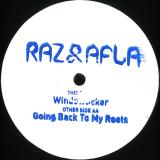
Wah Wah 45s present two very special cover versions from our beloved Afro-electronic duo, Raz & Afla, available on 12" vinyl for the very first time! Having recently released their sophomore LP, Echoes Of Resistance, to great acclaim and support ranging from Nick Grimshaw on BBC 6 Music to Tash LC on BBC Radio 1, and the follow up remix project Remixes Of Resistance, the pair offer up their unique takes on two very different slices of club culture on twelve inches of wax.
First up, the pair tackle Aphex Twin's sleazy and sinister turn-of-the-century dance floor bomb Windowlicker and take it somewhere completely unexpected, as Raz explains:
"We wanted to go to a different place from our influences for this one. When we told people we will cover this tune everyone said 'but how?!' In Raz & Afla style. We had an idea of what elements to recreate from the original and how we can reference it within our spectrum of sounds. It was so much fun to do and really kicks off at our live shows."
It's a heavily percussive reinterpretation, replete with spooky wordless vocals, funky guitars and spine tingling synths that builds into something of a future Afro-house anthem, whilst respecting the genius of the original recording.
On the flip, Going Back To My Roots has become a mainstay in Raz & Afla's live sets, and means a lot to them personally, as Raz once again explains:
"We love this song. The lyrics resonate with us, talking about the meaning of connection to a land and its people. The history of this song is also fascinating, from Hugh Masekela and Orlando Julius through Odyssey and Richie Havens. We wanted to give it our own flavour. You can't choose your heritage and where you are born. It is always a part of you and we like to celebrate that."
Written and first recorded by Lamont Dozier in 1977, Going Back To My Roots was famously covered by Richie Havens in 1980 before becoming a huge crossover hit when interpreted by disco outfit Odyssey in 1981. Raz & Afla very much give their version their own unique dance floor feeling. It's one which has received much support on BBC 6 Music.