Rufus Wainwright's I'm a Stranger Here Myself - Wainwright Does Weill is a compelling tribute album that delves into the rich and complex songbook of German-American composer Kurt Weill. Known for his theatrical flair and vocal prowess, Wainwright brings a unique interpretation to Weill's compositions, which are celebrated for their fusion of classical, cabaret, and jazz elements. Premiering in May 2023 at New York City's Café Carlyle, "Wainwright Does Weill" marked Wainwright's first extensive exploration of Weill's repertoire. Rufus Wainwright’s fascination with Kurt Weill’s music goes back for decades — in his early twenties he wore out the vinyl grooves of Teresa Stratas’ famous Weill album. While Weill‘s musical influence can be heard in Wainwright‘s own songs, he had never dedicated an entire evening to singing the German musician’s songs, until now. With the Pacific Jazz Orchestra under the baton of Chris Walden, he has expanded the orchestral palette for his approach to Kurt Weill.
»La Traversée« (»The Crossing«) is Matthias Puech’s second album for Hallow Ground and follows up on 2023’s »Mt. Hadamard National Park.« Profoundly inspired by re-reading »The Odyssey,« the French composer, instrument designer, and scholar used a Eurorack modular synthesizer to create four pieces that are by far the most intuitive and emotionally charged in his ever-expanding catalogue. Puech’s masterful command of sound comes to the forefront with even more urgency on this record. A wandering meditation on the human condition, »La Traversée« is an album that is constantly in motion—complex electronic music at its most gripping and evocative.
The foundation for »La Traversée« was laid when Puech prepared a live set for a tour organised in collaboration with Hallow Ground in support of »Mt. Hadamard National Park.« Before writing the first three pieces—»Ennosigaios,« »Polyphármakos,« »Nekuia«—the 18½-minute-long »Ithâké« was composed in near-total isolation in the South of France at the end of 2023. Puech performed the material live several times before taking a step black from it for a while. He revisited the pieces when preparingthem for a release. »I was struck by how the technical process and the intention behind the music had completely vanished from my memory,« he says.
What remained intact, however, was Puech’s association of the material with one of the most influential texts of Western literature. Reading a graphic novel adaptation of »The Odyssey« with his two four-year-olds, he noticed the effect that it had on them and himself. »Its themes of longing, fear of and attraction to the unknown, unresolved quests, and the struggle for control felt topical,« he says. »I was completely taken. Every story ever told seemed contained in this ancient tale; every story I have ever tried to tell as a composer seemed inscribed in this framework.« This also extended to formal motifs such as the repetition of incidents, narrative developments, or dramatic effects that also mark »La Traversée.«
Puech says that he perceived Homer’s writing as musical, »like an old Delta blues or a Renaissance counterpoint,« which inspired his writing process. »With a couple of knobs on my Eurorack system, I could control the unfolding of a story,« he notes. »This made me pass through different emotional statesand led to moments in which everything made sudden sense—when you as an artist get a glimpse atsomething essential, can touch upon something universal.« This shines through »La Traversée,« a wildly imaginative album that is deeply personal while also telling a story far more wide-reaching than that of its creator.
out of Stock
Last delivered 10 months ago available to reorder, subject to availability
D'ar gad ataw! (Always in Combat!) is the fifth album from Ramoneurs de Menhirs, these tireless punk bards who, for almost 20 years, have been making Brittany echoes in every town of France. They came back with 13 new tracks that give pride of place to compositions from an enraged "zone mondiale", often in Breton ("Marion ar Fawed", "Louise A-Dak"...) but also sometimes in French (No Pasarán...) or english (cover of Patty Smith "Rock'n Roll Diggers") relentlessly denouncing the forces that crush us ("Lacri-Moged" or the cover of Angelic Upstarts "Police Oppression"), the dictatorships in place as well as those that threaten ("Dirann").
Sex Tapes From Mars presents Outdom Records' boss, LATENT, who shares a brand-new four-track EP that spars with breakbeat, electro, house, and left-field electronics, neatly centring them all into a steady, sexy collision. The record as a whole captures genuinely original-sounding, rough-edged b-boy breaking badness - nostalgic, but never polite. It's a few BPMs slower than Sex Tapes' last few outings, but no less effective. Arguably, it's more late '80s sounding than ever, although, in fact, it's a brand-new, stonking release that showcases the label's versatility and unpredictability.
The opening track, "Break Machine", sets the pace with a clear nod to the '80s US group of the same name, bringing tidy drum workouts and clipped vocal samples that recall early Chicago, as well as choppy rave and street party energy at its most unfiltered.
"Disco Hijack" pushes the clutch into a more functional gear, merging delay-heavy, druggy, chuggy, sludgy bass with more robotic vocoder tropes, sharing something playful but IDM and European skewed. It's a dancefloor tool with a wink - just the style this now accomplished label has made its identity. Oh, don't forget the amens and clattering jungle breaks. 1990 or 2040? Fuck knows.
On "Distress Robot", pneumatic percussion and malfunctioning android chatter bring a darker, more mechanical edge, while "Virtual Body" closes with a spacious, garage-leaning shuffle that pulls the EP into recognisable contemporary yet still very much peak-time territory.
LATENT gives lean grit, pushes the edges, and lets the tracks feel alive in their imperfections. It’s music that thrives on tension between old-school reference points and modern floor pressure.
Bristol's label head Elon Dust HAS done it again.
Vinyl-only as per, don't sleep."
out of Stock
Last delivered 3 months ago available to reorder, subject to availability
Toyah’s 1994 solo album Take The Leap! is issued on limited edition picture disc vinyl for the first time ever.
The picture disc features colour images on each side of the vinyl and is housed in special die-cut outer sleeve containing previously unseen photography from the original album shoot.
Toyah’s 1994 studio album was recorded with Salisbury band Friday Forever and includes eight re-recordings of classic Toyah material and six original compositions.
Toyah’s 1991 solo album Ophelia's Shadow is issued on limited edition picture disc vinyl for the first time ever.
The picture disc features colour images on each side of the vinyl and is housed in special die-cut vinyl outer sleeves containing previously unseen colour photography from the album shoot.
A personal favourite album of her catalogue, Toyah confirms: “Above all, this is the one album I have made that truly represents me. I’m fiercely proud of it. Ophelia’s Shadow is not just a record, it’s a reflection of who I was, who I am, and who I continue to become. It’s the sound of resilience, reinvention, and raw truth.”
The album features a band line-up including Trey Gunn on stick, Paul Beavis on drums and Tony Geballe on guitar. Two tracks, Brilliant Day and Lords Of The Never Known feature Robert Fripp on guitar and were originally played live by Sunday All Over The World, the band Toyah & Robert Fripp toured and recorded with in the late 1980s.
Interstitial Spaces is Martin Brandlmayr’s debut release on Faitiche. In this award-winning radio collage, the well-known drummer and composer (Radian, Polwechsel) explores the quiet moments in music and film recordings.
The last notes of a piece of music fade out in the space. The pianist and the violinist remain frozen in place, holding their breath. The sound engineer sits silently at the desk. Once he has switched off his tape machine, the dull drone of a ship’s horn is heard in the distance. Otherwise, not a sound. Or was there something else hidden in the white noise?
Interstitial Spaces is based on short excerpts from music recordings, films, TV adverts and field recordings. Brandlmayr takes these quiet scenes, intervals in which nothing seems to happen, and brings them into the foreground, subjecting them to a microscopic spotlight. Moments in which one hears only the space itself, or the subtle presence of someone in the space: faint breathing, footsteps and the soft creak of a chair. We also hear preparations for an orchestra rehearsal: the musicians are all busy tuning their instruments, talking to each other, the concert has not yet begun.
This leads to a shift in perception: incidental details hidden in the hubbub of voices or in the silence suddenly take on a leading role. In the empty spaces, we discover various shades of noise, sharpening our awareness of sonic peculiarities. In a gentle rhythm, Brandlmayr’s radio collage offers a sequence of strange, not immediately identifiable sounds that are woven in the second part into a dense structure. At the end, the carefully captured sounds are released back into the empty space. Interstitial Spaces is a bold spectacle that celebrates the eventful uneventfulness.
Sonetos del Amor Oscuro is an ode performed by four enchanted souls who have intertwined their hearts and conjured harmonies and rhythms that wander endlessly among the spellbinding words of a poet from Granada... Federico García Lorca;
He wrung, pushed and vibrated words like tectonic plates, transforming plains into poetic mountain landscapes. He then covered them with a Moorish carpet of snow crystals and had them reflected by the dark locks of hair of a gypsy girl from Albaicín who, with a voice forged in gold and silver, sings her little sister to sleep with a soothing lullaby.
Helena Casella – vocals
Myrddin De Cauter – flamenco guitar
Stijn Kuppens – cello
Stefan Bracaval – flute, bass flute
Helena Casella, the Belgian-Brazilian vocalist with a deep, soft and warm voice, translates her multicultural background and personal thoughts into music in a passionate, soulful and refined way. With her roots in an exceptionally musical family, her music exudes this unique heritage. She effortlessly interweaves genres such as R&B, soul, hip hop and modern jazz, while remaining true to the vibrant sounds of Brazil, an essential part of her roots.
Her debut album was released earlier this year on W.E.R.F. records.
Myrddin De Cauter's music is deeply moving, complex, passionately rhythmic and deeply emotional. He has mastered the compás of flamenco, which gives him the freedom to converse with elements from jazz or classical music. His speed sometimes seems otherworldly, but those who take the time to listen closely to his music will quickly discover an immense world of pure emotion, beauty and tranquillity. After six albums and countless concerts, Myrddin proves that great virtuosos do not necessarily have to come from Spain. At the tender age of eleven, his father taught him to play the clarinet in jazz and gypsy swing style; he became part of the family orchestra and gained his first experiences on stage. A classical melody composed on the guitar prompted him to ask his father to teach him the basics of flamenco guitar. Soon after, Myrddin seemed ready for the real thing and went to Andalusia to learn from Manolo Sanlucar and Gerardo Núñez. This inspired him to compose in his own unique language, deeply rooted in the pure flamenco tradition but enriched by boundless creativity.
Stijn Kuppens is a cellist, composer and producer. In his own genre, which he describes as non-classical cello, he uses the cello in his own unique way. His profound knowledge of the complex history and techniques of the style is clearly audible: Kuppens' mastery of classical music is evident in every note he plays, whether he is performing solo or collaborating with other musicians. His skill as a musician and ambition to explore the boundaries of conventional classical music is evident in his ability to seamlessly blend different genres.
Stefan Bracaval is a classically trained flutist who graduated from the Royal Conservatory of Antwerp. His fascination with the expressive potential of improvisation led him to jazz, where he became a self-taught jazz flutist. Bracaval has collaborated on projects with prominent jazz figures such as Charles Loos, Bert Joris and the Brussels Jazz Orchestra. In addition, he worked as a soloist and arranger with the VRT Radio Choir in 2016. Bracaval leads the Stefan Bracaval QU4RTET, which emphasises the flute as a central jazz instrument and brings new repertoire rooted in jazz traditions.
Hailing from the historic city of Ghent (BE), Margitte crafts a unique sonic tapestry that resonates with both ethereal and fierce. Think Portishead, Pj Harvey, The War on Drugs, St. Vincent and even Gainsbourg. Her music is a journey through scapes, blending haunting melodies with intricate electronic textures and poetic lyricism.
Margitte's sound is both timeless and contemporary, weaving together the mystical and the modern with a vision that is thought-provoking as it is emotionally stirring.
Her performances are true to her artistry and passion. Margitte is not just to be heard, but to be felt, lingering on in your ears long after the last notes faded.
Come and get it, join the haze.
SOUNDS LIKE: Laura Marling, Beach House, Warhaus, Gainsbourg, St. Vincent, Liv, Portishead, PJ Harvey, Nick Cave, Neil Frances, James Blake, David Byrne, Grace Jones, Kruangbin, The War on Drugs.
Credits:
Margot De Ridder: Voice, keys, composition
Artan Buleshkaj: Guitar
Simon Raman: Drums, Percussion
Annelies Emmerechts: Voice, keys
By 1967, the Jamaican music industry in the UK was flourishing, its success primarily due to the efforts of a number of talented British-based singers, songwriters and producers, among them being the young multi-talented music maker Robert Thompson a.k.a. Dandy. Thompson’s popularity on the UK Jamaican music scene resulted in the release of his popular debut album ‘Rock Steady With Dandy’. This record contains one of the biggest rocksteady hits ever made: "People Do Rock Steady" also known as "Let's Do Rock Steady", and was first released in October 1967 as the flip side to his single "We Are Still Rude".
The classic album Rock Steady With Dandy is available as a limited edition of 750 individually numbered copies on orange coloured vinyl.
On “Cold Sweat,” James Brown famously called to “give the drummer some.” In 1974, Philadelphia vibraphonist Khan Jamal called to Give the Vibes Some, with superb results. Pianist and composer Jef Gilson’s PALM label gave Jamal the platform he needed to deliver a thorough exploration of contemporary vibraphone. After launching PALM in 1973, Gilson quickly demonstrated that he would only produce records not found anywhere else. Give the Vibes Some, PALM number 10, was another confirmation of this guiding principle.
Raised and based in Philadelphia, Khan Jamal took up the vibes in 1968, after two years in the army during which he was stationed in France and Germany. Decisively drawn to the instrument by the work of the Modern Jazz Quartet’s Milt Jackson, Jamal studied under Philadelphia vibraphone legend Bill Lewis and soon made his debuts in the local underground.
Early in 1972, Jamal made his first recording, with the Sounds of Liberation. The band attempted an original fusion of conga-heavy grooves with avant-garde jazz soloing. Saxophonist Byard Lancaster, an important figure in Jamal’s development, contributed much of the solo work. Later in 1972, Jamal made his leader debut with Drum Dance to the Motherland, a reverb-drenched, never-to-be-replicated experiment with live sound processing. Both albums appeared on the tiny musician-run Dogtown label.
“We couldn’t get no play from nowhere. No gigs or recording sessions or anything. So I took off for Paris,” Jamal recalled in a Cadence interview with Ken Weiss. “Within a few weeks, I had a few articles and I did a record date. It didn’t make me feel good about America.” That was in 1974, while Byard Lancaster was recording the music gathered on Souffle Continu’s recent The Complete PALM Recordings, 1973-1974.
Jamal’s record date delivered Give the Vibes Some. At its core, it was an exploratory solo vibraphone album, even if two tracks added (through technological resourcefulness?) a très célèbre French drummer very much into Elvin Jones appearing under pseudonym for contractual reasons. Another track, for which Jamal switched to the vibes’s wooden ancestor, the marimba, added young Texan trumpeter Clint Jackson III. The most notable article published on Jamal during this stay in France was a Jazz Magazine interview. Jamal’s last word there were “The Creator has a master plan/drum dance to the motherland.” “Give the vibes some” could be added to this programmatic statement.
Mit Live in Bangalore legt der Kölner Schlagzeuger und Komponist Jo Beyer das dritte Album seines Quartetts vor - ein fulminantes Live-Dokument aus dem renommierten Windmills in der südindischen Metropole Bangalore. Fünf hochenergetische Tracks voller Spiellust, Wucht und Tour-de-Force-Momenten zeigen die Band in absoluter Topform. Entstanden gegen Ende einer intensiven Indien-Tournee, fängt die Aufnahme einen Abend ein, an dem alles stimmte: ein extrem gut eingespieltes Ensemble, ein Raumklang von Weltklasse und ein Publikum, das restlos aus dem Häuschen war. Sämtliche Titel existieren bereits in Studioversionen, doch hier sind sie hörbar gereift - durch jahrelanges Zusammenspiel, erweiterte Improvisationen und radikale Interaktion. Besonders prägnant ist die ungewöhnliche Besetzung ohne Bass, die ein unverwechselbares, rhythmisch starkes Klangbild schafft. Mit Pianist Felix Elsner an Bord hebt Beyer das Quartett endgültig auf ein neues Level - kraftvoll, kompromisslos und voller Überraschungen.
In 2019, a brutal epileptic seizure changed my life - the first of more to come. I was forced into solitude, and in that quiet, music became my lifeline. In the following years, I poured everything I had into creating between you and me: a raw, DIY album that is a distillation of my lived experience during this time. The album explores emotional authenticity, freedom of expression, and acceptance: not as abstract concepts, but through visceral experiences that have fundamentally reshaped my art and my sense of self. As a listener, I invite you to explore your vulnerability by joining me in mine. This album is truly between you and me.
Ozzy Jones is a Dutch-Australian interdisciplinary artist whose music blends electronica with indie. Drawing from personal struggles and raw emotion after his seizures started, his debut album between you and me explores vulnerability, male identity, and authentic self-expression. Rooted in Amsterdam's vibrant creative scene, Ozzy's work fuses sound, visuals, and storytelling to create a deeply immersive and honest artistic experience.
Following releases on Longform Editions and her own Paralaxe imprint, Dania descends on Somewhere Press with crepuscular, quixotic pop that hits a sweet spot between Mark Clifford’s Cocteau Twins remixes and Massive Attack.
Parked next to Alliyah Enyo, Slowfoam, and Angel R, Dania’s found an ideal home at Somewhere Press, and »Listless« is her most confident, transcendent set to date. Her last few albums were steeped in meaning – a way for the Iraq-born, Tasmania-raised artist to explore her identity and probe the impacts of colonisation. Here, she gives herself more room to breathe, thriving in the mysteries of nighttime – a direct reference to her nocturnal existence as an emergency doctor in Australia. The album was completely composed in the midnight hours, but it’s not self-consciously dark in the way you might expect. Opening track »On a Grassy Knoll« is one of the prettiest – and poppiest – tracks Dania has released, cracking open her voice with thrumming harmonies that she complements with granulated, Guthrie-esque guitars and, most unexpectedly, half-speed drums. It’s the first time Dania’s used percussion, and it suits her extremely well.
In fact, even when the powdery breaks drop away in the album’s final breaths, you can almost hear an outline of where they might remain. On »Write My Name«, Dania loops her voice between waved strings and slippery piano phrases, and the hypnotic closer »A Hunger« is a thudding, sub-heavy 4/4 away from being Peak Oil-style contemporary dub techno.
But the big draw here is Dania’s batch of hazy dream-pop miniatures, like the Seefeel-adjacent »Heart Shaped Burn« (with Rupert Clervaux on drums), and the Bristolian »Car Crash Premonition«, that features a rolling bassline taking us right back to 1998. Very strong – peak listening if you’re into Bowery Electric, MBV, or Mark Van Hoen.
out of Stock
Last delivered 10 months ago available to reorder, subject to availability
For his last solo record ‘Through a Room’, Bill Nace shifted his usual saturated guitar sound and added tapes, hurdy gurdy, doughnut pipe, bird calls and the mysterious Japanese taishōgoto. Setting up for the final night of his three day residency at OTO with only the taishōgoto soundchecked, Nace hoped that Parker would arrive with his small soprano as its opposite. “I’ve been interested in state change, you know, playing until there’s a shift in time.” Known for his development of multiphonics to produce a constantly shifting pattern, Evan Parker has evolved an instantly recognizable sound - his work the soprano most distinct. Happily, it was the soprano Evan brought with him and as soon as the two start to play they entwine - taking off in a double helix of keys and reed primed for endless reconfiguration. Space warps under the velocity of playing, the pitch rising unrelentingly. It felt like unending lift off in the room, sheer energy until the last note makes remember your feet have been on the floor the whole time. Total time bending shredding.
–
"They had never played together before. They had never even met each other before this springtime 2024 concert at London’s Café Oto.
Evan Parker, circular breathing maestro of the saxophone, a legend in the universe that is Free Improvisation since the late 1960s and Bill Nace, one of the most intriguing experimental “noise” guitarists of the 1990s/2000s underground scene.
For those of us who have been enamored by the live and documented work of both these gents, this Café Oto duo was a must-hear event. It could have gone anywhere musically and that would have been totally fine. Particularly with Evan having a history of being thrown into a variety of challenging collaborations throughout his career, employing the learned elegance of trust in his own sensitivity to listening, responding, leading, following, sparring, intertwining, dialoguing, creating in the instant and, essentially, dignifying the non-hierarchical grace of chance.
The aesthetics of socialist consideration in Evan Parker’s playing, in his community of expanded and personal technique, for a younger player such as Bill Nace, strikes an exemplary model. This notion of respect would be entirely the reason Nace, when offered a residency at the most critical “new music” room in England, would request to play in duo with Parker.
Bill Nace came to prominence mostly during the apex of experimental music activity in and around Western Massachusetts in the early days of the aughts, with a focus on visual art and free improvisation guitar action. He could be found in the daytime hours, his head hanging down over a notepad, penning fine-tuned illustrations and abstract line drawings, while in the evenings he’d be attending any number of basement noise gigs, many of which he’d be participating in. His guitar style came across as being informed as much as by the physicality of his writing utensils in friction to the page as it was to his hearing and redefining of radical recordings ranging anywhere from the Black Unity Group to Black Flag.
Utilizing various metal files and other small cylindrical objects Bill would allow his guitar and amplifier to be in tandem with the improvisatory movements of his body as the instrument balanced, intentionally and, at times, precariously, upon his lap. The performances came across thrilling and daring and they would be mostly in the context of venues nothing more than a low-ceilinged damp and dank New England basement, a clutch of people hanging onto rusty pipes or sitting up on dilapidated washer/dryer machines, the shards of Bill’s “file guitar” sounds ringing out like the most alive music on Earth.
By the time Bill reached Café Oto in early 2024 he had relocated to Philadelphia all the while releasing a succession of collaborative LPs on his Open Mouth label to present his developing progression of solo and collaborative work. He also would find himself considerably engaged with playing the electric taishōgoto, a keyboard-activated string instrument from Japan which can exist as a one, two, four, five, or six string oblong sound object. Bill’s approach to the taishōgoto would not be too unlike his approach to the traditional electric guitar, though no outboard implements such as files, sticks, and rocks are utilized. The similarity would lie wholly with Bill’s full immersion of high velocity action-playing where, with the taishōgoto, an electric drone beauty occurs. The flurry of sonics and resultant harmonics emanating from the amplifier (which Bill opts to dial into with borderline loud-as fuck volume settings) furthers the meta-mantra properties of the instrument in an astounding display of drone dynamism.
This sound world of Bill’s two-stringed taishōgoto on this Café Oto night worked beautifully with Evan Parker’s improvisatory saxophone conceptions. The duology achieved instant lift off at ground zero only to find it’s eventual finale as if it were organically ordained. Time seemingly morphed from its ancient human construct of control, rendered inconsequential to the torrential transcendence of the room wildly activated by the magic resonance of the multi-directional pan-spatial sonance of the music as if it were some beatific blessing. It was one of those nights where art as a liberating force of spirit gifted the listeners with an offering of exaltation and joy. It was entirely mystical and mind blowing. A night of Total Music."
Slip is Paul Abbott’s response to his 3 day residency at OTO in 2023. It’s a continued exploration of the acoustic-digital hybrid drum setup Abbott has been developing for some time, which involves drum kit and synthetic sounds combined closely—through an entanglement of limbs and cables—in an intimate but strange relationship with each other.
Paul Abbott hasn’t had any formal musical training, but has a long history of making music, having collaborated for years with Seymour Wright, Pat Thomas, Michael Speers, Cara Tolmie, Anne Gillis and many others. Eventually, led by a profound suspicion of what is fixed or limited, Abbott began finding other ways to organise sound - or what he calls ‘material’:
“I wanted a way to 'persuade' or guide the possibility of something happening - my activity or the events of an algorithmic composition - for example, but without certainty or formalism. It felt to me, during playing, that certain ideas had a particular sort of shape, but more than the form of a line. I began to write alongside (before/after) playing the drums, and ‘characters’ began to enter the scene as a more wobbly, and therefore appropriate option to notation. Working with these characters allowed me to simultaneously approach body, imagination, language and music: without dividing things up or separating these aspects from each other. It allowed me to leave things messy and entangled, whilst trying to deal with form and specificity: wanting to have some things feel or respond differently to other things at other times.”
In approaching his residency, Abbott developed a fixed cast of characters - crystal, lleaf, reiy.F, reiy.C, strike, nee, qosel, sphu and aahn. They each communicate using different kinds of movement and drum kit/s, and Abbott choreographed them as ‘dances’ based on different feelings, or outlines of behaviours suggestive of ways of moving (body, drums, sounds). He then arranged these characters into ‘compositions’: one for each performance day, with each composition featuring multi-layered activity - options for behaviours, ways to move around the rooms, play drums, develop synthetic sounds, change the lights or re-distribute the sound in the space.
After the performances, Abbott took home 9 hours of recordings split into up to 28 multitrack channels for each day, and re-organised his cast once more into a performance for 2LP, CD and digital. It’s an enormous amount of work - but Abbott is activated by the process. For him, the pleasure of unstable edges, possibilities, slippages, is the vital attraction. Like all living organisms, Abbott’s characters have malleability and responsivity. They stimulate a bundle of possible behaviours, a tendency to act a certain way, a temperament, a boundary of respective limits or affordances.
It’s an affective way of working, inclusive of Roscoe Mitchell, Sun Ra, Nathaniel Mackey and Milford Graves. In ‘Pulseology’(2022), Milford Graves reminds us, ‘Breath varies, so cardiac rhythm never has that (metronomic) tempo. It’s always changing. All the alignments of the heart are determined based on the needs of the cells, specifically tissues and organs. The heart knows if it needs to speed up.’ In Slip, to slip, in a heartbeat, is to descend not into the grid of the even metre accorded to the heartbeat, but into a play of mutability and modality. To change is the condition of the heart.
Following a string of acclaimed collaborations, including Agua Dulce with percussionist Laura Robles and Mapambazuko alongside Congolese guitarist Titi Bakorta, Peruvian artist Alejandra Cárdenas (aka Ale Hop) returns with her most personal work to date yet, A Body Like a Home. Marking her first album under her birth name, the project is a sonic memoir exploring the tangled realms of trauma, recovery, and love through autobiographical soundscapes.
A Body Like a Home is the artist at her most exposed. Comprising 13 songs and 15 poems, the album sees her set aside collaborative fusions for solo catharsis, channeling years of turbulence - intergenerational scars left by colonialism, racism, domestic violence, and alcoholism - into a work that oscillates between brutality and tenderness. Cárdenas states: “I grew up under Alberto Fujimori’s dictatorship, when a veil of hopelessness seemed to settle over everything. This is the backdrop of the album. The songs and poems trace the inevitable loop between private wounds - addiction, domestic violence, fractured intimacy - and Peru’s national scars, carved by colonialism. It’s not a straight story or a resolution. Writing and composing became a ritual of digging for meaning, into what’s buried, disguised, or renamed, until the body itself became a living archive.
” At the heart of the album is Cárdenas’s own voice - part witness, part confessor - reciting over layers of electric guitars, electronic textures, the haunting violin of Mexican musician Gibrana Cervantes, and a collage of field recordings, from rainfall, muffled whispers, broken glass, to archival protest footage from Peru. The result is a work that resonates like a diary written in sound.
The first single, "Motherland", is a searing testimony where Cárdenas voice cracks under the weight of history and personal loss. Amid a storm of distorted guitars, she traces the cyclical legacies of colonialism, from state massacres branding Indigenous bodies as “terrorists” to the spiral of addiction as an unavoidable future. The lyrics draw parallels between political and domestic violence: a mother’s drunken knife pressed to her chest, and a motherland where racism is currency. She utters: “sacrifice demands a body.” Yet, amid the wreckage, a willful grip on love and faith persists. Ultimately, A Body Like a Home is a document of transformation. Tracks like "Evangelina" and the title piece "A Body Like a Home" hold space for resilience, spirituality, and love, while "Early Road" and "Going South" thread subtle nods to Peruvian folklore, opening up bright vignettes into a sense of belonging.
The poetry chapbook accompanying A Body Like a Home (five of its pieces are also recited on the album) extends the work, building a parallel architecture. Oscillating between the documentary and the mythic, the intimate and the forensic, the profane and the oniric, these poems practice a theology of the ordinary, where everyday objects - cameras, knives, moth-eaten cotton - are charged withspiritual and historical weight. Here, the body is land, house, battlefield, collective pain, geological territory; and trauma is, in contrast, archival, cellular, ritualistic, inherited. Read alongside the music, the stories refract across two mediums: songs give them breath and poems give them bone.
out of Stock
Last delivered 11 months ago available to reorder, subject to availability
Do you believe in spring? Simon Wangen (cello) and Philipp Sutter (piano) pose this question as the title for their new project. Whereas Bill Evans made a demand in 1981, the two Cologne-based musicians believe that in times of uncertainty, crisis, and environmental destruction, it is ok to set a questin mark here. But politics and world events aside: Do you believe in spring? Of course! It's never too late to start something new, get creative, and test your own limits. Simon Wangen is a classically trained cellist, Philipp Sutter a trained jazz pianist. Their different musical roots merge on this instrumental album into a lively mix of neoclassical, new jazz, and Cinéma Nordique. Ten pieces come across as sometimes dark, sometimes wild, sometimes delicate, always focusing on the dialogue between the two instruments that harmonize so well. The subtle use of electronic effects constantly opens up new perspectives and builds a bridge to contemporary sound aesthetics. Cello and piano—this combination has been established for centuries, but can still add new facets today. Do you believe in spring? begins stormily and turbulently, oscillating between romantic, sad, and beautiful moments, and leads from a rather dark beginning to the final and eponymous piece in C major, which leaves the listener with a glimmer of hope. Do you believe in spring? From October 24, 2025!
Do you believe in spring? Simon Wangen (Cello) und Philipp Sutter (Klavier) werfen den Titel für ihr neues Projekt als Frage in den Raum. Wo Bill Evans 1981 eine Forderung formulierte, sind die beiden Kölner Musiker der Ansicht, in Zeiten der Unsicherheit, der Krisen und Umweltzerstörung durchaus ein Fragezeichen setzen zu können. Aber abgesehen von Politik und Weltgeschehen: Do you believe in spring? Natürlich! Es ist nie zu spät, etwas Neues zu beginnen, kreativ zu werden und die eigenen Grenzen zu testen. Simon Wangen ist klassisch ausgebildeter Cellist, Philipp Sutter studierter Jazzpianist. Die unterschiedlichen musikalischen Wurzeln verschmelzen auf diesem Instrumentalalbum zu einer lebendigen Mischung aus Neoklassik, New Jazz und Cinéma Nordique. Zehn Stücke kommen mal düster, mal wild, mal zart daher, stets die Zwiesprache der beiden so gut harmonierenden Instrumente im Fokus. Der dezente Einsatz elektronischer Effekte öffnet immer wieder neue Perspektiven und schlägt eine Brücke zur zeitgenössischen Klangästhetik. Cello und Klavier - diese Besetzung ist seit Jahrhunderten etabliert, aber kann auch aktuell immer wieder neue Facetten hinzubekommen. Do you believe in spring? beginnt stürmisch und aufgewühlt, changiert zwischen romantisch - traurig - schönen Momenten und führt von einem eher düsteren Beginn hin zum letzten und namensgebenden Stück in C-Dur, das die Zuhörenden mit einem Hoffnungsschimmer entlässt. Do you believe in spring? Ab 24.10.2025!
When people think of Yacht Rock-those smooth, sun-drenched sounds that once drifted from Californian radio stations in the late '70s and early '80s-they rarely imagine it echoing through rehearsal rooms in Hamburg or Linz. Yet even far from the Pacific coastline, the appeal of shimmering chords, laid-back grooves, and polished production found fertile ground.
This compilation gathers rare and overlooked tracks from Germany and Austria. These artists embraced West Coast aesthetics with sincerity and subtle twists, resulting in music that feels both familiar and refreshingly new-smooth sounds for cloudy skies. So drop anchor, pour something cool, and enjoy this unexpected cruise through the lesser-charted waters of Euro Yacht Rock.
Our journey begins in Austria, where Reflection's Because (1981) set the tone with blue-eyed soul and analogue warmth-a sunlit blend of Doobie Brothers polish and local charm. Its creator, Dieter Heyduk, reappears with Austrian Sky, a heartfelt nod to his homeland that fuses mountain calm with oceanic longing.
From the North Sea island of Föhr, Ara Pacis dreamed of California on their 1979 self-release To the Westcoast. Inspired by Steely Dan and Lake, they turned German rock precision into breezy, melodic sophistication. Meanwhile, in Düsseldorf, Mainpoint fused funk and jazz-rock on Frisbee, their 1980 single bursting with rhythmic drive and optimism before the tide of the Neue Deutsche Welle swept such grooves aside.
Bremerhaven's Nuages offered the compilation's only instrumental gem, Strange Weekend (1985)-a gentle blend of jazz-funk and rock and largely lost to time. Its cool restraint captures the European interpretation of Californian ease.
Around the same period, British traveler Gavin James recorded River of Laughter in southern Germany, backed by the blues-rock band Black Cat Bone. His acoustic reflections on water and flow mirrored the soft, meditative pulse at Yacht Rock's core.
Berlin's Top Spin kept things playful with Bikin (1985), a funk-fusion snapshot of urban joy that showcased the city's finest session players. From the Ruhr area, the Jan Pack Band is up next. While not a typical Yacht Rock track, Cable Dance is driven by an effortless, groovy '80s vibe.
Peter Seiler's Goldfinger project reimagined Walkin' in the Sand as a relaxed reggae-tinged track, while Munich's Major Seven closed the voyage with Silverboat, a wistful soft rock ballad gliding between melancholy and light.
Across these hidden harbors of German and Austrian pop, the West Coast dream took on new forms-reflected in rivers, skies, and studio lights half a world away from L.A. Under and Above the Clouds celebrates that spirit: the enduring pull of smooth music, wherever it's made.
out of Stock
Last delivered 10 months ago available to reorder, subject to availability
The smash hit album "Glass Heart" is now available as a limited edition vinyl record!
The Netflix series "Glass Heart" has just begun streaming worldwide. The band "TENBLANK," featured in this passionate youthful musical love story, has
released their debut album, "Glass Heart," in conjunction with the drama's release.
TENBLANK is a rock band formed by four members: the solitary genius musician Fujitani Naoki (played by Sato Takeru), college student drummer Saijo Akane
(played by Miyazaki Yu), hardworking and charismatic guitarist Takaoka Hisashi (played by Machida Keita), and music-obsessed pianist Sakamoto Kazushi
(played by Shison Jun).
The album was released digitally alongside the drama's release on July 31st, and was released on CD the following day, August 1st.
Glass Heart, which attracted attention thanks to the contributions of a stellar lineup of composers including Noda Yojiro (RADWIMPS) and Yaffle, has dominated
charts not only in Japan but also in other Asian countries, creating a global buzz.
Now, this smash hit album "Glass Heart" will be released as a limited edition vinyl record. Experience TENBLANK's music in a new way with the warm texture
and depth of sound that only analog can provide.
A year on from Aura Safari and Jimi Tenor's Sensory Blending and DJs and dancers are still lost in its summer charms, but there have also been a series of standout remixes taken from the originals, which now get assembled on one vital 12": Sensory ReBlending features Willie Graff, Reverso 68 Dub, Jazz N Palms and Luminodisco.
First up is Ibiza favourite Willie Graff, who tackles the spellbinding original 'Bewitched By The Sea'. He brings a signature Balearic beat perfect for cruising around the island as the sun blazes with its dubby, swaying drums and more prominent vocal, all brought to life with delicate percussion and gentle synth pulses. Label regular Federico Costantini aka Luminodisco also returns with a mature post-Balearic touch that douses the track in an ocean of dubby echo. Gorgeous Spanish guitars and jumbled percussion form a life raft which floats out to sea under the sultry wind motifs.
Reverso 68 is the studio-based project of Pete Herbert and Phil Mison, and over the last decade-plus, they have mastered the art of making music for swimming pools. Their version of 'Your Magic Touch' is low-slung and deep with a mid-tempo four-four groove sprinkled with tropical percussion. The muted chords are gloriously dreamy and the whole thing is perfect for early evening warm-ups.
Jazz N Palms is Hell Yeah family and is currently riding a wave of acclaim for his See Rodes (Revisades) album on his own Jazz N Palms Recordings. He flips 'Lunar Wind' into poolside perfection with heart-melting sax notes and rippling keys, soothing female tones and dubby breaks. It's a perfect soundtrack to heavenly ascent.
These remixes perfectly extend the soul-soothing pleasures of Sensory Blending with plenty of fresh but sympathetic perspective.
out of Stock
Last delivered 5 months ago available to reorder, subject to availability
Green Vinyl. Twenty-five years after their first recording, Panzerpappa - perhaps Norway's most cordial avant-prog ensemble - felt the time had finally come to release their first-ever concept album. In 2025 the band will launch Landsbysladder, their eighth studio release. Landsbysladder is Norwegian for "village gossip" and the album comprises seven instrumental pieces centred on the themes of rumours, tales, and gossip in a small village - a musical chronicle of minor and major dramas unfolding in a tight-knit community where everyone knows everyone - or at least thinks they do. Landsbysladder tells a vivid story without uttering a single word. The music shifts between open, melodic passages and sudden bursts of intensity, drive, and complexity. Tempo changes, rhythmic twists, and harmonic detours mirror the unpredictable way gossip can spread, grow, and shift the mood in an instant. The album features several distinguished guest musicians: renowned folk artist Rannveig Djonne on diatonic accordion, seasoned performer Silje Hveem Lofthus on flute, internationally acclaimed soloist and professor Håkon Stene on tuned percussion, Håkon Borve on the rarely heard contra-alto clarinet, and last but not least, jazz luminary Ståle Storlokken - known from Elephant9, Terje Rypdal, Motorpsycho, and Supersilent - on synthesizer.
"On the Huh" is taken from the deepest UK slang term 'on the huh' meaning: Not level, crooked or wonky. Comprised of singer Sloss (Braindance), guitarist Chris (Infa Riot), bassist Dave (Special Duties) and drummer Tom (Infa Riot), "ON THE HUH" from Norwich have taken the scene by storm with their first album "Bit on the side", which was sold out in a few weeks. Now it's time for their new album "Second Time Around"! The 12 new songs are a perfect match of glam, brickwall, and streetpunk with strong Oi! and rock and roll influences. "On the Huh" are "on our own way" and what really sets this record miles apart, however, is the sense for catchy songwriting and the fun and authenticity they convey with every chord. "Class of 65" is a melodic homage to the original Mods from the 1960s and the youth cult that like rock and roll, influenced rebels and subcultures from Punk, Oi to Brit-Pop and beyond. Society is changing, but good old British punk rock will never go out of style. Songs like "Generation apart" or "Spirit unbroken" hit the bullseye. When you sit at the bar in an English pub after work, watching the guys at the dartboard, 'On the Huh' could be sitting at the next table. From the jukebox, 'Sussed Out' and 'Don't Wanna Be Like You' are blasting. You take a big sip of your pint, smile quietly to yourself, and nod. Outside, the world keeps spinning rapidly and has forgotten what really matters. "'Second time around' is like an old friend to you_ `Is there a more beautiful compliment for a band and their music?
"On the Huh" is taken from the deepest UK slang term 'on the huh' meaning: Not level, crooked or wonky. Comprised of singer Sloss (Braindance), guitarist Chris (Infa Riot), bassist Dave (Special Duties) and drummer Tom (Infa Riot), "ON THE HUH" from Norwich have taken the scene by storm with their first album "Bit on the side", which was sold out in a few weeks. Now it's time for their new album "Second Time Around"! The 12 new songs are a perfect match of glam, brickwall, and streetpunk with strong Oi! and rock and roll influences. "On the Huh" are "on our own way" and what really sets this record miles apart, however, is the sense for catchy songwriting and the fun and authenticity they convey with every chord. "Class of 65" is a melodic homage to the original Mods from the 1960s and the youth cult that like rock and roll, influenced rebels and subcultures from Punk, Oi to Brit-Pop and beyond. Society is changing, but good old British punk rock will never go out of style. Songs like "Generation apart" or "Spirit unbroken" hit the bullseye. When you sit at the bar in an English pub after work, watching the guys at the dartboard, 'On the Huh' could be sitting at the next table. From the jukebox, 'Sussed Out' and 'Don't Wanna Be Like You' are blasting. You take a big sip of your pint, smile quietly to yourself, and nod. Outside, the world keeps spinning rapidly and has forgotten what really matters. "'Second time around' is like an old friend to you_ `Is there a more beautiful compliment for a band and their music?
"On the Huh" is taken from the deepest UK slang term 'on the huh' meaning: Not level, crooked or wonky. Comprised of singer Sloss (Braindance), guitarist Chris (Infa Riot), bassist Dave (Special Duties) and drummer Tom (Infa Riot), "ON THE HUH" from Norwich have taken the scene by storm with their first album "Bit on the side", which was sold out in a few weeks. Now it's time for their new album "Second Time Around"! The 12 new songs are a perfect match of glam, brickwall, and streetpunk with strong Oi! and rock and roll influences. "On the Huh" are "on our own way" and what really sets this record miles apart, however, is the sense for catchy songwriting and the fun and authenticity they convey with every chord. "Class of 65" is a melodic homage to the original Mods from the 1960s and the youth cult that like rock and roll, influenced rebels and subcultures from Punk, Oi to Brit-Pop and beyond. Society is changing, but good old British punk rock will never go out of style. Songs like "Generation apart" or "Spirit unbroken" hit the bullseye. When you sit at the bar in an English pub after work, watching the guys at the dartboard, 'On the Huh' could be sitting at the next table. From the jukebox, 'Sussed Out' and 'Don't Wanna Be Like You' are blasting. You take a big sip of your pint, smile quietly to yourself, and nod. Outside, the world keeps spinning rapidly and has forgotten what really matters. "'Second time around' is like an old friend to you_ `Is there a more beautiful compliment for a band and their music?
This exclusive repress comes as a special edition limited vinyl in red, yellow, and white splatter - the signature Peacemaker colours. The Cruel Intentions are finally re-issuing their long sold-out debut album No Sign of Relief! The band has gained massive international attention after being featured on the soundtrack of HBO Max's hit series Peacemaker, directed by James Gunn. On "No Sign of Relief" you'll find the tracks Jawbreaker, Borderline Crazy, Sick Adrenaline and Reckoning - four songs personally handpicked by Gunn for the series. This exclusive repress comes as a special edition limited vinyl in red, yellow, and white splatter - the signature Peacemaker colours. "No Sign of Relief" is an album bursting with confidence and energy that instantly rubs off on the listener. It's groovy, angry, cheeky, and fun - music that sparks emotions of rage, joy, confidence, and pure excitement.
Utilizing only guitar, bass and drums, Papir conjure vast and melodic soundscapes while still maintaining a krautrock drive. One of the most unique bands in the modern European psych rock scene, they continue to innovate as they refine their sound with each album. Copenhagen"s foremost aural travelers are back and bearing new music. True to their distinct sound, Papir return with another chapter in their ongoing sonic journey. Terms like post-rock, ambient rock, psychedelia, and krautrock may circle their sound, but none quite capture its shimmering, elusive magic. IX is a wide-open record in every sense. From the flowing compositions - which linger but never overstay, jam and unfold organically - to the wonderful airy production, you get the sense of being both in studio with the band and simultaneously on the beach with wind blowing through your hair. In addition to the ever free-flowing nature of the band"s live recordings, additions such as synthesizer or extra percussion appear always tastefully right when needed, adding the perfect seasoning on top.
led by guitarist seiji hano, the jazz group om released only one album — solar wind, a landmark work that stands as one of the greatest achievements in japanese ethnic jazz. now, this masterpiece is finally being reissued.
their sound, seemingly a response from japan to ecm artists such as oregon and codona active during the same period, is refined yet imbued with a distinctly japanese sense of wabi-sabi — melancholic, nostalgic, and deeply resonant.
from “windmill,” featured on studio mule’s compilation midnight in tokyo vol.2, to every other track, solar wind is a flawless album with not a single weak moment — a true masterpiece of japanese jazz.
out of Stock
Last delivered 10 months ago available to reorder, subject to availability
I Am An Instrument Vol. 1 was recorded live in Copenhagen Denmark and what you hear is 100% improvised music. When the band performs there is nothing planned, except for which one of the members will start the song. After the initial note, it is everything goes. There were no edits in post production so what you hear is what you heard at the venue back in 2019.
The story begins with Kevin Morby absentmindedly flipping through a box of old family photos in the basement of his childhood home in Kansas City. Just hours before, at a family dinner, his father had collapsed in front of him and had to be rushed to the hospital. That night Morby still felt the shock and fear lodged in his bones. So he gazed at the images until one of the pictures jumped out at him: his father as a young man, proud and strong and filled with confidence, posing on a lawn with his shirt off. This was in January of 2020. As the months went on and the world dramatically changed around him, Morby felt an eerie similarity between his feelings of that night and the atmosphere of those spring days. Fear, anxiety, hope and resilience all churning together. The themes began twisting in his mind. History, trauma and the grand fight against time. Having the courage to dream, even while knowing the tragedy that often awaits those who dare to dream. While his father regained his strength, Morby meditated on these ideas. And then, he headed to Memphis. He moved into the Peabody Hotel and spent his days paying tribute and genuflecting to the dreamers he admired. In the evening, he would return to his room and document his ideas on a makeshift recording set-up, with just his guitar and a microphone. The songs, elegiac in nature, befitting all he had seen, poured out of him.Produced by Sam Cohen (who also worked on Morby’s Singing Saw and Oh My God), This Is A Photograph features musical contributions from longtime staples of Morby’s live band, as well as old friends and new collaborators alike. If Oh My God saw Morby getting celestial and in constant motion and Sundowner was a study in localized intent, This Is A Photograph finds Morby making an Americana paean, a visceral life and death, blood on the canvas outpouring. As Morby reminds us early on, time is undefeated. So what do we do while we’re still here? This is a photograph of that sense of yearning
A central figure in the contemporary scene, Setaoc Mass delivers five tracks of intimidatingly dystopian techno for Fuse's next release. Synth-heavy and melodically focused, the UK native brews moody tones over his signature percussion to provide a touch of improvisation for balance. In Static Rush, genres and influences collide under the persistence of concrete club music.
A haunting synth sequence opens FUSE10 with 'The Sky Above', showcasing Setaoc Mass's intentions for the rest of the release. Playing with decay and sifting through shakers, the seasoned producer fills the spectrum with constant tension throughout the entirety of the A1. In 'Shaded', whipping white noise over sixteenth synth notes, the pressure rises and falls with whistling accents on the transitions. Keeping the dancer on their toes with a lively arrangement, Setaoc Mass keeps his hands on all elements to maximise the record's progression. Moving to the B side, Feeling blends harmony and robust tone. Claps thunder through the track's warehouse acoustics, complemented by a sharp lead cutting through a heavy low end. The structure remains elusive and quick like the previous two, and it boasts a full, grinding sound destined for peak-time sets.
The end of Feeling then dips down into a two-track journey of ethereal sound designs and soft melodies. Keeping the rhythm swinging, Flutter By settles the atmosphere with an IDM-inspired iced synth and pads. This change of emotion pushes depth into the record, providing a welcome surprise in Static Rush. Setaoc Mass then signs off with the final contribution to the EP, Overload. Pushing further than ever into melody with hints of Detroit electro and a complete absence of a kick, the producer teases a slithering arrangement that ends his record with a bold conclusion.
Seven Blood make music that manages to move the listener despite its hard-hitting sounds. Metal meets Emo-Core. Their songs revive the seemingly lost connection between volume and emotionality. However, they refrain from imitating existing bands and create their own sound, which complements the music of their youth with the band's own character. It all started in spring 2023. Anfy, Azaria, and Oli were going through strong personal crises, had known each other for several years, and decided to do what helps most in such a situation: process the pain together through songwriting. Shortly after, Josi joined and completed the band. Their lyrics deal with personal struggles and observations of our society, whether it's the toxicity of individuals or the ignorant attitude of an entire species. Seven Blood embed these lyrics in a brutal wall of sound that gives their thoughtfulness a furious undertone. The combined force of drums, bass, and guitar rises behind the vocals and is complemented by the ethereal and sometimes biting sounds of fanfares and synths. All of this culminates in a musical high that gives the listener the feeling that everything, and simultaneously nothing, is okay.
Seven Blood make music that manages to move the listener despite its hard-hitting sounds. Metal meets Emo-Core. Their songs revive the seemingly lost connection between volume and emotionality. However, they refrain from imitating existing bands and create their own sound, which complements the music of their youth with the band's own character. It all started in spring 2023. Anfy, Azaria, and Oli were going through strong personal crises, had known each other for several years, and decided to do what helps most in such a situation: process the pain together through songwriting. Shortly after, Josi joined and completed the band. Their lyrics deal with personal struggles and observations of our society, whether it's the toxicity of individuals or the ignorant attitude of an entire species. Seven Blood embed these lyrics in a brutal wall of sound that gives their thoughtfulness a furious undertone. The combined force of drums, bass, and guitar rises behind the vocals and is complemented by the ethereal and sometimes biting sounds of fanfares and synths. All of this culminates in a musical high that gives the listener the feeling that everything, and simultaneously nothing, is okay.
Talk Show is a new duo collaboration featuring Steph Richards on trumpets and resonating surfaces and Qasim Naqvi on drums, almglocken bells and modular synthesizer. Having worked together on other projects for almost two decades, Miss America, released by We Jazz Records, marks their first, pure duo collaboration - a space to engage with a sonic language they"ve been cultivating together for years. The album was recorded live, with Qasim crafting real-time electronics and drum set work, and Steph using trumpets and resonating percussion to summon sympathetic vibrations and otherworldly sounds through timpani, snare and water. The trumpet sounds electronically processed, though every sound is acoustic. Both artists wanted to retain the live nature of their process, so what you hear is virtually untouched.
Vinyl only release of dynamic chicago improvising quartet consisting of Marilyn Crispell - piano * Jason Stein - bass clarinet * Damon Smith - double bass * Adam Shead - drums. Recorded live on the 18th of June 2023 at The Hungry Brain, Chicago by Bill Harris. A cross-generational summit between the legendary pianist Marilyn Crispell (member of the Anthony Braxton Quartet and Reggie Workman Ensemble) and Midwest improvising trio of bass clarinetist Jason Stein, bassist Damon Smith, and drummer Adam Shead delivers all the range and expressivity one would expect from such seasoned players. The concert captured on Live at the Hungry Brain moves organically from searing free jazz to contemplative, lyrical balladry, all of conceived in the urgency of the moment and revealing a long-ranging, intricate approach to free improvisation.
This album is a clear evolution in their journey and yet a distinct departure from Ahkatari"s debut. "Blood: Act I" sees the Detroit duo double down on the grit and dive even deeper into the streets. Whitaker"s beats are grainy, layered and dusty. His sample selection and ability to manipulate is as much a part of the storytelling as Ahk"s lyrics.
Damit eins gleich klar ist: Auf FARIN URLAUBs zweitem Album ist erst mal Schluss mit lustig.
Es dauert ganze vier Verse, und ein unmissverständliches „Feuer frei“ legt einem nahe, den Kopf für den
Rest des Albums lieber unten zu halten … und besser isses, denn es wird fortan konsequent mit der Gitarre
niedergemäht, was nicht in geduckter Haltung hinterm umgekippten Esstisch kauert*. Sogar die SkaAnleihen klingen nach Ska-ta-ta-ta-ta.
Und Pustekuchen für jeden, der glaubt, sich am wohlvertrauten Sound durch das hangeln zu können, was
da auf einen niederhagelt.
Da kommt einer eigenständig – aber diesmal nicht allein. FARIN URLAUB schart erstmals Teile seines
„Orchester voll Dynamit“ um sich, das ihn fortan live begleitet: Zwar spielt er – Bläser ausgenommen –
wieder alle Instrumente selbst ein, doch die Damen vom RACING TEAM leihen ihm diesmal ihre Stimmen.
Kein Wunder also, dass AM ENDE DER SONNE schnurstracks auf die 1 ging.
URLAUB hat ein fieses Album in eine fiese Welt geworfen. Eine Welt, über der ein teilnahmsloser Lichtball
prangt, um irdisches Elend unbarmherzig auszuleuchten („Sonne“). Eine Welt, in der man’s nicht einmal
mehr schafft, das Meer romantisch zu verklären („Unter Wasser“), weil man vom eigenen Haushalt mit
Anlauf aufs Maul kriegt („Dusche“), während einer mit dem Schraubenschlüssel rhythmisch auf die Heizung
hämmert.
Die 180-Gramm-Vinyl-Wiederveröffentlichung von AM ENDE DER SONNE erscheint am 21.11.2025 mit
Downloadcode.
*) Das Album ist nicht nur gewaltig, es ist auch großzügig, denn eventuell gibt’s einen Hidden-Track.
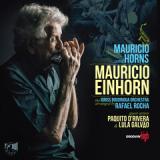
'Mauricio and Horns' by Bossa Nova legend and harmonica master Mauricio
Einhorn is produced by Jacques Muyal, with the Idriss Boudrioua Orechestra
arranged by Rafael Rocha and with guest artists Paquito D'Rivera and Lula
Galvao
In jazz, we all know the harmonica master, Mr. "Baron" Toots Thielemans, but we are
equaly fortunate to have our "Prince", Mauricio Einhorn. His early contributions in the
1950s to the birth of the Samba Jazz movement in Brazil played a pivotal role in the
creation of Bossa Nova, a genre that quickly became an integral part of the jazz world.
The influence of jazz on Brazilian music - exemplified by the great Carlos Lyra in
"Influencia Do Jazz" - was so profound that local musicians embraced it to forge a
new musical identity. Many of Einhorn's compositions have become timeless
standards performed worldwide since the early 1950s and '60s.
Together with another giant of the scene, alto saxophonist Idriss Boudrioua,
Mauricio's music gets an even grander presentation than ever before. This time, he
teamed up with an exceptionally talented young musician: a big band arranger and
trombonist named Rafael Rocha, who wrote all the arrangements and conducted the
recordings. Rafael's arrangements are nothing short of magical. They are never
overdone, always respecting the beauty of the original harmonies while infusing them
with his deep passion for jazz. His trombone solos recall the phrasing of Frank
Rosolino, and he modulates the pieces with swirling harmonies that evoke the very
roots of Brazilian jazz. In every track, Rafael enhances Mauricio's elegant and
expressive phrases without ever overpowering the artist, creating a "wall of sound"
that gracefully floats alongside Mauricio.
From the upcoming album 'Smoke & Fire', a meaningful collaboration with Ashanti Selah & Hark, merging message music styles in the heart of Bristol's vibrant scene!
'Let's Seek Love' is more than just a song - it's a reminder to seek out positivity and light, even when the world around us seems uncertain; we must keep the faith and know that unity is the strength that keeps us going on.
Big up to all the musicians that was apart of making & creating the visuals for this vibe to become a reality! Also a big shout out to all the staff at the Trinity Centre & Teachings in Dub for keeping the sound system culture that keeps our music alive for ones to gather in ️ & harmony every time!