Following their acclaimed debut album The Shedding of Skin (2022), the formation has deepened their relationship through numerous live jams, intense touring and story sharing, pushing both their skills and the boundaries of the project. For its successor, État Coupable, this growth has been enriched by various collaborations, including one with Lebanese-Canadian producer Radwan Ghazi Moumneh (Jerusalem in My Heart).
The first single, Freedom, Asshole, features live drums by Spooky-J from Nihiloxica. With lead vocalist Saif singing, 'I envy you because you can close your eyes, you can choose,' the track addresses those who need to be addressed in the Western world, resulting in a gutwrenching piece of raw electronica that delves into the very definition of freedom. Alongside the launch of the record , the single will be released on Bandcamp and other streaming platforms on Wednesday, January 29.
A series of live dates have been announced including gigs at Ment Festival (SL), Rewire (NL), Donau Festival (AT) and dunk!festival (BE) among others.
Belgian multidisciplinary artist and long time collaborator of the project, Youniss Ahamad, has shared a that embodies unease through distorted images, a black-and-white palette, and abstract bird loops.
“For me ‘Freedom, Asshole’ is about fighting for freedom even when everything seems bleak”
– Youniss Ahamad
out of Stock
Last delivered 3 months ago available to reorder, subject to availability
Practical Limits of Nihilism is a double album by Das Ding containing 14 brand new tracks. On the album, Danny Bosten searches for meaning in an incomprehensible world in which even nihilism does not offer a way out anymore. Created on self-built analogue synths and drum machines, Practical Limits of Nihilism sees the typical Das Ding sound evolving into new territory, including 4 vocal tracks. The atmosphere varies from dark wave to ambient trance and italo, while remaining true to itself. The artwork on the gatefold sleeve was also created by Danny Bosten and reflects a collapsing world, leading to the emptiness that is symbolised by the white vinyl the album is pressed on.
Once again, you can expect Periphery's trademark mind- blowing instrumentation, immersive soundscape architecture, cathartically crushing vocals, and cosmically catchy melodies, but the band's signature sound has also evolved like any living and breathing organism would, gaining complexity and strength through life experience. You also get emotional acuity, raw humanity, and a level of relatability that could only come from a group of brothers who have effectively gone through it all. The deep experiences have enabled the collective to deliver their most cohesive offering yet.
The early 80’s in Aylesbury, Buckinghamshire, was hardly the place where music dreams came true. It had an amazing venue called Friars which was on the touring circuit, but very few local bands. There was the VICE CREEMS fronted by Kris Needs and there was the notorious yet terrible SORE WILLIES. EFFIGY came from the ashes of the SORE WILLIES and formed in 1983. EFFIGY came fully formed and instantly became popular in the local area, where they put on a weekly night at the Uptown Coffee Bar. The band hardly left Aylesbury though, and when they did it was to play in nearby High Wycombe and Bicester. They played bigger gigs with everyone from ALIEN SEX FIEND, BILLY BRAGG, UK DECAY, THE SCARS and SPIZZ. The band recorded one 5 track demo in October 1983 and it is simply unbelievable that it has never been re-released, but then again the bands legacy seems to have banished without a trace, with literally no mentions anywhere. Making their demo one of the hardest ones from 1983 to track down, or even hear, since it is not even uploaded on YouTube.
EFFIGY’s sound is so instant. It’s driving, tight female fronted post punk with hooks, style, and had it been released at the time would have made them a household name. Think a straight ahead version of SIOUXSIE AND THE BANSHEES, early X-MAL DEUTSCHLAND, THE A-HEADS or the SKELETAL FAMILY but with a more pop edge. The songs lyrically were around the obsession with paganism and old black and white horror films, the name EFFIGY was taken from a book Roger was trying to write about witchcraft and the Pendle witch trials called Effigy of Isobel, which was never completed (due to his very low attention span) but a song on this recording did emerge.
The release comes with a lyric sheet, a new interview with the band and as much archive as we could dig out, which in this case wasn’t much.
When I first heard YELKA play I thought to myself: “I’d like to play in that band.”
In the meantime I have realised that it would not be as easy as I imagined. The fluffy easy sound that gets created is so particular that it would not be so easy to execute those exact sounds of the band. This is mostly due to the unconventional harmonies of the guitar. Daniel himself said he is content with the guitar and added an extra one on almost all of the songs. Which I, as a fan of Daniels anarchic approach to playing, love.
Also Yelka’s groovy smooth bass playing is in the forefront of the album once again. Her sound bounces through the guitar riffs as if it's the most common thing on earth. Once Yelka adds her vocals to the songs, that’s when they almost become pop and reminiscent of Velvet Underground.
Christians drums hold these two together through the track list, with a fun Krautrock and jazz influenced style. Everything was recorded live and it sounds fantastic!
The 6th track of the YELKA album "Jeans" is a highlight with the piano support from Federico Corazzini, who adds lush open jazz chords to the incredible intricate harmonies of the band. Arne Bergner (Studio Popschutz) who is once more responsible for the production of the album, also added a beautiful choir arrangement. The finishing touches completing YELKA´S wonderful sound as always added by Norman Nitzsches Mastering (Mokik Studio).
From top to bottom an amazing album: "King of the World" (Steely Dan cover), a pop song with a fantastic keyboard solo from `the one and only Dan Ra´ alias Daniel Nentwig (The Whitest Boy Alive), "Moon for Now", an atmospheric jazz-ish tune, to "Walking Whispering", a strong 9-minute guitar heavy number... I think there are more than two guitars in this one.
American indie rock/pop/jazz whatever - school (after all, it's the third album in the band's America trilogy) and yet above all Berlin, in its most likeable and perhaps even coolest form.
Thirteen years later, building on everything they had learned about capturing the purest sound, Guttenberg returned to produce The Ultimate Demonstration Disc Volume 2. Designed to bridge the gap between technical terminology and the listening experience, this collection serves as a practical guide to the audiophile lexicon. On each track, Guttenberg "spells out" exactly what to listen for, providing clear musical examples of concepts like "transparency" and "soundstage depth." By using a custombuilt recording chain and avoiding dynamic range compressors, equalizers, or overdubbing, the album captures a "live" session exactly as the microphones heard it - resulting in a sound so neutral and natural that it can be used to reveal the subtle differences between high-end speakers, electronics, and cables.
Eine Sammlung von Songs, die von Nina Nastasia und Jim White von The Dirty Three geschrieben wurden. Ninas einzigartige Stimme bringt Songs voller Hooks über Liebe, Sehnsucht und Verlust hervor, während Jim Whites Songwriting - bekannt geworden durch seine Zusammenarbeit mit Leuten wie Will Oldham, Nick Cave und Smog - ein seltenes Songwriting-Talent zeigt und ein Duell und Duett zwischen zwei legendären Künstlern schafft. Nachdem es fast zwei Jahrzehnte lang vergriffen war, ist ,You Follow Me" endlich wieder auf Vinyl erhältlich. Diese Neuauflage von ,You Follow Me" wurde 2025 von Josh Bonati für Vinyl remastert und ist auf limitiertem transparentem gelbem Vinyl gepresst.
Chins For Lefty is the debut album and first recording by Gichard, a new duo chronicling the absurdities of end-stage capitalism and mouldering social rituals from their vantage point in Glasgow, Scotland. Recorded primarily in the band’s home studio straight to tape, Chins For Lefty combines gorgeous, ramshackle melody, DIY kosmische punk, drum machine + synth and, in vocalist/lyricist Lisa Jones, an absurdist commentator on the human condition as it navigates the anxieties of the modern world. Instrumentalist Chas Lalli’s swirling music accompaniment stitches an evocative mix of musical styles, the ragged wind beneath the lyrics’ wings.
Although the duo first collaborated in their previous group Dragged Up, their disparate musical and artistic backgrounds make for an alluring mix in Gichard. Lalli has spent the last 20 years in the Glasgow underground, most notably in the noise rock group VOM, while Lisa Jones’s practice was in poetry and spoken word. Beginning as co vocalist in her previous band, in Gichard her lyrics are centre stage; the vision concocted alongside Lalli amounts to a total world-build.
Chins For Lefty scans almost like a novel, with each track elucidating a skewed universe that bears only some resemblance to the one you and I partake in. Like all works of fiction Gichard’s songs are rooted in reality and the lived experiences of its authors, but here characters are exaggerated, social mores and habits are pulled apart to reveal their inherent alienness. Universal emotions are laid bare, the bright light of anxious examination searching out every hairline fracture in our relationships. Distorted and cracked, the mirror that Gichard hold up to our world is also pretty damn funny.
Opener Cholesterol Test launches an expansive, cosmic guitar and synth intro that belies the Tascam-tape recorder it was recorded onto, like a Chromatics cut substituting anxiety for overt sexuality. Here Jones intones an apology to a non-responsive recipient, in the medium of a long voice note forensically deconstructing an interaction from the night before. Over punk guitars and shuffling, lo-fi drum machine splutters, the narrator in Asking The Apes “prefers things to people” before being taken hostage in the city zoo to confess an obsession which consumes the protagonist, ending with the immortal two liner “I sleep in a cocoon of old newspapers at the end of your street / And I think I have been fired from my job,” On album standout Posthumous Hologram, the narrator is faced with a human simulacra, in this case an undead pop star; the face of the encroaching technological singularity. Yes, it does requests, it can do My Way in 200 different language options. But what are the implications? While you’re left pondering, the alternating deadpan verse delivery and undeniably catchy chorus keep you company.
By the time Break Up With Johnny Dogbirth rattles into view, the band are satirising a suburban inanity blown up to cartoon proportions, soundtracked with a drawled musicality that recalls Rowland S. Howard’s post-Birthday Party balladeering. This approach is furthered on Human Resources: over an angular guitar+bass track, Jones’s short story recalls Dry Cleaning’s erudite lyrical post punk. On Soft Face, Lalli’s guitar and drum machine are swathed in echo and delay, as Jones dissects dating rituals with a west of Scotland drollness. Hamming It Up brings a porcine perspective in a short story that begins with the line “I was breastfeeding discreetly in the service station. She didn’t mind.” What follows is a passage punctured with canned laughter and a narrative involving tribute acts, modern farming techniques.
Brilliant first single Your Private Hell closes the album, the closest the group get to earnest perhaps, filtered through a surreal central Scottishness. While Your Private Hell might seem like a sardonic take down of romance, perhaps it’s the very distillation of love in all its awkwardness, selflessness and weirdness. Here there’s a distinctive Glasgow-ness to this doomed romance: the protagonist falls for an outsider, offers them cheap jarred hot dogs and carbolic soap (the infamous, excoriating soap dished out in schools and government buildings throughout Scotland), offers to cover up a murder, stalks them in the all-night Spar. It’s a short story of intrigue, murder and the irresistible pull of self-sacrifice to share in someone else’s suffering. If that’s not love, what is it? You can see this vision mapped out in black and white on their video for 'Your Private Hell'.
White/Orange Splatter Vinyl. To All The Ones That I Love wurde im bandeigenen Studio im Westen Melbournes aufgenommen, wobei Gitarrist Greg Rietwyk für Produktion und Mix zuständig war, bevor das Album von Kris Crummett (Closure in Moscow, Dune Rats, Currents) gemastert wurde. Dies ist das vierte Album von Press Club, und die Reife der Band spiegelt sich in den zehn Tracks wider. Dem Hörer wird ein Ritt durch verschiedene Genres geboten, während das Album Themen wie Introspektion, Entwicklung, Veränderung und das Lernen aus vergangenen Fehlern durchläuft. Die Band beschreibt die Entstehung des Albums als eine unglaublich spannende, kreative und befreiende Erfahrung: Die Songs wurden alle gemeinsam in ihrem Studio über mehrere Monate hinweg geschrieben. Diese Art des Schreibens gab der Band die Freiheit, mit verschiedenen Genres zu experimentieren und die Tiefen all ihrer Einflüsse auszuloten.
Get Over it, Underdog is an 11 song collection about the duality of the American underdog. The characters within these tunes are exotic dancers, cringe white guys, historic world explorers, ultra wealthy people playing God, baby Jesus, eccentric women who have done life their own way, and dreamers. The album is a rich tapestry that weaves together all of these tales into one enchanting piece. Through the lyrics in these songs we learn how the underdog character can embody any of the best and/or worst characteristics of humanity. The underdog may be a noble hero or an evil villain either of whom is able to pull off surprising or unexpected victories which good or bad in nature can often times lead to an underdog's ultimate downfall. Each song takes an honest look at what it means to be some kind of underdog all coming from a songwriter who has been called an underdog by others and who has at times identified himself in this way only to realize that in the end, every human being contains multitudes beyond the limited capacity we have to observe and truly know ourselves and each other.
Phonica welcomes Mattias El Mansouri, a Swedish-born DJ and producer of Moroccan/Chilean descent who has been behind some of our favourite releases over the past few years on labels such as Aniara and Nous'klaer.
On the 'Sense Data' 12", El Mansouri expands on his atmospheric House and Techno explorations with three deep yet dancefloor primed pieces that hold personal resonance for him.
El Mansouri, who holds a degree in Theoretical Philosophy, explains:
"'Sense Data' are the immediate elements of perception; what is directly given to the senses before any judgment or interpretation. In vision, these appear as colored, shaped patches; in other senses, as sounds, tastes, smells, or tactile qualities. For example, seeing a brown table with a white coaster involves sense data of a brown patch and a white roundish patch, from which one infers the presence of a table and coaster."
On the record's flip, we have the beautiful "Cielo Vacío' and 'Ouzo Hallon' dub version of 'Sense Data'. El Mansouri continues:
"Cielo Vacío translates to “empty sky” in Spanish. The track serves as a eulogy for my brother, who passed away in December 2023. I chose this title because it resonates with the sonic and emotional atmosphere of the piece. Its ambiguity is intentional, carrying both the weight of grief that lingers after losing someone you love, and a strange, fragile peace you extend toward the departed. It reflects the hope that, wherever they are, whether or not one believes in an afterlife, they have found rest.
Ouzo Hallon translates to Ouzo (the Greek liquor)+Hallon (Raspberry). It’s a long drink that my (Greek) ex came up with last summer, mixing ouzo, raspberry syrup/raspberry juice and ice. It became a thing in our little friend group, consisting of mostly Greeks, and every time we all hang out we would all just drink ouzo hallon until we couldn’t stand straight. I always wanted to name a track Ouzo Hallon, just for the fun of it, and what better way to get the chance than now!"
out of Stock
Last delivered 80 days ago available to reorder, subject to availability
Marvin Gaye always dreamed of being a smooth crooner, “sitting on a stool, possibly behind a piano,” delivering velvety songs like Nat King Cole. But Motown had other plans. Pushed between raw R&B and polished pop, Gaye fought to find his own voice, eventually rising to become one of the greatest soul singers in history.
Motown Records released the first Marvin Gaye record in 1961 "(I'm Afraid) The Masquerade Is Over", a single intended for (radio) promotion from the singer's debut album. This was followed up by the officially released "Let Your Conscience Be Your Guide" a week later. Gaye scored his first real hit with "Stubborn Kind of Fellow" in 1962, which he had co-written himself, joking about his alleged stubbornness. He found his own unique style with the single released at the end of the year: "Hitch Hike". The foundations were now laid for an enormous series of chart successes: "Pride And Joy", "Can I Get A Witness", "How Sweet It Is (To Be Loved By You)" and "Ain't That Peculiar" are all Motown classics from 1963-1965 which are still being regularly played today after all these years. The duets he recorded with Kim Weston ("It Takes Two"), especially Tammi Terrell and Diana Ross were certainly at least as good.
He scored his biggest ever hit with "I Heard It Through The Grapevine" in 1968. "What's Going On" from the same titled album became a number 1 hit in the USA. The album was received as a masterpiece and is regarded as one of the most important records in pop history. In 1973, the artistically and commercially very successful, "Let's Get It On" album was mainly a musical ode to Marvin's love for his new muse Janis Hunter. His journey continued after a turbulent relationship, addiction and a dramatic creative rebirth in Belgium, where he crafted the global hit “Sexual Healing in 1982.
Marvin Gaye left behind timeless hits, groundbreaking albums, and a legacy that shaped the sound of modern soul. His story, from ambition to artistry, from struggle to brilliance, remains as powerful as the music he created.
Music On Vinyl proudly presents a special coloured vinyl edition of the Marvin Gaye Collected album which is available as a limited edition of 10.000 individually numbered copies on white (LP1) and silver coloured vinyl (LP2) and includes a booklet with liner notes.
It happens very rarely that you can praise a records without any reservations, this is the case here!!!
A lot of ink has flowed across the page since the Vogue/Swing release (1955) of that founding solo record. The repertoire was made up of pieces that Thelonious was playing in New York over that period, but in trio or with a quartet, here his music shows nakedness, i should say crudeness, whisch is completely overwhelming. It is a balck and white photograph of what is happening inside Monk's head; its sharpness is enthralling, as everyone has known for more than sixty years.
We enter the world of one of the most original artists. Monk, at 37, is at the peak of his art.
There is an abruptness to waking up to the sight of the other person’s back, a quiet violence hidden in the impression of intimacy, that’s leaving an aftertaste of emptiness. The feeling of losing oneself completely in a love that is given but never returned. Or the slower, less immediate one - the gradual disintegration of a world into which so much was once invested.
Love, Diskito is like a worn out overdubbed cassette found in a drawer, with its underlying tracks flickering between contrasting emotional states. Written, produced and mixed by GbClifford, the release follows up on the elusive, multifaceted output of the Prague-based experimental artist, who dresses fleeting glimpses of youthful yearning, sentiment and fragility in the blunt apparel of distortion and immediacy.
Drawing from their idiosyncratic, collage-like approach to music production, GbClifford condenses on Love, Diskito a varied palette of field recordings, samples, distorted instruments and ambient sounds. They resemble doodles in the corner of a school notebook, tightly overlapping with the evocative, minimalistic artwork by Czech artist Kateřina Šípová.
The guidance of GbClifford’s personless, at times highly decomposed vocals modulates the emotional urgency of the recording and reflects on the past. “I’m so close to relapsing, I’m here for you, closer than ever,” echoes in the elusive track So Only Yours, carrying the undercurrents of surrendering to the sole necessity of caring, even at the cost of individual ache. While the album does not forgo its earthbound, bare setting, there is something deeply pastoral and sky-gazing in the layered, multi-pitched vocals, horn-like tones and sense of space that Love, Diskito evokes.
First ever vinyl release of this massive classic psychedelic black rock funk compilation. Lovingly reproduced for audiophiles on black vinyl and packaged in a fully artworked sleeve and labels and shrinkwrapped. Limited edition vinyl press! “One of the best compilations of formerly released material ever made. A classic” “The whole compilation is pretty damn sweet, but anything dug up by Iron Knowledge is essential listening”!
America’s Volume Dealer is the sixth studio album by Corrosion of Conformity. On this album the band's Southern tinge is more pronounced than ever. Warren Haynes (Allman Brothers, Gov't Mule) lends his slide guitar to the Skynyrd-ish acoustic-driven ballad "Stare Too Long." What's most immediately obvious, though, is that this is COC's most radio-friendly record yet- the production is more polished, but the record still has that typical COC sound.
America’s Volume Dealer is available as a limited edition of 750 individually numbered copies on black & white splatter vinyl and includes an insert.
First new album in 6 years along with being their EVR debut album. Brett Romnes (Hot Mulligan, The Front Bottoms, Mom Jeans) produced the record along with being the drummer of the band. I Am The Avalanche features members of The Movielife, Head Automatica, Crime In Stereo, and Such Gold. Vinyl White Swirl LP limited to 250 available, Rude Records Exclusive
When The Style Council’s debut album Café Bleu was released in 1984, Weller and wing-man Mick Talbot unveiled a cosmopolitan blend of jazz, soul, and pop that felt effortlessly sophisticated and daringly fresh. Café Bleu was more than a debut—it was a statement of intent, redefining what British pop could sound like in a new decade.
Since then, fans have been waiting for a deep dive into the Style Council vaults eager to hear any unreleased material. And now the wait is over.
The Café Bleu Special Edition is a treasure trove for Style Council devotees and music lovers alike - an immersive journey into one of the most inventive eras of Paul Weller’s career. This lavish release unveils a wealth of previously unheard material, including early demos, alternate takes, and unreleased songs that showcase the band’s restless drive for experimentation and evolution.
out of Stock
Last delivered 4 months ago available to reorder, subject to availability
Straight from an alternative dancefloor, a recollection of stone cold classics from huge & influential post-punk pioneers. They called it white funk once, but here you can even catch echoes of latin, dub and club influences, a mutant disco manifesto from a series of British champions such as Medium Medium, Jah Wobble, Animal Magic, Blue Rondo' A La Turk, Nightmares In Wax, Tappa Zukie and many more.
Tracklist Side A:
Blue Rondo A La Turk - Sarava
Medium Medium - Serbian Village
Jah Wobble - Invaders Of The Heart (Mix One)
Perfect Zebras - What Dance Is This?
Splat! - Yeah... The Dum Du
Tracklist Side B:
Dancing Did - Ballad Of The Dying Sigh
Animal Magic - Get It Right
Nightmares In Wax - Black Leather
Tappa Zukie – Freak
out of Stock
Last delivered 5 months ago available to reorder, subject to availability
Preston duo White Flowers announce new album, Dreams For Somebody Else - due for release 1st May 2026 via The state51 Conspiracy.
White Flowers, the long-running collaboration between Joey Cobb and Katie Drew, exists within what they call “the realm” – a shared creative space, wherein time, rather than being a restrictive force, is fluid and boundless, and music exists as an endless conversation with their past and present selves. Adopting what the band describe as a “sketchbook” approach to writing, White Flowers is the product of a decade’s worth of recordings - snippets nestled away on hard drives, only to truly make sense years later.
On Dreams For Somebody Else, the band expand upon the dark-hued dream pop of their debut, channeling the catharsis of dance music via repetitive structures and “sad, euphoric sounds”. Working alongside LCD Soundsystem and Hot Chip’s Al Doyle on production, the album maps out a mosaic of soaring choruses that swirl around imposing arrays of synths, guitars, and percussion.
Through this new lens, the band explore themes of isolation, dissociation and identity - drawing inspiration from Annie Ernaux’s The Years. “Whilst recording the songs for ‘Dreams For Somebody Else’, we really connected with the concept of Annie Ernaux’s book, ‘The Years’ - a ‘collective autobiography’ pieced together from mismatched fragments from her past, conjuring the effect that she’s merely an observer of her own life. This concept merges into the White Flowers world, where time, rather than being restrictive, is fluid and boundless, with our music existing as an endless conversation with versions of ourselves at different stages of our lives.”
“The album has that same feeling of disassociating from your own life, because you’re just blending into everyone else”, the band explains. “There’s a sadness there, because it’s as if you’re looking back on things that happened to you, and they feel like they don’t belong to you anymore”. It’s the dull ache of nostalgia intertwined with a sense of wonder at what could lie ahead - the hopeful optimism and endless loss that defines the human experience. “It’s this idea of identity not being a fixed thing, but something that’s always changing. It’s a fluid thing, similar to time. Things aren’t really fixed, but rather in a constant state of change. It’s important to remember that we’re all going through that.”
Oceanine, Jolanda Moletta’s third album and her first for Beacon Sound, is a powerful and ethereal statement of artistic community. Expanding on her previous work, each track represents a collaboration with a different female vocalist, with the foundational elements being generated entirely by her own voice. By turns haunting, enchanting, and inspiring, you won’t want to come up for air once you’ve been pulled under. Representing a musical practice that is distinctly feminist, this is an album with a longer view in mind, to an age when the altars were to goddesses and women were centered as powerful beings representing the earth’s cycles of regeneration and renewal. Oceanine then, in all its beauty, can be viewed as an album of survival. It is deeply transportive, accessing something that lies within all of us. As the late, great Lithuanian folklorist and archaeologist Marija Gimbutas noted, “We must refocus our collective memory. The necessity for this has never been greater as we discover that the path of 'progress' is extinguishing the very conditions for life on earth.”
Jolanda Moletta is a multimedia artist and one-woman electronic choir. She creates wordless compositions through extended vocal techniques, integrating wearable-controlled live processing, alongside symbolic visuals. Moletta considers her performances to be a collective ritual and creates her Sonic & Visual Spells following the cycles of nature and the moon. Jolanda's 2022 critically acclaimed album Nine Spells was released on the Ambientologist label, followed by Night Caves on Whitelabrecs in 2025. Moletta’s artistic practice is a radical and spiritual journey through sound art, ritual, and the symbolic archaeology of the feminine.
Oceanine is inspired by sirens, water nymphs, and the timeless call of the sea. At its core lies Jolanda’s deep, lifelong connection to the Mediterranean Sea and to the ancient and modern myths and folklore that have emerged from its waters. Growing up by the Mar Ligure, Jolanda was surrounded by stories carried by salt, wind, and waves: legends of sirens, echoes of ancient voices, and the sea as both origin and oracle. This intimate relationship with the Mediterranean is not merely a backdrop, but a living source that shapes Oceanine’s emotional, symbolic, and sonic world.
Each track features a different female vocalist, creating a rich tapestry of voices, styles, and perspectives. This artistic choice not only broadens the album’s sonic palette, but also deepens its narrative core: celebrating the power, beauty, and mystique of feminine energy through myth, history, and sound.
The entire album is built exclusively from the human voice, processed and layered, yet always remaining voice, and nothing else. For each piece, Jolanda invited every vocalist involved to contribute a raw stem: a short, unedited melodic fragment of just a few seconds, inspired by the album’s themes. These intimate vocal seeds became the foundation of each track: the guest artists’ voices appear as brief, melodic stems, while the entire surrounding “orchestral” fabric is created solely from Jolanda’s own layered and processed voice. In this way, Jolanda’s voice becomes the Ocean itself, embracing, absorbing, and carrying the sirens’ calls within a vast, immersive soundscape. Every song is a unique expression of the feminine experience, revealing its depth, complexity, and emotional range, echoing the call of the sea and the many faces of the siren archetype.
The figure of the siren has transformed across centuries. In myths of Ancient Greece and Rome, sirens were hybrid beings, part woman, part bird, whose irresistible songs lured sailors to their doom. During the Middle Ages, the image shifted toward the half-woman, half-fish figure, often associated with temptation and danger. Historically, the voice of women has often been feared. Sirens were considered harbingers of misfortune not simply because they seduced or destroyed, but because they were powerful liminal beings.
In Ancient Greek, sirens functioned as psychopomps: figures who existed between worlds and guided souls, especially between life and death. Their songs were believed to carry forbidden knowledge, including prophetic insight and the ability to reveal truths about fate and the future. The danger of the sirens lay in what they revealed: knowledge that humans were not meant, or ready, to hear.
Oceanine confronts this legacy head-on. The voices heard throughout the album are not merely beautiful: they are dark and luminous, wild and enchanting, magical, soothing, dreamy, and at times fractured or distorted. They whisper, lament, beckon, and enchant. Like sirens, they skim the surface of the water and sink into its depths, hovering on the edge between tenderness and danger, vulnerability and power. They rise toward the sky, dissolve into mist, and return as echoes charged with raw, elemental emotion: voices that seduce, warn, mourn, and remember. They refuse to be reduced to decoration.
Alongside the album’s release in May, Oceanine will also unfold as a visual and performative work through a short art film. The film includes a live session recorded inside a sea cave facing the Mar Ligure, the very coastline where Jolanda spent her childhood, dreaming of sirens and listening to the sea as if it were speaking directly to her. This site-specific performance reconnects the music to its place of origin, allowing the voice to resonate within stone, water, and air, and transforming the cave into both a sanctuary and a threshold between myth and reality.
What if the sirens’ songs were considered dangerous because they carried another truth, an ancient truth long forgotten?
Oceanine embraces the idea that we are still deeply woven into myth. Though we may see ourselves as rational and modern beings, our world is saturated with ancient symbols and archetypes, often distorted, simplified, or stripped of their original meaning. And if those symbols are allowed to shift, if the mirror once held by the siren becomes an invitation to look beyond appearances and into what has been obscured, then we may finally uncover a deeper truth and reclaim the voice that was always ours.
Oceanine is not just an album. It is a reclamation, a spell, and a call from the depths.
2026 is the 50th anniversary of the iconic fourth album by Average White Band, released in June 1976.
Reaching #9 and becoming their third consecutive US Top 10 album, “Soul Searching” includes the much-sampled classics ‘A Love Of Your Own’ and ‘Queen Of My Soul’, with the latter reaching the Top 40 Singles Charts on both sides of the Atlantic. Two further singles in ‘Everybody’s Darling’ and ‘I’m The One’ were also released as singles in various parts of the world.
Snoop Dogg, Fatboy Slim, Ice Cube, Puff Daddy, TLC, Rick Ross, will.i.am and Mark Ronson amongst countless others, have all borrowed sections of their grooves.
Psychedelic MasterpieceOriginally released on Capitol Records in 1969, Euphoria’s debut album A Gift From Euphoria is an unsung album; one with incredible sonic radiance, masterful songwriting, and everlasting harmonies—with their fantastical combination of psychedelic, folk, country, and hard rock. The 15 songs set up a journey through the best of what had been happening within modern music by 1969. Comparisons to The White Album are apt as it leaps from genre to genre with shocking confidence, as if they knew this was their only chance to say it all on a record. But it was too good to last as this was the only album Euphoria made, one that is critically championed in hindsight and highly sought after nowadays, and it is Jackpot Records honor to be able to bring it to you. Now reissued from the original analog master tapes with the original cover artwork exclusively for RSD 2026.
Straight from an alternative dancefloor, a recollection of stone cold classics from huge & influential post-punk pioneers. They called it white funk once, but here you can even catch echoes of latin, dub and club influences, a mutant disco manifesto from a series of British champions such as Normil Hawaiians, Glaxo Babies, Playgroup, C Cat Trance, Suns of Arqa & Prince Far I and many more.
Tracklist Side A:
Normil Hawaiians - Obedience
Vee VV - Keep Beat
Spit Like A Paint - For The Life Of Me
Group Therapy - Arty-Fact
C Cat Trance - Hypnotised
Tracklist Side B:
The Chicken Granny - Quit The Body
Machine Gunn Hogg And Co - Bed Bound Saga
Playgroup - Hoggs Might Fly
Glaxo Babies - Shake (The Foundations)
Suns of Arqa feat. Prince Far I - G.D. Magik
Highlights include more terrific songs from the Plague and Lexington Avenue, bands whose members would be better known when they created the Jarvis Street Revue. Twelve tough tracks by the Checkerlads, White Knights, Tomorrow's Keepsake, NRG, and Solid Reputation . The Gaiety roster was rich in talent (the 49th Parallel, Jarvis Street Review, and Souls of Inspyration, not to mention the Checkerlads, White Knights, Dewline, Tomorrow's Keepsake, NRG, Merriday Park, and Portland Street South) -- but it was not rich in resources, which is why these singles are as relatively unknown as they are even today
Double Exposure ist das neue Album des britischen Multiinstrumentalisten James Hoare, bekannt aus Bands wie Veronica Falls, Ultimate Painting und Proper Ornaments. Unter seinem Solo-Pseudonym Penny Arcade präsentiert er ein Werk, das noch roher, spontaner und experimenteller klingt als sein Debüt Backwater Collage (2024). Die Songs entstanden größtenteils schnell und intuitiv - aufgenommen auf einer 16-Spur-Bandmaschine, mit alten Drumcomputern, schwebenden Orgeln und reduzierten Arrangements. Gitarre ist erstmals nicht das zentrale Element, auch wenn Stücke wie "Regrets" zeigen, wie eindringlich Hoares Gitarrenarbeit bleibt. Das Album bewegt sich zwischen psychedelischen Folk-Momenten, Lo-Fi-Experimenten, souligen Anklängen und analogen Klanglandschaften, die an die Offenheit von Syd Barrett oder die Tape-Ästhetik von White Fence erinnern. Songs wie "Worst Trip", "Rear View Mirror" oder das träumerisch-verrauchíte "We Used To Be Good Friends" wirken wie spontane Momentaufnahmen - unfertig im besten Sinne, atmosphärisch dicht und voller subtiler Melodien. Double Exposure ist ein Album der Stimmungen und Schichten: ein intuitiver, unprätentiöser Blick in Hoares kreative Innenwelt, geprägt von Umbrüchen, Ortswechseln und der Schönheit des Ungefilterten.
Black Salt is the second album from Kiiōtō (Mercury Music Prize nominated singer/songwriter Lou Rhodes, former lead vocalist and co-founder of Lamb and award-winning songwriter and pianist Rohan Heath). Their debut album, As Dust We Rise, was released in 2024 to critical acclaim.
Stylistically Black Salt leans further into Jazz, broken beat and soul textures than the debut,with references as diverse as Carole King, Khruangbin and Alice Coltrane. The resulting album is impossible to define by genre, but is fused by the unique interplay of Heath's melodic sensibilities and Rhodes inimitable voice.
Written primarily in Kiiōtō's home studio in North London, Black Salt features guest appearances from a melting pot of musicians, notably guitarist Hawi Gondwe (Amy Winehouse), double-bassist Andy Hamill (4 Hero, Carleen Anderson), drummer Mykey Wilson (Corrine Bailey Rae), and even some impromptu guitar by the one and only David Arnold.
Writings on the topic that go off in all directions, mind-numbing lectures given by academics, and testimonies, most of them heavily doctored, from those who “lived through that era”: so many people today fantasize about the early days of punk in our country… This blessed moment when no one had yet thought of flaunting a ridiculous green mohawk, taking Sid Vicious as a hero, or – even worse – making the so-called alternative scene both festive and boorish. There was no such thing in 1976 or 1977, when it wasn’t easy to get hold of the first 45s by the Pistols or the Clash. Few people were aware of what was happening on the fringes of the fringes at the time. Malcolm McLaren was virtually unknown, and having short hair made you seem strange. Who knew then that rock music, which had taken a very bad turn since the early 1970s, would once again become an essential element of liberation? That, thanks to short and fast songs, it would once again rediscover that primitive, social side that was so hated by older generations? Who knew that, besides a few loners who read the music press (it was even better if they read it in English) and frequented the right record stores? Many of these formed bands, because it was impossible to do otherwise. We quickly went from listening to the Velvet Underground to trying to play the Stooges’ intros. It’s a somewhat collective story, even though there weren’t many people to start it.
The Guilty Razors were among those who took part in this initial upheaval in Paris. They were far from being the worst. They had something special and even released a single that was well above the national average. They also had enough songs to fill an album, the one you’re holding. In everyone’s opinion, they were definitely not among the punk impostors that followed in their wake. They were, at least, genuine and credible.
Guilty Razors, Parisian punk band (1975-1978). To understand something about their somewhat linear but very energetic sound, we might need to talk about the context in which it was born and, more broadly, recall the boredom (a theme that would become capital in punk songs) coupled with the desire to blow everything off, which were the basis for the formation of bands playing a rejuvenated rock music ; about the passion for a few records by the Kinks or the early Who, by the Stooges, by the Velvet mostly, which set you apart from the crowd.
And of course, we should remember this new wave, which was promoted by a few articles in the specialized press and some cutting-edge record stores, coming from New York or London, whose small but powerful influence could be felt in Paris and in a handful of isolated places in the provinces, lulled to sleep by so many appalling things, from Tangerine Dream to President Giscard d’Estaing...
In 1975-76, French music was, as almost always, in a sorry state ; it was still dominated by Johnny Hallyday and Sylvie Vartan. Local rock music was also rather bleak, apart from Bijou and Little Bob who tried to revive this small scene with poorly sound-engineered gigs played to almost no one.
In the working class suburbs at the time, it was mainly hard rock music played to 11 that helped people forget about their gruelling shifts at the factory. Here and there, on the outskirts of major cities, you still could find a few rockers with sideburns wearing black armbands since the death of Gene Vincent, but it wasn’t a proper mass movement, just a source of real danger to anyone they came across who wasn't like them. In August 1976, a festival unlike any other took place in Mont-de-Marsan – the First European Punk Festival as the poster said – with almost as many people on stage as in the audience. Yet, on that day, a quasi historical event happened, when, under the blazing afternoon sun, a band of unknowns called The Damned made an unprecedented noise in the arena, reminiscent of the chaotic Stooges in their early adolescence. They were the first genuine punk band to perform in our country: from then on, anything was possible, almost anything seemed permissible.
It makes sense that the four+1 members of Guilty Razors, who initially amplified acoustic guitars with crappy tape recorder microphones, would adopt punk music (pronounced paink in French) naturally and instinctively, since it combines liberating noise with speed of execution and – crucially – a very healthy sense of rebellion (the protesters of May 1968 proclaimed, and it was even a slogan, that they weren’t against old people, but against what had made them grow old. In the mid-1970s, it seemed normal and obvious that old people should now ALSO be targeted!!!).
At the time, the desire to fight back, and break down authority and apathy, was either red or black, often taking the form of leafleting, tumultuous general assemblies in the schoolyard, and massive or shabby demonstrations, most of the time overflowing with an exciting vitality that sometimes turned into fights with the riot police. Indeed, soon after the end of the Vietnam War and following Pinochet’s coup in Chile, all over France, Trotskyist and anarcho-libertarian fervour was firmly entrenched among parts of the educated youth population, who were equally rebellious and troublemakers whenever they had the chance. It should also be noted that when the single "Anarchy in the UK" was first heard, even though not many of us had access to it, both the title and its explosive sound immediately resonated with some of those troublemakers crying out for ANARCHY!!! Meanwhile, the left-wing majority still equated punks with reckless young neo-Nazis. Of course, the widely circulated photos in the mainstream press of Siouxsie Sioux with her swastikas didn’t necessarily help to win over the theorists of the Great Revolution. It took Joe Strummer to introduce The Clash as an anti-racist, anti-fascist and anti-ignorance band for the rejection of old-school revolutionaries to fade a little.
The Lycée Jean-Baptiste Say at Porte d’Auteuil, despite being located in the very posh and very exclusive 16th arrondissement of Paris, didn’t escape these "committed" upheavals, which doubled as the perfect outlet for the less timid members of this generation.
“Back then, politics were fun,” says Tristam Nada, who studied there and went on to become Guilty Razors’ frontman. “Jean-Baptiste was the leftist high-school in the neighbourhood. When the far right guys from the GUD came down there, the Communist League guys from elsewhere helped us fight them off.”
Anything that could challenge authority was fair game and of course, strikes for just about any reason would lead to increasingly frequent truancy (with a definitive farewell to education that would soon follow). Tristam Nada spent his 10th and 11th unfinished grades with José Perez, who had come from Spain, where his father, a janitor, had been sentenced to death by Franco. “José steered my tastes towards solid acts such as The Who. Like most teenagers, I had previously absorbed just about everything that came my way, from Yes to Led Zeppelin to Genesis. I was exploring… And then one day, he told me that he and his brother Carlos wanted to start a rock band.” The Perez brothers already played guitar. “Of course, they were Spanish!”, jokes their singer. “Then, somewhat reluctantly, José took up the bass and we were soon joined by Jano – who called himself Jano Homicid – who took up the rhythm guitar.” Several drummers would later join this core of not easily intimidated young guys who didn’t let adversity get the better of them.
The first rehearsals of the newly named Guilty Razors took place in the bedroom of a Perez aunt. There, the three rookies tried to cover a few standards, songs that often were an integral part of their lives. During a first, short gig, in front of a bewildered audience of tough old-school rockers, they launched into a clunky version of the Velvet Underground's “Heroin”. Challenge or recklessness? A bit of both, probably… And then, step by step, their limited repertoire expanded as they decided to write their own songs, sung in a not always very accurate or academic English, but who cared about proper grammar or the right vocabulary, since what truly mattered was to make the words sound as good as possible while playing very, very fast music? And spitting out those words in a language that left no doubt as to what it conveyed mattered as well.
Trying their hand a the kind of rock music disliked by most of the neighbourhood, making noise, being fiercely provocative: they still belonged to a tiny clique who, at this very moment, had chosen to impose this difference. And there were very few places in France or elsewhere, where one could witness the first stirrings of something that wasn’t a trend yet, let alone a movement.
In the provinces, in late 1976 or early 1977, there couldn’t be more than thirty record stores that were a bit more discerning than average, where you could hear this new kind of short-haired rock music called “punk”. The old clientele, who previously had no problem coming in to buy the latest McCartney or Aerosmith LP, now felt a little less comfortable there…
In Paris, these enlightened places were quite rare and often located nex to what would become the Forum des Halles, a big shopping mall. Between three aging sex workers, a couple of second-hand clothes shops, sellers of hippie paraphernalia and small fashion designers, the good word was loudly spread in two pioneering places – propagators of what was still only a new underground movement. Historically, the first one was the Open Market, a kind of poorly, but tastefully stocked cave. Speakers blasted out the sound of sixties garage bands from the Nuggets compilation (a crucial reference for José Perez) or the badly dressed English kids of Eddie and the Hot Rods. This black-painted den was opened a few years earlier by Marc Zermati, a character who wasn’t always in a sunny disposition, but always quite radical in his (good) choices and his opinions. He founded the independent label Skydog and was one of the promoters of the Mont-de-Marsan punk festivals. Not far from there was Harry Cover, another store more in tune with the new New York scene, which was amply covered in the house fanzine, Rock News (even though it was in it that the photos of the Sex Pistols were first published in France).
It was a favorite hang-out of the Perez brothers and Tristam Nada, as the latter explained. “It’s at Harry Cover’s that we first heard the Pistols and Clash’s 45s, and after that, we decided to start writing our first songs. If they could do it, so could we!”
The sonic shocks that were “Anarchy in the UK”, “White Riot” or the Buzzcocks’s EP, “Spiral Scratch” – which Guilty Razors' sound is reminiscent of – were soon to be amplified by an unparalleled visual shock. In April 1977, right after the release of their first LP, The Clash performed at the Palais des Glaces in Paris, during a punk night organised by Marc Zermati. For many who were there, it was the gig of a lifetime…
Of course, Guilty Razors and Tristam were in the audience: “That concert was fabulous… We Parisian punks were almost all dressed in black and white, with white shirts, skinny leather ties, bikers jackets or light jackets, etc. The Clash, on the other hand, wore colourful clothes. Well, the next day, at the Gibus, you’d spot everyone who had been at this concert, but they weren’t wearing anything black, they were all wearing colours.”
It makes sense to mention the Gibus club, as Guilty Razors often played there (sometimes in front of a hostile audience). It was also the only place in Paris that regularly scheduled new Parisian or Anglo-Saxon acts, such as Generation X, Siouxsie and the Banshees, the Slits, and Johnny Thunders who would become a kind of messed-up mascot for the venue. A little later, in 1978, the Rose Bonbon – formerly the Nashville – also attracted nightly owls in search of electric thrills… In 1977, the iconic but not necessarily excellent Asphalt Jungle often played at the Gibus, sometimes sharing the bill with Metal Urbain, the only band whose aura would later transcend the French borders (“I saw them as the French Sex Pistols,” said Geoff Travis, head of their British label Rough Trade). Already established in this small scene, Metal Urbain helped the young and restless Guilty Razors who had just arrived. Guitarist for Metal Urbain Hermann Schwartz remembers it: “They were younger than us, we were a bit like their mentors even if it’s too strong a word… At least they were credible. We thought they were good, and they had good songs which reminded of the Buzzcocks that I liked a lot. But at some point, they started hanging out with the Hells Angels. That’s when we stopped following them.”
The break-up was mutual, since, Guilty Razors, for their part, were shocked when they saw a fringe element of the audience at Metal Urbain concerts who repeatedly shouted “Sieg Heil” and gave Nazi salutes. These provocations, even still minor (the bulk of the skinhead crowd would later make their presence felt during concerts), weren’t really to the liking of the Perez brothers, whose anti-fascist convictions were firmly rooted. Some things are non-negotiable.
A few months earlier (in July 1978), Guilty Razors had nevertheless opened very successfully for Metal Urbain at the Bus Palladium, a more traditonally old-school rock night-club. But, as was sometimes the case back then, the night turned into a mass brawl when suburban rockers came to “beat up punks”.
Back then, Parisian nights weren’t always sweet and serene.
So, after opening as best as they could for The Jam (their sound having been ruined by the PA system), our local heroes were – once again – met outside by a horde of greasers out to get them. “Thankfully,” says Tristam, “we were with our roadies, motorless bikers who acted as a protective barrier. We were chased in the neighbouring streets and the whole thing ended in front of a bar, with the owner coming out with a rifle…”
Although Tristam and the Perez brothers narrowly escaped various, potentially bloody, incidents, they weren’t completely innocent of wrongdoing either. They still find amusing their mugging of two strangers in the street for example (“We were broke and we simply wanted to buy tickets for the Heartbreakers concert that night,” says Tristam). It so happened that their victims were two key figures in the rock business at the time: radio presenter Alain Manneval and music publisher Philippe Constantin. They filed a complaint and sought monetary compensation, but somehow the band’s manager, the skilful but very controversial Alexis, managed to get the complaint withdrawn and Guilty Razors ended up signing with Constantin with a substantial advance.
They also signed with Polydor and the label released in 1978 their only three-track 45, featuring “I Don't Wanna be A Rich”, “Hurts and Noises” and “Provocate” (songs that exuded perpetual rebellion and an unquenchable desire for “class” confrontation). It was a very good record, but due to a lack of promotion (radio stations didn’t play French artists singing in English), it didn’t sell very well. Only 800 copies were allegedly sold and the rest of the stock was pulped… Initially, the three tracks were to be included on a LP that never came to be, since they were dropped by Polydor (“Let’s say we sometimes caused a ruckus in their offices!” laughs Tristam.) In order to perfect the long-awaited LP, the band recorded demos of other tracks. There was a cover of Pink Floyd's “Lucifer Sam” from the Syd Barrett era – proof of an enduring love for the sixties’ greats –, “Wake Up” a hangover tale and “Bad Heart” about the Baader-Meinhof gang, whose actions had a profound impact on the era and on a generation seeking extreme dissent... On the album you’re now discovering, you can also hear five previously unreleased tracks recorded a bit later during an extended and freezing stay in Madrid, in a makeshift studio with the invaluable help of a drummer also acting as sound engineer. He was both an enthusiastic old hippie and a proper whizz at sound engineering. Here too, certain influences from the fifties and sixties (Link Wray, the Troggs) are more than obvious in the band’s music.
Shortly after a final stormy and rather barbaric (on the audience’s side) “Punk night” at the Olympia in June 1978, Tristam left the band ; his bandmates continued without him for a short while.
But like most pioneering punk bands of the era, Guilty Razors eventually split up for good after three years (besides once in Spain, they’d only played in Paris). The reason for ceasing business activities were more or less the same for everyone: there were no venues outside one’s small circuit to play this kind of rock music, which was still frightening, unknown, or of little interest to most people. The chances of recording an LP were virtually null, since major labels were only signing unoriginal but reassuring sub-Téléphone clones, and the smaller ones were only interested in progressive rock or French chanson for youth clubs. And what about self-production? No one in our small safety-pinned world had thought about it yet. There wasn’t enough money to embark on that sort of venture anyway.
So yes, the early days of punk in France were truly No Future!
out of Stock
Last delivered 6 months ago available to reorder, subject to availability
Lisa Decker returned with her second studio album "Soliloquise" one year after her debut album "Serendipity" in 2021 with Japanese Jazz trio Nautilus from Tokyo and a superb single remix of "Everytime" by Pat Van Dyke featuring rapper John Robinson.
For this project she worked on eight new songs. Half of the album is arranged by Nautilus and the other half is produced by SaturnVybz who is known for his works with/and projects like Slick Walk, The Ruff Cats and Jazzanova.
Getting a step forward and conceptually a bit different this release gets the "Oonops Drops" FLIP SERIES treatment which means: Side A and Side B are made by different artists or differentiate from each other like the first volume with Nautilus X Anna Sato & Toshiyuki Sasaki (OD006LP).
Songs like "Free", "Let's Wake Up" and "Summer Child" with their feel warm note of groovy, jazzy pop and the more swing-jazz tune "Rimy Whitewater" meet guitar-electronic touched songs like "Love And Hope", "On My Way" and "True Blue" or her dreamt away track "Stay With Me" with smooth bouncy beats and with an atmosphere for being the perfect soundtrack for a night ride on deserted streets.
Lisa is careful about the artwork and after working together with renowned artist Lindsey Kustusch from San Francisco on her first album she collaborates with local artist Sebastian Maria Otto who is known for his signature art style and exhibitions from Germany to Japan.
Lisa will perform live in Hanover, the 20th May at roof top of the Historical Museum together with Nautilus. Japan meets Germany. Lucky coincidence or: "Serendipity".
out of Stock
Last delivered 3 years ago available to reorder, subject to availability
White vinyl. Signed Print Edition. When Jack Tatum began work on Life of Pause, his third full-length to date, he had lofty ambitions: Don't just write another album; create another world. One with enough detail and texture and dimension that a listener could step inside, explore, and inhabit it as they see fit. "I desperately wanted for this to be the kind of record that would displace me," he says. "I'm terrified by the idea of being any one thing, or being of any one genre. And whether or not I accomplish that, I know that my only hope of getting there is to constantly reinvent. That reinvention doesn't need to be drastic, but every new record has to have its own identity, and it has to have a separate set of goals from what came before." What came before: a rightfully acclaimed, much beloved display of singular pop craftsmanship. Tatum's dreamy, unexpected 2010 debut, Gemini, was written while he was still a student at Virginia Tech University. Its equally disarming follow-up, 2012's Nocturne, marked the first time he'd been able to bring his bedroom recordings into a studio, to be performed and fully realized with the help of other musicians. There has been a set of wonderfully expansive EPs in between_each hinting at new directions and punctuating previous ideas_but with Life of Pause, Tatum delivers what he describes as his most "honest" and "mature" work yet, an exquisitely arranged and beautifully recorded collection of songs that marry the immediate with the indefinable. "I allowed myself to go down every route I could imagine even if it ended up not working for me," he says. "I owe it to myself to take as many risks as possible. Songs are songs and you have to allow yourself to be open to everything." After a prolonged period of writing and experimentation, recording took place over several weeks in both Los Angeles and Stockholm, with producer Thom Monahan (Devendra Banhart, Beachwood Sparks) helping Tatum in his search for a more natural and organically textured sound. In Sweden, in a studio once owned by ABBA, they enlisted Peter, Bjorn and John drummer John Ericsson and fellow Swedish Radio Symphony Orchestra veteran Pelle Jacobsson, to contribute drums and marimba. In California, at Monahan's home, Tatum collaborated with Medicine guitarist Brad Laner and a crew of saxophonists. From the hypnotic polyrhythms of "Reichpop" to the sugary howl of "Japanese Alice" to the hallucinogenic R&B of "A Woman's Wisdom," the result is a complete, fully immersive listening environment. "I just kept things really simple, writing as ideas came to me," he says. "There's definitely a different kind of `self' in the picture this time around. There's no real love lost, it's much more a record of coming to terms and defining what it is that you have_your place, your relationships. I view every record as an opportunity to write better songs. At the end of the day it still sounds like me, just new."
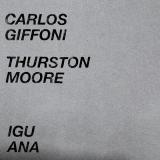
Carlos Giffoni reconnects with Thurston Moore for two sides of loose-limbed axe noise, oscillator worship and hard-phased, Spacemen 3-style feedback.
Giffoni’s been on a roll recently. Since the No Fun founder returned to the scene with »Vain¡, a genius set of synth mutations that appeared in iDEAL back in 2018, he’s been slowly ramping up the activity, dropping the celestial »Dream Walker« on Stephen O’Malley’s Ideologic Organ in 2024 and following it with »Pendulum«, a bumper compendium of collaborations, just a few weeks back. For those who remember Giffoni’s first trip round the block, he was always able to hold his own chopping it up in person, not just by mail.
Just scrub through his early catalog and you’ll see collabs with Nels Cline and Chris Corsano, Merzbow, Jim O’Rourke and Lasse Marhaug, and of course, Thurston Moore. The two rekindle their thing on »IGUANA’« picking up where 2001’s fabled »4 Guitars Live« performance left off. Here, Giffoni straddles a tabletop synth and FX while Moore attacks his signature Jazzmaster with a drumstick and a screwdriver – vibes fully intact.
Moore is on blistering form, sounding as if he’s taken a step back to refresh his approach since the early ‘00s when he could be spotted moonlighting on any number of basement-adjacent noise sides. Sawing at his strings and turning the guitar into a shrieking resonator, he leaves only faint vapours of the classic Sonic Youth sound as opiating accents on his animalistic wails and rumbles. On the opening half, his whammy – assisted shreds are balanced out by Giffoni’s off-world whirrs and airlocked vibrations, building a dense wall of noise towards an unexpectedly elegiac conclusion. At some point, Giffoni’s rasping churr transforms into a simmering shudder and Moore’s into hymnal drones – squint a bit and you could almost call it pretty.
Of course, they ramp things up on the flip, dissolving the melancholia with smokey white noise and twangy, post-Derek Bailey chimes that Giffoni accompanies with aggy oscillations. Like every great taped noise set, the recording quality is crucial - »IGUANA« was captured from the pit by Guillermo Hernandez Avendano, the dad of Lia Miranda who provides the cover photo. It’s that kinda show.
Tauchen Sie ein in das glitzernde Lebensgefühl der 1970er Jahre! Mit „70s Disco Hits Vol. 3“ holen Sie sich die größten Dancefloor-Klassiker einer unvergesslichen Musikära direkt nach Hause – energiegeladen, zeitlos und voller Groove.
Diese exklusive Vinyl-Compilation vereint ikonische Künstler und Welthits, die die Disco-Welle geprägt haben:
• Donna Summer – Die „Queen of Disco“ begeistert mit ihren elektrisierenden Hymnen und unverwechselbarer Stimme.
• Barry White – Samtweiche Soul-Vibes und unverkennbarer Groove.
• Blondie – Disco trifft New Wave mit ikonischem Sound.
• Stevie Wonder – Funkige Rhythmen und musikalische Meisterwerke.
„70s Disco Hits Vol. 3“ bringt das Gefühl von Spiegelkugeln, Plateauschuhen und durchtanzten Nächten zurück – eine musikalische Zeitreise in die goldene Ära der Disco.
Let the music play – und machen Sie Ihr Wohnzimmer zur Tanzfläche!
out of Stock
Last delivered 76 days ago available to reorder, subject to availability
Delsin is pleased to announce an extensive compilation series combing through the catalogue of landmark Dutch techno label Djax-Up-Beats. The series, curated by Rush Hour co-founder Christiaan Macdonald, launches with a look at the label's legacy in the development of acid music through the 90s. In total, this first entry in the Djax-Up-Beats 1990-2005 series comprises 20 tracks, presented as a main triple-vinyl album plus two additional 12" EPs. The compilation also features all-new illustrations from Alan Oldham, the Detroit-rooted visual artist who gave Djax-Up-Beats a distinctive visual identity from very early on, and design by Lost Communication. Each volume of the series also features liner notes from music journalist Oli Warwick. Crucially, every track featured on the series has been carefully mastered by Johanz Westerman, bringing the best out of tracks that often had very little post-production treatment before they were originally pressed to wax. Volume 1 - The Acid Trip focuses on an area the label is best known for - acid house and techno. After the pioneering breakthroughs Chicago-based producers made with the Roland TB-303 in the late 1980s, acid music creation was starting to become more widespread when Djax-Up started in late 1990. The rebellious, rave-ready sound was an instant draw for label founder Miss Djax, and so her label ended up reflecting the development of acid as it spread from the Chicago roots across the world. Volume 1 - The Acid Trip looks at the diverse approaches to acid taken by artists on Djax-Up. Tracks on the compilation include an early outing from Ludovic 'St Germain' Navarre and Bjorn Torske's Ismistik alias, as well as Dutch pioneers such as Edge Of Motion, Spasms, Random XS and Acid Junkies, and Chicago heavyweights Mike Dearborn and Gene Hunt. With five more, equally extensive, volumes to come in this series, Djax-Up-Beats 1990-2005 is a thorough exploration of a true totem of techno culture - a renegade label that operated on its own terms and carried surprises and slammers in equal measure.
out of Stock
Last delivered 42 days ago available to reorder, subject to availability
With their third album, Inanimate Objects of the 21st Century, Newcastle’s The Pale White prove once again that there’s no slowing them down. Following the success of their introspective sophomore album The Big Sad, brothers Adam (vocals/guitar) and Jack Hope (drums) return louder, sharper, and more defiant than ever. This third full-length is their most expansive yet: a record that blends the anthemic punch of classic rock with the urgency and edge of modern alternative.The title, Inanimate Objects of the 21st Century, is a nudge to the uncomfortable irony of our time – as technology accelerates, humanity feels increasingly frozen in place. Lead singer Adam Hope says: “Technology is moving, but we are not. Human civilization entered the 21st century wide-eyed and naive with mobile phones that would barely fit in our pockets. Fast forward a few decades and we’re so far from where we were that it almost looks like a bad 80’s sci-fi movie. Back then, that film would be watched in packed-out cinemas after an eagerly anticipated release, but now they stand emptier than they once were, attended mainly as a nostalgic experience in the age of Netflix and doomscrolling.
The birth of AI, algorithms, cryptocurrency, drones, holographic concerts, autonomous cars… we’re living in a strange transitional period which is both fascinating and terrifying in equal measure. We humans have now in fact become the inanimate objects - mannequins.After our softer, melancholic second album ‘The Big Sad’, we felt it was only right to move as fast as our world is moving and release our next within the year. ‘Inanimate Objects of the 21st Century’ is the evil twin, the Yin to The Big Sad’s Yang.”
180g, Gatefold, White Vinyl, limitiert auf 1000 Exemplare. Fünfzehn Jahre nach Personal Jesus kehrt Nina Hagen mit HiGHWAY TO HEAVEN zu ihrer großen Gospel-Leidenschaft zurück. Gemeinsam mit Produzent Warner Poland, ihrer Band sowie Freundinnen wie Nana Mouskouri und Gitte Hænning interpretiert sie Klassiker neu - von Mahalia Jackson über Sister Rosetta Tharpe bis zu Kitty Wells. Das Album verbindet Southern Gospel, Americana, Reggae und Punk: Von der kraftvollen Neubearbeitung von "Somebody Prayed for Me" bis zur Americana-Version von "Never Grow Old" und einer deutschen Fassung von "Everybody Wanna Go to Heaven". HiGHWAY TO HEAVEN ist ein lebendiges, genreoffenes Gospel-Rock-Pop-Album, voller Spielfreude, Spiritualität und unverkennbarer Nina-Hagen-Persönlichkeit.
As Selofan's fifth studio album, Vitrioli, from 2018, is a testament to the tragedy of life. The Greek duo, Joanna Pavlidou and Dimitris Pavlidis, who recorded the album in the Fabrika Records home studio, continue on in their poetic, but heartbreaking, music set to a dance beat. Between languages (Greek, English, German, and Spanish), Selofan feels on the brink of mania with Vitroli. However, the madness is controlled, the songs are restrained hysterics that culminate into the alchemic perfection of the band's specific moody sound.
From synthpop to synthpunk elements, the twelve-track LP leads listeners through dark corridors and into haunted, empty beds. There is a resignation to a doomed destiny with Vitroli—a trait that connects all Selofan releases—as a bitter pain and loneliness that cannot, or will not, subside.
The album begins with "Give Me a Reason" whose lyrics feel universal in this day and age: Give me a reason, to get out of bed / I could just watch the ceiling instead. Its heartbreak is profound as bells and voice pads echo under Joanna's voice. The adjacent music video for the song was directed by Dimitris Chaz Lee, and the band describes the video as "depicting the fragile nature, conflicts, emotional demands, and vulnerability of each person in a relationship."
"Billie Was a Vampire" is a story about an undead creature who works at a nightclub followed by the urgency of "Black Box." Brass sounds moan against the fast beat and suggest a frenzied need to escape.
"I'm Addicted" became the second single for the LP. I am addicted, you are mine, Joanna demands of the lover. The music video, also directed by Dimitris Chaz Lee, depicts a clean, white photoshoot primed for the most beautiful creatures of the Athenian wave scene. Alex Macharias, from the legendary Greek band In Trance 95, acts as the photographer for the session, as the models pose and flail under the bright bulbs. The director states: "Addiction is a mental state, something inside all of us. It altered our perception and created a parallel world of avant-garde beings and flashy lights making us part of this everlasting bond."
WARNING: THIS IS FLATCORE AND HAS TO BE PLAYED LOUD !
Let's start by explaining what "FLATCORE" is; which is represented on this 3rd vinyl from this special serie on Flatlife Records: Flatcore is a cross between Hardcore, Progressive Trance, ACID and Hard Trance with a wink to the '90s. A concept from the mind of Jack Wax, who himself is incredibly fascinated and passionate about the more progressive hard trance movements of the '90s.
First track from Jack: "What The World Is Becoming To" is a serious question. AI, robots that do everything for you, wars, the internet; so much that has happening in the past 50 years, and where is it all becoming to?
Jack is supported on this release by "Dysistor"; this artist has also released music as DJ Hidden and Scorch and is also one half of "The Outside Agency." Then there's fresh talent on the B-side: TRIPHAZ from France. A fantastic, dark flatcore banger; he sent it as a demo, and Jack immediately jumped up and started screaming that he wanted it for this project.
So in total; a fantastic flatcore release, limited to 200 copies pressed on white vinyl. If you
like the harder stuff... check this one out.
out of Stock
Last delivered 6 months ago available to reorder, subject to availability
Over six years have passed since HAGZISSA's successful debut album, They Ride Along. Some may have even declared the Austrians as dead in between; however, HAGZISSA never ceased to wander the borderlands of the here and beyond. In silence and yet in turmoil, too, a nightmare has been slain and gutted - in necromantic pride, its offspring gleams and dances to never-ending music of the night!
HAGZISSA's brand-new Revelry of a Maltreated Jade EP is a showcase of a pack in motion, marking this as the last recording with A White Pawn (Kringa, Weathered Crest et al.) and the first with V.Adalbert II (Sněť, Bahratal et al.). The four-song work is immediately recognizable as HAGZISSA: a now-trademark style of eyrie, olde-worlde black METAL that's obscure, enigmatic, and unbound. Here, intensities are both reigned in and let loose to roam even wilder, as Iron Curtain heavy metal magick weaves a spell perhaps even more potent than said full-length. The result is somehow more approachable and more foreign, but compellingly potent either way.
With heads both in the past and the future, thus passes the glory of the world and dives deep into another plane! Can't you hear their flutes and horns and whispers? So come, then, and join in boisterous battue!
Will Wood's very first LP displays a variety of genres, with a chaotic homemade anti-folk feel and an experimental edge. "Everything is a Lot" began its long production in 2014, when the singer-songwriter was still 20 years old and performing drunken alt-comedy at open mics. With no funding, Wood led a slapdash band into the studio to bring songs mainly from his teenage years to life, and the unstructured production process and youthful experimentation gave it a uniquely loose and chaotic feel. The debut LP's sound is defined by Wood's Jay Hawkins-esque vocal delivery, an out-of-tune old upright piano, wailing wind instruments, jangly guitar, high-powered yet loose drums, and sardonic overdriven kazoo solos. Delivering everything from swing jazz and twee indie pop to pseudo-mariachi and waltz, these sounds and their accompanying bizarre lyrics come together to match the existential title, "Everything is a Lot." Will Wood's early career can be primarily defined by his experimental vocal delivery, honky-tonk piano smashing, and darkly edgy songwriting. While his stylings have matured and taken on a more precise approach, his refusal to conform to expectations and constant shifts in the genre have continued to be hallmarks of his songwriting and production. In his "Will Wood and the Tapeworms" releases (Everything Is A Lot in 2015, SELF-iSH in 2016), audiences can see the first glimpses into what would eventually become his signature style, presented in a uniquely raw and chaotic state of potential.
out of Stock
Last delivered 6 months ago available to reorder, subject to availability
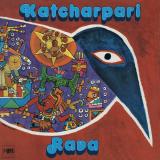
The breakthrough album. Enrico Rava's second solo record, recorded in Milan in January 1973 and released on the German BASF label, is nothing less than a cornerstone of Italian jazz-rock - the record that caught Manfred Eicher's attention and opened the doors to ECM. Rava himself has called it his breakthrough, and history proved him right.
The lineup is killer: John Abercrombie on guitar, Bruce Johnson on bass, Chip White on drums. Four musicians operating at the absolute peak of early seventies fusion energy - electric, cosmopolitan, burning with that particular fire that only existed in that brief window when jazz met rock and nobody knew the rules yet. Abercrombie, already on his way to becoming one of the most distinctive voices in electric jazz guitar, delivers some of his most ferocious early work here. White's drumming is relentless, pushing the music forward with an intensity that never lets up.
If Miles' Bitches Brew-era speaks to you, if Ian Carr's Nucleus gets you moving, if you know Sun Ra's Lanquidity and Don Cherry's Relativity Suite by heart - this is essential listening. Rava's vision was already fully formed: South American rhythms, Mediterranean warmth, free jazz ferocity, rock power - all flowing together without borders or categories. By the early seventies, Rava had absorbed everything - the New Thing, the European free scene, the electric revolution coming out of Miles' studio - and forged something entirely his own.
The seven tracks cover serious ground. "Bunny's Pie" introduces the music with an almost cosmic atmosphere of suspense, hovering in that liminal space before it trails off into the up-tempo vibrant frenzy of "Trial N. 5" - Abercrombie and Rava trading swirling solos at full intensity, the rhythm section locked in tight. "Dimenticare Stanca" moves from Rava's expressive balladic intro into pure funk, guitar and trumpet steering over the rhythmic drive with absolute confidence. The title track carries the lyrical feel and cadence of an Incan-Peruvian folksong - that cosmopolitan spirit made audible. "Fluid Connection" rides a funky bass riff into fusion heaven, with standout trumpet and guitar solos that build and release with perfect tension. "Cheerin' Cherry" pays homage to the great Don Cherry - Rava's spiritual mentor and fellow traveler in world music - exploring a North African soundscape that points toward the global jazz to come. Johnson's "Peace" closes the album with a minute and a half of serene, blissful calm - a moment of stillness after the storm.
This audiophile reissue - cut from the original masters, pressed by Pallas in Germany on 180gm vinyl, housed in a thick laminated hand-glued gatefold - does full justice to an album that remains a collector's holy grail.
FUMU christens the promising new label Return To Zero (RTZ) with »Funeral Rites on Planet Saturn«, the surrendering sophomore album from Nigerian artist, self-described »negro-producer«, hedonist, and iconoclast LINTD. With production collaboration from Porter Brook and features from Samrai (Swing Ting), Porter Brook, Sam Scott Francis (GOMID), Rizmi, and Imani Jendai.
LINTD’s work emerges as a call and response between the tender, dynamic sounds of Black music across history and the surreal reality of contemporary, vulnerable Black life – a haunting dialogue. These themes are catalysed in the Black Impossible LP Trilogy, reclaiming Black utopia through sound technologies via »Smooch Soundsystem Live at The White Hotel« for Second Born (Kop-Z, Porter Brook), and »DOGTOOTH. And Other Such Tales of the Macabre« on The White Hotel’s HEAD II outlet.
While earlier works engaged with the mania, joy, and paranoia of this impossible experience, »Funeral Rites on Planet Saturn« arrives at a soulful conclusion, allowing grief to tell a truer story. In the vein of Sun Ra, Alice Coltrane, and Octavia Butler, LINTD introduces the speculative planet Saturn as a site where impossible Black being across the world can come and rest: a site for liberation and emancipation.
»This one is an act of care towards myself, and hopefully others like me. I have proven everything I want to prove this year; this one is my elixir from all the lonely grief, a place of rest.«
When Saracen released their debut album ‘Heroes, Saints & Fools’ back in 1981, the UK Rock scene certainly took notice. Their combination of Magnum-like melodies and Uriah Heep intensity and vocal stylings immediately endeared them to fans of the NWOBHM scene, and fans of classic British Rock in general.
All songs and lyrics were written by lead guitarist Rob Bendelow, who left prior to the release of their second album, ‘Change Of Heart’, in 1984. While this sophomore effort still contained a few Bendelow songs, the band had changed direction, moving away from the almost Pomp and NWOBHM of the debut for a more polished and Melodic Rock direction.
Unfortunately, this new direction didn’t resonate with the fans, and the band broke up not long after.
However, Bruce Mee of Now & Then Records had always been a massive Magnum and Saracen fan. Having already convinced Bob Catley to start a solo career in the late 90s, he also had very productive talks with Rob Bendelow. This great friendship resulted in the band reforming and the release of ‘Red Sky’ in 2003. Rob Bendelow and Saracen were back.
Later signing to Escape and releasing several more great albums, Rob Finally retired from the music scene a few years ago, but the band gamely soldiered on, keeping his songs and legacy alive for their many adoring fans.
In an instance of total cosmic kismet, that same Bruce Mee was also co-organiser of the inaugural ‘Tower of Fire’ UK festival, and in 2024 invited Saracen to play the event along with other well recognised names of the scene such as Nitrate, Remedy, Atack, White Skies and Gabrielle de Val. The event was multi-track recorded, and the results of the Saracen set were so good that it was decided to release a very first live album.
The title of the live album is taken from the name of their crushing opening song: ‘Crusader’. And in a further act of unbelievable karma, the magnificent album artwork and design are created by Sebastian Kozak, the very same creative artist responsible for the brilliant artwork on the band’s come-back album ‘Red Sky’ back in 2003.
All but one of the songs that day were from that incredible debut and those 5 songs, along with 3 others previously recorded live by the band, make up this totally amazing live album. For fans of Saracen and NWOBHM, this is a moment we never thought we’d ever see: a brilliant live Saracen album with vocalist Steve Bettney sounding as incredible as he did over 40 years ago.
EXODUS resurge at full force with their 12th studio album and Napalm Records debut, Goliath, out March 20, 2026! The top-charting band reinforces their eternal foothold at the top of thrash metal's hierarchy with 10 of their most diverse, anthemic tracks so far. Goliath marks the return of legendary singer Rob Dukes to the band. Produced, mixed and mastered by Mark Lewis (Whitechapel, Nile, Undeath), Goliath beams with the explosive authenticity that has set EXODUS eons apart from their peers since the release of their groundbreaking 1985 debut, Bonded By Blood.
‘Call To Arms & Angels’ is the title of the twelfth studio album from South London collective Archive.
A 17-track double CD / triple LP recorded at RAK studios in London and released on Dangervisit/PIAS.
Deluxe editions of the album also include a bonus ‘Super8’ album of new and exclusive instrumentals, as featured in the band’s ‘Super8’ documentary that will accompany the release of the album.
Produced by Archive and long-time collaborator Jérome Devoise, ‘Call To Arms & Angels’ is the band’s first studio set since 2016’s ‘The False Foundation’.
Talking about the new album, Darius Keeler says, “Writing our twelfth studio album was an extraordinary time for the band. The song writing became an unfolding narrative as the world got stranger and more disturbing every day. With people’s freedoms being pushed to the brink, the suffering Covid caused and the terrible events in the US lead by Trump and the rise of the Right, anything seemed possible.
“To reflect on these times as artists brought up a darkness and an anger, but also a strange kind of inspiration that was at times unsettling. It really made us appreciate the power of music and how lucky we are to be able to express our feelings in this way.
“It seems there is light at the end of the tunnel, but there are always shadows within that light.”
Deluxe 2CD album plus ‘Super8’ bonus CD in 40-page casebound Polaroid bookpack.
2CD album.
Deluxe vinyl box set with white coloured vinyl 3LP (exclusive to this box set), ‘Super8’ bonus LP on white vinyl (exclusive to this box set), deluxe 3CD with Polaroid booklet and 12” x 12” art print.
Triple LP on gold vinyl in triple gatefold sleeve.
Triple LP on green vinyl in triple gatefold sleeve.
Triple LP on black vinyl in triple gatefold sleeve.
out of Stock
Last delivered 7 months ago available to reorder, subject to availability
If you could go back in time ten years, what would you want to tell yourself? This was a question Khruangbin posed to themselves when approaching the ten-year anniversary of their debut album, the once cult classic, now genre-defining work The Universe Smiles Upon You. “If we could go back and tell ourselves how much was going to happen to us after that record, what would we want to
celebrate?” asked Laura Lee, bassist, vocalist, and founding member of the band. Instead, they thought: “Let’s do it again.”
The Universe Smiles Upon You ii was recorded on January 4-6, 2025, in the same family barn of guitarist Mark Speer, across the
same dates where TUSUY was first conceived ten years earlier. Though the conditions were the same–dirt floor, brutally cold,
minimal sound isolation, all takes live–the songs aren’t. They’re re-approached, some changed more than others, harnessing the lightning-in-a-bottle energy of TUSUY while discovering what would be unique this time around, in this stage of the band’s life.
The result moves like ripples on the water across ten hypnotizing tracks, the barn creating a sense of spaciousness, serenity and creative freedom, nearby wildlife (listen out for the birds on “August Twelve ii”), rattles and creaks of the barn and all. It’s a tapestry of small movements in nuanced arrangements, slowly revealing the new life, stories and character of someone you’ve met again for the first time in ten years.
‘Call To Arms & Angels’ is the title of the twelfth studio album from South London collective Archive.
A 17-track double CD / triple LP recorded at RAK studios in London and released on
Dangervisit/PIAS.
Deluxe editions of the album also include a bonus ‘Super8’ album of new and
exclusive instrumentals, as featured in the band’s ‘Super8’ documentary that will
accompany the release of the album.
Produced by Archive and long-time collaborator Jérome Devoise, ‘Call To Arms &
Angels’ is the band’s first studio set since 2016’s ‘The False Foundation’.
Talking about the new album, Darius Keeler says, “Writing our twelfth studio album
was an extraordinary time for the band. The song writing became an unfolding
narrative as the world got stranger and more disturbing every day. With people’s
freedoms being pushed to the brink, the suffering Covid caused and the terrible
events in the US lead by Trump and the rise of the Right, anything seemed possible.
“To reflect on these times as artists brought up a darkness and an anger, but also a
strange kind of inspiration that was at times unsettling. It really made us appreciate
the power of music and how lucky we are to be able to express our feelings in this
way.
“It seems there is light at the end of the tunnel, but there are always shadows within
that light.”
Deluxe 2CD album plus ‘Super8’ bonus CD in 40-page casebound Polaroid
bookpack.
2CD album.
Deluxe vinyl box set with white coloured vinyl 3LP (exclusive to this box set), ‘Super8’
bonus LP on white vinyl (exclusive to this box set), deluxe 3CD with Polaroid booklet
and 12” x 12” art print.
Triple LP on gold vinyl in triple gatefold sleeve.
Triple LP on green vinyl in triple gatefold sleeve.
Triple LP on black vinyl in triple gatefold sleeve.
out of Stock
Last delivered 7 months ago available to reorder, subject to availability
Galcher Lustwerk is a Cleveland-born, New York-based producer who has become one of the underground's most respected and unique voices. His deep tracks fuse hypnotic grooves with subtle, late-80s hip-house–inspired vocals, creating a detached yet energising take on the famous Midwest style. He's a member of the White Material collective, first gained attention with the 100% Galcher podcast mix, and has since dropped many choice Eps on the best labels in the scene, including Ghostly International, all of which have cemented his reputation as a visionary.
Shorty Out' is a dreamy late-night sound with spoken words pulling you in as balmy pads swirl without purpose, but plenty of sass. The drums are understated but poignant, inviting you to sink into the vibe and give yourself over to Reflection.
'Vestibule' is another smoky, candle-lit sound, with hunched, dusty drums that make you move without ever being the focal point. More vocal musings bring tender feels and evocative imagery as the synths speak of cosmic escape.
Closer, 'Wet Bulb' is more club-ready with techno-leaning synths and mid-tempo but purposeful drums.
Analogue textures and heady, wispy synths add plenty of human soul, making this another considered cut.
out of Stock
Last delivered 76 days ago available to reorder, subject to availability
DISCOVER THE BEST TRACKS FROM BARRY WHITE"S CULT PERIOD, FROM 1979 TO 1983, BROUGHT TOGETHER FOR THE FIRST TIME ON A UNIQUE DOUBLE VINYL. Including : "CHANGE" - "GHETTO LETTO" - "I FOUND LOVE" - "LADY, SWEET LADY" "ANY FOOL COULD SEE (YOU WERE MEANT FOR ME)" - "YOUR LOVE, YOUR LOVE" "SHE"S EVERYTHING TO ME" - "DON"T LET" EM BLOW YOUR MIND" - "LET"S MAKE TONIGHT (AN EVENING TO REMEMBER)" -"I"M ON FIRE"
out of Stock
Last delivered 6 months ago available to reorder, subject to availability
Taupe’s latest album release, waxing | waning delivers jazz experimentalism, ‘skronk’, avant-rock, and electronics, by the Glasgow-based trio, due out via Minority Records. Across its seven tracks, waxing | waning captures Taupe’s approach – bold and boundary pushing – shaped by a fresh shift in the band’s dynamic and compositional approach.
Taupe’s waxing | waning, co-composed and realised by its players in a studio that was once an undertaker’s premises in Glasgow, is an absolutely affirmative album, an act of cultural defiance in desperate times.
Comprising Mike Parr-Burman (guitar, bass guitar, electronics), Jamie Stockbridge (alto and baritone saxophones) and Alex Palmer (drum kit, percussion), Taupe work up a storm of skronk, free jazz and harmolodic frenzy whose closest relations include Zu, Melt Banana and John Zorn. However, waxing | waning is from its opening, stuttering blasts, an exercise in seeking out and claiming new territory, finding unique and novel permutations in which jazz, rock, electronics interbreed at breakneck pace. Here is a group determined to say and do things they don’t get to say and do elsewhere in their musical lives.
‘Lemonade Tycoon’ hits the ground skronking. It’s cubistic jazz, cumulative in its impact, avoiding the white lines of the conventional freeway, bridling, bustling, coming at you from all angles – a three way conversation of astonishing rapidity, fast track, telepathic communication – everyone from James Chance to Albert Ayler coming at you at once, before morphing in to a spidery scrawl of electronics and furious percussion. ‘Anti-Bird-Spike BirdNest’s‘ title somehow sums up the sort of mental images evoked by the music – its sheer creative disobedience, as if being chased in vain, like a delivery rider evading capture by ICE agents -– shapeshifting, assuming different shades, sprouting metal quills and, in its midsection, seeming almost to swallow itself alive, before regurgitating itself in a sublime mess.
‘Interlude (Stride)’ is not exactly ambient, more a horizontal enmeshment of percussion, drones, reverberant noise, electronics, a sonic mulch. ‘allcapsallbold' reminds of early Aksak Maboul, in its playfulness, a haywire series of short phrases, subject to mechanical interference, a complex weave of irregular rhythms, increasingly eloquent sax phraseology and caustic guitars, which land heavier and heavier. ‘Pet Boss' is the new jazz equivalent of a highly evolved, mature conversation among brilliant equals, sharp, empathetic, complementary, rising to a collective, joyful noise. On the title track, electronics descend like a shower of bright particles, intensifying in their luminosity, whitening the skies, as sax and drums kick up a tempestuous, spontaneously sculpted noise that summons the ghosts of the great free jazz players, before a dark calm descends slowly. Finally, ‘Turn Push Kick’, a burgeoning chatterstorm of electronics, before the group kicks in, at angles to one another, led by abrasive guitars, reminiscent of Sunn O))) in their ritualistic concussion, riffing, digging deep amid squealing sax and piledriving percussion.
Caligula's Horse is a progressive metal band from Brisbane, Australia, and named after the trusted steed of the assassinated Roman emperor Caligula. This band should surely be on the radar of any Opeth, Karnivool and Haken fan.
The Tide, The Thief & River's End is their second record, originally from 2013, and contains everything you'd want of a progressive metal album: heavy riffs, melodic hooks and of course unbelievable technical prowess. The album once again proves that the prog scene down under is a force to be reckoned with.
The Tide, the Thief & River's End is available as a limited edition on blue vinyl and includes a 4-page booklet.
The small print:
• Due to rights restrictions, this item is only available in the EU.
Return To Forever is often cited as one of the core groups of the jazz-fusion movement of the 1970s. The final album by the longest-lasting "classic" lineup of the group (which consisted of Chick Corea, Stanley Clarke, Lenny White and Al DiMeola) was Romantic Warrior, on which they continued their experiments in the realms of jazz-rock and related music genres, and was lauded by critics for both the technically demanding style of its compositions as well as for its accomplished musicianship.
The album is more avant-garde and less funky than the band's previous album, No Mystery. It would go on to become the best selling of all Return to Forever's efforts, eventually reaching gold disc status in the US.
Romantic Warrior is available as a 50th anniversary edition of 1500 individually numbered copies on blue vinyl and includes an insert.
Since 2020, 12 Inch Lovers have been releasing new samplers every year, eagerly anticipated by collectors. These samplers have now become a staple and are easily added to vinyl collections across Europe. They offer timeless classics and rare tracks that are often hard to find elsewhere.
With Samplers 11 & 12, they surprise again with a mix of modern classics and tracks that have never been released on vinyl or are difficult to find. By adding unique and exclusive tracks, the 12 Inch Lovers samplers remain innovative and high-quality. They are a must-have for DJs, collectors, and fans of contemporary classics!
SAMPLER 11
A1) Paul Kalkbrenner - No Goodbye (2019)
Berlin techno producer Paul Kalkbrenner became world-famous with his 2008 hit Sky & Sand. Since then, he has released one record after another and performed all over the world in the biggest venues and at the most renowned festivals. No Goodbye is one of his more recent hits, released in the summer of 2019.
The track was created using an a cappella he received on a demo tape while on tour. He was immediately inspired by the vocal and built his own sound and production around it. Interestingly, Kalkbrenner rarely uses vocals, but for No Goodbye he collaborated with Australian singer Chiara Hunter, giving the track a unique and instantly recognisable character. The result is a stylish, dance-floor-friendly track with a rolling house groove that quickly became a modern classic on dance floors worldwide.
A2) Water World - Give Me Love (2000)
This trance classic by Water World appeared in 2000 on the French label Adequat Records and is the perfect tune for a sunny summer evening. Warm melodies and pulsing beats instantly create that beach feeling, as if you were dancing with your feet in the sand. The record recalls Beachball by Nalin & Kane, sharing the same dreamy, sun-drenched vibe.
Behind Water World were producers Laurent David and Frédéric De Backer-names well known to many trance fans. In the nineties De Backer was active with projects such as Global Trance Mission (Dream Mission) and Y-Traxx, the trio that released the 1997 classic Mystery Land.
Give Me Love clearly bears their combined signature: euphoric, warm and melodic, with a timeless build that perfectly balances emotion and energy. The track was released on vinyl as part of Trance E.P. Vol. 01 and remains a fixture in retro-trance sets to this day.
B1) Panoramic - Colors (1996)
Colors by Panoramic is a Belgian trance classic released in 1996 on the legendary label XTC Records, a sub-label of Bonzai Records. Panoramic was a collaboration between Belgian techno icon Marco Bailey and Mauro Mirisola. The duo, also known under playful aliases such as The Coke Man & Sniff, released an EP featuring two powerful trance tracks.
We chose Colors, a tune with pure Belgian trance DNA: driving rhythm, dreamy synths and a catchy female vocal. The combination of Bailey's production expertise and Mirisola's creative touch resulted in a timeless track that still appears in many classic playlists.
B2) Natasha Bedingfield - Pocketful Of Sunshine (StoneBridge Club Remix) (2008)
British singer-songwriter Natasha Bedingfield released the album Pocketful of Sunshine in 2008, featuring the title track as a single. The original pop version became a major hit in North America, reaching the Top 5 in the US. Swedish DJ and producer StoneBridge (Sten Hallström) reworked the song into a groovy house version, released in the summer of 2008.
StoneBridge gave the upbeat pop tune a club-ready beat and an infectious piano riff that made it shine on dance floors worldwide. It was not his first time transforming pop into house gold-he had already achieved global fame with his remix of Robin S - Show Me Love (1992), one of the greatest house anthems of all time. He also remixed Sia - The Girl You Lost to Cocaine in 2008, another club favourite.
The StoneBridge Club Remix of Pocketful of Sunshine appeared on a special remix EP in July 2008 and was played endlessly in clubs-by us too, in the venues where we performed. The result is a timeless, sun-soaked house classic thatmakes sitting still impossible.
C1) Y-Traxx - Mystery Land (Fred Baker vs Mr Sam's Magical Mystery Dub Mix) (original release 1995)
Y-Traxx was a nineties trance project by DJs Laurent David and Fred Baker. This trance classic first appeared in 1995 as a B-side but gained real attention when it featured on a Paul Oakenfold mix album. Thanks to that success it received an official re-release in 1998 on the respected French label FFRR (Full Frequency Range Recordings).
In 2003 an excellent remix by Mr. Sam & Fred Baker followed on the Nebula label. That version is highly sought after on vinyl by trance collectors, and we are proud to feature it on our new sampler.
C2) Weiss - Feel My Needs (2018)
Feel My Needs by British producer Weiss (alias Richard Dinsdale) is the tune with that unmistakable old-school piano and catchy vocal that instantly pulls you onto the dance floor. Released in May 2018on the UK label Toolroom Records, the track is pure feel-good house with a modern touch. From the very first piano riff, hands go up in the air.
Toolroom even called it a "future anthem" for the summer of 2018, and indeed Feel My Needs became a huge floor-filler. The record charted high on global dance lists and gained massive popularity at festivals and clubs that year. With its warm piano chords, tight beat and soulful vocal, this is a modern house classic that will stay in the collective club memory for a long time.
D1) The Killers - Mr. Brightside (Jacques Lu Cont's Thin White Duke Mix) (2005)
American band The Killers formed in 2001 and scored a massive hit a few years later with Mr Brightside. Taken from their debut album Hot Fuss (2004), it became their biggest and best-known track-a true rock-pop anthem.
In 2005 the song was given an electronic twist when renowned producer and remixer Jacques Lu Cont (the alias of Stuart Price) created an eight-minute dance version titled Mr Brightside (Jacques Lu Cont's Thin White Duke Mix). This remix replaced the raw rock energy with a more progressive and electronic vibe, driven by a steady beat and long build-up.
The track found a second life in club culture and quickly became a dance-floor favourite. For vinyl collectors it was an instant must-have, and to this day it stands as the perfect party closer. The Killers themselves loved it so much that they often used the remix live as an outro, followed by the original version. A remix that perfectly bridged rock and club culture-and has since become a genuine classic.
D2) Sia - Drink To Get Drunk (Different Gear Remix) (2001)
The legendary ice-cube sleeve says it all: Drink to Get Drunk was a huge club hit in the early 2000s. Released in 2001 on the UK label INCredible, a sub-label of Sony Music, it was a collaboration between British DJ duo DifferentGear (Gino Scaletti & Quinn Whalley) and singer Sia.
The producers took Sia's original song Drink to Get Drunk from her album Healing Is Difficult and gave it a complete transformation, keeping her distinctive vocal and placing it over a hypnotic progressive-house groove.
The combination of Sia's unmistakable voice and the deep, driving production hit hard: the track became hugely popular in Belgian clubs and turned into an anthem of its time. In Belgium it even reached number one in the dance chart in early 2001, and it also performed strongly in the UK and the Netherlands.
To this day it remains a nostalgic crowd-pleaser that perfectly captures the atmosphere of the early 2000s.
out of Stock
Last delivered 11 days ago available to reorder, subject to availability
Hardcover slipcase box
Celebrate twenty-five years of Ape Escape and thirty years of PlayStation with Ape Escape 3 Originape Soundtracks in a Box!
Saru Get You 3
As with the Ape Escape Originape Soundtrack, composer Soichi Terada has meticulously re-recorded and reconstructed all tracks from the Ape Escape 3 Original soundtrack. Previously only available on CD, this is the complete soundtrack's first time on vinyl. This box set was produced in partnership with Mr. Terada and Far East Recording, and is an officially licensed Sony Interactive Entertainment product.
This release contains eighty tracks, spanning four individually sleeved records, housed in a hardcover box. It is similar in construction to the Ape Escape Originape Soundtracks in a Box release (2024), and the two will look quite nicely next to one another on your shelf!
We are happy to announce that this box set features a definitive edition of the Ape Escape 3 Originape tracklist. This also includes "Swanlake," a track previously unavailable on the CD release. At its core, the Ape Escape 3 soundtrack features much of Soichi Terada's signature sound: lush electronic, jungle, silky smooth synthesizer, humor, and charm.
Ape Escape 3 was originally released in 2005 (Japan), and its moviemaking pipos were unleashed across the rest of the globe in 2006. The game features two new protagonists (Kei and Yumi) who battle the Freaky Monkey Five, underlings of the nefarious Dr. Tomoki and the evil monkey Specter.
Complimenting the game's journey through the TV-verse, the Ape Escape 3 soundtrack also features twists on themes from Wild West Showdowns, Kung-Fu movies, and space operas. Fans of the Ape Escape Originape Soundtrack, as well as newer work like Asakusa Light, will certainly enjoy all elements of Soichi Terada's music present in Ape Escape 3.
The music on this box set was mastered by Justin Perkins of Mystery Room Mastering, who also mastered the original Ape Escape Originape Soundtracks box set (2024). Using Mr. Terada's premastered source files, the music was completely and specifically mastered for vinyl. The box set also features original Ape Escape 3 character renders and key art. All of the design elements have been put together with careful thought, referencing the original Japanese guidebook for inspiration and visual cohesiveness.
It is with great pleasure that we celebrate Soichi Terada's music and the Ape Escape franchise with this four-disc release!
Finally, finally, FINALLY! After many years of fruitless praying, a true collector grail can finally grace every turntable the world over. Bright And Shining is a miraculous leftfield library classic from the genius mind of Barbara Moore. It's Highly Addictive Happiness Music TM and one of the coolest records to come out of anywhere...ever! With originals almost impossible to find - and, when they do, going for over £300 - you already know how crucial this beautiful reissue is.
Recorded in 1981 for Sylvester Music Company, Bright And Shining is breezy, dreamy and funky in a perfectly smooth jazzy-soul-groove fashion, with Moore's patented celestial male-female vocal harmonies this time benefitting from the addition of Fender Rhodes and pumping bass lines.
As one particularly enthusiastic Discogs user put it: "If Eno is responsible for Music for Airports, Moore is responsible for Music for Holidays." Indeed, this is brilliantly unique, "maximum happiness music". If you miss the sun-dappled soft-psych soul of Koushik, the heavenly vocal arrangements of the great Library Music doyenne Barbara Moore - her depth, richness, sophistication and warmth - will see you just right.
The gigantic title track, "Bright And Shining", gallops out the gate, all sophisticated, jazzy leisure-soul with sax and guitars backing Moore's effortless vocal swag in this relaxed, mid-tempo head-nod strut. Worth the price of admission alone. Up next, the sunny, vibey "Fly Me High" features strolling, "unworded" vocals (aside from the refrain of the title) alongside breezy alto sax and electric guitar. Pastoral and perfect. The slow'n'sultry "Affluence" presents a moody elegance, a classical "downlifting" gem. Another crucial highlight is the breezy "Going On Holiday". It's happy. It's sunny. It's lively. It's cool and happy. Did we say happy? A mid-tempo, romantic sax workout, "Alto Sex"presents smooth jazzy funk before the first side closes out with the soaring, jazzy "Stay With Me". Seriously uplifting.
Side B opens with "Feel Fine", an excellent uptempo and bright jazz groove. Up next, "Canon" is wracked with refinement, a peaceful, smooth vocal harmony over repeating bass making for an elegant, late-night classic. It's followed by the laconic "Smooth And Soft", a laidback, casual sophisticated soul and easy-feeling jazz gem. The jazzy "Real Thing" is another exercise in strolling sophistication, complete with wordless vocal harmonies. The fairly self-explanatory "Voice Over Sax" sounds precisely how you would expect; a relaxed sax number with heavenly vocal support! To close, the carefree "Feeling Free" is a pleasant, light and breezy mid-tempo groove.
The audio for Bright And Shining has been meticulously remastered by Be With regular Simon Francis, ensuring this release sounds better than ever. Cicely Balston's expert skills have made sure nothing is lost in the cut whilst the records have been pressed to the highest possible standard at Record Industry in Holland. The original, iconic sleeve has been restored here at Be With HQ as the finishing touch to this long overdue re-issue. We'll grant the final word to MillionDollars. on discogs from about 10 years ago: "If you listen to the record on a sunny day you feel like going out surfing in a white linen suit with a blunt on your lips, catching a cool breeze."
out of Stock
Last delivered 7 months ago available to reorder, subject to availability
Cranes is a dream pop/shoegaze band formed by siblings Alison and Jim Shaw who rose to stardom following a world tour with the Cure in 1992. After the influential Dedicated label folded in 1998 they went on a two-year hiatus after which they se up their own label Dadaphonic. Here, they released three studio albums between 2001 and 2008, of which this record is their penultimate. This record, as any other on their label, strikes the perfect balance between their typical 90s alt rock underpinnings and modern electronica. Downtempo beats and swirling effects combined with jangly guitars and Alison Shaw's mysterious vocal presence make for a deep and subdued album, in the best way possible. Fans of the band have been requesting a vinyl release for quite a while now and to them we say: ask and you shall receive. Particles & Waves is available on vinyl for the first time as a limited edition of 1000 individually numbered copies on Crystal Clear, Blue & White Marbled vinyl.
Auf ihrem achten Album "Nothing's About to Happen to Me" erzählt Mitski, musikalisch unterstützt von ihrer Band und einem Orchester, eine vielschichtige, verrätselte Geschichte, in deren Mittelpunkt eine Frau steht, die zurückgezogen in einem verwahrlosten Haus lebt. Außerhalb ihres Zuhauses ist sie eine Außenseiterin; innerhalb ihres Zuhauses ist sie frei. Mitski schrieb alle Stücke auf "Nothing's About to Happen to Me". Das Album, produziert und aufgenommen von Patrick Hyland und gemastert von Bob Weston, setzt die musikalische Linie von "The Land Is Inhospitable and So Are We" (2023) fort. Eingespielt wurde es live von Mitskis Tourband The Land. Die Orchesteraufnahmen, arrangiert von Drew Erickson fanden in den Sunset Sound und TTG Studios statt, die Tontechnik übernahm Michael Harris. Mitski ist "die faszinierendste und geheimnisvollste Musikerin des Indie-Rock" (Rolling Stone), die sich "immer wieder auf brillante und wunderbare Weise weiterentwickelt" (NPR Music). Im Laufe ihrer Karriere hat sie bislang sieben Alben veröffentlicht, vier davon erreichten Goldstatus. Ihr Stück "My Love Mine All Mine" ist ein Welthit und erreichte Vierfach-Platin. Zu Mitskis vielfältigen Kollaborationen mit anderen Künstler:innen zählen zwei Co-Writing-Beiträge für das aktuelle Florence and the Machine-Album "Everybody Scream", sowie eine Zusammenarbeit mit David Byrne und Son Lux für den Oscar-nominierten Film "This Is A Life". Derzeit schreibt sie Musik und Texte für die Musical-Adaption von "Das Damengambit". Ihre Konzerte, die Variety als "faszinierende Bewegungsstudie" bezeichnet hat, wurden auch als "hochstilisiert, brillant umgesetzt, supercool" (Philadelphia Inquirer) und "ungewöhnlich, rätselhaft und absolut fesselnd" (The Guardian) beschrieben. Ihr erster Konzertfilm "Mitski: The Land" lief im Oktober 2025 in über 600 Kinos weltweit und festigte ihren Ruf als "eine der wenigen Indie-Stars, die sich den großen Durchbruch verdient haben" (Uproxx). Er erschien zeitgleich mit dem Live-Album "The Land".
On "Another Year Older," Larry Fleet cements his status as country music’s premier blue-collar soul-singer, delivering a masterclass in honest, salt-of-the-earth storytelling. Shifting his gaze toward the reflective milestones of adulthood, the White Bluff, Tennessee native trades the restless energy of his earlier work for a grounded, hard-won perspective on what truly lasts. The project seamlessly blends the grit of classic 70s country with the soaring, gospel-infused vocal power that has become his trademark, capturing the quiet dignity of the working class and the profound beauty found in the everyday. From the steady wisdom of the title track to the heartfelt odes to faith and family, Fleet treats the passage of time not as a burden, but as a teacher. It is a record for the dreamers and the doers alike—a soulful, unvarnished progress report from a man who has clocked the miles, felt the weight of the world, and realized that getting older is just another word for getting it right.
Auf ihrem achten Album "Nothing's About to Happen to Me" erzählt Mitski, musikalisch unterstützt von ihrer Band und einem Orchester, eine vielschichtige, verrätselte Geschichte, in deren Mittelpunkt eine Frau steht, die zurückgezogen in einem verwahrlosten Haus lebt. Außerhalb ihres Zuhauses ist sie eine Außenseiterin; innerhalb ihres Zuhauses ist sie frei. Mitski schrieb alle Stücke auf "Nothing's About to Happen to Me". Das Album, produziert und aufgenommen von Patrick Hyland und gemastert von Bob Weston, setzt die musikalische Linie von "The Land Is Inhospitable and So Are We" (2023) fort. Eingespielt wurde es live von Mitskis Tourband The Land. Die Orchesteraufnahmen, arrangiert von Drew Erickson fanden in den Sunset Sound und TTG Studios statt, die Tontechnik übernahm Michael Harris. Mitski ist "die faszinierendste und geheimnisvollste Musikerin des Indie-Rock" (Rolling Stone), die sich "immer wieder auf brillante und wunderbare Weise weiterentwickelt" (NPR Music). Im Laufe ihrer Karriere hat sie bislang sieben Alben veröffentlicht, vier davon erreichten Goldstatus. Ihr Stück "My Love Mine All Mine" ist ein Welthit und erreichte Vierfach-Platin. Zu Mitskis vielfältigen Kollaborationen mit anderen Künstler:innen zählen zwei Co-Writing-Beiträge für das aktuelle Florence and the Machine-Album "Everybody Scream", sowie eine Zusammenarbeit mit David Byrne und Son Lux für den Oscar-nominierten Film "This Is A Life". Derzeit schreibt sie Musik und Texte für die Musical-Adaption von "Das Damengambit". Ihre Konzerte, die Variety als "faszinierende Bewegungsstudie" bezeichnet hat, wurden auch als "hochstilisiert, brillant umgesetzt, supercool" (Philadelphia Inquirer) und "ungewöhnlich, rätselhaft und absolut fesselnd" (The Guardian) beschrieben. Ihr erster Konzertfilm "Mitski: The Land" lief im Oktober 2025 in über 600 Kinos weltweit und festigte ihren Ruf als "eine der wenigen Indie-Stars, die sich den großen Durchbruch verdient haben" (Uproxx). Er erschien zeitgleich mit dem Live-Album "The Land".
out of Stock
Last delivered 8 months ago available to reorder, subject to availability
Sundays is the debut full length from Oakland-based Tanukichan, aka multi-instrumentalist Hannah van Loon. At surface level, the album sounds just how the title describes: hazy, dreamy, reflective, just like a lazy Sunday afternoon. Upon second and third listens, the dreamy music unveils a deeper world: an ever present sense of longing, an endless state of summer and a period of instability that plagues us all at one point or another in our lives.
Raised in San Francisco, van Loon started out making classical, bluegrass and jazz music as well as playing in numerous bands in the area before deciding to make something more personal. What started with a few unfocused demos, with van Loon playing all the instruments herself in her house, became a studio experience and viable collection of music after her friend Anthony Ferraro of Astronauts, Etc. introduced her to Company Records founder Chaz Bear (Toro Y Moi, Les Sins). After collaborating on her 2016 EP Radiolove, van Loon and Bear set out to make a much more sonically cohesive release, with both the producer and artist playing all the instruments on the record. The result is a slice of dream pop that could only come from the combination of the laid back atmosphere of California and the nostalgic and often difficult memories that are generally associated with coming of age.
To van Loon, the tracks of Sundays are a form of contemplation and approaching life’s issues from a different and less complicated perspective. “Sometimes for me, it feels easier to write songs about things than to talk. A lot of things in life are layered and paradoxical, but with songs it always seems simpler.”
Opening track “Lazy Love” sets the stage, sonically and lyrically, for the rest of the album, combining vulnerable lyrics with gorgeous, fuzzy tones. Above pummeling synths and guitar tones, van Loon sings “you know I'd do anything/don't you know I try my best/if I could wake up when the sun is rising” showing the album’s constant theme of balancing always wanting to be the best person you can be, while also feeling a low level joy at letting life play out as it wants to. “Natural” is a track that feels perfect for a road trip, a track that hums away with a driving beat, culminating in the sheer excitement of finally having a night alone with someone you’ve loved for a while, among many highs and lows: “a window too bright/it's natural sunlight/grey fades to white lie/kiss you tonight/it's natural delight/help me feel right.” The tracks collectively address a deep rooted sense of yearning for someone, something new, while also feeling content with your life; a realization that maybe the places you’ve always belonged aren’t where you should be anymore, that suddenly you might be looking for something completely different.
“I settled on the name Sundays as the title of the record because it encapsulated how the record felt to me,“ van Loon says. “I was thinking about the laziness, and dreamy clarity that you can feel after a late night, waking up having to face the world with a new perspective.” Sundays encapsulates this feeling, a nostalgic way of looking at the world, waking up feeling like a slightly different person than before, looking back on life, not sure if you can tackle what’s next, but doing your best, day in and day out
A great name. A great cover. And - of course - outstanding library music.
Soul City Orchestra's Meal Ticket houses titanic funk, mellow groove and symphonic disco-soul.
Released in 1977 on Rouge, a subsidiary of the prestigious and long-established British library label Music De Wolfe, Meal Ticket was crafted by the studio band Soul City Orchestra (a pseudonym for the De Wolfe in-house composers Chris Rae & Franck McDonald).
The driving instrumental funk-rock of the A Side is enhanced with strings and no little drama. However, it's undoubtedly the peerless flipside that makes this record an essential part of any collection.
Head straight to highlight "Chamber Maid"; insistent, conga-driven funky rock with lashings of string-heightened drama. It's sophisticated, classical and deeply classy.
The majestic, powerfully emotive "Sore Head" contains an excellent intro drum break and sultry slo-mo disco breaks throughout. It's low-key stunning. With a few melodic switch-ups, it's symphonic soul heaven and is comfortably the best and most beautifully crucial track on Side A.
The breezy, Philly soul-tinged "Short Change", its intense strings reminiscent of the Salsoul Orchestra and TSOP, presents an easy-glide funk that's just irresistible.
The funky, cool and slick AF "Wheeling And Dealing" is laconic flute and string-propelled sophisticated mid-tempo disco soul. It's worth the price of admission alone.
The breezy, mellowed out disco-funk workout "The Jam" is a deliciously slinky and sophisticated soul strut. Try not swaggering into the club with this in your head next time you venture into the murky world of "the night". Just ace.
The crowning glory is the sweeping, sublime symphonic disco breaks of horn-infused "Soul City Drive", an absolute monster of radiant heavy soul-funk à la Barry White with great string & brass arrangement.
Basically, this is essential for all groove-aficionados.
The audio for Meal Ticket has been meticulously remastered by Be With regular Simon Francis, ensuring this release sounds better than ever. Cicely Balston's expert skills have made sure nothing is lost in the cut whilst the records have been pressed to the highest possible standard at Record Industry in Holland. The original, iconic sleeve has been restored here at Be With HQ as the finishing touch to this long overdue re-issue.
out of Stock
Last delivered 7 months ago available to reorder, subject to availability
"deathcrash’s third album, Somersaults, glimmers with an everyday euphoria. The London-based slowcore/ post-rock quartet has always had an affinity for building worlds only to crush them. From their breakout EP, People thought my windows were stars (2021), through two critically acclaimed studio albums, Return (2022) and Less (2023), they have been both the architects and the destroyers, the creationists and the ones manning the flood barrier. But, recorded between Black Box Studio in the Loire Valley and Haggerston’s Holy Mountain, Somersaults is almost joyful.
Its ten tracks are more vocal heavy than any of the band’s catalogue – think Mark Linkous via The Kinks – but lyrically, Somersaults resists revelation. For all its abrasion, phrases appear half-swallowed, broken off at the edge of meaning, consumed by the smaller textures of living. “Thirty, no career, it fucking worries me / And doing the band doesn’t help,” Banks sings in ‘NYC’. But, “This life is the best life,” he finishes in ‘CMC’ on top of the ambient white noise of an office printer, thankful that the band is still there, “still making noise in the doorway.”
Their role as caretakers of Duster, Low and Codeine’s slowcore lineage is all across Somersaults – songs scud to a narcotic crawl, sound monolithic and inwards before spotlighting a crystalline nothing. Cathartic builds are muddied with tenderness, the bass a heavy grounding, the drums an exhausted heartbeat grasping for air. But more so than ever, even the silence feels collaborative – a gesture of communal trust – friends celebrating the room they’ve made for each other’s ghosts, and some of the biggest, brightest songs they’ve made to date."
FRQNCY LDN, the new project from Alex Lavery and James Ford (producer du jour and one half of Simian Mobile Disco), are releasing their debut album ‘The White Edition’ on 5 September via PRAH Recordings. Alongside the news of their debut album, the duo are sharing the first taste in ‘Matthias’ Wajd’, which they describe as “a rousing, instrumental piece from the middle of the set where the whole ensemble became balanced providing moments where Raven played violin with haunting yet uplifting melodies within the cavernous reverb of the church. Interestingly, at this moment, most of the audience who had been laying down rose to watch the performance like a gig, like an awakening.”
Initially conceived as a live project with earlier performances at churches in London and at Glastonbury, FRQNCY LDN’s music is a mix of strings, gongs, oscillators, FX, and spoken word, and the result is a musical experience unlike any other. Now that immersive magic has been captured on their debut release through Prah Recordings.
The music that FRQNCY LDN are releasing as their debut album is from an extraordinary live take from a performance at St Matthias Church in Stoke Newington last year, and thanks in no small part to the serendipitous bunch of musicians they assembled: composer and violinist Raven Bush, clarinettist Arun Ghosh, cellist Satin Beige Chousmer, and harpist Chloe Chousmer-Kerr. Alongside Lavery and Ford and assisted by engineer Animesh Ravel, they were able to capture the music to a world class level.
FRQNCY LDN has its roots in a supermoon that occurred three summers ago, after the hottest day of the year. Two of Lavery’s friends gave a sound bath that evening. “I’m not overly into astronomy or anything but the experience was nuts,” he says. “I had to find out what had just happened. What felt like forty minutes was actually two and a half hours. We were all out. It was so profound that I was hooked.”
He immediately signed up for a sound therapy course where he learned about what he calls a “brain hack” to meditation. “The thing about sound therapy is there’s a lot that’s meditation-based, and I find meditation really difficult. I’ve got a very busy brain. What was alluring about this process of sound immersion, a sound bath, whatever you want to call it, is it’s basically a hack to making your brain get into a meditative state.”
FRQNCY LDN’s early shows crystallised their ideas into a project, and Lavery brought poet Nikita Gill on board as a vocalist. “One of the first poems she gave to me, ‘Unwitches’ was in response to me explaining that I’d love this project to be perceived as something anyone could access. It’s not just for the sound meditation or the yoga, or the mushroom crowd. No one should be turned off by connotations from where the music comes from, I love music but I’d never be into that because it’s too woo-woo. Nikita said she’d had this poem for a long time but she’d never found the right home for it.”
And in an increasingly busy and fraught world, the need to tune out for an hour or so, and maybe tune in to something more profound, is only going to get bigger.
Antibalas established themselves in the late 1990s as a burning, tough, horn, bass and drum driven Afrobeat ensemble cut from the Fela Kuti mold, who were politically savvy and socially conscious. Their live shows have been incendiary events where rhythm and perspiration from completely crazy, booty-shaking audience members shared something deeper and wider than the music itself. Security is Antibalas' fourth album. It was co-produced by the band with John McEntire from Tortoise.
The group, whose name means "bulletproof" in Spanish, has indeed proved they possess the mettle to not only survive but also thrive by employing a musical arsenal that has become known worldwide. Initially using the revolutionary blueprint of afrobeat as a launching pad, the dozen-strong members of Antibalas weave a rich tapestry of latin, jazz, classical, funk and soul into their horn-driven mix. Words fail in trying to describe the result: simultaneously polyrhythmic and political, independent and contagious, and the reason why many have credited the band for introducing afrobeat's framework to a new generation.
Security is available as a numbered limited edition of 500 copies on white vinyl and is packaged in a gatefold sleeve.
‘Moonlight Concessions’ goes back to basics, a return for Throwing Muses to their esoteric off-kilter best courtesy of Kristin’s pin-sharp sketches and their suitably abrasive musical arrangements. The album follows their acclaimed ‘Sun Racket’ from 2020, a heady set filled with tough and tender tales spiked with surreal imagery. Produced by Kristin Hersh at Steve Rizzo's Stable Sound Studio in Portsmouth, Rhode Island, ‘Moonlight Concessions’ is a collection of snippets from everyday life writ large - think Raymond Carver Short Cuts, overheard conversations, recounted happenings and telling one-liners, all sewed together to illustrate the times as they slowly mature, fully peppered with original Muses’ vim and vigour. ‘Drugstore Drastic’ is a kerbside soliloquy caught en route to a more alluring rendezvous. Built on a brisk acoustic strum with a guitar sub-melody underpinning proceedings, it’s an unfolding tale of social awareness from a blurred sub-conscious. ‘Summer Of Love’ began as a bet with a guy for a dollar that revolved around the idea that the seasons don’t change us. The album opener, it’s a haunting baroque overture, bowed and brooding. ‘Libretto’s strings offset the acoustic ambience, the hot and cold of longing at the very heart of it, a thematic driver filed with warmth in a safe haven lubricated by tequila. Written in the differing South Coast environs of The Gulf Of Mexico and Southern California, ‘Moonlight Concessions’ pulls from the star clusters that light both, generating optimism and hope in varying degrees. Hersh explains, “In New Orleans the stars look greenish-blue, as it’s below sea level and swamp-lit. But on Moonlight Beach, they glow icy white. All these songs were written in these two glowy places, which helped our sonic technique find itself.”
Minority Records is releasing a unique boxset Politique du silence with three early albums from Sylvain Chauveau, French composer of minimalist neoclassical music.
“When I made my first albums as a composer, I was obsessed with minimalism, and this quote from the film director Robert Bresson summed up my state of mind. I set myself three principles: 1) Use silence as a starting point, 2) Only add sound when it's absolutely essential, 3) Don't imitate the Anglo-Saxon musicians I admired, but draw on the musical culture of my country, France which lead me to listen intensively to Satie, Debussy and Ravel.” Chauveau explains the background to his work.
The collection Politique du silence contains the recordings of Des plumes dans la tête (2004), Un autre Décembre (2003) and Nocturne impalpable (2001) on coloured 180 gram vinyls. The cover features artwork by French photographer Valéry Lorenzo.
“When I discovered the simple and powerful black and white pictures by Valéry Lorenzo, in the 90s, I immediately fell in love with them. We became good friends and since then I ask him to let me use one of his photos for most of my album covers, or to make my portrait for press shots. It has become a real collaboration, music and images, for more than 25 years. It was then logical to ask him again for the cover of this boxset, like a gentle reflection on my piano and strings era. It's a true honour for me to see my early music recollected, repackaged, remastered after all this time. Which gives me hope that this music, in which I've put all my soul and heart during the years 2001 to 2003, is maybe not forgotten yet.” Chauveau himself adds of his collaboration with Valéry Lorenzo.
Nocturne impalpable and Un autre Décembre were re-issued by Minority Records in 2014 and 2015 and both titles completely sold out. This year’s release also includes the album Des plumes dans la tête in its world premiere on vinyl.
Nocturne Impalpable is a world of minimalism, abstraction, and contemporary rendition of classical music with variations for the piano, clarinet, strings, and accordion which are often compared to the compositions of composers Harold Budd and Claude Debussy. Here, Chauveau partially reveals his versatility as a composer by connecting electronic elements, noises, and ambient planes with monumental strings and piano preludes. The
album of piano variations Un autre Décembre is interspersed with field recordings and electronic noises. The inspiration for the recording of the album and for its name was the song Jaurès by the Belgian singer and composer Jacques Brel. This song tells the story of the grandparents’ generation who toiled in the mines. “Comfort and health won’t protect our generation from sadness and discontent. We also live through winter times, even if these are slightly warmer due to the current climate.” An album of 20 short instrumental sketches with several delicate intermezzos for the piano, string quartet, and the clarinet, Des plumes dans la tête, was composed for the eponymous film by director Thomas de Thier.
Sylvain Chauveau was born in 1971 in the French town of Bayonne and currently lives in Barcelona. His extensive discography of mainly meditative neo-classical recordings for the music labels FatCat, Sub Rosa, Sonic Pieces, and Flau is enriched by several collaborations and his participation in the Ensemble 0, Arca, and On projects. Chauveau has also composed many film soundtracks as well as music for the theatre. He has presented his works in Prague several times, most recently in the spring of 2024 at the Spectaculare festival. His compositions get tens of millions of streams on streaming services, and he’s been called the French king of minimalism.
A long-overdue vinyl reissue for this underground gem from the Bronx! Originally released in the late ’90s, Ghetto Chronicle Daily stands as a timeless snapshot of New York street rap in its rawest form — a true reflection of the city’s golden era grit and lyrical craftsmanship.
The Money Boss Players — made up of Big Ah (RIP), Lord Tariq, Tre Bag, Eddie Cheeba, C-Dubb, and legendary producer Minnesota — were key figures in shaping that unmistakable Bronx sound. Their chemistry was electric: sharp lyricism, vivid street storytelling, and cinematic beats that carried the DNA of hip-hop’s golden age.
This first-ever vinyl reissue brings this underground classic back to the masses in its full glory and goes a step further with bonus tracks previously unreleased on vinyl, including “Drug War Rages” and “Same Shit” — raw, unfiltered cuts that capture the crew at their most authentic. Also included is “White Chalk Pt. 2”, featuring none other than The Notorious B.I.G., a rare collaboration that cements the group’s deep roots in the East Coast rap lineage.
Since the original release, members of Money Boss Players have continued to carve their own lanes — with Eddie Cheeba and Tray Bag evolving into Boss Money, and Lord Tariq making his mark as a solo artist. In recent years, Bronx rapper Yung JB has joined the fold, carrying the Boss legacy into a new generation.
Now, more than two decades later, Ghetto Chronicle Daily returns to turntables worldwide — remastered and pressed with care for true heads and collectors alike. A must-have piece of hip-hop history, finally on wax where it belongs.
“The blueprint was simple: Hot Chocolate rhythms, George Murray bass lines, classical music instruments with pop sensibilities. We, the architects, however, were complicated.” Paul Simpson, 2025 Needle Mythology, the label founded by music writer, author and broadcaster Pete Paphides, is thrilled to announce the release of the much-mythologised ‘lost’ album by CARE – the group made up of IAN BROUDIE and PAUL SIMPSON Prior to forming Care, Ian and Paul had been very active in the Liverpool post-punk scene. Ian played alongside Holly Johnson, Jayne Casey, Budgie and Bill Drummond in Big In Japan, before joining the Original Mirrors. He also produced several early records by Echo and the Bunnymen, most notably the albums Crocodiles and Porcupine. Paul had played with school friend and future Bunnyman Will Sergeant in Industrial Domestic and the founding line-up of The Teardrop Explodes, before going on to form The Wild Swans. CARE were brought together late in 1982 by mutual friend Will Sergeant, when Paul was looking for someone to play a guitar part for a new song he had written. Ian obliged and asked him to return the favour by singing on one of his songs Tall Ships. When Bunnymen manager Bill Drummond heard the result, now retitled My Boyish Days (Drink To Me), he secured the pair a deal with Arista on the back of it. Care would go on to release three acclaimed singles over the course of a twelve-month period between 1983 and 1984 – My Boyish Days (Drink To Me), Flaming Sword and Whatever Possessed You – before Simpson, still struggling to come to terms with the break-up of his previous band decided not to continue. Although top 40 success eluded Care in the UK, the group quickly found an adoring fanbase in the Philippines, where all three singles became huge hits. Love Crowns and Crucifies marks the first vinyl release of the previously unheard songs gathered together on 1997’s Diamonds and Emeralds CD. Working closely with Paul Simpson and with the approval of Ian Broudie, Needle Mythology has been given access to the original quarter-inch tapes which housed everything that Broudie and Simpson recorded together.
“The blueprint was simple: Hot Chocolate rhythms, George Murray bass lines, classical music instruments with pop sensibilities. We, the architects, however, were complicated.” Paul Simpson, 2025 Needle Mythology, the label founded by music writer, author and broadcaster Pete Paphides, is thrilled to announce the release of the much-mythologised ‘lost’ album by CARE – the group made up of IAN BROUDIE and PAUL SIMPSON Prior to forming Care, Ian and Paul had been very active in the Liverpool post-punk scene. Ian played alongside Holly Johnson, Jayne Casey, Budgie and Bill Drummond in Big In Japan, before joining the Original Mirrors. He also produced several early records by Echo and the Bunnymen, most notably the albums Crocodiles and Porcupine. Paul had played with school friend and future Bunnyman Will Sergeant in Industrial Domestic and the founding line-up of The Teardrop Explodes, before going on to form The Wild Swans. CARE were brought together late in 1982 by mutual friend Will Sergeant, when Paul was looking for someone to play a guitar part for a new song he had written. Ian obliged and asked him to return the favour by singing on one of his songs Tall Ships. When Bunnymen manager Bill Drummond heard the result, now retitled My Boyish Days (Drink To Me), he secured the pair a deal with Arista on the back of it. Care would go on to release three acclaimed singles over the course of a twelve-month period between 1983 and 1984 – My Boyish Days (Drink To Me), Flaming Sword and Whatever Possessed You – before Simpson, still struggling to come to terms with the break-up of his previous band decided not to continue. Although top 40 success eluded Care in the UK, the group quickly found an adoring fanbase in the Philippines, where all three singles became huge hits. Love Crowns and Crucifies marks the first vinyl release of the previously unheard songs gathered together on 1997’s Diamonds and Emeralds CD. Working closely with Paul Simpson and with the approval of Ian Broudie, Needle Mythology has been given access to the original quarter-inch tapes which housed everything that Broudie and Simpson recorded together.
Mess Esque are a duo featuring music and instruments by Mick Turner
and words and voice by Helen Franzmann. Their self-titled album is a
beguiling travelogue of restless, somnambulant wanderings.
Perhaps best known as one of the Dirty Three, Mick’s been playing
guitar and making music with many collaborators for forty years. He’s
loved his paintings too but revered especially for his solo music - since
1997, Drag City have released four of his albums, plus an EP and an
album of the Tren Brothers (Mick with percussionist and fellow Dirty
Three-ite, Jim White) and two EPs featuring Mick as the Marquis de Tren
with Bonnie ‘Prince’ Billy.
Mick’s last record was 2013’s ‘Don’t Tell the Driver’, a work that found
him departing from his traditional hermetic instrumental template by
employing a rhythm section and brass charts and even collaborating with
a vocalist. After all the purely instrumental music he’s made with Dirty
Three and solo, a singer is now part of the sound he’s hearing in his
head these days; while demoing new material, he realized that he was
again writing music that needed lyrics - and for that matter, someone
other than himself to sing them. But who? In 2019, he was introduced to
Helen through a mutual friend who’d produced her last album. Under the
name Mckisko, Helen has released three albums over the past 12 years,
working and touring with a range of Australian musicians along the way.
Her music has been described as numinous and transformative. Her
most recent album, ‘Southerly’, saw her moving into a more expansive
sound which led to an openness and excitement around further
collaboration.
Helen’s words are carefully observed, her phrasing responding intuitively
to Mick’s looping guitar figures with vocal repetitions of her own. Starting
with a feeling or a voicing, there are often no words - both players are
searching on their own paths. Then suddenly they have arrived and are
passing the emerging meaning back and forth, the rising intensity
forming a kind of undertow that pulls the listener deeper into their world.
Often, Helen would record her vocals in the middle of the night, seeking
that 2am flow, a moment of greatest isolation through which to trace her
melodie with fragility and strength. This crystallizes Mess Esque’s
intention: riding the sleepy drift through the blurred edges of the day…
time-traveling to that moment beyond stasis where sense and no sense
coincide and share space and time and energy. Viewing from afar the
immense peace of this planet when its ghost world of spirits below - the
madness of crowds, people sliding past each other faraway in the night -
are quieted at last.
On Hungry Animal, Luke Temple continues to trace the invisible lines between the personal and the cosmic _ between what we feel, what we observe, and what we inherit simply by being alive. The album reunites Temple with Doug Stuart (bass) and Kosta Galanopoulos (drums), the core of his Cascading Moms ensemble, whose instinctive chemistry anchors the record's balance of rhythmic precision and melodic drift. Together they shape a sound that feels handmade and fluid, delivering sharp observations in soft focus. The album opens with "Clean Living," a tenderly libidinous groove, unraveling purity myths and self-discipline _ less a confession than a celebration of the futility of striving for perfection in a flawed world. From there, "Echo Park Donut" shifts into the memory of an unsettling vignette drawn from a violent incident outside Temple's Los Angeles home. The band moves with a quiet pulse beneath the story, suggesting both detachment and the surreal intimacy of fear. The title track, "Hungry Animal," grounds the album's broader questions: how well can we really know one another, or ourselves? Temple's lyrics circle around the idea that we are animals among animals, driven by instinct and affection alike. It's both playful and philosophical, one of the record's emotional centers. Temple's bandmates bring an understated mastery to these pieces. Stuart's melodic, infectious grooves converse fluidly with Galanopoulos's drumming, which breathes life into each song even as it gently propels them forward. The trio's interplay feels both weightless and deeply rooted _ commanding the listener's attention and empathy without ever forcing it. With Hungry Animal, Luke Temple and the Cascading Moms create a world where reflection becomes rhythm and consciousness gains texture _ a record of quiet revelations and deliberate grace.
In February 2021, Jan Jelinek's seminal album "Loop-Finding-Jazz-Records" turned 20. The anniversary repress, a double LP with two bonus tracks (B-sides from the Tendency EP, 2000), is a little late to the party.
What the press said about Loop-Finding-Jazz-Records:
“Don’t be misled by the title, though for there isn’t a finger-snapping rhythm c bebop lead anywhere on the album. Instead, Jelinek chooses to explore the visual effect moiré - two shifting patterns creating an implied third dimension - in the audio realm.” (Alternative Press)
“The title acts as explanation for the studio technique that provided the basis for this album, snippets of other people’s arrangements deconstructed through a sampler into loops and then splashed onto an audio canvas.” (ATM)
“Jelinek’s sound evolved out of his dislike for (and inability to play) keyboards.” (RPM)
“Jelinek has abstracted his sources beyond recognition, looping his millisecond samples into flickering patterns of sonic moiré laid atop a dub Techno framework. (...) Jelinek might as well have sampled a horn player’s hissing intake of breath – it would have been ‘jazz’ enough for his purposes.“ (The Wire)
“It’s a perfect inversion of conventional music, a sonic negative. Everything that would typically be foreground is moved back or pushed off the screen altogether, and the flecks of sonic debris that would normally be covered by other sounds are left to carry the melody and rhythm.” (Pitchfork)
“All you need to know is that these onomatopoeic non-specific songs (...) are warm, paradisical creations”. (NME)
“Listen carefully and you’ll hear textures slowly unfolding and mutating. Presuming you’ve not fallen asleep of course.” (iDJ)
“At times, it’s all a bit dripping tap Japanese water torture; so sedentary it drowns in its own motionlessness” (DJ)
“Loop Finding Jazz Records' is a genuine modern classic whose re-release is anything but a cynical mortgage repayment exercise. Consider this a second chance, then pretend you had it all along.” (Boomkat)
PS:
“I’ve been fortunate enough to see Jan Jelinek live once, at Tonic NYC (...). Wearing a black and white striped shirt, he looked like a nihilistic Charlie Brown.” (beachsloth)
out of Stock
Last delivered 67 days ago available to reorder, subject to availability
Once again Trunk Records comes through with an album of sublime 1980s new age synthwave
music from an artist and library company you have never heard of.
With most Trunk LPs we write the story about how Jonny came across the music. And yes, this LP is no different...over to Jonny…
“My first encounter with Peter Patzer was when I was writing and researching the updated and fully expanded version of The Music Library Book, published by Fuel. The initial book - called The Music Library, was the first ever overview of library music and the wild, unpredictable graphic art of their sleeves. It was first published in 2005 and featured about 400 sleeves and about 120 library companies over 200+ pages. The book was based on over a decade of intense library LP collecting by myself and a handful of other geeky weirdos and made for fascinating and revealing reading and looking. It was a great education for many entering this odd, hidden musical world for the first time. The book quickly sold out.
A few years later the price of the original book had gone bananas. But the geeky weirdos like me had all carried on voraciously consuming and collecting library music so I strongly felt the first book could easily be doubled in size with new info, new sleeves and many newly discovered lost library companies. Which is exactly what I set about doing. The Music Library expanded edition came out in 2015. You have to realise here that The Music Library book was very much a first - until its unexpected arrival (and even the arrival of the much larger expanded edition) there was no published survey, accessible catalogue or anything about international library music. It was still an odd old world shrouded in some historical mystery - even the internet had not really caught up. And I was still finding unusual British one-off library LPs, more unusual Italian library diversions, hidden French funky things and then I finally found Peter Patzer. From Germany.
Hidden away in a very obscure music library corner. All on his own.Peter was unusual in that he was an artist and musician who made his own music and issued it all on his own library, called Crea Music, based out of Bremen in North Germany. Over a series of eight whitevinyl LPs produced in the 1980s Peter Patzer created synth heavy experiments for possible use in film, TV, video and anything else coming along. All his LPs had the same simple red, white and blue sleeve and a typed name and number. Across the eight LPs Peter goes to musical space, creates post-disco funk,travels to Vegas, goes all geological and more.
The eight Peter Patzer / Crea Music LPs are as follows:
This is a compilation of some of the music featured across those eight LPs, and yes, it was initially
licensed a few years ago but I held it back as I wasn’t sure people were quite ready for the plugged-inway out drifting 1980s electro sound of Peter Patzer with his synth washes, rhythms and chords. Or maybe I wasn’t ready. Anyway it’s here now... and if this sells out there could be another Peter Patzer LPbut with all his longer 7 minute compositions which there wasn’t room for here.
out of Stock
Last delivered 8 months ago available to reorder, subject to availability
Soul Jazz Records new Junglist! is a heavyweight new selection of classic and rare original jungle and features Krome & Time, Cutty Ranks, M-Beat, Bizzy B, Lemon D, Top Cat and more.
Junglist! tells the story of how jungle and reggae came together to produce some of the heaviest tunes ever made. Get ready for more pounding basslines, fierce Amen breaks and heavyweight ragga vocals — strictly original jungle style from the earliest days of drum and bass.
All these tracks date from 1993-95, at the height of jungle.
out of Stock
Last delivered 4 days ago available to reorder, subject to availability
Viktoria Tolstoy, celebrated for her expressive voice, emotional storytelling and cross-genre artistry, seamlessly blends jazz, pop and original songs.
Her standout tracks ‘Autumn Breeze’ (4.6M streams) and ‘Calling You’ (6.5M streams) have reached millions of listeners worldwide.
Collaborations with top Scandinavian and European jazz artists, including Nils Landgren and Esbjörn Svensson, have positioned Viktoria as one of the leading female voices in European jazz.
Jacob Karlzon, renowned Swedish pianist and composer, is recognized for his virtuosic technique, cinematic soundscapes and inventive harmonic language.
Their collaboration began in the mid-1990s, forming one of the most enduring and successful partnerships in Scandinavian jazz.
Their music bridges Nordic lyricism and modern jazz sophistication, appealing to both jazz and a wider crossover audience. A trusted name on the European scene, they continue to tour internationally and attract strong streaming and media presence.
Their new duo album reflects and renews that bond - an intimate conversation shaped by time, friendship, and change. The world has shifted since their last recording and so have they. Yet their shared musical language endures - evolving, deepening, and gathering new shades of emotion. There is a rare ease between them: two Artists who no longer need to explain, only to listen and respond.
The result is music that feels unforced, sincere and alive - born of trust and the courage to explore the unknown. In the end, it’s the simple beauty of reunion: two musicians meeting again, with everything they’ve lived and everything still to discover
Whitelands' second album Sunlight Echoes builds on their elemental debut - that won them fans from Slowdive to David Jonsson - with a more expansive sound that takes them out of the shoegaze shadows to somewhere bigger, better and brighter. Produced by long-time collaborator Ian Flynn and mixed by double Grammy Award-winner Eduardo De La Paz (New Order, The Horrors, The Charlatans, The KVB, Drug Store Romeos), there are soaring string arrangements (by Iskra Strings) and Lush guest vocals from labelmate Emma Anderson. "We're coming back with a lot more maturity and realness," says singer and guitarist Etienne Quartey-Papafio of their step up. "It shows in how much more emotional our music has become." With maturity comes a newfound confidence, so not only are there stunning melodies everywhere, but Etienne's vocals are front and centre throughout. "It's been really cool to watch Etienne push through boundaries," adds bassist Vanessa Govinden. "I like the direction we've taken on this album. We're taking a risk. It's half and half." She's right - the first half of the album has an almost Britpop breeziness, that belies the serious subject matter that inspired the songs, while the second half gets heavier, in all senses, with added grit and gravitas."This album is one of enduring," says Etienne of the overarching theme. "We had family that were dying, I was broke, there was a shortage of my ADHD medication_ I was suffering, but not just me, everyone around me was too." "The last two years have been challenging," concludes Vanessa. "The universe really fucked with us. That's why there are themes of loss, disconnection, fragmentation and yearning, but on the other side there is also unity and hope." Sunlight Echoes is a poetic, melodic statement of intent from this formidable band. Whitelands have fought back and triumphed in the face of adversity.





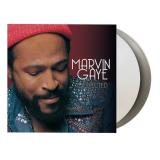
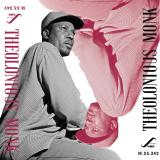


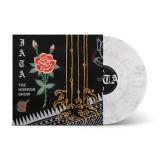





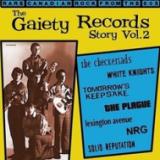




![WILD NOTHING - LIFE OF PAUSE (LENTICULAR SLEEVE) [SIGNED PRINT ED]](https://www.deejay.de/images/l/9/4/1227394.jpg)