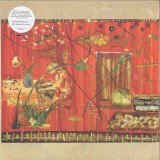
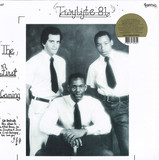
We wanted to make a promo text for this release, but then this message by Alphabets Heaven came thru:
Subtitles is my love letter to salsa. A torn, scribbled, badly translated love letter to an old address that the resident left years ago. But fuck it, it's still a love letter.
Every since I heard Larry Harlow's La Cartera about 12 years ago I've been trying to find out as much as I could about salsa. So much of it runs counter to everything I know about dance music, and yet it so clearly bangs. So on and off for the last 10 years I've been buying salsa, trying to work out how many imprints of Fania there were, trying to get my head round the horn arrangements, and generally having a great time with basically no contact with anyone who was actually a part of the culture in anyway. My Spanish is pretty bad as well, so all I really know is quite a few songs are about farmers.
Subtitles is my shot at salsa. My completely uneducated stab at something that's way too complex to just guess at. Not surprisingly, it sounds nothing like salsa. What's weird is that it sounds like pretty much everything else I listen to. I think in many ways it's the most honest thing I've ever made. By completely failing at making salsa I've managed to blend together all the club music, art music and everything else I've loved. You might hear some UK funky, or whatever the 2019 version of that is called. You might hear some minimalism. You might hear some psyched out shit. You also might hear a gigantic fucking mess. Subtitles is a translation to a film done so badly you find out more about the person who translated it than the film. I was trying to tell you about the film, but maybe you'll like the subtitles.
Shout to London Afrobeat Collective for the horns Memotone for the cello Deft for the Woos. Shout out to Scratcha DVA for being Scratcha DVA.
Search:everything else
White Vinyl
This is "Altair", a collection of kaleidoscopic post-breakcore on Love Love Records from veteran french surrealist Ruby My Dear. Presented with artwork by TAPT on white vinyl.
The lights are out and a strange alien force surrounds the periphery of your hearing.. The sound of a haunting music box flickering in the darkness draws you closer but as you begin to approach everything explodes into dank crossbreed DnB rhythms that punch you in the gut and send you flying. As the bombardment of breaks momentarily subside you realise you've been beamed aboard the mothership and are now surrounded by unknown and indescribable visions.
You are given a brief moment to contemplate before your legs are swept from underneath you by a flurry of amens that would fry the minds of the hungriest of junglist's epicures. Journeying deeper into the heart of the beast you become aware of distant and immense rumbles but are stopped in your tracks by grinding brutal machinery rising up on all sides. As quickly as it appeared it starts to collapse and you are plunged into near darkness once again.
Pulses of light slowly begin to stab rhythmically from behind clouds and you feel yourself begin to move faster and faster through a void that is now streaked by a spectrum of colour. Floating debris starts re-arranging around you at light speed and every fiber of your being is simultaneously stimulated with needle-like accuracy. As the last string plucks play out the darkness falls away and the cover artwork comes back into focus. You immediately leave wherever you are and encourage someone else to experience this music.
- A1: I Like Your Embouchoure
- A2: “Bam-Bam” Is Taking A Beating
- A3: ب ن یعك نویز (Noise Bni‘ak)
- A5-: Unplugged Modular Synthesizer
- A5: Just Before The Flood
- B1: Insufficient Creative Input
- B2: Lass Uns Kämpfen
- B3: Please Choose Another Pedantic Title For This Track
- B4: Pour Michel (In Memory Of Michel Waisvisz
Comic book artist, graphic designer and free jazz improviser are only some of the many talents from Beirut born Mazen Kerbaj. After appearing as part of various ensembles on the label, Ariha Brass Quartet (CREP46) and Johnny Kafta Anti-Vegetarian Orchestra (CREP22), Kerbaj finally lands a solo outfit of his own onto the Discrepant dancefloor of misdemeanour.
14 years after his first (and only) solo album "Brt Vrt Zrt Krt" (Al Maslakh, 2005) Mazen returns with a series of loud oozes (entirely) of his own with not one but two(!) solo albums of prepared trumpet that further cement his international position as a serial trumpet botherer.
Showcasing his very own and singular arsenal of squawks, cackles, howls and squeals the notion of being transported to a luring mutant underwater alien community is only occasionally dispelled with the sporadic passages of fluctuating tones and pulsations, like a restful humpback whale puffing on a hookah pipe at the ocean’s deep end. Mazen pulls out all the proverbial stops here, displaying a unique mastering of the instrument and its improbable add-ons creating various vignette like episodes rich in texture and variations - unlike anything else out there – not that you’d knew anyway.
Where Vol. 2.1 shows an astounding use of the instrument without recurring to cuts, overdubs or electronics, Vol. 2.2 raises (or shatters) the bar with its intentional use of everything Vol. 2.1 was denied. And Mazen is right about advising us, the sounds emitted on each record are beyond the limits of believable. Either he is using tricks or just prepared techniques the results go far beyond the reach of a normal or casual listener. Listen to the albums back to back and you’ll know what we mean.
Juan MacLean and Man Power debut as Juan Power for Life and Death
Life and Death continue to serve up brilliantly unpredictable releases with a new one that brings together American DFA stalwart Juan MacLean with the UK’s Me Me Me label head Man Power, plus an edit from the boss, DJ Tennis.
Juan MacLean is a multi-faceted artist who has a history of everything from playing in post hardcore bands to producing some of DFA’s most celebrated releases. He does classy house bangers with synth pop and disco layers like no one else. Man Power, meanwhile, is someone who is fantastically eclectic in what he does on all fronts as a DJ, label boss and producer. He’s made corrugated acid, hands in the air house and machine disco and plenty in between on his own label, but also cult outlets like Correspondent and ESP Institute. The coming together of these two undoubted studio wizards, then, is a fascinating prospect.
And so it proves right from the off: opener ‘Crescendo’ is a nine minute masterpiece with rickety house drums making you move while the shuffling percussion builds the pressure. Gorgeously warm chords eventually join the fray and have a blissful effect that sets you off dreaming and keeps you in a trance until the end.
DJ Tennis himself then steps up with an edit of ‘Excuse Me Daddy’ that is deep and cavernous. Next to the suspensory pads is an intricate synth line that takes you in on yourself in perfectly melancholic ways.
Closer ‘Praise The Toad’ then picks up the pace with more live sounding drums and a sparkling lead synth that rises and falls to cosmic effect. Drawn out over the full length of the track, and in amongst some chattery claps and smart effects, it makes for a journey to the stars that will cast a real spell on all who hear it.
This is an innovative collaboration between two masters of their craft.
Producers at the heart of the broken beat revival, EVM128 and James Rudie met through the CDR project, and soon after started to mess about collaborating with Gonzi. After coining the concept of INPUT, they found a home via Tony Thorpe at Studio Rockers and the seed was sewn. The concept is simple, make a beat, pass it on, and let someone else add to it. Its about letting go of self and letting the music go somewhere it wouldn't have gone otherwise. It was a labour of love until each track felt right. Talented musicians, producers, singers and rappers came on board to fulfill the brief, and the end product is a modern day broken masterpiece. It's about collaboration, whether in the mixing and arrangement, performance, keys, percussion, synth, bass, - everything was a joint effort.
INPUT is released on Studio Rockers on 19th July 2019 as a double vinyl release.
A LITTLE ON THE ARTISTS INVOLVED :
Written by curator EVM128, James Rudie and Gonzi are both killer producers who met me at CDR and also became part of Co-Op presents Selectors Assemble with IG Culture and Alex Phountzi. You can hear them both on Naughty Groove and Gonzi on Gut Level.
ISHFAQ is an elusive producer that has been making beats for time but is still under the radar. He's a force to be reckoned with. Watch him cos he's dangerous! Hear him all over Naughty Groove on Keys and on Complete Me ft Natalie May. He just knows where to fit into a tune... He has an acute ear!
TurboJazz met me after Djing together in Milan and working together on remix jobs, where I remixed Turbo's 'Please You' ft David Blank on Local talk Records. In return Turbojazz remixed the EVM Beyond ft Uk Soul legend, OMAR. It was only natural to get them involved with this project.
iLL Smith aka MR K is a heavyweight producer making serious waves in the new Dubstep 140 low end scene. He gave me a couple tracks that were broken beat he had been sitting on and said "You should do something with these". One of which is GOLD which I only really added a Clap to and worked the arrangement and first mix down. I called on Daz I Kue for a rapper I'd heard on one of his tracks which had the right energy. Daz hooked me up with Nesha Nycee, a fierce rapper from Atlanta Georgia. She smashed it straight away and the tune just worked. This was probably the easiest out of all of them!
Nesha Nycee is a REAL rapper.
Shy One is a friend of mine and has worked with me on music a few times in the past. I always love when she sends me a beat, she has that lo fi dirty grime kind of approach, then I add my style to it and it just seemed to bode well. We worked together on Mother Nature on the Nova LP and this track for INPUT (One Design) which we were sitting on for a while. Tony got Steve Edwards (All Seeing I, Sheffield) on the vocals. This was an unexpected turn on this track that we couldn't have imagined, but it worked! This track is the epitome of INPUT in that, it went somewhere completely different!
Steve Edwards is a singer songwriter from Sheffield who works on projects with All seeing I. He has a great energy and the lyrics made me cry! Really amazing heartfelt lyrics that speak of now and has a positive uplifting vibe to it that we can all relate to. It will stick in your head for ages believe me.
Natalie May met me through soundcloud. She's been releasing UK Funky tracks for a while and worked with Rudimental. She reached out to me after hearing the Nova LP and the stuff on CoOp presents. She went to the studio with me after already writing to some instrumentals. Very professional and on point in the studio. Her voice is sweet and the perfect juxtaposition to the rough bass and drums on 'Complete Me' and when ISHFAQ got his hands on it, well... Nuf said really !
Daiva from the Lithuanian band KeyMono has worked with me for a good few years. We met in Lithuania when I was teaching music production to young people through MTV, I met their manager Istvan. She was on my Naked Truth EP and the Nova LP. I Love working with Daiva she's great! Her voice is amazing as is her professionalism. She sounds somewhere between Erykah Badu, Little Dragon and Fatima. She's always my go to for any collaboration! Hear her on 'The Edge'. The lyrics were written by Kermit (Black Grape / Ruthless Rap Assassins).
Renato Paris.. wow ! I mean what!!? We sent the backing track and two days later he sent back the vocal and we fell over! He has a voice that echo's Stevie Wonder and Omar! Really professional work ethic too. Still cant get over how good he is. This guy can REALLY sing and play keys. Watch out for more from me and Renato... Bruk meets RnB / Jazz.
We have created something special and unique where you can hear each persons input in the
tracks. We love it and hope you will too.
Midnight Sun drew his imagination from trips to Iceland and elsewhere, from experiences. Everything has grown, some dates in New York for the CMJ Festival, Berlin, Barcelona or Warsaw, the Pitchfork Festival, Radio Nova, vinyl, meetings.
"Early Morning" extends this first EP and dreams of traveling at the end of the world.
The group is apart, it wanders while preserving its identity - the spirit of Cracki hovers over the project.
First discovery of the label in 2012, the duo barely existed, it is a quator today who just returned from a world tour (more than 100 dates).
The dream sticks to their skin, in fact. Just as when trying to catch one, it flies away, their music is elusive. The first disc spoke of a sun at midnight, the second is dawn.
The chosen horizon is not defined, the four artists are still searching for each other and continue their path with candor.
"One of the hardest thing as a musician is to maintain this naive, almost utopian and emotional approach to our music. Especially when it comes to a highly codified genre like Electronic music which appeared in the late 80s/early 90s like a promise of a bright future for music, everything sounding so fresh and revolutionary. When Katerina sent me those demos I heard that freshness, that pure intention, something I remember from discovering melancholic Detroit tunes in the 90s or early Warp ‘artificial intelligence’ compilations, bridging the gap between techno and more intricate electronica. It’s been a while since I didn’t hear an EP so sincere - and not JUST nostalgic, that makes me want to dance alone in my living room and forget about everything else. It’s a subtle thing that makes the difference but that difference is everything, it’s Music."
- Joakim
“Every time I play Cour T.’s “Black Magic” the room changes. The entire vibe of the party goes from hands in the air to grinding, sexual energy. This track has arcane properties on the dance floor. I wish I had 10 tracks with this vibe because nothing else sounds like it and when I play it, I always wish I could keep the vibe for longer.
Selfishly, I asked our label manager to hold back this track for 6 extra months just so I could have it all to myself. That’s how much I’m into it. For all the DJs complaining about how everything sounds the same right now, take a risk and drop this one in your sets.”
-VonStroke
- A1: Tidal Wave
- B1: Tidal Wave (Instrumental)
- A2: Tidal Wave (Boot Remix)
- A3: Tidal Wave (Nasa Remix)
- A4: Tidal Wave (R.e.d.a. Remix)
- A5: Tidal Wave (Lex Boogie Remix)
- B2: Tidal Wave (Boot Remix Instrumental)
- B3: Tidal Wave (Nasa Remix Instrumental)
- B4: Tidal Wave (R.e.d.a. Remix Instrumental)
- B5: Tidal Wave (Lex Boogie Remix Instrumental)
- B6: Fool\'S Gold (Feat. J Lawson)
Claiming Montreal as his new home town, Brussels-born Senz Beats has been building an impressive body of work with underground veterans from both coasts of the US (Dave Dub, Megabusive, Lex Boogie From the Bronx..) and beyond. Cappo, Nottingham's very own veteran MC, needs no introduction having already made waves at home and abroad with his impeccable string of solo albums as well as his work with the Nottingham super group VVV.
Here, Senz Beats and Cappo join forces to present a stark reminder of where humanity is headed if we continue to place our values in capitalist ideals. The raw, driving energy of the beat offers the perfect backdrop for Cappo to deliver his warning to those caught up in the materialistic rat-race: the tidal wave is close approaching.
4 experts in their field offer up remixes of this epic track. Boot Records very own Jazz-T (Jehst, Lee Scott, J-Zone...), ex-Def Jux engineer and artist Uncommon Nasa (Vast Aire, Aesop Rock, Mr. Lif...), Lex Boogie From The Bronx (Marq Spekt, Rass Kass, Vordul Mega...), and R.E.D.A. (Insight, Main Flow, M. Sayyid...) each give this track their own distinctive flavour to devastating effect.
Lastly, on the bonus track Fool's Gold, J Lawson echos Cappo's Tidal Wave warnings concerning lusting after riches at the expense of everything else, also produced by Senz Beats. One of the few remaining songs from over 2 years of collaboration roughly 10 years ago, this song has stood the test of time and is ready and eager to be presented to the world.
[a] 1. Tidal Wave [clip]
[f] 6. Tidal Wave (Instrumental) [clip]
Cochemea Gastelum is coming home to connect with his roots. After nearly 15 years of touring the world with Sharon Jones and The Dap-Kings, the saxophonist offers a deeply personal album of jazz and indigenous-influenced rhythms. All My Relations¸ out February 22 on Daptone Records, is 10 tracks of mesmerizing and spiritually ascendant instrumentation. The first single 'All My Relations' is available now.
'All My Relations is a way for me to explore my roots through music. Some of it is a memory that is imagined from a time and place I've never been ('Sonora') or a musical impression of ritual ('Mitote'),' Cochemea says. 'I felt compelled to add the way I feel when I go to ceremony, when I feel connected with my ancestors, to the musical narrative.'
A California native with Yaqui and Mescalero Apache Indian ancestry, Cochemea grew up surrounded by music but without knowing much about his heritage. Both his parents were musicians, and they gave their son a heavy name meaning 'they were all killed asleep.' Cochemea has spent much of his diverse musical career - as a soloist, musical director, composer and ensemble player - exploring and iterating on roots music, and All My Relations is a capstone meditation on his own ancestry.
Originally conceived during Sharon Jones and The Dap-Kings' final year of touring, Cochemea and Daptone's Gabe Roth cast a varied but familial set of New York musicians to bring All My Relations to life. A large portion of the album was created through improvisation and collective writing, where its 10 musicians created a melodic, percussive conversation. 'It was a beautiful experience - people would start playing and we'd work up these arrangements on the spot, then record it.'
'In a sense, this record is a prayer for unity, love and the recognition that we are all part of a web, and everything we do effects everything else,' Cochemea says. 'These days there's so many lines being drawn, I wanted to focus on what unites us.'
Cochemea has a long history of uniting multiple genres with his powerful polyrhythmic sensibilities. His roots in jazz, Latin, funk and rock led to multiple tours with funk-jazz organist Robert Walter's 20th Congress, and connected him with Sharon Jones & the Dap-Kings for their 2005 Naturally tour. Cochemea also played tenor sax with The Budos Band and Antibalas, and Baritone sax on the Amy Winehouse sessions, before becoming a full-time Dap-King in 2009.
In between marathon tours, Cochemea recorded a critically acclaimed solo album of soul, funk, and afro-Latin jazz, The Electric Sound of Johnny Arrow, all while doing session work for the likes of Mark Ronson, Rick Rubin and Quincy Jones. He's performed alongside Archie Shepp, Beck, David Byrne, Public Enemy and The Roots. Cochemea was also a featured soloist in the award-winning Broadway play Fela!, which led to historic performances in Lagos, Nigeria.
Initially a duo formed in Berlin, FITH have since multiplied and expanded to become a revolving collective of musicians and poets spread out across a Paris/Manchester/Berlin axis. The project, currently comprised of members Dice Miller, Enir Da, Rachel Margetts, ChrIs Lmx, & Arnaud Mathé gesture towards notions of the literary salon, expanded cinema happenings, and the ancient traditions of Greek oratory and religious sermons. Driven by the spell of the spoken word, minimal percussive refrains, oneiric textures & deep melodic synths, FITH channel cinematic imagery, enigmatic narratives & spiritual frenzy.
Their self-titled debut 12' album was released via their collectively run imprint Wanda Portal in November 2016, a 'quietly alluring debut of post punk tempered avant-pop songs' (Boomkat) that laid out the project's foreboding mystique and intoxicating dream sequences with a lurking, devastating sense of purpose and (mis)direction. Other outings have included myriad solo collections of poetry, a two-track release of lurid dissonance and elegiac elevation (Signs / Cornerstone, December 2016) and an extraordinary reinterpretation of the soundtrack for cult film & iconic document of modern alienation Wanda (1971, dir. By Barbara Loden)
With Swamp, their sequel to this activity and their first appearance on Outer Reaches, FITH become a refined force, on a record where all their compelling pluralities and attributes are honed and augmented; everything dilated to delirium. The atmosphere here is one of veiled dread and psychic disturbance, a haunting and macabre psychedelia strewn with echo and dub FX, fragmentary fever dream poetics, elemental drum patterns and volatile synthetic interference. Although the collective conserve the raw crux of their earlier material their execution is, in this special instance, heightened by an intent to broaden and prolong their unique strain of intensity.
Emphatically sinister openers like Forest and Pound present sidereal sequences before building to barrelling, corrosively processed percussion, paroxysmal free jazz and a baleful, concrète-inflected score of electronics, while Swamp introduces phasing currents and a vocal evocative of a chorale from some forgotten giallo film. Elsewhere l'au delà (the beyond) presents a stunning, sombre passage to another state entirely, like some desolate new inflection on Coil's Going Up, before Bialystok shifts into a finale of transportive and meditative evaporation. Together these tracks make for an incredibly immersive and congruous conception; an utterly complete and mesmerising document.
In Swamp's various dimensions perhaps there's comparisons to be drawn with the ritualistic krautrock of Conny Plank and Holger Czukay's Les Vampyrettes, with the hallucinatory, tribal rhythm cycles of Shackleton & Anika's Behind The Glass collaboration, with the primeval drone of Jeremie Sauvage, Mathieu Tilly and Yann Gourdon's France project, with the echoic, disquieting chamber intimacies of Tuxedomoon's Pink Narcissus material and with Lucrecia Dalt's eerie free verse abstractions. But really, we've not heard anything like this before.
Discussing their own inspirations and touchstones the collective cites Franz Kafka, Dario Argento, Lucrecia Martel's La Ciénaga (The Swamp - the film the record is named after) and Yiddish ghost theatre as figures, works and artforms that were prominently drawn upon during the making of Swamp. Yet whilst their imprints could be traced by some, they resemble more of a covert presence within a nuanced whole rather than obvious aspects which moor this record to any familiar setting.
Instead, the acutely unsettling yet poignant spoken word of Miller and the mercurial nocturnes and visitations produced by Margetts, Lmx, Mathé and Da make for a record of strange, novel and striking energies. In revealing the remarkable location and period in which Swamp was recorded Margetts and Miller give a vivid indication as to how these energies are so potently invoked:
'The record was mostly recorded in a caretaker's wing of a 17th century castle in Normandy. It was early March 2018, and our first encounter with the Spring. We had no idea how everything would unfold. There was a lot of tension. Some of us felt compelled to get out the attic room where we had set up our makeshift recording studio and just walk and walk down the vast flat meadows and explore the relics of the wartime barracks, others wanted to keep recording. The outside was serene and inviting, and even though we had been cooped up indoors recording for long stretches of time, we could see from the corner of our eyes, the branches of the trees quivering; an impersonal energy blew through us and then things just happened.'
AKMÊ is now called RODMIN, nothing else is changing.
We’re delighted to present the first full artist-ep release of our resident. With good reason, of course, it could be asserted that this is a great, deep and timeless techno record, which never loses sight of the dancefloor but still is sophisticated enough to listen it outside the clubs.
The first track love has a good acid drive, which—because of it’s echo chamber—will feel more at home at larger floors. The second track of the A-side reflect is a rather introvert and very hypnotic one and according to really lives to its name.
Coins opens the B-side with a heavy peak time breaker, which gives and demands everything! With his riot version, ALEX.DO puts the pressure even higher.
Rave on, ravers!
- A1: Ich Will Dir Helfen
- A2: A La Manière (With Roya Arab)
- A3: Ondine
- B1: Aspiration (With Mona Soyoc)
- B2: One Of These Days (With Hafdis Huld)
- B3: Théorème
- B4: Mortel Battement / Nocturne (With Alain Bashung)
- C1: Organique
- C2: The Watcher (With Mona Soyoc)
- C3: Qu’est-Ce Qui M’a Pris (With Philippe Poirier)
- D1: Xr 116 / Messe Rouge
- D2: Untitled
- D3: Ondine (Alt Take)
- D4: Piasong
The sensitive mountain » (la montagne sensible) is the nickname Alain Bashung came up with for Arnaud Rebotini. At the height of his fame, after the success of Fantaisie Militaire in 1998, Bashung readily agreed to create an album with Rebotini. The two men didn’t know each other; their record label had introduced them. Bashung brought in “Mortel Battement” and “Nocturne,” two poems by Jean Tardieu, which he recited in a voice simultaneously warm and flat, and Arnaud produced an impressionist soundscape that ended with an apocalypse of metal. Bashung was so proud of their collaboration that he offered to give several interviews to promote the record. Today, listening back to this moving Léo Ferré influenced "talking singing" exercise, it’s hard not to hear the template for L'Imprudence, the album that Bashung went on to record with Rebotini two years later. In a similar way, the album Organique sparked a productive partnership between Rebotini and filmmaker Robin Campillo, which resulted in their being awarded a César for Best Original Music in 2018. The director, who trusted Rebotini to create the soundtracks for his films Eastern Boys and 120 Beats per Minute, never kept his love for the 2000 record a secret.
Yet it’s an understatement to say that when it was released, Organique was not in the spirit of times. That year was all about the French touch. The funky samples of Modjo’s “Lady” and Superfunk’s “Lucky Star” ruled the sweaty dancefloors. Although Rebotini was familiar with the electronic scene, he had something else in mind when he set about creating Organique. Under his own name or under the pseudonyms Aleph, Avalanche, Black Strobe, Maison Laffitte, and of course Zend Avesta, he had already released several quite bizarre and experimental techno, house, or jungle maxi singles on pioneering labels like P.O.F., Source, and Artefact, run by his friend Jérôme Mestre’s, whom he had met back when both were working as record salesmen at Rough Trade’s ephemeral Parisian store. It was at Artefact, still financed at the time by Barclay and Universal, that he naturally proposed this record project, which was a bit "different." It was his first real album.
Arnaud Rebotini has never hidden his love-hate relationship with the electronic scene. He’s a fan of rave music, Rex, and later Pulp, but he listens mostly to metal and contemporary music, mainly American minimalists such as Terry Riley, Philip Glass, Steve Reich. He wanted to mix this genre with a more French aesthetic inspired by Debussy, whose unconventionality fascinates him. From the first suspended guitar note of Organique, you can pick up another influence, possibly poppier. In the style of Mark Hollis, the erratic leader of Talk Talk, whose only solo album’s silences and dissonances left their mark two years earlier, we hear the fingers touching the keys of the clarinet on “Ondine.” The instruments have presence, character. Nothing is smooth. Everything is organic.
Although it’s sometimes labeled as electronica because of Rebotini’s career, there’s nothing digital about Organique. No "pro tools" editing or samples, only programmed drums and some synth layering. And his guest vocalists. Playing the role of electro producer, he invited Bashung, of course, to join him on the album, but also Roya Arab, who Rebotini first spotted while she was playing in Archive, and her sister Leila, Gus Gus alum Hafdis Huld, Kat Onoma’s Philippe Poirier on the “Samuel Hall” inspired track “Qu’est ce qui m’a pris,” and former KaS Product member Mona Soyoc.
The frustration of a tour where he had "little to do on stage," the desire to sing himself, and the creation of the Black Strobe project, a haunting mix of blues and rock, stopped Zend Avesta from putting out another album. Eighteen years later, the Organique we rediscover today has lost nothing of its strangeness, nor beauty. When it came out, Bashung said, "What is interesting for a musician is to feel that you have a piece of wasteland in front of you, something to clear.” That remains true today.
The fourth AF Trax release is a three-track EP from our long time ally The Fantastic Twins, who has the following to say about her EP:
This EP is a small collection of works I crafted over the past couple of years in the process of working on my live show. I have been performing versions of these tracks countless times and yet never played them twice the same way. To me, they have been material in constant motion, so shaping them into a 'finished' form was a risky challenge. Something I was also wary of - would it mean they would become set in stone Would it mean I'd have to somehow 'rationalise" the music - via the mind - as opposed to letting it run into the wildness of its physical live experiences
Whilst editing these tracks into a format that could be released, I realised that instead of shaping them into the mould my mind first intended to give them, I could in fact use the power they revealed each time I performed them to an audience and inject some of that energy - as much as it is possible to capture and recreate it in the studio - back into this EP. Then of course, it meant letting go on things I usually like to control more, and better.
But isn't it the power of music to let it take you where you didn't plan to go And how incomplete would the music be if our inspiration didn't feed off the collective experience of dancing to music together I've lost myself (and my twins) many times throughout the process - not only on German soil - I have sometimes landed in the wrong place, but I may have found one answer yet in the form of another question. Why are we here if we can't dance
That reminds me of the words of Pina Bausch 'Dance, dance or we are lost'. Lost in our internal struggles as individuals (or imaginary twins). Lost in a society where our relation to the other is often marked by fear, power or violence. We feel the need to resist. Yet nowadays, taking a political stance as an artist is too often being instrumentalised as another tactics or accessory to gather more popularity, reducing the political message to nothing else but a branding attempt. Isn't it anyway the power of capitalism to assimilate everything, even contradictory or once-upon-a-time subversive voices All to end up on a 'Rave' or 'Feminist' H&M t-shirt. Slogans that have been emptied of their initial force and substance, now replaced by their commercial value. I strongly doubt that more empty words poured in vain on social media will help us much. But, like Pina Bausch, like JD Twitch, I have always firmly believed in dancing as a physical, social and fundamental act that leads us to share a common space with others and embrace otherness. Standing together, dancing together when everything else forces us to divide.
Billie Eilish's meteoric rise to global stardom has been nothing short of phenomenal and arguably unparalleled to date. Since her 'ocean eyes' debut, Billie has quietly, yet unapologetically infiltrated the forefront of pop. Thanks to a growing legion of loyal followers across the globe, an EP that has sat in the Billboard Top 200 for more than 18 months now, on the cusp of going Gold in the UK and more than 5 billion combined streams globally, her tours have sold out consecutively around the world, and this week, the teenage marvel has confirmed she will be releasing her highly anticipated debut album 'WHEN WE ALL FALL ASLEEP, WHERE DO WE GO' on March 29 on Polydor. 'When we made 'bury a friend,' the whole album clicked in my head,' Billie explains. 'I immediately knew what it was going to be about, what the visuals were going to be, and everything in terms of how I wanted it to be perceived. It inspired what the album is about. 'bury a friend' is literally from the perspective of the monster under my bed. If you put yourself in that mindset, what is this creature doing or feeling' She continues. 'I also confess that I'm this monster, because I'm my own worst enemy. I might be the monster under your bed too.' 'WHEN WE ALL FALL ASLEEP, WHERE DO WE GO' was written, produced and recorded entirely by 17-year-old Billie Eilish and brother Finneas in their childhood home of Highland Park, Los Angeles. Recorded in Finneas' bedroom opposite Billie's, the pair spent most of 2018 writing songs on the road, then spending many days and nights when off the road, at home, recording the album. The first to be revealed since the album announcement is 'bury a friend,' a driving tour-de-force of a song, trailblazing its way into the world and sounding quite unlike anything else that's out right now. Reaffirming Billie Eilish's place, always ahead of the curve, never compromising her sound or vision. More exciting news to come from Billie Eilish very soon.
French trio Empire State bring their sophomore release to Veyl in the form of 'B.R.U.', a scorching hot noholds- barred 6-tracker full of kicks to the face, fermented lyrics and monumental riffs. Post-punk, postindustrial, post-apocalyptic and post-everything else, if tracks like 'Cuntworms' and 'Blow' don't get you hyped we don't know what will. For fans of Suicide, Powell, Giant Swan.
Malfunctioning speakers, & digital dreamscapes, SQUIRRELS ON FILM's 4th release explores the outer reaches of techno with impolite, reckless abandon.
Psychedelic sound explorer Its Own infinite Flower, who was
responsible, along with head squirrels Solar & C.l.a.w.s., for San
Francisco underground punk rave/happening Hostile Ambient
Takeover, unleashes his first official release, The Plumes of Love (ARE BLACK!). After contributing a track to 2017's Spacetime Continuum/ Juju & Jordash curated Air Texture V compilation, this four track EP of abstract tech-noise brings the sounds Its Own Infinite Flower refined in the basements & warehouses of the Bay Area's underground music scene to the wider world, whether it's ready or not.
'Drone, Drugs 'n' Dissonance' creeps into life as a thunderstorm of
white noise, out of which a cold-rave pulse somehow metastasizes into something resembling techno, although this is a deformed, uncivilized, unwanted mutation, separated at birth & raised in a toxic wilderness. It builds slowly before turning up in a rage of digital distortion, a black metal dub party held at the edge of a melting glacier. 'Oh, Empire of Roses' is a Dada Phycho Jazz Electro number. Dissonant synth chords snake around each other in a playful ouroboros of manic future funk, never knowing if it's starting or stopping, coming or going. Relentless bass throbs through the track, which almost threatens to bubble into classic acid electro before fizzling out. On side two there is 'Devotion to a Peacock Angel,' an angular breakdance groove for the characters in the bar scene in Star Wars. Electro dub rhythms keep stay grounded as everything else rips apart in all directions over the course of the track. On 'Misfortunes of El Dorado' a soundsystem bangs in the next room, only the deepest bass escaping, shaking reality until it's torn apart in waves of distortion, a classic techno synth string wandering over the top of everything in a full blown Techno Jazz Odyssey.
SQUIRRELS ON FILM continues its adventure at the edges of techno
with the mind bending stylings of Its Own Infinite Flower's debut EP,
fitted with another beautiful hand-drawn, full color sleeve by New York artist Bert Bergen. The Plumes of Love (ARE BLACK!).
Neville Watson returns to DBA with The Midnight Orchard, his first full-length in five years. Watson is a key figure on the electronic music scene at large and has made regular appearances on Don't Be Afraid, as well as on celebrated imprints such as Crème Organization, Clone and Rush Hour, where he released some of his best-known work alongside Kink.
In a crowded landscape of factory-line jack trax and synthesis for the sake-of-it, it's little surprise that Watson's physical, arresting takes on house and techno have been such a staple in the record bags of the world's leading DJs for the past twenty years. Throughout The Midnight Orchard, Watson seamlessly bridges his futurist leanings gleaned from a lifelong commitment to electronic music with the anarchic spirit of his acid-house heritage.
The record still finds catharsis in the relentless pulse that has defined Watson's life since his early residencies where he peddled ecstatic escapism to towns on the commuter belts of London, notably via his involvement in seminal Reading party Checkpoint Charlie. However, there's a more somber, arguably introspective and perhaps even somewhat wistful tone at play throughout. This might surprise those who've invested their feet and hearts in tracks with titles like Night Of The Inflatable Muscleheads and Everything I Know About House (I Learned on Facebook).
In a move away from his previous musical leanings, The Midnight Orchard embraces a distinctly more UK sound, unapologetically chronicling the paranoia that can be found skirting the euphoria of rave. And while Watson has avoided the eyebrow-arching pitfalls of the self-serious DJ full-length, it must be noted that the rhythms here are more skittering, the atmosphere less jubilant and the signature lo-fi hiss, fully popularised and bastardised since Watson's last album, has taken on a more fore-boding tone.
Meanwhile, the atmosphere elsewhere harks to a more idealistic world, particularly on the cascading and subdued Eine Kleine Emusik, and the euphoric We Own The Night. Twin Tub and Reet Dux provide dubby, sensual moments of escapism. There's uncompromising, hard-nosed rhythms on Dee Sides, and cosmic electro throughout 4am in the Trees. The album then concludes in a bold fashion with Displays of Brotherly Love and the resolutely hopeful atmosphere of Phosphorescent.
Reflecting decades of immersion in club culture and taking inspiration from wider-found sounds, The Midnight Orchard is loaded with thrilling parallels and a sense of genuine unpredictability. Tracks like Come On In and Anarcho Midnight are layered with unease, utilising pitch dark arpeggios and skittish, growling electronics to devastating effect.
Having dedicated the last eighteen months of his life to the studio, Watson has rec-orded what is undeniably the most unexpected music of his career. Amid the dark-ness, The Midnight Orchard has borne fruit.
With a string of resonating releases and progressively improvised live-shows, ANNANAN have been expanding and refining their stylistic range across gritty Acid psychedelia, explosive, dark-waving Electro and a raw blend of Techno and House that is as fierce as it is fragile. The duo's first album on their own imprint MACHINE JAZZ does take all of this into account - and yet it's crucially different to everything else they've put out so far. - You' is a captivating electronic pop adventure, an experimental amalgam aligning Anne Ghost's polymorphic lead vocals with Tom Aaron's vast and versatile analogue productions in unexpected ways. Dominated by reduced rhythms and a carefully crafted melodic shape, the result of this dialogic fusion are irresistible, forceful songs that draw from diverse contemporary and traditional sources: you'll even hear Trap fragments, an R&B trained voice, reminiscences of the Knife as well as cinematic synth excursions. While exhibiting a broad set of moods, claims and longings, the LP attains emotive poignancy from beginning to end through its bold openness. Annanan's first album is stripped down, immediate and full of surprises - but don't you worry, there's no lack in bang either!
:
- 1: The Room
- 2: Hbw
- 3: Rythm A
- 4: Groovin' With The Eternal Now
- 5: Don't Move!
- 6: Feel Better
- 7: Like A River
- 8: Just The Rain
- 9: Haha Lol
- 10: Two Doors
"The Room", Fenster's fourth album and their first release on Altin Village & Mine marks the beginning of a new chapter for the band. After releasing three albums, a feature length film, and touring extensively throughout Europe and North America since 2012, "The Room" serves as an entry point into their sonic evolution. The essential characteristic of the band is transformation - within and between genres, albums, and songs. Their sound is a window framing psychedelic, groovy, hypnogogic, playful pop.
Fenster is Elias Hock (Germany), Jonathan Jarzyna (Germany), Lucas Ufo (France) and JJ Weihl (USA). Their mission in creating this album was to compose and arrange every song together in a room. It is an experiment in collective creativity that pushed all of them to transcend their individuality and create something together which is greater than the sum of its parts.
The songs were tracked live in a house where the band ate, slept, and played together. Often the songs were recorded without implementing a click track. They were intent on finding and locking into a human groove—one open to imperfection—while still maintaining a tightness between them. They wanted to make the songs feel alive—as if the listener were present in the room with them in the moment of creation.
The album's title track "The Room" opens the record like a rollercoaster ride. There is a tension in the first bars that ties us to earth, a minimal riff that guides us to the first chorus where we feel we are slowly lifting into the air—and by the time we reach the second chorus it has exploded into a space far away from the planet's gravitational pull.
The band's use of juxtaposition is not just a way of channeling a vast library of musical genres and concepts, it is a means of expression. Combining tender pop melodies with kraut-beats, disco grooves and psychedelia frees the band from any one sound and creates a genre all its own.
This playfulness is especially vibrant in songs like "Rhythm A" and "HAHA lol" which deconstruct and fuse together disparate moments of explosive rock, tender harmonies, percussion made of splashing water, voices from a radio, and electric piano. Even "Feel Better", a sparkly pop ballad is cracked wide open by a long trippy interlude that appears unexpectedly within an otherwise classic structure.
The cover art, created by the band's own Lucas Ufo, invites us into a room in the shape of a human skull. If one looks "out" the window in the picture, one finds oneself looking in to an infinite portal of rooms within rooms. The record plays a lot with this idea of perception. In "HBW", the relationship between the bass and the drums creates the feeling of an infinity loop. The lyrics lend an enigmatic tint to the landscape of so called objective reality v. perceived reality: "I was a phase — you were going through — said I was the one but there is no one — there's only the sun — that gives shape to the moon"
The record starts with "The Room" and ends with "Two Doors". Maybe one door is an exit, and one leads to another room... who knows The song has something mysterious and expansive, like a digital ocean flooding the room, carrying everything away. The whole process of making a record is about capturing a moment in time. This is the record they made - in this point in time, all together, in a room. The last words of the record roll out with the waves: "What you leave behind for someone else to find — Two doors inside — neither one is right"
Tracklisting
Boredom, anxiety, pain killers and frustration make a heady mix for both reflection and action. For three weeks I stared out of the window of the tower block onto the tall brick towers of the old asylum chimneys. The past was a strange land suddenly out of reach, the present confusing and claustrophobic, the future something I could only visualise and idolise.
From the balmy Autumn day of my release a light was switched on, buzzing urgently like a neon street light on my path. Life took on new vigour and meaning. Pleasures starkly illuminated, annoyances inconsequential. Old work was re-examined and appreciated. Machines were treasured and connected. My basement filled with ever greater warmth and excitement.
The toy towns of our inner minds are constructed of a million tiny building blocks of experience. But there's a freedom that comes from realising what might have been. Peace in reflection, untethered from the everyday distraction and I take pleasure in the hum drum. Unhampered by trends, untethered to a scene, stripped back to essential carnal influences and desires. Who are we but the sum of our experience.
'Everything Is Quite Now' meanders through a reimagined landscape of personal history, releasing musical fragments to dri* amongst soaring treetops, hollowed lakes and labyrinthine concrete structures, liberated from genre and form - alive at last. In these great expanses, light and dark are presented not as polar opposites, but as a limitless, unified whole.
References to EBM and industrial techno manifest within the sporadic percussive framework whilst gauzy ambient backdrops form an entire world of their own, constructed from the gentle hiss of a looping tape, the booming caverns of a muffled kick, the vivid distortions of a crystalline synth. In the depths of a misty forest, warmth permeates, absorbing inside it all of the darkness, pain, romance and beauty from before.
Prequel Tapes is a work of deep synthesis. Fragments of melody and memory orchestrated into densely layered tapestries; a deeply emotional study on a life characterised by a shi*ing relationship to electronics. The pieces serve as a chronology of desire and reflection, reconciling a nascent passion for industrial music with a history in the club. Oscillating between utopian to claustrophobic, the evolving synth work, deep techno atmosphere and traces of clangorous energy of early European ambient and industrial tell a distinctly German tale, forged between the forest and the autobahn.
Everything is quite now. What else can it be.
Daniel Terndrup Is A Los Angeles-based Dj And Producer. A Longtime Record Collector And
Digger, Daniel Has Become A Local Authority On Bygone Music. He Hosts Regular Radio Shows
On Dublab (crosseyed & Painless) And Nts (heat-wave) While Also Throwing A Weekly Party
For Heat-wave In Collaboration With Wyatt Potts At Former Hollywood Stripclub, Gold
Diggers. Daniel Started Making Music A Decade Ago As One Half Of Cosmic Kids. Alongside
Ron Poznansky, He Made A Name For Himself Producing Heady House And Astral Dance Tunes,
And Releasing Records With Cult Labels Throne Of Blood, Let's Play House And Dfa. In Addition
To Racking Up Plays On Original Cuts, The Duo Was Regularly Tapped To Deliver Remixes For
Heavyweights Like The Rapture, Holy Ghost!, Poolside And Superhumanoids.
After A Handful Of Releases With Cosmic Kids, Daniel Pivoted Toward His Own Project As Daniel
T. His Solo Output Is Inspired By Everything That You Might Find Leafing Through His Record
Collection: Funk, Post Punk, New Age And Pop Of Yesteryear (think: Compass Point All Stars To
Yellow Magic Orchestra). The Music He Releases As Daniel T. Is A Reflection Of His Global Taste,
But Indelibly Filtered Through His Southern California Surroundings
Blurb Attached
Following His 2015 Solo Debut Tetrachromat, Released On Friends Of Friends Sister Label
Young Adults, Daniel T. Returns With A New Album Called Heliotrope, Out This Summer On
Cascine. In Contrast To The Steady Dance-oriented Tempos Of Tetrachromat, Heliotrope
Moves Across More Dynamic Landscapes, All United Under Daniel's Sun-soaked Sensibility.
From The Breezy Bounce Of call,' To The Lithe Cover Of Tatsuro Yamashita's Classic windy
Lady,' He Effortlessly Wades Into Pop Territory. Elsewhere, On The Neon Glow Of moonlight
Bounce' (inspired By Dan's Near-religious Love Of Roller-skating) And The Ebullient First Single
'heat-wave', His Trademark Mid-tempo Swing Shines As Bright As His Synths. Heliotrope Is A
Reflection Of His Global Taste, But Indelibly Filtered Through His Southern California
Surroundings
The music on this EP was conceived in China, between 1989 and 1993. The original tracks were mixed to DAT in real time, in a small neighbour-proof studio inside my apartment in Macau, a 19th floor with a view to the hurricanes. There's a small, unexpected or improbable story behind each track, some little magic fused with the local atmosphere, certainly guaranteeing their lasting authenticity 25 years later.
TAIPEI DISCO
Late 80s Guangzhou was an exotic city where the traditional past coexisted in harmony with the present and even already with the future.
I'd rather spend my weekends in Guangzhou than diving into Hong Kong consumerism - as most ex-pats in Macau did. I took a cab at the border and travelled 150 Km through chaotic roads with family and friends until reaching the hot, humid, mega South China metropolis.
We ate on street joints in the evenings, went on to a karaoke bar and ended up at Taipei Disco, the only proper club in town. All the others were inside hotels and played generic music or they were seedy, sleazy, smoky cabarets.
Taipei Disco used to be a cinema and played cantonese pop music and anglo-saxon pop/rock (that was new). The spacious dance floor was generously lighted, the atmosphere was airy and modern. Boys and girls were in the habit of dancing in pairs, one in front of the other, observing a respectful yet sensual distance. When the girl took a few steps back, the boy went along and vice versa. With legs and feet (more than the upper bodies) synchronized with the music, they never exceeded in extroversion. Cool.
I always carried a MicroComposer and a portable DAT recorder in my travels through China and weekends in Canton. Any spontaneous musical idea was imediately recorded and memorized. The MicroComposer allowed multitrack recording, which was very handy on the road. Based on the emphatic choreography of Taipei Disco's dancers, i started to compose a rhythm track while sitting at a table, with headphones, listening to Cantopop in the background. As if by magic - not a rare occasion in music - everything began fitting together. Odd as it may seem, the track ended up sounding more germanic (Kraftwerkian) than Cantonese pop.
The story ends in a circle: the cantonese DJ at Taipei Disco, whom i used to ask to play certain records, wanted to play my music at the disco when it was basically only just a rhythm track and little else. From a cupboard under his set up he took out a battered keyboard (unrecognizable brand) and invited me to play over the track with the available sounds on the keyboard. The circle was complete, with Cantonese clubbers happily dancing forwards and backwards, as if it were another Cantopop hit.
I didn't get payed but the house offered us free ice cream cups in which little Portuguese flags were sticked.
The track would be finished later, in studio, with vocoder strings ensemble and synth solos.
TAIPEI DISCO (LIVE)
The live version of 'Taipei Disco' was recorded during a live set at the China Pop venue, in Macau, 1993. China Pop was a rock club built in the ample space of an old fishing warehouse, located in the labyrinthic Inner Harbour area. It was decorated with large Mao Zedong and Cultural Revolution posters and memorabilia and had a unique atmosphere, fusing Pop Art with film noir. We began our performance at 1AM, pretty early for Macau's nightlife standards. We were lucky. An audience showed up. And in Macau there were always several friends among the audience, which tranformed a musical performance into a relaxed party.
The atmosphere was particularly surreal on that night. The front row was dominated by French Crazy Horse dancers, a sort of Oriental Moulin Rouge. The girls had finished their last performance of the evening at the Crazy Horse and were still energized from their show. During our performance, right in front of us and perfectly synched, we could hear the famous irreverent screams of can-can dancers. You always had to expect the unexpected in Macau.
RED MAMBO (IMPROMPTU)
I was familiar with the Portuguese-speaking African countries well before having lived in China. I found myself returning several times to one in particular, always attracted by its magic and very distinct, identitary culture and music: Cape Verde.
During the early years of DWART a lot of the inspiration for drum machine rhythms (Roland's TR series) came from African music, especially from new musical trends that gained full autonomy with Cape Verde's independence from Portugal, as was the case with funaná.
I had the privilege of having known and befriended some of the greatest Capeverdian composers, musicians and singers during the 70s and 80s, such as Bana, Luís Morais, Cesária Évora, Paulino Vieira, Chico Serra, Tito Paris, and historical bands such as Bulimundo (ambassadors of funaná) and Os Tubarões (great innovators of morna, coladera and funaná, with the sonic impact of an afro-beat big band).
When Luís Filipe de Barros began playing Os Tubarões for the first time on Portuguese radio, that was the turning point for African music in Portugal. The 'Tabanca' album was so widely heard and talked about that it quickly got a Portuguese release through one of the big labels of the time.
The mystic of this band from the Santiago Island would reach the East. Os Tubarões played to a packed room in Macau in 1992, and after the bombastic gig we arranged a dinner and party at my place.
We ate and drank generously and the moment came for a jam session at the small studio on the 19th floor. Because Os Tubarões didn't all fit in the studio, we recorded an impromptu with only three of the musicians: Tótó Silva (electric guitar), Mário Russo Bettencourt (bass) and Zeca Couto (piano). And there we were improvising without barriers, suddenly detached from cultural roots, labels and constraints, a truly unique moment. The track is now being released exactly as it was recorded, imbued with the real communion between the musicians. And it could only be titled 'Red Mambo'. I wish to dedicate it to the memory of Ildo Lobo and Jaime do Rosário, founders of Os Tubarões, sadly and too soon departed from the land of music.
- A1: There's A Break In The Road
- A2: 12 Red Roses
- A3: Mean Man
- A4: I'm Gonna Git Ya
- B1: Ride Your Pony
- B2: Show It
- B3: I Don't Wanna Hear It
- B4: Bad Luck
- C1: Hook, Line 'N' Sinker
- C2: Lonely Hearts
- C3: What A Sad Feeling
- C4: What'd I Do Wrong
- D1: Trouble With My Lover
- D2: Sometime
- D3: I'm Evil Tonight
- D4: Nearer To You
- D5: All I Want Is You
Betty Harris' The Lost Queen of New Orleans Soul collects together the steady stream of amazing soul and funk singles issued by Betty Harris from 1964 to 1969, under the musical guidance of legendary composer, musician and producer extraordinaire Allen Toussaint, a collection which truly captures the heart and soul of the city of New Orleans during this era.
Betty Harris's powerful, fiery soulful vocals found a perfect accompaniment with the New Orleans' players that Toussaint put together to back her, which by the time of her funk classic 'There's A Break In The Road' were the legendary super-tight, super-funk New Orleans group The Meters.
With the extraordinary song-writing skills of Allen Toussaint alongside the powerful, soaring, confident and emotive singer and the groove of The Meters, you have an unbeatable combination. That Harris never in fact lived in New Orleans (she flew in from Florida for all her sessions with Toussaint's local in-house players) seems almost an irrelevance, a geographical aside to the defining New Orleans sound captured on the recordings featured here.
All of these singles featured here were released on Allen Toussaint and his business partner Marshal Sehorn's local New Orleans label Sansu, widely distributed in the southern city but in only limited quantities elsewhere. As a consequence, Betty Harris' music failed to achieve the commercial success of other New Orleans artists such as Lee Dorsey (who she recorded with) and The Meters (who backed her). And so at the end of the decade she stopped recording, retired from the music business to raise her family in Florida.
This is no reflection of the stunning musical quality of all these songs which encompass everything from southern soul, heavy funk, deep soul ballads and northern soul. Betty Harris has been a cornerstone of Soul Jazz Records' New Orleans Funk and New Orleans Soul compilations. Always soulful and always funky, Betty Harris' music contains the essence of New Orleans music. She is the Lost Soul Queen of New Orleans.
This collection is released on CD, heavyweight gatefold double LP vinyl (+ download code) and digital and comes complete with full biography, original label artwork.
Ultra tight & rare Soul / Funk stylings from Mississippi's Natural High outfit. Originally released in 1979 on the Chimneyville label, an obscure soul imprint operating as part of the Miami Malaco label family tree. This one has it all - lush strings and orchestration, tight as rhythm section, amazing songwriting and everything else in-between.
Amazing that this group only cut one LP and a handful of singles. The talent on display here is truly of another level and one wonders how such an album came to be.
Either way, this is an amazing set of rarest of rare grooves and the LP has been a heavily coveted item by the rare record cognoscenti in the past. This is a 100% legit repress, made in conjunction with the rights holders and remastered to the highest possible standard, a truly essential record for fans of quality underground soul & funk. Now's your chance to bag a copy for a decent price! Quality all around
Alien Ensemble's trombone man Mathias Goetz caused quite a splash when he released his eponymous debut LP under his Le Millipede moniker back in 2015: The multi-instrumentalist's initial offering was clearly something else, impossible to grasp, a musical vessel beyond genre, beyond style or era, seemingly beyond space and time even, a vessel that carried an almost cosmic kind of song-craft - music with no fixed stamp of origin, though it did somehow feel like an Alien Transistor release. Followed by remix album Mirror Mirror, which comprised reworks by 1115, Protein, LeRoy, Olaf Opal, and Saroos, to name a few, it's now time for album #2: The Sun Has No Money.Let's face it: There's nothing as majestic as the sun. At least not in our world. If it runs out of juice one day, it's game over: The End. Light's out. For everyone. At that point, it wouldn't even matter if you're rich or poor. We're all equal under the sun. Same level. And yeah, this might not be major news, but then again... we're talking about the sun. The sun! Guess it's about time to acknowledge its power and superiority, right In fact, you can feel it on your bicycle: pedaling at night, when it's on duty in other hemispheres, and you're working hard at the dynamo, sweating, you can actually feel how powerful it is. In the end you get off the bike all recharged, a tune on your lips - and somehow feeling like a miniature version of the sun yourself. And whenever you feel like that, that's exactly the right moment to grab a melodica and get to work.Following an initial warm-up round sans electricity, this new album soon begins to glow: Mathias Goetz aka Le Millipede doesn't need pedals, he boosts circulation by single-handedly* playing tons and tons of different instruments - it actually feels like thousands, easily. And thus begins a show that has countless levels to it: There are various sonic illusions... and yet Le Millipede doesn't hide anything: He's also willing to show the inner workings, the actual recording process and everything else. In short: he goes meta. Makes songs about making songs. That's right: why not use all these beautiful means to address the issue of money It's not the sun that casts shadows, all it does is recharge, fuel: growth & thriving, that's the sun's area of responsibility. And yet there came a man whose plan was simple: steal the fruit from your garden, only to sell it right back to you, for money. We can hear the sea gulls crying in the distance, as somebody is throwing breadcrumbs up into the wind that carries their voices...It's not the sun that casts shadows - all it does is radiate light. And yet there came a time when someone blocked those rays of light. Now if you're some kind of Diogenes, you'll simply say, Move at least a little out of the sun.' But if you're a teacher, you'll maybe light up your pipe and use that to lighten up. What matters is that the percussion parts, in this case, resemble some serious musique concréte. The sun doesn't know shadows - all it knows, is itself. And yet somebody entered the picture and built an entire city. A city full of streets, so that houses can cast shadows into these avenues. Plus, there's music in the streets, music originally written inside the walls of said houses.One of those streets is known as the Tin Pan Alley: a place that got its name from a music writer who compared the sound of so many pianos to the banging of tin pans. That sound: that's one side of the road that is this album. Some of these melodies appear to be shadows of earlier tunes, dating back to, say, 1898 or even before that, melodies that were first registered in the Tin Pan Alley publishers' offices back in 1912 or 1917. We actually get to see this Alley at that point in time. We see the ropes, the workings. How things come together, the actual act of creation. Suddenly, we can hear the shadows!
Okay, so one side of this street is America. The US of A. The opposite side: Russia. And smack dab in the middle: Europe. A pothole in the center. All the back-and-forth that occurs between these two poles ultimately depends on the movement of the sun. Night and day, taking turns, commuting in and out of sight. We get to meet Prokofiew's and Scriabin's ghost, among other spirits, reframed and published by Le Millipede's own imaginary label imprint on the historic Tin Pan Alley. Indeed there are moments on this album when Le Millipede seems to be playing Scriabin's clavier a` lumie`res (tastiera per luce), when his performance seems to be based on synesthesia, a wild cross-pollination of colors and sounds. In case you didn't know this: In the States, Prokofiew goes by the name Brian Wilson, and Scriabin's also known as Sun Ra - yet another guy who's usually broke, but gets to spend a lot of time out in the sun. Together, these assorted protagonists ask the people of the Antilles for Mutabor dance-tokens and send postcards to Moondog in Germany, right back into the darkness. On the postcards you can see people dancing the Biguine...Firing foreign fossil fuels from all pipes (Brennelementsteuer!), Le Millipede controls the very center of this hustle and bustle: going as far as to employ some southern Chopped & Screwed styles, he's 100% current and zeitgeisty! Houston, we've got a problem: there's some kind of myriapod, centi- or millipede on the loose! Well, give me another sip of lean, sizzurp, dirty Sprite, and on goes the journey in the Pullman coach. Let's follow the sun! Keep on moving, keep things motorik! Here comes the Trans-Eureka-Express. Cherish the backpacking days! A piercing rhapsody of sound (bohrende Rhapsodie), we'll remember them fondly! And thus things move on, the sun, the days, the earth: rise, set, action, round and round... onwards eternally. The sun: the biggest loop known to mankind. As if it was some kind of sonic Rube Goldberg contraption, time seems to be stretching out while listening to that hmmm. After all: time is a lot (a lot!) more than just money. And yeah, the sun is the real big shot on (or rather: above) Planet Earth. Le Millipede's live line-up also includes Markus & Micha Acher (The Notwist etc.), Nico Sierig (Joasihno), and Manuela Rzytki (G. Rag & die Landlergschwister, Kamerakino etc.).
*sole exception: Evi Keglmaier (Zwirbeldirn, Hochzeitskapelle) plays the viola. Words/sun worship: Pico Be
This is the first album of Borusiade, in which she takes her music to a new level, finding her very own expression, that is making us first shiver then sweat, then chill and finally melt.
Cómeme starts 2018 by proving again to be a safe haven and a sanctuary for sensitive plants and unique characters devoted to music - just like Miruna Boruzescu aka Borusiade - from Bucharest - who conquered the radio stations of our parallel worlds and utopian desire. 'Dream catcher' was the name of the show, and 'Jeopardy', a nocturnal EP, her first release on vinyl.
Now, after adventurous travels through night clubs, theatres, windy cities, snowy fields and merciless deserts her desires and imagination have manifested themselves in her very first album, carrying the intriguing title: 'A Body'
The record sleeve features the back of her head, making us wonder what she sees, on the other side. Her visions unfold through 8 pieces of music that follow a dreamlike narrative of associations and transformations. Somber synthetic atmospheres, sparse and spatial rhythmical arrangements, strangely seductive melodies and lysergic ally pulsating bass lines lead us away from a dystopian present towards a sensorial experience we long to repeat as soon as it's over.
'A Body' is a deeply poetic work in which again and again you will hear Borusiade's voice, sometimes dissolving and recreating meanings in mantra-like repetitions, sometimes layering itself to pagan choirs of smooth ecstasy. Then again you will also hear that voice close to you, singing, sharing an experience or a thought. It is always soft, effortless and unpretentious, but always strong, clear and precise, like the voice that speaks to you in an altered state of consciousness. It seems to come from the same person that is holding your hand, when everything else seems to fade into uncertainty while wandering through strange times and places...
Starting with the song CLUSTER the effect is kicking in, we sink into the universe of the album through this throbbing ambience that seems populated by a reverberated ant colony that broke into a synthesizer. The introduction of this album is a complex emotional soundscape that is followed by a song: BREATHE, which sounds like a classic you never heard. With its catchy melancholia, it creates a déjà vu like strange familiarity of the unknown - a memory from the future. And though our minds were just twisting and turning in an overflow of information, we suddenly leave our bodies and observe ourselves breathe.
Other tracks, like DORMANT are more focused on the narration of the body and its state. Words, describing it in many ways, softly and incessantly repeated, are mixed deeply into the soundscapes of a track that features a bass drum so soft it could be a heartbeat. Foggy moments like these dissolve in a track like AN ACUARIAN FEELING, which is queer synthesizer love, shifting in shape and momentum, a ray of light that pushes itself through the nightly atmosphere that was preceding these moments, a similar landscape in different times - a choir enters, cheerful drums, climbing and descending melodies and rhythms of hope. Just like the utopian vision in the title track A BODY, that stands at the end of this journey, which in itself just opens another new horizon.
Durban's 23 year-old producer Emo Kid has announced he is to release eight-track debut EP, 'Gqomtera', through Gqom Oh! on September 22nd. Although titled 'Gqomtera', which Emo Kid explains is a slang term he and others use for the music, the record actually explores Sgubhu — another strain of South African dance music that shares many stylistic parallels with Gqom, though is always written with a 4x4 beat. Like DJ Lag before him, an artist widely considered the king of Gqom, Emo Kid is also considered a pioneer in Durban; 'Some people call me the Sgubhu king, but I'm just happy they're enjoying my music', he says. Based in Inanda, in the Etafuleni area township in Durban, Emo Kid's house looks out over an area called Isandlwana — the spot where the Zulu army famously defeated the British Army in the Battle Of Isandlwana in 1879. It is from this backdrop that he has written the majority of his music over the last few years, including new record 'Gqomtera'. At eight tracks long, 'Gqomtera' provides a comprehensive overview of the Sgubhu sound, with the aim of taking the listener on their own 'Durban Journey'. 'I wanted to show the uniqueness of my own style which I would describe as more musical', Emo Kid explains, 'you can feel the music when you listen but it still hits hard with that Gqom flavour.' That Gqom flavour, powered by hard, fast, uncompromising drums, provides a solid core from which everything else functions. Bright, shimmering trance synths feature on 'Futuristic Gqom', while on 'Enkwarini' — 'another word for a party or fantastic get together' — vocalist Fawell skips over light, playful Sgubhu rhythms. There's also space for harder, deeper cuts like 'Ground Shaker', cut with a twinkling melody line, the charging pace and power of 'Insimbi Yase Dubane' and the anthemic 'Asbambeki' featuring local crew TLC Fam, translating loosely to being unstoppable; 'It means you can't catch us basically', Emo Kid says proudly, 'On the dance floor, you can't touch us, we're on fire.' Capturing the raw, street sounds of his city, Emo Kid is the latest Durban artist to take the music global and with 'Gqomtera', put Sgubhu firmly on the map.
Optimo Music is delighted to continue its fruitful relationship with The Golden Filter with the release of this fantastic 4-track 12' EP.
We always prefer our artists to speak for themselves and avoid bullshit PR hype so here is what they have to say about this EP -
We're quite agnostic, and unreligious, but if there is any vibes associated with the EP (and maybe all of our music) it is very Buddhist in its ideas. Mindful. Aware of impermanence.
The whole EP is about being with the one(s) you love when everything else around you breaks down. Looking inward, with pure love, in the hope to radiate outward, rather than pushing for a fight, or running away. Recorded, written, and produced in isolation by Stephen and Penelope on our own in East London Studio space.
The EP starts with the song 'End Of Times' which is a dramatic, Shangri-Las influenced take on feeling powerless in a chaotic world, but still high on love. Happiness can be found in analog reverb. This is followed by 'Serenity', a hard and tranquil meditation of past + future.
Side 2 leads with 'Heart Control', with a slight nod to Pink Floyd. A nine minute plea to ourselves to keep it all focused and under control... The EP closes with 'Darkness Falls'. The lyrics for this came from an apocalyptic dream that Penelope had, and wrote down in the morning. the music is 100% purely modular, er, except for the tiny bits of guitar at the end.
Running a record label offers adiversified and challenging field of activity. This is particularly true when speaking of tiny independent re-issue labels where one, two or three guys have to take care of everything. Tracking down musicians, collecting their stories, writing the liner notes, creating the cover artwork, mastering the songs, promoting the release, communicating with pressing plants and distributors, and so on. Most of the tasks mean fun with the exception of one thing which nobody here at Tramp is keen on doing: writing the sales notes.
Far be it from us to praise our release to the skies. Naturally, we are pretty much convinced of the sheer quality of each song, otherwise we would not have invested so much time and efforts into completing those compilation albums. One thing which surprises us is that despite thousands of Rare Groove compilations on the market neither of the songs to be found here has been compiled elsewhere yet. A fact that not only fills us with pride but also determines our claim for the future. As for now we have done our homework and it is time to let the music speak so that the Gunn High School Jazz Reunion, Keither Florence, Robert Cote, Plas Johnson, Charlie Chisholm Boss-tet, and all the others get the recognition they so richly deserve for their talent and work.
When Tramp opened its doors in the early 2000s it was just for the fun of it. A business plan did not exist and nobody involved with the label had studied anything music related. It was just a bunch of crazy record collectors and music lovers with a simple idea: to share their favourite music with the world. Nobody could have known that this would last for 15 years - and there is no end in sight.
The quiet before the storm. The abyss before birth. The moments that came before everything else. This is Episode Zero, Ben Gibson's inaugural album on Chronicle. It takes us soaring through a musical narrative, beaming down into vast acoustic valleys of sound. From the very rst notes the intent is apparent, lucidly slipping into a pool of full moon atmospherics. Departing deeper he carefully calculates each and every step, building momentum and pace until the way back is completely forgotten. Tracks like "Foreclosure" reach peak potential with crushed, mangled percussion, while others such as "Symptom" maintain a more seductive yet equally deadly pull. Building upon pillars of 12"s, Chronicle and Ben Gibson are now venturing into a new territory with Episode Zero marking the rst step. Join us.
Certain sounds inspire us, certain sounds move us, and certain sounds simply propel us deeply and immediately into a place where everything else becomes irrelevant. The latter is the vein of sonic manipulation that can be found on "What One Sees", Sta an Linzatti's latest workout for Chronicle. A prelude
to a forthcoming album, Linzatti has once again shown his incredibly ability to morph time and space to his liking. From the pressure cooking low end in "Brink of Collapse" to the dissonant twilight zone antics of "Just A Thought", Sta an works his way through inner space nding the perfect balance of tension and release, discord and resolve. The resolve comes during moments like "Nobody Observes The Ordinary" and "Passing Ceres", which harmonize subtle yet intricate patterns with chimerical synthwork. It's a vast feat, and a warning bell for the incoming musical architecture that we are so grateful to share with you.
Earlier this year, Subwax Bcn made an important contribution to the electronic music community by having the timeless dub techno compilation Vibrant Forms II by Fluxion remastered and reissued. First released in the year 2000 on Chain Reaction, Earlier this year, Subwax Bcn made an important contribution to the electronic music community by having the timeless dub techno compilation Vibrant Forms II by Fluxion remastered and reissued. First released in the year 2000 on Chain Reaction, Vibrant Forms II is widely considered to be one of the greatest achievements in the genre. As it turned out, Vibrant Forms II became one of the last records to be released on Mark Ernestus and Moritz von Oswald's classic label - a suitable swan song if there ever was one. And that's it, right
Well not quite.
If one would search for Fluxion - Vibrant Forms III, Discogs would come up empty and Google would treat it as a misspelling. Until now.
Konstantinos Soublis, aka Fluxion, and Subwax Bcn have decided to pick up the banner and release Vibrant Forms III as a CD as well as four individual 12" records under 2016. It contains everything you could hope for and more: The massive, booming basses, the clicks and hisses, the atmospheric thunderstorms, the opium smoke-scented streaks of reverb and dub echoes. The warmth. Yes, above all else the warmth: Sometimes moist and dripping as in Safe Harbour, sometimes blisteringly dry as in Variant. It's no easy task, giving cold, dead machines warm breaths. And no-one quite does it like Fluxion.
The Reissue of Vibrant Forms II was an act of cultural preservation. It reminded us about the legacy of the Basic Channel label family, in which Chain Reaction played an important part. Without this legacy, the contemporary body of electronic music would look different and make very different sounds. With the Release of Vibrant Forms III, Subwax Bcn takes it one step further. Fluxion's Vibrant Forms III album remind us of the timelessness of truly great music, never mind the genre.
Sometimes we don't remember how some situations have become out of control. We are left to ourselves in a losing battle. The time distorts everything. The rules change and leave us with nothing else but frustration from a world that no longer exists. But the music we defend is out of time. It offers us its purity and pierces our soul with its intensity. Let the music be and evolve by itself. Let's break down barriers and give up all that prevents us from listening, feeling and loving it at its true value.
Support - Gather - Discover - Create : Be authentic.
LiT is you, is them, is us. A community that gather talents around one common passion: techno and experimental music. Our first aim is to create relationship and meeting between
artists. Our approach is to accompany and help them on their way with full transparency : no booking fee, no exclusivity. We want to have no differences between artists, people and
promoters : we are only here for the music. We are one.
This EP was made during a period where my whole outlook on everything was transforming. The Voidloss project started as an investigation, I was conducting a lot of research and study on the mind, the occult, on different thought modes, and the Voidloss project represented this. The idea was about a leap in to the void. A leap of abandonment into the dark, with total acceptance, total commitment. The idea was to lose myself to the void. This was mainly a spiritual journey for me, and could be best explained by 3 things, the void of Miyamoto Musashi from Go Rin No Sho, The concept of the Tao from the writings of Lao Tzu, and the concept of the abyss from the works of Aleister Crowley. Part of this journey deep inside the self was frightening and horrific, the total loss of self, of all identity and ego, and part of it was beautiful and enlightening. I wanted the music to reflect this, and I wanted the music to change as I changed, as I went to and through all these interesting places. In essence this was about freedom. So fast forward some years and I felt I had sharpened my mind quite effectively, the music had twisted and changed and flowed with me. At the point I began making the music for this EP, I had grown quite angry with the amount of conformity I was perceiving in life. Politically, socially, musically, there was this drive of conformity in the world. I think part of it, and only a part, comes from the prevalence of social media, the need to belong and to be liked, the idea of judging yourself and your works through the perception of others. Musically I felt that within techno there was a tendency for the music to fit within a set of confines dictated by fashion and hype, and this was reducing the diversity of the music, it seemed also that the practices of commercial music were seeping in to techno as the music became more popular. Hype and business driven decisions, brand building and so on. I always felt techno was more about art, and I began to get frustrated. Equally I felt that politically there was less and less choice, as all decisions seemed to lead to the same outcomes. I became more interested in the concept of anarchism, of the idea that government was no longer needed. I have always in my life had a drive to question everything. I've always been 'naughty' and rebellious and done things my way, to my advantage or my disadvantage, I could never accept being anything other than myself all the way. If everyone walks in one direction, I will walk the other way, even if it takes me over the edge of a precipice, just to see what is there. All this stuff influences my music, and during the period of making this EP I was angry, kicking against the things I no longer liked or wanted, screaming dissent. There is a lot of anger and rage, and of course rebellion. I wanted the music to capture that unbridled fury you have when you are in your late teens, when you just start learning about yourself and you start rebelling and questioning things around the time the world is really pushing you to conform. I was soundtracking my own philosophical riot. Previous to this my Voidloss stuff had been more introverted, more pensive and melancholy, more self destructive, more cerebral. For this new music I wanted something more immediate but without being too obvious. In terms of the choices I made I still leaned more towards broken rhythms for beat structure. I find it very difficult to do anything interesting with 4x4 kicks any more, it's too rigid for me, it limits my freedom. I like the looseness you get from more 'drummer' like beats, I guess probably because I have been playing drums all my life. The challenge is to get the same rolling power from broken rhythms as you get from 4 to the floor. It's not easy, there is a ridiculous amount of trial and error and the rejection percentage is high. I also was trying to use less 'synthy' sounds. I wanted to try to take a more acousmatic approach to sound design. With the current modular synth revival in techno I was hearing a lot of 'old' synth sounds re-emerging, and this didn't seem like a progression to me. I wanted to make sounds that were hard to source for the listener, where they weren't sure if it was synth or real world sample, digital or analogue. This involved a lot of experimentation. My process involved a lot of field recording, especially with contact microphones, which open up a whole new world of interesting sounds. You are effectively recording sounds through objects in the environment, 'hearing' the world as these objects hear them, I was using guitars, feedback loops, handmade instruments as well. So I was combining this with different synthesis, granular synthesis, sample synthesis, physical modelling, FM synthesis and of course analogue. Everything was reprocessed and re-synthesised, I tried hard to obscure the source and make something new as much as possible. The stuff on this EP was part of my live PA for some time, so as I learned how the music worked live I could go back and make changes, sometimes the environment I was playing in transformed the sound as well, and so I would try to go back an incorporate this in to the music. For remixes I wanted to choose artists that I respected for their vision as well as for their output, so my list of people I wanted was extremely short. Inigo Kennedy has always been an artist I have respected greatly. His music has always been unique to himself, he remains outside of fashions and trends even though his name has become very big recently. He takes risks with his work, experimenting and exploring, yet remaining relevant to the club, and just tirelessly forging ahead, seemingly for the sake of art above all else. And he's just a really nice guy to deal with. His remix is everything I expected it to be in that it is the unexpected. Regis is another artist who forges his own path in music, you cant really even begin to discuss the avantgarde in techno without including his name, he is one of the foundation stones for artistry and the outsider mentality in techno. His music is always unique to his own vision, and along with it comes an interesting artistic philosophy taking in situationism, post punk and industrial ideology and a good dose of tricksterism ala PT Barnum, all of which comes out in his music and the way it is presented. The man is a truly singular force and it is an honour to have him on this record. Overall the concept here is that of rebellion and dissent. Of asking questions, following your own path, of maintaining some place in yourself that burns like a forest fire.
Whether or not I have succeeded I guess is down to the listener, I'm never happy with my music, I keep wanting to move forwards, or somewhere else, and am constantly trying and failing to capture some essence of perfection. But like Bukowski said
'It's the only good fight there is'
This is the year of Peder Mannerfelt's rebirth. After seven years he's laid The Subliminal Kid to rest. With this new 12", the chains have been locked in and the road map has been obliterated. EP1 is focused like a laser etching out intricate patterns in massive, humming machines. Mannerfelt's ideas have been reduced to a razor's edge and he balances these freeform compositions like a master.
This EP could be seen as a prelude to Peder Mannerfelt's debut album under his own name that will be released by Digitalis Industries in February and at the same time is the first part in a ongoing series of self released records by Mannerfelt.
Opener "Hook (end)" crashes like waves from a metallic ocean bearing down on the shore. The bass craters beneath, digging its way to the listener's core. Each idea is stripped down and simplified to the point of near exhaustion, resulting in tracks that are relentless and infecting. "Psalms and Songs and Voices" is propelled forward by crushing kick drums and rhythmic bass pounding. Somehow, though, Mannerfelt works unsuspecting hooks in between the peaks. It's incredible. "With Psalms and Songs and Praises," the final track on this 12", everything is pushed to the limit. This is absolute maximalism; an overload of the senses that cannot be escaped. It's the opposite of everything else on the EP, combining everything into a single, massive escape.
This is the sound of machines humming. This is the sound of the factory floor in rebellion. And yet, this is only the beginning; the first chapter of a novel yet to come. This is the sound of Peder Mannerfelt finding his voice.
Jose Cabrera and Fred P split the first installment of the Perception series. The Determinism EP sees JC and FP giving their slant on principles of quantum level events through sound. Raw and driving, this EP is a more than an adequate DJ tool, it's a formula for the transportation of the subconscious.
Determinism is a metaphysical philosophical position stating that for everything that happens there are conditions such that, given those conditions, nothing else could happen. "There are many determinisms, depending upon what pre-conditions are considered to be determinative of an event." Deterministic theories throughout the history of philosophy have sprung from diverse motives and considerations, some of which overlap. Some forms of determinism can be tested empirically with ideas stemming from physics and the philosophy of physics. The opposite of determinism is some kind of indeterminism (otherwise called nondeterminism).
Tigersushi surprise us and drop a new 12" from label boss, Joakim... 2 Gloriously Produced Tracks, As Usual...!
Almost 2 years have passed since Joakim released Nothing Gold. Not that he's been lazy. Those 2 years have probably been the busiest for the tall Musician/producer/DJ/label manager who produced numerous bands in his Fountain Studio in Paris (Zombie Zombie, Montevideo, Alba Lua, Acid Washed and more...). Joakim also did a few remixes (Aeroplane, Charlotte Gainsbourg, Lescop, Arsenal, Renaissance Man...) ans recorded a collaboration EP with Kindness that was the debut release on his new label Crowdspacer. Not to mention the constant touring, running Tigersushi records and a move from Paris to New York city!
Since Joakim has 4 hands, he also managed to start recording some material for a new album between 2 recording sessions and just before he had to move his studio out, he finished those 2 tracks : the slow, claustrophobic but hopeful « Heartbeats » and « Another Light » which brings that subtle typical melancholy to the clubs.
Now Joakim is setting up a mini home studio in his flat in NYC, somehow going back to his roots when he started making music at his parents house with a cheap keyboard more than 10 years ago. Usually in the music business, artists release a first single once the album is finished and start a promo campaign from there. But Joakim doesn't really understand the music business (don't tell anyone!), so he decided to release those 2 tracks without having any more finished material for his upcoming album nor an idea of what it will be like. In those times when everything is instant, he'd rather release new material leading to an album while the tracks are finished. Just like a work in progress you will witness an album taking shape before your ears.
This is a way to bypass the traditional rhythm of an album launch when everything needs to be done and ready months before the actual release, which usually results in the author being already bored and working on something else when the music comes out.
Alex Font is a serious guy who knows that now is his time. A multi-instrumentalist, as well as a producer and DJ, he can sometimes be seen on stage in trademark shirt and bow tie. He declares himself a lover of vinyl and, above all, what he calls real house. I think that says it all.
'NOW IS MY TIME' is the fifth release on the Oblack label and is available in black vinyl and digital. It is undeniable proof that Alex Font has arrived and is now a permanent force on the House scene, mainly in soul and dance, but who also knows how to reinvent his sound using new tech. Always with an eye on the future of sound innovation, he still manages to keep hold of his roots and respect his great influences. Well, nothing less would do. On this EP you can tell that Alex Font (remember, this is one serious guy) knows what he has in his hands and spinning on his turntable. His knowledge of musical composition, harmony and engineering skills jump out at you as soon as the first beat of 'Now is my time' hits the speakers: darkness, sophistication, soul and groove. There's a perfect command of tempo, of where, when and how. You pick up on the instrumental skills which allow him to do what he wants, when he wants. That's what's so great about this: you're struck by the ease of how such perfect technique and astoundingly good taste come together. Digitally analogical (or is it the other way round), this is the deeply profound vs. the dancefloor. It fascinates and liberates, carrying you off through different dimensions before breaking out of itself, with no need for artificial fanfares as it's so perfectly defined by Chicagoan pianos, hi-hats, funkoid vocals, etc. He's simply extraordinary: Alex Font signed by Oblack 005.
The remix by Martinez gives this track a technical edge and club splendor. Leaving out the more classic elements of house that are present in the original, the Swedish producer slows things down so that it doesn't lose any of its elegance, but at the same time the track gains punch on the dancefloor, and there's no doubt that it works. As cool as it is effective at inciting dance and everything else that comes with gyrating your pelvis in the early hours of the morning.
Finally, the Argentinian Shall Ocin plays the scoundrel here by adding diverse electronic elements that take the track into a new dimension. By giving the vocal more prominence, here it takes centre stage, and over a well-layered tech-house base, it makes the tremendous savoir faire of the original literally surf, while at the same time respecting and completing it.
In the end, it's great that you know that this is your time and that you want to share it, through Oblack and on vinyl, with all of us. Thanks comrade.
RAWAX IS PROUD TO WELCOME MR. K-ALEXI SHELBY TO THE FAMILY!
Mr. K Alexi Shelby
Like a moth drawn to a flame, there is something utterly infectious about the music of Mr.K Alexi Shelby, better known as K-Alexi one of the founding fathers of house music direct from his home city of Chicago. Since the late 1980s, he has pioneered the true house sound, leading to a DH and production career spanning over 20 years, including collaborations with artists ranging from The Pet Shop Boys to Derrick May and from Larry Heard and Felix da Housecat to Will Smith, as well as gigs across the globe.
An impressionable young teenager, Mr.K Alexi Shelby developed friendships with Frankie Knuckles and Ron Hardy whilst attending seminal venues like The Warehouse and The Music Box in the mid 1980s. Being here at this embryonic stage of dance music culture, there were no rules or precedents, so K Alexi drew on a rich musical heritage that had seen him grow up in the 70s and 80s listening to Stevie Wonder, Prince, Curtis Mayfield and David Huff. Those roots continue to influence his music to this day.
It was under the moniker Risque III that Essence Of A Dream was released in 1987, firmly establishing the name of Mr.K Alexi Shelby amongst the most prominent of all house producers at the time. Moreover, those early tracks are still recognized to be the quintessential Chicago house sound. The rumbling and dark bass, smooth strings, incredible percussion and the spoken word poetic and erotic lyrical flow became the trademark for classic Chicago house and the template for everything else that followed. To reiterate, there was no template before this. This was the beginning.
This initial success has lead to Mr.K Alexi Shelby working with the leading names across the electronic music world and beyond. Collaborations and remixes for Chicago peers like Mike Dunn, Mr. Lee and Marshall Jefferson merely served as the springboard for Alexi to work with the best in the electronic scene, from Derrick May to Paul Johnson ,Ron Trent Dave Angel to Felix ad House Kat. Furthermore, his talents have also lead to him working with The Pet Shop Boys and Will Smith.
On top of this, his tracks have appeared on compilations by artists varying from Laurent Garnier to DJ Hell, who used It's Me 2010 contribution to the Body Language series for Get Physical Music. Produced under the Club M.C.M. moniker, the 1991 EP It's Me/Club M.C.M. has been a frequent selection for compilations for 20 years and is rightly regarded as a true underground techno classic.