Buscar:everything else

Estilos
Todo
Conna Haraway - Shifted

Conna Haraway

Shifted

12inchSHORT3
Short Span
18.09.2025

Three sanguine slices of dub techno from Glasgow-based wunder Conna Haraway. And featuring XENIA REAPER providing vibes and synths on the lush long elevation "Redirect" that sits on the record’s A side.

Shifted follows on from Spatial Fix; Conna’s first solo 12” in March ’25 that released on Theory Therapy. Where that EP was a dense and rich web of texture and atmosphere across the two long sides, this one focuses in on forms of propulsion and a patient, silvery endlessness.

A side track "Redirect" was cut from a longer Sunday night session with XENIA REAPER. Two laptops Ableton linked, chilling in the flat in Glasgow. The amazing synth line is all XENIA, everything else is Conna; looping the synth & bass for about an hour and bringing other elements in and out. The final tune is gorgeous, floating in the blissful ether before the sub and pulse kicks through. Eleven and a half minutes of enveloping pressure, refreshment and delight.

"Detach" and "Duration" both turn to a rediscovered love for 4x4 techno and an experiment in a more classic and subtle sound from the perspective of a producer who might be expected to take bigger emotive and experimental swings that follow the patterns of contemporary ambient and bass. The result is beautiful and delicate vectors of music, satisfyingly easy to slide into a set. Swung techno filled with detail and poise. Tunes that can scale and transform and sit in a sort of home listening club track zone. After hours nrg.

No en stock

Haga su pedido ahora y le encargaremos el artículo en nuestro proveedor.

17,02

Ültimo hace: 7 Meses
YS - BURN

YS

BURN

12inchPERF000
Perf
12.09.2025

Sticking a dirty thumb in the eye of fate, our third collaboration sees this marrow deep family malarky turn official as Pace Yourself teams up with YS’s own imprint ERF REC for a split release. As if our status as minor celebrities and footnotes of the underground could level off no further: the unification no one asked for is here. Sticking it to the man, handing your arse to ya on plate; cauterising infected suburban minds world over.

Burn is the second YS album and written as a direct follow-up album to Brutal Flowers. If their first album was an exercise in the incremental, a construction of poise and patience, Burn, should be taken way the fuck at it’s word: it quite literally finds catharsis in twisted reverse. Birthed out the malignant kick found in deconstruction and chaos. Evil twin, psychotic younger sibling, call it what the hell you like. It might take you a moment to get the lay of the land in this darkly mutated world. Like a bug eye’d native first confronted with a zippo, the hit is radical and instant: a new way for the world to go up in smoke.

Splice the Seattle slacker scene with the spliffhead soundsystem culture of the 90s Bristol trip-hop scene, then cross-breed that with the DIY optimism and glee in creation found in the cut-and-paste worlds of skate, graffiti and hiphop, now run that through the skitzo basement mind of John.T. Gast and you’re close to the kind of scorched earth and spiked suburbia that birthed Burn.

Dunno quite what YS have been ingesting of late but this massively twisted LP touches on a host of gloriously fucked totemic underground sources while not sounding much like any of them. It has the ballsy swagger and hard flipping of the script as Massive Attack’s seminal Blue Lines. Indeed, the eponymous album tracks sound similar - the opener ‘Burn’ is like a hard nosed jammed out redux of ‘Blue Lines’. Getting into a kind of slow-spinning overdubbed maximal euphoria ending with mumbled downer vocals, struggling to conceal their tongues in their cheeks there’s an air of paranoia and proto-conspiracy theory. It’ll leave you scratching your head, feeling like you’ve stepped into a New World Order governed by a cacophony of drop outs, dope fiends and apocalyptic stoners. A cracked out world somewhere between Richard Linklater’s movie Slacker (1990) and Marc Singer’s Dark Days (2001).

The rest of the album parts like a tongue on a wine glass: Smith and Mighty, Bandulu, ambient Luke Slater records, Wah Wah Wino, Nurse with Wound, Land of the Loops, Placid Angels, Adrian Sherwood, Urban Tribe and DJ Shadow can all be heard in momentary splatters - but Burn like other works by YS, is its own ritual beast. ‘Moth’, a track which has been knocking about the underground deejai circuit for many moons, is a real raw chopped and screwed slice of stoner erotica that reeks of obsession and unrequited desire. Elsewhere, on tracks like ‘Switch’, ‘Trying’ and ‘Drift’ the throughline from Brutal Flowers can be heard. Underneath the driving heavy gravity the trademark emotional intimacies of YS linger: eternal recurrence, ghosts of static and shortwave, worn memories of the playful and painful sort. The brief moments where flashes of orchestral ambience get out from underneath the swagger are so pure, personal and unguarded that for a moment they leave you completely lonesome. In the album’s closer ‘End’, you can hear the fleeting promise and DIY possibilities of an analogue world and embers of ash that flutter in its wake: where it seemed, for a brief moment, that collective of DJs, engineers, rappers, graffiti artists and skate crews were emerging from the streets, giving the middle fingers to the system, before just as quickly disappearing back to the doldrums of obscurity. ‘End’ is a bittersweet ode to early soundsystem culture, MCs and pirate radio - an out of step time where for a moment the underdogs and weirdos seemed to be kicking on the door of something bigger.

A veritable teenage doof suite dosed with desire, claustrophobia and deviance. Burn is a good old howl at the moon: lonely, raw, and out for blood; basement style exegesis at its best. A thump to the gut, a stud through your blood. A dubbed-to-death classic straight out of the annals of nowhere. A perfect post card from oblivion. A bleak, bold and personally ferocious vision of tomorrow and tomorrow and tomorrow.

This is everything that record collectors skip dates for. Fuck the scene and keep that shit underground. That’s what it is all about. Know what I mean, if you do? You’re in…

No en stock

Haga su pedido ahora y le encargaremos el artículo en nuestro proveedor.

23,32

Ültimo hace: 6 Meses
Various - Dolores: Salsa & Guaracha From 70's French West Indies

In Guadeloupe, many people think that jazz and ka music are like a ring and a finger. To some extent, the same could be said about so called Latin music and the music played in the French West Indies.

Both aesthetics were born in the Caribbean and bear so many connections that they can easily be considered cousins. In constant dialogue, there are lots of examples of their fruitful alliance and have been for a while. The English country dance that used to be practiced in European lounges came to be called kadrille in Martinique and contradanza in Cuba. They both featured additional percussion instruments inherited from the transatlantic deportation. Drawing from shared feelings about the same traumatized identity – later to be creolized – it would be hard not to assume that they were meant to inspire each other. The golden age of the orchestras that graced the Pigalle nights during the interwar period further proves the point. As soon as the 1930s, Havana-born Don Barreto naturally mixed danzón and biguine music in a combo based at Melody's Bar. In the following decade, Félix Valvert, a conductor who was born and raised in Basse-Terre in Guadelupe, also worked wonders in Montparnasse with La Coupole, which was an orchestra made up of eclectic musicians. Afro- Caribbean performers of various origins were often hired on rhythm and brass sections in jazz bands, which used to enliven the typical French balls of the capital. In the 1930s and onwards, Rico’s Creole Band was one of them.


Martinican violinist-clarinettist Ernest Léardée, who would become the king of biguine music as well as the main figure of French Uncle Ben's TV commercials (a dark stigma of post-colonial stereotypes), had musicians from the whole Caribbean sphere play at his Bal Blomet – and they all enchanted "ces Zazous-là" (according the words of Léardée's biguine-calypso piece). In les Antilles (French for French West Indies), music history started to speed up in the 1950s, when trade expanded and radio stations grew bigger. The Guadelupean and Martiniquais youth tuned in their old galena radio sets to South American and Caribbean music. As for the women traders, les pacotilleuses, they bought and sold goods across different islands (the "passing of items through various hands" was thought to be most pleasurable) and brought back countless sounds in their luggage. Such was the case of Madame Balthazar, who once returned from Puerto Rico with the first 45rpm and 33rpm to ever enter Martinique.

Out of this adventure was created the famous Martinican label La Maison des Merengues, a music business she opened and undertook with her husband and which proved to be a major landmark. At the end of the 1950s, in Puerto Rico, Marius Cultier competed in the Piano International Contest playing a version of Monk's Round 'Midnight. He won the first prize and this distinction foreshadowed everything that was to come. Cultier, the heretic Monk of jazz, was quickly praised for writing superb melodies, always tinged with a twist that conferred a unique sound to his music. It didn't take long for the gifted self-taught musician to get to play with Los Cubanos, making a name for himself thanks to his impressive maestria on merengues.

The rest is history. Besides, in the late 1950s, Frantz Charles-Denis, born into the upper middle class in Saint-Pierre and better known by his first name Francisco, went back home after working at La Cabane Cubaine – a club located rue Fontaine where he had caught the Latin fever. Francisco's music was therefore heavily marked by his Cuban cousins' influence, which gave the combos he led a specific style and also led to renewal. Things were swinging hard in La Savane, located in the main square in Fort-de-France. He set up the Shango club close by and tested out the biguine lélé there, a new music formula spiced up with Latin rhythms. Soon afterwards, fate had him fly to Puerto Rico and Venezuela.

As for percussionist Henri Guédon (percussions were only a part of his many talents), he was born in Fort-de-France in May 22nd 1944, the day marking the celebration of the abolition of slavery. As an old man, he could remember that in " his father's Teppaz, a lot of hectic 6/8 music was constantly playing...". In the opening lines of his Lettre à Dizzy, a small illustrated collection of writings published by Del Arco, he highlighted the huge impact that cubop had on him as a teenage boy, around 1960. He eventually turned out to be the lider maximo in La Contesta, a big band steeped in Latin jazz. He was also the one who originated the word zouk to describe music which brought the sound of the New York barrio to Paris. It was the culmination of a journey that started in Sainte-Marie: "a mythical place for bélé, the equivalent of Cuban guaguancó". In the early 1960s, the tertiary economy developed to the detriment of agriculture. Yet rural life was where roots music emerged in Martinique and in Guadeloupe.

Record companies played a major part in the process of Latin versions sweeping across the islands – before reaching everywhere else. Producer Célini, boss of the great Aux Ondes label, and Marcel Mavounzy, both the head of Émeraude records - a firm which was founded in 1953 - as well as the brother of famous saxophonist Robert Mavounzy, were big names to bear in mind. Although there were many of them - all of whom are featured on this record - Henri Debs was definitely the major figure in the recording adventure. He proved to be so influential that he even got compared to Berry Gordy. In the mid 1950s, when he acquired his first Teppaz, he worked on his first compositions: a bolero and a chachacha. Then, he became the one man who made people discover Caribbean music, from calypso to merengue. He was among the first ones to rush out to San Juan, Puerto Rico, to buy records and distribute them through a store run by one of his brothers in Fort-de-France. He had members of the Fania All Star come and perform there, which he was madly proud about. He was also the first one to pay attention to Haitian music, such as compas direct and various other rhythms which would soon flood the market. As a result, many of the combos hitting his legendary studio would end up boosted by widespread "Afro-Latin" rhythms. However, he never denied his identity: gwo ka drums were given a major role, although they were instruments which had long been banned from the "official" music spheres. The present selection bears witness to such a creative swarming. Here are fourteen tracks of untimely yet unprecedented cross-fertilization: all types of music rooted in the Creole archipelago have found their way, whatsoever, to the tracklisting. Whether originating from the city or being more rural, they all go back to what Edouard Glissant, in an interview about the place of West Indian music in the Afro-American scope, called "the trace of singing, the one which got erased by slavery." "It is so in jazz, but also in reggae, calypso, biguine, salsa... This trace also manifests through the drums, whether Guadelupean, Dominican, Jamaican or Cuban... None of them being quite the same. They all point to the idea of a trace, seeking it out and connecting to each other through it. This is the hallmark of the African diaspora: its ability to create something new, in relation to itself, out of a trace. It may be the memory of a rhythm, the crafting of a drum, a means of expression which doesn't resort to an old language but to the modalities of it." The opening track features one of the emblematic orchestras of this aesthetic identity, criscrossing many music types from the archipelago. The 1974 Ray Barretto guajira – Ray Barretto was a major New York drummer influenced by Charlie Parker and Chano Pozzo – is magnificently performed by Malavoi, a legendary Fayolais group (i.e from Fort-de-France). Additionally, the compilation ends on a piece by Los Martiniqueños de Francisco. It symbolically closes the circle as it is a genuine potomitan of Martinique culture which also functions as a tireless campaigner for Afro-Caribbean music. Practicing the danmyé rounds (a kind of capoeiria) to the rhythm of the bèlè drum, it delivers a terrific Caterete, a kind of champeta of Afro- Colombian obedience which was originally composed by Colombian Fabián Ramón Veloz Fernández for the group Wgenda Kenya. The icing on the cake is Brazilian Marku Ribas, who found refuge in Martinique in the early 1970s, bringing his singing to the last trance-inducing track. These two "versions" convey the whole tone of a selection composed of rarities and classics of the tropicalized genre, swarming with tonic accents and convoluted rhythms. It is the sort of cocktail that the West Indians never failed to spice up with their own ingredients. For instance, the Los Caraïbes cover of Dónde, a famous Cuban theme composed by producer Ernesto Duarte Brito, has a typical violin and features renowned Martinique singer Joby Valente and his piquant voice.


The track used to be – or so we think – their only existing 45rpm. The meaningful Amor en chachachá by L'Ensemble Tropicana, a band which included Haitian musicians among whom was composer and leader Michel Desgrotte, also recalls how Latin music was pervasive in the tropics in the mid-1960s. They were the ones keeping people dancing at Le Cocoteraie in Guadelupe and La Bananeraie in Martinique. Around the same time, another "foreign" band, Congolese Freddy Mars N'Kounkou's Ryco Jazz, achieved some success on both islands by covering Latin jazz classics – such as their adaptation of Wachi Wara, a "soul sauce" by Dizzy Gillespie and Chano Pozo whose interweaving of strings and percussions can have anyone hit the dancefloor. How can you resist Dap Pinian indeed, a powerful guaguancó by Eugene Balthazar, performed by the Tropicana Orchestra and published by the Martinique-founded La Maison des Merengues? It also acts as a symbol of the maelstrom at work. Going by the name Paco et L'orchestre Cachunga, Roger Jaffory used to play guaguancó too: his Fania-inspired Oye mi consejo is one example of his style. Baila!!!!! Dancing was also one of the Kings' focus points. Oriza is a Puerto Rican bomba and a "classic" originally composed by Nuevayorquino trumpeter Ernie Agosto, which reserves major space for brasses, giving it a special sheen.

Emerging from the New York barrios crucible was also La Perfecta, a Martinique group originating from Trinidad, whose name directly references the totemic Eddie Palmieri figure as well as his own band, also called La Perfecta. Here they borrow Toumbadora from Colombian producer and composer Efraín Lancheros and interpret it by emphasizing percussions, which set fire to the track even more than the wind instruments. The same goes for Martinique's Super Jaguars, who use Tatalibaba – a composition by Cuban guitarist Florencio "Picolo" Santana which was made famous by Celia Cruz & La Sonora Matencera – as a pretext for sending their cadences into a frenzy. In a more typically salsa vein, the Super Combo, a famous Guadelupean orchestra from Pointe-Noire that was formed around the Desplan family and had Roger Plonquitte and Elie Bianay on board, adapt Serana, a theme by Roberto Angleró Pepín, a Puerto Rican composer, singer and musician also known for his song Soy Boricua. Here again, their vision comes close to surpassing the original. In the 1970s, L'Ensemble Abricot provided a handful of tracks of different syles, hence reaching the pinnacle of the art of achieving variety and giving pleasure. They played boleros, biguines, compas direct, guaguancó and even a good old boogaloo - the type they wanted to keep close to their hearts for ever, "pour toujours", as they sang along together in one of their songs. Léon Bertide's Martinican ensemble excelled at the boogaloo which had been composed by Puerto Rican saxophonist Hector Santos for the legendary El Gran Combo.


Three years later, in 1972, Henri Guédon, with the help of Paul Rosine on the vibraphone, tackled the Bilongo made famous by Eddie Palmieri. Such a classic!!!!! And so were the Aiglons, the band from Guadelupe: choosing to execute Pensando en tí, a composition by Dominican Aniceto Batista, on a cooler tempo than the original, they noticeably used a wonderfully (un)tuned keyboard in place of the accordion. On the high-value collectible single – the first one released by Les Aiglons under the Duli Disc label – there is a sticker classifying the track under the generic name "Afro". Now that is what we call a symbol. Jacques Denis

No en stock

Haga su pedido ahora y le encargaremos el artículo en nuestro proveedor.

21,43

Ültimo hace: 55 Días
HAMMOCK - ELSEWHERE

Hammock

ELSEWHERE

12inchHMKLP81
HAMMOCK Music
10.09.2025

Seeking overlooked beauty and prizing reflection in a distracted world, Hammock creates cinematic music for the road less traveled. In stirring works of shimmering post-rock ambience that swell with hope and melancholic nostalgia, the Nashville-based duo of Marc Byrd and Andrew Thompson immerse listeners in living visions of moments long past, animating life's fond remembrances and scarring losses with gentle lens-flare harmonics, heart-surging neoclassical drama, and pensive silence. A direct challenge to the passive existence of modern life, where everything can be experienced but precious little is felt, Hammock demands, and richly rewards, patience and contemplation. One of Hammock's career defining works, the Mysterium, Universalis, and Silencia trilogy came to a close in 2019. The first chapter, Mysterium, was written following the death of Byrd's 20-year-old nephew and dealt with incomprehensible, shattering loss. Difficult understanding came on Universalis, and an altered reality understood through quiet reflection took hold on Silencia. Emerging from the silence, a period that brought with it the global pandemic of Covid-19 that has kept loved ones apart, conscripted months upon months of isolation, and roused directionless longing for escape, Hammock presents Elsewhere. Recorded by Byrd and Thompson at their homes, apart and with minimal equipment, Elsewhere serves as a gateway to another place, materializes feelings of separation and loss without closure, and calls listeners back to live their lives - not spend them longing to be something or somewhere else. - Wyatt Marshal

No en stock

Haga su pedido ahora y le encargaremos el artículo en nuestro proveedor.

23,49

Ültimo hace: 8 Meses
Bodyweb - deadwired

Bodyweb

deadwired

12inchFSR86CV1
Flatspot Records
05.09.2025
  • 1: No Faith
  • 2: Shadow Boxing
  • 3: Sugarcoated
  • 4: Deadwire

Nu-hardcore quintet, Bodyweb, are the sound of someone’s nervous system on the verge of breakdown—hyperactive, tormented and unflinchingly vulnerable. Born out of the Leeds hardcore scene, they’re a shape-shifting alloy of jagged emotion and precision chaos. What began as late-night jams between Louis Hardy (Higher Power, Big Cheese, Fate) and Ben Jones (Pest Control) eventually mutated into train_wreck_simulation, a debut EP filled with frantic breakdowns and nu-metal swag that felt like the soundtrack to a digital exorcism. The final piece of the puzzle came from Hardy’s estranged childhood friend, pq. His twisted samples and synthetic textures are haunted and disturbed, injecting cyberpunk soul into hardcore flesh. Contorting through several iterations in the following years, the band absorbed Luke Thompson (Stiff Meds) on drums, filmmaker Tom Hobson on guitar and Naomi Macleod (Empire State Bastard) on bass, and laid down their first collective offering. deadwired is due out on Flatspot Records later this year. Bodyweb's second EP is a violent thesis on connection and pain that sends Hardy’s unfiltered vocals through heaven and hell. Four overstimulating tracks run a gamut of styles and influences from Slipknot to Björk, constantly lane-switching between dizzying heaviness, ambient soundscapes and brain-burrowing hooks. Entirely self-produced, deadwired upgrades the sonic formula laid down on the last record and raises the question: what else could exist in Bodyweb’s twisted roadmap? Nothing seems impossible. What seems important, however, is retaining the rawness in a style that can often turn sterile. “We still wanted it to sound very human. It had to be well produced but not cold and lifeless.” shares Hardy. “We didn’t use a click track. All guitars were real amps with microphones. We tried to make everything as real and raw as possible, we recorded using all the same gear we use when playing live too to really capture the energy of how it feels when we jam together." ‘Deadwired’ is a snapshot of violent implosion. Four ADHD-fuelled transmissions from the edge of spiritual collapse. It drags metallic hardcore through glitched-out ambience to confront ego death, generational trauma, and the violence of being alive. On stage, Bodyweb don’t just perform, they purge. Raucous live electronics meld with digitally contorted guitars. Breakbeats meet breakdowns—no backing track in sight. Bodyweb enable a collective catharsis. Mosh, dance, dive, scream, heal. A physical therapy session screamed into the void.

Reservar05.09.2025

debe ser publicado en 05.09.2025

22,27
Memotone - smallest things

MEMOTONE, aka Will Yates, has announced details of a new 12-track album, smallest things, set for release on World of Echo on 1 August 2025 on vinyl and digitally.

The album launches today with first track, ‘Time Is Away Theme’, a live favourite that is finally available on album. Watch the video HERE Talking about the release, Will has said, “Staring at a square inch of neglected concrete, I recognise the beauty of existence. Quietly hysterical. While humanitarian catastrophes bubble across the planet, the tides remain in constant and disinterested motion. Your money is worth less than the dusty moss that powders this pavement.

It's certainly not worth a life. We are the smallest things, along with everything else." Will Yates has made music as Memotone since 2007. He operates in the tradition of what Robert Fripp has called 'a small, independent, mobile, and intelligent unit.' If you book him, he will come. When he arrives, he will have everything he needs to make his complex, engaging music: a clarinet, a guitar, synths, samplers and pedals, quickly unpacked in the corner of a club, gallery or village hall. Starting small, he will build layer upon layer of melody, accompanying himself and cutting across himself, creating a music that avoids cliche and moves beyond easy description. His recordings have followed the same trajectory. Moving quickly, he has released fifteen or so albums across various labels (including Trilogy Tapes, Discrepant, Soda Gong). Taken together, these recordings are the sound of a skilled, inventive composer pushing at the edges of what he wants to listen to himself. It is possible to hear a variety ofinfluences in his music: folk and jazz forms, the textural inventiveness of British DI electronica and Chicago post-rock and the blurred sci-fi brass of Jon Hassell are all discernible. But mostly, Will's work seems to stem from a constant drift between long hours in his home studio, and time spent outside in the woods and hills around his home in Wales.

Listening to the album, lushness creeps in at the edges, tiny green shoots appear on what might at first appear to be bare soil. smallest things sheds the skin of Will's previous recordings, removing the electronics and the looping and layering of previous work, to create something almost entirely acoustic. But don't be fooled into imagining music that's folksy, pastoral or twee. Opening track 'I Could See the Smallest Things' is a statement of intent. Widely spaced guitar is underpinned by earthy cello and sleepwalking clarinet, making a gorgeous threadbare pattern, which recalls a Morton Feldman miniature or a Morandi still life.

Beyond the skill involved and the years of self-taught music making that have gone into putting this record together, it is Will's close, careful attention and his talent for existing, observing and creating in the moment that make his work special. Memotone will perform at World of Echo’s annual birthday celebration on 8 Nov Expected Music, when they take over Walthamstow Trades Hall for an inter-genre, day-long investigation into some of the more outré manifestations of the contemporary worldwide underground.

No en stock

Haga su pedido ahora y le encargaremos el artículo en nuestro proveedor.

25,17

Ültimo hace: 8 Meses
Niklas Paschburg - Mexican Alps

Hamburg-born composer, pianist and producer Niklas Paschburg announces his latest project, 'Mexican Alps' EP due for release on July 11th. 'La Hormiga' is a rhythmic exploration of life in motion. Pulsing beats and textured synths create forward momentum, echoing the journey through the winding paths of Oaxaca's mountainous surroundings, where tradition and nature intertwine. 'Mexican Alps' combines inspirations gathered from the picturesque mountains of southern Mexico and the majestic peaks of the Swiss Alps. The EP is a mesmerizing journey through those landscapes; drawing inspiration from nature's grandeur and the vibrancy of Día de los Muertos, Niklas blends electronic textures, atmospheric samples, and innovative instrumentation to create a soundscape that is both grounding and transcendent. Without relying on his signature piano, this EP explores new creative territories, evoking deep emotional resonance and moments of introspection. -- If his first album, 'Oceanic '(2018), was conceived as an ode to the Baltic Sea, for his next release, 'Svalbard' (2020), produced with Andy Barlow of Lamb, the Hamburg-born musician, now a Berliner by adoption, sought refuge on an island in the Arctic Ocean, surrounded by snow, ice, darkness and breathtaking landscapes. This time, however, the setting is completely different. "It all started with an invitation to play at a festival in Oaxaca," Niklas says. "Since I had never been to Latin America, I began considering how to take advantage of the opportunity to stay for a while and write something there. I started looking for houses, but I quickly realized it was almost impossible to find one with a piano—it's not a common instrument in Mexican culture. I thought, why not try immersing myself in a writing process that doesn't involve one? I was so excited about the idea that I jumped in." 'Mexican Alps' is the result of a challenge in which Paschburg harnessed his collection of synths and effects to create an ambient-electronic record. On the one hand, an evolution of the work primarily carried out in 'Svalbard' and 'Panta Rhei'; on the other hand, an episode in its own right, distinct from its predecessors due to the absence of the piano and the greater role played by improvisation, by coincidence, it became his first work created without his signature instrument. "Not having the opportunity to write chords, harmonies, and everything else on the piano, I improvised more, focusing on the sound. This was the approach I used to record demos in Mexico, which I then brought with me to Switzerland, where I carried on working on the EP. In addition to my usual setup (the OB-6 by Dave Smith and Tom Oberheim and the OP-1 by Teenage Engineering, plus my ever-beloved Hohner accordion, inherited from my grandfather), I was also guided by the purchase of a new Moog Matriarch with a unique delay. All this helped me build the sound I had in mind: a spacious, abstract, 3D sound that is definitely immersive." He expands. It is an emotional landscape that translates into music. In some of the tracks, Paschburg has also included field recordings collected during the Día de los Muertos, a deeply felt Mexican holiday: "A great celebration, a colorful parade of skeletons, skulls, flowers, and decorated altars, so engaging and intoxicating that I felt compelled to use its sounds in my music." It was precisely from this blend of influences that the fourth track, "Oaxaca de Juárez", emerged—a single characterized by a catchy funk procession and enhanced by the guitar work of Tal Arditi, a rising European jazz artist and singer-songwriter based between Basel and Berlin. 'Mexican Alps' is his new calling card, featuring an enveloping sound crafted by Paschburg in collaboration with Gijs van Klooster, who mixed the EP in a studio specifically designed for Atmos music. Mastering was handled by Bo Kondren at Calyx Studio in Berlin.

No en stock

Haga su pedido ahora y le encargaremos el artículo en nuestro proveedor.

25,00

Ültimo hace: 9 Meses
VINES - I'LL BE HERE

VINES

I'LL BE HERE

12inchVIN1
Vines Music
01.08.2025
  • I'm | Getting Sick
  • Evicted | 05 24
  • We've | Made It This Far
  • Undercurrent
  • King | Of Swords
  • Omw
  • Happy | Is Hard
  • Tired
  • Keep | Driving
  • I'll | Be Here 03 56

Vines, the solo project of New York-based multi-instrumentalist and composer Cassie Wieland, offers a window into her inner world through expansive swaths of sound. She pieces together a celestial mix of synths, percussion, strings, and vocoded voice, making music that is at once deeply personal and cinematic in scope. This diaristic approach first took shape with her 2023 EP Birthday Party, and is crystallized on her debut LP, I’ll be here. With the sweeping and vulnerable I’ll be here, Vines arrives fully formed as an artist who crafts deeply resonant and open music–the kind that invites listeners in to listen, reflect, and share in the journey of learning through living.

“It was through making music that I was able to meet myself,” Wieland said. “Anything I’m going through or feeling is something that somebody else out there can relate to, and that’s really special to me.”

I’ll be here is both a culmination of years spent creating gossamer soundscapes and an opening to a new journey for Wieland as an artist. The album grew out of her years as a composer and songwriter, and builds on the language she developed on Birthday Party, which transformed the tumultuous feelings of the passing of time into minimalist meditations. It was just a start, though–a prologue, a development of the kind of language and ideas she wanted to express. With I’ll be here, she digs deeper and writes music that feels more sprawling, further solidifying her singular voice.

Wieland’s musical composition process is similar to journaling, lending itself to the music’s honesty. When she writes, she makes room for all the ideas she has; in these sessions, there are no wrong ideas, and she allows the music to be attuned to the experiences she’s having at the time. With I’ll be here, Wieland zeroes in on themes of anxiety, loneliness, navigating human connection, and having to grow up from a young age, ultimately coming to a place of acceptance. And though it began as a journal written in solitude, her collaborators shape the music with her.

Working with friends, in fact, was a crucial part of bringing the record to life. “Everything that was supposed to happen came together so easily because of the people involved,” Wieland said. I’ll be here was co-produced and recorded with Wieland’s longtime collaborator Mike Tierney, a four time Grammy-nominated engineer who has worked with artists across the contemporary classical and experimental scene like minimalist pioneer Steve Reich, LA’s preeminent classical ensemble Wild Up, and various bands on Bang on a Can’s Cantaloupe Music label. Percussionist and composer Adam Holmes and violinist Adrianne Munden-Dixon are two other longtime collaborators who are frequent fixtures of her live show. Holmes plays synths, drums, and banjo; in live settings, his kit is loaded with elements of the songs that are then triggered by MIDI, making the music an interactive, evolving experience. The album’s gentle, filamented edges are colored by Munden-Dixon, whose poignant string melodies elevate Wieland’s introspective compositions, as well as cellist Helen Newby, saxophonists Julian Velasco and Jordan Lulloff, and bassist Pat Swoboda.

Wieland takes an economic approach to writing music, building the swirling and immersive landscapes of Vines through short melodies, lyrics, and phrases. As each element layers and interweaves, they grow into sprawling webs of ghostly sound. Prior to Vines, Wieland composed pieces for other people to play using a minimalist’s sensibility, writing slowly unfolding melodies for instruments like violin and saxophone. In recent years, she sharpened her solo style across a variety of singles and covers which have garnered significant attention on social media for their emotional resonance (“being loved isn't the same as being understood” in particular went massively viral on TikTok in 2024). Birthday Party, her debut as Vines, brought her writing to a much more intimate space, centering on her vocoded voice cloaked in feathery reverb. A series of recent singles, meanwhile, including “I am my home,” showcase the way that Wieland’s music is born from the story of her innermost feelings, extending far beyond just the self.

Though Wieland’s music often deals with dark themes, it unfolds with tender melancholy, the kind that feels like a warm embrace. On “Evicted,” Wieland wonders if she’s getting sick or moving on, if she’s lost or found. Her vocals expand with each lyrical repetition, as the instrumentals slowly encircle and the music’s rhythm grows and bursts into a heart-wrenching, yet radiant wave reminiscent of post-rock bands like Explosions in the Sky. “Tired” follows a similar trajectory, building from a looping, melancholy rhythm and floating lyrics into a solemn resignation. Elsewhere, Wieland takes a more ruminative approach: “Omw” begins with twinkling piano and melancholy strings that gradually transform into an undulating mass. It is a song born out of the warm feeling of reminiscence, the slight return of hope that comes with nostalgia.

With any searching journey, there is also a point of understanding. The title track closes the album with the freedom of acceptance. A marching drum beats steadily beneath Wieland’s open vocals, moving forward, ever onward as it flies into the ether. In Wieland’s delicately textured music, there is room to come into yourself, and learn to love whomever that is. I’ll be here is a special space that can be all your own, one in which to feel what needs to be felt. “This is music for your story,” Wieland said. “I want you to use it how you need it.”

Reservar01.08.2025

debe ser publicado en 01.08.2025

29,20
Cho Co Pa Co Cho Co Quin Quin - Tradition LP
  • 1: Chichibu - 秩父
  • 2: Watatsumi - ワタツミ
  • 3: Cuba - キューバ
  • 4: 15 Eunomia
  • 5: Gandhara - ガンダーラ
  • 6: Sora Tobu Tokyo - 空飛ぶ東京
  • 7: Ātman - アートマン
  • 8: Tradition
  • 9: Moon Dance
  • 10: Kayohnenka - 花様年華
  • 11: Quarantine Mood
  • 12: Ryukyu Boogie Woogie - 琉球ブギウギ

Japanese acid pop outfit Cho Co Pa Co Cho Co Quin Quin channel the globe-trotting spirit of Haruomi Hosono’s 1970s tropical boogie on their debut album, Tradition.

Named after one of the basic rhythms of Cuban folk music and drawing on influences from across the globe, Cho Co Pa Co Cho Co Quin Quin are quite simply a world unto itself.

Comprised of three childhood friends, Daido, Yuta and So, who reconnected during the coronavirus pandemic, Cho Co Pa initially emerged as a playful way for the three 23-year-olds to pass the time. Tapping into their youthful connection, they created a sound that exudes confidence and curiosity, a homage to the masterful world of YMO’s and Happy End’s Haruomi Hosono, rooted in the trio’s own idiosyncratic experience of the present.

Recorded at home and promoted on hugely popular DIY TikTok videos, their debut album Tradition is a technicolour exercise in armchair travelling – a kind of lockdown exotica for the housebound whose nostalgic flights of fancy are laced with a sense of whimsical melancholy for the lost freedoms of youth.

Referencing everything from Afro-Cuban percussion to lo-fi beats, Buddhist spirituality to trap, each member of the band brings different musical inspirations to the table. Latin American and Middle Eastern styles sit adjacent to a fascination for the electronic music of Aphex Twin, Dorian Concept, Underworld and Daft Punk. At times, the music verges on acid pop bliss, at others, it grooves with the instrumental funk sensibility of BADBADNOTGOOD.

“In the first place, when I create a song, my goal is to transport the listener to a mysterious place,” vocalist Daido explained in a recent magazine interview. Using lyrics as another sonic texture in the composition of ideas, Cho Co Pa paint beguiling sonic postcards of far-flung moods across 12 highly original tracks.

Marrying the organic and the electronic on rhythmically sophisticated compositions like ‘Chichibu’ and ‘Watatsumi’, it is on the album’s standout track ‘Gandhara’ that the experimental sound of Cho Co Pa comes to the fore. Referencing the ancient city of Gandhara through which Buddhism made its way from India to China, the track is a vocoder-trap-inspired, Udu drum-driven pop jam that lilts with unmistakable Balearic flair. If that’s difficult to imagine, then know simply that ‘Gandhara’ sounds like nothing else on this side of Saturn. Even Daido seemed surprised by the outcome: “I feel like we were able to create something that exceeded our abilities. That was huge!”

Hugely popular in Japan, with festival appearances lined up alongside BADBADNOTGOOD at Asagiri Jam in October, it's safe to say the success of Tradition has taken Cho Co Pa by surprise. You won’t have heard anything like it."

Reservar23.07.2025

debe ser publicado en 23.07.2025

27,69
BING CROSBY - White Christmas LP

BING CROSBY

White Christmas LP

12inchMAGICOFVINYL-3685
MAGIC OF VINYL
18.07.2025

MR. CHRISTMAS In the beginning there was White Christmas and the Christmas albums of Bing Crosby. Everything else came after and can hardly compete with that success. Bing Crosby‘s sig- nature song White Christmas is still the best-selling single of all time, with 50 million units sold. The song, composed by Irving Berlin, first appeared in Crosby‘s film Holiday Inn. The composition won the Oscar for Best Original Song at the 15th Academy Awards. The song was so successful that it topped the charts again year after year, 16 times in the USA alone. The same goes for Crosby‘s Christmas albums. The records, which have been repeated over the past 70 years, have accompanied many generations and have become an integral part of Christmas. Christmas without Bing Crosby, without White Christmas would be something like doing without a Christmas tree, mulled wine or presents. So let‘s rather not try it!

Reservar18.07.2025

debe ser publicado en 18.07.2025

27,94
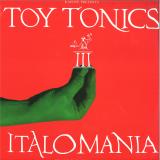
Various - Kapote presents Italomania Vol. 3 (2x12")

Toy Tonics ITALOMANIA Vol. 3 is a compilation dedicated to NEW ITALIAN DISCO. (Not Italo Disco.) 14 young contemporary Italian producers made new organic disco, indie dance, pop house tracks with Italian vocals. Everything on this compilation has been produced in 2024. Fresh dance music by Italian artists Paul Older, Riva Starr, Valentino Vivace, Sam Ruffillo & Fimiani, Kymono, Mille Punti, Mind Enterprises, Bruno Belissimo and legendary cosmic disco pioneer Daniele Baldelli + french italo hitmakers Dov'e Liana. The ITALOMANIA compilation was initiated by Toy Tonics boss Kapote. Italo-German producer, DJ, keyboarder and head of Toy Tonics and Gomma records. ITALOAMNIA is a MANIFESTO to show the status of Italian Disco of today. Kapote invited the most relevant Italian producers to make new tracks with Italian vocals and show different styles of modern Italian disco with Italian vocals.

Italian Disco is not Italo Disco. The last years the trashy pop music of the 1980’s called Italo Disco (with English lyrics) had a big revival. But this compilation is about something else: It’s about this Italian Disco. Because the popularity of good Italian pop music is rising all over the world. And Toy Tonics want to show a new way to combine Italianity with dance culture. Its funny that also in France, Swiss and Germany there are new artists singing in Italian. Let’s not forget: The culture of party, dancing, show bizness and pop music would be unimaginable without the heritage and creativity that Italians contributed Italy is not just the country of good food, beaches and high fashion, but it’s also the original country of dance music. Since the ancient roman times the Italians have been the kings of entertainment. And if it comes to music; The DISCO wave of the 1970ies and the Pop music of the 1980ies has been co-created by Italians (and Italoamericans in New York).

No en stock

Haga su pedido ahora y le encargaremos el artículo en nuestro proveedor.

20,38

Ültimo hace: 13 Días
LYDIA LOVELESS - REAL

LYDIA LOVELESS

REAL

12inchLPBS219
BLOODSHOT
23.06.2025
  • A1: Really Want To See You
  • A2: Wine Lips
  • A3: Chris Isaak
  • A4: To Love Somebody
  • A5: Hurts So Bad
  • B1: Head
  • B2: Verlaine Shot Rimbaud
  • B3: Somewhere Else
  • B4: Everything's Gone
  • B5: They Don't Know, Written-By – Kirsty Maccoll
Reservar23.06.2025

debe ser publicado en 23.06.2025

27,10
Mark Ernestus' Ndagga Rhythm Force - Khadim

Khadim is a stunning reconfiguration of the Ndagga Rhythm Force sound. The instrumentation is radically pared down. The guitar is gone; the concatenation of sabars; the drum-kit. Each of the four tracks hones in on just one or two drummers; otherwise the sole recorded element is the singing; everything else is programmed. Synths are dialogically locked into the drumming. Tellingly, Ernestus has reached for his beloved Prophet-5, a signature go-to since Basic Channel days, thirty years ago. Texturally, the sound is more dubwise; prickling with effects. There is a new spaciousness, announced at the start by the ambient sounds of Dakar street-life. At the microphone, Mbene Diatta Seck revels in this new openness: mbalax diva, she feelingly turns each of the four songs into a discrete dramatic episode, using different sets of rhetorical techniques. The music throughout is taut, grooving, complex, like before; but more volatile, intuitive and reaching, with turbulent emotional and spiritual expressivity.

Not that Khadim represents any kind of break. Its transformativeness is rooted in the hundreds upon hundreds of hours the Rhythm Force has played together. Nearly a decade has passed since Yermande, the unit's previous album. Every year throughout that period — barring lockdowns — the group has toured extensively, in Europe, the US, and Japan. With improvisation at the core of its music-making, each performance has been evolutionary, as it turns out heading towards Khadim. “I didn’t want to simply continue with the same formula," says Ernestus. “I preferred to wait for a new approach. Playing live so many times, I wanted to capture some of the energy and freedom of those performances.” Though several members of the touring ensemble sit out this recording — sabar drummers, kit-drummer, synth-player — their presence abides in the structure and swing of the music here.

Lamp Fall is a homage to Cheikh Ibra Fall, founder of the Baye Fall spiritual community. The mosque in the city of Touba is known as Lamp Fall, because the main tower resembles a lantern. Soy duggu Touba, moom guey séen / When you enter Touba, he is the one who greets you. After a swift, incantatory start Mbene sings with reflective seriousness. Her voice swirls with reverb, over a tight, funky, propulsive interplay between synth and drums, threaded with one-two jabs of bass. Cheikh Ibra Fall mi may way, mo diayndiou ré, la mu jëndé ko taalibe... Cheikh Ibra Fall amo morome, aboridial / Cheikh Ibra Fall shows the way forward, he gives us strength, he gathers his disciples... Overflowing with grace, Cheikh Ibra Fall has no equal.

Interwoven with Wolof proverbs, Dieuw Bakhul is a recriminatory song about treachery, lies, and back-biting. Over moody, roiling synths and ominous, lean bass, Mbene throws out fluttering scraps of vocal, as if re-running old conversations in her head. The music shadows her despair to the verge of breakdown, at one moment seemingly so lost in thought and memories, that it threatens to disintegrate. Bayilene di wor seen xarit ak seen an da ndo... Dieuw bakhul, dieuw ñaw na / Stop judging your friends and companions... A lie is no good, a lie is ugly.

Khadim is a show-stopper; currently the centrepiece of Ndagga Rhythm Force live performances. The song is dedicated to Cheikh Ahmadou Bamba, aka Khadim, founder of the Mouride Sufi order. Serigne Bamba mi may wayeu / Serigne Bamba is the one who makes me sing. The verses name-check revered members of his family and brotherhood, like Sokhna Diarra, Mame Thierno, and Serigne Bara. Though Islam has been practised in Senegal for a millennium, it wasn’t until the start of the twentieth century that it began to thoroughly permeate ordinary Senegalese society, hand-in-hand with anti-colonialism. The verses here recall Bamba’s banishment by the French to Gabon, and later to Mauritania, in those foundational times. During exile, his captors once introduced a lion to his cell: gaïnde gua waf, dieba lu ci Cheikhoul Khadim / the lion doesn’t budge, it gives itself over to Cheikh Khadim. Deep, surging bass, steady kick-drum, and simple, reverbed chords on the off-beat lend the feel and impetus of steppers reggae. A reed plays snatches of a traditional Baye Fall melody; the dazzling polyrhythmic drumming is by Serigne Mamoune Seck. Mbene compellingly blends percussive vocalese, narrative suspense, exultant praise, introspection, and grievance.

Nimzat is a devotional tribute to Cheikh Sadbou, a contemporary of Bamba, buried in a mausoleum in Nizmat, in southern Mauritania. Way nala, kagne nala... souma danana fata dale / I call upon you and wonder about you... If I am overwhelmed, come to my aid. The town holds special significance for Khadr Sufism. An annual pilgrimage there is conducted to this day. The rhythm is buoyantly funky; the mood is sombre, reined-in, foreboding. Punctuated by peals of thunder, Mbene sings with restrained, intense reverence; huskily confidential, steadfast. Nanu dem ba Nimzat, dé ba sali khina / Let us go to Nimzat, to seal our devotion.

Mbene Diatta Seck: vocals.
Bada Seck: bougarabou, thiol, mbeung mbeung bal, tungune.
Serigne Mamoune Seck: bougarabou, khine, mbeung mbeung, tungune.
Text by Mark Ainley (Honest Jons).
Mastered by Rashad Becker.
Everything else by Mark Ernestus.

No en stock

Haga su pedido ahora y le encargaremos el artículo en nuestro proveedor.

22,65

Ültimo hace: 3 Meses
LE VOLUME COURBE - PLANET PING PONG
  • Duffy And Mr Seagull
  • Mind Contorted
  • Fourteen Years
  • The Moon Song
  • Two-Love
  • Rêve Réveiller
  • Bag Of Excuses
  • To Know Him Is To Love Him
  • Mri Song
  • Alone On The Rope
  • Planet Ping Pong

Third album by singer and producer Charlotte Marionneau. A collection of sonic trips that try to capture the spark of beat poetry. She is almost a magician who has captured the directness of punk and can do magic with the emotion of pop. And she is always in the experimental grab bag. On the track 'Two-Love' Noel Gallagher plays piano and bass. Further on there is a Daniel Johnston cover presented as a duet with Terry Hall and his son Theodore and here Noel plays guitar. Marionneau reminds one of a female Syd Barrett. She counts among her admirers: Kevin Shields, Mazzy Star, Noel Gallagher, The Television Personalities, Simon Raymonde, Grimm Grimm, Piano Magic and Cillian Murphy. Le Volume Courbe "Planet Ping Pong" is a collection of sonic trips echoing fulgurances of beat poetry. Charlotte is a magician who can weave the directness of punk with the emotions of pop while staying in the realms of edgy experimentation. The bunny comes out of the hat smoking a cigarette and looks you in the eye. The single "Two-Love" is a collaboration with Noel Gallagher on piano and bass and Lascelles Gordon on percussions. The album also includes a cover by Daniel Johnston "Mind Contorted" which is presented as a duet with Terry Hall, and also features his son Theodore Hall and Noel Gallagher on guitars. The originality of Charlotte's music shares something with outsider art: naïve, primitive, primal, rather than following the standard rules. The new album selfproduced and mixed by Brendan Lynch and Charlotte is no exception, It's a unique and compelling listen laced with surprises, subversions and a refreshing candour which sets it apart from anything else. Charlotte was born and raised in France and moved to London in 1995. She was first signed to Alan McGee Poptones label in 2001, and her debut "I killed my best friend" was released in 2005 on Honest Jon's Records. She has also worked with a number of other bands and musicians including Kevin Shields, Mazzy Star, Noel Gallagher, The Television Personalities, Simon Raymonde, Grimm Grimm, Piano Magic etc.. Her song "Born to Lie" was featured in Series 2 of Killing Eve and Spotify selected her song "Rusty" for their "best of the decade 2010-2020" alternative compilation. Cillian Murphy selected the same song for his BBC6 compilation. "She reminds me of a female Syd Barrett... she keeps running into me all over the place from concerts or serving me ice cream at the Curzon on a wet Saturday night or on Jools Holland with the High Flying Birds... I love Charlotte... a great talent and a real psychedelic soul musician." Alan McGee "Inspiring originality, fiercely independent beautiful music, always years ahead of its time. I remember hearing Charlotte's music for the first time and being immediately taken by the freshness, great melodies and utterly unique approach." Kevin Shields "When I first met her she was wearing a cape... she looked like a little piece of Lego. She told me she liked some of my songs but not all. (I hadn't even asked her opinion!!) She's beautiful, fearless and one hell of a tambourine player." Noel Gallagher. "Charlotte is bewitchingly talented, a true rarity that has inspired many creative people. The kind of woman songs are written about. She's an artist that steals your heart away and then comforts you with her stunning music." Hope Sandoval. "A true original and a truly unique artist. There is not many I can say this about, but I honestly think I love everything she's ever recorded! All hail the Scissor Queen!" David Holmes.


e BAG OF EXCUSES [V3]

[g] DUFFY AND MR SEAGULL [V3]

[i] MIND CONTORTED [V4]


[e] BAG OF EXCUSES [V3]

[g] DUFFY AND MR SEAGULL [V3]

[i] MIND CONTORTED [V4]

Reservar13.06.2025

debe ser publicado en 13.06.2025

26,85
Ches Smith - Clone Row

I must admit to being a sucker for two-guitar bands. Ok, Hendrix pulled off a trio. But I don’t care what anybody says: The Yardbirds were a better band than anything that came out of them (Ok, maybe not Zep. But Cream?).

Maybe the reason I go back so far in my references is that, within the two-guitar band format, original new roles are difficult and rare. There’s the classic (socially problematic and often boring) “rhythm/lead” solution. There’s the JB’s or Nile Rodgers’ chicken pickin’ vs comping solution (which avoids chordal clashes by relegating one of the guitars to the role of single-note percussion instrument). There’s Ornette’s Prime Time division between Bern Nix’s rolled-off “jazz” tone and Charles Ellerbee’s trebly wah. Almost everything else is a variation on one of these.


In Ches Smith’s record Clone Row, each piece is built around a different concept for guitar interaction. The delightful and gifted weirdness of Mary Halvorson’s playing is counterpointed, contrasted, unisoned with, played off, juxtaposed (that is to say, enters every relationship possible) with Liberty Ellman’s equally amazing sound palette, chops, and imagination. This definitely ain’t your father’s guitar band.
The overall vibe of the record—despite Halvorson’s occasional noise outbursts or Ellman’s distorted guitar lines (see Mixed Fridge) is neither punk/funk, nor Zorn-ish metal—and certainly not the looser parameters of Ornette’s improvised harmolodics. Smith’s vibraphone playing, Halvorson’s guitar tone (whammy pedal squiggles aside), the brilliant electronics, and (most of all) the compositions themselves are somehow strangely West Coast cool. It’s as if I’m hearing a Jim Hall concert in which one of us did a lot of mushrooms, or (dare I write this?) some post-punk post-Dave Brubeck post-trip-hop experiment with classical form.

This recording is, most of all, about Ches as composer. He’s picked up a lot on his long, strange trip of the last few decades. The Haitian funkiness of his work with We All Break is audible—but deeply buried, encoded in the polyrhythms (check out Heart Breakthrough). His long-running side musician collaborations with John Zorn and Tim Berne are also evident but sublimated here into something new.

Not that improvising is absent. Check out the compelling collective statements in Sustained Nightmare and Ready Beat. Check out the brilliant interplay and bass soloing on Abrade With Me (a Weather Report for the age of extreme weather?) Nick Dunston is my favorite bassist of the new generation, and he plays brilliantly throughout. And Ches’ drumming here has all the groove, energy, and incredible range that have kept him in demand from Saturday night Vodou services to jazz and new music recording sessions (…the thinking man’s rock barbarian?).
The sus chords in Abrade With Me do build, for a moment, towards a fusion type of climax...but just at the moment I was gritting my teeth in anticipated defense against some horrible synth solo, the drums drop out, and we’re transported to the ambient lounge at the rave, and we suddenly understand we’re in the hands of a composer with the power to transport us just about anywhere.
So, this is a composer’s record most of all; a composer’s record performed by musicians who happen to be great improvisers. Ches Smith builds here on his reputation as a gifted new voice with an important vision, while showcasing some of the most creative musicians of our time.

Reservar06.06.2025

debe ser publicado en 06.06.2025

34,41
Dinosaur Jr - Without A Sound LP

Dinosaur Jr

Without A Sound LP

12inch2917582CYR
CHERRY RED
16.05.2025

Originally released in the summer of 1994 at the height of interest in the US underground rock scene, ‘Without A Sound’ was Dinosaur Jr’s sixth album, and their third major label offering. Recorded by the then two-piece band (Mike Johnson on bass and vocals, J Mascis performing everything else himself, including drums), the album saw Dinosaur Jr continue to deliver on their distinct formula, J’s soul-searching songs being performed with his trademark effortlessly cool heavy style. Including classics such as ‘Feel The Pain’ and ‘Grab It’, the album remains a firm fan favourite. Released on highly collectable splatter green vinyl to commemorate the band’s flurry of ‘Without A Sound’ themed live shows in May 2025, this is a chance for the uninitiated and younger fans to discover a classic, and for familiar fans to revisit an album which sounds as vibrant and essential today as it did thirty years ago.

Reservar16.05.2025

debe ser publicado en 16.05.2025

32,56
Various - SECRET SUPERSTAR SOUNDS LP

Soul Jazz Records’ new Secret Superstar Sounds brings together a wealth of incredibly catchy tunes from late-70s/early-80s British groups that you have probably never heard of! Powerpop mixed together a love of lyrical and melodically beautiful 60s pop and garage sounds, together with the energy and attitude of 70s punk. Almost completely out of kilter with the fashions of the day (punk, new wave and post-punk) these bands managed to fall between the musical cracks at almost every step of the way – leaving them practically unknown to all but a few.

Inspired by the D-I-Y messaging of bands like The Desperate Bicycles, Sniffing Glue fanzine and early UK punk labels like Stiff, Chiswick and Rough Trade, these bands chose mainly to go into a studio and make their own private press/D-I-Y records themselves – then try to work out everything else (promotion, marketing, etc) afterwards. As mainly outsiders to the mainstream music industry, and usually unable to make any inroads into it, save for sending their own record to John Peel, most of these bands fell at the first hurdle.

These records remain both beautifully crafted 3-minute musical gems, and long-lost micro-histories of an essentially hidden genre.
Featured bands here include The Squares, The Meanies, The Monitors, Plummet Airline, Tours, Gobblinz, Krypton Tunes and more. Most of these records were self-published D-I-Y releases made in very limited-editions and were often the only tracks ever released by these groups.

No en stock

Haga su pedido ahora y le encargaremos el artículo en nuestro proveedor.

26,85

Ültimo hace: 10 Meses
OH SEES - ORC (2025 REISSUE) LP 2x12"
  • The Static God
  • Nite Expo
  • Animated Violence
  • Keys To The Castle
  • Jettisoned
  • Cadaver Dog
  • Paranoise
  • Cooling Tower
  • Drowned Beast
  • Raw Optics

The Oh Sees wasted no time in racing headlong into nightmarish battle with the mighty Orc, clawing even farther up the ghastly peak stormed so satisfyingly by their previous A Weird Exits. The band is in tour-greased, anvil-on-a-balance beam, gut-pleasingly heavy form, nimbly braining—with equal dashes of abandon and menace—on this fresh batch of bruisers and brooders, hypnotically stirred into to the cauldron of chaos you’ve come to expect. On Orc, fresh blood Paul Quattrone joins Dan Rincon to form a phalanx of interlocking double drums, alternately propelling and fleet-footing shifting ground to pinion John Dwyer’s cliff-face guitars to the boogie. Tim Hellman keeps it swinging like a battle-axe to the eyebrows. The tunes veer toward the violence of their live shows, with a few tasty swerves into other lanes: heavy to lush, groovy to stately. Throughout, it remains sinister in its swaggering skulk, manic in its fuzz-fried fugues. They hit all the sweet spots the heads foggily remember, and there’s plenty to sweat over if you just hopped into the sauna. More evil…more complex…more narcotic…more screech… more blare…more whisper…there’s even more Brigid. Less “Thee,” but more of everything else.

Reservar09.05.2025

debe ser publicado en 09.05.2025

50,84
Eric OS - Underworld

Eric OS

Underworld

12inchST004
Space Trace
11.04.2025

We are so back.

This time with a different approach. Focusing on what just feels right and letting go of everything else. Last year was not spent in silence and this one won’t be either. Join us for Underworld, a 6-track mini album by Eric OS.

Hope you enjoy!

No en stock

Haga su pedido ahora y le encargaremos el artículo en nuestro proveedor.

12,56

Ültimo hace: 5 Días
Artículos por página
N/ABPM
Vinyl