A new Memory Remains journey on Wax: A Four-Track Vinyl That Captivated Dancefloors
After months of exclusive testing across diverse club spaces and underground venues, this much-anticipated vinyl release is finally available for all. Four tracks, each carrying its energy and narrative, come together to form a singular listening experience—crafted for dance floors, yet timeless in their emotional depth.
A1: Unknown – Naha Naha
A vibrant, hypnotic opener that merges the ethereal with the rhythmic. The vocal, a fusion of Bambara influences, drifts over the playful pulse of bongo-driven percussion, while the sitar weaves an entrancing melody. The result? A high-spirited, kinetic groove that invites movement and joy.
A2: Unknown – Haciéndome Drogado
A deep, sun-kissed journey infused with the warmth of Spanish vocals and a breezy, immersive vibe. This track captures the essence of carefree summer nights, where music, movement, and emotion become one. A deep house gem with a magnetic pull.
B1: Unknown – Mom, You Make Everything Beautiful
No words are needed—only feeling—a heartfelt tribute to the transformative love of mothers, where every touch brings beauty. Melodic, evocative, and steeped in emotion, this track resonates deeply with the soul, making it a standout moment on the record.
B2: Unknown – Whispers
Closing the journey is an enchanting, introspective piece featuring a haunting female vocal and a spellbinding solo guitar. Drifting between melancholy and warmth, this deep house masterpiece leaves a lasting imprint, wrapping the record in an aura of mystery and elegance.
Now pressed on vinyl, this collection is ready to be discovered, shared, and cherished. The wait is over—the music is yours.
Music by Kirik
Search:everything for eve
It was the 90s. Paris had the blues, French rap was beginning its slow rise, and a new musical genre was emerging: Acid Jazz. Imported from England by DJ Gilles Peterson, this groovy style blended 70s funk with a certain idea of jazz tailored for the dancefloor. Its heroes were Galliano, Brand New Heavies, Incognito, and the James Taylor Quartet. Jamiroquai topped the charts, MC Solaar recorded with Urban Species, and suddenly, France was swept up in the swing whirlwind. Starting in 1993, Parisian clubs embraced this union of jazz and groove, and in 1994, a compilation was released: Paris Groove Up. Around ten groups delivered the French version of this British style: Mellowman, Mad In Paris, Vercoquin, Ready Made... and Dis Bonjour À La Dame. The band wasn’t new—their roots went back to the late 80s, when bassist Marc Israël brought together a brass section and some seasoned musicians. But the real beginning of DBALD came in 1992 with the arrival of singer Sital. "Christophe Denis joined on guitar and songwriting. In 1993, we opened for Jamiroquai and Maceo Parker, and that’s when the major labels interested in the acid jazz market started noticing us," recalls Marc. Their track Chris’tal, the centerpiece of the compilation, was released as a single, and Dis Bonjour À La Dame's album began production in late 1994 in London, at Roundhouse Studio. “We must’ve been among the last sessions there—it was demolished shortly after. It was a very 70s studio, with old gear, a Fender Rhodes, everything was vintage! We recorded for a month, all playing together live, then added the brass and finally Sital’s vocals. We were lucky to have two exceptional backing singers, Sarah Brown and Mark Anthoni, who worked with Incognito and Urban Species.” The self-titled album came out in early 1995, and it had all the ingredients of a hidden funky gem from the 90s: Hey Mama with its ironclad groove, the irresistible instrumental Sheherazade Groove opening the record, Soul Body with its R\&B sensuality... The hip-hop touch came courtesy of Lee Rick’s, the MC from Mellowman, who laid down rhymes on Hall Blues. The brass section was on fire, the bass went wild, and Sital added a sensual spark to the whole thing. In short, a solid album produced by Fred Versailles (producer of NTM’s first album) and mixed by Paul Borg (Urban Species, UFO, -M-, Mory Kanté), a testament to a time when big funky bands made Paris groove—with Dis Bonjour À La Dame leading the charge. Nearly thirty years later, it’s time to (re)discover DBALD.
The follow up to the critically acclaimed 'Environments', the new album takes a new, more melodic orientated path for the band.
The album is truly epic; 14 tracks and 57 minutes of strings, choirs, sea sounds, cellos, light beats and, of course, everything that made the first Environments album great.
Since the original release of the CD in 2008, and subsequent releases in the series to 'Environment 5' in 2014, there has been growing demand for vinyl and so for the first time this year we bring 'Environments 2' in that format. (CD TOT 62 still available)
Serenda is a London-based DJ and producer of Guyanese and Greek heritage, known for her rich, eclectic sound rooted in house but never confined by it. Her sets fold between soulful depth and experimental edge, always delivered with a bold, contemporary vision.
Her sets are grounded in rhythm and instinct, built less around genre than sensation. She blends percussive house, warped club music, and raw, organic textures; crafting dancefloors that feel immersive and visceral and emotioanlly charged . There’s a physicality to her sound that edges toward the primal. For Serenda, DJing is a form of play - fluid, responsive, and deeply connected.
She deconstructs and distorts house music with intent, letting in pressure, dissonance, and emotional rupture. Her sets draw on the “timeless mindless states” of Mancuso’s The Loft, unfolding as rituals that don’t smooth over the chaos, they work with it.
Following the release of her debut EP The Prophecy on Josh Caffe’s Love Child label, she made her mark with a headline show in Fabric’s Room 2 and a Rinse FM residency. A regular in London’s queer underground, Serenda is also shaped by New York’s experimental club scene, where experimental sound and unfiltered expression mirror her own ethos.
Afro-diasporic and South American ritual in tension with city life, instinctive rhythm against digital overstimulation. Her fascination with world-building and quantum physics runs through everything she creates, fusing sonic design and sensory experience into one evolving landscape
- A1: Queen - Somebody To Love
- A2: Electric Light Orchestra - Livin' Thing
- A3: Fleetwood Mac – Say You Love Me
- A4: 10Cc - I'm Mandy Fly Me
- A5: Dr. Hook - A Little Bit More
- A6: Chicago – If You Leave Me Now
- A7: Eric Carmen - All By Myself
- B1: Frankie Valli & The Four Seasons – December, 1963 (Oh, What A Night)
- B2: Leo Sayer - You Make Me Feel Like Dancing
- B3: David Dundas - Jeans On
- B4: Bryan Ferry - Let's Stick Together
- B5: Sailor - A Glass Of Champagne
- B6: Smokie - I'll Meet You At Midnight
- B7: Slik - Forever And Ever
- B8: Showaddywaddy – Under The Moon Of Love
- B9: Brotherhood Of Man - Save Your Kisses For Me
- C1: Elton John & Kiki Dee - Don't Go Breaking My Heart
- C2: Cliff Richard – Devil Woman
- C3: Tina Charles - I Love To Love
- C4: The Real Thing - You To Me Are Everything
- C5: Billy Ocean - Love Really Hurts Without You
- C6: Dana - Fairytale
- C7: R & J Stone - We Do It
- C8: Gladys Knight & The Pips - Midnight Train To Georgia
- D1: Wings - Silly Love Songs
- D2: Neil Diamond - Beautiful Noise
- D3: Daryl Hall & John Oates – She’s Gone
- D4: Paul Simon - 50 Ways To Leave Your Lover
- D5: Thin Lizzy - The Boys Are Back In Town
- D6: The Who - Squeeze Box
- D7: John Miles - Music
- E1: Donna Summer - Love To Love You Baby
- E2: Andrea True Connection - More, More, More
- E3: Candi Staton – Young Hearts Run Free
- E4: Melba Moore - This Is It
- E5: Diana Ross - Love Hangover
- E6: Tavares - Heaven Must Be Missing An Angel (Part 1)
- E7: Barry White - You See The Trouble With Me
- E8: The Isley Brothers - Harvest For The World
- F1: Dolly Parton - Jolene
- F2: Pussycat - Mississippi
- F3: Bonnie Tyler - Lost In France
- F4: Demis Roussos - Forever And Ever
- F5: Guys N Dolls - You Don’t Have To Say You Love Me
- F6: Gallagher And Lyle - Heart On My Sleeve
- F7: Joan Armatrading - Love And Affection
- F8: Elton John - Sorry Seems To Be The Hardest Word
next instalment in our ongoing ‘Yearbook’ series – pressed in lovely-lime-green vinyl on a 3-LP set packed with 47 stellar tracks celebrating a brilliant year of pop singles. NOW – Yearbook 1976.
LP1: Kicking off in magnificent style with signature songs from legendary artists: A #2 in 1976, Queen’s ‘Somebody To Love’ is first up, followed by Electric Light Orchestra with ‘Livin’ Thing’, Fleetwood Mac with ‘Say You Love Me’, and 10cc with ‘I’m Mandy Fly Me’. Dr. Hook had a huge hit with ‘A Little Bit More’, and Chicago hit #1 with their all-time classic ballad ‘If You Leave Me Now’, while the side closes with Eric Carmen’s enduringly popular ‘All By Myself’. Flip the LP over for huge hits from the year – including 4 #1s: 14 years after making their UK chart debut, Frankie Valli & The Four Seasons enjoyed their first chart-topper with ‘December 1963 (Oh What a Night)’, whilst Leo Sayer reached #2 in the UK, and #1 in the US with ‘You Make Me Feel Like Dancing’. Pop gems follow from David Dundas, Bryan Ferry, Sailor, Smokie – and Slik, featuring a pre-Ultravox Midge Ure reached the top with ‘Forever And Ever’. Showaddywaddy celebrated their biggest hit and their first #1 with ‘Under The Moon Of Love’, and the UK won at Eurovision, with the winner ‘Save Your Kisses For Me’ by Brotherhood Of Man not only hitting the #1 spot but also becoming 1976’s biggest seller and bringing the first LP to a close.
LP2: Opening with a stellar run of pure-pop classics. Elton John celebrated his first UK #1 single, in a duet with Kiki Dee on ‘Don’t Go Breaking My Heart’, and Cliff Richard with ‘Devil Woman’, ahead of dance-floor favourites – and both #1s in ’76: Tina Charles with ‘I Love To Love’ and The Real Thing with ‘You To Me Are Everything’. More pop nuggets follow from Billy Ocean and Dana, before the side finishes with R&J Stone with ‘We Do It’ and the sublime ‘Midnight Train To Georgia’ from Gladys Knight & The Pips. Over on the second side, ‘Silly Love Songs’ gave Wings a UK #2 and became ‘76’s biggest seller in the US and opens a run of great vocalists; Neil Diamond, Daryl Hall & John Oates with ‘She’s Gone’, Paul Simon’s ’50 Ways To Leave Your Lover’ and a trio of the year’s classic rock smashes: ‘The Boys Are Back In Town’ from Thin Lizzy, ‘Squeeze Box’ from The Who, and closing with the epic ‘Music’ from John Miles.
LP3: Celebrating ‘76’s dancefloor with a stunning collection of disco and soul gold: First up, Donna Summer with her debut smash ‘Love To Love You Baby’ before ‘More More More’ from Andrea True Connection and Candi Staton’s timeless ‘Young Hearts Run Free’. Melba Moore with ‘This Is It’ comes ahead of Diana Ross with the genre-defining ‘Love Hangover’, and the side is completed with huge floor-fillers from Tavares and Barry White ahead of The Isley Brothers with the soul standard ‘Harvest For The World’ and over on the final side country music is represented with Dolly Parton making her UK singles chart debut with ‘Jolene’ three years after it was a hit in the US, but it was a Dutch band, Pussycat, who hit the top with their country-pop track ‘Mississippi’. Bonnie Tyler made her chart debut with ‘Lost In France’, and ‘Forever And Ever’ gave Demis Roussos a ’76 chart topper, and an easy-listening classic, whilst Guys N Dolls had a second Top 5 hit with their cover of ‘You Don’t Have To Say You Love Me’. The LP ends with a trio of the year’s most beautiful ballads: Gallagher And Lyle with ‘Heart On My Sleeve’, ‘Love And Affection’ the stunning singles chart debut for Joan Armatrading, and finishing with a second peerless single on this collection from Elton John with ‘Sorry Seems To Be The Hardest Word’.
NOW – Yearbook 1976 – a celebration of the diversity and wonderful creativity of a truly fabulous year in pop.
raum…musik welcomes Italian producer Santos for his debut on the label with Human Factor EP — a versatile four-tracker blending tech house, deep house, minimal, and acid, crafted with the finesse of someone two decades deep in the game.
The EP opens with “Some We Are,” a deep acid house track driven by a steady groove, bubbling 303s, and teasing vocal snippets. Atmospheric pads and warm chords emerge as the track evolves, balancing dancefloor function with rich detail.
“Paragonal” shifts gears with sampled breaks and emotional synth stabs layered over a 4x4 pulse. Hazy vocals and spacey effects give it a bright, euphoric edge while keeping it floor-ready.
On the B-side, “Done Everyday” leans into swing-heavy deep house territory. Shuffled hats, micro-programmed percussion, and a solid sub-bass glue everything together — minimal house with punch and precision.
“Kink In Me” closes the record with a more experimental mood. Sparse and hypnotic at first, it patiently unfolds into a deep, quirky, and rhythmically rich groover of jazzy chords and dubby textures.
With Human Factor EP, Santos delivers a polished and dynamic record that speaks to seasoned diggers and fast-moving dance floors alike. raum…musik continues its tradition of top-shelf, club-focused curation with this timeless release.
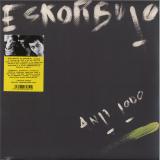
"Anti Todo" is Eskorbuto's most celebrated album, recorded in the shortest time imaginable and released in 1985. It shows what the Spanish punk band did best: hitting the studio with as much raw energy, provocation, inspiration, and natural talent as possible. A new remastering for this edition has given the album the richer, more vibrant sound it always deserved. We can once again enjoy the urgency, simplicity, and rage of this refreshed "Anti Todo", a true classic recorded at Eskorbuto's peak of their creativity and energy. It includes a large poster and insert with notes. DESCRIPTION 1985 was a landmark year for punk rock in the Basque country, and possibly for the whole of Spain. Punk merged with the Basque Radical Rock (Rock Radikal Vasco or RRV) movement, although this was not necessarily always the case. For instance, Eskorbuto invariably kept their distance from the movement and everything related to it. Hardship was part and parcel of Eskorbuto's life and musical career. All their albums were recorded in the shortest time imaginable, partly due to tight budgets (studios were expensive, labels were close-fisted), and partly because Josu and Jualma needed to spend the money on other things_ When it came to recording "Anti Todo", Eskorbuto stuck to what they did best: hitting the studio with as much raw energy, provocation, inspiration, and natural talent as possible. It was their best record and we have to ask: what would Eskorbuto have been capable of if they had more time, a bigger budget, and tighter control? The song 'Tamara' was practically composed on the spot in the studio in less than two recording days, as was much of 'Ha llegado el momento'. The experienced sound technician did an outstanding job, but a new remastering for this rerelease has given the album the richer, more vibrant sound it always deserved. We can once again enjoy the urgency, simplicity, and rage of this refreshed "Anti Todo", a true classic in our musical history, originally released in 1985 at Eskorbuto's peak of their creativity and energy. This edition of the album includes a large poster and insert with notes.
yellow vinyl[14,71 €]
Tech-Nology was launched in 2003 specifically to make records with the artist Bjorn Svin. Bjorn was the first Danish artist who made underground crossover into commercial hit territory via "Mer Strom" - but still keeping respect in the "real" music world for his enthusiasm, non-compromising style, persona, and sweaty live performance skills - his musical understanding and need to explore new directions took the crowd on a personal musical journey from jazz and classical musicians to early electronic pioneers - but always in a tone of his own. Bjorn always felt a need to escape norms, to grow and not to repeat, but investigate and create. The first record on Tech-Nology was born under the alias - El Far: Couples of lonely dancers. "Bjorn is maybe the most talented electronic producer ever in Denmark" and he was celebrated as a wonder kid by the media back in the 90's. An insider with new knowledge of Bjorn told us: "Yeah I think its good music.. It's not for everyone I must add, but it's definitely quality music for those who dig this sound.. sometimes a bit too deep.. which kind of works against it, cause you really need to listen to it.. you cannot just skip through it, cause then you don't really grasp the soul of it.. so this is what makes it more difficult to sell - but if a guy like this was a bigger name he would sell much better.."
We love Bjorn and we agree - We have tried to sell Bjorn and his music for over 2 decades now - But you can't capture Bjorn, you can't own him - he is only making music for himself - and you can get on the ride if you want to, but don't expect all the rides to be fun - sometimes it hurts! Bjorn is difficult to sell, but we don't think Bjorn really would like to sell much better if he had the option to do a more commercial approach to his music - because Bjorn is about not selling out, he's a purist at heart, making music documents for the few. Bjorn is bigger than superficial success and streaming numbers. He made jingles for Nokia, toured and played Roskilde's main stage, the biggest Festival in Denmark, but he still doesn't care... and that is important if you want to make interesting music that last for the future. When Bjorn met Mester Jakobsen, label boss of Tech-Nology, he has been releasing on numerous underground labels, made the jump to a major label, and everything more or less turned out as a big disappointment, so Bjorn presented a completely experimental album to the Tech-Nology label under the moniker Prinz Ezo - The Body Offset. We loved it then - we still love it now - and a truly collectors item and a secret DJ tool.
Today, Bjorn is still breaking all habits and rules, still doing the same thing - just in new ways, but he has gained insight on another level, adding even more nuances and textures to his post-genre compositions.
Welcome to the second album by Prinz Ezo on Tech-Nology: KURIER Why Kurier? Because Bjorn left to explore the Berlin Underground, shortly after the first two releases on Tech-Nology - he left his roots to search for a bigger meaning, a bigger understanding, to compose real mature sounds and understanding his skills, at the point where you understand why you have to cross borders, still incognito, doing smuggler-sounds, always in transit - between cities, between cultures, between worlds, time and space. Not Restless nor rootless, just forever on the move, always discovering new landscapes! But now Bjorn is settling down - accordingly with the music - to find - not inner peace, but to be completely in balance with the music inside of him. Prinz Ezo is raw, narrative, minimalistic electronic storytelling that refuses to freeze. Tension builds and releases - feel the energy and the drama for the last 2 decades if you dare to take the journey?
Almost twenty years after the first Prinz Ezo album, it has now been possible to make the music for those who never arrived.
- A1: Reise Der Schatten (Titles)
- A2: Sans Visages #1
- A3: The Wind Comes From The East #1
- A4: U?Berwacht #1
- A5: Pyrapulse
- A6: The Silver Tree #1
- A7: Tod Und Der Affe #1
- A8: The Wind Comes From The East #2
- A9: U?Berwacht #2
- A10: Candle With Wings #1
- A11: Tage Ohne Stunden #1
- A12: City Symphony
- B1: Candle With Wings #2
- B2: A Friend From The Deep #1
- B3: The Silver Tree #2
- B4: Paper Moon
- B5: Mechanocrab #1
- B6: Tage Ohne Stunden #2
- B7: Mechanocrab #2
- B8: Island Interlude
- B9: Mechanocrab #3
- B10: U?Berwacht #3
- B11: A Friend From The Deep #2
- B12: Mechanocrab #4
- B17: Tod Und Der Affe #2
- B13: Sans Visages #2
- B14: U?Berwacht #4
- B15: Assimilation
- B16: Sans Visages #3 (Credits)
»Reise der Schatten« (»Journey of Shadows«) is the soundtrack to the eponymous debut feature-length animation film by Swiss artist Yves Netzhammer. Composed by Anthony Pateras and released as a stand- alone album through Hallow Ground, the 29 pieces are based on »weird folk melodies ornamented with electro-acoustics to give the film a more fantastical, fairy-tale feeling,« as the composer puts it. His extensive international recording sessions with a slew of guest musicians results in a record imbued with a sense of mystical surrealism, otherworldly and haunting.
»Reise der Schatten« tells the abstracted story of a genderless being coming to terms with its identity and place in a world full of conflicts and systems of control. »The film was made with old animation software that only works on Mac OS 9. So already, we are in a very hermetic, unique space,« says Pateras. Having tried (and failed) to compose something »typically experimental,« he went for long walks in the Australian bushlands and came home with something else: the idea to create a soundtrack that would create »a kind of distance, or perceptual shift, but also a narrative drive and emotional context which is not always clear.«
While recording the album, the tētēma co-founder did not use digitally generated sound, instead workingwith live instrumentation whose sound palette was enriched by the use of feedback, tape delay, analogue synthesizers, and samples from vinyl records. Wanting to work primarily with acoustic instruments suchas the clarinet made Pateras embark on a complicated journey of his own. The initial recording sessions took place in Basel on metallophones that were designed by Domenico Melchiorre’s Lunason company and laid the foundation for everything that came after.
Pateras recorded with musicians such as guitarist Alexander Garsden, viola player Erkki Veltheim, clarinetist Aviva Endean, multi-instrumentalist Justin Marshall and Lizzy Welsh on the viola d’amore among other instruments. He recorded percussion and recorders with Rohan Rebeiro and Natasha Anderson in his hometown of Castlemaine, double bass with Benjamin Ward in Sydney, bass and flutes with Jon Heilbron and Rebecca Lane in Berlin, and electronics in Zürich with Netzhammer. »Reise der Schatten« was thus a literal journey, made with a »big, international electro-acoustic ensemble.«
As a stand-alone album, »Reise der Schatten« opens up a space of its own. Its stylistic diversity makes it atmospherically and emotionally multi-faceted. As its composer notes, »music for screen can be very virtuosic, sophisticated, and variegated!« His own work is a testament to that claim.
ele
What happens when you combine SUMAC: a band that uses the volume, distortion, and guitar-centric approach of metal to make music that has the malleability of jazz and textural exploration of noise with Moor Mother: a poet and sound artist that has deconstructed hip hop to a point where it"s less about rhyme and rhythm (though obviously both are present in her work) and more about oratorical cadence and power.
The Film is an album that takes attributes of both artists" work and finds common ground in shifting musical patterns, and expressive force. The record is a musical thumbing of their noses at the more traditional approaches of their respective fields, an innovative, powerhouse of an album. The Film"s moniker speaks to the fact that it is conceived and delivered as a complete album, a full story or narrative. Moor Mother puts it best: "The idea is to create a moment outside of the convention. This is a work of art.
Thinking about the work as a Film, instead of an album or a collection of songs. This task is impossible in an industry that wants to force everything into a box of consumption. You won"t understand or get the full picture until the artwork is completed. This work is developing and is requesting more agency within the creative process." The Film is just such a work, a nebulitic collaboration between SUMAC and Moor Mother.
2026 Repress
ANNE and Sera J close their Symbiosis series on Mutual Rytm with third and most refined EP yet.
This final chapter reflects everything the collaboration has stood for across a trio of inventive techno releases on SHDW's imprint. Creative and life partners ANNE and Sera J have been two voices growing in parallel, evolving separately but moving with the same pulse. ANNE is well established thanks to standout EPs on the likes of Soma and Hardgroove, while Sera J has released on the likes of Life in Patterns and Renegade Methodz, and both have featured on Mutual Rytm's 'Federation Of Rytm' series before now. 'Symbiosis III' is the moment where everything comes full circle: the culmination of a journey built on respect, creativity, and the freedom to explore their own paths while lifting each other forward.
Sera J kicks off with 'Ransomware', a commanding and driving techno cut lit up with flashy synths but always moving with urgency. 'Phosphate' keeps the energy levels high with stripped-back drums and bass designed to perfection, while 'Anthrax' has an anxious edge. The synths are wispy but evocative as bass kills and swiping filters bring the drama.
ANNE then ups the ante with the acid-tinged 'Dementia', which is loopy and unrelenting before 'A Taste of a Real Woman' gets more seductive with a sultry spoken word and sustained chords that bring the paranoia. 'Heart Rate' is propulsive with Detroit-style synth soul and an aching vocal, before Sera J returns with 'On the Run' - a percussive, trippy and eerie roller. His final Cut 'Similar Minds' has a searching synth surveying a desolate landscape, before ANNE then closes the EP with the punchy drum patterns and icy hi hats of 'Primal Howl Of Ego' and a blend of deep drums and evocative synth work on the 'Analog Heartbeat' - which proves potent techno can be beautiful.
- 1: Cat’s In The Cradle
- 2: I Wanna Learn A Love Song
- 3: Shooting Star
- 4: 30,000 Pounds Of Bananas
- 5: She Sings Songs Without Words
- 6: What Made America Famous?
- 7: Vacancy
- 8: Halfway To Heaven
- 9: Six String Orchestra
How enduring is the signature song from Harry Chapin’s Verities & Balderdash? So timeless that it became the subject of a 2025 documentary in which artists from multiple generations weigh in on its impact on their lives and craft. “Cat’s in the Cradle” doubtlessly remains the main event on the singer-songwriter’s 1974 album. The legendary opening track also serves as a guidepost for the bold personal and social material that follows — as well as the gorgeous folk-rock arrangements that underpin the New York native’s most commercially successful work.
Sourced from the original master tapes, pressed at Fidelity Record Pressing, housed in a Stoughton jacket complete with a four-page insert, and strictly limited to 3,000 numbered copies, Mobile Fidelity’s 180g 33RPM LP of Verities & Balderdash presents Chapin’s fourth full-length in audiophile quality for the first time on vinyl. Captured during a golden era for sonics and production, the Top 5 effort features remarkable tonal balance, instrumental separation, and organic naturalism. Those valued aspects come into supreme focus on this reissue, which plays with dead-quiet surfaces and a low noise floor.
The newfound clarity, openness, and imaging underscore the lasting appeal of Chapin’s tender deliveries, soulful timbre, and careful phrasing. Every word comes across with incredible realism, while his underrated guitar playing occupies its own distinctive space. Also notable: The extension of the tasteful string accents; airiness of the backing vocals; depth and shape of the spare bass lines; and width and depth of the soundstaging. When on “Six String Orchestra” Chapin calls out names of instruments, they appear like magic, the band performing feet from you. Chapin has never sounded so lifelike on record.
Certified double platinum, Verities & Balderdash resonated with the times and public. “Cat’s in the Cradle” reached No. 1 on the chart on its way to being inducted into the Grammy Hall of Fame. The romantic ballad “I Wanna Learn a Love Song” flirted with the Top 40 and wrapped listeners in the equivalent of a cozy blanket. The record’s other single, the mini-epic “What Made America Famous?,” helped establish Chapin as one of the country’s most incisive and insightful commentators.
Verities & Balderdash teems with situational devices and topical matters. Chapin observes everything from the polarization of the nation to changes in moral standards and cultural priorities. He investigates pressing themes without ever turning preachy or elevating himself above the matters at hand. On “Halfway to Heaven,” whose coda races to the finish and ranks as the most urgent moment on the record, Chapin inhabits the mind of his frustrated protagonist akin to an eagle-eyed novelist.
Conveying emotions that range from melancholic to carefree, Chapin is as much of a singer as a storyteller. He assumes the voice of multiple characters within a single narrative. During the quirky “30,000 Pounds of Bananas,” a tale based on a delivery-truck accident in 1965, Chapin alters his delivery, pronunciation, and diction to become an old man reflecting on the mishap and mess. The tempo, too, adjusts to match the speed of the vehicle Chapin describes.
Adorned with timely laugh tracks to reinforce the bittersweet humor, the stripped-down “Six String Orchestra” takes everything up another notch, with Chapin intentionally missing guitar notes or playing a broken passage to illustrate the failures of the hopeful protagonist who doesn’t have what’s required to make it as an artist.
Chapin, of course, did not have any such problem. The lynchpin of a career cut short by a tragic traffic incident, Verities & Balderdash is Exhibit A of the savvy craft, feeling, and perspective he lent to American music.
- A1: I Can't Wait
- A2: Rock A Little (Go Ahead Lily)
- A3: Sister Honey
- B1: I Sing For Things
- B2: Imperial Hotel
- B3: Some Become Strangers
- C1: Talk To Me
- C2: The Nightmare
- D1: If I Were You
- D2: No Spoken Word
- D3: Has Anyone Ever Writen Anything For You
Looking back on her career in the early 90s, Stevie Nicks described the first track of Rock a Little as “the most exciting song that I had ever heard.” This coming from a superstar who was already closely affiliated with several bajillion-selling Fleetwood Mac albums — to say nothing of her own benchmark solo debut. Her remarks attest to the enthusiasm and effort she invested in her third record, a 1985 work that quickly furthered Nicks’ profile and cemented itself as a piece of 80s pop lore.
Mastered at MoFi’s California studio, pressed at Fidelity Record Pressing in California, strictly limited to 4,000 numbered copies, and housed in a Stoughton gatefold jacket, Mobile Fidelity’s 180g 45RPM 2LP set presents Rock a Little in audiophile sound for its 40th anniversary. Helmed by a cadre of producers and engineers, and recorded for a reported one million dollars, the platinum-certified album teems with a head-spinning array of colors, tones, dreamscapes, and accents. This reference-grade reissue marks the first time they are all brought to light and conveyed with proper balance, dimensionality, and positioning.
Though Rock a Little doubtlessly has period characteristics of a mid-80s LP, Nicks and company spare no expense when it comes to distinguishing the music with expansive sonics distinguished with lush melodies, high-tech percussion, echoing vocals, sampled keyboards, and layers of sophisticated accents. The degrees of spaciousness, headroom, and dynamics are nothing less than inspiring, while the newly enhanced detail, texture, and clarity make the songs sing like never before. As for Nicks’ voice? Wait ’til you experience the transparency and depth.
Those advantages extend, of course, to the aforementioned “I Can’t Wait,” a statement-making opener shot through with modulating synthesizers, splashy drums, metallic guitars, and serious drama. Holed up in a massive studio, Nicks required just one take to nail her part, which she called “magic and simply not able to beat.” The singer-songwriter also distilled the reverberating emotional essence of the Top 20 tune, stating “when I hear it on the radio, this incredible feeling comes over me, like something really incredible is about to happen.”
The same can be said for nearly all of Rock a Little. Crafted by the likes of Songwriters Hall of Fame multi-instrumentalist/producer Rick Nowels, Heartbreakers organist Benmont Tench, bassist Bob Glaub, jack-of-all-trades Greg Phillinganes, and session-pro guitarists Waddy Watchel, Les Dudek, and Danny Kortchmar — along with another two dozen or so participants — the record spills with diverse ideas, shapes, and moods. Everything is in the right place, as evidenced by the swirling glide and sensual undertow of the slightly funky title track to the snapping rhythmic pace and big hooks of “Imperial Hotel,” one of Nicks’ standout moments.
“What was it she wanted?” Nicks queries on “No Spoken Word,” continuing a theme of contemplation that runs through the narratives. Nicks never lands on a definite answer, but hearing her explore loneliness, love, and the secrets we keep to ourselves proves continuously rewarding. Take her passionate performance on a cover of Chas Sanford’s “Talk to Me,” a Top 5 smash furthered by tasteful saxophone lines and understated folk elements. Immersive yourself in the grand sonic corridors of “If I Were You,” laden with Nicks’ signature mysticism.
Moreover, surrender to the gravitas of the closing “Has Anyone Ever Written Anything for You,” a piano ballad composed about the death of Joe Walsh’s three-year-old daughter. As Nicks asserts earlier on the album, she sings for things money can’t buy.
So, rock a little, yes, but dare to feel even more.
- A1: The Right Thing To Do
- A2: The Carter Family
- B1: You’re So Vain
- B2: His Friends Are More Than Fond Of Robin
- B3: We Have No Secrets
- C1: Embrace Me, You Child
- C2: Waited So Long
- D1: It Was So Easy
- D2: Night Owl
- D3: When You Close Your Eyes
Carly Simon’s No. 1 smash “You’re So Vain” lingers as one of the most clever and famous songs ever recorded. The subject of mass speculation ever since its release, soon after which it occupied the top spot on multiple Billboard charts for weeks, the anthem kept a captive public guessing at the identity of its smug subject for decades. The question surrounding the protagonist’s identity remained perhaps the only mystery on the otherwise sexually open and autobiographically daring No Secrets, Simon’s commercial breakthrough and ‘70s singer-songwriter staple.
Sourced from the original master tapes, pressed at Fidelity Record Pressing in California, strictly limited to 3,000 numbered copies, and housed in a Stoughton gatefold jacket, Mobile Fidelity’s 180g 45RPM 2LP set affords the platinum-certified 1972 effort the finest sonic treatment it’s received on vinyl. Helmed by Richard Perry and recorded at London’s Trident Studios — where Beatles, David Bowie, and Elton John captured landmark LPs — No Secrets touts exceptional production qualities highlighted by this restorative reissue.
Audiophiles and record collectors, take note: This is the first time No Secrets has been available on 45RPM. The wider grooves and dead-quiet surfaces pay instant dividends. Simple, elegant, and disarming, songs seemingly float amid wide, deep soundstages. Simon’s voice takes on a confident, assertive tenor that emerges with accurate imaging, balanced tonality, and palpable presence. String arrangements and backing vocals come through with similar realism.
Enhanced by an all-star cast — Simon’s then-husband James Taylor, Paul and Linda McCartney, Mick Jagger, Lowell George, Klaus Voorman, Bobby Keys, Jim Keltner, Nicky Hopkins, and Bonnie Bramlett are among the renowned musicians who lend a hand — No Secrets advances Simon’s themes of personal introspectiveness, no-holds-barred reflectiveness, and feminist-inspired boldness. She makes every moment of No Secrets worth savoring. Simon invests her all in the songs, handling beautiful ballads, sassy folk-rock numbers, and bluesy fare with calm, composure, and candor.
While acknowledging her own regrets (“You’re So Vain”) and loss (“The Carter Family”), Simon champions the highs (“The Right Thing to Do”) and pains (“His Friends Are More Than Fond of Robin”) of love in a sincere manner indicative of her maturity as both an artist and singer. The New York native distinguishes “When You Close Your Eyes” with deep-rooted spirituality, recalls childhood joys via charming sentimentality on “It Was So Easy,” and and takes ownership of her persona on a cover of Taylor’s “Night Owl.”
“We have no secrets
/We tell each other everything,” Simon sings at the record’s midpoint, encapsulating both the themes and bravura of an effort that was nominated for four Grammy Awards and saw her write or co-write every song but one. Combined with Perry’s savvy instrumental arrangements, her self-assured performances and forthright lyrics grant No Secrets an edginess and relevance immune to the ravages of time.
- Hotel California
- New Kid In Town
- Life In The Fast Lane
- Wasted Time
- Wasted Time (Reprise)
- Victim Of Love
- Pretty Maids All In A Row
- Try And Love Again
- The Last Resort
The moment the instantly recognizable intertwined guitar passage on the title track to the Eagles' Hotel California begins, the record's genius becomes obvious all over again. Ranked the 118th Greatest Album of All Time by Rolling Stone, certified by RIAA as the third best-selling LP in history, and considered the foundation on which the Golden State's mid-‘70s music scene was built, the 1976 landmark is a music staple immune to shifts in trends, eras, and styles. Fearlessly addressing the chaos and consequences of American life, its songs remain strikingly prescient and gain creedence with each passing day.
Mastered from the original analogue master tapes, pressed on MoFi SuperVinyl, and limited to 17,500 numbered copies, Mobile Fidelity's UltraDisc One-Step 180g 45RPM 2LP vinyl box set ensures you will want to permanently check into and never leave this particular Hotel California. Up to the herculean task of standing head and shoulders above all prior reissues, this collectible edition plays with extreme clarity, organic richness, tube-like warmth, massive dynamics, and microscopic levels of detail. You'll be able to practically smell the colitas and feel the breeze in your hair. Songs come across with an epic sweep and feature immersive, front-to-back soundstages that allow the music unprecedented air, roominess, and separation. As for the noise floor? It's basically as invisible as the spirits that waft in the corridors of the unforgettable title song.
Aesthetically, the premium packaging and presentation of the UD1S Hotel California pressing befit its esteemed status. Housed in a deluxe box, it features gorgeous foil-stamped jackets and faithful-to-the-original graphics that illuminate the splendour of the recording. From every angle, this UD1S reissue exists as a curatorial artefact meant to be preserved, touched, and examined. It is made for discerning listeners that prize sound quality and production, and who desire to fully immerse themselves in the art – and everything involved with the album, from the renowned cover art to the meticulous finishes.
Indeed, the opportunity to zero in on all the particulars of the 26-million-selling Eagles record dubbed "a legitimate rock masterpiece" by vaunted Los Angeles Times scribe Robert Hilburn has never been better. A global phenomenon that marked the band debut of guitarist-singer Joe Walsh, Hotel California continues to resonate and connect with listeners of all generations taken by its narrative depth, stark directness, picturesque melodies, daring majesty, and ardent emotionalism. Adorned with a breathtaking exterior photograph of the Beverly Hills Hotel that serves as the simultaneously haunting and alluring cover art, and rounded out by a rear-cover shot of the Lido Hotel lobby that reinforces a notion that teeters between permanence and transience, Hotel California is brilliantly tied to a specific place that functions as a universally understood metaphor for the American Dream.
Confronting the darker undercurrents and oft-ignored constructs attached to that romantic notion, the record's songs revolve around a host of shared themes: excess, mobility, stability, illusion, fame, destruction, and idealism included. Notably, Hotel California appeared at a crucial junction in American history: During the country's bicentennial and amid escalating controversies related to the Vietnam War, energy crisis, and governmental corruption. That the Eagles manage to channel such cultural, social, and economical matters into a cohesive, stately, big-picture statement is alone a stupendous feat. That the album's reach, boldness, vitality, accessibility, and understated intensity have never waned make it a marvel.
Reflecting on Hotel California 40 years after its original release, and indirectly explaining its enduring appeal and increasing relevance, singer-songwriter Don Henley confirmed the record pertains to the "loss of innocence, the cost of naiveté...the difficulties of balancing loving relationships and work, trying to square the conflicting relationship between business and art; the corruption in politics, the fading away of the Sixties dream of ‘peace, love and understanding.'"
It can be argued that Henley and company squarely hit on and drove home those ideas in the surreal title track, chart-topping "Life in the Fast Lane," and grand "The Last Resort" alone. But that would miss the forest for the trees. Experienced as an unbroken whole, complete with the pristinely shot imagery and physical grooves, Hotel California unfolds like a geography-conscious saga by James Michener and plays like colour-saturated movie shot on 70mm film by Martin Scorsese. It's about our collective and individual decisions – and the shape of our past, present, and future. And, just like that conjured by our imaginations, Hotel California continues to take on a life of its own.
More About Mobile Fidelity UltraDisc One-Step and Why It Is Superior
Mobile Fidelity Sound Lab's UltraDisc One-Step (UD1S) technique bypasses generational losses inherent to the traditional three-step plating process by removing two steps: the production of father and mother plates, which are created to yield numerous stampers from each lacquer that is cut. For UD1S plating, stampers (also called "converts") are made directly from the lacquers. Since each lacquer yields only one stamper, multiple lacquers need to be cut. Mobile Fidelity's UD1S process produces a final LP with the lowest-possible noise floor. The removal of two steps of the plating process also reveals musical details and dynamics that would otherwise be lost due to the standard multi-step process. With UD1S, every aspect of vinyl production is optimized to produce the best-sounding vinyl album available today.
MoFi SuperVinyl
Developed by NEOTECH and RTI, MoFi SuperVinyl is the most exacting-to-specification vinyl compound ever devised. Analogue lovers have never seen (or heard) anything like it. Extraordinarily expensive and extremely painstaking to produce, the special proprietary compound addresses two specific areas of improvement: noise floor reduction and enhanced groove definition. The vinyl composition features a new carbonless dye (hold the disc up to the light and see) and produces the world's quietest surfaces. This high-definition formula also allows for the creation of cleaner grooves that are indistinguishable from the original lacquer. MoFi SuperVinyl provides the closest approximation of what the label's engineers hear in the mastering lab.
Originally dropped in 2016 on Aiwo Rec., Forum's self-titled EP became one of those secret weapons whispered about in after-hours corners. It's a hazy blend of dusty drum machines, rolling 303s and dreamy breaks that bottled the spirit of Germany's late-night underground at the height of the so-called "outsider house" wave. Now back via WARNING, this reissue keeps everything intact, from the tropical drift of 'Yucatan' to the sheer groove hypnosis of 'Space Train.' It's an EP that moves between house, breakbeat and sunrise euphoria with a knowing hand. A modern cult classic reborn.
2026 Repress
For their debut EP on Tectonic, Beatrice M. drops four deep, dubby cuts bringing weighted bass energy together with techno sensibilities and advanced percussive manoeuvres. Elegant but powerful tracks built for sound systems and curious ears!
Midnight Swim is an ode to the “softer” club sounds, repetitive aquatic grooves that remind Beatrice of their go-to sport: swimming. No phones, just back and forth in the cold water, settling into a mechanical groove. The opening track, Oval, carries its title from the appreciation of soft edges, little distortion, minimal rhythmic pattern.
Upon hearing Pinch’s tune 136 Trek, (itself a nod to Zinc’s 138 Trek), Beatrice decided to name a tune 132 Trek, to continue the lineage of their musical heritage. The tune was already called Trek because it was made after moving from France and spending their first months in London, and realising “everything is a bloody trek”!!
The EP’s title track is about warm-up music and enjoying the earlier hours of the party - a quick immersion and then time for bed, rather than banging club tracks all night long. Beatrice likes to show up early at the club, watch it fill and then leave as it packs out. Midnight Swim is a dip into a roller.
The last tune of the EP features Sub Basics, the first artist to have a vinyl release on Beatrice’s own label, Bait, and one of their biggest musical inspirations. Sub Basics’ immersive progressive sounds fit simultaneously in the deep techno world and the dubstep world. A beautiful in-between.
- A1: Cloud Nine
- A2: I Heard It Through The Grapevine
- B1: Run Away Child, Running Wild
- C1: Love Is A Hurtin’ Thing
- C2: Hey Girl
- C3: Why Did She Have To Leave Me (Why Did She Have To Go)
- C4: I Need Your Lovin’
- D1: Don’t Let Him Take Your Love From Me
- D2: I Gotta Find A Way (To Get You Back)
- D3: Gonna Keep On Tryin’ Till I Win Your Love
The Temptations Get High on Psychedelic Soul: Cloud Nine Soars with Ambitious Arrangements and Production, Features Standout Vocal Performances and Instrumentation by the Funk Brothers
The Temptations’ Cloud Nine announced that Motown — and “The Sound of Young America” — would never be the same. Influenced by the emergence of cutting-edge rock and pop currents, as well as increasing sociopolitical turmoil, the album broke down barriers between rock, psychedelia, and soul while heralding the arrival of visionary arrangements and production techniques. Bookended by traditional R&B numbers, the 1969 record sent the Temptations in bold new directions and signaled the advent of psychedelic soul.
Sourced from the original master tapes, strictly limited to 3,000 numbered copies, pressed at Fidelity Record Pressing, and housed in a Stoughton gatefold jacket, Mobile Fidelity’s 180g 45PM 2LP set presents Cloud Nine in audiophile sound for the first time on a domestic pressing. This collectible reissue bestows Norman Whitfield’s extraordinary production with the grand-scale dynamics, natural tonality, expansive openness, and low-end weight it deserves. The timbre of each of the five members’ voices is readily identifiable — even within the group harmonies — bestowing a realism never experienced outside the recording studio.
Making its debut on 45RPM, the album further benefits from the wide groove space by playing with greater separation and more realistic presence than prior editions. Everything from the brassiness of the horns to the dry snap of the snare comes across with reference-grade clarity and positioning. And since Motown’s renowned Funk Brothers backing band plays on many of the cuts, you’ll want to savor every note. The imaging, soundstaging, and organic bloom-and-decay of the notes make that possible.
Amid Cloud Nine, the instrumentation and architecture stand out as much as any element. Never before had a Motown album contained such ambitious patterns and complex passages. Seemingly conscientious of the departure from their past methods, the Temptations and Whitfield bunched together the tracks that mark a deep dive into psychedelic territory and counterbalance them with seven sterling soul cuts that dovetail with Motown tradition drenched with heartfelt vocals, swelling strings, and finger-snapping beats.
On the original 33RPM release, traditional Motown soul — laden with heartfelt vocals, swelling strings, and finger-snapping beats — occupies Side Two. These songs reveal an ensemble still very much on top of delivering pristine pop-soul material graced with romantic sweetness, persuasive insistent, and soaring highs. Re-energized after the departure of lead singer David Ruffin, who was fired for a variety of reasons in June 1968, the Temptations seamlessly meld with his replacement, Dennis Edwards, on one melodic gem after another.
The collective tackles five songs co-written by the legendary Motown team of Barrett Strong and Whitfield. Not the least of which are the smooth, shuffling “Why Did She Have to Leave Me (Why Did She Have to Go)” and deceptively simple, horn-spiked “Gonna Keep on Tryin’ till I Win Your Love.” On these tracks, as well as on a lush rendition of the ballad “Love Is a Hurtin’ Thing” and pleading, tender send-up of the Gerry Goffin-Carole King classic “Hey Girl,” Edwards and Paul Williams take turns on the lead with the estimable Eddie Kendricks, Melvin Franklin, and Otis Williams providing backing support.
All five vocalists trade-off leads on the simmering title track, a groundbreaking composition shot through with wah-wah-pedal effects, liquid funk, deep bass lines, Cuban percussion, saturated reverb, and gang choruses. Whitfield mines each member’s natural vocal range with spectacular results, keeps time with cymbals, and channels both the heated temperatures and escapist desires of a society embroiled in war, conflict, and experimental drugs.
Amazingly, the Temptations top themselves on the similarly revealing “Run Away Child, Running Wild.” Nearly 10 minutes in length, the song explodes R&B parameters and harbors a cinematic scope. Urgent pianos, distorted guitars, stripped-down percussion, steamy Hammond organs, minimal bass motifs, five distinct voices narrating the tale of a boy who fled home and now finds himself amid the scary, unforgiving external world: They combine to give the urgent tune a walls-closing-in atmosphere where fear and desperation reign. Bolstered by an extended instrumental section that precedes a climactic return of the singers’ voices, “Run Away Child, Running Wild” equaled the success of the record’s title track, with both reaching No. 6 on the pop charts.
SKYLAX RECORDS proudly unveils the final chapter in its monumental 4-part saga — SKYLAX BLACK 4: Enlightenment Theory. This visionary series, bringing together two of France’s most iconic electronic artists — ARNAUD REBOTINI and ACID WASHED — was never just a collection of records. It was a journey through the deepest layers of the underground — a conceptual project where each release was a coded message, each track a fragment of a greater whole. On the A-side, Enlightenment Theory explodes with fierce urgency — an anthem forged in the spirit of Underground Resistance, echoing the soulful intensity of early ’90s Detroit without imitation. It’s bold, emotional, and militantly underground — a future classic cloaked in defiance and elegance. On the B-side: B1. Space Is The Place channels the weightless gravity of dub techno at its purest — all echo chambers and endless delay, a direct line to the Berlin school of Basic Channel, Maurizio, and Deepchord. B2. Beyond Current Biological Constraints closes the chapter in deep space — an electro masterwork evoking Drexciya, full of aquatic melancholy and cybernetic funk. It’s not retro — it’s timeless. With this last installment, the puzzle is complete. The meaning is revealed: R.A.V.E. — four records forming one powerful word. One timeless idea. A tribute to everything this culture stands for: raw energy, emotional truth, sonic innovation, and spiritual depth. This project could only be born on SKYLAX RECORDS — a label that has always stood apart. Uncompromising. Devoted to physical formats. Fiercely loyal to the culture. While others chase trends, SKYLAX continues to chart a different course — one rooted in the sacred codes of house, techno, electro, and beyond. It is no exaggeration to say that SKYLAX is one of the last true purist strongholds of underground music — and this series, with its layered meanings and fearless artistry, is proof. From Redshifts to Blueshifts to Artificial Darwinism then Vision Quest, every chapter has pointed toward this moment. Now, with Enlightenment Theory, the full vision is revealed. RAVE is not just a word — it is the truth. A philosophy. A myth reborn. The circle is complete. The message endures. The legacy lives on.