Childish Gambino is (and isn't) Donald Glover, a recording artist, writer, actor, director, producer and comic who was gifted his alias by an online Wu Tang-Clan name-generator. Originally hailing from Stone Mountain, Georgia - his Mum was a daycare provider and his Dad a postal worker, where TV was banned in the house - Glover first entered the spotlight as a member of sketch-troupe Derrick Comedy, via a stint working on The Daily Show and the invitation to join the '30 Rock' writing staff by Tina Fey before he'd even graduated from NYU. A succession of mini-albums and mixtapes surrounded all of this, parallel to acting roles ranging from The Muppets to NBC's cult hit comedy 'Community'. It was 2011's debut album 'Camp' - his first since signing to Glassnote Records - which marked a breakthrough for Childish Gambino, whose music explores everything from identity, race, and technology to hip-hop culture, class, and family. Follow-up 'because the internet' went top 10 on the Billboard chart, was nominated for 2 Grammy Awards and further assimilated Gambino's multiple disciplines (it was accompanied, for instance, by two films and a standalone 72-page screenplay). Around this time - and between roles in HBO's 'Girls' and movies like 'The Martian' - Glover also announced that he was working on his own TV show: a comedy-drama which he would star in, write and direct, 'Atlanta' premiered on FX this autumn to significant critical acclaim (it's already been described as "Twin Peaks with rappers"). The show was launched alongside the third Childish Gambino, 'Awaken, My Love!', this summer at 'Pharos', a series of secretive, audio-visual live performances which took place in a custom-designed dome in the middle of the desert in Joshua Tree. A second series of 'Atlanta' has already been commissioned, whilst Glover has recently been cast in the forthcoming Spider Man movie and has also been confirmed to play the iconic role of Lando Calrissian in the next Star Wars film (a Han Solo spin-off). His most vital artistic statement to date, Childish Gambino is expected to unveil further music from 'Awaken, My Love!' in the coming weeks.
Search:everything for eve
- A1: Yaw - Where Will You Be
- A2: Flying Lotus Feat Andreya Triana - Tea Leaf Dancers**
- A3: Les Sins - Grind**
- B1: Noir & Haze - Around (Solomun Vox)**
- B2: Julien Dyne Feat Mara Tk - Stained Glass Fresh Frozen
- B3: Jitwam - Keepyourbusinesstoyourself
- C1: Dopehead - Guttah Guttah
- C2: Talc - Robot's Return (Modern Sleepover Part 2)**
- C3: Peter Digital Orchestra - Jeux De Langues**
- C4: Jai Paul - Btstu**
- D1: Beady Belle - When My Anger Starts To Cry**
- D2: Daniel Bortz - Cuz You're The One**
- D3: Joeski Feat Jesánte - How Do I Go On**
- E1: Nightmares On Wax - Les Nuits
- E2: Slf & Merkin - Tag Team Triangle**
- E3: Lady Alma - It’s House Music
- F1: Tirogo - Disco Maniac
- F2: Kings Of Tomorrow Feat April - Fall For You (Sandy Rivera's Classic Mix)**
- F3: Soulful Session, Lynn Lockamy - Hostile Takeover **Moodymann Edit
In 2016, a year after the 50th entry in the long-running series, none other but the iconic Detroit artist, DJ and producer Moodymann stepped up to helm the next landmark edition of DJ-Kicks, his first ever multi-artist DJ mix compilation. Following !K7's 40 th anniversary, this classic DJ-Kicks mix is now being repressed on coke bottle clear vinyl.
Born Kenny Dixon Jr., Moodymann is a one-of-a-kind electronic music icon, hailing from, and wholly synonymous with the Motor City. He is an outspoken, impossibly charismatic artist who has been putting a distinctive and soulful stamp on house and techno since the early 90s. Melting together jazz, funk, soul, blues and rock in captivating ways, he is responsible for some of electronic music’s most definitive tracks, EPs and LPs on labels like Planet E, Peacefrog and his own KDJ and Mahogani Music imprints. As able to serve up the sweetest and most sensual sounds as he is the darkest and most depraved grooves, his own unique voice and stream of conscious musings infuse expertly sought-out samples for music that is decisively alive and authentic.
Across 75 minutes and 30 tracks, Moodymann does not disappoint: despite being a notorious vinyl fetishist, Dixon’s aim is to present music of quality, not to one-up fellow collectors. Rather than serving up ridiculously rare or hard- to-find records, he instead focuses on creating a libidinous, blues-drenched mood that takes in heart-breaking soul, gorgeous hip-hop and love-fuelled house.
In addition to cuts from his own creative circle, the mix features 11 exclusive Moodymann edits. Like everything Kenny Dixon Jr. touches, his DJ-Kicks showcases the taste, skill, and soul of a dance music original.
January 2025. Serra Grande, Bahia.
The sound of the forest dampening the steps of weary travelers. The air dense with the song of the Araponga. In the distance, amidst the rustling leaves and tropical raindrops, a distant voice howls: “P… Cara… A…zing”. A child’s soul, expressed through the body of a Japanese man, plays ‘Gishiki’ for the first time with the innocence and wonder of a young alchemist that just turned a rock into gold. We were captivated by the elegance of the composition. A friendship was struck and months of work followed.
Fast forward, and we find ourselves down by a familiar Portuguese lake. Rushing towards another Floresta just in time to hand over the test press before a spellbinding set. ‘Suiryuu’ plays and everything magically falls into place.
We hope this record touches you the way it touched us and reminds us all how life can really be Pra Caralho Amazing.
- A1: Wasting Your Facelift
- A2: Die Infektion
- A3: Knebelfreunde (Feat. Das Kinn)
- B1: Free Cigarettes
- B2: Going In Circles (Ft. Rosaceae)
- B3: Totengräber (Ft. Felix Kubin)
- C1: Beiss Mich! (Ft. Rosaceae)
- C2: Leaves Casting Shadows
- C3: Hell Was Boring
- D1: Ironsight
- D2: Deutschland Verreist (Ft. Konstantin Unwohl)
- D3: Second Thoughts (Ft. Children Of Leir)
Between 2023 and 2025, L.F.T. split his time between Hamburg and Berlin, slowly piecing together what would become his most ambitious work to date. The result is Hell Was Boring - a double album that plays like a fever dream, unfolding as a dark, mythical tale about life, death, and the strange spaces in between.
L.F.T. - the alias of German producer and multi-instrumentalist Johannes Haas - has always thrived on tension: between punk urgency and electronic precision, between raw emotion and mechanical repetition. On Hell Was Boring, those tensions are amplified. Drawing on the spectral drama of Bauhaus, the melancholic minimalism of Linear Movement, the futuristic romanticism of Gary Numan, and even the sly swagger of Falco, the album feels at once deeply personal and part of a much older musical lineage.
The sound is stripped down to its bones: drums snap and rattle from a Roland TR-808, TR-707 and Korg KR-55; basslines growl from a Roland SH-101 and Korg MS-20; shards of guitar cut through clouds of tape hiss. Everything was tracked to a Teac Tascam 80-8 reel-to-reel, giving each track a lived-in, imperfect warmth. Nothing is overpolished - L.F.T. wanted the listener to hear the edges, the grit, the moments when the music almost comes apart.
Along the way, he invited friends and long-time collaborators into the fold - Das Kinn, Rosaceae, Felix Kubin, Children Of Leir, and Konstantin Unwohl - each leaving their own fingerprints on the record’s world of shadows and static.
Hell Was Boring isn’t a mere collection of songs; it’s a narrative that drags you into its orbit and doesn’t quite let go. It’s music for the late hours when reality feels porous, and for those moments when you’re not sure if you’re waking up or still dreaming.
»locket« ist das mit Spannung erwartete vierte Studioalbum der zweifach GRAMMY®- nominierten und mehrfach mit Platin ausgezeichneten Künstlerin Madison Beer. Mit dem mitreißenden Dance-Track »yes baby« und der empowernden Trennungshymne »bittersweet« erzählt das neue Album eine nachvollziehbare Geschichte: sich zu verlieben, zu erkennen, dass die Beziehung ungesund ist, sie zu beenden, sich selbst wiederzufinden und letztlich zu sich selbst zurückzukehren. Als wahre kreative Kraft singt, schreibt, produziert, inszeniert und gestaltet Madison mit kompromissloser Authentizität. »locket« festigt ihren Status als eine der einflussreichsten Stimmen ihrer Generation.
Next up on Bruno Schmidt’s Assemblies Of God; The eagerly anticipated follow up to one of the most impactful leftfield records of 2023, Bauzer Vep’s The Gurner. Alexander Folonari brings us Gut Und Günstig under his brand new Sabber Mund Alias. Previously appearing under Shampoo Douglas and La Decima Vittima on Quest’s La Nota Del Diablo imprint, Sabber Mund takes a very different form. This music could be described as “Post-everything”, combining elements of dance music, with a punk-meets-folklore education.. Everything from straight Bach-informed dancefloor killers, to medieval lullabies. Across the board, custom no-wave themes from the get go. Hot tip!
UFC is proud to present its tenth release, “Music For A Dreaming Generation”, by R.I.P. Bestia, featuring remixes by Rabbit In The Moon, a mini-album produced between 2022 and 2024, where Analog Hardware and Sampling collide to form “Everything.”
'E.X.P.A.N.S.I.V.E (Ancestral Technologies Mix)' a fusion of Electro and Nu-Skool Breaks under a choral mantle of shamanic psychedelia. 'Music For A Dreaming Generation (Dub Botanical Reaction Mix)' the original version is brutalized and reactivated with the acids of the beloved TD-3, a colliding immersion of frequencies, dreamy pads, and hypnotic melodies filtered through the cherished JP-8080. 'Law 7/2023, of March 28' a humble, reivindicative sonic tribute to animal rights, compressed breaks and charming vocals are guided by a psychedelic melody up to a “Drop” where a monstrous Bassline takes the helm, steering you into an emotionally gravitational State of Dance.
About the remixes, Rabbit in the Moon delivers this legendary Techno-Trance gem 'Music For A Dreaming Generation (Nightowl Mix)' a remix we envision as “a crushing technoid mass” that lifts you up to an epic drop before bringing you back down to the earthly realm.'(Daydream Mix)' in this version, Rabbit in the Moon reimagines the original into a “2-Step Garage” interpretation, a pure Braindance journey, with graceful arrangements fused with epic vocals and mysterious Basslines.
The combination of Todd Terry and Hard Times is synonymous in the world of House Music. The legendary DJ/Producer, a true pioneer of the genre, was among the first US artists to play at the intimate, vibrant gatherings in the North of the UK in the early ‘90s. Forever linked by "A Night In The Life," the live mix released in 1995 that set a new benchmark for mix-tapes, it is a collaboration that has continually blossomed, forging a bond that remains strong over 30 years later.
1995 also saw Todd Terry make his first impact on the label with the seminal club smash "Bounce To The Beat." Following his chart breakthrough with 'Can You Party’ in ‘88, the legendary 'The Unreleased Project’ series, which spawned club hits such as “Jumpin’”, and just a few months ahead of topping the charts with his remix of Everything But The Girl’s ‘Missing’, label boss Steve Raine seized the perfect moment to bring his friend on
board at Hard Times Records with the signing of Bounce To The Beat. "I can still remember pressing play, hearing those beats for the very first time and thinking we had big track on our hands" says Raine. "It was our second release on the label, but it would be the track that firmly placed us at the forefront of the scene, both here in the UK and globally."
Hard Times & Todd Terry now revive 'Bounce To The Beat' with a 2024 reimagining, featuring two of house music’s most exciting young stars, delivering two powerful remixes that promise to dominate dancefloors this summer and beyond.
Dutch producer and Up The Stuss label head, Chris Stussy, takes the track on a '90s- inspired journey, blending progressive strings, high-energy bassline and original vocal, for an exhilarating ride. "I remember discovering Todd’s productions back in the days when I started to dig for that 90’s sound. He’s one of the artists that inspired me massively. He has proven that he owns the art of making timeless music as his productions are still being played till this day all across the globe. To be remixing ‘Bounce To The Beat’ is something special for me personally and I tried to give it a 90’s touch with a modern twist." says Chris.
London’s own Dan Shake offers a fresh twist with a 2Step-inspired remix, featuring an Armand-esque bassline that pulsates and evolves, building to an epic crescendo that is set to ignite mass hysteria on the dancefloor.
"Bounce To The Beat was actually one of the first records I bought when I started collecting house music. So to come back 15 years later and remix this iconic track for the legendary label Hard Times was both surreal and very, very fun," shares Dan.
Two exemplary reworks of Todd Terry presents Sound Design’s 'Bounce To The Beat'. For Vinyl and Digital release on Hard Times alongside the Original and ‘Tee’s Freeze Mix.’
- A1: Seki Taneko - Akemi&Apos;S Poems
- A2: Kusunoki Shigeo - Longing For The Shadow
- A3: Yayoi Tanaka - Sad Gull
- A4: Akasaka Koume - Please Forgive Me
- A5: Ichimaru - If You Go Down The Tenryū
- A6: Mitsuko Nemoto - Cosmos Elegy
- A7: Ichirō Fujiyama - Tokyo Daughter
- A8: Chiyako Sato - Skyscraper
- A9: Yayoi Tanaka - The Dream Is Short Lived
- B1: Ichirō Fujiyama &Amp; Masao Koga - Is Sake Tears Or Sighs?
- B2: Otomaru - Yoneyama Sanri
- B3: Hamako Watanabe - I Don&Apos;T Forget
- B4: Akasaka Koume - Asama Smoke
- B5: Yoshio Tabata - Farewell Ship
- B6: Ichirō Fujiyama - Farewell Youth
- B7: Kouta Katsutaro - Stand Up Tomorrow
DEATH043[10,04 €]
Emerging during the early stages of the recording industry in Japan, the ryūkōka style adopted western classical, blues & jazz elements into traditional and classical Japanese music.
This collection of 1920s & 30s ryūkōka recordings follows on from the Kouta Katsutaro tape we put out a couple of years back, and further captures the hauntingly unique sound of a cultural merging that was starting to reflect itself via popular song, ahead of the widespread influence of western pop music during post-war US occupation.
"Death Is Not The End are on a mission to expand the musical archive, with compilations of everything from Jamaican doo wop to pirate radio idents and adverts weaving new threads into the history of music. Longing For The Shadow: Ryūkōka Recordings, 1921-1939 goes back to the beginnings of the recording industry in Japan, and a style merging traditional Japanese forms with western pop and classical. Swooning orchestrations and prominent vocals capture some of the melodrama and bombast found in US and European music of the time, but beds of plucked and strummed instruments give an ordered elegance, tying it firmly to Hogaku tradition. Not much has been written about Ryūkōka, and a 2017 book by Hiromu Nagahara gives some clue as to why, arguing that although popular with the public, it was dismissed by critics both for its adoption of western sounds and its dwelling on Japanese traditional styles. Close to a century later, those are some of the qualities that make this compilation so fascinating." - The Quietus
Originally released in 1986, Life Is Hard Then You Die was the debut
album from Liverpudlian indie-pop band It's Immaterial - Now reissued
and repackaged by Last Night From Glasgow, available October 2023
Simon Braithwaite of Smash Hits wrote that Life's Hard and Then You Die shows
that It's Immaterial "write jolly good pop songs - In fact everything else here is just
as inspired and original as their recent hit."
In a retrospective review, Michael Sutton of All Music wrote, "Musically, the LP is
all over the place - new wave country, blues, folk, and synth pop - Somehow the
smorgasbord of styles works, because the band members aren't being eclectic
just for the sake of it; they simply have a wide canvas, keeping the album fresh
from beginning to end."
Renowned for his visceral work with HIGH-FUNCTIONING FLESH, Greg Vand dives deep into the experimental proto-industrial with his solo project NEWBOY, revealing a darker, looser, and more hypnotically unstable side of the music machines. “The Color of Everything” is a transmission compilation with cracked circuitry, lysergic funk, warped tape hiss, and urban hallucinations.Think Cabaret Voltaire jamming with Bourbonese Qualk, Ike Yard, and Esplendor Geométrico: a mutant rhythm ritual for abandoned clubs and alleyway rites. This is rhythm as both weapon and escape. A dystopian groove engine primed for fans of the avant-garde, the unstable, and the underground, all tuned into the fractured future of dance music.presented in ONE-OFF truly limited edition of 300 copies lacquered pressed on 180 gr. high quality solid BLACK vinyl.
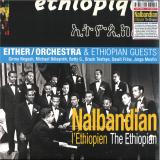
The Éthiopiques series returns! Essential archive recordings from an extremely fruitful period in Ethiopian music.
Before “Swinging Addis” took over the world, there was Moussié Nerses Nalbandian — the Armenian-born composer who shaped modern Ethiopian music. Mentor, arranger, and pioneer, he laid the foundations of Ethio-jazz.
This Éthiopiques volume revives his forgotten legacy, recorded live by Either/ Orchestra First issue ever with new exclusive photos and in depth liner 8-page insert.
“Ethiopian jazzmen are the best musicians that we have seen so far in Africa.
They really are promising handlers of jazz instruments.”
Wilbur De Paris
(1959, after a concert in Addis Ababa)
አዲስ፡ዘመን። *Addis zèmèn* **A new era.**
The time is the mid-1950s and early 1960s, just before "Swinging Addis" bloomed – or rather boomed – onto the scene. Brass instruments are still dominant, but the advent of the electric guitar, and the very first electronic organs, are just around the corner. Rock’n'Roll, R’n’B, Soul and the Twist have not yet barged their way in. Addis Ababa is steeped in the big band atmosphere of the post-war era, with Glenn Miller's *In the* *Mood* as its world-wide theme song, neck and neck with the Latin craze that was in vogue at the same period. Life has become enjoyable once again, with the return of peace after the terrible Italian Fascist invasion of Ethiopia (1935-1941). The redeployment of modern music is part and parcel of the postwar reconstruction. *Addis zèmèn* – a new era – is the watchword of the postwar period, just as it was all across war-torn Europe.
The generation who were the young parents of baby boomers** were the first to enjoy this musical renaissance, before the baby boomers themselves took over and forever super-charged the soundtrack of the final days of imperial reign. Music is Ethiopia's most popular art form, and very often serves as the best barometer for the upsurge of energy that is critical for reconstruction. Whether it be jazz in Saint-Germain-des-Prés or the *zazous* who revolutionised both jazz and French *chanson* after the *Libération*, be it Madrid's post-Franco Movida, or Dada, the Surrealists and *les années folles* that followed World War I, the periods just after mourning and hardship always give rise to brighter and more tuneful tomorrows. Addis Ababa, as the country's capital, and the epicentre of change, was no exception to this vital rule.
**Two generations of Nalbandian musicians**
Nersès Nalbandian belonged to a family of Armenian exiles, who had moved to Ethiopia in the mid-1920s. The uncle Kevork arrived along with the fabled "*Arba Lidjotch*", the** "*40 Kids*", young Armenian orphans and musicians that the Ras Tafari had recruited when he visited Jerusalem in 1924, intending to turn their brass band into the official imperial band. If Kevork Nalbandian was the one who first opened the way of modernism, pushing innovation so far as to invent musical theatre, it was his nephew Nersès who would go on to become, from the 1940s and until his death in 1977, a pivotal figure of modern Ethiopian music and of the heights it. Going all the way back to the 1950s. Nothing less. And it is Nersès who is largely to thank for the brassy colours that so greatly contributed to the international renown of Ethiopian groove. While the younger generations today venture timidly into the genealogy of their country's modern music, often losing their way amidst a distinctly xenophobic historiographical complacency, many survivors of the imperial period are still around to bear witness and pay tribute to the essential role that "Moussié Nersès" played in the rise of Abyssinia's musical modernity.
Given the year of his birth (15 March 1915), no one knows for sure if Nersès Nalbandian was born in Aintab, today Gaziantep (Turkiye/former Ottoman Empire) or on the other side of the border in Alep, Syria... What is certain is that his family, like the entire Armenian community, was amongst the victims of the genocide perpetrated by the Turks. Alep, the place of safety – today in ruins.
Before Nersès then, there was uncle Kevork (1887-1963). For a quarter of a century, he was a whirlwind of activity in music teaching and theatrical innovation. *Guèbrè Mariam le Gondaré* (የጎንደሬ ገብረ ማርያም አጥቶ ማግኘት, 1926 EC=1934) is his most famous creation. This play included "ten Ethiopian songs" — a totally innovative approach. According to his autobiographical notes, preserved by the Nalbandian family, Kevork indicates that he composed some 50 such pieces over the course of his career. This shows just how much he understood, very early on, the critical importance of song as Ethiopia's crowning artistic form. Indeed, for Ethiopian listeners, the most important thing is the lyrics, with all their multifarious mischief, far more than a strong melody, sophisticated arrangements or even an exceptional voice. (This is also why Ethiopians by and large, and beginning with the artists and producers themselves, believed for a long time — and wrongly — that their music could not possibly be exported, and could never win over audiences abroad, who did not speak the country's languages).
Last but not least, one of Kevork's major contributions remains composing Ethiopia's first national anthem – with lyrics by Yoftahé Negussié.
Nersès Nalbandian moved to Ethiopia at the end of the 1930s, at the behest of his ground-breaking uncle. Proficient in many instruments (pretty much everything but the drums), conductor, choir director, composer, arranger, adapter, creator, piano tuner, purveyor of rented pianos,... he was above all an energetic and influential teacher. From 1946 onwards, thanks to Kevork's connexion, Nersès was appointed musical director of the Addis Ababa Municipality Band. In just a few years, Nersès transformed it into the first truly modern ensemble, thanks to the quality of his teaching, his choice of repertoire, and the sophistication of his arrangements. It was this group that would go on to become the orchestra of the Haile Selassie Theatre shortly after its inauguration in 1955, which was a major celebration of the Emperor's jubilee, marking the 25th anniversary of his on-again-off-again reign.
At some point or other in his long career, Nersès Nalbandian had a hand in the creation of just about every institutional band (Municipality Band, Police Orchestra, Imperial Bodyguard Band, Army Band, Yared Music School…), but it was with the Haile Selassie Theatre – today the National Theatre – that his abilities were most on display, up until his death in 1977. To this must be added the development of choral singing in Ethiopia, hitherto unknown, and a sort of secret garden dedicated to the memory of Armenian sacred music, and brought together in two thick, unpublished volumes. Shortly before his death (November 13, 1977), he was appointed to lead the impressive Ethiopian delegation at Festac in Lagos, Nigeria (January-February 1977).
His status as a stateless foreigner regularly excluded him from the most senior positions, in spite of the respect he commanded (and commands to this day) from the musicians of his era. Naturally gifted and largely self-taught, Nerses was tirelessly curious about new musical developments, drawing inspiration from the very first imported records, and especially from listening intensely to the musical programmes broadcast over short-wave radio – BBC *First*. A prolific composer and arranger, he was constantly mindful of formalising and integrating Ethiopian parameters (specific “musical modes”, pentatonic scale, and the dominance of ternary rhythms) into his “modernisation” of the musical culture, rather than trying to over-westernise it. It even seems very probable that *Moussié* Nerses made a decisive contribution to the development of tighter music-teaching methods, in order to revitalise musical education during this period of prodigious cultural ferment. Flying in the face of all the historiographical and musicological evidence, it is taken as sacrosanct dogma that the four musical modes or chords officially recognised today, the *qǝñǝt* or *qiñit* (ቅኝት), are every bit as millennial as Ethiopia itself. It would appear however that some streamlining of these chords actually took place in around 1960. It was only from this time onward that music teaching was structured around these four fundamental musical modes and chords: *Ambassel*, *Bati*, *Tezeta* and *Antchi Hoyé*. A historical and musical “details” that is, apparently, difficult to swallow, especially if that should honour a *foreigner*. Modern Ethiopian music has Nersès to thank for many of its standards and, to this day, it is not unusual for the National Radio to broadcast thunderous oldies that bear unmistakable traces of his outrageously groovy touch.
Hanagasumi, or "flowering haze," is a Japanese term that poetically describes the smoky, blurred appearance of numerous cherry blossoms visible from a distance. This image is often compared to a floral mist or fog. Through this word, the Japanese convey the visual effect created by a large number of flowers forming a soft, diffused, and ethereal picture. Such a description beautifully resonates with the musical palette of the new release. Introducing the long-awaited album Agera by the mysterious musician Jon'Smu. The record combines elements of classic deep house and ambient music, creating a unique atmosphere and the author's distinctive signature. The album features 8 stunning tracks, carefully selected and compiled into a cohesive story. A few words from the author: "This album, spanning a vast timeline of creativity, is about how important and interesting it is to be in motion and in constant search of something new. The recordings presented cover a significant interval of my musical journey through the diversity of genres and sound experimentation. At the core of the music lies Nature - it is the primary source of inspiration for me, and Action is a key moment of life for everything in nature. A wide range of instruments was used in the recording process, whether fully digital compositions or those featuring vintage analog instruments. I hope my love for an immense variety of genres is reflected in this album and brings joy to the listeners."
The third chapter of Vesuvius Soul Records connects distant corners of the underground — from Canada to the UK, passing through Barcelona and Naples — building a sonic bridge between different energies and creative visions.
Void Fill, a supergroup formed by members of Gad Whip, Everything Is Geometry, and King Pong Dub System, deliver two tracks that merge new wave and post-punk tension with synth-pop sensibility, each paired with its instrumental version. Their sound blends analog drive and emotional depth, echoing the label’s exploratory spirit.
On remix duty, the A-side features Lvca, one of the most influential names in today’s European underground scene. The B-side comes from Computer Rage, the Neapolitan duo behind VSR002.
South London producer Nima announces his debut album. A project five years in the making that pays homage to the formative dance floors of UK bass music. Drawing from the spirit of nights like FWD>> and DMZ in London, and many from Bristol, the record sits at the crossroads of hip hop, dubstep, grime and cinematic sound design.
Of Iranian heritage, Nima grew up on a steady diet of 90s Hip Hop and Grime before discovering 140 culture through pioneers like Skream and Benga. His sound developed further in Bristol during one of the city’s most vital periods for bass music, later refined at London’s Roundhouse studios. His productions blend filmic atmosphere with the physicality of sound system music, heavy hip-hop drum structures, rolling 140 basslines, and emotive grime-inspired melodies.
Across the album’s tracks, Nima explores the evolution of UK sound system culture through his own lens. From the weightless grime-inspired “Imperial Dreams” and cinematic, jungle-inflected “Big Up”, to the stripped-back melodic grime of “Ruff Sqwad” and the deep, meditative bass of “One People.”
Referencing everything from Plastician’s Beg to Differ to Mala’s Boiler Room set, Fugees skits, and samples from films like Imperial Dreams and Belly, the record is a reflection of the cultural layers that have shaped Nima’s musical identity.
Nima’s debut is a personal statement to the foundations of UK bass music. Cinematic, weighty, and built for the dance floor.
For heads who like it dark, detailed, and dialed-in. Stephan Hinz steps up on Odd Even with a deep and driving techno cut that hits straight where it counts. Four tracks soaked in tension, groove, and atmosphere — no filler, just pure dancefloor intent.
Andre Kronert brings the heat on the remix, turning Everything Is Illuminated into a stripped-down, rolling beast.
- A1: Dj Licious - In My Heart
- A2: Dj Licious & Alex Germys Feat. Alex Lucas - Magic With You
- A3: Dj Licious - One More Day
- A4: Dj Licious - Voices
- A5: Dj Licious - Beautiful Liar
- A6: Dj Licious & Sem - Always Been You
- B1: Dj Licious - Ibiza Sky
- B2: Dj Licious - Around You
- B3: Dj Licious - House On Fire
- B4: Dj Licious X Pollyanna - Million Moons
- B5: Dj Licious Feat. Armen Paul - Hope
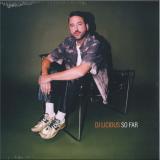
From commanding festival mainstages to shaping the Belgian house scene with his SHOMI brand, DJ Licious has consistently delivered music that connects beyond borders. With his debut album "So Far", he brings together the highlights of his career "so far", while setting the stage for "what's next" - a sonic story of passion, persistence, and the universal power of dance music.
A Journey Through Hit Records and New Horizons
"So Far" gathers DJ Licious's biggest anthems to date, including his massive hit "Magic With You", for which he received a golden record and spent over 30 weeks in the Ultratop 50. The album also features Top 10 hits like "Hope" (with Armen Paul) (Platinum) and "Million Moons" (Gold), alongside fan favorites such as "Ibiza Sky", "Beautiful Liar", "Voices", and his latest single "One More Day."
In addition to these beloved tracks, "So Far" includes two brand-new, unreleased songs, offering listeners a glimpse into the next chapter of DJ Licious's musical journey - a seamless blend of feel-good grooves, melodic energy, and emotional depth.
"'So Far' is a reflection of everything I've experienced on this journey - the highs, the love, the dancefloors, and the people I've met along the way. It's a thank-you to everyone who's been part of it," says DJ Licious.
Ambroos De Schepper and Pepijn Gyssels became roommates when PiP moved to Brussels in 2021. Both paid close attention to each other’s musical approach and interests. One year later, Ambroos moved out. When he swung by to pick up some boxes, they decided to record something for the fun of it. Between May '23 and November '24 they continued experimenting with textures and improvisations. This collaboration has become the deepening of a friendship and a way to maintain it at the same time.
PiP: “We would have coffee or the occasional beer and everything we recorded came very organically. Ambroos would just bring his saxophone, a clarinet, some FX pedals or a weird flute. Whatever he felt like on that particular day. A few hours later he would usually be on his way again, leaving me with the recordings. I could treat them as I pleased.”
Ambroos: “I liked the idea of working with someone focussing on the physical side of music. Not so much on chords and tonality, but on texture and atmosphere. This gave me a framework with less concrete references, using words like “dark” or “busy”. I could improvise freely and we would try and catch a particular moment."
“l’Esprit de l’Escalier” is meant to be a musical meditation, opening up a continuous and detailed sound palette, aimed for the right mental state to listen with. Ambroos came up with the melody in COVID times and later in PiP’s studio, they recorded it on clarinet.
“Sans Loup” is the first jam the duo did together, after Ambroos and Lou moved out of the apartment they shared. Lou Wéry eventually found her way back to the album, as she can be heard playing the wing piano in this track.
PiP: “We recorded in the apartment we used to rent together. Since the title track and the entire album are named after Lou being absent in this dynamic, it seemed only natural to invite her in a later stage.”
“Spring Whistle” was an attempt to embed Ambroos’ musicality in dreamy textures and “Bring Back Bones” was built around an endlessly evolving krakeb recording that PiP took home from on a trip to Morocco. Both tracks are not aimed to end or evolve drastically, they just make the clock tick slower.
To conclude this release, “Velours de Tendre” is built out of a deconstructed groove and a field recording of the “Ronde van Vlaanderen”, a small reference to the countryside where PiP grew up. The reverberating chords you hear are the echoes Tijn Driessen squeezed out of an old harmonium, in a staircase of De Grote Post in Ostend.
PiP: “During a residency in De Grote Post we recorded in a staircase with a spaced pair of omni microphones. And you can take ‘spaced’ quite serious; one was positioned 5 stories higher and the other 3 stories lower.”
Sans Loup is the first vinyl to release on PiP’s label. They look alike, but none will be identical. The cover is screen printed in various combinations + a risograph insert. A highly personalized object.
credits
Released on Zitstill Records
Recorded in Brussels, Horebeke, Morocco and elsewhere, between September 2021 - November 2024
Music, mixing and production by Pepijn Gyssels
Saxophone, flute and clarinet by Ambroos De Schepper
Grand piano on “Sans Loup” by Lou Wéry
Harmonium on “Velours de Tendre” by Tijn Driessen
Mastering and lacquer cut by Anne Taegert at Dubplates & Mastering
Pressing by Objects Manufacturing
Layout and graphic design by Liselotte Van Daele & Otis Verhoeve
Photography by Willem Mevis
Special thanks to: Stijn Cools, Victor De Greef, De Grote Post
First Contact features CROÍ, Lukey, KAIR, Sahm, and HVSN. Our first release is a compilation of tracks that we’ve been collecting and to seize all the styles and genres which we will deal with in the future.
‘First Contact’ is the first song of the VA, opening with an invitation with a combination of a nostalgic ambience followed by the drums that go along with the vocals pointing to the start for our journey. In Irish, the word "CROÍ" (pronounced KREE) means "heart". ‘Target Lock’ from Lukey, is a track that will definitely surprise you. This song is meant to push you back to the dance floor with a feeling which you don’t get very often from listening to these kinds of songs. Everything is cool with ‘Target Lock’, drums, nice trippy vibes, and how the bass fits there… You should be blown away by this song. In a real old school style! Lukey has previously caught the eye of industry labels like Hot Creations, also his release on Carpet & Snares Records, Into The Wizard's Sleeve, The Void Project was hammered by some of the great DJ’s in the world.
KAIR introduces himself to us in his own way with ‘Let's Get it!’ Because this bomb won’t fail to make you dance and feel good! It’s pure house and joyful music that makes you dance and get lost within the music. Also, ‘Let's Get it!’ is just a preview of the upcoming EP. ‘Rainbown’ is a track which shows us that Sahm knows how to come out with a brilliant house track. A groovy old school house with heavy percussion, comes from a young talented producer from Brazil! This will be the track that you’ll be playing years from now on. And ‘Bust This’, you will hear among the bass, the claps and drums, a high energy that will make you move your body. HVSN presents his vision of how to bring the right emotions of a dance floor full of energy and the connection between the bass, synth, drums and melody is back!
Enjoy, This Is Real Talks Records.
VA – First Contact RTR001 incl CROÍ, Lukey, KAIR, Sahm, HVSN