Australian musician, composer and producer Ex Ponto aka Ivan Mašić has self-released dozens of albums with improvisation collective, Council of Elders, and experimental no-wave band, Wunderlust.
For his Offen Music debut Ex Ponto is constructing an alternative civilization of grace, post-sarcasm and intuitive response.
„In A Quarry...Far, Far Away“ is a 15 minutes long wandering with Joseph and August Norster around The Quarry, Beech Forest, Victoria, Australia, January 27, 2020.
Life affirming „Golden Hours“ is an alternative to the general wait for extinction and completition of a suicide program out there. An ode to the moments when sunlight turns magical.
„Shed 14“ is a personal reminiscence of the legendary club in Melbourne.
Suche:ex ponto
- 1
Tolouse Low Trax, Sacha Mambo, General Purpose and newcomer Berkay Mate get on the remix of Ex Ponto’s ‚ Neka Neka' LP. Neka Neka is a nod to ex-Yugoslavian experimentalists of the 80s (Rex Ilusivii, Kozmetika, Miha Kralj etc) and the thriving, late-night hedonism of Belgrade's Club 20/44
Tolouse Low Trax provides a remix to Middle Path that is experimental, deep and pulsating. The track is obscure, but has a pulse that you can feel in your chest and ears listening to be beautiful spoken words which will leave you in a trance.
Sacha Mambo reworks 20-40 into a vivid melodic trip that goes into the explorations of the cosmos. The movement of this track is groovy and uplifting, it will keep you on the move. The eclecticism and craziness of Sacha Mambo are definitely heard in this remix.
General Purpose remix Ex Ponto into psychedelic drug chug. This mid-tempo acid banger will keep your body moving, melt your mind and the break down will set you off. Close your eyes and immerse yourself in the vivid journey.
Berkay Mete serves up a remix of intoxicating Eastern sounds. This track is ideal for a sun soaked dancefloor or in the darkness of the nightclubs. Wherever it is played it will, the rhythm will grab you and keep you.
Neka Neka' (on General Purpose) is the first solo release by multi-disciplinary artist, Ex Ponto (Ivan Mašic). Coming of age during the mid-90s Melbourne rave scene, Ivan was infected with music by the legendary Kate Bathgate on 3RRR community radio.
Hearing music by the likes of Oliver Lieb, Will E Tell, HMC & and other producers of the time, an infection quickly turned into a music obsession that lives on today.
In the following years Ivan would go on to manage one of Melbourne's longest running record stores (Dixons Records) and in 2005 built a recording studio, aptly named The Womb. From 2005-15, he produced and played on over 20 albums for improvisation collective, Council of Elders and experimental, no-wave band, Wunderlust.
'Neka Neka' is a nod to ex-Yugoslavian experimentalists of the 80s (Rex Ilusivii, Kozmetika, Miha Kralj etc) and the thriving, late-night hedonism of Belgrade's Club 20/44.
Aptly named, Tranquilizer is a potent, six track EP from Brazilian producer Felix. As part of Piratao Records; a label that merges everything from baile funk, to electro and techno, Mutual Pleasure is a fitting home for the electric nature of Felix’s sound; something that is fully exercised in this EP.
Tranquilizer is a mind-expanding selection of dynamic tracks. Unrelenting, with a deeply contagious energy that acts as the engine to this project. It is entirely soaked with acid, and layered with a plethora of squelching basslines, manipulated Brazilian Vocals and trance-infused synths and melodies.
Felix coordinates a masterful blend of dark, gruelling tones, with funk-fuelled flavours of his native Brazil: an electrifying and devastating marriage that sets this Ep in motion. While tracks like Alpha Helix bring forward a more trance-ladened side to his sound, the devious breakbeat and infectious vocals of Ta Pegando Fogo bring a cutting edge to his undefinable sound.
Within this searing melting pot of genres and influences, Felix traverses from dark dubstep, to four-to-the-floor techno, and everywhere in between. It is a suitably devilish project, and a statement of his ever-evolving musical personality.
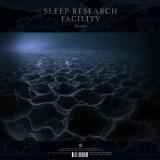
- 1: Sleep Research Facility - Sargo (20:32) (Side A) (Cd Track )
- 2: Llyn Y Cwn - Dale Dawn (:35) (Side B)
- 3: Llyn Y Cwn - Pebble (5:18) (Side B)
- 4: Llyn Y Cwn - Doppler Current Profiler (7:9) (Side B)
The ultimate deep listening experience from two masters of dark ambient. A slow descent into the blackened watery abyss, where light cannot reach. The first release from Sleep Research Facility since 2012's "Stealth" (Cold Spring) is inspired by the deep sea ocean floor. The Canadian-based composer explores notions of awareness and perception in the sub/unconscious listener. Focusing primarily on sound bereft of rhythm based energies, SRF provides an environments wherein the music adds texture to the silence. Using form without structure and concentrating on space as opposed to narrative, SRF entertains the idea that music can reside in the very fabric of sound itself. The brand new material here was created specifically for this split release.Taking inspiration from the beautiful, but often harsh landscapes and environments of his home on Anglesey, North Wales, Llyn Y Cwn has built on the nautical theme of "Du Y Moroedd" (Cold Spring). These tracks are based on field recordings relating to the ocean, and could be seen as a companion piece to the album. 'Dale Dawn' features a recording of the dawn chorus made from the floating pontoon at Dale, Pembrokeshire. 'Pebble' includes the sound of waves crashing on a Dorset cobble beach, thousands of rocks colliding in chorus. 'Doppler Current Profiler' is based on the sound of an ADCP, an acoustic sonar instrument used to measure water currents - a 600Khz ping slowed to a heartbeat. CD in mini-LP sleeve, replicating the vinyl design. The artwork features a separate front cover design with individual art for each side, making this a true split release.
- Transbordar
- Ponto De Vista
- Orbitando I
- Lunatic Garden
- Orbitando Ii
- Caminhos
- Luz
- Chegada
- Roxo
- Dejavú
- Terra Vermelha
- Garrafas
- Deságua
Recorded in Switzerland and mastered in Madrid, on Deságua Mello blends classical harp training with experimental techniques, creating a rich sonic journey that pushes the boundaries of the instrument. Brazilian harpist and composer Marina Mello presents Deságua, her solo debut released by the Peruvian label Buh Records. Based in Zurich, Mello has developed a unique and expressive approach to the harp, combining her classical training with a deep exploration of the instrument's sonic possibilities. Deságua is the result of this process: an intimate and expansive work that traverses sonic landscapes rich in contrast and texture. In the artist's own words, this album is a synthesis of material developed through her musical practice. The title refers to the Portuguese word that describes the moment a river flows into the sea. This concept guides the album's sonic narrative, in which each piece functions as a tributary flowing into an immersive and unexpected listening experience. From bittersweet whale-like sounds to destructive, unsettling, and shattering noise provocations, she explores, senses, and transcends the musical boundaries of her instrument. The album presents a wide range of sounds and styles, yet maintains a strong internal coherence through its technical and conceptual exploration of the harp. Mello performs on both lever and pedal harps, employing a range of non-traditional techniques: preparing the instrument with objects, using guitar effects pedals, detuning the strings, and using close mic recording to capture the subtlest sounds and the shifts that lie between them. The result is a collection of pieces that move between the melodic and the dissonant. Deságua does not shy away from repetition, noise, or raw textures. Instead, it embraces them fully, situating the album at the crossroads of contemporary music, improvisation, and electronic experimentation.
"The Concert" is the first discographic collaboration between percussionist Alexandre Babel and visual artist Latifa Echakhch. The record is intimately linked to the eponymous exhibition presented at the Swiss Pavilion during the 59th Venice Art Bienniale.
For her exhibition in the Swiss Pavilion, Latifa Echakhch created an orchestrated and enveloping experience, a rhythmic and spatial proposal that allowed the visitor a complete perception of time and of his own body. What is the origin of rhythm? How does the body perceive time? How does the mind rearrange it? Can we substitute one perception for another, the visual for the sound? Can fragments of memory go back in time and recreate a different story?
Her proposal entered a dialogue with the building around it, designed by Bruno Giacometti. The artist revisited its architectural programme as well as the prototypical progression of these exhibition spaces, originally defined for the display of classical art. She appropriated the entirety of the spaces, simultaneously exploring continuity, movement and sequence. Their relationship to light, and the different sounds that emerge from them. Yet the exhibition was entirely silent and the musical composition "The Concert" functions as its sound rendering, by following a similar path.
This one-sided vinyl is a complementary and inseparable partner piece to the exhibition and its eponymous catalogue, the latter having been published in April 2022 by Sternberg Press. The music features field recordings made at the Swiss Pavilion itself as well as pre-recorded percussion sounds and significant contributions by the Berlin-based musicians Jon Heilbronn, Rebecca Lenton, Theo Nabicht, Nikolaus Schlierf.
The record, available only after the closing of Latifa Echakhch’s exhibition offers a concluding phase to the project. The resonance of its sensory score. It reactivates the experience of the physical journey of the installation, without imposing itself as a transcription or an illustration. Through texture, temporality and its totality, the record stands as a resonance of the rhythms that have structured the pavilion, the harmonies that have composed it and the sounds that have inhabited it.
Latifa Echakhch Lives and works in Vevey, Switzerland. She graduated from the École nationale supérieure d’arts in Cergy-Pontoise and the École nationale des beaux-arts in Lyon. Galleries representing her include kamel mennour (Paris and London), kaufmann repetto (Milan and New York), Dvir Gallery (Tel Aviv/Brussels) and Pace (New York). She took part in the main exhibition of the Venice Biennale Arte in 2011 and was awarded the prix Marcel-Duchamp in 2013 and the Zurich Art Prize in 2015. Through her interdisciplinary installations, Latifa Echakhch is recognized for the fine balance between forcefulness and fragility of her visual language, inserting surrealist and conceptual elements, and her use of symbols that–in her own words–are both "political and poetic".
Alexandre Babel Lives and works in Berlin. He is a drummer, composer, and curator. His projects redefine the boundaries of musical convention, confounding listener expectations in the conquest of new contexts. Babel has been the artistic director of the contemporary percussion group Eklekto 2013–2022. In 2020, the monographic Festival Les Amplitudes in La Chaux-de-Fonds focused on Babel’s compositional and curatorial work. He is a laureate of the Swiss Music Prize from the Federal Office of Culture 2021.
Los Angeles' Zen 2000 returns with its third release, the third and final chapter in its kick-off string of 7-inches. For this episode, we once again dip into the deep and diverse well of local talent for a single from Tim Jones, a.k.a. Ex.Pontoon.
“Coming Back” is a slinky, off-kilter slow burn, a slinky vocal groove snaking through SoCal G-funk refashioned into a crackly reggae dub wobble. The other side is a delirious and psychedelic trip into the desert, the fiery sun scorching the earth below. Icy guitars and a cavernous arrangement turn the sonic horizon into a shimmering mirage. For the digital bonus, an instrumental version of the B-side, further revealing the nuanced and delicate composition of the piece.
After three EP's in his own name, and one with Moreno Ácido at Holuzam, Diogo makes his debut 12” in the Discos Extendes series with “FINALMENTE!”. In a singular appropriation of the vast legacy of rave culture, Diogo crosses, along four tracks, a certain time span between the 90's and the 2020's, with all kinds of recycling and updates that the exercise entails. Syncopated rhythmic patterns, robust basses, junglist echoes, haunted voices or celestial pads make up a revivalist sound palette, here rearticulated beyond linear structures. “Até Segunda” sets the tone in territories close to Objekt's Theme from Q in a live sound design amidst sudden disturbances and rallying hooks. Tracks 2 and 3 stand out for their plot twists: “Ponto de Não Retorno” starts with a frenetic breaky maze before get immersed in a oneiric landscape, and “What?!” progresses gently within Vancouver coordinates to be opened to a schizophrenic rawness that, from there, completely remakes the track. “Errar É Ok” is an exercise of decompression, melodically woven, with a dreamy coda pointing to nostalgic horizons. Violet closes the EP with a muscular version of “Ponto de Não Retorno”. "Finalmente!" marks for this unstable balance between familiarity and strangeness, intuitiveness and disturbance, euphoria and immersion. Tracks for the dance floor, yes, with a twist, to be rediscovered as often as you like.
Far Out Recordings presents the peerless and criminally undervalued Quartin catalogue, beginning with the reissue of Jose Mauro’s forgotten masterpiece Obnoxius. Over the course of the 60s, Roberto Quartin released more than 20 albums in Brazil on his label Forma, by artists including the likes of Eumir Deodato and Quateto Em Cy. Selling the rights of Forma to Polygram in 1969, Quartin struck out for pastures new at the dawn of the 1970s with the launch of his self-titled label. Significant works and high-water marks for Brazilian music overall followed in that decade’s first year, with Victor Assis Brasil Plays Antonio Carlos Jobim and the aforementioned Obnoxius. These singular gems in Brazilian music, difficult to categorise yet compellingly haunting, have for too long gone unheard.
Today, very little is known about Jose Mauro and as a result those searching for some kind of insight on the man behind the music must attempt to glean what they can from the music itself. One rumour claims he died in a car accident shortly before the album’s release, a fact that could have lent his brief musical career a touch of mythology were it not for how scant the details concerning any other aspects of his life are. The political turmoil from which the album emerged is significant also; recorded during an era of oppressive state censorship, the album, like all the Quartin catalogue, is the result of steadfast defiance in the face of a crushing military dictatorship. While many musicians of the era fled the country, preferring their prospects in the affluent, liberated USA, rebellious, young musicians like Mauro chose to stay and reflect their anger at the authorities through thinly veiled protest songs such as the stirring ‘Apocalipse’. Herein lies the basis for a more dramatic theory; that Mauro was in fact abducted by the military! Whatever the truth, the mystery remains unsolved, and all that remains is his bewitching music, all of which is composed by Mauro and Ana Maria Bahiana. Production on the record was cancelled after Mauro’s death and it was never sold commercially until its rerelease decades later. What appeal does Mauro’s music hold to today’s listeners, forty-something years removed from its conception? Simply put, there is very little else that sounds much like it all. Take the title track of ‘Obnoxius’. A wholly singular piece of music, blending string-drenched melancholia with orchestral pomp, sunny psychedelic strumming with propulsive percussion, topped off with Mauro’s yearning vocals. The result is indicative of Mauro’s unique blend of sounds from Latin Jazz and samba to psychedelic folk and baroque orchestration.
Today, Obnoxius retains its strange, otherworldly appeal – A firm favourite amongst a small circle of deep diggers including Madlib, Gilles Peterson, Floating Points. Jose Mauro’s mournful and melancholic vocals create a dark, brooding atmosphere that stands in contrast to the usual joyfulness and high-spirited rhythm of the more prominent Brazilian music of the era. Despite this air of foreboding, Mauro’s confident baritones, chord patterns and sumptuous arrangements have the ability to induce in the listener an almost trance-like state of ecstasy. Mauro’s long hidden masterpiece, a complex and uniquely stunning work is being offered the chance to be heard by the wider audience it has always deserved. A second Jose Mauro release, A Viagem Des Horas, compiling more incredible tracks unreleased in Mauro’s lifetime, will follow, alongside other unreleased jewels from the Quartin catalogue, from the likes of Piri and Victor Assis Brasil…
We remain suspended, fluctuating
In these waters of unknown wellness
Flooded by a silence of emotions.
Emotions that make our loneliness
More deep, clear and awful.
As nails that dig died skins,
As eyes that bleed making skins acid
As hair that strangles the crowd's voices
Thus we,
Remain suspended
in this air rarefied by thoughts
to make us more conscious of the restless lack
of the Hope from us stolen.
DJ, musician, former saxophonist - there's a combination of skills you don't get to see too often. Get acquainted with DEMIAN, then, aka Damien Pontonnier, a French artist who relocated to Paris after an influential career as
electronic music pioneer and party organizer in Northern Spain. Now an accomplished producer with releases on labels such as Correspondant or Clouded Vision, he presents the MILESTARS EP for Kompakt - a quirky and vibrant track trio with an obvious knack for catchy melodic details in a kinetic techno corsage.
Having amassed quite the experience portfolio when it comes to grassroots club culture, DEMIAN knows a thing or two about inspiring a dance floor - but that doesn't necessarily account for the artistic versatility or genuine lust for sonic adventures and happy accidents that these cuts exhibit: opener DÉCLICA boots with deliciously stoic cowbell-isms that leave the doors of perception wide open for some iconoclastic, yet surprisingly effective synth action.
Meanwhile, the title cut invests in texture-rich atmosphere without forgetting about the precise amount of momentum you need to tip the floor over the edge. Closer NO HYPE FOR THE FISH takes things in a more hypnotic direction, intertwining freeform arpeggios and tape delay with smart beatmanship. Simultaneously lush and lean in its overall aesthetic, the MILESTARS EP will feed both the nerd and the dancer in you - a swiss army knife with all the right tools for masterful crowd control.
- 1