It's hard to believe it's been four years since the debut release of The Goalie's Anxiety at the Penalty's kick excellent debut "Ways of Hearing." But growth takes time and rather than rush a follow-up album to market to capitalize on their newfound success, the group opted to take their time and focus their efforts at their own pace. It paid off.On their much anticipated sophomore album, ambition is key. The name of the album itself "The Iliad and the Odyssey and the Goalie's Anxiety at the Penalty Kick" spans a glorious 71 characters and is bound to swallow the screen of whatever device that attempts to display the text. The essence of the album is built upon delicate, pleading vocals that sit atop stirring dynamic movements that seem to move between small and vulnerable to full-on symphonies that are bursting with emotion. "The Iliad and the Odyssey and the Goalie's Anxiety at the Penalty Kick" will be released by veteran indie label Count Your Lucky Stars on April 25th, 2024 (an homage to their first released single of the album) during the dead time when the cold end of winter is transitioning to a hopeful and promising spring- an apt metaphor that seems to encompass the heart of the album.
Buscar:excell
In 1984, Jasper Van’t Hof, a prominent European jazz pianist, propelled to fame with the energetic ‘Pili Pili’ a 15-minute trance collaboration with Guinea's Isaac Tagul Group. Inspired by a fiery red pepperoni, the track sold over 100,000 copies, leading the group to adopt the name Pili Pili, becoming a hit in the club and disco scene.
Pili Pili's musical roots trace back to Van’t Hof's 1982-83 tour in Central Africa, where he discovered a love for African music. The band embraced authenticity by collaborating with diverse African musicians from Mali, Congo, Senegal, and Guinea. In 2000, Van’t Hof initiat-ed a project with the young Zulu choir Phikelela Sakhu-la from Durban, South Africa.
Pili Pili's style, described as experimental fusion, blends intricate African rhythms with jazz, fusion, funk, and dance. Van’t Hof emphasized the importance of groove over complex solos, stating that intellectual approaches are lost in their music.
The band's performances, marked by their energetic fusion of jazz and African rhythms, gained acclaim across Europe. Regular tours and festival appearances, such as the Jazz Festival of Montreux, solidified Pili Pili's reputation as an excellent live band. Reviews praised the band's dynamic and explosive music, turn-ing every performance into a rhythmic and fiery expe-rience.
The PLX-500 inherits the layout of the PLX-1000 professional turntable and produces a warm, clear analogue sound. The perfect deck if you want to start playing with vinyl or if you just want to listen to your record collection at home.
Solidly built with excellent vibration damping and precise audio playback, this high-torque deck has a USB out so you can make digital recordings of your vinyl collection in our free rekordbox software. You can also combine the PLX-500 with the rekordbox dvs Plus Pack, a compatible mixer and the RB-VS1-K Control Vinyl to play and scratch with digital files.
Main Features
What's in the box
PLX-500
Power cord
USB cable
Slip mat
Dust cover
Adapter for EP records
Head shell (with cartridge)
Balance and shell weights
Audio adaptor cable:
1 Stereo pin plug (female)
1 Stereo mini plug (male)
Operating instructions
Specifications
Width
450 mm
Height
159 mm
Depth
368 mm
Weight
10.7 kg
Turntables
Drive Method
Servo-type direct drive
Platter
Aluminium, die-casting diameter: 332 mm
Motor
3-phase, brushless DC motor
Braking System
Electronic brake
Rotation Speed
33⅓, 45, 78 rpm
Rotation Adjustment Range
±8 %
Wow and Flutter
1.6 kgf・cm
Start Time
Within 1 sec (at 33⅓ rpm)
Tone Arm
Arm Type
Universal type S-shape tone arm
Gimbal-supported type bearing structure
Static balance type
Overhang
16 mm
Effective Length
230.5 mm
Tracking Error
Within 3°
Height Adjustment Range
6 mm
Stylus Pressure Variable Range
0-4 g (1 scale 0.1 g)
Single Cartridge Weight
1,6 kgf・cm
Anlaufzeit
Innerhalb 1 s (bei 33⅓ Upm)
Tone Arm
Tonarm
Universeller S-Tonarm
Kardanisch aufgehängte Lagerung
Statisch balanciert
Overhang
16 mm
Effective Length
230,5 mm
Trackingfehler
Innerhalb von 3°
Height Adjustment Range
6 mm
Variables Auflagegewicht
0-4 g (1 Teilstrich = 0,1 g)
Cartridgegewicht einzeln
< 9,5 g
Sytem-Typ
VM
Anschlüsse
USB
1 USB Typ B
Ausgänge
1 PHONO/LINE (Cinch)
First issued in 1961 on Columbia’s early music venture Colpix, Forbidden Fruit is widely acknowledged as the best of Nina Simone’s early releases. Producer Cal Lampley choose to cast her in varied settings, blending a rendition of Oscar Brown’s ‘Rags And Old Iron’ with a unique take of Bessie Smith’s ‘Gin House Blues,’ contrasting with Billie Holiday’s ‘No Good Man’ and ‘I’ll Look Around,’ which Simone shifts to her own image. Her backing trio aim for the understated, the rhythm section leaving ample room for Simone’s appealing piano lines, nicely complimented by Al Shackman’s guitar. An excellent set from Miss Simone – grab it!
Skylax Records Is Proud to Introduce You to the Sound of RotorMotor With Their Astounding "Dream Beams" Ep That Encapsulates the Essence of Early '90s Trance, Italo Disco, and Ebm, While Evoking the Nostalgic Sound of Kompakt From 2004 to 2007. Hailing From Ljubljana, Slovenia, RotorMotor Is a Dynamic Duo Whose Tracks Have Gained Popularity Through Their Association With Lesyeuxorange, Feinstoff, Sexy Dinosaur From Outer Space, and Esteemed Remix Luminaries Like Neurotiker. Prepare to Be Transported Into an Audio Realm Where Pulsating Beats and Infectious Melodies Collide. the Ep Kicks Off With "Size of a Photon," a Track That Encapsulates the Signature Sound of Kompakt in Its Purest Form. "Feel My Pulse" Follows Suit, Immersing Listeners in a Rhythmic Journey That Resonates Deep Within. One of the Ep's Standout Moments Is the Remarkable Remix by Italian Producer Amarcord, Recently Acclaimed for His Releases on Ombra International, Eskimo Recordings, and Curses' Excellent Compilation "Next Wave Acid Punx". Amarcord's Remix of "Flashblinded" Flawlessly Blends Breakbeat and Trance Elements, Resulting in an Elegantly Treated Sonic Masterpiece. on the Flipside, RotorMotor Collaborates With Pholia on "Flashblinded," Delivering Both an Instrumental and a Vocal Version. the Vocal Rendition Adds a Post-Apocalyptic Touch as Pholia's Robotic Voice Sings in Slovenian, Creating an Atmospheric and Haunting Experience. "Dream Beams" Is a Demonstration to RotorMotor's Ability to Fuse Influences From the Past With a Contemporary Twist, Creating a Sonic Landscape That Captivates the Senses. With Their Relentless Energy and Creative Vision, RotorMotor Never Ceases to Amaze. This Vinyl Release Is a Must-Have for Any Enthusiast of Electronic Music Seeking an Extraordinary Sonic Adventure. Grab Your Copy and Experience the Hypnotic Power of RotorMotor....
Reissue of Feu! by Rotorelief Records on vinyl LP and CD - April 2024.Industrial Punk, Noise'n'Roll
Featuring Jac Berrocal.
"THIS RECORD WAS INVENTED IN TEN DAYS. WHEN NAGI BAZ OFFERED TO LET US USE HIS STUDIO FOR A WEEK, WE HAD JUST FINISHED RECORDING DOCTOR CHANCE 93.
THE PLAN WAS IMMEDIATELY TO PAY A SORT OF TRIBUTE TO MY WRITER FRIEND JEAN-FRANÇOIS CHARPIN (1957-1987), AN ACCOMPLICE OF THE SEX PISTOLS, WHO HAD INITIATED THE CHALET DU LAC CONCERT IN SEPTEMBER 1976, BEFORE CREATING THE EXCELLENT AND FLEETING AVANT-GARDE MAGAZINE GRABUGE IN 1978 (TWO ISSUES PUBLISHED).
WE SPENT A WHOLE WEEKEND WITH JACK BELSEN LAYING THE FOUNDATIONS OF SIX TRACKS FROM MACHINE MATRICES, LOOPING RHYTHMS, WHILE I WROTE AT FULL SPEED ON THE TYPEWRITER. ON MONDAY I FINISHED FORMATTING THE RAW LYRICS WHILE BELSEN RECORDED THE RHYTHMS. THE NEXT DAY, IT WAS MY TURN TO RECORD THE VOCALS AS ONE - THEN JAC BERROCAL AND LITTLE DRAKE PLAYED THEIR INSTRUMENTAL PARTS.
TWO DAYS OF MIXING LATER, IT WAS FINISHED. THE FOLLOWING MONDAY, NAGI BAZ LEFT HIS RECORD LABEL. AFTER THIRTY YEARS, THE REISSUE OF FEU! (AUGMENTED BY GENOTYPE FROM MESSAGERO KILLER BOY, RECORDED JUST BEFORE I LEFT FOR CHILE IN 1994) TURNS OUT TO BE A DOUBLE EULOGY FOR J.-F. CHARPIN, BUT ALSO FOR JACK BELSEN, WHO WAS ABRUPTLY SNATCHED FROM LIFE FOR ONE AWFUL SEASON, BETWEEN LATE SPRING 2018 AND HIS DEATH ON 7 DECEMBER THE FOLLOWING YEAR. -"
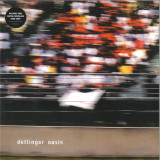
Dettinger’s Intershop and Oasis have long been held, by many fans of ambient and electronic music, to be some of the finest albums in their field. Produced by the mysterious Olaf Dettinger, about whom not much is publicly known, they were some of the earliest full-lengths released by the then-nascent Kompakt, and in many ways, they both articulated and defined the sound that would come to be known as Pop Ambient, while also existing, somehow, to the leftfield of any clearly recognisable genre.
Beautiful, sui generis works, it is a rare pleasure to see them being reissued on vinyl for a new generation of listeners to embrace. Originally released on CD only in 1999, Intershop was Kompakt’s first artist full-length. The music here simmers and broods, with opulent banks of tone marking out territory for rhythms that seem to be built from the clacking detritus of technology – hisses, thunks, knocks. Bass is deployed carefully, each drop a dubbed-out depth charge; drones spin and spiral, warping and weaving between the beats.
Oasis, released in 2000, refined the palette that Dettinger had explored on its predecessor. A blurred crusade of ambient texturology, its unassuming patterns, and subtle, incremental dynamics, admit to real beauty, and a kind of abstract sensuality that you don’t often experience with music that is, perhaps, similarly tooled, but not as poetic. Through seemingly simple gestures – whether lushly expansive repetitions, hyper-acute tremolo tones, or ear-tickling rhythms – it builds complex emotional resonance. It’s no surprise to discover Oasis is held in high esteem by artists like Panda Bear of Animal Collective, who once said of Dettinger, “For us, he was the dude.”
There is, of course, other music to know Dettinger by, too – his three excellent EPs for Kompakt, Blond (1998), Puma and Totentanz (1999), the latter of which, Michael Mayer once argued, “invented dubstep.” There is also a small, yet graceful run of compilation contributions, many of which can be found on Kompakt’s Total and Pop Ambient series. All this music has plenty to recommend it, sharing a clarity of purpose, and a rare, human warmth and depth. But Intershop and Oasis are the releases that distil Dettinger’s singular vision, and allow him, should he wish, to claim his place as a modern master of ambient and electronic music.
Dettingers Intershop und Oasis werden von vielen Fans von Ambient und elektronischer Musik seit langem als einige der besten Alben in diesem Bereich angesehen. Produziert von dem mysteriösen Olaf Dettinger, über den nicht viel bekannt ist, gehörten sie zu den ersten Alben, die von der damals aufstrebenden Plattenfirma Kompakt veröffentlicht wurden. In vielerlei Hinsicht formulierten und definierten sie den Sound, der später als Pop-Ambient bekannt werden sollte, während sie gleichzeitig irgendwie links von jedem klar erkennbaren Genre existierten.
Es ist eine seltene Freude zu sehen, dass diese wunderschönen Werke auf Vinyl wiederveröffentlicht werden, um sie einer neuen Generation von Hörern zugänglich zu machen. Ursprünglich wurde Intershop 1999 nur auf CD veröffentlicht und war Kompakts erstes komplettes Künstleralbum. Die Musik hier brodelt und brütet, mit opulenten Klangbänken, die das Territorium für Rhythmen abstecken, die aus dem klappernden Gerümpel der Technik gebaut zu sein scheinen – Zischen, Klopfen, Schaben. Der Bass wird sorgfältig eingesetzt, jeder Drop ist eine synchronisierte Tiefenladung; Drones drehen und winden sich spiralförmig und verflechten sich zwischen den Beats.
Oasis, das im Jahr 2000 erschien, verfeinerte die Palette, die Dettinger auf seinem Vorgänger erkundet hatte. Ein verschwommener Kreuzzug der Ambient-Texturologie, dessen unaufdringliche Muster und subtile, schrittweise Dynamik echte Schönheit und eine Art abstrakter Sinnlichkeit zulassen, die man nicht oft bei Musik erlebt, die vielleicht ähnlich ausgestattet, aber nicht so poetisch ist. Durch scheinbar einfache Gesten – seien es üppig ausladende Wiederholungen, hyperakute Tremolotöne oder ohrenbetäubende Rhythmen – baut sie eine komplexe emotionale Resonanz auf. Es ist keine Überraschung, dass Oasis von Künstlern wie Panda Bear von Animal Collective hoch geschätzt wird, der einmal über Dettinger sagte: “Für uns war er DER Typ”.
Es gibt natürlich auch noch andere Musik, die Dettinger bekannt macht – seine drei ausgezeichneten EPs für Kompakt, Blond (1998), Puma und Totentanz (1999), von denen letztere, wie Michael Mayer einmal kühn behauptete, “den Dubstep erfand”. Es gibt auch eine kleine, aber feine Reihe von Compilation-Beiträgen, von denen viele auf Kompakts Total- und Pop-Ambient-Serien zu finden sind. All diese Musik ist sehr empfehlenswert und zeichnet sich durch eine klare Zielsetzung und eine seltene, menschliche Wärme und Tiefe aus. Aber Intershop und Oasis sind die Veröffentlichungen, die Dettingers einzigartige Vision destillieren und es ihm ermöglichen, seinen Platz als moderner Meister der Ambient- und elektronischen Musik zu behaupten, sollte er dies wünschen.
Dettinger’s Intershop and Oasis have long been held, by many fans of ambient and electronic music, to be some of the finest albums in their field. Produced by the mysterious Olaf Dettinger, about whom not much is publicly known, they were some of the earliest full-lengths released by the then-nascent Kompakt, and in many ways, they both articulated and defined the sound that would come to be known as Pop Ambient, while also existing, somehow, to the leftfield of any clearly recognisable genre.
Beautiful, sui generis works, it is a rare pleasure to see them being reissued on vinyl for a new generation of listeners to embrace. Originally released on CD only in 1999, Intershop was Kompakt’s first artist full-length. The music here simmers and broods, with opulent banks of tone marking out territory for rhythms that seem to be built from the clacking detritus of technology – hisses, thunks, knocks. Bass is deployed carefully, each drop a dubbed-out depth charge; drones spin and spiral, warping and weaving between the beats.
Oasis, released in 2000, refined the palette that Dettinger had explored on its predecessor. A blurred crusade of ambient texturology, its unassuming patterns, and subtle, incremental dynamics, admit to real beauty, and a kind of abstract sensuality that you don’t often experience with music that is, perhaps, similarly tooled, but not as poetic. Through seemingly simple gestures – whether lushly expansive repetitions, hyper-acute tremolo tones, or ear-tickling rhythms – it builds complex emotional resonance. It’s no surprise to discover Oasis is held in high esteem by artists like Panda Bear of Animal Collective, who once said of Dettinger, “For us, he was the dude.”
There is, of course, other music to know Dettinger by, too – his three excellent EPs for Kompakt, Blond (1998), Puma and Totentanz (1999), the latter of which, Michael Mayer once argued, “invented dubstep.” There is also a small, yet graceful run of compilation contributions, many of which can be found on Kompakt’s Total and Pop Ambient series. All this music has plenty to recommend it, sharing a clarity of purpose, and a rare, human warmth and depth. But Intershop and Oasis are the releases that distil Dettinger’s singular vision, and allow him, should he wish, to claim his place as a modern master of ambient and electronic music.
Dettingers Intershop und Oasis werden von vielen Fans von Ambient und elektronischer Musik seit langem als einige der besten Alben in diesem Bereich angesehen. Produziert von dem mysteriösen Olaf Dettinger, über den nicht viel bekannt ist, gehörten sie zu den ersten Alben, die von der damals aufstrebenden Plattenfirma Kompakt veröffentlicht wurden. In vielerlei Hinsicht formulierten und definierten sie den Sound, der später als Pop-Ambient bekannt werden sollte, während sie gleichzeitig irgendwie links von jedem klar erkennbaren Genre existierten.
Es ist eine seltene Freude zu sehen, dass diese wunderschönen Werke auf Vinyl wiederveröffentlicht werden, um sie einer neuen Generation von Hörern zugänglich zu machen. Ursprünglich wurde Intershop 1999 nur auf CD veröffentlicht und war Kompakts erstes komplettes Künstleralbum. Die Musik hier brodelt und brütet, mit opulenten Klangbänken, die das Territorium für Rhythmen abstecken, die aus dem klappernden Gerümpel der Technik gebaut zu sein scheinen – Zischen, Klopfen, Schaben. Der Bass wird sorgfältig eingesetzt, jeder Drop ist eine synchronisierte Tiefenladung; Drones drehen und winden sich spiralförmig und verflechten sich zwischen den Beats.
Oasis, das im Jahr 2000 erschien, verfeinerte die Palette, die Dettinger auf seinem Vorgänger erkundet hatte. Ein verschwommener Kreuzzug der Ambient-Texturologie, dessen unaufdringliche Muster und subtile, schrittweise Dynamik echte Schönheit und eine Art abstrakter Sinnlichkeit zulassen, die man nicht oft bei Musik erlebt, die vielleicht ähnlich ausgestattet, aber nicht so poetisch ist. Durch scheinbar einfache Gesten – seien es üppig ausladende Wiederholungen, hyperakute Tremolotöne oder ohrenbetäubende Rhythmen – baut sie eine komplexe emotionale Resonanz auf. Es ist keine Überraschung, dass Oasis von Künstlern wie Panda Bear von Animal Collective hoch geschätzt wird, der einmal über Dettinger sagte: “Für uns war er DER Typ”.
Es gibt natürlich auch noch andere Musik, die Dettinger bekannt macht – seine drei ausgezeichneten EPs für Kompakt, Blond (1998), Puma und Totentanz (1999), von denen letztere, wie Michael Mayer einmal kühn behauptete, “den Dubstep erfand”. Es gibt auch eine kleine, aber feine Reihe von Compilation-Beiträgen, von denen viele auf Kompakts Total- und Pop-Ambient-Serien zu finden sind. All diese Musik ist sehr empfehlenswert und zeichnet sich durch eine klare Zielsetzung und eine seltene, menschliche Wärme und Tiefe aus. Aber Intershop und Oasis sind die Veröffentlichungen, die Dettingers einzigartige Vision destillieren und es ihm ermöglichen, seinen Platz als moderner Meister der Ambient- und elektronischen Musik zu behaupten, sollte er dies wünschen.
The third studio album from Rebecca Downes with 12 new, original blues-influenced, rock tracks all written by Steve Birkett and Rebecca. Album mixed by Bill Drescher and Chris Childs. With exciting new material that continues the evolution of the music towards rock, More Sinner Than Saint is worth the wait. At the outset, Downes consulted with producer Chris Kimsey, who has previously worked with The Rolling Stones, to select and refine the 12 tracks and to achieve what she and co-writer Steve Birkett see as the perfect expression of their current writing. With five of the fabulous tracks having been mixed by Californian based Bill Drescher, whose previous accolades include working with Rick Springfield and The Bangles, Downes showcases her trademark powerful vocals throughout. With the remainder of the tracks being mixed by Thunder’s Chris Childs, the pedigree of this album is faultless. With her superb studio band that includes Dan Clark, Lloyd Daker and Magnum’s Rick Benton, there was no shortage of artists queuing to join her on the odd track or two. The multi award winning Alan Nimmo (King King) plays guitar on If I Go To Sleep and Magnum’s Tony Clarkin delivers a fabulous guitar solo on Breathe Out. With her signature voice, style and song writing, it was little wonder that last year she was voted Female Vocalist of the Year at the FORM UKBlues Awards. The release of this jubilant new album once again gives her the chance to showcase her formidable powerhouse and gutsy vocals in tracks that have greater range and depth than anything she’s done before. Rebecca said: “We were honoured and humbled to receive Chris Kimsey’s guidance. He gave us confidence about the direction of our writing changing to a rockier sound and advice on the way the material should be recorded. Meeting Bill Drescher in LA was fantastic – such a lovely, down-to-earth guy – and his mixing took the five tracks to the next level. Chris Childs has since done an excellent job on the rest in matching Bill’s mixing style. We are very proud of this album – and the way the music has evolved towards rock. More than ever before we believe it captures the best of our song writing.”
The second in our Mr Bongo series opening the vault on classic recordings from the fabled Groove Merchant Records catalogue. This time the spotlight turns to the Hammond B3 organ maestro Lonnie Smith, as we proudly present a reissue of his cosmic jazz-funk journey, ‘Afro-Desia’.
Originally released in 1975, this much-loved album was produced by Groove Merchant label owner Sonny Lester and features the mysterious 'Compliments Of A Friend' on guitar. Considering Smith was part of George Benson’s quartet in the ‘60s, that not so discreet veil appears to have been lifted on who this ‘friend’ might be. However, presumably due to contractual reasons, Benson had to remain covert for this recording. The lineup doesn’t stop there though, with the likes of legendary bassist Ron Carter and Grammy award winning saxophonist Joe Lavano joining the outfit.
An album of two parts, the first side sees Lonnie Smith in a spaced-out, cosmic jazz funk setting. The opener 'Afrodesia' is a funk flexing, steamy groover. Greg Hopkins and Lavano trading off on trumpet and sax respectively, as that bassline walks its way over fluttering jazz percussion and off-kilter electronics. 'Spirits Free' is an epic 15-minute free-wheeling jazz-funk workout. A mind melting trip that rises and falls, in parts spacey and serene, with Smith’s organ playing complimented by stretched out horns. Before long it opens out into unconstrained fluid sections that do its title proud. Pure ‘70s jazz-funk at its most stellar.
Side B takes a more classic soul-jazz flavour, with touches of Latin spice. 'Straight To The Point' kicks off with a carnival zing, full-frontal horn and organ lines providing a fiery party punch. It’s a swinging jazz cut that used to receive spins by DJs at Russ Dewbury's Jazz Room's sessions in Brighton in the ‘90s.
Finally, 'Favors' and 'The Awakening' close out the release. Two sure shot, quintessential Lonnie Smith firing Hammond grooves. Each conjuring up images of packed out, smokey jazz bar jams, every player letting loose with masterful improv sections to whip the crowd up into a frenzy.
A truly wonderful album, and an archetypal release showcasing the height of jazz musician excellence from this era.
Schema Records presents “Riviera”, the new album by Toco, one of the Milan-based label’s top artists with over 100 million digital streams, is finally released on 19 April 2024. “Riviera” pays tribute to the places where Toco grew up, and is the aesthetic synthesis of Toco’s varied songwriting, able to create true musical mosaics that mix pop lightness, poetic lyricism, desire, joy and pain. Mainly inspired by the tradition of samba and bossa nova, and contaminated with jazz, funk, pop and rock, the album alternates light and shadow in a balanced chiaroscuro enriched by friend and musical partner Stefano “S-Tone Inc.”
Tirone’s production. Anticipated by a series of singles that outlined its various facets and musical influences, Toco’s new album “Riviera” is finally released on 19 April 2024; ten years have passed since “Memoria”, filled with various collaborations and dedicated to this record itself, carefully curated in production and arrangements down to the smallest detail; this has been made possible thanks also to the presence of a large lineup of guests, including Toco’s labelmate Gianluca Petrella for the first time ever. The album’s title is a tribute to two places very dear to Toco: Riviera is the neighborhood in São Paulo where he spent his childhood, while Riviera Ligure is where he lived for a long time in Italy: two opposite shores and cultures that turned out to be fundamental in the artist’s formation.
“Riviera” is the aesthetic synthesis of Toco’s varied songwriting, able to create true musical mosaics that mix pop lightness, poetic lyricism, desire, joy and pain. Mainly inspired by the tradition of samba and bossa nova, and contaminated with jazz, funk, pop and rock, the al¬bum alternates light and shadow in a balanced chiaroscuro enriched by friend and musical partner Stefano “S-Tone Inc.” Tirone’s production. This collaboration further consolidates the duo’s fellowship that brush¬es magical sonorities on the different themes delivered. An excellent comeback!
Maurice Fulton's outrageous remix of "The Fall" by Rhye has been cherished as a stone-cold masterpiece for the past decade. Out of print almost immediately, its legend has only grown and for too long it's been impossible to find a copy without parting with considerable cash. We've wanted to remedy this situation for years so we're delighted to announce that we've finally given it the Be With treatment.
The word ‘genius’ is bandied about liberally but it's fair to anoint Maurice Fulton with such lofty praise. Sheffield’s king of oddball disco, Fulton is one of our favourite artists, an outerspace-minded producer with roots in Baltimore club music who has no problem injecting dank interplanetary funk into the smoothest of acts. And so it goes with his remix of "The Fall". Rich and typically off-kilter, this is spellbinding disco par excellance. Fulton arms the track with a juddering electro-funk synth-bassline before shifting to a twanging disco reverb and conga-led, crash-cymbal-elevated groove.
Essential doesn't even cover it; it's just astonishingly good.
The gorgeous original, situated here on the flip, is a sublime serenade, all twinkling strings and sweet, sumptuous vocals over smooth, jazzy piano styles. It earned comparisons to Sade, Air and the xx upon initial release and it's still easy to understand why; it's warm and buoyant yet deeply melancholy. Elegantly downlifting, you could say.
Simon Francis remastered the original audio for both tracks and Cicely Balston's precise cut for Alchemy at AIR Studios ensures this 12" well and truly slaps. The immaculate Record Industry pressing will ensure this incredibly sought-after masterpiece finds a home in many more DJ boxes this and every year.
REISSUE OF THEE HEADCOATS' FINAL ALBUM IN THEIR ORIGINAL INCARNATION! Originally released by Friends Of The Buff Medway Fanciers Association Records in 2000! The final studio release by Thee Headcoats (until last year's Irregularis: The Great Hiatus) gets a long-awaited vinyl reissue! Includes eleven Billy Childish originals plus a cover of Bo Diddley's 'Great Grandfather'! Recorded at May Road & Red Studios. Engineered by Graham Semark. "Thee Headcoats, who put out their first album in 1989, have recorded raw, primordial romps that seem inspired by American Delta blues musicians like Sonny Boy Williamson or the Southern swamp rock of Hasil Adkins, while maintaining a decidedly English sound. They've recorded under a slew of monikers, and issued an amazing discography of full-lengths, EPs, 7"s, and what-have-you for virtually every cool indie label since they formed (including US-based labels like Sub Pop, Get Hip, Sympathy for the Record Industry, and K, among others). Whether he's covering songs with a Bo Diddley beat, garage rock chug, or playing one of his angry young man/dysfunctional family rantings ('The Day I Beat My Father Up', for example), Billy Childish has built up a solid and somewhat rabid fanbase by releasing songs that you wouldn't normally think would attract a huge audience to begin with. However, I Am the Object of Your Desire has the distinction of being the last album by this band, as their prolific leader Billy Childish moved on to a new band; they're called the Buff Medways, which is apparently an ancient and now extinct breed of chicken which had feathered legs. It's also the name of the UK imprint this record was released on. This collection kicks right off with the album-titled track reveling in pure Headcoats fashion: that warm, fuzzy vibrato guitar with Childish's fuzzy, electronically distorted voice (an effect repeated throughout the album); Johnny Johnson's soft, flowing bassline; and Bruce Brand's primeval drums. The group keeps this sort of mid-tempo riffage going for the next couple of tracks. Johnson plays a mean harp on 'Hurt Me (Slight Return)', but things don't really take off until 'In a Dead Man's Suit' and the swaggering, Texas blues 'Chatham Town Welcomes Desperate Men'. The band's punk roots show up in songs like 'An Image of You' and 'Your Crying Means Nothing to Me' while 'Come into My Mind' has a definite Kinks influence. All in all, an excellent album from this soon to be sadly missed band." - Review from 2000 by Bryan Thomas (All Music Guide)
Weniger rau als beim Album davor, fast schon ein wenig poppig, bewegen sich die acht Songs zwischen Indierock, Psychedelic, Americana und Postpunk. Düster-sphärische Soundflächen wechseln sich ab mit krachig-dissonanten Ausbrüchen ("Drift", "Passerby"), bisweilen lugt gar Nick Cave um die Ecke ("The Blanket"). "The Beauty Of Dysfunction" ist kein Konzeptalbum - aber der Titel könnte ein Leitmotiv für die Lyrics zu den Songs sein: Es geht um Brüche, um Widersprüche, um Risse auf der Oberfläche - sei es in Liebesbeziehungen ("Easy Care"), in Lebensentwürfen ("All we've ever had (was enough)") oder dem Verhältnis zwischen sogenannten Minderheiten und der "Mehrheit" ("Difference"). Auf der anderen Seite die vielen Scharlatane, die sich "Lifecoaches" nennen und im Netz oder in hochdotierten "Keynotes" ihre Selbstoptimierung als Ersatzreligion vermarkten ("Ode to Excellence"). Und nicht zuletzt die Scheißpopulisten, die einem weismachen wollen, dass alles doch ganz einfach ist ("Habits"). Ist es nicht. Es ist schwierig. Leben - und lieben - heißt, die Dissonanz zu akzeptieren, die Schönheit im Unperfekten zu erkennen.
One of the productions of Roberto Zanetti vel Robyx aka Savage, loved by Italo disco fans. A successful composition and excellent production from 1987, which conquered many dance floors in Europe and Asia and became a secret weapon in the cases of many DJs. Today it returns with a special reissue including, as a bonus, a remix by Alex “A” and Patrick Delay, which was released in 1988 in Hong Kong.
The Beloved Harmony Jamaican Group The Ethiopians Released Their Debut Album Engine 54 In 1968. Train Imagery Is The Main Focus On The Album, With Excellent Falsettos And Consistent Music From The Prime Of The Rock Steady Period. "train To Skaville" Is The Hit Classic Which Appeared On This Specific Album. It Made An Huge Impact Overseas And It Brought The Group Their First Tour In The Uk.
The Ethiopians Was One Of Jamaica's Most Popular Bands During The Late Ska, Rocksteady And Early Reggae Periods. The Band Was Founded By Leonard Dillon, Stephen Taylor And Aston Morrison.
Utter presents 'The Ritual EP' by Frank Rodas.
Frank Rodas is the elusive creator of 2019's 'The Sellout EP' (Optimo Music) and one of the brains behind the excellent 'Out The Flat' label. While his previous release deftly dipped into Electro, Industrial and EBM sonics, 'The Ritual EP' sees the versatile producer travel in another direction, taking the listener on an ethereal, acid-tinged Tribal voyage.
The visuals also complement the EP's cohesive deeper sound. Decadence comics co-founder Lando's immersive artwork draws us further into this imagined far-future world, with a vast flooded landscape dominating the front cover, any remnant of civilisation succumbing to nature. A large 50x70cm panoramic poster is included with every copy of the record.
'The Ritual EP' is available on recycled vinyl and digital formats.
Mastered & cut by Anne Taegert at D&M.