Building off of the themes of identity, storytelling and experimentation on her critically acclaimed debut album, Khonnar (2018), Deena Abdelwahed’s upcoming album Jbal Rrsas is the next chapter of a reimagining of what club music could be. The album spans seven tracks of bass, techno, and experimental music, with Abdelwahed consulting with masterminds like Tunisian composer and multi-instrumentalist Khalil Hentati, aka Khalil Epi, and Iraqi-British multi-instrumentalist, composer, and researcher Khyam Allami, as well as Egyptian mastering engineer Heba Kadry, to help realise her vision.
Jbal Rrsas starts with the seductively apocalyptic opener, The Key to the Exit, a deconstructed sha’bi production. With tracks like Six as Oil and the delightfully intense Violence for Free, Abdelwahed leads users to a desert rave, where industrial rhythms are left unbridled. Abdelwahed’s vocals on Complain and Pre-Island are powerful and exposed, confidently placed on dizzying avant-garde productions. The Wire previously said “Khonnar is an assured debut that sits on the edge of a whole swathe of possibilities, not only sonic but also geographical, social and political.” With Jbal Rrsas finds Abdelwahed deftly navigating through those possibilities, frequently pushing against genres, labels, and social identifiers, while elevating club music to otherworldly heights.
Поиск:experimental product
Все
• This is an unusual album in the catalogue of Ornette Coleman, and one that passes by most critics. It is however a unique insight into the ‘free jazz’ pioneer’s way of working in the early 70s. Recorded at his large loft space in downtown New York which inspired a whole scene of experimental musicians who were locked out of playing established venues.
• The music is a romp showing Ornette playing trumpet as well as saxophone. His quartet which featured second saxophonist Dewey Redman alongside long term cohorts Ed Blackwell and Charlie Haden prove to be the perfect foil for this legendary set.
• This is the first vinyl reissue in nearly 20 years and utilises a fresh 24/96 transfer from the original production master.
Much of Radio Red, the first full length album Laura Groves has released under her own name, was written, produced and recorded by Groves in her studio, watched over by two radio transmitting towers. “I became very drawn to them and they became like symbols to me; they were always awake, sending their messages, the red lights always came on at night and watched over whatever was going on in my life.” The album deals with themes of communication - missed and intercepted signals, chance meetings, synchronicities, the channels through which we try to express our true feelings, the outside interference that can get in the way and the joy of letting go and allowing the messages to flow freely.
Self-recording and production is a core part of Laura’s songwriting process. “I remember years ago getting hold of some basic recording software and being instantly drawn in. The idea of being able to layer up my voice was a dream, like building an orchestra out of what I had at home.” The passion for home-recording, using the resources available at the time, working through limitations and capturing textures through layering, forms the foundation of Groves’ experimental and off-centre pop music and electrified folk music. The sound world of Radio Red is made up of echoes, and snapshots of half-remembered pop songs, piano ballads, chopped up TV theme tunes, ambient synthesised sounds and electronic music; tuning in between channels without fully belonging to any one of them, with the comfort, familiarity and strangeness that can come with hearing voices on the radio.
The electronic, experimental group Gravité from San Fransisco is releasing their third album ”III” on Höga Nord Rekords. Their sound varies from motorik and beat driven, airy compositions to heavier denser numbers with swelling pads, glittering arpeggios and powerful Moog basses.
”III”’s balanced production gives the elements in the music room to breath and the tracks on the album often stands on a solid 80’s foundation; ”Into The I” sounds like an hommage to classic arcade game soundtracks but without modern Retrowave pastiches. ”Elation” on the other hand is three and a half minutes of cool and refreshing oceanspray. Gravité moves effortlessly over genres and moods, merging some of the finest moments of analog electronic music.
Like migrating birds, Matthew Riley and Aaron Diko seem have an inner pathfinder, leading them right no matter what musical airspace they’re flying in.
Roach is Miya Folick's clearest and most direct work yet, eschewing
some of the lyrical and musical obfuscations she layered onto her 2018 debut album,
Premonitions With ear- worm melodies, heart- wrenching poetry, eclectic production and anchored by Folick's once-in-a-lifetime voice, Roach straddles a line between pop and something more experimental.
She enlisted a team of collaborators who she
trusted to bring out the grittier side of her artistry, including Gabe Wax (War on
Drugs, Fleet Foxes), Mike Malchicoff (King Princess, Bo Burnham), Max
Hershenow (MS MR) and a team of some of LA's best players. The result is an
album that sounds as honest and intimate as the subject matter at hand, a
candid snapshot of where she is now and what it took to get there
Voitax continue their forward thinking, explorative musical and visual output with the latest release on the label from the dynamic and multi-talented DJ and producer Giordano. Italian-born and Berlin-based, Giordano has established himself as a genre-defying selector whose vibrant, charismatic sets deliver unsurpassable energy via old-school rave, retooled UK bass wobblers, acid-dripped electronica and clever club experimentalism. On this six-tracker his sophisticated production skills and vast musical knowledge burst to the forefront, forging an irresistible path to all four corners of the dancefloor and beyond. Following previous releases on the likes of Soma and Savy Records, here Giordano reaches a new production zenith with "Transmute", crafting a metamorphosing set of breaks-infused bangers and carefully-sculpted rhythmic grooves.
- A1: Lost (1 32)
- A2: Listen Here (4 18)
- A3: Hide Your Heart Away (4 52)
- B1: Send Me An Angel (4 48)
- B2: Leader Of The Band (4 29)
- B3: Yeah (4 46)
- C1: Please Help Me If You Can (4 20)
- C2: Let’s Hope Nobody Finds Us (4 42)
- C3: New Morning (5 45)
- D1: Say I Love You (4 43)
- D2: See My Way (4 01)
- D3: One More Mystery (4 49)
Lewis Taylor's legendary magnum opus: The Lost Album. "Now you're talking. That's my favourite LT album. Unlike all of the others, there isn't anything about it that embarrasses me." Straight from the genius's mouth. What can we say about this? Well, it's the most requested record ever at Be With Towers. The Lost Album was the intended follow-up to his first album but Island rejected it for fear of "confusing" the marketplace and its conception of Lewis as a soul artist. Their loss. It's a breezy sunset masterpiece.
The genesis of this incredible record needs unpicking a bit. Lewis stopped promoting the first album after a year and went home to record a completely different record that was the most un-R&B album you could probably ever hear: "I pushed in such an extreme direction the other way with what eventually became The Lost Album. It was a knee-jerk reaction to a perceived ‘trapped in R&B’ feeling I was going through at the time. Some people around me were in favour of it and others weren’t. In the end I think I lost confidence in it and did Lewis II instead." We did at least get Lewis II, which is a remarkable album, and he kept Island happy...for a bit. Not long after, Lewis was dropped. And what was to become The Lost Album could've been...er...lost. Forever.
Thankfully, however, Lewis and longtime partner Sabina Smyth revisited those scrapped demo tracks in 2003. They decided to re-arrange, re-record and then self-release them. So it was that the brand new version of The Lost Album finally dropped in late 2004. It's sheer perfection, and we don't say that lightly. The Lost Album was a fully 50/50 collaboration between Lewis and Smyth. As well as production, Sabina did a lot more writing on it, from the melody to "Listen Here" to the chord sequence for "Let's Hope Nobody Finds Us." Thankfully, Sabina is credited this time around.
No, it's not straight up "soul music" in the vein of his previous work. Yet, in its perfectly formed suite of one dozen songs, The Lost Album is dripping in soul. It's so warm, so effervescent and so alive with possibilities. It features deep, fresh imprints on well-loved, accessible sounds. It's a proper 70s style double album. Just one listen and the musical influences on The Lost Album are fairly self-explanatory, as Lewis recently told us, but it's always nice to hear that, in case we were in any doubt, he was definitely channeling Love, Yes, Brian Wilson, CSN, Laura Nyro and, of course, Todd Rundgren. The influences don't end there: "I’m particularly fond of my bass playing on that album, there’s a lot of Chris Squire going on which is cool."
Deep orchestral opener "Lost" is a sublime, harp-laced, string drenched gem, a cinematic, melancholic Axelrod-esque mini-epic that simply beguiles. Written by Smyth, it evokes Donny Hathaway's celestial "I Love The Lord, He Heard My Cry" from Extensions Of A Man. The only problem is the brief 90 seconds running time. It segues into the classic Brian Wilson-meets-power-pop-rock splendour of "Listen Here" which, with its outstanding extended harp-licked beatless intro, sounds like the younger cousin to Boston's "More Than A Feeling". We then drift into the ringing guitars of classic 70s rock anthem "Hide Your Heart Away". It's Lewis's personal favourite, "especially the multi-tracked guitar solo – I was listening to Boston at the time, which was fun." A-ha!
A new version of the heart-stopping, shoulda-been-a-massive-pop-hit "Send Me An Angel" opens Side B before the arrival of, in Lewis's completely correct words, "the clear standout, "Leader of the Band"; the perfect distillation of everything that album was trying to achieve." Soaring, piano-led Rundgren-esque power pop that makes the hairs on the back of your next stand on end. Truly, otherworldly. This is pure pop for now (and then) people. The simple jangly brilliance meets experimental prog-rock of "Yeah" sounds like simultaneously like prime CSNY and late 90s Radiohead (if they'd had a slightly more accessible bent and could write better tunes).
Oh, you wish The Beach Boys had continued writing amazing songs beyond Holland? Well, allow us to point you in the direction of the downlifting stunner "Please Help Me If You Can" and the warm textures and brilliant atmospherics of goosebump-inducer "Let’s Hope Nobody Finds Us". Words can't really describe the sheer beauty of these songs. So we'll stop trying. Just listen. Listen, listen, listen. Closing out this remarkable side of music, the accidentally Balearic "New Morning" should be blasting out at every sunrise set in Ibiza, this summer and forevermore.
The final side opens with the vaguely Beatlesey "Say I Love You". It's just classic, soaring pop-rock songwriting and should strictly be canonical. It's that good. The sassy, Stonesy swagger of "See My Way" injects enough rock'n'roll attitude to compensate for the rest of record's peace-loving, AOR sun-dappled vibe whilst album closer, "One More Mystery", emerging out of the rubble of the previous track, comes on initially like a Baroque-Pop George Harrison before piling crunching drums and screeching guitar solos atop the dreamy harmonies til close.
When asked what it means to have these records available on vinyl for the first time, Lewis is in no doubt: "It’s great and it’s really nice to be able to offer fans a different listening experience. There’s a whole other dimension with vinyl that taps into that whole nostalgia thing, well for me anyway. Something about the physical aspect of pulling it out of the sleeve and putting it on, it does tend to make you feel like you’re more engaged."
Lewis was adamant that he wanted all new artwork for The Lost Album vinyl sleeve and his brief was just the sort of classic tropical-beach-at-sunset you’d want to see on the front of a record that sounds like this. On the finished sleeve, the beach at sunset is just where we start out, before heading up through the painterly clouds and heading out into the stars. And yes, the lettering is a definite subtle nod to all those in-between-period Beach Boys bootlegs we all love. Simon Francis's sensitive mastering combines with Cicely Balston's precise cut for Alchemy at AIR Studios so the album sounds appropriately outstanding. The immaculate Record Industry double LP pressing will ensure this previously lost masterpiece stays forever found.
Repress!
‘Shapes,’ the third album from London-based multi-instrumentalist, Robohands, fuses elements of jazz, krautrock, hip hop and ambient music. For fans of Khruangbin, Yusef Dayes, CAN, Coltrane and 70s library music moods.
Shapes is the solo project of London based composer, instrumentalist and producer Andy Baxter. His debut LP Green was released on Village Live Records in 2018 and was received with much love and acclaim in the UK Jazz, hip hop and surrounding scenes.
His follow up full-length, 'Dusk’, dropped in 2019, combining soul, funk, Latin & experimental moods. It featured vocalists & musicians from around the world including legendary New York French horn player, John Clark, who has worked with Isaac Hayes, Gil Evans Orchestra, McCoy Tyner, Jaco Pastorius, Ornette Coleman and many more greats.
'Shapes' is inspired by 1970s library music and their legendary composers including Piero Umiliani, David Axelrod, Brian Bennett and co. The album builds on these influences and incorporates modern motifs, contemporary jazz/hip hop drumming styles with a nod to 1990s Mo Wax artists such as DJ Shadow. The theme for the record is future/nostalgia, mixing vintage & modern instruments and production techniques.
Much of ‘Shapes’ was recorded with JB Pilon at Buffalo Studios in Limehouse, London. Due to the COVID restrictions that changed everything in 2020, the remaining parts were recorded in Andy’s flat using a collection of old mixing desk preamps and instruments.
For the heads – ‘Shapes’ features an array of vintage snares, including a 1960's Ludwig Pioneer and a mono, overhead ribbon mic on the drum kit provided extra old school points! The kick drum was re-amped through a huge vintage bass amplifier on a couple of tracks to give it some real character: “My favourite guitar sound achieved on this LP project is a Sontronics Sigma ribbon microphone in front of a WEM Dominator amp, which you can hear on the track 'Odysea'. The bass sound for all the tracks is a 1973 Fender Precision into an old Altec valve preamp, the one used on most Motown recordings."
Richard Lamb’s second and (presumably) final release under this moniker is a bit of a special one. Lamb starts off with ‘Salt Lick’. A track with beautiful, lush, sunny sounds that lure you into an unexpected world of electro, heavy bass and more dance orientated tracks like ‘A Life In Harmony’.
Following up his first EP ‘Automatic Tango’ on his own Montreal based Temple imprint, there’s still hints of early Moog greasiness but overall it’s a more decisive production compared to the previous one. Intricately layered percussion mixed together with dreamy pads take you on a journey to a hidden Utopia where tight arrangements and tribal-esque rhythms dictate the pace. Once more we are shown how versatile Lamb’s productions are and how he juggles genres freely, ranging from dub to electronica, experimental, idm and techno.
The second side of this EP features two remixes by non other than Norwegian DJ and producer DJ Sotofett. A heavyweight in the electronic music scene who needs little introduction takes on the EP’s title track ‘A Life In Harmony’ and turns it into two electro-acid pieces ready to tear up any dance floor, or anything else for that matter. Surrender to the acid and indulge in these masterful tracks.
- A1: German Army - A Thirsty Garden
- A2: German Army - Klamath River
- A3: German Army - Last Habitat
- A4: German Army - The Distant Unseen Impact
- A5: German Army - Urban Extent
- B1: Group - 000703_1472
- B2: Group - 220412_1401
- B3: Group - 211020_1176
- B4: Group - 210122_1308
- B5: Group - 210323_1397
- B6: Group - 220503_1432
- B7: Group - 220415_1405
- B8: Group - 211020_1181
Faith Discipline presents on the same release two of the proposals that best define its identity as a recording project. Two artists, or two bands, or a band and an artist, who coincide in some of their qualities and who also perfectly represent the sound line that the label has pursued since it was launched in 2015. German Army and Group have a lot in common, but their personalities are also unique, as are the objectives that influence their work.
German Army and Group coincide in several ways, both operate from anonymity and their approach to music production is also very similar. The style and sound of German Army and Group is mainly based on extreme and lo-fi treatments, and their music can be categorised as tribal, industrial, ethnic or experimental. However, German Army adds to their style a series of moral principles, as the project is based on a vindictive nature with continuous messages and appeals to the population and the rulers, the health of our planet is in extreme danger and with it the life and dignity of the underprivileged.
- A1: Nocow Feat Fama87 - Memory
- A2: Nocow - Ko Mne
- A3: Nocow - Soon
- A4: Nocow Feat Shutta - Taina
- B1: Nocow Feat Fama87 - Ogni
- B2: Nocow - Blizhe
- B3: Nocow - Ne Dognat
- B4: Nocow Feat Kedr Livanskiy - Dengi Ne Sgorayut
- C1: Nocow - Circle
- C2: Nocow - Need U
- C3: Nocow Feat Fama87 - Temno
- C4: Nocow Feat Flaty - Naiti
- D1: Nocow Feat Shutta - Anymore
- D2: Nocow Feat Flaty - Pozovi
- D3: Nocow - Diver
- D4: Nocow - Flow
- D5: Nocow Feat Flaty - Breath
First rising to global acclaim in the latter half of the dubstep era with 'Ruins Tape', veteran St. Petersburg producer Nocow has fluidly moved across styles in the years since. Moving in a new direction from 2017s 'Ledyanoy Album', which saw the producer channel 90s ambient techno/IDM for GOST ZVUK, these 17 new tracks, and collaborations for the label instead hone in on a vocal-heavy type of ghostly R&B. As an album, Odinocow carries hints of trance, house and polished electronica ('Blizhe') as well as raw broken beat hybrids ('Dengi Ne Sgorayut'), though the primary unifying factor is the voice.
The heavy use of autotune, downtempo arrangements and wistful, machine-distorted human emotion are referenced in the album's title, which translates roughly to lonely Nocow. Whilst past albums have oscillated between steady dance structures and more wildly experimental arrangements, there is a recurring theme of simplicity at play here. Nocow aims to craft memorable songs by harmonising over contrasting ambient soundscapes, from glacial to warm, through to trap/rnb and 4x4 dance-pop.
With such an emphasis on exploring his voice and his songwriting craft, Nocow injects a new level of soul and integrity to his already well-established productions. Odinocow is a departure from his past work in some ways, though is also an example of a musician striving to reflect their truest vision of the self. "By finding yourself, you become able to love yourself, and, as a result, the world. So the album is really about love."
'In Thy Domain' is a concept album and audio-visual work by British artist Fred Mann. The 12-track, double-vinyl album is a cinematic voyage tracking the evolution of mankind, key themes of human advancement, technology, life after AI, and beyond.
The album traverses multiple genres - including ambient, electronica, broken-beat techno, and experimental drone - to create an immersive musical experience that mirrors the dynamism of human evolution.
The work aligns with the latest scientific knowledge, drawing inspiration from the tipping points of human civilization and the defining timelines that have shaped our species. The music is complemented by a series of artworks and scrapbook images, visible in the vinyl gatefold, which symbolize each track and its corresponding era.
Many of the tracks feature additional production, synthesizers, flute and clarinet by Chris Taylor (Grizzly Bear / Warp), and additional production and drum programming by Inland (Ed Davenport / Counterchange).
Fred Mann premiered ‘In Thy Domain’ live in Prague, October 2019, alongside Alessandro Cortini for Dietl Archive x Polygon.
The album version comes presented on heavyweight double vinyl in a gatefold sleeve designed by the artist himself.
The atmospheric aquatic adventures of the World Aquanaut Security Patrol (WASPs) provided the perfect grounds for the evolution of Barry Gray’s own musical odyssey. After navigating otherworldly vistas with experimental minimalism in Fireball XL5, Gray anchored Stingray’s underwater exploits with a cannon of earth-bound incidentals. Employing flutes and gentle woodwind sounds to set the scene, Gray’s music drew attention to the wonder of the series premise, employing lush heavenly strings for the series’ closing theme, ‘Aqua Marina’ (a croon brought to life by in-demand vocalist Gary Miller). The off-duty exploits of the WASP characters also allowed Gray to return to his jazzy routes, with the production team adding a loving reference to the composer in the episode Tune of Danger with a ‘Graystein’ Piano. Episodic melodrama was once again brought to life with bold brass, and driving military marches would establish the WASPs’ base, Marineville, and an unforgettable Match of the Oysters (in The Secret of the Giant Oyster). The DNA of the which would foreshadow the iconic theme for the Andersons’ next series…
Subklinikal Leukotomy Aphrenia Spasmophilik Lyssophobo Asphyxia Sinister Lethal Anorex LP/CD
Korpses Katatonik was a musical solo project of Zoe DeWitt during the years 1982 and 1983. Unlike DeWitt's later project Zero Kama, the work of Korpses Katatonik remains entirely within the realm of electronic music and shows an uncompromising experimental style comparable to that of other industrial bands like Throbbing Gristle, SPK, or Cabaret Voltaire.
Subklinikal Leukotomy Aphrenia Spasmophilik Lyssophobo Asphyxia Sinister Lethal Anorex LP/CD
Korpses Katatonik was a musical solo project of Zoe DeWitt during the years 1982 and 1983. Unlike DeWitt's later project Zero Kama, the work of Korpses Katatonik remains entirely within the realm of electronic music and shows an uncompromising experimental style comparable to that of other industrial bands like Throbbing Gristle, SPK, or Cabaret Voltaire.
Pointillist club rhythms and dense, porous dub clouds encircle the Wrecked Lightship as Laurie Osborne and Adam Winchester set sail for phantom islands once more. The nocturnal boatswains chart a course guided by pronounced percussive impulses, using physicality to navigate the looming atmospheric pressure that has become their signature style.
Opening tracks ‘Arial’ and ‘Third Law’ speak to the roots of Osborne and Winchester’s respective work as Appleblim and Wedge, dealing in dancefloor abstractions where techno, electro and dubstep once stood, but there’s much more at play than simple genre tags could ever express. ‘Third Law’s electro-static interference calls back to Winchester’s work in Dot Product, while the twitchy urgency and gnarly bass echoes Osborne’s ALSO project with Second Storey.
Wrecked Lightship is an anchorless concern, free to drift into experimental waters if the currents surge that way, and so ‘Kill Mirror’ and ‘Hydrotower’ head away from forthright structures to play around with sound design and full-frequency manipulation. It’s too kinetic and jagged to be considered ambient, even if it willfully shirks the dancefloor. But for every starboard swerve there’s a prevailing wind, and the likes of finely-tuned club weapon ‘Take It Back’ whip ahead with laser-eyed focus.
Nailing their split interests between immediacy and the avant-garde to the mast, Wrecked Lightship deepen the reach of their project on their second album. Whatever shape a specific track might take, Oceans & Seas serves as a paean to the art of sonic manipulation and spatial processing.
Written and produced by Adam Winchester and Laurence Osborne
Artwork by Chloe Grove
Layout by Takashi Makabe
Text by Oliver Warwick
Mastered and cut by Simon at The Exchange
repress !
After Space Ghost’s first album Endless Light took to international airwaves and echoed out of cities from London to Los Angeles, his forthcoming release Aquarium Nightclub brings back his signature lo-fi aesthetics with a fresh hit of inspiration from the natural world.
Melding irresistible vintage synths with a meditative groove, Aquarium Nightclub is a journey of sorts. Taking listeners on a tropical tour through 80s house drums, lush synth landscapes, and deep bass melodies, the thirteen-track LP is as adventurous as it is restrained.
Growing up in a small town a few hours from California’s East Bay area, Space Ghost (Sudi Wachspress) moved to Oakland ten years ago to study at the California College of the Arts. In a city known for its vibrant cultural fabric and its experimental music scene, Space Ghost represents a new generation of young artists. His DJ collective Late Feelings, launched in 2013, has allowed him to find his own groove amongst monthly all-vinyl dance parties, where he plucks influences from various corners of the world.
More complex than last year’s release, Aquarium Nightclub shows off Space Ghost’s artistic hunger and unique sonic signature.
Kicking off with “Sea Snake Island,” a track that is best described as late 80s house melancholia is a beautiful dance of shimmering keys, drum machines, and sounds of the jungle. The single “Sim City” ft. Morgan is a classic Chicago house beast; dark but uplifting with heavy bass undertones, fuzzy drum pulse, and plenty of mysterious synth melodies. Other tracks like “Ocean Odyssey,” “Night Dive” and “Aquarium Nightclub” plunge into an ambient world of slow 80s funk, though always rooted in the Bay Area sound.
A product of record-collecting and dance party hosting, Aquarium Nightclub is a glittering postcard from Atlantis. Profound yet undeniably groovy, its mesmerizing tropical undertones promise a safe journey back to the endless days of summer.
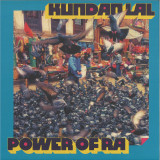
Kundan Lal is a highly understated artist. Little is known about his background, though some refer to him as Kunsaf Halil, his personal life remains largely a mystery.
Gathering a cult following amongst people like Den Sorte Skole or DJ Marcelle with his previous releases, he is now set to sail new shores. There is a sense of wanderlust as he opens his box of field recordings, collected on his many travels. From the buzzing streets of Alexandria, early sunday markets in Tafraoute or a crackling bonfire down by the banks of the river Ganges. Each track takes you places.
Kundan's second album is a captivating blend of dubby beats, collages, and exotic instrumentation. Drawing from classic tools like the Roland 808, SC7 and the famous Space Echo, Kundan has created a unique and minimalistic sound that is sure to captivate listeners. At once nostalgic and experimental, "Power of Ra" is a must-listen for both electronic music purists and fans of adventurous soundscapes.
Compelled to work from home on his computer during lockdown, Kundan dusted his pawnshop e-piano, downloaded some orchestral soundkits and started to digitize almost forgotten field recordings. The "Power of Ra“ came to him.
“Illgrimage” is a good example of his approach. Combining atmospheric soundscapes with swirling strings, trombones and pianos. Echoes of birds and children playing in the streets. A small town filled with life and a theremin leading the way while you hear the faint yet powerful words of Greta Thunberg saying: "Imagine...“
“Raqaqa,” a powerful orchestral journey with a hip-hop edge. Tinkling chimes add a groovy vibe, while lush layers of wind instruments weave a masterful soundscape. It’s the slow-burning intensity of this track that pulls you in.
"Nasi Chip" is a signature song that exemplifies Kundan Lal’s musical prowess. An engaging beat coupled with chopped up vocals, 8-bit synth melodies and an arpeggiated piano provide an energetic atmosphere that is both cunning and unique.
”Cen" lures you into the egyptian realm. A Harmonium slithers serpent like around a pounding beat.Horns gently swaying to the rhythm of the desert.
It is hard to put your finger on his style or genre. You can feel Kundan Lal‘s DIY spirit in his production, carving his own ethnic genre. For enthusiasts of Roberto Musci or Muslimgauze, this avant-garde album is one for your collection. Keep your senses open and let the Power of Ra pass you to another world.
"prog stalwarts deliver the goods" KKKK Kerrang!
"an album of Muse-like, slow burning guitar anthems" Rock Sound
"TPT take the baton of Pink Floyd & run with it, with the same dream- like atmosphere on the cusp of a nightmare." TERRORIZER
"the sound of a band reaching the height of their powers" Classic Rock "a high- class, mature, up to date & consistently melancholic album in between Porcupine Tree & Muse...warm, popular, contrived" Metal Hammer (DE).
The Pineapple Thief are one of the leading lights of Europe's experimental rock domain, led by post-progressive mastermind Bruce Soord, the band have built an incredibly loyal fanbase over the past 23- years through extensive touring & consistently lauded recordings. Founder Bruce Soord started The Pineapple Thief as an outlet for his music back in 1999 & has since released over 15 studio albums.
'All The Wars' saw frontman Bruce Soord mature as a songwriter & grow in confidence, allowing him the use of a 22- piece string section & a choir. Soord explains, "no expense has been spared regarding the production of this record but at its heart it's still a rock record. It's very heavy in parts & very delicate & beautiful in others." Following Storm Thorgerson's cover for 'Someone Here Is Missing', the
artwork for this album features images created by the award- winning
photographer Mark Mawson as part of his 'Aqueous' series, which was projected onto Buckingham Palace as the background to Paul McCartney's performance of 'Magical Mystery Tour' during the diamond jubilee celebrations.
Kscope are now proud to present a newly remastered LP edition of 'All The Wars'
Unrilis drops the latest release in its reinvigorated Rilis release series with a four-track EP by Ritzi Lee who is known for his hypnotic grooves and analogue sounds.
Rino Cerrone launched the Rilis series in the '90s as an outlet for his own experimental tracks and in 2022 the Unrilis team decided to relaunch the project.
Ritzi Lee is a Dutch artist based in Amsterdam who is well-known for his releases on underground imprints ranging from Bas Mooy's Mord to Ben Klock's Klockworks and his dark and dystopian style with raw percussion is a perfect fit for the Rilis style.
Talking about his new Rilis series release, Ritzi Lee said: 'I'm a big fan of the early Rilis releases. That sound was always integrated to my DJ sets and a big inspiration for most of my productions. The early Naples techno sound was always about pushing the limits, but at the same time keeping it groovy and funky. So, I was able to use those rules and apply them into this release while still combining my own signature sound. I think it's best described as ruff edged with a minimalistic approach, but making sure to keep it warm sounding. I'm really happy with the result, as feels like there is a strong Amsterdam/Naples connection in this sound and I would say it is a perfect match.'