
Buscar:ext

Produced by Scott McCannell and mixed by Kelly Finnigan of Monophonics, Record Kicks presents two brand new single from Canadian rising soul star Tanika Charles on limited edition clear 45 vinyl. “Don’t Like You Anymore and “Here When You’re Ready” are taken from the highly anticipated new album “Reasons To Stay” from the Twice JUNO nominated and two time Polaris Prize listed, Tanika Charles that is coming out in May 2025 via Record Kicks. On the A side “Don't Like You Anymore” is a mid tempo gospel funk stormer able to set the dancefloor on fire. With its boom bap smacked drums and chunky basslines, it will not be a surprise if rap/hip hop artists will get on it to sample the song. The B side “Here When You’re Ready” is an equally strong mid tempo soul number that makes this limited edition 45 vinyl a real double sider. Canadian Soul/R&B powerhouse Tanika Charles in a few years has transformed from an emerging solo artist to a commanding performer and bandleader, a staple in the Canadian soul scene. The success of her three studio album "Soul Run" (2017), "The Gumption" (2019) and “Papillon De Nuit” (2022) propelled Tanika in front of new audiences far and wide, with extensive touring in North America and Europe where she performed at Trans Musicales Festival in France, the Lärz, Germany Fusion Festival, Mostly Funk & Soul Festival and Jazz Festival in UK, the Holy Groove Festival in Switzerland, and the Canarias Jazz Festival in Spain just to name a few. Her touring career has also seen her supporting the likes of Estelle, Mayer Hawthorne, Haitus Kayote, Lauryn Hill, Bendouin Soundclash and Macy Gray
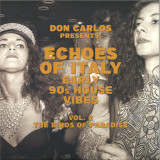
- A1: Montego Bay - Everything (Paradise Mix) 04 59
- A2: Atelier - Got To Live Together (Club Mix) 06 06
- A3: Golem - Music Sensations 04 56
- B1: The True Underground Sound Of Rome Feat. Stefano Di Carlo - Gladiators 05 26
- B2: Eagle Parade - I Believe 04 26
- C1: Dj Le Roi - Bocachica (Detroit Version) 05 28
- C2: Green Baize - Synthetic Rhythm 01 41
- C3: M.c.j. Feat. Sima - Sexitivity (Deep Mix) 05 30
- D1: Kwanzaa Posse Feat. Funk Master Sweat - Wicked Funk (Afro Ambient Mix) 06 31
- D2: Progetto Tribale - The Bird Of Paradise 06 29
- D3: Mbg - The Quite 06 59
11
También disponible
Vol 1[28,99 €]
Googling “paradise house”, the first results to pop up are an endless list of European b&b’s with whitewashed lime façades, all of them promising “…an unmatched travel experience a few steps from the sea”. Next, a little further down, are the institutional websites of a few select semi-luxury retirement homes (no photos shown, but lots of stock images of smiling nurses with reassuring looks). To find the “paradise house” we’re after, we have to scroll even further down. Much further down.
It feels like yesterday, and at the same time it seems like a million years ago. The Eighties had just ended, and it was still unclear what to expect from the Nineties. Mobile phones that were not the size of a briefcase and did not cost as much as a car? A frightening economic crisis? The guitar-rock revival?! Certainly, the best place to observe that moment of transition was the dancefloor. Truly epochal transformations were happening there. From America, within a short distance one from the other, two revolutionary new musical styles had arrived: the first one sounded a bit like an “on a budget” version of the best Seventies disco-music – Philly sound made with a set of piano-bar keyboards! – the other was even more sparse, futuristic and extraterrestrial. It was a music with a quite distinct “physical” component, which at the same time, to be fully grasped, seemed to call for the knotty theories of certain French post-modern philosophers: Gilles Deleuze, Félix Guattari, Paul Virilio... Both those genres – we would learn shortly after – were born in the black communities of Chicago and Detroit, although listening to those vinyl 12” (often wrapped in generic white covers, and with little indication in the label) you could not easily guess whether behind them there was a black boy from somewhere in the Usa, or a girl from Berlin, or a pale kid from a Cornish coastal town.
Quickly, similar sounds began to show up from all corners of Europe. A thousand variations of the same intuition: leaner, less lean, happier, slightly less intoxicated, more broken, slower, faster, much faster... Boom! From the dancefloors – the London ones at least, whose chronicles we eagerly read every month in the pages of The Face and i-D – came tales of a new generation of clubbers who had completely stopped “dressing up” to go dancing; of hot tempered hooligans bursting into tears and hugging everyone under the strobe lights as the notes of Strings of Life rose up through the fumes of dry ice (certain “smiling” pills were also involved, sure). At this point, however, we must move on to Switzerland.
In Switzerland, in the quiet and diligent town of Lugano, between the 1980s and 1990s there was a club called “Morandi”. Its hot night was on Wednesdays, when the audience also came from Milan, Como, Varese and Zurich. Legend goes that, one night, none less than Prince and Sheila E were spotted hiding among the sofas, on a day-off of the Italian dates of the Nude Tour… The Wednesday resident and superstar was an Italian dj with an exotic name: Don Carlos. The soundtrack he devised was a mixture of Chicago, Detroit, the most progressive R&B and certain forgotten classics of old disco music: practically, what the Paradise Garage in New York might have sounded like had it not closed in 1987. In between, Don Carlos also managed to squeeze in some tracks he had worked on in his studio on Lago Maggiore. One in particular: a track that was rather slow compared to the BPM in fashion at the time, but which was a perfect bridge between house and R&B. The title was Alone: Don Carlos would explain years later that it had to be intended both in the English meaning of “by itself” and like the Italian word meaning “halo”. That wasn’t the only double entendre about the song, anyway. Its own very deep nature was, indeed, double. On the one hand, Alone was built around an angelic keyboard pattern and a romantic piano riff that took you straight to heaven; on the other, it showcased enough electronic squelches (plus a sax part that sounded like it had been dissolved by acid rain) to pigeonhole the tune into the “junk modernity” section, aka the hallmark of all the most innovative sounds of the time: music that sounded like it was hand-crafted from the scraps of glittering overground pop.
No one knows who was the first to call it “paradise house”, nor when it happened. Alternative definitions on the same topic one happened to hear included “ambient house”, “dream house”, “Mediterranean progressive”… but of course none were as good (and alluring) as “paradise house”. What is certain is that such inclination for sounds that were in equal measure angelic and neurotic, romantic and unaffective, quickly became the trademark of the second generation of Italian house. Music that seemed shyly equidistant from all the rhythmic and electronic revolutions that had happened up to that moment (“Music perfectly adept at going nowhere slowly” as noted by English journalist Craig McLean in a legendary field report for Blah Blah Blah magazine). Music that to a inattentive ear might have sounded as anonymous as a snapshot of a random group of passers-by at 10AM in the centre of any major city, but perfectly described the (slow) awakening in the real world after the universal love binge of the so-called Second Summer of Love.
For a brief but unforgettable season, in Italy “paradise house” was the official soundtrack of interminable weekends spent inside the car, darting from one club to another, cutting the peninsula from North to centre, from East to West coast in pursuit of the latest after-hours disco, trading kilometres per hour with beats per minute: practically, a new New Year’s Eve every Friday and Saturday night. This too was no small transformation, as well as a shock for an adult Italy that was encountering for the first time – thanks to its sons and daughters – the wild side of industrial modernity. The clubbers of the so-called “fuoriorario” scene were the balls gone mad in the pinball machine most feared by newspapers, magazines and TV pundits. What they did each and every weekend, apart from going crazy to the sound of the current white labels, was linking distant geographical points and non-places (thank you Marc Augé!) – old dance halls, farmhouses and business centres – transformed for one night into house music heaven. As Marco D’Eramo wrote in his 1995 essay on Chicago, Il maiale e il grattacielo: “Four-wheeled capitalism distorts our age-old image of the city, it allows the suburbs to be connected to each other, whereas before they were connected only by the centre (…) It makes possible a metropolitan area without a metropolis, without a city centre, without downtown. The periphery is no longer a periphery of any centre, but is self-centred”.
“Paradise house” perfectly understood all of this and turned it into a sort of cyber-blues that didn’t even need words, and unexpectedly brought back a drop of melancholic (post?)-humanity within a world that by then – as we would wholly realise in the decades to come – was fully inhuman and heartless. A world where we were all alone, and surrounded by a sinister yellowish halo, like a neon at the end of its life cycle. But, for one night at least, happy."

2
Limited Edition 12"
Left Ear are delivering two previous unreleased Australian ‘experimental’ electronic tracks from the 80’s and honoring them with a split 12” release.
Side A: Features an unreleased full-length version of Tim Gruchy’s Jungles, a solo electro-percussive piece recorded in Tim’s Lab D’Avoid studio in Brisbane. The track is emblematic of his style during an era when he worked extensively in music, both as a percussionist and primarily with electronics, including early analog synths.
A shorter version was originally released on the Meanjin (Brisbane) art collective ZIP’s Eye Ear EP book package in 1986 and, more recently, on Left Ear’s Antipodean Anomalies 2 compilation.
This original version of Jungles was initially part of the soundtrack for the ZIP Performing Group’s infamous Ironing Board Dances. Footage of the performance was treated through a Fairlight synthesizer, mixed with hand-painted slides, and transferred to VHS for various film festivals.
Side B: Michael Krillich’s Arnhem Land began its journey in 1982 in a shared house in North Bondi. Inspired by Brian Eno and David Byrne’s My Life in the Bush of Ghosts, he experimented with tape loops, cut-ups, and samples, incorporating synthesizers, effects pedals, a drum machine, and an unknown sample from an Australian Aboriginal record. This creation became part of his cassette release, Thematic Variations.
In 2010, Krillich uploaded an unreleased extended version of Arnhem Land from Thematic Variations to YouTube, which was shared by record dealer Matt Bowden with Left Ear Records, who pursued to release it on vinyl. Their search to uncover the sample’s origins led them to Arnhem Land Vol. 1 (1957), recorded by Peter Elkin in the Daly River region.
After years of research and through the guidance of Professor Allan Marrett and local custodians, the sample was verified as a “Wangga” ceremonial song sung by George Morkai, an Emmiyangarl man. Rights to the song had passed through generations to Tobias Worumbu, who granted us permission for its use, bringing Arnhem Land full circle.


- A1: Phunk Baton
- A2: Take Me To A Silent Place Original Mix
- A3: Phantom Dubmix
- B1: Midi Lightning
- B2: Transmission Interlude
- B3: Transmission Damaged
- B4: Morse Phunk
- B5: Take Me To A Silent Place Exterior Mix
- C1: Forever Syncopation
- C2: Mission Damage Trance
- C3: Midi Blitz
- C4: Our City Is Never Utopia
- D1: Transfusion
- D2: Midi Voyage
- D3: Take Me To A Silent Place Sun Mix
15
The iconic DJ Sotofett comes with a real treat--a 12-track album on Clone West Coast Series that showcases a playful take on electronic music. Immerse yourself in the vibrant world of DJ Sotofett & The Colours of Computer Generated Instruments. With 12 electrifying electro tracks that blend a wide spectrum of rhythms with 80's Nintendo console vibes and holy grail analog vs digital synthesis, this album is a jubilant celebration of that sound. Prepare for an exhilarating journey filled with surprises, seamlessly transitioning from acid infected vibes and catchy electronic pop to groundbreaking avant-garde electro cuts. Each track intricately weaves together influences from over 40 years of electronic dance music, inviting listeners to explore the rich tapestry of genres that have shaped the landscape. As you delve deeper, you'll uncover the intricate layers and innovative production techniques that define Sotofett's distinctive style, transforming this album into more than just a collection of tracks -- it's a true sonic adventure that beckons you to listen, dance and dream.

- Love In Store
- Can’t Go Back
- That’s Alright
- Book Of Love
- Gypsy
- Only Over You
- Empire State
- Straight Back
- Hold Me
- Oh Diane
- Eyes Of The World
- Wish You Were Here
If every significant artist has an underrated gem in its catalog, then Mirage is that album for Fleetwood Mac. An obvious return to relative simplicity after the dramatic tension of Rumours and experimental ambitions of Tusk, the 1982 album finds the band re-grouping after a brief hiatus and again climbing to the top of the charts. Extremely well-crafted, well-produced, and well-performed, the double-platinum effort distills the group’s hallmark strengths into a filler-free set that never runs short of addictive pop hooks or daft accents.
Sourced from the original analog master tapes, pressed at Fidelity Record Pressing in California, and housed in a Stoughton jacket, Mobile Fidelity’s numbered-edition 180g 45RPM 2LP set presents Mirage in reference sound for the first time. The efforts co-producers/engineers Ken Caillat and Richard Dashut went to capture the splintered albeit formidable band can be heard with stunning accuracy, range, depth, and detail.
Though Rumours understandably gets a permanent spot in the audiophile hall of fame, the smooth, clear, and dynamic sonics on Mirage confirm that the record that stood as Fleetwood Mac’s last effort for five years deserves a place in the same vaunted arena. The presence and imaging of Mick Fleetwood’s percussion alone on this reissue might have you wondering how this slice of soft-rock bliss has gone under-noticed for decades. Other prized aural aspects — separation, definition, impact, tonal balance — are also here in spades.
Like much surrounding Fleetwood Mac in the 1980s, arriving at Mirage was not easy. Caillat searched for studios located outside of Los Angeles on a mission to change up the vibe of the band’s prior recording sessions. Everyone settled on Le Chateau in France, where relations between some members remained icy — and cooperation with the producers strained. Battles with exhaustion, bitterness, and addiction further informed the proceedings at the 18th century complex in the French countryside, where even communal meals were allegedly eaten in silence.
Inevitably, the feelings that co-producer Lindsey Buckingham, Stevie Nicks, Christine McVie, and company harbored — as well as the situations in which they found themselves — drifted into the songwriting. In its rapid ascent to rock-star royalty status, Fleetwood Mac drifted apart, embarked on solo pursuits, and found it was lonely at the top. Emptiness, the illusion of dreams, the longing for love, the want to escape to bygone times of innocence and happiness: Such themes inform a majority of the narratives. Even if the lyrics regularly take a back seat to easygoing arrangements that allow Mirage to come on like a refreshing breeze on a sunny summer afternoon.
Home to three Top 25 singles in the U.S. and having occupied the pole position of the Top 200 album charts for five weeks, Mirage rightfully resonated with the mainstream and attracted listeners on both sides of the pond. And how, via a smart blend of sugary melodies, warm harmonies, interlaced notes, nimble rhythms, taut structures, and passionate vocals. Not to mention the presence of what arguably remains Nicks’ signature song, the biographical “Gypsy,” a meditation on the loss of her close friend Robin Anderson that teems with majesty, mystery, and mysticism — and which gets an assist from Buckingham’s shaded tack piano and richly strummed guitar chords.
Its ranking as an all-time classic aside, that No. 12 hit has plenty of company when it comes to brilliant pop turns on Mirage. On the subject of Nicks, the raspy singer gets a little bit country on “That’s Alright.” Its clip-clopping pace and two-stepping progression complement subtle vocal swells that emerge during the final verse of a tune that is ostensibly about leaving but still conveys forgiveness and grace. And what would a Fleetwood Mac record be without Nicks drawing on the tools of the supernatural — cards, dreams, wolves, and the like — on the twirling “Straight Back.”
Despite the potency of Nicks’ primary contributions, Mirage seemingly unfolds as a tight competition between Buckingham and McVie — and one that ultimately ends in a draw. Buckingham’s salvos include the contagious “Can’t Go Back,” a yearning to time-travel back to the past that’s complete with hall-of-mirrors backing vocals; “Oh Diane,” out-of- left-field ear candy sweetened with hiccupped vocals and salt-and-pepper-shaken grooves; the chiming “Eyes of the World”; and “Empire State,” a delightfully fluttering track whose high-range vocals, lap harp notes, and ringing xylophones hint at the galaxies of sound that would erupt on Tango in the Night.
Then there’s McVie. As elegant, understated, and coolheaded as she’s ever been on record, she pours her heart out on cuts that revolve around her inevitable split with Beach Boy Dennis Wilson. In the process, she punctuates Mirage with a characteristic not always associated with catchy pop music: emotional weight, and the sense of dreaded acceptance in the face of dreams deferred.
“I wish you were here/Holding me tight,” McVie sings over a delicate melody on the album-closing piano ballad “Wish You Were Here.” Though they hoped otherwise, for the members Fleetwood Mac, distance and separation were always close at hand. Believing otherwise, inviting nostalgia, and pretending everything was fine only amounts to a mirage.

Foreigner's Double Vision album achieved success through a combination of well-crafted songs, strong songwriting, talented musicians, extensive radio airplay, and favorable timing within the music industry.
Double Vision, released in 1978, followed up the group's blockbuster debut with an album of FM mega-hits. Songs such as "Hot Blooded," "Double Vision," and "Blue Morning, Blue Day" became radio staples and resonated with a wide audience. Lou Gramm's powerful vocals and Mick Jones' guitar playing were key components of the band's sound, and their musical prowess was evident throughout the album.
The album peaked at No. 3 on the Billboard 200 chart and earned platinum-selling certification just a week after its release, and now has marked 7x platinum for sales in excess of 7 million units. "Hot Blooded," reached No. 3 on the Billboard Hot 100 chart. In September, it was followed by "Double Vision," which charted at No. 2. This was the highest position Foreigner had attained to that time. The third and final single, "Blue Morning, Blue Day," was released in December and climbed to No. 15 on the chart.
Foreigner was known for their energetic live performances, and they toured extensively to promote Double Vision. Their live shows helped to further connect with fans and promote the album.
Analogue Productions is proud to offer the definitive reissue deluxe 45 RPM 2LP of Double Vision. For Foreigner fans, this is a can't-miss addition to your album collection.

14
Transport yourself to the vibrant streets of Havana with the Buena Vista Social Club's eponymous album, a captivating journey into the heart of Cuban music! Recorded in 1996 by acclaimed producer Ry Cooder, this timeless masterpiece celebrates the rich tapestry of Afro-Cuban rhythms and soulful melodies that have enchanted audiences for generations.
Buena Vista Social Club is both the name given to this extraordinary group of musicians and the album, recorded in just seven days in 1996 in Havana's 1950s vintage EGREM studios. From the infectious energy of "Chan Chan" to the heartfelt nostalgia of "Dos Gardenias," each track immerses listeners in the intoxicating blend of son, bolero, and guajira styles. Led by legendary musicians such as Ibrahim Ferrer, Compay Segundo, and Omara Portuondo, the Buena Vista Social Club ensemble delivers performances that are as exuberant as they are intimate, capturing the essence of a bygone era while igniting a passion for Cuban music that knows no bounds.
The acclaim of the original album has elevated the artists (including Ibrahim Ferrer, Rubén González and Omara Portuondo) to superstar status, inspired an award-winning film by Wim Wenders, and has contributed to popularizing Cuba's rich musical heritage. Produced by Ry Cooder for World Circuit, the timeless quality of the music and the sheer verve of the veteran performers have ensured that this will go down as one of the landmark recordings of the 20th century.
This 45 RPM Analogue Productions reissue pressed by Quality Record Pressings on four dead-silent LPs makes every note a transcendent experience. Meticulously crafted using the finest materials and exacting standards, this reissue pays homage to the golden age of vinyl, capturing the warmth and depth of the original recording in stunning detail. The package includes a 12-page booklet with lyrics and stunning studio images, topped off by a tip-on old style gatefold double pocket jacket made by Stoughton Printing.
Embark on a musical odyssey filled with warmth, joy, and the irresistible allure of Havana nights!
9
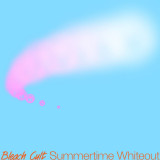
Summertime Whiteout is a debut Bleach Cult album - the quirky ambient pop record that
fantasizes about 1960s surf culture and romanticizes the neverending dilemmas of teen
life. It is all about raw imperfections and beautiful spontaneity, captured live on a
modular synthesizer, often relying on single takes and instinctive executions of tracks
that leave little to no room for extensive tweaking and post-processing. Recorded in the
living room at night it shies away from sophistication and complexity instead employing
rough, rock and roll inspired ideas. Raw drifting analog sequences, pulsating textures
and polychromatic vocals. No guitars or drum machines, however.

4
The Italian 80s avant garde / anarcho scene is explored in this limited 12” release presenting Nengue and their previously unreleased cover version of the new wave classic Los Ninos Del Parque and the electro pop wave African Beat.
The tumultuous political climate of the 1960s through 1980s inspired Italian artists to craft an introspective, psychological musical landscape. As civil unrest, violent demonstrations, and political murders became commonplace, Italy's centres of intellect vibrated with activist energy. This atmosphere gave birth to a unique, mechanized sound that blended electronic elements with a raw, discordant aesthetic, reflecting the chaotic spirit of the times.
Through vintage forms of social networking and music sharing, a community led process steered the scene, publishing zines and records that grasped alternative concepts of music and lifestyle.
Nengue, were similar to many of these lo-fi, retro-future electronic music pioneers. Based in Rome, their music / art backgrounds flowed with anti-art, extreme noise, futurism, industrial, experimental, martial, folk, free jazz and exotica.
With a couple of releases as a duo, as was often the case, they appeared in numerous other projects and the music was a mixture of their individual backgrounds.
Extraordinarily, only appearing on a couple of obscure cassette compilations, indicative of the time, the quality of Nengue’s productions stands testament. Originally approached to reissue their Cosmic meets Kraftwerk inspired African Beat, a wonderful yet simple electronic idiom, layers of electronica rising, each element an addition flow, vocals the release’s waves.
However, the discovery of their cover of Los Ninos Del Parque – describing it as ‘powerful anarchic nonsense’ – is rightfully now the primary focus.
Acting as some Brutalist interpretation, its sharp electronics and industrial vocals, propel you to a brick-strewn squat party and a place in anarcho folklore.
These are matched with a remix / remake by Berlin’s Bionda e Lupo. Presenting a ‘Neumisch’, Sneaker’s exacting studio mastery and Sano’s additional vocals are a blessing – a new duo version – dynamic and wonderfully special.
To complete, the powerful dub of African Beat closes. Stepping out of his time as one half of Romanian duo Khidja (DFA / Hivern Discs), Andrei Rusu builds on his recent solo releases / remixes for Malka Tuti with a fantastic, bottom heavy version, perfectly building with expertise, an EP for the basements of today that was made in the dark times of the past.

14

- Angel I'll Walk You Homea
- Cath Carrolla
- So Sicka
- Light Commanda
- Food & Drink Synthesizera
- Soon It Is Going To Rainb
- Make Out Clubb
- Breather X.o.x.o.b
- West Coast Love Affairb
- Six Layer Cakeb
- Stylized Ampersand
"Perfect Teeth" war das finale Album der amerikanischen Indie-Institution Unrest. Dreißig Jahre nach der ursprünglichen Veröffentlichung lassen 4AD und die Band es als Doppelalbum neu aufleben. Die 30th Anniversary Edition besteht aus dem remasterten Originalalbum sowie "Extra Teeth", einem Bonusalbum mit EP-Tracks, Singles und Raritäten. Unrest, die ihren Namen einer Henry-Cow-Platte entliehen hatten, gründeten sich 1983 in einer Schule in Arlington, Virginia. Anfangs noch improvisierende Instrumentalband, perfektionierten sie bald einen vielseitigen Sound mit unterschiedlichen Genreeinflüssen. Sie veröffentlichten ihre Musik über TeenBeat, das Label ihres Frontmannes Mark Robinson und später auch bei 4AD, Caroline und Matador. Auf "Perfect Teeth" sind die Gründungsmitglieder Mark Robinson und Phil Kraut sowie Bassistin Bridget Cross (ursprünglich Sängerin von Velocity Girl) zu hören. Das Album wurde im Pachyderm Studio in Cannon Falls, Minnesota aufgenommen, wo erst kurz zuvor Nirvanas "In Utero" fertiggestellt wurde. Brian Paulson, bekannt durch seine Arbeit für Slints "Spiderland", nahm "Perfect Teeth" auf. Die Produktion übernahm Simon LeBon. Für die 30th Anniversary Edition wurde das Album nun inklusive aller Bonustracks - meist auf Grundlage der Originalbänder - neu gemastert. In Zusammenarbeit mit Designer Chris Bigg enstand ein neues Backcover, ein neues Sleeve sowie das "Extra Teeth" Artwork. Der einmalig neu aufgelegte Release kommt mit einem 16-seitigen Art Catalogue mit Linernotes von Unrest, 4AD-Gründer Ivo Watts-Russel und Chris Bigg.

14
2025 Repress
"Hydroplane reinstate their formidable 1997 debut of sublime guitar atmospherics, fragile lyricism and droning incidentals with an overdue vinyl and digital reissue.
An offshoot of the now-féted The Cat’s Miaow, the trio formed after drummer Cameron Smith decamped to London, charting new territory with tape loops, manipulated samples and a borrowed Jupiter 4 in the wake of Endtroducing. Adopting a handle that Dean Wareham once considered calling Luna, Hydroplane intended to only ever release Excerpts From Forthcoming LP, a single-sided 7” sonic collage, before imploding in mystery. Their label however insisted they deliver their taunted album. From the comfort of a Brunswick flat, they continued to record soaring melodies and restrained song structures to 4-track, sculpting dramatic Radiophonic Workshop cues weighted in reverb and near-perfect dream pop lead by Kerrie Bolton’s empyrean vocals.
Bored of industry expectation and largely ignored by local audiences, the reluctant performers followed the way of The Cannanes and formed meaningful overseas alliances by mail and phone, securing releases on Michigan outpost Drive-In and Broadcast launching pad Wurlitzer Jukebox. Championed by John Peel with twenty spins on his converted Radio One slot and even polling in Festive Fifty of 1997, the humble three-piece still walked to their neighbourhood shops undetected.

12
Letters from the Atlantic displays a seamless blend of jazz, house, indie, funk, R&B, soul, bossa nova, and more. The band elevates to a new level of sophistication with their genre defying approach, while featuring numerous female guest artists: Yaya Bey, Melanie Charles, Leanor Wolf, Mia Gladstone, Victoria Victoria, along with Nicholas Payton and Neal Francis. With the new album, the band ventures closer to a indie vibe, rather than the hip-hop style displayed on Solar Music (2023). The Richmond, Virginia based collective consists of friends and bandmates Corey Fonville (drums), Andrew Randazzo (bass), Morgan Burrs (guitar), Marcus “Tennishu” Tenney (trumpet, saxophone, vocals) and Devonne “DJ Harrison” Harris (multi-instrumentalist), who make music that is as diverse as their own varied tastes and backgrounds.
Butcher Brown has a storied touring history having played many of the world biggest and most prestigious festivals including Afropunk, Pitchfork Festival, Monterey Jazz, and more have toured with the likes of Pink Siifu, Tom Misch, Galactic, Lettuce, and Kamasi Washington. In support of Letters From the Atlantic, Butcher Brown has plotted headline tour dates across North America in spring of 2025 followed by an extended European festival tour this summer.

- 1: Tagli
- 2: Sabbia
- 3: Sabbia, Pt.2: Ghiaccio
- 4: Kallitype
- 5: Sciame
- 6: Rami
- 7: Talee
- 8: Bordi
- 9: Riva
- 10: Alte Mura
- 11: Come Fauce Che Divora
Long running Italian post-hardcore and noise punk band STORMO are set to make their return in 2025 with their forthcoming fifth album, Tagli/Talee, set for release via Prosthetic Records on March 21. Translated as ‘cutting’ and ‘grafts’, STORMO’s latest full-length serves as a document of their extensive travels whilst on tour throughout Europe, with each song acting as a vignette of their surroundings to create a broader picture of humanity at its most personal.

Sicksense (Metalband aus Phoenix, Arizona) nimmt seine NuMetal-Einfl üsse und verwandelt sie in ein Hydra-Monster, in dem sich die Köpfe von Metalcore, Progressive Metal und Power Metal zu einem modernen, extrem gelungenen Experiment vereinen. Insbesondere das Wechselspiel der beiden Sänger*innen der Band Vicky Psarakis (ex-THE AGONIST) und Robby J. Fonts (STUCK MOJO) macht Spass und sorgt schnell für hohen Wiedererkennungswert. Das Debütalbum von Sicksense,

12
Toy Tonics Music Berlin presents "Para Mytho Disco". The 2nd "Kapote" album of label founder and creative director Mathias Modica.
Keyboarder, DJ, producer, music nerd, graphic designer, multi-instrumentalist, sub-culture impressario and artist (formerly known as Munk of Gomma records.)
Kapote & Toy Tonics
In the last years Kapote was in the spotlight mainly for building the Toy Tonics label with his friends. Developing a platform for new positive quality dance music with a human touch. Toy Tonics is the opposite of the dark, druggy Techno and Trance sounds of the last years.
The warm inclusive music of Toy Tonics represents a new vibe that a young generation of diverse, stylish and culturally intersted generation of dancers loves now. Kapote's Toy Tonics became the key label for that vibe. (In 2024 Toy Tonics made 150 Toy Tonics events in 18 countries. With more than 150.000 people dancing. 90 millions streams on their music.)
Toy Tonics is more than a music label: It's a audio - visual universe. A community, almost a movement.
Based on a new positive attitude and aesthetic diversity. Mixing musicianship with DJ culture, analogue music with electronic, ideas from the past with sounds from now. To create something new. Connecting dance music with graphic design, art and underground fashion.
Kapote and his gang release vinyl, posters, shirts, art fanzines and make exhibitions and partys.
Toy Tonics started in Berlin as a underground niche project. But now became the key label of the new house, wild style disco and organic dance music scene.
Probably one of Berlin's biggest electronic music phenomena along with Keinemusik and Live from Earth.
It went fast: 2020 Kapote's crew started to make small parties in Berlin's off spaces. The "Toy Tonics Jams". The parties became "talk of the town", and Berlin clubs like Griesmühle and Panorama Bar invited the crew. Then international clubs and festival called. Toy Tonics were invited to SONAR (playing the mainstage with Kaytranada and DJ Tennis), KALA festival, Montreux Jazz festival.
Now TT has a residency at Panorama Bar Berlin and sold out events in Europe leading clubs like Phonox in London, Rex Club in Paris, Tunnel in Milan.
Toy Tonics now is the reference brand of a new generation of music loving dancers. Similar to Gomma records, Kapote's former label (2003 - 2015) that was one of the key labels of the "indie dance" scene of the Y2K years (along with DFA and Output Records).
Kapote created a multi-cultural movement with graphic designers, photographers, illustrators from the Berlin scene.
They publish the Toy Tonics Pocket Poster magazine, posters and design shirts. They organize the Toy Tonics Pop Up Galleries mixing music and art. In underground venues in Berlin and in new gallery spaces and museums around Europe.
Toy Tonics has been invited by Palais de Tokio museum in Paris, Triennale Museum Berlin, Design week Milano to create events.
The new Kapote album
The 12 tracks have a very own style. Based on dance music, but going much further. "Para Mytho Disco' is a futuristic mix of sounds. It's far away from the dark monotone techno and trance music from Kapote's hometown Berlin. Instead, he creates warm friendly atmospheres full of sonic colours and little musical surprises.
Kapote's knowlege of music history and his backround as a jazz piano student and son of classic music composer is clearly inside this music. Before turning into a DJ and electronic music producer he has been playing in bands since he was 13 years old.
The album is full of emotional chord progressions played by Kapote on various keyboards. Sometimes reminding music from the past, without being retro at all. The basslines and melodies are inspired by jazz fusion from the 1970ies. And he programmed syncopated grooves that come from afro-american dance music. There are influences from Japanese electronic music (Yellow Magic Orchestra), from 1980s Synthwave and from 1990s electronica (like Squarepusher and Luke Vibert).
Kapote plays keys, bass, flutes and percussions, he plays synth solos and sings on a few tracks. The complexity of the arrangements makes this music never boring. Lot of melodies and solos that catch the listener. Colourful soundscapes that make you want to listen or dance to this album more, and discover details also after you heard it several times.
Kapote background
Before starting Toy Tonics, Kapote used to run a label called Gomma. He produced four albums under the name Munk and music for other artists.
He produced music with Peaches, Franz Ferdinand founder Nick McCarthy, with New York street art legend The Rammellzee, Italian actress Asia Argento, the first three albums of WhoMadeWho and worked with LCD Soundsystem (listen to "Kick out the chairs", the Munk song with James Murphy )
In those "Gomma days" Kapote aka Munk was also one of the main DJs for VICE magazine parties and made music for art projects and fashion brands (Margiela, Prada, Colette).
In 2015 he stopped Munk and Gomma and started Toy Tonics. He found young producers and helped to develop their sound (Coeo, Cody Currie, Gee Lane, Barbara Boeing, Sam Ruffillo). Later he founded the sublabel Kryptox to release music by Berlin based bands that make new forms of jazz or neo classical sounds.
Under the name Kapote Mathias didnt release much:
Only his Kapote debut album "What it is" (2019) and an EP called "Electric Slide" (2022) and a collabo EP with Italian producer Sam Ruffillo ("Robot Salsa").
An although his Munk and Kapote music was an underground phenomena his music has always been a favourite of many great people from the scene.
Supported by DJs like Harvey, Chromeo, Moodymann, Jennifer Cardini, Gerd Janson, MYD, Andrew Weatherall to Blessed Madonna, Justice and Laurent Garnier… to name just a few.

6
RUSSELL HASWELL is an artist, record producer, free improvisor, computer musician, noise aficionado and curator.
Trained at Coventry School of Art, graduating in 1992, Russell’s extraordinary conceptual oeuvre resists easy summarisation, focused on the site-specific, performance and methodology of large-scale sound works, sometimes in surround sound. Russell has given solo audio presentations at major Art and Music festivals and events, in art galleries, concert halls, clubs, rock venues, and even squats in 30 countries, and counting. Most recently he has performed at SONIC ACTS, SONAR, Pirelli Hangar Bicocca and Coventry Cathedral.
As a curator, Russell has delivered projects for PS1/MoMa, All Tomorrows Parties, Aldeburgh Music, Thyssen-Bornemisza Art Contemporary, and Cafe Oto. He now lives and works in Glasgow.
Recorded in real-time (ADDAC System, ALM/Busy Circuits, Cwejman, Epoch Modular, FANCYYYYY Synthesis, Flight of Harmony, Instruo...)

4
Released in 2018, the Original Blunted Breaks Vol.1 compilation was a landmark release in the future jungle revival,
collating the sounds of the rapidly emerging underground in long player format and extending the reach of the modern
Productions behind the clubs and hardcore vinyl enthusiasts to the likes of BBC Radio 6, with guest Dead Man’s Chest mix and album feature on Tom Ravenscroft’s show.
In the ensuing years, contemporary jungle music has continued to gain in popularity with a rapidly expanding global influence and reaching younger audiences who’ve adopted it as the sound of now.
In 2025, Western Lore continues to push the freshest rising talent alongside now established stalwarts, continuing its role as a modern tastemaker in both jungle music and the wider electronica scene. This 4 track LP sampler is a flavour taster for the next iteration of the Blunted Breaks compilations, with Vol.3 due late Spring 2025.
