Born of a thousand nights lost in a surrender to stillness and contemplation, In The Air is Anna St. Louis’ second full length album and her most considered work yet. St. Louis’ debut If Only There Was a River seemed to emerge fully formed out of the recesses of her mind; a gritty, mesmerizing affair, filled with jagged edges and ghostly apparitions. The type of record that announces a new voice; one haunted by what has come before.
But this time, St. Louis is no longer concerned with what could have been and sets her sights to exploring what could be. It’s an outlook on the world that was formed when her immediate one was small. The intervening years since her last album found St. Louis in a small one-bedroom cabin in the middle of the woods of upstate New York with a new love and time to think of what she wanted to express with her music. For weeks on end, the only trips she took were to and from her job as the front desk clerk at a nearby hotel. The previous years she had spent on tour and performing constantly in the venues of Los Angeles felt like they had occurred in another lifetime.
“It really compelled me to surrender to the unknown,” she says. And in this surrender, she found liberation. St. Louis is more self-assured, open-hearted and ready to say what she wants. St. Louis describes the writing period as one of a slow harvest; a fertile time but one that required a newfound patience. Instead of documenting her first thoughts, she spent more time with each song, going deeper with the themes and ideas she wanted to express.
This slower approach also guided the sonic textures of the album. Working with producer Jarvis Taveniere (Purple Mountains, Woods) in two extended recording sessions in Los Angeles in 2021, St. Louis used the studio in a previously unexplored way, opening up her songs to more experimentation featuring brighter tones and a more orchestral sound to accompany her new perspective. To that end, she was aided by a cast of friends and collaborators including Jess Williamson, Kacey Johansing, Oliver Hill (Kevin Morby, Vagabon) on strings, Alex Fischel (Spoon) on piano, Josh Adams on drums (Bedouine, Tim Heidecker) and Keven Lareau (Cut Worms, Hand Habits).
In the Air has the sound of a joyous consideration of the present moment; a quiet morning revealing a new snowfall outside, steam coming from the kettle, just before it whistles, St. Louis with her guitar, staring out the window, with a few free hours before work. She’s reflecting on the scene in front of her, imagining the times yet to come. You can hear it; she’s a long way from the noisy bars of Los Angeles, the rigors of the road. As she intones in “Rest”: “You spend your whole life believing in the chase. And then you realize that being somewhere doesn’t matter like it used to.” She doesn’t need a river to carry her anymore ... She’s in the air.
Cerca:ext
Minsk Death Metal overlords EXTERMINATION DISMEMBERMENT return with bombastic force.‘Dehumanisation Protocol’ is the long awaited 3rd album from Belarus's heaviest. Since their 2009 beginnings, they have established themselves amongst most enigmatic bands on the Slam circuit today. Having forged a reputation as one of the most terrifying live acts out there today, 'Dehumanizatioin Protocol' is a future genre classic. Essential listening for fans of Devourment, Ingested and Slaughter to Prevail.
Ein einzigartiges Album, das 1999 seiner Zeit weit voraus war und ein absoluter Klassiker ist! Dieses Album ist eine Mischung aus Folk, Death Metal und Pagan Metal. Zum ersten Mal auf Vinyl!Ich lernte Hollenthon 1999 kennen, als "Domus Mundi" veröffentlicht wurde. "Domus Mundi" ist seitdem ein Lieblingsalbum, das ich mir immer wieder gerne anhöre, weil es einen unendlichen Wiederspielwert hat und eineneinzigartigen Stils, den keine andere Metal-Band nachahmen kann. Umso erstaunlicher, dass alles von einem Mann geschaffen und arrangiert wurde, nämlich von Martin Schirenc, der vor allem durch seine Arbeit bei Pungent Stench bekannt ist.Dieses Album lässt sich am besten als orchestraler Extrem-Metal beschreiben, aber auch episch, volkstümlich und mittelalterlich sind angemessene Adjektive für dieses Werk. Schirenc beweist, dass er nicht nur ein
großartigerSchirenc beweist, dass er nicht nur ein großartiger Gitarrist ist, sondern auch ein brillanter Arrangeur, der gregorianische Gesänge, Spoken Word, ethnische Musik aus dem Nahen Osten, neuseeländische Kriegsgesänge und jede Menge klassische Musik in seine Musik integriert.
Die Samples reichen von Rimsky-Korsakoffs "Sheherezade" bis zu einem Dudelsackfilm aus dem Film Braveheart, zu gesprochenen Samples aus Ridley Scotts Legend und vielem mehr. Diese Samples verleihen dem Album eine einzigartige Note und machen es extrem abwechslungsreich, etwas, das man so noch nie gehört hat. Schirenc verwendet einfache Songstrukturen und setzt Hooks in seiner Gitarrenarbeit ein, um lange Songs und sich wiederholende Strukturen interessant zu halten.
Svitlana Nianio has been active in the Ukrainian and Polish underground music scenes since the early '90's both as a solo artist and a prominent member of the now disbanded avant-rock outfit Cukor Bila Smert (Sugar White Death). Her music draws on aspects of modern composition and traditional Slavic music, with songs and experiments from that early period culiminating in the 1999 album Kytytsi (Koka Records, Poland). Prior to that in 1995, Nianio recorded Lisova Kolekciya (Forest Collection) live in a simple home studio setting with Olexander Yurchenko and Konstantin Nazarenko.
Less indebted to folk tradition than Kytytsi, Lisova Kolekciya was performed using Casio keyboards, electronics, and voice, positioning itself more inline with Terry Riley's Shri Camel in its otherworldly reinterpretation of the ancient through modern means. Retaining aspects of traditionl music in its use of spare instrumentation and haunting vocal melodies, this largely unknown album pushes at the edges of what folk music might be, resulting in music previously described as being "deeply rooted in primeval myths, creating a world of magic realism, in which the temporal dimension and the other world constantly move and permeate."
Issued here officially for the first time after an extremely limited private cassette edition handed out to friends in 1996 - where the recording was twinned with the album Znayesh Yak Rozkazhi (Know How Tell Me) - Lisova Kolekciya comes packaged in a full colour offset printed sleeve featuring artwork by Svitlana Nianio and is limited to 300 copies. 100 copies are housed in a special edition sleeve handmade by Faraway Press and are only available to order direct from the label.
Lewis II was the follow up to Lewis Taylor's epochal, self-titled debut album. It was initially released in 2000 and this double LP release, its first ever vinyl edition, has been heavily anticipated for nearly a quarter of a century. It's often years before most listeners catch up with an album's breathtaking vision and devastating execution, and so it has proved with Lewis II; it stands up exceptionally well today.
After Island rejected Lewis Taylor's second release (later released as The Lost Album), he returned to the studio to record Lewis II. Less esoteric than Lewis Taylor, Lewis II is a more polished, sophisticated funk and mature uptempo soul than the dark psych-soul of his debut. The production, whilst slicker, is a bit tougher, with more crisp, R&B-flavoured grooves and head-nod beats and more bass pumping up his voice. The vocal intensity present on album number one doesn't abate. Indeed, as Lewis himself noted, "my voice is better on Lewis II and the vocals are high in the mix."
The moody funk of "Party" sounds like a mad blend of Riot-era Sly Stone and Brian Wilson. It rides a stuttering drum machine groove with acapella harmony vocals arriving halfway through to stay for the duration. "My Aching Heart", with its clean, slick, late 90s R&B drums, could surely have been a single. Perhaps Lewis's idiosyncratic melodies would've been too challenging for the charts. Lewis *had hoped* "You Make Me Wanna" would be a single but the dank, organ-drenched groove, coupled with the growling eroticism of Lewis's vocals would've, again, made this beyond the pale for most mainstream music fans. Somewhat incongruous acidic synths and bleeps give way to a laconic summertime groove on breezy highlight "The Way You Done Me", all funky acoustic guitars and stunning, good-time vocals. Sumptuous ballad "Satisfied", a real fan favourite, marries unusual instrumentation with classic soul-ballad structure and closes with a monster guitar solo which almost out-Princes Prince in its gritty melodicism, set against sweeping strings of real majesty. Prog-Funk-Rock!
The dubbed-out, spaced-out "Never Gonna Be My Woman" is the closest the album comes to classic D’Angeloesque neo-soul, with echoes of the esoteric funk featured across Maxwell's contemporaneous Embrya. But what follows is on some next level business. As Lewis's biggest fan, Geoffrey Scull, noted, "the "I'm On The Floor" / "Lewis II" / "Into You" song cycle stacks up against any other consecutive 15 minutes of recorded music, ever!" And who are we to argue with that? These could've been hits for Justin Timberlake during his fascinating Timbaland-collaborating days, such is the sonic and textural pop experimentation at play here. The extraordinary title track sounds like an outtake from Marvin Gaye’s Trouble Man and spends its last third as a searingly dark piano-led psychedelic-guitar-crunching soul instrumental. Just astounding. And then. AND THEN! The way it segues into, er, "Into You" is just straight up genius. Goosebumps galore on this one, no words can describe its celestial brilliance. Just kick back and be beguiled by the "Let me come on over again" refrain that ornately adorns its sensational coda. Phew.
The swoonsome, lovelorn ballad "Blue Eyes", apparently written in the spirit of Marvin’s "Vulnerable", is a lush, slow swinger with some gorgeous noir touches. To close, Lewis completely retools Jeff Buckley’s beloved, beautiful "Everybody Here Wants You" and, while talking some liberties, even manages to surpass the original. Yes, really! With soaring, fiery vocals set against icy piano and psychedelic guitars, Lewis recasts Buckley's effort as dramatic, ethereal soul.
When it came to translating the original CD booklet into a 12 inch LP sleeve, thanks to some suggestions from Cally Callomon (head of Island’s art department, who designed all the sleeves for Lewis’s two Island albums and their singles) and his trusting us with his “Lewis Taylor” folder full of various negatives, test prints and whatever else he was able to salvage from the old Island art department, we’ve gotten pretty close to what the original LP sleeve would’ve looked like if it existed. Simon Francis’s vinyl mastering, presents the eleven tracks over a double LP so, as ever, the record sounds outstandingly good. The records have been cut by Cicely Balston at Air Studios and pressed at Record Industry.
- A1: Lost (1 32)
- A2: Listen Here (4 18)
- A3: Hide Your Heart Away (4 52)
- B1: Send Me An Angel (4 48)
- B2: Leader Of The Band (4 29)
- B3: Yeah (4 46)
- C1: Please Help Me If You Can (4 20)
- C2: Let’s Hope Nobody Finds Us (4 42)
- C3: New Morning (5 45)
- D1: Say I Love You (4 43)
- D2: See My Way (4 01)
- D3: One More Mystery (4 49)
Lewis Taylor's legendary magnum opus: The Lost Album. "Now you're talking. That's my favourite LT album. Unlike all of the others, there isn't anything about it that embarrasses me." Straight from the genius's mouth. What can we say about this? Well, it's the most requested record ever at Be With Towers. The Lost Album was the intended follow-up to his first album but Island rejected it for fear of "confusing" the marketplace and its conception of Lewis as a soul artist. Their loss. It's a breezy sunset masterpiece.
The genesis of this incredible record needs unpicking a bit. Lewis stopped promoting the first album after a year and went home to record a completely different record that was the most un-R&B album you could probably ever hear: "I pushed in such an extreme direction the other way with what eventually became The Lost Album. It was a knee-jerk reaction to a perceived ‘trapped in R&B’ feeling I was going through at the time. Some people around me were in favour of it and others weren’t. In the end I think I lost confidence in it and did Lewis II instead." We did at least get Lewis II, which is a remarkable album, and he kept Island happy...for a bit. Not long after, Lewis was dropped. And what was to become The Lost Album could've been...er...lost. Forever.
Thankfully, however, Lewis and longtime partner Sabina Smyth revisited those scrapped demo tracks in 2003. They decided to re-arrange, re-record and then self-release them. So it was that the brand new version of The Lost Album finally dropped in late 2004. It's sheer perfection, and we don't say that lightly. The Lost Album was a fully 50/50 collaboration between Lewis and Smyth. As well as production, Sabina did a lot more writing on it, from the melody to "Listen Here" to the chord sequence for "Let's Hope Nobody Finds Us." Thankfully, Sabina is credited this time around.
No, it's not straight up "soul music" in the vein of his previous work. Yet, in its perfectly formed suite of one dozen songs, The Lost Album is dripping in soul. It's so warm, so effervescent and so alive with possibilities. It features deep, fresh imprints on well-loved, accessible sounds. It's a proper 70s style double album. Just one listen and the musical influences on The Lost Album are fairly self-explanatory, as Lewis recently told us, but it's always nice to hear that, in case we were in any doubt, he was definitely channeling Love, Yes, Brian Wilson, CSN, Laura Nyro and, of course, Todd Rundgren. The influences don't end there: "I’m particularly fond of my bass playing on that album, there’s a lot of Chris Squire going on which is cool."
Deep orchestral opener "Lost" is a sublime, harp-laced, string drenched gem, a cinematic, melancholic Axelrod-esque mini-epic that simply beguiles. Written by Smyth, it evokes Donny Hathaway's celestial "I Love The Lord, He Heard My Cry" from Extensions Of A Man. The only problem is the brief 90 seconds running time. It segues into the classic Brian Wilson-meets-power-pop-rock splendour of "Listen Here" which, with its outstanding extended harp-licked beatless intro, sounds like the younger cousin to Boston's "More Than A Feeling". We then drift into the ringing guitars of classic 70s rock anthem "Hide Your Heart Away". It's Lewis's personal favourite, "especially the multi-tracked guitar solo – I was listening to Boston at the time, which was fun." A-ha!
A new version of the heart-stopping, shoulda-been-a-massive-pop-hit "Send Me An Angel" opens Side B before the arrival of, in Lewis's completely correct words, "the clear standout, "Leader of the Band"; the perfect distillation of everything that album was trying to achieve." Soaring, piano-led Rundgren-esque power pop that makes the hairs on the back of your next stand on end. Truly, otherworldly. This is pure pop for now (and then) people. The simple jangly brilliance meets experimental prog-rock of "Yeah" sounds like simultaneously like prime CSNY and late 90s Radiohead (if they'd had a slightly more accessible bent and could write better tunes).
Oh, you wish The Beach Boys had continued writing amazing songs beyond Holland? Well, allow us to point you in the direction of the downlifting stunner "Please Help Me If You Can" and the warm textures and brilliant atmospherics of goosebump-inducer "Let’s Hope Nobody Finds Us". Words can't really describe the sheer beauty of these songs. So we'll stop trying. Just listen. Listen, listen, listen. Closing out this remarkable side of music, the accidentally Balearic "New Morning" should be blasting out at every sunrise set in Ibiza, this summer and forevermore.
The final side opens with the vaguely Beatlesey "Say I Love You". It's just classic, soaring pop-rock songwriting and should strictly be canonical. It's that good. The sassy, Stonesy swagger of "See My Way" injects enough rock'n'roll attitude to compensate for the rest of record's peace-loving, AOR sun-dappled vibe whilst album closer, "One More Mystery", emerging out of the rubble of the previous track, comes on initially like a Baroque-Pop George Harrison before piling crunching drums and screeching guitar solos atop the dreamy harmonies til close.
When asked what it means to have these records available on vinyl for the first time, Lewis is in no doubt: "It’s great and it’s really nice to be able to offer fans a different listening experience. There’s a whole other dimension with vinyl that taps into that whole nostalgia thing, well for me anyway. Something about the physical aspect of pulling it out of the sleeve and putting it on, it does tend to make you feel like you’re more engaged."
Lewis was adamant that he wanted all new artwork for The Lost Album vinyl sleeve and his brief was just the sort of classic tropical-beach-at-sunset you’d want to see on the front of a record that sounds like this. On the finished sleeve, the beach at sunset is just where we start out, before heading up through the painterly clouds and heading out into the stars. And yes, the lettering is a definite subtle nod to all those in-between-period Beach Boys bootlegs we all love. Simon Francis's sensitive mastering combines with Cicely Balston's precise cut for Alchemy at AIR Studios so the album sounds appropriately outstanding. The immaculate Record Industry double LP pressing will ensure this previously lost masterpiece stays forever found.
Black Vinyl[26,93 €]
Red Vinyl
Das ist die totale Herrschaft von Arch Enem! Es ist das bahnbrechende Album der Anführer des extremen Metal und öffnete die Türen mit Hymnen wie 'Nemesis' oder 'My Apocalypse'!Diese Wiederveröffentlichung ist erhältlich als: - Schweres 180g Vinyl als schwarze sowie farbige Version, jeweils inklusive 2-seitigem Einleger- Special Edition CD, in "PocketPac" (umweltfreundliche Verpackung) und mit 24-seitigem Booklet
Black Vinyl[26,77 €]
Blue Vinyl
Zweifelsohne ist es ARCH ENEMY gelungen, ihr bisher eingängigstes und modernstes Songwriting zu präsentieren, ohne dabei ihre brutale Härte und ihre extremen Wurzeln zu verraten. Die sanft eingefügten Keyboard-Layer und der atmosphärische, melodische Background-Gesang haben ARCH ENEMYs einzigartiger, tödlicher Kombination aus den besten Elementen des klassischen Heavy Metal, unerbittlichen Thrash/Death Metal-Ausbrüchen, betörenden Melodien und einer beeindruckenden, insgesamt modernen Brutalität der Darbietung einen ganz neuen Dreh der Vielfalt und Intensität verliehen. Diese Wiederveröffentlichung ist erhältlich als: - Schweres 180g Vinyl als schwarze sowie farbige Version, jeweils inklusive 2-seitigem Einleger- Special Edition CD, in "PocketPac" (umweltfreundliche Verpackung) und mit 20-seitigem Booklet
Blue Vinyl[26,77 €]
Black Vinyl
Zweifelsohne ist es ARCH ENEMY gelungen, ihr bisher eingängigstes und modernstes Songwriting zu präsentieren, ohne dabei ihre brutale Härte und ihre extremen Wurzeln zu verraten. Die sanft eingefügten Keyboard-Layer und der atmosphärische, melodische Background-Gesang haben ARCH ENEMYs einzigartiger, tödlicher Kombination aus den besten Elementen des klassischen Heavy Metal, unerbittlichen Thrash/Death Metal-Ausbrüchen, betörenden Melodien und einer beeindruckenden, insgesamt modernen Brutalität der Darbietung einen ganz neuen Dreh der Vielfalt und Intensität verliehen. Diese Wiederveröffentlichung ist erhältlich als: - Schweres 180g Vinyl als schwarze sowie farbige Version, jeweils inklusive 2-seitigem Einleger- Special Edition CD, in "PocketPac" (umweltfreundliche Verpackung) und mit 20-seitigem Booklet
- A1: Stompin' At The Savoy
- A2: Flying Home
- A3: Practising, Practising, Just Great
- A4: Relaxing At Camarillo
- B1: Blackbird - White Chicks
- B2: Cool Blues
- B3: You Go To My Head
- B4: If I Should Lose You
- B5: My Ship
- A1: Long Ago (And Far Away)
- A2: Good Morning Heartache
- A3: Never Let Me Go
- A4: Roy Haynes (Reprise)
- A5: Airto
- B1: Roll 'Em Charlie
- B2: What's New
- B3: Take The "A" Train
Charlie Watts “Anthology” is an affectionate retrospective and a reflection of just how frequently Watts was able to exercise his jazz muscles between Rolling Stones commitments to create a bespoke discography of his own. Including 3 unreleased tracks.
The names of Charlie's jazz heroes fell from his lips like a superfan turning the pages of a personal scrapbook. Charlie Parker, Gerry Mulligan, Chico Hamilton, Dave Green, Stan Tracey, Peter King, Courtney Pine, Gail Thompson, Brian Lemon, Gerard Presencer, the Red Rodney group and collaborator Jim Keltner. He knew every player, every session, every album, every outfit they wore on the cover, and he spoke about them with a deep and genuine reverence. He may have been a globally loved hero in the biggest band in the word, but he swatted away any compliment or comparison with his musical favourites. He counted himself their admirer, never their equal.
The Anthology includes an extended essay by Paul Sexton which documents Charlie Watt’s jazz career and the essential albums covered in the collection.
From Elvis in Memphis retains the distinction of being the most cohesive, passionate, mature, and emotionally invested record Elvis Presley ever made. Named one of the 500 Greatest Albums of All Time by Rolling Stone, the white-soul landmark features backing by "The "Memphis Boys" and teems with rhythm-heavy country, gospel, R&B, and blues. Lauded for its natural, open sonics, the 1969 set now comes across with remarkable clarity, presence, and warmth courtesy of a premium restoration befitting a king.
Mastered from the original master tapes, pressed on MoFi SuperVinyl at RTI, and strictly limited to 10,000 numbered copies, Mobile Fidelity's UltraDisc One-Step 180g 45RPM 2LP box set of From Elvis in Memphis unearths the ravishing inner detail, sticky rhythms, and brilliant arrangements of Chips Moman's inspired production. In short, this unparalleled reissue unlocks the spirit and gestalt of the recording and takes you inside American Sound Studio. It also brings you up close and personal with Presley's singing – widely considered by many to represent the finest of his career – located dead-centre amidst the instrumental hurricane. Equally impressive are the contributions of the aforementioned Boys, and how their Southern-brewed playing – a balance of leisure with swiftness, grandiosity with concision, freedom with control – dovetails with Presley's vernacular.
The lavish packaging and gorgeous presentation of the UD1S From Elvis in Memphis pressing befit its extremely select status. Housed in a deluxe box, it features special foil-stamped jackets and faithful-to-the-original graphics that illuminate the splendor of the recording. No expense has been spared. Aurally and visually, this UD1S reissue exists as a curatorial artifact meant to be preserved, pored over, touched, and examined. It is made for discerning listeners that prize sound quality and production, and who desire to fully immerse themselves in the art – and everything involved with the album, from the images to the finishes.
Sharing much in common with the full, rich, orchestrated Stax Records sound, From Elvis in Memphis oozes with choice nuances and distinctive flourishes that on this ultra-hi-fi edition not only arise with previously unheard transparency and sharpness, but complement and serve the whole. Take the specific tonalities and blending of violas, cellos, and horns that communicate mood and serve as counterpoints. Or lively performances of the backing quintet, and how the piano and Hammond organ trace the lines of the melodies and Presley's lead. Listen to the uplifting support provided by the cadre of backing vocalists (more than a dozen credited), unrivalled in Presley's canon and a precursor to the approach he'd soon adopt in Las Vegas.
Of course, From Elvis in Memphis precedes the icon's transition into his glitzy jumpsuit phase – and follows his merciful move away from the hoary soundtrack work that consumed nearly a decade of his creative life and prompted a rebirth that began in 1968. As the bridge between eras, the record seizes on Presley's rejuvenated attitude and commitment to quality, facets that drip from the fervency with which he delivers every word. For the same reasons, and for the fact it traces back to Presley's original roots and hip-shaking guise, the album further remains a cornerstone of American music history.
Writing about the work's 40th anniversary for Rolling Stone, James Hunter correctly observed: "From Elvis in Memphis represented the full-on immersion in the Memphis idea of Elvis Presley, the American singer second only to Frank Sinatra for the ability to conjure a particular sonic universe with his merest vocal utterance. And from the album's first song, in which a bluesy Elvis espies a woman 'Wearin' That Loved On Look,' to its last, in which a more straight-up-pop Elvis regrets the injustices of life 'In the Ghetto,' his fully engaged, newly energized voice finds its most logical album setting in years."
Incredibly, Presley and company completed more than two dozen cuts for From Elvis in Memphis. One, "Suspicious Minds," turned into the vocalist's final chart-topping single and lingers as one of his most beloved rock n' roll numbers. Even though it never formally appeared on the record, the non-album song is included here as a bonus track and attains newfound depth, energy, and swagger. Coupled with the other dozen tracks – including the sultry "Power of My Love," balladic take of Dallas Frazier's "True Love Travels on a Gravel Road," and driving cover of Hank Snow's I'm Moving On" – it makes for the finest Elvis listening experience available.
Santana's self-titled debut album announces the arrival of a new Guitar God. Made during the legendary bandleader's most fruitful and creative period, the classic 1969 set functions as an accessible entry point into the tangy worlds of Latin music by way of an intoxicating blend of Afro-Cuban percussion, jazzy tempos, exotic leads, bluesy riffs, and psychedelic accents.
Indeed, separation between Carlos Santana's fluid fills, spicy solos, and broiling grooves and pianist Gregg Rolie's soulful Hammond organ runs allows the music to come alive with a newfound freshness and radiance. Songs simmer, with each passage bursting forth with vibrant colour. Just like the equally essential follow-up Abraxas, Santana also lays claim to one of the biggest (and unfortunate) production gaffes in music history.
For nearly four decades, copies were produced with the left and right channels reversed, meaning that everything was placed in a backwards manner. This even extended to compilations on which individual songs from Santana were included. Rest assured that, in addition to boasting reference audiophile sonics, this 180g 45RPM 2LP set gets all the specifications exactly right. And with a record of this magnitude, you want everything to be perfect.
Bound by natural chemistry and earthy spirituality, the record's innovative synthesis of myriad styles goes beyond anything that came before – as well as nearly everything that's followed. Playing with the finest band that the iconic guitarist ever had, Santana doesn't water down any exotic roots or simply incorporate mainstream Western styles into a Latin framework. This is a true hybrid, responsible for opening up borders, transcending cultural divides, and, most importantly, exhilarating the senses.
Released just weeks after the band blew minds at Woodstock, the groundbreaking record stands alongside Miles Davis' Bitches Brew and Jeff Beck's Beck-Ola as a pillar of rock fusion. Featuring the Top Ten radio smash "Evil Ways" and jam favorite "Soul Sacrifice," it hasn't aged a day. Hear like never before why Rolling Stone says Santana is #149 on its list of the Greatest Albums of All Time.
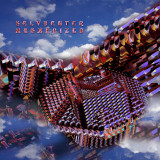
Going past musical genres and instead straight towards something more elemental - Selvhenter’s music creates a strikingly direct, physical experience of sound composed of polyrhythms, acoustic and electric melodies, heavy music and improvised beauty.
Since forming in Copenhagen in 2010, drummers Jaleh Negari and Anja Jacobsen, saxophonist Sonja LaBianca and trombonist Maria Bertel have forged a unique approach to making music that starts with their instrumental setup: two drummers that interlock as frequently as they go their own way, a trombone put through a bass amplifier loud enough to rattle your chest and a saxophone put through a range of effects so that it often sounds unrecognisable. Selvhenter work within their own idiom, drawing from the individual players’ personalities and interests to make a highly collective music, where all four musicians are absorbed into a total sound where an improvised free jazz approach collides with experimental electronic music and avant-garde noise/post-punk sonorities.
Their new LP Mesmerizer - which marks their first physical album release in nearly a decade and their debut on the French label Hands in the Dark - carries forward this process of exploration, deploying original and complex patterns of rhythm through various percussive instruments and finely textured horns and synths. The attention to sonic details is also almost pushed to an extreme on this new offering, making the open auditory adventure suggested by the title of the album all the more captivating. These creative developments have brilliantly kept Selvhenter’s music alive to new uncharted moods and possibilities, while at the same time strengthening their core elements: a propulsive, dense and often ecstatic music.
Amy Dabbs and Athlete Whippet deliver a perfectly crafted journey through house music with 'Into You' on Aus Music.
The duo's different yet wholly complementary musical backgrounds - Amy Dabbs bringing her extensive experience as a DJ & electronic music producer, and Athlete Whippet with his background as an instrumentalist & live band musician - have created a winning combination on Into You EP. The product of which is an intricately composed, highly musical suite of tracks produced to perfection for the dancefloor.
Having met for the first time at Cinthie's Elevate store in early 2021 for her DJ Kicks launch party, the compilation featuring one of Dabbs' earlier tracks, Amy Dabbs & Athlete Whippet stayed in touch, which culminated in the decision to start working together in the studio in their shared hometown of Berlin.
Amy Dabbs has released a string of lauded 12"s since her 2020 debut, including her latest highly acclaimed EP on Shall Not Fade, in addition to collaborating with Coco Bryce, launching her own imprint Dabbs Traxx last year, and featuring regularly on BBC Radio1 Dance.
Athlete Whippet, headed up by Robin Braum, have delivered a myriad of esteemed releases across Toy Tonics, Rhythm Section and Tartelet, which have earned heavy support from Pete Tong, Jamz Supernova and Tom Ravenscroft, to name a few.
Teaming up for the first time here, Amy Dabbs & Robin Braum deliver a fiery three-tracker for Will Saul's Aus Music, covering a variety of moods across the versatile EP. Kicking off the A-side is 'Deep In Your Love', with swirling pads and emotive strings tangling around a tear-jerking vocal refrain, which make for a highly moving opener. A2, 'Into You' continues the emotional journey with lively percussion, subby basslines, and sensuous vocal samples overlaid with luscious analogue chords played out on the Juno 106. On the flip, 'Milkshake' closes out proceedings with a glorious blend of anthemic hands-in-the-air piano riffs and deep acid grooves. This track is a surefire summer hit, set to ignite airwaves and the dancefloor in equal measure.
Globally renowned for his wealth of intricate productions and an expansive musical catalogue that strikes the perfect balance between power and grace, award-winning producer Rodriguez Jr. now announces his latest full-length studio album project, Feathers & Bones - set for worldwide release via his newly launched imprint of the same name.
An extensive, ten-track opus that dives deep into the Frenchman's complex sonic identity, Feathers & Bones was recorded over the course of two years, conceptualized while living in Paris and completed from his new home, Miami. Pivoting towards a new chapter in his illustrious career, the album houses a collection of new Rodriguez Jr. solo productions, two singles with Cuban-American singer, songwriter and multi-instrumentalist Liset Alea, his collaboration with multifaceted Italian artist Giorgia Angiuli, as well as an eagerly-anticipated debut collaboration with legendary English hip hop / electronica outfit, Stereo MC's.
Seit Mitte der 90er-Jahre verbreiten die Norweger Nocturnal Breed mit ihrer extremen Interpretation von geschwärztem Thrash Metal Schrecken und Zerstörung in der Metal-Szene. Und das tun sie auch mit ihrem siebten Album 'Carry The Beast'. Nocturnal Breed, jetzt als Trio unterwegs, shredden wie eh und je und haben diesmal sogar Old-School-Heavy Metal in den Mix eingebracht. Es gibt also eine kleine Weiterentwicklung des Klangs, ohne zu sehr mit dem alten Sound zu brechen. Das Album spiegelt viele der dunkleren Seiten der Menschheit wider, die in den letzten zwei bis drei Jahren in den Vordergrund gerückt sind. Ohne modernes Equipment aufgenommen, ist der Sound gnadenlos ungezügelt und roh wie eine Kriegswunde.
A wild and funky collection of Afro grooves that was ahead of its time in 1977 and has become a collector’s item in recent years, especially due to the growing international interest in Colombian picó sound system culture. Fruko and his studio bands Wganda Kenya and Kammpala Grupo treat us to a diverse set of African and Caribbean styles, laced with crazy synths, psychedelic guitar and infectious pan-African polyrhythms. By the time Discos Fuentes released the album “Wganda Kenya Kammpala Grupo” in 1977, Wganda Kenya’s discography was expanding with many 45 singles and appearances in various artists collections. The group’s 1975 debut record “África 5.000” was a full length LP in the U.S. and a various artists compilation in Colombia, which was followed by the self-titled long player the following year. However, Kammpala Grupo, which shared the album’s title and was credited to three songs on the record, had never appeared before, yet was basically the same studio group as Wganda Kenya. Most likely the creation of this short-lived studio band was just a ploy by the label to make it seem like there were more groups playing the type of exotic afro tracks favored by the picotero DJs of Colombia’s Caribbean coast (especially in Barranquilla and Cartagena). 1974 Discos Fuentes’ management had sent musician, band leader and producer Julio Ernesto “Fruko” Estrada to the coast on an A&R mission to discover what people were dancing to in the verbenas (communal open air neighborhood parties) run by the owners of picó sound systems (decorated mobile DJ rigs). Always game for an adventure, Fruko was tasked with bringing some popular examples of these esoteric, hard-to-find African, French and Dutch Antillean records back to Medellín to serve as inspiration (or to outright copy) so that the label could enter into the growing regional market and spread its popularity to the interior of Colombia and other Latin American countries via its own studio creation, Wganda Kenya. Fuentes was always returning to exploit the rich African-rooted culture of the coast as it had with the cumbia and other regional genres before, so in a way it was not surprising that they were attuned to this particular niche phenomenon from a marginalized sector of the population. The most popular genres with the champeta dancers in the 70’s and 80’s were styles like Congolese rumba, highlife, afrobeat, juju, mbaqanga and soukous as well as the music of Haiti, Guadeloupe, Martinique, Curaçao and Dominica, all of which were fiercely guarded by the DJs who had managed to acquire them often through extreme means of travel, barter and intense digging. The record kicks off with the joyful ‘El Gallo Africano’ which features exquisite interplay between Sepúlveda’s highlife style guitar and an authentic-sounding African style saxophone, perhaps played by Carlos Piña. In reality it was ‘Go Call Police Chief’ by prolific Nigerian highlife guitarist Chief Oliver Sunday Akanite, aka Oliver De Coque. Next up is Kammpala Grupo’s ‘La Yuca Rayá’ (‘Grated Yuca’), written by Isaac Villanueva in a style he termed son haitiano which sounds much more like Zimbabwe Shona mbira music. Wganda Kenya’s ‘Caimito’ (star apple, a type of tropical fruit), on the other hand, is actually a cover of a relatively well-known Haitian merengue song. Kammpala Grupo then takes us from the French Antilles to the multi-cultural discotheques of Paris, where a cover version of Black Soul’s Afro-boogie anthem ‘Black Soul Music’ is retooled and renamed ‘King Kong’, perhaps in a nod to the 1976 remake of the monster flick of the same name. Side two introduces us to the infectious merengue rebita of Angola via ‘La riphyta’ with “Paparí”, aka Mariano Sepúlveda, doing the vocals and faithfully replicating the Angolan guitar style. ‘La Trompeta Loca’ (‘The Crazy Trumpet’), probably the nuttiest track on the album, is an ingenious cover of ‘Ye Gbawa Oo Baba (Tribute To Nigeria)’ by Joe Mensah of Ghana. As with all their covers of African tunes, this rendition tightens up the original with some pop sheen, more consistent drumming and higher production values, remaking it into a powerful slow-burning dance floor filler. This is followed by one of the most powerfully original songs to come out of the entire Wganda Kenya project, Mike Char’s reggae anthem ‘El Nativo’ with Joe Arroyo on vocals. The record ends on a more authentically Caribbean sounding note with the instrumental ‘El testamento’, a cheerful islands banger with bright brass, syncopated calypso beats and chunky cuatro guitar (or ukulele). The original was in the mento genre and titled ‘Sweet meat’, written and recorded by Jamaican trumpeter Bobby Ellis. First time reissue. 180g vinyl.
Selected by Jim O’Rourke for his Tone Glow list of 25 albums that “never got their due”, Org was founded in the early 90’s by Espen Jensen and Kjetil D Brandsdal who would later go on to variously record as Elektrodiesel, Noxagt and Ultralyd in the swirl of the highly active Norwegian underground. “Org" was the only album the pair recorded as a duo, pressed in a meagre edition of just over 100 copies which disappeared almost as soon as they were made, lodged in the memory of the select few who have managed to hear it in the years since.
Made up of three long tracks, the near 20-minute ‘001’ opens the album with an extended organ zone-out matched with scraping factory machinery saturated into a dense cloud of harmonic fuzz. There's something transcendental about the sound that intersects with microtonal Alice Coltrane (particularly the unfairly maligned organ-only edition of "Turiya Sings"), as well as Pauline Oliveros and Ramleh. It’s music that pulls you in subconsciously; before you know it, you're fixating on the uncomfortable grind of metal on metal, buried mechanical rhythms and liturgical organ vamps that wind between industrial cacophony and sacred ritual music. For its last few seconds, we go into a full death metal tearout that fades out before it takes full flight, a glorious wtf.
‘002’ connects between minimalist drone styles and shoegaze, distorting fuzzed organ into pliable, dreamlike warbles that end up sounding like Kevin Shields' ‘Loveless’-era glides, or even Sunn O))) at their most devotional. Never losing the numbing overdriven mettle, its a piece that sounds spiritually entwined with Matthew Bower's Skullflower - a minimalist re-reading of high-contrast guitar music that takes all the psychoacoustic power and none of the annoying posturing.
For ‘003’, subaqueous organ is joined by synth and drum machine, sounding like the inspirational spark for Religious Knives' screwed 'n chopped cosmic psychedelia. The choice of sounds links it to Antena's foundational electro samba recordings too, but the overwhelming drone - a constant on all three compositions - connects the music to minimalist spirituals that have simmered beneath the DIY/avant garde for decades.
‘Org’ sits heavy on the nerves with overproof levels of mulched amp worship and ungodly, palms-down organ chords and wheezing, bezonked lines of melodic thought. 25 years out of sight and marinading in the archives, with the benefit of hindsight we can better understand the role these sounds played in the development of music in the contemporary sphere. It’s an important piece of the puzzle, one that makes valuable connections that, over time, have looked progressively more faint.
Seit Mitte der 90er-Jahre verbreiten die Norweger Nocturnal Breed mit ihrer extremen Interpretation von geschwärztem Thrash Metal Schrecken und Zerstörung in der Metal-Szene. Und das tun sie auch mit ihrem siebten Album 'Carry The Beast'. Nocturnal Breed, jetzt als Trio unterwegs, shredden wie eh und je und haben diesmal sogar Old-School-Heavy Metal in den Mix eingebracht. Es gibt also eine kleine Weiterentwicklung des Klangs, ohne zu sehr mit dem alten Sound zu brechen. Das Album spiegelt viele der dunkleren Seiten der Menschheit wider, die in den letzten zwei bis drei Jahren in den Vordergrund gerückt sind. Ohne modernes Equipment aufgenommen, ist der Sound gnadenlos ungezügelt und roh wie eine Kriegswunde.