Youcef Debbihi continues to impress and surprise after already his 3rd volume as Sea of Disillusions. This 4 tracker extends what was already started and established in the previous volumes, expanding his studio excellence into more break beat oriented directions, either at high speed in the form of almost Drum'n'Bass with "K2" or slowed down as a more trip-hop tempo with "Break Whale".
B-side slows down to upper 90BPM range of driving rhythm under atmospheric dubby hints of humidity "5deF", and, finalizing with a beatless Ambient mix of "Loon River" which sounds like the slow motion intro to an epic trance anthem that never fully takes off, setting the stage for something heavy to be mixed in. Essential for any reasonable DJ record bag.
Search:ext
We are ecstatic to share this double VA LP to celebrate Telomere 010!
This is an extra stacked release with eight artists, as always blending and bending the spectrum of electronic music.
This releases has been in the works for the last 3 years, and has morphed into an epic 8 tracker for all hours of the day and night.
Sept duos pour guitar acoustique et piano préparé is the second duo recording from Stephen O'Malley and Anthony Pateras. Their first together, Rêve Noir (2018), took an electro-acoustic scalpel to a 2011 duo concert for electric guitar and piano, using Revox and digital treatments to twist and smear gig documentation into ghostly echoes and fractured drones. Here, in contrast, the music is entirely acoustic and presented as it was performed, without overdubs. Both players’ choices of instruments are notable: this is O'Malley’s most extensive recording on steel string acoustic guitar (playing an instrument whose previous owners include Marissa Nadler and Glenn Jones) and Pateras return to the prepared piano, which he has rarely employed in recent years, after spending much of the first decade of the 21st century exploring its possibilities.
Recorded during O'Malley’s residency at La Becque on Lake Geneva in the summer of 2021, from the first moments of the opening ‘déjà revé’ the music immediately establishes the distinctive landscape of chiming tones and hovering clouds of resonance explored throughout its one-hour running time. Pateras’ preparations create tolling bell-like tones alive with complex overtones, alongside which O'Malley’s open strings and natural harmonics add a sparkling clarity. While Pateras’ music often uses a densely chromatic harmonic language, these duos are remarkable for their modal simplicity. However, the interaction between the pure intervals of O'Malley’s just-intoned strings and the unstable harmonies created by the piano preparations suspends the music in an oneiric state of hazy ambiguity. Without obvious reference to tempo or meter, the music floats in what the composer Ernstalbrecht Stiebler has called a ‘bottomless sound space’, the temporal placement of events determined by bodily rhythms and the performers’ own listening to (and enjoyment of) the sounds being made.
Heard one way, this music can seem striking in its consistency, almost environmental. Attending more carefully, the listener hears the pitch sets and tunings changing throughout the album’s length. Each piece has its own character, subtly distinguished from the others through mood, pacing, and timbre. On ‘déjà voulu’, for instance, O'Malley makes prominent use of slide, the woozy, bending pitches weaving through a series of lush arpeggiated chords from the piano. ‘Déjà senti’, on the other hand, is particularly spare, the gestures spaced out to the extent that they often float in isolation against the background of fading resonance. Much of ‘déjà su’ is built around a slowly pulsing single prepared piano tone, creating an almost ominous tension, whereas the sparkling guitar harmonics and arpeggios of the closing ‘déjà raconté’ have a gently triumphal air. While the music’s calm, rippling surface is immediately entrancing, these seven duos – in the tradition of the best improvised music – also reward close listening, which reveals sonic details and focuses the listener’s attention on how the music unfolds spontaneously from decision to decision, from gesture to gesture.
Recorded during a period when O'Malley and Pateras were grieving the loss of recently departed friends and collaborators, these seven duos possess a reflective, at times almost mournful quality. More importantly, though, they are imbued with other qualities that can arise from personal loss: a clarity that allows one to clear away the inessential, to begin again, to renew one’s faith in friendship and music.
This is the second time out for the Wormholes on AllChival following on from their You Never See the Stars When it Rains anthology release. This one is a previously unreleased album recorded in a concise burst of seven nights in Dublin’s Sun Studios in the spring of 1996. It was originally envisaged as being The Wormholes’ second album, the follow up to their 1994 debut Chicks Dig Scars. Unfortunately the end result of the sessions - Parijuana - would not only be ignored by their label of the time (Roadrunner Records) - but would also just as quickly be dismissed by the band themselves.
Eamonn Crudden, the manager of the band, had manged to extract some money from Roadrunner to record demos of new tracks as soon as the release cycle for their debut was over. The budget was so tight that it covered studio time but was not even enough to buy the master tapes. With things going south with the label – a classic 90’s tale of the A&R man who championed their cause heading off elsewhere the minute they signed - the intention was to go in and aim to record an album rather than demos - with the intention of releasing it on another independent label to keep the momentum around the band going.
However by this stage the Wormholes were totally wrapped up in listening to Can, Faust and generally exploring music based on casual recording, improvisations and extemporization. For them the album was too ‘rock’ and – having been dropped by Roadrunner - they no longer felt under any obligation to release it. To them it was time for a fresh start. Their next recordings would not be ‘for’ anyone but themselves. Today bassist Anto Carroll admits that “at times we were our own worst enemies” and with the benefit of hindsight both he and guitarist Graham Blackmore wish they had gone ahead and released this album at the time. However, back then, they thought they could do better and they did go on to make inventive and unique sounding versions of some of these songs with Stan Erraught producing just a short time later. These recordings were eventually released by Dead Elvis in 1999 - along with a couple of ‘adjusted’ tracks from the Sun Studios sessions - on Parijuana: 4 Years in Captivity.
It’s highly unlikely that listeners today will share the band’s view that the abum was too ‘clean’. This version of Parijuana is dirty, raw, messy with plenty of experimentation and extemporisation. The songwriting is as strong as that on their Chicks Dig Scars debut. The music is played with a new confidence and swagger, very much the sound of a band rooted in a wave of US ‘lo-fi’ finding their own sound. It’s the missing link between their conventional Pavement/Sebadoh influenced debut to the more drawn out, free roaming and extemporised second album proper Scorpio The Album.
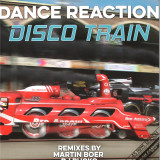
Undoubtedly one of the finest disco songs ever created, “Dance Reaction” emerged as a sensation from Holland, representing a true ‘one-hit wonder.’ The distinguished ‘Siamese’ label in the US and Carrere in Europe both recognized its potential and took it under their wings. This track, clearly inspired by dan Hartman’s “Vertigo”, swiftly climbed the charts across the continent in the spring of 1982.
On the A-Side, listeners are treated to the captivating and sensuous sounds of the Martin Boer version. This interpretation unequivocally showcases Martin’s innate connection with disco, evident in his captivating electro-disco masterpiece. Notably, Martin Boer holds the distinction of being a founding member of “2 Brothers on the 4th Floor,” a Eurodance phenomenon that dominated the 90s, amassing millions of record sales globally. Intriguingly, this release marks his return to remixing records, after a 15-year hiatus; incidentally, Martin embarked on his journey with High Fashion Music in 1990.
Flipping over to the AA-side, Croatian legendary DJ Pucko presents a remix that encapsulates the unique essence of the former Eastern bloc sound. This rendition exudes a raw and forceful energy, characteristic of that regional style. At the behest of High Fashion, the components of his mix were extracted and meticulously reworked and refined through the mastering process. The objective was to preserve the core while polishing the rough edges, culminating in an essential vinyl record that retro and disco DJs alike must acquire to elevate their dance floors.
The first official compilation of DISCO STUPENDA, the party that brings back hidden masterpieces of Italian music to the dancefloor and that is sweeping the entire Italy and beyond, is finally coming out in vinyl, its most appropriate format.
The selection is by TOMMIBOY, resident DJ and founder of Italy’s most Italian party… everyone dances!
The 8 killer Disco Funk tracks tested on the most disparate dancefloors – from clubs in London, Berlin, Copenhagen, New York, Istanbul, Tunis, etc. to the Italian beach – are extremely rare gems that are hard to find even on the collector’s market.
Cocoon Recordings' next 12” vinyl comes from a well-known face. No introduction needed as nobody less than Gregor Tresher once again delivers a superb and surprising pair of tracks.
“Black Halo” is down-the-line and perhaps one of the catchiest tracks by Gregor Tresher.
The wobbling driving bassline builds up a rising tension that increases through the vast, detuned, and powerful string parts appearing to extend out to light years, reaching far beyond. Zaps drive the rhythm forward while rushing cymbals push the groove and weld everything together to absolute unity. For Gregor, techno and club culture have certain transcendental qualities, “Black Halo” is concerned with these sentiments and tells an ambivalent story. The onset of bliss oscillates between melancholy and hope, making it an exuberant roller coaster of emotions. A classic Gregor Tresher track, which perfectly represents Gregor’s signature sound!
“Phantom Dancer” literally pulls you onto the dance floor. Discharging beats, which hit you heavily but pleasant. The atmosphere violently evolves with a twisted noise-like signal sound and gets even more brute through the low-pitched filter vocals. An exceptionally deep techno production by Gregor Tresher, which will definitely come to full fruition in the clubs at peak time.
FullTime Production is honored to presents Kano "I'm Ready" featuring remixes by Mousse T. and FrescoEdits!
"I'm Ready" published in 1980 on FullTime Production, among the first
success, also peaked at #21 on the R&B and hip hop songs in the United States and at 8# on the most popular songs being played in nightclubs across the United States.
Kano combining elements of 1970s disco, funk and R&B while extensively using synthesizers and percussive handclaps as well as raw-processed and vocoderized vocals inspired by United States and European disco, from Chic and Giorgio Moroder.
The great producer Mousse T. gave us his great musical experience, he wanted to make the song a real hit in the house music and disco music genres.
The piano, the voice and harmony were transformed into something softer and less computerized and metallic. Mousse T. made us glimpse the immensity behind a remix and the most diverse musical facets that only an excellent producer can astound and leave the listener speechless.
The musical break of the "extended club remix" at minute 03:24 makes us raise our arms to the sky and clap our hands!
FrescoEdits introduced his more afro side to the remix by expertly
marking the percussion and resulting in a funk and tribal remix.
FrescoEdits is an artistic project that has based its success from the
love and art of sampling big hits as well as a label and a community, is
among the most highly regarded artists in the disco edits.
In the mystical saga of Kuusou's second episode, legendary producer Rob Pearson unveils three mesmerizing original tracks, accompanied by an extraordinary remix by Ivan Iacobucci. Rob’s Overdrive EP transcends boundaries, fusing electronic minimal and electro house into an enchanting auditory experience, where dreams and reality intertwine in harmonious reverie.
'Vibes player Johnny Lytle was one of the heroes of the early acid jazz club circuit, with his cuts 'Selim' and 'The Man' being anthems of the scene.
The Ohio born player’s first album, as a leader was on the Jazzland label in 1962 with “Nice And Easy” and his second, three years later, on Riverside "The Village Caller" made him a star in the jazz world. When Riverside encountered difficulties, co-owner Orrin Keepnews collaborated with Lytle on two albums which came out on the Detroit label Tuba.
The first of these "The Loop" featured his regular trio partners organist Milt Harris and drummer “Peppy” Hinnant. This line up was augmented on some tracks by former Miles Davis’ pianist Wynton Kelly and bassist George Duvivier. A 7” version of the title track actually spent five weeks in the Billboard Hot 100 in January 1966. As for the album, as well as the acid jazz cut 'The Man' it features a stunning version of Duke Pearson's 'Christo Redentor' and the dancefloor friendly 'Possum Grease' and 'Hot Sauce'. The band also stretch out on extended track ‘The Shyster’.'
'The John Carter and Bobby Bradford Quartet/Quintet were critical to the progressive jazz movement around Los Angeles in the late 60s alongside the likes of Horace Tapscott. Both hailed from the Watts area and trumpeter, Bradford played with a woodshedding Ornette Coleman for two years in the early 60s when the legendary free movement leader decided not to record for a while but wanted to hone his trademark sound on the saxophone. Multi-reed player, Carter also worked with Coleman who brought them together to lead their own band.
Their first outing on Flying Dutchman was “Flight For Four” as the Carter Bradford Quartet that was released in 1969. This is the second album they recorded where Carter and Bradford were supported by Tom Williamson (bass), Buzz Freeman (drums) and another uncredited bass player on four extended improvisations – ‘The Sunday Afternoon Jazz Blues Society’, ‘The Eye Of The Storm’, ‘Loneliness’ and ‘Encounter’.'
The latest by New York-based producer Lamin Fofana further refines his cinematic dialect of fractured soundscapes, displaced rhythms, and tectonic unease. Unsettling scores aptly describes itself: grainy, bristling, and bruised, rippling with dread disguised as grandeur. The collection emerged from an extended reworking of his 2016 composition, “A Symbol of the Withdrawn God,” mining deeper into the piece’s “unvoiced fragments, shards, and utterances.” Other tracks were inspired by recent readings on climate emergency and its “specific implications for Black life, from hurricanes in the Caribbean to mudslides in West Africa.”
Fofana has spoken of his music as part of a “legacy of resistance,” spanning the roots of Detroit techno to the outer reaches of contemporary sound art as championed by his labels, Sci-Fi & Fantasy and Black Studies. His work here vividly embodies that spirit, seven hyper-textural transmissions of rumbling lament, shifting sands, and restless innovation, tracing jagged silhouettes of indeterminate futures: “The instability is worldwide.”
- A1: Mind Mapping
- A2: 030
- B1: Fügung (Feat Laura Merino)
- B2: Flow Dreaming
- C1: Structural Understanding
- C2: Quiet Reflection
- D1: Geruda Dub
- D2: Boiling Range
- E1: Interlude
- E2: Karl-Marx-Allee (Zentaskai & Jeremy Reinhard)
- F1: Dynamic System (Zentaskai Vs Palawan)
- F2: Apeiron (Zentaskai & Sebastian Klenk)
- F3: Parallel 30 (Zentaskai & Apoena Feat Yucuma)
ZentaSkai unveils stunning, high-concept house album on Mask Records.
ZentaSkai undertook a period of research into the underlying structure and organisation of the human brain before writing ‘The Architecture Of The Mind’. The Berlin-based artist then took what had been learned and kept it in mind when writing the music that marks Mask's first album release. It comes with extensive background notes on each track, and an operational manual of sorts - notes from the artists as to the effects each piece will have on those who hear them.
"The message conveyed by this album is that life itself is filled with music, but our egos often prevent us from being in harmony with this symphony. Inner chaos and silence can be challenging to bear, leading us to seek solace in external noise. We have constructed a barrier between our inner and outer worlds, causing us to lose touch with the rhythm of harmony. However, by embracing the illusion of separation and dancing to good music, we can rediscover harmony with ourselves and our environment. To fully experience the essence of the album, it should be played loudly on a proper sound system or high-quality headphones. By immersing themselves in the music, individuals can engage with its transformative power and potentially find a deeper connection with their own minds and surroundings." - ZentaSkai.
The gorgeous 'Mind Mapping' opens up with deep and dubby drums and lush harmonies that soothe you to your core, '030' then has more raw, heavy drums with many layers of glowing synths, glassy melodies and organic found sounds. 'Fügung' keeps the deep and introspective moods coming before the crisp tech of 'Flow Dreaming' ups the ante with more drive and layers of vocal whispers, hi-hats and smeared dub chords.
Elsewhere the likes of 'Quiet Reflection' lean into the groove with swirling pads and one-word vocal sounds drifting through the air over propulsive drum loops, and 'Boiling Range' suspends you in deft synth loops amongst the stars over a prickly house beat.
The superb synth craft and well-designed grooves continue through the dusty deep house of 'Karl-Marx-Allee' and minimal dub of 'Dynamic System' before the elegant melodic techno of 'Apeiron' and dreamy synthscapes of 'Parallel 30' close the album in a reflective fashion.
This is a deeply evocative album with a fully realised concept that is as thought-provoking as it is immersive.
The debut release from Sofia Grant delves into the topic of environmentalism, a subject close to her heart and a topic foremost in the minds of many. With smoky vocals and accompanied by spectacular musicianship from the likes of Poppy Daniels, Ernesto Marichales, Lorenz Osengor Okello, Sofia has created a five track EP that introduces a noteworthy talent to the Jazz re:freshed catalogue. In keeping with her values, Sofia specifically requested that the physical format be pressed on eco-friendly vinyl which produces a uniquely coloured product that utilises recycled materials and offsets carbon emissions created in its manufacture....
Tibi Dabo returns with ‘Overture’, a from his forthcoming Crosstown Rebels album, with remixes from Map.ache and Aline Umber.
A label favourite having dropped his ‘Isla’ EP on Crosstown Rebels back in 2022, ahead of his much-anticipated debut LP comes this third superb taster from it. The superb ‘Overture’ is an eight-minute gem with super smooth percussion and elastic grooves, with wispy sci-fi chords and gentle synth modulations. It’s full of future feels and catchy drum funk that is sophisticated and smartly detailed with chopped-up vocal fragments.
First to remix is Liepzig’s Map.ache, co-founder of Kann Records and half of Manamana. His take builds with fatter drums that are just as infectious, while rippling synth loops weave in and out as flashy basslines cut loose, and balmy pads add extra cosmic absence to a hypnotic mix of the heady and the physical.
Aline Umber, a collaborative live project from French composers, producers and DJs Aline Brooklyn and Aman Umber, are second to remix. They run the Airfunk label and are no stranger to playing cult spots like Rex Club in Paris. Their ‘23% Eventide’ mix is a blissed-out and synth-laced trip with subtle, smeared chords and starry-eyed keys that have you gazing off into the distance as you get lost in the warm drums.
Polish septet EABS apply an innovatve approach to jazz, distlling it
through the prism of hip-hop, blending it with elements of soul, funk and electronic music. ‘Slavic Spirits’ was 2 years in the making and contains 100% original material. They are joined by 22a head-honcho Tenderlonious who lends his exceptonal soprano saxophone and flute playing to all seven tracks.
Afer their very well-received 2017 debut album ‘Repettons (Leters to Krzysztof Komeda)’, focusing on the lesser-known works of the legendary Polish composer, the Wroclaw-based EABS decided to further expand this lead and released two more vinyl records, ‘Live At Jazz Club Hipnoza (Katowice)’ and ‘Kraksa / Svantetc’, the later recorded directly on tape and released via 22a, which crowned the “Kom eda triptych”. The astounding recepton of these releases built up loyal following outside of their natve Poland and whet listeners’ appette for completely new recordings.
For this LP the musicians turned to Slavic mythology and Polish demonology, while pondering upon the contemporary spiritual conditon of Poles. The enigmatc “Slavic melancholy” remains the main inspiraton, as the band tried to extract it from their own DNA. ‘Slavic Spirits’ is an endeavour to get in touch with the world of a long and brutally lost culture which, due to lack of sources, will never be thoroughly explored.
Personnel: Marek Pedziwiatr (piano, synths & vocal), Vojto Monteur (guitar), Pawel Stachowiak (bass), Jakub Kurek (trumpet), Olaf Wegier (tenor saxophone), Marcin Rak (drums), Spisek Jednego (samples, sound fx & percussion), special guest: Tenderlonious (soprano saxophone & flute)
- A1: Dj Efx (Beta Test) - Star Trax
- A2: Wechselspannung - 220V (Extract)
- A3: Jupiter 6 - A8
- B1: The Ultraviolet Catastrophe - The Trip (Trip Harder)
- B2: Electroliners - Loose Caboose
- C1: High Lonesome Soundsystem - Champion Sound
- C2: Single Cell Orchestra - I Hear The Dj’s Here
- C3: Jim Hopkins - C’mon Now
- D1: Central Fire - Kamba (The Lost Mix)
- D2: Dj Emma - The Duster (Fuck Off And Dance Mix)
Vol.003[28,53 €]
In the late 1980s, Disco was taking a backseat to the burgeoning psychedelic scene in San Francisco, marking a pivotal shift in musical culture. A dynamic transformation was underway as the younger generation sought a fresh auditory adventure, all while the devastating AIDS epidemic cast a somber pall over the city's nightlife. Amidst this evolving backdrop, a subtle yet distinct sonic movement quietly emerged within the confines of San Francisco’s vibrant club scene, often referred to as "The Beat." Although Hip-Hop, New Wave, Gothic, Punk, and the burgeoning Modern Rock genre held considerable sway, the pre-RAVE clubs in SF witnessed the fusion of these genres into a unique amalgam of sound that insiders dubbed “The Beat.” This musical tapestry encompassed everything from Hip-Hop and Freestyle to Industrial, New Wave, Boogie, Miami Bass, and Techno – the unifying thread being the distinctive vibe that characterised this eclectic mix.
As House, Techno, and Raving gradually gained prominence along the West Coast, a distinctive interpretation of these evolving sounds took root. Drawing inspiration from influential hubs like New York, Chicago, Detroit, Europe, and notably the UK, which saw a wave of talented young DJs migrate to California, San Francisco became the backdrop for its own version of the second Summer of Love. While the exact chronology might spark debate – some recalling '92, while others leaning towards '93 – what remains indisputable is the era spanning from 1990 to 1994, an unparalleled epoch of exuberant dancefloor revelry on the western shores.
In the face of limited backing from major labels or established independent dance music entities of the time, a grassroots movement of labels and producers emerged organically, ardently championing this distinct sound and catapulting it onto the global stage. This sonic identity was deeply influenced by “the Beat,” acting as a creative wellspring that informed the musical landscape. While the tracks compiled in these volumes might not encompass the entirety of this transformative musical epoch, they offer a vivid snapshot of the melodious tapestry that coloured San Francisco and the broader West Coast during that era. Each track featured stands as a 100% Sure Shot that was played heavily by DJ Spun back in those very heady days.
The second installment of this remarkable journey into the underground scene maintains the same profound level of depth and significance as its precursor. Showcasing tracks from Electroliners, High Lonesome Soundsystem, Single Cell Orchestra, DJ Emma, and Spun's own Central Fire project, all harmoniously enclosed within the captivating and arresting artwork by Villain Standard, this release stands shoulder to shoulder with its forerunner. Beyond a mere compilation, it's an indispensable extension of the narrative that has indelibly shaped the culture of underground American dance music within the region, embodying the era and the individuals involved. This is the authentic underground sound that reverberated across San Francisco and its surrounding environs, a truly distinctive and exceptional moment in time and space.