In Celtic mythology, Clota was the patron Goddess of the River Clyde. "Almost all the rivers of Scotland were abodes of goddesses, but about many of them there are no surviving stories. The goddess of the Clyde was ‘the purifying one’.. " Donald MacKenzie 'Wonder Tales from Scottish Myth and Legend' (1917) Following the warmly received 'An Garradh', and 'Tarbolton Bachelors Club', Steven Anderson (Letters From Mouse) returns to Subexotic with another emotionally inquisitive, fascinating psycho-geographical work. Although very little is known about the goddess Clota, Anderson intuitively understands the River Clyde provides a rich landscape to explore her legacy. Dominating its environment, and steeped in ancient and modern historical significance, 'Clota' simultaneously reflects on what is, and what has been. Through deft application of modular synthesis, Anderson's trademark ability to weave extraordinary musical dialogues with time and place, conjures new life into this long-forgotten deity.
Buscar:extra extra
As a renowned Italian DJ and producer, Mario Piu achieved his breakthrough in 1999 thanks to the groundbreaking single „Communication“. Now his greatest hits are available on coloured vinyl! Enjoy and get down to selected mixes in the extra-long club versions of „Your Love“, „Techno Harmony“, „Elixir“ and many more!
Morphing Territories’ self-titled imprint serves as a vessel for the artist’s timeless approach to techno, characterized by hypnotic, unpredictable atmospheres born out of modular synthesis and field recording. Rooted in the inspiration drawn from the natural beauty of his native Switzerland, Morphing Territories embarks on a boundless quest to perfect the beat. The label reflects this journey through tireless improvisation and introspective self-discovery, resulting in finely sculpted sound constructs that defy the conventional boundaries of both complexity and simplicity. Morphing Territories Label stands as a testament to the artist’s commitment to pushing the boundaries of sonic exploration, inviting listeners to join him on an extraordinary sonic expedition.
Contradictory accounts of Miles Davis’ creation of the soundtrack to Louis Malle’s film noir Ascenseur pour l'Échafaud have all become part of its legend. Rarely has a soundtrack been so decisive. Nearly seventy years on, beyond the myth, this taut, feverish recording, imbued with extreme dramatic tension, remains one of the Miles’ finest records. The basic outline remains: Jean-Paul Rappeneau suggested to Malle asking Miles Davis to create the film's soundtrack who agreed to record the music after attending a private screening. Davis was performing at the Club Saint-Germain in Paris in November 1957 and on December 4, he brought his four sidemen to the recording studio without having had them prepare anything. Davis only gave the musicians a few rudimentary harmonic sequences he had assembled in his hotel room, and, once the plot was explained, the band improvised without any precomposed theme, while edited loops of the musically relevant film sequences were projected in the background. Bassist Pierre Michelot recalled in 1988 that “Miles just asked us to play two chords, D minor and C7, 4 bars of each, ad lib.” Typically, Miles planned very little but know exactly what he wanted. François Leterrier, the film’s Second Assistant Director picks up the story: “The session started at around ten o’clock and went on until dawn. The screen in the auditorium was showing the scenes for which Miles had devised some harmonies, and they were edited into a loop. And that’s what makes this music unique: it was entirely improvised in conditions that went back to the days of silent films, while watching frames shot in black and white by cinematographer Henri Decaë: tracking shots of Jeanne Moreau wandering down the Champs-Elysées at night, passing in front of lit window displays or going into bars, while looking for her lover/murderer alias Maurice Ronet … All of us there in the dark auditorium were aware that something extraordinary was taking place, something that had definitely never happened before. … In the small hours we all met up again at the Pied de Cochon in Les Halles, and Louis was looking at Miles with the disbelieving eyes of a child … as if he couldn’t believe the gift he’d just received. Even in his wildest dreams he had probably never imagined what his film would be like once it had been as if illuminated by the trumpet of Miles, incisive or wrapped softly in cotton.” The music was released on 10” by Fontana and received the Grand Prix from France’s Académie Charles Cros. It was released in the USA on Columbia as the A-side of the 12” LP Jazz Track, which received a 1960 Grammy nomination for Best Jazz Performance, Solo or Small Group. This beautiful re-issue of the original recording is pressed on 180g vinyl at GZ, and packaged in a deluxe gatefold tip-on jacket with Boris Vian’s original liner notes and Jean-Pierre Leloir’s iconic studio photo of Miles and Jeanne Moreau, and an essay on the circumstances that led to this out-of-the ordinary music by Franck Bergerot.
- A1: Open Space
- A2: Green Valley
- A3: Caretera Pnamericana
- A4: Goodmorning Sun
- A5: To-Day's Sound
- A6: Free Dimension
- B1: Truck Driver
- B2: Blue Lagoon
- B3: Wanderer
- B4: Lady Magnolia
- B5: Pretty
- C1: Railroad
- C2: Country Town
- C3: Bus Stop
- C4: Cotton Road
- C5: Nocturne
- D1: Exploration
- D2: Tropical River
- D3: Coast To Coast
- D4-: Safari Club
- D5: Music On The Road
PRESSING OF 500 COPIES WORLDWIDE. INCLUDES POSTER.
The sound of today. A very strong statement. Yet, fifty years later, it remains undisputed. Today’s sound is Piero Umiliani's manifesto, his will to demonstrate to the world that he always has his finger on the pulsating vein of the world, ready to embrace the heartbeat of the future.
In the summer of 1973, Piero Umiliani, in his futuristic recording studio in Rome, much like Miles Davis for his 'Bitches Brew,' gathered an extraordinary collective of musicians, both old and new guard to measure themselves against some of his compositions.
Besides strongly emphasizing the backbeat, what stands out the most is the timbre provided by his 'electronic instruments,' as he liked to call them. Minimoog, Arp 2600, Fender Rhodes, EMS VCS3, Clavinet, Lowrey organ, Space Echo, self-built envelope filters—machines impossible to see all together in an Italian recording studio at the time and made available to the musicians.
The line-up is stellar; under the name 'Sound Workshoppers,' the 'Wrecking Crew all'Amatriciana' is hidden an impossible mix where Marc 4, Gres and Perigeo are blended, along with a brass section of veterans and pioneers of Italian jazz, all members of the RAI Symphonic Rhythm Orchestra.
Comparing the recordings from the original scores, one can also understand the space left by Piero Umiliani for his musicians. They are free to move, to contribute solutions, to enrich the maestro's music.
The perfectly preserved original masters, once transferred at the maximum possible sampling frequency, allowed for the recovery of many lost frequencies, restoring brilliance and the remarkable low end expertly captured in recording by engineer Claudio Budassi.
Today’s sound was extremely difficult to control and fully render with the mastering technology of that time.
Paradoxically, Today's sound could not sound as I have managed to make it sound today: urgent, majestic, more alive than ever.
If the Corona pandemic and the accompanying concert bans have at least one good thing going for them, it's the extra time musicians have to write songs and live out their creativity. This circumstance was also the driving force for the SAMURAI PIZZA CATS, who come from the Electric Callboy environment. Frontman Sebastian Fischer was behind the microphone in their predecessor band Her Smile In Grief, whose line-up also included Daniel "Danskimo" Haniß, who is now celebrating success as guitarist, songwriter and producer of Electric Callboy. The contact between the two never broke off and so Daniel also produced Sebastian's later band Fall Of Gaia in recent years, whose former drummer and multi-instrumentalist Stefan Buchwald is also involved in this new project - family business from downtown Castrop Rauxel! So while Stefan contributes the music, Sebastian writes the lyrics and Daniel, as a creatively involved producer, ensures a well-rounded overall result. Okay, before we try your patience any further, let's talk about the elephant in the room: the band name. The SAMURAI PIZZA CATS have named themselves after a Japanese anime series from the early nineties. Why? Stupid question! Of course, because they are fearless warriors on their instruments, love to eat pizza and like cats! And maybe a little bit because they have soft spots for anime and silly band names - but only maybe. Rumour also has it that "Banzai! Smack! Meow!" is an onomatopoeic description of the band's sound.
In 1948, Moses Asch founded Folkways Records with a self-proclaimed mandate to record the sounds of the entire world. From the Sounds of North American Frogs to Speech After the Removal of the Larynx, Folkways documented the audible nooks and crannies of existence on hundreds of LPs produced by field recordists, scientists, and experimentalists probing the margins of the human soundscape. Seventy-five years later, electronic music duo Matmos have diced, looped, stretched, and recontextualized these recordings on their new album Return to Archive, which was assembled entirely from the so-called non-musical sounds released on Folkways. On just the album’s first track, dolphins, beetles, telephones, humans stretching the limits of their vocal cords, a shortwave radio, and metal balers co-mingle in a fantasia of sound both everyday and extraordinary. Each track on Return to Archive morphs its source material into something completely unexpected, honoring and expanding on Folkways’ legacy of sonic exploration. Featuring Evicshen and Aaron Dilloway.
Here it finally is, the first ever official reissue of all recorded material by Zyklome A, and as a bonus one unreleased track plus unreleased live recordings! One of Belgium’s earliest and most primitive hardcore punk bands’ legendary ‘Made In Belgium’ LP has been one of the rarest artifacts in the genre, and although it was bootlegged many times, the reason why an official reissue on vinyl has never been published is complicated. Zyklome A’s story starts in the middle of nowhere: in Bonheiden in early 1980, above a bank office. Brothers Bie and Toon Puttemans started shredding and terrorizing ears and minds with Markus Verbeeck, without any knowledge of anything close to a scene or other people doing what they were doing. Completely isolated, they were struck by lightning with the genius idea of speeding up punk, playing Ramones chords backwards and letting the bank office’s fire alarm go off with their wall of noise. When drummer Bie got to hear other hardcore records through a school mate, he was baffled to hear there were other folks out there doing what they were doing as well. After a fire alarm and family drama too many, the trio moved to a tiny shed in the garden of the Verbeeck family to refine their special blend of primal hardcore. The rest is history! For just 5 years they became one of Belgium’s most active HC bands, befriending many other classic main stays such as The Dirty Scums, Moral Demolition, Vortex, Wulpse Varkens etc., creating pits everywhere, and turning many a nazi skin’s skulls into pulp! When guitarist Toon “forgot” to fulfil his army service, he had to flee Belgium, and as the police harassed the other band members constantly about this, it became next to impossible to maintain Zyklome A. Zyklome A morphed into Ear Damage, with different members. In a later, army free future, a reunion of Zyklome A was not possible due to Toon’s heroin problem. It is strange, and sad to say, that the cards played differently when Toon passed away. Zyklome A played 2 reunion gigs in 2016 with guitarist Pieter Coolen (of Toxic Shock fame) before Markus’ severe back pain sadly also led to his passing. This record is dedicated to Toon and Markus, whose spirits live on through their incredible music. You will find the entire first album plus an extra LP with their part of the split single Moral Demolition, their tracks of the ‘Alle 24 Goed’ compilation LP, their tracks of the ’Second Time Around’ compilation cassette, an unreleased track and a live recording at the height of their game from 1984 in Deventer (which includes covers such as ’These Boots Are Made For Walking’ and ‘Rock ’n Roll Rebel’) and a 76 page book filled with tons of archive material such as flyers, lyrics, drawings, pictures and a lengthy interview with Bie Puttemans on this most possibly last Ultra Eczema release, Zyklome A’s ‘Uitgesproken (1980-1985)’.
Karl-Marx-Stadt (now Chemnitz) was one of the GDR’s subcultural hubs in the late 1970s and 80s. The industrial city in Saxony produced an impressively wide informal cultural programme beyond state structures. Bands such as Die Gehirne, Knut Baltz Formation, Die Arroganten Sorben, Kartoffelschälmaschine, AG Geige or the projects of cassette label klangFarBe created a complex artistic environment, in which Tropenkoller ran its spiritual exercises from 1986 to 1989. The “introverted experiment” remained distinct yet was exemplary of a KarlMarx-Stadt sound that considered dissonance a non-ideological form of harmonics. A first and only tape appeared in 1988. The extravagant packaging illustrated the edition’s exclusive nature; no more than twenty-five copies were released by Tropenkoller into the limited coterie of its open circle. tapetopia is a series of vinyl releases based on cassettes from East Germany’s 80s underground, particularly from the East Berlin "Mauerstadt" music scene, featuring original layouts and track lists. For over 30 years after their initial “release” the music on these tapes was neither available on vinyl nor CD, but they were important statements in the canon of the GDR subculture. Contrary to the small print runs of the time, many of the bands were considered cult in the underground,but suspect in the higher floors.
- A1: Vladimir Cosma - Courage, Fuyons
- A2: Salix Alba - Vol De La Voiture
- A3: Louis Marischal - Tu M'tapes Sur Les Nerfs
- A4: Martial Solal - Dancing
- A5: Roger Morès - Dancing
- A6: Bert Paige - De Discotheek
- A7: Pieter Verlinden - Theme 19 (Générique + Générique Variation I)
- A8: Henri Seroka - Theme Axel
- B1: Rocco Granata - Jonny's Theme
- B2: Krzysztof Komeda - Les Trucs Du Miroir
- B3: Quincy Jones - Love Theme From 'The Getaway' (Faraway Forever)
- B4: Roger Morès - Ballade
- B5: Alessandro Alessandroni - La Terrificante Notte Del Demonio (Demon Arise)
- B6: François De Roubaix - Poursuite Sur Les Dunes D'ostende
- B7: Jean Marie Bigman - Bolero Pour Denise (Bolero Voor Denise)
- B8: Alain Pierre - Nacht Shift
Sdban Records, the renowned independent groove & jazz label behind Funky Chicken, Hip Holland Hip, and Discophilia Belgica, is thrilled to announce the upcoming release of its latest compilation album, "The Belgian Soundtrack: A Musical Connection of Belgium with Cinema." Packed with the finest soundtracks boasting an unmistakable Belgian connection, this compilation takes listeners on a captivating journey through a collection of cinematic hidden gems from the early sixties to the late seventies.
Curated by the passionate duo Robin Broos and Tom 'Pélé' Peeters, known for their profound appreciation of obscure soundtracks, "The Belgian Soundtrack" showcases the exceptional talents of both local and internationally acclaimed composers and musicians. From obscure finds composed by lesser-known artists to Hollywood scores performed by world-renowned musicians, this compilation offers a vibrant blend of tracks, including the occasional contribution from renowned international artists who have lent their musical prowess to Belgian films.
"The Belgian Soundtrack" came into being as a serendipitous adventure. Former film journalist Jan Temmerman reached out to us one day, offering a treasure trove of vintage soundtrack albums discovered in his attic," recounts Robin Broos. "With 650 long players, mostly unheard of titles, we embarked on an extraordinary quest-to listen to every single one of them, totaling a staggering 29,250 minutes. It was like watching the original Star Wars trilogy 78 times!"
What started as a quest soon evolved into an intriguing investigation fueled by curiosity. Along the way, Broos and Peeters unearthed dozens of treasures, delved into the backgrounds of obscure composers and musicians, and witnessed an array of enigmatic films. "We encountered an abundance of (un)necessary nudity that we never could have imagined existed," Tom Peeters laughs. The outcome of their explorations is "The Belgian Soundtrack," a meticulously curated collection of funky, melodic, and uplifting tracks, each crafted exclusively for the silver screen and boasting an unexpected Belgian connection.
Following 5 BBC Folk Awards nominations and a designation by the Guardian as Folk Album of the Year in 2019, it is fair to say that Lisa O’Neill is one of the most evocative songwriters in contemporary Irish music today. Fresh off 2018’s collection Heard a Long Song Gone for the River Lea imprint, The Wren EP in 2019 and an adaptation of Bob Dylan’s "All the Tired Horses" for the final scene of epic TV drama Peaky Blinders, O’Neill now returns with her latest album, and first for the Rough Trade label, the beautiful, resonant All Of This Is Chance.
A raconteur in the truest sense of the word, every story starts somewhere and O’Neill starts this extraordinary collection here on earth, on Irish soil, hands in the land. The album is full of both orchestral masterpieces like the ambitious and cinematic "Old Note" and the title track of “All of This Is Chance”, inspired by the great Monaghan writer Patrick Kavanagh's prescient meditation on The Great Hunger, as well as stirring meditations on nature, birds, berries, bees, and blood that ring out over a clacking banjo, dusting and devastating all those in its wake.
All Of This Is Chance takes Lisa’s inimitable voice to greater heights, or depths, depending on which way you look at it.
Repress!
Given the vital importance of your contribuNon as a member of the music community in France, we would like to tell you about our new approach – which aims to miNgate the impact of the current lack of events and fesNviNes – and explain iniNaNves organized to provide the best possible response to both your needs and those of the clubbers you are helping during this extraordinary crisis. Pixadelic and E.enne de Crécy are working to make new tracks available and help to limit the gloom that has been furNvely emerging over this period with the producNon of a third release in the Commercial ep series.
Begun in 2006 and halted in 2007, the series achieved very promising results, encouraging fun on the dance floor all over the world. In view of recent events, we felt it was urgent to conNnue our efforts in that direcNon. The result is two tracks: JUNK and DRUNK, whose effects on the body sNmulate those rushes of communicaNve excitement that have become essenNal at this Nme. We will be supplying these resources to players in the sector in order to contribute to cultural and fesNve events in France and the other countries of the world.
In January 1983, Minor Threat went into Inner Ear Studio for the first time as a five - piece (Brian Baker had moved from bass to second guitar and Steve Hansgen was now playing bass).
They had six new songs that would end up being the centrepiece of what became the ‘’Out of Step’’ 12" EP. The band had also decided to re-record the song "Out of Step" with some extra language to try to clarify the lyrics, as well as "Cashing In", a tongue-in-cheek song about the DC punk scene which they had only played live once.
After much debate, "Cashing In" was added as a hidden track on the original vinyl release though not listed on the cover or label. There was still blank tape on the reel, so they decided to record an instrumental with the working title, "Addams Family" and then recorded new versions of "In My Eyes" and "Filler" to hear what they sounded like with two guitars.
"Addams Family" ended up being used as a coda to "Cashing In", but the other two songs were never mixed and largely forgotten for over 35 years until the multitrack tapes were taken into the studio to be digitized in 2021.
Surprised by the discovery, Ian and Don Zientara mixed the two songs along with the complete take of "Addams Family". These outtakes are now being released on a 7" to mark the 40th anniversary of the release of ‘’Out of Step’’.
Repress!
Rebirth's talent Corrado Bucci gets a full single release,exciting us again with his eclectic music.
Since the previous works 'Brooklyn' and 'Chewing Bubble' Corrado has being gaining a great support in the electronic scene.
With influences from jazz to funk, he explored new musical territories and started to play real instruments, refining his artistic expression ! Already hammered by Gilles Peterson, Jazzanova and Moodymann, and n.1 as most charted track on RA, 'Open Your Eyes' is an effective track with strong breakdowns, a warm house groove and old school vocals. Detroit's Andrés (Mahogani Music / Slum Village) delivers his signature vibe and smooths it out even further into a soulful neo-disco-house interpretation ! On the B Side Bostro Pesopeo follows his releases on Permanent Vacation with a tasty hypnotic dreamy version of '23 Years Old'. Super limited and extra hot Ep !
- A1: Brian Bennett – Image 4 29
- A2: Neil Richardson – The Little Orphan 2 27
- A3: David Gold / Gordon Rees – Paradise Island 2 19
- A4: David Gold / Gordon Rees – Forbidden Fruit 2 19
- A5: David Gold / Gordon Rees – The Enchantress 2 56
- A6: David Gold – Phenomena 2 41
- B1: John Scott – Infinite Expanse 1 46
- B2: John Scott – Static Objects 2 31
- B3: John Fiddy – Metamorphosis 2 37
- B4: Neil Richardson – Cubist Pictures 2 12
- B5: Neil Richardson – Analysis 2 04
- B6: Neil Richardson – Crystal Ball 2 38
- B7: Steve Gray – Gliding Through Clouds 2 55
Impossible to find in the wild, KPM's Image is exactly that; this record paints extraordinary, hyper-vivid scenes with music, in the way only the library greats can. Originally released in 1974, Image is an absolutely stunning listen from start to finish, and arguably the most wanted KPM grail that's still not been reissued - until now! Just too good…
Worth the price of admission alone, and likely the reason you're all already drooling about this release, the mellow, dramatic beat of "Image", Brian Bennett's opener and title track, is a Jaylib-sampled firecracker. A reflective, scenic underscore which grows to full orchestra and ends as it begins - it's just beautiful. Next up, swoon to "The Little Orphan" by Neil Richardson featuring strings and harp. It's a deeply emotive, sweeping orchestral piece. Just straight gorgeous. It's followed by "Paradise Island", a lush, horizontal Balearic gem courtesy of Gordon Rees and David Gold; it'll send you into a blissful reverie with its elegant strings and gentle drums. From the same pair, "Forbidden Fruit" is, again, string-drenched but the strings are more insistent, stabbing even, and, with drums and Blaxploitation guitars high up in the mix, it's definitely a funkier proposition. "The Enchantress", again a Rees-Gold special, is a slower, groovy, synthy wonder. Closing out the A-Side, "Phenomena" is a mysterious gem, a Gold solo effort set at a breezier tempo with propulsive percussion and head nod, fast-paced breaks with ace keys.
Flip over for "Infinite Expanse", John Scott's dramatic panorama adorned with proud, triumphant horns. Scott's "Static Objects" paints patient, pastoral scenes; there's a serenity and stillness to the proceedings. Next up, Be With favourite John Fiddy delivers shifting shapes and patterns with his wonderful "Metamorphosis", all wah wah, harps, dramatic percussion and strings. It's by turns billowy and blasting. "Cubist Pictures" follows, Neil Richardson's brilliant nebulous, fragmentary piece. Better yet, Richardson's gorgeous, beatless "Analysis" follows, and it's an orchestral beauty featuring cello, harps and woodwind. It's no exaggeration to describe this as transcendental. His "Crystal Ball" presents more static scenes with cello, twinkling percussion and strings, before Steve Gray's fantastically-titled softly-ace "Gliding Through Clouds" closes out this remarkable set.
As with all of our KPM re-issues, the audio for Image comes from the original analogue tapes and has been remastered for vinyl by Be With regular Simon Francis. And as usual, the sleeve reproduction duties were handed over to Richard Robinson, the current custodian of KPM’s brand identity.
Irgendwo zwischen Planet Punk, Milchstraße Retro-Pop, Mikrokosmos New Wave und Hinterwelt Thüringen befindet sich das Universum MAMORÉ. Es sendet schrille Signale aus, wird Tag und Nacht von einer rosaroten Sonne beleuchtet. MAMORÉ ist ein Ort, an dem alles erlaubt ist: Zu feierlichen Synth-Melodien und schroffen Rockgitarren wird simultan ruppiger Pogo, romantischer Paartanz und Bowie-esker Hüftschwung praktiziert. Drama und Behaglichkeit, Anachronismus und Innovation, Herzschmerz und Augenzwinkern aggregieren hier zu einem blumigen Gefühlsgewirr. Im Zentrum des Treibens: Fünf in extravagante Outfits aus der Vintage-Kleiderkiste gewandete junge Männer, die hin und wieder selbst nicht so ganz fassen können, was um sie passiert.
Jetzt, im Dezember 2023, legen MAMORÉ endlich ihren langersehnten ersten, nach dem Bandnamen betitelten Langspieler vor. »MAMORÉ« ist eine wilde Experience, ein heißkaltes Wechselbad — hier tippelnd-euphorisch, konsonant und tanzbar, da abgründig-absurd, schnell und kalt. Was alle zehn Anspielstationen eint, ist ihre nonchalante Eingängigkeit: MAMORÉ haben Hits gemacht, die eigentlich gar keine sein wollen, sich keineswegs anbiedern und trotzdem im Ohr bleiben. In manchen Momenten erinnert ihr Album an die ersten Veröffentlichungen der Band Abwärts, hin und wieder scheinen die frühen Die Ärzte durchzuschimmern — und doch ist »MAMORÉ« in seiner Attitüde stets eigenwillig, modern und neu. Der in neuer Bandbesetzung re- ecordete, von hysterischen Klangmustern gespickte Opener »Voll im Visier« signalisiert direkt, wo die Reise hingeht: »MAMORÉ« piepst, knallt und explodiert fortwährend, klingt dabei voll und gravitätisch.
Im bittersüß-verträumten »Du fehlst« crashen harte Brüche in sanfte Schlager-Ästhetik, in »Ich Sehe Dich« treffen raue Gitarrenriffs auf NDW-typisches Synthie-Spiel. Die Neuauflagen der 2021 veröffentlichten Stücke »Meine Liebe Nicht« und »S.O.S« gehen der von seichtem Piano-Spiel eingeläuteten Dark-Wave-Schnulze »Pfeil Ins Herz« voraus. Die bereits erschienene Single »Wolke 7« baut in den Parts kitzelnde Spannung auf, um in Richtung Hook wie ein Vulkan auszubrechen — und auch die darauffolgende Punk-Hymne »Melancholie«, ein Feature mit NNDW-Sternchen Gwen Dolyn, schraubt sich in ihrer Dynamik von Sekunde zu Sekunde weiter hoch. Im Zuge vom hallig-darken, Gitarren-getragenen »Die Hatz« erreicht das Rabbit Hole »MAMORÉ« seinen tiefsten Winkel, bevor das abschließende »Keine Bewegung« dort anknüpft, wo die LP begonnen hat: Auf der klammen Tanzfläche einer Diskothek. »MAMORÉ« kreist inhaltlich stetig um das Thema Zweisamkeit — inmitten von Liebeskummer und Euphorie, gebrochenen Herzen und kochendem Blut, »Rennen gegen Einsamkeit«, Nervendoktor und Oktobertristesse liefert das Album ein geballtes ABC der Gefühlsausbrüche.
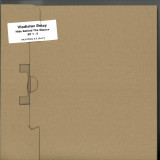
Vladislav Delay's complete "Hide Behind The Silence" series. Intuitive and raw music, momentary and reflective, released on Ripatti's own label Rajaton.
Stillness is a myth. Consider concepts such as ”still water”, or ”still air” for that matter. Go to a restaurant, ask them for a glass of still water, hold it against the light and see where we’re at. Even though the water itself has been captured and imprisoned in the glass, it never stops breathing. It’s filled with tiny particles, dancing. Everything can be explained on a molecular level, but since we’re not scientists – and even if you happen to be – it’s the natural world of perception that moves me.
Still air is very similar. A hot summer’s day with zero wind feels completely still. It’s the closest I have felt to complete stillness. Or for a more urban adaptation, imagine the same vibe inside a normal apartment. In those moments, revelations and mind- blowing experiences can be had with experiments in stillness.
Try this: Just sit down for a minute on a sunny day, making sure there’s enough natural light. Do absolutely nothing. Try not to breathe for a bit. (If you need a mental anchor, you can play Cage’s 4’33” in your head but nothing else.) Watch the tiny dots of dust dancing :..’ ̈.:; ́ ́*°.,’:,. ̈ ̈ ̈ ̈:,.’
The movement is crazy, but the feeling of stillness comes from witnessing how subtle it is. In (perceived) complete stillness, every act of microscopic mobility seems to speak volumes. Yet, it feels both reassuring and oddly threatening that the stillness is never complete. What if we would need absolute stillness? Or is it just enough that we can perceive something as such? Extremes attract, so for both water and air, extraordinary movement is equally fascinating. That is also a luxury item of sorts. For us to enjoy a very ”loud” body of water or air, we need to be safe, in enough control of the situation. So when you are, it’s worthwhile to pay attention and take it all in.
A rapid flowing free with extreme strength and just barely in control. Look at that water go! No still water on this one, only ”sparkling”. A windy day when birds seem surprised how hard it is to fly, but in the end they make it. Trees bend but don’t break. The wind shows you its movement but doesn’t hurt you. It feels friendly, like a big clumsy dog that doesn’t quite understand its size.
It’s beautiful to be a guest of the elements, but not at the mercy of them. A new kind of dialogue forms.
Q&A with Sasu Ripatti:
1) Tell us something about the EP series ”Hide Behind the Silence”, what’s the idea and what can we expect?
Exploration of inaction. Of many kinds. In arts and in personal life, or at bigger and more serious levels. Questioning myself as a human being as well as an artist. Acknowledging the growing activism all around, and the very clear need for it, and how it reflects my own inaction.
Musically speaking, after Rakka, Isoviha and Speed Demon, I finally found some relief, but more importantly lost the need to go musically ever more outward and intensive. I felt quite strongly certain periods/moods from the past and they made me revisit some musical ideas or states of mind I was exploring early on.
It’s about live moments being captured, not much premeditation or editing. More intuitive and raw, even though the end result (to me) feels and sounds quite introspective and calm. It’s not very ambitious. Momentary and reflective.
2) Your music doesn’t sound very silent. Does it come from somewhere behind the silence?
Oh, this time to me it sounds quite quiet and playing with space if not silence. I don’t know what’s actually behind silence, but I think silence is the source of everything. We just don’t understand it yet.
3) What kind of thoughts or experiences gave inspiration to this series?
Writing this in Nov ’22, it’s not a stretch to say the world has been really unwell. Sometimes, like Mika Vainio put it, the world eats you up. I feel a bit like that. And I try to hide in my studio and stay away from it all, but it’s getting harder by the day. I’ve been questioning myself and thinking if what us artists are doing is worth anything, and whether it’s just a selfish thing I’ve been doing for the past 25 years, running away from everything. I haven’t come to a conclusion yet.
4) Is it easy for you to be in silence, or around silence?
Absolutely. I not only hide behind silence but I also love silence. It’s only since I started going back to nature as a grown-up person that I sensed and was enveloped by silence, true silence. I have begun to appreciate it a lot. I think all the people should spend more time in silence.
All tracks composed and produced by Sasu Ripatti.
Artwork by Marc Hohmann, photography by Shinnosuke Yoshimori.
Mastering by Stephan Mathieu for Schwebung Mastering.
Vinyl cut by SST Brueggemann.
Publishing by WARP Music Ltd.
Dutch lute player and composer Jozef Van Wissem's new album The Night Dwells in the Day out 19th January 2024. “It's like a part of my body,” says Jozef Van Wissem of the relationship he has to his chosen instrument, the lute. “The complexity of it is what keeps me going because you can always find something new.” The ability to constantly extract something different and explore fresh terrain is evident throughout Van Wissem’s sprawling back catalogue and up to his latest album, ‘The Night Dwells in the Day’. Over the years he’s released countless solo albums stretching into double figures, there’s been collaborations with Jim Jarmusch and Tilda Swinton, award-winning computer game soundtracks, along with award-winning film soundtracks, from Jarmusch’s Only Lovers Left Alive to Pierre Creton’s 2023 film A Prince. Since studying the lute in New York with Patrick O'Brien in the 1990s, Van Wissem has gone on to create works equally as rooted in classical Renaissance and Baroque forms of lute music, as contemporary sounds spanning drones, electronics and field recordings. Throw in some of his formative influences from the no wave and industrial scenes, alongside a dedicated approach to minimalism and this has resulted in Van Wissem producing distinct and singular work whose sound is often a marriage of opposites; meditative and intense, forward thinking but with a sense of the arcane. The Quietus has called him “probably the most famous lutenist in the world”. The genesis for his latest album began during lockdown in Warsaw, where Van Wissem splits his time between Rotterdam. “The Call of the Deathbird” was the first song he wrote from the album and is the first to be shared, along with an accompanying video today. Over a hypnotic yet beautifully fluid and plucked melody - captures scenes of deserted streets, death and the intense isolation that gripped us all. One of the relatively rare tracks that Van Wissem sings on - along with some stirring and enveloping guest vocals from Hilary Woods (who will tour with Van Wissem later this year – details below) - his towering voice circles above the music much like the swooping deathbird he sings of. Normally Van Wissem writes all the music for one album within a confined period but this one song from a few years ago stuck around and took on a new lease of life and so joined a bunch of freshly written songs for the album. While one song written during, and about, the pandemic came to be the album’s centerpiece, the rest of the album grapples with the world as it moved on and all the dualism and dichotomies that followed. “It has to do with darkness and light,” Van Wissem says of the album. “The title can mean different things to people but sometimes people say that if I play a happy piece of music that it still sounds sad. So this is why I came up with that title.”
Keiji Haino/Jim O'rourke/Oren Ambarchi
With pats on the head, just one too few is evil one too many...
- My “Watashi Dake?” Is Definitely Not Included In This Unequal Treaty, Is It?
- Right Brain, Left Brain; Right, Left; Right Wing, Left Wing. Just How Many Combinations Can Be Made From These?
- “Critical Consciousness?” That’s Been Abandoned In Corner Of A Shower Room In A 53-Storey Apartment Building Inhabited By Extra-Terrestrial Lifeforms…
- I Thought I Had Pulverized It Summarily But There Are Just Too Many Who Lack Reality Or Who Are Cowards So I Cannot Change A Thing
- E1: Still Divided Into Pieces? Let’s Reconnect Them Recognise That You Are A Point And The Longest Line Let It Become Light
- I Can No Longer Sense That Sacred Feeling Of Expression Just The Loitering Of Vulgar Vibrations That Can Only Be Described As A Half-Hearted Class Reunion Will You Consent To This?
- There Are Always Things I Wish To Say But I Can Only Convey Them In This Language August 6 August 9
The heavyweight trio of Keiji Haino, Jim O’Rourke and Oren Ambarchi return with their 12th and most epic release to date, the triple LP With pats on the head, just one too few is evil one too many is good that's all it is. Documenting the entirety of their final performance at the dearly departed Roppongi home of Tokyo underground institution SuperDeluxe in November 2018, the music spread across these six sides splits the difference between the guitar-bass-drums power trio moves and experiments with novel instrumentation that have defined the trio’s decade of working together. Containing some of the most delicate music the three have committed to wax since the gorgeous 12-string acoustic guitar and dulcimer tones of Only wanting to melt beautifully away is it a lack of contentment that stirs affection for those things said to be as of yet unseen (BT011), this wide-ranging release also offers up some of their most blistering free rock performances yet.
The side-long opening piece finds Haino on a single snare drum in duet with O’Rourke on unamplified electric guitar, playing in the lovely post-Bailey vein heard on his classic 90s recordings with Henry Kaiser and Mats Gustafsson. Spiky dissonance and ringing harmonics interweave with flowing melodic fragments as Haino single-mindedly explores the resonance of the snare like an untutored Han Bennink. On ‘Right brain, left brain; right, left; right wing, left wing. Just how many combinations can be made from these?’, O’Rourke moves to synth and electronics, joined by Ambarchi on drums, who at first focuses on sizzle cymbals before hypnotic cycles of gentle tom rhythms combine with electronic burbles and flutters to suggest a dream collaboration between Masahiko Togashi and Jean Schwarz. Ambarchi’s percussion is then joined by Haino on wandering, overblown flute, before the man in black switches back to the snare for a bizarre, stuttering drum duet.
For the first trio performance, Haino makes another new addition to his seemingly infinite catalogue of instruments, this time a homemade contraption he refers to as ‘Strings of Dubious Reputation’. Joined by O’Rourke on increasingly spaced-out electric guitar and Ambarchi on skittering percussion, Haino’s wonky, slack strings adds a definite ‘musique brut’ edge to this side-long performance, certainly one of the most enchantingly odd in the trio’s discography. When the group reconvene for the second set, spread out across the final three sides, they seem ready to breathe fire from the first instant. O’Rourke slashes distorted chords on the six-string bass, Ambarchi breaks into his signature irregular caveman thump, and Haino squeals and squawks on heavily delayed oboe before unleashing an overpowering electrical storm when he first picks up the guitar. For over half an hour, the trio pound out one of their most relentless performances, a constantly rearranging kaleidoscope of tortured fuzz guitar, insanely busy bass riffing and propulsive, tumbling drums. A hushed atmosphere initially reigns on the final long piece, given the mournful title ‘There are always things I wish to say but I can only convey them in this language August 6 August 9’. Haino’s clean guitar strumming calls up the shimmering tones of his PSF classic Affection, gradually building to a surging wall of sound, bass and drums lumbering through a roar of jet-engine guitar. Arriving in a deluxe trifold package with photos by Lasse Marhaug alongside inner sleeves with extensive live images, this epic release is perhaps the most remarkable document yet of this unique trio’s stamina and continuing inventiveness.