“I’m still learning how to experience joy, how to be free, how to be comfortable in my own
skin,” says Jaime Wyatt. “A lot of us grow up feeling like we have to hide who we are just
to be accepted, but that comes from a place of fear and judgment. I wrote these songs as
a way of letting go of all that, as permission to feel good.” Feel Good, Wyatt’s extraordinary
new album, is more than just a permission slip, though: it’s an invitation. Recorded with
Black Pumas’ Adrian Quesada, the record is bold and ecstatic, built on tight, intoxicating
grooves that belie the songs’ substantial emotional stakes. Wyatt’s writing is raw and
intuitive here, tapping into the deep recesses of her subconscious as she reckons with
grief and growth, and her delivery is visceral to match, cutting straight to the bone with
equal parts sensitivity and swagger. Taken as a whole, the collection stands as a radical
act of creative liberation from an artist already known for pushing limits, a genre-defying
work of healing and self-love that tips its cap to everything from Al Green and Otis
Redding to Waylon Jennings and Bobbie Gentry in its relentless pursuit of peace and
pleasure.
Suche:extra extra
It’s frequently been difficult for us, as a band, to limit ourselves to “normal” pop song lengths and structures….as evidenced in pretty much all of our releases to date. From time to time we feel the need to loose the ropes that bind us and let our Long & Tedious flag fly freely. Truth Or Consequences, New Mexico is the result of said untethering.
We’ve always found the idea of exploring a single note over long stretches of time interesting and this song is that idea taken to an extreme logical conclusion. It’s an exploration of the note A in all it’s possible variations.
Lyrically the song is an extravaganza of navel gazing. There’s a cliche in the literary world nowadays of authors writing novels about the trials, tribulations and rewards of writing a novel. Truth Or Consequences, New Mexico is just as sickeningly self-referential, exploring the obsessive urge to create art of all kinds and how it turns into a cycle of imbibing real life experiences, then spitting them back out in whatever artistic discipline you happen to find yourself practicing. A kind of snake eating it’s own tail….but with the kind of self pitying pretentiousness that only folks who think they’re very clever indeed (that’s us) would want to impose on themselves.
»What is Dance?« contains two pieces originally conceived in 2017 for a performance/sound installation of the same name at Meinblau Projektraum (Berlin), as part of the series singuhr_projekte. Drawing inspiration from the works of American sound artist Joe Jones and his »Music Machines«, Robert Lippok (Ornament und Verbrechen, To Rococo Rot) arranged various sound objects (pieces of wood, cymbals, rotating plastic film), that were played mechanically. The sound piece—designed for a 4-channel system and condensed into a loop, that clocked in at around 20 minute—is his interpretation of three dances from the opera »The Fairy Queen« by Baroque composer Henry Purcell.
From this source material, Robert Lippok has now extracted and rearranged two pieces for »What is Dance?.« The result is music of its own right: Dense, but permeable drones are central, but complemented by harmoniously matching and gently pulsating sounds.
180gram vinyl album in cork covered deluxe box with hand-signed art print by Manfred Bockelmann, LP size booklet and digital download code. The album ‘Duo’ by Joachim Kühn and Michael Wollny marks the start of a collaboration between two extraordinary partners: the label ACT and Château Palmer, one of the most important Grand Cru wineries in Bordeaux. And it unites the worlds of music, wine and modern art in a unique way. This first, exclusive release brings together two icons of European jazz piano who are also close friends and mutual sources of inspiration. Two ever-alert and enormously creative minds, which possess the virtue of being able to listen, and also the confidence to do the right thing at the right moment. A magical encounter of two jazz piano greats
It’s been a little over ten years since Hailu Mergia re- emerged on the international music scene. Following the first in a series of his classic recordings reissued in collaboration with Awesome Tapes From Africa, Mergia assembled a band and began performing live again after many years driving a cab in Washington, DC. His first show back appeared on the front page of the
New York Times along with a stellar review and he took off from there performing his flavor of Ethiopian jazz all over the world in the years since, including Radio City Music Hall and Montreal Jazz Festival.
Finally, we have a recorded document of the keyboard player’s powerful DC-based trio—which practices each weekend in his basement—featuring Kenneth Joseph on drums and Alemseged Kebede on bass. Beautifully captured at one of their fiery live shows at the venerable Brooklyn non-profit cultural center Pioneer Works on July 1, 2016, the concert was recorded by PW staff and mixed by Ted Young with mastering by ATFA’s expert audio extraction collaborator Jessica Thompson. The performance clarifies what many people across the globe already know: in his fifth decade of music-making Hailu Mergia continues to push the boundaries of his remarkable abilities.
Mergia and his veteran band energetically and playfully unpeel layer after layer of harmonic and rhythmic interest out of a spectrum of Ethiopian repertoire. Modern jazz demands constant reinvention and improvisation, night after night creating new works out of known modes and classic standards. This band is unstoppable when it comes to turning age-old melodies (like “Tizita” or “Anchihoye Lene”) upside down and inside out until they emerge as molten new works, often spontaneously. Mergia’s original compositions (like “Yegle Nesh”) shine brighter than ever here as well. Moving from keyboard to organ to accordion to melodica, he deftly switches instruments—often during the same song. Mergia at 77 years old seems to be working harder than musicians half his age.
Pioneer Works Swing (Live) brings into focus the kind of onstage group improvisation and deadly solo passages that reach for places Mergia and the band have never gone, on festival and club stages across four continents.
Now that Mergia has released two new recordings along with four classic reissues, he is eager to let everyone hear what he’s been doing on the road since he re-took the global stage for his victory laps. So much more than an old act from yesteryear, Mergia balances his legendary Ethiopian recordings with good old fashioned sweat-soaked live concert triumphs such as the one we have here.
Vladislav Delay presents the fourth EP in his "Hide Behind The Silence" series with five 10" releases coming throughout 2023. Intuitive and raw music, momentary and reflective, released on Ripatti's own label "Rajaton".
Stillness is a myth. Consider concepts such as ”still water”, or ”still air” for that matter. Go to a restaurant, ask them for a glass of still water, hold it against the light and see where we’re at. Even though the water itself has been captured and imprisoned in the glass, it never stops breathing. It’s filled with tiny particles, dancing. Everything can be explained on a molecular level, but since we’re not scientists – and even if you happen to be – it’s the natural world of perception that moves me.
Still air is very similar. A hot summer’s day with zero wind feels completely still. It’s the closest I have felt to complete stillness. Or for a more urban adaptation, imagine the same vibe inside a normal apartment. In those moments, revelations and mind- blowing experiences can be had with experiments in stillness.
Try this: Just sit down for a minute on a sunny day, making sure there’s enough natural light. Do absolutely nothing. Try not to breathe for a bit. (If you need a mental anchor, you can play Cage’s 4’33” in your head but nothing else.) Watch the tiny dots of dust dancing :..’ ̈.:; ́ ́*°.,’:,. ̈ ̈ ̈ ̈:,.’
The movement is crazy, but the feeling of stillness comes from witnessing how subtle it is. In (perceived) complete stillness, every act of microscopic mobility seems to speak volumes. Yet, it feels both reassuring and oddly threatening that the stillness is never complete. What if we would need absolute stillness? Or is it just enough that we can perceive something as such? Extremes attract, so for both water and air, extraordinary movement is equally fascinating. That is also a luxury item of sorts. For us to enjoy a very ”loud” body of water or air, we need to be safe, in enough control of the situation. So when you are, it’s worthwhile to pay attention and take it all in.
A rapid flowing free with extreme strength and just barely in control. Look at that water go! No still water on this one, only ”sparkling”. A windy day when birds seem surprised how hard it is to fly, but in the end they make it. Trees bend but don’t break. The wind shows you its movement but doesn’t hurt you. It feels friendly, like a big clumsy dog that doesn’t quite understand its size.
It’s beautiful to be a guest of the elements, but not at the mercy of them. A new kind of dialogue forms.
Q&A with Sasu Ripatti:
1) Tell us something about the EP series ”Hide Behind the Silence”, what’s the idea and what can we expect?
Exploration of inaction. Of many kinds. In arts and in personal life, or at bigger and more serious levels. Questioning myself as a human being as well as an artist. Acknowledging the growing activism all around, and the very clear need for it, and how it reflects my own inaction.
Musically speaking, after Rakka, Isoviha and Speed Demon, I finally found some relief, but more importantly lost the need to go musically ever more outward and intensive. I felt quite strongly certain periods/moods from the past and they made me revisit some musical ideas or states of mind I was exploring early on.
It’s about live moments being captured, not much premeditation or editing. More intuitive and raw, even though the end result (to me) feels and sounds quite introspective and calm. It’s not very ambitious. Momentary and reflective.
2) Your music doesn’t sound very silent. Does it come from somewhere behind the silence?
Oh, this time to me it sounds quite quiet and playing with space if not silence. I don’t know what’s actually behind silence, but I think silence is the source of everything. We just don’t understand it yet.
3) What kind of thoughts or experiences gave inspiration to this series?
Writing this in Nov ’22, it’s not a stretch to say the world has been really unwell. Sometimes, like Mika Vainio put it, the world eats you up. I feel a bit like that. And I try to hide in my studio and stay away from it all, but it’s getting harder by the day. I’ve been questioning myself and thinking if what us artists are doing is worth anything, and whether it’s just a selfish thing I’ve been doing for the past 25 years, running away from everything. I haven’t come to a conclusion yet.
4) Is it easy for you to be in silence, or around silence?
Absolutely. I not only hide behind silence but I also love silence. It’s only since I started going back to nature as a grown-up person that I sensed and was enveloped by silence, true silence. I have begun to appreciate it a lot. I think all the people should spend more time in silence.
All tracks composed and produced by Sasu Ripatti.
Artwork by Marc Hohmann, photography by Shinnosuke Yoshimori.
Mastering by Stephan Mathieu for Schwebung Mastering.
Vinyl cut by SST Brueggemann.
Publishing by WARP Music Ltd.

For the third of Sonic Youth's sound experiment series, they teamed up with legendary nosie-nik Jim O'Rourke. Building on the ideas from the brilliant extended version of "The Diamond Sea" (from WASHING MACHINE); the series explores the (mostly) instrumental side of the band. Though sold as an EP, the three tracks on the CD version of clock in at just over 56 minutes, and can sit quite comfortably with any of SY's best work.
The title track opens the record with over 20 minutes of drenching feedback, saxophone tints, and cut-up television dialogue suggesting the soundtrack to a film-noir set in an industrial wasteland. The comparatively short (at 6 minutes) "Hungara Vivo" is the middle track of this extraordinarily strong trio and is the band's first true "ambient" soundscape: even the master himself, Brian Eno, might be a little envious. The closer, "Radio-Amatoroj," is a 29-minute mediation that structurally recalls "Hyperstation" from the seminal DAYDREAM NATION album. Though this record, and indeed the series to which it belongs, is not aimed at fans of the band's more pop-oriented material, as a whole, it is easily the best work they have done in years. All text written in Esperanto. Eye-fucking cover art.
File Under Balearic Gabba EP is the first in a new series of serious DJ tools that will encompass remixes, edits, originals and licenses, all with artwork that is a twist on the original Balearic Gabba logo by PlanetLuke. Up first is a new selection of music from core Hell Yeah artists that is unruly, impossible to define, and sure to twist dance floors inside out.
First up is Daniel Klein better known as SIRS, a Berlin-based mainstay with releases on the likes of Live At Robert Johnson. His cut of 'Super Rapido' is a dubbed-out blend of kosmiche chug and tropical percussion. Tumbling synth sequences bring extra colour as the groove builds over nine irresistible minutes.
Then comes Japanese downtempo master Calm with his Mellow Mellow Acid Dub of Sergio Messina & The Four Twenties's 'Sometimes' which is a nostalgic acid daydream and the perfect sunset soundtrack. Melancholic moods and lazy drums sink you in deep as the gentle acoustic guitars keep you afloat.
Label regular and Internasjonal and International Feel associate Feel Fly then comes through with an Estatico Danzante Remix of Pedro Bertho's 'Tornei' feat Mariana Gehring and takes us to the stars on twinkling keys, dusty breakbeats and steamy, worldly vocals that glow as warm as a setting sun.
Last of all is New York maestro and Loose Control Band member DJ Spun with his It's Rong Remix of My Friend Dario's 'Acid Mosquito in a Summer Night'. It finds him serving up a nine-minute excursion into jungle humidity with tribal percussion and jumbled bongos all run through with a spooky and primeval lead synth over lurching drum breaks.
The File Under Balearic Gabba EP brings a whole new dimension to wonky dance floor workouts.
- A1: Puccini Tosca “Vissi D’arte”
- A2: Bizet Carmen Habanera. “L'amour Est Un Oiseau Rebelle”
- A3: Puccini Madama Butterfly “Un Bel Dì Vedremo”
- A4: Verdi Rigoletto “Gualtier Maldè!” – “Caro Nome”
- A5: Puccini Turandot “Signore, Ascolta!” (Bonus Track Only On Picture Disc Lp)
- A6: Catalani La Wally “Ebben? Ne Andrò Lontana”
- B1: Bellini Tosca “Casta Diva”
- B2: Verdi La Traviata“Ah, Fors'è Lui Che I'anima” –“Follie! Follie! Delirio Vano È Questo!”
- B3: Puccini La Bohème “Sì. Mi Chiamano Mimì”
- B4: Donizetti Anna Bolena “Coppia Iniqua, L'estrema Vendetta”
- B5: Puccini Gianni Schicchi “O Mio Babbino Caro”
- B6: Maria Callas Soprano
Maria Callas is credited with changing the history of opera. Known as La Divina, she continues to fascinate as a supreme artist, but also as a woman and an icon of style. Her interpretations were as compelling for their dramatic truth as for their musical integrity. Her voice, with its extraordinary range, was as distinctive as her infallible sense for a phrase. A magnetic presence, she brought operatic heroines to vivid life, magically shaping and colouring her tone, and making insightful use of the text of the libretto.
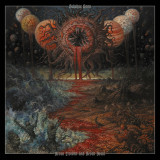
SULPHUR AEONs neuestes Werk ist gesegnet mit Kontrasten, klanglicher Ebbe und Flut. Ein Taifun kantiger Riffs und wilder Blastbeats, raffinierte Melodieschichten, dichte Atmosphäre und triumphal gesungene Refrains reißen dich mit. Ätherische Akustikgitarren, subtile Synthesizer, einen Hauch von Gothic ('The Yearning Abyss Devours Us'), satte Leads, E-Bow-Parts, heftige Aggression ('Arcane Cambrian Sorcery'), monumentale Schwere, die in hypnotische Gesangsmuster übergeht ('Seven Crowns And Seven Seals'), und ein großes Finale ('Beneath The Ziqqurrats') - "Seven Crowns And Seven Seals" überschreitet Genres; es wütet und zerstört, lullt dich im nächsten Moment in gefährlich täuschende Ruhe, nur um dich unwiderbringlich in den dunklen Strudel des Ozeans zu reißen. SULPHUR AEON meistern ihren durchdringenden Cinematic Death Metal der Extraklasse, gehen über sich hinaus und klingen dabei doch unverkennbar kohärent - perfekt eingefangen und verfeinert von den langjährigen Mitarbeitern Simon Werner und Michael Zech (Secrets Of The Moon, Bølzer etc.), während das Mastering von V. Santura (Triptykon, Dark Fortress) übernommen wurde. Was das Artwork betrifft, so haben SULPHUR AEON diesmal mit der Tradition gebrochen, wieder mit Ola Larsson zu arbeiten, und sich mit dem Italiener Paolo Girardi zusammengetan, um eine Lovecraft'sche Apokalypse darzustellen, die der Opulenz und Dynamik des Albums einen raueren Stil entgegensetzt.
Am 27. Oktober erscheint ihr neues Album "Chronicles of a Diamond" bei ATO Records. Produziert von Quesada und hauptsächlich abgemischt vom sechsfachen Grammy-Preisträger Shawn Everett (Alabama Shakes, The War on Drugs), übernimmt Burton auf den zehn Songs die Rolle des Co-Produzenten und lässt seine freigeistige Musikalität in jeden Track einfließen.
“It felt like a metamorphosis in a way that was both beautiful and difficult, but in the end feels more true to who we are as collaborators“, erzählt der Sänger. Die Songs entstanden zwar im Studio, fangen aber definitiv auch die verrückte Energie ein, die während den Live-Shows der beiden entsteht. Das endet in einem besonderem Hybrid aus Soul und symphonischem Pop, der verrückter und extravaganter als sein Vorgänger komponiert wurde. Inklusive unerwartete Ausflüge in Jazz-Funk und psychedelische Gefilde samt hypnotischen Rhythmen, wilden Gitarrenriffs und stimmungsvollen Mellotron-Melodien, die eine tranceartige Euphorie ausstrahlen. „With this album I felt very free in my vocal performance, which has a lot to do with Adrian hearing something in my voice and helping me to explore that”, ergänzt Burton.
Als Black Pumas 2019 ihr selbstbetiteltes Debüt veröffentlichten, löste das Duo aus Austin eine Reaktion aus, die fast so außergewöhnlich und mitreißend war wie ihre Musik selbst. Gefeiert von den Medien, hagelte es insgesamt 6 Grammy Award-Nominierungen (darunter Best New Artist und Album of the Year). Neben Live-Auftritten bei den genannten Grammy Awards, spielten die Black Pumas außerdem bei der Übertragung des NFL Drafts sowie zur Amtseinführung von Joe Biden. Sie tourten durch ganz Europa sowie Nord- und Südamerika und waren bei bekannten Late-Night-Shows wie Jimmy Fallen, Jimmy Kimmel, Ellen DeGeneres oder Stephen Colbert zu sehen. Ihr Album verkaufte sich über eine Millionen Mal, alleine ihre Single "Colors" steht inzwischen bei über 450 Millionen Streams. Nun ist es an der Zeit, das zweite Kapitel der Band aufzuschlagen.
- 01: Subterraean Futari Botchi - Nanako Sato
- 02: Silhouette - You & The Explosion Band
- 03: I Wish You Love - Hatsumi Shibata
- 04: Kirameku Inner Space - Yuji Ohno & Galaxy
- 05: Speak Low - Ann Young & Yuji Ohno Trio
- 06: Lilac-Gai No Aki - Ken Tanaki
- 07: I Want To Be Happy - Mieko Hirota
- 08: The Soaring Seagull - Electric Keyboard Orchestra
- 09: Mouchido Kikasete - Hatusmi Shibata
Wewantsounds is delighted to announce the release of "TOUCH," a selection of sought-after tracks produced by Yuji Ohno, one of the most revered producers and arrangers on the Nippon music scene. His blend of Jazz, Space Funk and Disco have long been highly sought-after by DJs around the world and we've been given unique access to the Nippon Columbia vaults and to Mr. Ohno himself to come with a versatile selection from his 70s body of work, all bearing his uniquely recognisable sound. The set includes works with singers Nanako Sato, Hatsumi Shibata and Ken Tanaka alongside tracks from his cult anime soundtracks for "Lupin III" and "Captain Future." Approved by Yuji Ohno himself, "Touch" was remastered in Tokyo by Nippon Columbia and features liner notes by Nick Luscombe in conversation with the maestro and artwork by Optigram's Manuel Sepulveda.
Born in Atami in 1941, Yuji Ohno started learning the piano at a young age and formed his own band during his teenage years, getting into Jazz in the process. After high school, he entered the prestigious Keio University in Tokyo and played in the revered university big band alongside two other pianists, Masahiko Sato and Hirosama Suzuki, who would have an illustrious career in their own right. After University, Ohno became a professional musician and started playing with the new wave of Japanese Jazz musicians forming his own trio and recording with the likes of Hideo Shiraki, Terumasa Hino and Masahiko Togashi from 1967 onwards.
At the turn of the 60s, Ohno started to veer away from the Jazz scene as he realised, as told to Nick Luscombe that "the jazz music being played by the Japanese at the time was only chasing the cutting edge, and was ignoring the roots and origins of jazz." Ohno therefore shifted his efforts to film and TV and also to producing artists for various Japanese labels, becoming one of the most in-demand composers, arrangers and producers in Japan. This is when Ohno developed his unique sound across a wide variety of styles. More than anything else, he got renowned for his anime soundtracks, particularly with the Lupin III series - represented here by the superbly funky "Silhouette" - which made his fame in Japan
Whether it's jazz, funk, disco or Pop, the "Ohno Sound" is unmissable both in terms of melodies and arrangements, on a par with those of such legends as Quincy Jones and Michel Legrand. Ohno's melodies are sophisticated yet accessible and there's a great sense of space in his productions especially when it comes to slow-burning grooves as heard on "Kirameku Inner Space" from the cult anime soundtrack "Captain Future" or "The Soaring Seagull" from the sought-after 1975 album "Electro Keyboard Orchestra." This album was recorded with seven fellow musicians including Kentaro Haneda and Ohno's old friend, Masahiko Sato and using twenty Korg synths to create a unique blend of futuristic jazz funk. "The Soaring Seagull" could be the perfect embodiment of Ohno's signature sound when it comes to instrumentals. The producer was however equally at ease with producing lush disco extravaganzas such as "Subterranean Futari Botchi" by Nanako Sato or "I Wish You Love" by Hatsumi Shibata, a revamp of Charles Trenet classic, both colourful and glitzy.
Ohno's versatility is on display here with a couple of jazz vocal tracks, "Speak Low" by Ann Young accompanied by the Yuji Ohno Trio and Mieko Hirota's fast and furious "I Want to Be Happy" while he also excelled at crafting gorgeous mellow songs such as Ken Tanaka's "Lilac-gai No Aki" and Hatsumi Shibata's "Mouichido Kikasete" closing the selection on a perfect note. "Touch" is just a tiny selection from Yuji Ohno's immense body of work and it will hopefully open the ears of Japanese music lovers to one of the most important musician, producer and arrangers of his generation.
Edith Piaf, die 60 Jahre nach ihrem Tod ihre größten Lieder vorträgt, begleitet in London von einem Symphonieorchester mit 60 Musikern... Was als Science-Fiction gelten könnte, ist dank renommierter Musiker, Arrangeure und Tontechniker Wirklichkeit geworden.
Sie stellten sich der Herausforderung, neue Orchestrierungen zu schaffen, die für die Ohren von heute geeignet sind, ohne die Nostalgie ihrer Vorgänger zu beeinträchtigen. Indem sie ihre Stimme technisch isolierten, konnten sie den Refrains von damals beweisen,
dass sie ebenso unsterblich sind wie ihre Interpretin. Die ikonische Stimme von Edith Piaf wurde von einem Team von Toningenieuren im legendären Abbey Road Studio in London akribisch aus den Originalaufnahmen extrahiert.
Das Album wiederum wurde in den renommierten AIR Studios aufgenommen, die sich ebenfalls in London befinden. Das Orchester besteht aus sechzig sorgfältig ausgewählten Musikern, die das renommierte Legendis Orchestra bilden. Diese Musiker kommen aus einigen der renommiertesten englischen Symphonieorchester, darunter das London Symphonic Orchestra, das Royal Philharmonic Orchestra und das BBC Orchestra. Die Stücke wurden von Martin Batchelar, Samuel Pegg und Nathan Stornetta hervorragend arrangiert.
End of Ways is a bridge to healing as it was written during the period of helping a loved one escape an abusive household while working though its lingering horrors to find peace. On this second album
release by indie label Kill Rock Stars, 18-year-old Elliott Fullam touches on even darker subject matter than his predecessor What’s Wrong which was a dissociative trip that reached out to thousands of
like-minded music enthusiasts who hailed the record as their album of the year.
And End of Ways is the next record that will continue in that same gentle melody which alleviates the emotional storm that
torments so many of us. Elliott’s sophomore full-length is a blend of home recordings as well as studio recordings which bring some extra depth within the songs to suit their somber settings in the tracks
Throw It Away, Forget, and Better Way. But the record still retains its stripped down, lo-fi vibe in songs like Let’s Go Somewhere and Remember When with their clear Elliott Smith and Nick Drake
influences in both the acoustic guitar lines and quiet vocals. The addition of young pianist Jeremy Bennett also beautifully adds candle-light melody through-out the album with his haunting notes in the opening song Mistake and his Tim Burton-meets-Vince Guaraldi style in the album’s escapist-themed title track End of Ways along with the dramatic climax to Timeless Tears and the album closer, Over
the Moon which is Elliott’s profession of love to his present companion who he saved from her former home. Nick Drake, Big Thief, Crumb, and Alex G that explores childhood, dissociation, heartbreak and ultimately, survival
Stockholm based The Nomads have always stood out from other garage rock revivalists because of
the intensity of their performances and the wide range of their influences, which extend beyond the
usual ’60s bands. The mini-LP Where the Wolf Bane Blooms still sounds as vital and exciting as it did
in 1983. 40 years down the road we celebrate this underground classic with a remastered reissue full
of extra goodies from one of the toughest bands to walk the planet
- Have Yourself A Merry Little Christmas
- Warm In December
- O Holy Night
- Twinkle Twinkle Little Me
- The Christmas Song
Die gerade erst mit zwei Grammys ausgezeichnete Samara Joy macht es jetzt großen Jazz-Vorbildern wie Ella Fitzgerald und Louis Armstrong gleich und veröffentlicht stimmungsvolle Weihnachtslieder mit einer Extra-Prise Jazz-Feeling.
Bei “A Joyful Holiday” handelt es sich um eine EP mit sechs Tracks, zwei im letzten Jahr erfolgreich digital veröffentlichte Weihnachtssingles sowie vier neue Titel, darunter “The Christmas Song”, ein Duett zwischen Samara and ihrem Vater, dem Gospelsänger Antonio McLendon.
- Jordan And The Nile
- Bring Out The Lillies
- Shine A Little Light
- Floodgates
- The Abyss
- I'm Getting By
- So Damn Good
- Keep Me In Your Heart
- White Berets
"The process of grieving my mother's death, of watching my life kind of fall apart around me brought me to this weird sort of nirvana," he explains. "In those moments, I could feel these different worlds colliding around me, and I knew I wanted to find a way to capture it."
With his extraordinary new album, Thin Places, Harris has done precisely that. Written from start to finish as one continuous artistic statement, the set draws on Harris' extensive background in classical music to create a work of beauty, pain, and catharsis. Blurring the lines between country, gospel, soul, and chamber folk, the songs here are deeply personal, staring down loss, self- destruction, and recovery with unflinching honesty, and the arrangements are similarly bold and cinematic.
Fans of JAMESON RAID or MACAXE will definitely enjoy what we have prepared for this release.
Includes all the usual extras, unreleased rehearsal tracks and special mastering for vinyl for best audio experience.
Limited to150 numbered copies in black vinyl, this deluxe edition includes:
* A4 insert
* Band promo photo
* Hand-numbered certificate card
It's because we want to show this quality to the world that we bring here our "Heavy Brazil" series once again. After the first two chapters, where we brought thrash legends VODU with their first two albums ("The Final Conflict" and "Seeds Of Destruction"), the time has come to present a new chapter of this series.
For all those who are fans of Brazilian thrash, KORZUS' first studio album needs no special introduction. "Sonho Maniaco" (Portuguese for 'Maniac Dream') is by all parameters a thrash metal classic! With a total of 7 songs, "Sonho Maniaco" has everything you'd expect from an 80's thrash album: speed, aggression and a good dose of insanity!
Originally released in 1987 and being a highly sought after record by collectors, it is with great pleasure that we bring you the first vinyl reissue of "Sonho Maniaco"!
Get ready for another ultra- limited edition by our label, with all the extras our followers are used to.
A new band that truly understands what '80s metal was.
Get ready to rock with the Cobrator! Go back to the golden age of metal with this powerful band, delivering a unique 80s feeling and plenty of head- banging fun.
With crunchy guitars, rocking basses and fierce drums, it's perfect for those who are looking for the perfect time travel to the '80s!
COBRAKILL are here to bring you the best of classic metal, with the energy of new blood.
If you are a fan of early MOTLEY CRUE, ODIN or SEDUCE, then you will be hooked on the Cobrator! An album with a total of eight songs high on heavy riffs and hard-hitting solos, "Cobrator" will be available in an ultra limited edition on vinyl LP, with all the extras that our followers are used to.