Cerca:extra life

Generi
Tutto
Harald Björk - Lust

One of my first record releases was on Traum Schallplatten in 2007. I was living in Berlin and Traum was at its peak launching acts like Extrawelt, Dominik Eulberg, Gabriel Anada, Minilogue, Fairmont… The era of melodic minimal…

The release of Luftlust hit the big DJ's like Sven Väth etc. And I was truly overwhelmed by the support. But the version on the 12" was actually pitched up 5 BPM. And in the end the mastering was not in my personal preference. Watering my feel of it, once or twice a year people actually ask me to do a remaster. Over the years it has been a track circulating the web and playlists, haunting me.

Last year I dug in the past and actually wrote a masters exam in philosophy about being a youngster in the techno scene and how to keep up creativity while working with record labels. Somewhere in that process I decided to face the old ghost and make it happen. Time was ready for the re-release of Luftlust, on my terms on my own label Kranglan Broadcast.

Justus Köhncke Remix
For a time frame of a decade I have asked Kompakt veteran and Whirlpool Productions legend Justus Köhncke to do a remix on my Kranglan imprint. Herr Köhncke to me (and to everyone who has followed Kompakt) is one of a kind! A punk soul, dead serious while smiling, always putting hooks and fragments out of music history on Kompakt sound plates with precise grace… The last years he have replied he's been busy in the studio with Can member Irmin Schmidt, working on soundtracks but... suddenly one day when I wrote the man he said "I love Luftlust, send me the stems".

Listening to Justus interpretation I was blown away… like riding a cabrio through the German landscape of fields and deciduous forests a sunny day in late May! And wait for that outro bridge at 5:56! Like being hugged by the warm mother autumn.

Özgur Can Remix
Anjuna Deep cofounder Özgur Can and I have known each other since high school. Özgur was the first DJ I ever booked to one of my early raves in the forests of Nacka. From releasing our first records with our common buddy Petter on Peter Van Halls label 'Deep' we have walked a parallel path in life, Özgur with a wider span of releases and 100's of nights at sweaty dance floors. No one does the deep driven heartfull arpeggios like Özgur. They swell and they swirl. A true Music lover and true talent!

Lust
Time has flewn since 2007, and that winter break in Barcelona 2006 hanging out with James Holden and the Border gang at Razmataz… the weekend when I actually started working on Luftlust…

Working on a re-release of Luftlust I just got hit by lust to work a version of it from the position where I am at, the 2021 me. I went with lust and it just happened a late summer night in Stockholm being by myself for a brief moment doing what I love the most, making music.

Luftlust Original 120BPM Version
And at last the never released original version of the title track. Correct tempo as it was written. Mastered by Andreas Lubich aka Lupo, the very person to master this type of music if you take a brief glimpse at his back folder! Finally!

I love this project, and I love making it happen at Kranglan Broadcast. Bringing together thoughts and people you have thought of bringing together for a long time. Lust KLN014 is here.

In Stock

Disponibile in Stock e pronto per la spedizione

13,15
Kölsch - 1983 LP 2x12"

Kölsch

1983 LP 2x12"

2x12inchKOM329
Kompakt
10.09.2021

Revered Danish producer and live performer KÖLSCH follows his 2013 hit album "1977" (KOMPAKT 276 CD 107) with the new full-length "1983", again chaining up heroic techno tracks for a grandiose sonic journey to the vibrant heart of today's dance floor. PRIORITY RELEASE

Coupling contemporary production pizzaz with nostalgia-tinged soundscapes and sweeping melodies, this opus acts as both a skilfully composed portfolio of personal memories and a sublime collection of crowd-charming cuts - a modern classic in the making, coming from a master of his craft.

1983 features collaborations with Gregor Schwellenbach, Waa Industry and WhoMadeWho's Tomas Høffding.

Hot on the heels of SPEICHER 84 (KOMPAKT EXTRA 84), featuring club crackers DERDIEDAS and TWO BIRDS, the latest full-length offering from KÖLSCH is very much a travel album: "When I was a kid in 1983, we used to drive through Europe every summer on the way to the south of France", he explains. "A lot of my early music memories stem from these long travels, as we would listen to all my father's favorite records on the cassette deck. After getting a walkman, I would make up my own soundtrack for travelling, with early electro and hip hop creeping into my life. My father of course did not like it, and it never grace the official cassette deck of the car, obviously"

These trips became a primary source of inspiration to a hungry young mind forced to sit on the backseat of a car for several days: "they were also journeys through the seasons. In Denmark, it would be spring time, so I could nearly see us driving through spring into the summer. The scenery would change, and so would the mood in the car." Informed by the symbolic quality of these slightly gauzy childhood memories, KÖLSCH's unique melange of emotional and functional elements works exceptionally well for the full-length format - a seamless transition of musing introspection and explosve expression, where catharsis never seems far away in dance-ready techno vignettes like MOONFACE, UNTERWEGS or PACER.

From beatless opener and title track 1983 to the filigreed piano banger DIE ANDEREN or the bleep-infused synth-fest E45, each cut operates as its own little time capsule, storing bits and pieces of recollection and then magically transforming them into epic, beat-driven soundscapes. Confronted with other producers' input (and other memories), these traits find themselves extended in the most interesting ways - TALBOT, THE ROAD and CASSIOPEIA (also featured on KOMPAKT EXTRA 79) make excellent use of GREGOR SCHWELLENBACH's emotive orchestral flourishes, while BLOODLINE's lyrics come to life thanks to the distinct timbre of TOMAS HØFFDING of WHOMADEWHO fame. A new powerful take on an earlier collaboration, PAPAGENO 30 YEARS LATER not only rejoins WAA INDUSTRY on vocal duty, but also ends the album on a wonderfully elegiac, yet hopeful note - basically turning water into wine, as we've come to expect from KÖLSCH.

In Stock

Disponibile in Stock e pronto per la spedizione

23,95
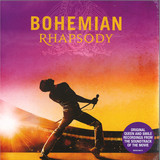
Queen - Bohemian Rhapsody (the Original Soundtrack) 2x12"

'Bohemian Rhapsody' Original Film Soundtrack

featuring previously unavailable QUEEN performances at Live Aid
and new versions of band classics heads for October 19 release.

Available on Virgin EMI (Universal) /Hollywood Records (USA)
For the first time ever audio tracks from Queen's legendary performance at Live Aid are being released as part of the soundtrack album to "Bohemian Rhapsody", 20th Century Fox and Regency Enterprises' forthcoming feature film celebrating the band, their music and their extraordinary lead singer Freddie Mercury. Recorded at the historic Wembley concert in July 1985, these Live Aid songs are among the rare gems and unheard versions from the band's rich catalogue.

Alongside the show-stopping Live Aid performances of Bohemian Rhapsody, Radio Ga Ga, Hammer To Fall and We Are The Champions, the album features other rare live tracks spanning Queen's entire career, new versions of old favourites, and a choice selection of the band's finest studio recordings. Among them are some of Queen's biggest hits, including eleven all-time anthems that reached Number One around the world. The track listing is being announced on 5 September 2018, which would have been Freddie's 72nd birthday.

"Bohemian Rhapsody" is scheduled to have its World Premiere in the UK on 23 October before opening across the world in early November. It stars Rami Malek as Freddie, Gwilym Lee as Brian May, Ben Hardy as Roger Taylor, Joe Mazzello as John Deacon, and Lucy Boynton as Freddie's lifelong companion Mary Austin. The soundtrack, featuring all-original Queen recordings and vocals, is released on CD and digital formats on 19 October.

In Stock

Disponibile in Stock e pronto per la spedizione

39,92
Aziz Balouch - Spanish Cante Jondo And It's Origin In Sindhi Music (BOOK)

66 pages, 175 x 129mm paperback w/ litho printed cover & french flaps.

The second outing for our short run book publishing imprint, The End books, takes the form of a reprint of Spanish Cante Jondo and Its Origin in Sindhi Music, originally published in Spanish in 1955 under the name Cante Jondo: Su Origen y Evolución and later in this English translation.

Aziz Balouch here presents his theory on the roots of flamenco's 'deep song' in modern-day Pakistan, a cultural journey that mimics the routes of his own life, having been brought up among the Islamic mysticism and devotional songs of Sindh before travelling to Gibraltar in the early 1930s and becoming transfixed with the cante jondo across the border in southern Spain. Positing this concept through personal accounts rather than solid theoretical backing, this text provides a valuable account of an extraordinary existence that crossed remarkable geographical, musical, and spiritual boundaries. Issued here with a new introduction from anthropologist of sound, the senses and Islam, Stefan Williamson Fa.

"It would be easy to place Balouch on the fringes, as an eccentric footnote in flamenco history. But that misses the shape of his life and work. He was a figure who moved intuitively across boundaries that our present categories of nation, genre, discipline tend to fix in place. His work predates the founding of the academic discipline of ethnomusicology, the global circuits of world music, and the marketplace logic of fusion projects by decades. He was not an ethnographer or a proto–world musician, but someone for whom the deep song of Andalusia and the devotional song of the subcontinent resonated along the same fault lines of feeling, and who spent his life trying to trace them.

This book is one of the few surviving traces of that attempt. To read it now is to encounter a perspective that resists tidy narratives of influence or origin, despite its title and what he claims to do. It stands instead as evidence of an idiosyncratic musical imagination, one that relied less on proof than on listening, and on the belief that certain echoes carry farther than history can easily explain."

— Stefan Williamson Fa

pre-ordina ora10.04.2026

dovrebbe essere pubblicato su 10.04.2026

19,12
KOHEI TANAKA - One Piece: Whole Cake Island - Original Soundtrack LP

Whole Cake Island: Sweets and Dangers in an Unforgiving World! As Luffy and his crew face an Emperor, Big Mom, for the first time, they must join forces to save Sanji in the extravagant kingdom of Totto Land.

Composer: Kohei Tanaka
Kohei Tanaka has been a lyricist, composer and arranger for a multitude of animated works and video games, including Sakura Wars, Assassination Classroom and the One Piece saga, since its inception.

non in magazzino

Ordina ora e ordineremo l'articolo per te presso il nostro fornitore.

31,51

Last In: 6 days ago
Cosmic Ear - TRACES LP

Cosmic Ear

TRACES LP

12inchWJLP76B
WE JAZZ
10.04.2026
  • 01: Father And Son
  • 02: Traces Of Brown Rice
  • 03: Love Train
  • 04: Right Here Right Now
  • 05: Do It (Again) – For Sofia Jernberg

2ND LP PRESSING

Cosmic Ear is a new group bringing together Christer Bothén, Mats Gustafsson, Goran Kajfeš, Kansan Zetterberg and Juan Romero. Their debut album TRACES is released by We Jazz Records on 23rd of May, 2025. Including 6 deep cuts, TRACES is an album that sees Cosmic Ear tracking down the "traces" of the legendary Don Cherry's legacy while paving their own way in contemporary creative music expression.

Christer Bothén, a collaborator with Don Cherry during his Swedish period in the 1970s, brings depth to the history of the band, while his bandmates each belong at the top of the game in Scandinavian jazz. Their music is meditative and deep, much recommended for fans of the likes of Don Cherry, Alice Coltrane, and Pharoah. That being said, listeners should approach Cosmic Ear only with openness and curiosity, without set stylistic boundaries, as it's the group's natural flow and togetherness that brings their music into a fresh territory of their own.

As John Corbett writes in his liner notes:

"The Cosmic Ear. Five souls, sometimes six, on the same road. The pied piper path of Mr. Cherry. Christer Bothén, one of Cherry's main collaborators in his Swedish period and one of the most beautiful bass clarinetists on planet earth, together with next-gen saxophonist Mats Gustafsson, who has carried so many torches in Cherry's procession, and younger Swedish stars trumpeter Goran Kajfes, bassist Kansan Zetterberg, and percussionist Juan Romero. Together a tempo is set, a path is charted. There are global grooves. A berimbau, a karignan (metal scraper from Guinea), donso n'goni. There are ET grooves. Synth, live-electronics, slide flute. The globe is a glove, a hand warmer that radiates with extraterrestrial power, returning the fingers to their place at the center of the galaxy; the Cherry path is a balm that restores essential moisture to the lips that blow life back into the megacosm. Let us all praise warm fingers and moist mouths."

pre-ordina ora10.04.2026

dovrebbe essere pubblicato su 10.04.2026

22,65
Tucker Zimmerman - I Wonder If I'll Ever Come True  LP
  • 1: It All Depends On The Pleasure Man
  • 2: Watching Heroes Come And Go
  • 3: Slide On
  • 4: So It Goes
  • 5: Let's Start Over Again
  • 6: Taoist Tale
  • 7: Welcome To Mass Media
  • 8: Song
  • 9: Advertisement For Amerika

Orange Vinyl with exclusive illustrated notes/lyric insert ltd to 300 w/w.“Zimmerman conjures up a kind of Arcadian folk surrealism that is utterly his own” MOJO Never released before collection featuring Ian A Anderson & Maggie Holland recorded 72-80 is among Tucker’s finest - Free-ranging, Playful, Intimate - his Songpoet imagination unbound and in full bloom now on colour Vinyl for first time with (exclusive to this version) illustrated lyric insert with notes from Tucker.Recorded between 1972-80 this is the first ever release for ‘I Wonder If I’ll Ever Come True’ a stunningly beautiful, homegrown collection by Songpoet Tucker Zimmerman and friends. The range and depth is astonishing. From the heady surreal journey of ‘It All Depends’ Upon the Pleasure Man’, to the uplifting Gene Clark-esque 'So It Goes’, to some of his most beautiful & touching love songs in ‘Let’s Start Over Again’ & ‘Song’. Only one song has seen the the light of day before now - ‘Taoist Tale’ from his 1984 album ‘Word Games’. This recording from a decade earlier loses no power in its folkier stripped down style driven by Tucker’s strong narrative.

While living in bucolic seclusion in Belgium with Marie-Claire, Tucker invited visiting musicians (Derroll Adams, Wizz Jones, Maggie Holland, Dave Evans, Ian Anderson) into his home studio to play and live tape whatever songs he had at hand. Maggie Holland and Ian A Anderson feature, while Tucker found a freeing simplicity in just guitar, ’70s organ, bass and piano. We are so grateful to Ian A Anderson, who carefully kept and curated these recordings from 50 years ago. “Every time I would leave, Tucker would hand me another tape full of songs”. Ian worked with Tucker and ourselves to present this wonderful album. The collection is among Tucker’s finest - free-ranging, playful, intimate - his Songpoet imagination unbound and in full bloom. The ethos, the playing, the freedom, feels like Ronnie Lane’s time in the Welsh Borders. Unhurried, liberated, down-home and cosmic. Extraordinary music made among friends.
"Startling collection of intimate, home-recorded songs from the cult singer-songwriter adored by David Bowie and Big Thief alike.

When I first interviewed Tucker Zimmerman back in 2015 neither of us had any idea that, a decade later, he would be venerated by a new coterie of young fans, touring with maximal folk-rockers Big Thief and recipient of a concerted reissue campaign by the wonderful Big Potato Records. Last year I eulogised the “Arcadian folk surrealism” of his 1974 LP *Over Here In Europe but, if anything, this informal collection of intimate home-studio recordings is even better. Recorded between 1973 and 76 whilst living in Belgium and hosting such visiting folk musicians as Derroll Adams, Wizz Jones, Maggie Holland, Dave Evans, and Ian A. Anderson this is the kind of assured, organic freewheeling folk music that has the mellow, introspective rough-edged feel of some lost private-press LP, the kind rightly revered by Endless Boogie’s Paul Majors as “real people” music. A true find.” Andrew Male MOJO 4/5
“Here's a charming oddity: an unreleased album dating from the mid-Seventies by an American-born songwriter beloved of David Bowie and, more recently, Adrianne Lenker of the folk-rock band Big Thief. Zimmerman's a bohemian type who eschewed the big time for a life of gigging around Europe. He, his wife, Marie-Claire, and a handful of friends recorded these songs in seclusion in the Belgian countryside, and what songs they are. Slide On could have come from the Byrds when they discovered country music, Let's Start Over Again captures the dreamlike experience of being in love with unsettling clarity. This is a real unearthed gem.” 4/5 The Times

pre-ordina ora10.04.2026

dovrebbe essere pubblicato su 10.04.2026

23,32
Iivana Mišukka & Arja Kastinen - Iivana Mišukka (Tape)
  • 01: Maanitus &Amp; Tšiižik
  • 02: Markka
  • 03: Melkutus
  • 04: Letška
  • 05: Kuuen Parin Hoirola
  • 06: Brišatka
  • 07: Tšiižik
  • 08: Kirkonkellot
  • 09: Kirkonkellot Korkea
  • 10: Hoirola, 3 Parin
  • 11: Lippa
  • 12: Kyngäkiža
  • 13: Ristakondra
  • 14: Vanha Polkka
  • 15: Viistoista
  • 16: Vanha Valssi
  • 17: Kiberä
  • 18: Maanitus Kuokan Kanteleella
  • 19: Tuuti Lasta Nukkumahe
disponibile anche

Vinyl[22,65 €]


Death Is Not The End present a further volume of Arja Kastinen's eerie amalgamations of 110 year old wax cylinders with her own meticulously transcribed takes, this time focussing in on Armas Otto Väisänen's field recordings of kantele player Iivana Mišukka (b. 1861 d.1919).

"Ivana Mišukka (1861–1919) was one of the Karelian kantele players recorded by the folk music researcher Armas Otto Väisänen on wax cylinders in 1916 and 1917. In the early 20th century, the remote areas of Border Karelia were undergoing the final phase of a transformation in musical culture, with the ancient runo song tradition giving way to newer forms of music. This transition is reflected in Mišukka's repertoire and choice of instrument. The ancient small kantele, hollowed out of a single piece of wood, was already rare at the turn of the century. Mišukka's kantele was a new type of instrument with 26 strings, constructed of several parts, but he played it using the traditional plucking technique. Like other Border Karelian kantele players, his repertoire consisted of music rooted in runosong culture, as well as newer dances and songs from the east and west. Most of the recorded material falls into the latter category.

Ivan Bogdanov Mišukka was born out of wedlock in Suursara village, Suistamo, on 1 May 1861. He began playing the kantele at the age of five or six, quickly mastering the instrument. In adulthood, he was considered one of the area's best master players. Mišukka was landless for most of his life and lived in different parts of the Suistamo parish. His first wife, Tekla Markintytär, died in 1897 at the age of 40, and his second wife, Jevdokia Filipintytär Jeminen, died in 1907 at the age of 50. Seven children were born from the first marriage, two of whom died young. The third wife, Maria Ignatintytär Gurnan (Kuurnanen), was a well-known master of lamentations. Together with Maria, Iivana Mišukka worked as a tenant farmer in the village of Suursara. Mišukka suffered from rheumatism, which prevented him from participating in physical work like Maria. This was apparently partly the reason why Iivana Mišukka went to earn extra money by playing the kantele on gig trips. He often had other traditional artists from Suistamo as his travelling companions, such as the runosingers Konstantin Kuokka and Iivana Onoila. Iivana Mišukka died in Leppäsyrjä village, Suistamo, on 18 May 1919 at the age of 58, and his kantele was donated to Teppana Jänis.

Mišukka only used 14 of the 26 strings on his kantele, playing the same tunes either a fourth higher or lower. He tuned his kantele to the major scale using fifths, except for a low seventh scale degree on the upper strings, but not below the fundamental. Since he did not use the seventh note of the scale on the upper strings at all, he could use the major scale both lower and a fourth higher with this tuning. According to Mišukka, the sound of higher, or 'finer', strings is 'more beautiful', while that of lower ones is 'greater'. Among runosingers, the size of the thirds varied, ranging from major to minor to neutral. A similar phenomenon can be observed in kantele tunings, where the third, sixth and seventh scale degrees vary in a comparable way.

During a meeting, Väisänen suggested that Mišukka play the smaller kantele belonging to Konstantin Kuokka. The idea was to bring it closer to the horn to improve the recording quality. However, the kantele was completely out of tune, and now Mišukka tuned it to the Lydian scale (track 18).

Using the old plucking technique, Mišukka placed his right middle finger on the fundamental tone, his right index finger on the second scale degree, his left middle finger on the third scale degree and his left index finger on the fourth scale degree, and his right thumb on the fifth. The thumb also played the notes above the fifth note of the scale. As Mišukka remarked to Väisänen: 'Peigaloll' tuloo enemb ruadoa' (the thumb has to do more work). However, he did not use the seventh note of the scale on the upper strings at all. Below the fundamental note, he played the seventh and sixth notes of the scale with his right middle finger of and the fifth note of the scale with his right ring finger. This fifth scale degree below the fundamental is almost always used as a drone. Sometimes, when the melody required it, Mišukka, like other players, also varied the fingering. He would also occasionally strike the same string with the side of his fingernail after plucking it.

The wax cylinder recordings of Karelian kantele players are kept in the archives of the Finnish Literature Society in Helsinki, Finland. Copies were made of them onto reel-to-reel tapes in both the 1960s and 1980s. The 1960s copies are mono and the 1980s copies are stereo. However, not all kantele recordings from these decades have survived.

The sound of the kantele is difficult to hear in wax cylinder recordings due to its low volume, and it occasionally becomes completely obscured by noise. During the copying process, the cylinder sometimes rotates unevenly, resulting in breaks or jumps in the music. Additionally, the rotation speed of the cylinder in the copies does not correspond to the performance speed of the original music, which alters the pitch. However, since Väisänen's precise notes are available in the archive, it is possible to deduce the melodies, their speed, and the tuning level of the kantele in the recordings. Of the copies of the original recordings from the 1960s and 1980s, I have selected the one that best met the requirements of this publication and adjusted the speed of the recording to align with Väisänen's notes. To enhance the listening experience, I have replayed the songs, which now partly overlap the old recordings on this release."

— Arja Kastinen

pre-ordina ora27.03.2026

dovrebbe essere pubblicato su 27.03.2026

16,39
Iivana Mišukka & Arja Kastinen - Iivana Mišukka LP

Death Is Not The End present a further volume of Arja Kastinen's eerie amalgamations of 110 year old wax cylinders with her own meticulously transcribed takes, this time focussing in on Armas Otto Väisänen's field recordings of kantele player Iivana Mišukka (b. 1861 d.1919).

"Ivana Mišukka (1861–1919) was one of the Karelian kantele players recorded by the folk music researcher Armas Otto Väisänen on wax cylinders in 1916 and 1917. In the early 20th century, the remote areas of Border Karelia were undergoing the final phase of a transformation in musical culture, with the ancient runo song tradition giving way to newer forms of music. This transition is reflected in Mišukka's repertoire and choice of instrument. The ancient small kantele, hollowed out of a single piece of wood, was already rare at the turn of the century. Mišukka's kantele was a new type of instrument with 26 strings, constructed of several parts, but he played it using the traditional plucking technique. Like other Border Karelian kantele players, his repertoire consisted of music rooted in runosong culture, as well as newer dances and songs from the east and west. Most of the recorded material falls into the latter category.

Ivan Bogdanov Mišukka was born out of wedlock in Suursara village, Suistamo, on 1 May 1861. He began playing the kantele at the age of five or six, quickly mastering the instrument. In adulthood, he was considered one of the area's best master players. Mišukka was landless for most of his life and lived in different parts of the Suistamo parish. His first wife, Tekla Markintytär, died in 1897 at the age of 40, and his second wife, Jevdokia Filipintytär Jeminen, died in 1907 at the age of 50. Seven children were born from the first marriage, two of whom died young. The third wife, Maria Ignatintytär Gurnan (Kuurnanen), was a well-known master of lamentations. Together with Maria, Iivana Mišukka worked as a tenant farmer in the village of Suursara. Mišukka suffered from rheumatism, which prevented him from participating in physical work like Maria. This was apparently partly the reason why Iivana Mišukka went to earn extra money by playing the kantele on gig trips. He often had other traditional artists from Suistamo as his travelling companions, such as the runosingers Konstantin Kuokka and Iivana Onoila. Iivana Mišukka died in Leppäsyrjä village, Suistamo, on 18 May 1919 at the age of 58, and his kantele was donated to Teppana Jänis.

Mišukka only used 14 of the 26 strings on his kantele, playing the same tunes either a fourth higher or lower. He tuned his kantele to the major scale using fifths, except for a low seventh scale degree on the upper strings, but not below the fundamental. Since he did not use the seventh note of the scale on the upper strings at all, he could use the major scale both lower and a fourth higher with this tuning. According to Mišukka, the sound of higher, or 'finer', strings is 'more beautiful', while that of lower ones is 'greater'. Among runosingers, the size of the thirds varied, ranging from major to minor to neutral. A similar phenomenon can be observed in kantele tunings, where the third, sixth and seventh scale degrees vary in a comparable way.

During a meeting, Väisänen suggested that Mišukka play the smaller kantele belonging to Konstantin Kuokka. The idea was to bring it closer to the horn to improve the recording quality. However, the kantele was completely out of tune, and now Mišukka tuned it to the Lydian scale (track 18).

Using the old plucking technique, Mišukka placed his right middle finger on the fundamental tone, his right index finger on the second scale degree, his left middle finger on the third scale degree and his left index finger on the fourth scale degree, and his right thumb on the fifth. The thumb also played the notes above the fifth note of the scale. As Mišukka remarked to Väisänen: 'Peigaloll' tuloo enemb ruadoa' (the thumb has to do more work). However, he did not use the seventh note of the scale on the upper strings at all. Below the fundamental note, he played the seventh and sixth notes of the scale with his right middle finger of and the fifth note of the scale with his right ring finger. This fifth scale degree below the fundamental is almost always used as a drone. Sometimes, when the melody required it, Mišukka, like other players, also varied the fingering. He would also occasionally strike the same string with the side of his fingernail after plucking it.

The wax cylinder recordings of Karelian kantele players are kept in the archives of the Finnish Literature Society in Helsinki, Finland. Copies were made of them onto reel-to-reel tapes in both the 1960s and 1980s. The 1960s copies are mono and the 1980s copies are stereo. However, not all kantele recordings from these decades have survived.

The sound of the kantele is difficult to hear in wax cylinder recordings due to its low volume, and it occasionally becomes completely obscured by noise. During the copying process, the cylinder sometimes rotates unevenly, resulting in breaks or jumps in the music. Additionally, the rotation speed of the cylinder in the copies does not correspond to the performance speed of the original music, which alters the pitch. However, since Väisänen's precise notes are available in the archive, it is possible to deduce the melodies, their speed, and the tuning level of the kantele in the recordings. Of the copies of the original recordings from the 1960s and 1980s, I have selected the one that best met the requirements of this publication and adjusted the speed of the recording to align with Väisänen's notes. To enhance the listening experience, I have replayed the songs, which now partly overlap the old recordings on this release."

— Arja Kastinen

pre-ordina ora27.03.2026

dovrebbe essere pubblicato su 27.03.2026

22,65
Geinoh Yamashirogumi - Ecophony Rinne LP

One of the most innovative and ambitious albums ever made, Genioh Yamashirogumi’s Ecophony Rinne is a sonic masterpiece featuring over 200 musicians that expanded the limits of what music and sound could do.

Before Akira there was Ecophony Rinne. Originally released in 1986, Ecophony Rinne is a four-part symphony of “ecological music” by Geinoh Yamashirogumi that married ancient tradition with technological innovation, and changed the way we listen to music in the process.

Half-speed mastered at Abbey Road by Miles Showell, Time Capsule’s high-tech analogue reissue is the first to reproduce composer Ōhashi’s ground-breaking “Hypersonic Effect” theory on vinyl, cutting frequencies beyond the realm of human hearing into wax to capture the full spectrum emotional impact of this extraordinary work.

Founded by genius polymath Tsutomu Ōhashi aka Shoji Yamashiro, Geinoh Yamashirogumi is a shapeshifting collective of over a hundred members from across disciplines. Rejecting professional musicianship, Ōhashi cultivated an ethos where neuroscientists, psychologists, doctors, journalists, engineers and students could critique society through artistic expression and pursue their research in ethnomusicological performances that spanned global traditions, Eastern spirituality and Western classical form.

Ecophony Rinne represents the pinnacle of this vision - an expansive orchestral suite made with over 200 musicians that channeled Ōhashi’s thinking about mankind’s relationship with nature, and fundamental questions of life, death and rebirth.

Here pipe organ synths made from sampled Tibetan horns sit alongside field recordings from Central African forests, Buddhist mantras circle dummy head microphones, Javanese Jegog percussion ensembles pulse like verdant ecosystems, and the acoustics of temples, caves and landscapes are conveyed in the mix. Weaving together culture, nature and technology, it is a record that vibrates with the polyphony of life on Earth.

But Ecophony Rinne was not only musically innovative. Noticing the difference between vinyl and CD versions of the album where digital reproduction limited the sound, Ōhashi developed a theory of “Hypersonic Effect”, determining that ultra-high frequencies above 20khz can impact human perception even if they are inaudible. At once a physical and a psychological experience, to listen to Ecophony Rinne is to feel music differently.

The rest is history. After its release, Ōhashi was approached by director Katsuhiro Ōtomo to produce the soundtrack for Akira, the work for which Geinoh Yamashirogumi is best known. Emerging from the shadows at last, Ecophony Rinne was its transcendental blueprint, reissued in its most complete hypersonic form on vinyl for the first time.

Rather than describe nature, Ecophony Rinne embodied it. Rather than reflect culture, Ecophony Rinne defined it. Rather than explore technology, Ecophony Rinne changed it. As a work of art, it is more relevant than ever. You won’t have heard anything like it.

non in magazzino

Ordina ora e ordineremo l'articolo per te presso il nostro fornitore.

27,69

Last In: 21 days ago
Various Artists - Synths,Sax+Situationists/French Underground 73-78 (LP)
  • 01: Nyl - Nyl
  • 02: Etron Fou Leloublan - Face A L&Apos;Extravagante Montée Des Ascenseurs, Nous Resterons Fideles A Notre Calme Détermination
  • 03: Lard Free - Acide Framboise
  • 04: Heldon - Perspective Iv (Excerpt)
  • 05: Jacques Berrocal / Dominique Coster / Roger Ferlet - Pièce À Lanam
  • 06: Delired Chameleon Family - Raganesh

France's near-revolution of May '68 was the zenith of that generation's struggle for a new kind of life. It kicked the country's small, but vibrant, counter-culture into overdrive, and birthed a local underground music scene. The bands it spawned made music with much less rock purity than groups from the UK and US. Their musical and cultural influences foregrounded improvisation, disjunction, and genre-blending: Soft Machine, Pink Floyd, Frank Zappa, free jazz, and radical politics. The introduction of the synthesiser in the early 1970s added fuel to the fire.

This collection of French underground music inaugurates a series to accompany "Synths, Sax & Situationists", the first English-language book to investigate this movement. It focuses on the music of the second wave of bands that emerged in 1972/3, which saw radicalised psychedelic and jazz influences merge with the future-music possibilities offered by new technology. The next volume will investigate the politically-charged bands that erupted in immediate aftermath of May '68.

pre-ordina ora20.03.2026

dovrebbe essere pubblicato su 20.03.2026

30,46
The Holeum - Ensis

The Holeum

Ensis

12inchLFR12831
Lifeforce Records
20.03.2026
  • 1: The Fermi Paradox
  • 2: Cosmic Void Spheres
  • 3: Macrocosm + Microcosm
  • 4: Spontaneous Synchronization
  • 5: Hyperdimensional Physics
  • 6: Esoteric Futuristic Visions
  • 7: Geometric Congruence Vortex

Baptized with a name derived from astrophysical theories about dark matter and black holes, THE HOLEUM was formed in 2014 in Alicante, Spain. Founded by former members of NahemaH, Demised, quantumXperience, Hela, Neptunian Sun, and Priest of Dawn, the quintet set out to push the boundaries of heavy music and to intensify the emotional impact of darkness in sound. Their concept is both cosmic and sonic: “THE HOLEUM is related to the dark matter that forms the black holes in the universe. THE HOLEUM is not a black hole, but black holes are formed by The Holeum. That is the idea from which we extract our concept – we are a sonic and cosmic vision of the sublime.” With their third album “Ensis” (2025), the band continues its journey through experimental metal, death doom, melodic metal, and post-metal. This work is more than a continuation – it is a condensation and expansion of their previous soundscape. “Ensis” reveals itself as finely nuanced, challenging, yet at the same time profoundly sensitive and multifaceted. The songs unfold like cosmic landscapes where heaviness and melancholy meet subtle emotionality. The intensity remains palpable, but it is complemented by a deeper sensitivity that draws the listener into a fragile balance between harshness and delicacy. “Ensis” is an album that demands and touches at once – a work that makes the complexity of human existence audible in the mirror of the universe.

pre-ordina ora20.03.2026

dovrebbe essere pubblicato su 20.03.2026

22,27
HOUSE OF ALL - INKLINGS LP
  • 1: Spirit Salient
  • 2: The Rebel Duke
  • 3: Wrecked
  • 4: Valiant Heart
  • 5: Prince Of This World
  • 6: Time Is Out Of
  • 7: Joint
  • 8: My Throbbing Heart Shall Rock Thee
  • 9: Ours Is The Fall
  • 10: Sweet Remembrencer
  • 11: I Am Thine

It's hard to fathom Martin Bramah's trajectory from his beginnings as a guitarist/writer behind two crazily influential postpunk albums - The Fall's Live At The Witch Trials and Blue Orchids' The Greatest Hit (Money Mountain) (vocalist on the latter too, of course) - then nearly three decades of sporadic-at-best activity, offering releases just frequently enough to remind fans of his peculiar brilliance . . . before another stay in the void. Chalk it up to what you want - Mark E. Smith's utter usurpation of The Fall, his split from partner Una Baines after Blue Orchids' debut, the vague collapse of rash experimentation in `underground' music as early `80s nu-pop and American college rock diluted any real spirit, a few failed attempts at working with with Mark again . . . and maybe just life getting in the way. A sense of lost opportunities isn't tough to justify. Inasmuch as Martin was originally the singer for The Fall - Mark began as guitarist but couldn't play! - and given that the group's mythology was born in an era before that gang of Mancunian misfits had even thought of playing, it's high irony that 49 years after The Fall began, Martin has both become wildly prolific and the leader of a band with more rights of inheritance to The Fall's credibility than any other living person could justify . . .yet the band isn't remarkable for that as it is for the range and wealth extent of their collective powers and talent: two great and original guitarists, three of the UK's most daringly-skilled drummers, a genuine bass legend, and a brilliant spare Blue Orchid guitarist. Four albums in, the HOUSE Of ALL is getting ambitious, with each album a subtle improvement on the last, forging a path away from their pasts without denying a thing. Inklings differs from the first three for not having being largely improvised at first, with sounds, rhythm, groove and melody later forged into songs. They rehearsed! They had fun doing it! They're going on an extended tour! There were even extra tracks! We'll leave it to fans and critics to sit down and analyse the specifics of it all, but Steve, Si, Pete, Phil, Karl and Martin have made a bold and powerful album unlike any other you'll hear in 2026 . . . stately, majestic, bold and worthy of a group of real survivors. In perverse form, the album will be officially announced and preceded by a song not on the album!

pre-ordina ora20.03.2026

dovrebbe essere pubblicato su 20.03.2026

22,06
CARTER THE UNSTOPPABLE SEX MACHINE - Straw Donkeys: The Complete Singles (2x12")
  • A Sheltered Life
  • Sheriff Fatman
  • Rubbish
  • Anytime Anyplace Anywhere
  • Bloodsport For All
  • After The Watershed (Early Learning The Hard Way)
  • The Only Living Boy In New Cross
  • Do Re Me, So Far So Good
  • The Impossible Dream
  • Lean On Me I Won't Fall Over
  • Lenny And Terence
  • Stuff The Jubliee! (Extra Special Radio Only Version)
  • Glam Rock Cops
  • Let's Get Tattoos
  • The Young Offender's Mum
  • Airplane Food
  • Born On The 5Th Of November
  • Road Rage
  • And God Created Brixton
  • The Undetake And The Hippy Protest Singer

Formed in 1987 by Fruitbat and Jim Bob, Carter The Unstoppable Sex Machine burst onto the scene with their signature style of punk-pop infused with samples, drum machines, and social commentary. Join Jim Bob and Fruitbat, as they take a retrospective look back at the complete Carter U.S.M. singles, from 1988 to 1997.

First released in 1995, 'Straw Donkey' is an essential introduction to Carter The Unstoppable Sex Machine, featuring the U.K. Top 20 singles 'The Only Living Boy In New Cross', 'After The Watershed (Early Learning The Hard Way)', 'Rubbish', and 'Lean On Me I Won't Fall Over', along with classics such as 'Sheriff Fatman', 'Anytime Anyplace Anywhere' and 'Bloodsport For All'.

pre-ordina ora20.03.2026

dovrebbe essere pubblicato su 20.03.2026

30,88
SIMO CELL & ABDULLAH MINIAWY - DYING IS THE INTERNET

In a sharp-angled, fiercely inventive reflection on the nature of club culture and digital fatigue, Simo Cell and Abdullah Miniawy reunite to deliver their new album, Dying is the internet, to Dekmantel's UFO series.

French producer Simo Cell has blazed a singular path from his dubstep-influenced origins to become a leading light in contemporary leftfield club music, twisting up adventurous rhythms and flamboyant production in pursuit of a perpetual freshness for the floor. Egyptian singer, poet, producer and composer Abdullah Miniawy has become equally omnipresent in the past 10 years, straddling the arts world and leading with his piercing Arabic lyricism while maintaining an eternally curious spirit that leads into open-ended, experimental music from the abstract to the propulsive.

Following up on their 2020 EP for BFDM, Kill Me Or Negotiate, Miniawy describes their sharply focused new album as "a playful prophecy about the triggers of a new global revolution." Cell considers the title, Dying is the internet, to be a mantra about "how the internet lost its soul," becoming "less about sharing ideas and more about surviving in a digital business ecosystem." Deliberately at odds with the reel-ready two-minute attention span of the average social media surfer (i.e. everyone), the pair set out to make an album that takes its time to reveal nuanced ideas and expressions. Rather than one-note despair for the modern malaise, Cell and Miniawy offer a philosophical reminder that this present moment in the human experience is a temporary phase, no matter how overwhelming it feels.

Dying is the internet finds Miniawy experimenting with auto-tune across the record, while Cell has developed his voice design chops and compositional instincts, moving closer to fully realised song structures without losing the fundamental 'clubbiness' of each track. The result is a cohesive, wildly original kind of heavyweight dance music that slings out hooks left right and centre, from Miniawy's laconic trumpet looming through low-slung 'Reels in 360' and 'Travelling In BCC' to the persistent handclaps that bring 'Living Emojis' to life. Miniawy's poetry explores the power of insistent, repeated phrases in a break from his more typically structured form.

Kenyan powerhouse Lord Spikeheart adds extra snarl to stripped-back, slow-burn opener 'I See The Stadium', but otherwise Dying is the internet is purely the work of Miniawy and Cell casting their considerable chops out into unexplored territory. The results are electric, bound together by a consistent economy of sound that burrows into a shroud of bass-heavy minimalism barely masking Cell's incredibly detailed studio flex. Even the beatless flourish of the Miniawy-produced 'Tear Chime' comes loaded with physicality — a sensory rush at the mid-section of the album bookended by some of the most idiosyncratic club music in recent memory.

Both Simo Cell and Abdullah Miniawy have already proved themselves as fearless innovators across different fields. The strength of their partnership lies in their ability to make space for each other while letting their distinctive sonic identities ring loud and true. Dying is the internet has immediacy and physicality to translate over a soundsystem, but its intricacies are purpose-built for repeat visits and contemplation, unveiling hidden dimensions the deeper you dive into it.

non in magazzino

Ordina ora e ordineremo l'articolo per te presso il nostro fornitore.

20,59

Last In: 27 days ago
Laurel Halo - Midnight Zone (Original Soundtrack to the Film by Julian Charrière) LP
  • A1: Sunlight Zone
  • A2: Clarion-Clipperton Zone
  • A3: Oreison
  • B1: Twilight Zone
  • B2: Fracture
  • B3: Abyss
  • B4: Polymetallic Nodule
  • B5: Hadal
  • B6: Sunlight Zone (Strings Version) *

Laurel Halo returns with an album of original soundtrack music, composed for the film Midnight Zone by visual artist Julian Charrière. Following the path of a drifting Fresnel lighthouse lens as it descends through the Clarion-Clipperton Fracture Zone — a remote abyssal plain in the Pacific Ocean, rich in rare metals and increasingly targeted for deep-sea mining — the film traces a descent into one of Earth’s last untouched ecosystems.


Charrière’s film reveals the deep not as void, but as a luminous biome teeming with fragile life: bioluminescent creatures, swirling schools of fish, and elusive predators. The suspended lens becomes an abyssal campfire, attracting species caught in the tides of uncertainty, their futures hanging in the balance.


Echoing this tension, Halo’s compositions evoke a sensory freefall, where gravity falters and light and sound flicker in uncertain rhythms. Midnight Zone is a sonic drift through the space between what we seek to extract, fail to understand, and must protect.


Halo’s score evokes the life that exists beyond our physical airbound capacity. The material features long, subtle passages of electro-acoustic ambient, drone and sound design, slowly flowing and unfolding with rich detail. The music, composed largely on a Montage 8 synthesizer and Yamaha TransAcoustic piano at the Yamaha studios in New York City, possesses an uncanny quality: that of synthetic waveforms being amplified and sung through the stringboard of the physical body of the TransAcoustic piano. Combined with stacks of violin and viol da gamba, the music on Midnight Zone possesses trace elements of a human hand in an otherwise sunken landscape. Patient, submerged, and alive. The album will be the third on Halo’s imprint, Awe.


The film is central to Charrière’s current solo exhibition Midnight Zone. The exhibition engages with underwater ecologies, exploring the complexity of water as an elemental medium affected by anthropogenic degradation. Reflecting upon its flow and materiality, profundity and politics, its mundane and sacral dimensions, the solo show acts as a kaleidoscope, inviting us to dive deep.

pre-ordina ora13.03.2026

dovrebbe essere pubblicato su 13.03.2026

24,79
Savage - Eternity LP
pre-ordina ora

Questo articolo non è stato ancora rilasciato. È possibile pre-ordinare il prodotto ora.

25,00
THOSE WHO WALK AWAY - AFTERLIFE REQUIEM
  • The Beginning And The End
  • Seventh Degraded Hymn
  • Memorial Environment #4
  • Eighth Degraded Hymn
  • Memorial Environment #5
  • Ninth Degraded Hymn
  • Memorial Environment #6
  • Tenth Degraded Hymn
  • The End Of Life In Sound

Der postklassische Komponist, Klangkünstler und Kurator Matthew Patton ist mit seinem zweiten Album als Those Who Walk Away zurück. "Afterlife Requiem" ist eine Elegie für seinen Freund und Kollegen Jóhann Jóhannsson. Drones, Elektroakustik und fast vollständige Stille, extrahiert aus unvollendeten Aufnahmen auf Jóhannssons Festplatten, bilden die Grundlage für zwei Streichquintette - Ghost Orchestra (Reykjavík) und Possible Orchestra (Winnipeg) -, die in einem traurigen, langatmigen Werk verarbeitet und ausgelöscht werden. Patton hat auch wieder mit Andy Rudolph (Guy Maddin) und Paul Corley (Sigur Rós, Ben Frost) an der Koproduktion und dem Sounddesign gearbeitet, um eine brodelnde Körperlichkeit zu schaffen, die brodelnde Tiefen mit eindringlichen Bewegungen gespenstischer Streicher kontrastiert. ,Alles, was ich je geschrieben habe, ist ein Requiem. Alles ist ein Ende. Der Tod ist überall in dieser Musik präsent. In meinen Werken geht es um das Verschwinden - der Gegenwart, der Vergangenheit, von allem. Afterlife Requiem wird im Laufe seiner Dauer immer langsamer, es ist ein einziges großes Ritardando, die Zeit verlangsamt sich nicht nur, sie verschwindet. Ohne dass ich darüber nachgedacht hätte, ereigneten sich zwei miteinander verbundene Tragödien, die während des Schreibens, Aufnehmens und Arbeitens organisch an die Oberfläche kamen: der Tod meiner Mutter und der Tod des Komponisten und Freundes Jóhann Jóhannsson. Wenn ich mit dem Schreiben anfange, denke ich an nichts Bestimmtes, ich schreibe einfach, komponiere, nehme auf und höre zu ... aber irgendwas macht sich immer auf unvorhergesehene Weise bemerkbar oder drängt sich in den Vordergrund. Nach dem medizinisch assistierten Tod meiner Mutter wurde mir beim Ausräumen ihrer Wohnung klar, dass ich auch die physische Manifestation ihrer Welt auslöschte - und dass ich genau dasselbe mit der Musik tat, die ich schrieb und aufnahm. Während dieser Zeit wurde mir auch Jóhanns Tod immer wieder bewusst. Für Afterlife Requiem habe ich kurze, verlassene Fragmente aus Jóhann Jóhannssons Festplatten genommen und diese körperlosen Audio-Geister abwechselnd in meine eigene Musik eingebaut, wobei ich sie unrein gelassen habe - und dabei die Grenze zwischen Schaffen und Zerstören verwischt habe. Nach seinem Tod hatte ich diese Festplatten aus Jóhannssons Berliner Studio zum Anhören bekommen. Diese Musik war aufgegeben worden, in verschiedenen Stadien der Entstehung und Auflösung: ein Verzeichnis zerfallener und toter Erinnerungen, vergessen und jetzt nur noch in einer Reihe ineinandergreifender mechanischer Teile vorhanden, die mit der Zeit selbst versagen und verschwinden werden, wie alles andere auch. Monatelang hörte ich mir diese Überreste von Jóhanns Musik obsessiv an und versuchte, Hinweise auf Jóhann vor seinem Tod zu finden. Oft stellte ich fest, dass er das Aufnahmegerät noch lange nach Ende der aufgenommenen Musik laufen gelassen hatte. Er schien nicht zu bemerken, dass die Musik aufgehört hatte, oder registrierte nicht, dass dies das Ende der Musik war, oder vielleicht war er durch etwas anderes abgelenkt. Aber ich fand diese langen Stillephasen zutiefst emotional und berührend. Die verschwindenden Elegien von Afterlife Requiem sind weniger Musik als vielmehr Überreste von Musik. Auf diese Weise arbeite ich immer auf die Subtraktion von Bedeutung hin. Die Musik ist fern und verschwommen, beschädigt, geisterhaft und gespenstisch und deutet nur wie eine halb vergessene Erinnerung an das, was einmal existierte, eine verdichtete Darstellung von Verfall und Auslöschung. Ich habe dieses neue Stück von Anfang bis Ende mit diesen körperlosen Stillephasen aus Jóhanns eigenem Werk, Raum und Zeit unterlegt. Jetzt für immer verschwunden, bleibt seine aufgezeichnete Stille zurück; eine monumentale Leere, die der Welt verloren gegangen ist. Im gesamten Stück, insbesondere in den Abschnitten ,Memorial Environment", habe ich auch unzählige Geräusche aus der Natur integriert, von vulkanischer Lava über Lastenaufzüge bis hin zum menschlichen Blutfluss, dem Zischen von Turbinen und Selbstmordinjektionen. Der Künstler Robert Smithson sagte vor Jahrzehnten: ,Es ist die Dimension der Abwesenheit, die es noch zu finden gilt." Für mich misst diese Musik auch, wie die Zeit abläuft. Tatsächlich ist die Zeit bereits abgelaufen. Die Ewigkeit hat bereits begonnen." - Matthew Patton (Those Who Walk Away)

pre-ordina ora06.03.2026

dovrebbe essere pubblicato su 06.03.2026

24,79
Kaleidobolt - Karakuchi

Kaleidobolt

Karakuchi

12inchSVART372LP
Svart Records
06.03.2026
  • 1: Tinkerbell
  • 2: Lights On, Nobody Home
  • 3: Coping
  • 4: Astro Boy/Ochanomizu
  • 5: Duuude
  • 6: Friends Of Fire
  • 7: A Chance Of A Lifetime
  • 8: Turn Of Luck
disponibile anche

Turquoise/Black Smoke Vinyl[24,33 €]


KALEIDOBOLT’s fifth album is pungent to the ears – KARAKUCHI out in March Karakuchi is one record you can judge by its cover. The first time Kaleidobolt’s faces have adorned an LP, they have been fused into a torpedoing biomechanical vehicle. Echoing The Birthday Party’s Junkyard or Motörhead’s Orgasmatron (…on acid?!), the illustration epitomises perfectly Kaleidobolt’s agenda of “hyperkinetic rock”. Their feverish, psych-prog sound is full of motion. It jerks around at different speeds, threatening to spin out of control and crash into flames at any given moment. What’s more, it isn’t taken too seriously. This is heavy and intricate music, yes. But as bassist and co-singer Marco Menestrina puts it, the Kaleidobolt attitude is “an ugly smirk more than an angry face with a fist.” On their fifth album since forming in 2014, the Helsinki-based outfit lean into their strengths as a formidable power trio. With their previous two records, 2019’s Bitter and 2022’s This One Simple Trick, they had thrown everything at their disposal into the recording with no expense spared on overdubs, effects and kitchen sinks. Produced again by Niko Lehdontie (Oranssi Pazuzu), Karakuchi comes from tightly rehearsed, live-in-the-studio takes. Kaleidobolt realise that greater sparsity can be a strength, and they’ve allowed their instruments extra space to breathe. It makes for their earthiest, purest and perhaps most authentic record to date. Karakuchi’s exuberant style emerges from the individual members’ contrasting listening habits. These span classic prog, Japanese city pop, noise rock, post-hardcore and historical podcasts. One record they can all agree is a masterpiece, the centre of the Venn diagram where all three members meet, is King Crimson’s Red. As for their new album’s title, that’s as suitable as the cover art. “Karakuchi” is the slogan of the Japanese beer brand Asahi Super Dry. Translated literally, this means “pungent to the mouth”. As drinkers of that product, Kaleidobolt acknowledge its parallels to their songs. “It’s very intense, right at the front, like at the first bite,” explains Menestrina. “And then it leaves your mouth feeling refreshed. The flavour doesn’t linger in your mouth, basically. It has a quick, hard finish. With a bit of a stretch, we thought that that could also be said of our music.” Karakuchi is Kaleidobolt at their hardest, fastest, tightest and super-driest. Pungent to the ears. -JR Moores, November 2025

pre-ordina ora06.03.2026

dovrebbe essere pubblicato su 06.03.2026

23,49
Kaleidobolt - Karakuchi

Kaleidobolt

Karakuchi

12inchSVART372LPB1
Svart Records
06.03.2026
  • 1: Tinkerbell
  • 2: Lights On, Nobody Home
  • 3: Coping
  • 4: Astro Boy/Ochanomizu
  • 5: Duuude
  • 6: Friends Of Fire
  • 7: A Chance Of A Lifetime
  • 8: Turn Of Luck
disponibile anche

Black Vinyl[23,49 €]


KALEIDOBOLT’s fifth album is pungent to the ears – KARAKUCHI out in March Karakuchi is one record you can judge by its cover. The first time Kaleidobolt’s faces have adorned an LP, they have been fused into a torpedoing biomechanical vehicle. Echoing The Birthday Party’s Junkyard or Motörhead’s Orgasmatron (…on acid?!), the illustration epitomises perfectly Kaleidobolt’s agenda of “hyperkinetic rock”. Their feverish, psych-prog sound is full of motion. It jerks around at different speeds, threatening to spin out of control and crash into flames at any given moment. What’s more, it isn’t taken too seriously. This is heavy and intricate music, yes. But as bassist and co-singer Marco Menestrina puts it, the Kaleidobolt attitude is “an ugly smirk more than an angry face with a fist.” On their fifth album since forming in 2014, the Helsinki-based outfit lean into their strengths as a formidable power trio. With their previous two records, 2019’s Bitter and 2022’s This One Simple Trick, they had thrown everything at their disposal into the recording with no expense spared on overdubs, effects and kitchen sinks. Produced again by Niko Lehdontie (Oranssi Pazuzu), Karakuchi comes from tightly rehearsed, live-in-the-studio takes. Kaleidobolt realise that greater sparsity can be a strength, and they’ve allowed their instruments extra space to breathe. It makes for their earthiest, purest and perhaps most authentic record to date. Karakuchi’s exuberant style emerges from the individual members’ contrasting listening habits. These span classic prog, Japanese city pop, noise rock, post-hardcore and historical podcasts. One record they can all agree is a masterpiece, the centre of the Venn diagram where all three members meet, is King Crimson’s Red. As for their new album’s title, that’s as suitable as the cover art. “Karakuchi” is the slogan of the Japanese beer brand Asahi Super Dry. Translated literally, this means “pungent to the mouth”. As drinkers of that product, Kaleidobolt acknowledge its parallels to their songs. “It’s very intense, right at the front, like at the first bite,” explains Menestrina. “And then it leaves your mouth feeling refreshed. The flavour doesn’t linger in your mouth, basically. It has a quick, hard finish. With a bit of a stretch, we thought that that could also be said of our music.” Karakuchi is Kaleidobolt at their hardest, fastest, tightest and super-driest. Pungent to the ears. -JR Moores, November 2025

pre-ordina ora06.03.2026

dovrebbe essere pubblicato su 06.03.2026

24,33
Articoli per pagina:
N/ABPM
Vinyl