LA's Elbow Grease label takes a sharp left turn from dance floor-finessing singles to their first full-length
release via the elusive yet illustrious band KAMM, who return in extra fine form for their third and
presumably final album offering, following the sudden tragic death of core member Alland Byallo last
year. Surviving bandmates Marc Barrite aka Dave Aju, Kenneth Scott, and Marc Smith chose the
inspirational higher ground, finishing off what they had begun with Byallo prior to his passing, resulting in
this sublime musical love letter of an LP.
In keeping with the band’s broad influence canon, we are treated to a blend of sonic flavors from
across the genre spectrum with Barrite and Byallo’s jazz upbringings ringing true at the center, then
branching out through golden era hip-hop feels, phased-out psych funk, warm smokey soul, and of
course generous helpings of intricate electronic layers and innovative treatments, as all band members
have become notorious for in their respective solo bodies of work.
While highly personal by nature, including otherworldly cover art based on Byallo's last paintings, the
musical content contained on the album is also widely universal - from opener “Crystalline Dreams”
serpentine tones turned slo-mo funk bomb, to the triptych Bossa boom-bap of “No Deal”, the timely
political calls of uptempo jazz burner “Your Honor”, the intimate upright-led tribute tales of “Angels
Flight”, to the sleek electro rhythm changes of mid-set breather “How Long?”, a deeply felt take on our
mobile-reliant fate in “S.I.M.”, the expansively expressive depth of “Coordinates”, then closing it out with
the title track featuring a grand finale chorus of Byallo’s best friends and fam from around the world
joining in the “Let The Light In” chant, with as much uplifting intention as possible to capture on record.
A loving collective embrace and very welcome reminder to help lighten these darker days
Suche:extra love
Dave Lee continues to be one of Britain's most accomplished disco dons. An established remixing extraordinaire, proven once more here as he tackles some stunning Disco-Funk heaters. First is the Psychedelic Funk mix of '2001 Disco Party' a hypnotic, sweat inducing slab of frenzied funk-action, did we mention this release brings the funk enough? His Synth Vamp mix of 'Potion Of Love' is a must for hi-energy synth solo aficionados, backed up with glorious strings, pulsating guitar and classic disco diva vocals. Last of all his 'Strut Your Strat Dub' of the opener brings irresistible guitar frets to the party, doubling down on the groove factors for some serious heads down, hands up feet stomping.
- Undesigned
- Judge The Seeds (A/ Happiness For No Reason B/ Bright Sadness)
- Probably Wizards
- Sympathetic Magic
- Bracelets For Unicorns (A/ The Spiritiual Body B/ The Articulate Body)
- Filling In The Swamp
- The Wounded Place (A/ Subliminal B/ Anonymous)
- Metaphoric Leakage
Following the hyperactive “Blood Karaoke” (2022, Reading Group), “Performing Belief” builds rhythmic thickets from gathered sounds interwoven with synths, drum machines and other samples. Having built these rhythmic nests, Krivchenia then called on two contemporary mages of the low end: electric bassist and fellow Angeleno Sam Wilkes (Wilkes/Gendel) and double bassist/multi-instrumentalist from Krivchenia’s native Chicago, Joshua Abrams (Natural Information Society). Wilkes and Abrams bring the presence of a grounding human witness to the rhythmic undergrowth, providing a centering and even at times melodic voice to the gathering. This alchemy carries a profoundly fresh sense of time, blurring the edges of the quantized grid and the generic boundaries of electronic music.
The core of the album is a lush, opulent matrix of percussion ranging from the familiar—hand claps and drum machines—to the mysteriously verdant, sampled largely from Krivchenia’s own performed field recorded collection. For years, he would record any and all of his musical encounters with natural objects: performing on a particularly resonant log on a hike, throwing rocks into a pristine pond, tap dancing in the mud. This archive of “natural” sounds became the fertile soil out of which the tracks on “Performing Belief” grew. What is gained in the process is not just a novel set of sounds, but a new rhythmic language. The particular give, the anticipatory rustle, the extra breath of a hollow log when functioning as a kickdrum provides a greenness that overtakes the rhythmic grid, giving this music a peculiar kind of stickiness. This rhythmic language, set in Krivchenia’s long-fermenting electronic musical palate, feels like a revelation, even while it calls back not only to his wonderfully elastic timekeeping behind the kit with his beloved band Big Thief, but also to his prior work in computer music as well as his deep study and love of the vast human archive of drumming. “Performing Belief” is in good company in the rank and file of the legendary Planet Mu label. From the foundational early releases of the likes of Jega and Venetian Snares, to the contemporary envelope-warping work of Jlin and hundreds of brilliant releases in between, Planet Mu has been a beacon of forward-thinking rhythmic music for decades, informing Krivchenia’s own sense of the weird metaphysics of musical time since he was a kid. Krivchenia’s contribution to this history calls to mind the principle of organic danceability that subtends Mu’s whole catalogue, while bending our sense of rhythm in new and gracious dimensions. Krivchenia brings out the loamy complexity of natural rhythms, a clearing as generous as it is inviting. Let the drummer give you some.
- 1: Next In Line
- 2: Tell Me Why
- 3: Coming Down
- 4: Where I Belong
- 5: For You
- 6: Give Me The Night
- 7: Living A Lie
- 8: In And Out Love
- 9: Medusa
- 10: Back Into Your Arms Again
- 11: I Want You
Russell / Guns marks the beginning of a fresh artistic partnership between legendary figures of Los Angeles Hard Rock: Jack Russell and Tracii Guns, accompanied by Johnny Martin, Shane Fitzgibbon and Alexxandro del Vecchio. For Jack Russell, this represents a long-awaited return to recording and new music, coming seven years after the release of "He Saw It Coming". Tracii Guns is a legend in his own right. He founded LA Guns in 1983, laying the foundation for one of the true giants of rock: Guns N' Roses.
After departing the band and reuniting with former Girl lead vocalist Phil Lewis to reform LA Guns, he signed with Vertigo Records and released 14 studio albums with the band. Jack and Tracii discovered a common thread in a collection of songs that draw from the bluesy power and heavy energy of their most celebrated material and roots, yet infused with a fresh, energetic drive and modern metallic production."Medusa" is an album that showcases the artistic integrity and commitment to Rock 'n' Roll from two extraordinary rock stars of the 80s and 90s.
After a strong first release on Fuse Imprint with 'The Wall', resident Phara returns to his home base for a mirage of introspective tracks. Furthering his research of emotive club music, 'Soft Glow, Fierce Light' seems more than appropriately named. Shimmering melodies, swinging rhythms, and a comforting ambiance, Phara proves that his constantly evolving musical persona and relationship with the Brussels club are built to last.
Beginning with 'Unfold', the Belgium-native sets the board with a warm introduction. Reminiscent of his recent endeavor as In Glass, a balance is struck between the slower tempo dub techno of his secondary alias and the higher club energy that he's been known to bring as Phara. Steady at first, filters open wide half way through the track to ensure maximum euphoria off or on the dance floor. 'Flow' follows in suit and here the producer keeps the level constant and tense with intricate melodic design. A steady groove with blossoming synth lines make 'Flow' a beauty to witness unravel. Warm chord stabs make for a nostalgic EP and shows once more that the seasoned producer frequently enjoys prioritizing emotion over drive. Flipping the vinyl to the other side, 'Wave to Wave' points a finger to all things dub, even a discrete appreciation of house music, through the harmony of his keys to the sound design of his square bass, and its common borders with techno. Juggling in snare rolls and rides throughout, Phara sets the tone with a soothing piece of work for lovers of the eyes-closed genre. To conclude, 'Solitude' brings a polished vintage effect to the project that 'Wave to Wave' introduced, this time with heightened intensity worthy of a set closer. Punchy stabs make this a particularly extraverted track, fitting into almost any record bag - Room 01 or Motion Room friendly. Thundering claps over an electric melody, these kinds of tracks aren't new to Phara. Pouring soul into his tracks, Phara proves once again to be a truly central artist in developing the Fuse sound and continuing his stylistic journey.
- Salsa Con Charanga
- Sonaremo El Tambo
- Delirio
- La Peluca
- La Puerta Del Dolor
- A Los Muchachos De Belén
- Ensaya Chamaco
- El Tibiri Tabara
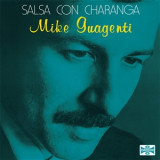
"Salsa con charanga" is really a feast for all salsa music lovers, a true jewel, which deserved much better when it originally came out in 1978. In addition to being a great salsa album, has the distinction that was released on Orfeon, a Mexican record label, due to the diligent work of the extraordinary producer Bobby Marin, and which miraculously received air play when powerhouse Fania label and few others ruled radio in the salsa music world. It comprises eight great, solid tracks; some, new interpretations from other albums in which Mike Guagenti participated with his handsome and captivating voice - a crooner with a salsero soul -, that, at times, could remind us of the late Tito Rodríguez, and even Ray Ramos. "The Mike Guagenti album," as indicated by Marin, "is a compilation of recordings by other artists. Originally a salsa album, I brought in Cuban Pupi Legarreta (violin and flute) and [Panamanian] Mauricio Smith (flute) to give it a charanga sound." With the exception of the cut 'Salsa con charanga,' which is an instrumental, the rest feature vocals by Guagenti. "Salsa con charanga" has developed a cult following, and finding a copy of the original could be quite expensive. Luckily, this officially licensed and restored edition will fill that void.
Here comes a very special production from East Germany of the early 70s!
One of the TOP Soul-Jazz & Beat combos in the country led by bassist and singer HORST KRÜGER,
recorded two previously unreleased, outrageously good titles here in the newly formed septet format.
"Ich will die Zeit nicht bereuen" is probably by far one of the most crispy produced German-language soul beat numbers that existed in the GDR at that time! From the pen of Ralf Petersen, the then head of Berliner Rundfunk personally, no pure high-class hit was recorded here, but hard-hitting, rocking beat.
It was not without reason that the choice of the head of broadcasting fell on the recently formed Horst Krüger Septet, which also gave the contemporary jazzy sound a perfect touch through an intensified brass section from 1970 on.
The title "Sonderbar" is exactly what its title promises, peculiar and extraordinary. A feat that was created as such in 1972. This somewhat sweeter SoulJazz vocal piece had a concrete idea, which composers Dieter Kopf, Horst Krüger and Franz Bartzsch as a musical arranger as well as Jens Gerlach in the musical free spirit of the hippiesque era. A through the stylistic device of Repetito in the text
dominant repetition, which is complicated in the context of the ever-evolving theme about feelings and love Groove of bass, guitar, drums and organ theme is reflected, redefined and constantly found again, simply masterfully. An interlude with a flute solo and a groovy dreamy Hammond organ solo at the end of the title, envelops the verses very contemporary.
Horst Krüger on bass guitar and his wife Gerti Möller with her outstandingly distinctive and powerful voice on the microphone.
A must for every fan of early beat, rock and soul!
L.A. Witch haben schon immer eine Aura müheloser Coolness ausgestrahlt, sei es in Form des Americana Noir und des lakonischen Back-to-Basics-Rock'n'Roll ihres selbstbetitelten Debüts oder des glühend strengen Abenteurertums ihres zweiten Albums "Play With Fire". Die Band - bestehend aus Sade Sanchez (Gitarre/Gesang), Irita Pai (Bass) und Ellie English (Schlagzeug) - begann als informelle Angelegenheit, aber die schwülen und betörenden, von Hall umhüllten Songs, die sie schufen, fanden beim Publikum Anklang und brachten das Projekt über den isolierten Raum von Freunden und Gleichgesinnten in Südkalifornien hinaus in die weite Welt. Auf ihrem neuesten Album "DOGGOD" geht das Trio über die bisherigen kreativen und geografischen Grenzen hinaus - das Material wurde in Paris produziert und die Tracks im Motorbass Studio in der Rue de Martyrs aufgenommen. "DOGGOD" erkundet ein breiteres klangliches Terrain, setzt ein größeres Arsenal an Sounds ein und erforscht größere existenzielle und kosmische Themen, ohne dabei den für die Band typischen Sinn für das Verbotene, das Verlassene und die Vorahnung zu verlieren. "DOGGOD" ist ein Weg, das universelle Rätsel der spirituellen Natur von Liebe und Hingabe anzugehen. "Ich habe das Gefühl, eine Art Dienerin oder Sklavin der Liebe zu sein", sagt Sanchez. "Ich bin bereit, für die Liebe zu sterben, indem ich ihr diene, für sie leide oder nach ihr suche - so wie ein treuer, ergebener Diensthund es tun würde." Der Titel des Albums ist ein Palindrom, das DOG und GOD zusammenfasst - eine Verherrlichung des Unterwürfigen und eine Subversion des Göttlichen. Es ist eine Anspielung auf die Reinheit von Hunden und eine Anerkennung ihrer bedingungslosen Liebe und ihres beschützenden Wesens, die im Widerspruch zu den verschiedenen abwertenden Assoziationen stehen, die mit dieser Spezies verbunden werden. "Es gibt diese symbolische Verbindung zwischen Frauen und Hunden, die die untergeordnete Stellung der Frau in der Gesellschaft zum Ausdruck bringt", erklärt Sanchez. "Und alles, was solche göttlichen Eigenschaften verkörpert, hat es nicht verdient, als Schimpfwort benutzt zu werden." Diese widersprüchlichen Erkundungen von Liebe und Unterwerfung manifestieren sich in der sanften und rauchigen Garagerock-Alchemie der Band, mit einer neu entdeckten Nutzung der disziplinierten Zurückhaltung und eisigen Instrumentierung des Post-Punk. Der Album-Opener "Icicle" zeigt, wie L.A. Witch aus dem Proto-Punk, der Psychedelia und den düsteren Riffs der 70er Jahre in die von Refrains durchtränkten Gitarren und den verlorenen Minimalismus von Joy Division und den frühen The Cure reist. Es wird eine Parallele zwischen romantischem Selbstmord und Märtyrertum gezogen, die sich im zweiten Song, "Kiss Me Deep", fortsetzt. Hier beschreibt Sanchez eine Liebe, die so rein ist, dass sie die Zeit übersteigt und sich über mehrere Leben erstreckt. Es ist ein Lied über Leidenschaft, vorgetragen mit dem weltlichen und verletzten Stoizismus der frühen Goth-Pioniere. Von dort aus geht die Band zur Leadsingle "777" über, einem Song über Hingabe bis hin zum Tod. Ein treibender Beat, ein treibendes, verzerrtes Riff und Sanchez' ätherischer Gesang vereinen sich zu einem Song, der sowohl düster in seinem Fatalismus als auch sinnlich in seiner treuen Leidenschaft ist. Auf dem gesamten Album "DOGGOD" weichen L.A. Witch nie von ihrer Muse ab. In "I Hunt You Pray" legt Pai einen hypnotischen Basslauf hin, während English einen zyklischen Krautrock-Groove einsetzt und Sanchez das Bild eines verlassenen Hundes am Straßenrand malt, der allein in der Nacht ist und sowohl als Jäger als auch als Gejagter lebt. Auf "Eyes of Love" macht sich die Band die meditativen Mid-Tempo-Wiederholungen, dekonstruierten Akkorde und esoterischen Betrachtungen über Liebe, Tod und Spiritualität zunutze, die Lungfish zu einer so beliebten Band gemacht haben. Es unterstreicht die Parallele zwischen der unerschütterlichen Liebe in den Augen eines Hundes und der Selbstaufopferung eines Erlösers. Auf "The Lines" nimmt die Band den treibenden Puls des Post-Punk und fügt dem Mix eine Extraportion Chorus hinzu. "Chorus ist ein moderner Effekt, der auf der Idee beruht, die leichten Tonhöhenunterschiede eines Chors nachzubilden. Es gibt eine schimmernde Qualität, die uns zurück zu diesem spirituellen, göttlichen Gefühl bringt", erklärt Sanchez. Gepaart mit dem Einsatz von Orgel und einer grüblerischen Moll-Melodie, beschwört der Song gleichzeitig das Heilige und das Sakrileg. Der Titeltrack "DOGGOD" hat vielleicht die größte Ähnlichkeit mit dem Material des Vorgängeralbums "Play With Fire", in den schlanken und gemeinen Gitarren auf eine raue Rhythmusgruppe und verträumten Gesang treffen. Aber während ihr vorheriges Album ein Aufruf war, seinen eigenen Weg zu gehen, bleibt "DOGGOD" dem "Bis dass der Tod uns scheidet"-Thema des Albums treu und geht sogar so weit, ein Maß an Unterwerfung zu beschreiben, das in gefährliche und ungesunde Gefilde übergeht, wobei Sanchez singt "hang me on a leash / `til I wait for my release". Letztendlich ist "DOGGOD" eine perfekte Verkörperung des Ansatzes von L.A. Witch. Es ist gleichzeitig romantisch und bedrohlich, ehrfürchtig und profan, eine Feier und ein Klagelied. Es spannt den Bogen zwischen Vergangenheit und Gegenwart, indem es vertraute Klänge aufgreift und sie für die Jetztzeit aufbereitet. Aber es läutet auch eine neue Ära für die Band ein, die über die Kodachrome-Erinnerungen an das Amerika der Jahrhundertmitte hinausgeht und tiefer in den mittelalterlichen und gotischen Energien von Paris und darüber hinaus gräbt, während sie gleichzeitig ein besudeltes Herz erforscht.
Black Loops is an endlessly creative producer who has brought constant invention to house music since his first release over a decade ago. His widescreen sounds take their cue from funk, soul and disco and are underpinned by a love of 90’s grooves. They appeal to DJs and dancers alike which explains his constant demand for DJ sets around the world as well as his music being played and supported by the biggest names in the scene. After many years of vital 12"s and remixes, he now draws on everything he has learned and raises his levels with a fully realised debut full length album dropping 9th May, 2025.
Ahead of the LP we present the Experience EP which sees Jimpster and Black Loops himself deliver Dub versions of two of the LP’s highlights; Electrical and Experience. Jimpster kicks off with a stripped back, rolling Italo-inspired groover with touches of modular synth sequences, string stabs and dubbed out vocals. Black Loops follows with his own version keeping the funk factor intact with guitar licks, synth blips and extra fat, moog bassline.
Flip over for the original of Experience featuring Marlena Dae with it’s distinctly 90’s, Vogue-era Madge mood. Black Loops then proceeds to take it to the club on his Dancefloor Dub, stripping out the vocals and working up a punchy, minimal groove for the dancers. Closing out the release we have an exclusive original, not included on the LP entitled Inmasoul. Jazzy, deep beats are the order of the day here, making for a perfect warm up track to set the mood.
Das fünfte, den Durchbruch für Evan Dando bringende, Lemonheads-Album 'It's A Shame About Ray', wird zum 33-jährigen Jubiläum wieder als Single Vinyl in klassisch schwarz mit der Original-Tracklist nachgepresst (mit Download Card für die zusätzlichen Bonustracks der Deluxe Edition von 2022). Beschrieben von Musikjournalist und Autor Everett True als "Ein 30-minütiger Einblick in das, was es heißt, hart und schnell und locker und glücklich mit gleichgesinnten Kumpels zu leben, angetrieben von einer gemeinsamen Liebe zu ähnlichen Bands und Drogen und Alkohol und Freiheit". It's A Shame About Ray" hatte in jenen berauschenden, sorglosen Tagen des Jahres '92 eine beträchtliche Wirkung. Die Platte fängt perfekt Dandos Fähigkeit ein, die Sehnsucht und Lust der Teenager mühelos in einem zweiminütigen Popsong zu verpacken. Singles wie "My Drug Buddy" und der luftig-perfekte Pop des Titeltracks mögen herausstechen, aber die eigentliche Stärke des Albums liegt in den Tracks dazwischen; das wirklich fantastische 'Confetti' (über die Scheidung von Evans Eltern) und die atemberaubend lässige Akustik-Coverversion von 'Frank Mills' (aus dem Hippie-Musical Hair), eine Version, in der jedes Quäntchen Pathos und Gefühl für die verlorene Generation der 1960er mitzuschwingen scheint. Wenn Evan Dando Zeilen wie "I love him/but it embarrasses me/To walk down the street with him/He lives in Brooklyn somewhere/And he wears his white crash helmet" singt, weiß man erst richtig zu schätzen, wie wunderbar und verlockend Popmusik sein kann. Und dann gibt es da noch den Ansturm von Aufsässigkeit und Unverfrorenheit im wunderbar verkürzten 'Bit Part'; das aufgedrehte 'Ceiling Fan In My Spoon'... das war Jungs/Teenager-Popmusik mit Stil auf einem Niveau mit The Kinks, den frühen Undertones und den Wipers. "Ray sounds revelatory in its restlessness, mixing college pop with country flair and relocating Gus Van Sant's Portland atmosphere to New England." Pitchfork *****½ (Download only adiitional extras: 1 Mrs Robinson 2 Shakey Ground 3 My Drug Buddy (KCRW Session, 1992) 4 Knowing Me, Knowing You (Acoustic) 5 Confetti (Acoustic) 6 Alison's Starting To Happen (Acoustic) 7 Divan. Demo Recordings - Download only. 8 It's A Shame About Ray (Demo) 9 Rockin' Stroll (Demo) 10 My Drug Buddy (Demo) 11 Hannah & Gabi (Demo) 12 Kitchen (Demo) 13 Bit Part (Demo) 14 Rudderless (Demo) 15 Ceiling Fan In My Spoon (Demo) 16 Confetti (Demo))
- Kailash
- Flayed Wish
- Power Children
- Cud
- And I Will
purple vinyl (FAME516LP) is for Indie stores only. Brand new album from Philadelphia's much loved neo-space rock stoner drone outfit. A euphoric transcendental journey to a mountain top nirvana, a psychedelic tapestry that slowly unwinds as they travel onwards into the inner mind. A 40-minute opus delivered from a hail of reverb soulfully caressed by a ceremonial flute, that makes way for a shroud of eld'-era Neil Young fog. Bardo Pond is your rather ruffled tour guide to this far off place, this distant sense of wonderment at the crossroads with bewilderment. "One of underground rock's most extraordinary enigmas" The Quietus
- A1: Montego Bay - Everything (Paradise Mix) 04 59
- A2: Atelier - Got To Live Together (Club Mix) 06 06
- A3: Golem - Music Sensations 04 56
- B1: The True Underground Sound Of Rome Feat. Stefano Di Carlo - Gladiators 05 26
- B2: Eagle Parade - I Believe 04 26
- C1: Dj Le Roi - Bocachica (Detroit Version) 05 28
- C2: Green Baize - Synthetic Rhythm 01 41
- C3: M.c.j. Feat. Sima - Sexitivity (Deep Mix) 05 30
- D1: Kwanzaa Posse Feat. Funk Master Sweat - Wicked Funk (Afro Ambient Mix) 06 31
- D2: Progetto Tribale - The Bird Of Paradise 06 29
- D3: Mbg - The Quite 06 59
Vol 1[28,99 €]
Googling “paradise house”, the first results to pop up are an endless list of European b&b’s with whitewashed lime façades, all of them promising “…an unmatched travel experience a few steps from the sea”. Next, a little further down, are the institutional websites of a few select semi-luxury retirement homes (no photos shown, but lots of stock images of smiling nurses with reassuring looks). To find the “paradise house” we’re after, we have to scroll even further down. Much further down.
It feels like yesterday, and at the same time it seems like a million years ago. The Eighties had just ended, and it was still unclear what to expect from the Nineties. Mobile phones that were not the size of a briefcase and did not cost as much as a car? A frightening economic crisis? The guitar-rock revival?! Certainly, the best place to observe that moment of transition was the dancefloor. Truly epochal transformations were happening there. From America, within a short distance one from the other, two revolutionary new musical styles had arrived: the first one sounded a bit like an “on a budget” version of the best Seventies disco-music – Philly sound made with a set of piano-bar keyboards! – the other was even more sparse, futuristic and extraterrestrial. It was a music with a quite distinct “physical” component, which at the same time, to be fully grasped, seemed to call for the knotty theories of certain French post-modern philosophers: Gilles Deleuze, Félix Guattari, Paul Virilio... Both those genres – we would learn shortly after – were born in the black communities of Chicago and Detroit, although listening to those vinyl 12” (often wrapped in generic white covers, and with little indication in the label) you could not easily guess whether behind them there was a black boy from somewhere in the Usa, or a girl from Berlin, or a pale kid from a Cornish coastal town.
Quickly, similar sounds began to show up from all corners of Europe. A thousand variations of the same intuition: leaner, less lean, happier, slightly less intoxicated, more broken, slower, faster, much faster... Boom! From the dancefloors – the London ones at least, whose chronicles we eagerly read every month in the pages of The Face and i-D – came tales of a new generation of clubbers who had completely stopped “dressing up” to go dancing; of hot tempered hooligans bursting into tears and hugging everyone under the strobe lights as the notes of Strings of Life rose up through the fumes of dry ice (certain “smiling” pills were also involved, sure). At this point, however, we must move on to Switzerland.
In Switzerland, in the quiet and diligent town of Lugano, between the 1980s and 1990s there was a club called “Morandi”. Its hot night was on Wednesdays, when the audience also came from Milan, Como, Varese and Zurich. Legend goes that, one night, none less than Prince and Sheila E were spotted hiding among the sofas, on a day-off of the Italian dates of the Nude Tour… The Wednesday resident and superstar was an Italian dj with an exotic name: Don Carlos. The soundtrack he devised was a mixture of Chicago, Detroit, the most progressive R&B and certain forgotten classics of old disco music: practically, what the Paradise Garage in New York might have sounded like had it not closed in 1987. In between, Don Carlos also managed to squeeze in some tracks he had worked on in his studio on Lago Maggiore. One in particular: a track that was rather slow compared to the BPM in fashion at the time, but which was a perfect bridge between house and R&B. The title was Alone: Don Carlos would explain years later that it had to be intended both in the English meaning of “by itself” and like the Italian word meaning “halo”. That wasn’t the only double entendre about the song, anyway. Its own very deep nature was, indeed, double. On the one hand, Alone was built around an angelic keyboard pattern and a romantic piano riff that took you straight to heaven; on the other, it showcased enough electronic squelches (plus a sax part that sounded like it had been dissolved by acid rain) to pigeonhole the tune into the “junk modernity” section, aka the hallmark of all the most innovative sounds of the time: music that sounded like it was hand-crafted from the scraps of glittering overground pop.
No one knows who was the first to call it “paradise house”, nor when it happened. Alternative definitions on the same topic one happened to hear included “ambient house”, “dream house”, “Mediterranean progressive”… but of course none were as good (and alluring) as “paradise house”. What is certain is that such inclination for sounds that were in equal measure angelic and neurotic, romantic and unaffective, quickly became the trademark of the second generation of Italian house. Music that seemed shyly equidistant from all the rhythmic and electronic revolutions that had happened up to that moment (“Music perfectly adept at going nowhere slowly” as noted by English journalist Craig McLean in a legendary field report for Blah Blah Blah magazine). Music that to a inattentive ear might have sounded as anonymous as a snapshot of a random group of passers-by at 10AM in the centre of any major city, but perfectly described the (slow) awakening in the real world after the universal love binge of the so-called Second Summer of Love.
For a brief but unforgettable season, in Italy “paradise house” was the official soundtrack of interminable weekends spent inside the car, darting from one club to another, cutting the peninsula from North to centre, from East to West coast in pursuit of the latest after-hours disco, trading kilometres per hour with beats per minute: practically, a new New Year’s Eve every Friday and Saturday night. This too was no small transformation, as well as a shock for an adult Italy that was encountering for the first time – thanks to its sons and daughters – the wild side of industrial modernity. The clubbers of the so-called “fuoriorario” scene were the balls gone mad in the pinball machine most feared by newspapers, magazines and TV pundits. What they did each and every weekend, apart from going crazy to the sound of the current white labels, was linking distant geographical points and non-places (thank you Marc Augé!) – old dance halls, farmhouses and business centres – transformed for one night into house music heaven. As Marco D’Eramo wrote in his 1995 essay on Chicago, Il maiale e il grattacielo: “Four-wheeled capitalism distorts our age-old image of the city, it allows the suburbs to be connected to each other, whereas before they were connected only by the centre (…) It makes possible a metropolitan area without a metropolis, without a city centre, without downtown. The periphery is no longer a periphery of any centre, but is self-centred”.
“Paradise house” perfectly understood all of this and turned it into a sort of cyber-blues that didn’t even need words, and unexpectedly brought back a drop of melancholic (post?)-humanity within a world that by then – as we would wholly realise in the decades to come – was fully inhuman and heartless. A world where we were all alone, and surrounded by a sinister yellowish halo, like a neon at the end of its life cycle. But, for one night at least, happy."
- Angel I'll Walk You Homea
- Cath Carrolla
- So Sicka
- Light Commanda
- Food & Drink Synthesizera
- Soon It Is Going To Rainb
- Make Out Clubb
- Breather X.o.x.o.b
- West Coast Love Affairb
- Six Layer Cakeb
- Stylized Ampersand
"Perfect Teeth" war das finale Album der amerikanischen Indie-Institution Unrest. Dreißig Jahre nach der ursprünglichen Veröffentlichung lassen 4AD und die Band es als Doppelalbum neu aufleben. Die 30th Anniversary Edition besteht aus dem remasterten Originalalbum sowie "Extra Teeth", einem Bonusalbum mit EP-Tracks, Singles und Raritäten. Unrest, die ihren Namen einer Henry-Cow-Platte entliehen hatten, gründeten sich 1983 in einer Schule in Arlington, Virginia. Anfangs noch improvisierende Instrumentalband, perfektionierten sie bald einen vielseitigen Sound mit unterschiedlichen Genreeinflüssen. Sie veröffentlichten ihre Musik über TeenBeat, das Label ihres Frontmannes Mark Robinson und später auch bei 4AD, Caroline und Matador. Auf "Perfect Teeth" sind die Gründungsmitglieder Mark Robinson und Phil Kraut sowie Bassistin Bridget Cross (ursprünglich Sängerin von Velocity Girl) zu hören. Das Album wurde im Pachyderm Studio in Cannon Falls, Minnesota aufgenommen, wo erst kurz zuvor Nirvanas "In Utero" fertiggestellt wurde. Brian Paulson, bekannt durch seine Arbeit für Slints "Spiderland", nahm "Perfect Teeth" auf. Die Produktion übernahm Simon LeBon. Für die 30th Anniversary Edition wurde das Album nun inklusive aller Bonustracks - meist auf Grundlage der Originalbänder - neu gemastert. In Zusammenarbeit mit Designer Chris Bigg enstand ein neues Backcover, ein neues Sleeve sowie das "Extra Teeth" Artwork. Der einmalig neu aufgelegte Release kommt mit einem 16-seitigen Art Catalogue mit Linernotes von Unrest, 4AD-Gründer Ivo Watts-Russel und Chris Bigg.
After a health-induced hiatus, Popa Chubby, the legendary blues-rock guitarist, roars back with "I Love Freddie King," a heartfelt tribute album to the late great Texas Cannonball himself. Produced by Popa Chubby and Gulf Coast Records' executive producer Mike Zito, this 11-track masterpiece was recorded at G.B.'s Juke Joint and features contributions from an all-star roster of modern guitar heroes: Joe Bonamassa, Mike Zito, Christone "Kingfish" Ingram, Eric Gales, Albert Castiglia, Arthur Neilson, and V.D. King. Reflecting on the album, Popa Chubby calls Freddie King his lifelong muse, whose music "changed my soul forever." The album brings King's legacy roaring back to life, spanning his early instrumental hits, Shelter Records era, and more. With a core band of Mike Merritt (bass), Andrei Koribanics III (drums), and Mike DiMeo (keyboards), this record captures the sweat, soul, and unrelenting energy of Freddie King. Tracks like "I'm Going Down" (ft. Joe Bonamassa) and "Big Legged Woman" (ft. Christone 'Kingfish' Ingram) explode with fiery guitar work and passionate vocals. Other standouts include "She's A Burglar" (ft. Mike Zito) and "Hideaway" (ft. Arthur Neilson). Each collaboration brings something special to the table, making this album a must-listen for blues fans and guitar lovers alike. Despite battling a rare spinal disorder during production, Popa Chubby pressed on to create what he calls "a journey of love and homage." His raw determination, combined with the extraordinary talent of his guest musicians, resulted in a fitting tribute to Freddie King--the bridge between blues and rock, who forever altered the genre's course. The Texas Cannonball's legacy brought to life, grab your copy of "I Love Freddie King" today and let the blues thunder on!
- Throne
- Roam
- Axe
- Dawn
- Forest
An air of ancient ritualism cloaks Modern Love’s midnight meeting between UK producer MOBBS and French-Egyptian spellcaster Susu Laroche, carving out a channel between hexed trip hop and shoegaze that’s one part DJ Screw, one part MBV, operating within a long shadow of influence cast by Curve, Leila, Cocteau Twins, Nearly God.
Clasping chiral energies on their debut collab, MOBBS brings a history spanning shadowy production work for big name artists to the grimly stylised vein of performance art and musick explored by Susu Laroche, an Egyptian-French with strong binds to chthonic contemporary London.
Their maiden sacrifice heightens the senses to blends of monotonic, sandalwood scented incantations and carpet-burned downbeats swept in slurred dub. Songs are subtly variegated in tone to spell out shifting plays of light evoking bedsit antechambers and warehouse innards lit by iPhone candle or extractor hood and emergency light bulbs on their last lumens.
It's music that's as elaborately serrated and blemished as early MBV, but positioned in a vastly different cultural landscape, drawing from hip-hop, drone, psych and basement noise. The pair’s range of cultural obsessions maintains a precarious balance between shadowy histories and an asphyxiating present; all too often, when the past is projected it's thru a mollifying, nostalgic lens, so their critical, prudent hybrid sound is a vital, chilling corrective.
From the bell-ringing, chain-rattle jag of ‘Throne’ thru the sleepwalker drift of ‘Roam’, and concrete plangency of ‘Forest’, the marriage of MOBBS’ illusive textures with Laroche’s feel for analog image and film (as evinced in her art for the likes of Blackhaine and Mica Levi) imprints their sound in gauzy layers that leave fleeting impressions on the mind’s eye. At their heaviest, Laroche’s arcane declarations descend in impressive enactments, undressing the excesses of over-glossed trip hop to reveal and revel in the sound at its starkest, sexiest, for new waves of washed up souls.
“Salsa con charanga” is really a feast for all salsa music lovers, a true jewel, which deserved much better when it originally came out in 1978. It comprises eight great, solid tracks; some, new interpretations from other albums in which Mike Guagenti participated with his handsome and captivating voice - a crooner with a salsero soul -, that, at times, could remind us of the late Tito Rodríguez, and even Ray Ramos.
It In addition to being a great salsa album, has the distinction that was released on Orfeon, a Mexican record label, due to the diligent work of the extraordinary producer Bobby Marin, and which miraculously received air play when powerhouse Fania label and few others ruled radio in the salsa music world. It comprises eight great, solid tracks; some, new interpretations from other albums in which Mike Guagenti participated with his handsome and captivating voice - a crooner with a salsero soul -, that, at times, could remind us of the late Tito Rodríguez, and even Ray Ramos. "The Mike Guagenti album," as indicated by Marin, "is a compilation of recordings by other artists. Originally a salsa album, I brought in Cuban Pupi Legarreta (violin and flute) and Panamanian Mauricio Smith (flute) to give it a charanga sound." With the exception of the cut ‘Salsa con charanga,’ which is an instrumental, the rest feature vocals by Guagenti. “Salsa con charanga” has developed a cult following, and finding a copy of the original could be quite expensive. Luckily, this officially licensed and restored edition will fill that void.
- Glistening
- She Emerges
- Bold And Undaunted Youth
- I’d Rather Be Tending My Sheep
- The Fancy Cannot Cheat So Well
- Only The Diceys
As a founding member of Dublin experimental folk group Lankum, Ian Lynch explores submerged leylines of music and song. Forging a musical path that is all at once dark, mysterious and foreboding, but ultimately transcendental. His new solo project One Leg One Eye sees him taking a fresh approach to musical arrangement culminating in a sound that is more rooted in the raw aesthetics of second wave black metal than contemporary folk. The project was born across 2021, a period in which Lynch was able to enjoy the freedom of experimenting and exploring different paths of sound design without expectation or pressure. Seeking out interesting settings to record music and gather field recordings, there are several environments, external and interior, whose respective essence have seeped into the spirit of the music and come to represent Lynch’s artistic approach and development with this singular debut album, …And Take The Black Worm With Me. Rediscovered spaces in Dublin and the familiar enclave of his bedroom are intrinsic to the distinct and sometimes harrowing atmosphere conjured throughout the album’s five enveloping compositions. One particular location, an abandoned factory where his father worked when Ian was a child, provided a space of great inspiration and intrigue during this time. Lynch frequently visited the large abandoned warehouse and sang with his shruti box, contented in his solitude. ‘I’d Rather Be Tending My Sheep’, grew into existence from those initial sessions, eventually finding a home as an emotive centrepiece to the album. Reflecting on the overall recording of …And Take The Black Worm With Me, Lynch says, “Everything I was doing with these songs was all kind of new to me; experimenting with different sounds, textures and palettes and seeing what I could come up with by piecing it all together. I spent about a year making the album. I loved the whole process because it was basically just me in my bedroom recording everything. The experience of recording like this and having my own time to do it was amazing. I could focus on recording a specific element and happily spend all day working on that one part, doing it as many times as I wanted. At the end of the day if it didn’t feel right, I could just try it again the next day. When you’re on your own you can spend as much time as you want on particular parts until you feel that it’s absolutely perfect. I found that to be a really liberating experience. It was probably my favourite experience recording music.” The collection of songs (and their chronology) featured on …And Take The Black Worm With Me tell a story unique to Lynch’s experiences with anxiety and recognising his shadow self. Whilst the album became an outlet of personal expression for Lynch, the overarching themes and subsequent journey to confront one’s internal dichotomy of light and dark before accepting this inherent duality is universally shared. The eerie and often unsettling world contained within the album’s texturally dense opener ‘Glistening, She Emerges’, driven by the captivating drone of distorted uilleann pipes, immediately immerses the listener in this transportive work. It descends with a great heaviness, yet woven throughout the arrangement is a fascinating and indescribable entity that draws you further into this otherworldly dimension. This mood continues as the tracklist progresses and transitions into Lynch’s haunting realisation of ‘Bold and Undaunted Youth’ which further demonstrates a cinematic influence to Lynch’s compositional style. Sonically, Lynch effectively builds an impressively vast terrain with brilliantly murky lo-fi recording techniques and an unshakable curiosity to move beyond conventional structures and play with the timbre of the instruments available to him. From recording hurdy-gurdy or concertina to tape and experimenting with loops and effects pedals to stitching field recordings together, there’s an intimacy established between Lynch and his audience established through the simultaneously eerie and beautiful tones courting through …And Take The Black Worm With Me. This culminates in ‘Only the Diceys’, the extraordinary closing track in which we reach a place of resolution mapped into the album’s narrative structure. Mixed by longtime collaborator John ‘Spud’ Murphy in his Dublin-based Guerrilla Sounds Studio and mastered by Harvey Birrell …And Take The Black Worm With Me features contributions from Ruth Clinton (Landless) on church organ and vocals by Laurie Shanaman (Ails, Ludicra). Of Shanaman’s participation, in particular, which further illustrates the lo-fi and DIY ethos to the recording, Lynch says, “Laurie is my favourite black metal vocalist of all time and so I reached out to her hoping to have her involved in some way. She did, and she features on the opening track by providing some incredible screams. She recorded them into her phone and sent them over to me; what appears on the album is literally a phone recording of her screaming in her kitchen!” …And Take The Black Worm With Me continues Ian Lynch’s groundbreaking work with Lankum; recontextualising traditional forms and generating new spheres of music in his wake, confirming his status as one of the most interesting and innovative artists working in Ireland today.
Imbued with the spirit of their late uncle, the qawwali master Nusrat Fateh Ali Khan, Rizwan-Muazzam Qawwali have returned with another deeply accomplished, moving collection of songs that ache with the frenzied anxiety of falling in love and dreamy desire of devotion, At the Feet of the Beloved. Their vocals and arrangements are refined and, together with their party, they build a world that helps the listener connect to another one. Brothers Rizwan and Muazzam Ali Khan are the contemporary torchbearers of the rich Qawwali musical tradition using their extraordinary voices to transport listeners to another, spiritual dimension. Performing together since the late 1990s, Rizwan-Muazzam Qawwali have developed a devoted worldwide following with their exceptional live shows and acclaimed albums, including A Better Destiny and Days of Colour. In great demand with global followers, Rizwan-Muazzam Qawwali have performed at festivals and venues including Barbican London, WOMAD festivals in the UK, Australia and New Zealand, and some of North America’s most prestigious performing arts centres.
Demonstrating the poignant power of experience + human connection + innate musicality + operating in the present moment, Jeff Mills' Spiral Deluxe collective unveil their second album - The Love Pretender. Driven by the free expression and creativity of improvised performance, Spiral Deluxe is an electronic jazz fusion project comprised electronic music visionary Jeff, along with legendary keyboardist Gerald Mitchell (Underground Resistance/ Los Hermanos), Japanese rocker Yumiko Ohno (Buffalo Daughter/Cornelius) on Moog synthesizer and the Japanese bassist, adopted New Yorker, Kenji "Jino" Hino - son of Terumasa Hino, the world famous jazz trumpeter. Together, the four key players formed a band centred around completely improvised journeys through sound.
During their unrestrained performances, what Jeff describes as sonic "conversations" arose between the musicians, as they each contributed to full-length live shows, and studio sessions. Within the boundless parameters of freeform spontaneity, they developed an unspoken understanding of one another, finding balance and poise within the unplanned performances. The resulting recordings have been used for three releases so far: Two EPs, Kobe Session (2016) and Tathata (2017), and their debut album Voodoo Magic in 2018. With The Love Pretender, we're presented with another stunning collection of "tracks" extracted from one long improv session.
With each musician proficient in their specialism and, of course, an all-out music lover, the communication between the group members became almost telepathic. Very little preparation was needed, and their performances flowed naturally and organically. This can be heard, and felt, throughout The Love Pretender. Tracks like 'The Soloist' evolve effortlessly, each new shift subtly influenced by one of the musicians nudging the conversation into a different phase, and the rest responding accordingly, or vice versa. It's music that embodies the true nature of mindfulness and letting go of fear. In their unstructured, liberated cocoon the artists thrive and create musical moments that have, fortunately, been captured for us all to immerse ourselves in. Jazzy notes fill the air, combined with electronic bass, synthesised beats, sparkling keys and an all-round warm and welcoming atmosphere, with the slight edge you can only get from improvised performance.
Sylvain Luc's posthumous appearance on the album is of significance too. The French guitarist died in March 2024 at the age of 59. His natural flair adds another dimension to the album, bringing a touch of that laid back 1980s American California Coast feeling to tracks such as 'Society's Man'. These contributions to the LP, recorded separately, add character - a final sprinkling of humanity to complement the aliveness and presence of this body of work. Three other musicians also added their creative energy to the project. They were; TOKU, a Japanese jazz musician who specialises in wind instruments, especially the cornet, trumpet and flugel horn. And there's Masa Shimizu, who also has wide-ranging with the guitar, as well as being a producer.
Themes on the album include the optimism one can have by simply trusting the process and trusting that everything will work out in the end. By playing together in the way they do, Spiral Deluxe place their trust in the mystery of what will happen next. Getting comfortable with not knowing is key to a sense of peace with regard to the future and this energy is vital to their collective musical output. By embracing the notion of the unknown, you become an eternal optimist, living in the moment, rather than projecting into the future. This cultivates excitement, an antidote to anxiety.
Meanwhile, the title alludes to the shifts and changes that have occurred in today's society, whereby it's possible to achieve success through pretending. The superficiality, and falsehood, that can often be presented via social media, can lead to questions about what's real and what's not. From AI to the fake personas that populate the dominant platforms, The Love Pretender speaks to a process that is symbolic of the time we're living in. Behaviour that has become acceptable in today's world, which may not have been as welcomed a few decades ago. But this is part of the cycle of life...
Jeff's intention with this music is to present it in high-fidelity, to be listened to over and over and over again. In post-recording he worked for hours to ensure the audio quality was as high as it could be. The goal is to create music that people can live with their entire lives, from his solo work to these masterful improvisations. Music that comes to life, music that has a voice we can replicate with our own vocals. Expressive, unstructured, and alive...
With The Love Pretender Jeff Mills continues his mission to experiment with music outside the bounds of what is typically expected. It's freeing, enlivening, vibrant and uniquely human. As ever, Jeff's visionary outlook and bold approach to musical performance and recording has produced a body of work that epitomises his often revolutionary capabilities. There's no pretending here, just pure unadulterated sonic transmissions from a wonderfully daring, inspiring and optimistic ensemble...
Profile 1
KONISHI yasuharu
Band leader, songwriter, arranger and producer of the now disbanded Pizzicato Five (1985- 2001). Although having 2 successful world tours and 5 international albums under his belt, with fans ranging from London’s Karminsky Experience to Karl Lagerfeld, many of his fans know him as a DJ, spinning in Tokyo’s hotspots such as Shibuya’s ‘Organ Bar’. He tours regularly throughout Japan and abroad. In the Jackson 5 Remix Album, his remix ‘I want you back (readymade 524 mix)’ received an extraordinary amount of national radio play.
The remix album itself has scored healthy rankings in major record stores. In 1998, his own project ‘Punch the Monkey!’ (in which he remixes the theme tune of a popular Japanese cartoon series ‘Lupin the Third’) sold over 700,000 records, and this, some say, began Japan’s remix rush. His achievements truly invaded the mainstream when in 2000, he produced the No.1 single ‘Oha-Rock’ which became a social phenomenon in itself. Most
recently, he set up his own record label, ‘readymade international inc.’ from he which he plans to release new exciting solo works.
His talents also embrace film and photography and he is well known as a director in promotional videos, shows and advertisements. T-shirts and original goods which Konishi personally designed are sold in select shops such as BEAMS of Shibuya.
He is also a writer having regular columns in various magazines, and has also written several books. A collection of his essays have been published under the title ‘Kore wa koi de wa nai’ (’This is not love’
)
Profile 2
IKEDA masanori (Mansfield)
Began his DJ career in London, 1991, while working in Soho’s Soul Jazz Records. After becoming resident DJ at ‘Blow-Up’ in London’s Wag Club, he has toured the country and the rest of Europe. With his friends Karminsky Experience and Gentle People, he has also organised numerous club events, compiled CDs and produced radio programs. Returning to Japan in 1997, as the DJ with the rarest records in the East, he immediately made his name Djing at many popular events up and down the country. He is recognised for rocking dancefloors on a global scale having completed a very well-received European tour in 2000.
Apart from his DJ work, he has contributed remixes for Konishi Yasuharu’s ‘Punch the Monkey!’. His solo releases include his mix CD series ‘Spin Out’ , ‘Spin Out 2’ (V2 Records Japan). His albums ‘6 Complexions of Mansfield’ and ‘It’s a mans’s man’s field’ (readymade records) released under his alias Mansfield have established his name as a sound creator. He is expecting to release a new album from readymade international early 2002. This
is the DJ/composer that everyone’s talking about.