LIVE & DIRECT from Miami Beach, FL… EZ Dee weaves together a fine-tuned contemporary fusion of classic dance music influences ranging from bassline-driven proto-house, deep slick electro, downtempo club music & plenty of acid…
You may recognise his signature touch from our Club Tools Vol.2 12” where he was featured as Bong Soup… an alter-ego lurking deep within the depths of Villa D’Otto
Keep your eyes and ears peeled for more from this cat… he’s only just getting started..
quête:ez dee
- A1: C’est Loin
- A2: Là Où Tu Veux (Deixa A Gira Girá)
- A3: Pas Tant De D'chichi Ponpon
- A4: Assez
- A5: Le Soleil En Haut
- A6: Tout L’or
- B1: Désillusion
- B2: Attends-Moi
- B3: O Sapo
- B4: Horssaison
- B5: Presque Rien
- B6: Vou Festejar
For his sixth solo album, Ezéchiel Pailhès returns with a new collection of songs infused by a sunny wandering spirit.
Within each of the twelve songs on SOL is a thread of melancholic happiness that has permeated much of Pailhès’ music and songwriting. He addresses love, the passing of time, hope, lost illusions, fleeting moments of grace, the temptation of forgetting, a need to escape, and desire. All this is
insulated by understated orchestrations that blend acoustic and electronic instrumentation with deft confidence.
The Portuguese and Brazilian concept of saudade—a form of melancholic longing and nostalgia— pervades, thanks in part to Pailhès decision to record the album in Rio de Janiero and to reinterpret some of the finest works of Música Popular Brasileira (MPB). In particular, he revisits a handful of
lesser known classics from the mid-century samba and bossa nova era—originally written or performed by talents including Vinícius de Moraes, João Gilberto, Tom Zé, Dorival Caymmi, João Donato, Os Tincoãs, and Ataulfo Alves.
The shift from Brazilian Portuguese to French and the decision to adapt rather than perform a straightforward cover versions, allows Pailhès to invent a form of prosody and euphony (the musicality and harmonious combination of words) that feels vibrant and unlike anything else in today’s French
chanson landscape.
“Some lyrics are simple translations from Portuguese, in what I’d call an expanded version. For others, I started from a single word or a single phrase and embroidered an entirely new text that carried me elsewhere,” explains Pailhès. “I allowed myself great interpretive freedom, while preserving the humanist dimension of the original songs. I’ve always been deeply moved by the way Brazilians transfigure reality through heightened emotion. I love this visceral and spontaneous country, which always seems to live through emotion. And above all, I love its music both popular and unifying,
bringing together all social classes. In that sense, it’s very political music, but even more so utopian, made by the people and for the people.”
On this new album, however, the French artist was keen to avoid cliché. Each song is therefore built around a carefully balanced interplay between Pailhès’ piano and synthesizers, alongside restrained arrangements of percussion, brass, bass, and cavaquinho (a small four-string plucked guitar). These parts were recorded in Rio de Janeiro with two musicians who regularly perform alongside the legendary Caetano Veloso—Kainã Do Jêje and Alberto Continentino—joined by Thomas Harres, Antônio Neves, Eduardo Neves, and Gabriel Loddo.
Since the 1960s, France and Brazil have shared a long-standing cultural and musical relationship. Some Brazilian artists, most famously Gilberto Gil, took refuge in France during the dictatorship years (1964–1985). But above all, French chanson quickly fell in love with the richness and ingenuity of
bossa nova and samba, translating and reinventing them in the language of Molière. Throughout the 1960s and 1970s, albums and hits by Henri Salvador, Georges Moustaki, Pierre Barouh, Pierre Vassiliu, and Claude Nougaro all drew from the MPB repertoire.
Fifty years later, with SOL, Ezéchiel Pailhès reinvents this rich Franco-Brazilian musical legacy, bringing to it a personality and modernity that stand confidently alongside those of his forbears.
After years of shaping the UK underground from behind the scenes, Alex Nut steps out with his first official solo EP, serving up an intoxicating blend of Spiritual Jazz, Deep House, Dub, Hip Hop and analog electronics. The Present Under Construction EP is rooted in a deep musical language and future-facing energy, it captures a moment of creative transformation and exploration.
Built up over a few years from rough sketches made on an old MPC2000XL, the tracks were revisited, reshaped and eventually brought to life in the studio with longtime friend and collaborator Sam Crowe (Cleo Sol, Lianne La Havas). Together, they added a range of analogue sounds using the Dave Smith Prophet Rev 2, a Fender Rhodes, and a Moog Sub 37. Those recordings were then chopped, resampled, and restructured into the versions you hear on the record today. The records lead track 'andthenitstarted' features saxophonist James Mollison (Ezra Collective, Nala Sinephro) and includes remixes from Detroit House legend Patrice Scott and fellow Eglo Records alumni Last Nubian.
Best known as a DJ, broadcaster, curator and co-founder of Eglo Records, Alex has spent over a decade championing soulful underground music, through fabled Radio shows to legendary club nights, his fingerprints are all over a scene that continues to evolve. Initially making noise alongside the likes of Floating Points, Steven Julien, and Fatima, Alex Nut has long been a cornerstone of the UK's soulful underground. His work continues to champion the evolution of Jazz, Soul, House, and Broken Beat — nurturing a generation of artists now reshaping the global soundscape.
In this vinyl we maintain the format that we have been proposing for a few years.
The idea is to include musicians to be able to achieve really musical tracks.
In this case we have the interventions in the different tracks of:
Jazz baileys: Pablo Raposso on Piano
Living In Buenos Aires : Gonzalo Rodriguez Vicente On Sax
Rhodes Senses: Pablo Daniel Quipildor on keys
Kiss My Soul: Juan Klass on sax and flute, Pablo Raposso on Piano,
Ezequiel Dutil on Bass.
all tracks produced and by Bs As deep and DFRA.
yellow vinyl[14,71 €]
Tech-Nology was launched in 2003 specifically to make records with the artist Bjorn Svin. Bjorn was the first Danish artist who made underground crossover into commercial hit territory via "Mer Strom" - but still keeping respect in the "real" music world for his enthusiasm, non-compromising style, persona, and sweaty live performance skills - his musical understanding and need to explore new directions took the crowd on a personal musical journey from jazz and classical musicians to early electronic pioneers - but always in a tone of his own. Bjorn always felt a need to escape norms, to grow and not to repeat, but investigate and create. The first record on Tech-Nology was born under the alias - El Far: Couples of lonely dancers. "Bjorn is maybe the most talented electronic producer ever in Denmark" and he was celebrated as a wonder kid by the media back in the 90's. An insider with new knowledge of Bjorn told us: "Yeah I think its good music.. It's not for everyone I must add, but it's definitely quality music for those who dig this sound.. sometimes a bit too deep.. which kind of works against it, cause you really need to listen to it.. you cannot just skip through it, cause then you don't really grasp the soul of it.. so this is what makes it more difficult to sell - but if a guy like this was a bigger name he would sell much better.."
We love Bjorn and we agree - We have tried to sell Bjorn and his music for over 2 decades now - But you can't capture Bjorn, you can't own him - he is only making music for himself - and you can get on the ride if you want to, but don't expect all the rides to be fun - sometimes it hurts! Bjorn is difficult to sell, but we don't think Bjorn really would like to sell much better if he had the option to do a more commercial approach to his music - because Bjorn is about not selling out, he's a purist at heart, making music documents for the few. Bjorn is bigger than superficial success and streaming numbers. He made jingles for Nokia, toured and played Roskilde's main stage, the biggest Festival in Denmark, but he still doesn't care... and that is important if you want to make interesting music that last for the future. When Bjorn met Mester Jakobsen, label boss of Tech-Nology, he has been releasing on numerous underground labels, made the jump to a major label, and everything more or less turned out as a big disappointment, so Bjorn presented a completely experimental album to the Tech-Nology label under the moniker Prinz Ezo - The Body Offset. We loved it then - we still love it now - and a truly collectors item and a secret DJ tool.
Today, Bjorn is still breaking all habits and rules, still doing the same thing - just in new ways, but he has gained insight on another level, adding even more nuances and textures to his post-genre compositions.
Welcome to the second album by Prinz Ezo on Tech-Nology: KURIER Why Kurier? Because Bjorn left to explore the Berlin Underground, shortly after the first two releases on Tech-Nology - he left his roots to search for a bigger meaning, a bigger understanding, to compose real mature sounds and understanding his skills, at the point where you understand why you have to cross borders, still incognito, doing smuggler-sounds, always in transit - between cities, between cultures, between worlds, time and space. Not Restless nor rootless, just forever on the move, always discovering new landscapes! But now Bjorn is settling down - accordingly with the music - to find - not inner peace, but to be completely in balance with the music inside of him. Prinz Ezo is raw, narrative, minimalistic electronic storytelling that refuses to freeze. Tension builds and releases - feel the energy and the drama for the last 2 decades if you dare to take the journey?
Almost twenty years after the first Prinz Ezo album, it has now been possible to make the music for those who never arrived.
With their debut album Channels on !K7 Records, Kassian (Joe Danvers-McCabe and Warren Cummings) have come full circle, focusing on the warmer, sample-based, and house-inspired sonics that brought them together. Kassian periodically revisited these initial pieces throughout the last five years until they felt able to journey deeper, using their rapidly developing craft and refined production techniques to build a debut album that momentarily steps away from some of their more club-focused excursions. “As we were writing, we realized that all the tracks had the unique potential to tell a story,” reflects Cummings, with Channels leading the listener through a series of different atmospheres and emotional terrains.
Essential to Channels is Kassian’s focus on time’s ability to reorient human perspective. Kassian worked on the album over an extended period, with instrumentation, field recordings, and percussion first constructed and then subsequently stripped away and refined.
Channels contains their early love of tube warm, sample based sounds and live instrumentation as the foundation for this album. The working process for these rippling pieces used both sequenced workflow and improvisational arrangement, live instrumentation inspired by an array of deeper emotional content. Both members of Kassian experienced great personal loss during the period of making this album, and a tenderness is felt throughout the record.
This record is an earthy thing, its naturalistic track names evoking recognisable and cyclically familiar moments, Kassian have provided a map for the listener at the forefronts of their minds. Channels features Ezra Collective’s Joe Armon-Jones on keys, and Timothy Kraemer on cello distilling this body of work into a deep stream between the organic and improvised, and the sequenced and planned.
DJ support: Tim Sweeney, Make A Dance, Parris, Pleasure Voyage, Camillo Miranda
Back yard - Back yard is the first single from the new Teen Daze album, Elegant rhythms, and features singer-songwriter Andy Shauf on drums, and LA jazz staple, Sam Wilkes, on bass. This is a stark change in sound for Teen Daze, who’s last album Interior was an exploration of neon-lit House music. Back yard is a mellow groover, conjuring up images of Laurel Canyon in the 70s, yet still with its flourishes of contemporary sounds.
We’re out of phase again - We’re out of phase again is another vulnerable glimpse into the inner world of Teen Daze, and marks the release of his most personal album to date, Elegant rhythms. In contrast to the synthesized, digital world of his prior album, Interior, here we’ve been brought into a lush, organic arrangement, brought to you in large part to the stunning bass playing by Sam Wilkes. While the verses pulse forward, the chorus slows things down, and evokes the sophisti-pop sounds of The Blue Nile. This track is a stunning showcase of the world of Elegant rhythms.
Nothing’s gonna change my love - Teen Daze returns with his second single of the year, Nothing’s gonna change my love. The stark change in sound, as heard on previous single Back yard, is on display here again: a smouldering, 2 and a half minutes of slow jazz-pop, indebted to the great Sade, or perhaps the feeling of leaving downtown LA at 2 AM. Lyrically, we hear a story of a love, challenged by the unpredictable nature of our lives. This may be Teen Daze’s smoothest song to date.
Neighbourhood - Neighbourhood is the third single from the recently announced LP from Teen Daze, Elegant Rhythms. Along with Andy Shauf on the drums, and Sam Wilkes on the bass, Teen Daze gives us a languid tour of his quiet neighbourhood. The sun has set on the pleasant, tree-lined streets, and a stranger, more surreal environment presents itself. The song plods forward at an extremely comfortable pace, held down by the paradoxically loose-yet-tight rhythm section. Lyrically, we walk around the Neighbourhood at night, and while the chorus reveals a type of sobriety, the vibe of the song makes it easy to feel a little…effected.
Fade away - Fade away sets the tone for Elegant Rhythm’s side B: a deeply personal, though somewhat veiled, confession of loss. How does it feel to grieve something that was never really here? A smouldering, slowly progressing first half erupts in synthetic noise, and then fades into the ether with it’s repeating refrain, “I can feel you / feel you fade away / when there’s nothing / nothing left to say”.
Fall ahead - A sweet piano tune which serves as a quiet break in the record, intended to help the listener reflect and take a moment of pause before we reach the final two songs on the album.
HST underwater - The penultimate track on the record tells a story where the narrator finds themself in an alien, yet oddly familiar place. Arpeggios soaked in crystal blue water flow through the stereo field, while the narrator, vocoded and drenched in autotune, searches for meaning and purpose in a confusing world. This is one of Teen Daze’s most cinematic, emotional songs yet.
In the rain - It’s never really made explicitly clear on this record, but a lot of these songs find Teen Daze wrestling with life as a new father, and this song, the final on the album, expresses the fears of generational trauma. A touching, tender ode to his children, we hear Teen Daze at his most personal and vulnerable. The falling rain surrounds some absolutely breathtaking bass playing from Sam Wilkes, and Teen Daze’s signature ambient keyboard sounds.
Radio Support: Ruf Dug (Soup To Nuts on NTS)
- A1: Teresa Winter - No Love Is Sorrow
- A2: Susu Laroche - Black Is The Colour Of My True Love S Hair
- A3: Alex Zhang Hungtai - Me And My Shadow
- A4: Aya - Lovesong
- A5: Maria Minerva - The Storms Are On The Ocean
- A6: Christina Vantzou - Hot Springs (Feat Ezra Fieremans)
- B1: Spivak - Just As You Are
- B2: Flora Yin Wong - The Roof
- B3: Salamanda - La Fille Aux Yeuh De Lin
- B4: Claire Rousay - Breakfast In Bed
- B5: Wild Terrier Orchestra - Cool Waves
- B6: Dania - No Need To Argue
Commissioned and curated by Flora Yin Wong for her label and publishing house Doyenne, ‘Venus Rising From The Sea’ is a collection of love-themed cover versions featuring Teresa Winter, Susu Laroche, Alex Zhang Hungtai, aya, Maria Minerva, Christina Vantzou, Spivak, Salamanda, clare rousay, Wild Terrier Orchestra, Dania and Flora Yin Wong herself covering songs by The Cure, Robert Wyatt, Mariah Carey, The Cranberries, Pentangle, The Carter Family, Spiritualized, Debussy and more.
‘Venus Rising From The Sea’ takes its cues from the classical deity Aphrodite - whose name literally means “sea foam” - for an ever necessary expression of love in the modern age. The label asked friends and collaborators to interpret “love” in whichever way they saw fit, be it obsession, self-love, unrequited, unconditional, whatever. But despite the open brief, and the vastly different modes of execution, all the artists involved somehow ended up linking hands with a shared determination to smudge the original songs into bleary-eyed, uncanny traces of the originals.
To open, Pentangle's jaunty 'No Love is Sorrow' is puffed into stormy clouds by Teresa Winter, who retains the original’s unmistakable bass twang and teases Jacqui McShee's siren song into a saturated buzz of layered, obfuscated words. Verses twist into verses, lines into echoed-out lines, capturing the song’s boundless yearning, rather than tracing its exact contours. Next, Susu Laroche yields one of the set’s highlights on a brilliantly nuanced, highly impactful version of Nina Simone’s take on folk standard ‘Black is the Colour of My True Love’s Hair’, turning the original’s multi-faceted Appalachian/Scottish routes into a heart-stopping, Nico-esque fuzz we haven’t stopped playing for weeks. Christina Vantzou (the CV ov CV & JAB) is joined by pianist Ezra Fieremans in the absorbingly filmic scenes of ‘Hot Springs’, while Maria Spivak's interpretation of Robert Wyatt's 'Just as You Are' finds her singing Brazilian vocalist Mônica Vasconcelos' words with reverence, smearing them into a hypnagogic fantasy.
Flora Yin Wong takes an inconspicuous approach on her love-letter to Mariah Carey's 'The Roof (Back in Time)', itself a melodramatic interpolation of Mobb Deep's Herbie Hancock-sampling 'Shook Ones, Part II'. The unmistakable piano line is frayed into a granulated gurgle, fleshed out by gauzy cries; Mariah's ecstatic diva logic haunts the edges like a furtive glance, hanging beautifully behind Wong's dense soundscapes. Alex Zhang Hungtai's take on the 1927 standard 'Me and My Shadow' is even more atomised, reduced to a disembodied vocal that oozes around a clattering woodblock.
Always a standout, aya's tribute to The Cure's 'Lovesong' infuses the 1989 classic with the same self-investigatory charm she exhibited on 'im hole', slowing it down to a giddy, infatuated lurch, and replacing the guitars with eerily-tuned oscillations and drums with hollowed-out, electrically charged thuds. "I will always love you," she moans through a wall of static, like some lost “Pop Artificielle” addendum. The album’s biggest surprise is saved for last, however, a cover of The Cranberries' 'No Need To Argue' from Paralaxe Editions boss Dania Shihab. Already a poignant memory of a faded romance, Dania's version is even more glacial, her tender voice gusting over inverted guitars and looping, wordless moans, guiding us ever so gracefully into the nether-world.
‘Venus Rising From The Sea’ is a gooey, emotionally raw set of recollections and affirmations from some of the scene's most open-hearted operatives. In the end, the love that's most evident is the love each of the artists has for their source material, somehow binding loose threads into a rich tapestry that will leave you gasping, perhaps a little tearful too.
Soom T aka “The Raggamuffin Queen” will release her sixth studio album “The Louder The Better” on October 13, 2023. A combination of live band studio recordings and digital compositions, it took only 3 years to fully realize from the very first live band recordings in Brazil during the 2020 pandemic to its release this year. Entirely self-produced with her own music label Renegade Masters with Kunta as executive producer, Soom T called on her most trusted collaborators to produce this new Reggae/Dub gem, and it’s sunnier than ever.
“Path of the Wanderer” with its poignant and deeply emotive vocal, irresistible rolling bass line and driving rhythm was composed by French production maestro Tom Fire with “Ezekiel’s Vision” and “Michael” being the fruits of live band recordings at Pangea Studios in Sao Paolo Brazil under the skilled direction of Mauro Rabello.
“Fly My Bird” and sunny pop anthem “Good Will Come” are original compositions by Terry Vibes out of the USA while “Bad Road”,“Emergency” and “Normal People” were stylised digital productions by France’s own Dr Bud reminiscing on Soom T’s first love of digital. Additional synths were added by executive producer Kunta and studio partner Green Teddy of Highly Seen.
“Prophets”, “Free the Man”, “There is love”, “No worries” and “Don’t Make Me” composed and curated by Christian Cowlin who is the live sound engineer for The Wailers USA, takes the journey into a more roots direction with some solid harmonies and flashbacks to a bygone era. Many of the instruments on these songs were performed by Mr Cowlin himself among other seasoned musicians and recorded at his studio in the UK. Led by her great respect for activists whose aims and efforts are rooted in making society movw forward with dignity and honour, Soom T denounces the incarceration of businessman/politician Schaeffer Cox, unjust in her eyes and tens of thousands of others globally, in a call to “Free the Man”.
If “The Louder The Better” has definite roots influences, “Like a Dog” composed by French label and music production studio Irie Ites and “Walk the Earth” performed by legendary British drum & bass duo Mafia & Fluxy, added some more digital delight alongside a sweet roots trip for the listener to indulge in a medley soup of varying influences throughout this album, mixed by Mista Maff and mastered by Simon Capony at Basalte Studio.
« Hail to the Watchman », an easy favourite for more traditional reggae lovers was composed by Kunta in conjunction with Green Teddy, both of whom contributed to the production of the 2017 ‘Arch’ LP.
Finally, with this new reggae album, Soom T sticks to what is closest to her heart covering a multitude of topics from the corrupt state of the world, to the emptiness of politics and the urgent need to awaken to the reality of the condition of society.
Behind the need to inform and urge society moving forward, « The Louder The Better » delivers a positive and inspiring message, led by melodies and vocals at the crossroads of genres, that fans will love to listen to at any time.
See you on October 13, 2023 to discover this new opus by Soom T.
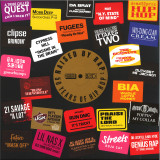
- A1: Dr. Jeckyll & Mr. Hyde - Genius Rap (7" Single Version)(1981)
- A2: Run Dmc - It's Tricky (1986)
- A3: Rob Base & Dj Ez Rock - It Takes Two (Radio Edit) (1988)
- A4: A Tribe Called Quest - Can I Kick It (7" Radio Edit) (1990)
- A5: Dj Jazzy Jeff & The Fresh Prince - Summertime (Single Edit)
- A6: Da Brat - Funkdafied (1994)
- B1: Cypress Hill - Insane In The Brain (1993)
- B2: Wu-Tang Clan - C.r.e.a.m. (Cash Rules Everything Around Me)
- B3: Mobb Deep - Shook Ones (Part 2) (1995)
- B4: Fugees - Ready Or Not (1996)
- B5: Nas - Ny State Of Mind (1996)
- B6: The Beatnuts - Watch Out Now (1999)
- C1: Outkast - Ms. Jackson (2000)
- C2: Clipse - Grindin' (2003)
- C3: Dead Prez - Hip-Hop (2000)
- C4: Three 6 Mafia - Poppin' My Collar (2005)
- C5: Too $Hort - Blow The Whistle (2006)
- C6: Ugk (Ft. Outkast) - Int'l Players Anthem (I Choose You)('07)
- D1: Travis Scott - Goosebumps (2016)
- D2: 21 Savage - A Lot (2018)
- D3: Doja Cat - Streets (2019)
- D4: Future - Mask Off (2017)
- D5: A$Ap Rocky (Ft. Skepta) - Praise The Lord (Da Shine) (2019)
- D6: Lis Nas X (Ft. Billy Ray Cyrus) - Old Town Road (Remix)(2019
- D7: Bia - Whole Lotta Money (2020)
Crackazat & Heist present: “Senses”. A stunning mini album that sees the artist deliver a heartwarming perspective on contemporary electronic music
On “Senses”, we see the pure talent of Crackazat come to life like never before. We’ve all danced to “Alfa” or his most recent hit on Heist “Demucha” and have heard his venture into the more poppy side of things with his 2022 album ‘Evergreen’ on Freerange. “Senses” however, is on another level. Crackazat takes you on a sonic journey exploring his musical personality with live keys, vocals, bass and production all coming from his studio in Uppsala, Sweden. The
jazzy horns that are featured throughout are recorded by Adeev and Ezra Potash, better known as the Potash twins. The duo took a sidestep from their recordings with John Legend, Robert Glasper and even Diplo to dive into this project with Crackazat and help him deliver arguably his best work to date.
The 6-track album starts off with the low-slung groove of ‘I need to know’. The whole atmosphere is warm, dreamy and seems to be written to lift your spirits, no matter where you are in life. Plucked strings, arpeggios and long horn notes give this song its energy, which is subtly supported by lo-fi drums and sparse bass licks.
“Do you think about me”, keeps the energy tight with a lovely drum groove and a sparse bass section. From the first note of the track, you get the feeling like the energy could change any moment. Halfway through this is exactly what happens, when uplifting keys and a buzzing lead take control of the track. The string arrangement is subtle enough to never overshadow the other instrumentation, but simply adds a beautiful layer to a track that’s already filled with
emotion. It’s all smiles when the energy of this track is set loose!
If “Do you think about me” is Crackazat in pop mode, “Freddie’s Groove” is Crackazat in full-on jazz mode. The nod to Freddie Hubbard is clear, and Crackazat cleverly takes ideas from both the jazz legend and his legendary French sampler, Pepe Bradock for this track. The horns are deep and moody, the groove is jazz-house at its best and Crackazat’s soft vocals have the perfect amount of fragility to fit the groove. The changeover into a stabby synth section
halfway through the track is a subtle reminder from the skilled producer that – even with all these musical elements – he can direct you to the front of the dancefloor with the twist of a note.
“Phantom” sees Crackazat move into a shuffling Latin-dance vibe. Here, the song reaches its full potential through the horn section, so it’s only fitting that this is the feature track for the Potash Twins. The Latin rhythms are lush, the key progression is on point and the energy on this track just keeps on going with layers and layers of horns, powerful vocal chops, and subtle but effective percussion changeovers.
“Endless life” is a track that feels like it’s building up momentum with every repetition. Whether it’s the broken beat groove, the offbeat keys or the sparse horn hits, chord hits or leads, there’s a certain energy in this track that takes a hold of you and simply doesn’t let go.
The outro “When we last met” is built around vibey drunk keys and a downtempo hip-hop groove. There’s a hint of old school D’angelo in this track and you can clearly hear the artist feels at ease with the path he’s taking the listener on. It’s a perfect ending to a record that showcases the beautiful world that Crackazat has crafted through his compositions and one thing is for sure: This is an album we will all keep coming back to for a long time to come.
Yours Sincerely,
Maarten & Lars
In the words of Bill Brewster - DJ History
‘At the turn of the 1990s, there were few more successful New York house producers than Victor Simonelli. Under a dizzying array of aliases – Solution, NY’s Finest, Groove Committee, Critical Rhythm and Cloud 9 being amongst the better-known – the Brooklyn-born DJ/producer delivered a string of underground club hits during the city’s early ’90s house boom.’
BTG presents “Victor Simonelli: The Early Years Vol 1” a collectors edition double Vinyl release - 2 X 12’s in each Vol
Launching the first Behind The Groove collectors edition vinyl series is New York’s finest Victor Simonelli with ‘The Early Years Vol 1 & 2’ double Vinyl releases. Featuring seminal house tracks such as Cloud 9’s ‘Do You Want Me’, Solution’s ‘Feel So Right’, Instant Exposure’s ‘Wanna Be With You’ and rare mixes of Raiana Page and EZ-AL, this collection brings together classic and rare Victor Simonelli cuts that reflect the early raw energy and buzz of the New York House scene. With ‘Vol 2” scheduled to follow shortly after, this is the most comprehensive collection of rare Simonelli cuts that firmly establishes his esteemed role in 90s House Music as well as introducing new fans to his inimitable sound.
Victor Simonelli is one of the early kings of NYC sampling In house music. The real deal - Victor danced at the legendary David Mancuso’s Loft sessions and developed a serious appreciation for good music. He interned for Arthur Baker at his renown Shakedown Studios (where Arthur worked with the iconic Afrika Bambatta on the seminal dance floor ’Planet Rock’ track) and went on to release hugely influential releases on seminal NYC labels 4th Floor and Nu Groove. Victor’s music was championed by the hugely celebrated iconic House Music DJ pioneers, Larry Levan and Tony Humphries at Paradise Garage & Zanzibar/WBLS/Kiss FM respectively.
Revered as a New York house heavyweight and prolific producer since the turn of the 1990s, Victor Simonelli grew up in Brooklyn, NYC, nurtured by a music loving family, with an avid record collecting father who also worked as a local party DJ. He took music lessons in piano, drums, guitar and bass, before discovering his first love, tuning into NY’s Radio Mix Shows on WBLS, WKTU and WRKS,98.7 Kiss FM) where he discovered the art of mixing and in his own words, ’I just simply got lost in the music’.
Graduating from NYC’s Centre For Media Arts, Victor got an internship in the legendary producer, Arthur Baker’s Shakedown Studios. Soon graduating to editing, mixing and then producing he worked for artists David Bowie, Quincy Jones, Debbie Harry, Sinead O’Connor and Talking Heads. Teaming up with fellow NYC producer Lenny Dee to become the Brooklyn Funk Essentials, they released records ‘Critical Rhythm’ and ‘Subliminal Aurra’ on 4th Floor before Victor went solo as Groove Committee releasing the classic ‘I Want You To Know’ on the legendary Nu Groove Records. Paradise Garage legend, Larry Levan broke ‘I Want You To Know’ rocking 2 copies on his last tour of Japan whilst King of NY House Music,Tony Humphries broke Victor’s new ‘Feels So Right’ across New York on his WBLS/Kiss FM Mastermix show and at his legendary Zanzibar club sessions. It was only a matter of time before Victor’s name became synonymous with quality House music ensuring a worldwide platform for his productions.
In the early 90s alongside his own productions, Victor Simonelli worked on high profile projects, including James Brown’s album, “Love Overdue” BeBe and CeCe Winans single featuring Mavis Staples “I’ll Take You There” and Quincy Jones’ “I’ll Be Good To You” featuring Chaka Khan and the legendary Ray Charles. Never straying too far from his clubland roots, Victor worked with Danny Tenaglia on his classic “The Harmonica Track”.
DJ gigs across the world started flooding in and Victor found himself recording for a dizzying array of labels including Tribal America, Sub-Urban, Bassline, King Street Sounds and Vibe, under a wide range of aliases. He also produced, wrote and remixed for artists such Nile Rodgers (Chic), Afrika Baambata, Hall & Oates, Frankie Knuckles, Kerri Chandler, Madonna and Michael Jackson. Famed for his own productions “It’s So Good” by Creative Force, “I Know A Place” as Sound Of One - the first release on Roger Sanchez One Records -, “Dirty Games” as well as the “Street Players Vol 1 EP”, Victor went on to set up Suburban Records with Tommy Musto and Bassline Records with two other partners. Notable releases on this label include “Do You Feel Me”, Connie Harvey’s gospel inspired, “Thank You Lord”, Urban Blues Project’s “Deliver Me”, Colonel Abrams “Not Gonna Let”, and Mone’s “Better Way”. Never ceasing to produce, DJ, run his own label and host radio shows like Groove Lift, Victor has worked with virtually every NYC producer and has nurtured a next generation talents including Angel Moraes, Jazz ‘N’ Groove, Urban Blues Project, Harlem Hustlers, Jay Jay and Julius Papp. Victor’s releases have also been used on M&S’s “Salsoul Nuggett” hit and Eddie Amador’s underground smash ‘House Music’.
In the late 90’s Victor launched his new Westside Productions, notable for the “Latin Impressions 1 & 2” releases, opened up a studio in Italy as he found himself increasingly working in Europe and now divides his time between New York and Italy. Suffice to say his unique sound of uplifting and spiritual music has kept him at the forefront of House Music and he is credited as one of its leading exponents with his string of classic releases and remixes.
Behind the Groove, branches out from its digital platform to embark on a programme of releases from the iconic pioneer producers of House Music. Esteemed for their high quality features and mixes that continue to explore, celebrate and venerate the contributions of highly respected, scene-shaping Labels, Artists, DJs and Special Events, BTG seeks to bring these talents and tales to the attention of the wider community. Unlocking the stories surrounding the pivotal roles they played and continue to play today in shaping the underground music scene we have come to know and love.
BTG presents “Victor Simonelli: The Early Years Vol 1” a collectors edition double Vinyl release, released on May 12th 2023. ‘Vol 2” follows on May 26th 2023 . These releases are the most comprehensive collection of rare Victor Simonelli cuts that firmly establish his esteemed role in 90s House Music and introduces new fans to his carefree sound.
From the minds that brought you ONE records, EON records, Seven Hills Records and Zeitnot comes VS.
EON vs Zeitnot sees Adam Shelton and Jordan Carnall curating a must have four tracker for DJ’s, electro and techno heads.
Jayson Wynters is back on EON with a hard-hitting track titled – Tourettes. A fast paced work-out from Jayson using deep Detroit style chords and heavy drum programming that will stand up against any electro / techno record. Essential peak time business. Zobol returns to EON with his latest offering – Scapegoat. Classic Zobol style electro with a killer acid lead, this will be his first vinyl release for the label.
Zeitnot presents two brand new cuts from Body Hammer’s Scott Fraser. The B1, under his NB_BLOOD alias, is the banging, machine driven electro track Infrared; a frenetic ten minute dance floor workout with killer drum programming and swirling synths. On the B2, Moving errs towards deeper territory with cavernous bass perfectly suited to the warm up.
On the A side with ‘Joy’, Bruise head in a jubilant direction. Chanting vocal chops ride along deep cut kick grooves and vivid piano riffs; modernising the classic house sound and forming a track that would as likely go off in a club in the UK as it would on the sun-soaked beaches of Ibiza.
In ‘The Theme’, Bruise switches things up and offers up a weighty, bass-driven progressive techno heater; bolstered with rattling break chops and polyrhythmic analogue synth arpeggios. As the track progresses, rip-roaring, squelching acid-lines are introduced at the crescendo; creating a versatile club record; primed and ready for the clubs reopening.
On this single ‘When Pianos Attack’, the vibe is instantly recognisable. Piano chords lead the charge of yet another dancefloor destroyer, with that signature sound of swinging beats, layered pianos, lashings of strings, and hosts of heavenly soulful choirs. Just close your eyes, look up, feel the rush, and dance.
+ Includes the unreleased vinyl exclusive ‘Akiba Choirs’. A new school dance anthem!
Huge support from: Annie Mac, Pete Tong, Laurent Garnier, Severino / Horse Meat Disco, Sasha, A Trak, Andhim, Spiller, Graeme Park, DJ EZ, John Digweed, Fatboy Slim, Sam Devine, Laurence Guy, Gilles Peterson, Fred Everything, Soul Clap, James Lavel, Basement Jaxx, Francois K, Luke Solomun.
'Joy'
- Pete Tong’s Essential New Tune + Tong asked Bruise to record a Joy themed Essential Mix for BBC Radio 1.
- Premiered by leading dance authority Mixmag.
- Featured in Defected / Faith’s behind the counter.
‘When Pianos Attack’
- Played by Blessed Madonna as an artist to watch 2022!
- Played at Warehouse Project by Graeme Park, and then again by Terry Farley.
- Magnetic Magazines Best of Month
Bruise appeared in Faith Magazines taking a full page for interview with a heavy focus on When Pianos Attack.
No Spiritual Surrender, AKA Spanish techno producers J.C. (Deeply Rooted/Tresor) and Kastil (Esperanza/Wilson Records) return for a four-track EP following their self-titled, debut album late last year.
A1 'Ez Du Axola' portrays rampant synth based percussion, dominating the mix while A2 'The Shakes' is a paranoid, DnB roller for the eyes down crew.
For more pleasant surprises, flip for the B1 'T.Y.S.R.' which is an abstract and disjointed collage of radio samples that massage the ears, before B2 'XXX' closes out with distorted kicks that have enough torque to shatter any system.
US Black Friday 2025 Release. There are very few albums in the psych/punk/hard rock/private presses strata that garner the sort of universal awe and accolades that Fraction’s almighty Moonblood LP does, and even fewer records in the world that could be dubbed ‘Christian Rock’ incur such fierce devotion. Indeed some records just meteorically lift themselves out any genre tag with brilliance and sheer defiance--and Moonblood is surely one of them. Based in LA, Fraction was a ragged collection of working-class musicians--the line-up was ringleader Jim Beach--vocals; Don Swanson--lead guitar, Curt Swanson--drums, Victor Hemme--bass, and Robert Meinel--rhythm guitar. Beach himself describes those early days: “The guys met through various acquaintances that we had in LA. All of us had been in bands before, but were seeking something with more teeth. We had a small studio in an industrial complex in North Hollywood and started practicing sometimes as early as 4:30 AM. We all had day jobs, so we did what we could.”
Amazingly the recording sessions for the album were recorded similarly on the fly, as Beach further states: “The Moonblood recording took place at Whitney’s Studio in Glendale, CA, early in 1971. On a strict budget, these songs were recorded in less than three hours—all of them “one takes.” We played, all 5 of us, simultaneously-- there were no studio effects, no overdubbing or any additional sound effects added. Basically what you hear is considered ‘old school’ recording.”
This workmanlike description in no way prepares one for the pure tortured genius the session wrought. Particularly noteworthy is Beach’s vocals—as commonly stated, the spirit of Jim Morrison is conjured in his deep baritone, which gives way to unparalleled pained howls, at times bathed in delay which trails into the abyss. Fascinatingly enough, Beach cites the much punker Love as his fave LA band over the Doors, and also gives influence-nods to proto-everything rockers The Yardbirds and to Dylan, whose dark word tapestries surely inspired Beach’s lyrics (though lines from The Doors’ “L’America” pop up on the LP) Whatever the case, the man clearly has a vision, as even the stark sleeve concept is Beach’s own. Equally as integral to the Fraction sound is lead guitarist Don Swanson—his blown-out fuzz riffs set a template for what is now commonly known as “stoner rock” or “acid punk,” and his solos consist of jagged, wah-wah-ed shards of notes, with his amplifier clearly pushed to the limit.
Beach says: “Don’s guitar was always my driving force and he did everything he could to keep it over the top. You’d never know that (his sound) was coming from an old, broken down Esquire. Don kept it alive!” The other members contributions shouldn’t be underappreciated though-- drummer Curt Swanson keeps things at a constant simmer, and then boils over when the whole band launches into snarling glory. The band and LP as a whole equals something indescribably intense from start to finish—comparisons to the Detroit late 60s high-energy bands like The Stooges and MC5 abound, as well as the sort of late 60s damaged spirit lurking in biker clubs and disgruntled Vietnam vets. The song cycle on side 1 of the LP in particular cuts to the emotional core, with severely charged dark lyrics like “Extend your thumbs and burn the darkness out of her.” Which brings us to the Christian aspect--it often can confuse listeners. The Fraction/Beach world of religion is complex and perhaps a bit pagan/sinister than most---fire and brimstone, temptation, and the truth-seeker being burned by this hell on earth—or perhaps as Beach himself best put it: “Speaking for myself, as a believer, it’s been a progressive experience since my childhood.
I think we’re all basically driven to live more than religion.” The album was pressed in a run of but a few hundred to little attention in the day, but now inferior bootlegs flood the marketplace, and originals of Moonblood command thousands of dollars. So enjoy this all-inclusive reissue, which also features for the first time on vinyl, 3 lost tracks-- like the more acoustic-minded “prisms” and “dawning light,” as well as the proto-metal choogle of “Intercessor’s Blues.”
Black Vinyl[14,24 €]
Tech-Nology was launched in 2003 specifically to make records with the artist Bjorn Svin. Bjorn was the first Danish artist who made underground crossover into commercial hit territory via "Mer Strom" - but still keeping respect in the "real" music world for his enthusiasm, non-compromising style, persona, and sweaty live performance skills - his musical understanding and need to explore new directions took the crowd on a personal musical journey from jazz and classical musicians to early electronic pioneers - but always in a tone of his own. Bjorn always felt a need to escape norms, to grow and not to repeat, but investigate and create. The first record on Tech-Nology was born under the alias - El Far: Couples of lonely dancers. "Bjorn is maybe the most talented electronic producer ever in Denmark" and he was celebrated as a wonder kid by the media back in the 90's. An insider with new knowledge of Bjorn told us: "Yeah I think its good music.. It's not for everyone I must add, but it's definitely quality music for those who dig this sound.. sometimes a bit too deep.. which kind of works against it, cause you really need to listen to it.. you cannot just skip through it, cause then you don't really grasp the soul of it.. so this is what makes it more difficult to sell - but if a guy like this was a bigger name he would sell much better.."
We love Bjorn and we agree - We have tried to sell Bjorn and his music for over 2 decades now - But you can't capture Bjorn, you can't own him - he is only making music for himself - and you can get on the ride if you want to, but don't expect all the rides to be fun - sometimes it hurts! Bjorn is difficult to sell, but we don't think Bjorn really would like to sell much better if he had the option to do a more commercial approach to his music - because Bjorn is about not selling out, he's a purist at heart, making music documents for the few. Bjorn is bigger than superficial success and streaming numbers. He made jingles for Nokia, toured and played Roskilde's main stage, the biggest Festival in Denmark, but he still doesn't care... and that is important if you want to make interesting music that last for the future. When Bjorn met Mester Jakobsen, label boss of Tech-Nology, he has been releasing on numerous underground labels, made the jump to a major label, and everything more or less turned out as a big disappointment, so Bjorn presented a completely experimental album to the Tech-Nology label under the moniker Prinz Ezo - The Body Offset. We loved it then - we still love it now - and a truly collectors item and a secret DJ tool.
Today, Bjorn is still breaking all habits and rules, still doing the same thing - just in new ways, but he has gained insight on another level, adding even more nuances and textures to his post-genre compositions.
Welcome to the second album by Prinz Ezo on Tech-Nology: KURIER Why Kurier? Because Bjorn left to explore the Berlin Underground, shortly after the first two releases on Tech-Nology - he left his roots to search for a bigger meaning, a bigger understanding, to compose real mature sounds and understanding his skills, at the point where you understand why you have to cross borders, still incognito, doing smuggler-sounds, always in transit - between cities, between cultures, between worlds, time and space. Not Restless nor rootless, just forever on the move, always discovering new landscapes! But now Bjorn is settling down - accordingly with the music - to find - not inner peace, but to be completely in balance with the music inside of him. Prinz Ezo is raw, narrative, minimalistic electronic storytelling that refuses to freeze. Tension builds and releases - feel the energy and the drama for the last 2 decades if you dare to take the journey?
Almost twenty years after the first Prinz Ezo album, it has now been possible to make the music for those who never arrived.
- Carrion Flowers
- Iron Moon
- Dragged Out
- Maw
- Grey Days
- After The Fall
- Crazy Love
- Simple Death
- Survive
- Color Of Blood
- The Abyss
INSOMNIA VINYL[42,23 €]
Classic black 2LP in gatefold! "Her darkest, heaviest and most personal album yet . . . a haunting, doomy exercise in loud-quiet dynamics." Rolling Stone Sleep paralysis plagues singer/songwriter Chelsea Wolfe, and that strange intersection of the conscious and the unconscious has inadvertently manifested itself within her work. Across the span of her first four albums, there is an underlying tension, a distorted and nebulous territory where dark shadows hover along the edges of the sublime and the graceful. But until now, Wolfe's trials and tribulations with the boundaries between dreams and reality have only been a subconscious influence on her work. With her fifth album, Abyss, she deliberately confronts those boundaries and crafts a score to that realm she describes as the "hazy afterlife. an inverted thunderstorm. the dark backward. the abyss of time." Chelsea Wolfe's material has always felt intensely private, from the almost voyeuristic bedroom-production aesthetic of her debut album The Grime and the Glow to the stark themes and atmospheres of 2013's Pain Is Beauty. "Abyss is meant to have the feeling of when you're dreaming, and you briefly wake up, but then fall back asleep into the same dream, diving quickly into your own subconscious," says Wolfe. To conjure this in-between world, Wolfe continued her ongoing collaboration with multi-instrumentalist and co-writer Ben Chisholm and drummer Dylan Fujioka, with Ezra Buchla brought on board to play viola and Mike Sullivan (Russian Circles) enlisted to contribute guitar. The ensemble traveled to Dallas, TX to record with producer John Congleton (Swans, St. Vincent). In the back of her mind burned the words of designer Yohji Yamamoto: "Perfection is ugly. Somewhere in the things humans make, I want to see scars, failure, disorder, distortion." The resulting eleven songs reflect that philosophy as they smoulder with human frailty, intimacy, quiet passion, anxiety, and deep longing. "Sleep and dream issues have followed me my whole life," remarks Wolfe as she revisits notes from the writing and recording sessions. In a way, these issues have become a part of Chelsea Wolfe's identity, for whom the notion of sleep as an escape has been subverted. Abyss captures this dichotomy, this battle between the soothing and the upsetting, and demonstrates why Chelsea Wolfe has become one of the most intriguing songwriters of the decade.
- A1: Intro
- A2: White Chalk
- A3: Excuse Me
- A4: Realms Of Junior M.a.f.i.a
- B1: Player’s Anthem
- B2: I Need You Tonight
- B3: Get Money
- C1: I’ve Been
- C2: Crazaay
- C3: Back Stabbers
- C4: Shot!
- D1: Lyrical Wizardry
- D2: Oh My Lord
- D3: Murder Onze
- D4: Outro
The 90s were all about Hip-Hop groups. Brooklyn’s Junior M.A.F.I.A., consisting of members Lil’ Kim, Lil’ Cease, Trife, Larceny, Nino Brown, Chico Del Vec, MC Klepto, Capone, and Bugsy, formed under the guidance of The Notorious B.I.G. after he released his classic debut album Ready To Die. At the end of the summer of 1995, Junior M.A.F.I.A. released their debut album Conspiracy on Big Beat Records featuring the lead single “Player’s Anthem” which featured Biggie and was produced by the late great DJ Clark Kent. Clark Kent produced three other songs including the second single “I Need You Tonight” featuring Biggie’s wife Faith Evans on the chorus. The third single, “Get Money”, another Biggie feature produced by EZ Elpee with it’s classic flip of the Roy Ayers Orduced Sylvia Striplin track “You Can’t Turn Me Away” was certified platinum. With eight members deep, it was difficult to stand out, but Lil’ Kim and Lil’ Cease would be the breakoutr stars and go on to release solo albums. The group disbanded after Notorious B.I.G. was murdered in 1997, but left behind songs that still hold up today and remain a big part of Biggie’s legacy, as well as producer DJ Clark Kent -RIP Out of print on vinyl since 2017, Get On Down is proud to present this 90s Hip-Hop classic as a limited edition reissue preesed on splatter colored vinyl and packaged in a gatefold jacket.
- A1: Future Sand (Feat. David Lackner)
- A2: Soft Power (Feat. David Lackner)
- A3: Pose Beams (Feat. Jefre Cantu-Ledesma, Robbie Lee)
- A4: Flutter Intensity (Feat. Russell Greenberg)
- B1: The Big Clock (Feat. David Moore, Britt Hewitt)
- B2: There Was Somebody There (Feat. David Moore, Jefre Cantu-Ledesma)
- B3: Get Some Rest (Feat. Mary Lattimore)
Ezra Feinberg's third album Soft Power sees the composer-guitarist enlist an impressive array of fellow musicians including Mary Lattimore, David Moore (Bing & Ruth), Jefre Cantu-Ledesma, Robbie Lee and share the life affirming lead single 'Future Sand'.
Defined by its abundance of melodies, repeating figures and ecstatic improvisations, Soft Power exudes an enlightened and transformative spirit to empower the listener. Feinberg, a practising psychoanalyst and former founding member of the San Francisco psychedelic collective Citay (Dead Oceans / Important Records) resides in the artistic enclave of upstate New York's Hudson River valley. Initial recordings emerged in the late summer of 2020, before added synthesis with collaborator John Thayer (Arp, Sunwatchers) during early 2021. Soft Power follows previous albums 'Recumbent Speech' (2020) and 'Pentimento and Others' (2018).
Feinberg artfully transcends the listener to an enriched place, his compositions distinguished by the deep humanity that lies at their core, plugging the listener into a state of wide eyed being, open and alive. Soft Power then is Ezra's own mantra but also one of power giving - a colourful catharsis translated into music.
Feinberg's music always speaks to the listener, but Soft Power, in whispering, speaks loudest.
"Much like everyday life, I wanted to convey these very plain, simple, tranquil, nearly quotidian aspects, but each piece contains this arc in which that form expands, is broken out of, so what starts out like a painting of flowers in a seaside motel turns into a riot of color and sound, or you feel slipped into a dream that feels like it could go on forever"
T H E E L E K T R O N I K Z O O
F E S T I VA L J O U R N E Y VA . E P
The new various artists compilation launches with a seismic opener from none other than Gregor Tresher, a true legend whose influence has shaped the sound of techno for decades—"Bonegrinder" is a raw, hypnotic masterstroke. Following is Marco Bailey, our iconic label founder and relentless force in the scene, delivering a bold Electro cut with "Arcane". The journey continues with deep melodic trips from Works of Intent & Voltaire and Tom Hades & Soren Aalberg, gritty Electro from Ian O’Donovan, raw techno heat from Eddie Merced, and ethereal Electronica by Alienna—each artist contributing their unique voice to this powerhouse compilation.
The Ibex Band, with Giovanni Rico and Selam Woldemariam at the creative helm, provided the musical backbone for legends like Aster Aweke, Girma Beyene, Tilahun Gessesse, Mulatu Astatke, and Mahmoud Ahmed, including the iconic album Ere Mela Mela, shaping modern Ethiopian music as we know it today. This 1976 album (Ge’ez Year 1968) played a pivotal role in that legacy and has now resurfaced to set the record straight.
There’s a tendency to talk about the seventies as a golden age of Ethiopian music. There are good reasons for that, and just as good reasons against it. However, the notion of a golden past privileges the role of Western explorers and suggests that the pinnacle of Ethiopia’s musical culture is something only a foreigner can appreciate and unearth. It downplays the complexities of Ethiopia’s culture and history, creating an artificial divide between then and now. And it underestimates the constantly evolving sound that has followed.
The legendary musical outfit The Ibex Band, later metamorphosed into The Roha Band, has played a central role in defining the sound of many of the greatest stars on the music scene of Ethiopia from the mid-seventies onwards–but their golden output has never really waned. The story of the origins of the band that provided the musical backbone for greats such as Aster Aweke, Girma Beyene, Tilahun Gessesse, backing the solo career of group member Mahmoud Ahmed as well as backing Mulatu Astatke and many others has yet to be properly told.
Two misconceptions plague the image of Ethiopian music, one is that the music is pure because it is, by some notion, unexploited, the other is that it is all traditional. To begin with, a combination of political changes between the late sixties and the mid-nineties created an environment where only the most dedicated and skilled musicians struggled on and pursued a musical career against fierce odds. The whole Ibex Band, with Giovanni Rico and Selam “Selamino” Seyoum Woldermarian at the creative helm, are arguably the origo of the vibrant scene in the mid-seventies, and the said pair are foremost responsible for not only navigating the band through troubled times, but also modernizing the 6/8 chickchicka rhythm to a contemporary form. Giovanni laid the rhythmic foundation with heavy looped basslines that reinvented traditional melodies as dance music, and with Selamino’s innovative guitar work they influenced scores of musicians from Abegaz Kibrework Shiota to Henock Temesgen. Even Giovanni’s Fender bass and Selamino’s Gibson guitar inspired younger musicians in their choice of instruments. Not only in choice of instruments but also in sound–even as the digital revolution hit Ethiopian music, a lot of popular music still took its cue from the masters from Ibex and Roha.
Ibex emerged out of the ashes of the sixties group the Soul Echos band, adding Giovanni and Selamino to their ranks and taking their cues from a slew of influences, such as Motown and The Beatles, fused with traditional music. A tighter-knit unit than most bands at the time – Ibex has remained six to seven members throughout their whole career, compared to many bands that were as large as fifteen or sixteen men strong when Ibex set out. Their playing has been viciously focused, economical yet heavy. Just a year before the recording sessions of the album in your hands, Giovanni and Selamino made a contribution to the popular musical lexicon of Ethiopia that was simply defining the popular sound: their arrangement and recording of bandmate Mahmoud Ahmed’s solo effort and real commercial breakthrough tune and eponymous album, Ere Mela Mela, from 1975.
Selamino has never limited himself to being an adroit lead guitarist, but has always been a scholar of history, and as such he has probably contributed as much to modern Ethiopian music with his guitar playing and compositions as with a deepened understanding of modern or contemporary – Zemenawi – Ethiopian music. Selamino’s contributions serve as a metaphor for those of the whole band, at one and the same time creating and defining a new, danceable and updated sound anchored in Giovanni’s bass, whilst also elevating the broader scene through their support for others on the scene and on top of that, increasing the understanding of the music.
There is an understandable desire to romanticize the musical heyday Ibex and Roha were at the forefront of, because so much of the output is sorrowfully hard to come by. Ibex creativity was nothing short of ridiculously fierce compared to many of their Western contemporaries. Based on their sheer recorded output alone they could have usurped the title “hardest working in show business” from James Brown, recording more than 250 albums or 2500 songs in the seventies and eighties. Some only surface as cassettes today, others were never given full LP release, and some are simply impossible to find today. In the light of that, it’s nothing short of a miracle that the recording Stereo Instrumental Music from 1976 (Ge’ez Year 1968) has resurfaced. Unearthed in perfect condition on a chrome cassette, this is musical history comes alive–to set the future straight. Stereo Instrumental Music was recorded in collaboration with Karl-Gustav Lundgren, a Swedish national working for the Radio Voice of the Gospel. It took two sessions at the Ras Hotel ballroom in Addis Ababa. The Ibex Band was the first band in Ethiopia to employ a four-track recorder for their recording (the first available in the country, lent by Karl-Gustav). Later the same week, Giovanni and Selamino realized that, lengthwise, the recorded material fell short of what they wished for, so they recorded four more tracks in one more session on a single-track recorder. The Ras Hotel and Ghion Hotel, where the Ibex Band held musical residencies were to Ethiopia in general and Addis Ababa in particular what Motown was to the USA and Detroit a few years earlier – a hotbed of musical creativity and showmanship.
The most astonishing thing about Ethiopian music of the last half century is how tradition and modernity are intertwined. Because of this feature, it’s kind of hard to tell when there ever was or when we are in a “golden age”. So much of music from the past has been criminally neglected, but because of the hardships in the past, it would be an oversimplification to say that said past was a golden age. Probably, the golden age is what we are approaching, because for the first time both the past and future are accessible, and the monumental contributions from before can lay a firm foundation for a thriving music scene today. The Ibex Band stands firmly in the past, present and the future. That, if anything, is golden.
The detailed history of Stereo Instrumental Music is in many ways unique. To begin with, it couldn’t have been recorded earlier (there were no four-track recorders available) and it really couldn’t have been recorded afterwards either, at least not in the years directly following, because of the toll the musical scene took from the unfavorable political climate that followed when the nascent Derg regime and rival groups tried to assert themselves, the musical equipment lent from The Voice of Gospel Radio simply disappeared from Ethiopia when the radio station folded in 1977. Karl-Gustav Lundgren,
the Swedish foreign national who assisted during the recording, worked with the Ethiopian Evangelical Church Mekane Yesus at the time, recalls how they only had about fifteen minutes to get the microphones in place for the recording as to not alert neither the management at Ras Hotel nor the authorities and most importantly, to complete the recording before the curfew came into effect at midnight. In leaping to the opportunity to use previously unavailable equipment to push their sound forward and improvising to meet the logistical challenges, the Ibex Band displayed the very avant-gardism and adaptability that explains their longevity as a band through the years. The recording of Stereo Instrumental Music is from a given time in history, but it sounds as beyond time.
Much of the energy that burst out of the scene that Stereo Instrumental Music came out of dissipated or got sidetracked during the societal changes Ethiopia went through in the 1970s and 80s. Whilst leaders might have professed to be revolutionary, the work ethic of the Ibex Band can truly be described as that. They never called it quits, but adapted, toured extensively abroad in Africa, Europe, and the Middle East, and found ways to work even in the face of the curfew that curtailed a lot of musical life. They even played major arenas in the nineteen eighties, despite said curfew and restrictions. The whole extent of their legacy has never been told, but their music speaks louder than words, so therefore… tune in to the Ibex Band’s Stereo Instrumental Music.
Nothing” is Swedish award winning reedplayer Thomas Backmans third album. International press have earlier described his music as ”Crime Jazz” and ”slow burn yearning widescreen chamber pop”. On this album the influences of chamber music might be a little bit more prominent, but still on a deep foundation of jazz, you can hear artpop and hiphop-influences. Aside from Backmans own band, the album delivers performances from stringquartet, choir and Baltimore-rapper Eze Jackson.
”Nothing” gives you an unpredictable journey from the first to the last note.
Stockholm-based reed player Thomas Backman have with his 2 previous soloalbums explored the boundaries of jazz. The seamless mix of bebop, freejazz, chamber music, hiphop, shoegaze etc have taken him and his band to important venues in Europe and the US. The previous album ”When Light Is Put Away” was awarded ”Best Jazz” at the Swedish Manifestawards in 2022 as well as a second position in the critics poll of worlds oldest jazz magazine ”Orkesterjournalens” prestigious ”Golden Record” the same year.
"This is the time that we, who have benefitted from the Last Poets shouldbe able to say, 'it's the Last Poets. It's them we should be honouring, because we did not honour them for so many years_"
KRS One wasn't just addressing the hip hop fraternity when he uttered
those words by way of introducing the video for Invocation - a poem
written thirty years ago, around the time of the Last Poets' last significant comeback. He was speaking to everyone who's been affected by the word, sound and power issuing from the most revolutionary poetry ever witnessed, and that the Last Poets had introduced to the world outside of Harlem at the dawn of the seventies.
In 2018 the two remaining Last Poets, Abiodun Oyewole and Umar Bin
Hassan, embarked on another memorable return with an album -
Understand What Black Is - that earned favourable comparison with theirseminal works of the past, whilst showcasing their undimmed passion andlyrical brilliance in an entirely new setting - that of reggae music. Trackslike Rain Of Terror ("America is a terrorist") and How Many Bullets demonstrated that they'd lost none of their fire or anger, and their essential raison d'etre remained the same.
"The Last Poets' mission was to pull the people out of the rubble o f their lives," wrote their biographer Kim Green. "They knew, deep down that poetry could save the people - that if black people could see and hear themselves and their struggles through the spoken word, they would be moved to change."
Several years later and the follow-up is now with us. The project started when Tony Allen, the Nigerian master drummer whose unique polyrhythms had driven much of Fela Kuti's best work, dropped by Prince Fatty's Brighton studio and laid down a selection of drum patterns to die for. That was back in 2019, but then the pandemic struck. Once it had passed, the label booked a studio in Brooklyn, where the two Poets voiced four tracks apiece and breathed fresh energy, fire and outrage into some of the most enduring landmarks of their career. Abiodun, who was one of the original Last Poets who'd gathered in East Harlem's Mount Morris Park to celebrate Malcolm X's birthday in May 1968, chose four poems that first appeared on the group's 1970 debut album, called simply The Last Poets. He'd written When The Revolution Comes aged twenty, whilst living in Jamaica, Queens. "We were getting ready for a revolution," he told Green. "There wasn't any question about whether there was going to be one or not. The truth was many of us still saw ourselves as "niggers" and slaves. This was a mindset that had to change if there was ever to be Black Power." He and writer Amiri Baraka were deep in conversation one day when Baraka became distracted by a pretty girl walking by. "You're a gash man," Abiodun told him. The poem inspired by that incident, Gash Man, is revisited on the new album, and exposes the heartless nature of sexual acts shorn of intimacy or affection. "Instead of the vagina being the entrance to heaven," he says, "it too often becomes a gash, an injury, a wound_" Two Little Boys meanwhile, was inspired after seeing two young boys aged around 11 or 12 "stuffing chicken and cornbread down their tasteless mouths, trying to revive shrinking lungs and a wasted mind." They'd walked into Sylvia's soul food restaurant in Harlem, ordered big meals, then bolted them down and run out the door. No one chased after them, knowing that they probably hadn't eaten in days. Fifty years later and children are still going hungry in major cities across America and elsewhere. Abiodun's poem hasn't lost any relevance at all, and neither has New York, New York, The Big Apple. "Although this was written in 1968, New York hasn't changed a bit," he admits, except "today, people just mistake her sickness for fashion." Umar is originally from Akron, Ohio, but had arrived in Harlem in early 1969 after seeing Abiodun and the other Last Poets at a Black Arts Festival in Cleveland. That's where he first witnessed what Amiri Baraka once called "the rhythmic animation of word, poem, image as word- music" - a creative force that redefined the concept of performance poetry and stripped it bare until it became a howl of rage, hurt and anger, saved from destruction by mockery and love for humanity. When Umar's father, who was a musician, was jailed for armed robbery he took to the streets from an early age where he shined shoes and raised whatever money he could to help feed his eight brothers and sisters. By the time he saw the Last Poets he'd joined the Black United Front and was ready to join the struggle. Once in Harlem, Abiodun asked him what he'd learnt in the few weeks since he'd got there. "Niggers are scared of revolution," Umar replied. "Write it down" urged Abiodun. That poem still gives off searing heat more than fifty years later. In Umar's own words, "it became a prayer, a call to arms, a spiritual pond to bathe and cleanse in because niggers are not just vile and disgusting and shiftless. Niggers are human beings lost in someone else's system of values and morals." And there you have it. It's not just race or religion that hold us back, but an economic system that keeps millions in poverty and living in fear - a system born from political choice and that's now become so entrenched, so bloated on its own success that it's put mankind in mortal danger. It was many black people's acceptance of the status quo that inspired Just Because, which like Niggers Are Scared Of Revolution, was included on that seminal first album. Along with their revolutionary rhetoric, it was the Last Poets' use of the "n word" that proved so shocking, but it would be wrong to suggest that they reclaimed it, since it never belonged to black people in the first place. There's never any hiding place when it comes to the Last Poets. They use words like weapons, and that force all who listen to decide who they are and where they stand. Umar's two remaining tracks find him revisiting poems first unleashed on the Poets' second album This Is Madness! Abiodun had left for North Carolina by then where he became more deeply enmeshed in revolutionary activities and spent almost four years in jail for armed robbery after attempting to seize funds related to the Klu Klux Klan. Meanwhile, the 21 year old Umar was squatting in Brooklyn and had developed close ties with the Dar-ul Islam Movement. A longing for purity and time-honoured spiritual values underpins Related to What, whilst This Is Madness is a call for freedom "by any means necessary," and that paints a feverish landscape peopled by prominent black leaders but that quickly descends into chaos. "All my dreams have been turned into psychedelic nightmares," he wails, over a groove now powered by Tony Allen's ferocious drumming. Those sessions lasted just two days, and we can only imagine the atmosphere in that room as the hip hop godfathers exchanged the conga drums of Harlem for the explosive sounds of authentic Afrobeat. Once they'd finished, the recordings and momentum returned to Prince Fatty's studio, since relocated from Brighton to SE London. This was stage three of the project, and who better to fill out the rhythm tracks than two key musicians from Seun Anikulapo Kuti's band Egypt 80? Enter guitarist Akinola Adio Oyebola and bassist Kunle Justice, who upon hearing Allen's trademark grooves exclaimed, "oh, the Father_ we are home!" Such joy and enthusiasm resulted in the perfect fusion of Nigerian Afrobeat and revolutionary poetry, but the vision for the album wasn't yet complete. He wanted to create a new kind of soundscape - one that reunited the Poets with the progressive jazz movement they'd once shared with musicians like Sun Ra and Pharoah Sanders. It was at that point they recruited exciting jazz talents based in the UK like Joe Armon Jones from Mercury Prize winners Ezra Collective, also widely acclaimed producer/remixer and keyboard player Kaidi Tatham, who's been likened to Herbie Hancock, and British jazz legend Courtney Pine, whose genius on the saxophone and influence on the UK's now vibrant jazz scene is beyond question. The instrumental tracks on Africanism are in many ways as revelatory and exciting as the Last Poets' own. It's important to remember that the kaleidoscope of styles and influences we're presented with here aren't the result of sampling but were played "live" by musicians responding to sounds made by other musicians. That's where the magic comes from, aided by Prince Fatty's peerless mixing which allows us to hear everything with such clarity. Music fans today have grown accustomed to listening to all kinds of different genres. Their tastes have never been so broad or all- encompassing, and so the music on this new Last Poets' album is as groundbreaking as their lyrics, and perfectly suited to the era that we're now living in. John Masouri
- 1: Dick Rabbit "You Come On Like A Train" 968 - Bay City, Michigan
- 2: Blizzard "Be Myself" 1974 - Oklahoma City, Oklahoma
- 3: Fox "Sun City - Part Ii" 1969 - San Francisco, California
- 4: Sweet Wine "Bringing Me Back Home" 1970 - Virginia, Minnesota
- 5: Enoch Smoky "Roll Over Beethoven" 1969 - Iowa City, Iowa
- 1: Flight "Get You" 974 - Elyria, Ohio
- 2: Quick Fox "Indian" 1978 - Berkshire, Massachusetts
- 3: Bonjour Aviators "The Fury In Your Eyes" 1976 - Boston, Massachusetts
- 4: Cedric "I'm Leavin'" 1970 - Tulsa, Oklahoma
- 5: Zane "Step Aside" 1976 - Malm?, Sweden
There is NO LIGHT at the end of this tunnel! BROWN ACID: The Nineteenth Trip fires ten more savage nails deep into the coffin of ‘60s psychedelic idealism. This series is THE premier top dog journey into the rarest and most wasted early local eruptions of heavy rock, unleashed at a time when harsh reality, human nature and disillusionment drove prevailing underground rock glimpses of a ‘better’ world into ever darker selfabsorbed comedowns. Mind expanding ’60s love energies transform into toxic aggression right before your ears! The great thing is that these moves are totally justified, ‘we are all one’ is cosmically good in theory but ‘get it while you can’ ends up perhaps better advice in the light of human history. Both of those angles of awareness can coexist, some of these bands deliver unrelenting sideways positive energy but they aren’t over-thinking it, they are youthfully driven by hunger for life and satisfying the undeniable urges their DNA thrusts upon them. Sonically, the results in the BROWN ACID series never fail to breathe hot and heavy, the guitars kill it every time, the variety of approaches these tracks take keep the scenery shifting into new places. The key element that makes this stuff so potent is that THEY (the bands) are in control. Captured genuinely with no compromise, right out of the gate. No doubt they had ambition with high hopes for the future when they laid down these primal efforts, the fact that they captured their energy so vividly at a moment in time when the only direction imaginable was UP creates a hard hitting life affirming subtext to the proceedings. That is the core energy of blues and rock and roll, dealing with the struggles of existence by flipping a gigantic ‘what the fuck’ high energy bird right in the face of the moronic defective reality these bands were born into. If you take this stuff too ‘seriously’ you are utterly missing the point, it is beyond analysis, it is life itself! No amount of thinking will get you there quicker! BROWN ACID: The Nineteenth Trip is scary... the bottomless pit of deranged vintage heavy rock the series presents continually expands over time... one deadly dose too many and you might be trapped in the bad trip loop forever... enjoy it or lose your mind!
*RED VINYL*Of the plethora of touted "private press hard rock monsters'' out there, very few live up to the swaggering riff-fury of west coast blasters ODA. Commonly known as the "Black Album," the first clobbering platter by the quartet was released on their own tiny Loud Phonograph Records imprint and now commands large sums—but is actually worth the heavy hype. The band naturally centered around Randy Oda, a multi-talented ax shredder and keyboardist, and the lineup was filled out by his brother Kevin on drum assault, Art Pantoja on lead bellows and rhythm guitar, and galloping bassist Kyle Schneider. The Oda brothers were born in Alameda County, California, attending Kennedy High School in Richmond, and started the band while still teenagers at the beginning of the '70s. ODA was influenced by hard UK rockers like Deep Purple, Zep, Free, and the Who, and they gigged all over the Bay Area, with Randy garnering comparisons to Jeff Beck's molten six-string mastery. This 1971 self-titled LP (aka the Black Album) fully displays their blistering talents, but despite some local airplay on KSAN radio, the band packed it in by '73. This would not be the end of the Oda story, as Randy joined CCR's Tom Fogerty in the outfit Ruby afterwards, laying down his licks on two LPs that flirted with the mainstream, while staying true to his highly electric guitar muse. In 1983, ODA actually reformed for one more LP on Loud Phonograph, entitled Power Of Love. The comeback album delves a little deeper into radio friendly power pop, which makes sense, as in '82 Oda co-wrote "Think I'm In Love" with Eddie Money (which, let's face it, is Money's best song by like a mile). Randy would also collaborate with Fogerty as a duo, and the posthumous Sidekicks album (released after Fogerty passed) listed the clearly-integral Randy Oda as "arranger, composer, guitar (acoustic), guitar (electric), keyboards, primary artist, and producer.” In the 2000s, Randy would start another band with his brother called OPO which means "to lay a foundation" in Hawaiian, and ODA would reform to play a benefit in 2015 along with other obscure and heady/heavy Bay Area rockers like Savage Resurrection and Country Weather (some live footage of the event shows the band still rocking hard). At last, Riding Easy is legitimately reissuing ODA's first smoking, gargantuan LP with bonus tracks, so crank this one up in the '70s Camaro with the windows open, and some dirt weed joints a-blazin'. #
Collaboration between Kilbey (The Church) and Kearns (Cactus World News), compiling before unfinished recordigs from late 1990s up to 2016. Initially issued as a 500 run CD available by mail order only in 2016, this is the very first time being released through global distribution, packaged in deluxe gatefold sleeve and containing two unreleased bonus tracks. Kilbey's The Church have returned to a high-profile status with both current albums 'The Hypnogogue' & "Ezra..." being critically acclaimed globally. The two new bonus songs are tracks 11 and 12, which were recorded in 2022. Kilbey and Kearns dive deep into atmospheric soundscapes and vocals and mysterious, yet revealing lyrics as Speed of the Stars. Easy Action will be issuing Steve Kilbey's solo and collaboration albums over the coming years.
Das neue Studioalbum einer der größten Rockbands aller Zeiten -
Deep Purple!
Erneut produziert vom legendären Bob Ezrin – für den klassischen
DeepɞPurpleɞSound!
Das neue Studioalbum einer der größten Rockbands aller Zeiten - Deep Purple!
Erneut produziert vom legendären Bob Ezrin – für den klassischen
DeepɞPurpleɞSound!
The limited edition Deep Purple “Pictures Of You” 12” Maxi Single contains the 2024 Deep Purple songs ‘Pictures Of You’ and ‘Portable Door’ as well as two unreleased live recordings recorded live in Milan, Italy in 2022.
'=1' is the highly anticipated new album from one of the greatest rock bands of all time, Deep Purple. Produced by the legendary Bob Ezrin, this album captures the band's seminal classic sound without relying on nostalgia, embodying the essence and attitude of their 1970s incarnation possibly more than any other recent album. The enigmatic title '=1' symbolizes the idea that in an increasingly complex world, everything can eventually be reduced to a single, unified essence. Everything adds up to one. With three consecutive No.1 albums behind them and a new energy driving them forward, '=1' represents Deep Purple at their peak.
- A1: Oracle (Feat. Aja Monet)
- A2: Respek (Feat. Topaz Jones & Ezri)
- A3: Weary (Feat. Mick Jenkins & Jesse Boykins Iii)
- A4: H0N3Y
- A5: Heal (Feat. Akthesavior & Deniro Farrar)
- A6: Ilikeu (Feat. Duckwrth)
- B1: U_Want (Feat. Kucka)
- B2: Blessd (Feat. Deem Spencer)
- B3: Rise (Feat. Rozet)
- B4: Zoom (Feat. Tinashe)
- B5: Kill_U (Feat. Tanerélle)
- B6: Godown (Feat. Jesse Boykins Iii)
Travis Stewarts Reise zur Entstehung von „3FOR82“ begann passenderweise am 4. März. An seinem 41. Geburtstag, am 4. März letzten Jahres, wagte er sich in den Joshua Tree National Park in Kalifornien, um Klarheit und Inspiration für sein nunmehr elftes Studioalbum als Machinedrum zu finden. Zwölf hochintensive, nachdenkliche Tracks, die die Nadel zwischen seinem vergangenen, gegenwärtigen und zukünftigen Ich spannen.
Angesichts der Tatsache, dass Ninja Tune eines der Lieblingslabels des jungen Travis Stewart war, spricht dies für ein Mantra, das die Platte leitet: Nostalgie durch eine zeitgenössische Linse zu betrachten. In den stillen Weiten des Joshua Tree durchforstete Machinedrum alte Festplatten mit seinen Beats aus den späten 90er Jahren: Viele von ihnen wurden mit ‚Impulse Tracker‘ erstellt, einem groben Freeware-Programm, das fast ein Vierteljahrhundert lang unangetastet blieb. Nachdem er einen DOS-Emulator gefunden hatte, auf dem ‚Impulse Tracker‘ lief, nahm er sich selbst auf, wie er diese Beats spielte, um „3FOR82“ zu bauen: Sample für Sample erstellte er originale Sound-Datenbanken, die in eine eigene Bibliothek eingespeist werden konnten und „3FOR82“ einen unverwechselbaren Klang verliehen. Ausgewählte Zitate werden als Monologe oder Samples in die Musik eingeflochten - der Opener von „3FOR82“, „Oracle“, beginnt mit Reflexionen von Aja Monet über das Tanzen allein. Auf der Leadsingle, „ZOOM“ erzählt Tinashé von jugendlicher Lust auf der Tanzfläche; an einer Stelle in „KILL_U“ erinnert Tanerélle mit ihren beruhigenden Tönen daran, dass man manchmal „verloren ist und dann wieder gefunden wird, und dass man so viel erreichen kann.“; in „U_WANT“ sagt sich KUCKA selbst, dass „es bessere Tage geben wird“, während ROZET in „RISE“ riffet, dass sie „vom Boden in den Himmel wachsen wird.“. Die Wirkung, die das Thema auf „3FOR82“ hat, ist zart und eindringlich und verbindet diese Stränge von R&B, Pop, Jazz und Drum & Bass miteinander.
- A1: Chahe Mujhe Koi Junglee Kahen. Mohammedd Rafi (From Junglee, 1961)
- A2: Aye Naujawan Sab Kuch Yahan. Asha Bhosle (From Apradh, 1972)
- A3: Doob Doob Jata Hoon. Kishore Kumar (From Blackmail, 1973)
- A4: Mera Naam Chin Chin Chu. Geeta Dutt (From Howrah Bridge, 1958)
- A5: Nari Kathai. Written By Ilaiyaraaja, Vocals By Kamal Haasan, Sridevi (From Moonram Pirai, 1982)
- A6: Pretty Pretty Priya. Kalyanji & Anandji Featuring G. Anand, Prayag, Jerry Adolf & Chorus (From Priya, 1970)
- B1: Intinti Ramayanam. P. Susheela, S.p. Balasubrahmanyam (From Intinti Raamayanam, 1978)
- B2: Aao Twist Karein. Manna Dey & Chorus (From Bhoot Bungla, 1965)
- B3: Dhak Dhak Dhak. Lata Mangeshkar, Kishore Kumar (From Haathi Mere Saathi, 1971)
- B4: Bombshell Baby Of Bombay. Shankar & Jaikishan Featuring Iqbal Singh (From Ek Phool Char Kante, 1960)
- B5: Mehbooba Mehbooba. R. D. Burman (From Sholay, 1984)
- B6: Ezhupaalam Kadamnu. S. Janaki & Brahmanandan (From Aazhi, 1978)
A collection of mind blowing songs from Hindi films 1958-1984. 12 musical gems from the Bollywood vaults with a wide variety of styles thrown in the mix, from the classic to the rare, a must! An astonishing overview of the magnificent musical talents populating Bollywood films. With a predilection for movies with a strong musical backbone where songs and musical numbers play a pivotal role, the Hindi cinema boom gave birth to a strong and creative music industry where composers, musicians, musical directors, conductors, producers, singing actors, and playback singers (singers who provide vocals for the musical parts of roles played by actors or actresses) found a perfect place to develop their careers. A sample of those incredible talents is included in this compilation, the ideal point to start digging deeper into the lush garden of musical delights that is Bollywood
The 3rd installment of Razor-N-Tape's Family Affair series is back and hotter than ever! Now an annual end-of-year tradition, Family Affair Vol. 3 features a heavy hitting 5 track sampler of standout tracks from the full compilation.
The A side features two spanking new remixes of RNT material — Ezel’s dub of Cor.ece & JKriv’s Possibly Impossible takes the track into classic & soulful house territory, while Bruce Leroys flip fellow brasilian artist Guinu’s Amanha into a mid-tempo afro stomper.
The B side starts with boogie-funk bomb Better Than Her by JKriv ft. Saucy Lady & Tortured Soul on vocals. Kim Ahn delivers the deep & sensual vibrations of In The Stars, and Cody Currie rounds out the EP with Ghost, a funk live instrumentation heavy UK broken beat jazz-dance serving.
With gorgeous art lovingly designed by The Myno, in true RNT style the collection is a lovely listen from beginning to end, and naturally boasts some serious dance floor heat!
Yuval Havkin, also known as Rejoicer, is one of the foremost exponents of downtempo music, inspired by the fusion of jazz and hip-hop. His new album thus draws on his early influences while exploring the world of calm, melodic electronic music that borders on ambient.
This Is Reasonable has a chill-out feel to it, a record filled with melodies and atmospheres that, throughout its eleven tracks, conveys a sense of calm and floating, akin to ambient music. Stripped of the clichés of the genre, the album is built around subtle melodies and rich harmonies from keyboards and synths, which borrow as much from the spirit of jazz as from the inventions of electronica, whilst being supported by a gentle groove. This equilibrium is perfectly captured by Rejoicer's moniker, a term that evokes both the idleness of artificial paradises and a soft, caring form of spirituality.
Musical path
Yuval Havkin was born in Israel in 1985, and grew up in England before returning to his homeland. He began studying classical piano as a child, but was put off by such conservative teaching and turned to hip-hop and beatmaking in his teens. Throughout the 2000s, he learned his skills "on the job", working with musicians he met in Tel Aviv, a local scene that nurtured a sense of community and emulation. Back then, he was particularly impressed by the grooves and electronic inventions of Detroit producer Dabrye, who had a revelatory effect on him, before he discovered legendary musicians Madlib and Jay Dee aka J Dilla, who led him down the path of beatmaking.
Yuval Havkin's music career got off to a more serious start in the late 2000s with the creation of his own label, Raw Tapes, both based in Tel Aviv. Blending jazz, funk and hip hop, whilst still embracing pop influences, the label's productions showcased the richness of the new Israeli scene combining cool, elegance, playfulness, and a degree of research and inventiveness, thanks to the talent of artists and bands such as Duo Brothers, Maya Dunietz, iogi, Nitai Hershkovits, the Buttering Trio and Rejoicer, the artist's most personal project.
In 2018, Rejoicer's warm and engaging sounds caught the attention of the prestigious Los Angeles label Stones Throw, renowned for having signed his idols Madlib and J Dilla, not to mention Aloe Blacc and Peanut Butter Wolf (its founder). Two albums followed, Energy Dreams (2018) and Spiritual Sleaze (2020), both of which demonstrate his instrumental mastery, jazz culture and lush orchestrations. Both albums are on a par with more renown sampling prodigies of the beat scene, and gave him his first international recognition.
Now based between Los Angeles and Savyon, near Tel Aviv, this hyperactive and instinctive artist simultaneously pursues a career as a composer, musician and label owner, member of numerous bands and collective projects (Apifera, PlayDead, collaborations with Jimi Prasad and Avishai Cohen) while also offering his studios and production skills to other artists.
“Fela Kuti meets Aphex Twin”
This new Rejoicer album, which follows three earlier jazz-tinged records, marks a new and more personal musical direction for an artist who previously favored group work and collaborations. Following his meeting with Mathias Duchemin, founder of the Circus Company record label and a keen enthusiast of the new Israeli jazz scene, Yuval chose to delve into a more electronic and sequenced style of music, playing Prophet 6 and 8 synths, a Juno 60, a Minimoog and his Fender Rhodes keyboard, in contrast with the more organic sounds of his previous albums.
While a few tracks on this new album may sound like a laid-back version of some of the Warp label's early electronic classics by Aphex Twin or Boards of Canada, Yuval Havkin claims to have also been inspired by the great Fela Kuti, particularly in his search for harmonies between bass, keyboards and percussion, and by his elder trumpet-playing friend Avishai Cohen, a musician he particularly admires.
Beyond these various influences, This Is Reasonable is an album of compelling and bewitching melodies. The moods, peacefulness and sheer beauty of This Is Reasonable are, indeed, quite paradoxical, in stark contrast to the country's tragedies (the title explicitly refers to recent political disputes in Israel) and the war currently raging less than a hundred miles from his studio. A paradox fully embraced by the artist, who views his music as a response to the violence of our times.
Early Moods’ sophomore album A Sinner’s Past is the ultimate dosage of classic early 70s proto-metal, 90s grunge riffing and timeless songwriting delivered with an explosive youthful energy. The Los Angeles area quartet burst onto the scene fully formed with a sound that somehow simultaneously merged gritty underground Street Doom with slick “big box” Heavy Metal melodies on their self-titled RidingEasy debut album in 2022. And it’s the band’s highly skilled musicianship paired with exquisite aesthetic taste — in addition to their killer live show — that has made them an immediate popular favorite. A Sinner’s Past takes those elements several steps higher with a nod to Soundgarden’s huge sonic depth, the low-mid fuzz drenched tones of Sabotage and classic 70s melodies and structures of Ulli Roth-era Scorpions. The latter in particular inspiring the album’s intricate tonal shifts and shimmering twin leads. “I’m very proud of these songs,” says guitarist Eddie Andrade. “We did a lot of different things, took a lot of chances and show a lot of growth, and I think people will pick up on it. I was trying to use more open chords, not the typical styles. We came off touring with Candlemass and Pentagram, sharing those shows with our heroes really pumped us up. We went into the studio just hungry to record.” The album was recorded near the band’s home base in Pico Rivera, CA by Allen Falcon of Birdcage Studios, who also mixed their debut album. “He’s a good friend of the band and we wanted to be more comfortable, in a relaxed environment for this,” Andrade says. “He had a lot of input and his ideas made a lot of impact on this recording.” The band started recording in May 2023, then worked on the album on and off for 3 months between tours, which also lends to its very refined sound. Early Moods was founded in 2015 by Andrade and vocalist/keyboardist Alberto Alcaraz after a few years of playing in thrash and death metal projects before the two realized that the classic doom that they’d grown up with was what they really wanted to explore. Going through a few lineup changes while delving deeper into the diverging influences that were calling, Early Moods arrived at the sound and lineup that grew their fanbase locally. The band released their debut EP Spellbound in 2020 on German label Dying Victim Productions, followed by their self-titled debut full length on RidingEasy Records in 2023. Early Moods is Oscar Hernandez on lead guitar, Chris Flores on drums, Elix Felciano on bass, Alcaraz on vocals/synth and Andrade on guitar.
- A1: Time Continuum (Intro) 0 58
- A2: Knowledge Of Self 2 57
- A3: Keep Your Kids In School 1 49
- A4: Wire Fraud 5 04
- A5: Take Me Back 3 47
- A6: Player's Groove 2 13
- A7: Sunday Morning Dj 1 51
- B1: Ezekial's Vistion (Interlude) 0 32
- B2: Battle Chariot 3 00
- B3: No Natural Explanation 1 16
- B4: Cocktail Break 4 26
- B5: My Century 2 37
- B6: Environmental Condition 3 08
- B7: Cosmic Eyes (Interlude) 0 32
- B8: Between The Lines 2 17
- B9: Pass The Threshold (Outro)
For Fans Of... El Michels Affair, Adnan Younge, Roy Ayers, Karnem Riggins, The Roots, Khruangbin. Producer "Grimez"” has been making music for 20 years deep, Grimez has ghost produced tracks for 50 cent, Hi-Tek, Kool Keith, Stick man (DEAD PREZ), Killah Priest, Sadat X, MOOD & Talib Kweli, and Mighty Diamonds to name a few. Gritty & raw analogue instrumentals. Very limited black vinyl LP. Genre: Hip Hop. Doctor Bionic is back on the airwaves. The newest album from Cincnnati based executive producer Jason Grimez is an instrumental collection of classic soul, jazz, and hip-hop sounds. The first instalment of a three-part series, Terrestrial Radio offers 37 minutes of carefully curated jams. Tune in to catch the vibe on 1/26/2024. Jason Grimez is an engineer, executive producer, and the owner of Chiefdom Records. Growing up in the 90s, he fell in love with hip hop at an early age. He started scratching on a pair of 1200s and sampling records with an MPC 3000 in high school Years of sampling, mixing, producing, and sharing his own music led him to where he is today. His independent label Chiefdom Records has released close to 30 albums in the last seven years. His studio persona Doctor Bionic was one of the first to see a release on the new implant. The project features a rotating cast of incredibly talented session musicians. Jason is responsible for writing, recording, producing, mixing, and releasing the records. Grimez sets the scene on track one of Terrestrial Radio, aptly titled “Time Continuum.” The listener is greeted with the scrubbing sound of a radio dial We pause for a few seconds when the signal is strong enough to catch an ad-read from an old cereal commercial, or to gather an update from a sports announcer. Grimez takes the listener to a new era each time he spins the dial. Our search comes to an end on the channel where we’ll cruise through the next six songs, hand-picked by the Doctor himself. Terrestrial Radio features some of Cincnnati's best session musicians. “Keep Your Kids in School” highlights a killer rhythm section. Brian Batchelar-Glader recorded the organ over an effortlessly funky foundation formulated by Manan Havéans (drums) and Aaron Jacobs (bass). With an equally punchy bass line, funky guitar jabs , and thoughtful trumpet arrangements (Michael Mawnidoglou), “Wire Fraud” s the perfect soundtrack for your next bank heist. The remainder of the record offers everything from shuffling gospel grooves to head-nodding drum breaks. As Doctor Bionic, Jason Grimez has carved out a niche for a community of musicians to thrive in and build upon. Grab a copy of Terrestrial Radio on 1/26/2024 and stay tuned for the second instalment in the series.
High Llamas present Hey Panda - a modern pop music/deep listening experience that could only issue forth from their personal quadrant of the galaxy. Hey Panda projects soulfully through an enervating abstract of today"s popular music; the sound of the Llamas" stately melodies and expressive ditties laid open - blissfully shattered - with drums and vocals hitting different, burning sounds and contemporary production twists pulling the ear at every turn. For the past few decades, High Llamas have trafficked in contemporary pop sounds directed toward the avant end of the spectrum as much as not. But here the message was clear. Llamas" composer-in-residence Sean O"Hagan was determined to let go. Hey Panda does just that, with a set of tunes reflecting on multiple levels how definitions change over the course of a lifetime, radiating an optimism derived from the diverse conundrums of today. Eight years since their last release, the pop musical Here Come The Rattling Trees, High Llamas have reinvented themselves again, mixing their peerless harmonic voice with what Sean regards as the "extraordinarily good" production sounds of today on Hey Panda. Choosing not to look backward to former golden ages celebrated in earlier Llamas eras, Sean"s instead found himself opened up by the sounds of music brought into the house by his adult children and the sounds encountered at sessions for which he"s recently written arrangements. In addition to the more traditional contributions he made to The Coral"s Sea of Mirrors album, plus his score for the Safdie brothers" 2022 film production, Funny Pages, Sean"s drawn great inspiration through working with Fryars, Rae Morris, King Krule, Pearl and The Oyster, while also soaking up the work of Tierra Whack and Chicago"s Pivot Gang, and being cheered on from a distance by longtime admirer Tyler The Creator. Thus, Sean"s producer procedural has evolved again, with upgrades first detected in his 2019 solo effort, Radum Calls, Radum Calls. With a cover of Billie Eilish"s "Wish You Were Gay" arranged for Bill Callahan and Bonnie Prince Billy"s Blind Date Party, along with his COVID-era solo single, "The Wild Are Welcome", Sean has leveled up again and again, leading to the delirious revelations of Hey Panda. Hey Panda"s wide reach is aided by two co-writes from Bonnie "Prince" Billy, (who bonded with Sean over a shared love of gospel soul during writing sessions), guest vocals from Rae Morris and Sean"s daughter Livvy, production twists from Fryars and the stalwart, flexible presence of High Llamas. For all of its sense of departure, Hey Panda is a movement in the High Llamas oeuvre that"s been a long time in development. Aspects of soul music were addressed at the time of Can Cladders; similarly, aspects of electronic dance music were in the mix in the late 90s, around the time of Cold and Bouncy. But nothing up to now has refocused the music of High Llamas so completely. Sharing the impulse of late-period Miles Davis and Quincy Jones, with further inspiration from Steve Lacy, SZA, Sault, No Name and Ezra Collective, among many others, Sean O"Hagan and High Llamas are living joyfully in the new and the now, with Hey Panda.
- A1: I (Intro)
- A2: Me At The Zoo (Feat Abase)
- A3: Mixed Signals (Feat Ndo)
- A4: Love International Inc (Feat Bluestaeb & Melodiesinfonie)
- A5: Backseats Cheat
- A6: Ii - James' Joint
- A7: Something Good
- A8: Iii - Yagi Uda
- B1: Presumably Broccoli (Feat Suff Dadd)
- B2: Temptations
- B3: Iv - Trippin' (Feat K & Le Maestro)
- B4: Higher (Feat Abase & Saint Ezekiel)
- B5: Members Only
- B6: V - Extra Dobro (Feat Noa Erni)
- B7: Tiara St (Feat Aspene, K, Le Maestro & Zae)
2023 Reissue
Berlin based HipHop producer S. Fidelity presents his sophomore and full packaged concept album “Fidelity Radio Club” via Jakarta Records.
Four years after his Jakarta Records debut “A Safe Place to Be Naked” S. Fidelity has matured as a producer and as an artist: working and recording in London, Los Angeles, Paris and Johannesburg while building up his Manolo Purple Studios in Berlin with longtime collaborator, labelmate and soul brother Bluestaeb.
In 2021 S. Fidelity finally returns to the main program with his brand new solo album “Fidelity Radio Club” shaped in form of a genre crossing radio show exploring HipHop, R&B, Jazz, House and Funk in all their depths, creating the multi-layered album he always dreamt to do as he orchestrates a stoking line-up of equally talented friends and fellows like Bluestaeb, Melodiesinfonie, Suff Daddy, K, Le Maestro, Àbáse and many more while still delivering that very personal note every classic producer album needs and comes with. Or as the artist himself would put it: “17 different artists, producers and instrumentalists from all over the world helped me to bring this vision to life.”
According to that the albums 1st single features Singer NDO from Florida, giving life to the hard hitting R&B gem “Mixed Signals” where warm neo soul harmonies meet with classic R&B vibes of early 2000. The song made it to Spotify’s Butter Playlist right away and was picked for Deezer’s “Date Night” Playlist and Apple Music’s New Music Daily as well and received shout outs and further Playlist-placements by music blogs like Stereofox or MOW Mag.
The 2nd single comes as a double single featuring pianist, producer and main protagonist of Berlin’s prog-jazz scene Àbáse on “Me At The Zoo” (reminding its listeners of London’s new wave of jazz around Kamaal Williams or Yussef Dayes) on one side and the energetic, funk influenced disco tune “Something Good” on the other side.
The 3rd and final single “Love International Inc.” then comes with a bumpy up tempo drum beat, which develops into an energetic and jazzy lo-fi house/deep house loop, featuring none other than Zürich’s finest Melodiesinfonie as well as Paris-based Bluestaeb, marking this supergroup’s 2nd appearance and giving a glimpse of what’s yet to come.
Each of the album’s single cuts comes with a visual treatment by HipHop’s favorite photographer Robert Winter and his team (The Ottos), matching sound and artwork accordingly while the record’s amazing and unique artwork comes from the Swiss based creative studio HOMI. The record itself contains a sticker sheet with customized S. Fidelity and “Fidelity Radio Club” stickers as well.
The whole album campaign is further accompanied by the Fidelity Radio Show hosted by S. Fidelity himself, sitting down with his featured guests talking about the music they love and they draw inspiration from – broadcasted via S. Fidelity’s own youtube channel releasing its episodes in between the album’s single drops.
Brotherhood Of Peace (aka B.O.P.) brought the world some of the best breezy power pop, Southern rock and heavy boogie all packed into one brilliant album in 1976, the fittingly titled Cuttin’ Loose. The album is a free-flowing nine song collection of genre blending would-be hits suited for both ’70s AM gold and FM album rock that never received its proper due, until now. The album flows somewhat similar to the way Big Star combined heavy riffs with airy pop sweetness, but B.O.P. brought more of a blues rock groove to the proceedings, resulting in heavier undercurrents to songs with glowing three-part harmonies and impeccable power trio musicianship. By the mid-’70s, rock ’n’ roll was truly anything goes. Experimentation, excess and inventing new genres was all the rage, and the trio of spritely young men—guitarist / vocalist Dennis Tolbert, bassist / vocalist Mike Arrington and drummer / vocalist Ronnie Smith—gamely tackled whatever sound they pleased. Fortunately, the band captured it all on their lone album, released on the small independent label Avanti Records in March 1976. The Mount Airy, North Carolina trio got its start as teens in 1969 as the backing band to a large 20-50 person traveling church choir called the New Americans. By 1970, the band was ready to move on to performing on their own. First as a sextet, the band soon trimmed down to a three-piece, working the local club circuit like madmen, sometimes playing three shows a day. At the height of their live tightness, B.O.P. recorded the album with local musicians Don Dixon and Robert Kirkland of the band Arrogance who worked at Charlotte recording studio Reflection Sound in October 1975. The band laid out the highlights of their live set in the studio, which ran the range of influences from The Raspberries to Deep Purple, Doobie Brothers to Nazareth, Lynyrd Skynyrd and Grand Funk. The initial pressing of 1000 copies was released in March 1976, but without major label machinery for retail distribution, radio and press, the album never took off. The band mostly sold them at live shows, via consignment at local stores and in limited distribution in the Southeastern region. However, to date, the record still occasionally pops up for sale online worldwide at exorbitant collectors’ prices. Until now, finally getting a proper reissue via Riding Easy Records.
It’s been nearly eight years since the last Mondo Drag album came out. In that time, the Bay Area psych-prog band toured the US and Europe, performed at major festivals and—once again—reformed their rhythm section. But in the context of the band’s nearly two-decade existence, this period may have been the most fraught. Vocalist and keyboardist John Gamiño lost friends and family members. Meanwhile, humanity suffered the throes of a global pandemic. “It was a dark chapter,” he recalls. “I was going through a lot of stuff personally—there’s been a lot of death, loss of family members, and grief. Plus, the band was inactive. It felt like time was slipping away from me. I felt like I was wasting my opportunities. I felt like I wasn’t participating in my story as much as I could have.” This feeling of time slipping away is the prevailing theme on Mondo Drag’s new album, Through the Hourglass. “For me, Through the Hourglass really encompasses the quarantine/pandemic years,” Gamiño says. “But in a way that includes a couple of years before that for us, because the band was stagnant during that time. Living with that was really impactful on our daily lives. So, the album is reflective. It’s looking at time—past, present, future.” Luckily, Mondo Drag emerged from this dour period reborn. Freshly energized by bassist Conor Riley (formerly of San Diego psych squad Astra, currently of Birth), who joined in 2018, and drummer Jimmy Perez, who joined in 2022, Gamiño and guitarists Jake Sheley and Nolan Girard have triumphed over the seemingly inexorable pull of time’s passage. “Astra was the one contemporary band that we felt was on the same tip as us,” Gamiño says. “We saw the similarities and felt the same vibe. Conor moved to San Francisco in 2018 and heard we were looking for a bassist, so we got in touch. For us, it was like, ‘The synth player from Astra wants to play bass for us?’ We couldn’t think of anybody more perfect.” Perez, meanwhile, brings deep psych-prog knowledge and impeccable skill. “He’s an amazing drummer, and he allowed us to do what we’ve been trying to do,” Gamiño says. “Before he came along, it was like, ‘Where are the drummers who like psych and prog and can play dynamically?’ We ended up trying out metal drummers, but they couldn’t swing. Jimmy was the final piece of the puzzle.” The result is a dazzling and often plaintive rumination on the hours, days, and years—not to mention experiences—that comprise a lifetime. Two-part opener “Burning Daylight” smolders with melancholy, offering a whirl of multi-colored and hallucinatory imagery. “It’s about the California wildfires and a feeling of helplessness,” Gamiño explains. “There’s a juxtaposition between the dark lyricism and upbeat music which is meant to imply a sort of delusional state—and choosing our own delusion to overcome the crushing despair of reality.” Eleven-minute centerpiece “Passages” is a sprawling prog-rock adventure, festooned with lofty guitar melodies, sweeping organ flourishes and a delicately finger-picked outro. But the heaviest song, thematically speaking, might be the mournful and hypnotic “Death in Spring,” which borrows its title from the like-named Catalan novel. “In the novel, people are placed inside opened trees and their mouths filled with cement before they die to prevent their souls from escaping,” Gamiño explains. “The song is about three people I knew who lost their lives to gun violence, addiction, and mental health. It’s my way of cementing their souls in song form.” Mondo Drag fans might be surprised by this blend of hard reality with literary surrealism, but it’s a perfect example of how the last several years have impacted Mondo Drag—and Gamiño in particular. “On all of our previous albums, the lyrical content is more psychedelic and out there,” he acknowledges. “This is the most personal stuff I’ve ever done, so I’m definitely feeling vulnerable on this one.” The title Through the Hourglass comes from the opening of the long-running soap opera Days of Our Lives. It’s less inspired by a predilection for daytime TV than Gamiño’s connection with his late mother, who passed during the time since the last album. “I used to watch Days of Our Lives with her everyday growing up,” he explains. “The song is kind of a reinterpretation of the theme song, although it’s different enough that probably no one will catch it. Now that I’m getting older, I like to put these little Easter eggs in the songs for myself and for archival purposes—for memories.” Through the Hourglass was tracked at El Studio in San Francisco, with an additional ten days of recording at the band’s rehearsal space, which doubles as a hybrid analog-digital recording studio. The album was engineered and mixed by Phil Becker, drummer of space-punk mainstays Pins Of Light. “We’re still here,” Gamiño says. “We’ve been in the studio working on our craft and honing our skills. Now we’re re-emerging for the next stage of our life cycle.”