Stacks is the Belgian duo of Jan and Sis Matthé. These Antwerp residents build and undress different timbres and textures into vocal-hooked songs, flouting the rules of pop in the process. We at Knekelhuis appreciate this immensely and are delighted to work with them. ‘Love and Language’ is a romantic, moody pop-not-pop record in which everything falls perfectly into place.
quête:f free
Selected Productions is a collection of tracks produced by Tom Chasteen in the late 90s and released on the Exist Dance label.
Exist Dance started in Los Angeles in 1991 and was among the first labels to emerge from the LA Rave scene of the time, although musically the label pursued its own path , sometime in tune with rhythmic warehouse madness, sometimes heading elsewhere.
These tracks emerge from later in the Exist Dance story, when Tom Chasteen was living in Prescott, AZ, performing at Phoenix and Tucson raves and clubs and steadily releasing small pressings of 12” singles and EPs.
Ghost Story is a high desert tale, emerging from the hours long Roland 303 and Space Echo based live performances Tom was doing at the time, condensed into a dramatic vinyl side and featuring guest guitar work from Clive Wright.
Champion Sound is a remix of a 1991 Exist Dance release, the original being perhaps the first “Breakbeat” track from the West Coast. This version expands the concept of remix to its limits, keeping only some vocals from the original and setting them free in a new psychedelic landscape.
The Accident Of Birth takes the breakbeat style to a darker galaxy.
Mondays at The Enfield Tennis Academy, x2 LPs of long-form, lyrical, groove-based free improv by acclaimed guitarist & composer Jeff Parker's ETA IVtet. Recorded live at ETA (referencing David Foster Wallace), a bar in LA’s Highland Park neighborhood with just enough space in the back for Parker, drummer Jay Bellerose, bassist Anna Butterss, & alto saxophonist Josh Johnson to convene in extraordinarily depth-full & exploratory music making. Gleaned for the stoniest side-length cuts from 10+ hours of vivid two-track recordings made between 2019 & 2021 by Bryce Gonzales, Mondays at The Enfield Tennis Academy is a darkly glowing séance of an album, brimming over with the hypnotic, the melodic, & patience & grace in its own beautiful strangeness. Room-tone, electric fields, environment, ceiling echo, live recording, Mondays, Los Angeles. Jeff Parker's first double album & first live album, Mondays at The Enfield Tennis Academy belongs in the lineage of such canonical live double albums recorded on the West Coast as Lee Morgan’s Live at the Lighthouse, Miles Davis' In Person Friday & Saturday Night at the Blackhawk, San Francisco & Black Beauty, & John Coltrane's Live in Seattle.
While the IVtet sometimes plays standards &, including on this recording, original compositions, it is as previously stated largely a free improv group —just not in the genre meaning of the term. The music is more free composition than free improvisation, more blending than discordant. It’s tensile, yet spacious & relaxed. Clearly all four musicians have spent significant time in the planetary system known as jazz, but relationships to other musics, across many scenes & eras —dub & Dilla, primary source psychedelia, ambient & drone— suffuse the proceedings. Listening to playbacks Parker remarked, humorously & not, “we sound like the Byrds” (to certain ears, the Clarence White-era Byrds, who really stretched it).
A fundamental of all great ensembles, whether basketball teams or bands, is the ability of each member to move fluidly & fluently in & out of lead & supportive roles. Building on the communicative pathways they’ve established in Parker’s -The New Breed- project, Parker & Johnson maintain a constant dialogue of lead & support. Their sampled & looped phrases move continuously thru the music, layered & alive, adding depth & texture & pattern, evoking birds in formation, sea creatures drifting below the photic zone. Or, the two musicians simulate those processes by entwining their terse, clear-lined playing in real-time. The stop/start flow of Bellerose, too, simulates the sampler, recalling drum parts in Parker’s beat-driven projects. Mostly Bellerose's animated phraseologies deliver the inimitable instantaneous feel of live creative drumming. The range of tonal colors he conjures from his extremely vintage battery of drums & shakers —as distinctive a sonic signature as we have in contemporary acoustic drumming— bring almost folkloric qualities to the aesthetic currency of the IVtet's language. A wonderful revelation in this band is the playing of Anna Butterss. The strength, judiciousness & humility with which she navigates the bass position both ground & lift upward the egalitarian group sound. As the IVtet's grooves flow & clip, loop & repeat, the ensemble elements reconfigure, a terrarium of musical cultivation growing under controlled variables, a tight experiment of harmony & intuition, deep focus & freedom.
For all its varied sonic personality, Mondays at The Enfield Tennis Academy scans immediately & unmistakably as music coming from Jeff Parker‘s unique sound world. Generous in spirit, trenchant & disciplined in execution, Parker’s music has an earned respect for itself & for its place in history that transmutes through the musical event into the listener. Many moods & shapes of heart & mind will find utility & hope in a music that combines the autonomy & the community we collectively long to see take hold in our world, in substance & in staying power.
On the personal tip, this was always my favorite gig to hit, a lifeline of the eremite records Santa Barbara years. Mondays southbound on the 101, driving away from tasks & screens & illness, an hour later ordering a double tequila neat at the bar with the band three feet away, knowing i was in good hands, knowing it would be back around on another Monday. To encounter life at scales beyond the human body is the collective dance of music & the beholding of its beauty, together. – Michael Ehlers & Zac Brenner
Repress expected. Date TBA
By 1980 when this was originally released Pharoah Sanders was solidly entrenched with his own voice on tenor. The passing of John Coltrane and Sanders's fruitful years of playing with the prolific saxophone genius resulted with an unmistakable influence on his sound and explorations of the instrument. Beginning with "Greetings to Idris" the structure of the music is one that follows tradition yet opens up for the musicians to improvise within the arrangements. "Greetings to Idris" is in reference to the featured drummer Idris Muhammad who also played with Coltrane during his late period. Naturally Sanders is featured as the main instrument and his horn can be bold and demanding of your full attention. Always interested in other instruments from other cultures, much like Trane, he incorporates the Japanese instrument the koto, a beautifully harmonic stringed instrument to counter his soft rich blowing on tenor with only wind chimes and a harmonium for a delicious peaceful bit of music on "Kazuko"(Peace Child) that has the qualities of a meditative offering. Most of the music, eight tracks, is composed and arranged by Sanders and demonstrates his leadership. There is one John Coltrane composition entitled "After The Rain" that gets the Tranesque treatment by Sanders that makes it hard for even the most discerning listener to distinguish between the original version and Sanders impression. It is a bluesy duet featuring only sax and piano and leaves you wanting to hear it over and over again because of it's simple and haunting melodies. Another song that Coltrane recorded entitled "Easy To Remember" has a gentle swing to it built around a classic quartet (drums, bass, piano, sax) like that employed by Coltrane that results in a superb standard. Sanders incorporates the use of another "foreign" instrument to jazz by working in a tabla and sitar on "Soledad " that takes center stage before Sanders joins in on the music. The result is a thing of genius as the East and West merge and interface for composition that is peaceful. Sanders music on this LP fluctuates between the tranquil sounds of his mellow horn to the outer limits where he left off with the explorations of Trane's late period. What separates this LP from others is that it is a group playing under his leadership where he gives all others close to equal billing. The uptempo, "You've Got To Have freedom" is one such song where Sanders gets out there on some of his solos but works within the group structure as the other musicians, most notably Eddie Henderson on flugelhorn, bring the music back home. There is a chorus sung much of the time throughout where the the proclamation "Ya gotta have peace and love, ya gotta have freedom" is presented in Manhattan Transfer style but with much more soul. The use of vocalists is done again on the track entitled "Think About The One." The chorus features vocalese specialist Bobby McFerrin. This LP shows the different sides of Pharoah Sanders, a man always willing to explore the music, explore his soul and share it with you. The closing track "Bedria" is a mellow exploration of the various ranges of the tenor. It is a ten minute song that displays all the grace of his being, a gentle giant who can manipulate the horn to do extraordinary things, reverberating out and back in undulating waves of harmonic bliss. Sanders on this LP is next to perfect. One of his best recording from his post Impulse career. It belongs in your jazz collection right next to John Coltrane.
- A1: Fantastic
- A2: Keep It On (This Beat)
- A3: I Don't Know
- A4: How We Bullshit
- A5: Fat Cat Song
- A6: The Look Of Love
- B1: Estimate
- B2: Hoc N Pucky
- B3: Beej N Dem
- B4: Pregnant (T3)
- B5: Forth & Back (Rock Music)
- B6: Fantastic 2
- B7: Fantastic 3
- C1: Keep It On
- C2: 5 Ela Remix
- C3: Give This Nigga
- C4: Players
- C5: Look Of Love (Remix)
- C6: Pregrent (Baatin)
- D1: Things U Do (Remix)
- D2: Fat Cat (Remix)
- D3: Fantastic 4
- D4: What's Love Gotta Do With It (Look Of Love Remix)
- D5: 2 You 4 You
Available again. Note price increase. The contributions of the late Detroit producer James DeWitt Yancey –better known to the world as J Dilla to the world of hip-hop can't be overstated, and nowhere is his legacy more apparent than his work as a member of Slum Village. A founding member of the trio, (Alongside rappers T3 and Baatin) Dilla provided the group's distinctly esoteric, free-wheeling sound, built around winding basslines, quirky drumbeats, subtle low-end frequencies, and classic jazz & soul samples. Against the backdrop of Dilla's rich production, T3 and Baatin's free-flowing style of rhyming would also earn wide critical praise, leading to comparisons as the successors to A Tribe Called Quest. (A label they themselves have rejected.) It's on Slum Village's 1997 studio debut, Fan-Tas-Tic Vol. 1, that all these elements come together in the most proficient manner. An instant hit among Detroit's underground hip-hop scene, the album seemed to combine all the best elements of the reigning alternative and gangsta styles of hip-hop into one cohesive style that was a hit among critics. Fan-Tas-Tic's influence extended far beyond Detroit, as its sound heavily influenced the sounds of D'Angelo, Erykah Badu, and The Roots just to name a few. (Roots drummer ?uestlove has even declared that: "Hands down this album birthed the neo-soul movement.") Ne'Astra Media Group now presents the album reissued on vinyl, for the first time in several years. Every wobbling bass note of J Dilla's production has been preserved and every freestyle line of T3 and Baatin has been re-created, to maintain the legacy of a late-90s rap classic, and the legend of one of hip-hop's greatest beatsmiths.
Based in rural New Mexico, William Fowler Collins (b.1974) is a composer, recording artist and performer. His music extends across and beyond many genres including drone, minimalism, and free improvisation. He records and performs in both solo and group contexts. Collins has released music on the SIGE, Type, Blackest Rainbow, Handmade Birds, Sicksicksick and Root Strata record labels. In addition to his work as a solo artist, Collins has several collaborations including Thalassa with Aaron Turner and Mesa Ritual with Raven Chacon. He has also collaborated with Marshall Trammell, James Jackson Toth, Mamiffer and is currently working on new music with Margarida Garcia.
Alone Inside the Walls of Night is music for Mellotron, violin, synthesizers, and electric guitar. It was completed in 2022 and is dedicated to Maria Valentina Chirico. It features Heather Trost on violin. Artwork by Chris Bigg.
F.B.I…Funky Business Incorporated under the direction of Root Jackson, described as the Godfather of Britfunk with his 9-piece band. They caused a sensation on the British Funk scene in the 1970s. Regulars at Ronnie Scott s, the band also supported KOOL & THE GANG and THE TEMPTATIONS and toured with BEN E. KING.
This self-titled debut album was originally released in 1976 on Tony Visconti’s Good Earth label. Root Jackson first reissued the album (in a new sleeve) on his own Kongo Dance label in 1992, Kongo also first releasing “There’s Nothing Like This” by his nephew Omar. It was in 2001 Soul Brother Records reissued the album again (in it’s original sleeve) on both LP and CD.
F.B.I.’s rhythmic, soulful sound has drawn comparisons to the early EARTH, WIND & FIRE and has influenced generations of British R&B artists including INCOGNITO,
BRAND NEW HEAVIES and SOUL II SOUL. Due to demand, the LP is back again on Soul Brother. It contains the rare groove classic “Talkin About Love” a multi paced track that is still very in demand today and a great version of 'Love Love Love' which was made famous by Donny Hathaway.
Following a much needed hiatus Harvey Rushmore & The Octopus release their third studio album, a heady mix of garage, psych and Krautrock.
‘Freedomspacecake’ is the band’s 46 minute dystopian and fuzz-soaked answer to a world tripping over one disaster to the next with the sting of the thrilling ride.
The members of the band have known each other for over 15 years - Massimo Tondini and Jakob Läser, were former members of the band Navel – and as with fellow veterans of psych rock such as The Heads and Wooden Shjips they plough a tantalising locked groove.
Change Of The Century is an album by jazz saxophonist Ornette Coleman, who is regarded as the inventor of free jazz. Change Of The Century was released on Atlantic Records in May 1960. It sold very well soon after its release. Recording sessions for the album took place on October 8 and 9, 1959 in New York City. The album consists of seven compositions, all by Coleman himself. We hear Coleman on alto saxophone, Don Cherry on pocket trumpet, Charlie Haden on bass and Billy Higgins on drums. Change Of The Century was recorded in early October 1959 and was released by Atlantic Records. Some songs could be classified as free jazz, but there are also compositions that could easily be considered as hard bop.
Change Of The Century is available as a limited edition of 1000 individually numbered copies on gold coloured vinyl.
"Switch Records was started by myself alongside Bill Campbell in the early eighties", says Aaron Harry - a library music producer who began using Lansdowne Studios in Holland Park for his productions on the renowned Bruton Music label. The studios had been operating there since the late 1950s, becoming the breeding ground for some key & early UK jazz and pop records (owner Adrian Kerridge teamed up with Joe Meek to lay down the first recordings there in 1958). It was here that Harry and engineer Chris Dibble started to work together as a regular team. After spending some time at the studio observing them in acton, Kerridge and (Burton MD) Robin Phillps "recognised what a good team Chris and I had become. So, it was inevitable that I would also make pop music alongside Production Library Music."
The output of the relatively obscure Switch label is the result of this work, and Freestyle has licensed 3 of the most hard to come by 12"s as part of their series of rare & foundation UK funk & soul records. This one, Steppin' Out on the Groove was written by the late Tony Jackson, "a renowned session singer/musician that I had worked with on numerous occasions" says Harry, and also a key brit-funk figure who formed part of a string of UK groups throughout the 70s and early 80s (Sweet Dreams, Midnight, Ritz & Indigo) and later went on to be successful as lead singer in Rage. He died in 2001. Backed up with a killer instrumental that really lets the solid production shine, this one is an essential in any DJ or collector's bag.
This extraordinary NYC trio combines free jazz and post-punk with pointed commentary about issues of race, gender, the pandemic, and political autonomy.
Rose Tang, a Mongol from Sichuan, sings/recites and plays guitar, piano, and percussion. Tenor saxophonist Ayumi Ishito, from Japan, plays in a plethora of bands along the jazz/rock spectrum. Drummer, composer, and educator Wen-Ting Wu, from Taiwan, combines jazz drive and classical rigor.
The group came together to play one song at an event. ESP-Disk’, already familiar with the separate work on the NYC scene of all three members, immediately invited them to make an album. After intensive rehearsals, the members recorded the album in a one-day session, then reunited during the pandemic to add words about its effect to an existing instrumental on “8 Steps/7 O’Clock.” This album is simultaneously part of ESP-Disk's Drive To Revive Weird Rock and an extension of the label's famed free-jazz legacy.
Damian Schwartz makes a welcome return to Pulp for his third full-length album, La Sal De Tu Especie. The 11 track record was written over the last three years as a way of coping with some tough experiences and features remixes
from K15 and Gifted & Blessed. It once again finds the Madrid producer serving up the sort of richly musical house that has always stood him apart.
Schwartz has been away for a while but emerged in the early 2000s with an artful take on house music. As a student of jazz, composition and bass, his intricate grooves have always been embellished with real melodic craftsmanship. In the past, they have come on this label, Esperanza and A Harmless Deed which he co-runs with Jose Cabrera. He has put out two albums before now and also works under the Epiphany alias as a producer and live act. He is a real master of his analog machinery and someone who never fails to bring fresh ideas. This superbly adventurous and widescreen new album proves that once again and shows off diverse influences such as 90s broken beat by acts like Hanna and 4 Hero, the early IDM of LFO and Aphex Twin and the Detroit house and electro styles of greats such as Juan Atkins, Teknotika, Marcellus Pittman and Kyle Hall.
It kicks off with Renacido which is a cinematic synth opener that places you into orbit. La Elipa is expansive and jazzy house with cosmic chord work over the tight, punchy kicks and Lopp then gets physical with broken beat drums and funky bass dancing around each other to uplifting effect. The superb Zwei Danke is another masterclass in off-grid beat programming and soulful machine sounds that captures the essence of early Detroit house.
It is remixed by K15, a vital London beatmaker with credits on labels like Eglo and Wild Oats. His version showcases rugged, lo-fi and dusty drums softened by heart-melting chords and angelic vocal coos.
Schwartz's 'Morro Da Urca' is a suspensory ambient interlude that makes way for the crisp electro-funk and starry-eyed pads of 'Rufo,' then 'Meco' cuts loose
with boogie bass and glistening drums and perc that voyage through a whole eco-system of bright, nebulous synths. 'Mika' is another out of this world house composition with majestic leads and pixelated pads that bring warmth and future soul. There is real electricity in the freeform keys and corrugated drums of Coney Island that will ensure any dance floor takes off.
Final remixer Gabriel Reyes-Whittaker aka GB (Gifted & Blessed) is a composer and sound artist whose music is a constant exploration of the bridge between the technological and the ancestral. He flips 'Loop' into an Afro-future jazz dance with infectious percussion and expressive chords that never rest.
La Sal De Tu Especie is a timeless fusion of jazz freedom and house grooves that takes you into a magical new dimension.
Horse Lords return with Comradely Objects, an alloy of erudite influences and approaches given frenetic gravity in pursuit of a united musical and political vision. The band's fifth album doesn't document a new utopia, so much as limn a thrilling portrait of revolution underway. Comradely Objects adheres to the essential instrumental sound documented on the previous four albums and four mixtapes by the quartet of Andrew Bernstein (saxophone, percussion, electronics), Max Eilbacher (bass, electronics), Owen Gardner (guitar, electronics), and Sam Haberman (drums). But the album refocuses that sound, pulling the disparate strands of the band's restless musical purview tightly around propulsive, rhythmic grids. Comradely Objects ripples, drones, chugs, and soars with a new abandon and steely control. This transformation came, in part, due to circumstance. Sidelined from touring their early 2020 album The Common Task in a world turned upside down, Horse Lords promptly returned to their Baltimore practice space and began piecing together the music that became Comradely Objects (Bernstein, Eilbacher, and Gardner have since relocated to Germany). Removed from their tried and true method of refining new music on the road, the quartet invested less energy ensuring live playability and more rehearsing and recording. The deliberate writing and tracking process, a rarity since the band's earliest days, led to a collection of pieces that signal a new peak of creativity and musical heft without devolving into studio sprawl or frippery. Comradely Objects reflects familiar elements of Horse Lords' established palette_the mantra-like repetition of minimalism and global traditional musics, complex counterpoint, the subtleties of microtonality, a breadth of timbres and textures drawn from all across the avant-garde_with some standout stylistic innovations. At different moments, the album veers closer to free jazz than anything else in the band's catalog, channels spectral electroacoustic tones, and throbs with unexpected yet felicitous synth. While these new elements are evidence of additional studio time and care, Comradely Objects retains the dizzying obsessive rhythmic energy that galvanizes the best moments of the band. Music for people who like Mdou Moctar, This Heat!, Battles, Ndagga Rhythm Force, Can, Captain Beefheart, Art Ensemble of Chicago, LaMonte Young.
As Far As Death is the cross-generational debut of fire music evangelist and saxophonist Paul Flaherty with double bassist and composer Zach Rowden. The Connecticut natives forge an album of dynamic free jazz interplay that also draws on imporous textures of contemporary music - an ecstatic reflection. After a half century of blowing the alto and tenor saxes, Flaherty's playing continues to molt and electrify. Whether solo, or with collaborators (Joe McPhee, Chris Corsano, Bill Nace, Daniel Carter, etc.), his blues-based, lyrical melodies anchor lung-bursting gallops. Rowden - whether as Tongue Depressor (a string duo with Henry Birdsey), in performance with cellist Leila Bordreuil, or his own musique concrète constructions - balances harshness and elegiac drones. His past releases resemble resolute exploration into acoustics and noise. Together, Flaherty's monstrous howl is perfectly matched by Rowden's subterranean pitched drone and glacial pace. Each offers weeping lurches of tune, gasps of balladry and microtonal fields of interplay on five pieces. The side-long "Thrown Shadows" is an epic passage of avant jazz vs minimalism, as Rowden's low-register bowing offers a blackened landscape for Flaherty's most mournful notes. Artwork by Chris Corsano.
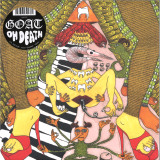
Formidable psychic warriors, channelers of the mystic and proponents of a spiritual quest that transcends this realm, Goat remain a band shrouded in mystery. Travelling from their inscrutable origins in the Swedish village of Korpilombo across the stages and festivals of the world in the last decade, this band has created their incendiary music entirely according to their own co-ordinates. With all this in mind, the casual observer might have guessed from its title that 'Requiem', their beatific and melancholic album of 2016, was to be their last. Yet the ancestral spirits summoned by their art are always restless. Thus the eternal cycles of rebirth have triumphantly produced 'Oh Death' - a ceremonial conflagration as powerful as any this band has made. Invigorated by forces we can only guess at the origins of, 'Oh Death' is a party to which all are welcome. Blithely waving away easy classification, these heat-hazed serenades are just as comfortable in the headspace of vicious '70s funk as they are in zesty ZE records post-punk. Folk-haunted incantations and free jazz skronk here find common ground, buoyed by relentless forward motion and raucous energy. Yet all of the above is locked into a delirious gnostic groove that threatens to throw the whole shebang spiralling into orbit. 'Oh Death' is driven by a supernatural charge that unifies, invigorates and transcends borders, whether geographical, musical, or between this world and the next. In the hands of these sages and soothsayers, this is just the beginning. Goat Is 'Oh Death', Long Live Goat!
Take To The Sky is a sun soaked EP with four dance floor heaters soundtracking the summer; capturing the euphoria and release of collectively gracing sweaty dance floors again. Inspired by nostalgic 90s UK club music/Summer of Love, incorporating broken-beat, garage and street-soul rhythms carried by melodic ear-worm vocals performed and produced by J. Caesar with co-production and mixing by Z Lovecraft (Rhythm Section). This year the East London based producer, singer/songwriter blessed the BBC airwaves with the EP title track, ‘Take To The Sky’ premiered on 1Xtra by Jamz Supernova originally featured on the well-received Scenic Route compilation and has been testing out dubs at his club night, Space Ghettos co-run by Qendresa and Albertina.
The opening track “I Told You” is a balearic love letter of gratitude to his friends, “ all I had was love, love of my friends, love of music and love of living.” his sentiment of meaningful relationships evoked through his sparse vocal arrangements, sprinkled over downtempo street soul drums. Take To The Sky, similarly paying homage to the underground Black dance music of the 90's, is a tale of escapism whilst Give Me To The Night is a celebration of hedonism featuring Jim’s sultry vocals punctuated by broken-beat drums. Lost In Space co-produced by Z Lovecraft is a moody, Garage/D’n’B infused B-side with disorientating breaks capturing the essence of romantic turmoil he found himself in during COVID. In his words “Take To The Sky EP is an ode to freedom”.
Support from Jamz Supernova BBC 1Xtra, CC:Disco Track IDs, Stamp The Wax, NTS; Anu, Zakia,
- A1: Paul Kalkbrenner - Feed Your Head
- A2: Tori Amos - Professional Widow (Armand Van Helden's Star Trunk Mix)
- B1: The Knife - Heartbeats (Rex The Dog Remix)
- B2: Trentemøller - Moan (Trentemøller Remix)
- C1: Yeah Yeah Yeahs - Heads Will Roll (A-Trak Remix)
- C2: Goose - Synrise
- D1: Zombie Nation - Kernkraft 400 (Dj Gius Remix)
- D2: Bomfunk Mc's – Freestyler
This extraordinary NYC trio combines free jazz and post-punk with pointed commentary about issues of race, gender, the pandemic, and political autonomy. Rose Tang, a Mongol from Sichuan, sings/recites and plays guitar, piano, and percussion. Tenor saxophonist Ayumi Ishito, from Japan, plays in a plethora of bands along the jazz/rock spectrum. Drummer, composer, and educator Wen-Ting Wu, from Taiwan, combines jazz drive and classical rigor.