"This is the time that we, who have benefitted from the Last Poets shouldbe able to say, 'it's the Last Poets. It's them we should be honouring, because we did not honour them for so many years_"
KRS One wasn't just addressing the hip hop fraternity when he uttered
those words by way of introducing the video for Invocation - a poem
written thirty years ago, around the time of the Last Poets' last significant comeback. He was speaking to everyone who's been affected by the word, sound and power issuing from the most revolutionary poetry ever witnessed, and that the Last Poets had introduced to the world outside of Harlem at the dawn of the seventies.
In 2018 the two remaining Last Poets, Abiodun Oyewole and Umar Bin
Hassan, embarked on another memorable return with an album -
Understand What Black Is - that earned favourable comparison with theirseminal works of the past, whilst showcasing their undimmed passion andlyrical brilliance in an entirely new setting - that of reggae music. Trackslike Rain Of Terror ("America is a terrorist") and How Many Bullets demonstrated that they'd lost none of their fire or anger, and their essential raison d'etre remained the same.
"The Last Poets' mission was to pull the people out of the rubble o f their lives," wrote their biographer Kim Green. "They knew, deep down that poetry could save the people - that if black people could see and hear themselves and their struggles through the spoken word, they would be moved to change."
Several years later and the follow-up is now with us. The project started when Tony Allen, the Nigerian master drummer whose unique polyrhythms had driven much of Fela Kuti's best work, dropped by Prince Fatty's Brighton studio and laid down a selection of drum patterns to die for. That was back in 2019, but then the pandemic struck. Once it had passed, the label booked a studio in Brooklyn, where the two Poets voiced four tracks apiece and breathed fresh energy, fire and outrage into some of the most enduring landmarks of their career. Abiodun, who was one of the original Last Poets who'd gathered in East Harlem's Mount Morris Park to celebrate Malcolm X's birthday in May 1968, chose four poems that first appeared on the group's 1970 debut album, called simply The Last Poets. He'd written When The Revolution Comes aged twenty, whilst living in Jamaica, Queens. "We were getting ready for a revolution," he told Green. "There wasn't any question about whether there was going to be one or not. The truth was many of us still saw ourselves as "niggers" and slaves. This was a mindset that had to change if there was ever to be Black Power." He and writer Amiri Baraka were deep in conversation one day when Baraka became distracted by a pretty girl walking by. "You're a gash man," Abiodun told him. The poem inspired by that incident, Gash Man, is revisited on the new album, and exposes the heartless nature of sexual acts shorn of intimacy or affection. "Instead of the vagina being the entrance to heaven," he says, "it too often becomes a gash, an injury, a wound_" Two Little Boys meanwhile, was inspired after seeing two young boys aged around 11 or 12 "stuffing chicken and cornbread down their tasteless mouths, trying to revive shrinking lungs and a wasted mind." They'd walked into Sylvia's soul food restaurant in Harlem, ordered big meals, then bolted them down and run out the door. No one chased after them, knowing that they probably hadn't eaten in days. Fifty years later and children are still going hungry in major cities across America and elsewhere. Abiodun's poem hasn't lost any relevance at all, and neither has New York, New York, The Big Apple. "Although this was written in 1968, New York hasn't changed a bit," he admits, except "today, people just mistake her sickness for fashion." Umar is originally from Akron, Ohio, but had arrived in Harlem in early 1969 after seeing Abiodun and the other Last Poets at a Black Arts Festival in Cleveland. That's where he first witnessed what Amiri Baraka once called "the rhythmic animation of word, poem, image as word- music" - a creative force that redefined the concept of performance poetry and stripped it bare until it became a howl of rage, hurt and anger, saved from destruction by mockery and love for humanity. When Umar's father, who was a musician, was jailed for armed robbery he took to the streets from an early age where he shined shoes and raised whatever money he could to help feed his eight brothers and sisters. By the time he saw the Last Poets he'd joined the Black United Front and was ready to join the struggle. Once in Harlem, Abiodun asked him what he'd learnt in the few weeks since he'd got there. "Niggers are scared of revolution," Umar replied. "Write it down" urged Abiodun. That poem still gives off searing heat more than fifty years later. In Umar's own words, "it became a prayer, a call to arms, a spiritual pond to bathe and cleanse in because niggers are not just vile and disgusting and shiftless. Niggers are human beings lost in someone else's system of values and morals." And there you have it. It's not just race or religion that hold us back, but an economic system that keeps millions in poverty and living in fear - a system born from political choice and that's now become so entrenched, so bloated on its own success that it's put mankind in mortal danger. It was many black people's acceptance of the status quo that inspired Just Because, which like Niggers Are Scared Of Revolution, was included on that seminal first album. Along with their revolutionary rhetoric, it was the Last Poets' use of the "n word" that proved so shocking, but it would be wrong to suggest that they reclaimed it, since it never belonged to black people in the first place. There's never any hiding place when it comes to the Last Poets. They use words like weapons, and that force all who listen to decide who they are and where they stand. Umar's two remaining tracks find him revisiting poems first unleashed on the Poets' second album This Is Madness! Abiodun had left for North Carolina by then where he became more deeply enmeshed in revolutionary activities and spent almost four years in jail for armed robbery after attempting to seize funds related to the Klu Klux Klan. Meanwhile, the 21 year old Umar was squatting in Brooklyn and had developed close ties with the Dar-ul Islam Movement. A longing for purity and time-honoured spiritual values underpins Related to What, whilst This Is Madness is a call for freedom "by any means necessary," and that paints a feverish landscape peopled by prominent black leaders but that quickly descends into chaos. "All my dreams have been turned into psychedelic nightmares," he wails, over a groove now powered by Tony Allen's ferocious drumming. Those sessions lasted just two days, and we can only imagine the atmosphere in that room as the hip hop godfathers exchanged the conga drums of Harlem for the explosive sounds of authentic Afrobeat. Once they'd finished, the recordings and momentum returned to Prince Fatty's studio, since relocated from Brighton to SE London. This was stage three of the project, and who better to fill out the rhythm tracks than two key musicians from Seun Anikulapo Kuti's band Egypt 80? Enter guitarist Akinola Adio Oyebola and bassist Kunle Justice, who upon hearing Allen's trademark grooves exclaimed, "oh, the Father_ we are home!" Such joy and enthusiasm resulted in the perfect fusion of Nigerian Afrobeat and revolutionary poetry, but the vision for the album wasn't yet complete. He wanted to create a new kind of soundscape - one that reunited the Poets with the progressive jazz movement they'd once shared with musicians like Sun Ra and Pharoah Sanders. It was at that point they recruited exciting jazz talents based in the UK like Joe Armon Jones from Mercury Prize winners Ezra Collective, also widely acclaimed producer/remixer and keyboard player Kaidi Tatham, who's been likened to Herbie Hancock, and British jazz legend Courtney Pine, whose genius on the saxophone and influence on the UK's now vibrant jazz scene is beyond question. The instrumental tracks on Africanism are in many ways as revelatory and exciting as the Last Poets' own. It's important to remember that the kaleidoscope of styles and influences we're presented with here aren't the result of sampling but were played "live" by musicians responding to sounds made by other musicians. That's where the magic comes from, aided by Prince Fatty's peerless mixing which allows us to hear everything with such clarity. Music fans today have grown accustomed to listening to all kinds of different genres. Their tastes have never been so broad or all- encompassing, and so the music on this new Last Poets' album is as groundbreaking as their lyrics, and perfectly suited to the era that we're now living in. John Masouri
quête:f pine
- A1: The Wind (Talking To The Pines)
- A2: Mississippi Queen - Samsum
- A3: Road To Kingdon Come
- A4: Sunshine
- A5: Kentucky Pearl
- B1: I Am A New Orleans (Genevieve)
- B2: Bringing It All Back Home
- B3: Only For The Summer
- B4: Take Me Back To The Water
- B5: Heartbeat
Kevin Parrot, Brian McGladdery, Roger Tweedale, Gary McDougall and Tony Bamforth formed Samsun at the beginning of 1969. After several tours abroad they came to the attention of Geoff Gill (ex-The Smoke), Wil Malone (ex-Orange Bicycle) and Cliff Wade (ex-Fickle Pickle). They spent a week at Morgan Studios recording an entire album but only three songs were released for the Dutch and UK markets. A few years later, the band rebranded as Oscar.
Buried until now in the vaults, Samsun's self titled album finally emerges blinking into the daylight a mere 52 years after it was recorded to provide yet another missing piece of the seemingly forever incomplete Morgan jigsaw. Taken from the original master-tapes, it provides yet more evidence that, during a five-year period in the late Sixties/early Seventies, the in-house Morgan team was as productive as any similar-sized British pop collective. Available on both vinyl and CD with comprehensive sleeve notes.
Wenige Künstler sind so eng mit der Aufführungsgeschichte von Giacomo Puccinis Oper „La Bohème“
verbunden wie Luciano Pavarotti. Der große italienische Tenor gab sein Operndebüt als Rodolfo und
machte sich diese Partie in der Folge weltweit zu eigen – eine Rolle, die ihm wie auf den Leib geschrieben
war und in der er seine ganze künstlerische Ausdruckskraft entfalten konnte. Die Decca-Aufnahme von
„La Bohème“ aus dem Jahr 1972 zeigt ihn in stimmlicher Höchstform an der Seite seiner wichtigsten
Bühnenpartnerin, der Sopranistin Mirella Freni, und unter der Leitung von Herbert von Karajan, einem der
bedeutendsten Operndirigenten des 20. Jahrhunderts. Das Ergebnis ist eine Referenzaufnahme, die den
poetischen Geist dieser Oper wie keine andere Einspielung zum Ausdruck bringt.
Zum 100. Todestag des Komponisten erscheinen nun gleich zwei hochwertige Deluxe-Editionen in neuen
High-Definition-Transfers von den Original-Masterbändern: zum einen eine Ausgabe auf 2 Hybrid-SACDs
in 24 Bit/192 kHz, zum anderen eine Edition auf 2 LPs (die erste seit den 70er Jahren), geschnitten in den
berühmten Abbey Road Studios und gepresst auf 180 Gramm Vinyl. Das Hardcover-Buch enthält neben
dem vollständigen italienischen Libretto (mit deutscher und englischer Übersetzung) einen aktuellen Essay
des renommierten Opernautors Roger Pines, individuelle Beiträge zu den Künstlern, Faksimiles aus dem
Original-Booklet von 1973, Fotos von den Aufnahmesitzungen sowie weitere, erst kürzlich entdeckte Bilder.
After winning three leading Belgian music awards with Humo's Rock Rally, De Nieuwe Lichting and Sound Track, girl band BLUAI is expanding its horizons. On their debut album Save It For Later, the trio leaves for a road trip through the sonorous areas populated by the likes of Big Thief, Pinegrove, Haim, and Alabama Shakes.
Save It For Later is a record not unlike a Polaroid picture. Belgian songwriter Catherine Smet captures the memories of her youth in lyrics with a perfume of Americana, country pop, and indie folk. The stories areset in her native Flanders, but close your eyes, and galloping horses on a ranch in Mississippi form the backdrop of BLUAI's debut album.
Catherine Smet (vocals, guitar), Mo Govaerts (drums), and Caitlin Talbut (bass) joined forces with producer Willem Ardui (blackwave.) for this record. BLUAI's instrumentation was expanded with banjo, twelve-string guitar, and lap steel. Engineer Tobie Speleman received 'Nashville tuning' as a briefing. BLUAI thus shifts the focus from indie rock to Americana and breaks open the band's frame of reference, with influences ranging from Maggie Rogers to Alabama Shakes to The Japanese House.
Save It For Later is the creation of a group that came together two years after the formation of BLUAI, found a common drive, and is now cruising at full speed. BLUAI is here to stay.
Strange Power!, the fifth record from Durham, NC-based songwriter and poet Anne Malin Ringwalt, emerges from the darkest waters of the self into a world remade. Releasing in conjunction with her second book of poetry, What Floods (Inside the Castle, Oct. 2024), Strange Power! overflows with Ringwalt's teeming and sensuous personal symbolry: glowing lilacs and gentle queens, dolphins wild and girls who grew up brave _ T.S. Eliot sung by Cat Power, backed by Mount Eerie. She sings: "I rose up from water." Ringwalt writes and performs with the authority of a lifetime spent harnessing the alchemy of storytelling; her belief in the power of words to heal and transform is palpable in each achingly- delivered lyric. Made amidst profound inner and outer change, Strange Power! also sees Ringwalt taking up the role of self-producer for the first time, mirroring and supporting the record's Orphic quest by gathering contributions from a coterie of friends wielding an electric range of American instruments. Violins, vibraphones, drum machines, electric guitars dappled with spring reverb, wind-blown shells, and a host of other numinous sounds form an unfurling and shadowy world which was then carefully honed during the mixing process (shepherded by Michael Cormier-O'Leary and Lucas Knapp) _ settling the final record in an eerie meridian between spareness and verdancy. The result is a beguiling and darkly blooming realm: the sound of a personal cosmos being remade, piece by piece. Ringwalt is at the height of her spirit as both songwriter-poet and singer, her willowy voice by turns conjuring and keening as she reckons with her deep past and the stories told since. Opening track "The Pines" sets the stage for a record of truly life-long scope: "I was a child, now I hold her / I was asleep for many years." Some songs, like the gorgeous "North Carolina" and "The Saint," were written as early as 2013 but, Ringwalt says, "insisted upon being remembered" as the record took shape; in its final form, they serve as inciting moments of self-discovery before the journey to come. "The Visionary" recalls one of Ringwalt's earliest musical breakthroughs _ her re-rendering of an Emily Brontë poem into a song at age 15 _ and, she says, "`cites' the melody of that song in the context of this new one _ a holding of the past and present and every layer in between/beyond, in utter solitude _ a solitude that reflects certain aspects of abandon as a child and an adult..." This unusually lengthy time-scale lends Strange Power! a deeply moving sense of narrative fullness. Stretches of the record _ particularly the "Judgment Day" ? "River" ? "Lilac Bloom" trifecta that form the black heart of Side 1 _ may recall familiar wanderings of personal underworlds such as Mount Eerie's Lost Wisdom Pt. 2 or Neil Young's Ditch Trilogy. Yet this hollowed landscape is in turn exorcized by the a capella "I Know," in which Ringwalt sings "I won't be gutted by you / For giving and trying to heal / I won't be gutted, I am not a fool / I deserve a love that is new" before the song concludes with a piano passage that recalls hymnal music _ suggesting a faith in life itself to offer new beginnings. Side 2 features some of Ringwalt's most powerfully introspective writing to date, as the songwriter casts off myth after myth in her search for personal transformation. By the final song, "Stories," the energy that has been gathering all throughout the record breaks loose as Ringwalt reflects: "I wrote so many stories, not knowing what the end was." But at this stage in the journey, we know there is no such thing as an ending; if the healing process is never complete, the storyteller's strange power is what finally offers liberation.
A RADICAL HORIZON is comprised of a series of duets between cellist Lori Goldston and pianist Stefan Christoff, recorded on a late Fall afternoon in Brooklyn, NY. A conversation between friends, these improvised excursions reflect a willingness to be open to the spirits in the space and between the notes; a spirit of communion that, as Stefan writes, "guides and dances with our dialogue together".
Stefan Christoff is a Canadian musician, community organizer, and journalist based in Montreal, Quebec. He has collaborated with artists such as Sam Shalabi and Adriana Camacho, performs with his brother Jordan as a duo in Anarchist Mountains, and has released music on labels such as Moon Villain, Shimmering Moods, and Aural Canyon.
A lifelong community activist, he helped establish the Musicians For Palestine project and has engaged in street-level solidarity work in Lebanon and The Philippines as well as closer to home in Montreal. This is his second appearance on Beacon Sound after 'In Sofia', an album of piano improvisations recorded in Bulgaria, was released on the label in 2023.
Classically trained and rigorously de-trained, possessor of a restless, semi-feral spirit, Lori Goldston is a cellist, composer, improvisor, producer, writer and teacher from Seattle. Her voice as a cellist, amplified or acoustic, is full, textured, committed and original. A relentless inquirer, her work drifts freely across borders that separate genre, discipline, time and geography.
Current and former collaborators and/or bosses include Earth, Nirvana, Mirah, Jessika Kenney, Ilan Volkov, Eyvind Kang, Stuart Dempster, David Byrne, Terry Riley, Jherek Bischoff, Malcom Goldstein, Steve Von Till, Lonnie Holley, Cat Power, Ellen Fullman, Maya Dunietz, Mik Quantius, Embryo, O Paon, Tara Jane O’Neil, Natacha Atlas, Broken Water, Ed Pias, Christian Rizzo and Sophie Laly, Threnody Ensemble, Cynthia Hopkins, 33 Fainting Spells, Vanessa Renwick, Mark Mitchell, Lynn Shelton, and many more.
Her work has been commissioned by and/or performed at the Kennedy Center, Sydney Festival, Cineteca Nacional de México, Tectonics Festival, Frye Art Museum, Time Based Art Festival (TBA), WNYC, The New Foundation, Paris Fashion Week, Northwest Film Forum, On the Boards, Seattle International Film Festival, Seattle Jewish Film Festival, Bumbershoot, Crossing Border Festival, Boston’s Museum of Fine Arts, Joe’s Pub, the Stone, University of Chicago, and venues large and small throughout North America, Mexico, Australia, and Europe.
Emerging from the same circle of musicians that spawned Squirrel Bait and Slint, Rodan formed in 1992 out of a failed high school rap project. Guitarists Jason Noble and Jeff Mueller enlisted Tara Jane O’Neil on bass and a couple drummers before Kevin Coultas came aboard permanently. After a couple 7”s and self-released cassettes, Quarterstick Records released the band’s first and only full-length Rusty in 1994. The band broke up at the end of the year, aiding their growing cult following. Jason went on to form Rachel's, Jeff started June of 44, and Tara began a solo career after recording with Retsin, and The Sonora Pine. Jason and Jeff later reunited in The Shipping News. Rodan was Quarterstick’s indie rock super group that spawned numerous other intriguing projects. “(Thirty years ago) a Louisville band called Rodan released the only record they’d make in their two year tenure. Rusty would become one of those records that launched a thousand very f**king good bands in the 90’s, an historical moment in real need of poets and punks and beautiful freaks who could render some sense and beauty out of the cultural grey water”. Joe Manning // “Whatever scene or geographical associations Rodan dealt with by being from Louisville, KY, in the early '90s, setting those aside and looking at the music straight up reveals one key fact: this was an amazing band, one with clear roots but also one with a sense of its own strong fusion… this is an album to readily get lost in”.
Dublin based label Awareness Systems returns with their Combination 2 EP which is a split EP between label boss Pineal Navigation and the prolific Stanislav Tolkachev. After great support for Combination 1 EP from Marcel Dettman, Dave Clarke, Kaiser and Charlton to name a few, the second release continues it’s progress with four analogue live cuts furthering the label’s aim to heighten the energetic state through cerebral techno music.
With a track a piece on each side the record moves from the hypnotic machine rhythms of Stanislav Tolkachev’s A1 track "Battleground" which paints an apocalyptic landscape
with relentless bass heavy drum programming, into two tracks by Pineal Navigation which are both trippy and moody with heavy mo-town vibes. Lover's of Rob Hood and early Underground Resistance take note. The EP is rounded out by Tolkachev on B2 who delivers a relentless driving track of acidic machine funk.
Erstmals auf Vinyl: Das On-U Sound-Album des legendären Trompeters Harry Beckett, einer Schlüsselfigur der britischen und europäischen Jazzszene, das 2008 nur als CD erschien. Kein geringerer als Charles Mingus nahm Beckett in seine Band auf, es kam zu Kollaborationen mit Zeitgenossen wie Dudu Pukwana, Graham Collier, Mike Westbrook und Ian Carr, Beckett inspirierte eine ganze Generation jüngerer Musiker (Courtney Pine) und Trendsetter (Gilles Peterson). Teilnehmende Musiker waren Junior Delgado (mit starker Vocalperformance), Carlton "Bubblers" Ogilvie (Veteran der UK-Reggae-Szene) und Alan Glen (Yardbirds!).
- "Becketts Genialität besteht darin, dass er sich selbst immer treu bleibt, egal mit wem er auftritt. Seine sprudelnden, sprudelnden, improvisierten Melodien heben immer die Stimmung. „The Modern Sound Of Harry Beckett“ ist ein großartiger Klanggenuss." - The Guardian
- "Sherwoods Produktionsstil schafft hier eine perfekte Balance zwischen klanglicher Kreativität und respektvoller Zurückhaltung, und Beckett selbst ist brillant und kreiert Bläserlinien, die sich durch die Rillen schlängeln und schlängeln, anstatt auf ihnen zu reiten. Etablierte On-U Sound-Fans werden dies als unterhaltsame Kuriosität empfinden; Harry Beckett-Fans werden es vielleicht aufschlussreich finden."
- Reverend Horace Tyler - Intro 00:35
- The Thrillers Band - The Thrillers Band Theme 03:12
- Carla & The Carlettes - Love Makes A Woman 04:06
- The Channels 4 - I Wish It Would Rain 03:13
- Sharon Seabrook & The Starlettes - Come & Get These Memories 03:03
- The United Souls - I Want To Be Sweeter To You (Than I Was Yesterday) 03:08
- The Destinations - Cowboys To Girls 03:11
- Carla & The Carlettes - Grooving 03:00
- The Channels 4 - Cross My Heart 03:30
- The United Souls - The Way You Do The Things You Do 02:39
- The Starlettes - Dry Your Eyes 02:13
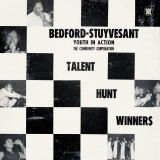
Big Crown Records is proud to present the reissue of one of Brooklyn’s most sought after “holy grail” soul records, YIA Talent Hunt Winners. Youth in Action, Inc. (YIA) was formed in 1963 when the Central Brooklyn Coordinating Council received a grant to develop a youth services program in the Bedford-Stuyvesant community. It was originally organized to identify and address the social problems that were leading to the high crime rate in Bed-Stuy. Recently the Smithsonian Museum of African American History released an archive of footage filmed by a community activist, which shows the real-world effects of the group’s efforts: young people engaged in sports, the arts, and other activities to better themselves and their world. The appearances by Jackie and Bobby Kennedy point to the group's relationship to the Great Society programs of President Lyndon B. Johnson. What there is no mention of in either the NMAAHC’s collection of YIA materials nor in the Brooklyn Public Library’s also extensive collection is this talent show and the record that came to be because of it.
Local vocal groups chose tunes to cover from the era (1964 - 1968) ranging from The Rascals to The Intruders, from The O’Jays to Billy Stewart. All of these groups were backed by a local act called The Thrillers Band. The winners of the talent contest were then invited into the studio to record their versions which would be pressed up on this record and given away to local radio and TV stations. The hope of the whole thing was that this would help the young groups get discovered by producers and record labels and start their professional music careers. The intro to the album is Reverend Horace Tyler congratulating the winners and asking them “to just remember, when you reach the top and become our big stars of tomorrow, don’t forget YIA”.
What this album may lack in fidelity and production it more than makes up for in charm. The engineers at the recording sessions pump in pre recorded applause and screaming to give the it the feel of the day of the contest while the young groups sing their hearts out, clearly giving their all. From today’s perspective, soul music fans will lose it over the choices of covers on this record and the killer, raw, innocent performances of them by these local Brooklyn groups. The Channels 4, Carla & The Carlettes, The United Souls, Sharon Seabrook & The Starlettes, and The Destinations all won that day and got to take place in this record. It makes you wonder, and even pine for the performances of the groups who didn’t make the cut, even if just to find out what tunes they covered, or better yet, were their original songs written by some of them for this contest?
It is with great pleasure that we make this available to the public again. This is a truly rare record, and an awesome piece of New York History.
On this LP you hear two kanteles built by the Master Luthier Rauno Nieminen. One of them is a copy of a historical instrument built by the folk poet Ontrei Malinen in 1833. It is carved from single piece of pine, and it has five bronze strings. The other one is carved from a single piece of spruce. Its lowest seven strings are bronze, and highest three strings are English iron. On most tracks the two kanteles are played simultaneously.
For me, playing these instruments is searching for meaningful ways to interact with wooden objects from another time. By choosing a set of 5 to 15 frequencies and plucking them, I'm able to think, feel, and imagine more than I could without the instruments. the patterns that emerge from the vibrating strings give temporal shapes to thoughts.
The music on this album is improvised. It was recorded at home after dark and outdoors in daylight during 2020-2022. No overdubs or edits were made afterwards. On the last track the kantele is accompanied by detritus gathered from the forest floor.
Tuokioita translates to moments. This music is about colouring time.
"Coming Up To Consciousness" ist das sechste Studioalbum von Pure Reason Revolution und das dritte ihrer Renaissance nach der Pause, die mit "Eupnea" von 2020 begann und mit "Above Cirrus" von 2022 fortgesetzt wurde. Wie die beiden Vorgänger ist auch das neue Album sehr persönlich. Die acht Tracks sind alle zwischen vier und sieben Minuten lang - kurz für PRR-Verhältnisse - und sie setzen sich mit verschiedenen Arten von Dunkelheit auseinander. Der unverwechselbare Stil der Band, der Prog und Pop durch verträumte Stimmungen, epische Riffs und engelsgleiche Harmonien verbindet, ist geblieben. Courtney und Greg Jong haben aber auch versucht, einen etwas anderen Weg einzuschlagen, indem sie neben ihren Dauerbrennern - vor allem Pink Floyd - auch Einflüsse von Talk Talk, Elliot Smith, The Smile und sogar Arctic Monkeys einfließen ließen. Der legendäre Session-Musiker Guy Pratt, der unter anderem mit Pink Floyd zusammengearbeitet hat, steuerte bei sieben der acht Tracks die Bassgitarre bei, während Jon Sykes von The Pineapple Thief bei einem Song den Bass spielte. Bruce Soord, ebenfalls von The Pineapple Thief, mischte das Album in Stereo und zum ersten Mal für PRR in Dolby Atmos und 5.1 Surround Sound.
After six years, the American alternative rock band Buffalo Tom are back in 2024 with their tenth full-length studio album, titled Jump Rope. During the lockdown, the band kept on writing and sent each other ideas for arrangements and parts, which resulted in a sizeable backlog of song ideas. A sort of direction made itself apparent from the ideas they were trading; most of the songs called for an acoustic, quieter production. Eventually, emerging from their basements, they slowly got to actually working together on the songs in the same room, rehearsing quietly (especially for the super-loud Buffalo Tom), with acoustic guitar. After giving most of the songs a good amount of overdubs and a lot of electric guitars, the songs evolved into this beautiful and thrilling new Buffalo Tom album: Jump Rope. Jump Rope features the singles “New Girl Singing”, ""Helmet"" and ""Autumn Letter"" and is available on black vinyl.
THE PINEAPPLE THIEF'S FIFTH ALBUM 'LITTLE MAN' REMASTERED &
REISSUED WITH 3 BONUS TRACKS.A vein of melancholy runs throughout
The Pineapple Thief's fifth studio album 'Little Man'
nspired by the theme of loss, 'Little Man' was the first Pineapple Thief album to
ruly establish the band on the musical map, earning them the support of the
Kscope label & endorsements from prog figurehead Steven Wilson (Porcupine
Tree) to boot. Now remastered by revered mastering engineer Steve Kitch, this
vinyl edition of 'Little Man' delivers an immersive & definitive, listening experience.
An astounding emotional, atmospheric and satisfying piece of art." 5/5 Sputnik
Music
The Pineapple Thief were formed in 1999 by founder & chief songwriter Bruce
Soord & have since released a total of 16 studio albums, 6 EP's & several live &
compilation albums. The lineup now includes Gavin Harrison of Porcupine Tree/
King Crimson following his permanent joining for 2018's 'Dissolution'. In February
2024, The Pineapple Thief released the critically acclaimed 'It Leads To This'
which reached #2 in the UK Independent Albums Chart.
This edition of 'Little Man' is presented as a CD digipack with 4- page printed
booklet & includes 'Dead In The Water', 'God Bless The Child' & live favourite
Snowdrops', plus 3 acoustic bonus tracks.
- July 25, 1969, Festival Mondial Du Jazz D’antibes, La Pinède, Juan
- Les-Pins, France
- A1: Introduction By André Francis
- A2: Directions
- A3: Milestones
- July 25, 1969, Festival Mondial Du Jazz D’antibes, La Pinède, Juan- Les-Pins, France
- B1: Miles Runs The Voodoo Down
- B2: Footprints
- July 25, 1969, Festival Mondial Du Jazz D’antibes, La Pinède, Juan
- Les-Pins, France
- C1: ‘Round Midnight
- C2: It’s About That Time
- C3: Sanctuary
- C4: The Theme
- July 26, 1969, Festival Mondial Du Jazz D’antibes, La Pinède, Juan- Les-Pins, France
- D1: Introduction By André Francis
- D2: Directions
- D3: Spanish Key
- D4: I Fall In Love Too Easily
- July 26, 1969, Festival Mondial Du Jazz D’antibes, La Pinède, Juan
- Les-Pins, France
- E1: Masqualero
- E2: No Blues
- July 26, 1969, Festival Mondial Du Jazz D’antibes, La Pinède, Juan- Les-Pins, France
- F1: Miles Runs The Voodoo Down
- F2: Nefertiti
- F3: Sanctuary
- F4: The Theme
- November 5, 1969, Folkets Hus, Stockholm
- G1: Introduction By George Wein
- G2: Bitches Brew
- G3: Paraphernalia
- November 5, 1969, Folkets Hus, Stockholm
- H1: Nefertiti
- H2: Masqualero (Incomplete)
- H3: This
Live In Europe 1967 – The Bootleg Series Vol. 2 was voted ‘Historical Album Of The Year’ in the Down Beat Readers and Critics Poll. This second volume of The Bootleg Series skips two years ahead to record Davis with his ‘Third Great Quintet’, also known as ‘The Lost Band’ (1969-1970). This line-up consists of Miles Davis, Wayne Shorter, Chick Corea, Dave Holland and Jack DeJohnette at their peak, though they were never recorded in studio. Live In Europe 1967 – The Bootleg Series Vol. 2 was voted ‘Historical Album Of The Year’ in the Down Beat Readers and Critics Poll. This second volume of The Bootleg Series skips two years ahead to record Davis with his ‘Third Great Quintet’, also known as ‘The Lost Band’ (1969-1970). This line-up consists of Miles Davis, Wayne Shorter, Chick Corea, Dave Holland and Jack DeJohnette at their peak, though they were never recorded in studio. Their European tours of 1969
are some of the only existing recordings of the group; the first legitimately released audio recordings by this stellar lineup.
Live In Europe 1969 - The Bootleg Series Vol. 2 captures the short-lived quintet in three separate concert settings across four LPs, containing selections from two nights at Festival Mondial Du Jazz D’Antibes in France and one night in Stockholm, Sweden. Special recordings include a pre-studio recording version of “Bitches Brew” which would be recorded in the studio for the infamous record by the same name a few months later.
Live In Europe 1969 - The Bootleg Series Vol. 2 is available as a deluxe 4LP boxset, housed in a lift-off box. The set includes printed inner sleeves and an insert with extensive liner notes.
Joyous, superb music; the real deal. Hotly recommended.
Scintillating, masterful, roaring, classic Cubanismo, beautifully recorded in 2017 at the storied Areito Studio in Havana.
Descargas, jazz, boogaloo, son… and some ritual music to bring the curtain down. You’ll find yourself hungry for more.
The musicianship is dazzling in every corner of the orchestra; set on fire by the timbales of Changuito (from Los Van Van), and booted along by a hard-swinging, full brass section led by trumpeter Julito Padron, graduate of the legendary septet Nacional de Igacio Pinero, and later Irakere. The sound is steeped in tradition but by no means stuck in the past.
The vinyl is beautifully presented in a heavyweight, high-gloss gatefold.
THE PINEAPPLE THIEF'S SOPHOMORE ALBUM 'ONE THREE SEVEN' -
NEWLY REMIXED & REMASTERED LP EDITION FOR 2024
'One Three Seven' was the second album to be released from The Pineapple Thief
back in 2001. An excellent entry point into the band's early career, 'One Three
Seven' sees songwriter Bruce Soord deftly balancing accessibility & the heavier
sound for which The Pineapple Thief have become widely celebrated in the years
since.
The Pineapple Thief released their latest album in February 2024, the critically
acclaimed 'It Leads To This'.
This edition of the record is remixed by Bruce Soord & remastered by Steve Kitch,
presented on black vinyl LP
- A1: Prayer (From Xabo: Father Boniecki)
- A2: In Between (From Xabo: Father Boniecki)
- A3: Journey (From Xabo: Father Boniecki)
- A4: Trip To Ireland (From I Never Cry)
- A5: The Beach (From I Never Cry)
- A6: The Locker Room (From I Never Cry)
- A7: At The Hospital (From I Never Cry)
- B1: Waiting (From At Home)
- B2: Wildfires (From Truth In Fire)
- B3: Ghosts (From Pradziady)
- B4: Soleil Pâle
- B5: Nora (From Nora)
Writing music for film and theatre has always been a big part of Hania Rani's musical world. It is also a part of the creative process that can be tantalisingly out of reach for listeners, either the project doesn't come to fruition or the music simply isn't available away from the film or play. From early collaborations with friends, to last year's two scores for full length films (xAbo: Father Boniecki directed by Aleksandra Potoczek and I Never Cry directed by Piotr Domalewski') Rani has been involved in many such projects, each representing an important step in her artistic development and life as a composer and artist:
"Composing for motion picture or theatre is for me a very different kind of work than writing for my own projects. Firstly, I need to collaborate with somebody else who sees the world through the lense of their own art and craft. That's why these kinds of encounters can be so exciting - they are a promise of creating something very new, as a result of creative work of so many people from all walks of life. Secondly, I feel that music in film is an invisible character, a missing emotion that creates a special atmosphere and sensation. It doesn't illustrate, it completes the work of art. I think it is an extremely sensitive matter that rejects banal associations and easy solutions. I feel like composing for film works like an exercise for my imagination."
It is the nature of these collaborations though, that sometimes the composers own preferred compositions don't make the final cut. This is where Music for Film and Theatre comes in as it allows Rani to present a selection of her own personal favourite pieces composed for film and plays. Pieces that made it to the final cut and pieces that were rejected by the director or the producer. Bringing the music together as an album offers a chance for Rani to share her music with her listeners on her own terms and a chance for her fans to hear a different side of her art.
"I put them in one place, as a collection of precious objects that were kept for years in a drawer. Some of them were composed a couple years ago, some are the result of recent research. I am very happy to finally be able to present them as a separate project."
Rani is of course grateful to all of the directors who have entrusted her to create music for their projects, but she professes especially warm feelings for the pieces composed for her first 'real' theatre play, Pradziady, directed by Michał Zdunik. The title comes from 'Dziady' a term in Slavic folklore for the spirits of the ancestors and a collection of pre-Christian rites, rituals and customs that were dedicated to them. The essence of these rituals was the 'communion of the living with the dead', namely, the establishment of relationships with the souls of the ancestors. "I felt this story needed extremely dark and fragile music, and at the same time a sound that could express the mixture of the two worlds - the living and the dead. I decided to compose part of the soundtrack with a string quartet but including two cellos, viola and only one violin. We recorded in a little house, completely built from wood, mostly from Finnish pine. I always felt this space has a very special, warm and natural acoustics - especially when it is combined with string instruments. The track composed for this theatre play is called Ghosts but actually didn't finally make it to the performance, although I like it so much that I thought it would perfectly fit
this compilation". Other highlights include the enchanting Soleil Pâle written for a collaboration with director Neels Castillon, and improvising dancers Alt Take, the beautiful melancholy of In Between (from the film score for xAbo: Father Boniecki) and the magical bliss of The Beach (from I Never Cry) and together they create a beautiful offering from an artist whose every note is worth hearing, but for whom the journey is just beginning:
"I am very happy to see that many artists consider my music as the right soundtrack for their works, because film music was always a huge inspiration for any of my compositions. I find there a lot of life and real emotions, but also a feeling of freedom. Freedom from my own thinking patterns and prejudices. I also believe strongly in collaboration between people, I always feel this is the way to create something really new, based on a mixture of different ways of thinking, feeling, expressing."
This then is Hania Rani, Music for Film and Theatre – enjoy!