
Search:f phono

8
"Under This Hunger Moon We Fell" is the new album from the uniquely talented, multi-instrumental artificer Lomond Campbell, the third and final instalment of his experiments using tape loops at the heart of his music making process. Campbell notes that "as the album was nearing completion there was a particularly dramatic Supermoon called a Hunger Moon. Apparently it has this name because it occurs right at the end of winter, when predators are at their most lethal and desperate, and those seen as less powerful are preyed upon". These themes can be clearly heard on an album that feels cold and bleak in tandem with moments of vulnerability and tenderness. "Under This Hunger Moon We Fell" stalks from the shadows with a natural, quiet confidence before exploring more carnal heaviness and occasionally brutal displays of dramatic tension. It meditates in cycles and is at both times predator and prey, conveying the balance of these relationships with its cinematic compositions. The album ranges from soft, delicate atmospheric musings such as "Bastard Wing" and "Leave Only Love Behind" to the dark electronics of "And They Are Afraid Of Her" and "Phonon For No One", which Campbell describes as "akin to a massive machine starting up, like a huge sinister power mobilising". During its gloomier moments, "Under This Hunger Moon We Fell" buries tonally ambiguous ambience underneath hazy, distorted textures created via the gradual degradation of the tape. It creates a dream-like backdrop with a moody undertone created by deep basslines and hulking percussive elements, blended with orchestral sounds that add an air of humanity. Although his music is grounded in sound it often incorporates sculpture, engineering, product design and visual art. Using a combination of hardware hacking and industrial manufacturing techniques, Lomond builds his own unique instruments and devices for creating sound which he combines with modular synths, piano and voice. The album also sees Campbell"s vocal debut on "For The Uncarved", having originally written the part for a friend. "I was supposed to be recording her album in my studio The Lengths, but she was struck down with Covid so the session was scrapped. It felt like the album needed some kind of human element so I resorted to singing the part myself". "Under This Hunger Moon We Fell" concludes a trio of albums using tape loops, which was kickstarted with an email from Lomond"s long-time friend and collaborator King Creosote. He was looking for a custom tape looping machine so Lomond set about designing and building a unique music machine, inspired by Reich and Basinski, that plays 10 second tape loops which disintegrate over time as they pass near a rotating magnetic disc. Campbell built and then tested the machine by recording a series of improvisations with it which became LUP, the first album in the trilogy.

• Finding a new Eddie Hill recording from 1969 was quite a thrill and on hearing the beautiful mid-tempo groove, we included it on both our “Westbound Northern Soul” and “Masterpieces Of Modern Soul Vol 3” CDs in 2010. Since then, demand for ‘I Am So Thankful’ has risen and we can now issue it as a single. It was originally scheduled to be Westbound 151 in the USA but that spot was claimed by Emanuel Lasky’s ‘Never My Love’. Eddie now has a Kent release to go with his Detroit waxings on Thelma, Ge-Ge and M-S.
• ‘Long Live The King’ was an LP track from the Detroit Emeralds’ acclaimed debut album “Do Me Right”. It didn’t get a US 45 release but did sneak out on a Various Artists UK DJ-promo EP in 1973 for then-current Phonogram releases. This is the first time this superb and popular dance track it has been commercially available as a single.

also available
Bicolor Vinyl[28,36 €]
High Roller Records, 2nd pressing, black vinyl, ltd 250, 425gsm heavy cardboard cover, 4 page insert printed on uncoated paper, A5 photo card, poster, Original transfer by Marcus Mossmann at PHONOGRAPHIC ARTIFACTS. Audio restoration and mastering by Patrick W. Engel at TEMPLE OF DISHARMONY in November 2020. Cutting by SST Germany on Neumann machines for optimal quality on all levels... The ultimate audiophile reissue of this eternal US Metal classic!

also available
Black Vinyl[27,27 €]
High Roller Records, 2nd pressing, black vinyl, ltd 250, 425gsm heavy cardboard cover, 4 page insert printed on uncoated paper, A5 photo card, poster, Original transfer by Marcus Mossmann at PHONOGRAPHIC ARTIFACTS. Audio restoration and mastering by Patrick W. Engel at TEMPLE OF DISHARMONY in November 2020. Cutting by SST Germany on Neumann machines for optimal quality on all levels... The ultimate audiophile reissue of this eternal US Metal classic!

6
Available on color vinyl for the first time on limited edition opaque blue packaged with download code. Isotope 217 is made up of Dan Bitney, John Herndon, and Jeff Parker from Tortoise along with Rob Mazurek (Chicago Underground, Exploding Star Orchestra), and Matt Lux (Iron & Wine). The music of Isotope 217 is as complex and varied as the influences of it's members. Isotope 217 on Isotope 217: "It is hard to state exactly what this band is because of the diverse influences of the participants. One might say an eclectic avant funk ensemble dedicated to the Phonometric * system of universal thought. One might also say a freewheeling trans-moleculer unit dedicated to the betterment of all worlds." *Note phonometrics are, as described by Satie, the Science of measuring sound.

What is probably the weirdest U-TRAX release ever, is now available again on original heavy weight vinyl and has been remastered for digital download and streaming.
Jo-I is Johan Sagel and nine of the drumtracks he made in the 90s with his quite un-hip Roland R-70 drumcomputer ended up on this heavyweight vinyl EP. Label boss DJ White Delight also abused Johan's R-70 together with DJ Zero One, adding a trancey acid re-interpretation of the Jo-I tracks to the EP.
Back in 1995, Johan was a young advertising professional, originating from the far Northern part of Holland, where only potatoes grow and very few people live. He later moved to the city of Groningen and became very active in the scene there, that included Thee J Johanz, of Bally Hoo fame. Johan teamed up with Reyer Caderius van Veen, who released a 12" as Lynx on the U-TRAX sublabel Phoq U Phonogrammen. Together they performed and recorded as Live Acid Performance (L.A.P.) 01 in the 90s.
Original release date: March 1995.
Available again on original 220 grams vinyl

12
Limited 300 COPIES
PHONOREM: ITALIAN DJ, RECORD COLLECTOR AND BEAT-MAKER HE SPROUTS HIS ROOTS INTO GOLDEN-ERA HIP HOP. SINCE 2017 HE LEADS THE PHAT! RADIO SHOW, AT ROCKET RADIO VERONA, OCCASIONALLY WITH INTERNATIONAL HOSTS.
IN 2020 PHONOREM RELEASED A CASSETTE ALBUM “CRUISE CONTROL”, FUSING DOWNTEMPO BEATS, SYNTH AND SAMPLES MANIPULATIONS, INCLUDED ALSO A REMIX BY MAX GRAEF (TAX FREE RECORDS).
ALGORYTHM SHINES LIGHT ON HIS BACKGROUND IN ELECTRONIC MUSIC: SYNTH-WAVE SOUNDS ON WONKY HOMEMADE DOWNTEMPO BEATS, FUSED TOWARDS AMBIENT AND CINEMATIC ATMOSPHERES, WITH LIVE DRUM RECORDINGS, DRUM MACHINES AND FEW SAMPLES.
Music Produced by PHONOREM
Master by REEL MASTERING
Cover Artwork by AYCE BIO
Distributed by RUBADUB
All Rights Reserved to FUNCLAB RECORDS

10
Celebrating the 10th Anniversary of “Unorthodox Jukebox”, a limited Dark Red Vinyl edition will be released on the 17th June, with the pre-order going live on the 19th May. “Unorthodox Jukebox” is the second studio album by American singer and songwriter Bruno Mars. It debuted at #2 on the US Billboard 200, The record also reached #1 in Australia, Canada, Switzerland, and the U.K.. It became Mars's fastest-selling album in the latter country in 2012, the third best-selling album in Australia in 2013, and the fifth best-selling in the United States in 2013. The International Federation of the Phonographic Industry (IFPI) reported that Unorthodox Jukebox was globally the fourth best-selling album in 2013. “Unorthodox Jukebox” also won the Grammy Award for Best Pop Vocal Album at the 56th Grammy Awards.
Bruno Mars is a 21-time GRAMMY Award nominee and multi-GRAMMY winner. The celebrated singer, songwriter, producer, musician has sold over 171 million singles worldwide, making him one of the best-selling artists of all time. His most recent critically acclaimed and RIAA certified platinum album, “24K Magic,” made an impressive debut atop the Top Digital Albums and R&B/Hip-Hop Albums charts. Additionally, the album and its lead single, “24K Magic,” simultaneously hit No. 1 on the iTunes Overall Albums and Overall Songs charts week of release. The single has since climbed to No. 4 on the Billboard Hot 100 and has also officially been certified Platinum by the RIAA.

Million Dollar Money Machine is Perttu Lindroos and Simo Råman. All tracks written, composed and arranged by Million Dollar Money Machine. Guitars, bass by Simo Råman. Vocals, synths, drum programming, bass, melodica by Perttu Lindroos. Mixed by Perttu Lindroos. Mastered by Tuomas Salmela / Phonogenic Audio. Cover design by Dora Söderlund.

- A1: Shellshock
- A2: Struck By Lightning
- A3: Run Like Hell
- A4: Blood, Guts And Beer
- A5: T.w.d.a.m.o
- B1: Turn Your Head Around
- B2: Heavy Artillery
- B3: Who Needs Love Songs
- B4: Filth Hounds Of Hades
- B5: (He Fell In Love With A) Stormtrooper
- C1: Don't Walk Away (Live)
- C2: The Snake
- C3: Steppin' On A Landmine
- C4: Blood, Guts And Beer (Live)
- D1: Don't Walk Away
- D2: Shellshock (Single Version)
- D3: Hammer On
17
High Roller Records, black vinyl, ltd 500, 425gsm heavy cardboard cover with 7mm spine, 20 page A4 booklet, 2 x double sided poster, 3 x A5 photo card in a sepcial envelope, 4 track black vinyl 10" with p/s and insert, Original transfer by Marcus Mossmann (R.I.P.) at PHONOGRAPHIC ARTIFACTS in March 2021. Audio cleaning, restoration and mastering by Patrick W. Engel at TEMPLE OF DISHARMONY in April 2021. Cutting by SST Germany on Neumann machines for optimal quality on all levels... The ultimate audiophile edition of this eternal NWOBHM classic!

- A1: Shellshock
- A2: Struck By Lightning
- A3: Run Like Hell
- A4: Blood, Guts And Beer
- A5: T.w.d.a.m.o
- B1: Turn Your Head Around
- B2: Heavy Artillery
- B3: Who Needs Love Songs
- B4: Filth Hounds Of Hades
- B5: (He Fell In Love With A) Stormtrooper
- C1: Don't Walk Away (Live)
- C2: The Snake
- C3: Steppin' On A Landmine
- C4: Blood, Guts And Beer (Live)
- D1: Don't Walk Away
- D2: Shellshock (Single Version)
- D3: Hammer On
17
High Roller Records, black vinyl, ltd 500, 425gsm heavy cardboard cover with 7mm spine, 20 page A4 booklet, 2 x double sided poster, 3 x A5 photo card in a sepcial envelope, 4 track black vinyl 10" with p/s and insert, Original transfer by Marcus Mossmann (R.I.P.) at PHONOGRAPHIC ARTIFACTS in March 2021. Audio cleaning, restoration and mastering by Patrick W. Engel at TEMPLE OF DISHARMONY in April 2021. Cutting by SST Germany on Neumann machines for optimal quality on all levels... The ultimate audiophile edition of this eternal NWOBHM classic!
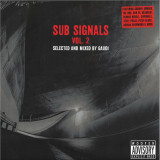
- A1: Sudden Reverb - Sound Tlakotli (Deadbeat Remix)
- A2: Pitch Black - Transient Transmission (Adrian Sherwood's Delta B(0)=B Remix)
- A3: The Orb - Say Cheese (Gaudi's Dubble Mozzarella Mix)
- A4: David Harrow - In My Head (Inside My Head Mix)
- B1: Subset - The Astrogator (Sub Signals Mix)
- B2: 3Head - Afnaz (Dennis Bovell Dub Mix)
- B3: Groove Armada - Oh Tweak To Me (Gaudi Remix)
- B4: Shpongle - How The Jellyfish Jumped Up The Mountain (Cosmic Trigger Remix)
- C1: Aux25 - Passing Through
- C2: Simm Feat Phelimuncasi - Cracks
- C3: Alpha Steppa - Colour
- C4: Radikal Guru - Badman Skank
- C5: Paolo Baldini Dubfiles - Ethiolò Dub
- D1: African Head Charge - Disciplined And Dignified
- D2: Gaudi Feat Steel Pulse - Cry Dubber
- D3: 100Th Monkey - Fly Higher Dub
- D4: Dub Fx - Dub Everyday (Gaudi's Sub Signals Remix)
- D5: Phonolab Feat Bill Laswell - Where Do Comets Come From
18
Sub Signals Vol.2 is a deep dive into underground bass, guided by artist and producer Gaudi. Featuring predominantly unreleased originals and versions by some of the biggest names in the worldwide dub collective, it intricately combines analogue elements with digital grooves to stunning effect.
Much more than just a compilation, the Sub Signals series is a celebration of the evolution of the sound of dub, from its original roots in reggae to its fusion with a much wider spectrum of sounds and influences. Gaudi curated the first volume back in 2006 for the cult Canadian label Interchill, sourcing tracks and dubs from High Tone, Zion Train, Manasseh, Almamegretta, Noiseshaper, Creation Rebel, Greg Hunter, Dubadelic and more.
15 years on, Gaudi has created the second volume, blending contributions by established reggae names Steel Pulse, Dennis Bovell and African Head Charge with next generation dub producers Alpha Steppa, Radikal Guru and Paolo Baldini Dubfiles, headline acts Groove Armada, Dub FX and The Orb with underground artists Deadbeat, Pitch Black and SUBSET, to create a seamless 75 minute mix.
“With Volume 2, I wanted to create a deep vibrational experience by shaping an aural trajectory that encompassed the many aspects of dub and its related sub-frequencies. To achieve my goal, I reached out to the artists I regularly work with to ask for contributions, in some cases digging in their archives to find what I was looking for.”
As a solo artist, Gaudi has recorded over 20 albums, while as a producer he has hundreds of productions under his belt. He has worked with legends of the reggae and electronic music worlds including Lee "Scratch" Perry, Horace Andy, Dub Pistols, Hollie Cook, Youth, Mad Professor, Prince Fatty, Lamb, Trentemøller and Nusrat Fateh Ali Khan.
Dedicated to the sound of dub in its many forms, Gaudi’s latest excursion of his Sub Signals series is pure bass therapy, designed to excite your eardrums and worry your woofers.

2
The British composer, musician and audio engineer Daphne Oram was a pioneering figure in the use of electronic music. Coming to prominence through her work with the BBC Radiophonic Workshop, which she co-founded, Oram was one of the first British composers to feature electronic instruments in her work and has been rightly hailed as helping musique concrete to become accepted in Britain. Born in 1925 and raised in rural Wiltshire, close to Stonehenge and the ancient stone circle at Avebury, Oram eschewed a place at the prestigious Royal College of Music to take a junior engineering role at the BBC in 1942, she was often tasked with creating sound effects, leading to cut-up experiments with tape recorders and the development of synthetic sound; her composition Still Point, involving two orchestras, two turntables and five microphones, was deemed too radical by the BBC, though she was promoted to studio manager in 1950, leading to the gradual introduction of electronic music and musique concrete techniques on BBC soundtracks. In 1957, she composed the music for the play Amphitryon 38, using a sine wave oscillator and homemade filters, and this and other subsequent works led to the establishment of the BBC Radiophonic Workshop the following year, but Oram soon tired of the conservative constraints of the BBC, leading to her resignation in 1959 to pursue her own vision at the Oramics Studios for Electronic Composition, located in Tower Folly, a former hop kiln located at Fairseat, near the village of Wrotham in rural Kent. Oramics was a radical sound composition technique that sought to transform images to music, enacted by drawing onto 35mm film, which would then be read by photo-electric cells; in addition to its use in Radiophonic Workshop material, Oramics was also employed for sound installations, theatre productions and feature films, such as The Innocents, though financial pressures forced Oram to seek a range of commercial engagements in addition to creating her own artistic works. The Listen Move And Dance series of BBC programmes were devised as a radical new technique to help British schoolchildren learn how to dance; on the LP releases, Vera Gray arranged short adaptations of classical pieces by Bartok, Stravinsky, Shostakovich and others, designed for “stamping, punching, kicking and jumping” movements, as well as “running lightly, dancing on toes” and “shaking all about,” which contrasted sharply with Oram’s electronic abstractions, which seemed to have been beamed in from outer space.

6
High Roller Records, yellow/ black mixed vinyl, ltd 300, 3 bonus tracks, 425gsm heavy cardboard cover, 4 page insert, double sided poster, 2 x A5 photo card, Original transfer by Marcus Mossmann (R.I.P.) at PHONOGRAPHIC ARTIFACTS in March 2021. Audio cleaning, restoration and mastering by Patrick W. Engel at TEMPLE OF DISHARMONY in April 2021. Cutting by SST Germany on Neumann machines for optimal quality on all levels... The ultimate audiophile edition of this eternal NWOBHM classic!

High Roller Records, yellow/ black mixed vinyl, ltd 300, 3 bonus tracks, 425gsm heavy cardboard cover, 4 page insert, double sided poster, 2 x A5 photo card, Original transfer by Marcus Mossmann (R.I.P.) at PHONOGRAPHIC ARTIFACTS in March 2021. Audio cleaning, restoration and mastering by Patrick W. Engel at TEMPLE OF DISHARMONY in April 2021. Cutting by SST Germany on Neumann machines for optimal quality on all levels... The ultimate audiophile edition of this eternal NWOBHM classic!

Alga Marghen proudly presents "Water Angels", an LP with previously unreleased tracks by Katalin Ladik, following the monumental "Phonopoetics" from 2019. "Water Angel", the title track, is a side-long work from 1989. It began its life containing a plice of "O Fortuna" from Carl Orff's "Carmina Burana" and was first staged in an artificial fog on a lake at the 1989 Spoleto Festival in Italy. The texts include fragments of her own lyrics mixed with parts from James Joyce and Lewis Carroll in a kind of sonic-textual collage of processed sounds superimposed to environmental field recordings. one can also hear the composer Erno Király, her first husband, playing his self-built instrument called "Zitherphone", a 58-stringed huge engine of sounds assembling five zithers in a single body, with pick-ups placed on some of the strings. The first part of "Water Angel" was used as a starting point for "Three Orphans", another composition juxtaposing electronically modified voice with recordings of folk songs, this time Hungarian. It's a kind of "adaptation of a Hungarian folk ballad", utilizing recordings done in Transylvania in 1940, registered with a wax cylinder phonograph and gathered by Radio Novi Sad. Thanks to the collaboration with Boris Kovac, the sound engineer for this project, the quality of Katalin Ladik's screams, whispers, chants, laughter, giggles is now significantly improved, and in some ways the subtle nuances of her virtuoso interpretation find here their most powerful rendition. Also presented on this record are three and never before issued works created by Katalin Ladik in collaboration with the composer Svetlana Marasch at the electronic studio of Radio Belgrade in 2019, "Electric Bird", "White Bird" and "Ice Bird". combining extended vocal techniques, processing and modular synthesis, these tracks confirm the artist's radical temperaments that helped to define her work during the 60s and 70s, while pushing it further into new territories thus revealing an artist with almost no peer in the experimental landscape today.

8
Recorded in 1991 by the quintet of vocalist Billie Ray Martin and Birmingham-based electronic musicians Brian Nordhoff, Joe Stevens, Les Fleming and Roberto Cimarosti, Electribal Soul was conceived as the sequel to the band’s 1990 debut album, Electribal Memories.
Electribal Memories had yielded the hits ‘Talking With Myself’ and ‘Tell Me When The Fever Ended’ and pushed Electribe 101 to the forefront of a crossover electronic scene that fused dance music with pop savvy. They were snapped up by Phonogram, managed by Tom Watkins and hailed as “the next band to meet the Queen” by i-D. The band took the coveted support slot for Depeche Mode on their epochal World Violation tour and supported Erasure at Milton Keynes Bowl. Seen as the next big thing, everything pointed toward enduring critical success for Electribe 101, and the band settled into putting their second album together.
“There was a degree of confidence among us when we came to write the second album,” recalls Billie Ray Martin. “To me, the songs we put down sound like some of our finest moments.” More immediately lush and warm than the dancefloor-friendly structures of Electribal Memories, the clue to the sound of Electribal Soul lies in the second word in its title: soul. Songs like the aching sensuality of opening track ‘Insatiable Love’ or the emboldened defiance of ‘Moving Downtown’ showcase Billie Ray Martin’s distinctive vocal range as it moves from haunting quiet to dramatic, euphoric rapture. Lyrics from ‘Moving Downtown’ had found their way into ‘Pimps, Pushers, Prostitutes’ by S’Express, and the song would appear as ‘Running Around Town’ on Martin’s 1996 solo album. The strikingproduction on the version of the song presented on Electribal Soul suggests classic late sixties soul influences, such as those of legendary Motown producer Norman Whitfield, with the long shadow cast by Kraftwerk never being far away.
‘Deadline For My Memories’, the song that provided the title for Martin’s first solo album, was originally intended for the second Electribe 101 album. Its lyrics document a sense of freedom and liberation from the darkness of a bad relationship, accompanied by jazzy piano and organ sounds over a quiet rhythm and discrete electronics. In contrast, ‘A Sigh Won’t Do’ finds Martin in soothing vocal mode, despite its devastating message about the final ending of a strained relationship, her lyrics framed by restrained and subtle beats and sounds.
To spend time with Martin’s voice on Electribal Soul is to find yourself moved deep into the ordinarily impenetrable emotional corners of your own psyche. “I was into big ballads at the time and listening to all kinds of US and UK singers, and I was also young enough to want to prove myself as a belter of ballads,” explains Martin of the classic soul edge the album showcased.
Electribal Soul heads into darker territory with ‘Hands Up And Amen’. Originally written by Martin in Berlin in the period before moving to London and forming Electribe 101, the song was then perfected and enhanced by the band’s production nous. ‘Hands Up And Amen’ savagely documents the mugging of a woman in Queens, NY at gunpoint, only to resolve itself with a middle section that nods reverently toward gospel tradition. The song coalesces around a regimented break and burbling synths, finally ending with layers of urgent synth sounds.
Meanwhile, a cover of Throbbing Gristle’s ‘Persuasion’ takes us into a seedy world of sexual coercion and creepy infatuation, predating Martin’s chilling version of the track with progressive house unit Spooky two years later. Supported by a minimal, nagging rhythm and barely-fluctuating sounds, Electribe 101’s take on ‘Persuasion’ makes for uneasy listening, even though Martin manages to inject a sort of twisted sympathy for the protagonist as the song progresses.
That Electribe 101 were as comfortable offering complicated, nuanced tracks like ‘Persuasion’ alongside pop house bangers like ‘Space Oasis’ – written by Billie Ray Martin with Martin King before Electribe 101 was formed – is testament to the way the band wove their way effortlessly through electronic music reference points. Framed by light, jazzy piano melodies and string sounds, the energy of ‘Space Oasis’ soars so high that it could easily reach the moon, while highlighting how well-suited Martin’s voice has always been to club music. We hear the same reminder of her dance music credentials on ‘True Memories Of My World’, finding her describing a Hollywood actress who reflects on being used by directors to sell her ‘tears’.
Hooking up with the Birmingham-based Nordhoff, Stevens, Fleming and Cimarosti after placing a Melody Maker ad in 1988 (“Soul rebel seeks musicians – genius only”), it was clear that Martin had found a group that recognised the unique power and importance of her voice. Having worked with genres as diverse as reggae, rock and R&B, the four producers proved to be perfect collaborators, presenting carefully-sculpted backdrops that emphasised the towering emotional dexterity of her voice.
“Listening back to these tracks now, I was reminded of what a bunch of great musicians they were,” says Martin. “They had a rule that if a part still sounded good after a day or two then it could stay. If it bothered the vocals, it would go.” Even more so than on Electribal Memories, Electribal Soul places Martin at the captivating centre of these pieces, surrounding her voice with everything from dubby rhythms to chunky R&B beats to nascent trip hop breaks; wiry, acid-hued synths uncoil gently without ever dominating, while horn samples and lush, disco-inflected strings provide a rich, naturalistic accompaniment for Martin’s emotional outpourings.
The band finished mixing the album at London’s Olympic Studios in 1991. They were assisted by Apollo 440’s Howard Gray on production duties for ‘Deadline For My Memories’, ‘Insatiable Love’ and ‘Space Oasis’, with Gray supported by talented engineer Al Stone. Pre-release promo tapes were issued and an enthusiastic energy started to build around the band’s anticipated second album.
It was not meant to be. Against a backdrop of a worsening relationship with Tom Watkins, and a disinterested Phonogram, instead of receiving a positive reaction to the new tracks, Electribe 101 were swiftly dropped by their label. Electribal Soul languished, unreleased, and the band yielded to pressures that had been building and split up. After collaborating with Spooky and The Grid, Billie Ray Martin went on to release her seminal debut solo album in 1996, with it securing the era-defining hit ‘Your Loving Arms’, while the other group members continued to work together as The Groove Corporation.
Thirty years after the songs were recorded, we’re now finally able to hear what the second and final chapter of Electribe 101’s story sounded like. Electribal Soul shows that the band had really only just got started when they dropped their first album in 1990. Heard only by a select and privileged few, what followed elevated the band’s music to a completely new level, making Electribal Soul musical buried treasure of the most precious and rare variety.
Electribal Soul will be released on LP, CD and digital formats on 18th February 2022 through Electribal Records. The physical formats include extensive liner notes from Billie Ray Martin, and the album sleeve features unseen archive photographs by Lewis Mulatero from the original 1990 sessions with the band that were never used in the sleeve designs for Electribal Memories.

Parallel Traces of the Jewel Voice by dj sniff is a project that takes inspiration from historical narratives and personal memories constructed around The Jewel Voice Broadcast (Gyokuon Hoso) that took place on 15th August 1945. Contrary to common belief, Emperor Hirohito did not speak live on air to announce the surrender of Japan on this day. Instead, two lathe-cut discs with his recorded voice were skilfully mixed and played by NHK engineer Shizuto Haruna. Haruna’s proto-DJ/turntablist performance was heard not only in Japan but also throughout the colonized territories in Asia, marking the end of World War II and Japanese rule.
Interested in these aspects which often have been overlooked within the Japanese narratives of this historical event, dj sniff conducted research in both Taiwan and Japan. Over the course of 3 years he collected various materials that include; interviews and field recordings, audio samples extracted from phonograph discs and recordings sessions with improvising musicians, and a re-reading of the Imperial Rescript on Surrender in Chinese. These were used to compose two compositions that are paired differently depending on their distribution format.
The vinyl release is a multi-sided disc with two parallel grooves cut on one side, which in effect plays a different composition depending on where the stylus is cued. The other side has no audio but features two silkscreened lines that refer to how Haruna played the original lathe-cut discs. For the digital release, each composition is independently assigned to the left and right channel and is heard simultaneously.
Additionally, an extensive text written by dj sniff accompanies this release. Sniff uncovers technical details of the recording and broadcasting of the emperor’s voice that took place over 75 years ago. He also reflects on his encounters with the elderly community in Taiwan who spoke fluent Japanese and shared their personal stories after listening together to records from their childhood.
DJ Sniff – Biography
dj sniff (Takuro Mizuta Lippit) is a musician, curator, and educator. His work builds upon a distinct practice that combines DJing, instrument design, and free improvisation. His collaborations include Evan Parker, Otomo Yoshihide, Paul Hubweber, Tarek Atoui, Senyawa, and Ken Ueno.
He was the Artistic Director of STEIM in Amsterdam between 2007 to 2012 and a Visiting Assistant Professor at the School of Creative Media, City University Hong Kong between 2012 to 2017. He is now based in Tokyo where he is the Co-Director of AMF (Asian Meeting Festival) and teaches at Kyoto Seika University.

Athlete Whippet return to Toy Tonics with an EP showcasing emotionally layered dance tracks and their refusal to stick to genre conventions. The duo are synonymous with sublime cuts that are just as suited to late nights and early mornings on the dancefloor, as they are to home-listening, this perfectly exhibited on the "Noguiera" EP.
The four-tracker is named after a remote place in the mountains around Rio de Janeiro where it was made on a creatively fruitful getaway in 2021. It's sentimental, joyful, bouncy, and futuristic, and showcases the duo’s musicality combining bass guitar and piano, with hardware synths, loops and fragmented vocal samples.
Robin explains - "Spending time in Brazil in recent years was a blessing. The nature, culture and musical heritage over there is beautiful. Mostly in solitude, as I ended up spending most of my time in a remote place in the mountains around Rio, music became the only real emotional outlet for a while. So in a way this is a record of dance music created as far away as we’ve ever been from the dance floor!"
Both from a live performance background, Robin and Avi met studying at Goldsmiths London and found their way to the dance floor via playing in bands, Robin a guitarist, Avi classically trained in trumpet and later on picking up the keys. Absorbing the community of South London, they eventually set up artist collective and record label Squareglass - a proudly established home for new artists coming out of the area. They’ve remixed for the likes of Rhythm Section, collaborated with Olugbenga, and their releases have come with reworks from Ross from Friends, Cameo Blush, Baltra and Seb Wildblood. In 2021, their hybrid sound found a new home with tastemaker German label Toy Tonics who released their "Vesta" EP in May, followed by a run of European tour dates including Funkhaus Berlin, Phonox London and Amsterdam Dance Event.
