Having been part of the family for quite some time now, Lauren Bush aka re:ni joins the Timedance roster with an incredibly potent quartet of Techno infused bass-bin weaponry.
« BeautySick » sees re:ni plunging into a world of intoxicating serpentine grooves. Spectral vocal slabs chime like echoes of a distant hallucinatory trance, while industrial drumworks find a mesmerizing counterpoint in eerie dubwise atmospheres.
These four compositions not only showcase re:ni's sonic evolution but also explore the transient moments where darkness converges with light. They stand as a testament to the sonic prowess of one or favorite dancefloor sorceress.
Picture Hakime Sorayama’s ‘Sexy Robot’ in front of an unreasonably large stack of speakers at a dimly lit sound-system dance; this is the soundtrack.
Press + Tour highlights :
DJ Mag, Resident Advisor, XLR8R, BBC6 Music (Sweatbox Mix for Sherelle), First Floor, The Quietus, Phonographe Corp + more TBA
Upcoming tour dates for Q1-Q2:UK, Switzerland, Netherlands, Germany, Sweden, Belgium, Slovenia, Ireland, Australia, Croatia, USA
Search:f phono
2023 Repress
Frank Maston’s Tulips is a sample-ready film score to the best 70s movie never made. Originally a super-limited self-release on his Phonoscope label in late 2017, Tulips has already become incredibly sought-after. Be With were introduced to Maston by mutual friends Aquarium Drunkard and it didn’t take long before we decided this modern classic deserved a reissue.
Inspired by the deep-grooving soundtracks of Italian cinema - think Morricone, Umiliani and Alessandroni - Maston conceived the entire Tulips project as a continuation of these revered works. Frank designed the artwork and made two 16mm films to accompany the music: “It wasn’t just the LP… it was kind of a whole vibe I was trying to create. Not really trying to emulate the things that influenced me but more trying to make something that could sit alongside those records on a shelf. I’m still very proud of the project.”
There’s a distinct library music feel too, with wiry organ, spacey keyboards and loping 60s guitar hinting at KPM and DeWolfe. Like the best library music, Tulips creates a cinematic universe through sound alone, evoking moving images in the listener’s technicolour imagination. It turns out that was accidentally on purpose: “I was discovering a lot of library music for the first time… listening to a composer’s entire catalog or finding all this obscure stuff. I wasn’t entirely conscious of the influence until I started making this music and realized I was channeling the vibe. That’s when I began focusing more on weaving melodic themes throughout the record to make it function more like a soundtrack”.
Tulips was recorded between 2015 and 2017 in a small studio in a village called Zwaag in Holland, during downtime from Frank’s touring duties with Jacco Gardner’s band. “Tulips” comes from the title of the very first demo he made in Holland, it was the first thing that came to mind. Makes sense.
Recording in Europe with some very European influences in mind, Frank wanted to eschew any American influences. But we can still feel the studio wizardry of the likes of Brian Wilson and Harry Nilsson in there somewhere. A psychedelic bedroom-pop song-cycle, full of hypnotic hooks and dusty drums, Tulips manages to sound charmingly homemade yet wholly widescreen.
Dreamy opener “Swans” is an exquisite soul instrumental and recalls the soft-psych of Koushik, which Be With loves of course. Tropicalia influences abound in the cool and breezy “New Danger” and the KPM-references are loud and proud on the lush organ pop of “Old Habits”. Fast-paced “Chase Theme No. 1” manages to be both tense and laid back, decorated by acid-drenched spaghetti Western guitars. The glorious Gainsbourg-esque melancholia of “Infinite Bliss” is all gauzy flutes and happy-sad vocalizing and the title is almost perfect: it’s bliss, no question; *if only* it went on forever. Side A closes with “Evening”, a subtle bossa nova beat thing. Gorgeous.
Side B opens with the heat-shimmer guitars of “Rain Dance”, evoking an unreleased Byrds or Buffalo Springfield backing track. Yes, it’s that good. “Sure Thing” is music to accompany an elevator ride you never want to end, but in a good way! The ornate “Garçon Manqué” is as beautiful as the instrumentals on Pet Sounds (think “Let’s Go Away For A While”) and the wistful “Turning In” starts like a stroll in the park before Maston introduces a scorched-Earth guitar solo that would startle if it wasn’t so pitch-perfect. “Chase Theme No. 2” is a briefer, more keening counterpart to what we hear on side A. The head-nod bass-drums-keys funk of “Hues” rounds out this staggeringly assured set; still opening each phrase with a plaintive strum, but using vibrato and heavy reverb to accent the electric organ melody. Sublime.
All these top drawer musical references might sound like just more of the usual release notes hyperbole, but there’s a reason that this still-young LP already changes hands for big money. It really is that good. Of course that first pressing didn’t hang around for long and Frank’s regularly been asked about a re-press pretty much ever since.
Re-issuing Tulips on Be With made sense to Frank “because the record would fit in so well with the catalogue”. Having already delved into the archives of KPM and Themes, and beginning to do the same with Coloursound and Selected Sounds, the collaboration “just makes sense and seems inevitable”. We agree.
Frank wasn’t sure a record of instrumentals with obscure soundtrack references would be an easy sell when it was originally released, and was surprised when Tulips turned out to be exactly what some people wanted to hear. We reckon its timeless beauty ensures that it’ll *always* have an audience.
The record was originally cut to be played at 45rpm, a technical quirk that grants the home listener the opportunity to go deeper, for longer. Played at 33rpm, the more languid unfurling of the tracks proves just as wonderful a trip. As a psilocybin-soaked case study from Aquarium Drunkard back in January of 2019 describes, some of the songs sound as if they were intended to be heard that way. The slower speed allowing the listener to step inside and perhaps even “crack the code” of the music’s meaning.
Mastered for this vinyl reissue by Simon Francis and featuring alternative burnt orange artwork from Maston himself, this Be With pressing is limited to just 500 copies. Hypnagogic it may be, but please don’t sleep.
- Et Peu À Peu Les Flots Respiraient Comme On Pleure
- Jlg
- Hurlements En Faveur De Serge T
- Le Marin Rejeté Par La Mer
- Dernière Étape Avant Le Silence
- Dialogues Avec Le Vent
- Ses Mains Tremblent Encore
- Ma Contribution À L’industrie Phonographique
- Géographie Intime
- Je Suis Vivant Et Vous Êtes Morts
- Mon Royaume
- Potlatch (1971-1999)
- Un Souffle Remua La Nuit
Sylvain Chauveau's debut album "Le livre noir du capitalisme" is a melancholic milestone – and a precursor of what later would become the Modern Classical genre. With his release in 2000, Chauveau created a landmark of contemporary electronic music, parallel to the first releases of Jóhann Jóhannsson and Max Richter.
Inspired by John Cage's reflections on silence and Mark Hollis' solo album of the same name, on "Le livre noir du capitalisme" Chauveau assembles contemplative, repetitive piano and string arrangements with electronic sound layers and discreet field recordings to create an other-worldly but seductive Musique Noir. Midway between ambient, jazz and post-rock, Chauveau lays out a new paradigm of electro-acoustic music that functions as much atmospherically as compositionally, and whose parameters keep the boundaries between academic and non-academic music dissolved to this day.
Originally released on the small French experimental label Noise Museum in 2000, the album got reissued by Type Records in 2008 with the English title “The Black Book of Capitalism”. Being out of print for a while, Sonic Pieces now rereleases the classic with its original French title, plus new remastering by Loop-O and in an ultra-limited, handmade edition with black bookcloth cover on both CD and vinyl.
High Roller Records, black vinyl, ltd 400, 425gsm heavy cardboard cover with 5mm spine, 4 page insert, double sided poster, 2 track black vinyl bonus 7" with p/s and insert, Original transfer by Marcus Mossmann (R.I.P.) at PHONOGRAPHIC ARTIFACTS in March 2021. Audio cleaning, restoration and mastering by Patrick W. Engel at TEMPLE OF DISHARMONY in April 2021. Cutting by SST Germany on Neumann machines for optimal quality on all levels... The ultimate audiophile edition of this eternal NWOBHM classic!
High Roller Records, black vinyl, ltd 400, 425gsm heavy cardboard cover with 5mm spine, 4 page insert, poster, 2 track black vinyl bonus 7" with p/s and insert, Original transfer by Marcus Mossmann (R.I.P.) at PHONOGRAPHIC ARTIFACTS in March 2021. Audio cleaning, restoration and mastering by Patrick W. Engel at TEMPLE OF DISHARMONY in April 2021. Cutting by SST Germany on Neumann machines for optimal quality on all levels... The ultimate audiophile edition of this eternal NWOBHM classic!
The birth point of ecstasy in British music is usually credited to acid house and the second summer of love: a cemented vision of kids sweating and vibrating in clubs, fields and warehouses in 1988, united by universal empathy and mind-popping sounds. However, in 1981, a couple of young men from Leeds went to New York, discovered the drug in its infancy, fused its’ gritty synth pop to acid house’s squelchy 303 groove and recorded an album: Soft Cell’s Non-Stop Erotic Cabaret. The rest, as they say, is history.
Shortly before that Soft Cell’s debut single Memorabilia was born. Originally recorded a decade before the explosion of acid house and rooted in predominantly black NYC, Chicago and Detroit gay clubs, Memorabilia is a seminal early prelude to rave culture. Merging a
strutting disco bass line with a futuristic proto acid-techno beat, Marc Almond has past described Memorabilia as “the first acid house techno record ever”.
Dave Ball remembers: “Memorabilia got to about number 99 in the charts, but the clubs picked up on it. In NME or Sounds they had a chart for the Danceteria in New York, and we were in it. Our label Phonogram saw this and thought: ‘why is this weird little duo from Leeds that no one’s heard of suddenly getting played in one of the hippest clubs in New York?’ So I think they thought: ‘we’ll give them another chance’.”
Berlin’s very own upcomers Wally Funk round off the remix package, upping the original tempo slightly, while combining elements the of original production with the later Non-Stop Ecstatic Dancing version to create a new hybrid, best played extremely loud!
Time To Play is happy to announce “First Step”, a collection of five tracks from Various Artists showcasing the eclectic and forward-thinking nature of the label.
A1 is the jazzy house workout “Recognizing Strenght in Healing” by Meftah, an uprising talent from the Detroit scene who already had a few releases under his belt and was featured on the Theo Parrish Dj Kicks comp; A2 marks the return of label regular Colosimo with the acidic cut “It Works” featuring Alessandro Barbieri on percussions.
On the flip side, B1 the trippy jam “Hyper Dino + -“ by another label affiliate – Phonorem, featuring Stefano Nardon on Wurlitzer, followed by LSZ’s sunrise dancefloor burner called “21 – 12 – 21”. The closing track is Dj Dreamboy’s “Sunset Groove”, an old-school Chicago reminiscent track that keeps what is promised by the title.
ONE LEVEL is delighted to announce its latest release, the captivating 'Big Tal's Elements' EP by French DJ/Producer, ALEQS NOTAL.
Following the resounding success of One Level's debut release, the awe-inspiring Afro-futurism of Hagan's 'Forward Focus' EP - a production that ignited a dynamic and fruitful chapter for the London-based artist - the label has been meticulously crafting its return. One Level prides itself on championing quality over quantity, and this ethos is beautifully demonstrated in its second release...
Aleqs Notal, the former scratch champion and consistently evolving producer, joins the label family with a collection of four remarkable tracks. Despite his years of experience, Aleqs admits that he's still in the process of refining his own sound and with 'Big Tal's Elements’, a nickname affectionately bestowed by longtime friend and fellow artist Manaré, his four carefully curated house joints encapsulate a wealth of influences, all beautifully combining to create a modern and innovative soundtrack.
Following his early years of turntable virtuosity, and having embarked on a new creative chapter in the studio, it was 2014 and as a founding member of the innovative ClekClekBoom collective - a group of young French talents who spearheaded a groundbreaking movement that reshaped the Parisian electronic landscape - that saw Notal continue to cultivate his own sound, one rooted in the sounds of Detroit and Chicago. He became a respected DJ on the cities’ club circuit, and has gone on to to feature his music on esteemed labels including Phonogramme, Salon Recordings, Release Sustain and Patrice Scott's Sistrum Recordings.
The EP opens with 'Untwisted Delight', a homage to the timeless sound of the Motor City. A bass-driven DJ tool, pulsating with the resonance of the 808, evoking echoes of Pittman, and igniting a powerful dancefloor energy.
‘Save Ya’ is an ode to determination and self-preservation. A track with its roots deeply embedded in the dancefloor and featuring an archive sound-bank vocal alongside glorious hi-hats, it is a firm favourite of Notals. “I think its from my scratch background. I always work with the hi-hats. For me, when I hear the hats its as though I hear somebody singing." Fully road-tested at Fabric London, Save Ya is now set to rescue many a night.
'Come Get It' channels the spirit of early Chicago house. A fusion of spirited 606 and 808 drum patterns, coupled with the enchanting allure of resounding hi-hats, it offers a heartfelt homage to the revolutionary sounds that defined an era and continue to influence so much of today’s music.
Concluding the EP is 'Hymn Of Passion', a track inspired by Ron Trent's Future Vision imprint. Drawing on a diverse palette of Nigerian percussive elements and samples garnered from past projects, Aleqs weaves a sonic mosaic. Crafted in a single jam session, the track elegantly melds a rhythmic finesse with resonant congas, intertwining with the emotive Rhodes piano, to craft an unforgettable finale.
With a diverse array of influences seamlessly interwoven, Aleqs Notal’s ‘Big Tal's Elements’ EP is a journey through sound that fully captivates the listener.
The Red Shoes is Kate's seventh studio album and was released in November 1993.
The album was accompanied by Kate's short film, "The Line, The Cross and The Curve".
The album reached no. 2 in the UK album chart and has been certified Platinum by the British Phonographic Industry for over 300,000 copies sold.
The album also reached no. 28 in the US album chart.
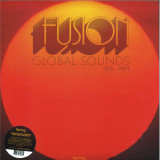
Favorite Recordings comes back with the 2nd edition of its compilation series: Fusion Global Sounds. 8 rare and hidden tracks produced between 1976 and 1984 in various parts of the world. As a fine collector of Jazz-Funk and Fusion for many years, Charles Maurice cooked another fine selection of forgotten Fusion Jazz productions, this time driven by a common Brazilian influence.
On this 2nd edition, recordings come from Brazil, Philippines, Netherlands, Poland, and US, all again from underrated artists mostly unknown from the masses. You'll find here the best elements of the Fusion genre: fine vocal arrangements, catchy Fender Rhodes and synthesizers, irresistible basslines, and classy horns section, altogether bringing a unique groove infused with Brazilian flavors.
The compilation starts with Lerma dela Cruz, a quite occult songstress from Philippines. “Free” was part of a very rare compilation titled “Tropical Jazz Fusion”, released in 1983 on A&W Horizon label (also home of Boy Katindig). With its blowing Samba / Jazz-Funk vibes, it was an obvious match to open this collection. The following song could only enhance this ambience, since that of Brazilian saxophonist, Nivaldo Ornelas, present on this opus with 2 titles taken from his album A Tarde (1983). On “Cactus”, Nivaldo is supported on keyboards by his friend Marcos Resende, both also known for their album on the MPBC series released by Phonogram-Polygram between 1978 and 1981, which has clearly been an inspiration for Charles Maurice in building this second edition.
We could continue telling stories and details about the others great tracks included in Fusion Global Sounds Vol.2, but we believe that the best way is to listen to it and pursue your trip through Fusion Jazz combined with Brazilian styles, including surprising stopover in Poland, or Netherlands.
SAIS005.5 — a companion piece to the PMA EP by B-2DEP’T released on SAISEI earlier this year — is a unique one-sided 10” EP featuring a remix by Uruguayan producer Z@p.
The Phonoteque resident reworks ‘BSMH’ with a classic 80s electro beat and bassline, funking up the groove for all the breakdancers in the crowd. The original vocodered lyrics — “Body/Sonic/Mental/Health” — resonate today as much as they did back in 1993, acting as a mantra for a new rave generation.
Fresh out of Bournemouth Town the Phonomena crew are back and taking you Intergalactic with the second and final chapter of the Lazerdrome series, at least for the time being…
On the A Side, Renegade blasts you on a mission through the galaxy with Multiverse, creating a tough and futuristic track full of influences from the past. With layers of hard hitting beats and a nod to one of the biggest rave tracks from 1991, this one will hopefully be rocking dance floors from 2023 into beyond.
Flip to the AA and Rage teams up with legend of the scene EQ for a musical journey flying Supersonic with some euphoric strings before steadily building up to a tear out full of mentasms and heavyweight bass reminiscent of one of EQ’s most famous tracks from 1992.
Incoming on translucent purple wax all copies have been hand stamped by the artists.
High Roller Records, reissue 2023, black vinyl, ltd 400, 425gsm heavy cardboard cover, insert, poster, Transfer by Marcus Mossmann (R.I.P.) at PHONOGRAPHIC ARTIFACTS in 2018. Audio cleaning and mastering for vinyl by Patrick W. Engel at TEMPLE OF DISHARMONY in October 2022. Cutting by SST Germany on Neumann machines for optimal quality on all levels
High Roller Records, reissue 2023, red vinyl, ltd 400, 425gsm heavy cardboard cover, insert, poster, Transfer by Marcus Mossmann (R.I.P.) at PHONOGRAPHIC ARTIFACTS in 2018. Audio cleaning and mastering for vinyl by Patrick W. Engel at TEMPLE OF DISHARMONY in October 2022. Cutting by SST Germany on Neumann machines for optimal quality on all levels
High Roller Records, 2nd pressing, black vinyl, ltd 500, 3 bonus tracks, 425gsm heavy cardboard cover, 4 page insert, double sided poster, 2 x A5 photo card, Original transfer by Marcus Mossmann (R.I.P.) at PHONOGRAPHIC ARTIFACTS in March 2021. Audio cleaning, restoration and mastering by Patrick W. Engel at TEMPLE OF DISHARMONY in April 2021. Cutting by SST Germany on Neumann machines for optimal quality on all levels... The ultimate audiophile edition of this eternal NWOBHM classic!
High Roller Records, 2nd pressing, yellow vinyl, ltd 500, 3 bonus tracks, 425gsm heavy cardboard cover, 4 page insert, double sided poster, 2 x A5 photo card, Original transfer by Marcus Mossmann (R.I.P.) at PHONOGRAPHIC ARTIFACTS in March 2021. Audio cleaning, restoration and mastering by Patrick W. Engel at TEMPLE OF DISHARMONY in April 2021. Cutting by SST Germany on Neumann machines for optimal quality on all levels... The ultimate audiophile edition of this eternal NWOBHM classic!
Detroit's Rebecca Goldberg, aka 313 Acid Queen, releases 5 techno bangers incl. Mark Broom remix on Phoq U.
Phoq U Phonogrammen, the rebellious U-TRAX sublabel, returns after 26 years with its eight release, produced and manufactured in Detroit. Detroit native Rebecca Goldberg, who has previously released music and performed live under her 313 Acid Queen alias, will present her brand new People Mover EP at the Detroit Movement festival, on May 26, 2023.
The EP features 5 dancefloor fillers, including the Detroit-style remix by Mark Broom of the opening track Automated. The EP is inspired by transportation, industry and travel, as well as the city of Detroit of course, paying homage to the original minimal techno music and the evolution of technology and industry.
All tracks are live jams, recorded in one take on all hardware instruments. Rebecca tries to do as little post-work as possible, with just a little bit of final arrangement. Her work often incorporates field recorded sounds, and for this EP she used samples recorded while riding on the Detroit People Mover itself, the elevated automated light rail system in downtown Detroit. Goldberg started a sound walk group called Detroit Frequency and the recordings were taken on during the first event last summer.
The EP kicks off with the fast-paced Automated, that echoes the hypnotic minimal techno sound of Robert Hood. Mark Broom added an extra dose of 909 funk in his Mark Broom remix, which provides the track with even more pumping rhythms and making it sound even more 'classic Detroit'.
The B-side opens with Elevated, that features industrial-ish DPM sounds on a bed of pure acid, as if Goldberg wants us to remember why she is named the 313 Acid Queen.
Staying On meanwhile, puts a repeating DPM announcer's voice central stage, making it a fascinating piece of minimal techno. The closing track Linear Motion creates a dark atmosphere, with eerie, down-pitched DPM sounds that makes this a spooky techno trip that we believe many people will love.
Marc Richter aka Black To Comm released his debut record 20 years ago. In 2023 he is still busy releasing music under various disguises and is currently signed to the Thrill Jockey label. To celebrate this anniversary his own Cellule 75 label is re-releasing some classic out-of-print vinyl albums that originally came out on the defunct Type and De Stijl labels. The LP will feature a full-colour printed inner sleeve exclusive to this edition.
In 2009 the Type Recordings label run by John Twells had just released seminal records by Grouper, Jóhann Jóhannsson and Yellow Swans when they signed Richter and put out his breakthrough Alphabet 1968 album. The LP sold out within two weeks, receiving a glowing full-page review in The Wire Magazine by the late Mark Fisher (later reprinted in his book Ghosts Of My Life), was selected for Boomkat's Top 10 releases of the year (alongside debut albums by Leyland Kirby, Demdike Stare and Oneohtrix Point Never) and was greeted with universal praise in the underground blog network as well as established magazines such as The New Yorker and Pitchfork.
The music itself played with the notion of nostalgia without being nostalgic itself. It's the sound of half-remembered dreams, a surreal distorted vision of the past, an aural polaroid of long forgotten musics, a ghostly voice from a non-existent era.
From the original Type one-sheet:
"The mission statement for Alphabet 1968 was to write an album of "songs" for want of a better word. Short tracks which represented genre points, the milestones which stuck in Richter's mind when he thought back to his favorite records. What we arrive at is a breathtaking 10-track album which, over the course of 45 minutes, explores world music, techno, noise, avant-garde, ambient music and even exotica. Each track is linked with a loose thread of radio static or environmental sound, dragging you through the album, as if tuning in to a stray broadcast or a particularly adventurous mix. Richter has pieced the album together from hours of recordings made at his studio with home made gamelan, small instruments and loops gathered from a collection of ancient vinyl and 78 records. The scope of the album is admirable, but ignoring this, it is simply a shockingly arresting collection of experimental oddities, with references ranging from Moondog to Basic Channel by way of Bernard Herrmann. It's not hard to fall in love with Alphabet 1968, far harder would be to place exactly where the record should fit into your collection."
Mark Fisher in The Wire:
"But what if we were to take Richter's provocation seriously - what would a song without a singer be like? What would it be like, that is to say, if objects themselves could sing? It’s a question that connects fairy tales with cybernetics, and listening to Alphabet 1968, I’m reminded of a filmic space in which magic and mechanism meet: JF Sebastian’s apartment in Blade Runner. The tracks on the LP are crafted with the same minute attention to detail that the genetic designer and toymaker brought to his miniature automata, with their bizarre mixture of the clockwork and the computerised, the antique and the ultramodern, the playful and the sinister. Richter’s musical pieces have been built from similarly heterogeneous materials - record crackle, shortwave radio, glockenspiels, all manner of samples, mostly of acoustic instruments. ….. JF Sebastian's apartment was itself an update of older spaces in which science and sorcery co-existed: the workshops of ETA Hoffmann's inventor-magicians, or of Pinocchio's creator, Geppetto. I think, too, of Auguste Villiers de l'Isle-Adam's astonishing 1886 tale The Future Eve in which Edison, using the expertise he has recently acquired from inventing the phonograph, sets himself the task of constructing an artificial woman. But if there are songs here, they are sung by the gramophone and other recording and playback machines. Richter so successfully effaces himself as author that it is as if he has snuck into a room and recorded the objects as they played (to) themselves. Rather than simply automating his music, as in the case of Pierre Bastien and his mechanical machines, Richter makes us feel that he has merely recorded the unlife of objects. ….. Indeed, the impression of things winding down is persistent on Alphabet 1968. Entropy has not been excluded from Richter's enchanted soundworld. It feels as if the magic is always about to wear off, that the enchanted objects will slip back into the inanimate again at any moment."