Fangen wir ganz von vorne an. Der Bandname: Er taucht auf im Werk der Beatles, von Cockney Rebel, Townes Van Zandt, Monty Python. Womit er auch einen ersten Hinweis auf die Musik liefert. Die Band: Vier Freunde, davon drei Musiker, 13 Alben im CV. Die Idee: Old school is the new modern. Pfeif auf Innovation. Pfeif auf Kunst. Konzentrier dich auf das, was du selbst am liebsten hörst. "Echte" Songs, mit Strophe, Refrain, zuweilen Mittelteil und wenn's passt auch mal Tonartwechsel. Melodiös, ohne seicht zu werden. Mitreißend, ohne aus der Kurve getragen zu werden. Deep, ohne kitschig zu werden. Oder, gottbewahre, esoterisch. Das Album: Alles wie immer, nur anders. Gitarren, Bass, Schlagzeug, plus hörbar mehr Keyboards/Synthesizers/Soundscapes. 12 Songs, die sich praktisch allen Facetten dieses Lebens widmen. Liebe, Körper, Kätzchen, Clubs, Theater, Astronomie, Wohnkonzepte, Mode, Müdigkeit, Müllentsorgung. Und, nicht zu vergessen, the way to the bathroom. Aufgenommen in Stuttgart, Hamburg, Karlsruhe, Paks/Ungarn und Uppsala/Schweden. Between Planets eben. And there you are.
Поиск:fac dance
Все
A steady and sure buzz has been building around Steve Young’s ‘Scarper’ project over the past few years, particularly since his acclaimed 2017 debut album ‘Warmer Squares’ and subsequent dancefloor favourite ‘E-Funk', which won over fans from Skream to Carl Craig with its genre-crossing appeal.
Marking a noticeable shift in direction and a new sense of focus, Scarper returns with four tracks of varying styles and influences. Drawing from dub, techno, breakbeat and rave, he mainly shoots for the floor (with a clear emphasis on bass weight), although as always, there is ample headphone fodder.
Opening with ambient intro 'Wavecrush,' Scarper moves through dub- infused downtempo with the Weatherall-esque chugger 'Metadub,' swiftly picks up the energy with the chunky beats and deep bass of
‘Metadome,’ and concludes with high-octane face melter 'Slab,' which throws tech-breaks, dark garage and jungle/hardcore vibes into the pot.
More quality from Scarper.
Jerome Hill returns to the long running Don't label (24 years strong) with a four tracker of big boned Techno/Booty music that swaggers along, at times with tongue in cheek and mainly giving no fucks.
On the A side, taking inspiration from Relief and Dance Mania records, 'All My Friends' meets the bombastic New-New-Beat rave stylings of 'The Ghost Of New Beat' while over on the flip, you're faced with 'Dog Booty', an obscenely filthy Ghetto Techno track that only your dog will understand, before finishing off with the Miami Bass apocalypse that is 'Blip Trick Track'.
'a masterclass in hardcore dancefloor and bittersweet feeling...Alex Crossan is both acclaimed and not feted enough' **** The Observer
Available on his own Pond Recordings, Curve 1 is a love-letter to club spaces, and the music and people who fill them.
Mura Masa’s forth album is a full-circle moment. Departing from the pop-leaning narrative and who’s-who guestlist of his most recent records, Curve 1 heads back down the rabbit-hole of club music that’s alternately euphoric, introspective, nostalgic and future-facing. Full of tension and release, ambiguity and playfulness, the significance of Curve 1 is left up to the individual: whether enjoyed solo or in the sweat of a packed room, here is music as enigmatic and layered as its author.
Mura Masa himself introduces Curve 1 as 'a manifestation of an attitude I’ve been cultivating in my personal life; ignore everything. All the content, all of the attention economy, all of it. In doing that, the really meaningful and vital parts of what’s around you make themselves known and unignorable, demanding your energy. It’s my first offering as an independent artist through my own record label, and as such I wanted it to be as free and anti-narrative as possible. Impressionistic. Music as entertainment has in many cases, to me, become very advertorial and excessively sentimental in terms of creating narrative around albums and artists. I wanted to strip this away as much as possible to leave room for the music to create its own meaning in the lives of people who form connections with it. It's hard for me not to explain away the intricacies and ideas contained within these records after having theorised and tolled and executed them over the course of nearly three years, but I think it’s far more fitting of the album’s intent to say simply: listen to it in the dark.'
Curve 1 pulls Mura Masa into focus as one of this generation’s most influential figures. Aptly reflecting his rare standing at the heart of youth culture, Mura Masa recently co-wrote long standing collaborator PinkPantheress’ single ‘Turn It Up’, as well as creating a series of remixes for Troye Sivan’s ‘Honey’. From producing global hits like ‘Boy’s a liar Pt.2’ to seminal records like Shygirl’s Mercury-nominated Nymph, it’s a juncture that has also seen Mura Masa embark on a new chapter of his own. He has set up his label and a creative hub and arts space - The Pond - in Peckham as a base for emerging artists and likeminded creatives, which will launch officially next year. Across his three critically-acclaimed solo albums, Mura Masa has built an audience who will follow wherever his genre-defying work goes next; with 2 billion streams, headline festival sets around the world, and live shows ranging from Alexandra Palace to Warehouse Project.
Curve 1 marks a back-to-your-roots approach whilst also highlighting the trailblazing young star’s recurring theme: to capture ‘that’ curvature in pop culture, to make it Mura Masa’s own, and to push things forward.
'Curve 1 has a club focus, no f—ks attitude and production that’s mature, lush — simply put, it’s just cool.' billboard
'a scintillating love letter to club culture and sounds' Wonderland
'the Grammy-winning producer throws a total curveball. Ditching his usual dreamy pop, Mura goes full hardcore dance. From techno to vintage rave' **** The Mirror
'Get sweaty as Mura makes it messy' **** The Sunday Express
'a total curveball...intense but full of hooks' **** The Daily Star
'Mura Masa has always been ahead of the creative curve, but with his new album, the tenured producer is consciously forging a path inspired by his newfound independence.'
'a grab-bag of sounds from a brilliantly restless mind' Rolling Stone
Sasu Ripatti presents the fifth and last volume in his "Dancefloor Classics" series. Music for imaginary dancefloors, released on Ripatti's own label "Rajaton".
--
”Look up, into the light” she said, while the camera shutter clicked. ”Like this? Does it look holy?” His neck felt stiff. Her reply: ”Yes, just like that. What do you mean holy? Like religious? ”No, more like trying to look very far, somewhere beyond what we can see.” ”Okay, stand still, I’m going to come close to you now. The light hits your face great.” click, click, click.
He noticed her fingernails. They were not polished. Natural. Even somewhat rugged, as if something wore out the fingers slightly. What had these hands held besides the camera? What made the edges of her fingernails drift off?
He thought it’s weird to look straight into the camera. The photographer had closed her left eye, the one not looking into the lens. Then it opened, she looked up, perusing the surroundings, then she closed her eye again, then looked up, closed, looking up, very quickly. It all seemed very professional. Maybe she calculated the light, making sure it’s close to perfect. ”What will these photos look like?” – the thought popped into his head briefly. It was liberating to think it wouldn’t matter.
”What’s that song playing?” he asked. ”Wait a sec, Ol’ Dirty Bastard?” she replied. ”Oh yeah, right. But the sample?” ”Hey, could you look up again, like that. No, lower.”
New directions: ”Look out from the window, turn left.” ”My left or yours?” ”Yours, I always try to think from the direction of my model.” How professional! This is a good shoot, so natural. Should I worry about how the photos look like? No, I don’t want to. His thoughts bounced around. What would the story be like? It’s a big newspaper, everyone will read it. Maybe someone drinks coffee and eats a stroopwafel while they do it. Will they place the waffle on top of the mug for a brief while, so that it gets hot and the syrup melts a little? Then it feels wet, and you can bend the cookie.
She broke his train of thought off midway through: ”Now turn right, but look left, and slightly up, but don’t turn your face right.” ”Umm, like this? Sounds like a set of pilates instructions.” she laughed ”You do pilates?” ”Yeah, it’s hard sometimes. Have you tried?” ”No”, she said. ”I’m not good for sports that are done in groups.” ”Yeah, but in pilates you can just be inside your mind, drowning in your private thoughts.”
”What are you thinking in pilates?” she asked, taking more photos. ”Well, mostly just which way is right. And which left.” click, click.
Sasu Ripatti presents the fourth volume in his "Dancefloor Classics" series with five 10" releases coming throughout 2023. Music for imaginary dancefloors, released on Ripatti's own label "Rajaton".
”Look up, into the light” she said, while the camera shutter clicked. ”Like this? Does it look holy?” His neck felt stiff. Her reply: ”Yes, just like that. What do you mean holy? Like religious? ”No, more like trying to look very far, somewhere beyond what we can see.” ”Okay, stand still, I’m going to come close to you now. The light hits your face great.” click, click, click.
He noticed her fingernails. They were not polished. Natural. Even somewhat rugged, as if something wore out the fingers slightly. What had these hands held besides the camera? What made the edges of her fingernails drift off?
He thought it’s weird to look straight into the camera. The photographer had closed her left eye, the one not looking into the lens. Then it opened, she looked up, perusing the surroundings, then she closed her eye again, then looked up, closed, looking up, very quickly. It all seemed very professional. Maybe she calculated the light, making sure it’s close to perfect. ”What will these photos look like?” – the thought popped into his head briefly. It was liberating to think it wouldn’t matter.
”What’s that song playing?” he asked. ”Wait a sec, Ol’ Dirty Bastard?” she replied. ”Oh yeah, right. But the sample?” ”Hey, could you look up again, like that. No, lower.”
New directions: ”Look out from the window, turn left.” ”My left or yours?” ”Yours, I always try to think from the direction of my model.” How professional! This is a good shoot, so natural. Should I worry about how the photos look like? No, I don’t want to. His thoughts bounced around. What would the story be like? It’s a big newspaper, everyone will read it. Maybe someone drinks coffee and eats a stroopwafel while they do it. Will they place the waffle on top of the mug for a brief while, so that it gets hot and the syrup melts a little? Then it feels wet, and you can bend the cookie.
She broke his train of thought off midway through: ”Now turn right, but look left, and slightly up, but don’t turn your face right.” ”Umm, like this? Sounds like a set of pilates instructions.” she laughed ”You do pilates?” ”Yeah, it’s hard sometimes. Have you tried?” ”No”, she said. ”I’m not good for sports that are done in groups.” ”Yeah, but in pilates you can just be inside your mind, drowning in your private thoughts.”
”What are you thinking in pilates?” she asked, taking more photos. ”Well, mostly just which way is right. And which left.” click, click.
Q&A with Sasu Ripatti:
1) Tell us something about the EP series ”Dancefloor Classics”, what’s the idea and what can we expect?
I’ve been slowly writing these sort of dance music pieces and finally curated them together for a conceptual release. I like to create music for a dancefloor that exists only in my imagination and doesn’t try to suck up to the standardized reality.
2) Your vinyl format is 10” which is quite special (as opposed to LP / 12”). Why did you choose it?
It’s my favourite format, absolutely. The size is perfect, and you can make it sound really good @ 45 rpm. And you still can make great artwork.
3) You seem interested in sampling/repurposing, what does it mean to you as an artist to approach something already existing from a new angle? How does the source material inform you about the approach to take?
I guess i could flip it around and just say I’ve outgrown synths or electronic sounds to a great extend, and having gotten rid off all my synths already good while ago I’ve used samples as my main source material a lot. It’s obvious on this series that i’ve sampled existing music, but I also sample instruments and things in the studio and resample my own library that I have built over the years, it’s quite large. To me the end result matters, not so much how I get there. Once I have something on my keyboard and play around, it’s all an instrument, though with sampling other music it becomes a really interesting and complex one as you’re possibly playing rhythm, but also harmonic content and maybe hooks or whatever, all at once.
I never sample premeditadedly, like listening to records and looking for that mindblowing 3 sec part. I just throw the cards in the air and see what lands where, just full intuition and hopefully zero mind involved, playing tons of stuff, trying things, just recording hours of stuff. Then comes the interesting part to listen to hours of mostly crazy stuff and finding that mindblowing 3 sec part.
4) What is your relationship with the dancefloor (conceptually and/or in experiences / as a performer)?
Very complicated. I have never really felt comfortable on a dancefloor but have always wanted to. There’s something in club music, in theory, that really speaks to me. It has never really materialized for me – speaking mainly from a performer’s point of view who goes to check on a dancefloor for a moment after a concert. I never have DJ’d or felt much interest towards it. But again, I love the idea and concept of DJing. As well as producing music for imaginary DJs. Lately, as in the past 10+ years, I haven’t even performed in any sort of club spaces. So my relationship to the dancefloor is quite removed and reduced, but there’s quite a bit of passion and interest left.
All tracks composed and produced by Sasu Ripatti.
Artwork & photography by Marc Hohmann.
Mastering by Stephan Mathieu for Schwebung Mastering.
Vinyl cut by SST Brueggemann.
Publishing by WARP Music Ltd.
- A1: L'intro
- A2: System System (Ft Lass)
- A3: Love And Death (Ft Joao Selva)
- B1: Trouble Travel (Ft Nai-Jah)
- B2: Anna Est Partie (Ft Pat Kalla & Ayuune Sule)
- B3: Too Young To Die (Ft Olivya)
- C1: Mtae Rock
- C2: Sane Kunda (Ft Lass)
- C3: Jolie Sarah (Ft Pat Kalla)
- C4: Les Temps Ont Changé (Ft Fouley Badiaga)
- D1: Faché (Ft Pat Kalla)
- D2: Tu Nous Fatigues (Ft Fouley Badiaga)
- D3: C'est La Danse
- D4: Life
For almost 10 years and with 3 albums on the clock, Voilaaa has established itself with a unique style, reviving African rhythms and atmospheres in the colors of Disco dancefloors and Funky arrangements, all often accompanied by lyrics and vocals tinged with humor and commitment.
As a result, the Afro-Tropical adventure launched by producer Bruno “Patchworks” Hovart today leaves behind a host of hits (“On te l’avait dit”, “Spies Are Watching Me”, “Ben Bene La”, …), as well as trips around the globe and as many gigs and festivals, but also and above all numerous and lasting collaborations with singers like Lass, Pat Kalla, Sir Jean, Ayuune Sule, Rama Traore, or Fouley Badiaga, the latter which also marks its great return on two tracks of the album.
With C'est tout, Voilaaa returns to us without revisiting this unstoppable recipe, while seasoning things with a more Latin and Caribbean inspiration, brought back in Bruno Hovart's suitcases after several stays in South America in recent years. Introduced last spring with the release of a first maxi single, this new opus once again delivers hit after hit.
As on the already famous “Faché” alongside Pat Kalla, which displays all the classic assets of Voilaaa’s sound: punchy Afrobeat horns, woozy chords and crunchy clavinet licks rising above a low-slung, hypnotic, dub disco-meets-Afro-boogie groove. The rest of the album is not to be outdone with a total of 14 wild tracks entirely composed by an unstoppable Bruno Hovart.
Two exceptions confirm the rule, a beautiful interpretation of the song "Love and Death" by Ebo Taylor, where Voilaaa's Afro skills perfectly melt with Angolan and Brazilian vapors, beamed by Joao Selva's lovely vocals; as well as a magical cover of “Too Young to Die”, transporting Jamiroquai to the crossroads of Africa and the Antilles, carried by the superb vocal performance of singer Olivya (Dowdelin) for a first collaboration.
Well, Voilaaa is back as its best, “that’s all” (C’est tout).
Reissue
Carl Finlow has been turning out killer electro since forever and is the man behind the revered Random Factor alias. He started it back in 1994 and since he's brought us four full lengths on 20/20 Vision, with a new one dropping very soon. In the meantime, here's a reissue of one of his most in demand classic EPs that's back on wax after initially making waves way back in 2000. The cuts draw on electro-pop and lithe future disco a la Metro Area, from the sparkly 80s-vibed opener 'Old News', 'Richochet' - imagine dub techno rerouted through guitar-led funk - to the more heads down, deep and moody dancefloor delight 'Update' and the indelible melodies of closer 'Swing'. Timeless machine funk from one of its latter day masters.
De School is thrilled to announce the release of HET ALTIJD: a 160-page journey back to and through its now-defunct club, art spaces, café, and restaurant, which closed their doors on January 15. HET ALTIJD archives De School’s essential facets, functions, spaces, and stories, from the pre-DS days to the moment the music stopped. In sync with De School’s eight-year- spanning program, the publication is a sensory and experience-based format that crisscrosses disciplines and allows those who enter to define their own route. The release of HET ALTIJD follows the launch of HET ARCHIEF, the extensive sound archives unlocked earlier this year.
More than a final form of documentation, HET ALTIJD was created to be an experience in itself, expanding on the time-erasing sense of exploration that a deep dive into De School embodied. Preserved records such as architectural sketches and art documentation are interwoven with original imagery by various creative contributors, including semi-anonymous portraits of club regulars, and post-closing snapshots taken just minutes after the very last dance. Recurring throughout the publication, and featured on the cover, is the abstracted thermal imagery of artist Loes de Boer, who chronicled the 66-hour closing (Het Einde) while upholding De School’s distinct sense of anonymity and wonder. In HET ALTIJD, the no-photo policy is simultaneously upheld and lifted—leaving space to roam and relive De School one last time.
HET ALTIJD refrains from a singular storyline and exclusively features text found in, on, and around Doctor Jan van Breemenstraat 1. Left-behind wall markings, toilet scribbles and sticky notes from the basement were photographed and excerpted to form fragmentary, touching, and tongue-in-cheek poetry that revive individual and collective memories. In addition, the non-linear graphic design and—lack of—binding allows anyone to (re)arrange their very own De School encounters. Holding HET ALTIJD together is a translucent red cover featuring the instantly recognisable grid: a final nod to De School, the warm hue of its seemingly endless hallways, and its enduring, all-encompassing foundation.
The new dance album by Biicla called HYPER HOUSE is an imaginary club, where the main hero is the listener. The vibe in this house is Uk influenced modern take on bass / garage with a kind flow and naked emotions. The record has been in the making last 3 years and you could have heard some singles from the album already - GAS (4.21), MAKING NEW, MISS YA were all released via System 108 in 2023, the label has also become by accident a new home for the artist. Before arriving on System 108, Biicla has been releasing music for a while and getting exposure in big US Festivals, like Lollapalooza, Hard Summer, Bonaroo and many more, celebrating millions of streams worldwide. With System 108, Biicla found a new home and new dedicated audience, and it seems like a match made in heaven.
The process of production of the album took time during some challenging years - when our ordinary world started to shatter... Therefore the cover is divided in two parts - on the right, we observe chaos and destruction; on the left, people are having a quiet and happy life. Modern / hybrid club sounds in the album co-exist with sensible, soulful vibes, sorrow and hope. On top, the finishing comes in a close to perfection studio-engineered sound. HYPER HOUSE therefore is an intimate record with a personal meaning for Biicla and for us, as a label. Together as a team, we represent Biicla in all facets of his creative output, would it be his self-branded party BIICMAK, live shows or support of new names in the scene, discovered by the artist, as an example here comes the V/A Radar 108, curated by Biicla - tip!
ER gladly welcomes Juan Barraco aka Bunda to our catalog. Bunda is an Uruguayan producer/live performer who’s been linked to music since a young age through a classical approach with a later interest into electronic music production.
Origen EP is his debut vinyl release delivering a solid four-tracks record: dancefloor-oriented pieces on each side’s first half and two downtempo tracks as second choices.
A1 ‘No hay salida’ is a proper dancefloor piece featuring a stomper and sticky kick drum along with a non-stop bassline hypnotic pulse. A2 ‘9º Mandamiento’ features a different sound landscape with a hint of Arabic melodies in synths and basslines programming.
On the flip side B1 ‘Stardust’ crafts a more sci-fi-bleepy grooving Techno sound while keeping an hypnotical atmosphere all along. Bunda shows a different facet in B2 with ‘Xep Nuit’, where he shows his skills and creativity in musical composition and sound picking.
- A1: Sam Ruffillo & Fimiani - Mediterranea (Party Mix Extended)
- A2: Tommiboy Feat Dm Disco Band - La Sfinge
- B1: M¥Ss Keta & Kapote - Italomania Intermezzo
- B2: Severino & Giacomo Moras Ft M¥Ss Keta - Maledetto
- B3: Stump Valley Feat Femmina - Non Dire Di No (Extended Version)
- C1: Munk & Kapote - La Musica (Hot Dj Version)
- C2: Fimiani & Angeleri - Sessospaghetti (Extended Version)
- C3: Kapote - Sono Tropical (Extended Version)
- D1: Giovanni Damico - Tropica (Feat Martina)
- D2: Lele Sacchi Feat Elasi - Malamore (Extended Version)
- D3: Daniel Monaco Band - Milly
Toy Tonics ITALOMANIA Vol. 2 is a compilation dedicated to NEW ITALIAN DISCO. (Not Italo Disco.)
13 young contemporary Italian producers made new organic disco, indie dance, avant pop and house tracks with Italian vocals.
Everything on this compilation has been produced in 2023. Fresh dance music by Italian indie electronic star Myss Keta together with DJ Severino (of Horse Meat Disco) and newcomers Sam Ruffillo, Fimiani, Magou, Tommiboy, Daniel Monaco, Giovanni Damico. And new music by artists Stump Valley (from Dekmantel), Munk (Gomma records), Rodion (Slow Motion Records) and DJ legend Lele Sacchi,
The ITALOMANIA compilation was initiated by Toy Tonics boss Kapote. The idea is to show the status of Italian Disco of today. It’s like a „manifesto“!
Kapote invited the most relevant Italian producers to make new tracks with Italian vocals and show different styles of modern Italian disco, dance and house music.
with Italian vocals. All tracks compiled by Kapote aka Mathias Modica aka Munk. Italo-German producer, DJ, keyboarder and head of Toy Tonics and Gomma records.
Italian Disco is not Italo Disco.
While the last years the slightly trashy pop music of the 1980’s called Italo Disco (with English lyrics) had a big revival. But now also the attention for more quality and organic dance music with Italian language is rising. This compilation is about this Italian Disco,
It’s a fact that not just in Italy but also in France and Germany there are now artists singing in Italian or using Italian words and names - even if they are not Italian.
Let’s not forget: The world’s culture of party, dancing, showbizness and pop music would be unimaginable without the heritage and creativity that Italians contributed.
Italy is not just the country of good food, beautiful beaches and high fashion, but it’s also the original country of dance music. Since almost 3000 years, since the ancient roman times the Italians have been making (dance) music culture, creating popular culture and being the maestros in organizing parties.
Also the disco wave of the 1970ies and the Pop music of the 1980ies has been co-created by Italians (and Italo-americans in New York).
The ITALOMANIA artists & tracklist:
M¥SS KETA
The most famous artist on the compilation is singer M¥SS KETA. The Italian press calls her "the Italian Lady Gaga“. M¥SS KETA is an edgy performer that reached the top of the charts with indie pop songs, but is also well rooted in the Milan art, fashion and LGTB scene.
To create a song for Italomania she teamed up with DJ Severino. The Italian part of London’s Horse Meat Disco DJ collective. Probably the world leading queer DJ team. (M¥SS KETA recently was invited to perform Berghain in Berlin).
Sam Ruffillo
Sam Ruffilo has contributed a new (party) version of his song Mediterranea. A organic disco track with lyrics in Neapolitan dialect. Sam Ruffillo is an upcoming Italian DJ and producer and one of the lead artists of Toy Tonics (along with Coeo, Kapote and Cody Currie). He had a few underground hits combining leftfield disco and Lofi House with Italian vocals creating a new genre that is finding lot of fans right now. One of his songs (Chiamami Subito) made it into the rotation of big Italian radio station M20. On Instrgam you can see his DJ sets where hundreds of Italians sing his songs at Toy Tonics parties.
Munk
Toy Tonics head honcho Kapote reworked the Munk song ‚La Musica‘ for this compilation. Munk is the former producer name of Mathias Modica aka Kapote. The creative mind behind Toy Tonics and Gomma records. ‚La Musica‘ is an Italo house song that he originally released 2010 when he was doing his former label Gomma records. Now there is this new version of this catchy dance song with the Italian hookline that became almost iconic when first released.
It made sense to include a new version of this track on ITALOMANIA because its a blueprint of italian disco and sounds so fresh again now.
Giovanni Damico
The south Italian DJ, producer made „Tropica“. The song is a tribute to the music of the Italian discos of south Italy of the 1980ies. A Balearic session that can be great at a beach in the afternoon, but also for dancing in the early morning. Damico is part of the new Italian disco scene releasing his dance tracks on international labels like Lumberjacks in hell and White Rabbit records since 2013.
Kapote
His new song „Sono tropical“ is an ironic Latin pop song based on a classic salsa piano riff and a strong Latin soul bassline. It reminds the big tunes from the 1970ies New York Salsa Scene (Tito Puente, Willie Colon, Fania All Stars). The vocals performed by Kapote are a mix of Italian and Spanish. The girl’s voice is also performed by Kapote. But transferred into a female voice by an AI. All instruments played by Kapote who before starting to get into the DJ and label business used to to study jazz piano. Before starting Toy Tonics Kapote he released 3 albums under his former name Munk and produced records with big names from the electronic music scene like James Murphy of LCD Soundsystem, Peaches, The Rammellzee and three albums of Danish band WhoMadeWho. Mathias/ Kapote also worked with artists like Franz Ferdinand, The Rapture and Asia Argento.
Lele Sacchi
Lele Sacchi is an Italian DJ legend and host of Italy's most important DJ radio show on RAI national radio. He has been djing all around the world playing from Circoloco Ibiza to Avalon LA. He has Besides being on Italian national radio he has been doing shows on NTS Radio or guest on BBC Six. He produced for labels like Soul Clap, !K7, Internasjonal, Nervous, Snatch, Crosstown Rebels, Poker Flat and his own Stolen Goods imprint.
Sacchi teamed up with young vocalist Elasi, a new talent from Milano that is making waves in Italy for a few songs she released in a indie disco style. Their song is an interpretation of late 70’s cult slow disco pop classic ‘Malamore’ by the underdog Enzo Carella. A mix of slow house and playful pop with a slight touch of acid!
Tommiboy
Tommiboy made a nasty, disco rock song called Sfinge. Only 26 years old he is one of the most hyped up Italian disco diggers and collectors. Originally from Rimini, the capital of discos, he is the son of a father who was a regular dancer in Rimini’s clubs of the 1980is and fed his son with all things disco.
Tommiboy started to do parties and compilations under the name Disco Stupenda three years ago. By now he and his parties are a big thing in Italy and has fans all around the country. He also is DJ for fashion brands like Gucci and he is the guy who re-introduced 1980s stars like Pino D’Angio.
Fimiani aka BPlan
The DJ und producer from Napoli is part of the new, vibrant disco scene from Napoli. (NuGenea, Mystik Jungle, Manny Whodamanny )
His collabo with italian 1980ies crooner Angeleri called SessoSpaghetti is a remake of a song originally released in 1983, but never became famous when it came out. The drums on the song are played by Napoli legend Tullio De Piscopo and the guitar by Lucio Battisti guitar player Massimo Luca.
The new version is a ironic summer disco with sexy vocals and Italian fun rapping about beach life, beautiful girls and sex on the beach. Fimiani also does edits of rare italo disco under the name of BPlan
Daniel Monaco
Daniel Monaco is a multi-talented artist, producer, and bass player DJ, bandleader and producer from Napoli - but has been living for many years in Amsterdam where he hosted show on Red Light Radio released on Labels of the likes of Rush Hour and Bordello a Parigi. Is one of the key figures of the scene due to unique fusion of Italo Disco, Proto House, Obscure Disco, and a captivating tropical touch. His latest EPs came out on Slow Rush Hour records and Periodica Records contributed the song ‚Milly‘ for Italomania. Played with a 5 person band.
Stump Valley
The two DJs, producers and vinyl collector are experts in all things Italo Disco and Balearic music. Before joining Toy Tonics they released an album on Dekmantel records. One of the guys (Brain de Palma) is the favorite DJ of Peggy Gou. He is regularly opening the shows of Peggy as a warm up DJ and releases his solo records on Peggy's label Gudu records. For this compilation they made Non dire di no. An old school piano house track with catchy vocals in the finest tradition of the piano house style that Italians invented in the early 1990ies.
Aesthetically, Ed Schrader’s Music Beat hates to tread water. At the same time, the Baltimore-based two-piece of vocalist Ed Schrader and bassist Devlin Rice won’t force their songs to fit a preconceived style. “The next album’s always gotta be different from the last one. We’re different people from record to record. So, writing authentically to ourselves will always bring our work to a place that we haven’t been to yet,” Rice said. Schrader added, “We’re terrified of turning into AC/DC. We never want to be married to one scene or time or sound. We want to be the Boba Fett of bands! Constantly altering the way in which we make records has been pretty key in that process.”
For Orchestra Hits, the band’s latest, that alteration was welcoming longtime musical comrade Dylan Going into the fold as a co-writer and co-producer. A songwriter in his own right, a guitar sideman for ESMB on their last two tours, and a collaborator with Rice in the noise riffage band Mandate, Going had both a unique vision and an intimate familiarity with the ESMB vibe.
“Dylan came to every show we’ve ever played in New York—no matter how weird it was,” Schrader said. “He’d be standing there ready to move an amp or feed us barbecued cactus after the gig and toss on some Golden Girls so we could decompress. It felt like family as soon as we began working, but I honestly had no idea how damn good he was at tossing out these hooks.”
According to Schrader, the songs “just poured out of us” over the course of a highly caffeinated three-day weekend in a tiny room in Devlin’s house while his cat, Sandy Goose, screamed continually. “It was like three kids hiding from the world to get into some lovely mischief,” they said. The lack of external pressure in the process gives Orchestra Hits an almost paradoxical vibe. For all of the album’s layers, that mix live and sequenced instruments, it never loses the raw energy of a small handful of friends in the same room plugging in, cranking up, and playing until they pass out.
Lyrically, the album finds Schrader, now 45, meditating on experiences in their youth to make sense of the present moment. “We are not into the garden,” Schrader wails on the relentless “Roman Candle,” a song about the sad debacle of Woodstock ’99, and a direct response to Joni Mitchell’s “Woodstock,” a utopian ode to hippie idealism. A 19-year-old Schrader, having snuck into Woodstock ’99 through a hole in the fence, was there the night members of the crowd used candles intended for a vigil for victims of the Columbine High School massacre to set fires all over the grounds. Even before the fires, Schrader remembered feeling disconnected from the music, the nostalgic cash grab, and the meatheads in the crowd. After watching a press tower collapse, they boarded a random shuttle bus and were dropped off near a Denny’s. “It was a far cry from the Garden of Eden,” Schrader said. “That experience defined what I didn’t want to be a part of, and yet America is more like Woodstock ’99 than ever.”
With percolating synthesizer arpeggios, and climbing bass grooves, “IDKS” is the album’s dance-floor slapper. “’IDKS’ is a funny one,” Schrader said. “We already had a pretty satisfying suite of songs when Dylan was packing up to head back to New York, but he missed the train because of a freak snowstorm. Realizing he’d be stuck in town another day, he says to me, ‘Here’s this other weird thing I have.’ It was ‘IDKS.’ The hooks were so good I felt like Homer Simpson at a free donut convention. I just dove right in, and we cranked that baby out in like 20 minutes.”
Lyrically, “IDKS” is a letter from the true self to public-facing self. “It’s an angry song,” Schrader said. “Because the public-facing self is always looking for an easy escape, but it forces the true self into a cage. I honestly thought my lyrics were corny and was about to change them, but Dylan was digging it just the way it was. So that’s what you hear.”
With the soaring “Daylight Commander,” the band went against all of their musty-basement-bred instincts. “I went full High School Musical with the vocals,” Schrader said. “At first it felt almost embarrassing, but I remember reading somewhere that Bowie recommended always floating a little bit above your comfort zone, and that’s what we did here.” The song is part exercise in absurdity and part pop Trojan horse. “If ever we had a ‘Shiny Happy People’ moment, I guess this is it,” Schrader said.
Île Flottante is Mr. Beatnick´s 5th album, following 2023’s Joy In Variation (including the notorious cover of Love on a Real Train) and his well-received off-beat collaboration with London-based avant-garde agitator Richard Greenan – Coasty – this is his first contribution to the International Feel trademark. Probably best known for some big deep house revivalist tunes circa 2013 on the now dormant Don’t Be Afraid record label, Beatnick now converts that aural quality and dimensionality into the Balearic system.
Île Flottante takes its name from the tastiest French pudding of Mr. Beatnick’s childhood holidays. The name, also a jeux de mots - floating island - hinting at the album’s inspirations and sense of identity, as a danceable soundtrack to a fictional island. Explored with high intensity and over a yearlong process, the sounds of the well-worn, but never failing Balearic universes were a mind expanding influence. Think of genre staples like Software, Manuel Goettsching, Mark Barrott, Len Leise, Don Carlos, Gaussian Curve, Joan Bibiloni or Yasuaki Shimuzu.
„I spent a year listening to a lot of synthesized island music, and marveling at the many twinkling wonders of the Balearic musical universe. Struck by a sense of belonging that had often eluded me on my musical journey thus far, as the weirdo at the back of the club who had orbited many scenes for 20 years, but never felt like I fitted in, I found music that made me feel like I had come home. The songs that came out of this process are presented in the order that they were written - an open book of ocean hymns, honest and spoken from the heart.“
Île Flottante tries its very hardest to avoid being any one thing in particular. At one point, it is a gentle beach walk accompanied by polyrhythmic drum plod and flourishes of Guzheng. At another, the infamous James Yancey septuplet swing is repurposed against a marimba melody that wouldn’t be out of place in one of Link’s forest adventures.
Elsewhere, there are the bellows of distant whales, touches of Italian dream house and a splash of vintage madchester, all working to create a space that feels both familiar and loaded with well worn tropes, but with its own quirky sense of personality, facets which are often attributed to Mr. Beatnick’s holistic b-boy approach. This is his understanding of a Balearic (b-boy) stance. Just with a float instead of a freeze.
CO-OP REISSUE by NOT LOST RECORDS and RUGGER BUGGER !! ** Black Vinyl ** 500 Copies // The AK47's or the Tottenham AK47's formed in the late 80's / early 90's in North London. They turned up on the London squatting gig scene fully formed and ready to go, fusing punk, ska and reggae with a strong and simple political, socio-anarchist message. The band were instantly popular in London and sat very much next to Radical Dance Faction, Back to the Planet and Culture Shock. Their one and only release was the album "Don't call me Vanilla" which was originally released in 1991 by Rugger Bugger Discs. The album was recorded and produced at The Refuge studio in Reading by Jim Warren. Built around a solid dub-punk backdrop with some atmospheric flute squalls and FX's weaving in and out of the mix while lyrically remaining true to their anarcho roots. Over the years the album's legacy has grown and yet has never been reissued. Finally 32 years after its release the band, Sean from Rugger Bugger and Not Lost reissue this gem in an exact replica. No coloured vinyl - just black vinyl with the same Lyric Insert. This reissue has been remastered from the original tapes.
Through X Scroll Era, Gabo Barranco, aka AAAA, conducts a rigorous overhaul of the aesthetics and statements of low-profile IDM, trance, and progressive-acid music typical of the early 2000’s. In addition to this inherent and undeniable veneration for the era, the pieces on this album — which originated from recordings and experimental exercises with gear and accidentally became an album — serve also as a kind of retrospective inspection of Mexico City's suburbs (Lomas de Sotelo), with landscapes full of indiscriminate concrete, highways of two and three levels, factories, and parking lots that have supplanted nature with their own detached beauty. It is a sound memory, a specific melancholy that praises skate squads of the area, friends from the past, parties, and substances. It reviews the decline of rave culture but also its resilience and capacity for transformation. What AAAA offers us with X Scroll Era is an almost multigenerational soundtrack, a memory that feels collective and recollects euphoria, ecstasy, and nostalgia.
After several LPs and EPs (Acid Test, Omnidisc, Janushoved) and several years active in the dance and contemplative electronic music circuit (MUTEK, BERGHAIN, iii Points, RBMA), X Scroll Era is the first album by Gabo Barranco, aka AAAA, published on the Mexican label Umor Rex.
2024 repress
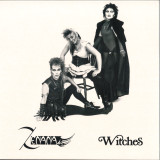
Rush Hour’s RSS series excels in unearthing buried treasure, offering a second chance for artists and releases that have long been overlooked. That’s certainly the case with ‘Witches’, the superb sole single by British 1980s wave trio Zenana.
Originally released on seven-inch by the tiny PRM label in 1986, ‘Witches’ was the product of a sister-brother songwriting team whose music was mostly recorded in the front room of a terraced house in Nanpean, a small industrial village in Cornwall, England’s most south-westerly county. While the single was infectious, impeccably produced and dancefloor-ready, it sold in limited quantities at the time.
Zenana’s story can be traced back to the early 1980s, when singer-songwriter Anita Tedder founded the all-female trio as a vehicle for her musical ambitions. To bring her songs to life, she joined voices with her brother Mike, an early adopter of electronic music who had built a studio – nicknamed MFR, short for ‘Mike’s Front Room’ – in his Cornish home.
Countless Zenana tracks were recorded at ‘MFR’ between 1984 and ’86, with the resultant demo cassette securing the band a management contract, a slew of live bookings, a video shoot and even a television appearance. Buoyed by this underground success, they headed to the remote Sawmills Studio in Cornwall – famously only accessible by boat – to re-record ‘Witches’, a song inspired by local folk tales of witches gathering near Mike’s home.
While this version of ‘Witches’ failed to make an impact at the time, it has become something of a cult classic following its’ rediscovery by crate digger Kiernan Abbott – and subsequent championing by other dusty-fingered DJs including Antal, Skyrager, Trevor Jackson and Luke Una – in early 2023. The buzz inspired Zenana to perform live again for the first time in decades, with the story of their surprise comeback being covered by British media outlets including the BBC and (more surprisingly) the Daily Mail.
Now presented in re-mastered form, ‘Witches’ is a genuinely slept-on gem. Propelled forwards by punchy drum machine beats, a killer synth bassline and fizzing keyboard sounds, the song benefits greatly from strong vocals and an extra-percussive middle eight layered with vocalisations, cosmic spoken word sections and swirling noises.
It comes backed by a brand-new extended ‘spell of love’ courtesy of Bristol duo Bedmo Disco, AKA music journalist Matt Anniss (author of Join The Future: Bleep Techno and the Birth of British Bass Music) and DJ/production partner Gareth Morgan. Anniss is a long-time friend of Mike and Anita Tedder who has fond memories of visiting Mike’s home studio with his family around the time that ‘Witches’ was recorded.
Working from Zenana’s original MFR eight-track recording (tapes of the single version were lost years ago), Anniss and Morgan have turned in the extended ‘dance mix’ the track never had first time around. More atmospheric, clandestine and dancefloor-focused, it offers authentic nods to New York proto-house, mid-80s Shep Pettibone dubs, and the pioneering synth-pop productions and dub mixes of Factory Records regular Martin Rushent.
Belarusian post-punk / synth pop group Molchat Doma have always exuded the kind of brutalist aesthetic of the architecture that adorns their album art. It's cold, gray, imposing, industrial and yet there are human hearts beating within those foundations. In the wake of their breakthrough success in 2020, the trio endured a polarity of experiences, from the nadir of an uprooted life and forced relocation away from their native Minsk to the apex of headlining massive shows across the world. It was in this headspace that the band settled into their new home of Los Angeles to finish writing their fourth album Belaya Polosa, a testament to change in difficult times, a love letter to the digital pulse of the `90s, and a technicolor reinvention of the band's somber dancefloor anthems. From the opening synth swell and drum machine throb of "Ty Zhe Ne Znaesh' Kto Ya," to the goth / post-punk austerity of "Son", to the swirling electronic textures mixed with reverb-drenched guitar flourishes, expansive space, and yearning vocals of title track "Belaya Polosa" - that suggests Depeche Mode at their most reflective or The Cure at their most downtrodden - to the sultry and seductive "Chernye Cvety"_ a track reminiscent of Duran Duran's early `90s output in its fusion of dreamy guitars and authoritative mechanized beats _ and the interwoven layers of instrumentation, soaring chorus, and melodic sophistication of "Ya Tak Ustal", it's clear that Molchat Doma are operating on another level. Molchat Doma gained following with earlier albums that sound like third-generation bootlegs of banned recordings from the Eastern Bloc made after a few key entries in the Factory Records catalog were smuggled in from the West. Belaya Polosa propels them into a new direction while retaining their cold minimalist delivery they're known for. The basement grime and dirty tape-head sound of their previous work are now making space for digital luster and shimmering production values. And while Molchat Doma's broadened aural spectrum adds a synesthetic power to Belaya Polosa, the mood remains rooted in stark and unflinching self-reflection. Molchat Doma retain the duality of being both cold and feverish in their delivery while pushing their music into expanded territories through an armory of new textures. The trio continue to harness the sound of harrowing beauty thriving under harsh realities.