quête:faces of drums

Genres
Tout
Various - Soul Clap Records: 11th Anniversary Remix Compilation

People often ask why we started Soul Clap Records and I usually answer: “because we were receiving tons of unique demos by creative artists that we had to start a label.” 11 years later and that flowing faucet of incoming music is still the driving force behind the label. Sure, there is the Funk, House, Disco, and multi-cultural influences in all of the music that we release, but it’s always the artists themselves who guide us.” – Eli Goldstein (Soul Clap)

Having nurtured a community, built many a life-long relationship and brought together an extensive musical family over the past 11 years, Soul Clap showcase these deep bonds with their 11th Anniversary Remix Compilation across two 12 inch records in a beautifully designed picture sleeve. A real smorgasbord of flavours and feelings, from beaming boogie and dizzying disco to blissful broken beat, house and downtempo nuggets coming courtesy of a plethora of the finest artists on the planet right now including the likes of Zopelar, XL Middleton, Colleen 'Cosmo' Murphy, FSQ and many more, alongside the mighty Soul Clap themselves. There’s no denying that this compilation is one with community at it’s core.

DJ Feedback:

OSUNLADE / YORUBA
Very funky.

PABLO VALENTINO/ MCDE FACES
Love this comp

CROSSTOWN REBELS/ PAOLO BARTHOLEMEW
Oh yes! Big fan!

FRANCK ROGER/ REAT TONE
Dope compilation.. still in love with life on planets guy :-)

MR V/ SOLE CHANNEL
Dope. Love it.

AROOP ROY
Diggin the remixes from Zeynep, Cosmodelica, Zopelar and Charlie.

PONTCHARTRAIN/ WHISKEY DISCO
OH my, that Afriqua remix is absolute fire! Whole album is hot.

DJ ROCCA
All the remixes are great. Big fan of SC records, of course ;-)

THE SILVER RIDER/ MUSIC IS 4 LOVERS
Holy crap that Zopelar remix is amazing!

DICKY TRISCO
Love the Underground System remix by Zeynep Erbay. Class! Feeling the Mickey Lion too. Lovely.

FISH GO DEEP/ SHANE JOHNSTON
Phenomenal line up here with a great range of music. Standouts for me on first listen are Life on Planets and John Camp ft. Greg but it’s all quality from start to finish.

MARK BROADBENT/ PIKE HOTEL
This s a killer comp. I’ll be playing this for sure.

DAZ-I-KUE/ BUGZ IN THE ATTIC
Love this comp so dope.

WILLI GRAFF/ THE STANDARD IBIZA
What a killer compilation of remixes. Especially feeling the Cosmodelica Mix and Michael The Lion's mix.

pas en stock

Commandez maintenant et nous commanderons l'article pour vous chez notre fournisseur.

26,85

Last In: 2 years ago
CASH BONUS - GOT ME THINKIN' TONIGHT / JOY & PAIN 7"

Money Mouse Records moves effortlessly into the neon-hued vibes of 80's boogie culture with their latest 7" offering from Nashville's CA$H BONU$. Made up of some familiar faces from Music City's funk and soul movement, Andrew Muller and Nick DeVan are joined by Amber Woodhouse who lends her powerfully silken vocals to the mix. With the addition of Pittsburgh's synthesist maestro, Buscrates, along with Muller's deftly executed production flourishes; this record goes straight to the sweet spot of post-disco lushness. "Got Me Thinkin Tonight" is designed for the late-nite dancefloor aficionados, taking cues from some of the era's greats and shaking things up into something new and heaving. The synth work and beats weave together with Woodhouse's amorous lyrics to create a dancefloor jam that sounds just as at home in 1982 as it does in 2022. That magic is repeated on the B-side with "Joy & Pain" a straight up hustler of a track, with a driving drums and heady arrangements that, again, are meant to get the dancefloor churning. Woodhouse's vocals deliver a sweet soulful emotion that jives perfectly with a groove that would make Rod Temperton proud. And don't forget the heavy drum break at the end. CA$H BONU$ is bringing the boogie heat to your feet for real.

pas en stock

Commandez maintenant et nous commanderons l'article pour vous chez notre fournisseur.

9,62

Last In: 3 years ago
Ca$H Bonus - Got Me Thinkin' Tonight / Joy & Pain
également disponible

Black Vinyl[8,61 €]


Limited Metallic Silver Vinyl is exclusive to INDIE STORES. "Money Mouse Records moves effortlessly into the neon-hued vibes of 80's boogie culture with their latest 7" offering from Nashville's CA$H BONU$. Made up of some familiar faces from Music City's funk and soul movement, Andrew Muller and Nick DeVan are joined by Amber Woodhouse who lends her powerfully silken vocals to the mix. With the addition of Pittsburgh's synthesist maestro, BusCrates, along with Muller's deftly executed production flourishes; this record goes straight to the sweet spot of post-disco lushness. "Got Me Thinkin Tonight" is designed for the late-nite dancefloor aficionados, taking cues from some of the era's greats and shaking things up into something new and heaving. The synth work and beats weave together with Woodhouse's amorous lyrics to create a dancefloor jam that sounds just as at home in 1982 as it does in 2022. That magic is repeated on the B-side with "Joy & Pain" a straight up hustler of a track, with a driving drums and heady arrangements that, again, are meant to get the dancefloor churning. Woodhouse's vocals deliver a sweet soulful emotion that jives perfectly with a groove that would make Rod Temperton proud. And don't forget the heavy drum break at the end. CA$H BONU$ is bringing the boogie heat to your feet for real!"

pré-commande25.11.2022

il devrait être publié sur 25.11.2022

10,04
Ca$H Bonus - Got Me Thinkin' Tonight / Joy & Pain
également disponible

Limited Metallic Silver Vinyl[10,04 €]


Limited Metallic Silver Vinyl is exclusive to INDIE STORES. "Money Mouse Records moves effortlessly into the neon-hued vibes of 80's boogie culture with their latest 7" offering from Nashville's CA$H BONU$. Made up of some familiar faces from Music City's funk and soul movement, Andrew Muller and Nick DeVan are joined by Amber Woodhouse who lends her powerfully silken vocals to the mix. With the addition of Pittsburgh's synthesist maestro, BusCrates, along with Muller's deftly executed production flourishes; this record goes straight to the sweet spot of post-disco lushness. "Got Me Thinkin Tonight" is designed for the late-nite dancefloor aficionados, taking cues from some of the era's greats and shaking things up into something new and heaving. The synth work and beats weave together with Woodhouse's amorous lyrics to create a dancefloor jam that sounds just as at home in 1982 as it does in 2022. That magic is repeated on the B-side with "Joy & Pain" a straight up hustler of a track, with a driving drums and heady arrangements that, again, are meant to get the dancefloor churning. Woodhouse's vocals deliver a sweet soulful emotion that jives perfectly with a groove that would make Rod Temperton proud. And don't forget the heavy drum break at the end. CA$H BONU$ is bringing the boogie heat to your feet for real!"

pré-commande25.11.2022

il devrait être publié sur 25.11.2022

8,61
DESERTA - BLACK AURA MY SUN (MAROON VINYL)

Matthew Doty didn't set out to write a solo album. His first batch of weightless and brightly lit material under the name Deserta began to take shape in 2017. Shortly after finding out he was going to be a father, Doty started working on a batch of songs inspired by the joy and the unknown of the world he was about to enter. That inspiration is the sonic and emotional backbone of debut album Black Aura My Sun.

Like a hot air balloon headed straight for the stratosphere, Deserta reveals yet another side of the songwriting Doty has spent decades refining. As experimental as it is enthralling, Black Aura My Sun applies the vapor-trailed production values and sublime dynamics of Doty's previous group projects (including post-rock band Saxon Shore and the synth-laced post-punk of Midnight Faces) to a shoegaze-y sound that splits the difference between Slowdive and Sigur Rós.

Doty began finding his own musical voice in the early '00s with the sky-piercing efforts of Saxon Shore. While it was initially a collaboration with Josh Tillman (a.k.a. Father John Misty), Doty was Saxon Shore's only consistent member over the course of five acclaimed records. His responsibility spilled over into everything from booking shows to the songs themselves. He was never completely alone in his pursuit of post-rock perfection, however, so Deserta is very much a new endeavor: a trial-by-fire that was written, recorded, and mixed in total solitude.

Deserta expands and contracts, with chords that drift like clouds, drums that drag and dissipate, and hooks that hang in the air for what feels like forever. That doesn't mean Black Aura My Sun is a subtle or soft record. It actually whips up quite a racket and is particularly heavy when piped through a pair of headphones.

Deserta is Doty's main creative outlet right now and a one-way ticket to another dimension entirely.

pré-commande25.11.2022

il devrait être publié sur 25.11.2022

23,32
Run Logan Run - Nature Will Take Care Of You

Bristolian power-improv duo Run Logan Run continue their link-up with Worm Discs and producer Riaan Vosloo on Nature Will Take Care Of You – a monumental slab of contemporary energy music that draws on the heavy soul of David Axelrod and the fiery commitment of Archie Shepp. Working with an expanded line-up that includes singer Annie Gardiner (daughter of the late guitarist Ricky Gardiner, who played and collaborated with Iggy Pop and David Bowie) plus a string quartet and a brass section, saxophonist Andrew Neil Hayes and drummer Matt Brown have once again steered Run Logan Run in a dramatic new direction. Churning, future-forwards and emotionally tuned in, Nature Will Take Care Of You reaches out towards propulsive rock and psychedelic soul, while keeping one foot in the radical jazz-not-jazz of Bristol’s ever fertile improv scene.

The core of Run Logan Run’s sound is the dynamic conjunction of Matt Brown’s agile and powerful drums with Andrew Hayes’ looping, pedal-treated sax motifs. No matter how the duo augment and enhance their music, the kernel of their art has always been the spiralling energies generated by this essential musical relationship. Explorations of repetition, dissolution and dervish-like disorientation remain a central part of their project, with Brown weaving a tight rhythmic armature for Hayes’ unshackled journeys into sound. But though they began within Bristol’s improvised music scene, their vision has been increasingly structured and expansive, and the arrival of producer and bassist Riaan Vosloo (Nostalgia 77) for 2021’s For a Brief Moment We Could Smell The Flowers allowed to them move outwards to explore pulsing, cinematic synth-scapes. Vosloo is behind the boards again on Nature Will Take Care of You – and the duo’s vision has broadened a step further.

pré-commande25.11.2022

il devrait être publié sur 25.11.2022

27,31
FÖLLAKZOID - FÖLLAKZOID  LP

Green Vinyl

Föllakzoid are nearly unparalleled in the hypnotic lysergic drenched neo-psychedelic experience. On their debut it is mostly a rather bulky one, determined by the downright dirty, distorted electric guitar, which is also usually accompanied by a spacey, howling and herbaceous howling one. In addition, there is fat bass and powerful drums. During the prolific post-napster musical era dominated by myspace, the Chilean musical field opened up so that many bands could broaden their creative spectrum by taking global and timeless references as an aesthetic holy grail. This experimentation had the internet and specialized forums as a search engine, which not only provided the world parameters in trends, but also allowed to find true hidden gems, bands that were adored by a few connoisseurs of the real quality left behind by the record labels. In this context, a group of university students who have known each other from school began to rehearse in the Caracol Vip underground (Santiago, Chile), in a room owned by a local heavy-metal legend, Juanzer. Equipped with tube amplifiers, Marshall and other custom made, the members of that time: Gonzalo Laguna on vocals, Juan Pablo Rodriguez on bass, Domingo García-Huidobro on guitar, Diego Lorca on drums and Francisco Zenteno on second guitar, they began to play endless jams without a strict sense of songs or directed compositional notion. The rule was to follow the noise in a journey through valleys and peaks that allowed the spontaneous appearance of textures, lyrics, phrases and some invented chords that did not resemble anything that had been heard at that time. The rehearsals were transformed into true live performances without an audience, which were only seen by a few curious, among alcohol, smoke and deafening noise, which could only end when the owner of the room (Juanzer) entered to turn off the equipment. Over time he himself stayed as an auditor, witnessing how the musicians stripped themselves in their rehearsals. Considered at that time as play or fun, the idea of forming a band with a name came with the real live performances to which they were invited, without yet having songs made, at the end of 2006. The myth of their first live performance alludes to a numerical superstition, on July 7, 2007, in a small bar in Providencia (Santiago), which also provided the band with an upward recognition for the psychedelic-punk music they were doing, with a voracious vocalist who destroyed everything on stage and a band that stood firm on the endless songs they built. The name that was invented for that occasion was the result of a nonsense about the German word feuerzeug brought to the group by their close friend Alfredo Thiermann (who would later make the cover of the first album and become keyboardist), which the members of that time took and Spanishized at will. This neologism represents the second founding myth of the band since the interest in bands like Can, Neu! and AMON DUUL II and the characteristic motorik rhythm would soon arrive, in the form of kosmische musik. By 2008 the band had already added several live performances and some songs appeared, among which were Directo al Sol and Loop (nod to the English band), which allowed a greater deployment of ambient-noise resources, almost close to the 'concrete' music. The deconstructed rock of Spacemen 3 was also present in the form of repeated sequences on the bass and drums, as the layers of shrill guitars formed the foam of the tide bursting in the darkness of space. With the ideas and general feeling of the sound that they already had, the band made the decision to record their first album with the sound engineer and Juan Pablo's brother, Ignacio 'Nes' Rodríguez, who later together with JP would form the BYM label to make the first CDs of the forthcoming debut of Föllakzoid and other bands that Nes was recording. Sheltered that winter in the studio that Nes had built in an old house in Recoleta, the band recorded the bulk of the songs on the album with a new jam that emerged in that room composed of 1 note and moments of rising intensity: Sky Input I and II appeared to complete a set of songs that came from rock but were slowly passing to a level of trance and cacophony typical of orchestrated and atonal music. With three takes per song but only one take of the jam, the album was finished with a few extra takes and overdubs, some made in the house of Nes himself, who contributed a guitar to Loop, although it does not appear in the credits, and additional takes of "Pelao" Zenteno with delay and reverse for almost all songs. The names of the songs came from the lyrics that Laguna had worked from the live versions to the studio finals, except for Loop, Sky Input and El Humo. The cover of the album, which as mentioned was made by Thiermann, represents well the spirit of those days, when creative magma looked for an outlet through the instruments without any restriction or explicit direction from any of the members of the group. The image of the tree towards the sky speaks of the roots that rise towards the immensity, the nature projected towards the stratosphere. Ideas that the neo-psychedelia of those years seemed to capture well, echoing in the Chilean bands that at that time were gathering around the BYM label. Both the creative fluency and the lack of a musical director ensured that Föllakzoid was an original band that did not impose themselves a way of doing things or sounding, collective music took shape in the most wonderful way, without characters, without a record name, without faces. Just an instant in space. 2022 GALAXY GREEN coloured vinyl

pas en stock

Commandez maintenant et nous commanderons l'article pour vous chez notre fournisseur.

31,72

Last In: 3 years ago
Pablo Valentino - Bagaço In X-Rousse

Saft's X series signs up accomplished French house artist Pablo Valentino for a new EP that features Patchworks and includes a remix from Seb Wildblood. Valentino hails from East France but his work has made a global impact. He runs FACES Records and is A&R for the cult MCDE Recordings. Next to that he DJs around Europe and has produced both solo and as part of collectives such as Creative Swing Alliance and Hipster Wonkaz for labels like MCDE, Eureka and Room With A View.

Atmospheric opener "Look Deeper" is a rough and steamy deep house cut for cosy basements. The drums are raw and alive, the lead synth is haunting, and the keys bring a jazz feel while vocal coos add some serious soul. French jazz, soul and deep house artist Patchworks guests on "X Rousse", a freewheeling jam with loose-limbed drums and funky chords. It channels the spirit of Moodymann and is sure to bring heat to any party. The final original is "Bagaco"; a bubbly and percussive number underpinned by warm bass stabs. The dynamic groove never rests and raw claps amp up the energy throughout.

Seb Wildblood is a driving force in the South London scene thanks to running Church, All My Thoughts and Coastal Haze. From house to downtempo, leftfield to techno, he has a broad stylistic range that always looks forwards. His remix is a celebratory broken beat workout. It's all about big stabs, soulful smeared chords and cutting loose on the dance floor without a care in the world. Once again, The Saft X

pas en stock

Commandez maintenant et nous commanderons l'article pour vous chez notre fournisseur.

10,38

Last In: 22 months ago
Various - BOUND FOR HELL: ON THE SUNSET STRIP LP (2x12")

2xLP + Book (Black) Heavy metal? Glam? Hard rock? Make your own fuckin' call, you poser. We're not gonna do it for you. Bound for Hell is early `80s L.A. rock as it actually was: a California cataclysm of drunk and horny headbangers, dressed in sharp, shiny, leather androgyny and fire, kicking crowds in the teeth to clear the way to that one big shot. This 2LP set delivers 21 tracks by 21 artists in an ephemera-stuffed gatefold, plus 144-page hardbound book detailing the Sunset Strip's most razor-sharp heathens. Drumsticks burned. Hands were severed. Faces bled. Heavy was HELL for a half decade and it was a long, long way down.

pré-commande28.10.2022

il devrait être publié sur 28.10.2022

88,24
Various - BOUND FOR HELL: ON THE SUNSET STRIP LP (2x12")

2xLP + Book (Black) Heavy metal? Glam? Hard rock? Make your own fuckin' call, you poser. We're not gonna do it for you. Bound for Hell is early `80s L.A. rock as it actually was: a California cataclysm of drunk and horny headbangers, dressed in sharp, shiny, leather androgyny and fire, kicking crowds in the teeth to clear the way to that one big shot. This 2LP set delivers 21 tracks by 21 artists in an ephemera-stuffed gatefold, plus 144-page hardbound book detailing the Sunset Strip's most razor-sharp heathens. Drumsticks burned. Hands were severed. Faces bled. Heavy was HELL for a half decade and it was a long, long way down.

pré-commande28.10.2022

il devrait être publié sur 28.10.2022

84,03
Lee Tracy & Isaac Manning - Is it What You Want

As the sun sets on a quaint East Nashville house, a young man bares a piece of his soul. Facing the camera, sporting a silky suit jacket/shirt/slacks/fingerless gloves ensemble that announces "singer" before he's even opened his mouth, Lee Tracy Johnson settles onto his stage, the front yard. He sways to the dirge-like drum machine pulse of a synth-soaked slow jam, extends his arms as if gaining his balance, and croons in affecting, fragile earnest, "I need your love… oh baby…"

Dogs in the yard next door begin barking. A mysterious cardboard robot figure, beamed in from galaxies unknown and affixed to a tree, is less vocal. Lee doesn't acknowledge either's presence. He's busy feeling it, arms and hands gesticulating. His voice rises in falsetto over the now-quiet dogs, over the ambient noise from the street that seeps into the handheld camcorder's microphone, over the recording of his own voice played back from a boombox off-camera. After six minutes the single, continuous shot ends. In this intimate creative universe there are no re-takes. There are many more music videos to shoot, and as Lee later puts it, "The first time you do it is actually the best. Because you can never get that again. You expressing yourself from within."

"I Need Your Love" dates from a lost heyday. From some time in the '80s or early '90s, when Lee Tracy (as he was known in performance) and his music partner/producer/manager Isaac Manning committed hours upon hours of their sonic and visual ideas to tape. Embracing drum machines and synthesizers – electronics that made their personal futurism palpable – they recorded exclusively at home, live in a room into a simple cassette deck. Soul, funk, electro and new wave informed their songs, yet Lee and Isaac eschewed the confinement of conventional categories and genres, preferring to let experimentation guide them.

"Anytime somebody put out a new record they had the same instruments or the same sound," explains Isaac. "So I basically wanted to find something that's really gonna stand out away from all of the rest of 'em." Their ethos meant that every idea they came up with was at least worth trying: echoed out half-rapped exhortations over frantic techno-style beats, gospel synth soul, modal electro-funk, oddball pop reinterpretations, emo AOR balladry, nods to Prince and the Fat Boys, or arrangements that might collapse mid-song into a mess of arcade game-ish blips before rallying to reach the finish line. All of it conjoined by consistent tape hiss, and most vitally, Lee's chameleonic voice, which managed to wildly shape shift and still evoke something sincere – whether toggling between falsetto and tenor exalting Jesus's return, or punctuating a melismatic romantic adlib with a succinct, "We all know how it feels to be alone."

"People think we went to a studio," says Isaac derisively. "We never went to no studio. We didn't have the money to go to no studio! We did this stuff at home. I shot videos in my front yard with whatever we could to get things together." Sometimes Isaac would just put on an instrumental record, be it "Planet Rock" or "Don't Cry For Me Argentina" (from Evita), press "record," and let Lee improvise over it, yielding peculiar love songs, would-be patriotic anthems, or Elvis Presley or Marilyn Monroe tributes. Technical limitations and a lack of professional polish never dissuaded them. They believed they were onto something.

"That struggle," Isaac says, "made that sound sound good to me."

In the parlance of modern music criticism Lee and Isaac's dizzying DIY efforts would inevitably be described as "outsider." But "outsider" carries the burden of untold additional layers of meaning if you're Black and from the South, creating on a budget, and trying to get someone, anyone within the country music capital of the world to take your vision seriously. "What category should we put it in?" Isaac asks rhetorically. "I don't know. All I know is feeling. I ain't gonna name it nothing. It's music. If it grabs your soul and touch your heart that's what it basically is supposed to do."

=

Born in 1963, the baby boy of nine siblings, Lee Tracy spent his earliest years living amidst the shotgun houses on Nashville's south side. "We was poor, man!" he says, recalling the outhouse his family used for a bathroom and the blocks of ice they kept in the kitchen to chill perishables. "But I actually don't think I really realized I was in poverty until I got grown and started thinking about it." Lee's mom worked at the Holiday Inn; his dad did whatever he had to do, from selling fruit from a horse drawn cart to bootlegging. "We didn't have much," Lee continues, "but my mother and my father got us the things we needed, the clothes on our back." By the end of the decade with the city's urban renewal programs razing entire neighborhoods to accommodate construction of the Interstate, the family moved to Edgehill Projects. Lee remembers music and art as a constant source of inspiration for he and his brothers and sisters – especially after seeing the Jackson 5 perform on Ed Sullivan. "As a small child I just knew that was what I wanted to do."

His older brother Don began musically mentoring him, introducing Lee to a variety of instruments and sounds. "He would never play one particular type of music, like R&B," says Lee. "I was surrounded by jazz, hard rock and roll, easy listening, gospel, reggae, country music; I mean I was a sponge absorbing all of that." Lee taught himself to play drums by beating on cardboard boxes, gaining a rep around the way for his timekeeping, and his singing voice. Emulating his favorites, Earth Wind & Fire and Cameo, he formed groups with other kids with era-evocative band names like Concept and TNT Connection, and emerged as the leader of disciplined rehearsals. "I made them practice," says Lee. "We practiced and practiced and practiced. Because I wanted that perfection." By high school the most accomplished of these bands would take top prize in a prominent local talent show. It was a big moment for Lee, and he felt ready to take things to the next level. But his band-mates had other ideas.

"I don't know what happened," he says, still miffed at the memory. "It must have blew they mind after we won and people started showing notice, because it's like everybody quit! I was like, where the hell did everybody go?" Lee had always made a point of interrogating prospective musicians about their intentions before joining his groups: were they really serious or just looking for a way to pick up girls? Now he understood even more the importance of finding a collaborator just as committed to the music as he was.

=

Isaac Manning had spent much of his life immersed in music and the arts – singing in the church choir with his family on Nashville's north side, writing, painting, dancing, and working various gigs within the entertainment industry. After serving in the armed forces, in the early '70s he ran The Teenage Place, a music and performance venue that catered to the local youth. But he was forced out of town when word of one of his recreational routines created a stir beyond the safe haven of his bohemian circles.

"I was growing marijuana," Isaac explains. "It wasn't no business, I was smoking it myself… I would put marijuana in scrambled eggs, cornbread and stuff." His weed use originated as a form of self-medication to combat severe tooth pain. But when he began sharing it with some of the other young people he hung out with, some of who just so happened to be the kids of Nashville politicians, the cops came calling. "When I got busted," he remembers, "they were talking about how they were gonna get rid of me because they didn't want me saying nothing about they children because of the politics and stuff. So I got my family, took two raggedy cars, and left Nashville and went to Vegas."

Out in the desert, Isaac happened to meet Chubby Checker of "The Twist" fame while the singer was gigging at The Flamingo. Impressed by Isaac's zeal, Checker invited him to go on the road with him as his tour manager/roadie/valet. The experience gave Isaac a window into a part of the entertainment world he'd never encountered – a glimpse of what a true pop act's audience looked like. "Chubby Checker, none of his shows were played for Black folks," he remembers. "All his gigs were done at high-class white people areas." Returning home after a few years with Chubby, Isaac was properly motivated to make it in Music City. He began writing songs and scouting around Nashville for local talent anywhere he could find it with an expressed goal: "Find someone who can deliver your songs the way you want 'em delivered and make people feel what you want them to feel."

One day while walking through Edgehill Projects Isaac heard someone playing the drums in a way that made him stop and take notice. "The music was so tight, just the drums made me feel like, oh I'm-a find this person," he recalls. "So I circled through the projects until I found who it was.

"That's how I met him – Lee Tracy. When I found him and he started singing and stuff, I said, ohhh, this is somebody different."

=

Theirs was a true complementary partnership: young Lee possessed the raw talent, the older Isaac the belief. "He's really the only one besides my brother and my family that really seen the potential in me," says Lee. "He made me see that I could do it."

Isaac long being a night owl, his house also made for a fertile collaborative environment – a space where there always seemed to be a new piece of his visual art on display: paintings, illustrations, and dolls and figures (including an enigmatic cardboard robot). Lee and Issac would hang out together and talk, listen to music, conjure ideas, and smoke the herb Isaac had resumed growing in his yard. "It got to where I could trust him, he could trust me," Isaac says of their bond. They also worked together for hours on drawings, spreading larges rolls of paper on the walls and sketching faces with abstract patterns and imagery: alien-like beings, tri-horned horse heads, inverted Janus-like characters where one visage blurred into the other.

Soon it became apparent that they didn't need other collaborators; self-sufficiency was the natural way forward. At Isaac's behest Lee, already fed up with dealing with band musicians, began playing around with a poly-sonic Yamaha keyboard at the local music store. "It had everything on it – trumpet, bass, drums, organ," remembers Lee. "And that's when I started recording my own stuff."

The technology afforded Lee the flexibility and independence he craved, setting him on a path other bedroom musicians and producers around the world were simultaneously following through the '80s into the early '90s. Saving up money from day jobs, he eventually supplemented the Yamaha Isaac had gotten him with Roland and Casio drum machines and a Moog. Lee was living in an apartment in Hillside at that point caring for his dad, who'd been partially paralyzed since early in life. In the evenings up in his second floor room, the music put him in a zone where he could tune out everything and lose himself in his ideas.

"Oh I loved it," he recalls. "I would really experiment with the instruments and use a lot of different sound effects. I was looking for something nobody else had. I wanted something totally different. And once I found the sound I was looking for, I would just smoke me a good joint and just let it go, hit the record button." More potent a creative stimulant than even Isaac's weed was the holistic flow and spontaneity of recording. Between sessions at Isaac's place and Lee's apartment, their volume of output quickly ballooned.

"We was always recording," says Lee. "That's why we have so much music. Even when I went to Isaac's and we start creating, I get home, my mind is racing, I gotta start creating, creating, creating. I remember there were times when I took a 90-minute tape from front to back and just filled it up."

"We never practiced," says Isaac. "See, that was just so odd about the whole thing. I could relate to him, and tell him about the songs I had ideas for and everything and stuff. And then he would bring it back or whatever, and we'd get together and put it down." Once the taskmaster hell bent on rehearsing, Lee had flipped a full 180. Perfection was no longer an aspiration, but the enemy of inspiration.

"I seen where practicing and practicing got me," says Lee. "A lot of musicians you get to playing and they gotta stop, they have to analyze the music. But while you analyzing you losing a lot of the greatness of what you creating. Stop analyzing what you play, just play! And it'll all take shape."

=

"I hope you understood the beginning of the record because this was invented from a dream I had today… (You tell me, I'll tell you, we'll figure it out together)" – Lee Tracy and Isaac Manning, "Hope You Understand"

Lee lets loose a maniacal cackle when he acknowledges that the material that he and Isaac recorded was by anyone's estimation pretty out there. It's the same laugh that commences "Hope You Understand" – a chaotic transmission that encapsulates the duality at the heart of their music: a stated desire to reach people and a compulsion to go as leftfield as they saw fit.

"We just did it," says Lee. "We cut the music on and cut loose. I don't sit around and write. I do it by listening, get a feeling, play the music, and the lyrics and stuff just come out of me."

The approach proved adaptable to interpreting other artists' material. While recording a cover of Whitney Houston's pop ballad "Saving All My Love For You," Lee played Whitney's version in his headphones as he laid down his own vocals – partially following the lyrics, partially using them as a departure point. The end result is barely recognizable compared with the original, Lee and Isaac having switched up the time signature and reinvented the melody along the way towards morphing a slick mainstream radio standard into something that sounds solely their own.

"I really used that song to get me started," says Lee. "Then I said, well I need something else, something is missing. Something just came over me. That's when I came up with 'Is It What You Want.'"

The song would become the centerpiece of Lee and Isaac's repertoire. Pushed along by a percolating metronomic Rhythm King style beat somewhere between a military march and a samba, "Is It What You Want" finds Lee pleading the sincerity of his commitment to a potential love interest embellished by vocal tics and hiccups subtlely reminiscent of his childhood hero MJ. Absent chord changes, only synth riffs gliding in and out like apparitions, the song achieves a lingering lo-fi power that leaves you feeling like it's still playing, somewhere, even after the fade out.

"I don't know, it's like a real spiritual song," Lee reflects. "But it's not just spiritual. To me the more I listen to it it's like about everything that you do in your everyday life, period. Is it what you want? Do you want a car or you don't want a car? Do you want Jesus or do you want the Devil? It's basically asking you the question. Can't nobody answer the question but you yourself."

In 1989 Lee won a lawsuit stemming from injuries sustained from a fight he'd gotten into. He took part of the settlement money and with Isaac pressed up "Saving All My Love For You" b/w "Is It What You Want" as a 45 single. Isaac christened the label One Chance Records. "Because that's all we wanted," he says with a laugh, "one chance."

Isaac sent the record out to radio stations and major labels, hoping for it to make enough noise to get picked up nationally. But the response he and Lee were hoping for never materialized. According to Isaac the closest the single got to getting played on the radio is when a disk jock from a local station made a highly unusual announcement on air: "The dude said on the radio, 107.5 – 'We are not gonna play 'Is It What You Want.' We cracked up! Wow, that's deep.

"It was a whole racist thing that was going on," he reflects. "So we just looked over and kept on going. That was it. That was about the way it goes… If you were Black and you were living in Nashville and stuff, that's the way you got treated." Isaac already knew as much from all the times he'd brought he and Lee's tapes (even their cache of country music tunes) over to Music Row to try to drum up interest to no avail.

"Isaac, he really worked his ass off," says Lee. "He probably been to every record place down on Music Row." Nashville's famed recording and music business corridor wasn't but a few blocks from where Lee grew up. Close enough, he remembers, for him to ride his bike along its back alleys and stumble upon the occasional random treasure, like a discarded box of harmonicas. Getting in through the front door, however, still felt a world away.

"I just don't think at the time our music fell into a category for them," he concedes. "It was before its time."

=

Lee stopped making music some time in the latter part of the '90s, around the time his mom passed away and life became increasingly tough to manage. "When my mother died I had a nervous breakdown," he says, "So I shut down for a long time. I was in such a sadness frame of mind. That's why nobody seen me. I had just disappeared off the map." He fell out of touch with Isaac, and in an indication of just how bad things had gotten for him, lost track of all the recordings they'd made together. Music became a distant memory.

Fortunately, Isaac kept the faith. In a self-published collection of his poetry – paeans to some of his favorite entertainment and public figures entitled Friends and Dick Clark – he'd written that he believed "music has a life of its own." But his prescience and presence of mind were truly manifested in the fact that he kept an archive of he and Lee's work. As perfectly imperfect as "Is It What You Want" now sounds in a post-Personal Space world, Lee and Isaac's lone official release was in fact just a taste. The bulk of the Is It What You Want album is culled from the pair's essentially unheard home recordings – complete songs, half-realized experiments, Isaac's blue monologues and pronouncements et al – compiled, mixed and programmed in the loose and impulsive creative spirit of their regular get-togethers from decades ago. The rest of us, it seems, may have finally caught up to them.

On the prospect of at long last reaching a wider audience, Isaac says simply, "I been trying for a long time, it feels good." Ever the survivor, he adds, "The only way I know how to make it to the top is to keep climbing. If one leg break on the ladder, hey, you gotta fix it and keep on going… That's where I be at. I'll kill death to make it out there."

For Lee it all feels akin to a personal resurrection: "It's like I was in a tomb and the tomb was opened and I'm back… Man, it feels so great. I feel like I'm gonna jump out of my skin." Success at this stage of his life, he realizes, probably means something different than what it did back when he was singing and dancing in Isaac's front yard. "What I really mean by 'making it,'" he explains isn't just the music being heard but, "the story being told."

Occasionally Lee will pull up "Is It What You Want" on YouTube on his phone, put on his headphones, and listen. He remembers the first time he heard his recorded voice. How surreal it was, how he thought to himself, "Is that really me?" What would he say to that younger version of himself now?

"I would probably tell myself, hang in there, don't give up. Keep striving for the goal. And everything will work out."

Despite what's printed on the record label, sometimes you do get more than one chance.

pas en stock

Commandez maintenant et nous commanderons l'article pour vous chez notre fournisseur.

11,72

Last In: 3 years ago
Living Hour - Someday Is Today

Based in Winnipeg, Manitoba, an "inland island that floats on infinite
prairie ground," Living Hour has always been a band that's thrived in
seclusion.Helping to foster a thriving local community, and taking
inspiration from the faces and places of their hometown, the band have
always been motivated by the belief that their own music only gets more
interesting when it includes other voices
For their new album, Living Hour called upon friends from near and far.
The result is "Someday Is Today", the band's third full-length effort and the muchanticipated follow- up to their 2019 "Softer Faces" LP, acclaimed by the likes of
NPR, Stereogum, Paste, Vice, Bandcamp, and more. On "Someday Is Today", the
group's sound is collaborated with a variety of drummers including Jason Tait
(The Weakerthans, Broken Social Scene) and is fleshed out further with the help
of three producers: Melina Duterte (Jay Som, Bachelor, Chastity Belt), Jonathan
Schenke (Parquet Courts, Snail Mail, The Drums), and Samur Khouja (Cate le Bon,
Deerhunter, Regina Spektor) all of whom impart their own backgrounds on the
album's finished glow.
"Someday Is Today" is Living Hour at their most pensive and longing. It was
recorded over seven straight days during the dark depths of a Manitoba winter,
with the band cocooned in the sounds they were making as the temperature hit
-30 outside the door. The album thrives by keeping just enough connection
across its varied palettes to feel like one cohesive world. Whether it's the album's
soft and gorgeous harmonies or the captured sound of wind tubes being swung
above their heads, the songs here feel bound by something bigger than
themselves; an energy that flourished in spite of it all, a human connection that
grips just strongly enough even when pushed to its frayed, unreachable extremes.

pré-commande14.10.2022

il devrait être publié sur 14.10.2022

30,46
Lee Tracy & Isaac Manning - Is it What You Want LP

As the sun sets on a quaint East Nashville house, a young man bares a piece of his soul. Facing the camera, sporting a silky suit jacket/shirt/slacks/fingerless gloves ensemble that announces "singer" before he's even opened his mouth, Lee Tracy Johnson settles onto his stage, the front yard. He sways to the dirge-like drum machine pulse of a synth-soaked slow jam, extends his arms as if gaining his balance, and croons in affecting, fragile earnest, "I need your love… oh baby…"

Dogs in the yard next door begin barking. A mysterious cardboard robot figure, beamed in from galaxies unknown and affixed to a tree, is less vocal. Lee doesn't acknowledge either's presence. He's busy feeling it, arms and hands gesticulating. His voice rises in falsetto over the now-quiet dogs, over the ambient noise from the street that seeps into the handheld camcorder's microphone, over the recording of his own voice played back from a boombox off-camera. After six minutes the single, continuous shot ends. In this intimate creative universe there are no re-takes. There are many more music videos to shoot, and as Lee later puts it, "The first time you do it is actually the best. Because you can never get that again. You expressing yourself from within."

"I Need Your Love" dates from a lost heyday. From some time in the '80s or early '90s, when Lee Tracy (as he was known in performance) and his music partner/producer/manager Isaac Manning committed hours upon hours of their sonic and visual ideas to tape. Embracing drum machines and synthesizers – electronics that made their personal futurism palpable – they recorded exclusively at home, live in a room into a simple cassette deck. Soul, funk, electro and new wave informed their songs, yet Lee and Isaac eschewed the confinement of conventional categories and genres, preferring to let experimentation guide them.

"Anytime somebody put out a new record they had the same instruments or the same sound," explains Isaac. "So I basically wanted to find something that's really gonna stand out away from all of the rest of 'em." Their ethos meant that every idea they came up with was at least worth trying: echoed out half-rapped exhortations over frantic techno-style beats, gospel synth soul, modal electro-funk, oddball pop reinterpretations, emo AOR balladry, nods to Prince and the Fat Boys, or arrangements that might collapse mid-song into a mess of arcade game-ish blips before rallying to reach the finish line. All of it conjoined by consistent tape hiss, and most vitally, Lee's chameleonic voice, which managed to wildly shape shift and still evoke something sincere – whether toggling between falsetto and tenor exalting Jesus's return, or punctuating a melismatic romantic adlib with a succinct, "We all know how it feels to be alone."

"People think we went to a studio," says Isaac derisively. "We never went to no studio. We didn't have the money to go to no studio! We did this stuff at home. I shot videos in my front yard with whatever we could to get things together." Sometimes Isaac would just put on an instrumental record, be it "Planet Rock" or "Don't Cry For Me Argentina" (from Evita), press "record," and let Lee improvise over it, yielding peculiar love songs, would-be patriotic anthems, or Elvis Presley or Marilyn Monroe tributes. Technical limitations and a lack of professional polish never dissuaded them. They believed they were onto something.

"That struggle," Isaac says, "made that sound sound good to me."

In the parlance of modern music criticism Lee and Isaac's dizzying DIY efforts would inevitably be described as "outsider." But "outsider" carries the burden of untold additional layers of meaning if you're Black and from the South, creating on a budget, and trying to get someone, anyone within the country music capital of the world to take your vision seriously. "What category should we put it in?" Isaac asks rhetorically. "I don't know. All I know is feeling. I ain't gonna name it nothing. It's music. If it grabs your soul and touch your heart that's what it basically is supposed to do."

=

Born in 1963, the baby boy of nine siblings, Lee Tracy spent his earliest years living amidst the shotgun houses on Nashville's south side. "We was poor, man!" he says, recalling the outhouse his family used for a bathroom and the blocks of ice they kept in the kitchen to chill perishables. "But I actually don't think I really realized I was in poverty until I got grown and started thinking about it." Lee's mom worked at the Holiday Inn; his dad did whatever he had to do, from selling fruit from a horse drawn cart to bootlegging. "We didn't have much," Lee continues, "but my mother and my father got us the things we needed, the clothes on our back." By the end of the decade with the city's urban renewal programs razing entire neighborhoods to accommodate construction of the Interstate, the family moved to Edgehill Projects. Lee remembers music and art as a constant source of inspiration for he and his brothers and sisters – especially after seeing the Jackson 5 perform on Ed Sullivan. "As a small child I just knew that was what I wanted to do."

His older brother Don began musically mentoring him, introducing Lee to a variety of instruments and sounds. "He would never play one particular type of music, like R&B," says Lee. "I was surrounded by jazz, hard rock and roll, easy listening, gospel, reggae, country music; I mean I was a sponge absorbing all of that." Lee taught himself to play drums by beating on cardboard boxes, gaining a rep around the way for his timekeeping, and his singing voice. Emulating his favorites, Earth Wind & Fire and Cameo, he formed groups with other kids with era-evocative band names like Concept and TNT Connection, and emerged as the leader of disciplined rehearsals. "I made them practice," says Lee. "We practiced and practiced and practiced. Because I wanted that perfection." By high school the most accomplished of these bands would take top prize in a prominent local talent show. It was a big moment for Lee, and he felt ready to take things to the next level. But his band-mates had other ideas.

"I don't know what happened," he says, still miffed at the memory. "It must have blew they mind after we won and people started showing notice, because it's like everybody quit! I was like, where the hell did everybody go?" Lee had always made a point of interrogating prospective musicians about their intentions before joining his groups: were they really serious or just looking for a way to pick up girls? Now he understood even more the importance of finding a collaborator just as committed to the music as he was.

=

Isaac Manning had spent much of his life immersed in music and the arts – singing in the church choir with his family on Nashville's north side, writing, painting, dancing, and working various gigs within the entertainment industry. After serving in the armed forces, in the early '70s he ran The Teenage Place, a music and performance venue that catered to the local youth. But he was forced out of town when word of one of his recreational routines created a stir beyond the safe haven of his bohemian circles.

"I was growing marijuana," Isaac explains. "It wasn't no business, I was smoking it myself… I would put marijuana in scrambled eggs, cornbread and stuff." His weed use originated as a form of self-medication to combat severe tooth pain. But when he began sharing it with some of the other young people he hung out with, some of who just so happened to be the kids of Nashville politicians, the cops came calling. "When I got busted," he remembers, "they were talking about how they were gonna get rid of me because they didn't want me saying nothing about they children because of the politics and stuff. So I got my family, took two raggedy cars, and left Nashville and went to Vegas."

Out in the desert, Isaac happened to meet Chubby Checker of "The Twist" fame while the singer was gigging at The Flamingo. Impressed by Isaac's zeal, Checker invited him to go on the road with him as his tour manager/roadie/valet. The experience gave Isaac a window into a part of the entertainment world he'd never encountered – a glimpse of what a true pop act's audience looked like. "Chubby Checker, none of his shows were played for Black folks," he remembers. "All his gigs were done at high-class white people areas." Returning home after a few years with Chubby, Isaac was properly motivated to make it in Music City. He began writing songs and scouting around Nashville for local talent anywhere he could find it with an expressed goal: "Find someone who can deliver your songs the way you want 'em delivered and make people feel what you want them to feel."

One day while walking through Edgehill Projects Isaac heard someone playing the drums in a way that made him stop and take notice. "The music was so tight, just the drums made me feel like, oh I'm-a find this person," he recalls. "So I circled through the projects until I found who it was.

"That's how I met him – Lee Tracy. When I found him and he started singing and stuff, I said, ohhh, this is somebody different."

=

Theirs was a true complementary partnership: young Lee possessed the raw talent, the older Isaac the belief. "He's really the only one besides my brother and my family that really seen the potential in me," says Lee. "He made me see that I could do it."

Isaac long being a night owl, his house also made for a fertile collaborative environment – a space where there always seemed to be a new piece of his visual art on display: paintings, illustrations, and dolls and figures (including an enigmatic cardboard robot). Lee and Issac would hang out together and talk, listen to music, conjure ideas, and smoke the herb Isaac had resumed growing in his yard. "It got to where I could trust him, he could trust me," Isaac says of their bond. They also worked together for hours on drawings, spreading larges rolls of paper on the walls and sketching faces with abstract patterns and imagery: alien-like beings, tri-horned horse heads, inverted Janus-like characters where one visage blurred into the other.

Soon it became apparent that they didn't need other collaborators; self-sufficiency was the natural way forward. At Isaac's behest Lee, already fed up with dealing with band musicians, began playing around with a poly-sonic Yamaha keyboard at the local music store. "It had everything on it – trumpet, bass, drums, organ," remembers Lee. "And that's when I started recording my own stuff."

The technology afforded Lee the flexibility and independence he craved, setting him on a path other bedroom musicians and producers around the world were simultaneously following through the '80s into the early '90s. Saving up money from day jobs, he eventually supplemented the Yamaha Isaac had gotten him with Roland and Casio drum machines and a Moog. Lee was living in an apartment in Hillside at that point caring for his dad, who'd been partially paralyzed since early in life. In the evenings up in his second floor room, the music put him in a zone where he could tune out everything and lose himself in his ideas.

"Oh I loved it," he recalls. "I would really experiment with the instruments and use a lot of different sound effects. I was looking for something nobody else had. I wanted something totally different. And once I found the sound I was looking for, I would just smoke me a good joint and just let it go, hit the record button." More potent a creative stimulant than even Isaac's weed was the holistic flow and spontaneity of recording. Between sessions at Isaac's place and Lee's apartment, their volume of output quickly ballooned.

"We was always recording," says Lee. "That's why we have so much music. Even when I went to Isaac's and we start creating, I get home, my mind is racing, I gotta start creating, creating, creating. I remember there were times when I took a 90-minute tape from front to back and just filled it up."

"We never practiced," says Isaac. "See, that was just so odd about the whole thing. I could relate to him, and tell him about the songs I had ideas for and everything and stuff. And then he would bring it back or whatever, and we'd get together and put it down." Once the taskmaster hell bent on rehearsing, Lee had flipped a full 180. Perfection was no longer an aspiration, but the enemy of inspiration.

"I seen where practicing and practicing got me," says Lee. "A lot of musicians you get to playing and they gotta stop, they have to analyze the music. But while you analyzing you losing a lot of the greatness of what you creating. Stop analyzing what you play, just play! And it'll all take shape."

=

"I hope you understood the beginning of the record because this was invented from a dream I had today… (You tell me, I'll tell you, we'll figure it out together)" – Lee Tracy and Isaac Manning, "Hope You Understand"

Lee lets loose a maniacal cackle when he acknowledges that the material that he and Isaac recorded was by anyone's estimation pretty out there. It's the same laugh that commences "Hope You Understand" – a chaotic transmission that encapsulates the duality at the heart of their music: a stated desire to reach people and a compulsion to go as leftfield as they saw fit.

"We just did it," says Lee. "We cut the music on and cut loose. I don't sit around and write. I do it by listening, get a feeling, play the music, and the lyrics and stuff just come out of me."

The approach proved adaptable to interpreting other artists' material. While recording a cover of Whitney Houston's pop ballad "Saving All My Love For You," Lee played Whitney's version in his headphones as he laid down his own vocals – partially following the lyrics, partially using them as a departure point. The end result is barely recognizable compared with the original, Lee and Isaac having switched up the time signature and reinvented the melody along the way towards morphing a slick mainstream radio standard into something that sounds solely their own.

"I really used that song to get me started," says Lee. "Then I said, well I need something else, something is missing. Something just came over me. That's when I came up with 'Is It What You Want.'"

The song would become the centerpiece of Lee and Isaac's repertoire. Pushed along by a percolating metronomic Rhythm King style beat somewhere between a military march and a samba, "Is It What You Want" finds Lee pleading the sincerity of his commitment to a potential love interest embellished by vocal tics and hiccups subtlely reminiscent of his childhood hero MJ. Absent chord changes, only synth riffs gliding in and out like apparitions, the song achieves a lingering lo-fi power that leaves you feeling like it's still playing, somewhere, even after the fade out.

"I don't know, it's like a real spiritual song," Lee reflects. "But it's not just spiritual. To me the more I listen to it it's like about everything that you do in your everyday life, period. Is it what you want? Do you want a car or you don't want a car? Do you want Jesus or do you want the Devil? It's basically asking you the question. Can't nobody answer the question but you yourself."

In 1989 Lee won a lawsuit stemming from injuries sustained from a fight he'd gotten into. He took part of the settlement money and with Isaac pressed up "Saving All My Love For You" b/w "Is It What You Want" as a 45 single. Isaac christened the label One Chance Records. "Because that's all we wanted," he says with a laugh, "one chance."

Isaac sent the record out to radio stations and major labels, hoping for it to make enough noise to get picked up nationally. But the response he and Lee were hoping for never materialized. According to Isaac the closest the single got to getting played on the radio is when a disk jock from a local station made a highly unusual announcement on air: "The dude said on the radio, 107.5 – 'We are not gonna play 'Is It What You Want.' We cracked up! Wow, that's deep.

"It was a whole racist thing that was going on," he reflects. "So we just looked over and kept on going. That was it. That was about the way it goes… If you were Black and you were living in Nashville and stuff, that's the way you got treated." Isaac already knew as much from all the times he'd brought he and Lee's tapes (even their cache of country music tunes) over to Music Row to try to drum up interest to no avail.

"Isaac, he really worked his ass off," says Lee. "He probably been to every record place down on Music Row." Nashville's famed recording and music business corridor wasn't but a few blocks from where Lee grew up. Close enough, he remembers, for him to ride his bike along its back alleys and stumble upon the occasional random treasure, like a discarded box of harmonicas. Getting in through the front door, however, still felt a world away.

"I just don't think at the time our music fell into a category for them," he concedes. "It was before its time."

=

Lee stopped making music some time in the latter part of the '90s, around the time his mom passed away and life became increasingly tough to manage. "When my mother died I had a nervous breakdown," he says, "So I shut down for a long time. I was in such a sadness frame of mind. That's why nobody seen me. I had just disappeared off the map." He fell out of touch with Isaac, and in an indication of just how bad things had gotten for him, lost track of all the recordings they'd made together. Music became a distant memory.

Fortunately, Isaac kept the faith. In a self-published collection of his poetry – paeans to some of his favorite entertainment and public figures entitled Friends and Dick Clark – he'd written that he believed "music has a life of its own." But his prescience and presence of mind were truly manifested in the fact that he kept an archive of he and Lee's work. As perfectly imperfect as "Is It What You Want" now sounds in a post-Personal Space world, Lee and Isaac's lone official release was in fact just a taste. The bulk of the Is It What You Want album is culled from the pair's essentially unheard home recordings – complete songs, half-realized experiments, Isaac's blue monologues and pronouncements et al – compiled, mixed and programmed in the loose and impulsive creative spirit of their regular get-togethers from decades ago. The rest of us, it seems, may have finally caught up to them.

On the prospect of at long last reaching a wider audience, Isaac says simply, "I been trying for a long time, it feels good." Ever the survivor, he adds, "The only way I know how to make it to the top is to keep climbing. If one leg break on the ladder, hey, you gotta fix it and keep on going… That's where I be at. I'll kill death to make it out there."

For Lee it all feels akin to a personal resurrection: "It's like I was in a tomb and the tomb was opened and I'm back… Man, it feels so great. I feel like I'm gonna jump out of my skin." Success at this stage of his life, he realizes, probably means something different than what it did back when he was singing and dancing in Isaac's front yard. "What I really mean by 'making it,'" he explains isn't just the music being heard but, "the story being told."

Occasionally Lee will pull up "Is It What You Want" on YouTube on his phone, put on his headphones, and listen. He remembers the first time he heard his recorded voice. How surreal it was, how he thought to himself, "Is that really me?" What would he say to that younger version of himself now?

"I would probably tell myself, hang in there, don't give up. Keep striving for the goal. And everything will work out."

Despite what's printed on the record label, sometimes you do get more than one chance.

pas en stock

Commandez maintenant et nous commanderons l'article pour vous chez notre fournisseur.

23,49

Last In: 3 years ago
Revocation - Netherheaven

Revocation

Netherheaven

12inch160007
Metal Blade
09.09.2022

Boston-based progressive death metal outfit Revocation return from the Lovecraftian outer limits on new album, Netherheaven. Four years in the making, the Billboard-charting trio—featuring Dave Davidson (vocals/guitars), Ash Pearson (drums), and Brett Bamberger (bass)--meticulously explore the allegorical and literal aspects of Hell as they dig deeper into the darker, more diabolical side of death metal. In short, where the previous album, The Outer Ones (2018), jettison Revocation into the horrific maw of the cosmos, Netherheaven bores deftly through the nine rings of Hell to directly confront Lucifer and his multitudinous faces. The album's stunning Renaissance-style Paolo Girardi (Firespawn, Power Trip) cover art says it all. Revocation will release Netherheaven on September 9th. Indeed, as the adventurous triumvirate enter their 16th year, they show zero signs of slowing down or softening up. If death metal was looking for an Album of the Year, it's got a top contender in Netherheaven.

pré-commande09.09.2022

il devrait être publié sur 09.09.2022

23,11
Revocation - Netherheaven

Revocation

Netherheaven

12inch160001
Metal Blade
09.09.2022

Boston-based progressive death metal outfit Revocation return from the Lovecraftian outer limits on new album, Netherheaven. Four years in the making, the Billboard-charting trio—featuring Dave Davidson (vocals/guitars), Ash Pearson (drums), and Brett Bamberger (bass)--meticulously explore the allegorical and literal aspects of Hell as they dig deeper into the darker, more diabolical side of death metal. In short, where the previous album, The Outer Ones (2018), jettison Revocation into the horrific maw of the cosmos, Netherheaven bores deftly through the nine rings of Hell to directly confront Lucifer and his multitudinous faces. The album's stunning Renaissance-style Paolo Girardi (Firespawn, Power Trip) cover art says it all. Revocation will release Netherheaven on September 9th. Indeed, as the adventurous triumvirate enter their 16th year, they show zero signs of slowing down or softening up. If death metal was looking for an Album of the Year, it's got a top contender in Netherheaven.

pré-commande09.09.2022

il devrait être publié sur 09.09.2022

23,11
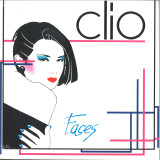
Clio - Faces

Clio

Faces

12inchPLT677MIX
Planet Records Classics
25.08.2022

Repress !

Worthy italo re-issue (in a newly mastered version) of this early Roberto Ferrante's project. Roberto started his career being part of various electronic music groups in Naples around the early 80s! His career took off when he made his first deal with Best Record by Claudio Casalini for ''Come On Closer'' by Pineapples which obtained worldwide success and was played at the legendary Chicago Radio Station WBMX by the mythological DJ's collective, Hot Mix 5. In 1985 it was time for another classic named â??Facesâ?Â�, a simple but direct and honest song with an irresistible rhythm and lyrics that tends to move away from that typical dark sound in other Italo-Disco songs of that era. This song is a triumph for synthesizers and electronic drums as it's fully electronic, something still a rarity in those days! The beautiful melody and spiritual essence of ''Faces'' represent the revolution of a new beginning of the Italian pop of the 80s with a perfect arrangement by Roberto Ferrante, a bouncing bassline, and strong and clear vocal. The sweet and sensual voice, full of personality and charm is by Clio (Maria Chiara Perugini). The graphics are by Patrizio Squeglia and all together it made this groundbreaking release which is one of the best Italo-Disco songs ever made.

pas en stock

Commandez maintenant et nous commanderons l'article pour vous chez notre fournisseur.

17,23

Derniere entrée: 7 jours
Starlite Campbell Band - The Language Of Curiosity

Renowned for their distinctive songwriting, unique sound with beautifully
produced recordings, onstage chemistry and electrifying live shows,
European and British blues award nominees the Starlite Campbell Band
are Suzy Starlite and Simon Campbell who fell in love on stage and
married following a whirlwind musical romance
With their fresh taste of original '70s British rock and British blues, the husband
and wife duo have been on an exciting roller-coaster of a musical ride following
the release of their debut album 'Blueberry Pie' to rave reviews worldwide and a
prestigious nomination for Best Album in the European Blues Awards.The band's
exciting and highly anticipated second album 'The Language of Curiosity' is
released on November 5th, 2021 and supported by a European tour.
'The Language of Curiosity' is a collection of stories about different facets of
post- modern real- life experiences from working for the man, attitudes towards
lust, passion and casual sex, space travel, social systems and abuse by power
and money, war and the global refugee crisis, gatekeepers in the music industry,
people giving up and growing old before their time and feel good '70s inspired
British rock and British blues; it's like looking at different sides of a Rubik's cube.
From full-on rock 'n' roll tribal drums, thunderous bass, badass dirty guitar riffs,
drunken echoes of slide and lap steel, melting melodies and vocal harmonies
combined with old school valve guitar amps and analog tape machines, Starlite &
Campbell have a very British sound! With a vibe and feel reminiscent of the mid
'60s to early '70s British rock & British blues; think Peter Green, Faces, Deep
Purple, Led Zeppelin but not like those really... more like Starlite-Campbell!

pré-commande05.08.2022

il devrait être publié sur 05.08.2022

23,74
Ani DiFranco - Living in Clip (25th Anniversary) LP 3x12"

Living In Clip (25th Anniversary Edition) Newly remastered for vinyl + cd in deluxe packaging. This landmark double album by Ani DiFranco, features her trio from 1995-1996 with Andy Stochansky (drums) and Sara Lee (bass). Twenty-five years later the album is recognized as a point of entry that radically expanded DiFranco’s audience, and a historically important testament to the relationship between Ani as a live performer and the devoted community she created with her fans. If there was ever a record to help you pull through until the next time the Folksinger makes her way to your town, Living In Clip is the one. Affectionately named after the state of stage amps about to blow out, the record is constructed like a show complete with the onstage humor and antics we love. The culmination of years of studio work and constant touring, Living In Clip is a tour in itself: nearly two-dozen venues provide the atmosphere for over two hours of music complete with intermission and encore. Recorded straight from the soundboard on an 8 track ADAT, digital videotape and mixed by Ani and Andrew Gilchrist – Living In Clip is conceptually designed to preserve the authenticity and pulse of a live show. There are jazzy folkalicious renditions of "Letter to A John," "Fire Door," "Diner" and "Anticipate." Amusing and sweet snippets are interwoven throughout the songs and sometimes during them - "Out of Habit" harbors a little cinematic glimpse into Ani's first days in New York City. This dynamic collection also offers The Buffalo Philharmonic Orchestra playing on "Both Hands" and "Amazing Grace" at a hockey arena as well as a phenomenal version of "Shy," that was nominated for a Grammy for Best Rock Vocal Performance – Female (or whatever). Living In Clip is also considered one of Rolling Stone Magazine's essential albums of the 90's. Living In Clip includes a beautiful photo gallery that contains pictures of the sparkling faces, questionable attire and unique persons behind the road show.

pré-commande29.07.2022

il devrait être publié sur 29.07.2022

39,08
Justin Thurgur - Many Faces

Justin Thurgur has been at the heart of the UK's World Music scene for over twenty years; principally in his collaborations with the former Fela and Femi Kuti keyboardist, Dele Sosimi, and with the pianist and composer Kishon Khan, most recently in his groups Lokkhi Terra and Cubafrobeat. He has also worked with the likes of Afrobeat drum legend Tony Allen, and with the Cuban giants Giraldo Piloto, Julito Padron and Changuito. Thurgur is also a member of the seminal English folk group Bellowhead.

'Many Faces' brings together this musical journey, with Afro-infused grooves and nods towards Cuban Jazz and Dub, with Thurgur's early passion for the likes of Miles Davis, Coltrane, Lee Morgan, Wayne Shorter, Herbie Hancock, et al....

It features both Khan and Sosimi, who have contributed as co-writers as well as bringing their own inimitable sounds on piano, rhodes and hammond organ. Alongside them are some of the leading musicians on the UK's African, Cuban and Jazz scenes, plus collaborations with rising star singers Jade Pybus and Sahra Gure.

Justin Thurgur - trombone (and some additional keys)

Graeme Flowers - trumpet and flugel horn

Simeon May - tenor, baritone and alto sax

James Allsopp - bass clarinet

Jade Pybus - vocals (on 'Woman')

Sahra Gure - vocals (on 'Be A Little Wiser')

Kishon Khan - piano, rhodes and hammond organ (on tracks 1,3,4 and 5)

Dele Sosimi - piano (on tracks 2 and 6) and vocala (on track 6)

Phil Dawson - guitar

Suman Joshi - double bass (except track 5)

Jimmy Martinez - double bass (on track 5)

Tansay Omar - drums (on tracks 1,3 and 4)

Kunle Olofinjana - drums (on tracks 2 and 6)

Yoann Julliard - drums (on track 5)

Afla Sackey - congas and djembe (on tracks 1,2 and 6), shekere and cowbell, and vocals (on track 6)

Oreste 'Sambroso' Noda - congas (on tracks 3 and 5)

Evie Hilyer-Ziegler - violin and viola

Paul Sartin - violin

Track 1 written by J Thurgur and S Gure

Tracks 2 and 6 written by J Thurgur and Dele Sosimi

Track 3 written by J Thurgur

Track 4 written by J Thurgur and J Pybus

Track 5 written by J Thurgur and K Khan

Recorded at Fish Factory by Simone Gallizio and Sean Douglas, at Boneman Studios by Justin Thurgur, at Better Pass Your Own Studios by Phil Dawson, at Thank You Please Studio by Kishon Khan and at 224 Studios by Matteo Musetti.


Mixed at Hi Street Studio by Mauro Caccialanza.

Mastered at Gearbox by Caspar Sutton-Jones.

Artwork by Matthieu Dufour

Photos of by Siobhan Bradshaw, Justin Thurgur, Stephanie Sian Smith,

Chantal Azari, Alex Bonney, Heather Hoyle, Nicole Thurgur, Joanna Mendel, Tansay Omar, Richard Gearey, Faye Hilyer-Ziegler and Svetlana Onye.

pré-commande03.06.2022

il devrait être publié sur 03.06.2022

18,36
Papé Nziengui et son Groupe - Kadi Yombo LP

Kadi Yombo, published in 1989, is the most successful album in the quest for a fusion between tradition and modernity in Bwiti harp music of the Tsogho people of Gabon. Combining beating rattles with a layer of synthesizers, Papé Nziengui blends in a contrapuntal dialogue characteristic of harp playing: male song in appeal and female choir in response, male voice of the musical arc and rhythms of female worship. But above all it’s Tsogho ritual music and modern studio orchestration. The result is an initiatory itinerary of 10 musical pieces which are all milestones likely to be simultaneously listened to, danced, meditated on, and soon acclaimed. In the years since, Nziengui has traveled he world from Lagos to Paris, from Tokyo to Cordoba, from Brussels to Mexico City to become a true icon, the emblem of Gabonese music.

Like Bob Dylan, "electrifying" folk and Bob Marley mixing rock with reggae, some purists have criticized Nziengui for having distorted the music of harp by imposing a cross with modern instruments. They even went so far as to claim that Nziengui was just an average harpist covering his shortcomings with stunts that were only good for impressing neophytes; like playing a harp placed upside down behind his back or playing two or three harps simultaneously. Sincere convictions or venomous defamations, in any case, Nziengui never gave in to such attacks, imposing himself on the contrary to pay homage to the elders (Yves Mouenga, Jean Honoré Miabé, Vickoss Ekondo) while instructing the maximum of young people. He is thus the promoter of many young talents, the most prominent of which is certainly his nephew Jean Pierre Mingongué. In a conservative society where the sacred is confused with secrecy, exposing the mysteries of Bwiti in broad daylight can be punished by exclusion or even execution.

Papé Nziengui has always claimed that he faces such risks because he never felt enslaved to a community that governs his life, that regulates his conduct, that has a right of censorship over his activities. Like Ravi Shankar, the famous sitarist, Papé Nziengui is a man of rupture but also of openness, a transmitter of culture. As proof, he has established himself in Libreville, Gabo’s capital, as the main harpist for sessions and concerts, accompanying the greatest national artists (Akendengué, Rompavè, Annie-Flore Batchiellilys, Les Champs sur la Lowé, etc.) as well as foreign artists (Papa Wemba, Manu Dibango, Kassav', Toups Bebey, etc.). In 1988, he was the first harpist to release an album in the form of a cassette produced by the French Cultural Center (Papé Nziengui, Chants et Musiques Tsogho). At the same time, he created his own group (Bovenga), combining traditional music instruments (musical bow, drums, various percussion instruments, etc.) in the framework of a true national orchestra, which gave the first concert and the first tours of a traditional music that was both modern and dynamic, thus "democratizing" the harp, to the dismay of certain purists.

On the other hand, in modern music, dominated by the logic of profit or even commercialism, artistic creation must often be adjusted for a specific audience based on reason rather than heart. But instead of allowing himself to be distorted, Papé Nziengui has always tried to produce music that is not a caricature, worthy in its expression as in its content, of the sacredness and transcendence of the music of the Origins. This is what makes Nziengui not only the musician, but the man someone whose age hasn’t altered any of his freshness or authenticity

pré-commande08.04.2022

il devrait être publié sur 08.04.2022

10,29
Articles par page:
N/ABPM
Vinyl