repressed !
ls Compilation-Reihe im Jahre 2001 gegründet um ein paar lose Fäden unserer Stammkünstler zu verknüpfen, hat sich SPEICHER inzwischen zu einem Garanten für fortgeschrittene Tanzklänge aus aller Welt weiterentwickelt der es KOMPAKT erlaubt, Musiker aus allen Bereichen des elektronischen Spektrums einzuladen und zu fördern. Für SPEICHER 84 kehrt der dänische Altmeister und globale Fan-Favorit KÖLSCH zu seinen Labelwurzeln zurück (oder zumindest jenen seines bekanntesten Projekts) und liefert heldenhaften Techno, dessen elektronische Grandezza nur von der Lieblichkeit seiner Melodien eingeholt wird.
Das nunmehr fünfte Speicher-Release von Rune Reilly KÖLSCH erreicht uns im Gefolge des gesichtsverdrillenden Wahnsinns von "Loreley" (KOMPAKT EXTRA 68), der pianogetriebenen Melancholie von "Opa" (KOMPAKT EXTRA 70) oder den Bestseller-Akkorden seiner Kollaboration mit Gregor Schwellenbach (KOMPAKT EXTRA 79), irgendwie auch eine Hommage an all diese Meilensteine im Rahmen eines zugegebenermaßen massiven Zwo-Trackers. Das erste Originalmaterial seit einiger Zeit, übernehmen diese Stücke den Staffelstab von gefeierten Remixarbeiten für eine ganze Reihe an Künstlern kontemporärer Unterhaltungsmusik, von hochgehandelten Popstars wie Coldplay zu Bewahrern feinster Tanzflurtradition wie House-Mobster Monkey Safari oder dem Bassmusik-Liebhaber Henry Krinkle.
Cerca:fad
- A1: Dreamlover
- A2: Hero
- A3: Anytime You Need A Friend
- A4: Music Box
- A5: Now That I Know
- B1: Never Forget You
- B2: Without You
- B3: Just To Hold You Once Again
- B4: I’ve Been Thinking About You
- B5: All I’ve Ever Wanted
- B6: Everything Fades Away
- C1: All I Live For (Extended Version)
- C2: Endless Love (Duet With Luther Vandross)
- C3: Do You Think Of Me
- C4: Workin’ Hard
- C5: My Prayer
- D1: Hero (2009 Version)
- D2: Anytime You Need A Friend (Extended Mix)
- D3: Music Box (A Capella)
- D4: Dreamlover (Live From Top Of The Pops)
- D5: Without You (Live From Top Of The Pops)
- E1: Dreamlover (Def Club Mix)
- E2: Anytime You Need A Friend (C&C Club Version)
- F1: Anytime You Need A Friend (Soul Convention Remix)
- G3: Smeday (Live At Proctor’s Theater, Ny – 1993)
- G4: Without You (Live At Proctor’s Theater, Ny – 1993)
- G5: Make It Happen (Live At Proctor’s Theater, Ny – 1993)
- H1: Dreamlover (Live At Proctor’s Theater, Ny – 1993)
- H2: Love Takes Time (Live At Proctor’s Theater, Ny – 1993)
- H3: Anytime You Need A Friend (Live At Proctor’s Theater, Ny – 1993)
- H4: Vision Of Love (Live At Proctor’s Theater, Ny – 1993)
- H5: I’ll Be There (Featuring Trey Lorenz) (Live At Proctor’s Theater, Ny – 1993)
- F2: I’ve Been Thinking About You (Terry Hunter Remix)
- F3: Workin’ Hard (Terry Hunter Remix)
- G1: Emotions (Live At Proctor’s Theater, Ny – 1993)
- G2: Hero (Live At Proctor’s Theater, Ny – 1993)
Locked-In's fourth release beckons you to dive deep into the distinctive sound of Session 4000 with the "Get Down" EP.
Launching the dancefloor manifesto on the A1 is 'Panaka,' a relentless groove brimming with infectious energy. The bassline asserts its dominance, while the synth patterns showcase a pure, playful mastery.
Progressing to the A2, 'Second Skin' unravels as a mind-bending revelation, leaving an enduring imprint. Session 4000 skillfully weaves intricate layers that captivate from the initial drop to the final fade-out.
Flipping to the B side, 'Get Down' lives up to its name, beckoning with a bumping rhythm and spraying synths. It's a decisive call to action, destined to be a certified dancefloor weapon tailor-made for late-night club escapades.
Concluding the EP on the B2 is 'Mr. Freeze,' as cool as its title implies. This track leaves an indelible mark, providing a memorable conclusion to this electronic narrative.
A Reflection through wild times channeled into 63 minutes of machine funk.
Following the successful release of their inaugural collaboration, "Die Zeit," esteemed artists Timo Maas and Marc Romboy now present their second installment in their creative series. This latest offering delves into the realm of "Der Rhythmus," exploring the intricate nature of rhythm, as expounded upon by the introspective musings of vocalist Fadila.
The original composition emerges as a contemporary electro opus, meticulously crafted to infuse an exhilarating energy into moments calling for broken beats. With its innovative sonic palette, "Der Rhythmus" serves as a dynamic auditory experience, promising to captivate listeners seeking an electrifying sonic journey.
In addition to the original, the release features a transformative reimagining by none other than Dense & Pika. Their remix propels the track into a futuristic soundscape that seems to beckon from the year 2030. Immerse yourself in a riveting odyssey that transports you to a science-fiction world, where visionary sounds harmoniously merge with avant-garde techno rhythms. Dense & Pika's rendition embodies forward-thinking musical craftsmanship, inviting enthusiasts to explore new dimensions of electronic music.
"Der Rhythmus" emerges as a testament to the boundless creativity and collaborative prowess of Timo Maas, Marc Romboy, and Fadila, as well as the innovative remix artistry of Dense & Pika. This release is poised to leave an indelible mark on the ever-evolving landscape of electronic music.
Shall Not Fade regular Kolter returns to the label for his fourth EP, continuing with the luscious warm sounds that house fans from all around the world have become accustomed to. This time Kolter welcomes the incredibely talented Leo Pol on track 'Please Come To My Show' where Leo co-produces and also sings on. The B-SIDE also features a deadly remix from the amazing Cinthie!
'Tema di Susie' is one of the main themes from the soundtrack composed by Alessandro Alessandroni for the 1976 Italian noir Sangue di sbirro, known in English as Blood and Bullets, as well as Knell, Bloody Avenger (the Susie in the original title refers to the female love interest of the film's hero, who is on a mission to seek revenge for the gangland murder of his policeman father).
At once sweet and sentimental, haunting and melancholic, 'Tema di Susie' stands out from the other tracks in the film, which are more action oriented. Like the rest of the score, however, it exemplifies the way in which, during the '70s, Italian film composers created their own version of the sound of American blaxploitation cinema, with its groovy blend of funk, jazz, and soul. It is no coincidence that the film's director, B-movie specialist Alfonso Brescia, specifically requested music in the style of Shaft, the iconic film that defined that sound in 1971.
Though seemingly simple, 'Tema di Susie' is a perfect example of Alessandroni's style – in particular his unique ability to effortlessly blend groove and melody, funk and feeling, into one musical piece. So, we invited different artists with different backgrounds, influences and approaches to bring their individual take on this elegant and now timeless tune.
Neapolitan duo Fratelli Malibu have taken Alessandroni's melodic theme and woven it into a mesmerizing tapestry of rhythmic beats, world percussion and ethereal atmospheres. Drawing inspiration from funk/Afrobeat, synth-pop and Italo-disco, they've conjured a psychedelic-tinged, afro-cosmic groove that's bound to transport you to another dimension.
As the music unfolds, you'll feel like you've stepped into a vibrant, fantasy world. The breaks, outro, and intro are woven with a psychedelic thread that leaves you yearning to return once the final note fades away. And that's not all – they've injected an irresistible pop sensibility into the track with the use of drum machines and synths. The result? A rework that not only amplifies the dreaminess of the original but also seamlessly marries the past with the future.
We love the track so much that we decided to double the fun with a vocal retouch version, courtesy of the Italian funk/soul collective Banda Maje. Their vocalists, Chiara Della Monica and Cristina Cafiero, elegantly infuse cinematic and Balearic vibes into the mix, paying a wonderful homage to Fratelli Malibu's exquisite arrangement.
I Talk To Water, the fifth album for Kompakt by Danish producer Kölsch, is the artist’s most personal statement yet. While all the trademarks that make his music so popular and powerful are still present – lush, melodic techno; swooping, trance-like figures; sensuous, shivery texturology – I Talk To Water is also a deep and intimate rapprochement with family and history, a beautiful, finely detailed document of loss and memory, and a tracing of the long, unbroken thread of grief that runs through our lives once we’ve lost those we loved.
The emotional core of I Talk To Water, then, is a cache of recordings by Kölsch’s father, Patrick Reilly, who passed away in 2003 from brain cancer. With time rendered elastic by the pandemic and its associated lockdowns, its sudden, alienating shifts in everyday living, Kölsch found himself reflecting on his father’s passing and ongoing spiritual presence, thinking about how best to memorialise such a significant figure in his own life. Those recordings opened a gateway, of sorts, for Kölsch to move through – a way to bring past and present together and entwine them in a sensitive, poetic manner.
Kölsch’s father was a musician – “touring in the sixties and seventies, in the Middle East especially, he was doing the whole hippy trail, playing guitar, and wrote some songs over the years,” he recalls. “But all in all, he decided to focus on family rather than pursue a musical career.” Reilly kept playing and writing music over the years, though Kölsch hadn’t listened to the material for some time: “I’d never had the guts to listen to it, because I just felt too fragile listening to his voice. It’s such a tough thing to go through.”
During the pandemic, though, Kölsch listened through the fragmented body of work that his father had produced over the years. “I decided I’m gonna finally release my dad’s music twenty years after his passing,” he reflects. “This whole album is about the process of loss, and for me it’s been one of my main driving forces in my musical life, the whole emotional aspect of whatever I’ve done has been based in that feeling that he’s not there anymore.”
Recordings of Reilly appear on three songs across I Talk To Water. His guitars drift pensively across “Grape”, offering a lush thread of melody that Kölsch wraps with clicking, driftwood rhythms and droning, melancholy bass. “Tell Me” is a lovely three-minute art song, a sadly beautiful reflection, minimally adorned with gentle keys and a muted pulse. And on the closing “It Ends Where It Began”, Kölsch lets his father’s acoustic guitar take centre stage for a lament that’s unexpectedly folksy, a guitar soli dream, which Reilly originally recorded in 1996. “He actually recorded it for my first album that never came out,” Kölsch reveals, “and I had it sitting around forever. That is purely him.”
These three imagined collaborations between father and son are poised and delicate. But their relationship also marks the gorgeous music Kölsch has made across the rest of I Talk To Water, from the itchy yet lush “Pet Sound” (titled in tribute to one of Reilly’s favourite albums), the flickering synths and yearning vocal samples that slide through “Khenpo”, the ecstatic shuddering that marks “Only Get Better”, or “Implant”’s slow-motion pans and subtle reveals.
There’s also the title song, where Kölsch is joined by guest Perry Farrell (Jane’s Addiction, Porno For Pyros), singing a mantra for internal reflection: “I talk to water / Searching for myself / Looking for answers / Oceans of you.” Farrell’s appearance brings another timbre, another spirit to the album, aligning neatly with his recent interest in electronic music. “He was completely taken by this idea of talking to water,” Kölsch says, thinking about the ways we collectively lean towards the natural world as a comfort and a listener, a guide through mourning, a way to map out the terrain of the heart. This mapping is something that Kölsch has proven remarkably adept at through the years; dance music for both body and mind, but also both for the here-and-now, and for the hereafter.
“I Talk To Water”, das fünfte Album des dänischen Produzenten Kölsch für Kompakt, ist zweifellos das persönlichste Statement des Künstlers bislang. Während alle Markenzeichen, die seine Musik so beliebt und kraftvoll machen, immer noch präsent sind – üppige, melodische Techno-Tracks; schwebende, tranceartige Elemente; sinnliche, fiebrige Texturen – ist “I Talk To Water” auch eine tiefe und intime Annäherung an Familie und Geschichte. Es ist ein wunderschönes, fein ausgearbeitetes Dokument des Verlusts und der Erinnerung, und es verfolgt den langen, ungebrochenen Faden der Trauer, der durch unser Leben läuft, sobald wir diejenigen verloren haben, die wir liebten.
Der emotionale Kern von “I Talk To Water” besteht aus Aufnahmen von Kölschs Vater, Patrick Reilly, der 2003 an Hirnkrebs verstarb. Durch die Pandemie und ihre damit verbundenen Lockdowns, die plötzlichen, entfremdenden Veränderungen im Alltag, fand Kölsch sich in Gedanken an den Tod seines Vaters und seine fortwährende spirituelle Präsenz wieder. Er überlegte, wie er eine so bedeutende Figur in seinem eigenen Leben am besten verewigen könnte. Diese Aufnahmen öffneten ihm sozusagen ein Portal, um Vergangenheit und Gegenwart miteinander zu verbinden und sie auf sensible und poetische Weise zu verweben.
Kölschs Vater war Musiker – “er tourte in den sechziger und siebziger Jahren, vor allem im Nahen Osten, auf dem Hippie Trail, spielte Gitarre und schrieb im Laufe der Jahre einige Songs”, erinnert sich Kölsch. “Aber alles in allem entschied er sich, sich auf die Familie zu konzentrieren, anstatt eine musikalische Karriere zu verfolgen.” Reilly spielte und schrieb jedoch im Laufe der Jahre weiterhin Musik, obwohl Kölsch das Material lange Zeit nicht angehört hatte: “Ich hatte nie den Mut, es anzuhören, weil ich mich einfach zu zerbrechlich fühlte, seine Stimme anzuhören. Es ist so schwer, das durchzustehen.”
Während der Pandemie hörte sich Kölsch jedoch durch das fragmentierte Werk, das sein Vater im Laufe der Jahre produziert hatte. “Ich beschloss, die Musik meines Vaters zwanzig Jahre nach seinem Tod endlich zu veröffentlichen”, reflektiert er. “Dieses ganze Album handelt von dem Verlustprozess, welcher für mich generell eine der Hauptantriebskräfte in meinem musikalischen Leben ist. Der ganze emotionale Aspekt von dem, was ich getan habe, basierte auf dem Gefühl, dass er nicht mehr da ist.”
Auf “I Talk To Water” sind Aufnahmen von Reilly in drei Songs zu hören. Seine Gitarren ziehen nachdenklich durch “Grape”, bieten einen üppigen Melodiefaden, den Kölsch mit klickenden, treibenden Rhythmen und dröhnendem, melancholischem Bass umwickelt. “Tell Me” ist ein schönes dreiminütiges Kunstlied, eine traurig-schöne Reflexion, minimal geschmückt mit sanften Tasten und einem gedämpften Puls. Und auf dem Abschlusstrack “It Ends Where It Began” lässt Kölsch die akustische Gitarre seines Vaters im Mittelpunkt stehen, ein überraschend folkiger Klagegesang, den Reilly ursprünglich 1996 aufgenommen hatte. “Er hat es tatsächlich für mein erstes Album aufgenommen, das nie veröffentlicht wurde”, enthüllt Kölsch, “und ich hatte es ewig liegen.”
Diese drei erdachten Kollaborationen zwischen Vater und Sohn sind ausgewogen und zart. Aber ihre Beziehung prägt auch die wunderschöne Musik, die Kölsch im Rest von “I Talk To Water” geschaffen hat, angefangen bei dem nervösen, aber üppigen “Pet Sound” (benannt als Hommage an eines von Reillys Lieblingsalben), den flimmernden Synthesizern und sehnsüchtigen Vocal-Samples in “Khenpo”, den ekstatischen Erschütterungen in “Only Get Better” oder den langsamen Schwenks und subtilen Enthüllungen in “Implant”.
Es gibt auch den Titelsong, in dem Kölsch von Gast Perry Farrell (Jane’s Addiction, Porno For Pyros) begleitet wird, der ein Mantra für die innere Reflexion singt: “I talk to water / Searching for myself / Looking for answers / Oceans of you.” Farrells Auftritt bringt eine weitere Klangfarbe, einen weiteren Geist in das Album, der gut zu seinem jüngsten Interesse an elektronischer Musik passt. “Er war völlig fasziniert von der Idee, mit Wasser zu sprechen”, sagt Kölsch und denkt darüber nach, wie wir kollektiv zur Natur als Trost, Zuhörer, Führer durch die Trauer neigen, um die Gelände des Herzens zu kartieren. Diese Kartierung ist etwas, in dem Kölsch im Laufe der Jahre erstaunlich geschickt war; Tanzmusik für Körper und Geist, sowohl für das Hier und Jetzt, als auch für das Leben danach.

Dead Fader is the alter ego of John Cohen - former Brighton resident, now based in Berlin - who has worked relentlessly since 2007 to realise his vision of electronic music. His tracks are characterised by pioneering sound explorations, which on one hand oscillate between sonic extremities and on the other hand carefully craft cinemascope sound worlds. The album became a very personal exploration for Cohen, as the themes are inquiring emotional states, and the writing process was predominantly influenced by falling in love whilst making the album. Furthermore, the film Interstellar visually influenced the album, mapped as an image for Cohen's tracks to exist in. I have watched his talent, his confidence in his ability and his output just grow and grow beyond what most humans are capable of imagining, never mind making. I think that comes from a place of wonder and exploration, a place where emotion, energy and experience are important, the long and narrow, the deaf arena, the blood forest and the glass cathedrals. Dead Fader rips you backwards through the portal as existence explodes around you, but you don't perish in the fire. It's just a ride.' - Barry Pendergast, former partner in Dead Fader T
Sept duos pour guitar acoustique et piano préparé is the second duo recording from Stephen O'Malley and Anthony Pateras. Their first together, Rêve Noir (2018), took an electro-acoustic scalpel to a 2011 duo concert for electric guitar and piano, using Revox and digital treatments to twist and smear gig documentation into ghostly echoes and fractured drones. Here, in contrast, the music is entirely acoustic and presented as it was performed, without overdubs. Both players’ choices of instruments are notable: this is O'Malley’s most extensive recording on steel string acoustic guitar (playing an instrument whose previous owners include Marissa Nadler and Glenn Jones) and Pateras return to the prepared piano, which he has rarely employed in recent years, after spending much of the first decade of the 21st century exploring its possibilities.
Recorded during O'Malley’s residency at La Becque on Lake Geneva in the summer of 2021, from the first moments of the opening ‘déjà revé’ the music immediately establishes the distinctive landscape of chiming tones and hovering clouds of resonance explored throughout its one-hour running time. Pateras’ preparations create tolling bell-like tones alive with complex overtones, alongside which O'Malley’s open strings and natural harmonics add a sparkling clarity. While Pateras’ music often uses a densely chromatic harmonic language, these duos are remarkable for their modal simplicity. However, the interaction between the pure intervals of O'Malley’s just-intoned strings and the unstable harmonies created by the piano preparations suspends the music in an oneiric state of hazy ambiguity. Without obvious reference to tempo or meter, the music floats in what the composer Ernstalbrecht Stiebler has called a ‘bottomless sound space’, the temporal placement of events determined by bodily rhythms and the performers’ own listening to (and enjoyment of) the sounds being made.
Heard one way, this music can seem striking in its consistency, almost environmental. Attending more carefully, the listener hears the pitch sets and tunings changing throughout the album’s length. Each piece has its own character, subtly distinguished from the others through mood, pacing, and timbre. On ‘déjà voulu’, for instance, O'Malley makes prominent use of slide, the woozy, bending pitches weaving through a series of lush arpeggiated chords from the piano. ‘Déjà senti’, on the other hand, is particularly spare, the gestures spaced out to the extent that they often float in isolation against the background of fading resonance. Much of ‘déjà su’ is built around a slowly pulsing single prepared piano tone, creating an almost ominous tension, whereas the sparkling guitar harmonics and arpeggios of the closing ‘déjà raconté’ have a gently triumphal air. While the music’s calm, rippling surface is immediately entrancing, these seven duos – in the tradition of the best improvised music – also reward close listening, which reveals sonic details and focuses the listener’s attention on how the music unfolds spontaneously from decision to decision, from gesture to gesture.
Recorded during a period when O'Malley and Pateras were grieving the loss of recently departed friends and collaborators, these seven duos possess a reflective, at times almost mournful quality. More importantly, though, they are imbued with other qualities that can arise from personal loss: a clarity that allows one to clear away the inessential, to begin again, to renew one’s faith in friendship and music.
- A1: Flug 8 - Puerto Rico (The Velvet Circle Mix)
- A2: The Black Frame - Sacrosanct (Mount Obsidian Remix)
- A3: The Novotones - Liberty Bell
- A4: Sascha Funke - Mathias Rust
- A5: La Finca - What Clouds Say
- B1: Paulor - The Last Coke In The Desert
- B2: Mount Obsidian - Fade Feat Charlotte Jestaedt
- B3: The Velvet Circle - Our Tribe
- B4: Seb Martel Feat Las Ondas Marteles - Dark Mambo (Joerg Burger Mix)
- B5: Mount Obsidian - Marole Feat Charlotte Jestaedt
Kompakt unveils the third volume of Jörg Burger’s Velvet Desert Music compilation series, dedicated to music that hits the sweet spot between the cinematic, the (pop) ambient, and the psychedelic. With Velvet Desert Music Vol. 3, Burger and his friends wander afar, taking trips away from, or adjacent to, the dancefloor that’s acted so long as the crucible for the Kompakt aesthetic. Like its predecessors, it’s a gorgeous, lambent collection of late-night mood music.
Because it’s such a broad church, Velvet Desert Music admits all kinds of new experiences, as well, with Burger looking for music that "leads out of the desert into the velvet universe". Indeed, of all the volumes in the series, this third instalment feels closest to an album made by a true collective. The roster has changed, with new contributors Flug 8 and Seb Martel, both with his trio Las Ondas Marteles and with Chocolate Genius and Zsela as La Finca, joining regulars The Novotones, Mount Obsidian, The Golden Bug, Paulor and Sascha Funke.
Burger himself reappears, too, alongside Fritz Ackermann (of The Novotones), Max Würden and Thore Pfeiffer, in The Velvet Circle. Their contributions are pure lush life electronica: “Our Tribe” hitches a ride with a low-slung groove, flickering psychedelic reels of acoustic guitar traipsing across moody bass and taffeta layers of drone; their opening remix of Flug 8’s “Puerto Rico” gently introduces the album with softly tangling electronic tones, while guitars, drenched in reverb, pirouette in the background. A Mount Obsidian remix of “Sacrosanct” by Burger’s The Black Frame -project is a swirling treat for the ears.
La Finca’s electronics and voice miniature, “What Clouds Say”, is a masterclass in poetic restraint; Martel’s “Dark Mambo”, remixed by Burger, is one of the collection’s big surprises, for it indeed does what the title says, a drifting, surrealist take on the mambo form, full of pensive chords, rich with unrequited longing, a breathy saxophone whispering under the song’s sly rhythmic carriage.
Elsewhere, The Novotones chime in with a slyly propulsive, Krautrock-esque charmer, “Liberty Bell”, and the guitar-led tone-drift of “Valley of Oblivion”; Paulor’s “The Last Coke in the Desert” is a chiming, lilting dreamscape; Mount Obsidian are joined by vocalist Charlotte Jestaedt for two modern takes on early-hours art song, “Marole” and “Fade”; Sascha Funke’s “Mathias Rust” is a lavish dancefloor dream, vocal samples drifting through the song as it slowly envelops the listener in its opulent radiance.
This is just a taste of the rich pleasures of Velvet Desert Music Vol. 3, a triumph of a compilation that takes the psychedelic visions of its predecessors and looks for the desert within, a dusty kiss, a road-movie hallucination flickering on the listener’s eyelids, a cinematic projection from deep inside the mind.
Die unnachahmliche Róisín Murphy veröffentlicht ihr mit Spannung erwartetes neues Album, 'Hit Parade' das sie in Zusammenarbeit mit dem Virtuosen der elektronischen Musik DJ Koze produziert hat. Das 13 Tracks umfassende Kompendium aus genreübergreifenden Perlen wird am 8. September 2023 auf Ninja Tune veröffentlicht.
Die warmen Klänge des HipHop, die psychedelischen Elemente und die eleganten, gefühlvollen Grooves sind allesamt Teil der Vision von Murphy und Koze, was zu einem Album führt, das man endlos wiederholen kann, während die Melodien darauf sich im Gehirn festsetzen. Die 13 Tracks, die zu dem mühelosen Glanz des Albums beitragen, wurden in sechsjähriger Arbeit fast vollständig aus der Ferne zusammengebastelt. Fans beider Künstler:innen werden wissen, dass diese inspirierte Zusammenarbeit aus Murphys Beiträgen zu Kozes 'Knock Knock' aus dem Jahr 2018 entstanden ist - insbesondere 'Illumination' und 'Scratch That' - und als Murphy mit Koze an 'Hit Parade' arbeitete, fand sie den gemeinsamen kreativen Prozess auf seine eigene Art und Weise aufschlussreich.
Seit sie in der irischen Stadt Arklow aufwuchs, schien die Musik Murphy fast sofort zu rufen, von dem Moment an, als sie im Alter von 10 Jahren die Kraft ihrer eigenen Stimme entdeckte, indem sie den ewigen Showtune-Klassiker 'Don't Cry For Me, Argentina' bei einem lokalen Poesie-Festival vortrug. Murphy stürzte sich kopfüber in die Musikszene, nachdem ihre Familie nach Manchester umgezogen war, als sie noch ein Teenager war. Nach einem kurzen Flirt mit Noise und Punk in Manchesters Umgebung trampte sie mit 19 Jahren nach Sheffield, um in die Clubszene einzutauchen. Ein zufälliges Zusammentreffen mit dem örtlichen Bassisten Mark Brydon führte die beiden zur Gründung der gefeierten Gruppe Moloko. Seitdem hat Murphy eine beeindruckende Solokarriere hingelegt, die sich über fünf hochgelobte Alben (mit einer Nominierung für den Mercury Music Prize für 'Hairless Toys' in 2015), gefeierte EP- und Single-Kollaborationen und in jüngster Zeit auch über Auszeichnungen für Videoregie und Schauspielerei erstreckt.
IZIPHO SOUL are thrilled to announce the 7” release of the Modern Gospel Soul Banger JESUS MAKES ME HAPPY by RICHARD HARTLEY & SOUL RESURRECTION - Presented on vinyl is ‘The Joyful Exaltation
Edit’, this excludes the rap from the original version.
On the flip side, HEART AND SOUL, a ballad of epic proportions that builds and builds with the finale possessing some of the most gut wrenching vocals you are ever likely to hear. Richard states towards the end that ‘I should be fading
right now’, but finds the strength to come back one more time!
These tracks are taken from the album Face II Face from 2007, the CD is virtually invisible - Discogs history reveals no sales.
Richard Hartley has had a prolific career as a singer and musical director, travelling across the world to work with choirs and musical icons such as Aretha Franklin and Diana Ross. He is pastor
at Haven International Ministries, New York and star of his own reality television show ‘The Rev’.
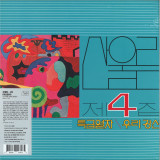
- A1: 특급열차 (속에서) (Express Train (In The))
- A2: 아무에게도 말할 수 없소 (Can’t Tell Anyone)
- A3: 풋내기들의 합창 (A Chorus Of Fledglings)
- A4: 가을에 오시나요 (Will You Come In Autumn?)
- A5: 거인의 숲 (Giant’s Forest)
- A6: 그리움 (Longing)
- A7: 유리 인형 (Glass Doll)
- B1: 우리 강산 (Our Country)
- B2: 여운 (Afterglow)
- B3: 카멜레온 (Chameleon)
- B4: 어디로 갈까 (Where Shall I Go?)
- B5: 내일 또 내일 (Tomorrow And Tomorrow Again)
- B6: 바람 부는 강 언덕 (The Windy Hill By The River)
Original release date: April 15, 1979
Sanullim's 4th album consists of background music and insert songs for TV and radio dramas and plays, including Korean Film director Im Kwon-taek's movie "Tomorrow And Tomorrow Again". It is a noteworthy collection of works that has not faded with the unique scent of Sanullim, and contains several songs that still shine with charming emotions and whimsical or vague sensibilities.
Express Train (Inside), a mountain sound-style hard rock with dynamic rhythm, fuzz guitar, and Kim Chang-hoon's wild shouting, Kim Chang-wan's soft vocal and brilliant keyboard sound, Can't Tell Anyone, Love It includes the elegant performance songs Glass Doll and The Windy Hill By The River, and the beautiful song Afterglow that achieves the climax of romance and lyricism.
Potatoheadz Records come back, out of nowhere, with JCow’s ‘in my elem3nt7’. Often spotted cycling about town, it’s no secret that JCow is diligently & quietly (and not so quietly) crafting big tunes. This release is the sound of that inevitable 2020’s shut-in inspiration. Written during those periods, they are finally seeing the light of day. With focused time in the studio, some serious imagined musical landscapes are the result. Tracks designed for dance-floor breakouts and closed-eye catharsis. We’ve heard these tracks come a long way from inception. Cerebral and kinetic, each track has a unique character, functional yet bound to stand out in any set. Tracks like ‘a complex range of human emojis’ pay-no-mind in referencing the past with a sly smirk and an updated twist. Are we hacking? While the title track ‘in my elem3nt7’ conjures a certain mystical atmos - the tracks bold narrative shift midway is one hell of a notable payoff. Swerving boldly into new territory, the beats fade and return from new angles, sounds cutting and slicing through the speaker like angelic machine gun fire. The drum programming is truly used like a weapon in this one, with those majestic horn samples like calls from the ether. Exaels ‘swampbuggy’ reworking of title track on the B2 provides the perfect alternate universe, working its way from a sparse ambience into an inspired IDM-leaning breakbeat epilogue.
"Drums from heaven, keys from Mars, a bass made from mother earth's soil and guitars from a guy who's time-traveling from German Kraut in the last 60ies into the next 60ies and who happens to gift us today with this funky, dirty, pulsating, delicious music that's everything which music is supposed to be: ALIVE! (Note to self: Always keep a copy of this record in your suitcase!)." (Malakoff Kowalski)
"Afrokraut" is a stylistic expression of Krautrock, primarily associated with Can, and their creative use of time and space in music. "A Guide To Afrokraut III" is David Nesselhauf´s third and last contribution to the dusty shrine of this long forgotten style.
Next to "Afrokraut" (2016) and "Afrokraut II: The Lowbrow Manifesto" (2018), this album completes a humble sonic Trypticon in honour of David Nesselhauf's musical heroes. Experimentation was key in the immersive process of producing this album, which encompasses elements of Funk, Afrobeat and Krautrock as well as otherworldly Drones, early Elektronische Musik and even field recordings.
Inspired by the unfinished manuscript 'History Deletes Itself' by the late science fiction author Joseph Sabiers, Nesselhauf decided to produce a b-movie soundtrack to the original plot, ignoring the fact that there will likely never be a movie to this music.
In the original script, a virus has infected history, the resulting changes of historical facts leading to an unpredictable present and future for mankind. Every attempt to solve the problem – including time travelling – only worsens the situation. But three planets at the end of the known universe seem to be unaffected by the phenomenon, they become a sanctuary known as 'Afrokraut III'. Three brothers arrive there to start new lives. They are introduced to The Guide, their mysterious advisor...
The striking parallels to today's uncertainties, a strong feeling of hope and the idea to never stop exploring (come what may) certainly have encouraged the making of this album, which sees a belated release due to the obstacles everyone faces right now.
David Nesselhauf lives in Hamburg/Germany and appears as a bass player/songwriter in bands like Hamburg Spinners, The Drawbars, Diazpora, and Angels Of Libra.
A royal refugee turned Soul survivor. On his debut album Free Me, Burundian-born JP Bimeni astonishes with a voice that recalls Otis Redding in his prime whilst resonating with the soul of Africa. A refugee who's been living in London since the early 2000s, Bimeni sings songs of love and loss, hope and fear, with a conviction that comes from the extraordinary experiences life has thrown at him.
A descendant of the Burundian royal family, Bimeni fled Burundi aged 15 during the 1993 civil war. Following three attempts on his life - at school he watched as his schoolmates were murdered, he was then chased by motorcycle militia-men and finally poisoned by doctors in hospital - he was given refugee status and fled to the UK where he's remained ever since. Music has provided the solace that Bimeni has needed to move forward with his life: 'If I didn't have music I don´t know how I would have survived everything', he says. With it's classic 60s-sounding Motown and Stax-inspired grooves the album was written by musical director Eduardo Martiìnez and songwriter Marc Ibarz and Bimeni imbues these tales of love and loss with his tragic experiences making 'Free Me' a deep soul soundtrack to his pained life: 'When I sing I feel like I'm cleansing myself: music is a way for me to forget'.
Our second installment is going to be a classic 4-track various artist release. Carefully curated and selected pieces of music, produced by close friends, this release fulfills the label's mission of providing a platform for our loved ones. This issue features some incredible artists and friends united on wax.
The Berlin and Munich-based duo Medus & Niko S. offer a hybrid track with nostalgic elements of techno, breaks, and progressive house, capable of busting any dancefloor. Longtime Munich resident DJ and producer Dancing Lessons contributes a hypnotic tech-house infused tune with elements of breakbeat and electro, taking the listener on a personal journey through time and space. Munich's young and upcoming producer Johnmon and label owner of Powerloader Records chips in a proper 90s bomb with driving drums, dark, and quirky synths. An all-round tool suited for any dance floor situation. Finally, Vienna-based Doesntmatter polishes off the VA with an expertly crafted electro track. He is the veteran out of the bunch with various releases under his belt on labels such as Traumschallplatten, Reboot Prague, Vienna Underground Track, and Zone Focus.