unperson has quickly defined his own unique lane of deeply atmospheric and percussive bass-laden electronics. His 'The Ghosts That Gave' EP was released to critical acclaim in March 2020 with support from Mixmag, DJ Mag (9/10 Review) & Resident Advisor and plays across BBC 6Music ('Recommends Spotlight Artist' feature for Tom Ravenscroft), Saoirse's BBC R1 Residency, NTS, Rinse FM + more. With tastemaker DJ support from Call Super, upsammy, Errorsmith, Machine Woman, Minor Science, India Jordan, AYA, Bruce etc., unperson is becoming a formidable new face in the electronic scene having recently contributed to Crack Magazine's esteemed mix series.
The 'Struggles In Conjuring' EP sees unperson step further out of the "corners of the club" than he has in his output to date; with an alluringly warm introduction, 3 tracks primed for peak dancefloor dismantling and a remix from man-of-the-moment DJ Python – who had a career defining 2020 after releasing his 'Mas Amable' album (#1 in Resident Advisor Album of The Year 2020, #3 on Crack Magazine's Best Albums Of 2020, #87 in Pitchfork's 100 Best Songs of 2020 etc).
Cerca:fad
Clear Vinyl
Hitting us with a double LP of sublime dance music lingering on the border of ambience, Interstate is the alter ego of DJ Swagger. Earlier this year, he graced Shall Not Fade's Time Is Now sub label in collaboration with DJ Aedidias for four feelgood UKG cuts - now returning for the second album in the Seasons Series, expect something a little different. Dominion Swing is his first LP under the Interstate moniker.
The four sides of vinyl hold their fair share of punchy kick drums and funky melodies, though across them is a blissed out ambient softness that comes to the forefront by the end. "Doublet Doureet" is a low end groover driven by skippy percs, the speedy bass melody chilled out with some lingering natural chords. "Second Mass" is futuristic and clean cut, tickling the ear with panning synth stabs and a powerful electro bassline that cuts through the track sharply, giving memories of the dancefloor while perfectly leading into "Habitat" - the sustained ambient shimmer that closes the A side.
Onto the reverse side, "This Rather Than That" and "Misty" are glitchy, playful evening music, "Misty" leaning into a fun organ ditty. The almost imperceptible bassline of "Two To Get Ready" hangs in the air giving it a dub atmosphere.
More genre exploration is to be found on the C side, from the pulsing but delicate house of "Appliance" to the tranquil guitar-lead journey of "Condone The Drama", ending with a return to blissful, oceanic ambience in "Bubblebath".
The closing side of Dominion Swing stays in this vein - blissed out haze is soaked into summer sundowner "Ascension" and its romantic melodies. "Stigma" is built on misty ambient pads but carries a persistent heartbeat rhythm, fading slowly into album closer "Yosemites" tropical field recordings and scattered drum hits.
Shall Not Fade champions its hometown of Bristol for this next release on the Time Is Now White Label series; Daffy has built a name for himself on the local scene putting out forward-thinking garage on labels to watch like Dim Sum Records and Equal People. This will be his first full vinyl EP and it's not one to miss.
Run Around EP builds up the tension throughout; starting off with "Put Your Feet Up", a ghostly atmospheric piece with a sparse beat, sprinkling of ear candy and crescendo of headsy melodies. The title track oozes a growling bassline beneath staccato vocal snatches - it's a deconstructed style of garage that maintains tension while adding a dreamlike quality. More tension encompasses "Nerves" alongside teases of low end wobbles and harsh breaks that coalesce into a punishing jungle track.
"Lost Again" brings in the B-side with this same energy, an explosion of rolling breaks forming the backbone of this rouch and ready Metalheadz style crowd pleaser, calling out to the rave. "Mishap" serves up ragga vocals, impenetrable sub bass and pouncing two-step ripe for a reload, all rounded off with "Wasp's Nest" - a raucous, no holds barred climax to the EP.
Silver Lining Music to release the first project by Saxon's Biff Byford and son Seb Byford of Naked Six. On July 23rd 2021, there’s going to be a new rock ‘n’ roll sheriff in town, and as their name suggests, Heavy Water aren’t for the light-hearted. Soaked in gritty, riff-baked blues, yet rich with the sound and metre of classic hard rock, Red Brick City’s ten songs refuses to let you go. From the taut, elastic swing of the ‘Solution’ riff to the rich, layered balladic strains of ‘Tree in the Wind’, Red Brick City moves with the class and cadence of a cracking journey uniting vintage rock ‘n’ roll sensibilities with the crackle and excitement of a fresh, youthful perspective.
With Seb on guitar and Biff on bass duties and both providing their vocal talents the foundations for Heavy Water’s sound are set in both that incredible father/son chemistry and a lifetime of know-how and experiences. Take the title track -and first single- ‘Red Brick City’, all steam and smoulder wrapped around a riff Soundgarden would’ve been proud of, and then there’s the sun-soaked smile of ‘Follow This Moment’ with harmonies evoking the Beach Boys relayed through Led Zeppelin, a gorgeous ‘70’s trip right down to the fade out. Produced by Seb Byford and Biff Byford, with Jacky Lehmann mastering, Red Brick City is a rich, lustrous ride through profoundly rewarding rock waters.
- Generation Genocide
- Let It Slide
- Good Enough
- Something So Clear
- Thorn
- Into The Drink
- Broken Hands
- Who You Drivin’ Now?
- Move Out
- Shoot The Moon
- Fuzzgun ‘91
- Pokin’ Around
- Don’t Fade Iv
- Check-Out Time
- March To Fuzz
- Ounce Of Deception
- Paperback Life (Alternate Version)
- Fuzzbuster
- Bushpusher Man
- Flowers For Industry
- Thorn (1St Attempt)
- Overblown
- March From Fuzz
- You’re Gone
- Something So Clear (24-Track Demo)
- Bushpusher Man (24-Track Demo)
- Pokin’ Around (24-Track Demo)
- Check-Out Time (24-Track Demo)
- Generation Genocide (24-Track Demo)
The classic 1991 album remastered and expanded with rare and previously
unreleased tracks. Extensive liner notes by band biographer Keith Cameron.
A landmark of the grunge era.
By going back to basics with ‘Every Good Boy Deserves Fudge’, Mudhoney
flipped conventional wisdom. Not for the first time - or the last - they would be
vindicated. A month after release in July 1991, the album entered the UK
album chart at Number 34 (five weeks later, Nirvana’s ‘Nevermind’ entered
at 36) and went on to sell 75,000 copies worldwide. A more meaningful
measure of success, however, lay in its revitalisation of the band, casting a
touchstone for the future. The record is a major chapter in Mudhoney’s
ongoing story, the moral of which has to be: when in doubt, fudge it.
The album began at Music Source Studio, a large space equipped with a 24-
track mixing board - downright futuristic, compared to the 8-track setup that
birthed the band’s catalytic 1988 debut, ‘Touch Me I’m Sick’. The Music
Source session quickly turned into a false start when the results, in guitarist
Steve Turner’s words, “sounded a little too fancy, too clean.” Lesson learned,
the band went primitive and got to work at Conrad Uno’s 8-track setup at Egg
Studio. Named after the cartons pasted on the walls in an optimistic attempt
at sound-proofing, Egg boasted a 1960s vintage 8-track Spectra Sonics
recording console, originally built for Stax in Memphis.
So it was that, in the spring of 1991, Mudhoney made ‘Every Good Boy
Deserves Fudge’. The resulting album is a whirlwind of the band’s influences
at the time: the fierce ‘60s garage rock of their Pacific Northwest
predecessors The Sonics and The Lollipop Shoppe, the gnashing posthardcore of Drunks With Guns, the heavy guitar moods of Neil Young, the
lysergic workouts of Spacemen 3 and Hawkwind, the gloomy existentialism
of Zounds and the satirical ferocity of ‘80s hardcore punk. The quartet’s
special alchemy meant these fond homages never slid into pastiche.
Ultimately, ‘Every Good Boy Deserves Fudge’ epitomised the best of
Mudhoney: here was a band reconnecting with its purest instincts and, in the
process, reinventing itself.
This 30th Anniversary edition, remastered by Bob Weston at Chicago
Mastering Service, stands as testimony to the creative surge that drove them
in this period. The album sessions yielded a clutch of material that would
subsequently appear on B-sides, compilations, and split-singles. This edition
includes all those tracks and a slew of previously unreleased songs,
including the entire five-track Music Source session.
- 1: The Station (Prelude)
- 2: My Favorite Goodbye
- 3: My Last Dream Of You
- 4: Lie To Me, Angel
- 5: Thank You Note
- 6: Behind Your Smile
- 7: Why Can't We Get This Right?
- 8: Sideview (Interlude)
- 9: Last Days Of Rome
- 10: Whispers & Sighs
- 11: The World We Used To Know
- 12: Tennessee Moon
- 13: The Great Manzini (Disappearing Act) (Disappearing Act)
Whispers And Sighs is the final studio album by the late David Olney,
beloved folk songwriter’s songwriter, in collaboration with Anana Kaye, a
young Eastern European powerhouse taking Americana by storm.
If the futile longing to reach back through memory and grasp what is in the
past could be set to music, it would sound like Whispers and Sighs. Over the
course of 13 tracks, David Olney and Anana Kaye manage to craft a journey that
amounts to far more than just another Americana album.
And while it’s hard to escape the seeming cosmic significance of the album as
posthumous Olney release, at no point does this create the air of morbidity;
rather, it lends the project a bittersweet ambiance. Within Whispers And Sighs
is an undeniable reminder that David Olney’s extraordinary legacy can never
fade, while Anana Kaye’s star grows deservedly brighter by the day.
Berlin’s Philipp Priebe delivers the ‘Ectoplasmatic Friends’ EP via his Stólar imprint early December.
Since the launch of Philipp Priebe’s Stólar in March 2020, the label has set the tone for its sonic palette which leans towards emotive deep house, dubbed out techno and hypnotic electronica. So far the labels has stood as a platform for Priebe’s own material while welcoming remixes from the likes of Just Another Beat artists Kim Brown and
Osaka, Japan’s Metome. Here the story continues with a fresh EP pencilled for 12’’ release in December, again showcasing more of Priebe’s work with accompanying remixes courtesy of Tilman and Lifestyles.
The original mix of ‘Dial 7 For Ghost’ is up first, featuring a robust drum groove, swirling resonant licks and chanting voices before the latter stages ease in a warm, atmospheric chord sequences to carry out the composition. Fine regular Tilman follows next with his take on ‘Dial 7 For Ghosts’, taking things down a typically soul laden house direction from the German artist as he merges the original’s airy atmosphere and bumpy drums with vocal stabs and a classic house bass line.
Lifestyles interpretation of ‘Dial 7 For Ghosts’ follows on the b-side, employing amen breaks, tripped-out warbling effects on the original pad line and a dynamic feel. The second original, ‘An Image Slowly Fades’, then wraps up the EP with cinematic, melancholic synth textures, low-pitched ghostly vocals and low slung drums.
Rolling through with a fresh release for Concrete Castle Dubs comes Dutch producer Kid Sundance. An esteemed beat maker and producer who’s been known for his Hip Hop & Breaks over many years behind the mixing desk, always applying that original analogue style of production to his material. After leaving the Drum & Bass scene in 1999 he always kept a weak spot for the tracks that changed his life, he never sold his collection and last year he took them from the top shelf to the ground, rediscovered the love, linked with Disorda @ Concrete Castle Dubs and decided to get back on and release a record for the label...
Schmer brought these two together to battle it out for Schmer019: Snazelle vs Loveland : Get this special 6 track maxi EP of pure techno and YOU will be the winner.
Brooklyn based techno producer and Snazzy Fx boss. Much of the hardware Dan uses in his productions and live sets was designed and built by him. His focus as an artist is on electronic music as a vehicle for achieving transcendent states. This comes out in his sets as a respect for both the funky and hypnotic aspects of dance music. As a DJ and live act, Dan has performed throughout Europe and is a regular fixture in NYC.
2018 saw Dan release the "Exposure to a Steady Stream Ep" on Jacktone records. Fact Magazine included the track " Broken Saucers" in their best of September round-up.
In early 2019 Nina Kraviz and Dan released their collaboration "u ludei est pravo"on the trip compilation "Happy New Year! We Wish You Happiness".
In August, Schmer released his newest EP, "Swarm Draze".
Jasen Loveland is a mercurial force about whom little is known with any certainty. Much of Loveland’s life and exploits are shrouded in an opaque and often contradictory mythology that includes many other characters who may or may not be Loveland himself. Born sometime around 1950, Loveland seems to have been operational within the dance music community for decades, allegedly interning for Giorgio Moroder in Munich after finishing a medical degree in the 1970s. It is rumored he was the individual who did the actual synth programming on “I Feel Love”, however this was never confirmed. Documentation of Loveland’s past was further obscured by a “studio fire” while operating out of Chicago in the mid-1990s that destroyed all of Loveland’s memorabilia from the past, except for a handful of lo-resolution, poorly-scanned photographs Loveland (an early user of Hyperreal.org and the #mw.raves listserv) had emailed to a friend. Fortunately, Loveland was able to save his two favorite synthesizers, a battered Roland TB-303 and it’s demented sibbling, the MC-202, but the rest of Loveland’s equipment, and the documentation of his past, was lost in the blaze, leaving Loveland homeless for several months. Regardless of the veracity of his tales, Loveland’s music speaks for itself; the intense, maniacial vibes that pervade the ouvre are undeniably suited for the most far-out, dancefloor head trips, thus making it only a matter of time before he joined the Interdimensional Transmissions family.
Most recently, Loveland has been presenting DJ-style musical performances under the name “Loveland & Friends”, which has become an umbrella term for all projects related to his work, including JL-303, DJ Curtis Chipp, Chip Curtis, MIDI Master, Remote Perception, The Limit, Acid Musik Department, The Gaze, Ace of Fades, East German Chemistry, The Universal Vision, Clonus, Gamma Polaris, R.O.M. and DJ Kline, and Da House Band. Many of these, such as the DJ Kline project (with Prof. Dr. Alice B. Kline, a self-described “unremarkable scientist” and researcher at CERN), seem to be collaborations or ghost productions, although even this is not clear. In fact, the only confirmed Loveland collaborations are LW Productions (with Clay Wilson) and Pervocet (with Patrick Russell), the latter presented as a 12” by Interdimensional Transmissions, Detroit.
Der in Chicago ansässige Multi-Instrumentalist JODI, aka Nick Levine* (ex-Pinegrove) ist sanft und doch sehr kraftvoll in seinem Songwriting und veröffentlicht mit "Blue Heron", das JODI selbst als "queer country" bezeichnet, - eine Reihe von intimen und bemerkenswert präsenten Momenten, die an Größen wie Jason Molina, Mount Eerie, Duster und Julie Doiron erinnern. Für Levine ist JODI eine Art Alter Ego, eine Linse, durch die es Fragen stellen, Grenzen verschieben und aus der inneren Welt heraustreten kann. Das Album fängt Levines fortwährende Suche nach Bedeutung ein; eine Suche, bei der während des Schreib- und Aufnahmeprozesses ein paar zufällige Begegnungen mit einem Vogel - einem großen blauen Reiher - JODI lehrte, den Zufall des kreativen Ausdrucks zu umarmen und sich seiner Symbolik als Metapher für das Verständnis der eigenen Arbeit und der Welt hinzugeben. Indem JODI sich ganz der Symbolik verschrieb, ließ sich Levine einen großen blauen Reiher auf den Rücken tätowieren und tauchte in einen gefrorenen Teich in Chicago ein, um den Blaureiher für immer als Cover und Titel des Albums zu verewigen. Während "Blue Heron" an den Fäden der Bedeutung kratzt und versucht, der Welt einen Sinn zu geben, ist es ein Werk, das letztlich nur in der vollständigen Hingabe an Kräfte, die größer sind als man selbst, einen Abschluss findet. Es umarmt den Zufall, die Zufälligkeit und das Schicksal mit einer erhabenen Neugierde und findet schließlich einen Sinn in der Zufälligkeit von allem.
Dutch rock band Golden Earring released their twelfth studio album Contraband in 1976. It was the first full album to feature Eelco Gelling as the band’s guitarist. With seven rocking tracks, this album is dominated by guitars – as demonstrated by lead single “Bombay” and by the long guitar solos on “Con Man” and “Mad Love’s Comin’”. Contraband was well received by music critics and charted at #12 in the Dutch album charts.
The album is available as a limited edition of 1500 individually numbered copies on orange & black mixed vinyl, and includes a
4-page booklet.
Born At Midnite is the faux-vanity project of Amery Sandford and David Carriere. Jamming strictly ‘post-party’ with a fnish line posture – either completing or scrapping a song in a single evening – the Montreal based duo began writing together in late 2018.
Employing samplers, tape machines, and an extemporaneous approach to songwriting, the duo establish an eerily familiar atmosphere through an unpolished lens of thin ice. Playing into whilst poking fun at our era’s omnipresent narcissism and self indulgence, the group stitch together an unsponsored sort of ‘product-placement-punk’.
● Double A-side single w/ limited edition 7” pressing.
● Follow up to 2020's debut 7”.
● Past campaign includes coverage from Gorilla vs Bear, The FADER. Past playlisting at Spotify includes Montreal Chill (79k followers), Fresh Finds: Indie (90k followers).
● Features Amery Sandford (Alpen Glow), and David Carriere (TOPS, producer of Sorry Girls, Marcii, TOPS)
Fryars - dubbed the “mad professor of pop” by the FADER - is the musical brainchild of Benjamin Garrett, whose peerless sound has won him fans from Kanye West to Lily Allen to Depeche Mode. Following the buzz around his early work, Fryars released his debut album Dark Young Hearts in 2009, while his second studio album Power - a journey through the imagination built around a story that spans three continents and deals with all the deliciousness of life; love, greed, loss and death - arrived 5 years later through a plethora of difficulties to critical acclaim. Dazed called it “a dazzling electro-pop construct”, while The Guardian praised Fryars for “mixing regret and basic human desires to create something strangely uplifting”. Since the release of Power, Garrett has worked extensively with Lily Allen, co-writing tracks on her number one album Sheezusand 2018’s Mercury nominated No Shame, as well as writing and producing for Rae Morris’ acclaimed 2018 record Someone Out There. God Melodies will be his third album, to be released on 16th July.
- A1: Anthony
- A2: The Rest Of My Life
- A3: For Colette
- A4: The Next Time
- A5: Beautiful Lies
- A6: My Irascible Friend
- A7: Believe In Me
- A8: Fermina
- B1: Where I Should Be
- B2: Fado
- B3: Madre Mio
- B4: Blue Period
- B5: War Torn
- B6: Picking Guitar For The Shrimp
- B7: The Celestial Bar
- B8: Jumble Drums, Growling Bass And The Whammy Bar
- B9: For Cameron De La Isla
Factory Benelux presents an expanded double vinyl edition of Sex and Death, the 11th studio album by lauded Factory Records ensemble The Durutti Column. Originally released in 1994 on CD only, the album has now been re-mastered with 5 bonus tracks and appears on vinyl for the VERY FIRST TIME in a coloured vinyl edition limited to 1500 copies. The vinyl edition is housed in a gatefold sleeve . Disc 1 is pressed in blue vinyl, and disc 2 in silver. A 2xCD edition is also available (FBN 201 CD).
Riding the razor’s edge between rigorous experimentation, innovation, and tradition, London based, Italian composer, cellist, and electronic performer, Sandro Mussida, joins the Die Schachtel family with Rueben, his 3rd solo LP.
Active since the early 2000s, Sandro Mussida worked extensively with Mark Fell, Curl Collective, Lorenzo Senni, Oren Ambarchi, and Alessandra Novaga, among others, as well as a founding member of the interdisciplinary artists' group TQS Collective, before releasing his solo debut, Ventuno Costellazioni Invisibili, on Metrica in 2017, followed by Eeeooosss, released by Soave in 2019. Rueben, like its predecessor, deploys a microtonal vocabulary within a three-instrument sound palette and builds upon Mussida’s long-standing investigations of active listening, augmented by a developing practice that challenges aural perceptions of historical, non-equal-tempered tuning systems.
The 3rd instalment of Die Schachtel’s Decay Music series - launched to highlight inspired contemporary experimental efforts in the ambient, ethereal, and emotively abstract music - Rueben was recorded during 2018 in the church of St.Giusto in Volterra, Italy. Deeply inspired by Italian Renaissance paintings encountered by Mussida during the work’s composition, and conceived at the intersection of acoustic and electronic aural fields, in careful response to the space itself, the sounds of electric guitar, bass clarinet and cello - treated as minuscule sound atoms, rapidly projected to form structures of evolving densities - harmoniously enter into dialogue, forming a multi-layered, contemplative sonic landscape, within the interwoven complexity of their own reflections.
Central to Mussida’s work is the role of the performer, the experience of sound in a given space, and the relation of those sounds to memory and observation. Across the length of Rueben, bound to the work’s inspiration in the visual realm, the interplay between the senses blurs, presenting the act of listening as a mirror for the experience and legacies of seeing. In Mussida’s hands, sound emerges as a trace or memory suspended in a non-linear conception of time, where imprint, movement, and event, as they relate to place and happening, are perceived by the ear, recalling the Russian theologian Pavel Florenskij’s idea of ‘reverse time’, that likens temporal condition activated by experiences with art as similar to that of dreams.
Vast in scope and intricate detail, the 9 discrete compositions that form Rueben unfold in a series of interconnected, shimmering landscapes of tone and texture, each, through the interplay of their elements, configuring a radically dense rendering of minimalist, ambient music that challenge the perceived boundaries of those historical definitions. The identity of individual sound sources fades against their collective whole, sculpting an inward-looking aural image of the church of St.Giusto, that echoes the radiance of the paintings that lay at the heart of the album’s inspiration.
An inspired and radically forward-thinking realization of electro-acoustic music, Mussida pushes toward innumerable possible futures of experimental practice, imbued with ghosts and histories of the past. Rueben is issued Die Schachtel on vinyl in a one-time edition of 250 copies, pressed to 180g marble vinyl and housed in a pro-printed inner sleeve and jacket, featuring an original Sumi-e painting by Japanese artist and avant rock drummer Akihide Monna (Bo Ningen), contained in a silk-screen PVC sleeve.
- A1: Africa Is My Root - Osayomore Joseph And The Creative Seven
- A2: Ta Gha Hunsimwen - Akaba Man The Nigie Rokets
- A3: Popular Side - Akaba Man And The African Pride
- B1: Iranm Iran - Victor Uwaifo And His Titibitis
- B2: Sakpaide No 2 - Victor Uwaifo And His Titibitis
- B3: Ta Ghi Rare - Akaba Man The Nigie Rokets
- C1: My Name Is Money - Osayomore Joseph
- C2: Ogbov Omwan - Akaba Man The Nigie Rokets
- C3: Aibalegbe - Victor Uwaifo And His Titibitis
- D1: Who Know Man - Osayomore Joseph And The Ulele Power Sound
- D2: Obviemama - Victor Uwaifo And His Titibitis
- D3: Ororo No De Fade - Osayomore Joseph And The Ulele Power Sound
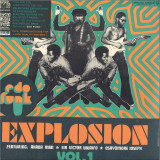
Analog Africa Presents Edo Funk Explosion Vol. 1, available on
2xLP/Gatefold LP with 20-page booklet / CD with 36-page booklet. It was
in Benin City, in the heart of Nigeria, that a new hybrid of intoxicating
highlife music known as Edo Funk was born.
It first emerged in the late 1970s when a group of musicians began to experiment with different ways of integrating elements from their native Edo culture
and fusing them with new sound effects coming from West Africa s night-clubs.
Unlike the rather polished 1980 s Nigerian disco productions coming out of the
international metropolis of Lagos Edo Funk was raw and reduced to its bare
minimum.
Someone was needed to channel this energy into a distinctive sound and Sir
Victor Uwaifo appeared like a mad professor with his Joromi studio. Uwaifo
took the skeletal structure of Edo music and relentless began fusing them with
synthesizers, electric guitars and 80 s effect racks which resulted in some of the
most outstanding Edo recordings ever made. An explosive spiced up brew with
an odd psychedelic note known as Edo Funk.
That’s the sound you’ll be discovering in the first volume of the Edo Funk Explosion series which focusses on the genre’s greatest originators; Osayomore
Joseph, Akaba Man, and Sir Victor Uwaifo: Osayomore Joseph was one of the
first musicians to bring the sound of the flute into the horn-dominated world
of highlife, and his skills as a performer made him a fixture on the Lagos scene.
When he returned to settle in Benin City in the mid 1970s - at the invitation of
the royal family - he devoted himself to the modernisation and electrification
of Edo music, using funk and Afro-beat as the building blocks for songs that
weren’t afraid to call out government corruption or confront the dark legacy of
Nigeria’s colonial past.
Akaba Man was the philosopher king of Edo funk. Less overtly political than Osayomore Joseph and less psychedelic than Victor Uwaifo, he found the perfect
medium for his message in the trance-like grooves of Edo funk. With pulsating
rhythms awash in cosmic synth-fields and lyrics that express a deep personal
vision, he found great success at the dawn of the 1980s as one of Benin City’s
most persuasive ambassadors of funky highlife.
Victor Uwaifo was already a star in Nigeria when he built the legendary Joromi
studios in his hometown of Benin City in 1978. Using his unique guitar style as
the mediating force between West-African highlife and the traditional rhythms
and melodies of Edo music, he had scored several hits in the early seventies,
but once he had his own sixteen-track facility he was able to pursue his obsession with the synesthetic possibilities of pure sound, adding squelchy synths,
swirling organs and studio effects to hypnotic basslines and raw grooves. Between his own records and his production for other musicians, he quickly established himself as the godfather of Edo funk.
What unites these diverse musicians is their ability to strip funk down to its
primal essence and use it as the foundation for their own excursions inward to
the heart of Edo culture and outward to the furthest limits of sonic alchemy.
The twelve tracks on Edo Funk Explosion Volume 1 pulse with raw inspiration,
mixing highlife horns, driving rhythms, day-glo keyboards and tripped-out guitars into a funk experience unlike any other.
crystal blue vinyl
South London based producer Lxury is a subtle experimentalist, pairing house rhythms with eclectic genre blending and risk-taking. Returning to Shall Not Fade's Lost Palms series for a second record, Smart Digital Life EP shows the maturity and complexity of his production while keeping the energy light and summery.
"1722" opens things up with dreamlike pitched vocals that provide a vaporwave feel, hypnotizing over stuttering synths and a wonky beat. "Spin" has an experimental sound palette, a euphoric pulse and a sweet melody, dance music doused in honey.
This sweetness spills over onto the B side; "Pad Ma" sounds like a pumping club track meets a trip to the fairground - unstoppably buoyant and headsy. The vocals in "When I Wake Up" spin around your head before a muscular beat kicks in, the most stripped back and raw sounding of the record. This one is certain to get heads down and feet moving. "Up High" is an expansive closing track, built around fuzzy drums as the clever use of vocal samples creates a melody with a loved-up feeling; it's a tour-de-force of Lxury's delicate production skills.
Blue Vinyl
Lynch protégé and Twin Peaks sound designer Dean Hurley coaxes an incredible puzzlebox of atmospheres and mood pieces on this killer contribution to our Documenting Sound series, now remastered and pressed on vinyl for what is, perhaps unsurprisingly, the most cinematic and neon-lit instalment in the series. Like a
smudged and overdubbed copy of the BoC Maxima tape, with added iridescence.
Across almost 40 minutes we transition from aerosolised synths to romantic chromatics, thru to Nurse WIth Wound-style severed rhythms and fading glimmers of hope, ‘Concrete Feather’ epitomises Dean Hurley’s prized knack for nuanced instrumental story-telling in the finest and most engrossing style we could imagine. Against the backdrop of the Hollywood film industry that has primed us for as long as we can all remember, the music spans a panorama of lush, mirage-like choral pads and starry flickers thru to gloaming
nightmare sequences and screwed drums, while touching on some of the dankest synth tones this side of his ‘Anthology Resource’ volumes or indeed his soundtrack work for Twin Peaks: The Return. It’s full of dread and a slowly unfolding sense of tragedy.
“Having a regular practice of recording is probably the single most important element to my craft. It’s a way of dropping indiscriminate mile markers while constantly moving forward in time without ability to pause.
Over the years, working for David Lynch taught me a great deal about this and the concept and importance of experimentation. I’ve found myself clinging to those lessons during this time and using them as tools for both productivity and balance. His notion of experimentation is a simple one, yet incredibly profound. It was one of the very first words I heard him say during our initial meeting, and I never stopped hearing the term daily over the subsequent 13 years working together. An ‘experiment’ can provide a legitimate mental back-entrance into the act of creation. It can position an approach toward discovery as opposed to effort, and eliminate the thought that one needs to ‘will’ something into existence. It also aids in calming the judgmental
side of a brain from stepping on/interfering with expression…after all, experiments are not about success or failure, they’re simply about learning. In the Lynch school of thought, multiple experiments then become firewood…and with firewood, one can not only build but actually sustain a fire…even turn it into a multipleacre blaze or more.
Dean Hurley
Something wicked this way comes. Following singles 'Know The Future' b/w 'Digital Warfare' in 2019 and 'Hypersocial' b/w 'Safety Test' in 2020, ESP’s own Patrick Conway has now teamed up with the illustrious Appleblim (of Skull Disco and Apple Pips fame) for a meaty self-titled debut 2xLP under the new collaborative moniker, Trinity Carbon. There is something to be said for art created in the face of global unraveling, while mass transgression and the friction of culture shifting produce poignant commentary, but more often than not, it’s the personal coping mechanisms within our work that have the power to speak directly to the receiver. After a number of sessions resulting in wild imaginative beginnings, it was the untimely passing of Andrew Weatherall and a coming to terms with that loss that moved the two Brits-via-Berlin to herd their roaming sketches into a more narrative statement. In the uphill struggle to retain some sense of individualism, it’s always outsiders like Weatherall whose risks illuminate the roads of creativity less traveled, and when those beacons go dark there is a disorientation felt far and wide. Conway and Blim concede to the internal inquiry, “What would Weatherall do?” bringing to mind the man’s pervading morale, always soldiering onward through mediocrity, as it was undoubtedly an impetus for the duo growing steadfast and chiseling 'Trinity Carbon' into completion. While employing trusted machines in the bass department, they established a warm euphonic home base from which they could stray in a variety of tonal and rhythmic directions without straining a tether to the album’s core. However, as soon as any hint of familiarity may arise, or listeners begin to mentally assign stylistic epithets, the duo boldly change course to remind us that while the banal stay safely defined, it’s the iconoclasts, the outsiders who make us feel.
clear blue vinyl
Stockholm native Viggo Dyst joins Shall Not Fade's roster for their new Classic Cuts series, serving up ear candy and sparkling sounds on Everything Else Is Secondary EP. Fresh from a successful release with Swedish label Vivrant, he is also joined by stalwarts of the scene Baltra and 1800-GIRLS for two gorgeous reworks.
The title track is a breathless, hopeful opener that overflows with feel good energy, sunshine melodies and personality. Baltra flips the lead melody into a hazey, UKG style club remix, maintaining the shimmering core - while 1800-GIRLS creates something tenser, a persistent beat and a warped breakdown.
On the B side, "Time After Time" carries strong Aphex Twin influence pairing sombre orchestral instrumentation with a hurtling yet delicate break throughout. "Weekend Special" is a classic Shall Not Fade sound; gentle, swelling house that needs to be danced to, closing out the record on a high.