Repress!
In February 2020, Belgian label "KNTXT" will release a new EP by Berlin resident MONOLOC - 'Left The Planet' marks his first release on the label, that previously released label honcho Charlotte de Witte’s Chris Liebing collaboration and her “Pressure” and “Selected” EP's.
“With KNTXT, we aim to be a boutique label that values purity and strength” de Witte says. “Both characteristics that perfectly describe and define Monoloc’s music.”
Aside from being the main output for Charlotte de Witte’s creative endeavors, KNTXT has always aimed to be a breeding ground and safe haven for the unique talent’s that it love and respects. After debuting at a KNTXT event in Fuse back in 2015, Sascha Borchardt a.k.a. Monoloc has been a recurring invitee at the label’s raves.
“For KNTXT this is another amazing step in our label story. Feels great to be releasing new music of this dear friend of the family, after spending some great nights together.” Charlotte concludes. “This upcoming release is very personal to me.”
Monoloc says “After joining Charlotte de Witte on her events and most recently the sold out KNTXT tour, I can say we’re friends. I’m happy to be part of this next step of the label and am very excited and proud of what we’ve created.”
Поиск:family of eve
Все
First ever retrospective of Phương Tâm, the groundbreaking Saigon teenager who became one of the first singers to perform and record rock and roll (known in Vietnam as nhạc kích động, or, action music) | 25 tracks spanning Phương Tâm’s recording career: early rock and roll, surf, twist, soul, blues and jazz ballads recorded in Saigon between 1964-1966, featuring electric guitars, contrabass, lush brass, saxophone, drums and organ, and rich backing vocal arrangements. | Produced by Mark Gergis (compiler of Sublime Frequencies’ 2010 compilation Saigon Rock and Soul) and Hannah Hà (daughter of Phương Tâm). | Audio restored and remastered from original records and reel tapes. | A family story – as told by Hannah Hà, whose dedication to discovering and sharing her mother’s musical legacy, is helping to put Phương Tâm back on center stage after 55 years | Adds critical context to the fragmented understanding of Vietnamese popular culture at the time.
Billed as 'controversial' in its press materials for its open spiritual message, this jazz inspired record was Prince’s first fully independent release, issued without any major label backing. One of its songs 'The Work, Pt. 1' was released by Prince as a free download on the file sharing service Napster - this move, along with direct to consumer stream and download options on the NPG Music Club, made Prince a digital music pioneer. This record is a favourite among Prince’s most fervent admirers due to its complex musical narrative, its use of live drums/full horn section and the striking album art by artist Cbabi Bayoc, which still hangs in the hallowed halls of Paisley Park today. The CD has long been out of print and the original vinyl pressing was incredibly limited.
- 1: Dark Day Road
- 2: I Need Help Feat. Sick Jacken
- 3: Waging War Feat. Rite Hook
- 4: Murdered Tonight
- 5: Stay True
- 6: Blind Feat. Q-Unique & Sadie Vada
- 7: Crispy Innovators Feat.vinnie Paz
- 8: Archie Bunker Feat. Nems
- 9: High Times Feat. Sick Jacken
- 10: America Feat.apathy
- 11: Now Or Never Feat. Skam2? & Rite Hook
- 12: To Thine Own Self Be True Feat. Rite Hook
Repressed
It's been four-years since La Coka Nostra released their sophomore album, Masters Of The Dark Arts, (the groups first project without Everlast was also their most critically acclaimed project - featured collaborations with Vinnie Paz, Sean Price & production from DJ Premier and Statik Selektah) and the music industry has changed considerably in that time. However, a few things still remain constant; La Coka Nostra will always be as their aptly-titled 2009 debut verified, A Brand You Can Trust, and the group will continue to dazzle their rapid fan-base with sold out shows around the globe with their rau-cous live performances. Always known for tackling controversial topic matter, the group’s new album, To Thine Own Self Be True, finds them once again in torchbearing mode, addressing subjects that most artists shy away from.“This album was created during a time of unique and individual transformation for each member of the group” ILL Bill stated. “Speaking for myself, it’s been a heavy last couple of years.It’s definitely the most personal record we’ve made under the La Coka banner and while we’re still making music that’s hard as fuck, there’s a maturity to this latest batch of songs that makes it different from a lot of the older stuff. I notice the biggest reactions come from the songs our listeners can personally relate to and we needed to make a record like this right now, not only for the fans, but for ourselves. I got alot off my chest on this one. Making music can be extremely therapeutic and making To Thine Own Self Be True was a rebirth and a re-ignition for me.” Slaine had a similar take on the projects thera-peutic manifestation “You don’t put as many years in the game as we have without having ups and downs. We all have gone through struggle and adversity—personally and professionally”Slaine la-mented. “This album was recorded as I walked out of a very dark time toward a place of truth and understanding. Music has been how I feed my family, my plane ticket around the world and a place I’ve built real friendships; but at the very core it’s a tool I use to get through life.This album is a moment in time. It is visceral and real.” While DJ Lethal continues to oversee the production end ofToThine Own Self Be True, the group also enlisted Statik Selektah, Marco Polo, Salam Wreck (D-12, Obie Trice, Proof, B-Real, Tha Dogg Pound) & ChumZilla (from the Demigodz) and get vocal contributions from extended family members such as Vinnie Paz, Apathy, Q-Unique, Sick Jacken, SKAM2? & Rite Hook.
Red Vinyl[28,15 €]
On new record For The Birds, Atlanta-based Neighbor Lady expand the
boundaries of their country-kissed indie rock sound to encompass an
elegant style of lush and textural guitar pop sprinkled with, as songwriter
and vocalist Emily Braden puts it, with "reverb and magic
" Full of gorgeous top- line melodies, spirited rock hooks, and Braden's richly
emotive vocals (and plenty of twang), For The Birds takes a kaleidoscopic
approach to genre. The record features everything from catchy alternative
("Penny Pick It Up") and starry- eyed country ("I'm With You") to straightforward
indie rock ("Scared") and ambient- indebted otherworldly pop ("Haunted").
Neighbor Lady began as Braden's solo project, but is now a four-piece consisting
of Braden, guitarist Jack Blauvelt, bassist Payton Collier, and drummer Andrew
McFarland. The band recorded For The Birds with Jason Kingsland (Kaiser Chiefs,
Band of Horses, Belle & Sebastian) at Diamond Street Studios in Atlanta and it
was mixed by Noah Georgeson (Andy Shauf, Cate Le Bon, Devendra Banhart,
Joanna Newsom.) Though For The Birds is hallmarked by big sonic flourishes
and brave moments of experimentation, the overall feeling is one of intimacy —
four people in a room, making music together; fitting for a group of musicians
who say they feel less like a band and more like a family. "This record came out of
a lot of love and hard work and us caring so much about the music and each
other," says Braden. "And that's pretty much what we're about."
- A1: Diana Ross - Turn Up The Sunshine (Feat Tame Impala)
- A2: Brittany Howard - Shining Star (Feat Verdine White)
- A3: St Vincent - Funkytown
- A4: Brockhampton - Hollywood Swinging
- A5: Kali Uchis - Desafinado
- B1: Caroline Polachek - Bang Bang
- B2: Thundercat - Fly Like An Eagle
- B3: Phoebe Bridgers - Goodbye To Love
- B4: Bleachers - Instant Karma!
- B5: Weyes Blood - You're No Good
- C1: Gary Clark Jr - Vehicle
- C2: Her - Dance To The Music
- C3: Tierra Whack - Black Magic Woman
- C4: Verdine White - Cool
- C5: Jackson Wang - Born To Be Alive
- D1: The Minions - Cecilia
- D2: Gem - Bang Bang
- D3: Rza - Kung Fu Suite
- D4: Heitor Pereira - Score Suite
This OST promises another exciting instalment in The Minions franchise. Produced by legendary Grammy-winning music producer Jack Antonoff and filled to the brim with a star-studded list of artists, the soundtrack celebrates a range of dazzling funk, disco and soul classics with brand-new versions of some of the biggest hits of the 1970s. From St. Vincent’snew take on Lipps Inc’s 1979 hit Funkytownand H.E.R.’s rendition of Sly and The Family Stone’s 1967 smash Dance to the Music, to Bleachers version of John Lennon’s 1970 track Instant Karma! and Phoebe Bridgers’ interpretation of The Carpenters’ 1972 single Goodbye To Love, every track has been reimagined by each artist with ingenious results. Set in the 1970s, Minions: The Rise of Gru tells the origin story of how Gru (Oscar nominee Steve Carell), the world’s greatest supervillain, first met his iconic Minions, forged cinema’s most despicable crew and faced off against the most unstoppable criminal force ever assemble.
- A1: Diana Ross - Turn Up The Sunshine (Feat Tame Impala & Verdine White)
- A2: Brittany Howard - Shining Star (Feat Verdine White)
- A3: St Vincent - Funkytown
- A4: Brockhampton - Hollywood Swinging
- A5: Kali Uchis - Desafinado
- A6: Caroline Polachek - Bang Bang
- A7: Thundercat - Fly Like An Eagle
- A8: Phoebe Bridgers - Goodbye To Love
- A9: Bleachers - Instant Karma
- A10: Weyes Blood - You're No Good
- A11: Gary Clark Jr - Vehicle
- A12: Her - Dance To The Music
- A13: Tierra Whack - Black Magic Woman
- A14: Verdine White - Cool
- A15: Jackson Wang - Born To Be Alive
- A16: The Minions - Cecilia
- A17: Gem - Bang Bang
- A18: Rza - Kung Fu Suite
- A19: Heitor Pereira - Minions: The Rise Of Gru Score Suite
This OST promises another exciting instalment in The Minions franchise. Produced by legendary Grammy-winning music producer Jack Antonoff and filled to the brim with a star-studded list of artists, the soundtrack celebrates a range of dazzling funk, disco and soul classics with brand-new versions of some of the biggest hits of the 1970s. From St. Vincent’snew take on Lipps Inc’s 1979 hit Funkytownand H.E.R.’s rendition of Sly and The Family Stone’s 1967 smash Dance to the Music, to Bleachers version of John Lennon’s 1970 track Instant Karma! and Phoebe Bridgers’ interpretation of The Carpenters’ 1972 single Goodbye To Love, every track has been reimagined by each artist with ingenious results. Set in the 1970s, Minions: The Rise of Gru tells the origin story of how Gru (Oscar nominee Steve Carell), the world’s greatest supervillain, first met his iconic Minions, forged cinema’s most despicable crew and faced off against the most unstoppable criminal force ever assemble.
- A4: Eclipse A (Beginnings)
- A5: Eclipse B (First Movement)
- B1: Eclipse C (Hustle Bustle)
- B2: Eclipse D (Funky Side Of Town)
- B3: Eclipse E (Midnight)
- B4: Eclipse F (First Movement Continued)
- B5: Eclipse G (Home)
- A1: Think Positive (Feat Steve Garcia, Edward Garcia & John Ortega - Live)
- A2: Jennifer (Feat Steve Garcia, Edward Garcia, Vincent Anderson & John Ortega - Live)
- A3: Try It All Again (Feat Vincent Anderson, John Ortega, Edward Garcia & Steve Garcia - Live)
First ever repress of the sought after psychedelic tinged funk rock private press album 'Eclipse of the City' from 1980 New York. Originally recorded between 1975 and 1977 in Manhattan's garment district. Eclipse of the City lay dormant on a reel to reel player whilst frontman Carlos Fire Aguasvivas muddled through life working as a data entry clerk away from his fellow band members. It wasn't till he rediscovered the tapes that a sudden life affirming moment drove him to get the music pressed. Putting pen to paper Carlos created the artwork as a homage to his love of comic art and brought the band to life on the reverse with his spindly characters engrossed in the jam. Only 300 copies were pressed at the time leading to eye-watering prices for a copy. with a recent digital re-release from Indian Summer's Anthology Records, Sticky Buttons stepped up to repress the record with a limited run of 500, lovingly manufactured in the UK in all its vinyl glory.
Arriving in the Bronx from the civil unrest of Santo Domingo in the early 60's Aguasvivas was surrounded by the raucous sounds of rock, jazz and prog. Absorbing the humdrum atmosphere of life in New York, Eclipse of the City came from the minds of close friends Carlos Aguasvivas, Steve Garcia and Eddy Garcia. Meeting at Monroe High School the three of them quickly formed a strong bond over their shared interest in music. It wasn't long after that they began rehearsing in a basement under a neighbourhood cleaners and in the attic of Steve and Eddy's family home piecing together their extended sessions of tripped out cinematic psychedelia.
Recording got off to a rocky start as a car accident left the three band members in A&E after taking an early morning cab ride through Manhattan to watch the sunrise on their way into the studio (a theatrical artistic statement of intent conceived by Steve Garcia) - as Eddy mentioned "Eclipse was forged from a lot of pain". Their recording sessions were postponed but a few weeks later they were back and with the added energy of John Ortega on Bass and Vincent Anderson on electric piano and organ - with just a few microphones and a reel to reel recorder, Eclipse of the City was laid down as the stark bold homage to New York's downtown.
Influences ranged from the cinematic behemoth Jaws to the UK prog rock bands of Genesis, Yes and Emerson Lake & Palmer but only could Eclipse of the City take its unique form in the attics and basements of New York with the full band adding their Puerto Rican and Dominican slanted New York energy. Side one includes 3 fully formed tracks breaking out into eerie moments of calm before diving into well timed jolts of reprise as each element weaves over the top of one another whilst side two presents a 30 minute narrative work following the night adventures of a young group of friends exploring the vibrant nightlife of downtown New York. A rumbling half hour of wobbling guitar, tight drumming and synth organ licks jutting out from the glistening lights of the night before the sun rises down Manhattan's East-West axis as the lilt changes and the organ lulls the friends back home. A truly idiosyncratic take on the heady world of New York in the 70's and one that still resonates with our urban landscapes and love for the nights they bring today.
a 01: Think Positive (Live) feat. Steve Garcia, Edward Garcia & John Ortega
b 02: Jennifer (Live) feat. Steve Garcia, Edward Garcia, Vincent Anderson & John Ortega
c 03: Try It All Again (Live) [feat. Vincent Anderson, John Ortega, Edward Garcia & Steve Garcia]
[d] 04: Eclipse A (Beginnings) [Live] [feat. Vincent Anderson, John Ortega, Edward Garcia & Steve Garcia]
[e] 05: Eclipse B (First Movement) [Live] [feat. John Ortega, Steve Garcia & Edward Garcia]
[f] 06: Eclipse C (Hustle Bustle) [Live] [feat. Vincent Anderson, John Ortega, Steve Garcia & Edward Garcia]
[g] 07: Eclipse D (Funky Side of Town) [Live] [feat. Vincent Anderson, John Ortega, Steve Garcia & Edward Garcia]
[h] 08: Eclipse E (Midnight) [Live] [feat. John Ortega, Steve Garcia & Edward Garcia]
[i] 09: Eclipse F (First Movement Continued) [Live] [feat. Vincent Anderson, John Ortega, Steve Garcia & Edward Garcia]
[j] 10: Eclipse G (Home) [Live] [feat. Vincent Anderson, John Ortega, Steve Garcia & Edward Garcia]
Dana Kelley, aka DKMA, is a much revered writer, producer, remixer, performer and creative force whose releases have become timeless classics and Holy Grails amongst DJs, music heads and collectors alike. A true artist and innovator, his productions possess the unique ability to engage, transport, challenge and enthral as only next level musicians can.
Grounded in the deep, soulful US House sound of the mid '90's, his earliest releases can be found on Strictly Rhythm, before moving on to produce under his DKMA alias as well as releasing music as Callisto on Guidance. Although Dana sadly passed away in 2013, he left us with a remarkable body of work that has remained both exciting and relevant throughout the last 2 decades and beyond.
Boston Boy Vol.2 is the 2nd in a series of compilations that focuses on Dana's visionary work as DKMA, during his most compelling and creative phase between 1997 and 2002. The compilations themselves are collated from an incredible & far reaching archive of over 20 of Dana's original DATs that have been generously shared with us by the Kelley Family. In the archive, some of Dana's most sought after & cherished works were uncovered, restored and meticulously assembled alongside previously unheard archival material.
The tracks themselves are bold, clever and inventive, characterised by a need for innovation. Passages of deep soulful house underpin more forward thinking electronics without ever losing dance floor appeal. Jazz solos sit imaginatively on top of gritty swinging rhythms, deep infectious b-lines, eerie textures and chord sequences are warm and effortlessly soulful yet with a sound design, sonic range, dynamism and a technical prowess that most could only dream of.
These compilations celebrate the life, vision and art of one of house music's most hallowed producers. Unique and essential, these collections pull together DKMA's most coveted works. Respectfully sourced, restored and compiled from all audio sources courtesy of the Kelley family and Above Board Projects.
Mastered by Frank Merritt at The Carvery, London, with special artwork by Atelier Surplus featuring a special unseen image of Dana from his family's photo albums.
‘Jim, I’m Still Here’ is the second album from James Righton under his own name; produced by David & Stephen Dewaele of Soulwax and released on their label DEEWEE, the album follows The Performer released in 2020. James’ musical past is well documented; as the frontman of the genre inventing Klaxons, he helped create a revolution in British music and spawned a youth subculture. ‘Jim, I’m Still Here’ is a captivating meditation on the artists experience of the pandemic as James looks to conceptualize the myriad of emotions and events into a fascinating third person narrative. One of the album tracks features Benny Andersson from Swedish pop legendary band ABBA, with whom James has been working on putting together their new live band.
"I wrote this record during the first few months of the pandemic. At the time I wasn’t intending to make any music. I’d just released ‘The Performer’ on what turned out to be the first week of lockdown. The outside world shut down and I was busy being Dad. Then. I started making notes on my phone. Just words. In moments stolen from family life I’d head downstairs to my garage studio and put the words to music. When I was happy with a song I’d send it to Dave and Stef. Demos and Pro Tools sessions were passed back and forth between my home studio and the Deewee studio in Ghent. I was nervous about their response to the music I was making. It was personal, raw: unlike anything I’d ever written before. A conversation with the outside world during these times of isolation. For the most part my life was centred on the domestic. Getting to spend so much time with my family was a blessing. Making music was my play time. Isolation opened me to memories and allowed me to dream of the future. As the outside world tried to adapt to the pandemic I was asked more and more to promote ‘The Performer’ in live stream concerts on various platforms. As the pandemic went on, demands on production increased (more camera angles, better lighting, higher quality audio recordings). It became a one man show. I’d head downstairs to my garage, put on my Gucci suit, comb my hair and become someone else. Jim. Jim the deluded rock star, living out his fantasies from the confines of his garage. A lonely stardom. And yet, Jim was part me. He made me feel like I still existed. Jim became the centre of the new album. Dave, Stef and I worked into the sessions over the following months. It was always exciting to see where they would take my initial demos. The working method and the restrictions of making music together but in separate spaces, separate countries shaped the sound and feel of the record.
I won’t make another record like this again”.James/Jim
Imperfect Stranger is the pseudonym of Glasgow based soundtrack composer and producer Kenny Inglis. “Everything Wrong is Right” is his debut solo album for Castles in Space.
Born in 1975, Kenny didn't listen to much music, unless it was the opening credits to a TV show or a film score that had caught his ear. "I loved the pre-title music on a lot of those 80's U.S. TV shows. From the family orientated stuff like The A-Team, to darker dramas such as The Equalizer. My mother would let me stay up to watch the opening sequence of the latter then send me to bed because the story would be too heavy for a kid. That left me with this hanging sense of ambiguity as to what would happen in that hour after the titles came up.”
Exposure to a work colleague’s tiny project studio in a kitchen cupboard was a lightbulb moment for him and the experience of utilising music technology as a way of writing and producing entire tracks stirred a wave of determination to chase a career in music using the opportunities that technology could offer. Kenny figured the best way to move forward was to start a small project studio and learn his craft as a recording engineer. "It was a bit of a shock to the system. I literally had no idea how to work any of the equipment. Kenny focused on learning as much about the craft as he could whilst winging his way through recording and mixing everyone from the likes of singer/songwriters to bands, to voiceovers artists and anything in between. "Eventually, I stopped writing the music I thought people would want to hear, and started writing the music I wanted to make. I didn't come from a music loving background, but I was always obsessed by the way music and film would interact - how music brings this atmosphere and tone to even the most mundane visual stuff. I wanted to capture that. I wanted to grab some of that ambiguity I felt from the TV shows of my childhood and make it into a project of some sort". That project was Spylab. A dark, downtempo project with a cinematic edge. The initial demo consisted of three tracks, with the melancholic 'This Utopia' leading the playlist.
"At the time you did demos on normal cassette tapes. I remember having this endless battle with the bias control to try and get the best sound I could on these little tapes. Ten went in the post one Monday morning, and the following Monday there were three offers from three different labels. Studio K7 were interested in a singles deal, as was Flying Rhino in London. But then there was an offer from a Chicago based label by the name of Guidance Recordings. They wanted an album, and were offering a $15,000 advance. It wasn't a difficult decision to make"
Writing and recording Spylab 'This Utopia' began in 1999. The album took a whole year to produce. The album was to catch the attention of Mary Anne Hobbs at Radio One. At the time Mary Anne was presenting The Breezeblock - a late Sunday night show with an eclectic playlist of alternative electronic music. Picking out the album's title track 'This Utopia', Mary Anne would go on to play it no less than 8 weeks in a row. A request for Spylab to DJ on the show was to follow. "I had never DJ'd before. I think I had a week to figure out how to do that and put a playlist together. I'm not entirely sure how I pulled that off.” In March 2001 the Spylab album was finally released to a hoard of excellent reviews. A North American live tour would follow. From the launch party in Los Angeles, to a sell out show at SXSW in Austin. "I then started a new project under the name Cinephile. It had some of the core elements of the Spylab sound but it was deeper, more cinematic.” Kenny received news that a track from the previous project Spylab had been requested by HBO for the first episode of a new TV drama called Six Feet Under. This was to become a major turning point in Kenny's career. The Spylab track 'Celluloid Hypnotic' dropped during a poignant party scene of the first Six Feet Under episode. Within a couple of days Kenny was getting requests for music from other music supervisors. "It was a chain reaction. The Six Feet Under sync was like the tip of an iceberg. One day I called CBS in America and they put me on to the CSI music supervisor and I managed to get on a call with him. I sent the Cinephile stuff out and within a few months I got this fax through from CBS - a quote request for one of the tracks for a potential use on CSI. It changed my life."
The tone and style of Kenny's music sat perfectly with the CSI score requirements. So much so he found himself part of a pool of incidental writers who worked on all three aspects of the franchise - CSI, CSI: NY, and CSI: Miami. This would continue until 2013, when the last of the series would come to an end.
"I was juggling a bunch of stuff for those ten years. Writing material for CSI, whilst releasing new Cinephile stuff and playing live. As Cinephile continued to gather pace, one of the tracks from Kenny's efforts on CSI was chosen for the Hollywood trailer for the Samuel L. Jackson film 'Lakeview Terrace'. Further trailers would follow, from Gangster Squad to Dead Man Down, Spike Lee's Undisputed Truth, to Fifty Shades Freed.
At the same time, Kenny picked up his first factual commissions in the UK, and this too would be the beginning of a regular run of fully scoring factuals and documentaries. By 2021, six of these had won BAFTAs. He also would find himself soundtracking adverts for the likes of Nike, Audi, and American AirlinesIn early 2020, Kenny made a return to focusing on his own music under the pseudonym Imperfect Stranger. A tweet from Colin Morrison from Castles In Space regarding a charity compilation album 'The Isolation Tapes' caught his eye. Kenny had made a start on his debut album as Imperfect Stranger and submitted the track 'Hymn To The Sun' (which would become the lead track on the album). Further discussions ensued, and the album found a home on CiS. "I had been doing TV and film stuff for almost ten years. It paid the bills and was as close to a 'real job' as I'd had, but I yearned to get back to writing for myself, so doing an album for Castles in Space was a joy.
“The music I write is like a diary. There's an authentic narrative to everything i do. I don't write tracks for the sake of writing. I write tracks to diarise and process the stuff that I've lived through, and the experiences that have come along with the passing years. That's what makes me tick. It's a very public and vulnerable way of expressing myself. If people want to know the real me, all they have to do is listen."
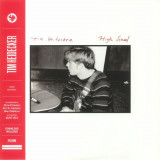
Produced by Heidecker, Drew Erickson, Eric D. Johnson and Mac DeMarco, High School sees Heidecker emerging as an increasingly playful and poignant story teller, infusing childhood tales with new gravity. In conjunction, he announces Tim Heidecker Live! Featuring Tim Heidecker and The Very Good Band, his first two-act tour of comedy and music. Since 2016, Tim Heidecker has chronicled the annals of adulthood on a series of supreme singer-songwriter albums. The crushing devastation of divorce and the existential malaise of middle-age, the minutiae of home ownership and the ritual of family vacation, child rearing and global warming: Heidecker has handled it all with humor and heart. But, there’s one pivotal lodestar of human development he has yet to mine that’s right, High School. First single “Buddy” is a composite of a few woebegone friends, which finds Heidecker reminiscing on the familiar tragedy of the adolescent stoner, manifesting the destiny of undiagnosed depression and parents who didn’t care much. The song itself is a jangly delight, but it’s hard not to mourn for “Buddy,” then re-count whatever blessings you may have. After initial and fruitful sessions with Jonathan Rado, Heidecker started recording tunes with DeMarco and Erickson, who had also worked on 2020’s collaboration with Weyes Blood, Fear of Death. At DeMarco’s studio, they added drum machines and synths and sidewinding solos to Heidecker’s big strummed chords. Johnson (Bonny Light Horseman, Fruit Bats) helped Heidecker finesse the tunes even more, making the music as rich as the feelings. Kurt Vile contributed to one song, as well. Through all those sessions, it slowly became clear: Heidecker was writing not only about the adventures and misadventures of life as a Pennsylvania teen in the early ’90s, but also how it felt to lose a juvenile sense of mystery and possibility as an adult. He was writing about high school and, really, the way it helped shape everything else. Back at Pennsylvania’s Allentown Central Catholic High School, Heidecker dreamed of making it with one of his many rock bands — Time and Other Things, Shaggy’s Beltbuckle, and (incredibly) The Pulsating Libidos. Two years shy of his graduating class’ 30th anniversary, Heidecker admits he had little of substance to say when he was 17, like all but the rarest of precocious minds. In college, though, he found the friends with whom he built his comedy career, largely apart from music and without much thought for his time back at Central Catholic. He was focused on his future. It is fitting, then, that as Heidecker has become such a delightful singer-songwriter and collaborator, he returns to the first scene of his time as a musician. Maybe he’s right — he didn’t have anything to say or sing about life back then. But across the earnest and amusing High School, he finds plenty to say about those weird and wonderful and ordinary times.
The roots of Naima Bock’s music are far reaching. Born in
Glastonbury to a Brazilian father and a Greek mother, Naima spent
her early childhood in Brazil before eventually returning to England
and various homes in South East London. This heritage combines
with more recent pursuits in Naima’s music. From the Brazilian
standards that the family listened to while driving to the beach, to the
European folk traditions she tapped into on her own, and the pursuits
that interest her today - studies in archaeology, work as a gardener,
and walking the world’s great trails - Naima’s music draws from
family, the earth and music handed down through generations.
Naima’s debut album, ‘Giant Palm’, is undoubtedly infused with the
Brazilian music of her youth and regular family visits. She found
inspiration in “the percussion, the melodies, chords - and particularly
the poetic juxtaposition of tragedy and beauty held within the lyrics.”
By the age of 15, Naima was embedded in the music scene of SouthEast London, eventually forming Goat Girl with school friends and
touring the world. After six years playing bass in Goat Girl, Naima left
the band to try something new. She set up a gardening company and
started a degree at University College London in archaeology
because, as she jokes, “I liked being near the ground.” During this
time, she wrote music, played guitar, learned violin, worked with evershifting South-London collective Broadside Hacks, and met producer
and arranger Joel Burton through Memorials of Distinction labelhead
Josh Cohen. Joel’s burgeoning interest in Western classical music,
global folk music, and experience in large scale arrangement and
orchestration informed the collaborative process that eventually
culminated in ‘Giant Palm’.
Recorded with the help of over 30 musicians (including Josh Cohen
on synth / electronics) by Dan Carey of Speedy Wunderground at his
studio space in Streatham, South-East London, and engineered by
Syd Kemp, the songs on ‘Giant Palm’ represent a snapshot of a
specific feeling, of brief moments in Naima’s life that make up a larger
whole.
The expansive yet delicate arrangements highlight Naima’s love for
the collectivist values of traditional folk music, in which songs belong
to everyone, and singing can take on countless forms without the
need to exactly replicate something. “All the other representations
that I’d had of singing felt so unattainable,” she recalls. ‘Giant Palm’
finds Naima bucking these expectations to let her unique voice and
sense of communal creativity flourish.
Minru is the project of Caroline Blomqvist, a Swedish musician based in Berlin. Woven from light and shadow, the interplay of her folk and indie-rock blend appears from a personal space of finding life after death. On her debut LP »Liminality« she paints melody in soft tones, whispering secrets to navigate feelings of loss.
Built around winding layers of acoustic guitar, piano, and strings, Minru is a surprisingly uplifting and stirring testament to Blomqvist’s own suffering from the passing of someone close to her. Returning to Berlin from Sweden feelings of grief, confusion, and pain travelled with her, and these emotions prompted the journey both of and within the album, heard as a dreamlike actualisation of wandering lost between them. "I read that Carl Jung used the word "»Liminality«” to describe the psychological process of transitioning. I instantly felt seen; it reflected my own experience and the feelings I carried whilst making the album – a sense of the old certainties being gone, but the new not being quite there yet,” she says.
Defined as "the threshold separating one space from another" »Liminality« moves between feeling the ground beneath your feet fall away, fighting through the darkness and the doubt, and the emerging shades of hope and light as you painstakingly make peace with mortality and find yourself as a person again. "I am happy to have encapsulated this moment of time in sound," Blomqvist says, "it will always be there as a memory."
Flourishing from a preferred position of solitude, »Liminality« sees Blomqvist’s vision radiate with intensity from her home-based studio in Neukölln - a small, 2-room apartment with squeaky old wooden floors. Capturing the intimacy of the space, she recorded vocals and synth on gear partly borrowed from friends (to swiftly reunite it with its owners), and the songs flow with a stream of consciousness as feelings become entwined with melody. Time-restraint drew the process to a natural close, preventing Blomqvist from losing herself to experimentation. “Maybe I would have been stuck in »Liminality«, trying out sounds forever,” she suggests of the way ‘Into the well’s instrumental swims into a warm stream of synth pads. "It’s the cosiest moment on the album,” she says, “Cosy is a feeling I always strive for in life."
Finished and self-produced at a Berlin-Lichtenberg recording studio alongside musical friends (Povel Widestrand, Tobias Blessing, Sunniva Lilian Shaw Of-Tordarroch, Marlene Becher and Liv Solveig Wagner), the result is beautifully detailed and rich like the folk of her Swedish roots. First picking up a guitar as a kid and becoming obsessed with it, she would skip school to spend extra hours mastering the instrument, grappling to perfect the ‘Stairway to Heaven’ intro. “As a child I was fascinated by my dad’s acoustic guitars around the house and would hit the strings to make them sound,” she recalls. After attending music high school in Gothenburg and playing in bands during her teens, Blomqvist later moved to Germany. As well as enjoying walks at Tempelhofer Feld and coffee at Leuchtstoff café, she performed with Tuvaband, Adna, and Tara Nome Doyle and played in Berlin venues Loophole and Schokoladen, where music became her world. With the passing of time she felt a growing urge to find an outlet for her own songs; Minru was the answer along with her first »Yearnings« EP.
Now writing whenever she returns to Sweden, within the calm and stillness of her family’s mountainside cabin, her skilfully constructed arrangements summon the comforting atmosphere of home. “I hope listeners will feel inspired to slow down a bit, create, draw, cook something. Just be in the moment that is now.” »Liminality« is the kind of record that rewards attention. Give this album your time, it will give you its soul.
After having released solo albums on Western Vinyl and Preservation, Domes presents the first entirely instrumental work of the California based multi-instrumentalist Heather Woods Broderick.
Domes is a collection of meditative pieces based around the cello. While not being her primary instrument, the cello holds a very special place for the artist. Throughout the past 2 years, Heather often felt the need to find moments of respite in response to the chaotic and turbulent times we all faced in that period. Her days started or ended with the cello. A single melody initiated a process in which new elements were gradually added to the initial loop until the sounds filled her up. This process and the instrumental nature of these pieces opened the path for self-reflection and enabled her to express emotions outside the world of words or lyrics:
“The cyclical nature of the loop combined with the sound feeling like it’s surrounding me feels serene and safe. My hope is that listeners experience this as well.” - Heather Woods Broderick
Domes is a documentation of that period and offers 7 pieces which to the artist feels like dense masses – strong grounding sounds that can hold weight or be used to disperse weight - in an emotional sense. The album title, Domes, reflects this idea as domes are made out of triangles – the strongest shapes in the physical world. Coincidentally, there are 7 different triangles. As such, the pieces on Domes each reflect a different triangle, a different strongest shape which offers the listener a solid basis to find rest and calmness.
Heather Woods Broderick is a composer, songwriter, and multi-instrumentalist. Growing up in a family of musicians, music took root in Heather’s life at a very young age. Evenings spent singing along to her parents folk music collection began to shape her sense of song as a child. After many years of classical piano training, she began to expand her musical toolkit by learning to play guitar, cello, and flute among others. Deeply influenced by rich tapestries of the natural world, she excels at crafting sonic landscapes that reflect both lushness and intimacy. Heather has released three solo albums to date, and over the years has recorded and toured extensively around the world with a multitude of artists including Sharon Van Etten, Efterklang, Alela Diane, Horse Feathers, Damien Jurado, Lisa Hannigan, Laura Gibson, and more.
- A1: Diana Ross - Turn Up The Sunshine (Feat Tame Impala & Verdine White)
- A2: Brittany Howard - Shining Star (Feat Verdine White)
- A3: St Vincent - Funkytown
- A4: Brockhampton - Hollywood Swinging
- A5: Kali Uchis - Desafinado
- A6: Caroline Polachek - Bang Bang
- A7: Thundercat - Fly Like An Eagle
- A8: Phoebe Bridgers - Goodbye To Love
- A9: Bleachers - Instant Karma
- A10: Weyes Blood - You're No Good
- A11: Gary Clark Jr - Vehicle
- A12: Her - Dance To The Music
- A13: Tierra Whack - Black Magic Woman
- A14: Verdine White - Cool
- A15: Jackson Wang - Born To Be Alive
- A16: The Minions - Cecilia
- A17: Gem - Bang Bang
- A18: Rza - Kung Fu Suite
- A19: Heitor Pereira - Minions: The Rise Of Gru Score Suite
This OST promises another exciting instalment in The Minions franchise. Produced by legendary Grammy-winning music producer Jack Antonoff and filled to the brim with a star-studded list of artists, the soundtrack celebrates a range of dazzling funk, disco and soul classics with brand-new versions of some of the biggest hits of the 1970s. From St. Vincent’snew take on Lipps Inc’s 1979 hit Funkytownand H.E.R.’s rendition of Sly and The Family Stone’s 1967 smash Dance to the Music, to Bleachers version of John Lennon’s 1970 track Instant Karma! and Phoebe Bridgers’ interpretation of The Carpenters’ 1972 single Goodbye To Love, every track has been reimagined by each artist with ingenious results. Set in the 1970s, Minions: The Rise of Gru tells the origin story of how Gru (Oscar nominee Steve Carell), the world’s greatest supervillain, first met his iconic Minions, forged cinema’s most despicable crew and faced off against the most unstoppable criminal force ever assemble.
The Lost Daughter is a critically acclaimed 2021 psychological drama film written and directed by Maggie Gyllenhaal in her feature directorial debut, based on the 2006 same-titled novel by Elena Ferrante.
The film stars Olivia Colman, Dakota Johnson, Jessie Buckley, Paul Mescal, Dagmara Domińczyk, Jack Farthing, Oliver Jackson-Cohen, with Peter Sarsgaard, and Ed Harris. Colman also serves as an executive producer on the film. The film follows Leda (Colman) who is on a solo-vacation at the seaside and becomes consumed with a young mother and daughter as she watches them on the beach. When a small, seemingly meaningless event occurs, Leda is overwhelmed by memories of the difficult, unconventional choices she made as a mother and their consequences for herself and her family. The seemingly serene tale of a woman’s pleasant rediscovery of herself soon becomes the story of a ferocious confrontation with an unsettled past.
The Lost Daughter premiered at the 78th Venice International Film Festival, where Gyllenhaal won the Golden Osella Award for Best Screenplay. At its opening night world premiere, the movie received a four-minute standing ovation from Venice Film Festival attendees. The film also received three nominations at the 94th Academy Awards for Best Actress (Colman), Best Supporting Actress (Buckley), and Best Adapted Screenplay.
Thescore is composed by Dickon Hinchliffe, founding and former member of Tindersticks. Dickon’s unique style of composition and arrangements developed from his classical study of the violin and song writing and recording in bands.
The Lost Daughter is available as a limited “Peal it like a snake, don’t let it break” edition of
750 individually numbered copies on orange marbled vinyl. The LP features alternative artwork designed by Yelena Yemchuk, a Ukranian professional photographer, painter and film director, best known for her work with The Smashing Pumpkins. The vinyl package includes an inset with pictures and liner notes by both Maggie Gyllenhaal and Dickon Hinchliffe.
No global pandemic can dull the drive of musicians to create. At the onsetof the Covid-19 crisis artists everywhere found themselves ponderingwhat music making looks like under quarantine. In the absence of touringand in-person recording New York’s Ben Pirani and Evolfo - members ofwhom play in Ben’s backing band The Means Of Production - prove thespirit of collaboration can still flourish under social distancing with the helpof file sharing. And so the idea to exchange remixes of existing materialrevealed itself. Each musician recording their parts from home andzapping them across the city to be assembled. Peachy, from Evolfo’s 2017 LP Last Of The Acid Cowboys released onBrooklyn’s Royal Potato Family is given a solemn reharmonization byPirani. Jumping off with cacophonous strings and horns it then shifts to awinter’s day post-bop groove with Matt Gibbs original vocal swirlingabove. Cacophony returns and bookends the track leaving the listener toponder the poetic lyric. Try Love, from Ben Pirani’s 2018 Colemine LP How Do I Talk To MyBrother is stripped to it’s vital elements and built up again. Evolfo’sreimagining unfolds with a searing sunshine fuzz guitar. As the uniquegroove heats up Matt and Raff stack Ben’s original vocals getting to themessage of the tune we, together. After two big key changes the tunepours into a psychedelic zone’s unknown punctuated by sheets ofdelayed saxophone.
Soul icon Otis Redding made immeasurable contributions to the form. As a singer-
songwriter, producer, arranger and talent scout, Redding was responsible for some of the
music’s biggest and most lasting hits during the 1960s, though his death in an airplane crash
in 1967 brought his life and career to a tragically premature end. He was born Otis Redding
Junior in 1941 in the small town of Dawson, Georgia, the son of a sharecropper and preacher,
and moved to the city of Macon at the age of two, where he learned to sing at the Vineville
Baptist Church. After singing in the high school band, he performed weekly gospel songs on
radio station WIBB, winning local talent contests after being inspired by Little Richard and
Sam Cooke. Since his father became ill with tuberculosis, Redding began supporting the
family at the age of 15, working as a gas station attendant, a digger of water wells, and
occasionally by playing piano with pianist Gladys Williams at the Hillview Springs Social
Club. Then, in 1958, Redding had a repeat prize run at a talent contest held by broadcaster
Hamp Swain, bringing him first into a group called Pat T Cake and the Mighty Panthers, and
later into Little Richard’s band (during a time when Richard switched rock and roll for
gospel). Moving to Los Angeles in late 1960, debut single “She’s All Right” was issued on
the Trans World label (a subsidiary of Al Kavelin’s Lute Records), credited to The Shooters
featuring Otis; following the birth of their first child and his subsequent marriage to Zelma
Atwood, Redding recorded the popular “Shout Bamalam” for Macon’s Confederate Records
(who swiftly reissued it on the Orbit label since some radio stations objected to the original
label’s confederate flag logo, during a time of terrible racial segregation in the South).
Redding cut the movingly emotive “These Arms Of Mine” at Stax studios in Memphis in
1962, backed by Booker T and the MGs, which surfaced on the subsidiary Volt label in
October, reaching the charts some six months later (and eventually selling a reported 800,000
copies). Subsequent singles “What My Heart Needs” and “Pain In My Heart”/“Something Is
Worrying Me,” recorded in September 1963, formed the bulk of debut album, Pain In My
Heart, which was padded out by standard cover tunes of songs such as “I Need Your Lovin’,”
Ben E King’s “Stand By Me” and Little Richard’s “Lucille.” The album, which surfaced at
the start of 1964, reached the top 20 of the US R&B chart and also hit the Billboard Hot 100;
this edition has an alternate track listing that includes the Trans World debut single tracks
“She’s All Right” and “Getting’ Hip,” as well as “Mary Had A Little Lamb,” the B-side to
“That’s What My Heart Needs.” Carefully remastered, spinning at 45 rpm for enhanced qudio quality.
BBE Music presents the first ever reissue of ‘Classifieds’, an ultra-rare, privately pressed 1985 album by Moonshine aka Monica Rypma & Friends. A naive and charming dose of dreamy DIY synth-pop interspersed with off-kilter, ambient interludes, original copies of ‘Classifieds’ are now almost impossible to dig up, but lately, thanks to the internet, the album has earned a cult following from music obsessives all over the globe. Created by aspiring songwriter and recent music-school dropout Monica Rypma, incredibly the album’s recording and production was entirely financed from sponsorship and advertising, way back in 1985. Inspired by René Van Helsdingen, the Amsterdam based composer, pianist and crowd-funding pioneer, Monica decided to sell advertising space on the album sleeve and name the album 'Classifieds', designing the cover to mimic a newspaper’s small ads layout. Written and recorded in only 5 days with René Van Helsdingen collaborator, synth wizard and multi-instrumentalist Brian Batie producing, the album was engineered by Wil Hesen at Studio Farmsound in Heelsum. With Rypma assisting, Batie composed and arranged almost all of the music on the spot, and lyrics were dreamed up by Batie, Rypma and Brian’s friend Jenny Garner. With an album full of music she could be proud of, Monica called in help from friends and family to print, fold and assemble the albums. “The original cover sleeve had three coloured bands; yellow, green or pink” says Rypma. “These were not different pressings, as most people presumed, but came from the limited budget that was left for printing. As one ink ran out, another colour was used, and this method produced the three versions.” Once copies had been distributed to the record’s advertisers and sponsors, hardly any were left. Until now, that is!