Buscar:fantasy life

Estilos
Todo
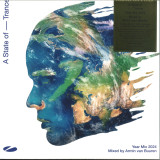
Armin Van Buuren - A State Of Trance Year Mix 2024 LP 3x12"
 
104

f11 FLRNTN, Benjamin Duchenne - "Last Man Standing" (feat Sivan) (1:08)
f12 Nicholas Gunn & Harshil Kamdar - "Here I Am" (feat Alina Renae - Richard Durand remix) (1:08)
f13 DJ TH X TH3 ONE X Sue McLaren - "Everything To Me" (1:08)
f14 Matty Ralph - "Te Adoro" (1:08)
f15 Armin Van Buuren & Vini Vici - "Sarabande" (feat Anna Timofei) (1:08)
f16 Lilly Palmer - "Hare Ram" (1:08)
f17 David Forbes - "Techno Is My Only Drug" (1:08)
f18 Armin Van Buuren - "Blah Blah Blah" (Lilly Palmer remix) (1:08)
f19 Armin Van Buuren - "The Road To Your Destination" (A State Of Trance Year mix 2024 outro) (1:14)

No en stock

Haga su pedido ahora y le encargaremos el artículo en nuestro proveedor.

46,64

Ültimo hace: 11 Meses
Various - ECHOES OF ITALY - ARTISTS IN WONDERLAND – EARLY 90S HOUSE VIBES VOL.1 LP 2x12"

Volume 1 of this expertly curated project of 90s Italian House - put together by Don Carlos.

If Paradise was half as nice… by Fabio De Luca.

Googling “paradise house”, the first results to pop up are an endless list of European b&b’s with whitewashed lime façades, all of them promising “…an unmatched travel experience a few steps from the sea”. Next, a little further down, are the institutional websites of a few select semi-luxury retirement homes (no photos shown, but lots of stock images of smiling nurses with reassuring looks). To find the “paradise house” we’re after, we have to scroll even further down. Much further down.

It feels like yesterday, and at the same time it seems like a million years ago. The Eighties had just ended, and it was still unclear what to expect from the Nineties. Mobile phones that were not the size of a briefcase and did not cost as much as a car? A frightening economic crisis? The guitar-rock revival?! Certainly, the best place to observe that moment of transition was the dancefloor. Truly epochal transformations were happening there. From America, within a short distance one from the other, two revolutionary new musical styles had arrived: the first one sounded a bit like an “on a budget” version of the best Seventies disco-music – Philly sound made with a set of piano-bar keyboards! – the other was even more sparse, futuristic and extraterrestrial. It was a music with a quite distinct “physical” component, which at the same time, to be fully grasped, seemed to call for the knotty theories of certain French post-modern philosophers: Gilles Deleuze, Félix Guattari, Paul Virilio... Both those genres – we would learn shortly after – were born in the black communities of Chicago and Detroit, although listening to those vinyl 12” (often wrapped in generic white covers, and with little indication in the label) you could not easily guess whether behind them there was a black boy from somewhere in the Usa, or a girl from Berlin, or a pale kid from a Cornish coastal town.

Quickly, similar sounds began to show up from all corners of Europe. A thousand variations of the same intuition: leaner, less lean, happier, slightly less intoxicated, more broken, slower, faster, much faster... Boom! From the dancefloors – the London ones at least, whose chronicles we eagerly read every month in the pages of The Face and i-D – came tales of a new generation of clubbers who had completely stopped “dressing up” to go dancing; of hot tempered hooligans bursting into tears and hugging everyone under the strobe lights as the notes of Strings of Life rose up through the fumes of dry ice (certain “smiling” pills were also involved, sure). At this point, however, we must move on to Switzerland.

In Switzerland, in the quiet and diligent town of Lugano, between the 1980s and 1990s there was a club called “Morandi”. Its hot night was on Wednesdays, when the audience also came from Milan, Como, Varese and Zurich. Legend goes that, one night, none less than Prince and Sheila E were spotted hiding among the sofas, on a day-off of the Italian dates of the Nude Tour… The Wednesday resident and superstar was an Italian dj with an exotic name: Don Carlos. The soundtrack he devised was a mixture of Chicago, Detroit, the most progressive R&B and certain forgotten classics of old disco music: practically, what the Paradise Garage in New York might have sounded like had it not closed in 1987. In between, Don Carlos also managed to squeeze in some tracks he had worked on in his studio on Lago Maggiore. One in particular: a track that was rather slow compared to the BPM in fashion at the time, but which was a perfect bridge between house and R&B. The title was Alone: Don Carlos would explain years later that it had to be intended both in the English meaning of “by itself” and like the Italian word meaning “halo”. That wasn’t the only double entendre about the song, anyway. Its own very deep nature was, indeed, double. On the one hand, Alone was built around an angelic keyboard pattern and a romantic piano riff that took you straight to heaven; on the other, it showcased enough electronic squelches (plus a sax part that sounded like it had been dissolved by acid rain) to pigeonhole the tune into the “junk modernity” section, aka the hallmark of all the most innovative sounds of the time: music that sounded like it was hand-crafted from the scraps of glittering overground pop.

No one knows who was the first to call it “paradise house”, nor when it happened. Alternative definitions on the same topic one happened to hear included “ambient house”, “dream house”, “Mediterranean progressive”… but of course none were as good (and alluring) as “paradise house”. What is certain is that such inclination for sounds that were in equal measure angelic and neurotic, romantic and unaffective, quickly became the trademark of the second generation of Italian house. Music that seemed shyly equidistant from all the rhythmic and electronic revolutions that had happened up to that moment (“Music perfectly adept at going nowhere slowly” as noted by English journalist Craig McLean in a legendary field report for Blah Blah Blah magazine). Music that to a inattentive ear might have sounded as anonymous as a snapshot of a random group of passers-by at 10AM in the centre of any major city, but perfectly described the (slow) awakening in the real world after the universal love binge of the so-called Second Summer of Love.

For a brief but unforgettable season, in Italy “paradise house” was the official soundtrack of interminable weekends spent inside the car, darting from one club to another, cutting the peninsula from North to centre, from East to West coast in pursuit of the latest after-hours disco, trading kilometres per hour with beats per minute: practically, a new New Year’s Eve every Friday and Saturday night. This too was no small transformation, as well as a shock for an adult Italy that was encountering for the first time – thanks to its sons and daughters – the wild side of industrial modernity. The clubbers of the so-called “fuoriorario” scene were the balls gone mad in the pinball machine most feared by newspapers, magazines and TV pundits. What they did each and every weekend, apart from going crazy to the sound of the current white labels, was linking distant geographical points and non-places (thank you Marc Augé!) – old dance halls, farmhouses and business centres – transformed for one night into house music heaven. As Marco D’Eramo wrote in his 1995 essay on Chicago, Il maiale e il grattacielo: “Four-wheeled capitalism distorts our age-old image of the city, it allows the suburbs to be connected to each other, whereas before they were connected only by the centre (…) It makes possible a metropolitan area without a metropolis, without a city centre, without downtown. The periphery is no longer a periphery of any centre, but is self-centred”.

“Paradise house” perfectly understood all of this and turned it into a sort of cyber-blues that didn’t even need words, and unexpectedly brought back a drop of melancholic (post?)-humanity within a world that by then – as we would wholly realise in the decades to come – was fully inhuman and heartless. A world where we were all alone, and surrounded by a sinister yellowish halo, like a neon at the end of its life cycle. But, for one night at least, happy.

No en stock

Haga su pedido ahora y le encargaremos el artículo en nuestro proveedor.

28,99

Ültimo hace: 6 Días
Mike Huckaby - My Life With The Wave Vol.2

This version comes with sample CD
The sample CD's contain over a 100 samples from the legendary Waldorf Wave Synthesizer and have been out of press since 2015.

The Long awaited release of My Life With The Wave Vol 2 is here. Mike Huckaby is finally ready to take you on another journey of skillful sound programming using the legendary Waldorf Wave Synthesizer.

Yes, this is Volume 2 of My Life With The Wave. 4 tracks of strictly deep house music made entirely from the Wave. Enjoy another experience of music made exclusively with this synthesizer, The Waldorf Wave.

No en stock

Haga su pedido ahora y le encargaremos el artículo en nuestro proveedor.

46,85

Ültimo hace: 7 Meses
Mike Huckaby - My Life With The Wave Vol.1

Mike Huckaby

My Life With The Wave Vol.1

12inchSYNTH09530000313+CD
Synth
05.02.2025
 
3
También disponible

Vinyl[30,04 €]

Vinyl[30,04 €]

Vinyl + Sample CD[46,85 €]


This version comes with sample CD

My Life With The Wave Vol.1 has been completely remastered. This SYNTH classic is now ready for some serious dancefloor action for many years to come.

No en stock

Haga su pedido ahora y le encargaremos el artículo en nuestro proveedor.

46,85

Ültimo hace: 14 Meses
DJ Quik - Safe And Sound 2x12"

Dj Quik

Safe And Sound 2x12"

2x12inchBEWITH095LP
Be With Records
31.01.2025

2025 Repress

DJ Quik is a giant of West Coast hip-hop. With 1995’s Safe + Sound, he scaled new levels of musical magnificence with his signature new age P-Funk/laconic G-Funk. A quintessential, sun-scorched LA album, this is pretty much essential. Typical for mid-90s albums the original vinyl copies are now rare so here’s the Be With re-issue, complete with “Tanqueray”, the hidden track from the original CD release.

A preternaturally gifted producer/rapper, DJ Quik has produced scores of LA gangsta rap classics. He’s released platinum and gold records of his own, as well as helped craft them for the likes of Tupac, Snoop Dogg, and Dr Dre. Quik has always been quirkier and more interesting than his gangsta rap peers, both musically and lyrically. An old-school funk producer at heart, he’s also incredibly nice on the mic. His raps often deal in boasts, jokes and good times but also cover his beefs, his trials and his trauma. Partying and pain, all mixed up. DJing and producing hype beat tapes from age 14, Quik’s tracks blended the languid funk and rubbery synths of Zapp and George Clinton with a gangsta aesthetic, creating a more danceable foil to Compton’s more typical nihilistic hedonism. Ultimately, his records sound custom engineered to drift out over sun-soaked barbecues.

By the time of his third album DJ Quik was a household name on the West Coast - California’s premier rapper/producer not named Andre Young. Released on Profile in 1995, Safe + Sound was certified gold. Less reliant on samples and more focused on live instruments, it elevated him from producer to fully-fledged composer. This sound — the quick, winding basslines, tinny high hats, smooth instrumental solos, soulful pipes, and Roger Troutman’s talkbox — defined him. This is an album of full-blown masterpieces. Rich soundscapes and masterfully arranged orchestrations with dense layers of sounds, intricate rhythms, and well-balanced songwriting.

The first track proper, “Get At Me” samples Cameo whilst Quik takes aim at the Judases in his life, the horn-laced chorus providing a triumphant feel. On the horizontal “Diggin’ U Out”, the soulful electric piano of Warryn Campbell lays a relaxed groove for Quik to talk over about one of his favourite topics: sex. Title track “Safe + Sound” chronicles Quik’s formative years over a slick instrumental. The moody bass locks a laidback infectious groove, the hook is catchy and Quik’s delivery is in fine form. On the uber-chilled “Somethin’ 4 Tha Mood”, Quik cooks up a breezy, feel good track of sparkly keyboards, syncopated claps, shuffling hi-hats, woozy synths and a floating two-minute flute solo courtesy of Robert “Fonksta” Bacon. Analysing the highs and lows of an average day in the hood, it echoes Cube’s “It Was a Good Day”.

“It’z Your Fantasy” is a silky smooth soundtrack to Quik’s detailed retelling of a sexcapade with a young lady and whilst “Tha Ho In You” is musically perfect for that midsummer family BBQ, its lyrical content is unsurprisingly decidedly less family-friendly. A real highlight, the infamous “Dollaz + Sense” is one of the most ruthless diss tracks of all time. The brutal lyrics ride a laidback West Coast beat, flipping a sample from Young & Company’s “I Like (What You’re Doing To Me)” as Quik fires lyrical shots at his arch Compton nemesis, MC Eiht. On the loping, hazy “Let You Havit”, Quik is again in gangsta mode, with more bars of barbs aimed at Eiht, rhyming over sun-kissed synthy-rollerskate funk.

Some of the finest tracks on Safe + Sound are those designed to de-stress. The evocative “Summer Breeze” is a classic warm-weather jam, anchored by a twangy funk guitar, breezy string arrangement, and a soulful hook delivered by Dionne Knighton. Quik’s nostalgic lyrics are not far from DJ Jazzy Jeff & The Fresh Prince’s “Summertime”, reminiscing over barbecues at the park, young love, and the brevity of halcyon youth. The relaxed and jazzy “Quik’s Groove III” is another highlight, as bass, guitar, piano and flute combine to create a smooth, soulful instrumental.

The swaggering “Shack Up”-sampling “Sucka Free” features a cameo from Playa Hamm, all funky braggadocio and over much too quikly (pun thoroughly intended). The jazz-flavoured “Keep Tha ‘P’ In It”, again featuring Playa Hamm but this time extending the cameo invitations to Hi-C, 2nd II None and Kam, is pure laidback P-Funk. The deep bass and industrial drums make sure the groove hits hard.

“Tanqueray” was originally a hidden track on the CD version of the album, but it’s too good to hide. This wild party samples Brass Construction’s gigantic “Get Up To Get Down” and soars in its drunk-ebullience. An apt way to close this party-driven set.

This 2022 Be With double LP re-issue has been mastered for vinyl by Simon Francis, cut by Pete Norman and pressed at Record Industry. Unusual for the time, Safe + Sound was originally pressed as a double, so all that was missing was the CD’s hidden bonus track “Tanqueray”, so we’ve fixed that. The original vinyl release never got a picture sleeve, so we’ve recreated the original’s promo-style silver-sticker and plain black jacket. A subtle cover for a wonderfully unsubtle record.

No en stock

Haga su pedido ahora y le encargaremos el artículo en nuestro proveedor.

27,69

Ültimo hace: 6 Meses
Mike Huckaby - My Life With The Wave Vol.2

The Long awaited release of My Life With The Wave Vol 2 is here. Mike Huckaby is finally ready to take you on another journey of skillful sound programming using the legendary Waldorf Wave Synthesizer.

Yes, this is Volume 2 of My Life With The Wave. 4 tracks of strictly deep house music made entirely from the Wave. Enjoy another experience of music made exclusively with this synthesizer, The Waldorf Wave.

No en stock

Haga su pedido ahora y le encargaremos el artículo en nuestro proveedor.

30,04

Ültimo hace: 3 Meses
MARINA HERLOP - NEKKUJA

Marina Herlop

NEKKUJA

12inchPANLP141
PAN RECORDS
08.01.2025

While she was waiting for her last album 'Pripyat' to be released, Catalan composer and producer Marina Herlop was restless. She was concerned about her (by then) uncertain music career, and felt emotionally unmoored. "Some days I used to sit on the balcony of my flat to catch some sun," she explains, "I would close my eyes and start visualizing myself as a gardener, pulling out purple weeds from the soil, every bad memory or emotion I wanted to expulse being one of the plants." As the days dragged on, the fantasy deepened, and Herlop discovered that parts of the garden was withering; the energy she had been putting into the non-musical side of her life had seeped into her creative pasture and poisoned it. She knew what she needed to do to overcome the blight: plant some seeds and tend to her art to help it blossom and bloom once again. 'Nekkuja' is a place for Herlop's warmest, sweetest sentiments to rise to the surface and crack through the topsoil. She describes the record as a way for her to seek and affirm inner light, and it's undoubtedly her brightest, poppiest statement to date. The forward-thinking, experimental touches that nourished 'Pripyat' are still present, but blessed with a level of positivity that's rare to find in a scene so entranced by darkness and melancholy. Skittering fragments of ornate acoustic instrumentation provide a serene welcome to 'Busa', punctuated by precise electronic processes that shuttle the sound towards abstraction and fantasy. Herlop's voice grows over the tangle of sounds from a childish giggle into a layered, matted mantra, sounding passionate, hopeful and full of energy. The vitality spills over into 'Cosset', where she wraps powerful motifs around ricocheting beats and dramatic piano rolls. Herlop's garden opens up dramatically on 'Karada' when bucolic field recordings crack like sunlight over harp plucks and willowy vocals. Her voice seems to bend around the whooshing streams and chittering of birds as if she's singing to the manicured land itself - a utopian paradise that Herlop employs as a metaphor for the creative process. In contrast to the view that an artist is an isolated genius or an idol to be worshipped, Herlop believes that the garden helps us see the process as closer to devotion or perseverance. A gardener brings order to the wild chaos of the outdoors, collaborating with nature to arrange something vibrant and enduring. Blending familiar sounds with fanciful concepts, Herlop traces an imaginary garden, imploring us to wander and wonder. And by the album's billowing final track 'Babel', it's flowered into a flush of pruned vocal phrases and delicately groomed orchestral rushes, painted in orange, green, blue and red.

No en stock

Haga su pedido ahora y le encargaremos el artículo en nuestro proveedor.

23,49

Ültimo hace: 16 Meses
VARIOUS - RE LIFE IN A DIFFERENT WORLD FROM ZERO/SEASON 1 (2x12")
  • A1: Rondo Of Love And Darkness - Main Theme 3:49
  • A2: Takt Of Heroes - Origin - 2:53
  • A3: Hymn Of Despair And Atonement 3:11
  • A4: Dragon Kingdom Lugnica 2:43
  • A5: Another World March 1:59
  • B1: Memories Of Time And Sky 1:39
  • B2: Promenade Of Flute And Creation 2:06
  • B3: Re:verse 2:32
  • B4: Heartbeat Of Determination 2:05
  • B5: Fantasy Lied 3:41
  • B6: Echt Of Sorrow 3:51
  • C1: Chains Of Memories 3:31
  • C2: Roar Of Malice 2:56
  • C3: Sloth 2:05
  • C4: Call Of The Witch 2:46
  • C5: Activation Of Fate 2:23
  • D1: Requiem Of Silence 7:03
  • D2: Death Ballet 2:47
  • D3: Waltz Of Rage 2:11
  • D4: Overture Of The Final Battle 3:01
  • D5: Wish Of The Stars
Reservar20.12.2024

debe ser publicado en 20.12.2024

58,40
Cartridge 1987 - Retro Decouverte : Bande Originale Volume 1

This album is the result of a collaboration between Cartridge 1987 and YouTuber Edward, known for his excellent show "Retro Découverte." With over 200,000 subscribers, this YouTube channel aims to highlight everything related to "Retro Gaming" culture, with a presentation designed to evoke our nostalgic feelings as gamers. This album compiles theme songs featured on Edward's YouTube channel.

No en stock

Haga su pedido ahora y le encargaremos el artículo en nuestro proveedor.

24,58

Ültimo hace: 17 Meses
PILO - G.L.A.M.

Pilo

G.L.A.M.

12inchBNR243LP
Boysnoize Records
08.11.2024

The Boysnoize Records catalogue contains more than a decade of milestones in the life of Angeleno DJ and producer PILO. His signatures—a focus on sound design, and a digital crunch evocative of hardware rather than software—are present from the very beginning, but the evolution of Pilo’s skill and sophistication is clear as he stretches from electro to experimental to techno and back again in a slowly oscillating gradient. Yet despite his dozen or so releases in just as many years, G.L.A.M. (dropping November 8th, 2024 from BNR) is Pilo’s first proper album. That the record embraces the cyclical nature of time is apropos; the artist’s journey towards self-actualized mastery always ends with a new beginning.


Over the eight tracks of G.L.A.M., Pilo reaches deep into the dream that first ignited the passion that has driven him since. For a chosen few internet-connected American teens in the aughts, the sounds of European electro (and electroclash) trickled down their ethernet cables and instilled a fantasy of exotic, sartorial, sexually-fluid hedonism that felt a world away from the hard-edged masculinity of the hip-hop and skate cultures dominant at home. Pilo opens G.L.A.M. expressing this idealized fantasy with the track “Superstar DJ,” channeling the tongue-in-cheek self-celebritizing of Miss Kitten and The Hacker’s seminal work. “I’m a superstar, come meet me at the bar,” hiss Pilo’s heavily effected vocals, over a bassline of chopped mentasm synths driven by a swift, club-ready rhythm. The fingerprint of 2000’s electro a la International Deejay Gigolo Records is recognizably present, yet Pilo is too adept, too confident in his studio abilities to let his tracks rely on the retro. A great joy of this album is the future-facing richness of its production, always nodding to its spiritual guide of the past, while constantly breaking new sonic ground.


G.L.A.M. continues with “Girls Rule The World,” its vicious, droning bassline and sticky, titular hook making it the perfect electroclash soundtrack for a revenge plot on an ex-boyfriend. “What you Want” offers an instrumental exercise in “synthesizers are the new guitars,” and Pilo’s FX chops really shine as he warps and distorts his sounds into an undiscovered dimension existing somewhere between both. “Loverboy” enters the more melodic, Legowelt-inspired realm of electro, pushing above and beyond the foundation of analogue minimalism with flourishes of impressive sound design to construct something both climactic and cathartic. Scopa lends her perfect coldwave sprechgesang to titular track “G.L.A.M.,” with Pilo’s vocal processing offering surprises throughout and his FX chains wielded as instruments unto themselves.


On the track “A Slow Thinning Halo,” Pilo might be conjuring the haunting vocal chops and chiptune simplicity of early Crystal Castles, but the whiplash snap of his drums and sizzling production are all his own. “Spend the Night” is G.L.A.M.’s least nostalgic—and most unashamedly pop—offering, with the mic being passed between Sana and DEEVIOUS (previously featured on Pilo and Boys Noize’s 2023 track “Pvssy.”) DEEVIOUS’ sultry singing rides atop the bassline as it hypnotically struts across the floor, while Pilo’s skillful arrangement, deft rhythm programming, and atmospheric control elevate the songcraft into full-spectrum worldbuilding.


As the penultimate track, the contemporaneity of “Spend the Night” serves as transition away from the album’s previous, past-leaning exercises, allowing Pilo to step fully into the future with “One Last Embrace.” The closing track still references aughts sounds, but it borrows so widely and prolifically that Pilo’s reassemblage can only be described as singular. Here, Pilo pushes his engineering into psychoacoustic territory, as the eerie, beautiful melancholy of “One Last Embrace” explodes into a thrashing bassline that warbles like a drowning memory, struggling against the sinking weight of time. Pilo allows it to survive for 16 electrifying, gut-wrenching bars before letting go. In G.L.A.M., as in Pilo’s career, as in life, every ending can only be a new beginning.

No en stock

Haga su pedido ahora y le encargaremos el artículo en nuestro proveedor.

18,70

Ültimo hace: 14 Meses
Clothilde - Cross Sections

Clothilde

Cross Sections

12inchZAM039
Holuzam
08.11.2024

Clothilde’s new album sounds like a constant departure from almost everything. Up until now, her music pieces seemed uncontrolled, a total commitment to the machines. She was, somehow, in between us - listener, audience - and the idea of a machine producing sounds she doesn’t seem to control. Of course, none of this was entirely true, she was mostly in control, but the fantasy, the orchestration of it was beautiful. It was sci-fi-ish, Metropolis-magnificent.

In “Cross Sections” everything is purposely under control. We feel, without being told, that Clothilde is directing the narrative, inviting us to partake of this raw and austere electronic sound, forcing us to learn to enjoy it. This is new. Whereas before she would expect you to stay put and listen, eventually you would understand and give in. Or your body would. Now she is telling you to be there, she doesn’t want to be alone, she wants us to feel this subterranean urgency at all costs.

The real eureka moment comes with “Medullary Rays”, when we start cohabiting with the sounds, when they feel familiar. The darkness becomes real; it is palpable how she is stretching each sound and making them come to life at every moment. It is violent, brutal. Like every track, it's a relief when it ends, it's like coming out of a car crash alive. Much of the A side of is Clothilde pushing the boundaries of her sound. She is not testing but finding new ground and sharing it with us. She is exorcising, demolishing and building over and over again, she is crying and screaming, dozing off with the demential levels of bass, making us constantly listen to alarm bells. She is scaring the shit out of us.

The B side keeps the levels of anxiety high up, especially on the 13-minute “Ring”. Surrealistic drones come and go, every second sounds like the end of something, the accumulation of tension is torrential and it never, never stops. We hope there is a conclusion to this. But there is not. “Cross Sections” builds and feeds on this darkness but, in a way, it is self-contained. Never explodes, never releases itself from itself. It is a continuous process of catharsis that it is never over. It never aims to be. Like, you know, life itself.

We've all been there. It feels familiar. Now it has a sound, or sounds. It can be heard and it is outer dimensional. “Cross Sections” is a tremendous effort from an artist trying to survive something. You never know what is. You don’t need to know what it is. It is just there. Cliché but it has to be said: highest possible volume on this one.

Reservar08.11.2024

debe ser publicado en 08.11.2024

20,80
Armando Sciascia - Sea Fantasy LP

Scored by the legendary Italian film composer Armando Sciascia, Sea Fantasy is a conceptual suite of twelve exotic themes evoking the many moods and dramas of life under the sea. Recorded in 1972 for Sciascia's own Vedette label, the album is a key recording within the micro-genre of Italian underwater library music. A mosaic of evocative modern classical, flamenco textures and a surge of raw analogue synthesizers. Mysterious aquatic music that sits comfortably alongside other Italian Soundtrack and Library recordings including the lush bossa of Daniele Patucchi's Men Of The Sea (CAM) as well as the experimental electronics of Biologia Marina by Amedeo Tommasi & Alessandro Alessandroni (Rhombus). With several cues used for the English-version soundtrack to Harald Reinl's 1976 (Erich von Däniken inspired) mondo-documentary Mysteries Of The Gods, Sea Fantasy is reminiscent of the exotic mood-music scored for Folco Quilici's documentary Oceano composed by Ennio Morricone as well as Luigi Scattina's legendary tropical sexploitation film Il Corpo composed by Piero Umiliani. This new 2019 edition has been newly remastered and expanded with additional liner notes and photos.

Remastered and expanded edition.
Legendary Italian underwater Library recording
Replica vinyl reissue of the rare 1972 LP
Mysterious aquatic mood music

No en stock

Haga su pedido ahora y le encargaremos el artículo en nuestro proveedor.

23,95

Ültimo hace: 18 Meses
Fohn - Seanteach

Fohn

Seanteach

12inchODA04M
ODDA Recordings
18.10.2024

Fohn brings connection, displacement and new identities into the moment, on pastoral debut album Seanteach - informed by island life, marine folklore and musical tradition.

Connection to the land, the severing of earthly ties, explorations of environment, mythos and generational memory: under the moniker of Fohn, English violinist and producer Tom Connolly (Quade, AD93) takes to the fiddle on which he learned his craft as a child. Forging new bonds with his family’s island home off the coastal west of Ireland, their story is retold in Seanteach (Irish for ‘old house’), released on Odda Recordings.

“Seanteach explores the nature of my relationship with Ireland, and Connemara in particular, where my dad’s family is from,” explains Connolly, speaking on a long-form work that blends new compositions on traditional Irish fiddle with ambient electronics and evocative field recordings.

“It explores how the island of Maighinis became an almost mythological space for me, growing up in England - we would spend every summer there, but it felt equally present for me when we were back in the UK, a sort of mental solace that I found through music especially.”

Each track on the album is a reflection of aspects of that relationship to island life - where physical features intersect with mythology. Such as, ‘Boreen’, named after a colloquial term for rural byroads sometimes shared with otherworldly neighbours. ‘Aisling at Sea’ draws on the primal, unstoppable momentum of the water, while the folklore of ‘Immram’ reflects on generationally-kept tales of marine bravery and supernatural accomplishment.

“The compositions often sit at the fraying edges of memories I’ve inherited from my own experiences, that of family lore, or from stories that I have come across. I wanted the compositions to tread the space between documentation and fantasy that feels so reflective of my relationship with this place.”

Tying these worlds together is the presence and memory of Connolly’s ‘Mamó’ (Irish for grandmother), Bríd. Despite passing during Connolly’s childhood, this “larger-than-life character” shaped his imagination with anecdotes and stories, representing both a familiar figure, and the poignancies of potential and regret.

“Even at a young age I sensed a sadness emanating from her. Through a series of unfortunate and fortunate circumstances, she found herself leaving Ireland and settling in Boston like so many others. Under the impression she was an illegal immigrant in the US she didn’t return to Ireland for decades.”

‘Between the Shoreline and the Gorse’ channels her early childhood, born to a large Catholic family in the island’s ‘Seanteach’, and cast adrift from her old life - a severance of ties that Connolly attempts to make ethereal amends for, with the album named for her family home.

“It’s something that feels so visibly prominent in Connemara with its landscapes charcoaled with deserted ruins. It’s a feeling I also experience, despite never having lived in Ireland, which prompted me to want to explore the idea of longing for something/somewhere ‘un-experienced’, and to a certain extent, fictionalised.”

Reservar18.10.2024

debe ser publicado en 18.10.2024

21,22
CHRIS HUELSBECK - INTERSTELLAR SENTINEL LP 2x12"
  • Monster Soul Collector (Main Theme)
  • Demonic Dream Lure
  • Dark Wellspring Court
  • Dark Wellspring Infiltration
  • In The Face Of The Machine (Theme Reprise)
  • Vamperial Remnants
  • Multiverse Drifter
  • Abyssal Grove's Metamorphosis
  • Astral Courage
  • Astral Rebuff
  • Hyper Slider
  • Through The Titan
  • Titanic Champions
  • Questing Realms
  • Ice Cream Shmup Shop
  • Zenwards
  • Monster Soul Collector (Francesco Di Mauro Remix)

"This is the complete soundtrack album for Interstellar Sentinel, an action-packed bullet-hell shoot'em-up that takes you on a sci-fi fantasy journey through legions of monsters, demons, and cosmic mind-ripping entities. The game was created by a friend and colleague from the former Factor 5 USA studio and is an inspired love letter to some of the best side-scrolling games ever made, like Salamander/Life Force, Gradius, R-Type, Darius, Super Aleste, Einhander, Ikaruga, and more." - Chris Huelsbeck The soundtrack, featuring all new compositions, is heavily inspired by Chris' earlier works and successes, like Turrican, X-Out and Katakis and should be an aural feast for his fans.

Reservar18.10.2024

debe ser publicado en 18.10.2024

32,98
The Kinks - Misfits (2024 Remaster)

„Misfits“ ist das siebzehnte Studioalbum von The Kinks, das im Mai 1978 veröffentlicht wurde. Die
Aufnahmen begannen im Juli 1977 im KONK-Studio der Band in London und etablierten weiterhin die
Mainstream-Rockrichtung, die 1977 mit Sleepwalker eingeführt wurde. Das Album markierte eine Zeit
bedeutender personeller Veränderungen: Der langjährige Bassist John Dalton verließ die Band nach der
Veröffentlichung von Sleepwalker, ist aber immer noch auf mehreren Stücken zu hören, die während dieser
Aufnahmen entstanden. Er wurde nur für ein Album durch Andy Pyle ersetzt. Das Album war auch das
letzte, auf dem der Pianist John Gosling zu hören war.
Die Singles und herausragenden Stücke – „Misfits“, „Rock ’n’ Roll Fantasy“, „Live Life“ und „In a Foreign
Land“ – behandeln Themen wie Entfremdung, Widerstandskraft und die Kämpfe des Alltags. Kritiker
lobten das introspektive und oft ergreifende Songwriting und die Texte und erkannten das Album als eines
der nachdenklichsten und persönlichsten Werke der Band an.
Misfits nimmt in der Diskographie der Kinks einen wichtigen Platz ein und zeigt ihre anhaltende Relevanz
und Anpassungsfähigkeit in der sich verändernden Musiklandschaft der späten 1970er Jahre. Das Album
wurde von allen Original-¼-Zoll-Bändern neu gemastert.

Reservar18.10.2024

debe ser publicado en 18.10.2024

25,42
Fantasy of a Broken Heart - Feats of Engineering LP

Fantasy of a Broken Heart's debut album, Feats of Engineering, is both sweeping epic and a candid record of everyday moments, an emotional scrapbook filled with things that happened and things that didn’t. Having earned their chops with groups including Water From Your Eyes, Sloppy Jane, & Dorian Electra, its no wonder this special group has already been called "life-affirming" by the New York Times.

Reservar27.09.2024

debe ser publicado en 27.09.2024

22,48
DIALECT - ATLAS OF GREEN

Dialect

ATLAS OF GREEN

12inchRVNGNL111
RVNG International
20.09.2024

Ever-evolving the mythologies and magic of Dialect's sonic sphere, Andrew PM Hunt returns with Atlas of Green, elegantly molding unexacting details of memory and mistranslation into the framework of the British musician and composer's creative pursuit. The album imagines a young musician named Green working in a future dawning era where lost signals and enduring impulses are unearthed from the sediments of technology and time. Across twelve compositions, Green becomes the compass in an epoch of transition; one shaded with pastoral patinas and studded with the fragments of allegorical ruin. As tattered as it is tender, Atlas of Green is a patchwork of scavenged relics and bygone hues, cast through the iridescent shimmers of a mid-future in flux. Growing up on the Wirral Peninsula in North West England, Hunt was surrounded by stone age landmarks and rock carvings that infused the landscape with legend. It was beside those carvings on a residency at Bidston Artistic Research Center where he began the journey of Atlas of Green, experimenting with tape loops and exploring the center's library of sci-fi. Here Hunt also encountered the work of Italian philosopher Federico Campagna, a writer who believes we're at the end of our current world. This encouraged Hunt's exploration of how the fabric and fantasies of our current era might endure into the future of Green, as they try to make sense of the riddles of the past, utilizing broken electronics and simple acoustic instruments to create new mythic forms. This question of endurance led Hunt to inscribe Atlas of Green with its own lucid markings - sometimes almost anthemic adornments - which unfurl through the album's melancholic air as possible new metaphors for how the human spirit might persist through dark days and regain lost wisdom. As Hunt reflects, "We're not just on an endless procession through constantly better worlds. Our lack of action (on climate and inequality) feels hopeless at times. I find some comfort in the idea that maybe the world needs a new song in order to tell a new story about itself". The image of Green as a journeying adolescent in-between eras developed out of a burgeoning interest in the fantasy writing of Ursula K. Le Guin and Gene Wolfe and occurred at a point in Hunt's life where the question of starting a family was looming. Green became a device for thinking about the future, or futures, putting someone in another world and granting access to a slightly longer timeframe than one's own life. What would this person, in this as-yet-unsung world do with something as powerful as music? As Hunt notes, "I imagined them doing what we've always done with music - using it to build a map of feeling, providing boundaries and tracing the edges of our emotions, defining a space of possibility and giving voice to our intuition. This is an alternative future to the one of endless growth but one which still holds space for hopes and dreams." Mapping new folds in the passage of time, Atlas of Green is traced with an aura of sonic urgency which arises through its process-led construction. Following a series of live shows in early 2023, the record was created with an assemblage of analogue electronics and acoustic instruments, including scratched records and a broken four track, collaging studio work with recorded live recordings featuring work in progress. Where the indeterminate energies of Under~Between (2021) appeared through digital processing, Atlas of Green embraces chance encounters within the malfunctions of physical media and glitching gear. Within these interwoven clusters of organic and blemished sound, Dialect reclaims the joyfulness of the inner amateur and creates a soft landing for new seeds of magical possibility - rooted in the bounds and abundance of realism. "As a planet of people we have to deal one way or another with our finite existence. We have to deal with that loss with hope still in our hearts - our capacity to love cannot be contingent on things lasting forever, and so this image of Green is not a vision of dystopia, nor utopia but an expression of trust and an acceptance of limits."

Reservar20.09.2024

debe ser publicado en 20.09.2024

22,27
Michael Giacchino - Exotic Themes From The Silver Screen - Volume One

Mutant is proud to present Academy Award-winning composer Michael Giacchino's latest album, Exotic Themes for the Silver Screen – Volume 1, featuring iconic scores from Giacchino's extensive portfolio rendered in the retro lounge style of Exotica from the 1950s.


“It's no secret that we at Mutant are huge fans of Michael Giacchino,” says Spencer Hickman, Co-Founder of Mutant. “We're excited to release a retrospective of his astonishing three decades as a composer. Rather than just curating a simple compilation of his previous works, Michael went back into the studio, rearranged and re-recorded every major theme from his career. These tracks have been recorded in an Easy Listening style inspired by such greats as Martin Denny and Les Baxter, creating not just a unique and incredible look back at some of the most beloved movie and television themes of the modern age, but also bringing a fresh, exciting take to the beautiful journey he has taken us all on with him. It feels like you are discovering these songs for the very first time: timeless, beautiful, and a joy to listen to. These newly recorded themes transport you to a far-off sunset, looking out at the ocean, complete with a cocktail in hand, providing a much-needed escape from the stress of modern times, and we can all agree that is something we all crave right now.”


Exotic Themes for the Silver Screen – Volume 1 spans nearly two decades of Michael Giacchino’s music, from his early video game scores to his television hits and blockbuster films. The album transforms these works through the lens of Exotica, replacing epic strings and thundering drums with vibraphones and marimbas.


“This album was inspired by the work of Arthur Lyman and Martin Denny,” says Giacchino. “What would they do with the Star Trek theme? Or video games like Medal of Honor? It was a way for me to play in that world I loved so much growing up. I thought it would be fun to create a fantasy world, where this album was recorded back in 1967 and then lost, only to resurface today.”

The album showcases Giacchino’s unerring talent for melody, stripping down grand symphonies to their essential elements while retaining their aesthetic and emotional core.


“So much was rooted in the big orchestral sound, so it was really about scaling it back. The real trick is figuring out the little fun hooks and things you can add along the way. There were no rules; I was up for anything. It was a way to re-engage with the material and be creative in a new way.”


Exotic Themes for the Silver Screen – Volume 1 includes an array of reinterpreted pieces from Michael Giacchino’s career. Highlights include ‘Primordial Forest’ from the 1997 video game The Lost World: Jurassic Park, ‘Life and Death’ from Lost, the theme from Ratatouille, ‘Roar!’ from Cloverfield, ‘Enterprising Young Men’ from Star Trek (2009), ‘A Man, A Plan, A Code, Dubai’ from Mission: Impossible - Ghost Protocol, and a Super 8 suite.


Featuring package design by Luke Insect, and liner notes by Charlie Brigden.

Reservar13.09.2024

debe ser publicado en 13.09.2024

49,54
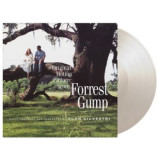
Various - Forrest Gump OST

Various

Forrest Gump OST

12inchMOVATW155
Music On Vinyl
13.09.2024

Forrest Gump was the surprise hit of the 1994 summer movie season. The film traces the life of a half-wit through the major historical events of the 1950s, '60s, and '70s. It features Tom Hanks as the loveable Forrest Gump and Robin Wright (Claire Underwood in House Of Cards) as Forrest's insecure girlfriend Jenny.

Forrest Gump won six Academy Awards for Best Picture, Best Actor in a Leading Role, Best Director, Best Visual Effects, Best Adapted Screenplay, and Best Film Editing.
The film garnered for seven Golden Globe Award nominations, winning three of them, including Best Actor - Motion Picture Drama, Best Director - Motion Picture, and Best Motion Picture - Drama. The film was also nominated for six Saturn Awards and won two for Best Fantasy Film and Best Supporting Actor (Film. The film also won the Outstanding Achievement in Special Effects award at the 1995 BAFTA Film Awards.

Forrest Gump received numerous other awards such as one win from the Screen Actors Guild Awards in its first year for Tom Hanks in a total of four nominations.

The film was selected for preservation by the Library of Congress in the United States National Film Registry in 2011, being deemed culturally, historically, or aesthetically significant'. The movie has made multiple American Film Institute lists including the quote Mama always said life was like a box of chocolates. You never know what you're gonna get.' ranking 40th on 100 Years...100 Movie Quotes. The film ranked 240 on Empire's list of the 500 Greatest Movies Of All Time. The chain of restaurants, Bubba Gump Shrimp Company opened based on the film, and has opened many locations since its founding.

The score was composed and conducted by Alan Silvestri and was nominated for Best Original Score in the 67th Academy Awards.

The legendary Score is now finally available on vinyl for the first time. The first pressing of 1.500 copies are pressed on 'Chocolate' coloured vinyl. You never know what you'rei
gonna get...

Reservar13.09.2024

debe ser publicado en 13.09.2024

30,46
Various - Forrest Gump OST

Various

Forrest Gump OST

12inchMOVATB155
Music On Vinyl
13.09.2024

Forrest Gump was the surprise hit of the 1994 summer movie season. The film traces the life of a half-wit through the major historical events of the 1950s, '60s, and '70s. It features Tom Hanks as the loveable Forrest Gump and Robin Wright (Claire Underwood in House Of Cards) as Forrest's insecure girlfriend Jenny.

Forrest Gump won six Academy Awards for Best Picture, Best Actor in a Leading Role, Best Director, Best Visual Effects, Best Adapted Screenplay, and Best Film Editing.
The film garnered for seven Golden Globe Award nominations, winning three of them, including Best Actor - Motion Picture Drama, Best Director - Motion Picture, and Best Motion Picture - Drama. The film was also nominated for six Saturn Awards and won two for Best Fantasy Film and Best Supporting Actor (Film. The film also won the Outstanding Achievement in Special Effects award at the 1995 BAFTA Film Awards.

Forrest Gump received numerous other awards such as one win from the Screen Actors Guild Awards in its first year for Tom Hanks in a total of four nominations.

The film was selected for preservation by the Library of Congress in the United States National Film Registry in 2011, being deemed culturally, historically, or aesthetically significant'. The movie has made multiple American Film Institute lists including the quote Mama always said life was like a box of chocolates. You never know what you're gonna get.' ranking 40th on 100 Years...100 Movie Quotes. The film ranked 240 on Empire's list of the 500 Greatest Movies Of All Time. The chain of restaurants, Bubba Gump Shrimp Company opened based on the film, and has opened many locations since its founding.

The score was composed and conducted by Alan Silvestri and was nominated for Best Original Score in the 67th Academy Awards.

The legendary Score is now finally available on vinyl for the first time. The first pressing of 1.500 copies are pressed on 'Chocolate' coloured vinyl. You never know what you'rei
gonna get...

Reservar13.09.2024

debe ser publicado en 13.09.2024

30,46
Artículos por página
N/ABPM
Vinyl
