4
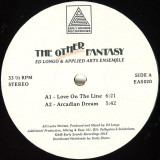
We Welcome Ed Longo And His Studio Project The Applied Arts Ensemble Debut On Early Sounds With the Other Fantasy', The Result Of Many Recording Sessions That Took Place In Different Places Around Europe.
Conceived With A Strong Jazz-funk, Fusion And Boogie Sound It Has Been Conceptualized Around The Idea That The Schizophrenia Of The Internet-age, The Visions Of Otherness (the Undiscovered Lands, The Primitive Happiness, The Impossible Love) Permeate The Collective Consciousness And The Idealized "other" Loses Any Correspondence With The Physical World.
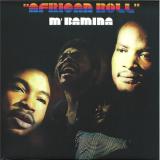
Gatefold Sleeve
M’Bamina – African Roll (1975)
The story of an album born between Africa, Italy, and the nightclub culture of the 1970s
In the heart of 1970s Italy — a country undergoing profound social change and a music scene just beginning to open itself to distant sounds and cultures — an extraordinary, almost improbable story took shape. It is the story of a group of young African musicians who found their way to Europe, of a Turin nightclub that became a crossroads for communities and experimenters, and of an album which, released in small numbers and largely unnoticed at the time, is now considered a rare jewel of Afro-fusion.
The band called themselves M’Bamina — an ensemble of musicians from Congo, Cameroon, and Benin, who arrived in Italy in the early Seventies. Settling between northern Italy and the Pavia area, they began performing in small clubs and community events, bringing with them a vibrant rhythmic heritage: African polyrhythms, call-and-response vocals, funk-infused bass lines, and Caribbean or Afro-Latin colours absorbed along their musical journeys. Their raw, contagious energy on stage quickly drew attention.
Meanwhile, in Turin, another story was unfolding. There was a venue becoming almost legendary: Voom Voom, one of the city’s liveliest nightclubs, run by Ivo Lunardi. The club attracted an eclectic crowd — students, artists, foreigners, night owls — and Lunardi quickly understood that the dancefloor wasn’t just a place for music, but a melting pot for a new kind of cultural energy. Out of this vibrant atmosphere came his idea: to turn the club’s name into a small independent record label, Voom Voom Music, capable of capturing the spirit of those years and giving voice to unconventional projects.
When Lunardi heard M’Bamina, he immediately sensed that this was the sound he had been searching for: fresh, different from anything circulating in Italy at the time, and capable of blending African tradition with funk and European sensibility. He brought them into the studio.
Production was handled by Lunardi along with Christian Carbaza Michel, while the engineering was entrusted to Danilo Pennone, a young sound technician with a sharp, intuitive ear.
The recording sessions — held in Turin in 1975 — produced a remarkably warm and direct sound. The music feels almost live: grooves rooted in African tradition, but open to funk-rock structures and modern arrangements. It is a natural fusion, never forced. Tracks move between tribal rhythms, funk basslines, light electric guitars, congas and Afro-Latin percussion, with call-and-response vocals and melodies that echo both Congolese tradition and the lineage of Latin jazz. Not by chance, one of the album’s most striking tracks, Watchiwara, reinterprets a Latin standard through M’Bamina’s own rhythmic language.
The album was titled African Roll — a name that was already a statement of intention. It is African music that “rolls,” that moves, adapts, transforms within a new geographic and cultural setting. It is not strictly Afrobeat, nor Congolese rumba, nor Western funk: it is a spontaneous, hybrid blend, shaped more by lived experience than by any calculated aesthetic program.
When African Roll was released, the world around it barely noticed. Distribution was limited, and 1970s Italy had yet to develop a cultural framework for receiving such music. The national music press rarely paid attention to African or “world” productions. The album slipped into silence — though the band’s own story did not.
M’Bamina continued performing across Europe and Africa, even sharing a stage in Cameroon with none other than Manu Dibango. By the late Seventies, they moved to Paris, signed with Fiesta/Decca, and recorded a second LP, Experimental (1978). Meanwhile, the peculiar record they had made in Turin began to resurface quietly among vinyl collectors, Afro-funk enthusiasts, and DJs hunting for forgotten grooves.
That is when the album’s fate began to shift.
Over the decades, African Roll emerged as an almost unique document: a snapshot of an intercultural Italy before the word “intercultural” even existed, a fragment of migrant history, a spontaneous experiment in musical fusion born far from major industry circuits but rich in authenticity. Original copies began commanding high prices on the collector’s market, and the album became recognized as one of the hidden classics of European Afro-fusion from the 1970s.
Today, more than fifty years later, this reissue finally restores visibility and dignity to a project that deserves to be heard, studied, and celebrated. It is not simply an album: it is the testimony of a rare cultural encounter, born in an Italy unaware of how fertile such exchanges would one day become.
It is the story of a visionary producer, an extraordinary band, and a fleeting moment in which music, migration, and nightlife came together to create something genuinely new.
African Roll is — now more than ever — the sound of a bridge: between continents, between eras, between cultures. A record that, after rolling far and wide, has finally come home.

Daniele Baldelli
"A pleasant surprise to find in this release various atmospheres and sounds that have always been part of my DJing. It even made me rediscover M’Bamina, whom I used to play back in 1974 at the Tabù Club in Cattolica.
There are afro vibes as well, with Black Line – Myele, which is featured on one of my Cosmic tapes, and Nowhere by the Stratosferic Band recalls a track I used to play at the Baia degli Angeli…
Excellent work!"
Voom Voom Music was an independent Italian record label based in Turin, founded and managed by record producer Ivo Lunardi (Turin, December 6, 1940 – December 9, 2010). A pivotal figure in the Piedmont music scene, Lunardi was active both as a DJ and as the owner of several disco clubs.
The label operated for several years in the latter half of the 1970s, releasing mainly productions connected to the Italian dance and pop scene.
Since 2016, the original master tapes from the Voom Voom Music catalog have been owned by Gianluca Pandullo (I-Robots), a close friend of Ivo and Luca Lunardi. Through his labels Opilec Music and Turin Dancefloor Express, Pandullo oversees their preservation and historical enhancement.
The artistic direction of Voom Voom Music was marked by a distinct sonic identity — eclectic yet visionary. The Turin-based label founded by Ivo Lunardi embraced a sound that blended disco, pop, and rock influences, interwoven with African American grooves in a pioneering, international perspective.
Voom Voom Music was among the first Italian labels to introduce this kind of musical language in the country. A prime example is the Italian edition of the debut album by B.T. Express, Do It ('Til You're Satisfied), released in LP, 8-Track Cartridge, cassette, and 7" single formats.
The label’s productions clearly reflected the influence of black and funk music, as evidenced by the references and inspirations running through its catalogue. The track “Lady Pick-Up”, for instance, includes direct nods to “Do It Good” by KC & The Sunshine Band and Manu Dibango’s iconic “Soul Makossa”, revealing a musically refined and contemporary sensibility.
Among the label’s most representative works is Splash (1977) by the Stratosferic Band, a project conceived by Luigi Venegoni — producer, songwriter, and guitarist of Arti e Mestieri. Venegoni’s artistic journey spanned from progressive rock to space and Italo disco. The album artwork was designed by Piero D’Amore (1944 - 2022), a charismatic and multifaceted figure of Turin’s art scene (one of his works was even acquired by the MoMA in New York).
The record includes a disco reinterpretation of Van Morrison’s classic “Gloria”, and “Splashdown”, a track fusing the disco-rock energy of Rockets and Space. In contrast, “Nowhere” revisits the 1975 single by Hokis Pokis, a soul/disco band from Nassau County (New York), transforming it into a vibrant disco-funk number.
Another significant expression of the label’s catalogue is the afro-rock sound of M’Bamina, an Italo-Congolese group whose rhythmic energy and dialogue between African percussion and Western funk evoke the style of international formations such as Osibisa — themselves linked to a rich artistic history in Italy.


“Crazy Funky” marks the official debut of Tommy Soul as a producer — a track born from the desire to blend the groove of 80s funk and disco with a contemporary sonic approach. A warm, dominant funky bassline drives the track alongside a vintage-flavoured, punchy drum groove, supported by modern electronic synths and sound details that firmly place it in the present.The lyrics and vocal melody sung by Tommy Soul, reveal an unexpected falsetto, especially in the harmonic tension of the hook “make me crazy!” The goal was to reinterpret the spirit of original disco productions and bring it into a modern, more electronic and club-oriented dimension, while preserving the analogue soul and authentic warmth of the sound. The result is a track with a strong character: a relentless bassline, gritty vocals, an infectious groove, and an energy built for the dancefloor.

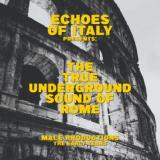
Double 12" release
The Story — From the Streets of Rome to the Male Productions Label
In the early 1990s, Rome lived in a kind of suspended moment. The city was still tied to its historic clubs, yet in the outskirts—inside abandoned warehouses, quarries along the coastline, and the wooded parks north of the capital—something new was beginning to stir. A nocturnal, constantly shifting movement fuelled by a hunger for freedom and a sonic curiosity that reached far beyond the mainstream.
Moving through this ferment was Francesco “Chicco” Furlotti. First an organizer of unconventional parties and underground nights, he soon became one of the driving forces behind Rome’s itinerant rave scene. Furlotti sensed that a wave of change was about to sweep across the city. It wasn’t just about parties: it was the rise of a culture, a new way of thinking about music, community, and belonging.
It was within those nights—later held with official permits, properly built sound systems, and an ever-growing crowd—that Furlotti recognized the existence of a distinctly Roman sound, and the need to capture it, preserve it, and give it tangible form.
So, in 1991, he decided to take a bolder step: to found an independent record label—small, determined, and far removed from the commercial logic that dominated at the time.
That was the birth of Male Productions.
Male was not a label like any other: it was a workshop, a gathering point, a creative hub where DJs, producers, friends, and wanderers converged. Within that environment, an artistic core took shape—Stefano Di Carlo, Leo Young, and Mauro Tannino, along with other collaborators orbiting around Furlotti. From their synergy emerged a project whose very name declared its mission:
The True Underground Sound of Rome.
The collective did not simply aim to release music; it sought to tell a story of Rome through sounds that defied categorization: house, techno, ambient, electronic mysticism, psychedelic visions… a unique blend, instantly recognizable, emotional, and experimental. The sessions unfolded using essential yet razor-sharp gear: Roland drum machines, analogue synthesizers, Akai samplers, stripped-down mixers. Few tools, endless imagination.
The first result of this work was the 12” Secret Doctrine, released in 1991 in an extremely limited run—around 500 promotional copies, according to accounts. The record captured something that until then had floated only in the air of Roman raves: enveloping atmospheres, deep rhythms, melodies built to make the mind travel far beyond the dancefloor. A sound that did not imitate what was happening in Detroit, London, or Berlin, but absorbed those influences and re-sculpted them with a distinctly Roman sensibility.
Yet, precisely because it was independent and detached from commercial circuits, Male’s output remained sparse: few EPs, few copies, irregular distribution. Over time, those records became rare artifacts—almost mythical objects within the Italian electronic scene. The legacy of Male Productions seemed destined to survive only in the memories of those early years, in the stories told after raves, and in the private archives of a handful of collectors.
Many years later, thanks to the almost accidental rediscovery of a few original copies of the first two releases issued by Male Productions, it became possible to undertake a meticulous process of recovery and restoration of the audio etched into those grooves, with the aim of preserving as fully as possible the quality and character of that unrepeatable sound.
We are therefore able today to present — at last in a complete and faithful form — the first two mixes created for Male Productions, now released on a double vinyl that brings back into the present the exact moment when it all began: the nomadic nights of the raves, Furlotti’s vision, the creativity of Di Carlo, Young and Tannino, and the sonic identity of a Rome in the midst of transformation.
This is not merely a reissue.
It is a historical document.
A fragment of a culture that changed the city.
The authentic sound of the Roman underground, finally returned to the world.


Khidi resident Laduka ninua aka Sevda steps into the spotlight with his first solo EP - Relocate My Fantasy, released on Fantastic Planet. Blending an analog touch with the pulse of modern progressive house, Sevda crafts a sound that just might define this decade.

Repress
In 1998 the release of Final Fantasy left an incredible mark on the electronic music scene. As a DJ I vividly recall the euphoria it sparked on dancefloors with its complex yet catchy Trance melodies - igniting a frenzy of hands-in-the-air moments. Fast forward to today and I've had the incredible opportunity to reimagine this timeless classic. My version pays homage to the original while infusing it with my Techno signature style, resulting in a track that's been met with overwhelming acclaim. (Thomas Schumacher)

Vol 1[28,99 €]
Googling “paradise house”, the first results to pop up are an endless list of European b&b’s with whitewashed lime façades, all of them promising “…an unmatched travel experience a few steps from the sea”. Next, a little further down, are the institutional websites of a few select semi-luxury retirement homes (no photos shown, but lots of stock images of smiling nurses with reassuring looks). To find the “paradise house” we’re after, we have to scroll even further down. Much further down.
It feels like yesterday, and at the same time it seems like a million years ago. The Eighties had just ended, and it was still unclear what to expect from the Nineties. Mobile phones that were not the size of a briefcase and did not cost as much as a car? A frightening economic crisis? The guitar-rock revival?! Certainly, the best place to observe that moment of transition was the dancefloor. Truly epochal transformations were happening there. From America, within a short distance one from the other, two revolutionary new musical styles had arrived: the first one sounded a bit like an “on a budget” version of the best Seventies disco-music – Philly sound made with a set of piano-bar keyboards! – the other was even more sparse, futuristic and extraterrestrial. It was a music with a quite distinct “physical” component, which at the same time, to be fully grasped, seemed to call for the knotty theories of certain French post-modern philosophers: Gilles Deleuze, Félix Guattari, Paul Virilio... Both those genres – we would learn shortly after – were born in the black communities of Chicago and Detroit, although listening to those vinyl 12” (often wrapped in generic white covers, and with little indication in the label) you could not easily guess whether behind them there was a black boy from somewhere in the Usa, or a girl from Berlin, or a pale kid from a Cornish coastal town.
Quickly, similar sounds began to show up from all corners of Europe. A thousand variations of the same intuition: leaner, less lean, happier, slightly less intoxicated, more broken, slower, faster, much faster... Boom! From the dancefloors – the London ones at least, whose chronicles we eagerly read every month in the pages of The Face and i-D – came tales of a new generation of clubbers who had completely stopped “dressing up” to go dancing; of hot tempered hooligans bursting into tears and hugging everyone under the strobe lights as the notes of Strings of Life rose up through the fumes of dry ice (certain “smiling” pills were also involved, sure). At this point, however, we must move on to Switzerland.
In Switzerland, in the quiet and diligent town of Lugano, between the 1980s and 1990s there was a club called “Morandi”. Its hot night was on Wednesdays, when the audience also came from Milan, Como, Varese and Zurich. Legend goes that, one night, none less than Prince and Sheila E were spotted hiding among the sofas, on a day-off of the Italian dates of the Nude Tour… The Wednesday resident and superstar was an Italian dj with an exotic name: Don Carlos. The soundtrack he devised was a mixture of Chicago, Detroit, the most progressive R&B and certain forgotten classics of old disco music: practically, what the Paradise Garage in New York might have sounded like had it not closed in 1987. In between, Don Carlos also managed to squeeze in some tracks he had worked on in his studio on Lago Maggiore. One in particular: a track that was rather slow compared to the BPM in fashion at the time, but which was a perfect bridge between house and R&B. The title was Alone: Don Carlos would explain years later that it had to be intended both in the English meaning of “by itself” and like the Italian word meaning “halo”. That wasn’t the only double entendre about the song, anyway. Its own very deep nature was, indeed, double. On the one hand, Alone was built around an angelic keyboard pattern and a romantic piano riff that took you straight to heaven; on the other, it showcased enough electronic squelches (plus a sax part that sounded like it had been dissolved by acid rain) to pigeonhole the tune into the “junk modernity” section, aka the hallmark of all the most innovative sounds of the time: music that sounded like it was hand-crafted from the scraps of glittering overground pop.
No one knows who was the first to call it “paradise house”, nor when it happened. Alternative definitions on the same topic one happened to hear included “ambient house”, “dream house”, “Mediterranean progressive”… but of course none were as good (and alluring) as “paradise house”. What is certain is that such inclination for sounds that were in equal measure angelic and neurotic, romantic and unaffective, quickly became the trademark of the second generation of Italian house. Music that seemed shyly equidistant from all the rhythmic and electronic revolutions that had happened up to that moment (“Music perfectly adept at going nowhere slowly” as noted by English journalist Craig McLean in a legendary field report for Blah Blah Blah magazine). Music that to a inattentive ear might have sounded as anonymous as a snapshot of a random group of passers-by at 10AM in the centre of any major city, but perfectly described the (slow) awakening in the real world after the universal love binge of the so-called Second Summer of Love.
For a brief but unforgettable season, in Italy “paradise house” was the official soundtrack of interminable weekends spent inside the car, darting from one club to another, cutting the peninsula from North to centre, from East to West coast in pursuit of the latest after-hours disco, trading kilometres per hour with beats per minute: practically, a new New Year’s Eve every Friday and Saturday night. This too was no small transformation, as well as a shock for an adult Italy that was encountering for the first time – thanks to its sons and daughters – the wild side of industrial modernity. The clubbers of the so-called “fuoriorario” scene were the balls gone mad in the pinball machine most feared by newspapers, magazines and TV pundits. What they did each and every weekend, apart from going crazy to the sound of the current white labels, was linking distant geographical points and non-places (thank you Marc Augé!) – old dance halls, farmhouses and business centres – transformed for one night into house music heaven. As Marco D’Eramo wrote in his 1995 essay on Chicago, Il maiale e il grattacielo: “Four-wheeled capitalism distorts our age-old image of the city, it allows the suburbs to be connected to each other, whereas before they were connected only by the centre (…) It makes possible a metropolitan area without a metropolis, without a city centre, without downtown. The periphery is no longer a periphery of any centre, but is self-centred”.
“Paradise house” perfectly understood all of this and turned it into a sort of cyber-blues that didn’t even need words, and unexpectedly brought back a drop of melancholic (post?)-humanity within a world that by then – as we would wholly realise in the decades to come – was fully inhuman and heartless. A world where we were all alone, and surrounded by a sinister yellowish halo, like a neon at the end of its life cycle. But, for one night at least, happy."


My Beautiful Dark Twisted Fantasy is the fifth studio album by American rapper and producer Kanye West. It was released on November 22, 2010, and featured the singles "Power", "Runaway" "Monster" and "All Of The Lights". Previously only available in the US, this version comes as a 3LP 180 gram vinyl w/ Frameable artwork and Collector’s Posters.

With her new “Let Me Be Your Fantasy” remix package, Anané continues to solidify her position as one of the most talented and charismatic recording artists in the world today. It’s never easy to take on a classic disco tune, which in this case is a song originally released in 1978 by The Love Symphony Orchestra. But working with producers Two Soul Fusion (Louie Vega and Josh Milan), Anané has crafted a new version of this song that retains the glamour of disco while also injecting a raw toughness and rhythm perfectly suited for today’s dancefloors. As is her custom on her remix packages, Anané has pulled together an outstanding team of producers to lay down their own very unique and high impact mixes, including Masters At Work, Dimitri From Paris, Mousse T, Blackchild and Moplen.
DISCHI presents Pablo Bozzi's new EP, Fantasy. After releasing multiple singles, the Berlin-based producer and DJ is back with three fresh tracks. Saddle up and get ready to ride with Sunday Rodeo, opening the EP with upbeat bouncy bass, hard-hitting 90s synths and a piano-driven melody. On Fantasy, an alluring voice leads, accompanied by potent kicks and zesty lines, sprinkled with a touch of acid. Closing the EP is Siempre, a dreamy, gleaming synthwave journey scattered with distant yet intimate voice samples. Once again, Bozzi demonstrates his undeniable ability to get dancefloors moving.


Repress!
Can you feel it? It’s the “Rush Fantasy”…Striking whilst he is hot is Berlin based Norwegian - Henriku. He follows on from his sought after “New York Popcorn” EP with another atmospheric house and minimal exploration, laced with distinct rave energy. The animated four-track vinyl lands on Oslo based, Det Gode Selskab, an ongoing chemistry between artist and label have led to this hedonistic trip, captivating club sounds from a producer in his element. Live out your fantasy, and your wildest dreams.
Taking the lead is “I Do”, a seductive trip of house nostalgia, driven by chunky drums and a pulsating bass line, teased into the trip by the provocative vocals. The title track “Rush Fantasy” strips things back mechanical minimalistic movements converse with a hypnotic sub heavy bass, swaying under the influences of the after party.
On the flip is another steamy encounter with “Pillow Talk”, the vintage samples go hand in hand with the rugged and raw energy of the track. Mysterious textures melt your mind in “Nicotine 4 U”, a smoky vibe for the small hours of the night.
Henriku’s free spirit lives up perfectly to the DGS ethos, a safe haven for artistic freedom, making this a perfect home for the “Rush Fantasy” experience. “It Feels Sooo Good!!”.
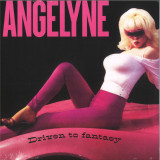
LA goddess Angelyne’s neon-draped sophomore LP Driven to Fantasy steers its way to Dark Entries as part of the ongoing celebration of our 15th anniversary! "Who is Angelyne? Angelyne is a voluptuous, blonde, self-made star who drives a hot pink Corvette; wears her clothes short and tight, and is influenced by Barbie and Marilyn Monroe.” In 1984, a series of billboards popped up in the LA area featuring the lone word “Angelyne” along with a mysterious woman posing provocatively. The campaign created an instant stir, making her one of the first icons who was "famous for being famous", and it led to the recording of her second solo LP. Released in 1986, Driven to Fantasy features 8 tracks of bubblegum-hued new wave with a distinctly LA flavor. On sassy titles like “Sex Goddess”, “Skin Tight”, and “Flirt”, Angelyne fused the glam and grit of southern Californian punk with flashy synth-pop style. This will be the first time that this cult record will be in print since its original release, and comes on pink Corvette-colored vinyl with a 2-sided poster featuring lyrics. Angelyne is more than just a billboard or a rock star; she’s been an actress, a visual artist, and even a political candidate. Celebrate a true Hollywood legend with this historic reissue.

Introducing the limited 7" re-release of the single by the legendary Bay Area group, Liason. Led by Morris 'Skid' Clay, Liason made their mark on the music scene with their distinctive sound and unforgettable performances. Recorded at Freeway Studios in Oakland back in 1977, this single captures the essence of the era and the spirit of the band.
Originally released on their independent imprint, 'A.L.C.' - named after three of the group's members astrological signs: Aquarius, Libra, and Capricorn - this single quickly became a cherished gem among fans and collectors alike. Now, decades later, it's being brought back to life for a whole new generation to enjoy.

Holly Lester’s Duality Trax Label has quickly become synonymous for its blend of future facing sonics and mind-warping melodies, served together with a healthy dose of nostalgia. A label just as focused on making dancefloor destroyers as it is exploring left-leaning, personal projects, it’s within this duality where the label has found its success, never afraid to shy away from b side oddities or tracks edging more towards good-old-fashioned-fun.
DUALITY5 steers towards the latter, with Manchester based DJ & producer Aiden Francis providing the serotonin on tap with three lively dancefloor cuts, including a huge remix from Italy’s Matisa. Aiden had a big 2022, releasing music on Magic Carpet, Gestalt and beloved music platform and label Houseum, solidifying himself as one to watch in the euphoric unity of house, trance and techno.
Title track ‘Plastic Fantasy’ is the star of the show, a suitably sassy roller that places everyone's favorite blonde icon front left of the speakers. Subtle old school strings contrast with alien electronics, providing familiarity in an otherwise unfamiliar world. A bubble-gum vocal then rolls in cheekily over a driving bassline and dynamic percussion - used in a way I’m not sure the original creators had in mind. ‘Future Proof’ meanwhile demonstrates Aidens’ knack for contemporary progressive house music. With warm pads, swirling sonic textures and moments of blissful euphoria, it’s energetic enough to move a dancefloor, but gentle enough for home listening too.
The record comes to a close with ‘Aquamarine’, with Aiden opting in favour of free flowing breakbeats and mind expanding synths, together radiating a feeling of warmth and hope for days to come. Italian DJ and producer Matisa is on hand to round the EP off with a bass-heavy rendition of ‘Plastic Fantasy’ a no-holds-barred speed garage licked stomper, with the power to lure smokers back inside the club with their feet firmly planted on the dancefloor.


Earth, Wind & Fire are obviously one of the greatest bands of all-time and both of these remixes are works of art in their own right. On the A side we have the much in-demand Blaze 'Shelter' remix of "Fantasy" which stretches this classic to 8.55 and finishes with an unbelievable Phillip Bailey acappella.
As though that wasn't enough we've put the much sought-after Masters At Work remix of "Can't Hide Love" - a staple records since its debut in 2002.

Melodize is bringing the world back on the dance floor with Lauer and his 4-track “K1m Fantasy” EP. Behind the label is Brooklyn-based DJ and musician Beartrax, who is known for his groovy yet moody compositions. Philipp Lauer, known as Lauer, is a true veteran in the electronic music sphere, with over 20 years of experience, yet his sound remains novel and fresh.
This time, Melodize and Lauer shape the world of a fantasy dance floor where everything is possible. “K1m Fantasy” starts with Lauer letting his confidence shine through as an experienced professional with a signature sound in the first track “Boss Electro”, which will inevitably showcase why he’s the boss.
The playful tune of “Rabbits” takes the listener on a journey through electro-induced synths much like the image of curious rabbits playing on a grass field. The eponymous B-side “K1m Fantasy,” with its steadily unfolding mellow soundscape, is an introspective piece exploring the fantastical world of the techno dance floor where all becomes one.
Lauer’s last treat is “Choirs,” where brassy exclamations take turns with a haunting choir of electronic voices, reminding us that unity is key to pleasure and existence.


Mit „Future Soul“ erweitert die Tedeschi Trucks Band ihren Horizont, ohne dabei ihre Wurzeln zu verlieren.
Produziert wurde das Album von dem genreübergreifenden Mike Elizondo (bekannt für seine Arbeit mit
Brothers Osborne, Dr. Dre, Twenty One Pilots und Turnstile). Darauf erkundet das 12-köpfige Ensemble
tiefere Grooves und reichhaltigere Texturen als je zuvor.
Der feurige Titeltrack „Future Soul“ besticht durch ein kraftvolles Riff und explosive Vocals – ein Beweis dafür, dass die Band nach wie vor pure Rockenergie entfesseln kann, wenn sie will. „Crazy Cryin’“
strotzt vor rohen Emotionen und verbindet Gospel-Harmonien und Blues-Grit auf klassische TTB-Art,
während „Who Am I“ einen nachdenklichen Ton anschlägt und Susan Tedeschis gefühlvolle Stimmgewalt
und Derek Trucks’ lyrisches Gitarrenspiel in perfekter Balance präsentiert.
Textlich blickt das Album ebenso nach vorne wie nach innen – es setzt sich mit Identität, Widerstandsfähigkeit und Hoffnung in unsicheren Zeiten auseinander. Elizondos Produktion fügt subtile moderne
Akzente hinzu – warme Bässe, vielschichtige Percussion und Raum für die Bläser und Hintergrundgesänge,
ohne dabei das organische Zusammenspiel zu opfern, das die Live-Magie der Band ausmacht.
Future Soul ist sowohl eine Neuerfindung als auch eine Bestätigung: ein lebhaftes neues Kapitel für eine
der beeindruckendsten Bands Amerikas.

Close Proximity lands on Second Sight with a four-track statement that spans the full spectrum of the label’s world. From upfront, peak-time club pressure to 90s-tinged house swing and Balearic-leaning warmth, the EP moves between late-night drive and sunlit release without losing momentum. Tight drums, bold hooks, and a vivid sense of space make it equally built for big systems and repeat listens — a focused package of energy, groove, and atmosphere.

Now a regular on the label, scene stalwart Chronicle continues his joyful journeythrough a landscape of dancefloor-friendly atmospherics.
A1 - Air Temple
Chronicle opens the EP with Air Temple, an immensely playful track with a superb 2-step hot pants break, programmed superbly with layers of depth generating anenergetic and immensely danceable tone, following the deliciously smooth late 90'sGLO-style intro. Lush female vocal samples perfect for the vibe are present and correctwhile micro melodies pan across the mix adding a wonderful texture.
A2 - Everblue
A delicately ominous intro with pads, whooshing samples and rustic synths precede adensely crafted slew of old-school analogue breakbeats laid in a subtle arrangement,bringing a blend of energy perfect for dancefloors and home listeners alike. Vocalsamples are programmed and twisted like instruments as Chronicle embarks on aspace odyssey with memorable melodies you'll keep discovering listen after listen.
AA1 - Encarta
Next up we have Encarta, which sets out intentions quickly in the introduction with abouncy, clean breakbeat which is quickly bolstered by a superb 2-step old school drumloop to create a pulsating energy. A myriad of samples are collected and fleckedthroughout the mix, while Chronicle's editing techniques mimic a skilled DJ cuttinganother break in and out to satisfying effect towards the back end of the main phases.
AA2 - Angular Momentum
Closing a diverse and uniquely atmospheric EP, Chronicle opens Angular Momentumwith a patchwork of synths and pads, ushering in a serene, simple high note melodyabove the driving breaks - detailed with distinctive cymbals that give the track's nameserious validity. With a slew of samples darting in both the foreground and backgroundfor the listener to enjoy, this is a piece which will live long in the memory.
Words by Chris Hayes (Spatial / Red Mist)


Never Sleep charity tape series focuses on London's pirate radio momentous rise with a true pioneer.
Femme enterpriser DJ Rap holistifies futurism with a cacophony of Ragga, Hardcore and Transatlantic soundscapes. A bass propagation filled with landmark pointillism, matriarchal musicianship and acidic House.
Soundclashing all machismo in sight, rugged mercurial stripped back bedlam for the peak time listener. Complexificating with hypnotic FX, "WHERES THE RAVE" signalling, flawless magnetica and hyperbolic genre splicing. Rap brings the "mood", hybrid soundsystem lashing and method only she fully enablises.
Literally sleeping inside and DJing on Fantasy FM from the age of 16 (you can hear her doing the ads at the start), this mix showcases an incredible time for the burgeoning sounds of the new millenia and the rise of pirate radio across London.
DJ Rap recently released her 6th studio album and is well known for her charity work and love of club culture. A female pioneer in the UK music industry and a long lasting staple in the Electronic history lexicon.
All proceeds go to Four Paws who help Animal Welfare across the UK

Begonia kehrt mit ihrem dritten Album ,Fantasy Life" zurück, das am 24. Oktober 2025 über Birthday Cake Records veröffentlicht wird. Nach dem für den Polaris-Preis nominierten Album ,Powder Blue" und den dazugehörigen EPs vertieft dieses Album ihren genreübergreifenden Ansatz - eine üppige, emotionsgeladene Mischung aus Alternative Pop, Soul, R&B und Trip Hop. Geschrieben unter der Sonne von Los Angeles und aufgenommen im eisigen Winter von Winnipeg, erkundet ,Fantasy Life" das Magische und Alltägliche und umarmt Illusionen, Freude, Herzschmerz und Hoffnung mit ungefilterter Intensität. Die Lead-Single ,So High" Geschrieben unter der Sonne von LA und aufgenommen im eisigen Winter von Winnipeg, erkundet ,Fantasy Life" das Magische und Alltägliche und umarmt Illusionen, Freude, Herzschmerz und Hoffnung mit ungefilterter Intensität. Die Lead-Single ,So High" stellt das emotionale Wechselspiel des Albums vor - verspielt und bekennend, selbstbewusst und unverfälscht. Wie immer steht Begonias unvergleichliche Stimmgewalt im Vordergrund und wechselt innerhalb eines Augenblicks von einem kraftvollen Gesang zu einem intimen Flüstern. In ihren Texten behandelt sie Themen wie psychische Gesundheit, queere Identität, Freundschaft, Selbstwertgefühl und Liebe mit gleichermaßen Klarheit und Chaos. In dreizehn Titeln lässt sie ihre Eigenartigkeit und Weisheit koexistieren und steht voll und ganz zu ihrem Wesen. Mit über 15 Millionen Streams, hochkarätigen Playlists und Presseberichten von CBC, Exclaim!, The Globe & Mail und Line of Best Fit hat sich Begonia als eine der markantesten Popstimmen Kanadas etabliert. Ihre Live-Präsenz ist elektrisierend, und mit Release-Shows in Toronto und New York, einer Headliner-Tournee durch Kanada im Jahr 2026 und einer gemeinsamen Headliner-Tournee mit The Bros. Landreth im Herbst in Großbritannien und der EU ist Fantasy Life bereit, weltweit für Furore zu sorgen.
2 Giant Punk Funk Cuts from the the Primitive Era of Chicago House from father of House Music on vinyl, Chicago legend Jesse Saunders, officially licensed, remastered and edited for the first time on 7". Star Creature's Tim Zawada had the figurative razor and tape out to slice up 2 of the best pieces from the Jes Say catalog currently under supervision by fellow Chicago legends The Numero Group. These cuts are some of the finest from the time after disco but before "House" - Early first wave funky and punky experimental box beaters.

Mit dieser besonderen Jubiläumsausgabe feiern Nathaniel Rateliff & The Night Sweats 10 Jahre ihres
explosiven Debütalbums. Mit den zeitlosen Hits, die ihren kometenhaften Aufstieg einleiteten, darunter
das unaufhaltsame „S.O.B.“, ehrt diese Veröffentlichung den rauen Soul, die Vintage-Grooves und den
kraftvollen Gesang, die Fans auf der ganzen Welt in ihren Bann zogen.
Auf dieser Anniversary Edition kommen elf bisher unveröffentlichte Demos zum Original-Album hinzu.
Dazu ein paar Worte von Nathaniel Rateliff selbst:
”Die Reise eines Songs muss irgendwo beginnen. Lieder können Ideen sein, die jahrelang schlummern.
Manchmal verstecken sie sich in unserem Inneren und es liegt an uns, uns ihnen zu öffnen und ihre melodische Geburt zu begrüßen. Hier sind elf ungehörte Ideen, die vor etwas mehr als zehn Jahren auf meinem
Dachboden entstanden sind. Ich hatte ein Mikrofon, ein zweikanaliges Interface, einen zweikanaligen
Vorverstärker und meinen Laptop. Ich habe diese Werkzeuge damals gerade gut genug genutzt, um die
Ideen in dem Moment einzufangen, in dem sie auftauchten.”
Erleben Sie das Album, das den modernen Soul-Rock neu definierte und eine Band bekannt machte, deren
Musik nach wie vor Herzen und Tanzflächen auf der ganzen Welt bewegt.

