'Tema di Susie' is one of the main themes from the soundtrack composed by Alessandro Alessandroni for the 1976 Italian noir Sangue di sbirro, known in English as Blood and Bullets, as well as Knell, Bloody Avenger (the Susie in the original title refers to the female love interest of the film's hero, who is on a mission to seek revenge for the gangland murder of his policeman father).
At once sweet and sentimental, haunting and melancholic, 'Tema di Susie' stands out from the other tracks in the film, which are more action oriented. Like the rest of the score, however, it exemplifies the way in which, during the '70s, Italian film composers created their own version of the sound of American blaxploitation cinema, with its groovy blend of funk, jazz, and soul. It is no coincidence that the film's director, B-movie specialist Alfonso Brescia, specifically requested music in the style of Shaft, the iconic film that defined that sound in 1971.
Though seemingly simple, 'Tema di Susie' is a perfect example of Alessandroni's style – in particular his unique ability to effortlessly blend groove and melody, funk and feeling, into one musical piece. So, we invited different artists with different backgrounds, influences and approaches to bring their individual take on this elegant and now timeless tune.
Neapolitan duo Fratelli Malibu have taken Alessandroni's melodic theme and woven it into a mesmerizing tapestry of rhythmic beats, world percussion and ethereal atmospheres. Drawing inspiration from funk/Afrobeat, synth-pop and Italo-disco, they've conjured a psychedelic-tinged, afro-cosmic groove that's bound to transport you to another dimension.
As the music unfolds, you'll feel like you've stepped into a vibrant, fantasy world. The breaks, outro, and intro are woven with a psychedelic thread that leaves you yearning to return once the final note fades away. And that's not all – they've injected an irresistible pop sensibility into the track with the use of drum machines and synths. The result? A rework that not only amplifies the dreaminess of the original but also seamlessly marries the past with the future.
We love the track so much that we decided to double the fun with a vocal retouch version, courtesy of the Italian funk/soul collective Banda Maje. Their vocalists, Chiara Della Monica and Cristina Cafiero, elegantly infuse cinematic and Balearic vibes into the mix, paying a wonderful homage to Fratelli Malibu's exquisite arrangement.
Buscar:father funk
- A1: The Bo Street Runners – Bo Street Runner (Single Version)
- A2: The Others – Oh Yeah
- A3: David John And The Mood – Bring It To Jerome
- A4: Mickey Finn And The Blue Men – I Still Want You
- A5: Ronnie Jones And The Night-Timers – I Need Your Loving
- A6: The Second Thoughts – Seventh Son
- A7: James Royal – Work Song
- A8: Alexis Korner’s Blues Incorporated – Taboo Man
- A9: The Trendbender Band – Unchain My Heart
- B1: The Syndicats – Crawdaddy Simone
- B2: The In Crowd – Things She Says
- B3: The Boys Blue – You Got What I Want
- B4: The Rocking Vicars – It’s Alright
- B5: The Artwoods – I Take What I Want
- B6: The Favourite Sons – That Driving Beat
- B7: The Moody Blues – And My Baby’s Gone
- B8: The Stormsville Shakers – Number One
- B9: The Union – See Saw
- C1: Rod Stewart – Shake
- C2: Laurel Aitken And The Soul Men – Last Night
- C3: Barry St John – Gotta Brand New Man
- C4: The Soul Brothers – Good Lovin’ Never Hurt
- C5: Lucas & The Mike Cotton Sound – Ain’t Love Good, Ain’t Love Proud
- C6: J.j. Jackson – But It’s Alright
- C7: Carl Douglas & The Big Stampede – Something For Nothing
- C8: Wynder K Frog – Turn On Your Lovelight
- D1: The Spencer Davis Group – Looking Back
- D2: Double Feature – Baby Get Your Head Screwed On
- D3: Scots Of St. James – Tic Toc
- D4: The Attraction – She’s A Girl
- D5: John’s Children – But She’s Mine
- D6: The Drag Set – Day And Night
- D7: Rupert’s People – Hold On
- D8: The Action – Look At The View
Modernists loved the latest R&B, blues and soul sounds coming from US cities such as Chicago, Memphis and Detroit and when British groups started playing their own interpretations in clubs and dancehalls they gained their own mod followings, their music remaining popular on the mod scene today.
Side 1 of this bespoke collection spotlights the British R&B scene and features a founding father of British blues Alexis Korner with the rare ‘Taboo Man’ alongside ace mod tracks from The Bo Street Runners, The Others, Mickey Finn and The Blue Men (featuring a youthful Jimmy Page on harmonica) and more.
Side 2 starts with British R&B groups developing their own sound by turning up their guitars, employing distortion, feedback and fuzz pedals to take the music in a new direction. Highlights include the Joe Meek produced ‘Crawdaddy Simone’ by The Syndicats (described as proto punk because of its ferocity), The In Crowd’s snarling ‘Things She Says’ and The Artwoods’ fuzz drenched mod favourite ‘I Take What I Want’ featuring future Deep Purple organist Jon Lord on organ.
Denny Laine (later of Wings) sings with The Moody Blues calming things down with some soulful beat.
Side 3 focuses on UK soul music - Rod ‘the mod’ Stewart backed by The Brian Auger Trinity takes on Sam Cooke’s ‘Shake’, the godfather of ska Laurel Aitken proves he’s also a natural soul man with his floor filling version of The Mar-Keys’ ‘Last Night’ and the amazing Barry St. John sings the funky ‘Gotta Brand New Man’. Popular club acts Lucas & The Mike Cotton Sound and Carl Douglas & The Big Stampede would regularly bring the house down at mod clubs and also feature.
Side 4 includes mod club dancefloor smashes from The Spencer Davis Group and Rupert’s People (AKA mod group Fleur De Lys) while mod heroes The Action go psychedelic with ‘Look At The View’. A moonlighting Jeff Beck of The Yardbirds plays on John’s Children’s ‘But She’s Mine’ and there are brilliant singles revered by freakbeat and psych collectors such as Double Feature’s ‘Baby Get Your Head Screwed On’ and The Drag Set’s ‘Day And Night’.
Rarities from The Trendbender Band and The Union (featuring Elmer Gantry) appear on vinyl for the first time.
Teichmann + Söhne’s »Flows« is not so much the result of a collaborative process as it is a process in itself. Over the course of nine pieces, the Gebrüder Teichmann—Andi and Hannes—and their father Uli repeatedly find common ground between the very different musical styles, sound aesthetics, and subcultural codes they have internalised throughout their lives. The source material out of which the album evolved was culled from several recordings of rehearsal sessions in preparation for the trio’s concerts that took place between the years 2012 and 2022. The three added only a few overdubs to those recordings but edited them rigorously to both preserve and transform the spirit of their unlikely collaboration. The combination of Uli’s background as a versatile jazz artist and multi-instrumentalist with his sons’ penchant for dub techniques, modular synthesis, and live sampling as well as their interest in electronic dance music take on ever-different shapes. »Flows,« released on the occasion of Uli’s 80th birthday, is as joyful, lively and free-spirited as its makers.
It took the three musicians decades to get together to jam. Uli and Lu, the mother of Andi and Hannes, ran the legendary Jazzclub Kneiting between 1978 and 1983 while he also made a name for himself as a musician who, besides jazz, is knowledgeable in a plethora of music styles from all over the world and has an instrument collection to match. Naturally, Andi and Hannes rebelled against this versatility by opting for simplicity. Already as pre-teens, they formed a punk band and once they got a whiff of the burgeoning techno scene, strayed even further from their father’s path. They eventually moved from their native Regensburg to Berlin where they made a name for themselves with a slew of releases on seminal labels like Disko B or Kompakt before starting to more regularly collaborate with musicians from the realms of Contemporary Music, Improv, and Sound Art. Even after Uli had finally contributed some saxophone licks to the brother’s 2011 »They Made Us Do It« LP, it indeed needed someone else to make them do it, i.e. finally get together to reconcile their musical differences in a creative way.
Finding out that the three had never performed together, Yoichi Osaki from Berlin’s iconic Miss Hecker venue, a focal point of the city’s so-called Echtzeitmusik (real-time music) and Improv scene, scheduled them to play their first concert on April 1, 2012. Even though the date was chosen deliberately, things got serious very quickly and this first joint concert proved to be the first of many. It also laid the foundation for »Flows« since the three would start recording their rehearsals. Revisiting the roughly 90 recordings, some of which clock in at a full hour, after ten years of playing with each other then started what Hannes describes as a »form-finding process.« It was a holistic one and involved all three of them, extending also to their choice of cover artwork, a piece created by Lu, who died in 2016 and to whom the album is dedicated. For the collage, she had used photos of the place where it all began, Regensburg, and the river that flows through it, the Danube. This made the piece, coincidentally created around the time Teichmann + Söhne started playing their first concerts together, correlate perfectly with the working process of the three musicians on a visual level.
Similarly, Teichmann + Söhne can be thought of as a human-musical collage. It is a meeting of three different musicians who all have in common that they have occupied alternative spaces and perfected a variety of musical styles and subcultural codes throughout their lives. When those flow into each other, this necessarily creates something that is as unique as the nine tracks collected on this album. While it is mostly Uli who takes the lead on pieces like the appropriately titled »Im Zwischen« (»In the Inbetween«), the brothers respond by live sampling his playing, thus serving as a creative interface between acoustic sounds and electronic responses. This in turn provides a framework in which Uli can improvise on a variety of acoustic instruments like the saxophone and the clarinet as well as a mandolin and glockenspiel or even percussion. This indeed makes their music flow—across different generations, between different musical ideas and genres, into previously uncharted territory.
This fall „Nice Girl’s“ highly anticipated follow up to „Ipsum“ is finally going to be out. 2 years have passed since „Ipsum" was released, back then the wild 15 track long ride has been paraphrased as „mind boggling, tongue in cheek, spiritual & danceable“ by RA.
Ruby‘s second Album titled „UPP“ is more lighthearted compared to its predecessor as she moves away from the somewhat darker, earthy tones of „Ipsum“ to create a fun, quirky, bleepy and fast universe where pitched vocals meet breakbeats and cosmic melodies.
The Album includes features by "Eden Burns" as well as "Michael Kime“, who as it happens is Ruby’s father ; ) Enjoy!
If you were to ask for a defining Habibi Funk track, there are a few that come to mind: from Fadoul’s “Sid Redad,” Dalton’s “Soul Brother” to Ahmed Malek’s “Omar Gatlato.” However, none are as widely connected with us at this point as Hamid Al Shaeri’s “Ayonha.” We heard the track for the first time when we were working on selecting tracks for your first compilation and we instantly loved it. We obviously had heard of Hamid El Shaeri’s music before, but only material from his Al Jeel phase when he was already the full-blown
superstar he is now.
Listening to his releases from the early 1980’s opened a whole new door for us. At the time, Hamid had just left Libya to pursue his career in Egypt via a detour in London, where he recorded his first album. Hamid’s distinct sound of the sound is quintessentially reliant on heavy synths and so it was particularly important to purchase these synths in a timely manner. “Whenever a new one synthesizer would come out, we would have to buy it immediately, otherwise someone else would get their hands on that sound.” London also played an important role for Hamid as a musical epicenter.
He fondly reminisces about the many live shows he attended there, including some of the biggest international musicians like Freddie Mercury and Michael Jackson. After returning to Cairo where he also recorded his following albums, he connected with SLAM! for the
release of his debut, laying the foundation of a collaboration that lasted for 5 albums. Luckily, we were able to connect with Hamid through our friend Youssra El Hawary, whose extensive network has opened many doors for us within the Egyptian music scene. We met Hamid for the first time probably in 2016 at his office / rehearsal studio in the outskirts Cairo. We were expecting a larger-than-life
character in-line with his status as a certified superstar, yet the actual person turned out to be very approachable and super easy to connect with. He liked the idea of an effort to amplify his early works again,
which, when originally released, were far from an economic success.
While he was down to assist with an interview and his blessing for the project he also told us that for any license we needed to speak with the original label SLAM! who released these songs, still held the rights and also remained in business over the decades though they didn’t actively release any new music. Hany Sabet had started SLAM! records in the early 1980s and focused on cassette tape releases, the
format that expedited the success of a new generation of record labels in Egypt. By the mid 1980’s, SLAM! had become one of the most successful and economically dominant record labels in Egypt, with Hamid El Shaeri being just one of their key artists, alongside Mohamed Mounir, Hanan, Hakim, Mustafa Amar and many more. Luckily, Hany Sabet turned out to be a friend of our colleague Malak Makar’s father, which probably helped to warm him to the idea of licen- sing “Ayonha” to this - in the scale of his world - tiny label
from Germany. Eventually “Ayonha” ended up becoming a widely successful release and either Hany or we brought up the idea of a full album dedicated to Hamid El Shaeri’s work on SLAM!.
"Maktoub Aleina” is the first single and will be released January 14th. Following the massive success of "Ayonha,” “Maktoub Aleina” is another mid-tempo groover with a beautiful, synth-forward melody, that brings together a lovely combination of soul, disco and Arabic pop music of the highest order, giving a taste of full album. The second single, “Yekfini Nesma Sotak” will be released January 28th and combines Hamid’s unique formula of soul and pop, held together by a catchy synth melody. “Yekfini Nesma Sotak” picks up the
pace a bit, making the uplifting mood of the track even more powerful. Third single, arriving February 11th, is “Dari Demou’ek,” one of the stand out tracks of Hamid’s early recordings done for SLAM! in the early 1980s. Dominated by a disco infused bassline, the track offers a lot of space of the funky production to shine while Hamid inserts his vocals at all the right moments. A masterpiece of disco touched by Arabic pop music.
Full album arrives February 25th. This release is dedicated to Hany Sabet, the founder of SLAM! and his wife Rosemary Jane Sabet (who
took the photos we used for the cover and the booklet), who sadly passed away during the time it took us to prepare the release.
Vinyl comes with an extensive booklet with an interview with Hamid as well as unseen photos
French Psych-JAZZ-Soul-FUNK original soundtrack for initial soft erotic drama from 1973, later re-edited into "Sex Revolution" hardcore! "Jeu de Dames, la libération des femmes" (1973), a film by director Christian Lara, is a vaguely subversive charm flick that won't be remembered for a long time. An amusing detail, however, is that Georges de Caunes, father of Antoine de Caunes, the famous French TV personality, plays the lead role alongside Danielle Palmero. It's just one of a number of naïve films that, without being erotic, is sufficiently olé-olé that it failed to find a place in theaters on the traditional circuit. Faced with this commercial failure, the unscrupulous producer at the time, anxious to save his investments, decided to re-edit the film so that it could be screened in the X-rated circuit. He rechristened the film "Sex Revolution" in a more racy style, inserting more hardcore scenes to appeal to fans of the genre. Although Georges de Caunes is no longer credited on the poster or in the credits of "Sex Revolution", he finds himself, in spite of himself, promoted to lead actor in a porn movie, much to the delight of his son Antoine de Caunes, who is still dreaming 50 years later of finally being able to watch this forgotten masterpiece of the 7th art. The film seems to be a dud (pn: the author haven't seen it), but as for the music, Jean Claudric is particularly inspired and offers us one of the best French jazz funk soundtracks, which would not blush at the comparison with the best of the genre, such as Michel Legrand's "Un homme est mort", or Jean-Pierre Mirouze's "Le mariage collectif", previously released by Born Bad. Four short tracks, one with pyschedelic touches, the secomd more funky, the third a bit soul-jazzy, the fourth a French typical melancholic-melodic one makes a hot 7"-EP.
If you were to ask for a defining Habibi Funk track, there are a few that come to mind: from Fadoul’s “Sid Redad,” Dalton’s “Soul Brother” to Ahmed Malek’s “Omar Gatlato.” However, none are as widely connected with us at this point as Hamid Al Shaeri’s “Ayonha.” We heard the track for the first time when we were working on selecting tracks for your first compilation and we instantly loved it. We obviously had heard of Hamid El Shaeri’s music before, but only material from his Al Jeel phase when he was already the full-blown
superstar he is now.
Listening to his releases from the early 1980’s opened a whole new door for us. At the time, Hamid had just left Libya to pursue his career in Egypt via a detour in London, where he recorded his
first album. Hamid’s distinct sound of the sound is quintessentially reliant on heavy synths and so it was particularly important to purchase these synths in a timely manner. “Whenever a new one synthesizer would come out, we would have to buy it immediately, otherwise someone else would get their hands on that sound.” London also played an important role for Hamid as a musical epicenter.
He fondly reminisces about the many live shows he attended there, including some of the biggest international musicians like Freddie Mercury and Michael Jackson. After returning to Cairo where he also recorded his following albums, he connected with SLAM! for the
release of his debut, laying the foundation of a collaboration that lasted for 5 albums. Luckily, we were able to connect with Hamid through our friend Youssra El Hawary, whose extensive network has opened many doors for us within the Egyptian music scene. We met Hamid for the first time probably in 2016 at his office / rehearsal studio in the outskirts Cairo. We were expecting a larger-than-life
character in-line with his status as a certified superstar, yet the actual person turned out to be very approachable and super easy to connect with. He liked the idea of an effort to amplify his early works again,
which, when originally released, were far from an economic success.
While he was down to assist with an interview and his blessing for the project he also told us that for any license we needed to speak with the original label SLAM! who released these songs, still held the rights and also remained in business over the decades though they didn’t actively release any new music. Hany Sabet had started SLAM! records in the early 1980s and focused on cassette tape releases, the
format that expedited the success of a new generation of record labels in Egypt. By the mid 1980’s, SLAM! had become one of the most successful and economically dominant record labels in Egypt, with Hamid El Shaeri being just one of their key artists, alongside Mohamed Mounir, Hanan, Hakim, Mustafa Amar and many more. Luckily, Hany Sabet turned out to be a friend of our colleague Malak Makar’s father, which probably helped to warm him to the idea of licen- sing “Ayonha” to this - in the scale of his world - tiny label
from Germany. Eventually “Ayonha” ended up becoming a widely successful release and either Hany or we brought up the idea of a full album dedicated to Hamid El Shaeri’s work on SLAM!.
"Maktoub Aleina” is the first single and will be released January 14th. Following the massive success of "Ayonha,” “Maktoub Aleina” is another mid-tempo groover with a beautiful, synth-forward melody, that brings together a lovely combination of soul, disco and Arabic pop music of the highest order, giving a taste of full album. The second single, “Yekfini Nesma Sotak” will be released January 28th and combines Hamid’s unique formula of soul and pop, held together by a catchy synth melody. “Yekfini Nesma Sotak” picks up the
pace a bit, making the uplifting mood of the track even more powerful. Third single, arriving February 11th, is “Dari Demou’ek,” one of the stand out tracks of Hamid’s early recordings done for SLAM! in the early 1980s. Dominated by a disco infused bassline, the track offers a lot of space of the funky production to shine while Hamid inserts his vocals at all the right moments. A masterpiece of disco touched by Arabic pop music.
Full album arrives February 25th. This release is dedicated to Hany Sabet, the founder of SLAM! and his wife Rosemary Jane Sabet (who
took the photos we used for the cover and the booklet), who sadly passed away during the time it took us to prepare the release.
Vinyl comes with an extensive booklet with an interview with Hamid as well as unseen photos
- A1: No Traffic Feat. Dank
- A2: Doin' It
- A3: Off The Tap Feat. Zay Bcuz & Nicx *Rhett Cuts
- A4: Not Ever Feat. Harleighblu
- A5: Star Struck
- A6: Relapse
- A7: Shine Your Light Feat. Sam
- A8: Brag
- A9: Circus
- B1: Snaps
- B2: Funny
- B3: Plaques Feat. Maine Soul
- B4: Get Down Feat. Amp Fiddler
- B5: Og Funk
- B6: Boom Bap Feat. Frank Nitt
- B7: Mentions Feat. Serious & Joz B
- B8: Calvin Vm Interlude
- B9: Showin' Love Feat. Kid Gotti
- B10: Good Life
Enter the realm of Illa J, the musical force shaking the foundations of the industry. His latest offering, 'No Traffic', is a testament to his boundless talent and versatility, showcasing his singing, production and rapping abilities on 19 tracks written and produced entirely by Illa J himself. This album marks his debut on BBE Music and a new chapter in his musical journey. Meet Illa J: a musical prodigy raised in a family of talented musicians. With a jazz bassist father and a gifted singer mother, it's no surprise that Illa J was destined for greatness. He's best known as the younger brother of hip-hop legend J Dilla and has made a name for himself as a former member of Detroit's iconic hip-hop group, Slum Village. With a lifetime of exposure to quality music and top-tier musicians, Illa J is a force to be reckoned with. Created amidst the chaos of the pandemic, Illa J's 'No Traffic' serves as a beacon of hope, a roadmap for creatives seeking their path. He enlists the help of Detroit legends Amp Fiddler, Frank n Dank, British soul sensation Harleighblu, and introduces the rising stars of Detroit, Serious, Joz B, Maine Soul, and more, all matching Illa J's energy and passion on the tracks. The focus track of the album, "Star Struck", is a prime example of Illa J's signature style. The astral pentatonic soundscape and precise drum programming transport you to new heights, while Illa J's beats, melodies, and bars will leave you in awe. 'No Traffic' is a musical journey that takes you to a place where Illa J's playful and versatile sound reigns supreme. The album is expertly mastered by Grammy-award nominated The Carvery Studio and is a refreshing experience of a true artist reveling in their artistry. Don't miss out on this once-in-a-lifetime opportunity to delve into Illa J's musical realm."
Mysteries Of The World is the stunning final studio album from legendary Philly supergroup MFSB. Expertly co-written and produced with the mighty Dexter Wansel, it features the untouchable, sparkling masterpiece "Mysteries Of The World". The whole album is truly exquisite; a stylish, classy collection of pure Philly soul and orchestral jazz-funk.
MFSB, an acronym for Mother, Father, Sister, Brother, was formed by producers Gamble & Huff of Philadelphia International Records. The band's roots can be traced back to the house band at the legendary Sigma Sound Studios, where they played on numerous hit records by artists like The O'Jays, Harold Melvin & The Blue Notes and The Stylistics. Mysteries Of The World comprises slick jazz-funk grooves, mostly penned by Wansel, who produced a fair chunk of the album in a similar style to his space-funk records. MFSB's smooth sound is retained but it receives a fresh, elegant and jazzy upgrade. While this album is as mellow as the rest of the latter-period MFSB recordings, it never forgets the group's soul music underpinnings.
Swaggering, well-timed horn blasts, sweeping strings and a percolating, hard thumping slap-bassline combine to devastating effect on amazing opener "Manhattan Skyline". It's a sexy mid-tempo instrumental which sets us up nicely for what follows. Essays could be written analysing the perfection of title track. Arguably the finest jazz-funk instrumental ever made, it's absolutely magnificent. Featuring musicianship of the highest calibre, the band play with their trademark tight discipline, cooking up a syncopating rhythm with an array of exploratory keyboard riffs wrapped around a punchy bassline sent from heaven. It sounds like house music, it's that ahead of its time. The string intro is sumptuous, hypnotic and divine and that's all before the beat hits. The track fuses classical, jazz and funk into a musical journey that you never want to end. Absolutely flawless, it's a dramatic disco dancefloor killer.
Says Dexter Wansel himself: "You know, of all the songs I wrote/produced/arranged for MFSB, this is for me the most different. I think it's an experiment in rhythmic, soft sonic synth and live string and harp combinations. I composed it in an effort to blend a funky groove, along with synthesis, and orchestral sounds. There are 3 synthesizers: Oberheim 4 voice, Polymoog, and of course Arp 2600v. And, as I remember, I recorded the track with the rhythm section, string, harp and flute players first. Then I added synthesis."
The profound elegance remains in abundance on the slinky, harp-laced "Tell Me Why"; Carla Benson's beautiful voice truly shines on this sophisticated cut. The side closes out in dramatic style with the string-drenched "Metamorphosis". It's a staccato, Blaxploitation groove workout featuring wah-wah guitar, creeping basslines, rich horn solos and soulful vocals drifting in and out of the mix. The bouncy, irrepressible "Fortune Teller" opens the B side in the bass-heavy orchestral funk style before the beautiful "Old San Juan" glides in, a Balearic-adjacent track with intricate arrangements, building its mellow soul groove around an atypical flamenco guitar hook. Melancholy, guitar-led instrumental "Thank You Miss Scott" is a real highlight, with gorgeous flute, string and percussive elements whilst closer "In the Shadow" works an otherworldly synth line into its bossa nova groove.
An essential record for fans of Philly soul and groovy jazz-funk, Mysteries Of The World was mastered for vinyl by Simon Francis and cut by Cicely Ralston for Alchemy at AIR Studios. The stunning artwork, the work of renowned illustrator Robert Giusti, was restored at Be With HQ to round out this beautiful reissue.
Attarazat Addahabia & Faradjallah's album came to us as quite a mystery. Our friends from Radio Martiko got access to the studio archive of the Boussiphone label and a reel labeled “Faradjallah” was among the items they had found there. After listening to the selection of reels they borrowed, Radio Martiko felt it was not a fit for their label and helped us licensing it from Mr. Boussiphone instead. We knew nothing about the band. We just had the reel with the music but very little information. What we knew was that the music was incredible and very unique. Gnawa sounds were combined with funky electronic guitars, very dense layers of percussions and female backing vocals more reminiscent of musical styles further south than Morocco. We started asking around whether anyone knew the band with no immediate success until we asked Tony Day, a musician from Morocco who helped us during our search for Fadoul’s family. His sharp memory came through once again, remembering all the names of the Attarazat Addahabia band members and even how to contact the bands singer and leader Abdelakabir Faradjallah. After visiting him at his home in Casablanca with our Moroccan colleague Sabrina multiple times, he shared his personal story. His father arrived in Casablanca from Aqqa at the age of six and his mother came from Essaouira. Abdelakabir was born in the neighbourhood of Benjdia in 1942. Abdelakabir Faradjallah studied fine arts in Casablanca, graduating in 1962. He also played soccer in the second team of "Jeunesse Societe One". His brother-in-law Ibrahim Sadr worked for one of the biggest football teams of the time in Morocco called "Moroco Sportive Union", which allowed him to travel to France occasionally. While Ibrahim was never part of the band he brought along a few instruments from trips.
Yet the majority of the instruments they could not afford to buy were build by Faradjallah and Abderrazak, Faradjallah's brother who passed away early. For instance they had built a Spanish guitar and a drum made of wood barrel and sheepskin by themselves.During the 1950s Faradjallah was booked as a singer for surprise parties with friends. He started to write his first songs including "L’gnawi" in 1967 and wanted to make people discover Gnawa culture, or maybe rather his take on the culture to be more exact. Faradjallah recalls his first interaction with the genre in the streets of the Dern neighbourhood, where he used to go to elementary school. Gnawa is one of the essential musical genres of Morocco. It combines ritual poetry with traditional dances and music linked with a spiritual foundation. Musically a lot of influences originated from West Africa as well as Sudan. Gnawa is usually played by a selection of specific instruments such as the qaraqab (large iron castanets centrally associated with the music), the hajhouj (a three string lute), guembri loudaâ (a three stringed bass instrument) and the tbel (large drums). People would put shells on their clothes and instruments and use incense at their parties. "Sidi darbo lalla - lala derbo khadem..." came from Gnawa verses Faradjallah used to sing when he was 14. The lyrics tackle a global (im)balance of power and the question of social status in this course. The band Attarazat Addahabia was formed in 1968. The original line-up included 14 members, all from the same family. They played their first small concerts here and there starting in 1969. Later in 1973 they performed bigger shows for instance at the Municipal Theatre followed by the "Al Massira Show" at Velodrome Stadium in downtown Casablanca. Their first album "Al Hadaoui" (the one you are listening to) was recorded at Boussiphone studios in 1972 and was never released before. Nobody seems to remember the exact reason why Boussiphone ended up deciding not to put the album out. The album's title track also served as the basis for Fadoul's "Maktoub Lah", who frequented the same circles as the band for some time.
Their shows sometimes could go as long as 12 hours, starting at 5pm in the afternoon, with an occasional break here and there. In the 1980s the band took a brief break. Faradjallah recalled the reason for that break like this: "Zaki, the bands drummer, had fallen in love with a young girl from Mohammedia. Soon after, he fell very ill. The group members were convinced that the girl had given him ‘s'hor’ (a kind of local Moroccan version of "black magic"). For four years, the whole group stopped playing. It was unthinkable to find another drummer to replace Zaki, even temporarily." So they waited four years for Zaki to "get back on his feet" before going back on stage. Apart from very few gigs here and there Faradjallah stopped playing music in the mid 1990s. Some members from the younger generations formed a new band and still play frequently to this day. Faradjallah runs a television repair shop coupled offerings beverages and snacks in the Belevedere /Ains Sbaa district of Casablanca. While Faradjallah was primarily a musician, he would work for the local cinema and paint their posters for new movies by hand and he designed all artworks and cover posters of the band.
And this eventually led to him participating actively in our first exhibition dealing with Habibi Funk’s work in Dubai 2018. He helped us by creating calligraphic complementations on large photo prints for that show.
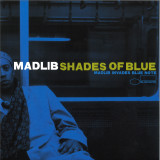
Der Sound von Blue Note wurde im Hip-Hop bereits in seinen frühen Tagen durch Samples und Remixe fest verankert. Aber als der DJ, Produzent, Rapper und Multiinstrumentalist Madlib 2003 die Blue-NoteArchive für sein Meisterwerk “Shades Of Blue” “plündern” durfte, legte er die Messlatte auf ein neues Niveau. Das Resultat war ein visionäres Album mit Remixen und Neuinterpretationen klassischer BlueNote-Aufnahmen von u.a. Donald Byrd, Bobbi Humphrey, Ronnie Foster, Bobby Hutcherson und Wayne Shorter.
- A1: N.y's Finest - Do You Feel Me (Club Mix)
- B1: Groove Committee - Dirty Games (Victor Simonelli Club Mix)
- B2: Street Players Vol. 1 - Make It Thru The Night
- C1: Sound Of One - I Know A Place (118 Bpm Mix)
- D1: Inner Faith - I've Been Changed (Club Mix)
- D2: International Connection - I Can't Help Myself (Previously Unreleased Instrumental Mix)
Vol.1[31,05 €]
In the words of Bill Brewster - DJ History
‘At the turn of the 1990s, there were few more successful New York house producers than Victor Simonelli. Under a dizzying array of aliases – Solution, NY’s Finest, Groove Committee, Critical Rhythm and Cloud 9 being amongst the better-known – the Brooklyn-born DJ/producer delivered a string of underground club hits during the city’s early ’90s house boom.’
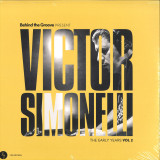
BTG presents “Victor Simonelli: The Early Years Vol 1” a collectors edition double Vinyl release - 2 X 12’s in each Vol
Launching the first Behind The Groove collectors edition vinyl series is New York’s finest Victor Simonelli with ‘The Early Years Vol 1 & 2’ double Vinyl releases. Featuring seminal house tracks such as Cloud 9’s ‘Do You Want Me’, Solution’s ‘Feel So Right’, Instant Exposure’s ‘Wanna Be With You’ and rare mixes of Raiana Page and EZ-AL, this collection brings together classic and rare Victor Simonelli cuts that reflect the early raw energy and buzz of the New York House scene. With ‘Vol 2” scheduled to follow shortly after, this is the most comprehensive collection of rare Simonelli cuts that firmly establishes his esteemed role in 90s House Music as well as introducing new fans to his inimitable sound.
Victor Simonelli is one of the early kings of NYC sampling In house music. The real deal - Victor danced at the legendary David Mancuso’s Loft sessions and developed a serious appreciation for good music. He interned for Arthur Baker at his renown Shakedown Studios (where Arthur worked with the iconic Afrika Bambatta on the seminal dance floor ’Planet Rock’ track) and went on to release hugely influential releases on seminal NYC labels 4th Floor and Nu Groove. Victor’s music was championed by the hugely celebrated iconic House Music DJ pioneers, Larry Levan and Tony Humphries at Paradise Garage & Zanzibar/WBLS/Kiss FM respectively.
Revered as a New York house heavyweight and prolific producer since the turn of the 1990s, Victor Simonelli grew up in Brooklyn, NYC, nurtured by a music loving family, with an avid record collecting father who also worked as a local party DJ. He took music lessons in piano, drums, guitar and bass, before discovering his first love, tuning into NY’s Radio Mix Shows on WBLS, WKTU and WRKS,98.7 Kiss FM) where he discovered the art of mixing and in his own words, ’I just simply got lost in the music’.
Graduating from NYC’s Centre For Media Arts, Victor got an internship in the legendary producer, Arthur Baker’s Shakedown Studios. Soon graduating to editing, mixing and then producing he worked for artists David Bowie, Quincy Jones, Debbie Harry, Sinead O’Connor and Talking Heads. Teaming up with fellow NYC producer Lenny Dee to become the Brooklyn Funk Essentials, they released records ‘Critical Rhythm’ and ‘Subliminal Aurra’ on 4th Floor before Victor went solo as Groove Committee releasing the classic ‘I Want You To Know’ on the legendary Nu Groove Records. Paradise Garage legend, Larry Levan broke ‘I Want You To Know’ rocking 2 copies on his last tour of Japan whilst King of NY House Music,Tony Humphries broke Victor’s new ‘Feels So Right’ across New York on his WBLS/Kiss FM Mastermix show and at his legendary Zanzibar club sessions. It was only a matter of time before Victor’s name became synonymous with quality House music ensuring a worldwide platform for his productions.
In the early 90s alongside his own productions, Victor Simonelli worked on high profile projects, including James Brown’s album, “Love Overdue” BeBe and CeCe Winans single featuring Mavis Staples “I’ll Take You There” and Quincy Jones’ “I’ll Be Good To You” featuring Chaka Khan and the legendary Ray Charles. Never straying too far from his clubland roots, Victor worked with Danny Tenaglia on his classic “The Harmonica Track”.
DJ gigs across the world started flooding in and Victor found himself recording for a dizzying array of labels including Tribal America, Sub-Urban, Bassline, King Street Sounds and Vibe, under a wide range of aliases. He also produced, wrote and remixed for artists such Nile Rodgers (Chic), Afrika Baambata, Hall & Oates, Frankie Knuckles, Kerri Chandler, Madonna and Michael Jackson. Famed for his own productions “It’s So Good” by Creative Force, “I Know A Place” as Sound Of One - the first release on Roger Sanchez One Records -, “Dirty Games” as well as the “Street Players Vol 1 EP”, Victor went on to set up Suburban Records with Tommy Musto and Bassline Records with two other partners. Notable releases on this label include “Do You Feel Me”, Connie Harvey’s gospel inspired, “Thank You Lord”, Urban Blues Project’s “Deliver Me”, Colonel Abrams “Not Gonna Let”, and Mone’s “Better Way”. Never ceasing to produce, DJ, run his own label and host radio shows like Groove Lift, Victor has worked with virtually every NYC producer and has nurtured a next generation talents including Angel Moraes, Jazz ‘N’ Groove, Urban Blues Project, Harlem Hustlers, Jay Jay and Julius Papp. Victor’s releases have also been used on M&S’s “Salsoul Nuggett” hit and Eddie Amador’s underground smash ‘House Music’.
In the late 90’s Victor launched his new Westside Productions, notable for the “Latin Impressions 1 & 2” releases, opened up a studio in Italy as he found himself increasingly working in Europe and now divides his time between New York and Italy. Suffice to say his unique sound of uplifting and spiritual music has kept him at the forefront of House Music and he is credited as one of its leading exponents with his string of classic releases and remixes.
Behind the Groove, branches out from its digital platform to embark on a programme of releases from the iconic pioneer producers of House Music. Esteemed for their high quality features and mixes that continue to explore, celebrate and venerate the contributions of highly respected, scene-shaping Labels, Artists, DJs and Special Events, BTG seeks to bring these talents and tales to the attention of the wider community. Unlocking the stories surrounding the pivotal roles they played and continue to play today in shaping the underground music scene we have come to know and love.
BTG presents “Victor Simonelli: The Early Years Vol 1” a collectors edition double Vinyl release, released on May 12th 2023. ‘Vol 2” follows on May 26th 2023 . These releases are the most comprehensive collection of rare Victor Simonelli cuts that firmly establish his esteemed role in 90s House Music and introduces new fans to his carefree sound.
- A1: Que Beleza
- A2: Let's Have A Ball Tonight
- A3: O Caminho Do Bem
- B1: Ela Partiu
- B2: Quer Queria, Quer Nao Queria
- B3: Brother Father Mother Sister
- B4: Do Leme Ao Pontal
- C1: Nobody Can Live Forever
- C2: I Don't Care
- C3: Bom Senso
- C4: Where Is My Other Half
- C5: Over Again
- D1: The Dance Is Over
- D2: You Don't Know What I Know
- D3: Rational Culture
Great retrospective on this Brazilian artists work!
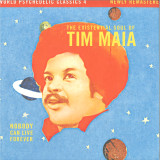
A fifteen track survey of Maia's 1970s recordings, completely remastered, commemorating what would have been the Brazilian musical legend's 70th birthday on September 28. The release is the fourth in the label's World Psychedelic Classics series, known for unearthing long neglected masterworks by Os Mutantes, Shuggie Otis, and one of the first compilations of African psychedelia and funk
Tom Zé and Faust collide in Domenico Lancellotti's "machine samba"
Domenico Lancellotti's SRAMBA reaches back to the roots of samba whilst completely revamping its blueprint, indoctrinating guitar and percussion-led rhythms with analogue synthesisers, courtesy of album producer Ricardo Dias Gomes.
The majority of SRAMBA was recorded over two months in The Cave - Domenico's home studio in Lisbon, the city both Brazilian ex-pats reside in, where the arrival of a couple of Russian-designed synths purchased by Ricardo influenced the direction of their initial experimentation: "Ricardo had these instruments, modular machines" remembers Domenico, "and I had my guitar, some percussion instruments. On the first day we started making sounds and recording them, and songs started to appear, sambas started to appear."
The son of a renowned samba songwriter, at home Domenico would watch his father play and compose. At parties, the adults would hand his father a tamborim (a small tambourine) and ask him to play along. "I grew up inside samba, it's my roots", he says. "For me, everything is samba, I bring it into whatever style of music I am making".
Domenico and Ricardo instantly saw how the synthesisers were not at odds with the sambas they were playing, instead they had a similar sound to its typical percussion instruments (ganza, repinique, surdo, tarol). What's more, they saw a connection with roots samba, the samba that existed before bossa nova and samba jazz came along. This was rhythmic samba, with grooves that could go on ad infinitum. "It's samba de clave, geometrically structured" says Domenico. "It's ostinato samba", adds Ricardo.
"Diga" is a great example of what their proposal is capable of, as what begins as a glitchy machine whirring into action soon turns into a glorious samba in which the gurgles and scratchy beats coming from the analogue equipment only add to the arrangement. Likewise, on "Tá Brabo" it's an aching melody from one of the synths that gives the guitar rhythm its needed counterpoint, and shows how the duo's greatest accomplishment is not in invention alone, but in creating a great samba album. It's an album that can go from the opening track "Ere" with its reverberant bass thud, mantra-like vocals and staccato rhythms to the string-accompanied "Nada Sera de Outra Maneira", a swooning samba that pays tribute to the Brazilian ensemble Tamba Trio, who along with Tom Zé's Estudando O Samba, Domenico names as the biggest influence on their treatment of samba.
Other important reference points are made clear on "Um Abraço No Faust". One of three instrumentals on the album its title riffs off a JoãoGilberto song, "Um Abraço no Bonfá", but whereas JoãoGilberto was giving a hug (um abraço) to bossa nova guitarist Luiz Bonfá, Domenico and Ricardo are giving theirs to the German avant-gardists Faust. "Quem Samba", with its horn section and dramatic melody give a whiff of Domenico's Italian ancestry, while "Descomunal" is devoid of rhythm whatsoever, guest vocalist Tori singing over a bed of electronic drums, cello and swirling synths, that highlights the duo's unwillingness to stick to a particular formula.
Both Domenico Lancellotti and Ricardo Dias Gomes are revered names within Brazilian music over the past 20 years. As a member of the +2's, with Moreno Veloso and Kassin, Domenico released a trio of albums on Luaka Bop in the early 00s that pioneered a new Rio samba sound with elements of funk and psychedelia. With Veloso and Kassin he would later form Orquestra Imperial, a big band intent on reviving ballroom (gafieira) samba, and that has worked with guest vocalists such as Seu Jorge, Elza Soares and Ed Motta. SRAMBA is his fourth solo album. Multi-instrumentalist Ricardo Dias Gomes first came to notice as a member of Caetano Veloso's band Cê which helped reinvigorate Caetano's career with a sound influenced by British new wave. As well as collaborations with Lucas Santtana, Negro Leo and Thiago Nassif, and work with his own group Do Amor, he has released a series of acclaimed solo albums that reveal a restless music-maker.
SRAMBA is a glorious showcase of the duo's style, uniting Domenico's playful lyrics and rhythmic, samba-rooted songs with with Ricardo's assured accompaniment of unorthodox textures and instrumentations. It may be a new language for samba, machine samba (samba de máquina), but as Domenico says, "samba da máquina is samba".
An intergenerational meeting of minds, Galaxy is the first collaborative EP from Meanjin, Brisbane musicians Sam Poggioli aka Sampology and Charlie Hill. Equal parts brain dance and body music, Galaxy’s seven tracks represent a vivid intermingling of 70s jazz-funk, fusion, machine-funk, Latin house and broken beat, accented by flourishes of minimalist composition. Considered as a whole, it evokes the possibility and potential of a space-age future where technology and nature exist in simpatico.
One of the most in-demand young jazz drummers in the Meanjin (Brisbane) music scene, Charlie started producing electronic music on his laptop three years ago. It was a vibe shift that hit him after several months spent immersing himself in Europe’s jazz and electronica scenes on the eve of the global coronavirus pandemic. After returning home, he approached Sam about recording some music together.
Sam, a well-travelled Australian DJ, producer and Worldwide FM radio host, was cautious about starting a new side project. However, when he heard his demos, he realised Charlie was blending rhythmic fundamentals he’d learned while completing a music degree with a beautifully wide-eyed approach to jazz-tinged electronica.
With Charlie on drums and Sam on MPC, they set about recording the songs on Galaxy, along the way discovering Sam’s mother taught Charlie visual art as a child. They also learned that Charlie’s mother plays with Sam’s father in the Queensland Symphony Orchestra, synchronicities which made their collaboration feel like it was meant to be.
As part of the Galaxy sessions, Sam and Charlie collaborated with fellow Australian vocalists Tiana Khasi and Merinda Dias-Jayasinha. On ‘Constant Call’, Tiana threads neo-soul/modern soul melodies through a backdrop that sounds like Burial on a future jazz tip. ‘Merinda’, on the other hand, sees Merinda laying a repeated Steve Riech-style vocal refrain over a man/machine instrumental accented by stargazed synths.
At the same time as they were creating Galaxy, Charlie was also busy recording his debut solo EP Yore, both of which are due for release in August 2023, respectively, through Middle Name Records.
Pink Blue Marbled Vinyl
Angelo is an EP, named after a car, featuring nine songs Brijean have crafted and carried with them through a period of profound change, loss, and relocation. It finds percussionist and singer Brijean Murphy and multi-instrumentalist/producer Doug Stuart processing the impossible the only way they know how: through rhythm and movement. The months surrounding the acclaimed release of Feelings, their full-length Ghostly International debut in 2021 which celebrated tender self-reflection and new possibilities, rang bittersweet with the absence of touring and the sudden passing of Murphy's father and both of Stuart's parents. In a haze of heartache, the duo left the Bay Area to be near family, resetting in four cities in under two years. Their to-go rig became their traveling studio and these tracks, along with Angelo, became their few constants. Whereas Feelings formed over collaborative jams with friends, Angelo's sessions presented Murphy and Stuart a chance to record at their most intimate, "to get us out of our grief and into our bodies," says Murphy. They explored new moods and styles, reaching for effervescent dance tempos and technicolor backdrops, vibrant hues in contrast to their more somber human experiences. Angelo beams with positivity and creative renewal _ a resourceful, collective answer to "what happens now?". Angelo the car is a 1981 Toyota Celica they got off Craigslist during their first stint in Los Angeles, where Murphy and Stuart have since settled. "Such a bro-y, `80s dude car, it's been super fun to drive around in a new town," Murphy says. "He's older than us, he's a classic, he's got a story." It is a spiritual vehicle with a cinematic appeal, first dropping them off in an alleyway for the scene-setting intro, "Which Way To The Club." The question is quickly resolved by "Take A Trip" as a cruising bassline mingles with crowd sounds, hand-claps, cuíca hiccups, whip-cracks, even a horse neigh. Brijean have found some club on this cross-dimensional trip - the kind of imagined space or chamber within one's self capable of "shifting a fraction of who you are," says Murphy. They wrote the track with the simple intention to be "as free as we could be," adds Stuart, likening the flip on the B section to a realm unlocked: "What if the world changed completely? You open the door to a new room." Next is "Shy Guy," a motivational anthem for the wallflowers among us. Murphy sets up the daydream: "We are in junior high, we're on the dance floor, what's going down, who is dancing, who is not, how are we gonna make them dance?" The narrator, the MC, hypes up the room as conga-driven rhythms bounce between languid synth and guitar lines. "Show me how to move...I feel something...I know you feel it too," Murphy sings sweetly, calling back to the opening lines of Feelings, and this time the audience chants it back. It is easy to picture Brijean performing this one - something they only got to do a handful of times until more recently, opening shows for Khruangbin and Washed Out, an experience they found informative. Murphy explains, "It was inspiring to be out there and let loose more. To see how people can expand their expression on stage gave me more liberty with how I viewed my musicianship. My role for so long was to be a backup percussionist, so why would I ever leave the drums, you know? But then after playing all these runs, you see these artists and realize you can, you have permission." "Angelo" and "Ooo La La" deliver the danciest stretch in Brijean's catalog to date. The title track adopts a deep house pulse replete with strings, hi-hats, and kicks. The latter opts for a funkier groove that foregoes verses in favor of warbled hums and extended breakdowns. What follows is perhaps the duo's dreamiest run, a comedown initiated with the honey-hued interlude "Colors" drifting into "Where Do We Go?", a tropicália reverie where Murphy contemplates the passage of time and space. It all culminates in "Caldwell's Way," a fond farewell to their Bay Area community - "a part of my life that I knew couldn't come back," says Murphy. Above shimmering organ sounds, lush strings, and the birdcall of their former neighborhood, she wistfully articulates the uncertainty of moving on by remembering the characters dear to them. There's the wisdom of their neighbor, Santos, who refused payment when helping them move out: "I'd rather have 100 friends than 100 dollars." And the song's namesake, Benjamin Caldwell Brown, a friend and club night cohort for many years. "I'm only miles away, maybe I'm just feeling lonely," the line resigns to warm nostalgia, and "Nostalgia" runs the closing credits to this healing and transportive collection.
- A1: #1
- A2: Get You Back Ft Maassai
- A3: War Ft Hprizm X Funkstörung
- A4: Stop Wars
- A5: Lost My House In France (N Yama Type Beat)
- A6: Rosenheim Cops Arriving (N Yama Type Beat)
- B1: I Went Left Ft Hprizm
- B2: 247 Turmoil Interlude
- B3: Majesty Ft Coppe
- B4: There Were Times Ft Anothr
- B5: Flâner Ft Her Tree
- C1: Consume Land Flea Market
- C2: 83128 Halfing (N Yama Type Beat)
- C3: Crime Drift (N Yama Type Beat)
- C4: Ingozi Ft Silo Inf3Rnx
- C5: Someone Killed Indiana Jones Rip (N Yama Type Beat)
- D1: Neon Soul Ft Taprikk Sweezee
- D2: Unpopular Nostalgia
- D3: At 7Am (N Yama Type Beat)
- D4: Countryside
Welcome to the "Consume Land Flea Market". This is the atmospheric setting and at the same time the luminous title of the debut album of young producer Noayama. "It centers on the contradiction between turbo-capitalist consumerism and the desire for vintage stuff in all kinds of shapes and colors to escape reality for a bit. I think it's quite a nice and suitable metaphor for the position my generation is in right now" says the 21-year-old producer, musician and interdisciplinary artist.
On about 40 minutes, Noah Berger, who grew up near Munich, spans a wide musical arc with his alter ego Noayama. He combines Hip Hop aesthetics with playful Electronica and acts skillfully in the interstices of Pop. Hints of 70s Funk hedonism, Old-School House vibes and modern J-pop sensibilities can also be found on "Consume Land Flea Market." The binding agent of the album is Noayama's "Punk Attitude" which comes through clearly on his tracks and beats and is an elementary part of his producer DNA. "I just like to drift, it's very central to the way I work" adds Noah.
Just as important for him are intergenerational collaborations, which adorn his debut work in numerous ways. An illustrious round of artists is therefore represented on CLFM. It starts with young female rap artist Maassai from the New York underground scene who can be heard on the pulsating opener "Get You Back". Also from N.Y.C is Hprizm, a member of the legendary avant-garde rap group Anti-Pop Consortium, who is featured on the dark and gritty "I Went Left" and the bouncer "War." Funkstörung is also involved here. Not too much of a coincidence as Noah has been encouraged since his teenage days by his father Michael Fakesch, one half of the Glitch-hop pioneers who became famous in the late 90s. With "The Legendary Godmother of Japanese Electronica" Coppe' on "Majesty" and the German singer-songwriter her tree on the song "Flâner", introverted pieces have also found their place on CLFM. In addition multilingual verses with Silo Inf3rnx from the townships in Gugulethu on "Ingozi" and on top "the homies from the neighborhood" Anothr and Taprikk Sweezee who give the album further facets through their contribution.
Noayama combines elements and working methods of the last five decades in a relaxed manner and bundles them into a genuine piece of work. Emblematic of this approach is the choice of features. So is the gear he uses. He incorporates old synths (Roland Jupiter 8, Nordlead) and drum machines (Roland 808, Roland 909) with playful ease with common software tools. It's also pretty convenient that he's currently studying Digital Arts at the Kunstuni Linz. In fact, his semester project is the visualization of his own album which means that every single track and every interlude gets its own video. Well, Noayama is just a gambler.
Far Out Recordings proudly presents laid back Brazilian groove maestro Joao Donato’s synth-heavy collaboration with his son Donatinho. Sintetizamor sees the father-son duo jovially hurtle through space and time across ten tracks of sparkling pop, Brazilian boogie and club friendly disco-funk.
Joao Donato has been a hugely influential figure in the development of Brazilian music since the mid-1950’s. He’s played and recorded with virtually every one of his fellow Brazilian masters. Many of his own albums (of which he’s recorded over three-dozen) are regarded with such adulation that ‘cult-favourites’ doesn’t quite cut it.
Aged 82 at the time, Donato’s collaboration with his prodigious, synth obsessed son Donatinho - whose keyboard talents have been called on by the likes of the late Gal Costa, Djavan and Donatinho’s contemporaries such as Diogo Strausz - was originally released back in 2017, as a limited Brazil-only release.
For Record Store Day 2023, Sintetizamor will be available on vinyl (for the first time outside of Brazil) from participating stores.
Avid Habibi Funk listeners may be familiar with Libyan composer / producer Najib Alhoush, who’s track “Ya Aen Daly” - the Bee Gee’s “Stayin Alive” cover - was included in our second compilation. While the original track never excited us, Najib’s version managed to strip it from its pop approach that had taken over disco during the genre`s peak. At that time, disco tracks mostly were aiming to appeal to the widest audience possible. Najib had turned the original track into something different and very unique. Upon further research we found that Najib was actually the singer and founder of The Free Music band alongside Fakhreddin, Salim Jibreel, Abdulrazzak ‘Kit-Kat’, Mukhtar Wanis and Mohameed Al Rakibi.
Initially, we only licensed Najib Alhoush’s “Ya Aen Daly” from Yousef Alhoush, Najib’s son, who was pleased to hear that there was interest in his father’s music form someone abroad. In the process of exchanging and learning about Najib’s music and career, our understanding was that The Free Music only recorded the one album. This couldn’t be further from the truth, in fact, there were ten albums produced by the group, all impressively coherent with a clear influence from disco, soul, funk and reggae.
The Free Music album was probably the longest it ever took us to gather information, photos and musical source material in a good enough quality to be reissued. This is largely due to the complicated political situation in Libya, compounded by the fact that Libya is still largely cut off from international payment systems, so getting an advance payment to the right person can be a process that takes weeks. The same goes for getting master tapes to a studio abroad and afterwards back to Libya.
When we look for music that works under the umbrella of Habibi Funk, we often come across albums where bands experimented with influences from Soul, Jazz, Funk, Disco and more, usually on a single track or two but then they often go down to a different path for the rest of the album. This was not the case for The Free Music. All their albums are fully dedicated to their unique blend of Disco, Reggae and Funk and it feels that when we made the selection for this album, we could have chosen a completely different number of tracks and the album would be been equally strong.
The lead-off single is the stupendously groovy “Ana Qalbi Ehtar” out February 3rd along with LP pre-order to capitalize on Bandcamp Friday. From the outset, the rhythmic strumming of the funkified guitars give way to the galloping drums and bass, opening up to anthemic vocals and rounding out with a blistering guitar solo, a certified disco-funk classic through-andthrough.
Second single, out February 17th is the disco slammer “Hawelt Nensa Ghalaak.” Guitars, harmonized horns, synths and bouncing bass and drums collide w/ spaced out vox to make the track a dancefloor sureshot for any party.
Third single is “Mathasebnish,” out March 3rd, a pure disco-funk slammer if there ever was one – with stabbing horns, funky bass riffs, a riding rhythm guitar and anthemic vocals, rounded out with stunning flute and guitar solos – the track will surely be on repeat along with the arrival of warmer weather.
Album focus track “Men Awel Marra” is another standout disco-infused tune, showcasing the immense creativity out of Najib and The Free Music. This past summer we finally had the opportunity to get together with Yousef face-to-face at a coffee shop in Istanbul’s central Istiklal road together with our friend Anas El Horani. Yousef told us the whole story of how his father got into music, the start of the band and his father’s continued conflicts with the Gaddafi regime that probably kept his career from becoming even bigger. As always, both vinyl and CD come with an extensive booklet featuring background on The Free Music and Najib Alhoush, including words from Najib’s son, Yousef, as well as unseen photos, cassettes and more.
An elusive Soul/Funk masterpiece from mid-70s Lakeland, Florida. The Riley siblings; Carrie, Horace & James laid the foundation for the two songs they would bring to Auburndale's custom recording studio, Central Sound to be released on the Nashville/Florida label, 'Music City'. Jerome McNeil, William Freeman, Bruce Bolden & Sam Graham would complete the outfit and be collectively known as 'Carrie Riley & The Soul Fascinations'
It's been 15 years since Now Again & Jazzman showcased the Deep Funk rarity 'Super Cool' on their Florida Funk compilation, however it's James Riley's group harmony B-side, 'Living In A Lonesome House With You' that has remained at large, unknown, collectively showcasing the talent encapsulated by The Fascinations.
'During the early 70’s The Riley family members who formed the Fascinations (originally the Soul Fascinations), James, Horace and Carrie along with a few friends, were destined to develop and perform musically as music flowed through our veins. Our father was a musician who played piano and sang the blues. As children we gathered around an old upright piano after dinner to hear our father play and sang. By the time I was 14 and my brothers, James and Horace were 16 and 17, we had all learned to plan an instrument. My focus was on vocals with many role models to learn from in the music industry such as; Dianna Ross, Chaka Khan, Gladys Knight and Mable Staple. My brothers loved the Commodores, Kool and the Gang, Rick James and Earth Wind and Fire. The Isleys’s were a favorite of ours also. James was the driver of our success in recording as he made sure we practiced for hours on end. Sometimes we would practice popular songs until 2 in the morning. James began to write songs and develop melodies that he would share with Horace and I. We would make suggestions for revisions such as arrangements and melodies. Before long we traveled to Miami where we recorded, Super Cool which was our title song, 'Living in A Lonesome House' and a few other tracks. 'Super Cool' is a song that is personal to me. It is a song about relationships and trust, while the Lonesome house song was about love affairs and breakups. So much great music came out of the 70’s. I am grateful that our music contributed to the industry during a time when great music was about love and relationships.
Lovingly
Carrie'