Search:father s children

Styles
All
  • 1
Father's Children - Hollywood Dreaming / Shine On

South Street Soul are on a roll with another fantastic re-issue, this time championing two singles by US Funk band Father's Children. Originating from Washington DC, the band rose to prominence in the mid-to-late 70's, releasing a debut album on Mercury Records, which Wayne Henderson of The Crusaders produced. Notice to collectors and diggers; this takes the two killer tracks from the album nicely replicating the 1979 original 45, which would set you back over £100.

On the A-side, 'Hollywood Dreaming’, is a laidback revivalist soulful groover that will undoubtedly give your hips and shoulders a shuffle. On the flip, feel the funk with ‘Shine On’. A commanding slap bassline runs throughout the track with harmonised vocals and stabbing horns. Lace them up people, it's time to cut some rug!

In Stock

On Stock and ready to ship

14,50
Father's Children - Hollywood Dreaming / Got To Get Away 7"
  • A1: Hollywood Dreaming
  • B1: Got To Get Away

Father's Children waren eine Funkband, die sich Ende der 1960er aus der in Washington D.C. ansässigen Doo-Wop-Formation The Dreams entwickelte. 1979 nahmen sie als achtköpfige Band unter der Leitung von Wayne Henderson (The Crusaders) und Augie Johnson (Side Effect) ihr selbstbetiteltes Debütalbum auf, an dem auch Bobby Lyle (The Genie) und Dean Gant (Keni Burke) beteiligt waren. Die beiden Keytracks des Albums - der oft gesampelte, britische Rare-Groove "Hollywood Dreaming" und der Two-Stepper "Got To Get Away" - werden hier erstmals zusammen auf einer 7" präsentiert, dazu noch erstmals in den vollständigen Albumversionen.

pre-order now20.06.2025

expected to be published on 20.06.2025

15,92
WE ARE WINTER'S BLUE AND RADIANT CHILDREN - "NO MORE APOCALYPSE FATHER"

WE ARE WINTER'S BLUE AND RADIANT CHILDREN (WAWBARC) is the new quartet of Mat Ball (BIG|BRAVE), Efrim Manuel Menuck (Godspeed You! Black Emperor, Thee Silver Mt. Zion), and Jonathan Downs and Patch (both Ada). On "NO MORE APOCALYPSE FATHER" they present six modal lullabies drenched in seared distortion, slathered across striding electronic pulses. Ball and Menuck began creating music in and for the bleakest moments of Montréal winters: "We're honoring that idea of winter, when you come inside and your house is warm, a place that only exists because of how cold it is outside," says Menuck. They later recruited Downs and Patch to flesh out their initial ideas. Menuck met them in 2015 when recording Ada's final album at Montréal's Hotel2Tango _ where they reconvened to make this record. "NO MORE APOCALYPSE FATHER" is an album about witnessing bleakness from a place of safety. Carrying newfound descriptive depth, thanks to the quartet's open-ended songs freeing him from writing in meter, Menuck likens his lyrics to photorealism. On opener `Rats and Roses' he sings of an unnamed city struck by an unknown cataclysm, but the details are local: specifically, his neighbors inadvertently poisoning birds when tackling a rat infestation. It's backed by blown out synths and guitars reaching a soaring crescendo. "Seeing things from a distance and not being able to intervene happens a lot on the record," Menuck explains. "If you're a feeling and thinking person, that's just part of the human condition. We watch horror unfolding from afar, unable to do anything concrete to change it." A powerless witness, able to describe but not intervene. `Dangling Blanket From A Balcony (White Phosphorous)' references Michael Jackson holding his child over a hotel balcony in 2002_the bizarre media spectacle still lodged in Menuck's psyche. This and the album's closing track also elegize white phosphorous, a technology of war designed to light up battlefields but capable of inflicting horrific burns on those it touches. Illumination and horror in one, here underpinning scenes picturesque and terrifying. "The last song `(Goodnight) White Phosphorous' is deliberately like a lullaby," says Menuck. "Written from the viewpoint of watching white phosphorous falling outside your window." Scorched and tarnished and laden with harrowing imagery, "NO MORE APOCALYPSE FATHER" is also a record bathed in light: the bewilderment of hopeful spirits witnessing despair, watching a blizzard of distress unfold outside from a place of relative shelter and comfort. You could call that emotional ambivalence, maybe numbness. But those words are too passive for the weight of conflicted feeling resonating through the album. "I never know how I feel on an overcast day when the sun is still bright despite the grayness and the light is very flat. The colours become more saturated, and you see a single flower, say a morning glory, whose colour is so vibrant beneath the gray, I don't know if that's a lovely sensation or a terrible sensation. It's both," says Menuck.

pre-order now13.09.2024

expected to be published on 13.09.2024

22,27
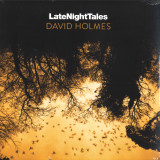
David Holmes - Late Night Tales: David Holmes 2x12"
 
19

DJ and producer David Holmes is welcomed to the Late Night Tales fraternity with an evocative collection of personal songs and music, peppered with exclusive new material and rare gems. By now, I think we all know David Holmes, right There's acid house Holmes, with bone-rattling Chicago jams and Detroit destroyers, break-digger Holmes responsible for the grittily shaking 'Let's Get Killed' and seminal Essential Mix compilation (which brought Sixto Rodriguez to people's attention, and then there's soundtrack Holmes. His most enduring and vital source of musical inspiration - cinema - plugged into David's rst solo record 'This Film's Crap, Let's Slash the Seats' and inspired 2000's 'Bow Down to the Exit Sign', created as the soundtrack to a not-yet-made movie. Ofcial soundtracks have been bountiful, including scores for Soderbergh's Out Of Sight and Ocean's trilogy, '71, Hunger and Good Vibrations. In a series of personal songs sung by himself, David's last solo album 'The Holy Pictures' explored inuences of La Düsseldorf, The Jesus and Mary Chain and early Brian Eno. His Unloved collaboration with Keefus Ciancia and Jade Vincent then took us on a musical journey full of raw 60s pop-noir, psychedelia and French Ye Ye with a contemporary twist. Somehow he's also found time to produce records by Primal Scream and Jon Spencer Blues Explosion. Unsurprisingly, for someone au fait with matters cinematic, this Late Night Tales conjures up its own mindmovies. It's not only packed with the judiciously selected nuggets for which his mixes are noted but also stuffed with original material, including collaborations with BP Fallon and Jon Hopkins and an amazing new reading of 10cc's 'I'm Not In Love' by Holmes-produced Song Sung. In fact, there's a Celtic thread running through the whole journey with Stephen Rea's reading of an extract from Seamus Heaney's AENEID BOOK VI - Elsewhere Anchises. Among the other gems included here are David Crosby's lush 'Orleans', Buddy Holly's celestial 'Love Is Strange' and the Children Of Sunshine's 'It's A Long Way To Heaven'. David Holmes loves music. It's a way of expressing the sometimes inexpressible or the inconsolable, a questing desire to nd out just what is over the next hill. It's no surprise to learn he's a keen walker. Always on the move, headphones on, lost in some reverie or piece of music, the soundtrack to his life, the stuff that feeds his imagination. I walk a lot. It's amazing for listening to music: your phone or your emails aren't going and you're just in the forest listening to music. It's so intimate. Anyway, I was listening to the KLF's Chill Out album, which still sounds amazing, but it triggered an idea with concrete sounds through travelling and movement. And one of the things I was trying to do was to use this idea not just break up the moods but also as a metaphor for moving through life and arriving in different destinations or arriving at different stages in different parts of your life. Memory, Love, Living, Family, Friendship, Healing, Death and The Afterworld are some of the themes I wanted to explore within this record. Although these strong themes and tracks are personal to me, I also wanted it to be a great listen that was unpredictable yet had a seamless ow - a journey that was personal to me yet to the listener a great compilation of music that they may or may not have heard before. I hope I've succeeded in the later.' David Holmes 2016

out of Stock

Order now and we will order the item for you at our supplier.

28,15

Last In: 19 months ago
Tanda Tula Choir - Tanda Tula Choir

Tanda Tula Choir

Tanda Tula Choir

12inchBUSHRECORDINGS000LP
Hippie Dance
24.11.2017
 
27

Recently, Superpitcher was invited to go on a safari in South Africa. He bought a custom made safari hat at his favorite milliner in Cologne (Ju¨rgen Eifler) and set off with big eyes and a pair of binoculars. It was wild and wonderful and he saw many exotic (and big!) animals, even a leopard in a tree that told him the secret of the universe. He forgot what the leopard said because his mind was still playing and replaying the sound of what he heard on the first night of his arrival - the hypnotic and moving sound of the voices of Africa, the voices of the wonderful Tanda Tula staff choir. There, the choir members work during the day at the camp and at night entertain the guests with their captivating voices and energetic dancing. So impressed was he with their songs and beautiful Shangaan language that he decided to record a CD for them to sell in the shop at their camp and now this precious recording is also available through Hippie Dance / Bush Recordings on vinyl and CD for you in whatever wherever camp you are. The LP of the Tanda Tula Choir comes with a very pretty poster.

out of Stock

Order now and we will order the item for you at our supplier.

16,60

Last In: 6 years ago
Ennanga Vision - Ennanga Vision
  • A1: New Sunshine
  • A2: Otims War
  • A3: Like A Football
  • B1: Killing Ghosts
  • B2: Happy Birthday Wonder (Acholi)
  • B3: Abbanna Kange (Children Of My Father)
  • B4: Essembi (Money)
  • C1: All This Blue
  • C2: Amadinda Eyeball
  • C3: Kampala Auto Chase
  • D1: All This Blue
  • D2: Amadinda Eyeball
  • D3: Kampala Auto Chase
also available

2x Black Vinyl[21,81 €]


Deconstructed royal-court music from the forgotten kingdoms of the Buganda, reconstructed electronic wedding music, fluorescent pink African pop, crunched 8-bit drum machines and a 10-foot long monster xylophone are just a few of the many sounds of Ennanga Vision. This post-modern African soundtrack follows London producer Jesse Hackett's heady musical journey into the heart of Uganda - recording with chief collaborator, multi instrumentalist and singer Albert Ssempeke and featuring assorted vocal legends from the north of the country. The music blends a fully electronic sensibility with unusual, hand-crafted, African one-string fiddles, a 200-year-old harp and an enormous, group-played xylophone. It mixes traditional Ugandan folk songs and modern pop forms into a new PLASTIC ORGANIC VISION.
Hackett is influenced as much by the music of the African continent as he is by European electronic compositions and soundtrack scores. The sounds of hauntingly-dark vocoded vocals, crushed electronics, and poly-rhythmic drum machines sit alongside chiming African fiddles, rippling harps and children's laughter. He is a member of Owiny Sigoma band having sung on and co-written a lot of their work spanning three albums. He is also touring keyboard player for the Gorillaz and has released records on Stones Throw, Honest Jon's and DEEK Recordings, to name a few. Albert Ssempeke is the son of a prestigious royal court musician who played in the days of the old Buganda kingdom - one of more than twenty five musical siblings, Albert is simultaneously an educator, performer and preservationist of this intricate and complex traditional form of music. Here he plays over ten traditional Ugandan instruments including Amadinada (xylophone), Ngindidi (fiddle), Endongo (harp), Ennanga (flute) and many more

pre-order now02.06.2017

expected to be published on 02.06.2017

27,19
Ennanga Vision - Ennanga Vision
  • A1: New Sunshine
  • A2: Otims War
  • A3: Like A Football
  • B1: Killing Ghosts
  • B2: Happy Birthday Wonder (Acholi)
  • B3: Abbanna Kange (Children Of My Father)
  • B4: Essembi (Money)
  • C1: All This Blue
  • C2: Amadinda Eyeball
  • C3: Kampala Auto Chase
  • D1: All This Blue
  • D2: Amadinda Eyeball
  • D3: Kampala Auto Chase
also available

2x Colored Vinyl[27,19 €]


Deconstructed royal-court music from the forgotten kingdoms of the Buganda, reconstructed electronic wedding music, fluorescent pink African pop, crunched 8-bit drum machines and a 10-foot long monster xylophone are just a few of the many sounds of Ennanga Vision.

This post-modern African soundtrack follows London producer Jesse Hackett's heady musical journey into the heart of Uganda - recording with chief collaborator, multi instrumentalist and singer Albert Ssempeke and featuring assorted vocal legends from the north of the country. The music blends a fully electronic sensibility with unusual, hand-crafted, African one-string fiddles, a 200-year-old harp and an enormous, group-played xylophone. It mixes traditional Ugandan folk songs and modern pop forms into a new PLASTIC ORGANIC VISION.

Hackett is influenced as much by the music of the African continent as he is by European electronic compositions and soundtrack scores. The sounds of hauntingly-dark vocoded vocals, crushed electronics, and poly-rhythmic drum machines sit alongside chiming African fiddles, rippling harps and children's laughter. He is a member of Owiny Sigoma band having sung on and co-written a lot of their work spanning three albums. He is also touring keyboard player for the Gorillaz and has released records on Stones Throw, Honest Jon's and DEEK Recordings, to name a few.

Albert Ssempeke is the son of a prestigious royal court musician who played in the days of the old Buganda kingdom - one of more than twenty five musical siblings, Albert is simultaneously an educator, performer and preservationist of this intricate and complex traditional form of music. Here he plays over ten traditional Ugandan instruments including Amadinada (xylophone), Ngindidi (fiddle), Endongo (harp), Ennanga (flute) and many more

pre-order now02.06.2017

expected to be published on 02.06.2017

21,81
Sheldon - Les Monstres LP 2x12"
  • A1: Outro
  • A2: Les Monstres
  • A3: La Fenêtre
  • A4: Être Une Fille
  • A5: Sidequest Feat. Asfar Shamsi
  • B1: Avec Ça
  • B2: Bonhomme De Neige
  • B3: Vivant
  • B4: Les Rois
  • C1: Cowgirl Feat. Tuerie
  • C2: Eh Le Reuf
  • C3: Kodak Blue
  • C4: Vol De Nuit Feat. Jazzy Bazz
  • D1: L'école Primaire Feat. Chilly Gonzales

New album by french rapper Sheldon, including featurings with Chilly Gonzales, Jazzy Bazz, Tuerie, Asfar Shamsi...


Monsters are never where we expect them to be. They take shape in silences, in vague fears, in the baggage we carry without always understanding it. Sometimes, we also encounter them along the course of a life. On this new album, Sheldon chooses to dance with them, to tame them with wit, grace, and a sense of peace.


Following a powerful return with Grünt 75, an iconic format to which the 75e Session collective brought particularly ambitious visual staging, Sheldon unveils a fourth album that unfolds across fourteen tracks like a chiaroscuro landscape, revealing the full depth of his emotional and musical range. Through intimate narratives, the record explores identity (Être une fille), family and fatherhood (La Fenêtre and Les Monstres, the title track), as well as friendship (Eh le reuf). These are themes that run through all of us, approached here with writing that is vivid, demanding, and deeply sensitive.

Driven by a strong narrative arc, the album features songs like Être une fille, which challenges and questions us. On it, Sheldon reflects on his relationship to gender, his doubts and discomfort with the codes of masculinity, and the idea that he has sometimes imagined himself elsewhere. Tracks like La Fenêtre and Avec ça illuminate the album like moments of communion, sincere, warm, and unifying, carried by a childlike lightness that makes tomorrow disappear.

True to his open minded and ever curious artistic approach, Sheldon draws from a wide range of musical genres while keeping rap as the album’s guiding thread, giving each song its own singular identity and contributing to the balance of the whole. To shape the project, Sheldon surrounded himself with a new generation of musicians and beatmakers whose influences span rap, indie rock, pop, and experimental music. Among them are Johnny Ola, who has notably composed for Zamdane, Jazzy Bazz, and Edge, Rodolphe Babignan, Carbonne’s flamenco guitarist, and Jeune Oji, an artist signed to Friends of Friends Music. Together, they bring melodic and acoustic richness, as well as a collective generosity that deepens the album’s intimacy.

This new album also opens the door to new collaborations.

On L’école primaire, Chilly Gonzales joins Sheldon for an unconventional piano and vocals piece, driven by cinematic, deeply intimate storytelling. Using his primary school as a point of reference, Sheldon retraces his path from childhood to adulthood, somewhere between nostalgia and serenity.

On Cowgirl, Tuerie joins Sheldon for a soft, melodic ballad with an 80s tint, capturing the weightlessness of a sunlit summer.

On Sidequest, Sheldon reunites with Asfar Shamsi, who had already appeared on his Grünt. Over a delicate cloud trap production, the two artists open up about everyday pain, finding in introspection a way to put things into perspective.

Finally, Vol de nuit brings Jazzy Bazz and Sheldon together for an intimate exchange over an ethereal, mysterious production, as both artists look back on their journeys with calm and clarity.

Conceived alongside Sheldon’s closest circle, the project celebrates family, friendship, and love as its founding pillars. Sheldon chooses to step away from the images, allowing his story to be embodied instead through the faces and gestures of those around him. This approach runs through all of the project’s visuals. Rejecting the excess of spectacular image making, he chose instead to hand a camera to his loved ones so they could offer their own vision of a song from the album. By opening a small window onto his intimacy, and that of the people closest to him, Sheldon finds a way to say a great deal with very little, turning deeply personal trajectories into something universal.

Like the music videos, the album cover is rooted in a deliberately simple approach, where the fantasy of childhood disrupts reality. Designed by Tenzin, the graphic designer behind Sheldon’s recent projects, Ptite Sœur, and also work for Jul, it is based on an archival photograph taken during a traditional carnival in Tenzin’s native village. With no staging involved, the image captures children in costume mid parade, caught in a spontaneous burst of movement, embodying the free innocence of childhood.


Les Monstres marks a new chapter in Sheldon’s journey. Like a rainbow after the storm, this fourth album reveals new colours in the artist’s discography, as he delivers a record that is both demanding and accessible, intimate and open, one in which music becomes a love letter to friendship and to love itself. Set for release on April 24, 2026, the album will be followed by a tour culminating at La Cigale in Paris on December 3, 2026.

pre-order now15.05.2026

expected to be published on 15.05.2026

28,78
Various - Randy's 50th Anniversary Chapter One (2x12")
  • A1: Java - Augustus Pablo
  • A2: Hospital Trolly - I Roy
  • A3: King Of Babylon - Junior Byles
  • A4: Don't Go - Horace Andy
  • A5: A Little Love - Jimmy London
  • A7: Cheater - Dennis Brown
  • A9: For The Love Of You - John Holt
  • A10: Too Late To Turn Back Now - Alton Ellis
  • A11: Be Thankful - Donovan Carless
  • A12: Woman Of The Ghetto - Hortense Ellis
  • A13: Children Of The Ghetto - Senya
  • A14: Lonely Soldier - Gregory Isaacs
  • A16: Going To Zion - Black Uhuru
  • A17: Ordinary Man - Lloyd Parks
  • A18: Ordinary Version 3 - Impact All Stars
  • A19: Hold Tight - African Brothers
  • A20: Righteous Man - Keith Poppin
  • A21: Created By The Father - Errol Dunkley
  • A22: The Race - The Gladiators
  • A24: My Guiding Star - The Heptones
  • A27: No Jestering - Carl Malcolm
  • A28: Knotty No Jester - Big Youth
  • A29: Fattie Bum Bum - Carl Malcolm
  • A25: Something On Your Mind - Hubert Lee
  • A26: Country Boy - Charley Ace & Dirty Harry
also available

Chapter Two[36,35 €]


RANDY'S 50th ANNIVERSARY CHAPTER ONE / VARIOUS - First time on vinyl for Chapter Two second part of the acclaimed previously CD only set that was released to celebrate the 50th Anniversary of Randy's Records. From Augustus Pablo's groundbreaking 'Java' to Carl Malcolm's UK pop crossover hit 'Fattie Bum Bum' Chapter Two showcase classic after classic from a all-star line up of the 70's reggae music greats including Black Uhuru, Horace Andy, Dennis Brown, Gregory Isaacs, The Heptones & Big Youth. Beautifully packaged with inner sleeves featuring rare photos and liner notes by reggae historian, Dennis Katz.

pre-order now18.05.2026

expected to be published on 18.05.2026

36,35
Various - Randy's 50th Anniversary  Chapter Two (2x12")
 
25
also available

Chapter One[36,35 €]


RANDY'S 50th ANNIVERSARY CHAPTER ONE / VARIOUS - First time on vinyl for Chapter Two second part of the acclaimed previously CD only set that was released to celebrate the 50th Anniversary of Randy's Records. From Augustus Pablo's groundbreaking 'Java' to Carl Malcolm's UK pop crossover hit 'Fattie Bum Bum' Chapter Two showcase classic after classic from a all-star line up of the 70's reggae music greats including Black Uhuru, Horace Andy, Dennis Brown, Gregory Isaacs, The Heptones & Big Youth. Beautifully packaged with inner sleeves featuring rare photos and liner notes by reggae historian, Dennis Katz.

pre-order now18.05.2026

expected to be published on 18.05.2026

36,35
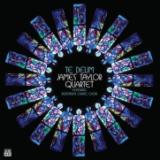
The James Taylor Quartet feat. Benenden Chapel Choir - Te Deum LP
  • 1: Have Mercy On Us
  • 2: We Praise Thee Oh God
  • 3: Save Thy People
  • 4: The Comforter
  • 5: Wildflower
  • 6: Find A Way
  • 7: Heaven And Earth
  • 8: Glory Of The Father

As keyboard maestro James Taylor arrives at his 40th year leading his Quartet, he has re-signed with his original label Acid Jazz and is embarking on a series of the most radical projects he has ever worked on. Following his first classical album ‘Shadows and Dreams’ earlier this year, he brings the Quartet together for a remarkable new album. ‘Te Deum’ sets the ancient, 4th-entury Christian text to intense jazz, funk, and Latin grooves. The music sees the James Taylor Quartet working alongside the children of the Benenden Chapel Choir, and a guest horn section and legendary Acid Jazz percussionist Snowboy. Lead track ‘Have Mercy On Us’ mixes Brazilian samba with Gregorian chants, ‘The Comforter’ sounds like a Donald Byrd with voices Blue Note Records experiment, and last year’s radio favourite ‘Wildflower’ mixes bossa nova with sunshine pop harmonies and a positive message. The JTQ is on tour throughout the year - as he always is and will be worth catching live.

pre-order now29.05.2026

expected to be published on 29.05.2026

25,50
YAMASUKI - LE MONDE FABULEUX DES YAMASUKI

In the spring of 1971, somewhere between Brussels, Paris and a collective pop fever dream, Le Monde Fabuleux Des Yamasuki landed on vinyl. It sounded like nothing else then and it still does not today. More than half a century later, Sdban Records proudly presents a reissue of this singular cult album, available from April 3, 2026 on vinyl.

The album was produced by Jean Kluger and written both by Jean and Daniel Vangarde (aka Bangalter, later the father of Thomas Bangalter of Daft Punk), who were alreadywell ahead of their time, long before electronic music rewrote the rules of pop culture.

Released under the name Yamasuki, also referred to as The Yamasuki Singers, or The Yamasuki's, the project was never intended as a conventional band. It was a studio-born fantasy, a concept album disguised as a pop record. What began as a standalone single quickly expanded into a full-blown pan-cultural pop opera that ignored genres and common sense with joyful abandon.

Musically, the album sits at a delirious crossroads. Psychedelic pop collides with funk rhythms, samba and bubblegum melodies, full of chants and choruses in a phonetic pseudo-Japanese, written with the help of a dictionary. Kluger and Vangarde famously recruited a children's choir to perform the vocals, and for added spectacle, they brought in a Japanese judo grandmaster, whose ritualistic shouts and battle cries erupt throughout the record.

Several singles were released. One of them, Yamasuki, with accompanying dance move, appeared in the United Kingdom and France on John Peel's Dandelion label, a fitting home for a record that thrived on the margins of pop culture. Its B-side, Aieaoa, proved even more potent. In 1975, the song was reborn as A.I.E. (A Mwana) by Black Blood, an African group recording in Belgium, this time sung in Swahili. That melody would travel even further. Aie a Mwana became the debut single of English pop group Bananarama, and in 2010 it resurfaced once more as Helele, an official song of the FIFA World Cup, recorded by South African singer Velile Mchunu with Danish percussion duo Safri Duo. That version became the most widely known incarnation of the song. With Jean Kluger directly involved, it was less a cover than a continuation of the original idea.

The album's afterlife did not stop there. Over the years, Yamasuki has been quietly sampled, covered, and featured across media far beyond the realm of novelty pop. Kono Samourai was sampled in The Healer by Erykah Badu (2007), produced by Madlib, while Yama Yama has found its way into recent pop culture as well: appearing in the television series Fargo, on Angus Stone's project Dope Lemon, and on the 2008 Late Night Tales compilation curated by Arctic Monkeys drummer Matt Helders. Proof, if any were needed, that this strange little record carries a deeper musical DNA than its playful exterior might suggest.

This new reissue of Le Monde Fabuleux Des Yamasuki proves the renewed interest and respect for this cult album, faithful to the original spirit while finally giving it back the physical presence it deserves. In an era obsessed with genres and algorithmic neatness, Yamasuki still laughs, dances and karate-kicks its way past definitions. It reminds us that pop music can be playful without being disposable, strange without being cynical and joyfulwithout explanation. The world of Yamasuki was always fabulous, we are just lucky it found its way back to us!

pre-order now30.05.2026

expected to be published on 30.05.2026

23,95

Last In: 42 days ago
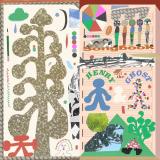
Micha Acher - Henry And The Ghosts Songbook

On his new album, Micha Acher rearranged compositions for bands such as Tied & Tickled Trio and Ms. John Soda from previous years.

Why are we interested in ghosts? What fascinates us about the eerie? According to cultural theorist Mark Fisher, the allure that the eerie possesses is not captured by the idea that we „enjoy what scares us“. It has, rather, to do with a fascination for the outside. For that which lies beyond standard perception, cognition or experience, as he writes in his book „The Weird and the Eerie“.

In fact, also none of the 15 pieces from Henry and the Ghost is really scary. On the contrary, they all feel strangely familiar. Like revenants or doppelgängers, which in fact they are. They have all been released before. But in a different form. In different line-ups. With different band projects such as Tied & Tickled Trio, The Notwist or the Alien Ensemble.

With the „Songbook“, Micha Acher's aim was, as he says, to find out how the familiar pieces sound in a chamber music instrumentation. Therefore he met with Theresa Loibl (bass clarinet, piano), Timm Kornelius (bassoon), Markus Rom (guitar, banjo, electronics) and Simon Popp (drums, percussion) in his living room for a musical séance in the summer of 2022. The séance lasted two days. Afterwards, Markus Rom (Oh No Noh), added some haunting electronical ideas.

The mood of most of the pieces is melancholic. There are surprising twists and siren-like melodies. Just as ghost stories should be. However, most of the songs sound very light-footed. With their feet in pop, folk, jazz and classical music. Pieces such as „Johanna“ with its wheezing harmonium and spooky piano, or the dreamy „Modest Farewell“ on the other hand have a cinematic flair. Immediately faces and scenes arise in the mind. But at the beginning, there is „Hamlet“. It starts with ghostly electronics and merges into a calm, almost classical guitar piece. Could it be that the ghost of Hamlet's father is hiding between the strings?

„34E“ begins with a banjo. Then the deep humming of Micha Achers sousaphone and the other brass instruments kick in. In the slow, solemn „Aelita“, the sousaphone starts a dialogue with a children's piano. With the banjo and the other wind instruments acting as mediators. The title of „All Tomorrow's Past“ brings Velvet Undergrounds „All Tomorrow's Parties“ to mind. Another ghost from the past. What connects the two pieces is free-floating percussion, which accompanies the sumptuous melodies.

„Arc“ takes us on an exhilarating voyage at sea, with the sousaphone providing powerful propulsion. Towards the end, things get quite turbulent. With the clarinet stirring up the water, before the sea calms down again. „Henry and the Ghost“ is characterised by a ghostly mood change between major and minor. In „Radio Four“ the banjo with its stoic chords keeps the lively brass section in check. „Solid Ground“ is imbued with melancholy. „Space Minor“ takes us into outer space, with the power of sousaphone and percussion.

„Tomorrows“ is filled with cautious optimism. And the concluding „Nordlead“ turns out to be a revenant of the instrumental „N.L.“ from The Notwist's legendary album „Shrink“ from 1998. In the new version, the piece sounds like a distant echo. One that also brings to mind how Micha Acher's music has evolved. Which new worlds he explored and opened up since the nineties. And yet Acher's signature is recognisable in every single note of this fascinating „Songbook“.

pre-order now12.06.2026

expected to be published on 12.06.2026

30,21
Stephan Eicher - Spielt Noise Boys

2025 Reissue.


Münchenbuchsee, a suburb of Bern, Switzerland. Stephan Eicher is the youngest of three children. His father, a radio and TV repairman, is also a jazz violinist and a sound tinkerer in his spare time. In the family home's converted fallout shelter turned studio, Mr. Eicher experiments with homemade sequencers, tortures handcrafted drum machines, and abuses reel-to-reel tape recorders—all under the fascinated gaze of young Stephan.

The boy quickly develops a musical curiosity, exploring sound through various experiments and wanderings. Alongside his younger brother Martin, Stephan crafts audio plays on a homemade multi-track recorder (essentially several cassette decks hooked together!), which they write, record, add sound effects to, and perform for family and friends. Just a couple of nice kids, really...

Then comes 1972, and Lou Reed's Transformer album changes everything for the Eicher kids. For 13-year-old Stephan, it's a revelation—especially "Vicious", the opening track, which he plays on repeat for months. He convinces his father to buy him an electric guitar. Not stopping there, his father also builds him a tube amp using an old radio.

Then comes adolescence. A rough one. Stephan leaves home at 16 and moves to Zurich. With obvious artistic talent, he persuades his art teacher to help him get into F+F, a radical, alternative art school—despite his young age. Accepted, he starts learning video techniques, determined to become a filmmaker.

At F+F, Stephan organizes Dada-style happenings and concerts with a group of friends known as the Noise Boys. Among them: one of his teachers on bass, Veit Stauffer on drums (who would later found ReR/Recommended Records), his girlfriend Sacha on vocals, and Stephan on guitar. In one of their early performances, they release a remote-controlled mouse covered in dull razor blades into the audience to create panic and chaos. Keeping with this aggressive, confrontational spirit, they once played a concert while wearing headphones blasting Tristan and Isolde, trying to perform their own songs simultaneously—to maximize the cacophony. The goal was always the same: clear the room.

Their “songs,” if you can call them that, followed suit. Take "Hungeriges Afrika", for instance—performed entirely with power drills and some drum feedback.

To make ends meet, Stephan returns to Bern on weekends to work as a waiter at the Spex Club, the city’s main punk venue. On September 16, 1980, during a show by proto-electro group Starter, the police raid the club and arrest everyone. Stephan, who manages to avoid arrest, seizes the opportunity to “borrow” Starter’s gear left behind. He suddenly finds himself in possession of a Roland Promars synth, a Korg MS20, and a gorgeous CR78 drum machine, which he runs through a Big Muff distortion pedal to get that perfect gritty sound.

He then sets out to reinterpret some Noise Boys tracks, reworking them during impromptu sessions recorded on a dictaphone (yes, a dictaphone—now the lo-fi sound makes more sense, doesn’t it?). He ironically titles the resulting cassette "Stephan Eicher spielt Noise Boys" ("Stephan Eicher plays Noise Boys"). This gem features seven tracks, which are the ones reissued here.

Back in Zurich, he visits his friends Andrew Moore and Robert Vogel, who have a DIY cassette duplication setup. They make 25 copies of Stephan Eicher spielt Noise Boys for Stephan and his friends. Robert encourages him to visit Urs Steiger of Off Course Records and play him the tape.

Without much hope, Stephan shows up at Urs’s office. But Urs is instantly hooked and suggests releasing a 7” single. Due to space constraints, they reluctantly drop two of the seven tracks ("Hungeriges Afrika" and "One Second"). As for the musical score featured on the cover—it was randomly chosen and remains a mystery to this day. Calling all music theory nerds!

The 7-inch is pressed in 750 copies and released in the first week of December 1980—a date Stephan remembers well, as it’s the same week John Lennon was killed. Smartly, Urs sends a promo copy to François Murner, Switzerland’s answer to John Peel, who hosts a show on alternative station Sounds. Murner falls in love with the record and starts giving it airtime. To Stephan’s surprise, sales follow—and people actually seem interested in his music.

Even this modest underground success scares Stephan a bit. He stops making music for a year and moves to Bologna, where he works as a programmer at Radio Città, a feminist radio station.

Meanwhile, Stephan’s younger brother Martin, who’s also involved in the punk scene, joins the band Glueams as a singer and guitarist. Glueams, named after the fanzine run by two of its members (drummer Marco Repetto and bassist GT), eventually rebrands as Grauzone. Stephan is invited to their shows to project hacked Super 8 visuals live on stage.

Urs Steiger, now working on a compilation titled Swiss Wave – The Album, asks Grauzone to contribute alongside bands like Liliput, Jack and the Rippers, The Sick, and Ladyshave (Fall 1980).

For the album, Martin tasks Stephan with producing their recording sessions. Under Stephan's artistic direction, two tracks emerge: "Raum" and "Eisbär". During "Eisbär", Martin plays a minimalist bass line borrowed from post-punk band The Feelies (just an open string). Drummer Marco Repetto struggles to keep time. Later that evening, unhappy with the takes, Stephan builds a four-bar drum loop from a ¼-inch tape and uses it instead of the flawed original. He then adds bleepy synths and wind sounds to complete the track’s icy vibe before handing it over to Urs.

The Swiss Wave – The Album compilation is released quietly at first, but things snowball thanks to "Eisbär", which eventually becomes a smash hit—selling over 600,000 singles.

Meanwhile, Stephan plays in a rockabilly band called SMUV (named after Switzerland’s social security agency) and begins producing artists, including the debut album of Starter (1981), which includes a more pop-oriented version of "Minijupe".

By early 1982, Stephan starts spending time with the post-punk girl band Liliput (formerly Kleenex). They’re older than him, and he happily drives them around in his Renault Major, acting as their roadie.

By 1983, Grauzone—signed to the major label EMI, which turned out to be a misstep—is falling apart. Stephan begins to pivot toward a more mainstream pop sound with his debut solo album Les Chansons Bleues.

But that... is already another story.

In Stock

On Stock and ready to ship

23,11
Various - Randy's 50th Anniversary LP 2x12"
  • A1: Java - Augustus Pablo
  • A2: Hospital Trolly - I Roy
  • A3: King Of Babylon - Junior Byles
  • A4: Don't Go - Horace Andy
  • A5: A Little Love - Jimmy London
  • A6: Cheater - Dennis Brown
  • B1: For The Love Of You - John Holt
  • B2: Too Late To Turn Back Now - Alton Ellis
  • B3: Be Thankful - Donovan Carless
  • B4: Woman Of The Ghetto - Hortense Ellis
  • B5: Children Of The Ghetto - Senya
  • B6: Lonely Soldier - Gregory Isaacs
  • C1: Going To Zion - Black Uhuru
  • C2: Ordinary Man - Lloyd Parks
  • C3: Ordinary Version 3 - Impact All Stars
  • C4: Hold Tight - African Brothers
  • C5: Righteous Man - Keith Poppin
  • C6: Created By The Father - Errol Dunkley
  • C7: The Race - The Gladiators
  • D1: My Guiding Star - The Heptones
  • D2: Something On Your Mind - Hubert Lee
  • D3: Country Boy - Charley Ace & Dirty Harry
  • D4: No Jestering - Carl Malcolm
  • D5: Knotty No Jester - Big Youth
  • D6: Fattie Bum Bum - Carl Malcolm

Beginnend mit dem fröhlichen Ska von Lord Creators Unabhängigkeitshymne 'Independent Jamaica' zeigt das Chapter One Album den wahren Verlauf der jamaikanischen Musik in den 1960er Jahren mit einer virtuellen Who's Who der Reggae-Musik, darunter Bob Marley, Peter Tosh, Toots & The Maytals, Rico, Skatalites, John Holt & Alton Ellis. Wunderschön verpackt mit Innenhüllen mit seltenen Fotos und Liner Notes von Steve Barrow von Blood & Fire.

In Stock

On Stock and ready to ship

31,72
Various - Randy's 50th Anniversary LP 2x12"
  • A1: Java / Augustus Pablo
  • A2: Hospital Trolly / I Roy
  • A3: King Of Babylon / Junior Byles
  • A4: Don’t Go / Horace Andy
  • A5: A Little Love / Jimmy London
  • A6: Cheater / Dennis Brown
  • B1: For The Love Of You / John Holt
  • B2: Too Late To Turn Back Now / Alton Ellis
  • B3: Be Thankful / Donovan Carless
  • B4: Women Of The Ghetto / Hortense Ellis
  • B5: Children Of The Ghetto / Senya
  • B6: Lonely Soldier / Gregory Isaacs
  • C1: Going To Zion / Black Uhuru
  • C2: Ordinary Man / Lloyd Parks
  • C3: Ordinary Version 3 / Impact All Stars
  • C4: Hold Tight / African Brothers
  • C5: Created By The Father / Errol Dunkley
  • C6: The Race / The Gladiators
  • D1: My Guiding Star / The Heptones
  • D2: Something On Your Mind / Hubert Lee
  • D3: Country Boy / Charley Ace & Dirty Harry
  • D4: No Jestering / Carl Malcolm
  • D5: Knotty No Jester / Big Youth
  • D6: Fatty Bum Bum / Carl Malcolm

Von Augustus Pablos bahnbrechendem „Java” bis zu Carl Malcolms UK-Pop-Crossover-Hit „Fattie Bum Bum” präsentiert Chapter Two einen Klassiker nach dem anderen von einer All-Star-Besetzung der Reggae-Größen der 70er Jahre, darunter Black Uhuru, Horace Andy, Dennis Brown, Gregory Isaacs, The Heptones und Big Youth. Wunderschön verpackt mit Innenhüllen mit seltenen Fotos und Liner Notes des Reggae-Historikers David Katz.

In Stock

On Stock and ready to ship

31,72
EDMUNDO ARIAS - GUEPA JE! CUMBIA, PORRO & THE SOUND OF COLOMBIA’S CARIBBEAN & PACIFIC COASTS LP 2x12"

This album takes you back to Colombia of the 50s and 60s. In those days, the tropical music of the Caribbean and Pacific coasts took over the country's mainland music scene by storm. One of the key figures during this period was Edmundo Arias. Together with Lucho Bermúdez and Pacho Galán, Arias is seen as one of the ‘big three’ composers of Colombian tropical music.

He was a rather introverted person who avoided being in the spotlight at all cost, leading to his work being less known than his contemporaries. With this album we hope to highlight the amazing legacy Edmundo Arias has left us. Think of big bands with sharp dressed musicians playing the finest cumbias, porros and other tropical sounds in fancy ballrooms on a hot evening in Medellin or Bogota.

Liner notes:

Edmundo Dante Arias Valencia was born in Tuluá, Valle del Cauca, on the 5th of November 1925. He came from a family of musicians. His father, Joaquín Arias Cardoza was a band leader and composer who taught his children to play music. Arias learned to play many instruments such as the guitar, bass, bandola (pear shaped string instrument related to the mandolin), tiple (12 string guitar), clarinet and saxophone. He proved to be a very talented musician and together with his father and his older brother Ricaurte he formed the ‘Trio Arias’. The family lived in different cities across Colombia depending on where they found work. When his father died unexpectedly in 1948, Edmundo and Ricaurte had to support their family working as musicians. In 1951, Arias decided to move to Medellín, in those days the heart of the Colombian music industry and the city where the most important record companies and the best musicians were based. It didn’t take long before Arias made a name for himself as a musician, composer, arranger and band leader for Colombia’s leading labels at the time; Zeida, Ondina, Silver and Sonolux. For the latter, he would eventually become the artistic director. Over the years, he wrote hundreds of songs, recorded many albums with his own orchestras or with the Orquesta Sonolux and collaborated with a countless number of musicians, often uncredited.

Together with Lucho Bermúdez and Pacho Galán, Edmundo Arias is seen as one of the ‘big three’ composers of the tropical music of Colombia. But despite the fact that Arias was renowned, very little is known about his personal life. He was a humble man who preferred to work in the background and avoided being in the spotlight at all cost. He declined interviews and kept away from public life. On some live performances of the orchestra that carried his name, Arias asked one of his musicians to pretend to be him, so that he wouldn’t have to come on stage. You might think that Arias was shy or anti-social, but this was not the case. Most people he worked with described him as a very jovial, good humoured person and enjoyed working with him.

His invisibility in public life belied how present he was behind the scenes. If he wasn’t working on his own productions, he was regularly collaborating with other musicians. Arias had his hand in the work of many of his colleagues and was a mentor for young artists. Some even say that in those days all the musicians in Medellín had worked with Arias in one way or the other. He had a strict working regime: composing, arranging and recording at night while sleeping during the day. He was also very productive. The story goes that on one occasion, he wrote arrangements for a 16 piece band in just a few minutes while the band was recording another song. His hard work and productiveness resulted in hundreds of compositions and many records that carry his name.

Edmundo Arias’ career ran over 6 decades until his death on the 29th of January 1993. Over the years, he left us a huge legacy. The songs on this record are a selection of his work during the 50s and 60s. Many see this period as the absolute highlight of his career. We picked out the songs we consider to be the most outstanding recordings from this period. The title of this compilation Guepa Je! is Colombian slang often used in cumbia to express joy or to celebrate. A free translation would result into something like ‘yeah’, ’let’s go’ or ‘groovy’. I guess this title says enough. Enjoy the music. Guepa Je!

In Stock

On Stock and ready to ship

28,78
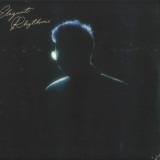
Teen Daze - Elegant Rhythms

DJ support: Tim Sweeney, Make A Dance, Parris, Pleasure Voyage, Camillo Miranda

Back yard - Back yard is the first single from the new Teen Daze album, Elegant rhythms, and features singer-songwriter Andy Shauf on drums, and LA jazz staple, Sam Wilkes, on bass. This is a stark change in sound for Teen Daze, who’s last album Interior was an exploration of neon-lit House music. Back yard is a mellow groover, conjuring up images of Laurel Canyon in the 70s, yet still with its flourishes of contemporary sounds.

We’re out of phase again - We’re out of phase again is another vulnerable glimpse into the inner world of Teen Daze, and marks the release of his most personal album to date, Elegant rhythms. In contrast to the synthesized, digital world of his prior album, Interior, here we’ve been brought into a lush, organic arrangement, brought to you in large part to the stunning bass playing by Sam Wilkes. While the verses pulse forward, the chorus slows things down, and evokes the sophisti-pop sounds of The Blue Nile. This track is a stunning showcase of the world of Elegant rhythms.

Nothing’s gonna change my love - Teen Daze returns with his second single of the year, Nothing’s gonna change my love. The stark change in sound, as heard on previous single Back yard, is on display here again: a smouldering, 2 and a half minutes of slow jazz-pop, indebted to the great Sade, or perhaps the feeling of leaving downtown LA at 2 AM. Lyrically, we hear a story of a love, challenged by the unpredictable nature of our lives. This may be Teen Daze’s smoothest song to date.

Neighbourhood - Neighbourhood is the third single from the recently announced LP from Teen Daze, Elegant Rhythms. Along with Andy Shauf on the drums, and Sam Wilkes on the bass, Teen Daze gives us a languid tour of his quiet neighbourhood. The sun has set on the pleasant, tree-lined streets, and a stranger, more surreal environment presents itself. The song plods forward at an extremely comfortable pace, held down by the paradoxically loose-yet-tight rhythm section. Lyrically, we walk around the Neighbourhood at night, and while the chorus reveals a type of sobriety, the vibe of the song makes it easy to feel a little…effected.

Fade away - Fade away sets the tone for Elegant Rhythm’s side B: a deeply personal, though somewhat veiled, confession of loss. How does it feel to grieve something that was never really here? A smouldering, slowly progressing first half erupts in synthetic noise, and then fades into the ether with it’s repeating refrain, “I can feel you / feel you fade away / when there’s nothing / nothing left to say”.

Fall ahead - A sweet piano tune which serves as a quiet break in the record, intended to help the listener reflect and take a moment of pause before we reach the final two songs on the album.

HST underwater - The penultimate track on the record tells a story where the narrator finds themself in an alien, yet oddly familiar place. Arpeggios soaked in crystal blue water flow through the stereo field, while the narrator, vocoded and drenched in autotune, searches for meaning and purpose in a confusing world. This is one of Teen Daze’s most cinematic, emotional songs yet.

In the rain - It’s never really made explicitly clear on this record, but a lot of these songs find Teen Daze wrestling with life as a new father, and this song, the final on the album, expresses the fears of generational trauma. A touching, tender ode to his children, we hear Teen Daze at his most personal and vulnerable. The falling rain surrounds some absolutely breathtaking bass playing from Sam Wilkes, and Teen Daze’s signature ambient keyboard sounds.

Radio Support: Ruf Dug (Soup To Nuts on NTS)

In Stock

On Stock and ready to ship

20,97
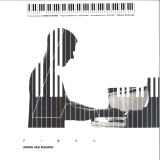
Armin van Buuren - Piano (2x12")

“There’s something about sitting there—just me, the keys, and the silence. No beats, no drops. Only raw emotion.”

Containing 15 intimate piano songs, this album shows a different side to the world-famous DJ and producer:

more personal, more emotional. First recorded on his Steinway, then arranged into proper scores alongside piano teacher

Geronimo, this body of work is saturated with the vulnerability of stepping beyond his comfort zone.

Piano is available on a 2LP set, complete with 16-page booklet including pictures and liner notes by Armin.

out of Stock

Order now and we will order the item for you at our supplier.

47,27

Last In: 51 days ago
Peter Gabriel - In The Big Room LP 2x12"
  • A1: Burn You Up, Burn You Down 04:23
  • A2: More Than This 6:12
  • A3: Games Without Frontiers 5:01
  • A4: Downside Up 5:30
  • B1: Mercy Street 6:39
  • B2: Darkness 6:45
  • B3: Digging In The Dirt 6:31
  • B4: The Tower That Ate People 5:01
  • C1: San Jacinto 8:24
  • C2: Shock The Monkey 5:26
  • C3: Signal To Noise 8:04
  • D1: Secret World 8:26
  • D2: Father, Son 4:26
  • D3: In Your Eyes 10:00

"In The Big Room" enthält Aufnahmen von Peter Gabriel und seiner Band, die am 23. November 2003 live im Big Room der Real World Studios aufgenommen wurden.

Dieses intime Konzert war für Mitglieder von Peter Gabriels Full Moon Club und fand während einer kurzen Reihe von Live-Shows im November 2003 statt, zu denen auch ein Auftritt für die britische Wohltätigkeitsorganisation Children in Need im Cyfarthfa Castle in Merthyr Tydfil, eine Show im Brighton Centre und das Nelson Mandela 46664 Concert in Kapstadt gehörten.

Das 14 Songs umfassende Set enthält Material, sowohl aus der "Growing Up" Live-Tournee von 2002/2003 – Gabriels erster Tournee seit 10 Jahren, die mit der Veröffentlichung seines Albums "UP" einherging – als auch aus der anschließenden "Still Growing Up" Live-Tour, die sich über einen Großteil des Jahres 2004 erstreckte. Besonders bemerkenswerte Ergänzungen zum "Growing Up" Live-Set sind "Burn You Up, Burn You Down", "Games Without Frontiers" und "The Tower That At People".

pre-order now13.03.2026

expected to be published on 13.03.2026

30,67
Deux Filles - Silence & Wisdom / Double Happiness

The short, mysterious career of the female French duo Deux Filles is bookended by tragedy. Gemini Forque and Claudine Coule met as teenagers at a holiday pilgrimage to Lourdes, during which Coule's mother died of an incurable lung disease and Forque's mother was killed and her father paralyzed in an auto accident. The two teens bonded over their shared grief and worked through their bereavement with music. However, after recording two critically acclaimed albums and playing throughout Europe and North America, Forque and Coule disappeared without a trace in North Africa in 1984 during a trip to visit Algiers. The short and terribly unhappy lives of Forque and Coule are at the root of the small but fervent cult following the mysterious duo have gained since their disappearance, not least because the placid, largely instrumental music on the duo's albums betrays no hint of the sorrow that framed their personal lives.

This would be a terribly sad story if a word of it were true. In reality, Deux Filles were Simon Fisher Turner, former child star/teen idol and future soundtrack composer, and his mate Colin Lloyd Tucker. Turner and Tucker left an early incarnation of The The in 1981 to pursue another musical direction. Turner claims that the idea of Deux Filles came to him in a dream, and he and Tucker strictly maintained the fiction throughout the duo's career. Not only did they pose in drag for the album covers, the duo once even played live without the audience realizing that the tragic French girls on-stage were actually a pair of blokes from south London. Deux Filles released two albums through Turner and Tucker's Papier Mache label, 1982's Silence & Wisdom' and 1983's Double Happiness'. Both albums are included here and blend watery piano, occasionally ghostly vocals, sheets of synthesizers, heavily processed guitars and the barest minimum of percussion. Drifting and wistful, they're a pair of lost ambient gems from a time when the genre had yet to mature, an excellent example of post-Eno, pre-Orb ambient music.

All songs have been remastered for vinyl by George Horn at Fantasy Studios in Berkeley. The vinyl comes housed in gatefold sleeve with original front covers of both albums, and a centerfold of archive images and the original liner notes. Each LP includes a sticker of the Lino cuts by Adrian Gill that was included with the original pressing.

"Like an early French film soundtrack with melodramatic overtones, the sound is jagged and disjointed but never harsh. Lilting guitars and ample use of echo smack of Vini Reilly, relying on the hypnotic qualities of the sound rather than abrasive noise" (Sounds, 03/1983)

out of Stock

Order now and we will order the item for you at our supplier.

23,32

Last In: 80 days ago
Various - Stuck In My Head EP

“Stuck in My Head / Home is Behind” marks the most profound and personal release from Jamie Collomb, known to many as Oneduz - artist, father, husband, and co-founder of The Global DNB Collective. This vinyl project, created with unwavering passion and intention, was Jamie’s proudest work, a true reflection of his artistic soul.
Tragically, Jamie passed away unexpectedly just as the record entered production. Featuring original tracks by Eclipsed Shadows and Noisesmith, and powerful remixes by two of Jamie’s heroes: drum & bass legends Blame, and longtime friend and inspiration Danny Styles. This release stands as both a musical statement and a lasting tribute.
Following Jamie’s passing, his creative partner Andy (Syntax Era) and GDNBC designer Ryan Feyler (Drbblz) came together to carry his vision across the finish line. Every detail of this release honors Jamie’s legacy.
All profits from this album will go directly to support Jamie’s wife, Shanda, and their two young children, Porter and Hadley. This is more than a record, it’s a celebration of Jamie’s life, his music, and the community he helped build.

pre-order now

This item has not yet been released. You can pre-order the product now.

28,15
Anna Högberg Attack - Ensamseglaren

Anna Högberg Attack

Ensamseglaren

12inchFöNSTRET16
Fönstret
03.10.2025

"I stood on top of the mountain and looked out over the landscape. It was so beautiful that my chest hurt. The light vibrated, time stood still, and the contours dissolved for a moment. Everything had changed; I felt it then. I took their little hands so as not to lose contact with the ground. Then we ran down the mountain, scraping our knees. Still, we didn't make it. You had already put away all the nautical charts, loosened the moorings and steered out among the skerries. Mum stood waving from the jetty. You were alone, you wanted it that way. It was to be just you in the boat this time. I called out to you. I think you heard me and felt less lonely. We couldn't carry each other anymore, no matter how hard we tried. We washed our wounds on the shore and scattered tears and rose petals in the bay. The children laughed and searched for treasures under water. We called to them that it was time to come up. They were cold, and we hugged them to warmth. One ran ahead, the other up on our shoulders. Up the mountain, our mountain."

In 2020 Anna Högberg put her widely celebrated band Anna Högberg Attack on hold, retraining as a nurse whilst continuing a solo practice and playing in other groups. With Ensamseglaren she makes a spectacular return with her own ensemble — this time a double sextet — performing an album length suite of new music written in dedication to her late father — the titular ‘ensamseglaren’ pictured on the LP cover as a young boy.

 (ensam in Swedish can mean both alone and lonely, seglaren = the sailor).

Shot through with renewed energy and a brutally affective emotional punch, Högberg’s formal experimentation opens up vibrant possibilities for the assembled musicians to let loose with some of their wildest and most ecstatic playing on record.

Högberg’s contention with grief leans into collective joy as method of mourning — the big band as extended family; where bonds are made through a shared experience of being together. Where everyone gets to be themselves without expectations of who they should be or what they can do. It’s a radical commitment to care — of her self and others — that animates and unifies this suite of music’s radical dynamics and variations in colour: from whisper-quiet textural intensity to harrowing distortion and double drum chaos; raucous and solemn song.

"Throughout history, humans have had different images of the transition between life and death. Imagine standing on the seashore on a summer evening and seeing a beautiful vessel being prepared for departure. The sails are hoisted. The evening breeze comes, the sails fill and the boat glides out onto the open sea. You follow it with your eyes as it heads towards the sunset. It gets smaller and smaller, until it finally disappears as a tiny dot on the horizon. Then you hear someone next to you say, ‘Now they have left us.’ Left us for what? The fact that they got smaller and smaller and finally disappeared is only how we see it. In reality, they are just as big and beautiful as when they were here, lying on the beach by our side. Just as you hear that voice say ‘Now they have left us’, there may be someone on another beach who sees them appear on the horizon, someone waiting to welcome them when they reaches their new port."

pre-order now03.10.2025

expected to be published on 03.10.2025

23,95
Various - Spiritual Soul

Various

Spiritual Soul

12inchNUMLP524
Numero Group
05.09.2025out soon

The next destination on the Eccentric Soul journey, Eccentric Spiritual Soul is a rare groove with a transcendent, introspective f lair. Laced with lush wind arrangements and anchored by warm, reflective rhythms, this compilation channels the meditative pulse of a spiritual soul. A Solid companion for quiet contemplation—whether you’re deep in a Sunday read or wandering through nature’s quiet sermons. Flute Not Included.

pre-order now

This item has not yet been released. You can pre-order the product now.

26,01
Various - Spiritual Soul

Various

Spiritual Soul

12inchNUMLPC2524
Numero Group
05.09.2025
  • 1: Spunk - La Bimin
  • 2: Kalima - (Where Is The) Sunshine Pt. 1
  • 3: Calvin Keys - You Are All I Need
  • 4: Lenny White - Sweet Dreamer
  • 5: Steve Parks - Still Thinking Of You (Instrumental)
  • 1: Steve Harvey - Island In The Sky
  • 2: Father’s Children - Linda Movement
  • 3: The Chronicle Church - Mystery
  • 4: 2 Carat Black, Larhonda Legette - Speak Low
  • 5: General Lee & Lost Weekend - Little Black Child
also available

Black[26,01 €]


Spiritual Soul ist das nächste Ziel auf der Reise der Eccentric Soul Serie und bietet einen seltenen Groove mit einem transzendenten, introspektiven Flair. Gespickt mit üppigen Bläserarrangements und verankert durch warme, reflektierende Rhythmen, kanalisiert diese Compilation den meditativen Puls einer spirituellen Seele. Ein solider Begleiter für die stille Kontemplation - ob Sie nun in eine Sonntagslektüre vertieft sind oder durch die stillen Predigten der Natur wandern.

pre-order now05.09.2025

expected to be published on 05.09.2025

27,31
Yusuf / Cat Stevens - On The Road To Find Out: Greatest Hits LP 2x12"
also available

4x12"[103,78 €]


Am 5. September erscheint zum ersten Mal seit fast 25 Jahren eine brandneue Sammlung der beliebtesten
Songs von Yusuf / Cat Stevens aus seiner fast 60-jährigen Karriere. ”On The Road To Find Out: The
Greatest Hits wird in mehreren Produktformaten veröffentlicht und präsentiert einen der größten britischen
Künstler und sein phänomenales Werk, das von Titeln wie ”The First Cut Is The Deepest”, ”Where Do The
Children Play?”, ”Wild World”, ”Moonshadow”, ”The Hurt” und ”Father and Son” geprägt ist. Außerdem
sind weitere zahlreiche Songs enthalten, angefangen bei seinem Debüt ”Matthew & Son” bis hin zu ”King
Of A Land” aus dem Jahr 2023.
Die einzigartige Sammlung erscheint weltweit als 1CD,2CD,2LP und 4LP und bietet in Remaster Qualität mit jeweils 24 Songs und 78 Minuten ein besonderes Hörerlebnis.
Außerdem dazu ein Booklet mit allen Lyrics zu den zeitlosen Songs sowie Notizen von Yusuf Cat Stevens
selbst.
Die perfekte Ergänzung für jede Plattensammlung!

pre-order now05.09.2025

expected to be published on 05.09.2025

34,03
Yusuf / Cat Stevens - On The Road To Find Out: Greatest Hits LP 4x12"

Yusuf / Cat Stevens

On The Road To Find Out: Greatest Hits LP 4x12"

4x12inch7828191
Polydor Germany
05.09.2025
also available

2x12"[34,03 €]


Am 5. September erscheint zum ersten Mal seit fast 25 Jahren eine brandneue Sammlung der beliebtesten
Songs von Yusuf / Cat Stevens aus seiner fast 60-jährigen Karriere. ”On The Road To Find Out: The
Greatest Hits wird in mehreren Produktformaten veröffentlicht und präsentiert einen der größten britischen
Künstler und sein phänomenales Werk, das von Titeln wie ”The First Cut Is The Deepest”, ”Where Do The
Children Play?”, ”Wild World”, ”Moonshadow”, ”The Hurt” und ”Father and Son” geprägt ist. Außerdem
sind weitere zahlreiche Songs enthalten, angefangen bei seinem Debüt ”Matthew & Son” bis hin zu ”King
Of A Land” aus dem Jahr 2023.
Die einzigartige Sammlung erscheint weltweit als 1CD,2CD,2LP und 4LP und bietet in Remaster Qualität mit jeweils 24 Songs und 78 Minuten ein besonderes Hörerlebnis.
Außerdem dazu ein Booklet mit allen Lyrics zu den zeitlosen Songs sowie Notizen von Yusuf Cat Stevens
selbst.
Die perfekte Ergänzung für jede Plattensammlung!

pre-order now05.09.2025

expected to be published on 05.09.2025

103,78
Eli West - The Shape Of A Sway LP
  • Away Out On The Sea
  • Rocks And Trees
  • Spite And Love
  • Ever Lovin Need To Know
  • All The Saints
  • Hearts And Bones
  • Gentleman's Bulldog
  • Cool Of The Day
  • Thanks And Sorry
  • I'd Like To Be A Train

With two solo CDs and another three with Cahalen Morrison behind him, today he's become the master folk troubadour he was destined to be, and we're all the richer for it. The Pacific Northwest singer- songwriter met his wife, his beloved father has passed away, and his two children now shape his world around him. With age comes wisdom and, for master musicians, clairvoyance. His third album, The Shape of a Sway, reflects just that: A master telling tales of life lived honestly, amid paradox and reason, injected with change and growth, bruises and enlightenment: Life not just worth living, but worth lifting up in song. Gifted as a writer, singer, and instrumentalist (guitar, mandolin, banjo, pedal steel), West gets support from his equally stellar regulars, fiddler Patrick M'Gonigle and bassist Forest Marowitz. All three share intertwining harmony vocals. The Shape of a Sway, he says, "is an honest inventory of my life, possibly all of our lives, presented possibly with enough abstraction that listeners will see something of themselves, of their lives."

pre-order now11.07.2025

expected to be published on 11.07.2025

26,88
Yesterday's Children - Yesterday's Children
  • Paranoia
  • Sad Born Loser
  • What Of I
  • She's Easy
  • Sailing
  • Providence Bummer
  • Evil Woman
  • Hunter's Moon

Yesterday's Children emerged from the vibrant mid-60s Connecticut music scene, evolving from a garage-based instrumental outfit into one of the era's most compelling proto-heavy rock acts. As they evolved, they embraced the psychedelic and hard rock influences of the late 60s, crafting a heavier, more dynamic style. Under the determined management of brothers Dennis (vocals) & Richard (guitar) Croce's father, Dominic, the band gained regional popularity. Their 1970 self-titled album, recorded in New York with producer Warren Schatz, showcased a mix of ferocious originals like "Hunter's Moon" and "Sad Born Loser" alongside inspired covers. Though the album failed to achieve commercial success at the time, it has since been rediscovered as a cult favorite, celebrated for its raw energy and ahead-of-its-time heaviness. Known for their immersive live shows-complete with custom-built light and sound systems-the band toured the East Coast in vintage hearses, leaving a lasting impression on audiences. Despite their eventual breakup in 1972, Yesterday's Children's legacy endures, with their sole LP standing as a landmark in the transition from garage rock to the heavier sounds of the 70s. A true hidden gem, their music continues to resonate with fans of psychedelic, hard rock, and proto-metal.

pre-order now30.05.2025

expected to be published on 30.05.2025

32,35
Cat Stevens, Yusuf - Saturnight (Cat Stevens Live In Tokyo)
  • Wild World
  • Hard Headed Woman
  • Peace Train
  • Oh Very Young
  • Sitting
  • Father & Son
  • King Of Trees
  • Where Do The Children Play?
  • Lady D’arbanville
  • A Bad Penny
  • Bitterblue
  • Another Saturday Night

Cat-O-Log Records setzt in Zusammenarbeit mit Universal Music Enterprises die Feier des 50-jährigen Jubiläum des klassischen Live-Albums von Cat Stevens, ”Saturnight” (Cat Stevens Live In Tokyo), fort.

Ursprünglich wurde das Album von A&M Records nur in Japan veröffentlicht. Jetzt ist das Live-Album in brandneuen Fromaten erhältlich. Die schwarze LP sowie die The Circle Store exklusive ”Lava Splatter” LP erscheinen in einer Klapphülle, die Texte und neue Notizen von Hallam Kite, Tourmanager Carl Miller und Bassist Bruce Lynch enthält. ”Saturnight” ist auch zum ersten Mal auf CD erhältlich, inklusive einem 16- seitigen Booklet, mit den Anmerkungen von Hallam Kite, Tourmanager Carl Miller und Bassist Bruce Lynch.

”Saturnight” wurde am 22. Juni 1974 im Nakano Sun Plaza in Tokio aufgenommen, auf der japanischen Etappe der Bamboozle Tour und war Cat Stevens’ erstes Live-Album.

pre-order now02.05.2025

expected to be published on 02.05.2025

27,10
CARLOS NINO & FRIENDS - PLACENTA - LIMITED EDITION PLACENTAL LP 2x12"

Placenta is the fourth collection of broadly imaginative and highly collaborative Carlos Niño & Friends music released on International Anthem since 2021. But perhaps more notably for the zeitgeist of today, it is the first new music to be released by Carlos Niño & Friends following the November 2023 release of André 3000’s New Blue Sun – an album which Carlos produced alongside André, while co-writing, performing, and co-mixing every song. The announcement of Placenta also comes while Carlos is in the middle of tours with André to support New Blue Sun, where Carlos wields an immense presence as music director, bandleader, and percussionist, and performs alongside many of the same musicians that are present on his recent & Friends albums, including this new one.

Placenta is announced on the 1st solar return of Moss Niño, of whom Carlos and his partner Annelise are Earth parents. Their experience of pregnancy, labor and delivery were all profoundly impactful for Carlos. Becoming a father again (a whole 25 years after the birth of Azul Niño, who has become a regular artistic collaborator for Carlos) he felt total Inspiration for this set of recordings, and hence it is perhaps the most conceptually-grounded Carlos Niño & Friends album we've yet to present–fully connected to the spirit of family, birth, and "how we get here."

In Niño’s words, Placenta is “dedicated to Mothers, Children, Babies, Aunties, Doulas, Midwives, Birthworkers...,” and a short list of track titles includes: "Love to all Doulas!," "Some Rest for the Midwives," "Real Vital Organs," and "Generous Pelvis." The centerpiece of the album, the sprawling "Placenta, Nourishment, New Home, The Galaxy," is an unbelievably vivid immersion in the sonic architecture of Niño's memory-scape...like being present in his energy field...or being present in a birthing room, or maybe even being born yourself. And it just might be the most powerful, unique piece of music Niño has ever created.

Featured artists on Placenta, in order of their entry on the album, include: Nate Mercereau, Jamire Williams, Sam Gendel, Jamael Dean, Dexter Story, Brandon Eugene Owens, Maia, André 3000, Jesse Peterson, Ariel Kalma, Surya Botofasina, Annelise, Haize Hawke, Aaron Shaw, Devin Daniels, Tiffany de Leon, Michael Bolger, Michael Alvidrez, Moss, Iasos, Photay, Deantoni Parks, Adam Rudolph, Andres Renteria, and Cavana Lee.

out of Stock

Order now and we will order the item for you at our supplier.

29,37

Last In: 12 months ago
SHARP PINS - RADIO DDR

Sharp Pins

RADIO DDR

12inchKLPLP301
K Records
21.03.2025

Geniusz, Minor Talent, Generational Talent. Let the old folks fight it out. Sharp Pins are too busy staying up late watching vampire movies. Fathers and Children of the Revolution. Finally cartographed and designed by the actual Youth in Revolt "Nothing Stands in their way, they ARE the face of today". How can you tell you've been in the presence of the Sharp Pins? You see their sticker on yr phone, yr car, yr guitar, yr drums, yr bass, yr clarinet, yr flugelhorn, yr tuba, yr dog - its a MOD MOD WORLD, we're just living in it. 14 tracks 33RPM. Sharp Pins is the super solid lo-fi noise pop project of talented Chicago musician Kai Slater of Lifeguard and Dwaal Troupe."Radio DDR" originally released at home as a Hallogallo tape. "Youth Revolution Now".

pre-order now21.03.2025

expected to be published on 21.03.2025

22,65
Ali Omar - Hashish Hits LP

Efficient Space honours the memory of producer and MC Ali Omar with Hashish Hits, a posthumous selection from the dub rebel’s self-released discography.

One of ten children in working-class Liverpool, Omar drew deep influence from his father's Arabic heritage—a thread central to his identity and sample origins. After art school and a spell clubbing during Manchester's halcyon days, he relocated to Sydney, where he cofounded the blunted downbeat duo Atone with fellow British expatriate Andy Fitzgerald. As an MC, he infiltrated the city’s house, dub, jungle, and bass circuits, becoming a regular fixture at the Bentley Bar, where he commanded the mic with his versatile, rumbling baritone and charisma.

Freakishly talented in the studio, Omar was a pioneer of the Akai sampler and Atari, deftly recording live sessions straight to DAT. Drawing on industry insights from his sister, Merseybeat firebrand Beryl Marsden—who supported The Beatles on their final UK tour and was signed to Decca and Columbia—the non-conformist sought to build a self-sufficient business model. Between 1998 and 2004, he independently issued four albums on CD through his Hashish Studios imprint, hustling copies directly to local record stores and live shows for instant returns, even hand-sewing screen-printed hessian sleeves for his final release.

Uncompromising in his principles and refusing to suffer fools or charlatans, Omar relished the opportunity to collaborate with those who embodied the same spirit. Hashish Hits offers a snapshot of his inner sanctum—Fitzgerald on the opening track's billowing smoke stacks, the serpentine vocals of Gina Mitchell and the magic hands of mixer Louis Mitchell on 'On Release,' and Wicked Beat Sound System’s Kye on 'Poor Man Beggar Man Thief'. Meanwhile, 'Suicide Bomber' smoulders with the tension of a lost Muslimgauze relic, as the instructional 'Roll Up' and 'The Last Straw' spiral deeper into Omar’s signature production vortex— where space stretches in slow motion and walls reverberate with ricocheting delay.

A true icon of Sydney’s underground scene, the larger-than-life Omar passed away on 23 June 2009 after a valiant battle with cancer. He is remembered for his assertive spirit, larrikin humour, wild anarchic personality, and enduring mantra: “Love and live your life”.1

out of Stock

Order now and we will order the item for you at our supplier.

21,81

Last In: 3 months ago
JAKOB DINESEN - SLOW FLOW

Jakob Dinesen

SLOW FLOW

12inchAPRLP135
APRIL RECORDS
31.01.2025

Since the late 90"s, Jakob "Dino" Dinesen has become a stalwart of the Danish jazz scene, performing with nearly everyone of note in the country as well as internationally celebrated names such as Kurt Rosenwinkel, Jeff "Tain" Watts, Jakob Bro and Paul Motian. Finding joy and inspiration in the building of bridges between genre boundaries, his career in music has seen him travel and perform all over the world, enriching his sound and soul with every new experience. His new record seeks to convey his dream of a future world at peace with itself. "Slow Flow" is set to release on January 25th on April Records. "I envision a world where people from every corner of the globe come together, dancing, sharing meals, and finding joy through my music. My children are a blend of Africa and Denmark, and I hope they"ll carry the traditions and wisdom of both their mother and father as they navigate their path. I would love for music like this to be the soundtrack to their journey through life." Rooted in the playful live sound of an atypical quintet featuring cello and djembe, Slow Flow sits in a unique space somewhere between earthy, simplistic, and acoustic and contemporary, electronic, and unexpected. The record"s sound is soft spoken and full of compassion-a dark-timbred music where the intimate, warm breath of his tenor saxophone intertwines with the crisp, organic tones of the cello. Together, they float over smooth, analog synths and electronic loops, while the carefully crafted lines of the bass and the gentle rhythm of hands on drum skins carry the music forward. Occasional erratic, quirky bursts from an affected keyboard and weaving improvisations offer moments of energy and contrast. Each of the album"s nine original compositions paint musical pictures of contentment that are dear to Dino, as well as offering musical tributes to four of his heroes in Yusef Lateef, Wayne Shorter, Coleman Hawkins and Eddie "Lockjaw" Davis". Drawing on modern European jazz, African rhythms, Italian circus music, and reggae, Slow Flow plays as a deeply personal exploration of Dino"s identity, whilst providing a dream-like message of global peace that promises to resonate with like-minded people all around the world..

pre-order now31.01.2025

expected to be published on 31.01.2025

22,90
The Last Poets & Tony Allen feat. Egypt 80 - Africanism LP

"This is the time that we, who have benefitted from the Last Poets shouldbe able to say, 'it's the Last Poets. It's them we should be honouring, because we did not honour them for so many years_"

KRS One wasn't just addressing the hip hop fraternity when he uttered
those words by way of introducing the video for Invocation - a poem
written thirty years ago, around the time of the Last Poets' last significant comeback. He was speaking to everyone who's been affected by the word, sound and power issuing from the most revolutionary poetry ever witnessed, and that the Last Poets had introduced to the world outside of Harlem at the dawn of the seventies.

In 2018 the two remaining Last Poets, Abiodun Oyewole and Umar Bin
Hassan, embarked on another memorable return with an album -
Understand What Black Is - that earned favourable comparison with theirseminal works of the past, whilst showcasing their undimmed passion andlyrical brilliance in an entirely new setting - that of reggae music. Trackslike Rain Of Terror ("America is a terrorist") and How Many Bullets demonstrated that they'd lost none of their fire or anger, and their essential raison d'etre remained the same.

"The Last Poets' mission was to pull the people out of the rubble o f their lives," wrote their biographer Kim Green. "They knew, deep down that poetry could save the people - that if black people could see and hear themselves and their struggles through the spoken word, they would be moved to change."

Several years later and the follow-up is now with us. The project started when Tony Allen, the Nigerian master drummer whose unique polyrhythms had driven much of Fela Kuti's best work, dropped by Prince Fatty's Brighton studio and laid down a selection of drum patterns to die for. That was back in 2019, but then the pandemic struck. Once it had passed, the label booked a studio in Brooklyn, where the two Poets voiced four tracks apiece and breathed fresh energy, fire and outrage into some of the most enduring landmarks of their career. Abiodun, who was one of the original Last Poets who'd gathered in East Harlem's Mount Morris Park to celebrate Malcolm X's birthday in May 1968, chose four poems that first appeared on the group's 1970 debut album, called simply The Last Poets. He'd written When The Revolution Comes aged twenty, whilst living in Jamaica, Queens. "We were getting ready for a revolution," he told Green. "There wasn't any question about whether there was going to be one or not. The truth was many of us still saw ourselves as "niggers" and slaves. This was a mindset that had to change if there was ever to be Black Power." He and writer Amiri Baraka were deep in conversation one day when Baraka became distracted by a pretty girl walking by. "You're a gash man," Abiodun told him. The poem inspired by that incident, Gash Man, is revisited on the new album, and exposes the heartless nature of sexual acts shorn of intimacy or affection. "Instead of the vagina being the entrance to heaven," he says, "it too often becomes a gash, an injury, a wound_" Two Little Boys meanwhile, was inspired after seeing two young boys aged around 11 or 12 "stuffing chicken and cornbread down their tasteless mouths, trying to revive shrinking lungs and a wasted mind." They'd walked into Sylvia's soul food restaurant in Harlem, ordered big meals, then bolted them down and run out the door. No one chased after them, knowing that they probably hadn't eaten in days. Fifty years later and children are still going hungry in major cities across America and elsewhere. Abiodun's poem hasn't lost any relevance at all, and neither has New York, New York, The Big Apple. "Although this was written in 1968, New York hasn't changed a bit," he admits, except "today, people just mistake her sickness for fashion." Umar is originally from Akron, Ohio, but had arrived in Harlem in early 1969 after seeing Abiodun and the other Last Poets at a Black Arts Festival in Cleveland. That's where he first witnessed what Amiri Baraka once called "the rhythmic animation of word, poem, image as word- music" - a creative force that redefined the concept of performance poetry and stripped it bare until it became a howl of rage, hurt and anger, saved from destruction by mockery and love for humanity. When Umar's father, who was a musician, was jailed for armed robbery he took to the streets from an early age where he shined shoes and raised whatever money he could to help feed his eight brothers and sisters. By the time he saw the Last Poets he'd joined the Black United Front and was ready to join the struggle. Once in Harlem, Abiodun asked him what he'd learnt in the few weeks since he'd got there. "Niggers are scared of revolution," Umar replied. "Write it down" urged Abiodun. That poem still gives off searing heat more than fifty years later. In Umar's own words, "it became a prayer, a call to arms, a spiritual pond to bathe and cleanse in because niggers are not just vile and disgusting and shiftless. Niggers are human beings lost in someone else's system of values and morals." And there you have it. It's not just race or religion that hold us back, but an economic system that keeps millions in poverty and living in fear - a system born from political choice and that's now become so entrenched, so bloated on its own success that it's put mankind in mortal danger. It was many black people's acceptance of the status quo that inspired Just Because, which like Niggers Are Scared Of Revolution, was included on that seminal first album. Along with their revolutionary rhetoric, it was the Last Poets' use of the "n word" that proved so shocking, but it would be wrong to suggest that they reclaimed it, since it never belonged to black people in the first place. There's never any hiding place when it comes to the Last Poets. They use words like weapons, and that force all who listen to decide who they are and where they stand. Umar's two remaining tracks find him revisiting poems first unleashed on the Poets' second album This Is Madness! Abiodun had left for North Carolina by then where he became more deeply enmeshed in revolutionary activities and spent almost four years in jail for armed robbery after attempting to seize funds related to the Klu Klux Klan. Meanwhile, the 21 year old Umar was squatting in Brooklyn and had developed close ties with the Dar-ul Islam Movement. A longing for purity and time-honoured spiritual values underpins Related to What, whilst This Is Madness is a call for freedom "by any means necessary," and that paints a feverish landscape peopled by prominent black leaders but that quickly descends into chaos. "All my dreams have been turned into psychedelic nightmares," he wails, over a groove now powered by Tony Allen's ferocious drumming. Those sessions lasted just two days, and we can only imagine the atmosphere in that room as the hip hop godfathers exchanged the conga drums of Harlem for the explosive sounds of authentic Afrobeat. Once they'd finished, the recordings and momentum returned to Prince Fatty's studio, since relocated from Brighton to SE London. This was stage three of the project, and who better to fill out the rhythm tracks than two key musicians from Seun Anikulapo Kuti's band Egypt 80? Enter guitarist Akinola Adio Oyebola and bassist Kunle Justice, who upon hearing Allen's trademark grooves exclaimed, "oh, the Father_ we are home!" Such joy and enthusiasm resulted in the perfect fusion of Nigerian Afrobeat and revolutionary poetry, but the vision for the album wasn't yet complete. He wanted to create a new kind of soundscape - one that reunited the Poets with the progressive jazz movement they'd once shared with musicians like Sun Ra and Pharoah Sanders. It was at that point they recruited exciting jazz talents based in the UK like Joe Armon Jones from Mercury Prize winners Ezra Collective, also widely acclaimed producer/remixer and keyboard player Kaidi Tatham, who's been likened to Herbie Hancock, and British jazz legend Courtney Pine, whose genius on the saxophone and influence on the UK's now vibrant jazz scene is beyond question. The instrumental tracks on Africanism are in many ways as revelatory and exciting as the Last Poets' own. It's important to remember that the kaleidoscope of styles and influences we're presented with here aren't the result of sampling but were played "live" by musicians responding to sounds made by other musicians. That's where the magic comes from, aided by Prince Fatty's peerless mixing which allows us to hear everything with such clarity. Music fans today have grown accustomed to listening to all kinds of different genres. Their tastes have never been so broad or all- encompassing, and so the music on this new Last Poets' album is as groundbreaking as their lyrics, and perfectly suited to the era that we're now living in. John Masouri

pre-order now06.12.2024

expected to be published on 06.12.2024

27,52
Dennis Brown - No Man Is An Island
  • No Man Is An Island
  • Going To A Ball
  • I Love You
  • Rain Drops Keep Falling
  • Created By The Father
  • I've Got To Go
  • I'll Never Fall In Love
  • Make It Easy On Yourself
  • Your Love Is Amazing
  • I Need Someone
  • Something Bugging Me
  • God Bless The Children

'No Man is an Island' is the SEMINAL debut album by reggae legend Dennis Brown which launched his career. Recorded at Studio One around 1969-70 (when he was just 12 years old!) and released in 1972.

Featuring classic tunes with backing from the in-house players of The Sound Dimension, Soul Vendors and Soul Defenders from

The album features classic tunes including 'Created by the Father', 'Make it Easy on Yourself' and many others.

100% Essential

pre-order now15.11.2024

expected to be published on 15.11.2024

32,56
Fantastic Negrito - Son Of A Broken Man
  • First To Betray Me
  • Runaway From You
  • I Hope Somebody's Loving You
  • Skirty
  • Goddamn Biscuit
  • Living With Strangers
  • Zollifer Files
  • Devil In My Pocket
  • California Loner
  • My Only Friend Is You
  • Crooked Road
  • The Children Are Waiting
  • This Little Light Of Mine
  • Son Of A Broken Man

Born Xavier Amin Dphrepaulezz, by now much has been made of Fantastic Negrito's own unique story--his early years growing up in an orthodox Muslim household, the doomed major label deal that turned him off of the music industry altogether, the near-fatal car crash that permanently damaged his guitar playing hand--as well as the remarkable redemption arc that began in 2015, when he won the first ever NPR Tiny Desk Contest. In the years that followed, Negrito would go on to take home three consecutive GRAMMY Awards for Best Contemporary Blues Album, tour with everyone from Sturgill Simpson to Chris Cornell to Bruce Springsteen, collaborate in the studio with the likes of Sting and E-40, launch his own Storefront Records label, perform at Lollapalooza, WOMAD, Glastonbury, Newport Folk, Byron Bay Blues, and nearly every other major festival on the map, and found the Revolution Plantation, an urban farm aimed at youth education and empowerment. Son of a Broken Man sees Fantastic Negrito encapsulating the inimitable elements of his celebrated body of work to date, from hard-hitting distorted guitar riffs to melodic and expressive ballads, all fueled by the unexpected twists that have become his trademark. The album stands as perhaps Fantastic Negrito's most personal thus far, exploring family, deception, and the human desire to hide the true self as he dives deep into one of the oldest conflicts in human history, the struggle between father and son. Beginning at a young age, Negrito was served untruths by his father. A made-up last name, a fabricated ancestry, and a fake Somali accent. Why lie? Why create this false narrative? Those are the questions Negrito had to ask himself and the questions that lie at the heart of Son of a Broken Man.

pre-order now08.11.2024

expected to be published on 08.11.2024

36,09
Wild Honey - Morir en otra habitación

With "Morir en otra habitación", Wild Honey delivers a wonderful record full of emotion and warmth. Beautiful pop music that travels through an intimate moment with an unusual and touching naturalness.

It has been just over three years since Guillermo Farré, the singer and multi-instrumentalist behind Wild Honey, released "Ruinas futuras" (2021). Hailed as one of the best albums of that year, that record reflected his recent fatherhood and the exceptional circumstances of the first stage of the pandemic. Now, his new songs are the echo of a difficult and convulsive time after the death of his father.

The result is a mini-album of five songs that swing between fragility, the unexpected and the everyday. It is a snapshot that captures, as Guillermo describes in one of his lyrics, "slow motion avalanches". These are pieces charged with great emotional intensity but also full of light, driven by the expansion and openness of their exquisite arrangements.

"When I try to remember when something happened, I always think of historical events or personal milestones like moving houses, the birth of my children or the records I've made over the years. Recording an album is sort of like taking a photograph of a particular life moment and I've got used to records helping me sort out the time in my head."

"Morir en otra habitación" is the deliberate effort to document the strange and surprising feelings of that period, knowing that over the years these songs will be the easiest way to remember those months. A feverish exercise of describing in songs that journey of extremes where making breakfast for my children, explaining to them what a person's ashes are or playing the game of making a wish upon seeing a shooting star all come together."

In its vinyl edition, the album will include instrumental versions that, without the presence of Guillermo's voice, are close to the soundtracks he has recorded in recent years for film and TV.

Although Wild Honey is a project with a marked personal character, "Morir en otra habitación" has the support of collaborators close to Guillermo. Co-produced with Remate, the album includes contributions from Clara Viñals (Renaldo & Clara), Anna María Biffi, Javier Lorente and José María Rubio. In addition, Sean O'Hagan (The High Llamas) is responsible for the exquisite string arrangements, which recall Scott Walker, Belle & Sebastian or the most delicate Colin Blunstone, and Ali Chant (Aldous Harding, M. Ward, Katy J Pearson) has been in charge of the mixing.

pre-order now25.10.2024

expected to be published on 25.10.2024

20,13
Kaktus Einarsson - Lobster Coda

Icelandic indie-pop songwriter Kaktus Einarsson will release his second album ‘Lobster Coda’ via One Little Independent Records on October 25th. Amidst a collection of lush, electronic earworms, Kaktus has penned an honest account of his recovery from a sudden functional neurological disorder (FND) that required him to relearn how to use his motor functions, while also performing his duties as a new father.

‘Lobster Coda’ incorporates dreamy, glistening synth-pop and melancholic ambience, created through layers of atmospheric keys, percussion, and groove-laden funk bass. Kaktus details his journey following a stress-induced nonepileptic seizure that halted his brain’s ability to communicate with the rest of his body, resulting in losing control of his legs, arms and causing involuntary facial tics. Crucially, he spent months on a course of physical therapy while also trying to care for his children and his partner, that by his own admission he then needed to reconnect with. With an occasionally brutal candour, Kaktus’s new album is about taking the time to reflect and recognise changes that need to be made, to listen to your body, and to trust the process no matter how long it might take.

pre-order now25.10.2024

expected to be published on 25.10.2024

31,30
Kaktus Einarsson - Lobster Coda

Icelandic indie-pop songwriter Kaktus Einarsson will release his second album ‘Lobster Coda’ via One Little Independent Records on October 25th. Amidst a collection of lush, electronic earworms, Kaktus has penned an honest account of his recovery from a sudden functional neurological disorder (FND) that required him to relearn how to use his motor functions, while also performing his duties as a new father.

‘Lobster Coda’ incorporates dreamy, glistening synth-pop and melancholic ambience, created through layers of atmospheric keys, percussion, and groove-laden funk bass. Kaktus details his journey following a stress-induced nonepileptic seizure that halted his brain’s ability to communicate with the rest of his body, resulting in losing control of his legs, arms and causing involuntary facial tics. Crucially, he spent months on a course of physical therapy while also trying to care for his children and his partner, that by his own admission he then needed to reconnect with. With an occasionally brutal candour, Kaktus’s new album is about taking the time to reflect and recognise changes that need to be made, to listen to your body, and to trust the process no matter how long it might take.

pre-order now25.10.2024

expected to be published on 25.10.2024

31,05
Michèle Bokanowski - Cirque

The Circus is a place of lights and colors, but also of shadows, even darkness. Admittedly, it delights children and makes adults laugh. But you only need one rainy autumn evening near a circus tent and the smell of fodder to think of the sadness of the clowns, the endless training of the animals and the freaks who are hidden in some caravan... cinema, the essence of the circus – movement, light, danger and burlesque – will have been admirably rendered in Notes on the circus by Jonas Mekas (1966), one of the inventors of the filmed diary. With Cirque, Michèle Bokanowski does similar work, entirely dedicated to spinning, in the musical field.

She distinguished herself in particular in the composition of musique concrète, among others Tabou and Trois chambres d'inquiétudes, after having studied with Pierre Schaeffer and Éliane Radigue. The latter, great lady of drone and minimalism, fell under the spell of Cirque and wrote the booklet for the piece as a poem.

The piece, divided into five movements, is based on the handling and editing of recordings captured within one or more circuses (this is not specified and is of no importance) between 1988 and 1993. The initial allegro reveals the gallop of a horse joined gradually by other images. The idea of the circular space of the circus tent is immediatly and magnificently rendered and will be constantly recalled by an insistent use of the loop technique. Children's laughter, applause and drum rolls are thus sheared, repeated before being brutally interrupted. Accordion interludes and the distortion of sounds create a dreamlike atmosphere. This beautiful nightmare reminds us, to quote Éliane Radigue, the "Magic of childhood still living in the heart of man even beyond its abrupt end."

Words by Alexandre Galand, from the book “Field Recording – L’usage sonore du monde en 100 albums” (ed. Le mot et le reste, 2012)

Major member of the french musique concrète scene, Michèle Bokanowski was born on August 9, 1943 in Cannes, FR, to a musician mother and a writer father. She now lives and works in Paris.
Music lover since adolescence, it was relatively late, at the age of 22, that Michèle Bokanowski decided to study composition. Reading In Search of a Concrete Music by Pierre Schaeffer was decisive. After classical training on harmony, she met Michel Puig, a student of René Leibowitz, who taught her writing and analysis based on the Treatise of Schönberg. In September 1970 she began a two-year internship in the ORTF Research Department under the direction of Pierre Schaeffer. She takes part in the same time in a research group on sound synthesis, studies musical computing at the Faculty of Vincennes and electronic music with Éliane Radigue.
Her main works are intended for concert: Pour un pianiste, Trois chambres d’inquiétude, Tabou, Phone Variations, Cirque, L’étoile Absinthe, Chant d’Ombre, Enfance, Rhapsodia, Cadence, Elsewhere. She has also composed for theater (with Catherine Dasté), dance (with choreographers Hideyuki Yano, Marceline Lartigue, Bernardo Montet) and cinema: music for the short films of Patrick Bokanowski and his two feature films L'Ange ( 1982) and A Solar Dream (2016).

pre-order now23.08.2024

expected to be published on 23.08.2024

23,49
AILI - NANDAKKE? LP

Aili

NANDAKKE? LP

12inch541416667324R
ESKIMO RECORDINGS
07.06.2024

A kaleidoscopic sonic riot, Nandakke? is the hotly anticipated debut album from Japanese-Belgian duo Aili. Featuring 10 tracks of surreal electro-pop, joyful electronica, house music and more, Nandakke? is a euphoric album that sees Aili Maruyama and Orson Wouters more than fulfil the promise of their acclaimed debut EP.

Recorded over the course of six months in Orson's studio, packed full of vintage synths, Nandakke? captures the spontaneous spirit and creativity of those sessions. Exchanging riffs and rhythms, bouncing sounds and samples off each other, Aili and Orson would let the music take them where it wanted. The result,an album full of wild ideas and bold, playful experimentation.

More than anything an exhilarating feeling of discovery courses through Nandakke?, leaving you never sure where it will go next. One minute a pulsing electro-pop number featuring Aili's dad discussing his takoyaki (battered octopus) recipe, the next an explosive high energy workout song like Up & Down.

Certainly Aili was surprised to find herself singing in her own unique version of Japanese again.

"I thought that I was done with that after our debut EP, but apparently not as I speak even more Japanese on the album!" said Maruyama. "Every time we were in the studio these words would just tumble out. It's a complicated language but I just love to play with it.

"In many ways I'm an outsider, I left Tokyo aged 7, so there's a lot I notice as someone who is not a native speaker and it doesn't always make sense, there's a lot of mistakes in it.But in a way that sums up the whole philosophy of the album and how Orson and I work together."

That notion of duality, a sense of belonging but feeling apart, of being between two worlds and inventing your own captures the spirit of Nandakke?, itself a Japanese word that roughly translates to "Well, what was it?".

"It's something you say when you're looking for a word, like you know it but have forgotten how to say it. That's literally how I communicate with my dad the whole time," Maruyama explains. "The main feeling I have when I go to Japan is that I know the language, I can speak it, but part of me still feels like it doesn't have all the vocabulary. There's a gap there that nandakke has always filled for me. All the lyrics come from that place, that seven-year old trying to speak Japanese."

Whether Aili's singing about the language she invented with her father over the years to bridge the gap between them (Nandakke?), the idiosyncratic Japanese relationship to fashion (Fashion) or riffing on children's playground songs (Yubikiri) the result is a remarkable album that defies easy categorisation.

Bursting onto the Belgian scene in 2021 with their acclaimed debut EP, Dansu, its lead track spent 8 consecutive weeks at the #1 spot of Radio 1's VOX list and saw the band nominated for Studio Brussel's De Nieuwe Lichting ('New Generation') award. Since then Aili have appeared playing live on the Belgian TV show Roomies, been tipped by the likes of Rolling Stone, become regulars on tastemaker stations like KEXP and KCRW in the US and Nova in France, toured across Europe and, just recently, played their first sell out shows in Japan.

out of Stock

Order now and we will order the item for you at our supplier.

23,74

Last In: 22 months ago
Andrea Laszlo De Simone - Uomo Donna LP

Andrea has his roots in the independent musical scene in the first decade of the 2000s. In addition to his compositional and live experience as the first Nadàr Solo drummer, he is one half of the Turin duo Anthony Laszlo with Anthony Sasso, ex guitarist and singer of Milena Lovesick. Andrea Laszlo De Simone made his debut in 2012 when he released his first homemade album, Ecce Homo. Recorded at home by makeshift means and accompanied by the following videos: Solo un uomo, 11:43, I nostri piccoli occhi, Perdutamente.

At the beginning of 2014, he met some experienced musicians from Turin’s underground scene that later, after a few months in a rehearsal room, became his band: Damir Nefat (guitar/backing vocals), Dani C (bass guitar/backing vocals), Filippo Cornaglia (drums/backing vocals), Zevi Bordovach (keyboards/backing vocals) and Anthony Sasso (keyboards/backing vocals/percussions).

Anticipated by the individual tracks Uomo Donna, Vieni a salvarmi and La guerra dei baci on June 9, 2017 - for 42Records - Uomo Donna came out. It’s Andrea Laszlo De Simone’s first real album, a well received work by both audience and critics. It also was pointed as one of the best albums of 2017 by several national music magazines.

Uomo Donna is a complex, articulate and vital album that lives in its own time - where past, present and future coexist. It’s a time in which a sonic world takes shape blending classic and modern, Italian songs with psychedelia, Battisti and Radiohead, Modugno and Verdena, the Beatles and Tame Impala, the magical flight of Claudio Rocchi and the earthly flight of IOSONOUNCANE.

The album was self-produced and then post-produced by Andrea in collaboration with Giuseppe Lo Bue, a sound engineer from Bologna. The recordings were made between October 2014 and the end of 2016 with experimental techniques straddling digital and analogic.

After playing in some important Italian festivals as Siren Festival and TOdays -- that earned him a special mention in the live scores by Rolling Stones -- on October 28, 2017 the first Uomo Donna album tour started in the clubs of the major Italian cities.

On November 30th 2017, Andrea Laszlo De Simone presented his video, Sogno l'amore, during the Torino Film Festival as a short film, shot in Sicily and directed by Francesca Noto and Andrea Laszlo De Simone.

On March 15th 2018 the music video of Gli uomini hanno fame was released, the most political song of the album, an overlook through ferocious human emotions, an eleven and fifty minutes trip within human nature portrayed even in its most ferocious instincts. The music video was directed by Andrea Laszlo De Simone and the mysterious duo Sans. The official cycle of Uomo Donna ends on 31 December 2018 with the music video of Sparite Tutti created by the creative collective Irene&Irene.

2019 was a year of new goals for Andrea, in fact, the album Uomo Donna leaves national borders and got a special mention on social media by the famous American band The Lumineers which included Andrea Laszlo De Simone and Uomo Donna among the most interesting discoveries of the international musical underground and inserts Solo un Uomo in the Spotify playlist “Inspirations”. A few days later, Solo un Uomo was broadcasted by KEXP Radio. On November 4th Andrea and his band were chosen to open for The Lumineers’ only Italian show at Alcatraz, in Milan.

On November 8th Andrea released a brand new work, digitally and on vinyl for 42Records, Immensità, a ‘suite’ of four singles: Immensità, Conchiglie, Mistero and La Nostra Fine. Turned into a medium-length film using Immensità as the soundtrack.

Immensità was presented with four special sold out concerts in Rome, Turin, Padua and Milan. For these shows Andrea Laszlo De Simone was accompanied on stage by a mixed orchestra composed of synths, electronics, choirs, strings and woodwinds. Classic and modern instruments that are intertwined in a nine elements formation: an immersive concert, a contemporary version of chamber music.

In March 2020 Immensità was released also in France, UK, Canada, Belgium and the United States with Ekleroshock/ Hamburger Records (Roster: Benjamin Clementine, Polo & Pan, Limousine and many others). The response of the transalpine press and media, sector and not, was unexpected: major French newspapers and magazines - from Le Monde to Liberation, Vanity Fair and Les Inrockuptibles - dedicated entire pages and rave reviews to Immensità and Andrea Laszlo De Simone. The track Immensità entered, after a few days, at the fourteenth rank of Spotify’s Top viral 50 playlist and broadcasted on France Inter and Radio Nova.

“Immensità” is a complex cross media work of music and images. A project divided into four chapters (the songs) for nine tracks (each chapter has a prologue or a conclusion). A true suite, using the classic term that best describes an instrumental composition in several stages, that can be enjoyed in its entirety only by listening to vinyl or digitally in the innovative single track format, without pauses: a single symphony of 25 minutes and 6 seconds.

In September 2020, Dal giorno in cui sei nato tu was released on all italian platforms, a song dedicated to Andrea’s children, a real love letter in the form of a small speech, where he tries to give them the three keys to approaching life: fantasy, music and irony. Martino, 8 years old, replies to his father’s love letter by making the video accompanying the song, created in Super 8. It's the story of the world through the eyes of the child. It is also an homage to the new little girl in family, Lucia.

pre-order now31.05.2024

expected to be published on 31.05.2024

24,58
Astral Doors - Black Eyed Children LP

Astral Doors wurden 2002 in Borlänge gegründet und haben seitdem Power Metal-Fans und Traditionalisten gleichermaßen begeistert. Gleichzeitig verschaffte die unverkennbare Verwandtschaft des Sounds mit Dio-fronted Rainbow und Dio/Martin-fronted Black Sabbath Astral Doors Auftrieb bei Old-School-Metallern, die sich über die vermeintliche Fadheit und den Mangel an Substanz im Power Metal-Genre aufregten.
Das Debüt "Of the Son and the Father" erschien 2003 und wurde von der Kritik begeistert aufgenommen.
2017 kehrten die Astral Doors mit "Black Eyed Children" zurück, einem Album, das die Band stärker denn je zeigt.
Das ist klassischer Rock/Heavy Metal in der nächsten Dimension. Das Cover-Artwork stammt von Felipe Machado, der auch das letzte Blind Guardian-Cover gestaltet hat.
Dies ist eine Vinyl-Wiederveröffentlichung in petrol-transparenter Farbe!

out of Stock

Order now and we will order the item for you at our supplier.

26,47

Last In: 23 months ago
CARLOS NINO & FRIENDS - PLACENTA - LIMITED EDITION PLACENTAL LP 2x12"

Placenta is the fourth collection of broadly imaginative and highly collaborative Carlos Niño & Friends music released on International Anthem since 2021. But perhaps more notably for the zeitgeist of today, it is the first new music to be released by Carlos Niño & Friends following the November 2023 release of André 3000’s New Blue Sun – an album which Carlos produced alongside André, while co-writing, performing, and co-mixing every song. The announcement of Placenta also comes while Carlos is in the middle of tours with André to support New Blue Sun, where Carlos wields an immense presence as music director, bandleader, and percussionist, and performs alongside many of the same musicians that are present on his recent & Friends albums, including this new one.

Placenta is announced on the 1st solar return of Moss Niño, of whom Carlos and his partner Annelise are Earth parents. Their experience of pregnancy, labor and delivery were all profoundly impactful for Carlos. Becoming a father again (a whole 25 years after the birth of Azul Niño, who has become a regular artistic collaborator for Carlos) he felt total Inspiration for this set of recordings, and hence it is perhaps the most conceptually-grounded Carlos Niño & Friends album we've yet to present–fully connected to the spirit of family, birth, and "how we get here."

In Niño’s words, Placenta is “dedicated to Mothers, Children, Babies, Aunties, Doulas, Midwives, Birthworkers...,” and a short list of track titles includes: "Love to all Doulas!," "Some Rest for the Midwives," "Real Vital Organs," and "Generous Pelvis." The centerpiece of the album, the sprawling "Placenta, Nourishment, New Home, The Galaxy," is an unbelievably vivid immersion in the sonic architecture of Niño's memory-scape...like being present in his energy field...or being present in a birthing room, or maybe even being born yourself. And it just might be the most powerful, unique piece of music Niño has ever created.

Featured artists on Placenta, in order of their entry on the album, include: Nate Mercereau, Jamire Williams, Sam Gendel, Jamael Dean, Dexter Story, Brandon Eugene Owens, Maia, André 3000, Jesse Peterson, Ariel Kalma, Surya Botofasina, Annelise, Haize Hawke, Aaron Shaw, Devin Daniels, Tiffany de Leon, Michael Bolger, Michael Alvidrez, Moss, Iasos, Photay, Deantoni Parks, Adam Rudolph, Andres Renteria, and Cavana Lee.

out of Stock

Order now and we will order the item for you at our supplier.

28,15

Last In: 23 months ago
Cressida - The Flying Dagger

Cressida

The Flying Dagger

12inchSC-021
Shaw Cuts
17.05.2024

The Flying Dagger is Cressida's first release on Shaw Cuts, which deals with themes of greed, revenge, honor, chivalry and the internal struggle between good and evil that exists within all of us.
Yu Ying happens upon the scene of an atrocity and double murder. She outrageously kills the perpetrator, who is the son of the infamous Green Dragon Clan boss Jiao Lei. The broken rhythm and heavy hitting drums of "Cat's Claw" shine a light on the shocking act of violence.
Upon learning the surprising news, Jiao Lei proclaims war on her and attacks Yu Yingo's father Yu Yuan who manages to escape with his children although he gets severely injured. The pounding drums of "Radiate" and its thrilling ambiance boosts up the families energy and keeps everybody safe.
The pursuit is on and Jian Lei is hell-bent on killing them all, preferentially with his throwing knifes. However, he is thwarted in his plans by the emergence of the mysterious stranger Yang Qing whose ability to throw projectiles rivals that of Jiao Lei.

"Medusa" and its percussive lunacy paired with unexpected groove twists guide our hero through times of many tough challenges and evil encounters.
Chief Jiao tries to tempt Yang Qing with money to join his Green Dragon Clan, but our hero cannot be bought. With the help of the furious "Do I Stay" and its steamroll drum pattern, pushing bassline and raw atmosphere, he comes to the rescue of several victims of the Green Dragon Clan instead.
Yang Qing uses his martial proficiency to fight on the side of society, but is he strong enough for the rousing finale? The bass-heavy vibe of "Let the Devil In" and its swirling vocal cuts blended with funky breaks and warm pads, send out one more energy before everything is heated up to the max. Step further!

out of Stock

Order now and we will order the item for you at our supplier.

10,88

Last In: 15 months ago
Mo Kolours - Original Flow 2x12"

We Release JAZZ is very happy to announce an exciting new body of work by Joseph Deenmamode aka Mo Kolours. The singular musical spirit’s new 21-track album Original Flow is available as a double LP housed in a heavy 350gsm sleeve with original artwork by Mo Kolours himself and the classic WRJ obi strip, as well as in digipack CD and digital formats.

A catalog of critically acclaimed records, including his self-titled debut (2014), ‘Texture Like Like Sun’ (2015), 2018 album ‘Inner Symbols’ and three companion EPs, established Deenmamode as a prodigious musician and vocalist. Pitchfork extolled his “hypnotic, tribal-infused dance grooves”, DJ Mag appreciated the “colourful celebration of soundsystem culture”, and Resident Advisor advocated that “no one sounds quite like Mo Kolours”. Musical analogies were drawn by The Guardian as “The best album Curtis Mayfield never made with A Tribe Called Quest and Lee Perry” and Mojo as “like Marvin Gaye produced by J Dilla”.

Five years ago, Deenmamode moved to the Japanese countryside. Far away from familiarity, he contemplated his place and further questioned his identity. “I had none of my ‘own’ people around. I had time to really find what makes me tick musically. Japan has helped me go back to those subconscious leanings, really go deep, and reflect the aspects that make up my story”.

The tracks on ‘Original Flow’ have been constructed from sessions, improvisations and soundbites captured around the world during this time; collecting contributions from musicians including Deenamode’s brothers Reginald Omas Mamode and Jeen Bassa plus Andrew Ashong, Charles Bullen, Dwaye Kilvington, Eddie Hick, Stefan Asanovic, Myele Manzanza, Ross Hughes, and Tom Dreissler. Deenamode says “I’m proud of this album’s creative process. Coming from a tradition of scouring through hours of records, I wanted to create my own samples, to find that perfect loop that no other producer could put their hands on. I decided to invite a group of friends and acquaintances, who also happen to be incredible musicians, to a studio in Crystal Palace to improvise based on some loose ideas I had. We spent all day, and recorded everything”.

‘Original Flow’ is an album of UK street-soul nouveau, future indigenous jazz fusion, Rasta Segga, Nyahbinghi jazz, Malagasy Hebrew hip hop. While retaining a spirit of exploration and improvisation, it sees Deenmamode grow and flex beyond beat tape brevity, expanding composition and stretching his musical muscle to play live with other musicians. Themes of empowerment, overcoming adversity, and mental liberation coexist with notes from ancient history, futurism, and science, as well as musings on family and togetherness.

‘Magik Momentum’ springs from a discussion that features at the start of the song, an inspiring mentor answering a question from Deenmamode about improvisation and what role it plays in life when planning and manifesting the future. ‘Rockets to Mars’ questions the lack of care for the billions of people with nothing, while governments plan to explore space. “This sparked a comparison in my mind to a Sonny Okuson song that I would reference when performing. Okuson’s song talked of the lack of resources in many communities in the world, while governments go to the moon”.

He says the music behind ‘The News These Days’ is “possibly my favourite on the album”. Looped like he would a late sixty jazz-fusion sample, there was nothing added and the track was complete within a matter of minutes. “It was the first and best moment from the entire Crystal Palace session”, he adds. The album’s contrasting title track with minimal instrumentation played solo by Deenamode. While frustratingly searching for gems in past recordings, he thought in a burst of ego, “I don’t need no-one else to make a dope beat!” picked up his ravanne, (the traditional frame drum of his fathers home-land of Mauritius), pressed record, and started to play. He says, “In my thoughts were the rhythms of the Nubians in Upper-Egypt and Sudan, the swing of the huge drums played by Mauritanian women, of-course the Sega beat of Mauritius, and the ever inspiring beat of James Yancey”.

Driven by UK broken beat, Cuban congas, Nigerian and Mauritian inflections, ‘Love Vibration’ follows the concept that all emotions carry a vibratory frequency and pays homage to the frequency of creation and the power of love. The two part ‘Tatamaka’ tells of the history of Deenmamode’s ancestors, the maroons of Mauritius. “We are people who managed to run from our oppressors and find refuge in a corner of the island called ‘Le Morne’ where they could not reach us. One bloody day they came in numbers to re-capture, to revenge. Many of us chose to jump to our deaths, rather than be taken back into subjugation. The poem by Creole Richard Sedley Assonne says; “there were hundreds of them, but my people, the maroons chose the kiss of death over the chains of slavery”. Tatamaka was the name of a famed maroon leader who was murdered for claiming his, and our people’s freedom. The song is the imagined journey of escape and freedom by an ancestor of the maroons of Le Morne”.

Born in the west midlands and raised on the traditional sega music of his father’s Indian Ocean homeland of Mauritius alongside records by the likes of Jimi Hendrix, Santana and Michael Jackson; his influences expanded with late 90s jungle and drum and bass nights in Bristol, experiments at art college in Camberwell, and the rich culture of Peckham, “at the time we called it the Afro Quarters of London” says Deenmamode, adding hip hop, dub, soul and soundsystem styles to his individual sound.

He explains, “I love drum music, from hand-drums to 808s. I love music from the ancient past, heritage music, indigenous music, traditional music passed down from the beginning of time. Music from the body, hand claps, grunts and foot stomps. Music with audible depth, busy, bustling, highly charged. Music from the soul, the music from beyond. I love music from the islands and the mountains. The music of the streets, hustle music, alleyway beats. Club music”.

He describes the creative process as thinking in images. “The visual world and the world of sound seem to intermingle in my thought process. When I play the drum with my eyes closed, a world of imagery dances and moves with beat. Improvised drumming feels like I am listening to what I want to hear, rather than trying to play what I want to hear. Following the rhythm and finding new pathways to walk within the patterns is what I experience. In this way I often feel I am just a listener, instead of the player”.
Original Flow is pressed on biovinyl, a sustainable alternative to traditional vinyl. Biovinyl replaces petroleum in S-PVC by recycling used cooking oil or industrial waste gases, resulting in 100% CO2 savings in bio-based S-PVC production. Furthermore, it is 100% recyclable and reusable, embracing the circular economy ideology.

out of Stock

Order now and we will order the item for you at our supplier.

29,29

Last In: 2 years ago
The Neptune Power Federation - Goodnight My Children LP

Australischer Rock-Glanz trifft auf 80s Sunset Strip! The Neptune Power Federation kehren mit ihrem sechsten Album zurück, einer Sammlung fieberhafter Night Stories, untermauert mit purem Rock! Die vertonten Kindergeschichten mit einem ausgesprochen US-Rock-Sound der frühen 1980er Jahre sind inspiriert vom unbeschwerten und rücksichtslosen Sunset Strip in LA. Und hier wendet sich die Band bei 'Goodnight My Children' auch dem Radiorock der späten 1970er Jahre zu. Die acht Tracks feuern mit purer Rock-Inbrunst, inkl. dröhnender Gitarrensoli und dem stets markant verlockendem und hypnotisierenden Gesang von Front-Lady Screamin' Loz Sutch. Dieses Album dürfte die bisher beste Vocal-Performance der Sängerin mit dem beeindruckenden Kopfschmuck sein.
Die Sessions waren organisch und intuitiv, ermöglichten es Sutch so, die klassischen Pop-Strukturen der Tracks zu erweitern. Perfekt zum Album-Thema, das eine Sammlung nächtlicher Geschichten symbolisiert, die, so schrecklich sie auch sein mögen, den Zuhörer in der fürsorglichen Umarmung von Sutch, der kaiserlichen Priesterin, zurücklassen. Und als zusätzlichen Bonus erhalten die Fans ein illustriertes Märchenbuch, das die Veröffentlichung begleiten wird.
Die Band wird Ende Februar / Anfang März auch Deutschland-Konzerte spielen und dabei u.a. in Hamburg das 'Hell Over Hammaburg'-Festival beehren.

Rock Hard (10/10 Pkt.)
"Wie starb Sid Vicious? Wo ist Richie Edwards? Wann kommt ein neues Guns-N´-Roses-Album? Was ist die wahre Identität von Jens Peters? In die Reihe der großen Mysterien des Rock fügt sich das Rätsel, warum THE NEPTUNE POWER FEDERATION in gottverdammten kleinen Clubs spielen, während die konzeptionell ähnlich gelagerten Ghost Arenen füllen. Mangelnde Vielfalt ist nicht die Ursache: Die Aussies packen rustikalen Rock´n´Roll, Düster-Doom und Schrägo-Psych ebenso in ihre knallbunte Wundertüte wie überlebensgroßes Musiktheater mit viel Pomp, Musical-Flair und Pop-Appeal. Die Songs stehen dem Durchbruch auch nicht im Wege. Sie sind entweder ziemlich gut, verdammt gut oder schlicht großartig. Manche tänzeln leichtfüßig im glamourösen Power-Pop-Gewand einher (´Let Us Begin´, ´Twas A Lie´), andere klingen, als würden Heart Black-Sabbath-Stücke interpretieren (´Lock & Key´). Wieder andere lassen New-Age-bewegte Queen auf die synthetisierten ZZ Top der Achtziger treffen (´Woe Be Father´s Troubled Mind´, ´Hariette Mae´). Viele lassen sich auf Anhieb mitpfeifen, wobei die Eingängigkeit nie auf Kosten der Tiefe geht. Vielmehr sind die Arrangements so detailverliebt und wendungsreich, dass es fast zu Tränen rührt. Doch kommen wir zum "unique selling point" der wahnwitzigen Truppe: dem intergalaktischen, Brautkleid tragenden Christbaum mit Hirschgeweih namens Screamin Loz Sutch. Dass sich die "Imperial Priestress" in den hochherrschaftlichen Gesangskreisen von Farida Lemouchi, Chrissie Hynde oder gar Ann Wilson bewegt, war bereits erwiesen. Der hochdramatische Titeltrack zeigt jetzt, dass sie nicht von dieser Welt ist. Kurz: Es gibt keinen Grund, warum TNPF nicht längst Megastars sind - außer einer großen kosmischen Ungerechtigkeit. Es ist an euch, diese zu korrigieren!"

Legacy (12/15 Pkt.)
"Die australische Ausnahmekapelle um Screaming Loz Sutch, ihres Zeichens Exzentrikerin und Frontfrau mit großartiger Stimme, legt das sechste Album auf den Tisch, und bereits nach dem ersten Hören ist klar: Das Ding könnte verdammt groß werden! Full Energy Rock'n'Roll spielst du nicht, ohne, wenn du es gut machst, an die Großen zu erinnern. Aber auch wenn die Dinos im Sound der Band präsent sind, wirken die Songs easy und frisch von der Leber weg gerockt ('Let Us Begin' und 'Lock & Key'). Manche Parts lassen einen fast unverschämten Pop-Appeal in den Rock'n'Roll tropfen und begeben sich auf Ausschweifungen in die psychedelisch poppige Ecke ('Woe Be Father's Troubled Mind'). Ein Stück, in dem die Musik mit einer überlebensgroßen Attitüde flirtet, was die Gitarrensoli vor dem beschwörenden Part schön ins Rampenlicht setzt. Danach die klassische Mitklatsch-Nummer, ab da mutiert die Platte langsam zum Überflieger ('Betrothed To The Serpent'). Am Ende strecken sich Musik und Songwriting und wachsen aus dem bisherigen, schon vielschichtigen Können der Band nochmals hinaus. Da trifft der Pop-Appeal auf gefühlvollen Blues-Sound und wird zu wuchtigem Siebziger-Rock. Das funktioniert bestens. Nicht zuletzt, weil die Instrumentalfraktion auf dem Album fast blind miteinander zu harmonieren scheint und Screaming Loz Sutch die Kunst vollbringt, die nötige Theatralik, das gewisse Quäntchen an Exzess und die genau dosierte Übertreibung in ihr Organ zu legen. Der Titeltrack legt davon erstaunliches Zeugnis ab! It ain't a long way to the top … anymore."

pre-order now08.03.2024

expected to be published on 08.03.2024

25,17
Studio One - Story LP 2x12"

Soul Jazz Records’ feature-length documentary/CD/Book ‘Studio One Story’ is being re-released on 1 August 2011, and is also available for the first time as a stand alone DVD. The DVD is being issued as a prelude to the forthcoming deluxe-hardback book ‘Original Cover Art of Studio One Records’ released this autumn by Soul Jazz Records as well as a new Studio One album compilation on Soul Jazz to coincide with the new book.

Studio One Story is a documentary this is both a staggering slice of musical history and a definitive guide to Studio One, Jamaica’s greatest ever record company, and its legendary founder, Clement ‘Coxsone’ Dodd. ‘Studio One Story’ was filmed in 2002, two years before the death of the legendary Clement ‘Sir Coxsone’ Dodd, a man famously reticent of being interviewed - until the making of this film. Described by Chris Blackwell as the Motown of Jamaica, or ‘The University of Reggae’, Studio One is where the careers of literally hundreds of reggae artists began: Bob Marley and the Wailers, Alton Ellis, The Heptones, Ken Boothe, The Skatalites, Burning Spear and Sugar Minott, to name but a few! Studio One is the ‘foundation’ label of Jamaican Reggae and Clement ‘Sir Coxsone’ Dodd is seen by many as its father.

One and a half years in the making, Studio One Story is a truly unique documentary in which the late Clement Dodd gave unprecedented personal access to tell the previously untold story of how he and the many artists and musicians at Studio One literally shaped the rise of Reggae music from the 1950s onwards through to the late 1970s. This is the true story of reggae music and its Jamaican roots told from the inside: From the rise of Kington’s sound systems in the 1940s and 1950s, through to the evolution of a Jamaican music industry (and Studio One’s dominance) in the 1960s and the worldwide success of reggae in the 1970s.

The 4 hour documentary (including over an hour of extras) was filmed on location in Kingston, Jamaica and features interviews with Horace Andy, Alton Ellis, Ken Boothe, Sugar Minott, Denis Alcapone, The Ethiopians, Sylvan Morris, Johnny Moore, Lone Ranger, King Stitt and many others. The DVD also includes rare footage of The Skatalites, Jackie Mittoo, Count Ossie, Marcia Griffiths and others. As well as the stand-alone DVD, Soul Jazz Records are reissuing the original (DVD +CD+Book) original box set.

IF YOU ARE ORDERING THIS PLEASE CHECK IF YOU NEED NTSC (AMERICA, JAPAN, ETC) OR PAL (EUROPE, AUSTRALIA, ETC).
THE DVD HAS FRENCH AND ENGLISH SUBTITLES.

NB.MP3 Release is for the audio CD only.

REVIEWS ‘Studio One was Jamaica’s Motown. This documentary brings it brilliantly to life.’ The Telegraph ‘The history of Clement ‘Coxsone’ Dodd’s legendary Jamaica studio is fantastically told through interviews, copious amounts of music and historical footage and more.’ Uncut ‘Studio One Story is no mere historical document; it is a map that will lead you directly to a massive seam, endlessly mineable, of musical gold’ The Observer ‘A fascinating documentary’ The Telegraph ‘Compulsive viewing for anyone with an interest in Reggae’ The Wire

out of Stock

Order now and we will order the item for you at our supplier.

29,83

Last In: 15 months ago
Robb Johnson & The Xmas Irregulars - Murder At The Grange LP

12 original festive songs, characterised by Johnson’s characteristic songwriting excellence, ranging in tone from the sardonic to the sentimental, featuring traditional seasonal conventions (50s jazz, Father Christmas, mistletoe, sprouts etc) performed by The Xmas Irregulars: Sian Allen – vocals, trumpet, saxophone // John Forrester – vocals, double bass // Robb Johnson – vocals, guitar, tuned percussion // Fae Simon - vocals // Roger Stevens – vocal, piano with Arvin Johnson- drums, Saskia Tomkins – violin & viola // Recorded by Ali Gavan, Brighton Road Studios. Robb Johnson-Brief biography: Robb’s widely recognised as one of the UK’s finest songwriters. “An English original”, (Robin Denselow, the Guardian) “one of our best singer-songwriters ever” (Mike Harding) “one of this country’s most important songwriters (no argument!)” (fROOTS). His work includes two highly acclaimed song suites, Gentle Men, & Ordinary Giants, -a “masterpiece” (fROOTS), “monumental” (FATEA). Last year Murder at the Grange premiered to enthusiastic, sold-out audiences at The Ropetackle in Shoreham & Chats Palace in Hackney – “a cracker of a show… a delightful extravaganza and a uniquely dark and different way to celebrate the winter season” was Folk Radio’s opinion. The Xmas Irregulars: Sian Allen – actor-musician, resident singer at Walthamstow Folk Club // John Forrester – singer & songwriter, bassist in various bands // Fae Simon - studied opera, hip-hop, soul & jazz recording artiste // Roger Stevens – award-winning children's poet & novelist // Arvin Johnson & Saskia Tomkins are both ex-Irregulars – Arvin now drums with Manchester-based band Tigers & Flies, & Saskia now lives & works -to great acclaim- in Canada

pre-order now12.12.2023

expected to be published on 12.12.2023

23,11
VARIOUS - Shake! Sixties Brit Mod Nuggets LP 2x12"
 
34

Modernists loved the latest R&B, blues and soul sounds coming from US cities such as Chicago, Memphis and Detroit and when British groups started playing their own interpretations in clubs and dancehalls they gained their own mod followings, their music remaining popular on the mod scene today.

Side 1 of this bespoke collection spotlights the British R&B scene and features a founding father of British blues Alexis Korner with the rare ‘Taboo Man’ alongside ace mod tracks from The Bo Street Runners, The Others, Mickey Finn and The Blue Men (featuring a youthful Jimmy Page on harmonica) and more.

Side 2 starts with British R&B groups developing their own sound by turning up their guitars, employing distortion, feedback and fuzz pedals to take the music in a new direction. Highlights include the Joe Meek produced ‘Crawdaddy Simone’ by The Syndicats (described as proto punk because of its ferocity), The In Crowd’s snarling ‘Things She Says’ and The Artwoods’ fuzz drenched mod favourite ‘I Take What I Want’ featuring future Deep Purple organist Jon Lord on organ.

Denny Laine (later of Wings) sings with The Moody Blues calming things down with some soulful beat.

Side 3 focuses on UK soul music - Rod ‘the mod’ Stewart backed by The Brian Auger Trinity takes on Sam Cooke’s ‘Shake’, the godfather of ska Laurel Aitken proves he’s also a natural soul man with his floor filling version of The Mar-Keys’ ‘Last Night’ and the amazing Barry St. John sings the funky ‘Gotta Brand New Man’. Popular club acts Lucas & The Mike Cotton Sound and Carl Douglas & The Big Stampede would regularly bring the house down at mod clubs and also feature.

Side 4 includes mod club dancefloor smashes from The Spencer Davis Group and Rupert’s People (AKA mod group Fleur De Lys) while mod heroes The Action go psychedelic with ‘Look At The View’. A moonlighting Jeff Beck of The Yardbirds plays on John’s Children’s ‘But She’s Mine’ and there are brilliant singles revered by freakbeat and psych collectors such as Double Feature’s ‘Baby Get Your Head Screwed On’ and The Drag Set’s ‘Day And Night’.

Rarities from The Trendbender Band and The Union (featuring Elmer Gantry) appear on vinyl for the first time.

pre-order now27.10.2023

expected to be published on 27.10.2023

36,09
Gym Class Heroes - The Quilt LP 2x12"

Gym Class Heroes
2005-11 Studioalben werden auf Vinyl neu aufgelegt. LOS ANGELES - Diesen Sommer veröffentlicht Rhino Vinyl-Versionen aller vier Studioalben Gym Class Heroes, die zwischen 2005 und 2011 aufgenommen wurden, sowie McCoys Solodebüt Lazarus. As Cruel as School Children (2006), Lazarus (2010) und The Papercut Chronicles II (2011) werden als Einzel-LPs für jeweils erhältlich sein. The Papercut Chronicles (2005) und The Quilt (2008) werden als Doppel-LPs veröffentlicht. Alle fünf Alben können ab sofort vorbestellt werden.
Für Gym Class Heroes braut sich dieses Jahr etwas zusammen. Die Band wird beim When We Were Young Fest zum ersten Mal seit 2018 wieder auf der Bühne stehen.

"Ich könnte nicht enthusiastischer sein für dieses nächste Kapitel im Buch der Gym Class Heroes. Wenn ihr uns so sehr vermisst habt wie wir euch, dann könnt ihr euch auf eine gute Lektüre freuen, ruhig in der Bibliothek, aber verdammt wild in der Gym Class" - Travie McCoy.

pre-order now28.07.2023

expected to be published on 28.07.2023

52,31
JOAKIM - METROPOLIS 2x12"

Joakim

METROPOLIS 2x12"

2x12inchTSRLP048
Tigersushi
02.06.2023

"After Georgio Moroder, Dieter Moebius or Jeff Mills, it is Joakim’s turn to get inspired by one of the greatest masterpieces of Cinema - actually the first movie to enter UNESCO’s Memory of the World Register, Fritz Lang’s Metropolis.

It's a dark journey into the depths of Metropolis, its industrial noises but also its moments of light through Maria’s character and Freder. Quite a change of scenery, from the exploration of the living realm on Joakim’s previous album Second Nature to the quintessential dystopian human-built city !"r.

out of Stock

Order now and we will order the item for you at our supplier.

41,39

Last In: 2 years ago
Carrie Riley & The Fascinations - Super Cool / Living In A Lonesome House

An elusive Soul/Funk masterpiece from mid-70s Lakeland, Florida. The Riley siblings; Carrie, Horace & James laid the foundation for the two songs they would bring to Auburndale's custom recording studio, Central Sound to be released on the Nashville/Florida label, 'Music City'. Jerome McNeil, William Freeman, Bruce Bolden & Sam Graham would complete the outfit and be collectively known as 'Carrie Riley & The Soul Fascinations'

It's been 15 years since Now Again & Jazzman showcased the Deep Funk rarity 'Super Cool' on their Florida Funk compilation, however it's James Riley's group harmony B-side, 'Living In A Lonesome House With You' that has remained at large, unknown, collectively showcasing the talent encapsulated by The Fascinations.

'During the early 70’s The Riley family members who formed the Fascinations (originally the Soul Fascinations), James, Horace and Carrie along with a few friends, were destined to develop and perform musically as music flowed through our veins. Our father was a musician who played piano and sang the blues. As children we gathered around an old upright piano after dinner to hear our father play and sang. By the time I was 14 and my brothers, James and Horace were 16 and 17, we had all learned to plan an instrument. My focus was on vocals with many role models to learn from in the music industry such as; Dianna Ross, Chaka Khan, Gladys Knight and Mable Staple. My brothers loved the Commodores, Kool and the Gang, Rick James and Earth Wind and Fire. The Isleys’s were a favorite of ours also. James was the driver of our success in recording as he made sure we practiced for hours on end. Sometimes we would practice popular songs until 2 in the morning. James began to write songs and develop melodies that he would share with Horace and I. We would make suggestions for revisions such as arrangements and melodies. Before long we traveled to Miami where we recorded, Super Cool which was our title song, 'Living in A Lonesome House' and a few other tracks. 'Super Cool' is a song that is personal to me. It is a song about relationships and trust, while the Lonesome house song was about love affairs and breakups. So much great music came out of the 70’s. I am grateful that our music contributed to the industry during a time when great music was about love and relationships.

Lovingly
Carrie'

out of Stock

Order now and we will order the item for you at our supplier.

13,87

Last In: 2 years ago
FRUIT DISTRO COLLECTIVE - SOME KIND OF WISDOM

Dopeness Galore / Records We Release
"A newfound father's attempt to pass wisdom on to his children."

- Spring 2019 -

"As my girlfriend’s pregnancy was steadily treading along, I settled into my home studio in the attic of our new house. In our previous apartment I had a tiny room which could hardly fit my recording gear, let alone my drums which were still sitting at my parents’ house eating dust. Now that we’d moved into a bigger place, I had confiscated a part of the top floor to build my studio. This time I had just enough space to fit my drum set together with other percussion instruments, Fender Rhodes and synths. This sparked a whole new world of creative opportunities.

At the same time I also started to think about what kind of wisdom I would want to pass on to my children. I started writing down my thoughts. Little anecdotes, ponderings and things to think about as a human being.

These two events took place in parallel and once I actually started jotting down my first compositional ideas I saw the concept right there in front of me bright as day.

This LP has been written and recorded as inspiration to think about things and to keep re-thinking again and again to strengthen the knowledge of self.

Fruit Distro Collective is heavily inspired by Jazz composition, Hiphop drum sounds and the percussive elements of Afrobeat and Afro latin styles. "

pre-order now16.12.2022

expected to be published on 16.12.2022

18,28
PEDRO LIMA - RECORDAR É VIVER: ANTOLOGIA VOL. 1

Rare & unreleased 80's bangers from Sao Tome e Principe's most iconic singer !

Bongo Joe pursues their work with friend DJ Tom B and are sharing the fourth effort in their São Tomé & Principe series : “Recordar é viver”, the first volume of an anthology dedicated to the one and only Pedro Lima, , "A voz do povo de São Tomé" (the people's voice of Sao Tomé).

“Recordar é viver: Antologia Vol. 1” features some previously unreleased tracks and gives a comprehensive look into the discography of one of the islands’ biggest stars, known for his political outspokenness as much as for his soft voice, delicate rumbas, and high-energy puxas.

With his band Os Leonenses he built a brand new genre around the strong rhythms and infectious energy of Sao-Toméan Samba Socopé ("only with the feet” in Portuguese), but with the influence of Congolese soukous, Cape Verdean Coladeira, elements from French West-Indies Cadence/Compas, and Brazilian Afoxé, it soon developed into the infectiously danceable style known as “puxa”. The band kept playing together up until Pedro’s death in 2019, performing at large events around the islands and on the continent.

But Pedro shined also on his own. Alone, he demonstrated his compositional skills and ability to balance the band’s powerful rhythm section with São Tomé & Principe’s harmonic backing vocal traditions, creating strong, dance floor ready puxas or melodic, delicate rumbas.

Pedro Lima died in 2019, leaving behind the 23 children he fathered, with thousands of mourners accompanying him to his final resting place. The public funeral, paid for by ex-president Pinto da Costa, was one of the biggest the islands have ever seen. Lima, "O cantor do povo” (“The people’s singer”), was buried with his wireless microphone, so his powerful voice would always be heard.

pre-order now11.11.2022

expected to be published on 11.11.2022

26,85
REGGIE B - TINKY'S JAM LP

Reggie B

TINKY'S JAM LP

12inchNBN010
NBN ARCHIVES
31.10.2022

Reggie B returns with his much awaited NBN release "Tinky's Jam.” This is his first full length album since “Soulofunkaquarian” released with INnatesounds. The album was most definitely worth the wait. It takes the listener through a personal and musical journey inspired by the birth of his son, who he affectionately calls “Tinky,” and the connection they share. Tinky was a major part of this album, oftentimes found in the studio during the conceptions of many of the songs. This album is unlike any other record released by the Kansas born producer, multi instrumentalist, singer and arranger. After the birth of his son, he was inspired and encouraged to get back into the musical game by the head of NBN, Onra. "Tinky's Jam" is something of a family affair with friends and old collaborators playing their part.

Born into a musical family to parents who were two sides of the same coin, a father who was one of the most renowned drummers in Topeka, Kansas funk and jazz fusion scenes and a mother who was one of the most prominent gospel singers in the city. The apple didn't fall far from the tree and Reggie has spent his life performing and playing with a healthy slew of releases.

This album is the result of countless days in the studio which yielded scores of a dozen slabs of head nodding funk.

Mostly instrumental and showcasing Reggie's many styles from the heavy bounce of "Futuristic Slow", to the George Clinton nod on "P For Life", and the crafted soul of "Gone Fishing" with Dominique Sanders to the cool street jazz feel of "Realize" with Donald Hates's sax adding flare as well as the beat of "Nose Dive" providing the nod factor for the heads.

Closing out the LP ``Tinky's Dance" - a raw soulful jam that lies somewhere between Prince and Larry Heard - for Reggie "the whole project felt like a gift to me and my baby boy Tinky! I wanted to let him know he’s always in my heart and soul and I love my Tinky man infinitely! It’s a children's album for the elevated child like Tinky!”

pre-order now31.10.2022

expected to be published on 31.10.2022

18,70
Lee Tracy & Isaac Manning - Is it What You Want

As the sun sets on a quaint East Nashville house, a young man bares a piece of his soul. Facing the camera, sporting a silky suit jacket/shirt/slacks/fingerless gloves ensemble that announces "singer" before he's even opened his mouth, Lee Tracy Johnson settles onto his stage, the front yard. He sways to the dirge-like drum machine pulse of a synth-soaked slow jam, extends his arms as if gaining his balance, and croons in affecting, fragile earnest, "I need your love… oh baby…"

Dogs in the yard next door begin barking. A mysterious cardboard robot figure, beamed in from galaxies unknown and affixed to a tree, is less vocal. Lee doesn't acknowledge either's presence. He's busy feeling it, arms and hands gesticulating. His voice rises in falsetto over the now-quiet dogs, over the ambient noise from the street that seeps into the handheld camcorder's microphone, over the recording of his own voice played back from a boombox off-camera. After six minutes the single, continuous shot ends. In this intimate creative universe there are no re-takes. There are many more music videos to shoot, and as Lee later puts it, "The first time you do it is actually the best. Because you can never get that again. You expressing yourself from within."

"I Need Your Love" dates from a lost heyday. From some time in the '80s or early '90s, when Lee Tracy (as he was known in performance) and his music partner/producer/manager Isaac Manning committed hours upon hours of their sonic and visual ideas to tape. Embracing drum machines and synthesizers – electronics that made their personal futurism palpable – they recorded exclusively at home, live in a room into a simple cassette deck. Soul, funk, electro and new wave informed their songs, yet Lee and Isaac eschewed the confinement of conventional categories and genres, preferring to let experimentation guide them.

"Anytime somebody put out a new record they had the same instruments or the same sound," explains Isaac. "So I basically wanted to find something that's really gonna stand out away from all of the rest of 'em." Their ethos meant that every idea they came up with was at least worth trying: echoed out half-rapped exhortations over frantic techno-style beats, gospel synth soul, modal electro-funk, oddball pop reinterpretations, emo AOR balladry, nods to Prince and the Fat Boys, or arrangements that might collapse mid-song into a mess of arcade game-ish blips before rallying to reach the finish line. All of it conjoined by consistent tape hiss, and most vitally, Lee's chameleonic voice, which managed to wildly shape shift and still evoke something sincere – whether toggling between falsetto and tenor exalting Jesus's return, or punctuating a melismatic romantic adlib with a succinct, "We all know how it feels to be alone."

"People think we went to a studio," says Isaac derisively. "We never went to no studio. We didn't have the money to go to no studio! We did this stuff at home. I shot videos in my front yard with whatever we could to get things together." Sometimes Isaac would just put on an instrumental record, be it "Planet Rock" or "Don't Cry For Me Argentina" (from Evita), press "record," and let Lee improvise over it, yielding peculiar love songs, would-be patriotic anthems, or Elvis Presley or Marilyn Monroe tributes. Technical limitations and a lack of professional polish never dissuaded them. They believed they were onto something.

"That struggle," Isaac says, "made that sound sound good to me."

In the parlance of modern music criticism Lee and Isaac's dizzying DIY efforts would inevitably be described as "outsider." But "outsider" carries the burden of untold additional layers of meaning if you're Black and from the South, creating on a budget, and trying to get someone, anyone within the country music capital of the world to take your vision seriously. "What category should we put it in?" Isaac asks rhetorically. "I don't know. All I know is feeling. I ain't gonna name it nothing. It's music. If it grabs your soul and touch your heart that's what it basically is supposed to do."

=

Born in 1963, the baby boy of nine siblings, Lee Tracy spent his earliest years living amidst the shotgun houses on Nashville's south side. "We was poor, man!" he says, recalling the outhouse his family used for a bathroom and the blocks of ice they kept in the kitchen to chill perishables. "But I actually don't think I really realized I was in poverty until I got grown and started thinking about it." Lee's mom worked at the Holiday Inn; his dad did whatever he had to do, from selling fruit from a horse drawn cart to bootlegging. "We didn't have much," Lee continues, "but my mother and my father got us the things we needed, the clothes on our back." By the end of the decade with the city's urban renewal programs razing entire neighborhoods to accommodate construction of the Interstate, the family moved to Edgehill Projects. Lee remembers music and art as a constant source of inspiration for he and his brothers and sisters – especially after seeing the Jackson 5 perform on Ed Sullivan. "As a small child I just knew that was what I wanted to do."

His older brother Don began musically mentoring him, introducing Lee to a variety of instruments and sounds. "He would never play one particular type of music, like R&B," says Lee. "I was surrounded by jazz, hard rock and roll, easy listening, gospel, reggae, country music; I mean I was a sponge absorbing all of that." Lee taught himself to play drums by beating on cardboard boxes, gaining a rep around the way for his timekeeping, and his singing voice. Emulating his favorites, Earth Wind & Fire and Cameo, he formed groups with other kids with era-evocative band names like Concept and TNT Connection, and emerged as the leader of disciplined rehearsals. "I made them practice," says Lee. "We practiced and practiced and practiced. Because I wanted that perfection." By high school the most accomplished of these bands would take top prize in a prominent local talent show. It was a big moment for Lee, and he felt ready to take things to the next level. But his band-mates had other ideas.

"I don't know what happened," he says, still miffed at the memory. "It must have blew they mind after we won and people started showing notice, because it's like everybody quit! I was like, where the hell did everybody go?" Lee had always made a point of interrogating prospective musicians about their intentions before joining his groups: were they really serious or just looking for a way to pick up girls? Now he understood even more the importance of finding a collaborator just as committed to the music as he was.

=

Isaac Manning had spent much of his life immersed in music and the arts – singing in the church choir with his family on Nashville's north side, writing, painting, dancing, and working various gigs within the entertainment industry. After serving in the armed forces, in the early '70s he ran The Teenage Place, a music and performance venue that catered to the local youth. But he was forced out of town when word of one of his recreational routines created a stir beyond the safe haven of his bohemian circles.

"I was growing marijuana," Isaac explains. "It wasn't no business, I was smoking it myself… I would put marijuana in scrambled eggs, cornbread and stuff." His weed use originated as a form of self-medication to combat severe tooth pain. But when he began sharing it with some of the other young people he hung out with, some of who just so happened to be the kids of Nashville politicians, the cops came calling. "When I got busted," he remembers, "they were talking about how they were gonna get rid of me because they didn't want me saying nothing about they children because of the politics and stuff. So I got my family, took two raggedy cars, and left Nashville and went to Vegas."

Out in the desert, Isaac happened to meet Chubby Checker of "The Twist" fame while the singer was gigging at The Flamingo. Impressed by Isaac's zeal, Checker invited him to go on the road with him as his tour manager/roadie/valet. The experience gave Isaac a window into a part of the entertainment world he'd never encountered – a glimpse of what a true pop act's audience looked like. "Chubby Checker, none of his shows were played for Black folks," he remembers. "All his gigs were done at high-class white people areas." Returning home after a few years with Chubby, Isaac was properly motivated to make it in Music City. He began writing songs and scouting around Nashville for local talent anywhere he could find it with an expressed goal: "Find someone who can deliver your songs the way you want 'em delivered and make people feel what you want them to feel."

One day while walking through Edgehill Projects Isaac heard someone playing the drums in a way that made him stop and take notice. "The music was so tight, just the drums made me feel like, oh I'm-a find this person," he recalls. "So I circled through the projects until I found who it was.

"That's how I met him – Lee Tracy. When I found him and he started singing and stuff, I said, ohhh, this is somebody different."

=

Theirs was a true complementary partnership: young Lee possessed the raw talent, the older Isaac the belief. "He's really the only one besides my brother and my family that really seen the potential in me," says Lee. "He made me see that I could do it."

Isaac long being a night owl, his house also made for a fertile collaborative environment – a space where there always seemed to be a new piece of his visual art on display: paintings, illustrations, and dolls and figures (including an enigmatic cardboard robot). Lee and Issac would hang out together and talk, listen to music, conjure ideas, and smoke the herb Isaac had resumed growing in his yard. "It got to where I could trust him, he could trust me," Isaac says of their bond. They also worked together for hours on drawings, spreading larges rolls of paper on the walls and sketching faces with abstract patterns and imagery: alien-like beings, tri-horned horse heads, inverted Janus-like characters where one visage blurred into the other.

Soon it became apparent that they didn't need other collaborators; self-sufficiency was the natural way forward. At Isaac's behest Lee, already fed up with dealing with band musicians, began playing around with a poly-sonic Yamaha keyboard at the local music store. "It had everything on it – trumpet, bass, drums, organ," remembers Lee. "And that's when I started recording my own stuff."

The technology afforded Lee the flexibility and independence he craved, setting him on a path other bedroom musicians and producers around the world were simultaneously following through the '80s into the early '90s. Saving up money from day jobs, he eventually supplemented the Yamaha Isaac had gotten him with Roland and Casio drum machines and a Moog. Lee was living in an apartment in Hillside at that point caring for his dad, who'd been partially paralyzed since early in life. In the evenings up in his second floor room, the music put him in a zone where he could tune out everything and lose himself in his ideas.

"Oh I loved it," he recalls. "I would really experiment with the instruments and use a lot of different sound effects. I was looking for something nobody else had. I wanted something totally different. And once I found the sound I was looking for, I would just smoke me a good joint and just let it go, hit the record button." More potent a creative stimulant than even Isaac's weed was the holistic flow and spontaneity of recording. Between sessions at Isaac's place and Lee's apartment, their volume of output quickly ballooned.

"We was always recording," says Lee. "That's why we have so much music. Even when I went to Isaac's and we start creating, I get home, my mind is racing, I gotta start creating, creating, creating. I remember there were times when I took a 90-minute tape from front to back and just filled it up."

"We never practiced," says Isaac. "See, that was just so odd about the whole thing. I could relate to him, and tell him about the songs I had ideas for and everything and stuff. And then he would bring it back or whatever, and we'd get together and put it down." Once the taskmaster hell bent on rehearsing, Lee had flipped a full 180. Perfection was no longer an aspiration, but the enemy of inspiration.

"I seen where practicing and practicing got me," says Lee. "A lot of musicians you get to playing and they gotta stop, they have to analyze the music. But while you analyzing you losing a lot of the greatness of what you creating. Stop analyzing what you play, just play! And it'll all take shape."

=

"I hope you understood the beginning of the record because this was invented from a dream I had today… (You tell me, I'll tell you, we'll figure it out together)" – Lee Tracy and Isaac Manning, "Hope You Understand"

Lee lets loose a maniacal cackle when he acknowledges that the material that he and Isaac recorded was by anyone's estimation pretty out there. It's the same laugh that commences "Hope You Understand" – a chaotic transmission that encapsulates the duality at the heart of their music: a stated desire to reach people and a compulsion to go as leftfield as they saw fit.

"We just did it," says Lee. "We cut the music on and cut loose. I don't sit around and write. I do it by listening, get a feeling, play the music, and the lyrics and stuff just come out of me."

The approach proved adaptable to interpreting other artists' material. While recording a cover of Whitney Houston's pop ballad "Saving All My Love For You," Lee played Whitney's version in his headphones as he laid down his own vocals – partially following the lyrics, partially using them as a departure point. The end result is barely recognizable compared with the original, Lee and Isaac having switched up the time signature and reinvented the melody along the way towards morphing a slick mainstream radio standard into something that sounds solely their own.

"I really used that song to get me started," says Lee. "Then I said, well I need something else, something is missing. Something just came over me. That's when I came up with 'Is It What You Want.'"

The song would become the centerpiece of Lee and Isaac's repertoire. Pushed along by a percolating metronomic Rhythm King style beat somewhere between a military march and a samba, "Is It What You Want" finds Lee pleading the sincerity of his commitment to a potential love interest embellished by vocal tics and hiccups subtlely reminiscent of his childhood hero MJ. Absent chord changes, only synth riffs gliding in and out like apparitions, the song achieves a lingering lo-fi power that leaves you feeling like it's still playing, somewhere, even after the fade out.

"I don't know, it's like a real spiritual song," Lee reflects. "But it's not just spiritual. To me the more I listen to it it's like about everything that you do in your everyday life, period. Is it what you want? Do you want a car or you don't want a car? Do you want Jesus or do you want the Devil? It's basically asking you the question. Can't nobody answer the question but you yourself."

In 1989 Lee won a lawsuit stemming from injuries sustained from a fight he'd gotten into. He took part of the settlement money and with Isaac pressed up "Saving All My Love For You" b/w "Is It What You Want" as a 45 single. Isaac christened the label One Chance Records. "Because that's all we wanted," he says with a laugh, "one chance."

Isaac sent the record out to radio stations and major labels, hoping for it to make enough noise to get picked up nationally. But the response he and Lee were hoping for never materialized. According to Isaac the closest the single got to getting played on the radio is when a disk jock from a local station made a highly unusual announcement on air: "The dude said on the radio, 107.5 – 'We are not gonna play 'Is It What You Want.' We cracked up! Wow, that's deep.

"It was a whole racist thing that was going on," he reflects. "So we just looked over and kept on going. That was it. That was about the way it goes… If you were Black and you were living in Nashville and stuff, that's the way you got treated." Isaac already knew as much from all the times he'd brought he and Lee's tapes (even their cache of country music tunes) over to Music Row to try to drum up interest to no avail.

"Isaac, he really worked his ass off," says Lee. "He probably been to every record place down on Music Row." Nashville's famed recording and music business corridor wasn't but a few blocks from where Lee grew up. Close enough, he remembers, for him to ride his bike along its back alleys and stumble upon the occasional random treasure, like a discarded box of harmonicas. Getting in through the front door, however, still felt a world away.

"I just don't think at the time our music fell into a category for them," he concedes. "It was before its time."

=

Lee stopped making music some time in the latter part of the '90s, around the time his mom passed away and life became increasingly tough to manage. "When my mother died I had a nervous breakdown," he says, "So I shut down for a long time. I was in such a sadness frame of mind. That's why nobody seen me. I had just disappeared off the map." He fell out of touch with Isaac, and in an indication of just how bad things had gotten for him, lost track of all the recordings they'd made together. Music became a distant memory.

Fortunately, Isaac kept the faith. In a self-published collection of his poetry – paeans to some of his favorite entertainment and public figures entitled Friends and Dick Clark – he'd written that he believed "music has a life of its own." But his prescience and presence of mind were truly manifested in the fact that he kept an archive of he and Lee's work. As perfectly imperfect as "Is It What You Want" now sounds in a post-Personal Space world, Lee and Isaac's lone official release was in fact just a taste. The bulk of the Is It What You Want album is culled from the pair's essentially unheard home recordings – complete songs, half-realized experiments, Isaac's blue monologues and pronouncements et al – compiled, mixed and programmed in the loose and impulsive creative spirit of their regular get-togethers from decades ago. The rest of us, it seems, may have finally caught up to them.

On the prospect of at long last reaching a wider audience, Isaac says simply, "I been trying for a long time, it feels good." Ever the survivor, he adds, "The only way I know how to make it to the top is to keep climbing. If one leg break on the ladder, hey, you gotta fix it and keep on going… That's where I be at. I'll kill death to make it out there."

For Lee it all feels akin to a personal resurrection: "It's like I was in a tomb and the tomb was opened and I'm back… Man, it feels so great. I feel like I'm gonna jump out of my skin." Success at this stage of his life, he realizes, probably means something different than what it did back when he was singing and dancing in Isaac's front yard. "What I really mean by 'making it,'" he explains isn't just the music being heard but, "the story being told."

Occasionally Lee will pull up "Is It What You Want" on YouTube on his phone, put on his headphones, and listen. He remembers the first time he heard his recorded voice. How surreal it was, how he thought to himself, "Is that really me?" What would he say to that younger version of himself now?

"I would probably tell myself, hang in there, don't give up. Keep striving for the goal. And everything will work out."

Despite what's printed on the record label, sometimes you do get more than one chance.

out of Stock

Order now and we will order the item for you at our supplier.

11,72

Last In: 3 years ago
Lee Tracy & Isaac Manning - Is it What You Want LP

As the sun sets on a quaint East Nashville house, a young man bares a piece of his soul. Facing the camera, sporting a silky suit jacket/shirt/slacks/fingerless gloves ensemble that announces "singer" before he's even opened his mouth, Lee Tracy Johnson settles onto his stage, the front yard. He sways to the dirge-like drum machine pulse of a synth-soaked slow jam, extends his arms as if gaining his balance, and croons in affecting, fragile earnest, "I need your love… oh baby…"

Dogs in the yard next door begin barking. A mysterious cardboard robot figure, beamed in from galaxies unknown and affixed to a tree, is less vocal. Lee doesn't acknowledge either's presence. He's busy feeling it, arms and hands gesticulating. His voice rises in falsetto over the now-quiet dogs, over the ambient noise from the street that seeps into the handheld camcorder's microphone, over the recording of his own voice played back from a boombox off-camera. After six minutes the single, continuous shot ends. In this intimate creative universe there are no re-takes. There are many more music videos to shoot, and as Lee later puts it, "The first time you do it is actually the best. Because you can never get that again. You expressing yourself from within."

"I Need Your Love" dates from a lost heyday. From some time in the '80s or early '90s, when Lee Tracy (as he was known in performance) and his music partner/producer/manager Isaac Manning committed hours upon hours of their sonic and visual ideas to tape. Embracing drum machines and synthesizers – electronics that made their personal futurism palpable – they recorded exclusively at home, live in a room into a simple cassette deck. Soul, funk, electro and new wave informed their songs, yet Lee and Isaac eschewed the confinement of conventional categories and genres, preferring to let experimentation guide them.

"Anytime somebody put out a new record they had the same instruments or the same sound," explains Isaac. "So I basically wanted to find something that's really gonna stand out away from all of the rest of 'em." Their ethos meant that every idea they came up with was at least worth trying: echoed out half-rapped exhortations over frantic techno-style beats, gospel synth soul, modal electro-funk, oddball pop reinterpretations, emo AOR balladry, nods to Prince and the Fat Boys, or arrangements that might collapse mid-song into a mess of arcade game-ish blips before rallying to reach the finish line. All of it conjoined by consistent tape hiss, and most vitally, Lee's chameleonic voice, which managed to wildly shape shift and still evoke something sincere – whether toggling between falsetto and tenor exalting Jesus's return, or punctuating a melismatic romantic adlib with a succinct, "We all know how it feels to be alone."

"People think we went to a studio," says Isaac derisively. "We never went to no studio. We didn't have the money to go to no studio! We did this stuff at home. I shot videos in my front yard with whatever we could to get things together." Sometimes Isaac would just put on an instrumental record, be it "Planet Rock" or "Don't Cry For Me Argentina" (from Evita), press "record," and let Lee improvise over it, yielding peculiar love songs, would-be patriotic anthems, or Elvis Presley or Marilyn Monroe tributes. Technical limitations and a lack of professional polish never dissuaded them. They believed they were onto something.

"That struggle," Isaac says, "made that sound sound good to me."

In the parlance of modern music criticism Lee and Isaac's dizzying DIY efforts would inevitably be described as "outsider." But "outsider" carries the burden of untold additional layers of meaning if you're Black and from the South, creating on a budget, and trying to get someone, anyone within the country music capital of the world to take your vision seriously. "What category should we put it in?" Isaac asks rhetorically. "I don't know. All I know is feeling. I ain't gonna name it nothing. It's music. If it grabs your soul and touch your heart that's what it basically is supposed to do."

=

Born in 1963, the baby boy of nine siblings, Lee Tracy spent his earliest years living amidst the shotgun houses on Nashville's south side. "We was poor, man!" he says, recalling the outhouse his family used for a bathroom and the blocks of ice they kept in the kitchen to chill perishables. "But I actually don't think I really realized I was in poverty until I got grown and started thinking about it." Lee's mom worked at the Holiday Inn; his dad did whatever he had to do, from selling fruit from a horse drawn cart to bootlegging. "We didn't have much," Lee continues, "but my mother and my father got us the things we needed, the clothes on our back." By the end of the decade with the city's urban renewal programs razing entire neighborhoods to accommodate construction of the Interstate, the family moved to Edgehill Projects. Lee remembers music and art as a constant source of inspiration for he and his brothers and sisters – especially after seeing the Jackson 5 perform on Ed Sullivan. "As a small child I just knew that was what I wanted to do."

His older brother Don began musically mentoring him, introducing Lee to a variety of instruments and sounds. "He would never play one particular type of music, like R&B," says Lee. "I was surrounded by jazz, hard rock and roll, easy listening, gospel, reggae, country music; I mean I was a sponge absorbing all of that." Lee taught himself to play drums by beating on cardboard boxes, gaining a rep around the way for his timekeeping, and his singing voice. Emulating his favorites, Earth Wind & Fire and Cameo, he formed groups with other kids with era-evocative band names like Concept and TNT Connection, and emerged as the leader of disciplined rehearsals. "I made them practice," says Lee. "We practiced and practiced and practiced. Because I wanted that perfection." By high school the most accomplished of these bands would take top prize in a prominent local talent show. It was a big moment for Lee, and he felt ready to take things to the next level. But his band-mates had other ideas.

"I don't know what happened," he says, still miffed at the memory. "It must have blew they mind after we won and people started showing notice, because it's like everybody quit! I was like, where the hell did everybody go?" Lee had always made a point of interrogating prospective musicians about their intentions before joining his groups: were they really serious or just looking for a way to pick up girls? Now he understood even more the importance of finding a collaborator just as committed to the music as he was.

=

Isaac Manning had spent much of his life immersed in music and the arts – singing in the church choir with his family on Nashville's north side, writing, painting, dancing, and working various gigs within the entertainment industry. After serving in the armed forces, in the early '70s he ran The Teenage Place, a music and performance venue that catered to the local youth. But he was forced out of town when word of one of his recreational routines created a stir beyond the safe haven of his bohemian circles.

"I was growing marijuana," Isaac explains. "It wasn't no business, I was smoking it myself… I would put marijuana in scrambled eggs, cornbread and stuff." His weed use originated as a form of self-medication to combat severe tooth pain. But when he began sharing it with some of the other young people he hung out with, some of who just so happened to be the kids of Nashville politicians, the cops came calling. "When I got busted," he remembers, "they were talking about how they were gonna get rid of me because they didn't want me saying nothing about they children because of the politics and stuff. So I got my family, took two raggedy cars, and left Nashville and went to Vegas."

Out in the desert, Isaac happened to meet Chubby Checker of "The Twist" fame while the singer was gigging at The Flamingo. Impressed by Isaac's zeal, Checker invited him to go on the road with him as his tour manager/roadie/valet. The experience gave Isaac a window into a part of the entertainment world he'd never encountered – a glimpse of what a true pop act's audience looked like. "Chubby Checker, none of his shows were played for Black folks," he remembers. "All his gigs were done at high-class white people areas." Returning home after a few years with Chubby, Isaac was properly motivated to make it in Music City. He began writing songs and scouting around Nashville for local talent anywhere he could find it with an expressed goal: "Find someone who can deliver your songs the way you want 'em delivered and make people feel what you want them to feel."

One day while walking through Edgehill Projects Isaac heard someone playing the drums in a way that made him stop and take notice. "The music was so tight, just the drums made me feel like, oh I'm-a find this person," he recalls. "So I circled through the projects until I found who it was.

"That's how I met him – Lee Tracy. When I found him and he started singing and stuff, I said, ohhh, this is somebody different."

=

Theirs was a true complementary partnership: young Lee possessed the raw talent, the older Isaac the belief. "He's really the only one besides my brother and my family that really seen the potential in me," says Lee. "He made me see that I could do it."

Isaac long being a night owl, his house also made for a fertile collaborative environment – a space where there always seemed to be a new piece of his visual art on display: paintings, illustrations, and dolls and figures (including an enigmatic cardboard robot). Lee and Issac would hang out together and talk, listen to music, conjure ideas, and smoke the herb Isaac had resumed growing in his yard. "It got to where I could trust him, he could trust me," Isaac says of their bond. They also worked together for hours on drawings, spreading larges rolls of paper on the walls and sketching faces with abstract patterns and imagery: alien-like beings, tri-horned horse heads, inverted Janus-like characters where one visage blurred into the other.

Soon it became apparent that they didn't need other collaborators; self-sufficiency was the natural way forward. At Isaac's behest Lee, already fed up with dealing with band musicians, began playing around with a poly-sonic Yamaha keyboard at the local music store. "It had everything on it – trumpet, bass, drums, organ," remembers Lee. "And that's when I started recording my own stuff."

The technology afforded Lee the flexibility and independence he craved, setting him on a path other bedroom musicians and producers around the world were simultaneously following through the '80s into the early '90s. Saving up money from day jobs, he eventually supplemented the Yamaha Isaac had gotten him with Roland and Casio drum machines and a Moog. Lee was living in an apartment in Hillside at that point caring for his dad, who'd been partially paralyzed since early in life. In the evenings up in his second floor room, the music put him in a zone where he could tune out everything and lose himself in his ideas.

"Oh I loved it," he recalls. "I would really experiment with the instruments and use a lot of different sound effects. I was looking for something nobody else had. I wanted something totally different. And once I found the sound I was looking for, I would just smoke me a good joint and just let it go, hit the record button." More potent a creative stimulant than even Isaac's weed was the holistic flow and spontaneity of recording. Between sessions at Isaac's place and Lee's apartment, their volume of output quickly ballooned.

"We was always recording," says Lee. "That's why we have so much music. Even when I went to Isaac's and we start creating, I get home, my mind is racing, I gotta start creating, creating, creating. I remember there were times when I took a 90-minute tape from front to back and just filled it up."

"We never practiced," says Isaac. "See, that was just so odd about the whole thing. I could relate to him, and tell him about the songs I had ideas for and everything and stuff. And then he would bring it back or whatever, and we'd get together and put it down." Once the taskmaster hell bent on rehearsing, Lee had flipped a full 180. Perfection was no longer an aspiration, but the enemy of inspiration.

"I seen where practicing and practicing got me," says Lee. "A lot of musicians you get to playing and they gotta stop, they have to analyze the music. But while you analyzing you losing a lot of the greatness of what you creating. Stop analyzing what you play, just play! And it'll all take shape."

=

"I hope you understood the beginning of the record because this was invented from a dream I had today… (You tell me, I'll tell you, we'll figure it out together)" – Lee Tracy and Isaac Manning, "Hope You Understand"

Lee lets loose a maniacal cackle when he acknowledges that the material that he and Isaac recorded was by anyone's estimation pretty out there. It's the same laugh that commences "Hope You Understand" – a chaotic transmission that encapsulates the duality at the heart of their music: a stated desire to reach people and a compulsion to go as leftfield as they saw fit.

"We just did it," says Lee. "We cut the music on and cut loose. I don't sit around and write. I do it by listening, get a feeling, play the music, and the lyrics and stuff just come out of me."

The approach proved adaptable to interpreting other artists' material. While recording a cover of Whitney Houston's pop ballad "Saving All My Love For You," Lee played Whitney's version in his headphones as he laid down his own vocals – partially following the lyrics, partially using them as a departure point. The end result is barely recognizable compared with the original, Lee and Isaac having switched up the time signature and reinvented the melody along the way towards morphing a slick mainstream radio standard into something that sounds solely their own.

"I really used that song to get me started," says Lee. "Then I said, well I need something else, something is missing. Something just came over me. That's when I came up with 'Is It What You Want.'"

The song would become the centerpiece of Lee and Isaac's repertoire. Pushed along by a percolating metronomic Rhythm King style beat somewhere between a military march and a samba, "Is It What You Want" finds Lee pleading the sincerity of his commitment to a potential love interest embellished by vocal tics and hiccups subtlely reminiscent of his childhood hero MJ. Absent chord changes, only synth riffs gliding in and out like apparitions, the song achieves a lingering lo-fi power that leaves you feeling like it's still playing, somewhere, even after the fade out.

"I don't know, it's like a real spiritual song," Lee reflects. "But it's not just spiritual. To me the more I listen to it it's like about everything that you do in your everyday life, period. Is it what you want? Do you want a car or you don't want a car? Do you want Jesus or do you want the Devil? It's basically asking you the question. Can't nobody answer the question but you yourself."

In 1989 Lee won a lawsuit stemming from injuries sustained from a fight he'd gotten into. He took part of the settlement money and with Isaac pressed up "Saving All My Love For You" b/w "Is It What You Want" as a 45 single. Isaac christened the label One Chance Records. "Because that's all we wanted," he says with a laugh, "one chance."

Isaac sent the record out to radio stations and major labels, hoping for it to make enough noise to get picked up nationally. But the response he and Lee were hoping for never materialized. According to Isaac the closest the single got to getting played on the radio is when a disk jock from a local station made a highly unusual announcement on air: "The dude said on the radio, 107.5 – 'We are not gonna play 'Is It What You Want.' We cracked up! Wow, that's deep.

"It was a whole racist thing that was going on," he reflects. "So we just looked over and kept on going. That was it. That was about the way it goes… If you were Black and you were living in Nashville and stuff, that's the way you got treated." Isaac already knew as much from all the times he'd brought he and Lee's tapes (even their cache of country music tunes) over to Music Row to try to drum up interest to no avail.

"Isaac, he really worked his ass off," says Lee. "He probably been to every record place down on Music Row." Nashville's famed recording and music business corridor wasn't but a few blocks from where Lee grew up. Close enough, he remembers, for him to ride his bike along its back alleys and stumble upon the occasional random treasure, like a discarded box of harmonicas. Getting in through the front door, however, still felt a world away.

"I just don't think at the time our music fell into a category for them," he concedes. "It was before its time."

=

Lee stopped making music some time in the latter part of the '90s, around the time his mom passed away and life became increasingly tough to manage. "When my mother died I had a nervous breakdown," he says, "So I shut down for a long time. I was in such a sadness frame of mind. That's why nobody seen me. I had just disappeared off the map." He fell out of touch with Isaac, and in an indication of just how bad things had gotten for him, lost track of all the recordings they'd made together. Music became a distant memory.

Fortunately, Isaac kept the faith. In a self-published collection of his poetry – paeans to some of his favorite entertainment and public figures entitled Friends and Dick Clark – he'd written that he believed "music has a life of its own." But his prescience and presence of mind were truly manifested in the fact that he kept an archive of he and Lee's work. As perfectly imperfect as "Is It What You Want" now sounds in a post-Personal Space world, Lee and Isaac's lone official release was in fact just a taste. The bulk of the Is It What You Want album is culled from the pair's essentially unheard home recordings – complete songs, half-realized experiments, Isaac's blue monologues and pronouncements et al – compiled, mixed and programmed in the loose and impulsive creative spirit of their regular get-togethers from decades ago. The rest of us, it seems, may have finally caught up to them.

On the prospect of at long last reaching a wider audience, Isaac says simply, "I been trying for a long time, it feels good." Ever the survivor, he adds, "The only way I know how to make it to the top is to keep climbing. If one leg break on the ladder, hey, you gotta fix it and keep on going… That's where I be at. I'll kill death to make it out there."

For Lee it all feels akin to a personal resurrection: "It's like I was in a tomb and the tomb was opened and I'm back… Man, it feels so great. I feel like I'm gonna jump out of my skin." Success at this stage of his life, he realizes, probably means something different than what it did back when he was singing and dancing in Isaac's front yard. "What I really mean by 'making it,'" he explains isn't just the music being heard but, "the story being told."

Occasionally Lee will pull up "Is It What You Want" on YouTube on his phone, put on his headphones, and listen. He remembers the first time he heard his recorded voice. How surreal it was, how he thought to himself, "Is that really me?" What would he say to that younger version of himself now?

"I would probably tell myself, hang in there, don't give up. Keep striving for the goal. And everything will work out."

Despite what's printed on the record label, sometimes you do get more than one chance.
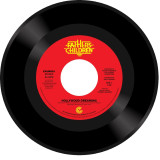
out of Stock

Order now and we will order the item for you at our supplier.

23,49

Last In: 3 years ago
Fathers Children - Everybody’s Got A Problem / In Shallah

Mastered for vinyl from the original master tapes. Recorded around 1972, these tracks were
a result of Band Manager Robert Hosea Williams who had the foresight to preserve the
master tapes from those early sessions and these masterful tracks were released on a 2011
Numero LP. Permission was given for Soul Direction to Master these two tracks from the
original master tapes.

pre-order now16.07.2022

expected to be published on 16.07.2022

19,96
Pneumatic Tubes - A LETTER FROM TREETOPS
  • 1: Summer's Children
  • 2: Joyous Lake
  • 3: Treetops
  • 4: The Big Deep
  • 5: Mumbly-Peg
  • 6: Slow Fawns
  • 7: Camp Sunfrost
  • 8: Overlook Mountain House
  • 9: Saw Teeth
  • 10: Witch Water
  • 11: Magic Meadow
  • 12: Summer's End

A Letter from TreeTops is the debut album from Pneumatic Tubes, the solo project of multi-instrumentalist Jesse Chandler. Grounded here in his own bucolic makings, Chandler opens his imagination to the world with this very personal and contemplative album. It’s a kind of American Kosmiche Music, a paean to the wild landscapes of the Adirondacks and Catskills of Upstate New York where he grew up. (TreeTops is the name of a summer camp, fondly remembered by several generations of the Chandler family.)

The album came to Chandler almost as an automatic transmission. Shortly after the death of his father, he holed up alone in the old family home with a few synths, a couple of vintage keyboards, percussion instruments and of course his beloved flutes and clarinets - the “pneumatic tubes” of his nom de plume. Channelling raw memory and landscape, Chandler laid down most of the material for this mystical and elegiac suite of music in just a few days. He later called on some talented friends to flesh out the final recordings; Paul Alexander on bass, Bill Campbell on drums, Marissa Nadler backing vocals and Robert Gomez on electric guitar.

The result is a series of beautifully faded musical photographs. Gentle melodies are propelled along by synth arpeggiators or laidback sidestick and felt beater drums. Chandler’s wind instruments are woven throughout like wild vines binding the elements together. Towards the end of the album an underlying note of melancholy swells into grief during the very moving Witch Water, which is subtly underpinned with Marissa Nadler’s haunting voice. The clouds soon clear, the mountains reappear, and the wheel of the year and of the generations turns again as A Letter from TreeTops signs off with the same lilting melody on which it began.

Originally hailing from Woodstock, New York and now living in Denton, Texas, Jesse Chandler is the keyboard and woodwinds player for the bands Midlake and Mercury Rev. His particular warmth as a composer and improviser is informed by a childhood ensconced in the mystical Catskill mountains, where he absorbed the area’s rich musical history and developed a fascination with keyboard and woodwind instruments.

A Letter from TreeTops is not his first appearance on Ghost Box, he also contributed organ and flute on the Soundcarriers’ incredible Entropicalia album.

Evocative liner notes are provided by Justin Hopper, author of Old Weird Albion and writer of the Ghost Box spoken word album Chanctonbury Rings. By happy coincidence Hopper also grew up in New York State and has his own deep connection to the landscapes there.

pre-order now25.02.2022

expected to be published on 25.02.2022

20,71
Kapingbdi - Born In The Night LP

Kapingbdi came together in Liberia, West Africa, during the late 1970’s and had their own unique style. This six to seven-piece band played original compositions in a vibrant mix of African Rhythms, Soul, Spiritual Jazz, Funk and Rock. Led by Kojo Samuels on sax, flute and vocals “Born in The Night” presents the essential tracks from their rare studio LPs produced between 1978-1981. The work has been carefully edited and remastered in 2019 for vinyl LP and a 6-Page Digipack CD, which includes two additional recordings. Kapingbdi toured through Europe and the U.S. and were the only Afro funk band to ever come out of Liberia.

Kapingbdi hail from Liberia, West Africa and have their own imitable style. They effortlessly combine traditional African music in a modern mix of Jazz, Funk, Soul and Rock. The band is a fusion of the old and the new.

The word "Kapingbdi" is taken from the Sierra Leone language Mende and means "born in the night". Kojo Samuels was given the name by his Latin teacher whilst attending high school in Freetown, They often meet and debate at night in the city and soon after Kojo is called Kapingbdi. The name serves as a description of his origin. Born In Lagos, Nigeria in 1943. The son of slave children. His mother from Nigeria and father from Sierra Leone who moved the family to Liberia, during the 1950’s.

Kojo has played music for as long as he can remember. He starts with the harmonica and later becomes a drummer and percussionist in his first band at school. During his art studies 1965-1972, he tours Germany and works as an art teacher in the USA. His band Kapingbdi is reorganized five times and consists of up to seven musicians. In a VW-Bulli he drives the group from concert to concert and if the drummer fails, he jumps in himself. Between 1978 and 1981 three Kapingbdi LPs are produced for the independent label Trikont, recorded in Hamburg and Munich. During this creative period, the band plays at festivals in Africa and Europe. In 1984, the band tours the United States and shortly after, they came to an end.

At their best, Kapingbdi would rouse the audience with original compositions like "Human Rights", justice for all, especially for South Africans, and "You Go Go You Go Come". The officials and employees in the government departments have no time for the common man, for any questions such as job search, scholarship or similar, he receives the answer "go, come back tomorrow" and the same thing the following day. Or "Now Is The Time For Cry For Love." Now it is time to scream for love and finally, time for humanity and justice. Despite immense difficulties, the musicians consciously live and work in Africa and are at home in Liberia.

On April 12, 1980, ordinary soldiers and non-commissioned officers organize a coup against the government. This is an attempt to put an end to a policy of exploitation of the Liberian people. Whilst efforts to eradicate poverty, lawlessness and illiteracy are obvious throughout the country, Liberia is still Americanized to a high degree. This is evident, as the radio programs of that time almost exclusively played American disco music. Under these conditions, the people seek a reconnection to their folk music, and Kapingbdi were aware of this. Kojo tried many times to come together with traditional Liberian musicians. This passion takes him north of the country. Meeting and playing with the old hornblowers and playing music on traditional instruments, such as the elephant tusk.

Kapingbdi make high quality tape copies of their own vinyl LPs and patiently try to displace all unauthorized tapes from the domestic "market". Nevertheless, it is hard to make a living through music in Liberia. Kapingbdi, is now celebrated. The radio plays are in abundance, but royalties are not forthcoming. Their musical link is the feeling of Afrobeat and Highlife, which is found in each of the many Kapingbdi pieces. They embody Jazz, which is understood to be the most refined example of black music outside of Africa. In Liberia, Jazz is virtually impossible to hear. Bright shining names such as John Coltrane, Charlie Parker or Miles Davis were widely unknown. Thus, the Black Jazz, including its Back-To-Africa movement of the 60’s and 70‘s, passes by without leaving a trace in Africa itself.

Kojo's claim at the time, was to make African music with the depth, sensitivity and the freedom of the technical level of Jazz. This makes Kapingbdi the torchbeares. The underpaid prophets in small Liberia. It is the passion with which the founder of the band continues to work on their music for years. Tirelessly, stimulating and encouraging his fellow musicians. This is ultimately responsible for the success of Kapingbdi in Liberia itself. The local audience seems to listen to the band in fascinated astonishment. One wonders about the ability to develop as demonstrated by Kapingbdi on the basis of their music. It is African and unusually jazzy, danceable and better than the American disco music heard on the radio.

Rather than chase the money and the job opportunities in Europe, Kapingbdi are firmly rooted in Africa. The musicians live in Monrovia, the capital of Liberia, at the Kabingbdi workshop, located in the Congotown area on the eastern edge of the sprawling city. Kojo works here as a sculptor, painter, batik artist and musician. The sales revenue that his activities generate, gives him the opportunity to support the development of African Jazz music. The highest percentage of funds are from Germany and Kojo’s work ethic is “to work on your own thing“. The stance taken aims to support the welfare of Liberians and Africans. The other musicians of the group live in a second house that is nearby.

For the sake of consistency, Kapingbdi is a full-time band. However, the revenue, from all of the sources, could not keep them afloat. Equally, as important to the group are Kojos's knowledge of traditional African music and his sculpting skills. His knowledge is shared with others at the afternoon workshops. It is here that they discuss new lyrics, engage in political debate and the self-imposed task of improving conditions in Africa. At times the debate became heated, especially during rehearsals. This was regarded as good and integrative, sowing the seeds of innitiative to keep the band together.

From 1980 to 1985 Kojo also opened and ran the club "Panjebota", located on the grounds of the U.S. Consulate in Monrovia. Almost every evening Kapingbdi perform the song "Wrong Curfew Walk", whose lyrics lament the killing of citizens during the curfew imposed by the Liberian government. When the head of state Samuel Doe hears the song, he behaves agressively and forces Kojo to close the "Panjebota". Kojo had already moved on. Soonafter he meets Fela Kuti at the Africa-Festival and plays concerts in Germany with Cecil Taylor's workshop band.

Kapingbdi is for thinking, dreaming, dancing. What they sing about is what they have experienced. Kojo Samuels is 76 years old today and still follows his vocation as a critical musician, artist and activist.

Ekkehart Fleischhammer / Sonorama 2019 (with the help of original press sheets and the memories of Kojo Samuels)

out of Stock

Order now and we will order the item for you at our supplier.

18,91

Last In: 4 years ago
TEDDY LASRY - FUNKY GHOST 1975-1987

strumentalist Teddy Lasry's story is noteworthy not just in regards to the music he released, but in the ways approached the craft of composing and experimenting with sounds and sonics.
Always intrigued with the capabilities of instruments, their groove and their feel, it was very much his family’s influence that helped to fuel these life long affections. As a performer in a parisien cabaret, Teddy’s father Jacques would mingle with giants like Serge
Gainsbourg and Charlie Chaplin (impressed by his ability to improvise, Chaplin wanted him to become his accompanist, but the pianist politely refused). Jacques and his wife (Teddy’s mother Yvonne), would later become members of the innovative experimental group Les Structures Sonores, and surround their children’s lives with sounds. Electronic music was still in its infancy and Les Structures Sonores, with their resonators that produced long, mysterious tones, were deemed ‘cosmic’. It was the era of the launching of the first Russian Sputnik and every time a radio or television station wanted music for their science fiction programs, they turned to one of their compositions. Showing a natural ability with multi instrumentalism, Teddy was rewarded with a spot in the band, allowing him to really explore unconventional methods of composition.
Following a brief stint with Ariane Mnouchkine's avant-garde Théâtre du Soleil after graduating school, Teddy joined the pioneering prog band Magma, with whom he would record three groundbreaking records during the early 1970s (According to former member
Laurent Thibault, their album Mëkanïk Dëstruktïẁ Kömmandöh and its sound were strong influences on David Bowie during the recording
of Low and Iggy Pop’s The Idiot at Hérouville). Despite the successes with these projects, Teddy was constantly searching for new ways
of expressing himself through music, leading him into the beginnings of a solo career that would last the better part of three decades.
Teddy’s transition into his solo career came with contrasting fortunes, in that he was now becoming a music to image composer but with the unfortunate realisation that his eyesight was gradually worsening (due to being diagnosed with retinitis pigmentosa at an early age). Nonetheless, his solo career would begin in 1975, and for the rest of the decade his sound would become increasingly mired in electrified Funk-Fusion and its endless sonic possibilities. The resulting music would serve to highlight Teddy’s love affair with the possibilities found within tireless instrumentation, with the flute and particularly synthesisers becoming a mini-obession of his (he once spent a 7,000 Francs loan, which was meant to be spent on fixing his roof, on synths).
To this day Teddy continues to record and experiment with music, a passion which in many ways has never left his sid, even at the age of 75. His career was one that was fuelled by innate curiosity and an intrinsic desire to discover new methods of expressionism, be it through the realms of Jazz-Funk, ambient electronics, Swing music or indeed through the medium of instrumentation itself. On this compilation, we look to encapsulate the essence of his innovative sound, and from start to finish a sense of his ingenious approach to composing structure and mood is made abundantly clear. The funk-jazz fusion style that embodied the majority of his 70s work is on full display here, with the vibrant flute driven "Los Angeles", the Miles Davis inspired "Blue Theme", the progressive and driving
"Chamonix", and the deeply intricate "Krazy Kat", along with one of his finest 80s slow jams, "Funky Ghost". Two cuts off the ‘Back To
Amazonia’ album are also featured (Teddy’s last album including his Prophet T8, Yamaha DX7 and Oberheim drum machines). "Raising
Sun in Bali" and the title piece both emphasise an ever present passion for synthesisers. "Birds of Space", a standout track off the e=mc2 album, closes the comp, and is a fitting way to end this journey.
Pulled together in close collaboration with Teddy and his family, this collection of songs looks to introduce new listeners to his work and we are proud to present this limited and carefully remastered compilation on vinyl, including extensive liner notes.

out of Stock

Order now and we will order the item for you at our supplier.

22,65

Last In: 18 months ago
Joe Hisaishi - Orchestra Stories: My Neighbor Totoro

Newly arranged and composed by Joe Hisaishi for children and adults who are exposed to an orchestra for the first time.

It consists of two parts: an introductory version with an easy-to-understand explanation of the names and tones of the instruments, narrated by Shigesato Itoi as the father, and a suite without narration. Performed by the New Japan Philharmonic.

pre-order now27.11.2021

expected to be published on 27.11.2021

40,88
Papa Bear & His Cubs - You're so Fine

Deepfunk / soul super rarity flipped with one of the best deep soul sides ever recorded, the family had some great images so we opted for a picture sleeve on this one, 400 copies only. forget about finding an O.G. Researched by our man, Brian Sears

Papa Bear And His Cubs were the brainchild of Eddie Disnute Sr., aka Papa Bear. A native resident of Hampton, Arkansas. Eddie started his music career in gospel then transitioned into secular music after moving to Milwaukee, Wisconsin in 1963. While living in Milwaukee with his wife and children, Eddie played with a group called the Fenders but eventually decided to start a group of his own with his kids aptly named Papa Bear And His Cubs.

Eddie Sr., a naturally gifted musician, taught his children how to play music. Creativity is a part of the Disnute DNA and before long Eddie's cubs were perfecting chops of their own. Papa Bear And His Cubs started performing together around the late 1960s. Although a few memorable gigs came their way, Wisconsin proved to be too cold for the Disnutes so they made their way back to Hampton, Arkansas.

The family continued to perform in Arkansas then made another move to Houston, Texas where they hoped to break into the music scene down south. They lived there for nearly three years and even recorded at SugarHill Studios, yet nothing materialized and the recordings remain a mystery to this day. For their final move, the Disnutes returned home to Hampton after Eddie's wife Christine (aka Mother Goose) received word that her father was ill.

In 1975 the group recorded their only vinyl record at Sam Griffith's home recording studio in Camden, Arkansas. Disnute Sr. recalls it only taking "one night, and one take" for both "Sweetest Thing On This Side Of Heaven" and "You're So Fine" to be born. Both songs have an entrancing quality that is inescapable and will surely resonate with listeners for years to come.

The group continued to perform until the early 1980s, at which point the cubs were bears themselves, who decided to go their own separate ways. When thinking back to their prime days, one thing will always remain clear in Eddie Sr.'s memory, "we could play, all it took was a countdown of 1, 2 ,3, 4 and we're gone".

out of Stock

Order now and we will order the item for you at our supplier.

11,72

Last In: 6 years ago
IBRAHIM MAALOUF 2X12" - FIRST NOEL

"First Noel is a Christmas album including 25 of the greatest classics as well as three exclusive new tracks I composed especially for the very first Christmas of my son, and in honor of my grandma Odette's last one, past year. The Christmas memories I have are full of wonderful moments, so I insisted on recording this album staying true to the magic of these instants.

First thing, I surrounded myself with 3 great friends of mine and long-time collaborators: François Delporte (guitar), Frank Woeste (piano) and Sofi Jeannin (choirmaster). Sofi has selected 8 singers with celestial, sublime voices. We recorded in two magical places: the studio of my friend Armand Amar - where I had the chance to work on my first albums (Babel Studios in Montreuil) - and the Church of Saint-Julien-le-Pauvre. The latter being the most ancient church in Paris - only a few meters away from the Notre-Dame Cathedral - has always been at the center of significant moments in our family history in France. My father was a sacristan there in the '60s. It is in the sacristy that he elaborated and worked on his trumpeter career. My aunt Hind - whom I loved - also a pianist, and my beloved grandmother, Odette, both had their funeral in this church. It is also in this same church that I got engaged and married… So many milestones.

After recording many albums, I felt it was the right time for me to share my versions of those great Christmas classics, by giving them a much less childish dimension and a more musical, also spiritual one, but still preserving their subtle and necessary fragility, specific of children's music or of those great classics renowned and sang all over the world. I was hoping that First Noel would not be yet "another" Christmas album, with Frank Sinatra-like crooners and Hollywood-style arrangements. Instead, a simple, humble, instrumental album, in the original meaning, without lyrics, allowing the melody to be at the center of it all. Soothing music to dream, to reunite us, regardless of our mother tongue, our age, our culture and more importantly regardless of our religion.

That is how Odette viewed things, and this is also the way I wish Nael and Lily, my children, would listen to the world."

pre-order now12.11.2021

expected to be published on 12.11.2021

32,14
Ghosts Of Our Former Selves - Night Church

Night Church is the second album from London-based band Ghosts Of Our Former Selves. On the new record you can hear the band’s love of soul and funk but also their fascination with synth sounds and classic songwriting.While Marvin and Stevie might be a thread you can pick up, there are shades of Daft Punk, The Police and even Elton John. There is emotion in this record. The four years between first and second albums is bookended by the loss of fathers and the birth of children. In the middle a lot else has happened. While making this album, Theo and producer/band member Fred Ala became obsessed with the classic songs of the 70’s and early 80s and that influenced the way they recorded many of the songs. Mixing the album proved the trickiest part. Singer and lyricist,Theo Brehony, describes the life events behind the songs: “This is like a picture of all the things that have happened since our last release. It started out as an album about the break of a relationship but turned into arecord about redemption, love, starting again, having children, fathers."

pre-order now22.10.2021

expected to be published on 22.10.2021

28,87
Piroshka - Love Drips & Gathers

Piroshka

Love Drips & Gathers

12inchBELLA1219V
Bella Union
23.07.2021

Bella Union announce the release of Piroshka’s stunning second album,
‘Love Drips And Gathers’. The album builds on the acclaim of the band’s
2018 debut LP ‘Brickbat’ and the reputations of former members of Lush,
Moose, Elastica and Modern English.
Piroshka emerged in 2018, four individuals with distinct musical identities but
also overlapping histories - a combination that might have unsettled, or even
overwhelmed, some bands. But in their case, the bond only got stronger.
After ‘Brickbat’ explored social and political divisions by way of what MOJO
described as “Forceful, driving garage songs and dream-pop epics,” ‘Love
Drips And Gathers’ follows a more introspective line - the ties that bind us, as
lovers, parents, children, friends - to a suitably subtler, more ethereal sound,
whilst still revelling in energy and drama.
“If ‘Brickbat’ was our Britpop album, then ‘Love Drips And Gathers’ is
shoegaze!” reckons vocalist/guitarist Miki Berenyi, formerly of Lush, a band
that effortlessly bridged the two genres like no other. “It wasn’t intentional; we
just wanted a different focus. I’ve always seen debut albums as capturing a
band’s first moments, when you really have momentum, and then the second
album is the chance for a more thoughtful approach.”
Bassist Mick Conroy (Modern English) agrees. “‘Brickbat’ was a classic first
album; noisy and raucous. On ‘Love Drips And Gathers’, we’ve calmed down
and explored sounds, and space.”
The way ‘Love Drips And Gathers’ changes shape and dynamic is less a
reprise of Nineties Brit indie than a transformation into a more shivery, Euromantic version with glistening electronic filigrees. The opening ‘Hastings’ sets
the tone. Luminous drops of guitar underpin Miki’s becalmed vocal before
drums, bass and a Mellotron add pace while the decorative coda features
their old pal Terry Edwards on flugelhorn.
‘Love Drips And Gathers’ - named after a line in a Dylan Thomas poem - was
inspired by love, family, belonging, memory. Miki and Moose split the eight
lyrics, with some poignant overlaps here too. Miki’s ‘Loveable’ looks to
Moose; Moose’s ‘The Knife-Thrower’s Daughter’ looks to Miki but also their
daughter Stella and his sister Anna; an empathic, touching embrace of the
women in his life.
Staying within the family, Moose eulogises his late mother (the idyllic
childhood seaside trip of ‘Hastings 1973’) and father (the more conflicted
‘Scratching At The Lid’). On ‘V.O.’, Miki pays fond tribute to Vaughan Oliver,
4AD’s legendary in-house art director who died suddenly in December 2019
and who had a particularly close relationship with Lush during their time on
the label (like ‘Brickbat’, ‘Love Drips And Gathers’’ beautiful and enigmatic
artwork is by Vaughan’s former design partner Chris Bigg).
LP pressed on clear vinyl.

pre-order now23.07.2021

expected to be published on 23.07.2021

25,17
Kelan Philip Cohran & The Hypn - Kelan Philip Cohran & The Hypn

Cuernavaca / Stateville / Frankincense And Myrrh / Apsara / Ancestral / Spin / Zincali


Approaching his eighty-fifth birthday, sharp and lean, Phil Cohran lives a couple of blocks from the lake on the north side of Chicago. His modest apartment is filled with a palpable richness. His cornet and trumpets, zithers, French horn, harp and frankiphones (an electric kalimba of his own invention); his beloved telescope; African art; a mural of the Chinese monastery where Muslim monks bestowed on him the name Kelan ('holy scripture'); hand-printed posters from the culture wars of 1960s Chicago; all reflect a life dedicated not just to music, but also to science and astronomy, to history and activism. In its range of subject matter the track-list of Kelan Philip Cohran & The Hypnotic Brass Ensemble embodies this invigorating and all-embracing curiosity: a Mexican hill-town filled with perfume and flowers... an Illinois state prison where Cohran taught inmates in the 1960s... heavenly dancers in the temples of Cambodia... a tribute to a sixteenth-century Venetian musicologist. Welcome to the musical world of Kelan Philip Cohran.
Cohran was born in Mississippi and grew up in St Louis. In the immediate post-war years St Louis was a jazz heartland, home of stalwarts like Clark Terry and Oliver Nelson (both of whom he played with), not to mention a genius called Miles Davis. In 1950 Cohran moved to another heartland, Kansas City, where he played trumpet in one of the hardest swinging swing-groups, led by Jay McShann (who famously had given Charlie Parker his first job). With McShann he spent 'the best year of my life', touring as far as Mexico and playing proto-rock'n'roll in Texas with the likes of Big Mama Thornton on vocals. Back in St Louis Cohran led his own group, the Rajas Of Swing, whose show involved wearing red jackets, grey slacks, blue suede shoes and turbans.
Then in the mid-50s he moved to Chicago. He had a small group with a friend, the legendary tenor saxophonist John Gilmore, whose regular gig was to play at Sarah Vaughan's weekly 'birthday' parties, an excuse for the Sassy One to splash the cash and have some fun. ('What, Sarah Vaughan would sing with you and John Gilmore' 'No way, Sarah didn't sing, she was too busy partying.') And in 1959, through Gilmore, he was invited to join Sun Ra's Arkestra, at a crucial period in the evolution of that extraordinary group. Effortlessly wrapping traditions as divergent as boogie-woogie and electronica in an Afro-centric, intergalactic mythology of his own making, Sun Ra casts a huge shadow across conventional narratives of jazz history. 'With Sunny', Cohran simply says, 'I found my own voice'.
You can hear the emergence of this voice on the LP Angels And Demons At Play, recorded in 1960 - Sun Ra's masterpiece from the period. On the track Music From The World Tomorrow, against the urgent whipped and chopped percussion of the Arkestra, it is Cohran's zither, initially bowed and then plucked and strummed, which is the track's magic ingredient. More profoundly it was Sun Ra's example - his defiant self-confidence and sense of purpose - that set Cohran on his own (to quote another Ra composition) 'pathway to unknown worlds'. Indeed this spirit of self-belief led Cohran to turn down the invitation to accompany the Arkestra when Sun Ra moved east in 1961.
Staying in Chicago, Cohran founded the Affro-Arts Theater and performed with the Artistic Heritage Ensemble, recording the group for his own Zulu Records imprint. (Co-members went on to become Earth Wind & Fire; Cohran taught the group's leader Maurice White the mysteries of the frankiphone). The AACM, a musicians' collective of immense influence and importance, had its first meeting in Cohran's front room. With Oscar Brown Jr and Gene Page he wrote and performed in a show celebrating the nineteenth-century Afro-American poet Paul Lawrence Dunbar. He taught music tirelessly in schools and prisons. His studies into music theory and history led him to the discovery of a key book in his life, Gioseffo Zarlino's treatise on harmony, published in Venice in1558. Astronomy is another passion and another area of expertise. One of the gems of the Cohran discography is African Skies, with its lovely harp playing, commissioned by the Chicago Planetarium in 1993.
In Chicago he also raised a large family. Many of his children have gone on to become professional musicians; eight of them are the Hypnotic Brass Ensemble. For each of them, their first teacher was their father, who famously insisted on giving them music lessons not just for several hours after school, but for several hours before school as well. Their father's music was all around them as children; they all vividly remember lying in bed at night not being able to sleep because their father was rehearsing with the Jazz Workshop downstairs.
For the Hypnotic Brass Ensemble, the voyage to where they are now - whether tearing up festivals from Glastonbury to Melbourne, or touring with Gorillaz, or recording their first album on Honest Jon's - has involved a necessary stepping away from their father's shadow. Phil Cohran is the first to recognise this, happily allowing their sound - heavy on the funk, with the urgency of hip hop never far away - to blossom.
But likewise this album is for all of them a natural step. Recorded in Chicago in June 2011, the idea was beautifully simple - 'my music and their band' as Phil puts it, 'we don't have to rattle on more than that'. Only to point out perhaps that here - in the majestic surge of Zincali, for instance, or in the sheer verve and bounce of Cuernevaca - is music not just filled with the warmth of home. This is music that plumbs the depths and rings with joy.

'Cuernevaca is a town in the mountains south of Mexico City. I was there in 1950 when I was on the road with Jay McShann's band. It's a place close to paradise, a city filled with the fragrance of flowers. I always wanted to go back... In 1974 I taught workshops at the prison in Stateville, the Big House where Al Capone spent time. There's a huge wall around the prison, and once I took Hypnotic there - ha - to see what the future holds for them... Makeda, the Queen of Sheba, sent a caravan of gifts to King Solomon - a caravan that took more than a day to pass one point - and the main gifts were Frankincense And Myrrh... I wrote Apsara in 1967, when Jackie Kennedy was in the news with her visit to the temple of Angkor Wat in Cambodia. Apsara were celestial beings, dancers who brought forth the civilization of ancient Cambodia, by dancing in the holy nectar called Amrita... Ancestral is a meditation drone written for my Friday-night residence at the Ethiopian Diamond Restaurant in Chicago's Rogers Park... Spin is the latest of these compositions. Everything in the cosmos spins, from the smallest objects we can see in a microscope to the largest galaxies. Spin is the motion of all things whether it looks like it or not... Zincali is a name Spanish gypsies call themselves. 'Zin', East Africa; 'cali', the people. One of the offshoots in my research into Moorish Spain has led me to Gioseffo Zarlino, the sixteenth-century master of music at St Mark's in Venice. It's said that Bach lost his sight reading Zarlino's treatise on counterpoint. His greatest composition is his setting of the Song of Songs - 'Nigra Sum', 'I am black'. This is my tribute to Zarlino and to the zincali.'

out of Stock

Order now and we will order the item for you at our supplier.

16,13

Last In: 4 years ago
Yusuf / Cat Stevens - Tea For The Tillerman

Following his spiritual and artistic rebirth, and hot on the heels of his incredibly well received release, ‘Mona Bone Jakon’, Cat Stevens unveiled his second album of the year in November 1970 … and it was to become one of the defining musical statements of the new decade. ‘Tea For The Tillerman’ not only consolidated Cat’s success in the UK and forged him a glittering new career in the USA, it also set him on the road to global superstardom and gave the world songs like ‘Wild World’, ‘Father & Son’, ‘Where Do The Children Play?’ and many more.
To commemorate the album’s 50th anniversary comes this stunning new 180 gram gatefold vinyl 2020 remaster of ‘Tea For The Tillerman’ by Geoff Pesche at Abbey Road, overseen by original producer Paul Samwell-Smith.

out of Stock

Order now and we will order the item for you at our supplier.

25,17

Last In: 5 years ago
Busi Mhlongo - Urban Zulu

• Busi Mhlongo’s chart-topping, award-winning 1999 album
• Heavyweight 180g vinyl with remastered audio, inner sleeve with photographs and new notes by Kwanele Sosibo

Urban Zulu changed South Africa’s music forever, rewiring Zulu migrant roots music for the 21st Century. Busi Mhlongo’s powerful voice and challenging lyrics soar over driving bass lines and glittering guitars of an all-star South African maskanda line-up, backed by a multi-national cast including Lokua Kanza, Brice Wassy, Jacques Djeyim and Will Mowatt.

With this album Busi Mhlongo subverted and then claimed Maskanda music’s previously patriarchal space, voicing a new social blues narrative. Her songs cut to the essence of simple joys, unrequited love, abuse in the name of love, and month-end money blues.

Topping charts in Europe and South Africa, Urban Zulu struck critical and commercial success.

Yehlisan'umoya Ma-Afrika “creates a sensation of being inevitable because the riffs are so organic, it feels like it would be a crime against nature if they fell together any other way” (AllMusic).

'We Baba Omncane' became the sound track for a global Adidas campaign, while a later re-mix became a smash hit for Black Coffee.

out of Stock

Order now and we will order the item for you at our supplier.

18,87

Last In: 5 years ago
PTRCLR004 - Perspectives

Ptrclr004

Perspectives

2x12inchPTRCLR004
Petricolour
07.06.2019

Influenced by the social and political climate of the modern
world, MOTSA’s debut album, ‘Perspectives’, is inspired by his
acute awareness of modern society’s dependence on
technology and the social media bubble also responsible for
the civic polarisation seen globally. The 11 track album takes
the listener on an emotional journey with dark, yet hopeful,
detailed compositions, each representing their own personal
story. The title “Perspectives” refers to a problem we all face:
differing perspectives of the same situation, which in turn
leads to conflict, be it in personal relationships, families and
even political discussions globally. With individuals and
groups often losing perspective in disagreements, MOTSA’s
debut LP calls for more empathy, highlighting our current
trajectory of an ego-driven society. Encouraging listeners to
spend less time behind computer screens and more time
outside in nature to broaden our horizons and reflect on
human decisions, many of the album’s samples were recorded
from MOTSA’s own environment. Using the sounds of children playing in the sand on a Balearic beach, crickets in the grass,
or the ambient soundscapes of bells recorded from his
father’s apartment in Moscow, the producer also recorded and
sampled his own voice to create distant, choir-like melodies in
many of the tracks. The artist’s signature sound – a soulful yet
driven harmonic blend – continues to propel the multi-talented
artist to the highest acclaim into 2019 and beyond.

out of Stock

Order now and we will order the item for you at our supplier.

25,17

Last In: 6 years ago
The Sha La Das - Love In The Wind

When Dunham Records/Daptone producer and musician Thomas Brenneck first heard the close family harmonies of the Sha La Das he had a revelation; he knew he had to get it on tape.


Direct from Staten Island, the four Schaldas, father Bill and sons Will aka Swivs, who also toured the world playing keyboard for Charles Bradley and his Extraordinaires, Paul of Paul and the Tall Trees and Charles Bradley and his Extraordinaires, and Carmine had come into the studio in Brooklyn to record background vocals on Charles Bradley's Victim of Love. It was a passion that drove Brenneck from the very beginning.


'Hearing them sing together in the studio was incredible', says Brenneck. He collaborated with Bill Schalda writing songs and applying harmonic sensibilities rooted in doo wop, blues and soul. It wasn't a stretch for Bill, after all he'd been second tenor when still a teen in Brooklyn vocal group, The Montereys in the 1960s (their 45, Face In The Crowd/Step Right Up on Blast records sells for $500 these days) who would play venues from neighborhood bars to the 1964 World's Fair in Queens.


'Bill is the genuine article, just like Charles Bradley and Sharon Jones, he came directly from the source,' says Brenneck. Indeed, Bill Schalda was right there amongst doo wop and r&b groups of the era, singing Moonglows and Flamingos tunes.

'You'd go out on the street and constantly hear a bunch of guys singing on the corner, they'd finish playing handball in the schoolyard during the day and then they'd start singing at night,' says Bill. 'We were all just guys in the neighborhood in Brooklyn, who gradually found each other.'


After their children were born, Bill and wife Linda moved the family across the Verrazano-Narrows bridge to Staten Island. Growing up, sons Will, Paul and Carmine remember summer nights singing group harmonies on the stoop of their home with their father Bill guiding them. 'He would bring us out on the stoop on Staten Island and he would teach us each parts of say, the sesame street song - we were his backing group very early on - that was fun,' says eldest son, Will.


On this, their debut, the talent is harnessed in 11 songs, each tender-voiced delight delivered with absolute conviction combined with musicians that have help define the Daptone/Dunham Records sound including Brenneck, Homer Steinweiss, Dave Guy, Leon Michels, Nick Movshon and Victor Axelrod. 'I wanted to take the Sha La Das outside of the doo wop genre,' says Brenneck. 'To take the whole vocabulary of doo wop harmony and reapply it to soul - so you get super soulful harmonies along the lines of The Manhattans & The Moments.'


From the opening atmospheric guitar strum of Open My Eyes via a walk along the Coney Island boardwalk catching the last glimpse of sunlight at dusk of Carnival to the sublime crescendo of harmonies of the winsome Love in the Wind, each song evokes a deeply personal yet universal yearning that none of us can escape. Quite simply every song yields magic.

There's something special when a family can meld voices in close harmony. The Everly Brothers had it, The Beach Boys had it, the Schalda's have it.

out of Stock

Order now and we will order the item for you at our supplier.

20,13

Last In: 7 years ago
Spacemen 3 - Taking Drugs To Make Music To Take Drugs To

Double LP on heavyweight 180 gram audiophile black vinyl in a wide spined sleeve with new artwork layout. Re-mastered by John Rivers at Woodbine Studios especially for vinyl release. Includes a bonus track not on the CD version and new artwork design. Never has a record been so aptly titled, or so perfectly descriptive of a band's particular vision of the universe. For all that, the original appearance of Taking Drugs was in fact a bootleg on the semi-legendary/semi-notorious Father Yod imprint in 1990, later supplemented with contemporary outtakes and cuts for the Bomp reissue in 1994 and one further song for the Space Age version in 2000. The original seven tracks, dated January 1986 and the first recordings to feature Pete Bain on bass, are collectively known as the Northampton Demos, understandably named for the recording location in a studio outside said English city. Both Sonic and Pierce have been on record as long preferring these takes to the eventual versions that surfaced for the most part on Sound of Confusion. Certainly it's a fine set of performances, showing a definite step toward the more familiar sound of the group and away from the rougher takes on For All the Fucked Up Children of the World. "The Sound of Confusion," aka "Walkin' With Jesus," rips along with fierce energy, Pierce's singing and the rampaging, primitive wail and rumble of the band just wonderful. "Losing Touch With My Mind" takes things to an even higher level, a huge wallop of feedback and beat (Natty Brooker's drumming in particular delivers just what the doctor ordered), Pierce delivering the lines with a flat, cutting drawl. On the slightly lighter tip, "Come Down Easy" is more or less fully in place (aside from singing about it being 1986!), possessing a more upfront but less vocally distinct feel than the Perfect Prescription take. The tracks that surfaced on the later reissues come from a variety of different sessions, including the original take on "Feel So Good" and a good live version of "Things'll Never Be the Same," one of several cuts featuring Brooker's drumming replacement Rosco.

out of Stock

Order now and we will order the item for you at our supplier.

28,03

Last In: 7 years ago
Joao Selva - Natureza

Joao Selva

Natureza

12inchFVR133LP
Favorite
30.06.2017

avorite Recordings proudly presents Natureza, first album of Joao Selva. The story of Natureza is made of the meeting between two passionate artists who are Jonathan "Matuto" Da Silva and Bruno "Patchworks" Hovart.Born and raised in Ipanema and son of a pastor, Jonathan Da Silva grew up in a community of ex-prisoners and converted artists. He made his first guitar notes before his 10th birthday, under the watchful eye of Wanda Sa (muse of the bossa nova), and influenced by a father who in addition to his work, was also a true music lover with a collection, where black music, rock and classical meet. From the age of 18, Jonathan began a life of entertainer, traveling the world to offer shows for disadvantaged children and intensively practicing the Brazilian traditional music arts (Capoeira Angola, Maracatu, Samba de Roda, Coco de Roda...). It was later in France and in Lyon that he put down his instruments. There he formed the trio Forro de Rebeca in 2008, touring the all country and winning many praise in media. The trio recently joined forces with American producer Maga Bo on the project Sociedade Recreativa, whose album was released in 2016 on The Jarring Effects label.Bruno Hovart is a recognized producer, multi-instrumentalist, and remixer. After passing through Angers, Birmingham and London, he's based in Lyon since 2001. Bassist and guitarist for various bands, he switched to production in the mid-90s. Passionate about music and tireless creator, Bruno has practiced in almost every imaginable style, when it comes to groove music, collecting many aliases and projects for more than 10 years: Patchworks, Voilaaa, Uptown Funk Empire, Mr President, Taggy Matcher, Mr. Day, Hawa, John Milk, Lightnin 3, The Dynamics or Metropolitan Jazz Affair ... Nothing resists and escapes his talent and production skills. Thus, when he discovered and met Jonathan and his music, Bruno saw an immediate opportunity to broaden the spectrum of his discography a little more, by looking at Brazil. Beyond its traditional heritage, Brazil has always been a land of extremely varied music, influenced by the international scene. Soul, Jazz and American Pop did inspire many local stars such as Chico Buarque, Carlos Jobim, Gilberto Gil, Tom Zé, or Erasmo Carlos. Both fervent lovers of this movement and these names, it's with the idea to pay them a faithful tribute, that Jonathan and Bruno began the Joao Selva adventure. Together they gave birth to Natureza and embark us for a trip into the heart of the Tropicalist Pop influences of Jorge Ben and Caetano Veloso, the intoxicating Funk of Tim Maia, and the social poetry of Vinicius de Moraes.

out of Stock

Order now and we will order the item for you at our supplier.

14,41

Last In: 5 years ago
  • 1
Items per Page:
N/ABPM
Vinyl