► One half of duo Lumisokea and persistent sonic explorer ANDREA TAEGGI (Opal Tapes, SM-LL, Type, Präsens Editionen) debuts on OOH-sounds with a new solo album under-the-influence of mushrooms.
► Recorded at Willem-Twee synthesis studios in Holland, Mycorrhiza is a lucid excursion into a new form of 'ritual-computer-music' — gamelan from the future.
►Master + Cut by Helmut Erler, D&M Berlin. Limited Edition of 200, 12" black vinyl housed in gold cardboard sleeve with 'ad-hoc' fluo sticker.
Of course this is not the first album born under-the-influence of mushrooms, but apparentlyTaeggi doesn't take them here as he rather observes the cognitive and intelligent behavior of mycorrhizal fungal roots—one of the great mysteries inhabiting the forest soil, and from which a network of beneficial underground relationships with plants sprouts. Known as Mycelium, this fascinating wood-wide-web very much resembles the intricacy of the human neural system—transporting carbon, water and nutrients from one tree to another. A mutualistic symbiosis that Taeggi similarly establishes with the rather rare arsenal of sound machineries he had access to at Willem-Twee synthesis studios in Holland—a center for experimentation inspired by Berio and Maderna's Studio di Fonologia RAI in 1950s Milan.
In the process of tweaking and feeding electric impulses and sound signals into instruments of the likes of the iconic ARP 2500/2600 and a number of testing/measuring units from the 50/60s—originallynot conceived as musical instruments—Taeggi engages into an exchange of nutrients and information, while abruptly sabotaging un-welcome elements, hence accelerating the sound superhighway towards spectral psychedelic tension—a process he seems to be extremely in control of. Taking a step aside from his usual minimal approach to address more complex structures and augmented mind-sets, Mycorrhiza sounds at times like gamelan from the future: a lucid excursion into a form of "ritual-computer-music" with a conspicuous penchant for detail,alluding to a continuitybetween pseudo-cerimonial and laboratory-like computer music, steering clear from any reference to a specific creed or religion—imagine Stockhausen drinking the Amazonian sacred brew Ayahuasca..
The swarming micro-movements of "Cuttleburrs" multiply in a series of crescendos marked by sudden falls, saturated drums incursions and tense sonic clusters, introducing the more explicit gamelan percussive tones and compositional forms of "Kodama" and "Icaro". Recorded on the ARP 2500, "Mycorrhiza" uses white noise generators, resonant bass and spring reverb to conjure up a magical fungal diorama, which expands into the spooky shadows of skeletons and demons of "Phantasmagoria" and the spectral mystics of "Oculus Cordis"—the Eye of the Spirit — in which Taeggi grapples with the same sine-wave generators that Stockhausen used in his seminal "Studie I" and "Studie II".
Suche:feed the machine
2x12"
Originally recorded in 1994 and released in 1995, Home is characterized by MASSAKER's ultra-refined riffs of shrieking, screeching feedback, and rattling machine gun staccatos.
Exuding confidence, authority and a natural rapport that the musicians clearly had with one another. Certain songs from earlier records were revisited on Home including "The Tribe" and "Massaker" from The Tribe, and "Templehof," "Hunter Song," and "Böhmen" from Black Axis. These pieces had evolved following years of rethinking, rehearsing and reshaping them on stage, as well as playing with Danny Lommen, who had replaced Frank Neumeier on drums after Black Axis.
These refined versions on Home raise the level of density and tension, the ominous evocations of impending doom, booming threat, and the grim determination that's always driven MASSAKER.
- 1: Shoot To Kill
- 2: Guillotine
- 3: Dead Man's Hand
- 4: Midnight Hour
- 5: Mass Confusion
- 6: The Cold Emptiness
- 7: Feeding The Machine
- 8: Devil In The Flesh
- 9: Spoon Bender
- 10: The Raven
- 11: Black Widow
- 12: A Thief Inside
- 13: Atlantis (Cover-Version; Bonustrack Auf Dem Limited-Edition-Cd-Digipak Und Auf Der Cd, Die Der Lp-Version Beiliegt)
black LP+CD, 180 gram
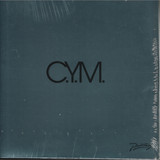
C.Y.M. is the collaboration between British producer and DJ Mike Greene (otherwise known as Fort Romeau) and LA-based American musician Chris Baio, who releases music as Baio in addition to playing bass in the acclaimed band Vampire Weekend. Their debut, self-titled EP arrives on Phantasy as an elegant pean to the infinite possibilities of kosmische music, driven by a motorik strain of psychedelia. The foundations of a wider project, C.Y.M. speaks not for analogue nostalgia, but a subtle and modern update on imagined futures that are still open to interpretation.
‘Capra’ immediately establishes the duo’s masterful if unsurprising grip on rhythm, a man-machine stomp that persists as the track takes myriad turns, from post-punk guitar licks and processed vocals, through bubbling modular synthesis and culminating in a soaring, cathartic melody. On ‘Far Gone’ C.Y.M. turn their studio inward for a more brooding and intimate interpretation of their sound, a balearic amalgam of intriguing vocals, feedback soaked riffs and no-wave inspired movement. The bliss beneath the waves of noise that crash across C.Y.M’s music emerges fully on the driving conclusion, ‘Super-Cannes’. A hypnotic tempo and blistering drums intertwine with whirling organs, and shimmering keys, providing a wistful and warm finale.
It's a strange new post-everything musical landscape we occupy.
The machines - you could argue - have been playing the humans for some time, and the conversation became pretty one-sided.
But you know, not everyone is singing from that hymn sheet. That Man Monkz enjoyed the apprenticeship at House PLC more than the opportunity to progress to middle management. Itchy musical feet meant extended exploration of fertile avenues of interest like the Madison Washington & Pan Amsterdam Hip Hop projects, meanwhile the pull of the 4/4 was never far from the studio door, and all accomplished with an assured versatility that shines.
Musical alliances formed in the disparate but related playgrounds of Detroit, Sheffield, Berkeley and Atlanta, all underpinned by an emphasis on seeking out collaborations and gigs, which represented a real exchange of energies, rather than a bank raid.
Letting things percolate in this more measured way means we've arrived here, a follow up of sorts to 2016's 'Columbusing'
This is Monkz allowing the ear ringing of gigs to feedback organically into bright dance floor flashes, which by virtue of their careful crafting are destined to last much longer.
On Zero Sum, we get a much greater economy of elements on the pared down dance floor ammo like 'Freaks N Prophets' & 'Chai Tea', a perfect counterpoint to beautifully realised pieces like 'Them Thangs feat Ms Fae' & 'After Dark with Nikki O' interspersed with funk-heavy workouts and sample jams like 'Easy Still', 'LvnLmtd' & the unashamedly KDJ influenced shamanism of 'WhatUthinkIDo'
It's a pick 'em and stick 'em ride of individual gems and a cohesive whole too. The opposite of thrown together, this has been worked and weathered, naturally. The House always wins, but sometimes...just sometimes.
Soft Machine is a surreal wander through the mystical sonic forest. A vision curated and designed by Chicago native Justin Aulis Long. A Cyclopian point of view while gazing through a wide lensed scope, which exists in the liminal spaces where light meets dark and angelic forces bath in the sludge and stardust of unfiltered eroticism.
Eye of the Minotaur - collage 001 is a collection of artists working in varying musical practices that are channeling the solitude of mutantness, strolling through the familiar yet unfamiliar halls of the uncanny, refusing ordinary structures of the mundane, grasping the cold humor of cynicism, basking in the dichotomy of cosmos and chaos, and invoking the energies of Eris and Eros.
Setting the ground is Ciarra Black, a Berlin based New Yorker who makes no apologies for her bare knuckled soundscapes. DuPont Street is a ritualistic unification of discordant entities that summons visions of Pazuzu (lord of the demons) and Inanna (goddess of love) fornicating beneath The Tree of Life. Razor edged synthesizers slice through the atmosphere with the precision of an avenging angel’s flaming sword, while a psychedelic drum code activates ritual movement of the body.
As the needle passes beyond the next threshold it is met by a towering totem, bristling with the illuminated light of the sonic astral plane. Erected from the foundational matter that birthed the Detroit electro punk sound, Eyes Up continues to add to the narrative that is drenched in deranged electronics intuitively mangled in a post punk tradition. Dystopian percussive rhythms generate an unorthodox domain where muffled utterances present an aural Rorschach test. Could this be the riddle of the Sphinx, or an ancient spectral being that possesses secret knowledge? Only its creator, Stallone the Reducer, holds the key.
Fixed at the axis of the journey, Perfect Headache Forever, a mystic operating within the DIY spaces of Chicago, levitates on a transcendental mass that is equally melancholic and optimistic. Her voice hosts a strength equal to a pantheon of titans. Armed with a magical electronic musical box, she weaves narratives that are prophetic. Itself Ecstatic is a voyage through a misty soundscape that begins at one point, but ends in a distant other, in accordance with a system of divination.
Gazing into the murky waters of the oracle’s cauldron, Circling Vultures, (a collaborative effort by Justin Aulis Long and Kenneth Zawacki) channel and evoke the spirits of Antonin Artaud and Geroges Bataille. The poet’s voice, engaged in an act of mutilation and self cannibalization, howls while projecting visions of sacred conspiracies, sensations of vertigo while peaking over the edge of the abyss, and the looming weight acquired from the solitude of the Minotaur alone, sitting silently at the center of the labyrinth. Accompanying the mystical bard’s verbal declaration is a triggered mechanized synth that roars with the vitality of Cold War era Wave music, which is then juxtaposed against applications of loose keyboard playing. The artist’s hand is revealed against the calculated actions of machines.
Bringing the document to its finale, Libby Del Barrio, a multi disciplinary artist based in San Antonio, performs a closing ritual in a manner that only she knows. Setting fire to the Elysium Fields while personified as Moze Pray, Del Barrio rejects plastic narratives that aim to pacify. No Tears, is an unapologetic account of life’s feedback loop around the Wheel of Fortune. Sacrificial actions through ceremonial performance reveals a gateway founded on truth and torment. Moze Pray’s ability to combine musical production, poetic vocalization and ritualistic body performance is charged by chaos and amalgamates into a product of pure expression that defies the rose colored filters aiming to conceal harsh realities.
See Through is a new collaboration between Aidan Baker (Nadja), Faith Coloccia (Mamiffer, Mara, Sige Records) and renowned percussionist Jon Mueller.
The project was brought to life through Baker exploring textural rhythms created by sampling small, sharp and abrupt sounds on the electric guitar and then sequencing them in a drum machine to form the bedrock of the tracks. Mueller then added his particular, signature brand of intricate, hypnotic percussion to the mix and the compositions began to grow and take shape. The pair agreed that the pieces needed a more human touch and Coloccia was invited onboard, contributing processed vocals via looping, tape manipulation and microphone feedback.
The result is an other-worldly record that seamlessly flows from beginning to end, immersing the listener in waves of ambient movements and soporific beats. There is a trance-inducing aspect to this work, deserving to be consumed in one sitting and allowed to manifest itself for the duration. The trio have crafted a piece of work that stands up to the quality and integrity of their combined back catalogues and indeed adds something completely new for fans to discover and devour.
serenitatem, the fifteenth installment of FRKWYS, RVNG Intl.'s collaboration series pairing intergenerational artists in creative conversation, joins Visible Cloaks with Yoshio Ojima and Satsuki Shibano, two trailblazers of the Japanese avantgarde music and visual arts scenes of the 1980s and 90s.
Yoshio Ojima began his career as a composer of environmental and ambient music, with a particular interest, and optimism, in the possibilities of generative software. His compositional pursuit of human synthesis with computerized forms was realized in its fullest potential alongside Satsuki Shibano, a pianist renowned for her interpretations of Erik Satie and Claude Debussy. Together, they were among a handful of influential Japanese artists whose innovations still resonate, if not more vibrantly than ever, well beyond the tightly-knit scene's original core. In the early 90s, Ojima was among the programmers of the influential satellite radio experiment St. Giga, a constantly-evolving sonic landscape that combined field recordings and sound collage with occasional readings of Japanese poetry. Satsuki was a regular reader for the station. This musical terrarium bloomed out of sight in a small Tokyo studio, a greenhouse of sound with no set start or finish time that audiences could tune into, absorb, and immerse.
The perpetual flow state of St. Giga — recordings of which Ojima shared with Visible Cloaks — would be highly influential to serenitatem's constitution. As Visible Cloaks, the Portland, Oregon duo of Spencer Doran and Ryan Carlile have developed their own set of creative strategies that form an aesthetic fuse point between human intention, aleatoric composition, and improvisation.
These are notions most recently reflected in 2017's Reassemblage and Lex, a respective album and EP in which the duo combined generative software and virtual representations of global instruments into lacy, interlocking patterns. Long time admirers of Ojima's work on albums like 1988's Une Collection Des Chainons, Doran and Carlile discovered after an online introduction that they shared with Yoshio and Satsuki an abiding interest in pre-classical composers, the Lovely Music, Ltd. label, and the British avant-garde, as well as a mutual respect for one another's techniques and processes.
The four musicians met in Tokyo, Japan at Sounduno Studios in December 2017, at the tail end of Visible Cloaks' first Japanese tour, to commence work on serenitatem. Leading up to the studio sessions, Doran and Carlile sent Ojima processed sound sketches recorded while on a European tour, which Yoshio would add to and return. Visible Cloaks would then fold Yoshio's edits back into the original compositions, which Doran and Carlile brought to the exploratory recording session. During that week together in Tokyo, the quartet made use of a number of creative strategies — 'echoing sound together,' as Yoshio puts it. Among the strategies, MIDI randomization gave the quartet melodic lines and what Doran calls 'randomized clouds,' or 'tightly grouped notes that become smeared tonal clusters functioning more like chords in themselves.' Carlile would also feed Ojima and Satsuki's text into Wotja, a generative music software which produced a MIDI language around which the quartet expanded their compositions.
'The aim,' Doran says of serenitatem, 'was to make a work that was not specifically ambient (or environmental), but something more multi-hued, weaving these deconstructive concepts into an album that has a deeper architecture underpinning it.' Accordingly, serenitatem is a marvelously sharp record, its sutures between human and machine virtually impossible to find but suggested everywhere you turn. The collaboration among Ojima, Satsuki, and Visible Cloaks is both musically and conceptually inseparable from the technology that made it possible. Throughout the album, Shibano's playing resonates like Satie's, her rhythms cascading like drops from leaves an hour after the rain. Overtones are stretched and warped like modeling clay, then spun around and shown off from multiple angles.
A single soaring note might seem to be suddenly plunged underwater, its richness of sound made shallow and its sharp edges blunted. Pittering chimes and rapidly warping vocal samples hang in the luxuriously glossy space, water trickles from ear-toear, familiar melodies rise from nothing and dissolve before they can be traced. With the depth of its emotional charge, serenitatem burns away the easy cynicism of the day, presenting itself as the kind of delocalized work of art the internet promised us decades ago — a synthesis of artistic visions, technological sophistication, futurist ambition, and, occasionally, ancient polyphony. Listening to it can feel a bit like tuning in to a 21st Century version of St. Giga: It's a place where the future still grows.
Visible Cloaks, Yoshio Ojima, and Satsuki Shibano's serenitatem, FRKWYS Vol. 15, will be available across LP, CD, and digital formats on April 5, 2019. The quartet will perform select live shows throughout 2019.
Stefan Smith has channeled an elevated reverence for process, texture and synth-extrapolation with the forthcoming release of his self-titled LP on the Sapiens imprint. A relative new-comer to the land of rapid fire releases and dance floor formulae, Smith is deeply steeped in the art of music creation, performance and theory.
As a graduate of Mills College's revered music department, Smith's prosaic understanding of music partially explains his migration to Sapiens, a label headquartered in Paris, France, which, under the direction of techno luminary, Agoria, has been expanding the realm of possibility for what a techno label can become. Collaborating with musicians, visual artists, film directors, shamans and sound designers, the young Sapiens platform releases may include political speeches, radio hits, dance floor tunes, sensorial or cognitive music or a gentle computer
virus'. Smith's LP contribution will definitely fall on the more delicious end of this spectrum, having woven a synth-lovers dream tapestry.
The nine tracks composing the album, Stefan Smith', draw the listener in on a river of oscillators, which push just past the banks of perceptible sound with with flawless production and loving sound treatment. The idea behind the album is very raw and organic. Stefan Smith focuses on atmosphere, mood, tones, and frequencies, rather than melodies. His productions are a response to the subliminal, and about feeling.
This album came together from a natural flow of working with computers and synthesisers, and also from the musical connection fostered Sebastien Devaud (Agoria). His approach to the album's production was to edit as little as possible, keeping the original feeling of chance and temporality intact. We can sense here Smith's intuition as sound designer, a role which has enabled him to work with artist Nicolas Becker and through this association further contribute work to the Philippe Parreno 'Anywhen' exhibition in Tate Modern Turbine Hall. The feedback
generated by studio experimentation gives birth to new ideas for aural shapes and textures. If one were only to lie back and identify the various wave forms, like butterflies and birds flittering through dappled sunlight, in each track's canopy of bountiful synth elements the mind's eye would dance with the steady intervals of Smith's real-time probe of his machinery, however, deep tracts of emotion and effortless grooves won't allow for a purely sensory listen. In the spirit of exploration, enjoy the ride.
The four tracks on this EP represent a bit of a transitional phase for Louis Jaquet (aka Kid Who), marking a move from a basic setup with an MPC2000XL sampler and a computer to a fully-fledged hardware studio. The initial versions of these tracks were quick jams that he had made early on in this change, but which had lay dormant on his hard drive for some time, before being revisited and reworked for this release with the new equipment.
'Rhythm Code' began life as an exercise in using only freely distributed software synths, and the majority of those sounds are still there, bar some additional acid sequences and tweaks to the rhythm parts.
On 'ZF Cut' his focus switched to samples, in an effort to squeeze the most he could out of his MPC, which at the time had only recently been upgraded. The unassuming beige box gives colour to anything you feed into it (breakbeats in particular), and a host of basic onboard effects add further quirky character, in this case hollow drones and rumbles which are the core of the track.
One of Kid Who's early purchases was a cheap old Yamaha multitrack cassette recorder, which presents many opportunities for sound manipulation. Different tape speeds, tape types and manual manipulation during playback open up a world of noisy, woozy atmospheres, some of which formed the basis of 'Spool Night'.
Of all four, 'Timescape' required the least revising, and the version presented here is very close to the original, 100% computer-based draft. Although the beat was built with Roland 707 drum machine sounds, a staple of early Chicago house records, he wanted to juxtapose these with a more up-to-date techno aesthetic, with a handful of final touches added in the new studio to finish
The four tracks on this EP represent a bit of a transitional phase for Louis Jaquet (aka Kid Who), marking a move from a basic setup with an MPC2000XL sampler and a computer to a fully-fledged hardware studio. The initial versions of these tracks were quick jams that he had made early on in this change, but which had lay dormant on his hard drive for some time, before being revisited and reworked for this release with the new equipment.
'Rhythm Code' began life as an exercise in using only freely distributed software synths, and the majority of those sounds are still there, bar some additional acid sequences and tweaks to the rhythm parts.
On 'ZF Cut' his focus switched to samples, in an effort to squeeze the most he could out of his MPC, which at the time had only recently been upgraded. The unassuming beige box gives colour to anything you feed into it (breakbeats in particular), and a host of basic onboard effects add further quirky character, in this case hollow drones and rumbles which are the core of the track.
One of Kid Who's early purchases was a cheap old Yamaha multitrack cassette recorder, which presents many opportunities for sound manipulation. Different tape speeds, tape types and manual manipulation during playback open up a world of noisy, woozy atmospheres, some of which formed the basis of 'Spool Night'.
Of all four, 'Timescape' required the least revising, and the version presented here is very close to the original, 100% computer-based draft. Although the beat was built with Roland 707 drum machine sounds, a staple of early Chicago house records, he wanted to juxtapose these with a more up-to-date techno aesthetic, with a handful of final touches added in the new studio to finish
- A1: Suck - The Whip
- A2: The Invaders - Astral Iii
- A3: Otis Waygood - Straight Ahead
- A4: Abstract Truth - My Back Feels Light/What Can You Say
- A5: Dickie Loader With Freedom's Children - The Eagle Has Landed
- A6: Buzzard - Blurry Visions
- A7: The Fireflies - Cathy Come Home
- B1: Hawk - Predictions
- B2: Freedom's Children - Kafkasque
- B3: Bryan Miller's Destruction - Blue Machines And Dreams
- B4: John & Philipa Cooper - The Mad Professor
- B5: Tidal Wave - Morning Light
- B6: The Idiots - Magic Dragon
- B7: Mccully Workshop - Birds Flying High
This collection brings together rarities from well-known artists like Abstract Truth, Suck, Otis Waygood, Freedom's Children, John & Philipa Cooper, McCully Workshop and Hawk, as well as lesser known acts like Buzzard, The Fireflies, The Idiots, Tidal Wave, and The Invaders. Although the South African rock movement of the late sixties and early seventies was not a major commercial success, its participants heralded an exciting new age in South African rock and started a movement aimed at changing the musical tastes of fans in a spectacular way. Stadium concerts became the vehicle for feeding the youth with heavier rock sounds, and behind studio glass were producers like Clive Calder, Billy Forrest, Graham Beggs and Selwyn Miller who acted as change agents to transform conventional pop into heavier 4 to 5 minute songs. The movement's struggle for recognition through airplay remained unanswered and only the true fans of rock knew about their existence. Licensed by the Fresh Music label in South Africa and available on vinyl for the first time, complete with insert and liner notes.
A new, heavier direction for Howlround, a project better known for more ambient work. Described as 'Tapeloop Techno', thick knotty tangles of dense, pulsating bass are an echo of Robin's early days making bad dance music, while the abrasive snarls of feedback swirling around these tracks point to his more recent embrace of indeterminacy and chance composition. Previous vinyl releases on Psyché Tropes, The Wormhole, A Year in the Country and Front & Follow as well as his own label The Fog Signals have shown a deep understanding of the possibilities of tape manipulation. On The Debatable Lands Howlround eschews the usual field recordings in favour of exploring the interior world of the machines themselves.
The California-born, London-based producer Rrose is well known for taking dancefloor techno into the uncharted depths of experimentalism and psychedelia while also paying homage to artists of the 20th century avant-garde such as Marcel Duchamp, James Tenney, and Eliane Radigue.
"Beware of Shells" (the first solo Rrose release of 2018) is a diverse five track EP that goes to extremes of both aggression and tranquility while remaining strangely cohesive. The EP opens with machine gun bass drums that slowly disintegrate into a swirl of undulating tones and ghostly resonances. Next comes "Incisors" - the most solidly dancefloor track of the EP - which establishes a primal, skeletal rhythmic base upon which snake-like analog synth lines interweave in unpredictable ways. "The Swelling" follows with a short, sparse study in feedback, bent into uneasy melodic patterns. Side B opens with a previously unreleased 2013 remix of the Los Angeles band Deathday, and is perhaps Rrose's most overtly "industrial" track to date, with buzzing, dissonant synth tones that sound somewhere between a foghorn and a distorted guitar. The EP finishes on a contemplative note with "Pecking Order," a microtonal, ritualistic affair conjuring the spirit of Wendy Carlos's little-known masterpiece "Beauty in the Beast."
The godfather of acid house, DJ Pierre, is back - bringing four heavyweight Chicago cuts to the fore, two of which, 'Pinball Machine' & 'The Spirit' are unreleased, exclusives.
'Sexy Aquarian' showcases Pierre's unique style putting his trademark spin on this classic vocal, combining it with a bumping bass and dizzying acid lines, to trigger old memories whilst giving you something new for your mind, your body and your soul.
Next up 'Pinball Machine' goes in heavy on the percussion - filling those speakers with a barrage of weighty toms, crisp hats and crunched up snares. The frenzied synth line bounces around relentlessly, pinging off the sides of your brain like a sonic arcade.
Take to the flip for a lesson in how to take jackin' house to another level. 'Whats Mine is Mine' delves beyond the beat, mixing sassy vocals and spiritual organ stabs, with a touch of swing reminiscent of an era long gone.
Closing out the EP, 'The Spirit' utilises another treasured vocal layering it behind punchy drum programming, a rumbling bass and atmospheric touches that add an ethereal tinge to the track.
DJ Feedback:
The Black Madonna - We Still Believe / Liaison Artists - Excellent!
Eli Escobar - OH yes.
PBR Streetgang - 20/20 Vision - classic
Andy Caldwell - Nettraxx / Cr2 Records - Ooh so so sublime. Good shit here!
Tony Humphries - The Zanzibar / New York - Nice peak time banger.
Danny Howard - BBC Radio 1 / Nothing Else Matters - Aceeeee. Wicked vocal!!! Love the vibe
The latest release on Arma comes from Dutch legend and devoutly deviant underground operator Ruud Lekx, aka Rude 66. With a legacy that reaches back to the early 90s and the rough and ready Dutch electro sound of Bunker Records and The Hague, he's maintained a distinctly non-conformist approach that touches on acid, Italo, techno and more besides, all finished with the punky attitude that sets him and peers like Unit Moebius and I-F apart.
The tracks gathered together on The Witch Trials EP come from throughout Lekx's career. As the artist himself says, 'tracks from wildly different eras and sessions suddenly can combine to form one coherent EP. It's almost like the A-side tracks were waiting for 20 years to be combined with the B-side tracks.'
The overriding theme that binds together these timeless machine excursions is that of medieval witch trials - a global phenomenon that peaked in the 15-1600's. Considering the suspicion, propaganda and mass moral panic involved in this strange curio of distant history, Lekx points to the parallels with the current age, 'of political polarization and fake news accusations flying all over.' The EP title is also a tribute to two records close to his heart: The Fall's Live At The Witch Trials, and the one-off Witch Trials project by members of the Dead Kennedys, Adrian Borland and Christian Lunch.
'Werewolves & Poisoners' and 'The Crusade Against Idolatry' are both archive tracks from the 1994-5 period when Lekx made his first albums for Bunker Records. The first track's charging arps, rugged kicks, nagging acid lines and discordant paranoia all speak to that trailblazing period, while 'The Crusade...' revels in canny programming of interwoven synth lines feeding into an unhinged, psychedelic rampage that reflects the righteous fervour and spiritual confusion of the EP concept.
'The Absence Of Diabolism' opens up the B-side with a different tone, having been produced in 2016 and demonstrating the deeper acid undulations Lekx has become known for in more recent years. Still delivered via the same trusted tools he was using in the 90s, the sound feels like an extension of the Rude 66 vision rather than a separate entity. 'Envious Are All The People, Witches Watch At Every Gate,' a cut from the late 90s, closes the EP out in a spacious, snarling exploration of broken acid electro laden with cinematic sweeps of synthesizer and a constant sense of unresolved tension.
Across these four tracks, Lekx displays the scope of his craft as Rude 66 while also proving that timeless music can make sense in any context, and that the threads of inspiration in an artist's journey can be followed, explored and even resolved 20 years later, when you least expect it
"It's Maths classes. A red-haired boy sits in the back, rhythmically tapping his fingers on a table like a madman. Although other students' eyesight is focused on the formula being written on the black-board, the boy could not care less. Out of a corner of his eye he notices as the sequence of numbers slowly begins to melt off the blackboard, glittering with colours, and finally spills all over the floor like a fractal leakage from some other dimension. Students from the first rows, scared, put their legs up - and then you start to hear the rhythm. The sounds, once set free, feedback from the walls and find their way to all chinks and cracks, circle all around to finally reach the teacher's ear. The lady cannot stop the upcoming fury, grabs Krzysztof Ostrowski (number 28) by his ear and circumventing the leakage she leads him out of the classroom. It's not the first nor the second time such thing happens. Years later, the boy finally sits by the machine; subtle light comes through the window slightly ajar, the curtain dances with the wind. Krzysztof, bent, is programming the rhythm."
It's warm and bright Autumn of 2018 and Krzysztof emerges again, this time on vinyl released by Jacek Sienkiewicz's label Recognition. The experimental style of "Primary Fluctuation" might come as a surprise to many of Jacek's followers, but there are surely some common features for the two art-ists - from attention to detail to a kind of serious melancholy present in their music. Ostrowski's rec-ord is a journey through futuristic polyrhythm, with enough space for menacing basses or unorthodox samples, reminding the aesthetics of fusion of broken techno and bass music championed recently by the labels like Timedance or Livity Sound. Four tracks (five in digital version) make up a cohesive, intriguing and surprising record, announcing series of special releases prepared by Recognition for the forthcoming months. ,
They say we are a product of our environment, you are what you eat and you reap what you sow. But what happens when you can no longerdig the earth and your food is toxic Amselcom has forever been near the forefront of change, exposing new ideas and giving insight through music and creativity. Our goal was always to bring the world closer by removing barriers and letting sounds and rhythm demonstrate humanity's true, loving nature. That is why a transformation has taken place and with this latest release we hope to give back and contribute without the shallow, meaningless compensation that feeds the music industry.
Geplantes Nichtstun demonstrates this concept perfectly, by saying it is time to remove ourselves from the machine and make our own way, in our own time. These tracks look to offer introspective that can only be found after eliminating barriers like money and fame. Taking time for idleness lets us forget about the things that try and control our lives, a necessary respite in a time of increasing global noise.Tracks like Opak offer the perfect accompaniment to a quiet time of soulful reflection and Mario Wagner's wonderful Control Room image brings us the idea of self direction and taking charge of your own destiny... one rest at a time.
Damian Lazarus & The Ancient Moons have released their new track 'Feedback Loop'. This is the latest single to be taken from their forthcoming new album Heart of Sky, out on July 20th through Crosstown Rebels/BMG. Showcasing the warm textures of Jesse Appiah's soulful vocals and the Ancient Moons' top notch production, 'Feedback Loop' already sounds like a classic and is undoubtably one of the album's key moments. The song is about A.I., a conversation between man and machine, and rolls out of the speakers like a 21st Century update of Bristol's Wild Bunch sound system. Remixes for the dancefloor from Bedouin and Serge Devant, plus dubs from the legendary Mad Professor, follow on all formats next month.
Wolves Bay is a state of mind. An inspiration. A fantasy. Frequencies & sound waves bringing us back to the core of our art form. Music for the sake of it, without compromise, feeding the trance. The man & the machines speaking free & creating their own dimension. Who, where & how all this was made is irrelevant. It is all about love & self-expression. Going back to the basement. To the sweat. To the sound.