4-track EP from Milan-based producer Michele Manzo. Deep, driving cuts for the floor. Manzo’s commitment to analogue gear ensures a raw, tactile warmth, offering listeners a sonic journey that feels personal yet universal. Capturing the richness and depth of classic house while maintaining a minimalist, modern edge.
Buscar:feels
- 1: Pass Between Houses
- 2: Theatre For Change
- 3: Real Home
- 4: Treat Me A Stranger
- 5: Utopia Of Bog
- 6: Void Attentive
- 7: My Love, Let's Take The Stage Tonight
- 8: The Kiss
- 9: He Had Always Led
Cathartic avant-rock, literate DIY folk & experimental composition exploring displacement, love, climate change, belonging & the places we call home - RIYL Jim O’Rourke, Richard Youngs, This Heat, Richard Dawson, Flying Nun. ‘Real Home’ is the new album by the Manchester-born, London-based artist Kiran Leonard. His sixth album proper (not including innumerable tour-only CD-Rs and short-run cassettes), since his precocious debut in 2013, ‘Real Home’ finds Leonard invigorated by inspiration and experience, making passionate, literate, and mercurial music that explores displacement, love, memory, climate change, connections to home and more. Encompassing songs recorded after moving to South London, ‘Real Home’ reflects on ideas of belonging and domesticity through folkloric, stream-of-consciousness songwriting. Across nine tracks, Leonard traces lived impressions of the household and the city, expressing sentiments of dislocation, alienation and stasis, but contentment too. Infusing the avant-rock effervescence, terraced dynamics and visionary lyricism of his music with what he defines as a greater sense of openness, Leonard is as versatile, fervent and imaginative as ever on ‘Real Home’, yet his music is somehow more intimate, affecting, and acutely expressive. Shaped by dual considerations of simplicity and formalism, ‘Real Home’ is by turns beautiful, allusive, and ruminative, an album on which Leonard considers what his songs have resembled in the past and what they mean now. In recent years, Leonard has crafted eloquent chamber music inspired by the likes of James Joyce and Clarice Lispector (‘Derevaun Seraun’), responded to contemporary politics and communication breakdown in the digital age (‘Western Culture’), and compiled solo works and ensemble recordings for a longform ode to Jonas Mekas and to one of Leonard’s enduring themes; home (‘Trespass On Foot’). On ‘Real Home’, Leonard reiterates this abiding thematic focus yet ascends to new, different heights, in music of cathartic delicacy and dissonance where all the myriad dimensions of his work to date seem to crystallize. There are sinuous songs about struggle and defying the pace of city life through drift and diversion (‘Pass Between Houses’), stirring songs of intense feeling and crescendo, described as a form of speculative detective fiction (‘Theatre for Change’). There are touching solo piano ballads (the title track), symbolic contentions with carbon capture and climate change (‘Utopia of Bog’), modes of experimental minimalism (‘Void Attentive’), and other profuse feats of compositional range, embroidered with wild tendrils of narrative and lyrical depth. A record to pore over, and get lost in. Exemplifying the vast aesthetic scope of Leonard’s music, lead single ‘My Love, Let’s Take The Stage Tonight’ is inspired by country lodestar Hank Williams, Russian poetry and a late period love poem by William Carlos Williams. Yet for Leonard, the song signals a sense of accessible materiality, and is the product of a more linear approach to writing songs: “My imitation of the great Hank Williams, in spirit if not in substance…This is one of the best efforts on Real Home at a song-as-object. Looking at it now I realise I was trying to write a song that made itself known as a song to the listener, and I wonder whether that’s crucial if you want a song to transcend its context. And that this is either accomplished through a total openness – by being inviting, by laying the tricks of the song out plain to see, as Williams and his many ghostwriters did so well – or by adopting a knowing aloofness, positioning oneself against the listener but letting it be known that that’s what it’s doing. In this song I try both, but mostly the former: as in, I wanted to write a song where every line follows on from the next.” Imbuing the endlessly elaborate and inventive qualities of his music with a newfound streak of candid, clear-cut melodicism, Leonard has reached a special place in his artistry, on a record that feels familial, and expresses closeness. Assembled with affiliates including Lauren Auder, Otto Willberg, Jasper Llewellyn (caroline), Tom Hardwick-Allan (Shovel Dance Collective), Magda McLean (caroline, The Umlauts), Alex Mckenzie (caroline, Shovel Dance Collective), Isabelle Thorn (Dear Laika) & more, the recording process had a significant influence on the subject matter of ‘Real Home’, in sessions defined by close-knit camaraderie and artistic eccentricity: “The theme of the home obviously recurs throughout the record; the album was mostly recorded in domestic spaces with friends, and the name of the album is Real Home. I like the qualifier ‘real’, like you’re getting past the cloak of the word and towards the thing-itself…also nearly all the percussion in this record was recorded on items from my dad’s shed (jam jars, sandpaper, blocks of wood, etc). Real home record!” ‘Real Home’, like anything by Kiran Leonard, is a record of dazzling multiplicity. Yet it’s a companionable prospect with a central premise; a collection of songs where listeners old and new can find a home. An album led by a scene; of Leonard standing at the threshold, ready to welcome you inside. “Exceptional songs that linger” - The Guardian // “An autodidact of amazing talent & energy” – Pitchfork // “A ridiculous amount of talent…confrontational, celebratory, provocative or perverse – he manages all of these emotions & more” - The Quietus /
- 1: Outside Or The Eastside
- 2: Don't Take Advantage Of Me
- 3: Kiss You All Over
- 4: Downtown At Midnight
- 5: Grand Avenue
- 6: Too Broke To Spend The Night
- 7: Just Like I Treat You
- 8: Don't Bother Me
- 9: Do I Move You
- 10: Close To You
- 11: The Blues Lover
A personal record for Mike shaped by memory, places, and renewal. Walking the streets of his birthplace, St. Louis, Zito reconnects with the sounds, stories, and hard lessons that forged his signature blend of soul-driven blues and fearless storytelling. Thirteen years after Gone to Texas, this album feels like a defining moment, marking a new chapter for Mike, his family, and a life reclaimed in the city that started it all. The songs paint vivid snapshots of city life and personal reckoning, from late- night regret and self-awareness to raw portraits of neighbourhood survival and street-level truth. Tracks like "Downtown at Midnight" and "Grand Avenue" capture the grit, temptation, and consequences of the past with unflinching honesty, grounding the album in lived experience and emotional weight . Zito's writing is direct and cinematic, pairing tough reflection with compassion and hard-earned wisdom.
At its heart, Outside Or The Eastside is a celebration of second chances, an album dedicated to better days, family, friendship, love, and joy found in everyday moments. Life's unpredictable paths open doors you never expect, and for Mike Zito, this record embraces that truth with warmth, humour, and swagger. It's a record about choosing connection over chaos and moving forward with gratitude, purpose, and the volume turned up
- A1: Tourist Mind
- A2: Mind Disaster
- A3: Won’t Count On You
- A4: It Feels Like
- B1: Where Is My Head
- B2: Stranger
- B3: You Will Change
- B4: Overflow
- B5: Waste Me
For their second full-length album, Under My Umbrella, Miss Grit has lifted the lid on their internal world, lasering in on the anxieties and heartbreak of the past two years, following their acclaimed debut Follow the Cyborg.
On this album, Margaret Sohn – aka Miss Grit (they/she) – channels the noirish atmosphere of classic trip-hop bands, while adding a hefty dose of maximalism and a dream-pop sensibility. The title is a nod to the iconic Rihanna song and embraces Sohn “…letting people in more on this record and trying not to shy away from that. I’m leaving the cyborg behind, I’m letting it all out.”
This record started to take shape when Sohn returned from an intense touring schedule where they’d driven themself around North America totally alone. When they returned home, Sohn found themselves yearning to capture that specific, less restrained energy of playing live.
Under My Umbrella not only presents Sohn’s gift for complex production, but also the boldness of finding your voice, and ultimately is about coming to terms with yourself, your imperfections, and your complex interior world.
- Static Noise
- The Valley Of Nowhere
- Burning Out
- Sea Of Drowned Souls
- Swans
- Full Circle
- Between Earth And Moon
- Axis Mundi
Vienna sludge doom masters TARLUNG return with their most focused and destructive statement to date. Axis Mundi is a massive slab of low tuned heaviness forged in the darkest corners of sludge and doom.
Built on suffocating riffs, dragging tempos, chugging grooves and feral vocal delivery, TARLUNG create a sound that feels both crushing and hypnotic. The band move between oppressive sludge weight, bleak doom atmospheres and abrasive noise soaked tension, shaping long, immersive compositions that pull the listener into a collapsing sonic landscape.
While rooted in nasty, direct sludge doom, TARLUNG also explore experimental textures, subtle dynamic shifts and rare moments of contemplation within the chaos, only to be swallowed again by waves of uncompromising brutality. This is an album made for listeners who want weight, tension and depth, not just volume.
For Fans Of: YOB, Crowbar, Weedeater, Iron Monkey, Dopethrone, Thou, SUMA
Matthias Wolf & Tilman Sillescu & Alex Röder & Arm
Anno 117: Pax Romana (Original Soundtrack) (LP 2x12")
- A1: Disc 1 - Latium Side A Terra Cognita
- Dolphins Of The Azure
- Umbrae
- The Manacles Of Syrah
- All Roads Lead From Rome
- Mare Nostrum
- While Rome Burns
- Impostors
- B Bay Of Laurels
- Child Of Morning
- Lavender And Laurels
- The Families
- Mansions Of The Proud
- Tyrrhenian Sunset
- Necropolitans
- Drum And Signum
- Sic Itur Ad Astra
- C1: Disc 2 - Albion Side A What Might Have Been
- Terra Incognita
- Chalk Horses
- Carraig Mhor
- Falling Skies
- The Rook Of Whitecliff
- The Way Of The Spear
- The Plebs Are Revolting!
- The Fall
- D1: High-Stepping Ponies
- A Braided River
- The Celt Within Lives On
- Foreign Currencies
- Glade Of Cernunnos
- The Reedfolk
- Lugh's Bounty
- One Sneeze Starts It All
- Ambushed!
Ubisoft and Laced Records have forged a new trade alliance, expanding their economic tree to bring the lavish music of Anno 117: Pax Romana to glorious vinyl.
This vinyl set celebrates the ornate score for Ubisoft's richly detailed city builder, capturing the spirit and splendour of the Roman Empire at its peak. From the beautiful heartland of Latium to the mysterious Celtic wetlands of Albion (where no civilized Roman wants to be), every musical cue is steeped in world-building and crafted with remarkable care.
The outer sleeve features striking landscape art from the game, while the inner sleeves present detailed track lists framed with ornate motifs inspired by Roman architecture and pattern work. The result is a set that feels like a treasure from the imperial archives.
The soundtrack charts a journey across the empire, weaving together atmospheric strings, ancient-inspired instrumentation, and sweeping orchestral cues that capture both the serenity of prosperous provinces and the political tensions throughout. The music reflects every choice you, the governor, must make. Diplomacy or domination, tradition or transformation. An emotionally rich and immersive soundtrack worthy of Rome itself.
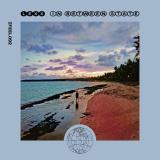
Inexplicably, yet true, Lexx returns to International Feel with a record that lives exactly where his music feels most at home. In Between State is a gentle navigation between memory and motion, between what has passed and what is still quietly unfolding. It is reflective without nostalgia, uplifting without force. A record that trusts the listener to drift.
Another Beach opens as a meditation on time and possibility. It looks back with warmth but keeps its gaze fixed on the horizon. A reminder that nothing is fixed, everything moves, and somewhere ahead there is always another sunset waiting on another shore.
Unison follows as a celebration of togetherness. Open-hearted and weightless, it captures the simple magic of shared moments with friends, music traveling across a room, and the quiet certainty that joy multiplies when experienced collectively.
The title track In Between State settles into that suspended hour where day dissolves into night. Inspired by early 90s electronica yet unmistakably Balearic in spirit, it drifts forward with a subtle psychedelic glow, neither arriving nor
departing, just perfectly hovering in place.
Closing the journey, Durchs Hinterland rolls steadily outward into open space. Born from long rides through backwoods and side roads, it moves with hypnotic momentum and the calm rhythm of forward motion. Endorphins rise, thoughts loosen, and the landscape begins to breathe with you.
Four tracks, quietly luminous. Music for transition, companionship, and the spaces in between. Lexx remains exactly where he should be.
Brisk is the debut album by Polish-Hungarian flutist Juli Deák (*2000), based in Budapest. Comprised of seven solo flute pieces, the album offers a concentrated snapshot of Deák’s musical world—one shaped by classical training, experimentation, improvisation, and folk influences.
The project began taking shape in 2021, as Deák moved away from the polished ideals of classical performance toward a more personal and exploratory approach. Early fragments only revealed their meaning in front of an audience, whose responses encouraged her to continue developing the material. With over 15 years of musical experience, Deák combines technical precision with a willingness to embrace vulnerability and chance.
Breathing lies at the heart of Brisk. More than a functional necessity, it becomes an expressive and structural force. Through close listening, breath feels tactile and intimate, placing the performer almost within reach. Techniques such as circular breathing, overblowing, harmonics, singing while playing, and wind tones allow the flute to unfold into multiple voices, while percussive key clicks provide a steady rhythmic pulse.
Deák foregrounds sounds often excluded from classical music—breathy tones, unstable pitches, squeaks, and audible inhalations—treating them as essential expressive tools. This focus reflects her long-term exploration of the flute’s physical and expressive limits and connects directly to her ongoing solo practice, The Breathing Project, of which Brisk is a distilled release.
Active across classical, contemporary, jazz, and experimental scenes, Deák has collaborated with ensembles including Konstmusik-systrar and the VENI ensemble, and performed at festivals such as Norbergfestival and Ung Nordisk Musik.
Across its seven pieces, Brisk balances immediacy and rigor, inviting focused listening while remaining open and bodily. It documents a musician in motion, attentive to sound as sensation, gesture, and breath, and committed to honesty
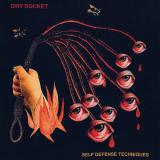
Dry Socket is a politically charged hardcore band from Portland, Oregon, known for blistering performances and emotionally uncompromising songwriting. Rooted in the raw aggression of classic hardcore, their sound channels the urgency of early Ceremony, G.L.O.S.S., and Negative Approach while carving out a distinctly modern, inclusive space within the genre, one where anger, grief, and survival are not just themes, but lived realities.
Their music confronts systems of violence, coercion, and control with unflinching honesty, creating room to be unapologetically furious, vulnerable, and alive at the same time. Every riff lands like a strike; every lyric feels torn from experience rather than abstraction.
Since forming, Dry Socket has toured extensively across the U.S., Europe, and Mexico, sharing stages with Gorilla Biscuits, The Hope Conspiracy, Torso, and more.
Their latest record, Self Defense Techniques, centers on survival under constant pressure. Inspired by the practice of dehorning rhinos to protect them from poachers, removing a vital part of the animal in order to keep it alive, the album examines the compromises people are forced to make to endure a hostile world. Horns are tools for protection, communication, care, and identity. To survive, so many of us are taught to remove our own.
Across the record, Dry Socket interrogates life inside systems that demand silence, obedience, and self-erasure. Songs wrestle with exhaustion, spiritual betrayal, and economic violence, oscillating between fury and grief. Self Defense Techniques isn’t about triumph, it’s about endurance, documenting the cost of staying alive while refusing the lie that softness is weakness or that silence is peace
Nitai Hershkovits and Daniel Dor return with Found & Found, their second collaborative album and a natural continuation of the musical dialogue initiated with The Garden Suite.
Born out of pure curiosity - "there was more to say, more to explore," explains Dor - the album expands the duo's sonic language beyond the synth-only framework of their previous work. While the Moog remains central, Found & Found introduces clarinet and acoustic guitar, gently dissolving the boundaries between electronic and acoustic sound.
Each composition unfolds through interlocking, mantra-like patterns. Repetition becomes a space for transformation: melodies circle, textures shift, and subtle harmonic movements invite the listener inward. The music is structured with care, yet it feels open and fluid. intimate, spacious and quietly immersive. If their previous record explored orchestral depth through synthesizers, this new chapter embraces air and clarity. Acoustic gestures emerge within electronic landscapes, creating a sound world that is both grounded and weightless.
Nitai Hershkovits brings with his fellow partner Daniel Dor a refined harmonic sensitivity shaped by both jazz and classical traditions. Together they continue to refine a shared language that moves between structure and freedom, precision and emotion.
Josiah aka JdB is a key creative at the heart of the New Palm crew. Not only does he DJ and produce, but also he is a resident at Gradient Campout and a member of LA's PrintShop collective. He has a sound rooted in dubby drums and cavernous grooves, both of which are evident here. 'Feels Good' is a heavy warm-up sound with sparse chords slowly ramping things up, while 'Surface Area' is icy minimalism with abstract sines and FX. 'Come Over' pulls back to a more liquid dub roller and 'Dante Is Late' is an ambient soundscape with plenty of tape hiss and curious melodies drawing you in deep. Stefan Bitke of Scape has taken care of the mastering so these sound superb.
Suicide AFTR 7 moves deeper into the shadows on this release, stripping things back while letting the groove hit harder. Built on pumping 808s, restless synth lines, and a subtle acid pulse, the project blends electro, cold wave, and leftfield instincts into something leaner and more focused than earlier records. There’s a proto-80s spirit running through it: raw, tactile, and slightly unpolished, where tension lives in the negative space and repetition becomes hypnotic rather than obvious.
For the first time, real bass guitar and drums enter the picture, adding human weight beneath the electronics without diluting Suicide AFTR 7’s core identity. The result feels rawer, more intimate, and quietly confrontational. Music for late nights, dim rooms, and inward motion. Still unmistakably SA7, but closer to the bone.
- 303: Eyelashes Out {16’52’’}
- Her Panties {11’31’’}
- Unwashed (105 Oven) {05’28’’}
- Another Stain {04’32’’}
'Tense from the first note and decisively uncompromising ‘GHSTING’ is the debut collaboration by Polish artists Alex Freiheit and Aleksandra Słyż, an incredibly unique piece of work that mixes fiction, spoken word poetry, theatrical antics, dense synthesis, acoustic ensemble and dark landscapes all set within the backdrop of a sinister Eastern Europe hotel. The resulting sound is menacing, humorous, harmonious, tumultuous, and at times quietly erotic.
Alex Freiheit, a poet and vocalist, is widely recognized for her captivating work with the SIKSA duo. Over the past decade, she has delved into the realms of personal feminist storytelling, postmodern fairy tales, and queer legends, crafting unique and thought-provoking narratives. In this groundbreaking collaboration with talented composer Aleksandra Słyż, they are now delving into the herstory of lies and exaggerations, extracting the raw essence of these tales filled with stench, stains, secretions, and torn organs. Eyeless Freiheit haunts the hotel guests while dressed in a binder and holding a bottle filled with a corrosive substance. She shares compelling stories about the hidden activities and other secrets that unfold within the walls of hotels when no one is watching. Her gripping narrative is complemented by equally haunting and eerie music. Słyż divides the text into four chapters, skillfully intertwining synthetic and acoustic elements. She combines the sounds of synthesizers, woodwind and percussive instruments with vocals, creating a tense, dynamic soundscape. Freiheit’s voice possesses an earnest quality, where a frightening cadence suspiciously flips into a meditative cycle.
Together, Freiheit and Słyż have crafted a bold and suggestive story that feels like the mesmerizing soundtrack to a contemporary Eastern European horror film, captivating an essence that is hard to pinpoint but instantly recognizable. This is abstractly powerful music that pushes listeners into a kaleidoscopic spiral that channels ecstatic over loss.
There’s no direct English translation for the word “hiraeth”. In the Welsh language, it describes a form of longing for an intangible something, somewhere or someone that no longer exists. Sofie Birch and Antonina Nowacka draw on the concept to guide their second collaborative album, a suite of vulnerable, open-hearted improvisations and reflections that attempt to grasp an image of the past that’s chimeric, dissolving almost as soon as it materializes. The duo’s process follows the same distant beacon; unlike Languoria, their critically acclaimed debut, Hiraeth is, at heart, an acoustic record, informed by in-person improvisations with voices and string instruments that gesture to an era before computers, AI and DAWs. It’s just as lush, but Hiraeth is warmer and more muted than its predecessor.
Nowacka and Birch conceived the album in the wake of a slew of collaborative live concerts, spurred on by serendipitous improvisations and an interest in paring down their setup. Unsound arranged a retreat in Sokołowsko, an idyllic village nestled in the verdant hills of Southern Poland, close to the Czech border. Sokołowsko surrounds a large ruined sanatorium that’s rumored to have inspired Thomas Mann’s 1924 novel The Magic Mountain, and has long been a magnet for artists. The two took the opportunity to rethink their approach completely, arriving with just a guitar, a zither and a portable Nagra reel-to-reel machine. Recording directly to tape, they sketched out ideas with just their voices and instruments, reflecting their surroundings without being distracted or mediated by modern technology.
“We wanted to get away from screens as much as possible,” says Birch, “to bring to the world something vulnerable and honest. Without advance preparation, every day we went out into the open air, finding places to sit, during sunset or the midday sun. We discovered new tunings on our instruments, picked up a melody, and started the machine, playing over
and over till we got a take.” In the autumn, they met again in a Copenhagen studio, sparingly and carefully layering old synths and organs to add more depth without muddying the mix.
Both Nowacka and Birch sing throughout, their voices threading the acoustic instruments and tangling with each other, almost becoming one. But it’s the environment of Sokołowsko, “the birds and the light, even the wind playing against the harps,” that’s woven into the music’s lining. Affected by time spent meditating and in nature, as well as the fact that Birch was pregnant whilst recording, the album feels alive and remarkably present. Even the sound quality of the tape machine gives Hiraeth a tactile, organic quality, as Nowacka puts it, “like being in a warm bath.”
They still have the raw recordings from Sokołowsko on old reels, physical souvenirs of their time spent making music in a “habitat for intuitive songs, a little ecosystem, alive and spirited.” The outmoded gear and remote setting helped the duo disengage from the modern world for a few moments and imagine an existence that’s been lost to time and nominal progress. With digital technology receding into the background, Nowacka and Birch had space to make “intuitive connections with frequencies and people,” as Birch explains. Hiraeth is a testament not to nostalgia, but to the power of kinship.
- 1: Intro - Featuring Kiki Hitomi
- 2: Unfinished - Featuring Kiki Hitomi | Franco Franco
- 3: Dandelion Crackers - Featuring Laure Boer | Mc Schlumbo
- 4: My Brothel The Wind - Featuring Rully Shabara
- 5: Botu
- 6: Directions - Featuring Rully Shabara
- 7: Everybody, Shake Your Body, We Chill At Party - Featuring Mc Schlumbo
- 8: The Beginning Of The End - Featuring Mc Schlumbo
- 9: Saq4Ime - Featuring Sara Persico
- 10: Kibotu - Featuring Mc Schlumbo
DJ DIE SOON is the apocalyptic alter-ego Daisuke Imamura, whose performances of masked malice have been a fixture in the Berlin underground for the past decade. His latest record My Brothel The Wind takes inspiration from Sun Ra at his most grotesque, conjuring a distorted phantasmagoria with an eclectic crew of compatriots like Rully Shabara, Sara Persico, and longtime collaborator Kiki Hitomi. Film director Hiroo Tanaka’s visual contributions in the album art, poster, and music video complete the album’s narrative, telling a story not of villainy but of phantom caprice in a dying world.
My Brothel The Wind shows DJ DIE SOON as an alchemist of distortion, transmuting the club-forward beats of his 2020 debut Kappa Slap and the seething horrorscapes of DIEMAJIN, his 2022 collaboration with Tokyo vocalist MA. Imamura’s obsession with noise stems from his upbringing in Tokyo, where he grew up hearing the deafening roar of trains every day. “The buildings were really tall, so the sounds reflected so much and it was so loud that you couldn’t even have a conversation on the phone. Hearing this noise every minute when living in this flat, it became a normal thing,” he says. While most would content themselves with avoiding loudness, DJ DIE SOON seeks to unpack its visceral potential.
DJ DIE SOON’s subterranean productions form a monstrous gestalt with the eclectic contributions of his network of co-conspirators. “Unfinished” and “Directions” are pulsating chimeras that highlight animalistic vocalizations from Hitomi and Shabara; Italian MC Franco Franco’s verses snake underneath the noisy onslaught. The tectonic textures of “Dandelion Crackers” are courtesy of multi-instrumentalist Laure Boer’s handmade stone synth. Sara Persico’s mangled vocables hang as fleshy reminders of human fragility on “SAQ4IME”; in the Hiroo Tanaka-directed music video, the track’s sonic uncanniness is made cinematic, with an ambient dread that references Hiroshi Teshigahara’s 1964 psychological thriller Woman in the Dunes.
While Sun Ra’s intergalactic Moog reached for the stars, DJ DIE SOON plunges into the depths of hell. “Everybody, Shake Your Body, We Chill At Party” feels like the sonic equivalent of a wax museum burning to the ground, rigid smiles melting into the fire. Rather than a vision of the future, My Brothel The Wind is a laugh-cry of despair in the face of a Hadean present. DJ DIE SOON confronts the world with a new hand-made mask, reborn in the ashes.
- 1: Ljoss (Remastered) 05:5
- 2: Thor's Stone (Remastered) 04:8
- 3: Irby Tremor (Remastered) 04:07
- 4: Onward (Remastered) 05:0
- 5: The Weight Of Gold (Remastered) 0:03
- 6: An Hour (Remastered) 05:01
- 7: Anneka's Battle (Remastered) 04:06
- 8: Gathering (Remastered) 04:55
- 9: The Plumes (Remastered) 03:36
- 10: Friend, You Will Never Learn (Remastered) 08
- 11: Fertil (Bonus Track) 06:32
Forest Swords' debut album 'Engravings' is back in print on vinyl and CD for the first time in years, newly remastered by Rashad Becker with previously unheard bonus tracks exclusive to this edition.
Created by electronic producer and composer Matthew Barnes, and originally released via Tri Angle Records, 'Engravings' received instant acclaim from the likes of Resident Advisor, Pitchfork, The Guardian and saw Barnes take his hypnotic live show across festivals like Sonar, Glastonbury, Unsound and Le Guess Who.
While much of British electronica is defined by its inner cities, 'Engravings' was recorded in Barnes' hometown on the banks of an ancient river in Merseyside, the album's earthy, organic soundscape reflected the landscape and climate: all silt and sandstone, woodlands and wind, with the ghosts of Liverpool's pop music and clubbing history echoing in the near distance.
The album was a prototype for a sonic vocabulary Barnes has expanded on over the next few years: in critically acclaimed studio albums ('Compassion' and 'Bolted' via Ninja Tune), collaborations with Massive Attack and Neneh Cherry, remixes for the likes of Bjork, as well as commissions for video games, ballet and film scores - of which he has carved a career as an in-demand composer and sound designer.
'Engravings' is a snapshot of an artist confidently defining their own language: a piece of work that distills influences like dub, ambient, rave, post-rock and psychedelia into an ancient-futurist musical vision that feels timeless and vital.
- A1: Who's Got A Problem With Gena
- A2: Theybetterbegladihavetherapy
- A3: Left The Club Like "Really Nigga!
- A4: You've Outdone Yourself Today
- A5: Unspoken
- A6: Tgd
- A7: Readymade
- A8: Douwannabwihtastar
- A9: This Is So Crazy
- B1: Lead It Up
- B2: Howwefl
- B3: Doobie Doo Wew
- B4: Circlez
- B5: Dream A Twinkle
- B6: Thatsmyluvr
- B7: Omo Iya Ati Baba
Vinyl[28,15 €]
There is a kinetic energy that binds drummer and producer Karriem Riggins and singer-songwriter, rapper, and producer Liv.e, the spark that happens when instinct meets flow and spirit finds rhythm.
Their collaborative debut as GENA (short for “God Energy, Naturally Amazing,” and loosely inspired by Gina from Martin), The Pleasure Is Yours feels like a playful, soulful conversation between two kindred improvisers: Liv.e’s smoky, unpolished vocals glide through Riggins’ warm, percussive universe. Rooted in jazz, soul, and hip-hop, Liv.e brings a raw, experimental approach to R&B, while Riggins known for his work with Common, Erykah Badu, The Roots, Madlib, and his close kinship with J Dilla, extends his lifelong dialogue between jazz improvisation and beat science.
Together they create a world that’s analog and ethereal, percussive and poetic, bridging eras without settling in one, the sound of two artists finding a new shared language rooted in rhythm, vulnerability, and exuberance.
Pressed on 180g vinyl, the album comes in an embossed sleeve and is avaible in red and black splatter.
BRIXIA is a music collaboration project that began in Prague, founded by Czech multi-instrumentalist Max Lipovsky and Chilean synth aficionado Daniel Rodriguez. From the depths of a cold basement in Prague's Žižkov district, the duo crafted hypnotic rhythms and a fusion of cosmic, tropical, and oriental sounds during their never-ending live jam sessions—until they were finally ready to hit a record button.
Seeking a change of scenery, they packed up their instruments and drove 1,500 kilometers to Rome, where they recorded their music in the vibrant heart of Pigneto. There, they met Jonida Prifti, an Italian poet of Albanian heritage, and invited her to layer her poetry onto their tracks.
The result is both unexpected and deeply captivating. The title track is a dub-infused, ever-evolving piece of shamanic minimalism, laced with Balearic guitars and swirling synths that emerge only to fade back into the depths. Jonida's whisper-like vocals drift above it all—so ethereal they almost feel imagined.
In contrast, Vortice jolts you awake. This one will surely find its way into the bags of more adventurous DJs out there, with its driving post-punk bassline and near-harmonica melodies, it feels like a journey through uncharted territory. Jonida's voice guides you like a navigator, and suddenly, you've arrived.
2026 Repress
Gaudi’s Jazz Gone Dub is a masterclass in genre fusion, seamlessly blending the improvisational essence of jazz with the heavy atmospheric grooves of dub. Known for his eclectic approach to music production, Gaudi pushes the boundaries yet again, creating a sonic landscape that feels both nostalgic and refreshingly innovative.
Four years in the making, from the opening track it’s clear that Jazz Gone Dub is more than just a mashup of styles—it's a thoughtful exploration of the intersections between two rich musical traditions.
Gaudi’s multi-instrumental talents are on full display, and the presence of reggae royalty is palpable, courtesy of rootsy melodies from David Hinds (Steel Pulse), Jah Wobble’s iconic bass grooves, Ernest Ranglin’s intricate guitar lines and Sly & Robbie’s rhythmic genius. Add Sardinia’s Train to Roots band, Manu Chao collaborator Roy Paci, veteran guitarist Marcus Upbeat, Mr Woodnote and Tim Hutton’s brass work, Gavin Tate-Lovery’s sultry sax and flute, Horseman’s percussive flair plus Colin Edwin and Vlastur’s serious basslines, and the
result is a rhythmic foundation that’s both solid and fluid, allowing the jazz elements to float freely above the dub undercurrents.
Despite this star-studded line-up, Gaudi remains the glue that holds this gem together: his production is meticulous yet organic, allowing each track to breathe and evolve naturally. The use of space, delays and reverb—a hallmark of dub music—is expertly handled, giving the album a dreamy, immersive quality. Tracks like Susceptible and Alabaster Moon showcase Gaudi’s ability to create mood and atmosphere without sacrificing melodic and rhythmic complexity.
In Jazz Gone Dub Gaudi has crafted an album that feels both timeless and forward-thinking, a celebration of musical synergy where the free-spirit of jazz meets the deep resonance of dub. Whether you’re a fan of either genre or simply appreciate masterful musicianship and innovative production, this album is a must-listen.
For his new full-length on Second End Records, Lyon-based artist Jonnnah turns deeply inward. Conceived as a form of therapy, as much as a reflection and a testimony, the record retraces a process of introspection and confrontation with one’s own history, looking back at origins, DNA, and the invisible ties that connect us to our ancestors, while opening paths toward new connections.
The double-sided structure of the album makes this journey tangible. The first side lingers in uncertainty : opaque atmospheres, fragmented rhythms, and restless textures mirror the doubts, questions, and fragile states of self-analysis. The second side, in contrast, embraces clarity and resolution, dense yet luminous soundscapes where reconciliation and acceptance take shape, culminating in The Blue Comet, a piece charged with finality and revelation.
Opening with the multipart suite N-zero, symbolizing the beginning of therapy, and closing with O-one, evoking the soul’s original purity, the record traces a complete emotional and spiritual cycle. Between them, the third edition of Insomnia Never Ends once again portrays the struggle between sleep and the irresistible pull of musical distraction, a fragile tension that runs through the album as a whole.
The record condenses Jonnnah’s language into something rawer and more direct. Layers of dub and dub sonic resonate against ethereal ambient passages, while techno impulses maintain tension and forward motion. Each piece feels at once intimate and expansive, designed as much for solitary listening as for collective experience.
A new chapter in Jonnnah’s trajectory, the album is a document of transformation : from shadow to light, from questioning to acceptance.