Repress !
In 1991 Coil released the third of their early classic full-length albums “Love’s Secret Domain”, seemingly casting aside the gloom and funeral beauty of its predecessors in favour of a painstakingly multi-layered hallucinogenic electronic beast, which unlike some of their fellow ex-industrial contemporaries’ releases of the time wasn’t an attempt at easy accessibility or (the-gods-forbid) danceability, but a vibrating psychedelic masterpiece unrivalled in their discography and still a landmark album. artwork by Steven Stapleton released in co-production with Infinite Fog Prod.
Поиск:fell
Все
- A1: Robert Pico - Le Chien Fidèle
- A2: Annie Girardot - La Femme Faux Cils
- A3: Spauv Georges - Je Suis L'état
- A4: Zoé - Zoé
- A5: Jacques Da Sylva - Fou
- A6: Valentin - Je Suis Un Vagabond
- A7: Jacques Malia - Histoire De Gitan
- A8: Bernard Jamet - Raison Legale
- B1: Jean-Pierre Lebort - Barbara Au Chapeau Rose
- B2: Les Concentrés - Fils De Dégénérés
- B3: Les Missiles - Publicité
- B4: Hegessipe - Le Credi D'hegessipe
- B5: Marechalement Votre - Ethero Disco
- B6: Mamlouk - Decollez Les
- B7: Mozaique - L'amour Nu
- B8: Jean-Marc Garrigues - Je Dis Non
- B9: Penuel - Astronef 328
The journey through French-speaking pop archives continues with this fifth volume, packed with fuzz, gimmicks, and dissent. Far from the charts, the selected tracks display a great creative freedom, often backed by corrosive humor. Welcome to the surprising, kaleidoscopic, and colorful world of the late sixties and early seventies, Wizzz!
Born in Montauban, Robert Pico stumbled into music by chance when he met René Vaneste, then artistic director at Pathé-Marconi. René brought him to Paris to record his first 45 RPM EP in 1964. A year later, Pierre Perret introduced him to Vogue, where he recorded his second album with Claude Nougaro’s orchestra. Sylvie Vartan then introduced him to RCA, where he recorded four singles, including the astonishing "Chien Fidèle," a track backed by a hair-rising fuzz guitar. Alongside his solo career, he also composed for other artists like Alain Delon (the song was recorded but remains unreleased), Magali Noël, Bourvil, and Georges Guétary. In the Paris of the sixties, he mingled with Mireille Darc, Elsa Martinelli, Marie Laforêt, France Gall, Françoise Hardy, Petula Clark, Régine, Dani, Serge Gainsbourg, Joe Dassin, Franck Fernandel, Charles Level, and Roland Vincent. Despite his efforts and winning a Grand Prix Sacem for his final record, Robert Pico didn’t achieve the expected success in show business and decided to leave Paris and return to the Southwest, where he devoted himself to writing. He is the author of 23 books (including Delon et Compagnie, Jean-Marc Savary Editions 2025, a memoir about his youth and his many encounters). Today, he is relieved to never have become a celebrity and devotes himself to his work with passion.
In 1969, the Franco-Italian movie Erotissimo was released, directed by Gérard Pirès (who later directed Taxi in 1998, written and produced by Luc Besson). This pop comedy features Annie Girardot, Jean Yanne, Francis Blanche, Serge Gainsbourg, Nicole Croisille, Jacques Martin, and Patrick Topaloff. The soundtrack was written by Michel Polnareff and William Sheller, with lyrics by Jean-Lou Dabadie. "La Femme Faux-cils," performed by Annie Girardot. It recounts the feelings of a rich CEO's wife who seeks to develop her sex appeal under the influence of advertisement and magazines. Groovy, sparkling and light, this track, with ITS lush arrangements humorously critiques consumer society and feminine beauty standards.
“Je suis l’Etat” (1967) is the flagship track of the first EP by singer-songwriter Spauv Georges, aka Georges Larriaga, better known as Jim Larriaga (1941-2022). Born into a family of bakers, the young man was initially planning to become a hairdresser when he discovered English-speaking music through Elvis Presley and the Beatles. After this revelation, he decided he would become a songwriter and gave himself five years to succeed. He recorded his first two EP’s independently for RCA under the pseudonym Spauv Georges; meaning “that poor George”, a nickname given to him by the mother of her friend Jean-Pierre Prévotat (future drummer of the Players, Triangle, or Johnny Hallyday). Portraying a depressed and eccentric young man, Spauv Georges created corrosive and amusing songs that didn’t reach a wide audience, despite a TV appearance with Jean-Christophe Averty.
Supported by his loyal friend and fellow songwriter Jean-Max Rivière, Georges Larriaga met the future singer Carlos in the early '70s, then Sylvie Vartan’s assistant. He wrote songs for Carlos, including the popular "La vie est belle," "Y’a des indiens partout," and "La cantine", which went onto become a huge hit in 1972. He also composed for Claude François (“Anne-Marie”, 1971), Charlotte Julian (“Fleur de province”, 1972), helped launch child singer Roméo (who sold 4 million records), and later wrote the hit "Pas besoin d’éducation sexuelle" (1975) for the young Julie Bataille. In 1971, Jim recorded an album for Disc'Az: “L’univers étrange et fou de Jim Larriaga”, which featured pop gems like “La maison de mon père”.
The story of the song "Zoé" began when Pierre Dorsay, artistic director at Vogue Records, asked Swiss singer and musician Pierre Alain to write a song for a new female singer. The inspiration came when he realized that Zoé (the artist's name) was also the name of France's first atomic battery, created in 1948, which consisted of uranium oxide immersed in heavy water! The lyrics reflect a bubbling energy that must be handled with caution, while the instrumentation echoes this atomic theme, notably with the use of a theremin.
Zoé’s career lasted only as long as a single 45 RPM, but it seems Christine Fontane was the vocalist behind this pseudonym, who is known for several EPs, a good "popcorn" album in 1964, and a handful of children’s singles in the '70s. Regardless, the photograph on the cover is of a different girl entirely.
Later, Pierre Alain continued his career, writing songs for himself, Marie Laforêt, Danièle Licari, Alice Dona, Arlette Zola (3rd place in Eurovision 1982), and achieving multiple gold and platinum records in Canada. Also an inventor with several patents, president of the Romande Academy, and head of the French Alliance in Geneva, he now composes atonal music, books, and poetry. Moreover, he is also the host of "Les Mardis de Pierre Alain" at "Le P'tit Music'Hohl" in Geneva.
Filled with oriental choruses and fuzz guitar, "Fou" is from Jacques Da Sylva's only EP released by Vogue in 1967. Despite the quality of this recording, all traces of this singer disappear after this first effort.
Valentin is a baroque pop singer born in Belgium. He is the songwriter and composer of most of the tracks on his three singles released in the late 60s in Canada. A legend says that he reincarnated himself as Jacky Valentin during the 1970s for a rock'n'roll revival career in Belgium, but his older brother sadly debunked this story. Valentin's first two singles were arranged by Claude Rogen, a Parisian session pianist who had come to Canada to promote the song “Mister A Gogo”, a cover of David Bowie’s “Laughing Gnome”, adapted by singer Delphine, his wife at the time. Far from his usual network, Claude Rogen arranged music for Polydor, including the arrangements for “Je suis un vagabond” in 1969, a jerk tune with string arrangements and a furious optimism.
Jacques Malia wrote, composed, and recorded his only 45 EP for Festival in 1966. “Histoire de gitan” is an incredible beat track with bohemian scat that tells the story of a gypsy musician who came to Paris to make it in the Music-Hall, to no avail. The hero of the song and its author probably shared a similar fate, as Jacques Malia faded into anonymity after this remarkable attempt.
Bernard Jamet recorded two EPs for Barclay in the late sixties and co-wrote several songs with Christine Pilzer, Pascal Danel, and prolific songwriters Michel Delancray and Mya Simile. The track “Raison Légale” (1968), his masterpiece, immerses the listener in a courtroom right when a murderer is being judged, with jerk rhythm and free arrangements. A unique, paranoid, judicial, and psychedelic oddity.
Jean-Pierre Lebrot-Millers started his career in show business in 1967 as a singer and songwriter for the Philips label. After three singles, he wrote several songs of a new kind with his friend Pierre Halioche, in the midst of the sexual liberation movement and the democratization of drugs. With provocative lyrics, “Les filles du hasard” and “Barbara au Chapeau Rose” were released on a Philips singles in 1968. The character of Barbara was inspired by a queen of Parisian nightlife during the psychedelic years: model Charlotte Martin, who dated Eric Clapton from 1965 to 1968, then Jimmy Page from 1970 to 1983. Jean-Claude Petit’s arrangements, with a table-filled intro, soul brass, and Hendrixian guitar, emphasize the flamboyance of a hedonistic and sexy character, whose dog is named Junkie because “Junkie est un nom exquis”! The track was recorded live in three takes with a full orchestra.
Upon its release, the record was censored by Europe 1 and RTL due to its references to drug use. Jean-Pierre Lebrot was then banned from the airwaves and later dismissed by his record label. He changed his artist name to Jean-Pierre Millers, while his companion Pierre Halioche became D. Dolby for a new dreamy composition, “Chilla”, which Jean-Pierre produced himself with arrangements by Jean Musy. Once again, the song was immediately censored everywhere. After this setback, he decided to stop singing and started taking on odd jobs to support his Swedish wife and their son until the day he met Jean-Pierre Martin, then production manager at Decca, who had worked with Manu Dibango. Martin offered Jean-Pierre Lebrot-Millers, then employed at Rank Xerox, the position of artistic director at Decca. He accepted and became, a year later, promotion director (radio, press, TV). He worked on Julio Iglesias’s first album for Decca, which became a massive hit and allowed him to meet Claude Carrère. The latter asked him to write new songs and find their performers, much like a “talent scout.” It’s through him that Jean-Pierre discovered Julie Pietri and Corinne Hermès. He composed “Ma Pompadour” for Ringo, Sheila’s husband, and took the microphone again for the syncope hit “Rendez-Vous” in 1982.
That same year, Jean-Pierre Lebrot-Millers tried to release a track for which he had heavily gone into debt: “Si la vie est un cadeau”. Having recorded it in London, he presented it to numerous professionals, all of whom refused to get involved. The same thing happened with Antenne 2 and the Sacem when he proposed the song as France’s entry for Eurovision. He then met Haïm Saban, who was producing cartoon soundtracks and had just launched the Goldorak theme song. Saban, having listened to the song, declared it had the potential to become a hit. He sent Jean-Pierre and Corinne Hermès to meet the CEO of the Luxembourg radio and television network. The latter received them, asked to hear a verse and chorus a cappella in his office, and immediately hired them to represent Luxembourg at Eurovision 1983. They reworked the arrangements and recorded a new version with Haïm Saban as co-producer. The song ended up winning Eurovision 1983, a great comeback for our hero. He continued producing and hung out with the band Nacash in Belgium when a couple came to introduce their daughter for an impromptu audition in a hotel room. The girl sang “Les démons de minuit” while dancing to a radio cassette. Impressed, he had her take singing lessons for a year and composed a song for her (for which he had the melody and title, but no lyrics). This required him to go on the hunt for a lyricist, who ended up being Guy Carlier. They recorded the song, which was initially a ballad, at Bernard Estardy’s CBE studio, and gave the singer a new name: Melody. They showed the song around their industry network without success. Later, Estardy called Jean-Pierre to suggest changing the rhythm and making it pop-rock. Orlando, Dalida’s brother, liked the result and decided to co-produce the track. “Y’a pas que les grands qui rêvent » became a classic hit. The song has since been covered by Juliette Armanet (as a ballad, like the original) and Valentina.
Born into an aristocratic Breton family, Hervé Mettais-Cartier worked as a DJ at Queen Kiss, a nightclub in Poitiers, where he formed the band Les Concentrés with Michel (an actor) and Christian (a radio technician). Together, they created a repertoire of whimsical songs (“Ma bique est morte”, “J’suis un salaud”, “Fils de dégénéré”...) that they performed on stage dressed in white (in homage to “concentrated milk”). They performed at Bliboquet and Olympia in 1968 for the 10th edition of the “Relais de la chanson Française” organized by L’Humanité-Dimanche and Nous les Garçons et les Filles, sponsored by Pepsi Cola. Winners in the author-composer category, alongside Danish singer Dorte, their visibility allowed them to record a 45, and appear on television in Jean-Christophe Averty’s show. The A-side of the disc features Bruno le ravageur, a casatchok dedicated to Bruno Caquatrix, the director of Olympia, nicknamed in the song “Coq Atroce” or “croque-actrices”. The B-side is dedicated to “Fils de dégénéré”, a quirky tribute to Hervé's aristocratic roots, mixing absurdity with sophisticated vocal harmonies.
After Les Concentrés, Hervé Mettais-Cartier formed the duo La Paire et sa Bêtise with his friend Olivier Robert. They performed in Parisian cabarets and toured with Pierre Vassiliu. In the late 1970s, Hervé began a solo career. He recorded two albums for the Motors label in 1978 and 1979, which did not achieve their anticipated success due to lack of promotion. In 1980, he met Bernadette, with whom he started a family and created a “Chansons à voir” (songs to see) show that he performed until his death at the end of 2024.
Publicité comes from the final EP by the Missiles (Ducretet Thomson, 1966), a disc that also includes “La (nouvelle) guerre de cent ans”, featured on Volume 4 of our Wizzz! series. Please refer to the booklet for the story of the band.
“He’s 1.82 meters tall, 28 years old, weighs 135 kg, is black and Belgian”: this is the description of singer Hegesippe on the back of his sole single (Decca, 1967). He appears on the album cover wearing a Greek toga, like a hippie gag – we are at the end of the year 1967. In “Le crédo d’Hegesippe”, this former bodyguard of Antoine and the Charlots plays the delightful card of the thick brute converted to Flower-Power and non-violence, with arrangements by Jean-Daniel Mercier, aka Paul Mille.
“Ethéro-disco” was released on a promotional record for clients of the Maréchal company (Liège, Belgium) for the New Year 1979. Over a funky rhythm, celebrity impersonations (Brigitte Bardot, Jacques Dutronc, Fernandel…) deliver an enigmatic text about pharmaceutical products like ether, bismuth, and aspartate. The track was composed by Dan Sarravah (responsible for Joanna's “Hold-up inusité” featured on Wizzz! Volume 3) and Tony Talado, who was also a singer (one 45 in 1967), songwriter (with over a dozen credits between 1964 and 1985 in various styles from surf music to disco), author (Devenez Végétarien, Dricot Editions, 1985), ad designer, and psychologist.
Décollez-les is on the A-side of Mamlouk's only single, a pseudonym for Marsel Hurten, who is known for his work on several EPs in the late sixties, as well as composing music for Hervé Vilard’s “Capri, c’est fini”, Claude Channes' “La Haine”, Annie Philippe’s “On m’a toujours dit”, and Nancy Holloway’s “Panne de Cœur”.
This strange song, with Afrobeat horns and absurd dialogues between a chef and his kitchen staff, is the result of a collaboration between Marsel Hurten and one of his neighbors, a photographer from Pavillon-sous-Bois (93), where the musician settled after returning from the Algerian War. A music video was shot to promote the record.
Marsel Hurten was born in Tourcoing (59) into a musical family. At a young age, he joined the brass band founded by his grandfather, playing the piston before studying trumpet at the conservatory, as well as teaching himself how to play the guitar. As an orchestra musician, he toured in France, Belgium, Germany, and England. He released a series of solo 45’s between 1965 and 1968 for the DMF and Az labels before stopping recording to focus on working for other artists (Gilles Olivier, Noëlle Cordier…).
“L’amour nu” (Vogue, 1971) is the work of the short-lived Belgian band Mozaïque. The track, written by singer Jacques Albin, closely resembles another of his compositions, “Carré Blanc”, which he recorded in 1969 for Disc’AZ.
Represented by the Lumi Son micro-label based in Marignane (Côte d'Azur), Jean-Marc Garrigues released two 45 RPMs in the late sixties, defending the French jerk sound. The song “Je dis Non” is a short, joyful ode to youth, pop music, and rebellion.
Songwriter and performer Jacques Penuel released three singles. The first one, “Astronef 328” (Fontana, 1969), features a dizzying series of chords punctuated by sound effects, a sci-fi story, and arrangements by Jean-Claude Vannier.
We would like to sincerely thank Pierre Alain, Moon Blaha, Marsel Hurten, Bastien Larriaga, Jean-Pierre Lebrot-Millers, Bernadette Mettais-Cartier, Robert Pico, Olivier Robert, Claude Rogen, Micky Segura.
The second release from the Époque label is a major one, featuring Niels Van Gogh’s 1998 hit single "Pulverturm”, which earned gold certifications in Belgium and South Africa and climbed into the Top 10 in the charts of many European and worldwide countries. The esteemed Brazilian techno artist ANNA delivers a rework, adding her signature touch to this iconic track.
"In 2023, while preparing for my Tomorrowland set, I was exploring iconic tracks that resonated in Belgium and could be perfect for an edit. I chose 'Pulverturm' for its powerful vocals and strong melody”, says ANNA. “What started as a quick edit turned into a labour of love, and I was so happy with the outcome that I wanted to try to release it as an official rework. We were in conversation with Niels Van Gogh when I sent the track to Charlotte de Witte, who loved it. She introduced me to Époque, and we decided to release the rework together. It's been a year since I crafted this rework, and I've never had so many artists from various genres, Techno, House, Melodic Techno, Tech House, Hard Techno, requesting a track like they did with my rework of 'Pulverturm.' It's incredibly exciting to finally share it with the world!"
Charlotte de Witte adds: “I fell in love with ANNA's masterfully crafted touch on ‘Pulverturm’ the moment she sent it to me. Being a bit of a sucker for legendary tracks that have left a deep mark on the history of electronic music myself, this one just hits all the right spots. It's been a long and challenging road to make it happen but I'm incredibly proud and honoured to have Niels Van Gogh's timeless classic ‘Pulverturm’, seen through ANNA's eyes, for the second release of Époque. A label we founded earlier this year to honour nightlife, club culture and dancefloor legacies.”
The original “Pulverturm” is a twitchy and hypnotic cut with trance infused synths over the top of the rumbling drums. There is progressive energy in the melodies and plenty of emotion in the vocals. ANNA’s version is driving and emotive with sensual vocals and bright, trance infused chords over rolling drums that bring the power.
About Époque:
Époque is a Belgian label and nightlife archive created by KNTXT and run by KNTXT and Charlotte de Witte. In collaboration with clubs and labels, past and present, Époque captures the spirit and lifestyle of our bygone discotheque culture. The Époque label reworks iconic tracks, brings back dance classics and uses club memories and aesthetics to translate these legendary compositions into unique new releases produced by today’s leading electronic music talent. Époque also designs high quality merch and party gear as an homage to the global club scene.
" A very limited 7” for the tropical heads, beat travellers and cosmic cumbia astronauts on the new imprint Sun Of A Beach — the free-spirited daughter of Editions de Lux, who skipped town, fell in love somewhere between Kingston and Cartagena, and came back glowing, barefoot, and heavy on the bass.
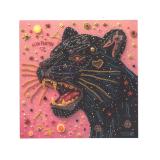
At home in the steaming rainforest as much as the urban jungle of the Chapinero district of Bogotá, Colombia’s psychedelic groove pilots Ácido Pantera deliver a double-sided tropical weapon aimed straight at late-night sweatboxes, boat parties, and sun-soaked terraces.
"Te quiero, te amo” is a declaration of love at 132 bpm, bouncing along like a low-rider over cobblestones while neon synths float in the humid air.
Flip it for “Pájaro cantor”, a sound system destroyer that will lock the floor in an acid trance that feels both ancestral and futuristic in the same breath. This one’s featured on the FC26 soundtrack and will have you shimmying like Luis Díaz right before he bangs one into the top corner!
You know what to do!"
- A1: Yaw - Where Will You Be
- A2: Flying Lotus Feat Andreya Triana - Tea Leaf Dancers**
- A3: Les Sins - Grind**
- B1: Noir & Haze - Around (Solomun Vox)**
- B2: Julien Dyne Feat Mara Tk - Stained Glass Fresh Frozen
- B3: Jitwam - Keepyourbusinesstoyourself
- C1: Dopehead - Guttah Guttah
- C2: Talc - Robot's Return (Modern Sleepover Part 2)**
- C3: Peter Digital Orchestra - Jeux De Langues**
- C4: Jai Paul - Btstu**
- D1: Beady Belle - When My Anger Starts To Cry**
- D2: Daniel Bortz - Cuz You're The One**
- D3: Joeski Feat Jesánte - How Do I Go On**
- E1: Nightmares On Wax - Les Nuits
- E2: Slf & Merkin - Tag Team Triangle**
- E3: Lady Alma - It’s House Music
- F1: Tirogo - Disco Maniac
- F2: Kings Of Tomorrow Feat April - Fall For You (Sandy Rivera's Classic Mix)**
- F3: Soulful Session, Lynn Lockamy - Hostile Takeover **Moodymann Edit
In 2016, a year after the 50th entry in the long-running series, none other but the iconic Detroit artist, DJ and producer Moodymann stepped up to helm the next landmark edition of DJ-Kicks, his first ever multi-artist DJ mix compilation. Following !K7's 40 th anniversary, this classic DJ-Kicks mix is now being repressed on coke bottle clear vinyl.
Born Kenny Dixon Jr., Moodymann is a one-of-a-kind electronic music icon, hailing from, and wholly synonymous with the Motor City. He is an outspoken, impossibly charismatic artist who has been putting a distinctive and soulful stamp on house and techno since the early 90s. Melting together jazz, funk, soul, blues and rock in captivating ways, he is responsible for some of electronic music’s most definitive tracks, EPs and LPs on labels like Planet E, Peacefrog and his own KDJ and Mahogani Music imprints. As able to serve up the sweetest and most sensual sounds as he is the darkest and most depraved grooves, his own unique voice and stream of conscious musings infuse expertly sought-out samples for music that is decisively alive and authentic.
Across 75 minutes and 30 tracks, Moodymann does not disappoint: despite being a notorious vinyl fetishist, Dixon’s aim is to present music of quality, not to one-up fellow collectors. Rather than serving up ridiculously rare or hard- to-find records, he instead focuses on creating a libidinous, blues-drenched mood that takes in heart-breaking soul, gorgeous hip-hop and love-fuelled house.
In addition to cuts from his own creative circle, the mix features 11 exclusive Moodymann edits. Like everything Kenny Dixon Jr. touches, his DJ-Kicks showcases the taste, skill, and soul of a dance music original.
L. Eugene Methe is an Omaha based singer-songwriter and musician with a discography spanning over twenty years. His last two lyrical based albums were released on Grapefruit Records. As a studio musician he has contributed violin and piano on a diverse group of albums by Simon Joyner, Refrigerator, Mountain Goats, the Renderers, Naturaliste, Expensive People and many more.
Dennis Callaci from the band Refrigerator has released collaborative records with John Davis, Heimito Kunst, Simon Joyner and others as well as a myriad of solo LPs over the last 35 years. He runs the Shrimper record label. His fourth book is out in 2025 on Bamboo Dart Press.
The Last Chance Lottery is a collaborative record featuring the music of Methe and the vocals/lyrics of Callaci. Cinematic and outre in tone, the record does not forsake melody or tunesmithery, but strips much of it bare to paint it with surprising found sounds, abstraction and a balance between what these two fellas do best. The album was mastered by Al Jones as Marginal Frequency to further tightrope those two worlds. Features cover art and liner notes by Callaci.
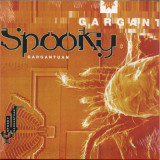
Gargantuan is the debut studio album by U.K. electronic duo Spooky (Charlie May and Duncan Forbes), released by William Orbit's Guerilla Records in March 1993.
Today Gargantuan is regarded as a landmark album in the history of progressive house and British dance music. As Guerilla’s standard bearer, they helped coalesce an immersive sound that was neither Detroit, nor Chicago, nor Manchester.
The duo became renowned for being at the forefront of the progressive house scene that emerged in the aftermath of the "post-rave comedown", joining fellow acts like Orbital and Underworld in re-casting house music in an energetic live environment.
Gargantuan has been out of print on vinyl since 2006 and is re-released on 21st June.
Have you noticed that Western music emphasises linear time? Melody is a continuous sequence of sounds. Harmony and rhythm follow a progression from beginning through climax and resolution. Is it possible to have an art that is based on non-linear time? Can we even experience non-linear time? Efrain Rozas' Still posed this question in the form of an installation made for quadraphonic sound, architecture and light. A document of his installation at Queenslab--part of a one-month residency with The Kitchen, New York City in April 2021--the album is a live, stereo room recording of Still as it was presented over three one-hour viewings. Efrain Rozas is a Peruvian interdisciplinary artist working with Latin American music, robotics, sculpture and installation. He holds a PhD in composition and ethnomusicology from New York University, and is a 2023-2024 Jerome Hill Artist Fellow. He has published Fusi?n: a soundtrack for Peru, a publication, video documentary, and music compilation; and has released several albums internationally via Names You can Trust, the Ethnomusicology Institute of Peru, the Embassy of Spain and Buh Records.
‘Pilot’ is the debut album from London quintet Miniseries. Channelling the epic sweep of TV themes and movie soundtracks into resplendent space rock they explore themes of youth and ageing, heartbreak and paranoia, euphoria and existential dread.
Songwriter Doug Morch (Longview) had been working on largely acoustic folk songs when he met Angela Gannon (The Magic Numbers) at Glastonbury 2017. Romance and musical collaboration ensued. The band coalesced in the hallowed environs of Farringdon's The Betsey Trotwood pub – a musical nexus where burgeoning indie and Americana scenes collide – where they met fellow songwriter and guitarist Dermot Watson (from Brighton's The Dials) and drummer Danny Abbasi and were joined by Doug's former bandmate Aidan Banks on bass. When they came together, their indie folk mutated into motorik art rock, with their first single being an eight-minute jam called "Road".
When it came to capturing their sound, the band reached for maverick musician and producer Sean Read. They recorded tracks at Read's Famous Times studio in Clapton, London, as well as at Edwyn Collins' Clashnarrow in Helmsdale, Scotland – one of the world's most breathtaking and idiosyncratic studio locations, adding unquantifiable magic to the proceedings.
For the closing track "May You Always", they headed to another studio imbued with tangible inspiration: Blueprint Studio in Salford with producer Craig Potter (Elbow) at the helm. For the song, Dermot drew cinematic inspiration from the Withnail & I line "I'll never play The Dane", the song is about realising that the things you aspired to in youth will never come to pass and being at peace with that realisation.
The recurring themes of youth and ageing are apparent in the resplendent lead track ‘You're Gold’ – a heartfelt call for young people to reject materialism and exploitative influencer culture in search of life's deeper meaning, with stylistic nods to The Pixies and early Stereolab.
On the opposite end of the spectrum, "Sepia" explores old age and fading memories through dementia, where the ending descends into chaos like a fragmenting mind. Elements of "Sepia" are foreshadowed in the album's opening track, the instrumental "Pilot Theme", which pays homage to TV theme music, invoking spy thrillers or perhaps something otherworldly from science fiction.
“Offcumdens” is a Calder Valley, Yorkshire term for people who live in the area but come from somewhere else. Hailing from Bury, Lancashire, Morch wrote the song while living in Hebden Bridge (and watching too much Happy Valley) and found himself being an offcumden. It’s a pop at the kind of local nativism which breeds intolerance and an illustration of the sinister rise of wider political populism.
Miniseries' Pilot is just the beginning of the story. Enthralling and atmospheric, the London quintet have created something familiar yet timeless. As singer Doug Morch says, "It's the Miniseries Pilot episode. Like the TV episode a studio makes to test whether it's viable.” In the age of streaming and box-sets, this is an album to truly binge on. We can’t wait to hear what happens next.
Georgie Jesson was born in London to a Bosnian mum and British father. One, a communist turned neurotic capitalist, the other a private school boy cast-off turned heroin addict. Georgie fell in love with poetry through music and lyric writing at an early age. She has since performed her work to music, written extensively for various music magazines as a journalist and culture writer, and written biographies and forewords for acclaimed artists including Baxter Dury and photographer Ewen Spencer.
Her debut collection traverses grief and love in equal measure, reflecting on family memories with a sharp honesty and a blurred edge. The book charts the changing ways the passing of time can affect us. They are conversational and confessional poems, coloured by images of bittersweet family holidays and hospital trips; sleepy Balkans bars and long London nights. Poems from the heart, about the effects of life on the heart.
“we collect figurines to make a monument of memory / to help ignore the wastage of life”.
The collection features illustrations by Greek artist Maro Michalakakos, whose work has been displayed internationally in galleries including MCA - Chicago, The Guggenheim, Tate, FNAC - Paris and many private collections. The book’s foreword is written by musician Grian Chatten, notably the lead singer & lyricist of critically acclaimed band Fontaines D.C. and whom has also released solo work under his own name.
- 1: Siphium
- 2: Moly
- 3: Psalacantha
- 4: Styrax
- 5: Argos
- 6: Murena
- 7: Snake Of Arabia
- 8: Gold Eating Ants
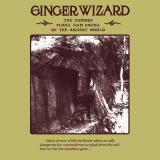
Crypt of the Wizard is proud to present Ginger Wizard - The Curious Flora and Fauna of the Ancient World on vinyl and digital formats.
About ten years ago in a record store in Prague, the Ginger Wizard discovered a copy of Bo Hansson’s Lord of the Rings LP. Although initially unfamiliar with the record, the reference to Tolkien’s masterwork and the incredible cover art drew him in and, rather fittingly, sent him off on a journey of discovery that would reshape his creative trajectory.
Years later while working in cassette tape manufacturing, Ginger Wizard noticed that most fantasy-inspired music fell into two camps: metal and dungeon synth. With little interest in the former, but intrigued by the latter, he began writing a few songs imagining a beautifully packaged and tactile cassette tape. However, dungeon synth he soon realized was “the most boring music to make”.
So began the Ginger Wizard’s own mythological discography. In 2022 came The Feast for the Dead King and Other Musical Themes recorded at home in a cold kitchen, is conversely an album full of warmth drawn from sheer exploration. A year later Can I Choose My Own Psychopompos? was recorded for the legendary Stoned to Death label - a 7” séance of semi-improvised noise and melody featuring allies from the Ginger Wizard’s live backing band The Peter Jacksons. The following year with Bathysburg Tales, a new approach was needed in order to keep the project interesting. Drawing inspiration from Popol Vuh and the inclusion of vocals lent by Protomartyr’s Joe Casey and Jakob Battick, a new more cinematic sound began to emerge.
Now, we present The Curious Flora and Fauna of the Ancient World marking a step into something stranger while still channeling the spirit of Bo Hansson. The new album rejects swords and sorcery for the mythology of the natural world “the ancient stuff,” he explains in the record’s insert, “has a similar taste for me as fantasy.” These songs bloom, creep, and shimmer like forgotten plants under distant suns while rooted in something real and organic. Inspired by the myths of nature rather than heroic quests, it’s an album that feels alive, equal parts archaeological dig and psychedelic garden.
Currently at work on a soundtrack for an imagined 1970s fantasy film in collaboration with The Peter Jacksons, the Ginger Wizard continues to expand his strange universe while The Curious Flora and Fauna of the Ancient World serves as a new map to somewhere ancient, beautiful, and unknown.
- Can't We Be Friends
- Isn't This A Lovely Day?
- Moonlight In Vermont
- They Can't Take That Away From Me
- Under A Blanket Of Blue
- Tenderly
- A Foggy Day
- Stars Fell On Alabama
- Cheek To Cheek
- The Nearness Of You
- April In Paris
The complete album - limited edition pressing on 180g crystal clear vinyl
Although both Ella Fitzgerald and Louis Armstrong had met and performed and recorded a number of singles together during 1940s for Decca, they wouldn't be heard on LP together until 1956 when producer Norman Granz paired the two for this first album session, Ella & Louis, which became an immediate hit. Two further sessions under Granz, followed, Ella & Louis Again, and Porgy & Bess. All three albumswere both critically acclaimed and commercial successes - appealing to audiences in and beyond the confines of jazz per se. Ella & Louis features the incredible Oscar Peterson Trio plus legendary drummer Buddy Rich. As one of the most iconic and fascinating jazz albums ever produced, its appeal and commercial sales haven't waned during the sixty-nine years since its first release. "Ella & Louis is one of the very, very few albums to have been issued in this era of the LP flood that is sure to endure for decades." - ***** Nat Hentoff, DownBeat
For the first time, Endrik Schroeder and The Hacker have joined forces. Their unique sounds and styles have combined seamlessly to produce a 12” that draws on their own musical histories. The title track pulls the listener into a darkened sweaty basement, a space where neon lights leer and quivering speakers vibrate. Melting elements of new beat and rave revelry, the track is bawdy and bold. Robotic samples cut through siren blasts, clean snare rolls skidding in thick basslines and creamy breaks.
Two remixes follow, both care of fellow French producer: Back From The Wave. First up is the “Breaky Remix”. Adhering to the club origins of the source material, this remake sends melodies ever higher as drums lift elated lines to the stern refrain of “Emergency”. The “Indie Remix” closes. The glowsticks are sheathed in this version, instead it is the soaring keys that are given the limelight with beats bolstered for extra bite. Three tracks set to delight and ignite dancefloors.
Repress!
Midnight Magic’s perennial disco anthem 'Beam Me Up' announced itself as an instant classic from the moment of its release in 2010, and at long last the band has teamed up with fellow Brooklynites Razor-N-Tape for a 10-year-anniversary package (minus one lost year) that once again establishes the timeless quality of the song with a fresh and versatile package of new remixes.
Norwegian space-disco don Prins Thomas delivers a sprawling and elegant mix, grounding melodic and psychedelic elements over a bumping percussive disco rhythm treatment, stretching out over 8 minutes of blissful breakdowns, delays and driving bass lines. Kim Ann Foxman takes the song to a darker and dubbier place with her 'Beam Me To The Basement Mix,' layering samples of singer Tiffany Roth’s vocal and insistent acid synths over a heavy and pulsing low end. Each Other, a new project by Max Pask and NYC club royalty Justin Strauss, crafts an extended peak-time stormer of a mix, with churning analog drum and synth production that is somehow ravey, New-Wavey and lush all at once.
These three mixes truly capture an entire club night in one record, each a beautifully unique interpretation that showcases the inimitable talent and creativity of the remixers, and is also a testament to the enduring perfection of the original. Grab this record immediately and beam yourself back to the dance floor!
- 1: The Box
- 2: The Wrote & The Writ
- 3: Tickle Me Pink
- 4: Brown Trout Blues
- 5: Eyeless
- 6: In Holloway
- 7: Shore To Shore
- 8: Cold Bread
- 9: Wayne Rooney
- 10: Leftovers
- 11: Sally
- Hong
- Kong Cemetry
- Tunnels
- All The Dogs Are Lying Down
- Shore To Shore (Reprise)
A Larum, the debut album by singer and actor Johnny Flynn, was recorded in Seattle and is one of those rare albums that immediately creates its own world - Originally released on Vertigo Records in May 2008, this re-issue faithfully replicates the original 2LP release's pop up gatefold sleeve and is pressed on 180g vinyl Backed by his band The Sussex Wit, the album's songs were likened to the work of Fairport Convention and Bert Jansch by Rolling Stone.
Flynn has been described as "a musical prodigy turned Shakespearean actor, with the soul of a poet," and his songs offer a sweet gentility in an increasingly loud time. Close mic'ed and intimate, Flynn cast his eye over romance, religion and celebrity. A Larum became something of a beacon for the burgeoning folk scene at the time, with fellow travellers such as Mumford & Sons, Laura Marling and Noah and the Whale. Since A Larum, Flynn has carved out a singular path as both a critically acclaimed musician and award- winning actor. He has released a string of celebrated albums including Been Listening, Country Mile, and Sillion, continually evolving his sound while maintaining his signature storytelling. As an actor, he's earned accolades for roles on stage and screen, notably portraying David Bowie in Stardust and starring in films like Emma (2020) and Netflix's The Dig. He also composed and performed the beloved theme song for the BAFTA-winning series Detectorists, where his evocative music became inseparable from the show's gentle, melancholic charm. ...
- Ett
- Misinfom The Uninformed
- Noll
- Hello Scotland
- Final Touch/Hidden Agenda
- He Came, He Stayed, He Fell
- Tomorrow My Friend
- We'll Meet In The End
White[34,87 €]
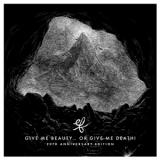
Long regarded as singular architects within European post-rock, EF have built a catalogue defined by dynamic patience, melodic clarity, and widescreen emotional reach. Across two decades of touring, the Gothenburg ensemble have carried that language to clubs and theatres at home and abroad, earning a reputation for meticulous, high-impact live shows and a body of work that has steadily gathered critical regard and a devoted international following. Reimagined and with expanded production including strings and brass, this edition is a considered re-engagement with the material that first crystallised EF's voice. The band returns to thesesongs with the benefit of twenty years' craft, presenting new arrangements that stretch time and deepen narrative, while retaining the quiet-to-catharsis arc that has always set their music apart. "Since it's our precious first born we wanted to give it the love it surely deserves. We felt we didn't want to celebrate its big 20th birthday by just remastering it and we surely didn't want to make the songs too modern and unrecognisable for the old fans. We wanted to give it a tighter, more dramatic and bombastic make over_ a gentle touch of today's EF." (Niklas Åström) Originally released in 2006, `Give Me Beauty_ or Give Me Death!' introduced EF's signature blend of cinematic guitars, patient dynamics and aching melody. For this new edition, along with an incredible cover illustration by Phillip Janta and brand-new bonus track `Noll', the band returned to the material with fresh ears and clear intentions: to open more space in the arrangements and to enrich the melodic lines with orchestral colour. `Give Me Beauty_ or Give Me Death!' (20th-Anniversary Edition) is a document of growth rendered with care: more instrumentation, more time, more consequence. The album is an act of stewardship_ both a homage and a forward-looking manifesto for EF and for discerning listeners everywhere. FOR FANS OF Explosions in the Sky, Mogwai, Caspian, Gospeed You! Black Emperor, Yndi Halda, Mono Black or White Double Vinyl, Digisleeve Single CD. Includes bonustrack Noll.
Long regarded as singular architects within European post-rock, EF have built a catalogue defined by dynamic patience, melodic clarity, and widescreen emotional reach. Across two decades of touring, the Gothenburg ensemble have carried that language to clubs and theatres at home and abroad, earning a reputation for meticulous, high-impact live shows and a body of work that has steadily gathered critical regard and a devoted international following. Reimagined and with expanded production including strings and brass, this edition is a considered re-engagement with the material that first crystallised EF's voice. The band returns to these songs with the benefit of twenty years' craft, presenting new arrangements that stretch time and deepen narrative, while retaining the quiet-to-catharsis arc that has always set their music apart. "Since it's our precious first born we wanted to give it the love it surely deserves. We felt we didn't want to celebrate its big 20th birthday by just remastering it and we surely didn't want to make the songs too modern and unrecognisable for the old fans. We wanted to give it a tighter, more dramatic and bombastic make over_ a gentle touch of today's EF." (Niklas Åström) Originally released in 2006, `Give Me Beauty_ or Give Me Death!' introduced EF's signature blend of cinematic guitars, patient dynamics and aching melody. For this new edition, along with an incredible cover illustration by Phillip Janta and brand-new bonus track `Noll', the band returned to the material with fresh ears and clear intentions: to open more space in the arrangements and to enrich the melodic lines with orchestral colour. `Give Me Beauty_ or Give Me Death!' (20th-Anniversary Edition) is a document of growth rendered with care: more instrumentation, more time, more consequence. The album is an act of stewardship_ both a homage and a forward-looking manifesto for EF and for discerning listeners everywhere. FOR FANS OF Explosions in the Sky, Mogwai, Caspian, Gospeed You! Black Emperor, Yndi Halda, Mono Black or White Double Vinyl, Digisleeve Single CD. Includes bonustrack Noll.
- Side A
- Theme Of Zero (From Mega Man X)
- Intermission
- Express Ug
- Deadzone
- Scorching Desert
- Hell Plant
- Infiltration
- Side B
- Crash
- Result Of Mission
- Neo Arcadia
- X, The Legend
- Fake
- For Endless Fight
- End Title
- Area Of Zero / Main Theme Of Zero
- Cyberelf
- LP2: ‘Music From Mega Man Zero 2’
- Side A
- Title Ii
- For Endless Fight Ii
- Departure
- Instructions
- Ice Brain
- Platinum
- Gravity
- Sand Triangle
- Power Bom
- Side B
- Passionate
- Cool Hearted Fellow
- The Cloudy Stone
- Silver Wolf - Yggr-Drasill
- Supreme Ruler
- The Last - The Wish Punished
- In Mother's Light
- Awakening Will
- LP3: ‘Music From Mega Man Zero 3’
- Side A
- Title Iii
- Break Out
- Exiled One -Omegacurse Of Vile
- Prismatic
- Volcano
- Old Life Space
- Final Count Down
- For Endless Fight Iii
- Cold Smile
- LP3: ‘Music From Mega Man Zero 3’ (Cont.)
- Side B
- Trail On Powdery Snow
- Submerged Memory
- High-Speed Lift
- Hell's Gate Open
- Judgement Day
- Cannon Ball
- I, 0 Your Fellow
- Everlasting Red
- Labo - System-A-Ciel
- LP4: ‘Music From Mega Man Zero 4’
- Side A
- Title Iv
- Caravan - Hope For Freedom
- Nothing Beats
- Holy Land
- Esperanto
- Kraft
- Max Heat
- Queen Of The Hurt
- Side B
- Cage Of Tyrant
- Straight Ahead
- Crossover Station
- Cyber Space
- Falling Down
- Ciel D'aube
- Promise - Next New World
- LP5:
- Side A ‘Music From Mega Man Zx’
- Green Grass Gradation
- En-Trance Code
- Wonder Panorama
- Misty Rain
- Onslaught
- Black Burn
- Snake Eyes
- Cannon Ball
- Side B ‘Music From Mega Man Zx Advent’
- In The Wind
- Overloaded
- Path To The Truth
- Trap Phantasm
- Drifting Floe
- Whisper Of Relics
- Mirai E Tsuzuku Kaze
- Green Grass Gradation (Mega Man A Ver)
Capcom and Laced Records invite you to return to a world of Reploids and cyber-elves, betrayal and Bio-Metals...
Thoughtfully sequenced with a disc covering each of the Mega Man Zero games, and a fifth covering ZX and ZX Advent, this box set will allow fans to fully ensconce themselves in the series.
ultimatemaverickx returns as sleeve artist, producing lore-faithful, vibrantly colorful panels depicting memorable story moments and highlighting major characters in iconic poses.
The Mega Man Zero/ZX soundtracks' glorious mix of urgent acid house, ambient, face-melting metal, and even soaring pop feel downright prophetic in the modern music landscape. Transported from their '00s hardware origins to your turntable come the sounds of our present, broadcast from the past - and it rips.
Fracture & Neptune return to Astrophonica with their first collaborative 12” on the label since 2010.
Two epic, psychedelic, and deeply authentic tracks for both the floor and the head, carrying the unmistakable hallmarks of the duo’s classic sound — A psychedelic concoction of Jazz, Sci-Fi, Dub, and Breakbeat Choppage. Rooted in the lineage of Jungle and Drum & Bass, yet delivered in Fracture & Neptune’s unmistakably unique style.
To celebrate the release, UTILE — responsible for all Astrophonica design — have gone all out on the artwork, creating an iconic, type-based image for both tracks, presented on a full-colour, double-sided printed sleeve. Massive shout to UTILE for being as important to the label as the music.
“Erase Everything” is a journey through LA 2049 via London 1999 — as if Deckard were blasting an AWOL tape in his Spinner. Merging classic breaks and analogue saturation with soaring, cutting-edge pads and city-wide reverb, the result is both devastating and deeply thoughtful.
“Good Stuff” is inspired by a love of digging for samples across Jazz, Hip Hop, and Rock, and by a dedication to crafting kaleidoscopic soundscapes — All that good stuff, blended into one hallucinogenic trip.
Meeting at Islington Sixth Form College in 1996, Charlie (Fracture) and Nelson (Neptune) bonded over their deep love for the defining sound of London at the time — Jungle and Drum & Bass. Countless trips to Black Market Records in Soho, playing on pirate radio stations, and eventually, a makeshift bedroom studio — complete with an E-Mu ESI4000, a Mackie desk, and a few FX units — set the foundation for their journey. Their first release arrived in 2002 on Droppin’ Science, the label run by legendary Hardcore and Jungle pioneer — and fellow breakbeat manipulator — Danny Breaks. A run of mid-2000s releases on Ireland’s Bassbin, Paradox’s Outsider, and London’s Inperspective Records propelled Fracture & Neptune further into the cosmos. In 2009, they founded Astrophonica — initially as a home for their own music, but it quickly evolved into a hub for like-minded artists to experiment and explore freely. Almost 30 years on, they’re back in the studio with APHA034 — with more to come.
French artist based in Brussels, Che Vuoi presents her first album Cinecittàx, a nod to the great Italian studio, and a tribute to false dreams.
A theatre at the back of a run-down piano bar, where surreal and intimate scenes unfold; words and stories drawn from disparate sources: Fellini, G. Réal, Diderot... or written by herself, spoken, shouted or barely whispered by an altered voice.
Noises, samples, a drum machine, a brush on a snare drum, a piano spinning round and round until it reaches delirium and its own abolition, leaving us suspended in a constant in-between or a time that never truly existed.
« This voice, gentle, mad, with lightning verve, tells between the lines and the echoes the presence of threatening shadows and ghosts. And it is Che Vuoi, her character, her world of images, that haunts us. It is a strange bewitchment that carries us beyond the words she has freed from "the stationery I stole from Bellavista the other night" ("le papier à lettre que j’ai chipé au Bellavista l’autre soir") into the lair of her universe, as whimsical as it is silky in which we let ourselves slip, as one would slip over the rock of an esoteric river, in the heart of a forest that makes music and has delirious things to tell us. »