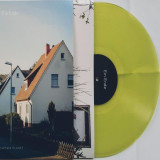
Ltd Transparent Blue Colored Vinyl. Lonnie Liston Smith JID017 is the seventeenth installment in the Jazz Is Dead catalog. This album features nine original songs by Adrian Younge, Ali Shaheed Muhammad and the 1970s jazz-funk pioneer, Lonnie Liston Smith. Smith's music (Expansions, 1974 and Visions of a New World, 1975) has served as the foundation for iconic hip-hop samples and ecstatic dance floor revelry. Lonnie Liston Smith 017 marks the legend's return to the Fender Rhodes keyboard, an instrument he had not played since the 1970s. All songs produced by Adrian Younge & Ali Shaheed Muhammad. Recorded and mixed by Adrian Younge at Linear Labs, the preeminent analog studio of Los Angeles, CA.
quête:fen x
- A1: Erstes Kapitel (Verschliffen)
- A2: Zweites Kapitel (Ruckartig)
- A3: Drittes Kapitel (Ungesagt, Dann Vergessen)
- A4: Viertes Kapitel (Bewusstseinsfrei)
- B1: Fünftes Kapitel (Kreuzweis)
- B2: Sechstes Kapitel (Herausgewunden)
- B3: Siebentes Kapitel (Verflochten)
- B4: Letztes Kapitel (Halb Vermutet, Halb Gesehen)
11th album by the one-of-a-kind collective: psychedelia and free form jazz (not jazz) trigger a sophisticated excursion into weird textures with drastic turns. Dislocated dense music full of secret connections!
Kammerflimmer Kollektief – "Schemen"
Before reason prevails, invoked by those who want everything to remain as it is, Kammerflimmer Kollektief disrupts the established supply chains of sound. It seeks more interesting ways to assemble them. Trusting in this, because of the fact that every sound that still comes out of a guitar, a bass, a harmonium, drums and electronic devices has already been taken into the common mangle of meaning anyway. Enough of all that. Here, nothing is explained. Here we speak in schemes. Polished and jerky.
The images that Kammerflimmer Kollektief conjures up therefore happen not in the focus of consciousness, but rather in its outer realms. In those to which one does not give one's full attention at the moment, but which are nevertheless perceived. For example, when a leaf falls from the ground back up to the tree in the corner of your eye, and for an instant you think this is possible, before you realize it was a small bird flying into the tree; it is in just such irritating moments between perception and realization that the art of the Kollektief also unfolds. On "Schemen", familiar fragments float gently around their core – a Fender Rhodes tone, a bass figure, a guitar motif, a masterful drum shuffle, a moment of icy stasis borrowed from the harmonium playing of Christa 'Nico' Päffgen. Triggering brief associations, they slowly rush off in other directions through free jazz-informed editing work, whereupon such zones can also arise in which perception has a few tricks ready and earlier experience suddenly breaks into the now in a completely different way. Half suspected, half seen.
Half-music like Can from Cologne – also masters of improvised editing – sometimes produced a few decades ago in their in-between moments. The first minutes of "Future Days" for example, which fade in gently, sketch a barely graspable figure emerging from all directions of the room. Kammerflimmer Kollektief also engages in similarly open moments of development. Loosely, it eludes the first formative impressions, keeping itself ready for moments that do not follow any logic of appointment. This looseness in handling makes Kammerflimmer Kollektief so fluidly audible, even when dissonant peaks and free playing arise. What Karlheinz Stockhausen is to Can's understanding of composition, the recordings of The Cocoon are to Kammerflimmer Kollektief. The Cocoon, a meeting of garage psychedelics from the Hannover area with free jazzers from the Galaxie Dream Band, whose album "While The Recording Engineer Sleeps", recorded in 1985 in unguarded moments, operates in a very similar way with decentralized perceptual ambivalences and only appeared more or less secretly four years later on Wilhelm Reich Schallspeicher. Other traces of "Schemen" lead to the debut album of Quicksilver Messenger Service. The guitars of Gary Duncan and John Cipollina, which refer to themselves in an unforced manner, are instructions to let go. They don't want to be traced in every note as a solo, but they give their music a sense that the essential takes place off center, in the mutual and intuitive gift of loving attentions. Consciousness-free.
Loving turns like the little guitar phrase that, like a kind of leitmotif, is repeatedly ghosting more or less unchanged through all of the Kammerflimmer Kollektief albums. A Coricidin induced, very catchy slide idea filtered out of ancient Æther, which – who knows – maybe even centuries ago found its way from somewhere to America – the old, the eerie – and from there wafted on through the ages to southern Germany, to a smoky studio in the Upper Rhine lowlands. A memory of which even the memory no longer knows what it once reminded. Unsaid, then forgotten.
In Kammerflimmer Kollektief you will also find a friend of slowly building, unhurried music, which probably would have been appreciated by the old Franz Mesmer, who 200 years ago, after tranquilizing treatments, sometimes used to play for his patients ambient melodies on the enormous glass harmonica. However, in order not to surrender completely to the flow of one's own life energy, as Mesmer had in mind with his therapies, Kammerflimmer Kollektief occasionally adds hectic tensions, gently embraced by the droning of a sine wave generator, as if a trance could briefly refesh. This old analog sine wave generator is new in the Kammerflimmer assortment of sounds. So, the art of the Kollektief likes to dock occasionally in modern times, yet with the past in mind. Mental states begin to flicker between imagination and certainty, between culture-bound art expression and coincidences: A cawing and scraping can always just be a cawing and scraping with Kammerflimmer Kollektief, the way Andy Warhol's mushroom eater just eats a mushroom.
Heike Aumüller's cover works, which illustrate all the Kammerflimmer Kollektief albums, additionally act as amplifiers of unexplained refractions. Her style consists of eye-corner art that remains so, even when looked at directly. Her shots remain disquieting because they do not jolt themselves into a reassuring order, even in retrospect. Rather than evading the fear that arises when looking at them by trying to impose some irrational rhyme or reason, that fear must simply be endured. This strategy of endurance is equally applicable to the music. The trick is to let parts be parts without compulsively seeking delusional patterns that lull us into a false sense of security and in doing so, possibly delude ourselves. In this context, freedom means not having to anxiously attach a fantasized superior meaning to everything. "Schemen" has an conspiracy disintegrating effect.
b A2 Zweites Kapitel (ruckartig) [feat. Heike Aumüller]
LIMITIERTE VINYL AUFLAGE, LIMETTENGRÜN! Das vierte Studioalbum von Captain Planet umfasst bei rund 30 Minuten Laufzeit zehn schnurstracks gehende Lieder. Wie bereits bei vorherigen Werken sind die Songs geprägt von sausenden Gitarrenschwärmen, die auf einem präzise gewebten Rhythmus-Netz aus Bass und Schlagzeug federn. Es ist dieser genreprägende, emotional gefärbte Sound norddeutscher Punkbands, der beim Hören sofort die Hummeln aufrührt.
Remastered Reissue von WANDERMÜDE, einem exquisit-seidigen Stoff aus den kombinierten Fäden des deutschen Klangkünstlers Stephan Mathieu und des hochgelobten David Sylvian. Das 2012er Werk erscheint erstmals auf Vinyl, beide Formate enthalten einen unveröffentlichten Bonustrack. Als Interpretation von David Sylvians kathartischem Meilenstein BLEMISH (2003), mit dem dieser mit seiner musikalischen Vergangenheit brach, ist WANDERMÜDE ein feines, futuristisches Gemälde elektroakustischer Kunst. Es erforscht die ruhigeren, elektronischen Seiten beider Persönlichkeiten, liefert experimentelle, drone-eske Formen und lammfromme Themen, und mit dem Gitarristen/Elektronikkünstler Christian Fennesz ist wieder ein BLEMISH-Gast mit von der Partie.
A gorgeous and gripping portrait of Fenne's last two years, Big Picture was pieced together in an effort to self-soothe. Tracked live in co-producer Brad Cook's North Carolina studio, the album delineates the phases of love and becomes a map of comfort vs claustrophobia. Though its creation took place amid personal and global turmoil, the ruminative yet candid Big Picture is Fenne's most cohesive, resolute work to date, both lyrically and sonically. "This isn't a sad album _ it's about as uplifting as my way of doing things will allow," she says. "These songs explore worry and doubt and letting go, but those themes are framed brightly." With confidence and quiet strength, each track provides an insight into Fenne's ever-changing view of love and, ultimately, its redefinition _ love as a process, not something to be lost and found. While the album was written alone in Fenne's Bristol flat - a fact intentionally reflected in its compact sonic quality - Big Picture was transformed from a solitary venture into a unifying collaboration during the recording process when she was joined by her touring band, Melina Dutere of Jay Som (mixing), Christian Lee Hutson (guitar and co production), and Katy Kirby (vocals). Notably, these 10 songs are Fenne's first and only to have been written over the course of a relationship; 2018's On Hold and 2020's BREACH both confront the pain of retrospection, saying goodbye to a love that's gone. Big Picture does the exact opposite _ rooted firmly in the present, it traces the narrative of two people trying their hardest not to implode, together. "This album is an observation of the way I think about love, the selfexamination that comes with closeness and the responsibilities involved in being a big part of someone else's small(er) world," summarizes Fenne. "It was written in a place of relative emotional stability - stability that felt unstable because of its newness, but also because of the global context. 2020 was the year of letting go, but we'd all already let go of so much and nothing felt like mine anymore. Writing always did, though, so that's what I chose to do."
ULTRAMARINE VINYL
A gorgeous and gripping portrait of Fenne's last two years, Big Picture was pieced together in an effort to self-soothe. Tracked live in co-producer Brad Cook's North Carolina studio, the album delineates the phases of love and becomes a map of comfort vs claustrophobia. Though its creation took place amid personal and global turmoil, the ruminative yet candid Big Picture is Fenne's most cohesive, resolute work to date, both lyrically and sonically. "This isn't a sad album _ it's about as uplifting as my way of doing things will allow," she says. "These songs explore worry and doubt and letting go, but those themes are framed brightly." With confidence and quiet strength, each track provides an insight into Fenne's ever-changing view of love and, ultimately, its redefinition _ love as a process, not something to be lost and found. While the album was written alone in Fenne's Bristol flat - a fact intentionally reflected in its compact sonic quality - Big Picture was transformed from a solitary venture into a unifying collaboration during the recording process when she was joined by her touring band, Melina Dutere of Jay Som (mixing), Christian Lee Hutson (guitar and co production), and Katy Kirby (vocals). Notably, these 10 songs are Fenne's first and only to have been written over the course of a relationship; 2018's On Hold and 2020's BREACH both confront the pain of retrospection, saying goodbye to a love that's gone. Big Picture does the exact opposite _ rooted firmly in the present, it traces the narrative of two people trying their hardest not to implode, together. "This album is an observation of the way I think about love, the selfexamination that comes with closeness and the responsibilities involved in being a big part of someone else's small(er) world," summarizes Fenne. "It was written in a place of relative emotional stability - stability that felt unstable because of its newness, but also because of the global context. 2020 was the year of letting go, but we'd all already let go of so much and nothing felt like mine anymore. Writing always did, though, so that's what I chose to do."
Tape
A gorgeous and gripping portrait of Fenne's last two years, Big Picture was pieced together in an effort to self-soothe. Tracked live in co-producer Brad Cook's North Carolina studio, the album delineates the phases of love and becomes a map of comfort vs claustrophobia. Though its creation took place amid personal and global turmoil, the ruminative yet candid Big Picture is Fenne's most cohesive, resolute work to date, both lyrically and sonically. "This isn't a sad album _ it's about as uplifting as my way of doing things will allow," she says. "These songs explore worry and doubt and letting go, but those themes are framed brightly." With confidence and quiet strength, each track provides an insight into Fenne's ever-changing view of love and, ultimately, its redefinition _ love as a process, not something to be lost and found. While the album was written alone in Fenne's Bristol flat - a fact intentionally reflected in its compact sonic quality - Big Picture was transformed from a solitary venture into a unifying collaboration during the recording process when she was joined by her touring band, Melina Dutere of Jay Som (mixing), Christian Lee Hutson (guitar and co production), and Katy Kirby (vocals). Notably, these 10 songs are Fenne's first and only to have been written over the course of a relationship; 2018's On Hold and 2020's BREACH both confront the pain of retrospection, saying goodbye to a love that's gone. Big Picture does the exact opposite _ rooted firmly in the present, it traces the narrative of two people trying their hardest not to implode, together. "This album is an observation of the way I think about love, the selfexamination that comes with closeness and the responsibilities involved in being a big part of someone else's small(er) world," summarizes Fenne. "It was written in a place of relative emotional stability - stability that felt unstable because of its newness, but also because of the global context. 2020 was the year of letting go, but we'd all already let go of so much and nothing felt like mine anymore. Writing always did, though, so that's what I chose to do."
- A1: The Velvet Underground After Hours
- A2: Angelo De Augustine Time
- A3: Fenne Lilly Hypochondriac
- A4: Odessa Wake Up With The Sun
- A5: Lizzy Mcalpine “To The Mountains
- A6: Benjamin Lazar Davis “A Love Song Seven Ways
- B1: Cary Brothers “Stardust
- B2: Dell Water Gap “Ode To A Conversation Stuck In Your Throat
- B3: Florence Pugh I Hate Myself
- B4: Florence Pugh The Best Part
- B5: Bonny Light Horseman Deep In Love
- B6: Leona Naess On My Mind
Zach Braff’s curated compilation soundtrack album for the upcoming drama film A Good Person. Written and directed by Braff, the film’s compilation soundtrack features a range of wistful folk-infused songs, including The Velvet Underground’s iconic 1969 song After Hours, written by Lou Reed and performed by the band’s drummer Moe Tucker, Bristol-based singer-songwriter Fenne Lilly’s 2021 track Hyopcondriac, American singer-songwriter Lizzie McAlpine’s 2020 song To The Mountains, American indie rock singer-songwriter Cary Brothers’ 2022 song Stardust, performed in the film for Allison (Florence Pugh) by Cary himself, and more (see full tracklisting below). The compilation soundtrack also features two brand new singles written and performed for the film by Florence Pugh. I Hate Myself and The Best Part.
Limited Whirlpool Blue Vinyl! Auckland, New Zealand post-punk group Guardian Singles return to Trouble In Mind for their follow-up to 2021's debut with "Feed Me To The Doves", a ten-track socio-political burner addressing our collective spiritual chaos that pulls influence from across the history of punk & permeates it into something decidedly Aotearoan & uniquely their own in ways that are both personal & universal. "Feed Me To The Doves" is the first album to feature the current, long-standing lineup of Thom Burton (guitar, vocals), Fiona Campbell (drums), Yolanda Fagan (bass), and Durham Fenwick (lead guitar). The band has been playing live together now for a few years & it shows. The songs herein vary from the deeply personal, to sketches or postcards, as Burton says "_scribbled while watching the dregs of a delirious culture war play out through broken smartphones and praline vape clouds." Expertly recorded at Neil Finn's Roundhead Studios in Auckland by engineer Steven Marr, who Burton says had a "great sense of being able to keep the urgency of the songs while adding lushness and keeping things sounding like they're about to break at any second". Marr helped turn the album's scrappy beginnings into something more cohesive and beautiful.
Four essential UK lovers rock / dub selections from the late 70s and early 80s featuring the sought after vocal cut ‘Our Tune' by Marie Pierre produced by Dennis Bovell and the Fender Rhodes laced heavyweight rhythm cut ’Fe We Dub’, featuring trombonist Henry Matic - Both originally released on Patrick Cann's PC Music imprint reissued here for the first time from studio tapes placed alongside Elizabeth Archer & The Equators classic reggae cover of ’Feel Like Making Love’ back-to-back with the dub ‘Version’ aka ‘Feel Like Making Dub’. Cut loud on 12” single for the first time.
- Tate-Jima (??, Vertical Stripes)
- Tate-Waku (???, Rising Steam)
- Hishi-Igeta (???, Parallel Diamonds Or Crossed Cords)
- Shippo (??, Seven Treasures Of The Buddha)1
- Toridasuki (??, Interlaced Circles Of Two Birds)
- Fundo (??, Counterweights)
- Koshi (??, Checks)
- Amime (??, Fishing Nets)
- Uroko (?, Fish Scales)
- Hishi-Moyo (???, Diamonds)O
- Kagome (??, Woven Bamboo)
- Nakamura Koshi (????, Plaid Design Of The Nakamura Family)P
- Yarai (??, Bamboo Fence)
- Yoko-Jima (??, Horizontal Stripes)
blueblue is the latest full-length from multi-instrumentalist and all-around vibe wizard, Sam Gendel. The record, out via Leaving Records, is a concise, tightly wound song suite whose 14 tracks each correspond to a pattern within sashiko, a traditional style of Japanese embroidery. This conceit remains playfully ambiguous — to what extent, if at all, is Kagome (woven bamboo) meant to evoke the pattern of the same name, for example? But there is an intuitive sense, throughout blueblue, that Gendel has, in this instance, narrowed his focus. To say that blueblue feels richly textural might be a little on-the-nose, thematically, but alas…it does. There is an intimacy, a humility, and a strength at play here that typifies the work of a master craftsman. Only an artist could make it sound so effortless.
A Los Angeleno by way of Central CA, Gendel is by now an institution. Across a dizzying slate of solo releases and collaborations, he has amassed a reputation for not only virtuosic musicianship (primarily as a saxophonist, though the songs that would become blueblue were all initially composed on guitar), but also for his mercurial and prolific output — a corpus of work, which, while obviously indebted to jazz and hip hop (and the farther flung, experimental corners of both) is, in a word, unpindownable.
The bulk of blueblue was recorded in isolation in a makeshift studio built in a cabin floating atop a tributary of Oregon’s Columbia River. Having sketched out a set of guitar melodies, Gendel recorded the album in five-or-so weeks, during which time he became well-acquainted with the river’s tidal rise and fall. This organic rhythm, which daily lifted the house to meet the horizon, later setting it down gently upon the riverbed, permeates t
The long awaited reissue of one of the bests albums of rare Eastern and psychedelic Jazz by the famous Hungarian guitarist. Carefully remastered by prolific Grammy nominated sound engineer Jessica Thompson. For fans of Grant Green, John Abercrombie, Pat Martino, Joe Pass, Wes Montgomery, Tal Farlow. Ultimate collector’s item for those who are deeply in Jazz and guitar music.
After almost two years of work, we're glad to invite you to a new journey through the fog of time and enjoy the upcoming reissue of the great Ambient/Folk record from 1984. A well-known to collectors but extremely rare record by Jon Iverson a multi-instrumentalist from Palo Alto and his college friend, mandolinist Tom Walters. They shared a love for singer/songwriter fare and gigged around campus playing covers of Neil Young, CSN, and Loggins/Messina in the late '70s.
"First Collection" was recorded during the Spring of 1984 in a small garage that had been converted to a one-room apartment in the seaside community of Los Osos, California.
With an instrumentation of 12-string guitar, piano, mandolin, analog synthesizers, and sampler, the duo has recorded nine bright, weightless, and diverse compositions where electronic experiments mix with ethnic rhythms, sweeping through inspired folk reminiscent of the work of William Ackerman, John Fahey, Master Wilburn Burchette, and Robbie Basho, to homemade pastoral space folk exuding sophisticated, pale, lunar sonic moods that somehow might remind of the work of Roedelius from the early 80s.
Equipment used for tracking included a rented 1/2" 8-track Otari MX5050 analog tape machine and assorted mics. With only a few thousand albums pressed, First Collection has become a collectable in some circles.
Now, almost forty years later, First Collection has been remixed and remastered from the original 1/2" tapes for this release.
Raising the bar yet again, Night Owls' first single of 2023 lays yet another set of classic soul songs on you, flipped into the band's signature style. On Side A we find The Flamingo's beloved Doo-Wop/soul hit from 1959, "I Only Have Eyes For You," re-imagined to wind your waistline with Night Owls' longtime friend and collaborator - the one-and-only Chris Dowd from Los Angeles' legendary Fishbone on vocals. Known for tunes like "Pouring Rain" and "Everyday Sunshine" Dowd brings his signature soul drenched delivery with a hint of rude boy grit to match the rhythmic and tonal stylings of the group. Wanting to take things to the next level, producer Dan Ubick called in veteran underground Jamaican legend Tippa Lee (Stones Throw, Dub Club, Jammy's, Greensleeves, etc.) to sprinkle his magic rasta dust on top and deejay/toast on the track and the results are burning hot.
But wait, that's not all!! On Side B we find the beloved beat diggers classic "Live And Let Live," originally performed by Jimmy Jones in 1970 on Deke Records out of Chicago. For the Fender Rhodes-driven reggaefied version here, Night Owls roped in another longtime friend - Los Angeles kingpin and mover ’n' shaker, "Music Man" Miles Tackett to add his soulful vocals to the track and it's as buttery as cornbread from Cracker Barrel! Tackett is the mastermind behind globe-trotting funk/soul collective Breakestra (of which Night Owl Dan Ubick was a member) and legendary weekly L.A. dance parties like Funky Sole, Root Down and The Breaks. This side also includes Destani Wolf, who many will remember was featured on Night Owls’ version of “Let’s Stay Together”, providing the beautiful ‘verbed out backing vocals.
Dass Jeff Goldblum nicht nur als Schauspieler Hollywood-Blockbuster veredeln, sondern auch als Jazzpianist glänzen kann, haben seine beiden erfolgreichen Decca-Alben aus den Jahren 2018 und 2019 bewiesen.
Seine ins Ohr gehende Mischung aus Cool Jazz, Swing und Entertainment macht Laune und versetzt den Hörer in eine virtuelle Cocktail-Lounge der Sixties.
Goldblums Erfolgsrezept sind auch immer seine musikalischen Gäste. Auf seiner neuen 6-Track-EP (Vinyl + digital) ist er nicht nur wieder mit seinem coolen Mildred Snitzer Orchestra zu hören, sondern hat sich
erneut interessante Gastsänger/innen eingeladen. Auf „Moon River“ ist Mattiel Brown vom Indie-RockDuo Mattiel zu hören, auf „Don’t Fence Me In“ die amerikanische Grammy-Gewinnerin Kelly Clarkson,
den entspannten Song „I Wanna Be Around“ versüßt der brasilianische Singer-Songwriter Rodrigo Amarante und den sinnlichen Track „Lazy Afternoon“ pfeffert Soul/Jazz-Legende Freda Payne.
Auf den beiden Instrumentals der EP kann sich Goldblum dafür umso mehr als swingender Pianist austoben.
- A1: Study #1
- A2: Carlisle, 15Th May, 2020
- A3: Music Box Music 1
- A4: Music Box Music 2
- A5: Music Box Music 3
- A6: Music Box Music 4
- A7: Vint
- A8: Two Canons: 1
- A9: Two Canons: 2
- A10: Galileo 1
- A11: Galileo 2
- A12: 27 Crosses
- A13: Mandala
- A14: Plotzlich Im Nebel
- A15: Odd, Even
- A16: Molten Fair View
- A17: Betterment Key
- A18: Fenced On
- A19: The Eclipse Before
- A20: 30 Strips
- A21: Ruhezeiten
Blickwinkel welcomes Joseph Kudirka to its label with the release of his new album »Music Box Music«. As the title suggests, the album is entirely made with music boxes and is based on compositions which were sent to him by friends. Over the course of the several lockdowns, Kudirka carefully translated these compositions (read: punched holes) into suitable sheets for the instrument. Given the sole use of these music boxes, it’s not a surprise that the overall sound of the album has a fragile and tactile touch. However, the nature of the compositions add a modern substantial layer resulting in a surprising and refreshing take on this instrument.
Die Versuchung ist groß, hoid als Sibylle Kefers "opus magnum" zu bezeichnen. Diese Sammlung von 13 Liedern ist ein eindrucksvolles, stimmiges und zugleich vielfältiges künstlerisches Statement der in Wien lebenden und arbeitenden Musikerin, eine Kulmination ihres ständigen Wachsens als Künstlerin. Die reichen Facetten von Kefers Zugang zu Musik, die Qualitäten und das ganze Spektrum dessen, was sie als Komponistin, Texterin und Instrumentalistin - Singer/Songwriterin oder Liedermacherin dafür als Beschreibung zu ungenau, zu eng - macht und zum Ausdruck bringt, macht diese Lieder aus ...hoid als seit 2020 entstandenes, geschriebenes und aufgenommenes Album ist eine Brücke, eine Klammer, für vermeintlich widersprüchliche Erfahrungen und künstlerische Reaktionen darauf. Unser aller spezieller Lebenssituationen durch die Corona-Pandemie, den unmenschlichen Krieg in der Ukraine und den drohenden ökologischen Kollaps sind sein so verunsicherndes größeres wie dynamisches Setting. Mit dem Sibylle Kefer in ihren Liedern nicht zuletzt Rücksprache hält, Fragen dazu stellt und Widerworte oder Anschlüsse sucht. Das Musikmachen, das Liederschreiben schon für sich ein Stück Normalität und Positionierung zugleich. So sehr Sibylle Kefer sich in diesen Liedern mit Ungleichbehandlung, Ungerechtigkeiten und Grenzüberschreitungen befasst, so sehr klingt dabei immer ihre prinzipiell positive, hoffnungsvolle Grundhaltung durch, baut sie immer bewusst "Hoffnungsanstöße" in ihre Lieder ein: "Damit man weiß, wogegen, woran, womit man arbeitet, es zu tun hat."Die Lieder des Albums hat Kefer dabei zunächst im home-recording aufgenommen und zu produzieren begonnen, sich dabei über das Schreiben der Texte und Musik hinaus ein zusätzliches Skill-Set erarbeitet. Da ein Wesen der Musik, des Musikmachens von Sibylle Kefer immer Zusammenarbeit und Austausch bleiben, fanden sich auch in der Immer-Wieder-Isolation der Pandemie Möglichkeiten, mit vielen befreundeten und geschätzten Musiker_innen zu arbeiten. Nicht zuletzt formierte Sibylle Kefer, selbst bei Ernst Molden & das Frauenorchester nicht wegzudenken, während der Arbeit an hoid ihr eigenes Trio, ihre Band. Mit E-Bassistin Sarah Brait und Schlagzeuger Chris Pruckner wird sie zukünftig (nicht nur) die Songs von hoid auf die Konzert-Bühnen bringen. Ganz zentral für die Fertigstellung des Albums die Arbeit mit Martin Siewert, gemeinsam mit dem Musiker und Komponisten wurden die Lieder schließlich in ihre endgültige Form gebracht, in der sie nun auf hoid zu hören sind und darauf warten ihrem Publikum zu begegnen.
- 1: Margaret Murie 02 46
- 2: Crux 04 07
- 3: Nameless 0 6
- 4: Eidetic 01 36
- 5: Thursday Night 03 09
- 6: Halve 03 12
- 7: Osco Drug 01 19
- 8: Lillian Isola 02 3
- 9: Safn 01 10
- 10: Maple Seed 02 21
- 11: Viridiana 03 29
- 12: Tet 01 51
- 13: God Innocent Controller 01 36
- 14: The Void 03 17
- 15: Alces 01 06
- 16: Pastel Dust 03 30
- 17: Where To 04 02
Dark Green Vinyl[24,33 €]
American singer-songwriter, poet, and photographer Thomas Meluch, known musically as Benoît Pioulard, returns with his most structured and vocal release to date. Titled »Eidetic,« a word denoting the ability to recall mental images with extraordinarily rich precision, the album presents unprecedented clarity and vitality for Benoît Pioulard. To access its thematic ground, Meluch looked inward with an affinity towards the people he loves during a period marked by his move from Seattle to Brooklyn in 2019. The resulting work engages with the universe's unflinching mortality and, as he says, »the ways it has modified and improved my relationships, especially with family.« Embodied by the creek, leaves, and ferns of the cover photography — taken in Michigan’s Burchfield Park, where he and his dad used to hike and »muse on existence« — the music glistens and unfurls with the flow of life he’s come to know. »Eidetic« is the culmination of Meluch's craft both as a producer and writer. An evocative sonic vocabulary meets deft lyrical introspection, articulated with the nuance, vulnerability, and confidence of a longtime artist hitting a stride.
Meluch has continually refined, redefined, and adjusted the focus of his gentle pop project over the last 20 years. Recorded primarily with guitar, tapes, and voice — and spanning labels with albums for Kranky, Morr Music, Beacon Sound, and Past Inside the Present — his catalog flows seamlessly between ambient improvisation and pop composition. Much like the analog photos that often accompany his releases, songs can feel dreamily softened and distant, and others beautifully vivid and detailed. 2021 full-length »Bloodless« found Meluch deep in droning decay, expressive yet wordless. With »Eidetic,« he swings back to sharpened forms. Lush banks of treated guitar and synth brush against hushed percussion; there is mist in the distance, but everything up close is intricately constructed and radiant. Meluch's voice is notably forward in the mix — a warm and calming tenor, a harmonic coo more than a whisper — ever-observant and actively processing.
To record much of the album, Meluch filled a cabin in rural Maine with his usual setup of simple percussion, a couple of Fender electrics, and a parlor guitar made by his friend who does bespoke luthier work. The modest utility is what he knows best, and here he pushes the output to its most pristine potential.
»Eidetic« opens in a swirl of familiar haze; »Margaret Murie« eases listeners in, as lush and verdant as the landscapes conserved by its famed namesake. With the setting established, Meluch, the narrator, enters the foreground with »Crux,« a tender piece written about finding new motivations in a new city. »We covet this rare green hue / Here at the farthest point from home,« he sings above a reassuring pattern of strums and percussion. Meluch's prose shines on the swiftly-moving »Nameless,« inspired by the neurological effects that came with the antiquated practice of manufacturing mercury mirrors; »folks would slowly go insane while looking into their own reflections every day,« he adds. The idea informs a series of surreal abstractions before everything drops out in the final minute, and we are left free-floating in eerie nothingness.
Across the album, labyrinthine lyrical ponderings scatter with dazzling imagery, artfully blurring scenes from world history with Meluch's more personal, present-day. The propulsive and earnest »Thursday Night« catches his mind overly active and too stoned, riffing on black holes and songwriting itself. »Halve« references the splitting of the atom, what he considers »the beginning of man's downfall,« and the unrealized initiative proposed by the US government that would have created 'nuclear refuges' in its national parks. Meluch's loved ones weave throughout; »Tet« holds his father's experience in Vietnam and its lasting effects. »Lillian Isola« touches on his maternal grandmother's spinal curvature, and »Pastel Dust« navigates the wake of his cat, who died on New Year's Eve 2020.
At first blush, Meluch's atmospheric and melodic sensibilities resonate purely in their own right. Upon closer meditation, his ability to render stories — many of which surround human tragedy, misfortune, and understanding — through the prism of his poetry makes »Eidetic« even more rewarding.
- 1: Margaret Murie 02 46
- 2: Crux 04 07
- 3: Nameless 0 6
- 4: Eidetic 01 36
- 5: Thursday Night 03 09
- 6: Halve 03 12
- 7: Osco Drug 01 19
- 8: Lillian Isola 02 3
- 9: Safn 01 10
- 10: Maple Seed 02 21
- 11: Viridiana 03 29
- 12: Tet 01 51
- 13: God Innocent Controller 01 36
- 14: The Void 03 17
- 15: Alces 01 06
- 16: Pastel Dust 03 30
- 17: Where To 04 02
Black Vinyl[24,33 €]
Dark Green Vinyl
American singer-songwriter, poet, and photographer Thomas Meluch, known musically as Benoît Pioulard, returns with his most structured and vocal release to date. Titled »Eidetic,« a word denoting the ability to recall mental images with extraordinarily rich precision, the album presents unprecedented clarity and vitality for Benoît Pioulard. To access its thematic ground, Meluch looked inward with an affinity towards the people he loves during a period marked by his move from Seattle to Brooklyn in 2019. The resulting work engages with the universe's unflinching mortality and, as he says, »the ways it has modified and improved my relationships, especially with family.« Embodied by the creek, leaves, and ferns of the cover photography — taken in Michigan’s Burchfield Park, where he and his dad used to hike and »muse on existence« — the music glistens and unfurls with the flow of life he’s come to know. »Eidetic« is the culmination of Meluch's craft both as a producer and writer. An evocative sonic vocabulary meets deft lyrical introspection, articulated with the nuance, vulnerability, and confidence of a longtime artist hitting a stride.
Meluch has continually refined, redefined, and adjusted the focus of his gentle pop project over the last 20 years. Recorded primarily with guitar, tapes, and voice — and spanning labels with albums for Kranky, Morr Music, Beacon Sound, and Past Inside the Present — his catalog flows seamlessly between ambient improvisation and pop composition. Much like the analog photos that often accompany his releases, songs can feel dreamily softened and distant, and others beautifully vivid and detailed. 2021 full-length »Bloodless« found Meluch deep in droning decay, expressive yet wordless. With »Eidetic,« he swings back to sharpened forms. Lush banks of treated guitar and synth brush against hushed percussion; there is mist in the distance, but everything up close is intricately constructed and radiant. Meluch's voice is notably forward in the mix — a warm and calming tenor, a harmonic coo more than a whisper — ever-observant and actively processing.
To record much of the album, Meluch filled a cabin in rural Maine with his usual setup of simple percussion, a couple of Fender electrics, and a parlor guitar made by his friend who does bespoke luthier work. The modest utility is what he knows best, and here he pushes the output to its most pristine potential.
»Eidetic« opens in a swirl of familiar haze; »Margaret Murie« eases listeners in, as lush and verdant as the landscapes conserved by its famed namesake. With the setting established, Meluch, the narrator, enters the foreground with »Crux,« a tender piece written about finding new motivations in a new city. »We covet this rare green hue / Here at the farthest point from home,« he sings above a reassuring pattern of strums and percussion. Meluch's prose shines on the swiftly-moving »Nameless,« inspired by the neurological effects that came with the antiquated practice of manufacturing mercury mirrors; »folks would slowly go insane while looking into their own reflections every day,« he adds. The idea informs a series of surreal abstractions before everything drops out in the final minute, and we are left free-floating in eerie nothingness.
Across the album, labyrinthine lyrical ponderings scatter with dazzling imagery, artfully blurring scenes from world history with Meluch's more personal, present-day. The propulsive and earnest »Thursday Night« catches his mind overly active and too stoned, riffing on black holes and songwriting itself. »Halve« references the splitting of the atom, what he considers »the beginning of man's downfall,« and the unrealized initiative proposed by the US government that would have created 'nuclear refuges' in its national parks. Meluch's loved ones weave throughout; »Tet« holds his father's experience in Vietnam and its lasting effects. »Lillian Isola« touches on his maternal grandmother's spinal curvature, and »Pastel Dust« navigates the wake of his cat, who died on New Year's Eve 2020.
At first blush, Meluch's atmospheric and melodic sensibilities resonate purely in their own right. Upon closer meditation, his ability to render stories — many of which surround human tragedy, misfortune, and understanding — through the prism of his poetry makes »Eidetic« even more rewarding.
"Life & Fire" ist ein Jubiläumsalbum des iraelischen
Jazzpianisten Omer Klein, denn mit seinen
Trio-Kompagnons, Bassist Haggai Cohen-Milo und
Drummer Amir Bresler, spielt der Pianist bereits seit zehn
Jahren fest zusammen. In dieser Zeit sind vier Alben
entstanden, und die gemeinsame musikalische Erfahrung
wurde auf zahlreichen Konzerten auf der ganzen Welt mit
dem Publikum geteilt. Um sich für die Feier zu diesem
Anlass nicht auf ausgetretenen Wegen zu verlieren, hat
Klein der Produktion des neuen Albums klare Grundsätze
vorangestellt. Die erste Maxime bestand darin, dass es
Spaß machen soll. Grundsatz zwei war, dass Freunde
involviert sein sollten, denn es ist ja eine Jubiläumsparty.
Drittens gehört es zu einem Jubiläum dazu, dass man die
Vergangenheit auf neue Weise würdigt und in die Zukunft
trägt.
"Life & Fire" ist ein Fenster in die Gegenwart für die
Ewigkeit. Dieses Feuerwerk des Lebens transportiert alle
Ereignisse, Erfahrungen und Ideen der letzten zwei Jahre,
ohne nach Erklärungen zu verlangen noch den Hörer
belehren zu wollen. Der Titel spricht für sich - eine
vehemente Feier des Lebens in all seinen Aspekten