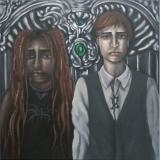
Proudly presenting Maravilhosamente Bem the powerful, female-centred third album by Brazilian singer, songwriter, actress, and creative director, Julia Mestre.
Alongside being a member of the Latin Grammy-winning Brazilian supergroup, Bala Desejo, Julia has been steadily building a solo career where her unique vision and alluring soft, sultry voice take centre stage. Drawing inspiration from ‘80s ballads, MPB, pop and disco productions, each song on this third album finds Julia creatively exploring different characters and tones.
A love-song-driven LP at its core, Maravilhosamente Bem holds a playful mirror up to blissful days gone by, artfully reimagined with Julia’s own modern twist. An album filled with love and nostalgia, it pays homage to her love of classic female disco divas such as Donna Summer, Sade, Alcione, Lady Zu, and the Brazilian rock queens Rita Lee and Marina Lima. Of that latter pairing, the late iconic Brazilian vocalist and musician Rita Lee (Os Mutantes) is referenced in the music video for the first single, ‘Sou Fera’, blessing Julia with a magical guitar. Marina Lima then provides guest vocals on the album’s closing track, ‘Marinou, Limou’, with her name transformed into a mantra by Julia.
Channelling a lo-fi ‘80s ballad aesthetic, Julia navigates a multitude of themes across the nine sublime tracks. From the sexy, whispered performances on vintage horror movie-inspired tunes ‘Vampira’ and ‘Pra Lua’ to the delicate, fragile love lullabies of ‘Sentimento Blues’ and ‘Cariñito’, and the seductive disco diva embodiment on dance tracks ‘Veneno de Serente’ and title track ‘Maravilhosamente Bem’. Another hidden highlight is the palette-cleansing mini-suite, ‘Interlúdio dos Amantes’. A luscious strings instrumental piece that lends to the beautiful Sade-esque ‘Seu Romance’.
Produced by Julia and longtime collaborators Gabriel Quirino, Gabriel Quinto, and João Moreira, Maravilhosamente Bem sees Julia embarking on a new era of her musical career. This sensational third album is a captivating showcase of the creative vision and versatility of one of Brazil’s finest stars.
Released on Mr. Bongo (ROW) and Altafonte (Brazil).
Search:fer br
- 1: Human Sewer
- 2: Abusement Park
- 3: Terror Tales
- 4: Excreted Entity
- 5: Internal Delusions Of The Torn Mind
- 6: Pulverised Secretions
- 7: Anthropophagic Apocalypse Pt.1 Collapse
- 8: Anthropophagic Apocalypse Pt.2 Lord Of Flesh
- 9: Curbstomp The Predator
- 10: Draco Dominus
- 11: Bio-Organic Liquid-Slam
- 12: Beyond The Veil Of Death
When you think of Scandinavia, Slamming/brutality isn't the first thing to come to mind. That's until the slam crew of DEVINE DEFILEMENT spewed onto the Icelandic scene in late 2016.
Devine Defilement draw inspiration from a variety of death metal sub-genres they have concocted a brutal cocktail of groove, slams, blasts and ferocity that has made them a force to be reckoned with!
With several releases under their belt Devine Defilement has kept busy playing shows in their home country of Iceland, as well as heading on numerous European tours.
The band has played all the major metal festivals of Iceland like Eistnaflug, Satan, Reykjavik Deathfest & Noroanpaunk to name a few, and has also appeared on notable European death metal fests such as Deathfeast Open Air & Nice to Eat You and already have a more festival appearances lined up for 2025.
Devine Defilement's live show is highly energetic, heavy and brutal as hell and it's on stage that these maniacs are in their true element!
In 2025 the band is set to release their new full-length album "Ruthless" through Time To Kill Records, and it is their most savage offering yet!
‘Mormaço Queima’ is where it all began for Ana Frango Eléctrico. Raw, quirky and lo-fi, it’s a debut album brimming with attitude and youthful energy, characteristics that would go on to define their sound. Previously released digitally in Brazil in 2018, with a private press CD version in 2020 and later a Brazilian vinyl version in 2022, here at Mr Bongo we felt it deserved a much-needed worldwide edition for all of us to savour.
A charming, idiosyncratic blend of MPB, Tropicália, and indie from a talented singer-songwriter, multi-instrumentalist and producer who would later become one of Brazil’s brightest international stars. ‘Mormaço Queima’ has a cool, laidback, swagger channelling ‘90s bands such as Pavement. The arrangements feel loose and easy, the opener, 'Farelos' (Crumbs), seems to ebb and flow on a razor's edge before the percussion and Antonio Neves' trombone draws the song into a structure. Another highlight is 'No Bico Do Mamilo', which has a free-flowing vibe, Ana pushing, pulling, and playing with the song's energy, keeping listeners constantly on their toes. Tracks such as 'Roxo' lean more into a punk attitude, with the pendulum swinging from easy-going to frenetic. The longest song on the album 'Picles', continues to sway the pendulum this time moving from DIY punk-funk into a psychedelic workout
Co-produced by friends and fellow future collaborators Guilherme Lirio, Gustavo Benjão, Marcelo Callado, and Thiago Nassif, ‘Mormaço Queima’ is a playful showcase of Ana Frango Eléctrico’s distinctive style. Plotting Ana's musical career, it's clear they are not one to be pigeon-holed, nor to be confined to a single genre. Instead, they are ever evolving and this captivating debut album was the building block for a career that has already seen them gain multiple Latin-Grammy awards and tour the world with their music.
- A1: I’m On The Wrong Side
- A2: Step In Time
- A3: Drucilla Penny
- A4: Strip Club
- A5: Dominance And Submission
- A. G.h.m
- A7: Someone Wants You Dead
- B1: Lock Yr. Room
- B2: Me And What Army
- B3: Straw Man
- B4: Acupuncture
- B5: Squirm Test
- B6: Stones Of Judgement
- B7: Owl Business
- B8: Blow The Smoke Away
"World of Pooh immensely brightened the dark corners of San Francisco, California during the years 1983-1990, with their most recognized guise being the MMF trio that existed & thrived during the years 1986-1990. This is the lineup you’ll hear documented on this exceptional collection of 45s, compilation tracks and assorted ephemera. The band has ranged from being a footnote for some (“is that the band Barbara Manning was once in?”) to a fondly-regarded memory for others (“the Land of Thirst album is a forgotten classic”) to a turnstile, door-opening band for still others — like me. They arrived in my life as they were slowly exiting theirs, and I eagerly attended a half-dozen shows of theirs circa 1989-90 around San Francisco moments after I moved there. They were instantly my favorite local band, one I was instantly duty-bound to see whenever & wherever they played. Their jagged and discombobulated take on underground pop music was exceptionally fertile, feral and fetching, and it served as a personal gateway drug that flowered my own appreciation for many different kinds of subtle musical tension.
I also spent at least five glorious years watching Jay Paget, who drummed for World of Pooh and later the Thinking Fellers Union Local 282, ply his rhythmic trade with much aplomb. He was always a steady hand behind the musical wheel of innovative bands who often threatened to careen off course. And I’ll admit to an untoward admiration of (and fascination with) World of Pooh founder, guitarist and singer Brandan Kearney from the moment I met the guy. Not only was he exceptionally friendly and welcoming to a carpetbagging interloper quickly trying to horn in on his scene (me), he was at once one of the most quick-witted, self-deprecating, highly intelligent & musically conversant people I’d ever met. Everything he and his band were doing, along with the mind-boggling DIY gunk he was pushing through his record label, Nuf Sed, and via his multiple other bands (among them: Caroliner & Archipelago Brewing Company, with several more to follow), made me extremely curious and not a tiny bit jealous about these wiser, weirder and musically more daring freaks who were making art, love & war in the relatively grittier & non-gentrified San Francisco of the day.
What I’ve learned in the 35 years since the band broke up is just how highly regarded they were (and remain) by not only those who saw them, but by a now-considerably larger group of humans who’ve subsequently heard & loved their records. I know that their place in the late 1980s was a small but special one, and I’ve seen plenty of online clamoring for more, more, more about this ephemeral and poorly-documented band. And rightly, here it is, lovingly assembled: their two hard-to-come-by 45s, a handful of comp tracks, and a quartet of phenomenal songs just coming to light for the first time, including that Half Japanese cover that dimly existed in my memory as a live song they naturally pulled off with sangfroid, from a time and space when we were all a little younger. - Jay Hinman"
- A1: Chicago, January 13Th, 2020
- A2: Makaya Mccraven - The Jaunt
- A3: Junius Paul - Asé
- A4: Dezron Douglas & Brandee Younger - The Creator Has A Ma
- A5: Resavoir - Taking Flight
- A6: Irreversible Entanglements - Open The Gates
- A7: Angel Bat Dawid - We Are Starzz
- A8: Rob Mazurek - Abstract Dark Energy (Parable 9)
- B1: The Most Amazing Time
- B2: Damon Locks - Rebuild A Nation
- B3: Dos Santos - A Shot In The Dark
- B4: Daniel Villarreal - In/On
- B5: Anna Butterss - Pokemans
- B6: Sml - Industry
- B7: Jeremiah Chiu & Marta Sofia Honer - Snacko
- C1: Jeff Parker - Cliche
- C2: Jamire Williams - And Then The Anointing Fell
- C3: Carlos Niño & Friends - Please, Wake Up
- C4: Thandi Ntuli With Carlos Niño - Voice And Tongo Experim
- C5: Tom Skinner - Quiet As It's Kept
- C6: Ruth Goller - Next Time I Keep My Hands Down
- C7: Alabaster Deplume - A Gente Acaba (Vento Em Rosa
- D1: Old Fashioned Chicago Music
- D2: Jaimie Branch - Theme
- D5: Charles Stepney - Step On Step
- D6: Tomin - Angela's Angel
- D7: Asher Gamedze - Melancholia
- D3: Ibelisse Guardia Ferragutti & Frank Rosaly - Mestizx (B
- D4: Ben Lamar Gay - Oh Great Be The Lake
Gilles Peterson presents International Anthem is a compilation chronicling the legendary London-based radio host, DJ, label head, curator and cultural impresario"s long-standing affinity for and interaction with artists and music from the Chicago-born record label International Anthem. The tracks on this compilation were chosen by Peterson via an extensive review of track lists from his broadcasts on BBC Radio 6 Music, Worldwide FM, and various syndicated radio programs. The compilation also includes a previously unreleased track recorded live on the Peterson-founded online radio station Worldwide FM. This album is released via International Anthem as part of their "IA11" series of releases and events - where the label celebrates their eleventh year of existence by looking back on their first ten years while establishing new standards for the next ten years.
Repress!
In the mid-1970s, a force of nature swept across the continental United States, cutting across all strata of race and class, rooting in our minds, our homes, our culture. It wasn’t The Exorcist, Goodbye Yellow Brick Road, or even bell-bottoms, but instead a book called The Secret Life of Plants. The work of occultist/former OSS agent Peter Tompkins and former CIA agent/dowsing enthusiast Christopher Bird, the books shot up the bestseller charts and spread like kudzu across the landscape, becoming a phenomenon. Seemingly overnight, the indoor plant business was in full bloom and photosynthetic eukaryotes of every genus were hanging off walls, lording over bookshelves, and basking on sunny window ledges. The science behind Secret Life was specious: plants can hear our prayers, they’re lie detectors, they’re telepathic, able to predict natural disasters and receive signals from distant galaxies. But that didn’t stop millions from buying and nurturing their new plants.
Perhaps the craziest claim of the book was that plants also dug music. And whether you purchased a snake plant, asparagus fern, peace lily, or what have you from Mother Earth on Melrose Avenue in Los Angeles (or bought a Simmons mattress from Sears), you also took home Plantasia, an album recorded especially for them. Subtitled “warm earth music for plants…and the people that love them,” it was full of bucolic, charming, stoner-friendly, decidedly unscientific tunes enacted on the new-fangled device called the Moog. Plants date back from the dawn of time, but apparently they loved the Moog, never mind that the synthesizer had been on the market for just a few years. Most of all, the plants loved the ditties made by composer Mort Garson.
Few characters in early electronic music can be both fearless pioneers and cheesy trend-chasers, but Garson embraced both extremes, and has been unheralded as a result. When one writer rhetorically asked: “How was Garson’s music so ubiquitous while the man remained so under the radar?” the answer was simple. Well before Brian Eno did it, Garson was making discreet music, both the man and his music as inconspicuous as a Chlorophytumcomosum. Julliard-educated and active as a session player in the post-war era, Garson wrote lounge hits, scored plush arrangements for Doris Day, and garlanded weeping countrypolitan strings around Glen Campbell’s “By the Time I Get to Phoenix.” He could render the Beatles and Simon & Garfunkel alike into easy listening and also dreamed up his own ditties. “An idear” as Garson himself would drawl it out. “I live with it, I walk it, I sing it.”
But as his daughter Day Darmet recalls: “When my dad found the synthesizer, he realized he didn’t want to do pop music anymore.” Garson encountered Robert Moog and his new device at the Audio Engineering Society’s West Coast convention in 1967 and immediately began tinkering with the device. With the Moog, those idears could be transformed. “He constantly had a song he was humming,” Darmet says. “At the table he was constantly tapping.” Which is to say that Mort pulled his melodies out of thin air, just like any household plant would.
The Plantae kingdom grew to its height by 1976, from DC Comics’ mossy superhero Swamp Thing to Stevie Wonder’s own herbal meditation, Journey Through the Secret Life of Plants. Nefarious manifestations of human-plant interaction also abounded, be it the grotesque pods in Invasion of the Body Snatchers or the pothead paranoia of the US Government spraying Mexican marijuana fields with the herbicide paraquat (which led to the rise in homegrown pot by the 1980s). And then there’s the warm, leafy embrace of Plantasia itself.
“My mom had a lot of plants,” Darmet says. “She didn’t believe in organized religion, she believed the earth was the best thing in the whole world. Whatever created us was incredible.” And she also knew when her husband had a good song, shouting from another room when she heard him humming a good idear. Novel as it might seem, Plantasia is simply full of good tunes.
Garson may have given the album away to new plant and bed owners, but a decade later a new generation could hear his music in another surreptitious way. Millions of kids bought The Legend of Zelda for their Nintendo Entertainment System back in 1986 and one distinct 8-bit tune bears more than a passing resemblance to album highlight “Concerto for Philodendron and Pothos.” Garson was never properly credited for it, but he nevertheless subliminally slipped into a new generations’ head, helping kids and plants alike grow.
Hearing Plantasia in the 21st century, it seems less an ode to our photosynthesizing friends by Garson and more an homage to his wife, the one with the green thumb that made everything flower around him. “My dad would be totally pleased to know that people are really interested in this music that had no popularity at the time,” Darmet says of Plantasia’snew renaissance. “He would be fascinated by the fact that people are finally understanding and appreciating this part of his musical career that he got no admiration for back then.” Garson seems to be everywhere again, even if he’s not really noticed, just like a houseplant.
Black Truffle is pleased to announce a new edition of Kassel Jaeger’s Fernweh, returning François J. Bonnet’s electroacoustic project to the label five years after the acclaimed Meith (BT069). Originally released on Giuseppe Ielasi and Jennifer Veillerobe’s impeccably curated Senufo Editions in 2012, Fernweh stands near the beginning of the gradual expansion of Bonnet’s approach after the austere acoustic textures of Aerae and Algae (both released on Senufo), leading to the lush, layered environments of recent solo works on Shelter Press and the epic electronic expeditions undertaken in duo projects with Stephen O’Malley and Jim O’Rourke.
A major work in the Kassel Jaeger oeuvre, stretching over two LP sides, Fernweh draws together synthesized and musique concrète materials into a drifting assemblage. Its title’s meaning is close to the concept of ‘Wanderlust’, fitting for this music that moves freely and unexpectedly between what Bonnet calls ‘climates’. Beginning with fizzing electronics whose rhythm of gradual approach suggests breaking waves, the clinical atmosphere is soon haunted by intangible traces of lived reality. Textures call up wind, water, insects, the crunch of feet on sand or the clinking of glasses, yet they can never be identified with any certainty. At times these concrete elements possess a vivid ‘closeness’; at others, the sounds shade into a formless distance. Though the listener forms no clear picture from the concrete sounds, these elements aerate the music, lending it their space.
Drawing from the rigorous formal language and conceptual apparatus of the French musique concrète tradition—with which Bonnet, as director of the GRM and researcher into its deepest archival recesses, is intimately familiar—the music of Kassel Jaeger is equally informed by how underground experimental music has rethought electroacoustic techniques, with Fernweh at times calling up the grit and grime of para-industrial eccentrics like Maurizio Bianchi or the Toniutti brothers, and at other moments suggesting the slow-moving grandeur of early Olivia Block. Subtle features of dynamics and rhythm act as connective tissue between the numerous ‘scenes’, with wave-like envelopes, rapid pulsations, and short, tape-loop patterns all recurring throughout the piece, shared ambiguously between electronic and concrete sounds. Amid these shifting, often inharmonic textures, the electronic elements sometimes cohere into melodic shapes and chordal patterns, cutting through the fog in distorted arcs or underpinning the layered surface with slow-moving harmonies. Like his friend and collaborator Jim O’Rourke, Bonnet displays a radical openness at odds with academic tradition, allowing unabashed emotion to coexist with rigorous experimentation. As Fernweh dies away with mysterious shudders, listeners are left at once moved and unsure of exactly what they just heard.
Chicago-based composer/producer Joey Meland makes music under the moniker Cocojoey. Treating genre conventions and ostensible barriers between disparate musical vocabularies like playthings to gleefully smash and reshape at will, Meland channels decades of experience as a polymathic professional musician adept in styles like metal, jazz, synthpop, and experimental sound design into their infinitely combinatory compositions. STARS, their first album on Hausu Mountain, follows the self-released COCOJOEY’S WORLD with a spellbinding burst of heart-on-sleeve self-expression. The album finds Cocojoey indulging their most adventurous impulses in production and technical instrumental performance, launching into a constantly morphing program that contrasts day-glo earworm hooks against cathartic moments of screaming intensity. Cocojoey’s music exudes warmth and finger-wagging mischief as it exhumes the depths of their psyche with the pure-hearted goal of making their audience smile — when those listening find a chance to breathe within the ecstatic overstimulation.
The album’s tightly constructed song cycle blasts the listener with moment after moment of novel juxtaposition, both in terms of genre and emotional energy, that keep us reeling in a state of delirious whiplash. Warp-speed piano solos over bossa nova-inflected chord progressions segue into detonations of death metal that front-load Meland’s ferocious screaming vocals and meticulously programmed double-kick drum patterns. A strain of iridescent prog emerges in the sheer overload of notes and ideas, as drum n’ bass breaks collide with labyrinthine multi-time signature keyboard lines and bright flashes of clean vocals. Despite whatever contrasting styles might hit within any given Cocojoey song, Meland returns again and again to the upheaval and release provided by extreme metal — though that idiom lands with joyful exuberance, an abrasive yet heartwarming flavor whose positive energy carries through even to those who might not encounter screams and hyper-technical drum breakdowns in their typical listening regimen.
Emerging from the fertile chaos of Düsseldorf’s Salon des Amateurs scene, Sequence of Events, the collaborative project of Deniz Saridas and Joshua Gottmanns, presents The Art of Memory, an album that feels both intimate and ungraspable, like recalling a dream that fades upon waking.
Rooted in the post-industrial landscapes of West Germany, The Art of Memory channels the bleak resilience of these environments into its sound. It’s a collage of kraut-infused electronics, shoegaze textures, and industrial pulses, filtered through a lens of introspective psychedelia. “We don’t consciously break down or combine genres,” they explain. “Everything is interwoven, like chemistry. Some reactions happen immediately, others take years under pressure.”
From the opening track TAR, with its stoic vocals and drum-heavy propulsion, to the robotic Meagre Gardens, where autotuned chants coil around unconventional drum programming, the album moves like a fever dream through fragmented memories. Soul Divider unfolds like a cinematic journey through yearning and desire, its repetitive pulses echoing the ache of unfulfilled longing, while Nature Hates Life distills pop music through the eyes of a killjoy: “Kurt Cobain on an AKAI MPC2000,” as the band describes it. Even moments of tenderness, like the drifting Becomings, shimmer with absolute sensuality: a seductive exploration of presence defined by absence. We lift each other up and hold each other down.
The creative process behind The Art of Memory is as fluid as the music itself. Saridas and Gottmanns, both self-taught musicians with backgrounds in fine art, worked intuitively, drawing from a shared pool of samples, text fragments, and images. Operating somewhere in the space between fin de siècle aesthetics and occultism, it’s a dream wedding with a continuous stream of meaningless (moving) images generated by human and non-human entities.
Ultimately, The Art of Memory is not an escape but an immersion. A meditation on the sensory overload of the present and the ghosts it leaves in its wake. In a world where music is often reduced to background noise for consumption, Sequence of Events offers something more elusive: a record that lingers, unsettles, and demands to be remembered.
- 01: Lucrecia Dalt - Cosa Rara (Ft. David Sylvian)
- 02: Mabe Fratti - Cosa Rara (En La Playa)
- 03: Lucrecia Dalt - Cosa Rara (Matias Aguayo's Dopamine Dub)
New Artwork. Lucrecia Dalt ist eine produktive und grenzenlose Musikerin, Performerin, Komponistin und Klangkünstlerin, die sowohl Genre als auch Form herausfordert, indem sie vertraute Elemente der Pop- und experimentellen Musik auseinander nimmt und sie auf unerwartete Weise neu zusammensetzt. Mit ihrem hochgelobten Album "¡Ay!" aus dem Jahr 2022 gelang ihr der Durchbruch bei einem breiteren Publikum. Dalt hat sich auch als Komponistin für Film und Fernsehen einen Namen gemacht, unter anderem mit ihrer originellen Filmmusik für die HBO-Serie "The Baby" und den in Cannes 2024 ausgezeichneten Spielfilm "On Becoming a Guinea Fowl". Mit ,cosa rara", ihrer neuen Single, die von Kultmusiklegende David Sylvian gemischt, produziert und mit einem seltenen Gastbeitrag versehen wurde, wird das Thema des eigenen Ichs zu einer unwahrscheinlichen Verliebtheit. "cosa rara" ist eine kühne Rückkehr von Dalt, die die Höhen der Liebe destilliert und mit Produktionspräzision und hyperfokussierter Klarheit klanglich umsetzt und den Hörer auf eine aufregende Eskapade aus Sound und Psychologie einlädt. Die B-Seite der 7" enthält Mabe Frattis "cosa rara (en la playa)"-Version, eine geisterhafte, von Fratti produzierte und gesungene Version desselben Songs, sowie eine 7" exklusive, erweiterte Version von Matias Aguayos, "cosa rara (dopamine dub)". Abgemischt von Sylvian und gemastert von Heba Kedry, ist die 7" eine einmalige, auf 500 Exemplare limitierte Pressung. RIYL: PJ Harvey, Broadcast, St. Vincent, ML Buch, Stereolab, Cate LeBon, Aldous Harding, Mabe Fratti, Dry Cleaning, Juana Molina.
- Judgement Day
- Fast Pace
- Under The Streetlight
- Doesn't Matter Much Now
- Midnight Ferry
- Brassic
- Gaslight
- Don't Stand Alone
- Streetrat Skallywag
- Parasite
- It's A Mad World, Baby
- Doing Time
- Celine
- See You Around
- Bottom Shelf
50 years after the genre turned the music world upside-down, GRADE 2 bring the raw power of old school punk to a new generation. Their second release on Tim Armstrong"s legendary Hellcat Records is a thumping 15 track tour de force melding the uncompromising ethos of punk with the howl of contemporary injustice, personal identity and frustrations of Gen-Z youth, authentically told by three lads with punk coursing through their veins. Formed on their native Isle of Wight when they were just 14 years old, Jack Chatfield (guitar & vocals), Jacob Hull (drums) and Sid Ryan (bass & vocals) honed their craft covering punk pioneers before creating a sound uniquely theirs: ten years on, the eponymous Grade 2 is their magnum opus. The new album was produced by the band along with Tim Timebomb (Armstrong) and T.J. Rivers at Armstrong"s Ship Rec Studio in Los Angeles. "Returning to Ship Rec Studio resparked that magic dynamic" says guitarist Jack Chatfield. "When we"re in there I feel like we reach our full potential. Tim would offer tweaks and tips for some songs, while others he"d compliment as finished first time we played them." "We worked flat-out recording this record," says drummer Jacob Hull, "but we never felt pressured, Tim keeping us in the zone to make the best tunes of our lives.
VERY LIMITED 2025 REPRESS ON BEAM OF LIGHT VINYL .
Everything changed for The Beths when they released their debut album, Future Me Hates Me, in 2018. The indie rock band had long been nurtured within Auckland, New Zealand’s tight-knit music scene, working full-time during the day and playing music with friends after hours. Full of uptempo pop rock songs with bright, indelible hooks, the LP garnered them critical acclaim from outlets like Pitchfork and Rolling Stone, and they set out for their first string of shows overseas. They quit their jobs, said goodbye to their home town, and devoted themselves entirely to performing across North America and Europe. They found themselves playing to crowds of devoted fans and opening for acts like Pixies and Death Cab for Cutie. Almost instantly, The Beths turned from a passion project into a full-time career in music.
Songwriter and lead vocalist Elizabeth Stokes worked on what would become The Beths’ second LP, Jump Rope Gazers, in between these intense periods of touring. Like the group’s earlier music, the album tackles themes of anxiety and self-doubt with effervescent power pop choruses and rousing backup vocals, zeroing in on the communality and catharsis that can come from sharing stressful situations with some of your best friends. Stokes’s writing on Jump Rope Gazers grapples with the uneasy proposition of leaving everything and everyone you know behind on another continent, chasing your dreams while struggling to stay close with loved ones back home.
"If you're at a certain age, all your friends scatter to the four winds,” Stokes says. “We did the same thing. When you're home, you miss everybody, and when you're away, you miss everybody. We were just missing people all the time.”
With songs like the rambunctious “Dying To Believe” and the tender, shoegazey “Out of Sight,” The Beths reckon with the distance that life necessarily drives between people over time. People who love each other inevitably fail each other. “I’m sorry for the way that I can’t hold conversations/They’re such a fragile thing to try to support the weight of,” Stokes sings on “Dying to Believe.” The best way to repair that failure, in The Beths’ view, is with abundant and unconditional love, no matter how far it has to travel. On “Out of Sight,” she pledges devotion to a dearly missed friend: “If your world collapses/I’ll be down in the rubble/I’d build you another,” she sings.
“It was a rough year in general, and I found myself saying the words, 'wish you were here, wish I was there,’ over and over again,” she says of the time period in which the album was written. Touring far from home, The Beths committed themselves to taking care of each other as they were trying at the same time to take care of friends living thousands of miles away. They encouraged each other to communicate whenever things got hard, and to pay forward acts of kindness whenever they could. That care and attention shines through on Jump Rope Gazers, where the quartet sounds more locked in than ever. Their most emotive and heartfelt work to date, Jump Rope Gazers stares down all the hard parts of living in communion with other people, even at a distance, while celebrating the ferocious joy that makes it all worth it -- a sentiment we need now more than ever.
NON EXCL LP , Black Vinyl
The Soulful Trio, a band from Barcelona made up of three musicians with an international background (Spain, Holland, Argentina, USA, France) after playing their repertoire live in different venues for several months, with their songs well shot, have decided to record "Said & Done", in one of the best studios of Barcelona, nine original compositions of Soul-Jazz with derivations towards funk and blues.
Music reminiscent of the classics of the Hammond B3 organ trio such as Jimmy Smith, Jack McDuff, Lonnie Smith, Richard “Groove” Holmes or Big John Patton, reinventing the sound and bringing it closer to today with their vibrant fusion of genres full of energy.
Enjoy this instrumental Soul-Jazz album with these young veterans Homero Tolosa (drums), Pablo Sánchez (guitar) and Lucas Herrera Fernández (Hammond B3) in all their splendor with their respective instruments including the exciting & dynamic sounds of the Hammond B3, the great electric guitar groove of solos and huge variety of rhythms, playing a music that is always intense and made from their hearts.
- 1: Ein Polnischer Knecht
- 2: Familiengeschichten
- 3: Paradiesvögel
- 4: Und Weil Er Jung Und Kräftig War
- 5: Dreck Unterm Nagel
- 6: Die Prinzessin Auf Der Nadel
- 7: Schlackenfahrer-Schorsch
- 8: Koslowsky Schlägt Zu
- 9: P.s
Im oberfränkischen Sulzbach-Rosenberg, dem Standort der Maxhütte, brannte Ende des Jahrzehnts natürlich nichts außer dem Feuer in den Hochöfen, in denen Stahl geschmolzen wird. Floh de Cologne sahen sich über viele Monate dort um, die fünf Langhaarigen aus Preußen (Enxing) redeten mit Gott und der Welt. "Wir waren mit der Zeit integriert." So entstand Koslowsky.
Darin gehört das Epos "Prinzessin auf der Nadel" zum Besten, was die deutsche Rockmusik hervorgebracht hat. Der Text stammt von Peter Maiwald (1946–2008). Er porträtiert die Umstände, die eine junge Frau aus Sulzbach in die Droge als »Aus- weg« führt. Uraufgeführt an zwei Abenden im Dezember 1979 im Saal der Gaststätte "Josefshaus", gewerkschaftlich unterstützt wie manche andere Floh-Produktion, er- reichte sie auch die Belegschaft des Stahlwerkes – bis spät in die Nacht unterhielt ich mich danach mit einem Stahlwerker bei gutem bayrischen Bier. Im Betrieb hatte er so einiges mitbekommen von der Vorgeschichte. Das Programm steht für die Brillanz, die Floh de Cologne musikalisch wie textlich im Laufe der Jahre erreicht hatten, erhielt den deutschen Kleinkunstpreis und wurde fürs Fernsehen aufgezeichnet. Ins erste Programm schaffte es Koslowsky nicht, aber immerhin in mehrere dritte.
The strength of Fan Club Orchestra's (FCO) trajectory lies in their nebulous, collaborative, and experimental nature, always with Laurent Baudoux at the centre. With its roots in the DIY impulses of the Brussels art and music scene of the late nineties, Baudoux rallied together a revolving cast of players with an unconventional ensemble of instruments to explore melancholic psychedelia that touched on drone and minimalism as readily as it carved minor pop hits from cracked electronics. Performances were often highly improvisational, aided by the barely controlled chaos that guest collaborators—such as American artist Mike Kelley—would inject into an appearance.
FCO self-released two albums in the early 2000s before finding a home with Sonig, where they released several more records up until their last with the label in 2013. This was a fitting frame as Sonig, like FCO, channelled the fervour and formalism of the experimental music history of the Rhineland, which includes Kraftwerk, krautrock, and key early electronic music studios.
Following an eleven year hiatus, Laurent Baudoux reassembled the group in 2024 and presented a new album with the esteemed Glaswegian label 12th Isle late in that same year. Building on the strength of the new iteration, and with the aim of reappraising some of the rich yet oblique history of the group through this new lens, FCO have remastered and reissued their 2013 album, 'An Insane Portrait'.
The recordings were originally commissioned in 2009 for Fabrizio Terranova's film 'Josée Andrei, An Insane Portrait' about the truly remarkable figure Josée Andrei. Shot in San Francisco, the film is an intimate portrait of Andre. Blind from birth, she is a witch, painter, photographer, tarot reader, and psychology and modern literature graduate.
'An Insane Portrait' captures a stripped-back FCO, with Baudoux working solely with original FCO member Ann Appermans. The configuration of Baudoux's electronics and Appermans' bass guitar yield a tender and preciously melodic suite of instrumentals.
Originally released on vinyl by Sonig in 2013, the remaster will again be presented by the label in a limited cassette edition and in digital formats, each featuring a bonus track that was not included in its original release.
The strength of Fan Club Orchestra's (FCO) trajectory lies in their nebulous, collaborative, and experimental nature, always with Laurent Baudoux at the centre. With its roots in the DIY impulses of the Brussels art and music scene of the late nineties, Baudoux rallied together a revolving cast of players with an unconventional ensemble of instruments to explore melancholic psychedelia that touched on drone and minimalism as readily as it carved minor pop hits from cracked electronics. Performances were often highly improvisational, aided by the barely controlled chaos that guest collaborators—such as American artist Mike Kelley—would inject into an appearance.
FCO self-released two albums in the early 2000s before finding a home with Sonig, where they released several more records up until their last with the label in 2013. This was a fitting frame as Sonig, like FCO, channelled the fervour and formalism of the experimental music history of the Rhineland, which includes Kraftwerk, krautrock, and key early electronic music studios.
Following an eleven year hiatus, Laurent Baudoux reassembled the group in 2024 and presented a new album with the esteemed Glaswegian label 12th Isle late in that same year. Building on the strength of the new iteration, and with the aim of reappraising some of the rich yet oblique history of the group through this new lens, FCO have remastered and reissued their 2013 album, 'An Insane Portrait'.
The recordings were originally commissioned in 2009 for Fabrizio Terranova's film 'Josée Andrei, An Insane Portrait' about the truly remarkable figure Josée Andrei. Shot in San Francisco, the film is an intimate portrait of Andre. Blind from birth, she is a witch, painter, photographer, tarot reader, and psychology and modern literature graduate.
'An Insane Portrait' captures a stripped-back FCO, with Baudoux working solely with original FCO member Ann Appermans. The configuration of Baudoux's electronics and Appermans' bass guitar yield a tender and preciously melodic suite of instrumentals.
Originally released on vinyl by Sonig in 2013, the remaster will again be presented by the label in a limited cassette edition and in digital formats, each featuring a bonus track that was not included in its original release.
3x12" Vinyl[155,04 €]
In den frühen 70er Jahren war Fernsehen ein wichtiges Mittel, um Musiker in den eigenen vier Wänden bekannt zu machen. Frank Zappa, der mit seiner Tournee-Lichtshow und seinem Bühnenaufbau voll ausgestattet war, versuchte, Videomaterial für seine eigene Fernsehproduktion aufzunehmen, um es den großen Sendern anzubieten. Genau wie bei den Dreharbeiten zu The Roxy Performances Monate zuvor gab es technische Probleme, die letztendlich dazu führten, dass das Filmmaterial beiseite gelegt wurde. 50 Jahre später, mit den Fortschritten bei den Bearbeitungswerkzeugen für die Nachbearbeitung, präsentieren wir ”Cheaper Than Cheep”. Dieses neue 2-stündige Konzertprogramm bietet klassische Auftritte der Mothers-Besetzung von 1974, direkt von den neu restaurierten Original-Audio- und Videoband-Mastern aus dem Archiv. Die offzielle Zappa-Veröffentlichung Nr. 130 erscheint in einer speziellen, limitierten Super Deluxe-Edition mit dem remasterten Konzertvideo und brandneuem Dolby Atmos, 5.1 Surround sowie Stereo-Mix auf einer Blu-ray, dem Stereo-Soundtrack auf 2 CDs und 3 LPs auf 180 Gramm schwarzem Vinyl, einem ausführlichen Booklet mit seltenen, bisher unveröffentlichten Bildern und Linernotes von Ruth Underwood und Joe Travers, alles in einem ausziehbaren Schuber verpackt. Weitere Formate sind eine komplette 2-CD + Blu-ray und ein eigenständiger Soundtrack auf 3 LPs auf 180 Gramm schwarzem Vinyl
3x12" Vinyl[63,24 €]
In den frühen 70er Jahren war Fernsehen ein wichtiges Mittel, um Musiker in den eigenen vier Wänden bekannt zu machen. Frank Zappa, der mit seiner Tournee-Lichtshow und seinem Bühnenaufbau voll ausgestattet war, versuchte, Videomaterial für seine eigene Fernsehproduktion aufzunehmen, um es den großen Sendern anzubieten. Genau wie bei den Dreharbeiten zu The Roxy Performances Monate zuvor gab es technische Probleme, die letztendlich dazu führten, dass das Filmmaterial beiseite gelegt wurde. 50 Jahre später, mit den Fortschritten bei den Bearbeitungswerkzeugen für die Nachbearbeitung, präsentieren wir ”Cheaper Than Cheep”. Dieses neue 2-stündige Konzertprogramm bietet klassische Auftritte der Mothers-Besetzung von 1974, direkt von den neu restaurierten Original-Audio- und Videoband-Mastern aus dem Archiv. Die offzielle Zappa-Veröffentlichung Nr. 130 erscheint in einer speziellen, limitierten Super Deluxe-Edition mit dem remasterten Konzertvideo und brandneuem Dolby Atmos, 5.1 Surround sowie Stereo-Mix auf einer Blu-ray, dem Stereo-Soundtrack auf 2 CDs und 3 LPs auf 180 Gramm schwarzem Vinyl, einem ausführlichen Booklet mit seltenen, bisher unveröffentlichten Bildern und Linernotes von Ruth Underwood und Joe Travers, alles in einem ausziehbaren Schuber verpackt. Weitere Formate sind eine komplette 2-CD + Blu-ray und ein eigenständiger Soundtrack auf 3 LPs auf 180 Gramm schwarzem Vinyl
Civilistjävel! x Mayssa Jallad’s ‘Marjaa: The Battle of the Hotels (Versions)’ is a radical response to Mayssa Jallad’s 2023 original LP, a lyrical account of epochal events in Beirut at the dawn of Lebanon's civil war. ‘…(Versions)’ sees Civilistjävel! (aka Swedish producer Tomas Bodén) apply a stripped, dub methodology to Mayssa's rich stems, refracting the Arabic source through the hazy prism of Northern European electronica. Retaining ‘Marjaa…’s deep spatial framing and vaporous, shifting nature, traces are lifted and set down in a new landscape: a ghost of a ghost. Informed by Tomas' singular strand of ambient, minimalist, dub techno, ‘… (Versions)’ recalls the reductive, shimmering pulse of pioneering Berlin-based practitioners Basic Channel/Chain Reaction, but with the parameters stretched into the ether. Where versions typically focus on a rhythm, here the anchor is the tone and texture of Mayssa’s voice, around which a new world has been constructed. Disembodied and liminal, it conjures an eerie panorama that feels like a postscript to the original, further emphasizing the geopolitical events that have had such devastating effect in Mayssa’s homeland of Lebanon since that record’s release. ‘Marjaa…’ (tr. ‘reference’) combined Mayssa Jallad’s two main vocations: music and urban research/architectural history. The album was co-written with Fadi Tabbal and based on Mayssa's Historic Preservation master's thesis (‘Beirut’s Civil War Hotel District: Preserving the World’s First High-Rise Urban Battlefield’). The thesis examined a 5-month conflict that took place within Beirut's skyscraper-laden luxury hotel district of Minet El Husn near the start of the Lebanese Civil War. Addressing a post-war generation who have never been taught this difficult history, ‘Marjaa…’ was an attempt to process trauma, and “a call to protest for the renewal, rather than the recycling of the political class that once destroyed the country and holds us, to this day, hostage of its violence.” Often perceived as a mysterious, shadowy presence, Civilistjävel! has come increasingly to the fore in recent years through a consistently dazzling stream of records, released both anonymously and via Fergus Jones’ FELT imprint, often appearing with scant information and tracks for the most part untitled. Having featured tracks from ‘Marjaa…’ on mixes, and included the album in his picks of 2023, in early 2024 Tomas asked Mayssa to provide vocals for a track on his album ‘Brödföda’. Mayssa remembers, “Tomas asked me to choose one of the tracks he was working on. I was in Boston at the time, so I took a walk and chose a track. I wrote the lyrics at the public park, wondering if I was the only one around that was losing sleep over the genocide in Palestine and the war in South Lebanon. I went back to the apartment and recorded the vocals on my phone, while listening to the track on headphones. Tomas reworked it with the voice and sent it back. I liked it immediately.” Despite the geographical distance from Beirut to Uppsala, Sweden, where Tomas resides, Mayssa’s contribution sounds very much at home in Civilistjävel!’s atmospheric, contemplative sound-world. Tomas’ request was reciprocated by Mayssa soon after, resulting in the spectral, glassy ambience of ‘Etel, Kharita (Version)’. This was followed by an invitation to work on more tracks, which Tomas immediately embraced, intensively jamming out versions live to two-track tape in downtime between travelling. If not entirely dissimilar to his regular working practice, the immediacy of it was unusual. Much was improvised live with just a keyboard (not tethered to a grid), and a restricted set-up that largely forbade later edits - only the rhythm tracks are programmed. A sharp conceptual thinker and composer, Tomas takes creative liberties with Mayssa’s songs in a way that is deeply felt and sympathetically aligned, whilst unashamedly outside of the original context of the record. The voice is leaned into as an instrument, without the clear, specific details of language, and this axis provides an uncertain, amorphous footing - structure is often suggested or hinted at, before disappearing or collapsing into fog, and folding back into the message within the song. A somewhat unprecedented source for an album of versions, even those familiar with ‘Marjaa: The Battle of the Hotels’ may at points struggle to hear the songs these versions are rebuilt from, despite the vocal narratives remaining virtually intact. The light has shifted; eroded buildings are foregrounded; fragments of memories appear in chiaroscuro. Signs and signifiers have been replaced. Shorn of the original's warm guitar, ‘Baynana (Version)’ feels like an ominous visitation, the sun no longer visible. ‘Holiday Inn (March 21 to 29) (Version)’ is a molten, clattering invocation. The beat-less tracks nod towards the cold, otherworldly sound-scaping of late '90s isolationism. More propulsive and embodied, ‘Holiday Inn (January to March) (Version)’ and ‘Kharita (Dub)’ are strobing, iridescent techno - lithe, shifting and mutating with almost implausible finesse. A stunning addition to Civilistjävel!’s growing catalogue, ‘…(Versions)’ is a luminous counterpoint to ‘Marjaa…’, and a welcome reminder of how incredible that record remains.
- Listen To Me, Sister
- Haters Gonna Hate
- Ugly Me
- Craterface
- Don't Say It So
- Phone Call
- Hey, Man
- Monsters (In My Brain)
- Outro
- Pro Yarika
Ukrainian Riot Grrl Trio 'Death Pill' Return With 'Sologamy' Their Much Anticipated Second Album. Two years on from their sensational debut, Ukrainian 'Riot Grrls' Mariana, Anastasiia and Nataliia, aka Death Pill are back. And back in full force, locked and loaded with a mighty set of tunes, _ as they put it. 'A bold exploration of personal empowerment'. 'SOLOGAMY' is fierce, heavy and melodic. The album's 10 tracks mark a bold evolution in the band's sound and Death Pill really deliver with ferocity and belief through multiple gear changes and genres as if it were easy. Hardcore, punk, grunge, thrash, riot grrrl, emo, are just some of the touchstones this album moves through, and all with the accomplished ferocity and memorable melody the band introduced on their debut. There are cellos, piano's, sound effects and ornate arrangements that open out their sonic palette, there's a bit of pop and even a bit of prog. But rest assured _ It's all pure 'Death Pill'. Thematically 'Sologamy' is, at its core, a celebration of the self! DP says: "The title, inspired by the concept of marrying oneself, speaks to the importance of making a personal commitment to self-care, happiness, and emotional well-being. In an era where that can sometimes be misconstrued as selfishness, Death Pill pushes back against these misconceptions, inviting listeners to embrace the power of prioritizing their own mental and emotional health." "Each track on the album is quite different from the last, and we see this as a way of accepting and supporting yourself in any emotional state. You arrive in this world alone and you leave it alone. The bottom line is: You're the only person you've got. "Every song on the album is a story that happened to us. Maybe it'll happen to you too. But every story deserves to become a song." "Sologamy" is more than just an album-it's a call to action" The very special LP version is not only frosted clear vinyl, but comes w/ foiled sleeve art, poster, sticker and free dlc! CD is nice too.