Long before streaming services, podcasts, or even the compact disc, there was Tellus—a radically ambitious publication that imagined recorded sound as an exhibition space. Founded in 1983 in downtown New York, Tellus transformed the humble audio cassette into a magazine, commissioning and publishing new works by musicians, composers, visual artists, poets, writers, choreographers, and performers who were reshaping the boundaries of contemporary art. Each issue invited listeners into a world where no wave, industrial music, spoken word, Fluxus performance, electroacoustic composition, downtown pop, conceptual art, and avant-garde experimentation could coexist on equal footing. More than forty years later, Earth Libraries proudly presents TELLUS: The Audio Cassette Magazine Anthology Vol. 1, the first comprehensive anthology devoted to the groundbreaking publication. The story of Tellus begins, fittingly, at the Rum Runner Bar on Canal Street. There, in 1983, visual artist Joseph Nechvatal, curator Claudia Gould, and composer Carol Parkinson conceived an entirely new kind of publication. Portable cassette players were transforming how people experienced music, and the trio saw an opportunity to use the cassette itself as a curatorial medium—one capable of circulating work that traditional record labels, galleries, and magazines simply couldn't accommodate. Early recordings by Sonic Youth and Liquid Liquid sit alongside works by James Tenney, George Brecht, Takehisa Kosugi, Carol Parkinson, Y Pants, Live Skull, Shelley Hirsch, Lenny Pickett, Paul Dresher, Gregory Whitehead, and dozens of other artists whose work helped define one of the most fertile creative communities of the era. For Earth Libraries, restoring Tellus represents a continuation of the label's commitment to preserving overlooked musical histories. Working from the original cassette masters, every recording on TELLUS: The Audio Cassette Magazine Anthology Vol. 1 has been carefully restored and newly mast
The Forbidden Planet is the new album by Tomorrow Comes The Harvest, featuring Rasheeda Ali. The album explores a wide range of electronic and acoustic improvisational conversations, creating expansive and constantly evolving sound landscapes.
The recording carries forward many of the qualities that have made Tomorrow Comes The Harvest so distinctive from its beginnings. The project originated through the percussive dialogue between Jeff Mills and the late Afrobeat pioneer Tony Allen. When thetwo creative forces first came together several years ago, what emerged was more than a collaboration or musical conversation. They opened a pathway-a way of creating through instinct, exchange, rhythm and freedom. That pathway continues to lead toward new horizons, and The Forbidden Planet is evidence of just how far it can travel.
The album is the result of an intricate creative process spanning nearly two years, connecting a series of recording sessions at notable studios including Criteria Studios in Miami, Soda Sound, and the legendary Studio Ferber in Paris, France.
The Forbidden Planet explores the more cerebral dimensions of the band's vast musical language. An idea is introduced, and almost immediately it begins to transform. Themes are questioned, reshaped and redirected as the musicians respond instinctively to one another.
As Tomorrow Comes The Harvest is known for, the performances were recorded largely through improvisation, often capturing the energy and spontaneity of an almost one-take process. These recordings were later carefully refined and shaped into the compositional structures heard throughout the album.
The creative seeds have been planted in fertile ground, allowing ideas to grow naturally and without restriction. In rhythm and in spirit, each musician contributes an essential voice to the conversation. Within that collective precision lies something even more important: a shared love of musical freedom and the possibility of creating without boundaries.
Prabhu Edouard - tabla and vocals
Jean-Phi Dary - keyboards
Jeff Mills - percussion and electronics
Featuring Rasheeda Ali on flute, with a special guest appearance by Laurent Vernerey on electric bass.
The Forbidden Planet will be released November 20th, 2026 on Axis Records on Double-Vinyl & CD + DVD. The DVD features selected live footage from Tomorrow Comes The Harvest, featuring Jeff Mills, Jean-Phi Dary, Prabhu Edouard and Rasheeda Ali.
Filmed & recorded live at London Jazz Café on September 27th, 2025, the footage captures highlights from the band's unique fusion of electronic music, jazz, percussion and improvisation.
Alex Nut returns with The Heat, a four-track EP that further explores the fertile ground between House, Soul, Broken Beat and Jazz. As co-founder and curator of Eglo Records, his productions have always reflected the same ethos that has defined his label: music unconcerned with genre boundaries, rooted instead in groove, feeling, history and culture. The Heat EP showcases his unmistakable musical palette, featuring collaborations with two of contemporary soul’s most distinctive voices: Allysha Joy and Steve Spacek. Title track The Heat finds Australian vocalist Allysha Joy at the centre of the record. Floating over skipping, broken, drum programming, warm analogue textures and deep low-end pressure. Opening the EP is Bright, Alex’s collaboration with the inimitable Steve Spacek, first unveiled earlier this year, here it’s joined by a brand new Re-FreQ Mix, flipping the original into an acid-soaked club workout, all bubbling 303 lines, swinging percussion and late-night bump. Closing the EP is Duck Duck, the original sketch that would eventually become Bright. Featuring long-time collaborator Sam Croweon Rhodes and piano. It’s a beautifully loose, deep, jazzy, House-infused piece that captures the spirit of the session before the song took its final shape.
UK dub techno heavyweight and Mosaic label head Steve O'Sullivan has explored plenty of fertile ground with Berlin-based Fletcher, and now they're back to do it again, but this time include Swedish artist and former Rubadub employee Sean Dixon in the team for the third part in the Mosaic versus series. 'Distance' (O'Sullivan vs Dixon) is a mid-tempo roller with clipped dub chords and swirling pads, while 'End To End' (also O'Sullivan vs Dixon) is more tight and direct, with kicks that sound like a bouncing basketball and implicit swing that immediately gets you hooked. 'Breakout' (O'Sullivan vs Fletcher) has a darker minimal dub edge and icy hi-hats over a warped bassline. A real hat trick of top dub techno weapons.
Lucas Santtana’s tenth album celebrates the vitality and musicality of the Romance languages.
The heir to Brazilian tropicalism, Santtana marks 25 years of his career with Brasiliano, a true collective celebration that brings together prestigious collaborators: Gilberto Gil, Oxmo Puccino, Flavia Coelho, Piers Faccini, Chico César, Paralamas do Sucesso, Cocanha, Dimartino, Karyna Gomes, Tainara Takua, Rachel Reis and Maria Lado.
Sung in eight different languages, Brasiliano is both an ode to linguistic diversity and a testament to its symbolic power. Carried by luminous and layered arrangements where voices intertwine like a polyphonic conversation, the album treats language as a musical instrument in its own right, but also as a political tool. Santtana questions cultural heritage, identity, colonial memory, and the possibility of a shared language. With his singular approach—blending popular rhythms, contemporary soundscapes and vibrant melodies—he celebrates the love and exchange embodied in Romance languages, where music becomes fertile ground for encounters and reinvention.
Panthera is back at the Bordello with his most energy-packed release to date. Synthsizer Hits III is forged in the heat of Hi-NRG, the romance of italo and the daring synthesizer hooks of 1980s Europe. A thick rasping beat pounds above a juddering arpeggiator line before hedonistic surges ignite “Fumare”, an achingly addictive opener. Vocals are toyed with, used to increase the potency of the chosen machines and sounds. A circling chant infects “Lucifera” as a joyous melody takes hold of this modern Summer anthem, euphoric notes ushering in the dawn while speakers and strobe throb. There is a palpable power that permeates the 12”. “The Magic Touch” sends strings sailing skyward as rich percussive textures take root below. From this fertile ground, a sensational ode to the synthesizer flowers. Vocoder lyrics, pulsating rhythms and keys that are truly fantastical. “Toccata” finishes this analogue celebration. Slow burning with disco inflections, this finale soon shows its true colours. Daring counter melodies frolic, from the elegant and refined to the brash and broad, in this mirrorball inspired last dance.
Emerging from the suburbs of North London in the early 1990s, Hulusi was an experimental electronic music collective formed by four friends of multi-ethnic origin: Cypriot, Caribbean, Indian and English heritage. Cultivating their musical practice within very specific parameters of time and space, Hulusi instills the essence and spirit of the acid house movement (and its aftermath) that had taken much of England by storm from 1988 onwards. The ‘Dream’ EP was the collective's first release of their self-funded and limited output, offering up a categorically elusive record that could soundtrack the most esoteric and life affirming club moments, whilst simultaneously satisfying the ears and obscure desires of those found dwelling in the heavily occupied ‘chill out’ rooms and nocturnal after parties. As the emerging UK rave scene aligned with newfound accessibility of music production, the late 80s and early 90s became a fertile ground for experimental electronic music, spawning a generation of bedroom and basement producers interacting with and creating music for often the very first time. Like many, Hulusi was a musical project that connected the dots between DIY spirit, technological advancements and the burgeoning cultural phenomenon of acid house. The project operated outside of the then perceived, traditional band conventions, instead developing their sound and exchanging ideas through the format of demo tapes and floppy disks, nurturing their work through individual bedroom studios and feedback sessions. Considered a crucial and possibly defining element of the record, is Hulusi’s unconscious exploration of the groups hybrid cultural identity. Rooted in a shared desire for self-invention, the Dream EPreflects Hulusi's response to a world of rapid musical and technological change. Each track on the record draws inspiration from both Western and Eastern musical frameworks, symbolized through the record’s structure. The ‘Western Side’, featuring "Dream," echoes the ambient techno and acid house influences of early rave culture and bands like 808 State and Orbital. In contrast, the ‘Eastern Side’ of the record is highly decorated with samples, yet stripped back, through its purposeful use of organic sounds, reflecting the group's fascination with blending Western modernism with imagined Eastern themes. Despite operating in near obscurity, Hulusi - The Dream EP acts as an audible catalyst to transport the listener to a different time and place, offering a lucid snapshot into the musical and cultural explorations of the past whilst simultaneously remaining a timeless piece of music.
There is propably no single event that has as potent of an
effect on the german Techno- scene as the fall of the Berlin
Wall. A city divided suddenly, in one single night, became
uni¦ed, opening up both sides for the new experiences and
ways to view life the other might have. Berlin’s eastside with
it’s empty, unused warehouses proved to be a fertile breeding
ground for free spirits and those carrying a newfound ¦re in
their eyes. This was the zero hour. The Consolidation. And it
is this mindset, spirit and ¦re of Consolidation that Shaleen
conjures on her debut EP of the same name. The title track
opens up by sampling John F. Kennedy’s legendary “Berlin”
speech from 1964, before absolutely caving in the concrete
with a beyond-heavy kickdrum and a very stripped down but
effective 909-percussion section. Spursed in along the track’s
runtime are droning sirens and JFK continuing to beckon you
to lose yourself in the metropolitan bowels. This is the
anthem of a past revolution. On Deconstruction, Shaleen
goes down a slightly more basement oriented route. The
Percussion shares the title track’s stripped down
effectiveness, but the Groove is more rolling, the Vocal
samples are more distorted and there are sharp synths
cutting through the beats like shards of broken glass. Of
course, a revolution wouldn’t be complete without a mob so
both Cadency aka Hector Oaks and New Frames have put
their spin on the EP’s title track. Mr. Cadeny is up ¦rst and,
being no stranger to revolutionary anthems, has given
Consolidation an almost contemplative mood in his Remix,by adding a very subtle melody. This doesn’t mean it hits any
less hard, mind you, there is an incredibly strong drive to the
track, paired with an almost constantly looping vocal and the
sirens going into overdrive, this would be the track to drive
crowds into a frenzy. Meanwhile New Frames’ track is the
kind of thing you wouldn’t want to encounter alone in a dark
alleyway. The sub-basses are heavy enough to terraform
Mars, the Jungle-esque Synthlines roar and snarl at the
listener and every drop feels like a right hook to the chin. The
original’s vocal is cut in a way that it only adds to the
stomping rhythm, putting you in a mood to throw bricks. So
while this record showcases an aggressive sound and a
mood for revolution, it is important to remember it’s title.
Consolidation. It echoes a message of uni¦cation. Of
standing together. Because together we are, have been and
will always be stronger than by ourselves.
Unavailable for over 20 years, In The Beginning There Was Rhythm was Soul Jazz Records first foray into post-punk and punk-funk in the UK and captures the groundbreaking and seminal groups that crossed the divide of punk and dance music for the first time.
" In the Beginning is essential missing-link history – and body-rockin' fun" The Guardian
" In the Beginning doesn't have a single limp tune. It'll amaze new listeners and give old ones some hard-to-find tracks. Buy it." Pitchfork
"There's no denying that In the Beginning There Was Rhythm is a great gateway into this expansive, fruitful, trailblazing era." All Music
First released in 2001, this album is fully remastered, remade and presented once more in its entirety and features A Certain Ratio, Cabaret Voltaire, Throbbing Gristle, The Human League, The Pop Group, Gang of Four, The Slits, 23 Skidoo and This Heat.
This album comes as a limited-edition one-off pressing double coloured vinyl (red and blue) complete with two bespoke inner bags containing extensive sleevenotes and original photography.
As Muzik magazine noted on its initial release 'In The Beginning' is a choice selection from the fertile post-punk period when bands thought nothing of combining politics and philosophy with imported dance rhythms and edgy industrial angst.
The bands featured come (mostly) from the then bleak post-industrial North of England - Manchester, Sheffield, Leeds as well as Bristol and London, and yet all show a fascination with black American rhythms and an experimentation in sound that was completely unique at the time.
The title of the album comes from The Slits track of the same name.
This album is produced with all the original photos and full extensive sleevenotes.
Feedback Waves - the new imprint from independent label Rings of Neptune - is proud to present Trill, the first and only album by Palomatic. Almost thirty years after its original release on CD in 1995, this beautiful nine-track work is now available on vinyl for the first time.
Palomatic is an alias of Koji Takahashi, an active member of the bubbling Japanese electronic music scene of the early-to-mid 90s. Besides his solo work, he was a core member of Takahashi Tektronix (with Nic Yoshizawa) and Mutron (with Kiyoshi Hazemoto, aka Interferon), as well as working as a synth programmer for supergroup Denki Groove.
Following the release of his debut track 'Halo' on Syzygy Records in 1993, Takahashi made a series of contributions to compilations on the scene-defining Transonic label. His first and only full-length album, Trill, combined these tracks with original material to form an absorbing and versatile standalone statement of the Palomatic sound.
From the oscillating lilt of 'Flutter', which opens proceedings at a measured 104bpm, through to the symphonic epilogue of 'Soar', Trill is rooted in the fertile territory between organic and synthetic sounds - ground that was nourishing the work of many likeminded producers worldwide at the time. West Coast psychedelia and East Coast funk, the moody bass weight of Bristol trip-hop and Sheffield bleep, and the chemical rush of German techno and Belgian trance: with a distinctly Japanese sensibility, Trill drew these strands together into an elegant musical tapestry. The result is timeless - indeed, album centrepiece 'Foaming Waves' would sound right at home on the faster-paced dancefloors of today.
This double LP features an alternative artwork by Feedback Waves co-founder Max Binski.
‘Out There’, the first album by the duo KOLORA, is a continuous collection of warm and layered soundscapes. The organic guitar sound of Liloe Barend in combination with the synthetic synthesizer sounds of Koenraad Wiering provide a calming sound palette.
The collaboration between Liloe & Koenraad arose during and because of the corona period. Both musicians live in the artist commuity ‘Heesterveld Creative Community’ in Amsterdam South East and were restricted by the corona measures. However, these limitations turned out to be fertile ground for a new musical collaboration: KOLORA.
In addition to KOLORA, Liloe Barend has her own solo project ‘Liloe Rix’ and is a guitarist in the cover band Steam Sister. Last summer she released her new EP with her solo project as a singer-songwriter.
Koenraad Wiering works in the music world as a producer and DJ. You can find him on stage as a DJ under his own name ‘Koenraad’ and also under various pseudonyms including: DJ Beukeboom and 06NRG. In addition to music, he also designins and build light installations.
The Chicago trio of Black Duck is a natural fit for collaboration with acclaimed Basque musician Elena Setién. Black Duck"s bassist/guitarist Douglas McCombs, guitarist Bill MacKay and drummer Charles Rumback have been lauded for their adaptability as live performers and collaborators for decades, performing in countless ensembles from Tortoise to Brokeback to collaborations with Ryley Walker, Bill Callahan, James Singleton and many more. Setién honed her improvisational skills in duo Little Red Suitcase before going on to collaborate with the likes of Steve Gunn, Mary Lattimore, and Glenn Kotche (Wilco) to name a few. Black Duck and Elena Setién"s combined preternatural ability to converse at the boundaries of improvisation and composition makes for fertile ground in which every subtle gesture carries weight. On their debut, self-titled collaborative release, Black Duck and Elena Setién alchemize the ease of their live chemistry and their wealth of experience into a refined menagerie.
Geometrik Records is delighted to once again play a part in the exclusive recovery of Marcelo Expósito's previously unpublished work, which had been lost since its original creation in the 1980s. Marcelo Expósito is one of Spain's most internationally renowned contemporary artists, whose work is regularly exhibited across Europe and Latin America. He began his career at a very young age during the era of sound experimentation that flourished in the wake of so-called industrial culture, which found particularly fertile ground in Spain. As co-editor of legendary publications such as the fanzine Experiencias (1983) and, above all, the cassette-fanzine publisher Necronomicón (1983-1987), which operated on an international scale, Marcelo Expósito has, in recent years, been reconstructing those of his sound experiments that had been lost for decades. The album we are now presenting brings together material previously released on cassettes as EGK023 in a very limited edition. These tracks have now been remastered and expanded to complete this record, which noise musician Mattin has described as "secret recordings that constitute a gem from the rich Spanish underground of the 1980s". In the words of Luis Alvarado, editor of the Peruvian label Buh Records, this album allows us to appreciate how "Expósito developed a style of his own that understood sound as a malleable material open to chance. The recordings gathered on The Lost Tapes reveal an artist who moves as much through territories of unsettling textures and atmospheres as through zones of abstraction and radical noise". Influenced by the early work of figures such as Maurizio Bianchi, Nurse With Wound, and La Otra Cara de un Jardín, the release of this album provides a key piece in reconstructing the genealogical puzzle of Spanish experimental music. This carefully curated edition-in Spanish and English-includes a lengthy essay by Marcelo Expósito on the creative processes behind his work and the historical context of the industrial culture of the 1970s and 1980s, as well as extensive liner notes contributed by Vittore Baroni, editor of the legendary Italian label Trax; Francisco Felipe, co-founder of the Ars Sonora programme on Radio Clásica (Radio Nacional de España) and one of the most active names on the Spanish experimental scene of the 1980s; Mattin and Susana López (Susan Drone), key figures in the sound experimentation of the generation that emerged in the 2000s; as well as the aforementioned Luis Alvarado.
Skyjack — the borderless five piece band spread across South Africa and Switzerland — announce their fourth studio album, Let The Sky Open Under Your Feet, out 3rd July.
Recorded in December 2025 at a secluded studio outside Stellenbosch, South Africa, the album captures the vibrant live energy of the band at its most expansive — drawing together free improvisation, South African jazz traditions, chamber music, kinetic groove, and ecstatic collective interplay into a singular body of work.
“This record is a very articulate representation of our sound, having grown deep roots into the earth with high branches reaching upward and outward”, says bassist Shane Cooper. “My desire is always to create sonic universes that can envelope the listener.”
The album’s title comes from a line in a poem by the 13th-century Persian poet Rumi, reflecting the music’s balance between groundedness and transcendence. Here, Skyjack move fluidly between meditative improvisation and lush orchestration across twelve tracks of free-spirited, cosmic journeying. Inspired both by the cultural traditions and natural environments of South Africa, Let The Sky Open Under Your Feet is a testament to the band’s intuitive connection and innate musical curiosity.
It arrives just over a year after Light Cycle (2024), a short gap that reflects the momentum built on tour. After exchanging sketches remotely across two continents, the band reunited in Johannesburg in late 2025, workshopped the new material onstage across South Africa, and then headed directly into the studio, where much of the album was recorded live in first takes — preserving the looseness and unpredictability central to Skyjack’s sound.
Comprised of Kyle Shepherd (piano), Shane Cooper (bass), Jonno Sweetman (drums), Andreas Tschopp (trombone), and Marc Stucki (saxophones), Skyjack first formed in Cape Town in 2013 during a fertile moment in South African jazz, as a new generation of musicians pushed against rigid genre definitions and opened the music outward toward broader sonic possibilities. Over the past decade, the band has built a singular sound drawing equally on South African groove traditions and European improvisation.
Individually, the members move between jazz, electronic music, film scoring, rock, hip-hop and experimental composition, with collaborations spanning artists including William Parker, Lionel Loueke, Zim Ngqawana, Ben LaMar Gay, Jorge Rossy, Shabaka Hutchings, William Kentridge, Makaya McCraven and Sylvie Courvoisier.
Since their self-titled debut in 2015, followed by The Hunter (2019) and Light Cycle (2024), the group has developed a reputation for immersive live performances and music that continuously reshapes itself in motion — rooted in what they describe as “warm menacing African grooves,” while refusing fixed stylistic borders.
out of Stock
Last delivered 69 days ago available to reorder, subject to availability
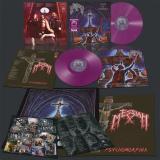
With bands such as Hellhammer/Celtic Frost and Coroner, but also more obscure formations such as Fear Of God, Excruciation, and Infected, Switzerland has always been a fertile breeding ground for extreme metal. Messiah, originally formed in 1984, also played a major role in the development of thrash and death metal in Switzerland. They released two groundbreaking albums on Chainsaw Murder Records: “Hymn To Abramelin” in 1986 and “Extreme Cold Weather” a year later. In the early nineties, Messiah signed a contract with Karl Walterbach's label Noise Records, on which three more albums were released: “Choir Of Horrors” (1991), “Rotten Perish” (1992), and “Underground” (1994). The classic lineup of Messiah during the Noise era consisted of vocalist Andy Kaina, who passed away far too early in 2022, Steve Karrer on drums, Patrick Hersche on bass, and band founder Brögi on guitar. Many consider “Choir Of Horrors” from 1991, produced by Sven Conquest at Sky Trak Studios in Berlin, to be the pinnacle of Messiah's work. Messiah Infernal Thrashing Records (MITR) is now releasing the 35th anniversary edition of this classic on vinyl
London's PRESTi lands on Shall Not Fade's Time is Now imprint with four dancefloor weapons that feel like they forked from the hardcore continuum at the point El-B, Horsepower and Artwork's dark garage was becoming proto dubstep.
EP title Track 'As We Move' is everything that is special about that time; bassweight, space and rudeboy swing. On "Big Ting" PRESTi reaches for more classic UKG groove but fuses it with yet more spacious wobbling low end precision. "Baile Pulse" pivots... channeling in grimey pulse basslines and 4/4 baile funk techno this time. "Get Back" is just the fait accompli for a producer clearly enjoying such fertile ground, a peak time speed garage warper ready to cause damage at any function.
Essential dancefloor gear from a producer growing tall and widening the cracks.
A year and a half has passed since Slovak-Hungarian artist Adela Mede self-released her debut album ‘Szabadság’. Its liner notes described it as “a navigation”, a search through “the personal, familial, cultural, folkloric and geographic of her past and present.” Her second album, ‘Ne Lépj a Virágra’ no longer searches; here, she puts down roots and delves deeper into the earthy reality of her home, Central Europe. Mede sings in three languages with newfound conviction and grace – this is an album of profound faith and confidence in the potential of this fertile soil.
Composed and recorded during the last 18 months in Bratislava, Slovakia – a city where three countries meet, where the East and the West collide – 'Ne Lépj a Virárga' translates to “don't step on the flower”. Its themes – budding potential, recognizing the beauty in the ordinary, solidarity, turning despair into hope – emerged through Mede's wholehearted involvement with her community, teaching singing to both children and adults, and various grassroots volunteering initiatives. It features collaborations with local artists, Mede's singing students, as well as fellow Eastern European contemporary artists Martyna Basta and Wojciech Rusin.
Adela Mede embellishes carefully crafted songs with minimalist and folklore influences, but also embraces more experimental approaches. The result is a collection of quite varied yet consistent pieces which highlight Mede's proficiency as a singer, arranger, producer and improviser. It is a grounded, confident next step for the Bratislava-based artist. Whether her vocals are naked, heavily processed, warped and reversed, or looped and layered; whether the production is sparse and minimalist or overwhelming and swampy; none of that changes the fact that the gentle tentativeness of her debut is gone. This is “Central European music”, at its most striking and meaningful: patient, determined, embracing both complexity and possibility.
out of Stock
Last delivered 7 months ago available to reorder, subject to availability
Noctourniquet And then everything went black, at least for a while, at least for The Mars Volta. In the months and years following their fifth full-length, Octahedron, Omar kept on at his usual fearsome creative pace. In fact, he ramped up his output considerably, starting up his own Rodriguez Lopez Productions label and releasing a slew of solo albums. It was a practice he’d begun shortly after De-Loused’s release, with his solo debut A Manual Dexterity: Soundtrack Volume One, but as the decade reached its close, Omar grew to rely upon his solo recordings as an outlet for his prolific creativity, these albums often exploring musical pastures far beyond even The Mars Volta’s wide-ranging parameters. Before choosing to release music under his own name, Omar would always play it to Cedric first, to see if the frontman thought it had potential to become Mars Volta music. Shortly after Octahedron’s completion, Cedric flagged one batch of tracks Omar had cut with Deantoni Parks, a brilliant drummer and composer who’d briefly occupied the Mars Volta drumstool in-between Jon Theodore and Thomas Pridgen’s tenures, and whose volcanic creativity and unique, unpredictable approach to rhythm and composition had quickly made him one of Omar’s favourite artistic foils.
As with the music that made up Octahedron, the new tracks Cedric had optioned for The Mars Volta often veered far from the riotous, Grand Guignol visions of their earlier releases. It possessed the punchy, song-based focus of Octahedron, though this was a considerably darker, more menacing strain of pop, with synthesisers figuring heavily in the productions. Cedric took the tracks in 2009 and set about writing songs to the music. But no more new Mars Volta music would be heard until 2012. The years that passed in-between were nonetheless momentous, and busy, witnessing an unexpected reunion of the members of At The Drive-In, and Cedric joining his own side-project, Anywhere. But there wasn’t any sign of life within the Mars Volta until Omar, Cedric and their bandmates took to the road for a series of live shows in the spring of 2011, billed as The Omar Rodriguez-Lopez Group, debuting the songs that would become Noctourniquet. The album followed the next year, and it remains one of The Mars Volta’s finest, its electronic textures staking out unfamiliar but fertile new ground.
An unsettling, subtly turbulent listen, Noctourniquet found Cedric sketching out a story about “some sort of device that stops the darkness from bleeding”, drawing influence variously from the nursery rhyme Solomon Grundy, the Greek myth of Hyacinthus and the song Birth, School, Work, Death by British underground rockers The Godfathers. It was an album of dystopian futurism, signalled by the paranoid cyber-rock of opener The Whip Hand and its unnerving chorus, “That’s when I disconnect from you”. But it was also an album of inspired, unexpected moves and uncanny invention, like how Dyslexicon seemed to eerily evoke Blondie’s Rapture, before rushing headlong into its bruising chorus, tempos shifting restlessly throughout like quaking earth beneath the listener’s feet, or how Aegis put a brave new spin on The Mars Volta’s trademark rewiring of salsa’s overdriven passions, or how Cedric had never sounded as scary as he did on The Malkin Jewel’s mutant burlesque shuffle. Tracks like Molochwalker were sleek and concise in a way The Mars Volta had never really attempted before – which was all part of Omar’s plan.
“It had all been guitar, guitar, guitar, overdubs, everything fighting for space in the same frequency,” he explains. “So for Noctourniquet, it was all about subtracting elements, of sticking to how I made demos.” Deantoni’s presence helped revivify the group, playing against cliché and expectation, and taking each song in unexpected directions. “I’d beatbox a rhythm for him to play, to go with my guitar part, and he’d come back with three or four alternate options. It was so great.” Similarly, Cedric had never sung better than on Noctourniquet, staking out a fearsome spectrum from the chilling Tom Waitsian growl of The Malkin Jewel to the keening, beautiful vocalisation on Vedamalady, rising to match some of Omar’s most deft, most immediately effective and melodic songs yet. Indeed, Noctourniquet is the sound of a band discovering new ways to do familiar things, renewing their commitment to their mission, finding fresh inspiration a decade in, and shaking off any complacency that might have come with ten years of acclaim and success.
When people think of Yacht Rock-those smooth, sun-drenched sounds that once drifted from Californian radio stations in the late '70s and early '80s-they rarely imagine it echoing through rehearsal rooms in Hamburg or Linz. Yet even far from the Pacific coastline, the appeal of shimmering chords, laid-back grooves, and polished production found fertile ground.
This compilation gathers rare and overlooked tracks from Germany and Austria. These artists embraced West Coast aesthetics with sincerity and subtle twists, resulting in music that feels both familiar and refreshingly new-smooth sounds for cloudy skies. So drop anchor, pour something cool, and enjoy this unexpected cruise through the lesser-charted waters of Euro Yacht Rock.
Our journey begins in Austria, where Reflection's Because (1981) set the tone with blue-eyed soul and analogue warmth-a sunlit blend of Doobie Brothers polish and local charm. Its creator, Dieter Heyduk, reappears with Austrian Sky, a heartfelt nod to his homeland that fuses mountain calm with oceanic longing.
From the North Sea island of Föhr, Ara Pacis dreamed of California on their 1979 self-release To the Westcoast. Inspired by Steely Dan and Lake, they turned German rock precision into breezy, melodic sophistication. Meanwhile, in Düsseldorf, Mainpoint fused funk and jazz-rock on Frisbee, their 1980 single bursting with rhythmic drive and optimism before the tide of the Neue Deutsche Welle swept such grooves aside.
Bremerhaven's Nuages offered the compilation's only instrumental gem, Strange Weekend (1985)-a gentle blend of jazz-funk and rock and largely lost to time. Its cool restraint captures the European interpretation of Californian ease.
Around the same period, British traveler Gavin James recorded River of Laughter in southern Germany, backed by the blues-rock band Black Cat Bone. His acoustic reflections on water and flow mirrored the soft, meditative pulse at Yacht Rock's core.
Berlin's Top Spin kept things playful with Bikin (1985), a funk-fusion snapshot of urban joy that showcased the city's finest session players. From the Ruhr area, the Jan Pack Band is up next. While not a typical Yacht Rock track, Cable Dance is driven by an effortless, groovy '80s vibe.
Peter Seiler's Goldfinger project reimagined Walkin' in the Sand as a relaxed reggae-tinged track, while Munich's Major Seven closed the voyage with Silverboat, a wistful soft rock ballad gliding between melancholy and light.
Across these hidden harbors of German and Austrian pop, the West Coast dream took on new forms-reflected in rivers, skies, and studio lights half a world away from L.A. Under and Above the Clouds celebrates that spirit: the enduring pull of smooth music, wherever it's made.
out of Stock
Last delivered 10 months ago available to reorder, subject to availability
Strut proudly presents a new edition of one of Sun Ra's most celebrated albums, Sleeping Beauty, reissued in its original artwork for the first time.
Originally released in 1979 on his independent Saturn label, Sleeping Beauty captures Sun Ra and his Arkestra at their most soulful and serene. A masterclass in cosmic jazz, the album blends lush grooves, celestial soul, and meditative funk with Ra’s singular spiritual vision — a sound both grounded and otherworldly.
The album emerged during an extraordinarily fertile period for Sun Ra in late-‘70s New York. Between 1978 and 1982, Ra “occupied” Variety Recording Studios on West 42nd Street, often staging marathon sessions following late-night Arkestra gigs around the city — from the Village Vanguard to Sweet Basil and even a wedding in Central Park. These were not just recordings; they were rituals. Ra and his core players — John Gilmore, Marshall Allen, June Tyson, Michael Ray, and others — would begin sessions mid-morning, often continuing past midnight, much to the dismay of the studio owner. Out of this creative whirlwind came some of his most enduring work, including A Fireside Chat With Lucifer, On Jupiter, and Sleeping Beauty.
Across its three tracks, Sleeping Beauty showcases the Arkestra’s gentler side. From the dreamy sway of “Springtime Again” to the funk-deep uplift of “Door Of The Cosmos” and the title track’s meditative drift, this is music that floats, beckons, and unfolds. It’s a record of hypnotic beauty and quiet power — cosmic jazz for dreamers and seekers alike.
This new edition features a selected version of the hand-drawn original cover, embossed with the Sun Ra logo and housed in a heavyweight card sleeve. Liner notes come courtesy of Arkestra member Knoel Scott and Sun Ra authority Paul Griffiths. Remastered by Technology Works.
“Music is a language. You see, it’s not notes — it’s a language of the spirit. That’s why it’s so important.” – Sun Ra
out of Stock
Last delivered 13 months ago available to reorder, subject to availability
-Combo Chimbita formed in 2016 as a loose combination of friends and bandmates, many of whom had played together in other groups, all of whom were products of the Colombian diaspora who ended up as first generation New Yorkers making their way in the city's fertile music scene
-Dímelo marks the group's first release on Wonderwheel Recordings and in many ways marks a return to the band's roots, as well as a hint of what's to come
-The track was recorded in late 2023 alongside their last single "Margarita" with Victor Axelrod aka Ticklah (Antibalas, Sharon Jones & the Dap-Kings)
-Busy Twist is one of the leading artists of the new global dance underground with his sophisticated fusion of Afro, Latin and UK bass
-Busy Twist has worked with artists like Bomba Estereo, Alewya, Kevin Flores to name a few, and released music on labels like Soundway, Sony Colombia, Because London, and Jamz Supernova's Future Bounce
-They have released music on iconic and cult-favorite labels such as Anti- Records, Names You Can Trust and Figure & Ground
out of Stock
Last delivered 15 months ago available to reorder, subject to availability
Glossy Mistakes Reissues Resonance 001, a Proto-House & Trance Milestone from Belgium from 1992
Glossy Mistakes is proud to announce the reissue of Resonance 001, the groundbreaking debut EP by Belgian producer Fabrice Lagrange, created in collaboration with Frank Beekman and originally released in 1992. Long overlooked, this forward-thinking record captures a pivotal moment in the early European evolution of house and trance-melding minimalism, emotion, and club-oriented experimentation into a sound that remains strikingly fresh over three decades later.
Resonance 001 stands among the earliest European records to explore the fertile intersection of hypnotic house rhythms and atmospheric trance. The A-side, featuring The Awakening Earth and Pure Self, channels a stripped-down yet euphoric energy-deeply inspired by the spirit of Detroit techno but undeniably forward-looking. As Frank Beekman recalls: "This record was recorded in a very simple studio, with minimal gear, inspired by the Detroit techno sound."
On the B-side, the EP ventures further into experimental territory. Paris By Night offers a dreamy, tech-tinged house excursion, leading into Redondanz, a meditative downtempo closer that perfectly encapsulates the release's subtle charm.
The enduring appeal of Resonance 001 lies in its restraint: crafted with minimal tools, it delivers maximum emotional depth. It seamlessly blends hazy trance atmospheres, early house grooves, and ambient-inflected textures, capturing the open-minded, exploratory ethos of early '90s electronic music.
Now remastered for vinyl by Wouter Brandenburg, Resonance 001 returns in pristine form-faithfully preserving its original character while bringing new clarity to its timeless sound.
out of Stock
Last delivered 4 months ago available to reorder, subject to availability
"JUJU" drops on May 17th (WERF Records) and is programmed at Gent Jazz Festival (July 11th)
Juju continues the work done on the second album half, with the Terre Sol Four quartet: Willems' voice, drums, percussion objects, keyboards and field recordings accompanied by the saxes of Marc De Maeseneer, Vincent Brijs and John Snauwaert.Juju fits perfectly in Willems' output. Also: in the coherent oeuvre it has become, it is perhaps her most consistent release yet. It's infectious as hell, carefully crafted, packs a punch and more accessible than ever before.
Everything is connected. Not just in the grand scheme of things - politically, culturally, socially,... - but also in the colourful universe of Karen Willems. A lifelong quest for profound experiences through organizing sound led to the crucial Terre Sol-series, four tapes released in 2020. Out of that fertile well, Grichte (2022) was born. A double LP that presented Willems as an original explorer as well as a committed bandleader, it was her boldest statement to date.
While the first (solo) album halfalready received a follow-up in K A A P M I J (2023), another tape release that suggested there's still a lot of ground left to uncover, Juju continues the work done on the second album half, with the Terre Sol Four quartet: Willems' voice, drums, percussion objects, keyboards and field recordings accompanied by the saxes of Marc De Maeseneer, Vincent Brijs and John Snauwaert. It was already something to behold on Grichte, swerving from introspective exploration to expressionist riff rock and semi-Dadaist avant-garde.
On Juju, the four-piece digs even deeper and the results are utterly spellbinding. One of the many attractions of Willems' recent work is that it combines relentless artistic experimentation with a commitment to broader socio-political issues. In essence, the artist tries to set up a discussion with her surroundings, sending out musical invitations to connect and participate, reminding ourselves of responsibilities that are too easily forgotten in these hectic, self-centered times. The refugee crisis is one, ecology awareness another, and it's hard not to consider "Voor De Stranden Verdrinken" ("Before The Beaches Drown") a caustic warning. Things need to change.
As said earlier, the music on Juju remains as adventurous as before, but this time around, the playing feels even more confident, diverse and punchy. If the album opener accentuates its urgency with a throbbing pulse and reed sirens, "Tako Deli" continues with rich vocal arrangements, roaring saxes and sweeping melodies. What follows strikes with vigor and consistency: "Nuuki" is as dense as it is infectious, while "Fuzzy Williams" manages to combine Ellingtonian abundance with Swans-like preaching.
And there's more, much more. Eccentricity and playfulness ("The Woo Woo Room, Dance Back In Style", "In Open Veld") go hand in hand with smoldering exercises in tension and release ("Koortsdromen") and a ridiculously infectious call for connection in antisocial times ("Come Vai"). Guest contributions by Nabou Claerhout, Kapinga Gysel, Esther Lybeert and Filip Wauters enrich the band's sound considerably. By the time you reach album closer "When Daytime Lands", Willems takes you on a short trip through that eerie soundscape-land she previously explored.
In short: Juju fits perfectly in Willems' output. Also: in the coherent oeuvre it has become, it is perhaps her most consistent release yet. It's infectious as hell, carefully crafted, packs a punch and more accessible than ever before. It's the sound of an artist at the peak of her powers, not just expanding her range, but digging deeper with obvious glee. It's not just intriguing; it's inspiring to witness..
out of Stock
Last delivered 17 months ago available to reorder, subject to availability
Following the hyperactive “Blood Karaoke” (2022, Reading Group), “Performing Belief” builds rhythmic thickets from gathered sounds interwoven with synths, drum machines and other samples. Having built these rhythmic nests, Krivchenia then called on two contemporary mages of the low end: electric bassist and fellow Angeleno Sam Wilkes (Wilkes/Gendel) and double bassist/multi-instrumentalist from Krivchenia’s native Chicago, Joshua Abrams (Natural Information Society). Wilkes and Abrams bring the presence of a grounding human witness to the rhythmic undergrowth, providing a centering and even at times melodic voice to the gathering. This alchemy carries a profoundly fresh sense of time, blurring the edges of the quantized grid and the generic boundaries of electronic music.
The core of the album is a lush, opulent matrix of percussion ranging from the familiar—hand claps and drum machines—to the mysteriously verdant, sampled largely from Krivchenia’s own performed field recorded collection. For years, he would record any and all of his musical encounters with natural objects: performing on a particularly resonant log on a hike, throwing rocks into a pristine pond, tap dancing in the mud. This archive of “natural” sounds became the fertile soil out of which the tracks on “Performing Belief” grew. What is gained in the process is not just a novel set of sounds, but a new rhythmic language. The particular give, the anticipatory rustle, the extra breath of a hollow log when functioning as a kickdrum provides a greenness that overtakes the rhythmic grid, giving this music a peculiar kind of stickiness. This rhythmic language, set in Krivchenia’s long-fermenting electronic musical palate, feels like a revelation, even while it calls back not only to his wonderfully elastic timekeeping behind the kit with his beloved band Big Thief, but also to his prior work in computer music as well as his deep study and love of the vast human archive of drumming. “Performing Belief” is in good company in the rank and file of the legendary Planet Mu label. From the foundational early releases of the likes of Jega and Venetian Snares, to the contemporary envelope-warping work of Jlin and hundreds of brilliant releases in between, Planet Mu has been a beacon of forward-thinking rhythmic music for decades, informing Krivchenia’s own sense of the weird metaphysics of musical time since he was a kid. Krivchenia’s contribution to this history calls to mind the principle of organic danceability that subtends Mu’s whole catalogue, while bending our sense of rhythm in new and gracious dimensions. Krivchenia brings out the loamy complexity of natural rhythms, a clearing as generous as it is inviting. Let the drummer give you some.
Following nearly 20 years of working together as a trio, and numerous cross-collaborations in different configuration between them, Ideologic Organ presents Placelessness, the debut full-length by Chris Abrahams, Oren Ambarchi, and Robbie Avenaim, comprising two long-form works at juncture of ambient music, minimalism, rigorous experimentalism and improvisation, and machine music. Having carved distinct pathways across a diverse number of musical idioms for decades, Chris Abrahams, Oren Ambarchi, and Robbie Avenaim are each, respectively, among the most noteworthy and groundbreaking figures to have emerged from Australia's thriving experimental music scene. Ambarchi and Avenaim first encountered Abrahams when seeing the Necks - the project that has served as the primary vehicle for his singular approach to the piano since its founding in 1987 - together during the late 1980s, not long after having met in Sydney's underground music community. The pair's collaborations date back more than 35 years, criss-crossing Ambarchi's pioneering solo and ensemble work for guitar and Avenaim's visionary efforts for SARPS (Semi Automated Robotic Percussion System), robotic and kinetic extensions to his drum kit. In 2004, fate brought the three together in a trio performance at the What Is Music? Festival, the annual touring showcase of experimental music founded and run by Ambarchi and Avenaim between 1994-2012. For the nearly two decades since, Abrahams, Ambarchi, and Avenaim have intermittently reformed in exclusively live contexts, in Australia and abroad, cultivating and refining the fertile ground first tilled in that early meeting. Placelessness is the first album to present this remarkable trio's efforts in recorded form. Placelessness is the joining of three highly individualised streams, working in perfect harmony; the point at which friendship, mutual respect, and decades of creative exploration produce a singular spectrum of sound. Featuring Abrahams on piano, Ambarchi on guitar, and Avenaim on drums, the album's two sides draw on each artist's enduring dedication to long-form composition. Its two pieces, Placelessness I and Placelessness II, initially began as a single, 40 minute work, before being divided and reworked into distinct, complimentary gestures for the corresponding sides of the LP. Beginning with restrained clusters of reverberant piano tones, Placelessness I progresses at an almost glacial pace, with Abrahams' interventions increasing met by sparse responses, darting within vast ambiences, on guitar and percussion by Ambarchi and Avenaim. Remarkably conversational within its convergences of tonal, rhythmic, and textural abstraction, over the work's duration a progressive sense of tension unfurls and contracts, refusing release, as each of the ensemble's members contribute to an increasingly tangled sense of density at its resolve.While an entirely autonomous work, Placelessness II rapidly realises a distillation of the energy hinted at across the length of its predecessor. Following a luring passage of harmonious calm, Abrahams' launches into shimmering lines of repeating arpeggios, complimented at each escalation of tempo by Avenaim's machine gun fire percussion work and Ambarchi's masterful delivery of tonality and texture, as the trio collectively generate dense sheets of pointillistic ambience within which individual identity is almost lost, before slowly unspooling into unexpected abstractions and dissonances that deftly intervene with the work's inner logic and calm. What could easily be termed a maximalist take on Minimalism, Placelessness is a masterstroke of contemporary, real time composition, that blurs the boundaries between ambient music, experimentalism, free improvisation, and machine music. Drawing on Chris Abrahams, Oren Ambarchi, and Robbie Avenaim's decades of respective solo and collaborative practice, and the culmination of nearly twenty years of working together as a trio, it's two durational pieces - Placelessness I and Placelessness II - take form with a startling sense of effortlessness and grace, neither shying away from explicit beauty or rigorously tension within their forms
Mr. K returns to the fertile ground of the Paradise Garage for his latest with two certified floor-fillers closely tied to the legendary club.
TW Funkmasters’ “Love Money” took an unusual path to its eventual elevated status as a dance classic. The brainchild of UK radio reggae jock Tony Williams (the “TW” in the group’s name), it was conceived in response to seminal rap release “Rapper’s Delight,” but with reggae superstar Dennis Brown’s 1978 hit single “Money In My Pocket” as the lyrical inspiration. Indeed, the vocal version of the Funkmasters’ song is considered the UK’s very first homegrown rap tune. But it was the flip side that garnered the most attention in New York however. “The original track was quirky and worked at the Garage,” Danny Krivit says, “but when the dub came out, it really blew up everywhere. After that very few people played the vocal.” Krivit’s edit here takes the influential, futuristic dub and tightens the arrangement up for the 7-inch format. “Love Money” went on to heavily influence the New York City dance underground, with homages coming in the form of subtle tributes (Mateo & Matos’ “Love Style”) to a virtual remake from Larry Levan himself (Man Friday’s “Love Honey, Love Heartache”) to the untold records that have sampled or been influenced by the spacey, heavy groove.
We’re back closer to home and a more traditional source for Garage classics with our flip side, Janice McClain’s “Smack Dab In The Middle.” The Philadelphia born and bred singer burst out of the gate with this very Philly sounding single in 1979. Written and produced by her uncle, the song was recorded when McClain was all of fifteen years old, a fact made more astonishing by a commanding vocal performance that resonated immediately with listeners. Recognizing a good thing when he saw it, disco maven Ray Caviano picked the song up for his newly minted RFC label and enlisted Larry Levan himself to mix it for 12-inch release. It is Levan’s version that provides the jumping off point for Krivit’s edit here — “the original 7-inch version the way it was never seemed worth playing,” Krivit says — and he makes the most of the jazzy Philly disco groove, injecting extra energy in the early minutes of the song with a tasty filtered break unique to this mix.
Pressed and mastered with DJs in mind, this loud and crystal clear single is the perfect combination of bonafide Garage classics and the talents of Mr. K, all on one compact piece of vinyl.
out of Stock
Last delivered 4 months ago available to reorder, subject to availability
Carlisle City Council is the latest project of acclaimed musician and producer Jonathan Sharp. Well known
for a raft of musical incarnations, including more lately acclaimed 'hauntological' musings as Jonathan
Sharp, and The Heartwood Institute, this latest revision sees Sharp turn his attention to the evolution of
town planning, where the intersection of civic and the personal proves to be fertile new ground. The
Lanes shopping centre in Carlisle (a city in Sharp's native Cumbria, in the North of England) opened its
doors in 1984, with the development proving to be controversial.
From Rotterdam's fertile grounds springs another thorny rose. Composer, DJ, and producer Muzmin kicks off the maiden release of 'Fusion of Thought' with 'Yucca EP', featuring four tracks of old-school harbour city slamming techno with a heady, contemporary twist. An elegant balancing act between thought-provoking sound-design and undulating, peak-time efficacy that the San Francisco Bay Area-based artist is such an expert at. A promising start for this young label.
out of Stock
Last delivered 14 months ago available to reorder, subject to availability
Roberto Cacciapaglia is an Italian composer and pianist who started out in the fertile Milan avant-garde scene of the 1970s, which included Franco Battiato, Giusto Pio, Lino Capra Vaccina, Francesco Messina, among others. After studying at the conservatory, he worked at RAI's Studio of Musical Phonology – an electronic music laboratory similar to NDR/WDR in Germany, GRM/IRCAM in France or BBC Radiophonic Workshop.
Originally released in 1979, Sei Note In Logica (Six Notes In Logic) is Cacciapaglia's second album. While his debut, Sonanze, offers a series of ambient mini-soundtracks, Sei Note presents a singular, sinuous piece. The composition is based on a finite set of musical notes, yet this limitation is the point of departure for a grand tour of possible combinations and enthralling timbres (marimbas, strings, reeds and human voice).
Like Steve Reich's Music For 18 Musicians, the joyous experiment of Sei Note is grounded in constant variation. Often doubled by multiple instruments, non-repeating patterns are exquisitely layered, while electro-acoustic signals transform and further refract through visceral effects. Within this conceptual framework, Cacciapaglia does not so much juxtapose rigid dichotomies – acoustic vs. electronic, melodic vs. dissonant, simple vs. complex – as fuse them into an expansive whole.
What started as an inspired study in Minimalism becomes a bold feat of 20th century music. Sei Note In Logica is deeply sincere and, at the same time, quite playful. With one foot firmly planted in the past and the other steeped in technology, Cacciapaglia's influence can be heard in the work of Jim O'Rourke, Fennesz and Ben Vida.
Where would a painter paint if it were not on a white canvas? Where would a composer compose if it were not on the stave and the spaces in between the lines? How would a musician play his instrument if there were no melodies composed, written down, painted for him to follow?
The magic of art needs a frame, a somewhat solid container to hold the freedom that can only be found once we integrate some form of structure. And that also holds in every other area of life. We all need a frame, a structure, a rhythm, or else, we fall apart. This human form needs the body, and yet it transcends the limitations of the body - through art.
Consistency being one of them seems oftentimes less tangible, for it resides more in the act of doing, and showing up for the practice, for devoting energy and presence. Strangely, if we consistently show up for our practice, regardless of its form, the solid frame of the hour we devote to playing the instrument, learning a language, doing the sport, sitting silently for that meditation: It feels different every single time. It feels new every single time.
The repetitive consistency in being present again and again allows for nothing short of magic to happen. Magic feeds consistency. Consistency feeds magic. Consistency sets a foundation that strengthens over time. It allows us to slowly but surely develop any kind of skill, to find and hence to embody expertise. On the fertile grounds of such a solid foundation, creativity fosters, and innovation blossoms.
Establishing consistent rituals and routines can bring a sense of comfort and safety into every-day-life. For routine beholds repetition and its frame enables our experience within to change. In the familiar, we dare to explore, maybe even experiment, merely because a part of us remembers we depart from, and always return to, a safe space. We do not get lost. We do not fall apart. As we practice, again and again, we build resilience in overcoming obstacles or literally persevering through challenging situations and stretches of time.
While consistency gifts steadiness and stability, its overdose risks to result in what may appear as uniformity. It feels like constantly - consistently - dancing on the fine line of freedom within a structure. Life is filled with unexpected twists and turns, adjustments need to be made to accommodate change and avoid rigidity. By striking a balance between consistency and flexibility, we can create harmony in our lives, just like a beautiful melody that flows smoothly from one note to the next.
Within the magical waves of music, skills are needed, too. Consistency is key to show up and do the work. It frames the freedom of magic that resides beyond and only beyond effort. Learning to play an instrument, learning to sing, does never happen within the blink of the eye. It takes time. Time to show up for the practice, to do precisely that: practice. Again and again, every single time, again and again. Precision feeds perfection that falls apart inside the structure of a song, a line, a rhythm, dissolving into magic.
Consistency in practicing, in composing and sharing music with the world regardless of the form allows any musician to refine his style, to carve out his uniqueness. For any artistic expression is, after all: Unique. And this uniqueness is born inside the vessel of any structure, over and over again. Sharing music in the form of new releases and public performances nourishes the bond between artist and audience. And for that to unfold, both parties need to show up - while the underlying beat of this never-ending practice is presence fuelled by consistency.
Instant appeal for fans of quirky downtempo soul. Instrumental version on the B-side. Fresh collaboration between singular vocalist/musician and the Cold Diamond & Mink band. The musical Oroza bloodline just seems to keep pumping soul music from Finland for the world to hear. Now it's time for Franka to step to the stage and she comes out from the gate swinging with a sublime beat ballad "Indecision". Backed by the faithful Timmion Records house band Cold Diamond & Mink, Franka's folk jazzy vocal stylings seep into fertile ground. Building from the intro drum roll to the rootsy organ-led groove Franka jumps on the beat with a Joni Mitchell twist and it's immediately apparent that we're in for a treat. The vocal glides effortlessly between firm and delicate tones, perfectly underlining the lyrical content. Franka takes her time in setting the scene, holding a veil before the fact that we're actually listening to a love song. If all you're looking for is good songwriting with a soulful backbeat, with Franka Oroza you'll get a unique voice to boot. This is another sure shot for all fans of independent downtempo soul from the Timmion stable.
Instant appeal for fans of quirky downtempo soul. Instrumental version on the B-side. Fresh collaboration between singular vocalist/musician and the Cold Diamond & Mink band. The musical Oroza bloodline just seems to keep pumping soul music from Finland for the world to hear. Now it's time for Franka to step to the stage and she comes out from the gate swinging with a sublime beat ballad "Indecision". Backed by the faithful Timmion Records house band Cold Diamond & Mink, Franka's folk jazzy vocal stylings seep into fertile ground. Building from the intro drum roll to the rootsy organ-led groove Franka jumps on the beat with a Joni Mitchell twist and it's immediately apparent that we're in for a treat. The vocal glides effortlessly between firm and delicate tones, perfectly underlining the lyrical content. Franka takes her time in setting the scene, holding a veil before the fact that we're actually listening to a love song. If all you're looking for is good songwriting with a soulful backbeat, with Franka Oroza you'll get a unique voice to boot. This is another sure shot for all fans of independent downtempo soul from the Timmion stable.
The musical Oroza bloodline just seems to keep pumping soul music from Finland for the world to hear. Now it's time for Franka to step to the stage and she comes out from the gate swinging with a sublime beat ballad "Indecision". Backed by the faithful Timmion Records house band Cold Diamond & Mink, Franka's folk jazzy vocal stylings seep into fertile ground. Building from the intro drum roll to the rootsy organ-led groove Franka jumps on the beat with a Joni Mitchell twist and it's immediately apparent that we're in for a treat. The vocal glides effortlessly between firm and delicate tones, perfectly underlining the lyrical content. Franka takes her time in setting the scene, holding a veil before the fact that we're actually listening to a love song. If all you're looking for is good songwriting with a soulful backbeat, with Franka Oroza you'll get a unique voice to boot. This is another sure shot for all fans of independent downtempo soul from the Timmion stable.
out of Stock
Last delivered 2 years ago available to reorder, subject to availability
Introducing the next release in Names You Can Trust's long-running collaboration with the prolific and symbiotic musical universe of Bogotá, Colombia. Mau Gatiyo y Los Años Maravillosos formed in 2021, arising from the very same fertile ground of the Teusaquillo neighborhood that has spawned many records and musical mischievousness. At the heart of this experimental movement is what can only be described asTropicanibalismo, where a deep hunger for the roots of Colombian tropical music are only satiated by dissecting it, consuming it and ultimately creating something new again as some kind of untraditional, unholy, and yet referential form of musical sustenance.
Within this concept, there's a clear lineage of inspired and visionary artists that have been featured throughout NYCT's record catalog for the last 15 years that includes luminaries Frente Cumbiero, Meridian Brothers, and Romperayo. Each of these artists' tentacles have touched several parallel projects from their talented neighbors and friends, and whether through production, playing, engineering, or mixing, these collaborations have heavily contributed to a very fruitful and colorful scene that could only exist within Colombia's capital, while also gaining notoriety in the nooks and crannies of northern latitudes like New York, Chicago, and Los Angeles.
Mau Gatiyo, a talented accordian player and vocalist, together with his group (translated as The Wonder Years), is precisely one of these projects, a collective that has found their calling in the echoes of thevallenatosandcumbiasthat once populated the nation's airwaves throughout the 20th century. It's a traditional format that has always lent itself to storytelling, whether it be anecdotes about daily life, or using one's voice to raise uncomfortable questions in protest against the system. This is where Mau Gatiyo's poetic, almostnew wavetimbre finds a lane of its own, straddling a 2020s societal landscape under the guise of ostensibly old-time accordion music.
The debut 7-inch from the group, an excerpt from their recently released album Baño Unisex, was recorded at Mambo Negro studios by Ivan Medellin (La Sonora Mazurén) and mixed by Eblis Alvarez of Meridian Brothers, both familiar names and contributors to the NYCT catalog. Alvarez himself, who has emerged in recent years as an international beacon of this new tropical avant-garde, is no stranger to flipping traditional styles on their head, or at least respectfully off-kilter. Mau Gatiyo y sus Años Maravillosos proves to be another great vessel for this veryBogotano expression, draping the classical playing of its group members in a modern day cosmopolitan expression of righteousness, both outwardly in their dashing, performative fashion sense, and lyrically with their cheeky "420, Reloj"ganja-tune promotion – or even their outward dissenter objections to paramilitary and firearm power in "Poder Militar."
Ultimately, these songs lie at the crossroads where two cultural eras connect and become something unique, a protestation one with performance, dance, and artistic expression. This cathartic ritual of protest has a storied history in music, and these two new entries into the NYCT catalog will hopefully find their place amongst a modern day canon, or at the very least, have your feet moving and your head nodding in just approval.
The musical Oroza bloodline just seems to keep pumping soul music from Finland for the world to hear. Now it's time for Franka to step to the stage and she comes out from the gate swinging with a sublime beat ballad "Indecision". Backed by the faithful Timmion Records house band Cold Diamond & Mink, Franka's folk jazzy vocal stylings seep into fertile ground. Building from the intro drum roll to the rootsy organ-led groove Franka jumps on the beat with a Joni Mitchell twist and it's immediately apparent that we're in for a treat. The vocal glides effortlessly between firm and delicate tones, perfectly underlining the lyrical content. Franka takes her time in setting the scene, holding a veil before the fact that we're actually listening to a love song. If all you're looking for is good songwriting with a soulful backbeat, with Franka Oroza you'll get a unique voice to boot. This is another sure shot for all fans of independent downtempo soul from the Timmion stable.
Clock DVA is one of the pivotal groups of industrial music. Founded more than forty years ago, the instrumental outfit has seen a contemporary partnership of electronic experimentation forged between Adi Newton and Maurizio Martinucci since 2010. It is their source material that proves fertile ground for two remixes, remixes by two heavyweights of electronic music. Atom™ delivers his re-imagining of “De-Konstructor.” A lone string is met by snapping snares as an alluring, yet cold, melody unfolds. Newton’s raspy throaty words rise, a stark prescient poetry countered by angular acid-twisted keys before samples buckle and loop. The second stalwart of electronics drafted in is Scanner for his reframing of “Rayonist Refraction #1.” A ghostly female voice haunts a backdrop of electrical fizz and voluminous cracks of shuddering thunder. Guitar strings tremble in this eerie landscape with a smattering of spoken text bringing solace to this hostile environment. Music for an all to immediate reality.
out of Stock
Last delivered 23 months ago available to reorder, subject to availability
1998 was a fertile year defined by juggernaut projects from Black Star, Lauren Hill, Outkast, and others, all of whom synced experimentation with foundational tenets that made the 1990s ferociously groundbreaking.
Out of Oakland, California, a collective known as Hieroglyphics were positioning away from industry control, to helm their own assets in manners more suited to their own marketing self-vision. While artists have certainly went solo prior, this came at a critical juncture for the crew during a spiraling and newfound Internet world. Born out of this independent spirit was the crew’s first official studio album 3rd Eye Vision.
The album spans twenty-two songs, all featuring beats by Domino who manned the lion’s share of production. A-Plus, Opio, Del, Casual, and Phesto also contributed beats. MCs each had their own song, short interludes highlighting their individuality through short verses, a clear espirit de corps statement.
Even among standouts like “Oakland Blackouts” or “At The Helm,” perhaps the most celebrated song off the release is “You Never Knew,” a track that propelled 3rd Eye Vision to #88 on the Billboard Top 200, not an entirely easy feat as a new label competing with the late ‘90s’ abundant onslaught of classic material.
In celebration of 20 years of 3EV, Fat Beats and Hiero Imperium are proud to present this CD/Vinyl reissue in deluxe packaging, expansive liner notes and the full original album tracks and a bonus for the very first time in one package.
‘Landmass’ Turtle’s first artist album since 2017’s ‘Human’. To be released on 24 March 2023, it is his third official album having also released the acclaimed ‘Who Knows’ EP in 2013.
‘Landmass’ is a beautiful body of work that flows naturally as one piece of music and is inspired by the sparse surroundings of Jon’s studio in Argyll, Scotland, an area he moved to to try and escape the noise of the city and a move that has directly impacted on his creative process.
Jon Cooper… “Since I started producing music I have never gone into a track with any preconceived ideas, I let the music develop in its own way so my direct surroundings have always played a huge part in how it sounds and the hustle of the city was something I felt I needed to get away from. This was a cathartic experience in making it - it's a real outpouring of love for the Scottish countryside and the beauty I’m lucky enough to live in and see every day!”
Jon’s musical journey is one of experimentation and passion. A regular of the electronic scene in Glasgow in the late 90's/early 2000’s, he started to experiment with DJing and music production more for his mates entertainment than with any aspiration of a career as one of the most understated electronic artists Scotland has produced.
Good Time is Teenanger boiled down to its very essence. A lean and muscular eight-song album that is the sound of a band who simultaneously has everything and nothing to prove. It’s what happens when seasoned songwriters flex their chops in an environment that fosters boundless creativity. It is also Teenanger’s most fun album. Choruses soar to previously unattained heights, descending to a rhythmically fertile ground to pull earworms that will stick inside listeners’ heads for days. If its songs were citizens, they would reside in a diplomatically neutral city-state, melting pots of art rock, pop, dub, post-punk and new wave.
The music of Good Time certainly elicits pleasure, but lyrically things are more weighty. The band does not shy away from its commentary on contemporary issues. There are calls to reject societal norms, ruminations on humanity’s obsession with technology and warnings about our impact on the environment. Teenanger never gets too earnest, delivering everything with an irreverence that has been there since day one.
Recorded at: Studio Z. Mixed by: Sandro Perri. Mastered by: Noah Mintz. Cover Photo: Colin Medley. Graphic Design: Thomas van Ryzwyek & Jonathon Yule.
This project is funded in part by FACTOR, the Government of Canada and Canada’s private radio broadcasters. Ce projet est financé en partie par FACTOR, le gouvernement du Canada et les radiodiffuseurs privés du Canada.
This album was created with the generous support of the Ontario Creates.
Merging doom, pychedelic sludge, grind, black metal and mighty mighty riffs to create a sound wholly their own, INTER ARMA deliver their Relapse debut Sky Burial, easily an early contender for heavy music record of the year. Emerging from the ever-fertile metal breeding grounds of Richmond, Virginia, INTER ARMA have spent the last few years touring relentlessly, perfecting a hypnotically punishing live show. Sky Burial brings that focus onto record, and what a record it is. Truly heavy in all senses of the word, Sky Burial is a spiritually intense journey through the halls of extreme metal. INTER ARMA have made a decisively loud proclamation with Sky Burial---this is a band that could very well be the next crown-holder in a regal line of iconic Relapse bands. Includes Digital Download