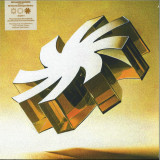
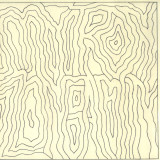
Mysterious Bristol based Rali Pibs, carves out 6 stunning tracks, undefinable in the left-field. File under Industrial-Synesthetic-Amnesia. “U Paradise” is a solid mix of atmospheric chugging, primal, bold and abrasive yet textured, rich and full of emotion. Outsider music with a hint of pop edge that is sure enough to make heads twist on the dance-floor (tried and tested). If you don’t believe us stick Shaka on in the club and see what happens. Weirdo music with a cosmic and emotive tinge that we love at the inc.
Cerca:field records
Ranging from dancefloor friendly electro to industrial breakbeats and lo-fi Hip-hop. ''I don't want to fly'' is a musical trip showcasing the many aspects of Geyzel's talent, both in terms of synthesis as well as in production skills. Serge Geyzel has been continuously active in the field of electronic music over the past few years. With releases on labels such as Mechatronica, Adepta Editions, Brokntoys just to name a few, he now returns at To Pikap Records with a multicoloured solo EP.
Flickering, the holodeck screen displayed the decrypted data… Schematics for an illegal type of field generator… Waves of Full Metal Frequencies could override any anti-music technology… A tetrad fusion core is required… Scour the edges of the planet to find it… “These guys from Zeta Reticuli are no joke”… “You’d have to be insane to pilot this thing”…
An expanded and remastered reissue of the 2009 debut album the collaborative musical project. Vocals and songs from Julianne Regan (All About Eve), Monica Richards (Faith & the Muse), Evi Vine and Amandine Ferrari. Enhanced by violin from Van Morrison/ Penguin Café"s Bob Loveday, Steve Carey on guitars, Fields of the Nephilim"s Tony Pettitt on bass, plus many friends. The album came about from Carey & Pettitt exploring music they enjoyed, and deciding on a revolving line-up of female voices. The result was an amalgam of trip-hop, prog rock and exotic goth-rock, enriched by lyrics and vocals from four exceptional female artists. The album now includes an additional six songs recorded around the same sessions as the original album. The band subsequently had five more releases and regularly toured the UK & Europe.
Slowly yet firmly blooming into focus, An Unfinished Rose is the new album from Australian duo Troth.
This is their first since relocating to Hobart, Tasmania and their introduction to Night School Records. With a detailed web of past releases on labels A Colourful Storm, Mammas Mysteriska Jukebox, Knekelhuis and Bowman’s own Altered States Tapes imprint, An Unfinished Rose is the group’s most realised and composed work thus far. While still drawing on the improvisatory and DIY practices that informed Troth’s beginnings, it points to a new incarnation of the duo’s music; an intentional language emerging from the fog of obfuscation and mists of uncertainty.
Over these 9 meditations on change, acceptance, renewal and rebirth, An Unfinished Rose finds Amelia Besseny and Cooper Bowman peeling back some of the roughhewn architecture that defined their earlier releases to reveal a masterful - if auto-didactic - use of space and melody. Composition and improvisation compliment and feed each other throughout, with locked-loop earworms providing the springboard for lines of clarinet or synth melody, and the negative space between chord clusters giving ample room for Besseny’s most confident vocal performances to date. Shaving off a little of the defining dissonance and tape compression of old reveals Troth’s music in radiant daylight, humbly accepting of its place in the world while yearning for better, more sympathetic modes of living. Leaning more heavily on acoustic instrumentation and post-production processes than previously, the result is a transcendent body of work infused with an almost zen-like presence.
Troth’s music exists in the border between forming and becoming, its goal to project a kind of preternatural beauty, leaving interpretation open to the listener. Field recordings, happenstance and improvisation may provide seeds for the duo’s compositions, particularly on Side A, but there is a deft touch of songcraft on show. Loam Loom Leaf Litter opens An Unfinished Rose, directly referencing natural cycles of life, death and regeneration, before the blissed-out drum machine groove of Gold Plum continues a discussion concerning the totality of nature and one’s place in it. Besseny’s vocal, swelling like an ocean churn in duet with itself is adorned with synthesised harp and a revolving synth pattern, conjuring plumes of medieval smoke. Thistle’s rounded, bass-heavy drums, nodding to the vast echo of dub, is a relatively new terrain for Troth. It’s propulsive and thumping, pulsing with a meaning and symbolism consistent with Troth’s past work, referenced overtly in Bessey’s lyrics - “Say it too much and it loses its meaning…”. Similarly, the sprawling modern-classical suite, Tides Reflected In Her Eyes, is intentional in its lyrical themes while traversing new ground, revelling in layers of bowed cello and vocal intonations. Side B’s 4 tracks feel like Troth’s most thoroughly accessible and affecting music to date. Leaning into their own detoured version of Synth Pop, Cocoonist explores downtempoisms via a crunchy low frequency synth, and dream-like, fuzzy trip-hop modalities, not unlike Besseny and Bowman’s other group, Th Blisks. Following on, Myrtle Mystes is an open and searching DIY pop song, forged out of drum machine, bass guitar and cello. (An) Unfinished Rose’s title-track is a clear stand-out, built upon an evocative rhythm sample that appears to change emotional resonance with each undulating repetition. Its cascading waves of affect, interjected with a subtle breeze of synth, bowed instrumentation and soaring, densely-layered vocals.
An Unfinished Rose is enveloping, warm, forgiving. Difficult, yet retaining a unique beauty. Troth’s music aims to celebrate the duo;s shared experiences of being in the world, despite the complexity often surrounding us all. Theirs is a message of hope and perseverance, learning and patience.
Planning For Burial is the solo project of Thom Wasluck, emerging from Wilkes-Barre, Pennsylvania. It’s Closeness, It’s Easy is the long-awaited follow-up to 2017’s Below The House. If Below The House was about returning home, following in the footsteps of one’s father and joining a union, and leaving behind youth’s wild days, It’s Closeness, It’s Easy embraces what comes next—the weight of all years, the quiet shifts, the reckoning with what remains. This record is many things. It captures the slow drift of time, the unnoticed shifts in a loved one—the creeping changes in mental health, the quiet pull of addiction, the kind of grief that settles in the bones rather than announces itself.
At its core, It’s Closeness, It’s Easy is about stepping into middle age and taking stock. It confronts the reality of living with the hand that’s been dealt and searching for meaning in what remains. It speaks to loss—the crushing weight of saying goodbye to a beloved 17-year old cat, the slow-motion grief of watching friends self-destruct, the inescapable passage of time as it bears down on aging parents and the self. But it also reflects the warmth of reconnection, the kind of love that never burns out but instead deepens. The feeling of picking up where things left off, untouched by the years in between.
While written over the course of two years, the recording process reflects a sense of immediacy. Rather than assembling songs piece by piece over time, the album took shape in singular, immersive sessions—less an act of construction, more an unveiling of something already waiting to take shape.
Rooted in a staunch DIY ethos, Wasluck handles every aspect of Planning For Burial project himself—recording the music, designing the artwork, and performing live as a one-man band. He books his own tours, ever and independent creative. This hands-on approach has led Planning For Burial to play hundreds of shows solidifying his place in the underground music scene. A defining moment came in 2018 when he performed at the Meltdown Festival in London, curated by Robert Smith of The Cure.
Energy Fields is Gus Paterson’s vinyl debut. One of the brains behind Bokhari Records, this four tracker melts disco, italo and house into a creamy funk fondue. Staggered bleeps and crisp percussion introduce the title piece, samples echo as a squelching thick bassline drops. Countering the fudgey strings are sparkling synthlines, bold brassy analogue bursts tethering the track to the floor. Although tempos drop for “Emotive Feel,” the energy remains high. Robust keys are further fortified by blasts from vintage machines, a free flowing groove lifted into astral jazz. Sharp beats open the flip for “Cyborg Dateline.” Soon, Paterson’s melodic skill takes over. Layers of inspiration are held together by ambling notes. Echoes of cosmic and disco are adopted, a contemporary twist delivered through the complex intertwining of elements. Paterson takes us into the stratosphere for the finale. “Jetpack Joyride” maintains the rhythm of its predecessor, pouring on the funk through daring piano lines and rich strings of double bass. A trip into the beyond from this debutant.
Im Sommer 1968 traf sich der 18-jährige Genesis P-Orridge (damals Neil Andrew Megson) mit Freunden in einem bescheidenen Dachgeschoss, um mit Klängen zu experimentieren. Das Ergebnis war "Early Worm", eine Sammlung von Aufnahmen, die die aufkeimende Kreativität eines Künstlers einfing, der später eine Schlüsselfigur der Avantgarde-Musik werden sollte. Diese Sessions, die 1969 auf ein einziges Acetat gepresst wurden, zeigen eine furchtlose Erforschung von Geräuschen, Improvisationen und Tonbandexperimenten, die Einflüsse von Psychedelia, Fluxus, John Cage und Beatnik Bohemia widerspiegeln. "Early Worm" ist ein Zeugnis für P-Orridges frühes Engagement, musikalische Grenzen zu überschreiten. Die rohen und ungefilterten Klanglandschaften des Albums bieten dem Hörer einen seltenen Einblick in die Gründungsmomente, die schließlich zur Gründung von COUM Transmissions, Throbbing Gristle und Psychic TV führen sollten. Remastered und in einer limitierten Vinyl-Pressung, mit Linernotes geschrieben von Genesis Breyer P-Orridge, die den Zeitgeist des UK Undergrounds der späten 60er Jahre in Erinnerung rufen. "If nothing else, (Early Worm) revealed that P-Orridge's approach to music was defiantly left-field from the start: noise, improvisations and tape experiments that sounded a little like a more chaotic version psychedelic folkies the Incredible String Band." . The Guardian
Dive into the ultra deep field with the third release by Alphawaves. A0708EP, exemplifies Alphawaves' unique ability to sculpt atmospheric textures and intricate rhythms, seamlessly merging the organic with the synthetic. Yet another masterclass in balance, where cutting-edge sound design meets the warmth and depth of analog undertones. The result is an immersive sonic landscape that transcends time, presenting a vision of the future that feels both unsettling and profoundly familiar.
Mannequin Records presents Artificial Salvation, the long-awaited next chapter from Taiwan-born, Berlin-based artist Jing. A visceral journey into fragmented identity, post-human desire, and sonic disobedience, the album marks a bold evolution in Jing's unmistakable language—where rhythm is weapon, voice is distortion, and silence is political.
Known for her uncompromising DJ sets and past releases exploring industrial textures, field recordings, and haunting spoken word, Jing now delivers her most narrative-driven and confrontational work to date. Artificial Salvation lives at the intersection of club dystopia and spiritual unease: glitched-out techno structures collide with ghostly chants and collapsing machinery, echoing themes of surveillance, digital exile, and existential displacement.
Crafted between Taipei and Berlin, the album draws from a palette both hyper-modern and deeply ancestral—melding broken beats, noise, and vocal manipulation into an unflinching statement of intent. This is not music for escapism. This is a sonic exorcism.
IN TRANSIT by the duo Lia Kohl & Zander Raymond (Chicago) is built around a collection of field recordings made in spaces of transit —bus stops, train stations, taxis—blended with the accordion and modular synthesizers textures of Zander Raymond, and the cello and synthesizers of Lia Kohl.
The record features eight instrumental tracks, composed from these raw captures of transient zones, harmonized and enriched with musical treatments and arrangements. Combining acoustic and electronic sources, these compositions create an atmosphere that is both familiar and dreamlike, blurring the boundaries between the real and the imaginary.
Lia Kohl is a cellist, composer, and sound artist based in Chicago. Her broad and varied practice includes composition and performance, installation, improvisation, and collaboration. Her work is rooted in curiosity and patience, exploring the everyday and profound potential of sound. Following her album Normal Sounds (Moon Glyph)—an ode to the noise of daily life, transforming the hum of refrigerators and the ticking of turn signals into moments of unexpected beauty—Lia Kohl continues this exploration of the sounds that surround us with IN TRANSIT.
Zander Raymond is an interdisciplinary artist and musician based in Chicago. In his visual work, he improvises with various materials to create collages. His music is also rooted in improvisation, using modular synthesizers to construct soundscapes that take nonlinear approaches to composition.
The cultured creative minds of James Simonson and Blair French reunite for this new Realities Remix EP on MotorCity Wine which was, in original form, recorded by Simonson in hotel rooms across Europe and the Americas while touring with soul legend Bettye LaVette. As such it takes in myriad global influences as well as evocative field recordings which get reworked in style. Blair French adds his touch with three remixes, firstly the anthemic 'Realities (Projector Remix),' then the more dance-driven 'Elektronolux Overture (Sunday Remix)' and the lush and downtempo 'Hannah (Remix)' featuring violinist Sonia Lee. Two originals 'Realities' and 'Elektronolux Overture' also appear on vinyl for the first time and sound superb.
Black Truffle is thrilled to announce Spilla, the second album from Nantes-based Ensemble Nist-Nah, 48 minutes of music for Gamelan, drum kits, wood and metal percussion instruments, and plucked strings that will surely count as one of the most electrifying records you hear this year. Founded by the Australian drummer/percussionist Will Guthrie in 2019, continuing the explorations begun in solo form on Nist-Nah (Black Truffle, 2020), the ensemble (eight or nine core members with occasional guests) has been consistently active in the half-decade since: composing, rehearsing, recording and touring Europe (with a mass of equipment in tow) to great acclaim. Spilla tracks the continuing evolution of the project since the recording of their first album, Elders (Black Truffle, 2022). The two sides of this record document two different iterations of the group, and the members' compositional input has increased: each side contains one piece by a member other than Guthrie. It has become clearer than ever that Ensemble Nist-Nah is not an attempt at a European Gamelan ensemble but rather a hybrid percussion ensemble that uses instruments from a Javanese Gamelan alongside other percussion to perform original music informed by a variety of South East Asian music but also by everything from free jazz to contemporary hip-hop: while Nist-Nah and Elders both featured traditional Javanese pieces, on Spilla the only tune not generated by a member of the group is by Guthrie’s long-time musical hero and occasional collaborator Roscoe Mitchell.
The two short pieces that open the record could almost be the two sides of a wild 7” selected to show off what the Ensemble can do. On opener ‘Gerak Maju’, intricately skittering open-snare patterns bounce over clanging metal, chiming bell-like tones and deep gong hits, adapting the rhythm-register connections heard in traditional Gamelan musics—where the lowest pitched sounds are heard least frequently—to a cut-up breakbeat straight off Feed Me Weird Things. ‘Strollabout’ then moves into an entirely different realm of meditative repeating patterns, performed entirely on Chinese, Javanese and Vietnamese gongs. The remaining seven pieces, ranging from three to twelve minutes, offer up a wealth of different percussive, compositional and arrangement possibilities. On ‘Ghostly Klang’, two drumkits mirror each other’s moves, bouncing hats and snares across the stereo field in a way that recalls On the Corner and the jittering hi hat patterns of trap, while slow moving melodies on the tuned instruments add a sense of majesty contrasted by scurrying details in resonant wood. The epic closing track presents a take on Roscoe Mitchell’s ‘Uncle’, performed by the Art Ensemble of Chicago on their classic Urban Bushmen live album. Where the Art Ensemble used Mitchell’s dirge-like melody as a jumping off point for virtuosic improvisational flights, Ensemble Nist-Nah rethink the piece as a near-static dialogue between the monumental, slow-moving sequence of unison tuned percussion notes and a textural cloud that grows in richness and intensity from whispering cymbal rolls into a mass of gong overtones and bowed metal.
Beautifully recorded and mixed, Spilla arrives in a sleeve decorated with core member Charles Dubois’ drawings of cymbals and gongs. Against the backdrop of a wider musical landscape dominated by over-produced electronic slop and bland harmonic wallpaper, Ensemble Nist-Nah stands out as a reminder, vital and unpretentious, of the joys and possibilities of human beings playing instruments together.
Placid aka Paul Wise is the chief in command at ‘We’re Going Deep’ – an online community and record label, born out of a lifelong affair with the many shades of electronic rhythm and obsession for collecting records since 1988.
Known to many in underground House and Techno circles, he’s spent the last 3 decades moving heads and feet at select venues, parties and fields across the UK and beyond. On a mission to share and release new music via his imprint: you’ll find only the best in Acid, Electro, IDM, Techno and Deep House for the dance floor, front room or even just your headphones.
For the latest solo series edition, Paul reaches out to the talents of UK based songwriter and producer James Shinra, for a heavyweight 4 track EP of 303 fuelled excursions. Hitting the floor head on with the muscular tones of “Jaunt” on A1 – punchy 808 percussion builds with jarring rave-etched synthesis, before rushing into the roar of a 303 grabs you by the scruff of the neck and unleashes a rolling groove that jacks hard until the twisted end. Do not be fooled by the calmer overtures of A2 “Venture”, Shinra unleashes another rolling 4 to the 4 floor workout. Balancing airy leads and shifting pads to precision programmed beats, the TB saws its way through to maximum frequency exposure over the course to brazen effect.
On the B-Side, B1 “WASP” takes control via deeper bass tones, squelching tweaks and A-A-Acid vocal chants, all paced at a solid mid-tempo groove that really brings things to the boil: just when you need it. Signing off with the stunning IDM inflected melodies of “Flexion” on B2 – Shinra shows his mastery of space and warmth with this beautifully balanced slice of Electronica that really is the icing on the cake.
"After years of audio exploration and creativity together, Bizarre Trax co-founders B.Love and oliver.r unveil their much-anticipated LOVE.R alias with a dynamite, four-track EP on the ever-vibrant Dias de Campo imprint. This powerhouse pairing has been on the label's radar for a while, and their Dos Cremaet Por Favor EP proves exactly why.
Brimming with intricate textures, playful grooves, and the duo's unmistakable flair for left-field dancefloor energy, each track delivers a heady mix of quirky rhythms and off-kilter beats that define each of their signature sounds. The A-side marks the grand entrance of LOVE.R with two innovative collaborations, while the flip lets each artist shine with a solo cut of their own.
And if that's not enough, you can catch these prolific tastemakers lighting up the decks at this year's festival. See you front left."
Finetune — Impulse LP
Singeley Wax presents the third installment of the Russian Series — Finetune's "Impulse" album by electronic musician and media artist Mikhail Komisarov (Michael Dop), co-founder of Slowdance Records.
__About the Music
Finetune is a project through which Mikhail explores and experiments with a sonic palette encompassing ambient, electronic music with elements of jazz and neoclassical. His medium combines modular synthesis, acoustic instruments, field recordings, and deliberately crafted effect chains. He creates distinctive compositions that guide listeners through various emotional states.
The "Impulse" album brings together ten tracks of experimental electronica: hypnotic synthesizer sequences, polyrhythmic structures, cinematic textures, and subtly shifting modulations blend into sonic landscapes where time becomes relative.
__Art Concept
The album's visual identity is based on the multidisciplinary neuro-performance "Impulse," created at the intersection of art and neurotechnology in collaboration with neurovisualization pioneers NeuroLab, digital art studio STAIN (working with algorithmic abstraction since 2009), and physical theatre project "Dancing in the Dark" — Russia's only company featuring visually impaired artists.
During the performance, the brain activity of visually impaired dancers was captured in real-time via neurointerface and transformed into generative graphics. This visual content, born from electrical impulses of consciousness in moments of musical perception, became the foundation for the album's artwork — both static and motion graphics.
Simon Herody put together a live solo performance sequencing electronic devices on stage for him to jam over with acoustic instruments. He played a lot in hotels and lobbies. The music had to be present but not too intrusive. Subtle electronics to guide his saxophone and flute playing. The setup proved successful and inspired him to compose the works that would become 'Hard Lounge'.
'At the same time, I was working at a bar/record store in Neukölln called Motif. Everything changed when I discovered the album "Heisei No Oto - Japanese Left-field Pop From The CD Age." I remember this guy, Jamie, who would sometimes bring new releases to the shop. This album really changed things for me; I was constantly playing it and it inspired the creation of these works tremendously.
The composition process for "Hard Lounge" was pretty unclear. I never really made conscious choices; I wanted to escape the conflicts that come with picking the right chords. I aimed to create music that transports your imagination to a sort of retro 80s jazz lounge, where people feel comfortable and at ease just sitting and listening. I wanted to act like a music designer, giving people a chance to listen without demanding too much of their attention.'
Electronic musician and singer/songwriter originally from Greece, ELLI, has called London home for the past 15 years, balancing her career as an automotive engineer with her passion for creating music. After collaborating
with several producers as a vocalist, she released music on renowned labels like Connected, Anjunadeep,Objektivity, and Truesoul. In addition to her successful collaborations, ELLI's solo journey began with her debut
single "Race My Heartbeat" on Prins Thomas’s Horisontal Mambo label.
She followed up with "Just for Me & You", released as part of Steven Julien's DJ Kicks mix on iconic !K7 Records.
Channelling a broad range of influences, her solo project explores the intersection between ambient/electronic ethereal soundscapes and a more upbeat side that leans towards cosmic synth-pop.
- A1: Banchee - Evolmia
- A2: The Dirty Filthy Mud - Forest Of Black
- A3: Wool - Love, Love, Love, Love, Love
- A4: Spencer Mac - Ka-Ka Baya Mow-Mow (Sing A Little Love Song)
- B1: Trifle - One Way Glass
- B2: Brainticket - Black Sand
- B3: Emma De Angelis - Trip
- B4: Blonde On Blonde - Castles In The Sky
- C1: The Braen's Machine - Fall Out
- C2: Eddie Warner & Roger Roger - Shut Up
- C3: Köy Karde?Ler - Shürük
- C4: The Children - Beautiful
- D1: Moebius & Beerbohm - Doppelschnitt (Richard Norris Edit)
- D2: Demon Fuzz - Past, Present & Future
"Throughout all my time as a musician and producer, ever since Jack the Tab, I've been focused on developing a single idea: Blending psychedelic sounds and effects with rhythm." Richard Norris, Strange Things Are Happening White Rabbit 2024
Over the past few years Eskimo Recordings have invited some of the best crate diggers around to curate compilations that don't just reveal the hidden contents of their record bags but something about themselves too. Now, following in the footsteps of the likes of Bill Brewster and Psychemagik, producer, musician, DJ, writer and more, Richard Norris, takes us on a globetrotting psychedelic journey with the epic 42 track collection, Mr Norris Changes Brains.
For over forty years Richard has played a part in many of the UK's most important music subcultures. Whether sharing stages with the likes of Tracey Thorn as a pubescent punk in St. Albans, or running freakbeat nights in Liverpool and working at the pioneering psychedelic label Bam Caruso, co-producing the UK's first acid house inspired LP with Throbbing Gristle's Genesis P. Orridge or riding the wave of creativity that the second summer of love unleashed all the way to the Top of the Pop studios as The Grid, Richard's career has continually seen him work to expand both his own and the public's musical horizons.
With Mr Norris Changes Brains it's the most recent part of his mercurial career that he's focused on. Drawing inspiration from his post 2006 adventures as one half of Beyond the Wizard's Sleeve, alongside Trash's Erol Alkan, this compilation shows how a more connected world has blown the dust off a paradoxically sometimes straightjacketed scene. The result is a dizzyingly wide-ranging collection that explores the further out there reaches of worldwide psychedelia and dancefloor mayhem.
"A lot of these tracks are fairly recent discoveries, things that I've discovered from around the time I started working with Erol and going right up to today," Richard explains. "Whether that's from going out to play and finding new records in places like Istanbul or just connecting with people online from all around the world. Psych can sometimes be a sort of narrow-minded field, with everything having to sit in its specific niche, but more and more people are open to new sounds and that's allowed for a much broader selection."
Despite their disparate origins what does unite these tracks is that they aren't just there to zone out to on a bean bag as projections of swirling coloured oils and psychedelic patterns wash over you. Mr Norris may change brains but his DJ sets also move feet, and whether it's their killer guitar riffs, oscillating synths floor shaking drums or soulful Hammond organs these are all cuts that from festival tents to underground clubs have proven time and time again to get people dancing.
"With a lot of these tracks there's a kind of fun element in them," says Richard. "It's still psychedelia, but they've also got these solid, funky grooves. They sound phenomenal on the dancefloor and as much as these records might excite old psych heads, this compilation is also for a new generation out there who might have never heard anything like this before and, just like when I was 18 and heard The 13th Floor Elevators for the first time, think 'Oh, my God, what on earth is this and more importantly what else is out there?'"
- A1: Iron Butterfly - Iron Butterfly Theme
- A2: Rare Bird - Devil's High Concern
- A3: Paul St. John - Flying Saucers Have Landed
- A4: Chris Hodge - We're On Our Way (2010 Remaster)
- B1: Juantrip - Shadows
- B2: 62 Miles From Space - Time Shifts
- B3: White Trash - Road To Nowhere
- C1: Blue Phantom - Diodo
- C2: The Mannheim Rock Ensemble - Hungarian Dances
- C3: Limousine - Barriers
- D1: Ugo Busoni - Rullio
- D2: Bernard Estardy - Cha Tatch Ka
- D3: Kate - Shout It
- D4: Dyna-Might - Need You
- D5: La Metamorfosi - Scusa, Eh!
"Throughout all my time as a musician and producer, ever since Jack the Tab, I've been focused on developing a single idea: Blending psychedelic sounds and effects with rhythm." Richard Norris, Strange Things Are Happening White Rabbit 2024
Over the past few years Eskimo Recordings have invited some of thebest crate diggers around to curate compilations that don't just reveal the hidden contents of their record bags but something about themselves too. Now, following in the footsteps of the likes of Bill Brewster and Psychemagik, producer, musician, DJ, writer and more, Richard Norris, takes us on a globetrotting psychedelic journey with the epic 42 track collection, Mr Norris Changes Brains.
For over forty years Richard has played a part in many of the UK's most important music subcultures. Whether sharing stages with the likes of Tracey Thorn as a pubescent punk in St. Albans, or running freakbeat nights in Liverpool and working at the pioneering psychedelic label Bam Caruso, co-producing the UK's first acid house inspired LP with Throbbing Gristle's Genesis P. Orridge or riding the wave of creativity that the second summer of love unleashed all the way to the Top of the Pop studios as The Grid, Richard's career has continually seen him work to expand both his own and the public's musical horizons.
With Mr Norris Changes Brains it's the most recent part of his mercurial career that he's focused on. Drawing inspiration from his post 2006 adventures as one half of Beyond the Wizard's Sleeve, alongside Trash's Erol Alkan, this compilation shows how a more connected world has blown the dust off a paradoxically sometimes straightjacketed scene. The result is a dizzyingly wide-ranging collection that explores the further out there reaches of worldwide psychedelia and dancefloor mayhem.
"A lot of these tracks are fairly recent discoveries, things that I've discovered from around the time I started working with Erol and going right up to today," Richard explains. "Whether that's from going out to play and finding new records in places like Istanbul or just connecting with people online from all around the world. Psych can sometimes be a sort of narrow-minded field, with everything having to sit in its specific niche, but more and more people are open to new sounds and that's allowed for a much broader selection."
Despite their disparate origins what does unite these tracks is that they aren't just there to zone out to on a bean bag as projections of swirling coloured oils and psychedelic patterns wash over you. Mr Norris may change brains but his DJ sets also move feet, and whether it's their killer guitar riffs, oscillating synths floor shaking drums or soulful Hammond organs these are all cuts that from festival tents to underground clubs have proven time and time again to get people dancing.
"With a lot of these tracks there's a kind of fun element in them," says Richard. "It's still psychedelia, but they've also got these solid, funky grooves. They sound phenomenal on the dancefloor and as much as these records might excite old psych heads, this compilation is also for a new generation out there who might have never heard anything like this before and, just like when I was 18 and heard The 13th Floor Elevators for the first time, think 'Oh, my God, what on earth is this and more importantly what else is out there?'"
- A1: André Brasseur - Saturnus
- A2: Contessa Vittoria - Can We Stay Together
- A3: Klaus Weiss - Time Signals
- A4: Brainstorm - You Are Whats Gonna Make It Last
- B1: Paladin - The Fakir
- B2: A To Austr - Thumbquake & Earthscrew
- B3: Dave - In My Mind
- C1: Relatively Clean Rivers - Journey Through The Valley Of O
- C2: The Advancement - Stone Folk
- C3: The Pretty Things - The Sun
- C4: Poll - Psachno Na Vro To Filo Mou
- D1: Higamos Hogamos - Moto Neurono
- D2: The Invisible Girls - Huddersfield Wastes
"Throughout all my time as a musician and producer, ever since Jack the Tab, I've been focused on developing a single idea: Blending psychedelic sounds and effects with rhythm." Richard Norris, Strange Things Are Happening White Rabbit 2024
Over the past few years Eskimo Recordings have invited some of the best crate diggers aroundto curate compilations that don't just reveal the hidden contents of their record bags but something about themselves too. Now, following in the footsteps of the likes of Bill Brewster and Psychemagik, producer, musician, DJ, writer and more, Richard Norris, takes us on a globetrotting psychedelic journey with the epic 42 track collection, Mr Norris Changes Brains.
For over forty years Richard has played a part in many of the UK's most important music subcultures. Whether sharing stages with the likes of Tracey Thorn as a pubescent punk in St. Albans, or running freakbeat nights in Liverpool and working at the pioneering psychedelic label Bam Caruso, co-producing the UK's first acid house inspired LP with Throbbing Gristle's Genesis P. Orridge or riding the wave of creativity that the second summer of love unleashed all the way to the Top of the Pop studios as The Grid, Richard's career has continually seen him work to expand both hisown and the public's musical horizons.
With Mr Norris Changes Brains it's the most recent part of his mercurial career that he's focused on. Drawing inspiration from his post 2006 adventures as one half of Beyond the Wizard's Sleeve, alongside Trash's Erol Alkan, this compilation shows how a more connected world has blown the dust off a paradoxically sometimes straightjacketed scene. The result is a dizzyingly wide-ranging collection that explores the further out there reaches of worldwide psychedelia and dancefloor mayhem.
"A lot of these tracks are fairly recent discoveries, things that I've discovered from around the time I started working with Erol and going right up to today," Richard explains. "Whether that's from going out to play and finding new records in places like Istanbul or just connecting with people online from all around the world. Psych can sometimes be a sort of narrow-minded field, with everything havingto sit in its specific niche, but more and more people are open to new sounds and that's allowed for a much broader selection."
Despite their disparate origins what does unite these tracks is that they aren't just there to zone out to on a bean bag as projections of swirling coloured oils and psychedelic patterns wash over you. Mr Norris may change brains but his DJ sets also move feet, and whether it's their killer guitar riffs, oscillating synths floor shaking drums or soulful Hammond organs these are all cuts that from festival tents to underground clubs have proven time and time again to get people dancing.
"With a lot of these tracks there's a kind of fun element in them," says Richard. "It's still psychedelia, but they've also got these solid, funky grooves. They sound phenomenal on the dancefloor and as much as these records might excite old psych heads, this compilation is also for a new generation out there who might have never heard anything like this before and, just like when I was 18 and heard The 13th Floor Elevators for the first time, think 'Oh, my God, what on earth is this and more importantly what else is out there?'"
Crömic lands a genre-blurring, ultra energetic two tracker on Memento Records, showcasing his unique talent in blending field recordings with classic Electronica, carrying the listener into several sonic dimensions at once and experimenting with multifaceted soundscapes and deep melodies.
“For Me” opens with an intro of manic high-pitched vocals that lead into a pumping dark Techno monster, interspersed with loopy vocal snippets and old school Detroit-style synths.
“Like A Spring” features another robotic vocal intro and morphs into a relentless Electro number with more crazy vocal loops and a Eurodance-like catchy singing. Breakbeat percussions enter the track unexpectedly and kick the vibe up a notch, while a melodic break toward the end spices up the mood and rounds off a masterful composition that fuses together more than 30 years of dance floor madness.
DJ Support: Chris Stussy, Enzo Siragusa, Hot Since 82, Prunk, and M-High
Amsterdam-based Hungarian duo Retrouve are ready to make their mark on the global house music stage with their highly anticipated debut album, Feel So Right LP, on PIV Records. This young and dynamic pair has been turning heads in the House and Minimal Deep Tech scene with their slick productions and fresh take on the genre. Featuring eight timeless tracks, Feel So Right LP is a masterclass in diversity and depth, showcasing Retrouve’s profound understanding of house music and beyond. From soulful grooves to driving basslines, each track tells a story of their journey as artists and friends, reflecting their determination to carve out a unique sonic identity that resonates with both the old guard and the new wave of house music enthusiasts. Despite being newcomers, Retrouve have already garnered significant support from some of the biggest names in the industry, including Chris Stussy, Enzo Siragusa, Hot Since 82, Prunk, and M-High. Their unreleased tracks have been sought-after IDs for the past two years, creating a buzz that has only grown louder with time. Feel So Right LP is a testament to the duo’s unwavering passion and dedication to their craft while creating a memorable listening journey. With this release, Retrouve are poised to become ones to watch in 2025 and beyond.
Exploring the water engineering relationship between Japan and the Netherlands across a trilogy of experimental releases, the third and final part of Field Records' Waterworks series is courtesy of Yui Onodera. Pairing delicate synthesis and instrumentation with field recordings and negative space, the accomplished artist and sound architect examines the impact of water engineering on Japan's Kiso Three Rivers.
The location refers to the confluence of the Kiso, Nagara and Ibi rivers on the Nōbi plain in Gifu prefecture. In the late 19th century, Japanese authorities collaborated with Dutch engineer Johannes de Rijke to separate the three rivers at the lower part of the Kiso delta. These extensive improvements, which were finalized in 1912, successfully shielded the city of Nagoya from regular flooding.
Onodera's minimalist palette and detailed approach to spatial sound design balances microscopic field recordings and tonally-rich traditional instruments, which he applies with stark focus to the subject of the Kiso Three Rivers across eight extended pieces of music arranged into two distinct parts. The A side's shorter tracks are delicately sculpted miniatures interweaving chiming bell tones, treated guitar impressions and hushed pads. The B side's two longer suites are more overtly minimal in nature, emphasising sampled water sources accented with patient brush strokes of synthesis.
This project is supported by the Embassy of the Kingdom of the Netherlands in Tokyo, Japan.
180 G. BLACK VINYL WITH LINER NOTES IN CREOLE, FRENCH, ENGLISH
Originally released in 1979, "Spiritual Sound" lives up to its name, a soaring, triumphant album, six tracks of spirit magic from Guadeloupe.
Telluric, intense, terribly alive, the gwoka drums of Guadeloupe carry the identity of a painful and fervent island. Marked forever by the crime of slavery, Guadeloupe's créolité cherishes the ka drums and their natural environment: the low-pitched boula drum with male goatskin, the high-pitched soloist makè drum with female goatskin, the chacha, ti bwa, triangle, calabash and other percussion instruments that surround them, and the voices - the fiery, proud, timbred, urgent voices of the gwoka.
This album is also a legend for its voices: in his then dazzling youth, singer Lukuber Séjor was one of the first gwoka artists to largely feminize the chorus of répondè, who converse with his text delivered in a straight and powerful voice.
And everything here sets new standards. In 1979, Mizik Filamonik - Spiritual Sound proclaimed a spiritual patriotism of ferocious intensity. The album by Lukuber Séjor - whose spelling alone is a battle - sets out to give Guadeloupe the intangible weapons of self-respect and self-knowledge, through a singular practice of traditional music.
The genesis of gwoka music is less straightforward than one might imagine... The drums performed the servile task of accompanying the work of slaves in the fields and during the “corvées” imposed by the administration, before being freely practiced by the common people after the abolition of 1848. At the heart of the conviviality of the Guadeloupeans furthest from the cities - geographically and socially - the gwoka drums come out for carnival, funeral wakes and neighborhood celebrations, but also during strikes, fits of anger and armed vigils of the riots and revolts that have punctuated the island's history. For generations, governors of the colony and then the prefects of the overseas department of Guadeloupe have been viewing the gwoka as a potential for turbulence and a threat to public order.
But as the Beatlesmania, “chanson engagée” and rock revolutions unfolded in Europe, young people turned to the drums of mizik a vié nèg (“bad negro music”, in Creole), which Guadeloupeans had learned to despise by following the “assimilation” process advocated by the school system and most of the political class. At the end of the sixties, in a Guadeloupe mourning the deadly repression of the May 1967 social movement, they played traditional music, refusing to wrap it up in tourist prettiness and madras folk costumes. Instinctively, they played a rough and contemporary gwoka, led by the incendiary Guy Konkèt. This was the era of decisive 45 rpm records such as Robert Loyson's Kann a la richès, which brought to light the fieriest words of union rallies.
At his home in Sainte-Anne, Lukuber Séjor played with flautist Olivier Vamur and his brother Claude Vamur, who cobbled together a drum kit from tin crockery and became, a few years later, the most influential drummer in Kassav'.
These were the years of the Bumidom program, when young Guadeloupeans were encouraged to emigrate to mainland France. At the age of twenty, Lukuber Séjor embarked on the liner Irpinia, disembarking at Le Havre and taking the train to the Gare Saint-Lazare - the route taken by thousands of young West Indians who went on to study or looked for work, all the while trying to maintain a link with their homeland. In this case, it's at the Antony university residence, where Lukuber played the drum and participated in a thousand gwoka updates and aggiornamentos, while exile reinforced the need for a spiritual link with the native land.
In 1978, Guy Konkèt played at the Salle Wagram, a historic event for West Indian music. After serving as répondè - i.e. backing vocalist - on one of his home-recorded albums, Lukuber joined his live band. Little by little, he became one of the key artists on a circuit parallel to French show business. At a student party in Caen, he met a young woman from Martinique who, at the time, was more motivated by her ambitions as a visual artist than by her vocation as a musician. Her name was Jocelyne Béroard and, a few years before she plunged into the Kassav' adventure and became the greatest West Indian singer of her generation, she designed the cover of Lukuber Séjor's LP.
This ambition was obvious and imposed its will. A more or less regular band was formed, with Roger Raspail, Rudy Mompière and Éric Danquin on ka drums, Claude Vamur on ti bwa, Olivier Vamur and Françoise Lancréot on flutes and Annick Noël on keyboards. Lukuber Séjor is set on wanting to extend the gwoka palette to other instruments, as the jazz-rock revolution opens a thousand new doors. Annick Noël will play a wide range of timbres and textures on electric piano and synthesizer. Another novelty: the répondè are two men and two women, Roger Raspail, Olivier Vamur, Françoise Lancréot and Maryann Mathéus ...
Mizik Filamonik - Spiritual Sound is a self-production in which the singer and leader sank all his savings, allowing him no more than a single day in the studio. The first side is more of a musical manifesto, with the first two tracks, Éritage and Penn é plézi, being instrumentals. The third, Son, forcefully celebrates the need for Guadeloupeans to connect with the gwoka. In fact, Jocelyne Béroard's cover shows a tambouyé in the shadow of a cloudy sky, against which a radiant sun is rising and whose light will soon flood the entire landscape. The silhouette and face of this man strongly evoke the immense Vélo, master of the ka, rejected at the time on the fringes of society.
The second side of the LP is surprising. Formally, three tracks are explicitly linked like the three parts of a triptych. Primyé voyaj evokes the appalling tribulation of Africans deported as slaves to Guadeloupe; dézyèm voyaj speaks of the Bumidom program and the economic, political and social forces driving young Guadeloupeans towards the mirage of prosperity in France; twazyèm voyaj closes the cycle with the emigrants' return from Europe after years away from their island...
This gwoka, obsessed with the need to save Guadeloupe spiritually, appeals far beyond the politicized audience. Mizik Filamonik - Spiritual Sound instantly became a classic, although Lukuber Séjor never really made a career for himself as a musician.
After all, the album was released in 1980, with no promotional resources in France or Guadeloupe - and therefore no concerts. The thirty-two-year-old author, composer and performer made his own third trip back to Guadeloupe. He set up a small woodworking business, which he lost in Hurricane Hugo in 1989. His other activity, teaching in a medical-educational institute, became the core of his professional life. He continued to be an active campaigner - a campaigner for the Creole language, a campaigner for the reawakening of identity, a campaigner for special education, a campaigner for a thousand causes that he ignited with his generous and perceptive enthusiasm, such as the defense of breadfruit fries...
The echoes of his 1979 album have not died down. Of course, the use of Penn é plézi as the theme tune for Radio Guadeloupe's funeral notices from 1980 to 1992 kept him in the collective memory, but he continues to sing and compose sporadically, as with his all-female
vocal group Vwapoulouéka... Still convinced that music is a means of liberating the spirit, he continues the journey of a young man eager to deploy the power of Creole music and language.
Bertrand Dicale
- A1: Montego Bay - Everything (Paradise Mix) 04 59
- A2: Atelier - Got To Live Together (Club Mix) 06 06
- A3: Golem - Music Sensations 04 56
- B1: The True Underground Sound Of Rome Feat. Stefano Di Carlo - Gladiators 05 26
- B2: Eagle Parade - I Believe 04 26
- C1: Dj Le Roi - Bocachica (Detroit Version) 05 28
- C2: Green Baize - Synthetic Rhythm 01 41
- C3: M.c.j. Feat. Sima - Sexitivity (Deep Mix) 05 30
- D1: Kwanzaa Posse Feat. Funk Master Sweat - Wicked Funk (Afro Ambient Mix) 06 31
- D2: Progetto Tribale - The Bird Of Paradise 06 29
- D3: Mbg - The Quite 06 59
Vol 1[28,99 €]
Googling “paradise house”, the first results to pop up are an endless list of European b&b’s with whitewashed lime façades, all of them promising “…an unmatched travel experience a few steps from the sea”. Next, a little further down, are the institutional websites of a few select semi-luxury retirement homes (no photos shown, but lots of stock images of smiling nurses with reassuring looks). To find the “paradise house” we’re after, we have to scroll even further down. Much further down.

It feels like yesterday, and at the same time it seems like a million years ago. The Eighties had just ended, and it was still unclear what to expect from the Nineties. Mobile phones that were not the size of a briefcase and did not cost as much as a car? A frightening economic crisis? The guitar-rock revival?! Certainly, the best place to observe that moment of transition was the dancefloor. Truly epochal transformations were happening there. From America, within a short distance one from the other, two revolutionary new musical styles had arrived: the first one sounded a bit like an “on a budget” version of the best Seventies disco-music – Philly sound made with a set of piano-bar keyboards! – the other was even more sparse, futuristic and extraterrestrial. It was a music with a quite distinct “physical” component, which at the same time, to be fully grasped, seemed to call for the knotty theories of certain French post-modern philosophers: Gilles Deleuze, Félix Guattari, Paul Virilio... Both those genres – we would learn shortly after – were born in the black communities of Chicago and Detroit, although listening to those vinyl 12” (often wrapped in generic white covers, and with little indication in the label) you could not easily guess whether behind them there was a black boy from somewhere in the Usa, or a girl from Berlin, or a pale kid from a Cornish coastal town.
Quickly, similar sounds began to show up from all corners of Europe. A thousand variations of the same intuition: leaner, less lean, happier, slightly less intoxicated, more broken, slower, faster, much faster... Boom! From the dancefloors – the London ones at least, whose chronicles we eagerly read every month in the pages of The Face and i-D – came tales of a new generation of clubbers who had completely stopped “dressing up” to go dancing; of hot tempered hooligans bursting into tears and hugging everyone under the strobe lights as the notes of Strings of Life rose up through the fumes of dry ice (certain “smiling” pills were also involved, sure). At this point, however, we must move on to Switzerland.
In Switzerland, in the quiet and diligent town of Lugano, between the 1980s and 1990s there was a club called “Morandi”. Its hot night was on Wednesdays, when the audience also came from Milan, Como, Varese and Zurich. Legend goes that, one night, none less than Prince and Sheila E were spotted hiding among the sofas, on a day-off of the Italian dates of the Nude Tour… The Wednesday resident and superstar was an Italian dj with an exotic name: Don Carlos. The soundtrack he devised was a mixture of Chicago, Detroit, the most progressive R&B and certain forgotten classics of old disco music: practically, what the Paradise Garage in New York might have sounded like had it not closed in 1987. In between, Don Carlos also managed to squeeze in some tracks he had worked on in his studio on Lago Maggiore. One in particular: a track that was rather slow compared to the BPM in fashion at the time, but which was a perfect bridge between house and R&B. The title was Alone: Don Carlos would explain years later that it had to be intended both in the English meaning of “by itself” and like the Italian word meaning “halo”. That wasn’t the only double entendre about the song, anyway. Its own very deep nature was, indeed, double. On the one hand, Alone was built around an angelic keyboard pattern and a romantic piano riff that took you straight to heaven; on the other, it showcased enough electronic squelches (plus a sax part that sounded like it had been dissolved by acid rain) to pigeonhole the tune into the “junk modernity” section, aka the hallmark of all the most innovative sounds of the time: music that sounded like it was hand-crafted from the scraps of glittering overground pop.
No one knows who was the first to call it “paradise house”, nor when it happened. Alternative definitions on the same topic one happened to hear included “ambient house”, “dream house”, “Mediterranean progressive”… but of course none were as good (and alluring) as “paradise house”. What is certain is that such inclination for sounds that were in equal measure angelic and neurotic, romantic and unaffective, quickly became the trademark of the second generation of Italian house. Music that seemed shyly equidistant from all the rhythmic and electronic revolutions that had happened up to that moment (“Music perfectly adept at going nowhere slowly” as noted by English journalist Craig McLean in a legendary field report for Blah Blah Blah magazine). Music that to a inattentive ear might have sounded as anonymous as a snapshot of a random group of passers-by at 10AM in the centre of any major city, but perfectly described the (slow) awakening in the real world after the universal love binge of the so-called Second Summer of Love.
For a brief but unforgettable season, in Italy “paradise house” was the official soundtrack of interminable weekends spent inside the car, darting from one club to another, cutting the peninsula from North to centre, from East to West coast in pursuit of the latest after-hours disco, trading kilometres per hour with beats per minute: practically, a new New Year’s Eve every Friday and Saturday night. This too was no small transformation, as well as a shock for an adult Italy that was encountering for the first time – thanks to its sons and daughters – the wild side of industrial modernity. The clubbers of the so-called “fuoriorario” scene were the balls gone mad in the pinball machine most feared by newspapers, magazines and TV pundits. What they did each and every weekend, apart from going crazy to the sound of the current white labels, was linking distant geographical points and non-places (thank you Marc Augé!) – old dance halls, farmhouses and business centres – transformed for one night into house music heaven. As Marco D’Eramo wrote in his 1995 essay on Chicago, Il maiale e il grattacielo: “Four-wheeled capitalism distorts our age-old image of the city, it allows the suburbs to be connected to each other, whereas before they were connected only by the centre (…) It makes possible a metropolitan area without a metropolis, without a city centre, without downtown. The periphery is no longer a periphery of any centre, but is self-centred”.
“Paradise house” perfectly understood all of this and turned it into a sort of cyber-blues that didn’t even need words, and unexpectedly brought back a drop of melancholic (post?)-humanity within a world that by then – as we would wholly realise in the decades to come – was fully inhuman and heartless. A world where we were all alone, and surrounded by a sinister yellowish halo, like a neon at the end of its life cycle. But, for one night at least, happy."
With their debut album Channels on !K7 Records, Kassian (Joe Danvers-McCabe and Warren Cummings) have come full circle, focusing on the warmer, sample-based, and house-inspired sonics that brought them together. Kassian periodically revisited these initial pieces throughout the last five years until they felt able to journey deeper, using their rapidly developing craft and refined production techniques to build a debut album that momentarily steps away from some of their more club-focused excursions. “As we were writing, we realized that all the tracks had the unique potential to tell a story,” reflects Cummings, with Channels leading the listener through a series of different atmospheres and emotional terrains.
Essential to Channels is Kassian’s focus on time’s ability to reorient human perspective. Kassian worked on the album over an extended period, with instrumentation, field recordings, and percussion first constructed and then subsequently stripped away and refined.
Channels contains their early love of tube warm, sample based sounds and live instrumentation as the foundation for this album. The working process for these rippling pieces used both sequenced workflow and improvisational arrangement, live instrumentation inspired by an array of deeper emotional content. Both members of Kassian experienced great personal loss during the period of making this album, and a tenderness is felt throughout the record.
This record is an earthy thing, its naturalistic track names evoking recognisable and cyclically familiar moments, Kassian have provided a map for the listener at the forefronts of their minds. Channels features Ezra Collective’s Joe Armon-Jones on keys, and Timothy Kraemer on cello distilling this body of work into a deep stream between the organic and improvised, and the sequenced and planned.
2025 Repress
Following releases from Dublin’s Fio Fa & naive label head Violet, LA-based Cromie & Timedance affiliate rRoxymore and various artists compilation Visions Vol. 1, Holly Lester prepares the next chapter of dualistic bleeps, bloops and blends from Utrecht producer Tifra on Duality Trax. Re-imagining vintage club sounds through a contemporary lens, Tifra is no stranger to stretching the electronic music template into new forms and ideas. His left-field house and old-school breaks have found their way onto Gestalt Records and Rough Recordings, and here the producer turns in three cuts of blissed-out electronica, hedonistic progressive and jungle-run club with its sights firmly fixated front left, complete with a wicked remix from one of modern dance music's most reliable names Roza Terenzi. ‘Plastic Replicant’ is a vocal-laced electro-house roller that takes inspiration from the golden-era of 90s electronic music and fuses it with the organic, multi-genre blends of the current gen. The ravey continuum is laced with high-frequency vocal stabs and deep basslines designed for a heads-down approach on the dancefloor, before ‘Entomology’ captures the playful side of the club with its shape-shifting acid-lines, trance-licked melodies and kaleidoscopic blend of colour, feeling and mood. Out of the club and onto the beach, ‘International Waters’ is a trip-hop inspired, downtempo dub that will delight ambient and laid-back electronic-revellers with its chirpsing birds and aqua-like aesthetic, before Roza keeps the dualism alive with a stripped-back jungle flip of the original; the perfect score for the perfect daydream.
This album represents a significant evolution in the musical journey of Nick Viola, transitioning from the powernoise and heavy industrial sounds of his previous project, Fractured Transmission, into a techno-framed landscape. Spanning seven tracks, including remixes, the album features recurring sounds sourced from machinery, field recordings, and personal travels. These elements create an uneasy atmosphere oscillating between slight discomfort and absolute dread, offering a dystopian sonic experience fitting for the times we unfortunately live in.
The opening track, ‘A Ghost in Your World,’ sets an intense tone with distorted atmospheres and ‘It’s Still Real’ follows with a relentless pulse and swirling mechanical sounds, seamlessly flowing into Kenny Campbell’s remix of ‘A Ghost In Your World’, providing a cathartic release for the A side.
‘Drop Out,’ guides listeners on a psychedelic journey into the B side of the record, while ‘Negative Nancy’ ramps up the energy with an aggressive industrial techno assault offering an antagonistic jab at the current trend within the genre. Substencia’s remix of “Drop Out” delves deeper into psychedelia, offering an immersive trance-like experience relieving the tension of “Negative Nancy”.
The digital-only bonus track, ‘Tensor,’ maintains the album’s heavy industrial techno feel of a well-oiled machine, ready to pummel any underground sound system.
About Artist:
Nick Viola is a versatile electronic music producer known for his distinctive blend of industrial and techno music, drawing inspiration from a wide range of influences spanning from the gritty sounds of powernoise to the pulsating energy of techno.
Born and raised in Los Angeles, Nick began his musical journey immersed in the industrial club scene, where he cut his teeth performing at the legendary Los Angeles industrial club Das Bunker. Here, he honed his craft and developed a deep appreciation for the raw, aggressive textures of industrial music. As the driving force behind the project Fractured Transmission, he made a name for himself with his uncompromising approach to power and rhythmic noise, earning recognition for his intense live performances and relentless sonic assaults.
However, Nick was always drawn to the rhythms and sounds of techno, and in a bold move, he embarked on a new chapter in his musical career, transitioning from the abrasive sounds and rhythms of powernoise to recontextualizing those sounds into a more techno landscape. With this album, “A Ghost In your World”, he showcases his evolution as an artist, seamlessly blending the industrial aesthetics of his past with the pulsating energy and frame of techno.
Spanning six tracks, “A Ghost In Your World” is a sonic journey through dark, dystopian landscapes and pulsating dance floors, where distorted atmospheres and mechanical rhythms collide to create a mesmerizing and immersive experience. From the haunting textures of “A Ghost in Your World” to the relentless energy of “Negative Nancy,” each track offers a unique glimpse into Nick’s sonic universe, inviting listeners to explore new depths with each listen.
Written + Produced by: Nick Viola
Mastered by: Tim Vitek
Artwork: Permian Designs
Design by: Elaine Stam
Zongamin and Mytron reunite on Multi Culti with an album of collaborations. Exploring the depths of leftfield outer nationalism these two mainstays of our global family serve up a colorful array of mind-altering disco and interdimensional dub. Tribal motifs merge with field recordings while synthesized animals call out over exotic hand percussion. Jams on vintage synths meet 8-bit sampling bounced onto spring reverbs and digital delays from the 80s. Started mid-pandemic, this collaboration ignored the surrounding havoc and social distancing, instead focusing on Good Vibes TM and positivity with a genre-defying approach belying trans-continental origins. The result is a playful symbiosis that is Phatter than the sum of its elements. Mytron is Jacek Janiszewski, a pan-European multi-instrumentalist, producer and DJ, born in Poland, raised in Holland and Germany, and now living in London for the best part of a decade, his releases, for labels including XXX, Codek, Bordello A Parigi, Multi Culti, Nein and Les Yeux Orange, herald a similar nomadic spirit. Zongamin, Susumu Mukai is a composer, producer, and illustrator based in London. He has released records on Multi Culti, Flesh Records, XL recordings, Ed Banger, ESP Institute, and AD93, and has remixed for Air, John Cale, Trevor Jackson, Sandro Perri, and others. He is a member of groups Vanishing Twin, V/Z, Holy Tongue, and Stalactite.
Over three years in the making, Needle Mythology Records is delighted to announce a super deluxe, expanded remastered reissue of The Lilac Time’s 1991 masterpiece, Astronauts. Released as a triple vinyl, triple CD or single vinyl, only 1000 copies of each format will be produced, there will be no further pressings. Both the 3LP and 3CD editions will come with an extensive 11,000 word oral history of Astronauts and liner notes by Needle Mythology co-founder and longtime Stephen Duffy fan, Pete Paphides.
All three albums including a 2024 remaster, a collection of works in progress entitled‘Softened By Rain The Making Of Astronauts’ and a live compilation ‘Any Road Up The Lilac Time Live 1990/91’ have been mastered for vinyl by Miles Showell at Abbey Roadand will be housed in a triple gatefold sleeve with a colour inner sleeve and new artwork for each disc, which has been especially created by designer Mike Storey. The main sleeve for Astronauts itself will replicate the original artwork but with the four distinctive “blobs” rendered in a red “foil” texture. In addition to these three disc sets, 1000 single vinyl remastered copies of Astronauts will also be made available, in a cherry red vinyl edition to match the outer sleeve.
With the shoegaze and baggy movements at their zenith, The Lilac Time’s fourth album was released at a moment when the left-field music zeitgeist was shaped by the nascent shoegaze, baggy and grunge movements. Whilst Astronauts conformed to none of those trends, neither was it the record Stephen had in his head when he finally finished working on it. We’ll never know how that record would have sounded, but it’s hard to imagine a better version of the album he did end up making. The songwriter who brought ‘A Taste of Honey’ and ‘Hats Off, Here Comes The Girl’ into the world envisaged the sort of choruses that would jump from the single speaker of your favourite transistor and lodge themselves into the collective memory bank.
But while he really was writing some of his most beautiful melodies, Astronauts is a family of songs that demands to be kept together in the sundazed cloud of inspiration that created it. It constitutes a partial retreat from the outwardfacing utopianism of its predecessors, choosing instead to dwell on the journey taken to get to this point. That this is an audibly different band to the pastoral expeditionaries of the group’s previous releases is almost entirely down to the departure of Nick Duffy and the arrival of Sagat Guirey. Suddenly, accordions, banjos and mandolins are out; jazz guitar is in. Sagat’s filigree work on the outro of ‘A Taste for Honey’ acts as a sublime parting shot to a lyric which acts as a wiser, wistful companion piece to Stephen’s 1985 solo hit ‘Kiss Me’, something tantamount to the camera retreating to reveal the years elapsed between the time depicted and the present day. The distance between the carefree youth of pop stardom and the first intimations of mortality can be measured between the first and second verses of the quietly devastating ‘Madresfield’; from the depiction of the deserted cricket pavilion obscured by fresh snowfall to the sudden shift in perspective from subject to protagonist: ‘No one ever told me/That killing time is harmful/For time cannot recover/What soon the ground will offer.’ For all of that, however, the resulting album didn’t correspond to the vision its creator had for it. At a loss as to what to do with it, Stephen surrendered Astronauts to Creation with no plans to promote or draw attention to it. The consciousness shift of which Stephen had hoped The Lilac Time might be a precursor hadn’t happened. Or, rather, it had – but it had happened elsewhere, in the Haçienda and Shoom and in Ibiza. Not on the hills of Herefordshire. In a nod to that sea change, Stephen handed over one song, ‘Dreaming’ to Hypnotone, who
28th April 2022 marks the 50th anniversary of the release of David Bowie’s STARMAN, the first single from THE RISE AND FALL OF ZIGGY STARDUST AND THE SPIDERS FROM MARS. To celebrate, Parlophone Records is proud to announce release details to mark the album’s Golden Jubilee.
On 17th June 2022, 50 years and one day after the original U.K. release date, THE RISE AND FALL OF ZIGGY STARDUST AND THE SPIDERS FROM MARS will be issued as a limited edition 50th anniversary half speed mastered LP, cut by John Webber at AIR Studios.
THE RISE AND FALL OF ZIGGY STARDUST AND THE SPIDERS FROM MARS is the breakthrough album that catapulted David Bowie into the international spotlight. Over the past 50 years it has remained a touchstone record, growing in stature with each passing year. It is now ingrained in popular culture, its undeniable influence spanning musicians from Arcade Fire to Lady Gaga, to Harry Styles’s androgynous fashion sense to Noel Fielding’s shirts on The Great British Bake-Off to Ziggy make-up challenges on Tik-Tok.
David Bowie laid to rest the Ziggy Stardust persona in July 1973 at his infamous last show with the Spiders From Mars at London’s Hammersmith Odeon, but Ziggy’s impact reverberates to this day.
Toshihiko Mori – a former keyboard player with Riuichi Sakamoto – has made an EP for Biophon Records using the legendary Prophet 5 synthesizer as the main instrument.
Toshihiko Mori was born and lives in Tokyo. He toured with Riuichi Sakamoto all over the World in the 90s as a keyboard player and rhythm arranger. He also did all the drum programming on Sakamoto´s album Smoochy released in 1995.
Jinen is a different affair though. It contains no drums or sequencers, only improvisations on the Prophet 5, plus the occasional vintage Yamaha VSS-30 8-bit sampler, a few granular guitar pedals and some field recordings from Mori´s walks in the Japanese forests and mountains. Jinen is Japanese for Spontaneity.
"I was thinking Japanese culture, hi-tech and nature, Shinkansen, film directors like SABU, Masaki Kobayashi and Akira Kurosawa, and Riuichi Sakamoto´s first solo album B-2 Unit when I heard his music." (Geir Jenssen, aka Biosphere).
repress !
Paranoid London, the electronic band of Gerardo Delgado and Quinn Whalley, has become synonymous with stripping acid house back down to its basics, rescuing the sound from smiley faces, rave, and sugary excess while paying respects to its gay, black, American roots. Performing mainly live with hardware only, often with vocal guests, as well as unique hybrid DJ sets, the duo has established a tongue in cheek, grumpy punk sound and attitude without taking it too seriously.
Following 2019’s latest album PL and a bunch of 12” singles and edits, their new long-player Arseholes, Liars, and Electronic Pioneers refers to the cavalcade of c***s we find ourselves surrounded by. Our only respite being the joy that musical geniuses bring. The cover artwork and gatefold of the vinyl reflect this with a collage-like poster including personalities of all kinds, from politicians and royalty to music legends. When we asked them to highlight key music pioneers from their picks, they mentioned American electro don Aldo Marin, British producer Andrea Parker and Post Punk band WIRE.
Inspired by early ‘90s British prog house on the likes of Sabres Of Paradise Records and Guerilla Records, the album presents a step up on their production while the anarchic attitude remains unaltered, unadulterated and undiluted.
In Quinn’s words: the album has a slightly more Hi-Fi sound than previous efforts, but retains the urgency and punk rock attitude that we're known for. It was tested over the summer, where it lit up festival stages at Glastonbury, Houghton, Love International, and many, many others.
As expected, PL has recruited a bunch of special guests on vocals including Primal Scream’s Bobby Gillespie, US house veteran Monica “DJ Genesis” Lockett, the novo-New Romantic/gothic, Jennifer Touch, and Joe Love, from Fat Dog, Brixton’s current ones-to-watch. As well, previous collaborators Josh Caffe and Mutado Pintado return for new recordings. All bring something unique to the party, while integrating perfectly with PL’s Fuck you! circuitry.
Mark Hawkins has had a career in music spanning the past 25 years.
It has encompassed torturing Goa trance ravers with esoteric techno records on Welsh hillsides in the mid '90s, hanging with UK house heads like the DiY and Smokescreen sound-systems around quarries, fields, clubs and pubs in the Midlands, after which he found his initial niche in producing punky techno around the turn of the millennium for labels like Djax Up Beats and Mosquito.
After an eight-year stint producing, releasing and playing out proper underground house music as Marquis Hawkes on labels like Houndstooth and Aus Music, making techno records for DVS1's Mistress imprint and Len Faki's Figure recordings as Juxta Position, alongside other work under the names Contactless and Falcon Black Ops for Unknown To The Unknown, Hawkins now embarks on the next phase of his career, which will gradually amalgamate his broad influences into one unique sound.
‘One of the finest jazz guitarists of her generation, Halvorson is possessed of a questing, restless spirit.’ – Jazzwise
‘With an album of string quartet music as strong as this one, she is worthy of as much renown in the classical field as she holds in the jazz community.’ – New York Times
‘One of America’s finest guitarists. Halvorson’s musicianship is open-minded, demanding and richly engaging.’ – Uncut
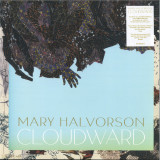
Nonesuch Records releases Cloudward by Brooklyn-based guitarist, composer, and MacArthur fellow Mary Halvorson on January 19. The album features eight new compositions by Halvorson, performed with her sextet Amaryllis, the improvisatory band that performed on her critically praised 2022 albums Amaryllis and Belladonna comprising Halvorson, Patricia Brennan (vibraphone), Nick Dunston (bass), Tomas Fujiwara (drums), Jacob Garchik (trombone), and Adam O’Farrill (trumpet). Labelmate Laurie Anderson also is featured on the album track ‘Incarnadine’. Halvorson and Amaryllis will tour internationally following the release of the new album, including January dates in Europe, as well as at the Big Ears Festival as part of Nonesuch’s 60th anniversary celebration.
Halvorson says, “All of the music on Amaryllis was written in 2020, during the thick of the pandemic, in one of the more bizarre time periods I’ve experienced in my life. While composing for Amaryllis, I expanded upon certain musical concepts I’d developed in my life up until that point—the ones that felt fruitful—and left others behind, hitting the reset button and attempting to build from scratch. Two years later, after the release of the first album, I was still writing music for Amaryllis.
“All the music on Cloudward was written in 2022, mostly in the fall and winter, when things started moving forward. Life felt like a creaky machine starting up again,” she continues. “Air travel, however chaotic, had resumed, and we were once again cloudward. Performances and tours and recordings were happening after a long hiatus and with a renewed sense of gratitude. This band, for me, was quite simply working, both musically and personally, and the main thing I felt while writing the music was optimism.”
The Guardian said Halvorson’s 2022 double release “shows how far this single-minded original has come, and affords a glimpse of how far she may go. Both sessions confirm how years of jaggedly lyrical solo and ensemble improvising and a quirkily subversive affection for mainstream music have now nurtured a composer of unpredictable but warmly expressive character… These are new landmarks in Halvorson’s already inimitable discography.” Pitchfork said, “Amaryllis and Belladonna are distinct statements; one could hear either album on its own without a sense that something is missing. But they are most powerful when taken together, like a landscape and its reflection in rippling water.”
Halvorson has released a series of critically acclaimed albums, from Dragon’s Head (2008), her trio debut featuring bassist John Hébert and drummer Ches Smith, expanding to a quintet with trumpeter Jonathan Finlayson and alto saxophonist Jon Irabagon on Saturn Sings (2010) and Bending Bridges (2012), a septet with tenor saxophonist Ingrid Laubrock and trombonist Jacob Garchik on Illusionary Sea (2014), and finally an octet with pedal steel guitarist Susan Alcorn on Away With You (2016). She also released the solo recording Meltframe (2015), and most recently debuted Code Girl (2018, 2020), a new ensemble featuring vocalist Amirtha Kidambi (singing Halvorson’s own lyrics), trumpeter Adam O’Farrill, saxophonist and vocalist María Grand, bassist Michael Formanek, and drummer Tomas Fujiwara.
One of New York City’s most in-demand guitarists, over the past decade Halvorson has worked with such diverse musicians as Tim Berne, Anthony Braxton, Taylor Ho Bynum, John Dieterich, Trevor Dunn, Bill Frisell, Ingrid Laubrock, Jason Moran, Joe Morris, Tom Rainey, Jessica Pavone, Tomeka Reid, Marc Ribot, and John Zorn. She is also part of several collaborative projects, most notably the longstanding trio Thumbscrew with Michael Formanek on bass and Tomas Fujiwara on drums.