quête:field

Genres
Tout
Eliza Niemi - Progress Bakery

Eliza Niemi

Progress Bakery

12inchTAR118SX
Tin Angel
04.04.2025

Kneading dough is tricky – you should know how it’s supposed to feel. If you try too hard you could make it worse. It’s a beautiful practice – creation with a gentle touch, to work at something so it can be left alone. “If it’s too drawn out it’s awful. It’s easy to give too much.” Dance in the mirror. Contemplate your veiny hands. Who do they remind you of?

You begin by mixing flour and water. “What happens when your people die? Why’d they move the rock to the other side of Ulster Park?” Eliza Niemi asks two seemingly unrelated questions in a rising melody with guitar accompaniment, like fingers playing spider up to the nape of your neck. Gentle pressure. Strands of gluten form to bind the mix. A new question lingers in the binding. When she admits “but I don’t know how to tell if I’m feeling it or not,” that question surfaces through the text. It is reiterated throughout the album. When I’m working with dough I think the same thing to myself.

On Progress Bakery, her second album as a solo artist, Eliza knows to leave some questions alone – to let juxtaposition and tension be the proof. It doesn’t have to be hard. The feelings and revelations they provoke rise in the heat. The smell is sweet. Crispy on the outside and soft all the way through. She playfully slip-slides through words and sounds and images, delighting in surprise, skimming ideas like stones cast across clear water, touching down briefly with uncommon grace.

The question provoked between those opening lines resurfaces in the strands between songs – “Do U FM” is fully formed and beautifully layered, while “Novelist Sad Face” is a short, acapella rendering of gentle curiosity. What is holding these ideas together? Some songs demand more, seem to carry a whole load – eventually the skipping stone will halt to sink and resume its idle duty – while others drift in and out of focus, the way thoughts and dreams become interwoven before the mind is sunk into true sleep.

Music and words don’t always have to interact. Where she decides to keep them apart gives a new contour to where and how she puts them together. The kind of thing you’re supposed to take for granted with songs and their singers comes alive in Eliza’s hands – the little miracle of mixing, kneading, stretching, and stopping.

So often on Progress Bakery, Eliza teases out truth and meaning by asking questions. “Do I wanna be crying?” “Do you want me good or do you want me bad?” “Do I need an eye test?” “I’m writing songs in my head while you’re going over stuff with me — is that cruel??” In “Pocky” Eliza ends with a question that feels to me like the actual biography, succinct and revealing:

I don’t wanna be made to see
I just wanna ask “what’s that?”

Grace that ought to be rare, but in its care and precision is offered humbly, with great generosity, and without announcing itself. Eliza’s simple, miraculous music is given further form and shape by a group of collaborators – invaluable guest musicians Jeremy Ray, Evan Cartwright, Steven McPhail, Kenny Boothby, Ed Squires, Carolina Chauffe, Dorothea Paas, Louie Short, and Avalon Tassonyi. Together with Louie Short, who recorded, mixed, and produced the album along with Jeremy Ray and Lukas Cheung, Eliza has cultivated a richness in sound and texture that prods and provokes the ticklish ear. Barely audible guitar tinkering, a brief lo-fi field recording of trumpets, the harmonic clicking of a looped synthesizer, a flourish of reeds, a child’s conversation, each uncanny sound perfectly placed, rippling out under a soft breeze.

Lay in bed alone at night and ask aloud to the stillness,

“What were you doing at the Albuquerque Airport?
What were you doing there??”

And hear your question answered by a dream of swelling, undulating cellos. Try to grasp at the melody and structure. It’s not an answer (if there could be one), but it moves deeper, closer to the weird layer of fleeting moments and disconnected images, barely perceptible at its core. Wait for the dream reel to click into place.

Eliza took me for a ride in Nicole (her beloved Dodge Grand Caravan) and told me she’d been thinking of the album as an embodiment of transition – and I think every transition, known or unknown, carries the weight of new meaning, skittering off the surface tension of life as you know it, creating ripples, sometimes bouncing off and sometimes breaking through. There is a trick you can use to tell if a dough is glutinous enough. You’re supposed to stretch it out as thin as you can without breaking it and hold it up to the light. If you can see through, even if it renders the world murky and uncertain, you should leave it alone. I love this trick. It’s one that Eliza seems to know intuitively: work gently and ask questions and don’t always expect answers, and when you can, take a glimpse at something new, and then leave.

pré-commande04.04.2025

il devrait être publié sur 04.04.2025

29,37
HxH - STARK PHENOMENA

Hxh

STARK PHENOMENA

12inchOF04LP
OFNOT
03.04.2025

Chris Ryan Williams (trumpet & electronics) and Lester St. Louis (cello & electronics) work together as HxH (H by H). Their skills have seen them move smoothly across various situations, constantly carving out new terrain and working in new configurations of musicians at a rapid pace. While worth reading, their biographies capture only a part of their complex rhizome.

HxH started about three years ago. The project is a direct response to all their activity with others and more importantly all their future leaning sonic desires. Their debut album STARK PHENOMENA is both their first studio recording and their first physical release. The album is appropriately set to be released by KMRU on his growing label OFNOT. It’s an ideal introduction to their sound world and their approach.

HxH describe their music as “electroacoustic,” but until recently the presence of Black musicians in this field has been greatly overlooked and largely ignored, making this phrase only partially appropriate. What HxH do really is to always be unpredictable. Every gig is a new soundscape. Sometimes you might hear echoes of Autechre or Robert Hood but then the sound-field will open up into a new terrain all their own. Chris and Lester bring together techniques from across the sound spectrum of electronic music and also draw on their deep backgrounds in Jazz, Improvisation, Classical and Noise scenes to create a sound that is true to them. After all, these two have worked with the likes of Bennie Maupin and the music of Black Fluxus artist Ben Patterson. Their rhizome is deep.

One of the ways that their unique approach manifests is in their merging of both acoustic instruments and electronic instruments in real time. This is something few have managed to do – but their spontaneous leanings work in both complex and accessible ways because of their deep understanding of landscape crafting. You can hear this clearly on the track “Pyrex Vision.” Their approach makes it tempting to compare their music to Sun Ra jamming with Laurel Halo – a comparison that would be only partly accurate.

Chris and Lester note that the sounds on STARK PHENOMENA are “imbued with such hopeful, gracious care; one that is far flung from obsessive carefulness or fuck the world carelessness, but more a caring embrace without the fuzziness of nostalgia.”

They note that when they began working together, they would “always come back to speaking on our concepts of an architecture of the expanse,” noting that their live sets often take on the joyfully noisy task of “dreaming big.” For HxH it was essential that STARK PHENOMENA have a quality that is “almost sculptural.” They consider the album “an object to be viewed from all sides.” This kind of thinking has resulted in them directly engaging with numerous sculptors and artists including Torkwase Dyson. Shape wise HxH’s sound fields work in a parallel to Dyson’s black architectural works.

They also note that the opening cut “BEACH” (the opening and longest track from the album) was “written weeks after our first gig in a studio session donated to us by our dear friend jaimie branch.” And that Pyrex Vision “was continually being edited months after sending our ‘final mixes’ to KMRU.” Their sound sources and samples come from studio sessions, live gigs, durational installations, 3am improvised downloads and more.

KMRU notes: "I think there is an in-between layer on this record. I was first caught by the Pyrex Vision track which organically flows between monologue, subtle field recording, and instrumentation. It's such a beautiful track, evoking deep emotion through simplicity. STARK PHENOMENA effortlessly glides in between imaginative mosaics of sounds — free yet complex — unlocking memories within its layers."

pas en stock

Commandez maintenant et nous commanderons l'article pour vous chez notre fournisseur.

22,27

Derniere entrée: 29 jours
Kirk Barley - Lux

Kirk Barley

Lux

12inchODA05M
ODDA Recordings
03.04.2025

Another foggy day in Yorkshire. A steel grey sky. Raindrops tracing one another down the windowpane. Kirk Barley sits in his studio and assembles compositions from scraps of found sound and live instrumentation. Melodies swell, withdraw and repeat like waves. Time slows. Accelerates. Slows again. The light bends, tweaked at the edges. Twisted by rhythms that never quite resolve.

Written, recorded and produced by Barley in Yorkshire in early 2024, Lux picks up where 2023 LP Marionette leaves off, conjuring a mystical, reflective space between formal minimalism and sonic imaginaries of northern landscapes.

And yet, where Marionette relied at times on more recognisable field recordings, Lux leans into Barley’s skill as an instrumentalist and sound designer, working from a palette of short samples and utilising a variety of alternate tuning systems to build, layer and coax his compositions into being. Most evident on tracks ‘Vita’, ‘Sprite’ and ‘Descendent’, these tunings create an otherworldly harmonic language that is easier to perceive than describe.

Alongside more familiar instruments of guitar, bass, drums, organ and clarinet, here Barley draws on plastic saxophones and bells, and recordings of glass, wood and metal sound objects to provide the organic matter. Rather than directly representative of the natural world, Lux enters into a dialogue with it which, like the grasses and flowers of the album’s cover, exists somewhere between reality and artifice.

On album opener ‘Cache’, Barley constructs his own sense of time from a recording of an umbrella crank, a sparse and spectral piece which hints at memories embedded in the track’s title. Introspection blossoms into new life on ‘Vita’, crumpling again into the percussive ambience of ‘Verre’. A track that takes its harmonic lead from the clinks of glass, it features Barley’s long-time collaborator Matt Davies on drums, whose nuanced, tonally sensitive playing gives ‘Verre’ a fizzing, ice-like quality.

There are several moments where Lux picks up on themes Barley explored under electronic moniker Church Andrews on recent works with Davies, stretching and distorting temporalities most explicitly on ‘Descendent’, whose ritualistic air unfurls around a pattern in exponential decline.

Embracing the surrealism Barley absorbed over years watching classic film noir and the works of David Lynch and Federico Fellini, Lux wends its way through the enchanted sound worlds of ‘Sprite’ and ‘Balanced’ before arriving at the album’s title track.

An expression of his recent experiments in live, prepared guitar, ‘Lux’ brings the album back to earth, returning us to the room where the rain has stopped, the clouds have parted, and the soft warmth of the spring sun is pouring in through the open window.

pas en stock

Commandez maintenant et nous commanderons l'article pour vous chez notre fournisseur.

22,65

Last In: 13 months ago
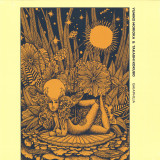
Yumiko Morioka & Takashi Kokubo - Gaiaphilia

Japanese artists Yumiko Morioka and Takashi Kokubo unite for Gaiaphilia, a journey through ambient soundscapes that seamlessly blends Morioka’s graceful piano compositions with Kokubo’s immersive field recordings and atmospheric synthesisers.

This collaboration brings together two of Japan’s most influential pioneers in ambient and new age music, each with decades of groundbreaking work. Morioka, celebrated for her 1987 album Resonance—reissued to critical acclaim by Métron Records—infuses her introspective playing with Kokubo’s vivid environmental textures, creating a dialogue between nature and melody.

After releasing Resonance, Morioka stepped away from music, moving to America to raise her family. For years, her work was quietly cherished by fans, only gaining wider recognition with its reissue in 2020. A devastating wildfire destroyed her California home seven years ago, prompting her return to Tokyo where she became a chocolatier before rediscovering her passion for the piano in recent years, playing live shows and making new recordings.

Takashi Kokubo’s legendary discography spans over 30 years, and has found wider acclaim in recent years via YouTube algorithms and bootleg uploads, wracking up tens of millions of plays. Yet he is probably best known for his sound design work, specifically the Japanese earthquake alert sound as well as credit card payment jingles - his creations are pervasive in Japanese society.

“From our love and concern for our planet, we both offer a unique sensibility and spirit of inquiry which we express through our music.”

Rooted in shared philosophical interests, Gaiaphilia reflects a profound reverence for nature’s resilience and harmony. Themes of Gaia, Mother Earth’s renewal, and the interconnectedness of life are central, with inspirations drawn from cosmology, sacred geometry, and Japan’s mystical Katakamuna tradition. The album invites listeners into a meditative space where sound mirrors the delicate balance of the natural world.

A master of sound design, Kokubo enhances this vision with his distinctive field recordings, captured using a self-made binaural microphone shaped like a crash test dummy’s head. From the jungles of Borneo to the gentle rhythm of ocean waves, Kokubo’s globe-spanning recordings transform into immersive soundscapes that perfectly complement Morioka’s introspective piano compositions.

“The title, Gaiaphilia, is a newly created word to encompass our love and respect for nature and life, this feeling is the theme we hoped to express.”

Released on Métron Records on 12/03/25 and with artwork from Ventral Is Golden, Gaiaphilia marks a remarkable new chapter for Morioka and Kokubo. Recorded at Kokubo’s log house studio named Studio Ion in Yamanashi, their collaboration offers listeners a deeply emotional and transcendent experience, rooted in the timeless beauty of Japan’s natural landscapes.

pas en stock

Commandez maintenant et nous commanderons l'article pour vous chez notre fournisseur.

23,74

Last In: 14 months ago
ALIEN SIGNAL - WHISPERS FROM DISTANT SUNS (2025)

After a 30-year interstellar silence, the enigmatic producer Alien Signal—pioneering alias of Italian electronic composer Alex Silvi—reemerges with Whispers from Distant Suns, a transcendent odyssey that bridges retro-futurism and modern electronica. Hailed as a magnum opus, this album transcends genre boundaries, captivating ambient purists, downtempo aficionados, and even experimental listeners with its hypnotic fusion of analog warmth and digital precision.

Cosmic Tapestry of Sound
Drawing comparisons to Vangelis’ Antarctica and Alpha—but reimagined through a 21stcentury lens—Whispers from Distant Suns marries nostalgic synth textures with cuttingedge production. Silvi’s mastery of melody shines through in tracks like “Stardust
Memories” and “Fragile Eden” where shimmering arpeggios and celestial pads drift over robotic, glitch-infused drum patterns and sparse, meditative percussion. The result is a paradox: a retro-futuristic soundscape that feels simultaneously ancient and alien, familiar yet unexplored.

Listener Testimonials
Fans and critics have flooded forums with praise:

“An auditory revelation! It’s like Vangelis met Jon Hopkins in a nebula—vintage soul with a futuristic heartbeat.”
“The textures are gorgeously cinematic. Closing your eyes, you’re adrift in a Tarkovsky film scored for the Andromeda galaxy.”

The Vinyl Experience
Pressed on heavyweight vinyl, the album’s physical release amplifies its immersive qualities. The gatefold sleeve, adorned with surrealist astrophotography and metallic
foiling, mirrors the music’s cosmic ethos. Side A leans into Balearic serenity, with sundappled grooves and aquatic synth ripples, while Side B delves into darker, more
experimental terrain—think Aphex Twin’s Selected Ambient Works colliding with the organic rhythms of Jon Hopkins.

Maturity in Motion
This album is a testament to Silvi’s evolution. Tracks like “Seeds Of Light” and “Message from Andromeda Galaxy” showcase his refined ear for dynamics, balancing silence and sound with surgical precision. Vintage drum machines spar with glitches, while field recordings of crashing waves and interstellar static blur the line between Earth and cosmos. The closing track, “The Star Charts We Shared” crescendos into a 6-minute ambient requiem, leaving listeners suspended in a state of weightless awe.

Final Transmission
Whispers from Distant Suns is more than an album—it’s a transcendent odyssey. Spanning time, space, and the artist’s own creative evolution, this immersive work invites listeners to lose themselves in its ebb and flow. Designed for moments both intimate and expansive, its balearic-tinged atmospheres resonate equally through dawnlit Mediterranean terraces or the solitary glow of headphones in darkness. These are compositions that pulse, morph, and haunt the air long after the final note fades. A living soundscape meant to accompany life’s quiet revelations and clandestine joys—a soundtrack to your most personal moments, crafted as what the artist calls ‘private dance music.’

Tailored for the Discerning Listener
Whispers from Distant Suns is designed with the true connoisseur in mind. This album is a must-have for:

Vinyl Collectors & Audiophiles: Those who value the warmth and tactile experience of heavyweight, limited edition pressings
Electronic Ambient and Downtempo Fans: Listeners who appreciate immersive soundscapes that merge retro analog charm with modern digital innovation.
Retro-Futurism Enthusiasts: Fans of pioneering artists like Vangelis, Boards of Canada, and early Warp Records who seek music that bridges nostalgic synth textures with futuristic experimentation.
Experimental Music Explorers: Individuals drawn to sonic narratives that invite deep, contemplative listening—perfect for both introspective moments and immersive listening sessions.
This release is not just an album; it’s a curated experience for those who desire music as a multidimensional art form, merging the vintage allure of analog sound with a contemporary, cosmic vision.

For fans of: Vangelis, Biosphere, Jon Hopkins, early Warp Records.

pas en stock

Commandez maintenant et nous commanderons l'article pour vous chez notre fournisseur.

26,26

Last In: 12 months ago
Various - ECHOES OF ITALY – THE BIRDS OF PARADISE – EARLY 90S HOUSE VIBES VOL.2 (2x12")

Googling “paradise house”, the first results to pop up are an endless list of European b&b’s with whitewashed lime façades, all of them promising “…an unmatched travel experience a few steps from the sea”. Next, a little further down, are the institutional websites of a few select semi-luxury retirement homes (no photos shown, but lots of stock images of smiling nurses with reassuring looks). To find the “paradise house” we’re after, we have to scroll even further down. Much further down.

It feels like yesterday, and at the same time it seems like a million years ago. The Eighties had just ended, and it was still unclear what to expect from the Nineties. Mobile phones that were not the size of a briefcase and did not cost as much as a car? A frightening economic crisis? The guitar-rock revival?! Certainly, the best place to observe that moment of transition was the dancefloor. Truly epochal transformations were happening there. From America, within a short distance one from the other, two revolutionary new musical styles had arrived: the first one sounded a bit like an “on a budget” version of the best Seventies disco-music – Philly sound made with a set of piano-bar keyboards! – the other was even more sparse, futuristic and extraterrestrial. It was a music with a quite distinct “physical” component, which at the same time, to be fully grasped, seemed to call for the knotty theories of certain French post-modern philosophers: Gilles Deleuze, Félix Guattari, Paul Virilio... Both those genres – we would learn shortly after – were born in the black communities of Chicago and Detroit, although listening to those vinyl 12” (often wrapped in generic white covers, and with little indication in the label) you could not easily guess whether behind them there was a black boy from somewhere in the Usa, or a girl from Berlin, or a pale kid from a Cornish coastal town.

Quickly, similar sounds began to show up from all corners of Europe. A thousand variations of the same intuition: leaner, less lean, happier, slightly less intoxicated, more broken, slower, faster, much faster... Boom! From the dancefloors – the London ones at least, whose chronicles we eagerly read every month in the pages of The Face and i-D – came tales of a new generation of clubbers who had completely stopped “dressing up” to go dancing; of hot tempered hooligans bursting into tears and hugging everyone under the strobe lights as the notes of Strings of Life rose up through the fumes of dry ice (certain “smiling” pills were also involved, sure). At this point, however, we must move on to Switzerland.

In Switzerland, in the quiet and diligent town of Lugano, between the 1980s and 1990s there was a club called “Morandi”. Its hot night was on Wednesdays, when the audience also came from Milan, Como, Varese and Zurich. Legend goes that, one night, none less than Prince and Sheila E were spotted hiding among the sofas, on a day-off of the Italian dates of the Nude Tour… The Wednesday resident and superstar was an Italian dj with an exotic name: Don Carlos. The soundtrack he devised was a mixture of Chicago, Detroit, the most progressive R&B and certain forgotten classics of old disco music: practically, what the Paradise Garage in New York might have sounded like had it not closed in 1987. In between, Don Carlos also managed to squeeze in some tracks he had worked on in his studio on Lago Maggiore. One in particular: a track that was rather slow compared to the BPM in fashion at the time, but which was a perfect bridge between house and R&B. The title was Alone: Don Carlos would explain years later that it had to be intended both in the English meaning of “by itself” and like the Italian word meaning “halo”. That wasn’t the only double entendre about the song, anyway. Its own very deep nature was, indeed, double. On the one hand, Alone was built around an angelic keyboard pattern and a romantic piano riff that took you straight to heaven; on the other, it showcased enough electronic squelches (plus a sax part that sounded like it had been dissolved by acid rain) to pigeonhole the tune into the “junk modernity” section, aka the hallmark of all the most innovative sounds of the time: music that sounded like it was hand-crafted from the scraps of glittering overground pop.

No one knows who was the first to call it “paradise house”, nor when it happened. Alternative definitions on the same topic one happened to hear included “ambient house”, “dream house”, “Mediterranean progressive”… but of course none were as good (and alluring) as “paradise house”. What is certain is that such inclination for sounds that were in equal measure angelic and neurotic, romantic and unaffective, quickly became the trademark of the second generation of Italian house. Music that seemed shyly equidistant from all the rhythmic and electronic revolutions that had happened up to that moment (“Music perfectly adept at going nowhere slowly” as noted by English journalist Craig McLean in a legendary field report for Blah Blah Blah magazine). Music that to a inattentive ear might have sounded as anonymous as a snapshot of a random group of passers-by at 10AM in the centre of any major city, but perfectly described the (slow) awakening in the real world after the universal love binge of the so-called Second Summer of Love.

For a brief but unforgettable season, in Italy “paradise house” was the official soundtrack of interminable weekends spent inside the car, darting from one club to another, cutting the peninsula from North to centre, from East to West coast in pursuit of the latest after-hours disco, trading kilometres per hour with beats per minute: practically, a new New Year’s Eve every Friday and Saturday night. This too was no small transformation, as well as a shock for an adult Italy that was encountering for the first time – thanks to its sons and daughters – the wild side of industrial modernity. The clubbers of the so-called “fuoriorario” scene were the balls gone mad in the pinball machine most feared by newspapers, magazines and TV pundits. What they did each and every weekend, apart from going crazy to the sound of the current white labels, was linking distant geographical points and non-places (thank you Marc Augé!) – old dance halls, farmhouses and business centres – transformed for one night into house music heaven. As Marco D’Eramo wrote in his 1995 essay on Chicago, Il maiale e il grattacielo: “Four-wheeled capitalism distorts our age-old image of the city, it allows the suburbs to be connected to each other, whereas before they were connected only by the centre (…) It makes possible a metropolitan area without a metropolis, without a city centre, without downtown. The periphery is no longer a periphery of any centre, but is self-centred”.

“Paradise house” perfectly understood all of this and turned it into a sort of cyber-blues that didn’t even need words, and unexpectedly brought back a drop of melancholic (post?)-humanity within a world that by then – as we would wholly realise in the decades to come – was fully inhuman and heartless. A world where we were all alone, and surrounded by a sinister yellowish halo, like a neon at the end of its life cycle. But, for one night at least, happy."

pas en stock

Commandez maintenant et nous commanderons l'article pour vous chez notre fournisseur.

28,99

Derniere entrée: 37 jours
HIROSHI YOSHIMURA - FLORA LP (TAPE)

- Also available on black vinyl - First ever official reissue - Produced in full cooperation with Hiroshi Yoshimura's estate - Liner notes by contemporary music writer and professor Junichi Konuma - Remastered from original sources by John Baldwin - First time on vinyl, cassette, and streaming - 2xLP vinyl housed in gatefold jacket - Discs cut at 45 rpm for optimal sound quality // Following their 2024 reissue of Hiroshi Yoshimura's classic album, Surround, Temporal Drift proudly presents the first-ever reissue of FLORA, Yoshimura's underappreciated ambient classic. FLORA was originally recorded and completed in 1987, and remained unreleased until 2006, nearly three years after Yoshimura's passing in 2003. The album is chronologically and stylistically a follow-up to his acclaimed 1986 works GREEN and SURROUND, wherein Yoshimura continues to play with the ambience of sound and the sound of ambience, underscoring his mastery in the field of environmental music. Yoshimura's other recorded works include Music For Nine Post Cards (1982), originally produced to be played back inside a museum space, and Pier & Loft (1983), commissioned as accompaniment to a contemporary fashion show.

pas en stock

Commandez maintenant et nous commanderons l'article pour vous chez notre fournisseur.

17,61

Last In: 6 months ago
Tobias. Doltz. - Versus

Tobias. Doltz.

Versus

12inch160DSR
Delsin Records
01.04.2025

Folding the ambient techno tradition into neatly arranged packets of rhythm and space, Delsin proudly presents a striking new collaboration from Tobias. and Doltz. A project developed from a chance encounter, Versus combines classic synth and drum machine configurations with needlepoint sound design to create a quintessential electronica listening experience. Tobias. is the lead alias from Tobias Freund, the celebrated German techno pioneer who has been actively exploring new territories in electronic music production since the early 1980s. As Doltz, Shun Watanabe has quickly developed his own impressive artistic stamp in the field of leftfield techno and ambient since debuting in 2020. After seeing Doltz perform a live set at Eden Festival 2024 in Japan, Freund instantly invited him to collaborate. After the success of the first collaboration, they went on to develop five of the tracks on Versus together, while Jiawen Wang performed additional vocals on 'We Are Not Alone'. Versus is an album that balances variety and consistency across its finely sequenced run time, maintaining a focus on pointillist, exploratory rhythm from crisp drum machines and twitchy digitalia alike, all backed up by richly rendered atmospherics from gaseous pads to icy drones. It's a warm and inviting sound world, but also fearlessly futuristic, speaking to both Freund's decades of refinement and the startling clarity of Doltz's vision.

pas en stock

Commandez maintenant et nous commanderons l'article pour vous chez notre fournisseur.

17,44

Last In: 5 months ago
Various - Volcanic Tongue - Late 20th Century Underground (LP 2x12")

"Volcanic Tongue" war ein Plattenladen, der von 2005-2015 in Glasgow von David Keenan und Heather Leigh betrieben wurde und zeitgenössische DIY-Musik aus der ganzen Welt in kleinen selbstgemachten CD-R-Auflagen veröffentliche. Parallel versuchte man, vergessene Künstler aus der Vergangenheit ins Rampenlicht zu rücken, die ihre Musik oft als Privatpressung veröffentlicht hatten. Der Laden war für seine wöchentliche Mailingliste bekannt, in der Keenan enthusiastisch über Neuankömmlinge rappte, insbesondere über die Platte der Woche, die den Spitznamen "tip of the tongue" (Zungenspitze) erhielt. Dieser eklektische Sampler mit 20 "tips of the tongue" - von Outsider-Synth über Psych-Folk bis zu kaputtem Rock'n'Roll, aufgenommen zwischen 1968-2013 - ist eine Hommage an eine lebendige und vielseitige Underground-Avantgarde. Black Vinyl 2LP in PVC-Hülle, von Julian House designt, mit bedruckten Innentaschen samt Linernotes von David Keenan zu jedem Künstler.

PS: Gleichzeitig erscheint beim White Rabbit-Verlag eine Deluxe-Ausgabe des gleichnamigen Buches mit einer CD-Version des Samplers, limitiert auf 1.000 Exemplare, und signiert von Autor David Keenan und Designer Julian House.

pas en stock

Commandez maintenant et nous commanderons l'article pour vous chez notre fournisseur.

35,25

Last In: 14 months ago
Fleetwood Mac - Mirage LP 2x12"
  • Love In Store
  • Can’t Go Back
  • That’s Alright
  • Book Of Love
  • Gypsy
  • Only Over You
  • Empire State
  • Straight Back
  • Hold Me
  • Oh Diane
  • Eyes Of The World
  • Wish You Were Here

If every significant artist has an underrated gem in its catalog, then Mirage is that album for Fleetwood Mac. An obvious return to relative simplicity after the dramatic tension of Rumours and experimental ambitions of Tusk, the 1982 album finds the band re-grouping after a brief hiatus and again climbing to the top of the charts. Extremely well-crafted, well-produced, and well-performed, the double-platinum effort distills the group’s hallmark strengths into a filler-free set that never runs short of addictive pop hooks or daft accents.

Sourced from the original analog master tapes, pressed at Fidelity Record Pressing in California, and housed in a Stoughton jacket, Mobile Fidelity’s numbered-edition 180g 45RPM 2LP set presents Mirage in reference sound for the first time. The efforts co-producers/engineers Ken Caillat and Richard Dashut went to capture the splintered albeit formidable band can be heard with stunning accuracy, range, depth, and detail.

Though Rumours understandably gets a permanent spot in the audiophile hall of fame, the smooth, clear, and dynamic sonics on Mirage confirm that the record that stood as Fleetwood Mac’s last effort for five years deserves a place in the same vaunted arena. The presence and imaging of Mick Fleetwood’s percussion alone on this reissue might have you wondering how this slice of soft-rock bliss has gone under-noticed for decades. Other prized aural aspects — separation, definition, impact, tonal balance — are also here in spades.

Like much surrounding Fleetwood Mac in the 1980s, arriving at Mirage was not easy. Caillat searched for studios located outside of Los Angeles on a mission to change up the vibe of the band’s prior recording sessions. Everyone settled on Le Chateau in France, where relations between some members remained icy — and cooperation with the producers strained. Battles with exhaustion, bitterness, and addiction further informed the proceedings at the 18th century complex in the French countryside, where even communal meals were allegedly eaten in silence.

Inevitably, the feelings that co-producer Lindsey Buckingham, Stevie Nicks, Christine McVie, and company harbored — as well as the situations in which they found themselves — drifted into the songwriting. In its rapid ascent to rock-star royalty status, Fleetwood Mac drifted apart, embarked on solo pursuits, and found it was lonely at the top. Emptiness, the illusion of dreams, the longing for love, the want to escape to bygone times of innocence and happiness: Such themes inform a majority of the narratives. Even if the lyrics regularly take a back seat to easygoing arrangements that allow Mirage to come on like a refreshing breeze on a sunny summer afternoon.

Home to three Top 25 singles in the U.S. and having occupied the pole position of the Top 200 album charts for five weeks, Mirage rightfully resonated with the mainstream and attracted listeners on both sides of the pond. And how, via a smart blend of sugary melodies, warm harmonies, interlaced notes, nimble rhythms, taut structures, and passionate vocals. Not to mention the presence of what arguably remains Nicks’ signature song, the biographical “Gypsy,” a meditation on the loss of her close friend Robin Anderson that teems with majesty, mystery, and mysticism — and which gets an assist from Buckingham’s shaded tack piano and richly strummed guitar chords.

Its ranking as an all-time classic aside, that No. 12 hit has plenty of company when it comes to brilliant pop turns on Mirage. On the subject of Nicks, the raspy singer gets a little bit country on “That’s Alright.” Its clip-clopping pace and two-stepping progression complement subtle vocal swells that emerge during the final verse of a tune that is ostensibly about leaving but still conveys forgiveness and grace. And what would a Fleetwood Mac record be without Nicks drawing on the tools of the supernatural — cards, dreams, wolves, and the like — on the twirling “Straight Back.”

Despite the potency of Nicks’ primary contributions, Mirage seemingly unfolds as a tight competition between Buckingham and McVie — and one that ultimately ends in a draw. Buckingham’s salvos include the contagious “Can’t Go Back,” a yearning to time-travel back to the past that’s complete with hall-of-mirrors backing vocals; “Oh Diane,” out-of- left-field ear candy sweetened with hiccupped vocals and salt-and-pepper-shaken grooves; the chiming “Eyes of the World”; and “Empire State,” a delightfully fluttering track whose high-range vocals, lap harp notes, and ringing xylophones hint at the galaxies of sound that would erupt on Tango in the Night.

Then there’s McVie. As elegant, understated, and coolheaded as she’s ever been on record, she pours her heart out on cuts that revolve around her inevitable split with Beach Boy Dennis Wilson. In the process, she punctuates Mirage with a characteristic not always associated with catchy pop music: emotional weight, and the sense of dreaded acceptance in the face of dreams deferred.

“I wish you were here/Holding me tight,” McVie sings over a delicate melody on the album-closing piano ballad “Wish You Were Here.” Though they hoped otherwise, for the members Fleetwood Mac, distance and separation were always close at hand. Believing otherwise, inviting nostalgia, and pretending everything was fine only amounts to a mirage.

pré-commande31.03.2025

il devrait être publié sur 31.03.2025

88,19
T-WOC - SCENES, JOURNEY & COLOURS

The Irish producer t-woc makes his return to Rudimentary Records with Scenes, Journeys & Colors, his second LP for the label. The bones of the album was made during the 'quiet time' starting with a track that didn’t make the cut on this release but had provided the blueprint to that project titled ‘Street Soul Osaka’. It was a recent chance encounter with a lone boombox playing actual street soul on a pavement in Osaka that it became clear the project needed to be released and the album was completed in Dublin in 2024.

This album is crafted through a blend of samples, live instrumentation, field recordings and studio experimentation. The tracks are a mix of the slow and low, interspersed with minimal ambient pieces with a pronounced dub undercurrent, and a tip of the hat to the cosmos. There are also some vocoders and a fair dose of weirdness.

Since his 2016 LP for Rudimentary - ‘Sentinelas’, t-woc has released with Strangelove Records, Emotional Response, Macadam Mambo amongst others and is a regular contributor to DJ Sofa’s Elsewhere compilation series.

pré-commande30.03.2025

il devrait être publié sur 30.03.2025

20,80
One Leg One Eye - ...And Take The Black Worm With Me LP
  • Glistening
  • She Emerges
  • Bold And Undaunted Youth
  • I’d Rather Be Tending My Sheep
  • The Fancy Cannot Cheat So Well
  • Only The Diceys

As a founding member of Dublin experimental folk group Lankum, Ian Lynch explores submerged leylines of music and song. Forging a musical path that is all at once dark, mysterious and foreboding, but ultimately transcendental. His new solo project One Leg One Eye sees him taking a fresh approach to musical arrangement culminating in a sound that is more rooted in the raw aesthetics of second wave black metal than contemporary folk. The project was born across 2021, a period in which Lynch was able to enjoy the freedom of experimenting and exploring different paths of sound design without expectation or pressure. Seeking out interesting settings to record music and gather field recordings, there are several environments, external and interior, whose respective essence have seeped into the spirit of the music and come to represent Lynch’s artistic approach and development with this singular debut album, …And Take The Black Worm With Me. Rediscovered spaces in Dublin and the familiar enclave of his bedroom are intrinsic to the distinct and sometimes harrowing atmosphere conjured throughout the album’s five enveloping compositions. One particular location, an abandoned factory where his father worked when Ian was a child, provided a space of great inspiration and intrigue during this time. Lynch frequently visited the large abandoned warehouse and sang with his shruti box, contented in his solitude. ‘I’d Rather Be Tending My Sheep’, grew into existence from those initial sessions, eventually finding a home as an emotive centrepiece to the album. Reflecting on the overall recording of …And Take The Black Worm With Me, Lynch says, “Everything I was doing with these songs was all kind of new to me; experimenting with different sounds, textures and palettes and seeing what I could come up with by piecing it all together. I spent about a year making the album. I loved the whole process because it was basically just me in my bedroom recording everything. The experience of recording like this and having my own time to do it was amazing. I could focus on recording a specific element and happily spend all day working on that one part, doing it as many times as I wanted. At the end of the day if it didn’t feel right, I could just try it again the next day. When you’re on your own you can spend as much time as you want on particular parts until you feel that it’s absolutely perfect. I found that to be a really liberating experience. It was probably my favourite experience recording music.” The collection of songs (and their chronology) featured on …And Take The Black Worm With Me tell a story unique to Lynch’s experiences with anxiety and recognising his shadow self. Whilst the album became an outlet of personal expression for Lynch, the overarching themes and subsequent journey to confront one’s internal dichotomy of light and dark before accepting this inherent duality is universally shared. The eerie and often unsettling world contained within the album’s texturally dense opener ‘Glistening, She Emerges’, driven by the captivating drone of distorted uilleann pipes, immediately immerses the listener in this transportive work. It descends with a great heaviness, yet woven throughout the arrangement is a fascinating and indescribable entity that draws you further into this otherworldly dimension. This mood continues as the tracklist progresses and transitions into Lynch’s haunting realisation of ‘Bold and Undaunted Youth’ which further demonstrates a cinematic influence to Lynch’s compositional style. Sonically, Lynch effectively builds an impressively vast terrain with brilliantly murky lo-fi recording techniques and an unshakable curiosity to move beyond conventional structures and play with the timbre of the instruments available to him. From recording hurdy-gurdy or concertina to tape and experimenting with loops and effects pedals to stitching field recordings together, there’s an intimacy established between Lynch and his audience established through the simultaneously eerie and beautiful tones courting through …And Take The Black Worm With Me. This culminates in ‘Only the Diceys’, the extraordinary closing track in which we reach a place of resolution mapped into the album’s narrative structure. Mixed by longtime collaborator John ‘Spud’ Murphy in his Dublin-based Guerrilla Sounds Studio and mastered by Harvey Birrell …And Take The Black Worm With Me features contributions from Ruth Clinton (Landless) on church organ and vocals by Laurie Shanaman (Ails, Ludicra). Of Shanaman’s participation, in particular, which further illustrates the lo-fi and DIY ethos to the recording, Lynch says, “Laurie is my favourite black metal vocalist of all time and so I reached out to her hoping to have her involved in some way. She did, and she features on the opening track by providing some incredible screams. She recorded them into her phone and sent them over to me; what appears on the album is literally a phone recording of her screaming in her kitchen!” …And Take The Black Worm With Me continues Ian Lynch’s groundbreaking work with Lankum; recontextualising traditional forms and generating new spheres of music in his wake, confirming his status as one of the most interesting and innovative artists working in Ireland today.

pré-commande28.03.2025

il devrait être publié sur 28.03.2025

29,62
Various - Radar Keroxen Vol.5 (LP)

Yearly compilation series RADAR KEROXEN return with its fifth volume of themed based albums showcasing the talents and misfortunes of carefully selected musical projects based or connected with the Canary Islands.
With its first volume released in 2020 aiming to introduce and divulge adventurous Island based music, the Keroxen imprint now presents Vol.5 with a collection of tracks born out of an in-situ collective performance at the Keroxen Festival iconic venue - a massive disused gasoline tank near the harbour of Santa Cruz de Tenerife.
The Radar Drone Ensemble, as it was named for that night only, took advantage of the tank’s natural reverb to perform an improvised piece exploring the cavernous resonance corners inherent to the locale. The four artists then took a few months to compose a 9 track LP inspired by the site’s peculiar sound.
Gonçalo F. Cardoso kicks opens up the proceedings with two broody new tracks, in a style not heard since his 2015 album A Study of 21st Century Drone Acoustics. Doomed and menacing atmospherics brush shoulders with creepy and ethereal chants creating the perfect opening for this drone themed edition of Radar Keroxen. Eduardo Briganty (also from MINIATURa) follows with two equally deranged feedback based compositions letting his guitar riffs and distortions roam free. Afgan aka Mladen Kurajica (from GAF, Lagoss and Tupperwear) takes things further to an Angus MacLise inspired drone collage of mystic percussions, field recordings and electronic modular storms. Resonance aka Javier Perez wraps up the journey with his now trademark soothing synth compositions full of warm tones and blissful melodies.
The album comes, as always, wrapped into a dizzying post-tropical collage artwork by Pura Marquez.

pas en stock

Commandez maintenant et nous commanderons l'article pour vous chez notre fournisseur.

19,12

Last In: 14 months ago
WHITNEY JOHNSON & LIA  KOHL - FOR TRANSLUCENCE
  • 65: 66
  • 48: 50
  • 73: 74
  • 54: 56

The debut album from Whitney Johnson & Lia Kohl has evolved over several years from their initial practice of free improvisation on viola and cello into (for the moment), this: a neophonic orchestral expression. At once stimulating and soothing, For Translucence is a living, breathing meditation in which layers of acoustic strings, synthesizers, field recordings, radio and sine waves illuminate each other as they twine and grow.

pré-commande28.03.2025

il devrait être publié sur 28.03.2025

32,35
Miaux, Lieven Martens - Katharina AW: the Pels organ and Hemony carillon of Hoogstraten (TAPE)

2025 cassette edition, originally released in 2023 on 2CD/digital.

Recordings + booklet of the unveiling of »Katharina AW«, a relational artwork by Joris Martens. The unveiling event took place at St. Catharine’s Church in Hoogstraten - a city in the northeast of Belgium - on two Saturdays in May 2021.

While beholding the artwork, a woven tapestry, you listen to organ music by Miaux. Outside the church, you hear the carillon gurgle with music by Lieven Martens and town carillonneur Luc Dockx, prolonging the event into the public space.

Joris Martens created »Katharina AW« for the city hall of Hoogstraten. The tapestry now serves as an informal conversation starter in the conference room. Joris Martens is a multi-disciplinary artist and works in the field where applied arts and fine arts meet.

Miaux played her own compositions on the church organ. The songs appeared on the albums Black Space White Cloud, Hideaway, Dive and Gigi - released by Ultra Eczema, Lal Lal Lal, and Alien Passengers - and were originally written for electronic keyboard. Mia demonstrates that the church organ, which is normally used as an underscore for sadness or compelling thoughts, is a fitting instrument of connection. Through its resonance, we communicate our sounds.

Lieven Martens invented sketches for the carillon—by loading bird sounds into the computer program Melodyne, varying them and converting them to musical notes. As a nod to the religion crazy Olivier Messiaen, who considered the birds to be God’s chosen singers and songstresses. The trifles were translated on the carillon by town carillonneur Luc Dockx. The playing comes into and out of focus. In this way, Lieven creates a dreamscape and breaks with the dreary carillon as an instrument of power.

Luc Dockx studied church music at the Lemmens Institute in Leuven and the carillon at the Royal Carillon School in Mechelen. He is the city carillonneur of Hoogstraten since 2002. Dockx is an active practitioner of the art of improvisation on the carillon.

pré-commande28.03.2025

il devrait être publié sur 28.03.2025

14,71
HIROSHI YOSHIMURA - FLORA LP 2x12"

- LITA Exclusive pressed on Sky Blue colored vinyl - First ever official reissue - Produced in full cooperation with Hiroshi Yoshimura's estate - Liner notes by contemporary music writer and professor Junichi Konuma - Remastered from original sources by John Baldwin - First time on vinyl, cassette, and streaming - 2xLP vinyl housed in gatefold jacket - Discs cut at 45 rpm for optimal sound quality // Following their 2024 reissue of Hiroshi Yoshimura's classic album, Surround, Temporal Drift proudly presents the first-ever reissue of FLORA, Yoshimura's underappreciated ambient classic. FLORA was originally recorded and completed in 1987, and remained unreleased until 2006, nearly three years after Yoshimura's passing in 2003. The album is chronologically and stylistically a follow-up to his acclaimed 1986 works GREEN and SURROUND, wherein Yoshimura continues to play with the ambience of sound and the sound of ambience, underscoring his mastery in the field of environmental music. Yoshimura's other recorded works include Music For Nine Post Cards (1982), originally produced to be played back inside a museum space, and Pier & Loft (1983), commissioned as accompaniment to a contemporary fashion show.

pré-commande27.03.2025

il devrait être publié sur 27.03.2025

59,87
Florence Cats - shell I (TAPE)

»Shell I« is the second edition on Edições CN by Brussels sound artist Florence Cats. It is a magical collection of 23 edits for voice, field recordings, theremin, and piano. Cats’ recorded piano rehearsals and singing sketches reminds us of Cornelius Cardew works. They are at the heart of Edições CN, where a sketch or rehearsal holds as much, if not more, truth than a definitive composition.

A melody line from Debussy passes by. Waves crash in the distance. Sails and flagpoles are sounding by the winds. Florence singing a stream of consciousness poem next to a water stream. Track by track you dream deeper in this generous collection. While the album’s A Side is an aquatic storyboard, the B Side is the essence of storms and days spent in the forest.

Cats holds a singular position at the firmament of Belgian sound explorers. Her art, almost unspectacular, is an important voice in these algorithmic times.

Florence Cats (Be, 1985) is an experimental artist working somewhere between music, sound, visual art and acupuncture. In 2023, she was selected as an emerging sound artist by Stuk, Q-O2 and Musica. Her work is a needle or antenna, inspired by the vibrations of sound and light in nature, travel, telepathy and dreams. She plays the theremin in experimental ways, interacting with her body, voice, water, radio and various.

pré-commande27.03.2025

il devrait être publié sur 27.03.2025

14,71
Max Lessig - Halo EP

Max Lessig

Halo EP

12inchFAUXPAS033
FAUXPAS MUSIK
24.03.2025

2025 Repress

Max Lessig journey started in the north of germany, he travels the country and is gaining followers by the minute. Adapting styles as he pleases never loosing his clear vision, he is offering five new messages on HALO EP. Readymade for wide, open fields - magnetically attracting hands towards the air. Praise the prophet, he brings nothing but pleasure and good vibrations. Vinyl Tastes Better...

pas en stock

Commandez maintenant et nous commanderons l'article pour vous chez notre fournisseur.

14,71

Last In: 13 months ago
United Freedom Collective - Bright Patterns

Founded by Robbie Redway and psychedelic researchers Mathieu Seynaeve and WaiFung Tsang, UK-based 'United Freedom Collective' has grown into a network of artists including Jordan Stephens, Falle Nioke, Eliza Shaddad, Labdi, William Rees and Facesoul. Originally conceived around psychedelic therapy sessions, online yoga and breathwork channels, the musical scope has expanded on each of the four EPs released on Maribou State's 'Dama Dama' label, and here continues with their debut on Multi Culti. This time Robbie takes the lead on production and sole vocal duties on all five tracks, presenting a range of influences and style. Lead single 'Between Memories' blends tropes of ecstatic dance with uplifting vocal piano house, somehow making flutes fit in with Detroit strings to epic, hands-in-the-air effect.' Title track ‘Bright Patterns’ bridges the gap between Jungle, Jai Paul, and Jamiroquai, a fusion of funky filtered disco-house and electroclash with side-chained pop vocal hooks. ’El Yo’ smooths things out, a dope, laid back groove with a measured reflection on psychedelic healing and the perils of spiritual bypassing. ‘Higher Drums’ warms things back up for the dancefloor with trumpet, afro-latin percussion, and flute flourishes. Finally, ‘Moonshine’ is a soaring, Amapiano-inflected post-desert-house ballad. Influenced, in their words, 'by birds, trees, Buddhism, yoga, headless way meditations, Jungian analysis, Zen Taoism, Chinese plant medicines, indigeneity, Amazonian and psychedelic cultures, icaros and world healing traditions,' the music is eclectic, ranging from afro-inspired jazz to Chinese folk, psych-rock to dub and dance music, an ambitious and inclusive range, collabs that extend well beyond the borders of western musical traditions. Their sound was described by Clash Magazine as an 'aural mosaic that glitters with colour and potential,' and while the sheen of the production and precision of the arrangements might seem a departure from Multi Culti's left-field endeavours, the psychedelic idealism and global connectivity make it a natural fit with the open-ended ethos of the label. Having already had radio support from KEXP, BBC6 Music (Laverne, Ravenscroft, Charles, Nemone, Letts), Jazz FM and Worldwide FM (Gilles Peterson), with a live show that sold out Dalston Curve Garde and The Waiting Room as well as supporting Maribou State for their recent comeback show at Islington Assembly Hall in London the collective's future is looking exceptionally bright.

pas en stock

Commandez maintenant et nous commanderons l'article pour vous chez notre fournisseur.

14,24

Last In: 12 months ago
Articles par page:
N/ABPM
Vinyl