Sugar wurde 1992 von Bob Mould (Hüsker Dü) mit Bassist David Barbe und Schlagzeuger Malcolm Travis
gegründet.
Ihr letztes Album „Beaster“ erschien vor der Auflösung der Band im Jahr 1995.
Sugar wurde 1992 von Bob Mould (Hüsker Dü) mit Bassist David Barbe und Schlagzeuger MalcolmTravis gegründet. Ihr Debütalbum Copper Blue wurde als eines der besten Alben der 90er Jahre gefeiert
und vereinte eingängige Melodien mit roher Gitarrenpower.
Sugar wurde 1992 von Bob Mould (Hüsker Dü) mit Bassist David Barbe und Schlagzeuger Malcolm
Travis gegründet. Ihr Nachfolgealbum „Beaster“ festigte ihren Ruf.
Поиск:file under
Все
SewellandThe Gong,Wallace,My Friend Dario,Sirs,Verdo,Pedro Bertho
File Under Balearic Gabba - Volume 2
DJ Support: Erol Alkan, Kenneth Bager, Leo Mas, FFan, Sean Johnston (ALFOS), Max Essa, Coyote, Ban Ban Ton Ton, Chris Coco
Hell Yeah series File Under Balearic Gabba continues its mission to bring some vital, previously digital-only Balearic Gabba weaponry to vinyl for the first time. This second volume has artwork by Planet Luke and features Wallace next to new school stars SIRS and Pedro Bertho.
Tartan Records label head and British talent Wallace opens up with a remix of Sewell And The Gong's 'Better Words' that has been a real summer hit for label head Marco Gallerani.
The original came on Jason Boardman's fine Before I Die label and is one of those jams that transcends genre and wins over techno heads, Adriatic beach groovers and festival main stages alike. It is 'proper Balearic Gabba' says Marco with its tropical percussion, humid pads and watery droplets all adding lush atmosphere to the dubby drums. The chords and reedy leads are beautifully delicate but get floors in a blissed-out, loved-up trance.
SIRS is an artist on fire right now and already impressed on this label with his remix of Aura Safari which is one of the year's standout Balearic house jams. He has a new single on the way for Hell Yeah but first flips label mate My Friend Dario's 'Tellaro' into a wobbly, psyched-out dub disco and breakbeat chugger. The zippy synths and shimmering keys are underpinned with a taught bassline and playful vocals that bring great fun and irresistible party vibes to any set.
Hell Yeah mainstay Verdo then has his 'Boulevardier' remixed by Pedro Bertho, a rising talent from Brazil with a steamy South American style. This one is a modern beach classic that unites both young and old heads with its frayed analogue drums and snappy percussion joining the dots between 80s Chicago house, new age and Balearic with its big piano chords and phased bass all getting hands the air.
File Under Balearic Gabba EP is the first in a new series of serious DJ tools that will encompass remixes, edits, originals and licenses, all with artwork that is a twist on the original Balearic Gabba logo by PlanetLuke. Up first is a new selection of music from core Hell Yeah artists that is unruly, impossible to define, and sure to twist dance floors inside out.
First up is Daniel Klein better known as SIRS, a Berlin-based mainstay with releases on the likes of Live At Robert Johnson. His cut of 'Super Rapido' is a dubbed-out blend of kosmiche chug and tropical percussion. Tumbling synth sequences bring extra colour as the groove builds over nine irresistible minutes.
Then comes Japanese downtempo master Calm with his Mellow Mellow Acid Dub of Sergio Messina & The Four Twenties's 'Sometimes' which is a nostalgic acid daydream and the perfect sunset soundtrack. Melancholic moods and lazy drums sink you in deep as the gentle acoustic guitars keep you afloat.
Label regular and Internasjonal and International Feel associate Feel Fly then comes through with an Estatico Danzante Remix of Pedro Bertho's 'Tornei' feat Mariana Gehring and takes us to the stars on twinkling keys, dusty breakbeats and steamy, worldly vocals that glow as warm as a setting sun.
Last of all is New York maestro and Loose Control Band member DJ Spun with his It's Rong Remix of My Friend Dario's 'Acid Mosquito in a Summer Night'. It finds him serving up a nine-minute excursion into jungle humidity with tribal percussion and jumbled bongos all run through with a spooky and primeval lead synth over lurching drum breaks.
The File Under Balearic Gabba EP brings a whole new dimension to wonky dance floor workouts.
Welcome to the modern Brazilian disco world of Processman and Cady. We know you're going to love it here.
DJ and producer Processman is from Salvador, Bahia. A passionate and talented musician, he has played in a number of bands in his city, which is famous for artists such as his heroes Gilberto Gil, Joao Gilberto and Jorge Amado.
Processman was introduced to Cady, a fellow Baiana and a very fine solo artist in her own right, by a mutual friend.
The connection was instant and they started making music that very day.
Fast forward to when Dicky Trisco was passing through Salvador after playing the magnificent Mareh festival in Bahia. Processman drove Dicky and a group of friends to local hot spot Pelourinho, and the first track he played in the car that night was 'Adupe'. Dicky was blown away by the track. The brilliant Brazilian percussion, the beautiful layered vocals, the spiritual, synth boogie-laden vibes and those delightful melodies. He was absolutely hooked. The second track Processman played was 'Sou Baiana' and a record deal was already a sure thing. They hadn't even made it to the bar yet.
A year later and the release is ready to let loose its magical, spiritual, boogie-laden vibes.
NYC Brazilian aficionado JKriv, the perfect choice for a remixer for this sound, has delivered an essential, cosmic disco dub of 'Adupe'.
While Dicky Trisco takes on 'Sou Baiana', stripping it down and pumping it up into a truly rocking dance floor bomb.
File it under Modern Brazilian Disco. A truly International sound.
LET'S VAMOS!
Rian Treanor returns to Planet Mu for his raw and energetic second album "File Under UK Metaplasm". The enigmatic, sweaty energy of Tanzanian singeli and Chicago footwork are juxtaposed with slick, high-def bass weight which sits at the centre of the album. Opening track 'Hypnic Jerks' is the perfect example of this, with crinkled percussive loops cut through by machine-gun kicks and acidic wobbles. Elsewhere, 'Vacuum Angle' takes Sheffield's Warp-ed legacy and brings it crashing into the future, with rhythms collapsing into static and noise but never deconstructing or losing the flow. 'Debouncing' meanwhile folds gliding square synths into rattling dancehall kicks, joining the dots between SND, Equiknoxx and Wiley with a neon Sharpie. "It's using all those formulaic dance structures but just slightly mangled or messed up," he says. "I'm still focused on making dance music for clubs, but how far can you push that before it's just no."
- A1: Gift
- A2: Company Book
- A3: Your Favourite Thing
- A4: What You Want It To Be
- A5: Gee Angel
- B1: Panama City Motel
- B2: Can't Help You Anymore
- B3: Granny Cool
- B4: Believe What You're Saying
- B5: Explode And Make Up
Sugar were the US alternative rock trio fronted by ex-Hüsker Dü vocalist / guitarist Bob Mould. Released in 1994, File Under: Easy Listening is the group’s second and final full length studio album. Includes the singles ‘Gee Angel’, ‘Your Favourite Thing’ and ‘Believe What You’re Saying’. Following on from their successful debut release Copper Blue and critically acclaimed EP Beaster, ‘FU:EL’ found the group continuing to experiment with dark textures and pop melodies.
The album became Sugar’s third top ten release in the UK album charts and continues to draw a cult following today. For the first time, the album is presented on heavyweight 180g clear vinyl.
- A1: Les Masques - Il Faut Tenir (1969)
- A2: Isabelle Aubret - Casa Forte (1971)
- A3: Christianne Legrand - Hlm Et Ciné Roman (1972)
- A4: Jean Constantin - Pas Tant D'chichi Ponpon (1972)
- A5: Billy Nencioli & Baden Powell - Si Rien Ne Va (1969)
- B1-: Marpessa Dawn - Le Petit Cuica (1963)
- B2: Jean-Pierre Sabar - Vai Vai (1974)
- B3: Sophia Loren - De Jour En Jour (1963)
- B4: Isabelle - Jusqu’à La Tombée Du Jour (1969)
- B5: Sylvia Fels - Corto Maltesse (1974)
- C1: Frank Gérard - Comme Une Samba (1972)
- C2: Ann Sorel - La Poupée Des Favellas (1971)
- C3: Charles Level - Un Enfant Café Au Lait (1971)
- C4: Andrea Parisy - Les Mains Qui Font Du Bien (1970)
- C5: Audrey Arno - Quand Jean-Paul Rentrera (1969)
- C6: Aldo Frank - T’as Vu Ce Printemps (1970)
- D1: Christianne Legrand - Cent Mille Poissons Dans Ton Filet (1972)
- D2: Clarinha - Lemenja (1970)
- D3: Hit Parade Des Enfants - Aquarela (1976)
- D4: Jean-Pierre Lang - Tendresse (1965)
- D5: Magalie Noël - Une Énorme Samba (1970)
- D6: Françoise Legrand - La Lune
Ever since the late 1950s bossa-nova revolution, Brazil’s influence on French music has been undeniable. Pierre Barouh, Georges Moustaki and a vast array of lesser known artists, all made the Musica Popular Brasileira (MPB) an axis of promotion at the service of a cool and metaphysical, modern and mixed Brazilian lifestyle. Some were seduced by the poetic languors of the bossa, some were looking for fun, and others just loved the American hybridization of jazz-bossa, jazz-samba.
What is bossa nova? One of its creators, Joao Gilberto said: "Its style, cadence, everything is samba. At the very start, we didn't call it bossa nova, we sang a little samba made up of a single note - Samba de uma nota so .... The discussion around the origins of bossa nova is therefore useless”. It is nevertheless useful to remember that these magnificent Brazilian songs, which the guitarist describes as samba, were shifted and balanced around improbable chords. "I like things that lean, the in-betweens that limp with grace," said Pierre Barrouh, quoting Jean Cocteau.
With emotion, arrangements for violin and supple guitar licks, bossa nova rapidly changed. A transformation that can be heard in the Tchic, tchic, French Bossa Nova 1963-1974 compilation, the result of a cultural reappropriation, which traveled through the United States and supplemented itself in France.
A musical revolution that has remained significant, bossa nova was born in Rio. From 1956 to 1961, Brazil lived through its golden years. In five years, the country had invented its modernist style. Elected president in 1956, Juscelino Kubitschek de Oliveira, an elegant man with a broad forehead, brandished a promising slogan: "Fifty years of progress in five years". He quickly got to work. Not worried about increasing debt, he launched the project for a new federal capital, Brasilia, designed by the communist architect Oscar Niemeyer. Volkswagen opened state-of-the-art factories and created the “fusquinha”, the Beetle. In Rio, the Vespa made its first appearance. The Arpoador Surf Club crew run into the “girl” from Ipanema, Helô Pinheiro - the tanned garota ("chick"), between a flower and mermaid, who at 17 walked by the Veloso bar, where the fiery author and composer, Tom Jobim and Vinicius de Moraes, were getting drunk on whiskey. From then on, bossa symbolized cool.
In 1958, Joao Gilberto recorded Chega de Saudade, which the directors of Philips denied, calling it "music for fagots". The marketing director, who believed in it, secretly pressed 3000 78-inch vinyls and distributed them at schools around Rio, creating a tidal wave.
American jazzmen then took over. In particular, trumpeter Dizzy Gillespie and guitarist Charlie Byrd. In November 1962, the Brazilian Ministry of Foreign Affairs funded a "Bossa-Nova" concert at Carnegie Hall in New York, inviting the genre’s pioneers. Unprepared, the show soon turned to disaster. But the troupe was invited to the White House by Jackie Kennedy. The first lady loved "the new beat" and in particular Maria Ninguem, a song by Carlos Lyra, later covered by Brigitte Bardot.
In Brazil, the 1964 military coup quickly ended this euphoria. The destructive atmosphere that ensued pushed many Brazilian musicians to leave, if not to exile. Thus, Tom Jobim, Sergio Mendes and Joao Gilberto arrived to the United States. In New York, Joao Gilberto met saxophonist Stan Getz. At the time, he was married to the Bahianese Astrud Weinert Gilberto, who had a German father. She had never sung before, but she knew how to speak English. Getz therefore asked her to replace her husband on The Girl From Ipanema. The Getz/Gilberto record with Tom Jobim on piano, was released in March 1964. Phil Ramone, the "pope of pop" was in charge of sound.
Bossa nova arrived in Paris through the classic “guitar-voice” channel (Pierre Barouh, Baden Powell, Moustaki…) But France loved jazz and Paris had already welcomed its American contributors. All these good people were to pass through Saint-Germain-des-Prés. The cabaret l'Escale became the Mecca of Latin American sound where one could find Pierre Barrouh and his friends, such as the Camara Trio, samba-jazz aces, whose only record was published by the Saravah label. With a band strangely called Les Masques (a band that included Nicole Croisille and Pierre Vassiliu, among others), the Camara Trio recorded an interesting Brazilian Sound, including the track Il faut tenir which is present on this tasty compilation of rarities.
Other enlightened musicians can also be found on the compilation, such as Jean-Pierre Sabar (songwriter for Hardy, Auffray, Leforestier ...) and the French pop rock organist Balthazar. In 1975, Sabar recorded Aurinkoinen Musiikkimatka on a Finnish label, which featured the crazy Vai, Vai, included on this record. We are now following the footsteps of Brazilian electronic musicians such as Sergio Mendes, Eumir Deodato or Marcos Valle who created funk and disco sounds on their keyboards and synthesizers. A style that influenced Véronique Sanson when she wrote Jusqu’à la Tombée de la nuit in 1969 for Isabelle de Funès, the niece of Louis and a great friend of Michel Berger - Sanson did end up singing this track on her 1992 Sans Regret record.
The pinnacle of exoticism and travel, Sylvia Fels’ Corto Maltese includes bongos, sea mist and ocean sounds. The title was taken from Jacky Chalard’s concept album written in 1974, Je suis vivant, mais j’ai peur (I am alive, but I am scared), based on Gilbert Deflez’s science fiction novel.
However, bossa nova extended the scope of popularity. "In the 1970s, I was a fan of Sergio Mendes, Getz / Gilberto. I fell in love with this music that I knew because I had been an orchestral singer, " explained Isabelle Aubret, who in 1971 delivered a composite record of covers by the very funky Jorge Ben, Orfeu Negro, Tom Jobim, Vinicius de Morais and Jean Ferrat. "I recorded this album for Meys Records in Paris, far from Brazil, with wonderful musicians, François Raubert, Roland Vincent, Alain Goraguer...". The latter wrote the arrangements for Casa Forte, a very percussive title borrowed from Edu Lobo, one of the initiators of the bossa who spent time in California. "Jazz and bossa came together and produced very rhythmic music. I love singing, it allows me to dream, to have fun, to feel a high on stage, and these songs brought me joy, made me swing, my singing felt like a dance.”
The world tours of French singers and their desire for the tropics, often brought them to Rio with its hills, forests, caipirinhas and tanned bodies. There are surprises though, like this Iemenja (Iemenja is the goddess of the sea in the Afro-Brazilian candomblé religion). Not unlike the composer and musician Jean-Pierre Lang, based in Sao Paulo, Claire Chevalier taught Brazil to Brazil. In 1970, the singer and painter published a 45-inch vinyl, Mon mari et mes amants (My husband and my lovers), under the improbable pseudonym of Clarinha (little Claire). She was then living in Rio, with her husband, Joël Leibovitz, who founded a band called Azimuth, and who owned a record label specialized in "sambas enredos" songs for samba school parades.
For its B side, she asked Pierre Perret to come up with lyrics for a song composed by Carlos Imperial: "Oh goddess of the sea, o goddess Iemenja, I bring a white rose to adorn your long hair ..." . "Perret came to see us, and we had fun, remembers Joël Leibovitz. We wrote Lemenja for fun, we recorded it at the Havaí studio, behind the Central do Brasil the central station. Erlon Chaves, the arranger who worked with Elis Regina, joined us" adding his share of Afro-Brazilian percussions and funky brass to the mix.
There is a common misunderstanding in Franco-Brazilian history: that bossa, admittedly hedonistic, is perceived as funny, even though the poets who wrote the texts are often philosophizing on the human condition. Its French interpreters pull it towards a carnival inspired universe, far removed from its fundamental essence. Thus, Jean Constantin covered the famous Samba da minha terra, an ode to the art of samba written by the classic Bahian composer Dorival Caymmi, renaming it with the enticing title of Pas tant de tchi tchi pompon: "On your pier there is no tchi tchi / when you arch your back, you know everything is alright ”(lyrics by Gérard Calvi). This expedited bossa aims for the absurd, but retains a certain elegance.
Indeed, Jean Constantin was not an idiot, the rather large man had a huge mustache and liked fantasy, (Les pantoufles à papa, Le pacha, inspired by cha-cha-cha-cha, salsa and jazz) but he was also the lyricist of Mon manège à moi interpreted by Edith Piaf, the composer of Mon Truc en plume by Zizi Jeanmaire and the soundtrack of François Truffaut’s 400 Blows. Le Poulpe, published in 1970, from which this bossa is extract, was arranged by Jean-Claude Vannier, an accomplice of Serge Gainsbourg’s Melody Nelson. In short: "There is enough of samba / By looking at the parasol / Because my poor cabeza / Is going to die in the sun".
Even the American actress Marpessa Down, who was at the heart of the bossa nova revolution with her role as Euridyce in Marcel Camus’ film Orfeu Negro, winner of the 1959 Cannes Palme d'or, fed the clichée with Je voudrais parler au petit cuica - "Tell me how you manage to always make people want to dance / It's true, I must admit that I cannot resist your magic" - in consequence, once can hear the cuica, a little drum inherited from the Bantu.
But bossa nova had many angles. Societal, of course, pushing actresses who were symbols of women's liberation like Brigitte Bardot, Jeanne Moreau, or Sophia Loren to engage in the exercise of accelerated bossa. In February of 1963, Sophia Loren made a record in French in Rome, Je ne t'aime plus, featuring the song De jour en jour, a bossa written by two Italians, Armando Trovajoli and Tino Fornai, which was released a little later by Barclay. Bossa accompanied the 1960s, a decade of moral liberation. Ann Sorel, who interpreted La Poupée des favellas, caused a sensation with L’amour à plusieurs, a provocative song written by Frédéric Bottom and Jean-Claude Vannier. As for the actress Andrea Parisy, she displayed her bourgeois cheekiness in Marcel Carné's Les Tricheurs before interpreting Les mains qui font du bien. And Magalie Noël, the friend of Boris Vian, who sung Johnny fais-moi mal, was hired to sing Une énorme Samba, composed by Alain Goraguer (arranger to Gainsbourg, Bobby Lapointe and Jean Ferrat) with lyrics by Frédéric Botton.
But in the end, of what wood is bossa nova made of? The answer is given by Christianne Legrand, daughter of Raymond the conductor, and sister to Michel the composer: "With me, with jà" - jà means "immediately" in Portuguese. In 1972, the singer, an expert in vocal jazz and a member of the Double Six, published Le Brésil de Christianne Legrand. Two songs included on the Tchic Tchic compilation that demonstrate how bossa, jazz, funk, rock, etc. work like a swiss army knife: the music is used to denounce broken systems, or miracles, HLM et ciné roman, Cent mille poissons dans ton filet, two songs from the O Cafona soundtrack, a successful telenovela broadcast, at the time in black and white, on TV Globo. The first was adapted in French by the fighter and friend of the Legrand tribe, Agnès Varda. The second is content with a play on words, jostling them into a summer fun.
Véronique Mortaigne
- A1: Original
- B1: Spike Hellis Remix
File under Boy Harsher Jae Matthews lends her unmistakable voice to a striking reinterpretation of Buzz Kull’s cult classic “Man On The Beat.” Built for midnight drives and neon-lit highways, Matthews’ version transforms the track into a dark, hypnotic pulse of tension and atmosphere, carried by her haunting, commanding vocal. Released as a special limited-edition 12" by Heartworm Press, the single reimagines the underground favorite with a colder, more cinematic edge.
On the B-side, Los Angeles duo Spike Hellis deliver an extended remix, stretching the track into a dancefloor-ready transmission of ecstatic synth and rhythm. Matthews is widely known as the vocalist of the dark electronic project Boy Harsher, but here she steps into a different light, channeling the nocturnal spirit of the original while making the song unmistakably her own.
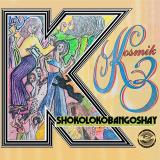
Shokolokobangoshay was a collaboration between three members of Pogo Ltd. The three of us felt we were crazier than the other members of Pogo Ltd. and decided to work together on the Kosmik 3 album. Robo was worked in the graphics department of NTA Benin. He was an amazing artist, a crazy guy, he was extremely creative, he invented a musical notation language that only he understood. He was amazing, he took me to his place in Asaba and showed me his compositions, he must have had over 500 songs.
Emman Osagie was my floor manager when I was a producer at NTA (Nigerian Television Authority) Benin. We were all on the same wavelength. He was a member of Severe 7, and heavily involved in the Bini music scene working with Ehi Duncan and others. we really enjoyed making Shokolobangoshay, it’s a river of influences, a bit of this, a bit of that, but it is really our thing. The musical ideas we were playing with at the time.
Emmanuel Ogosi. 3rd March 2026.
This record is why I went into reissuing records with Odion. The feeling to sharing records that went under the radar when they were initially released, with a greater audience. Shokolokobangoshay is uniquely Nigerian in a very personal way, it makes references to the societal and political ills that plague us in Africa. It’s title, Shokolokobangoshay, references a play song, kids in Lagos and western Nigerian sing when they play in the streets. Most Nigerians can relate. The music references afro beat, country music, reggae without falling firmly on any side. This is one for the ages. Amazing production, I personally love this record for the free spirit, creativity and excellent song selection. We had to licence it, we just had to. Limited repress only 500 copies.
It is also excellently produced. Big up to all involved, from the Vinyl Rip (James Law, Fidgit Studio, South Africa), to the master production by DJ Simbad (Cape Town, SA) and the cover restoration by Angelo Mitchell (SA). I am so happy to be doing it with the boys in the motherland. Peace and appreciation to all. Special dedication to Mother Tongue for creating a great pressing. Please file under Afro.
Blessings,
Temitope Kogbe, Odion Livingstone
- 01: Till I'm Gone
- 02: Ya Dead Now
- 03: Mr Moany
- 04: Makes Me Wanna
- 05: Peace Pipes
- 06: The Circus
- 07: Punch Up
- 08: Matters Of The Heart
- 09: X-Files
- 10: Psycho With A Lexicon
- 11: Sun Wukong
- 12: Never Be The Same
Fresh from the success of his debut solo LP ‘How To Kill A Butterfly’ out last year on High Focus Records, Farma G returns with the anticipated full-length follow up ’Nearly Nothing’s Enough’.
An album anchored in his notorious musical adventures as 1/2 of Task Force, Bury Crew and Mud Family, but very much informed by the state of 2026 Britain and beyond, Farma’s new body of work is fuelled by equal parts venom and deep introspection across 12-tracks courtesy of Brighton based producer Relense.
With one eye on following ‘How To Kill A Butterfly’ with something of equal standing, Farma revisited the fundamentals in the hope of better understanding what he really wants to say with the music he makes. By channelling feelings of familiarity and seeking out emotional connections to his past he created a record that feels both concise and expansive.
With the help of Relense’s gritty analog instrumentals, Farma found himself journeying across subjects and bandwidths; from exploring the mind of a conspiracy theorist on ‘X-Files’, to being a zen master with a mountain on his back on ‘Sun Wukong’, before returning to earth for a typical day in the life on ‘Mr Moany’, ‘Nearly Nothing’s Enough’ is an album that took Farma home and he is delighted to welcome you on the journey.
Fresh from the success of his debut solo LP ‘How To Kill A Butterfly’ out last year on High Focus Records, Farma G returns with the anticipated full-length follow up ’Nearly Nothing’s Enough’.
An album anchored in his notorious musical adventures as 1/2 of Task Force, Bury Crew and Mud Family, but very much informed by the state of 2026 Britain and beyond, Farma’s new body of work is fuelled by equal parts venom and deep introspection across 12-tracks courtesy of Brighton based producer Relense.
With one eye on following ‘How To Kill A Butterfly’ with something of equal standing, Farma revisited the fundamentals in the hope of better understanding what he really wants to say with the music he makes. By channelling feelings of familiarity and seeking out emotional connections to his past he created a record that feels both concise and expansive.
With the help of Relense’s gritty analog instrumentals, Farma found himself journeying across subjects and bandwidths; from exploring the mind of a conspiracy theorist on ‘X-Files’, to being a zen master with a mountain on his back on ‘Sun Wukong’, before returning to earth for a typical day in the life on ‘Mr Moany’, ‘Nearly Nothing’s Enough’ is an album that took Farma home and he is delighted to welcome you on the journey.
Fresh from the success of his debut solo LP ‘How To Kill A Butterfly’ out last year on High Focus Records, Farma G returns with the anticipated full-length follow up ’Nearly Nothing’s Enough’.
An album anchored in his notorious musical adventures as 1/2 of Task Force, Bury Crew and Mud Family, but very much informed by the state of 2026 Britain and beyond, Farma’s new body of work is fuelled by equal parts venom and deep introspection across 12-tracks courtesy of Brighton based producer Relense.
With one eye on following ‘How To Kill A Butterfly’ with something of equal standing, Farma revisited the fundamentals in the hope of better understanding what he really wants to say with the music he makes. By channelling feelings of familiarity and seeking out emotional connections to his past he created a record that feels both concise and expansive.
With the help of Relense’s gritty analog instrumentals, Farma found himself journeying across subjects and bandwidths; from exploring the mind of a conspiracy theorist on ‘X-Files’, to being a zen master with a mountain on his back on ‘Sun Wukong’, before returning to earth for a typical day in the life on ‘Mr Moany’, ‘Nearly Nothing’s Enough’ is an album that took Farma home and he is delighted to welcome you on the journey.
Sugar, 1992 von Bob Mould (Hüsker Dü) zusammen mit Bassist David Barbe und Schlagzeuger Malcolm
Travis gegründet, feierte mit ihrem gefeierten Debütalbum „Copper Blue“ schnell große Erfolge. Das
Album gilt als eines der prägendsten der 90er-Jahre, dank seiner Mischung aus eingängigen Melodien und
kraftvollem Gitarrenspiel. Die Nachfolgealben „Beaster“ und „File Under: Easy Listening“ festigten den
Ruf der Band, bevor sie sich 1995 auflöste. Dreißig Jahre später sind Sugar nun wieder vereint und kündigen
neue Konzerttermine an, darunter drei Abende in der New Yorker Webster Hall und zwei im Londoner Off
Kentish Town Forum. Anlässlich dieses Jubiläums veröffentlicht die Band zwei brandneue Songs – „House
of Dead Memories“ und „Long Live Love“ – die nun erstmals auf schwarzem 7-Inch-Vinyl erhältlich sind.
- 1: Tell My Man
- 2: Everyone’s Favorite
- 3: Under My Bed
- 4: Flutter Away
- 5: Leaving
- 6: Bonus – Encyclopedia
- 7: Bonus – My Bell Rings
- 8: Vows
- 9: Hear Your Soul
- 10: You Don't Have One Hope
- 11: Split July/Delete Your Files
- 12: It Must Be Bad
- 13: If Someone's Gonna Love You
- 14: Bonus – Cozy
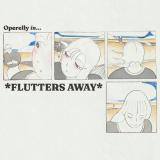
Ultra Clear Vinyl. ‘*FLUTTERS AWAY*’ follows last year's debut EP, ‘Handwriting Practice No. 1’, which established Operelly as one of the most exciting new voices in music. Thupcoming EP tells the story of a relationship breaking down
amidst miscommunication. Delicate electro-acoustic arrangements (dubbed "tiptoe music" by Operelly) intersperse
with the static sounds of radio interference, as if the interrupted communication recounted in the lyrics has punctured the songs
themselves. Operelly executive produced the entire record and mixed four of the five songs. Additional production work was provided by Hudson Pollock, Al Carlson, Stephen Willard, and Kali Flanagan. Cover art was designed by Leo Horton in collaboration with Operelly. The music video for "under my bed" was directed and shot by Sarah Elise Bauman
Manchester's Andrew Hargreaves, known for Tape Loop Orchestra and as a founding member of The Boats, returns under his Beppu alias with a refined full-length for dub techno favourites Lempuyang. Fresh from a celebrated double-LP reissue on Organic Analogue, Hargreaves delivers deep, dust-textured techno that is meticulously sculpted and atmospheric. These grooves move with a slow, hypnotic gravity as rhythms become submerged yet remain gripping. The palette is warm, grainy and future-facing so perfect for the real heads. File this somewhere between Detroit Escalator Company and Bluetrain, an immersive, meditative drift that's sure to become a classic.
Repress!
Second Phase (aka Joey Beltram and Mundo Muzique) are 2 legendary producers whose output shaped an entire generation of ravers, DJs and producers minds.
'Mentasm / Mind To Mind' is one such influential release, literally creating new styles, new directions and impacting on dance music for decades to come. Unique programming and fresh sounds made their records stand out head and shoulders above everyone else's output. 'Mentasm' particularly broke ground with it's now infamous 'hoover sound', influencing house, techno and trance music to come and even spilling over into the nascent hardcore, jungle and D&B scenes where it was often imitated or sampled by producers who wanted that ruff, visceral feel for their own tracks, but didn't know how to create it themselves. A new energy was born and it emanated from this milestone 12". 'Mind To Mind' on the flipside is equally as deadly, but in a deeper, more spaced out realm it maneuvers and pulls into a trippy early morning space, the yin to 'Mentasm's yang. This is a quintessential techno record, a glimpse of innovation from back in the day. File under 'classic'.
This special 2021 edition is reissued by R&S Records from original master sources, remastered by Curve Pusher.
- A1: Life Is Short
- A2: Iwatchedhimdrown (Feat. Xxxtentacion)
- A3: Alien Sex
- A4: Where's The Blow! (Feat.lil Pump)
- A5: Nationwide
- A6: Psycho
- A7: Broly (Feat. Xxxtentacion)
- A8: Slmd Remix (Rip Bernie Mac)
- B1: Rickybobby!
- B2: I Like Bricks
- B3: Unmask (Feat. Denzel Curry & Craig Xen)
- B4: Vetty Vrocker
- B5: Apple Sauce
- B6: Fatality (Feat. Xxxtentacion)
- B7: Billy & Mandy
- C1: Kate Moss
- C2: Young Vorhees
- C3: Shit Talk (Feat. Pollari)
- C4: Jfk
- C5: Pull Up
- C6: Holy
- C7: Wet
- D1: Vr All Stars
- D2: Chanel
- D5: Freaky Fred
- D6: Snomed
- D7: Skimeetsworld
- D3: Hell In A Cell
- D4: Iceberg
Tape[15,84 €]
Ski Mask The Slump God is a vaunted underground rap legend and pioneer in the Soundcloud Rap era
The Lost Files is a collection of songs from the soundcloud era, some unreleased, some never on streaming before.
Includes rarely heard features from XXXTentacion
Recently released “Catch Me Outside 2,” the followup track to his iconic “Catch Me Outside” track - with the single and video going viral
Over 8.5M streams on Spotify alone since release
Recently performed Sold-Out hometown concert celebrating release of The Lost Files. The show sold out in 4 minutes
- A1: Scratch Pad 1
- A2: Messij Received
- A3: God's Gift
- A4: Tentative
- B1: Canada 2048
- B2: Wiped Out
- B3: Body In Motion (Body Plus Mix)
- B4: Onyx (Dark Side Of The Moon)
- C1: Messij Received (Wstwgbe Mix)
- C2: Canada (Drunken Auslander Mix)
- C3: Tentative (Woffenfum Mix)
- D1: Messij (Bobbing Boat Mix)
- D2: Body In Motion (Timeless Techno Mix)
- D3: Doh-T (Am / Fm Mix)
- E1: 95 Future Echoes
- E2: Turbine
- E3: Pencil Neck
- E4: Messij 2005 (New Science Mix)
- F1: Canada (Tim Reaper Remix)
- F2: Messij (Sherelle's Messij In A Bottle Hardcore Remix)
- F3: Doh-T (Mantra Remix)
- F4: Canada (Niknak Remix)
The legacy of wipE′out′′ has transcended time and cemented itself as a true transgenerational phenomenon. Launched in 1995, it didn’t just revolutionise the gaming industry, it created a bridge between the gaming ecosystem and the raver community. Its futuristic aesthetics and forward-thinking sound left a mark not only on mainstream audiences but also on the most demanding corners of the underground.
Decades later, the game’s impact is still alive. The release in 2023 of The Zero Gravity Soundtrack on Lapsus Records proved once again that wipE′out′′’s accompanying audio will go down in history as much more than just an anti-gravity racing game soundtrack.
This is why we decided to go deeper into the slipstream and build the second volume you’re now holding in your hands. Drawn from the original archives of Tim Wright, aka CoLD SToRAGE, this new collection surfaces unreleased cuts, pieces that couldn’t fit on the first edition, and a suite of self-authored ambient reworks that translate pure velocity into wide-screen atmospherics engineered for the long straights, the drone of airbrakes, the blue hour between checkpoints. It also reconnects the circuit, gathering selections and variants tied to later chapters of the saga — wipE′out′′ HD and wipE′out′′ Pure — plus alternative mixes that, until now, only existed in the Sega Saturn dimension of the franchise.
Finally, the material takes a leap into the future in the hands of four remixers especially chosen for this release: Tim Reaper, SHERELLE, Mantra, and NikNak, who collectively forge links between CoLD SToRAGE’s pioneering musical vision, the sound world of the game, and the contemporary breakbeats and drum & bass vanguard.
Expect the DNA you remember — accelerated breaks, trance-vector synths, jungle influences, sub-bass rumbling neatly beneath the craft’s hull, and at times even echoes of classic hardstyle — now revealed with new angles and air. The previously unheard material carries the same aerodynamic design sense that made these tracks feel faster than the track map itself, while the ambient versions open the field of view with melodies hovering at the lip of overdrive. Without a doubt, here you’ll find a strong sense of nostalgia. But this isn’t just nostalgia; it’s also proof that this sound world continues to evolve when you ease off the throttle.
For the faithful — crate-digging ravers, speed-run obsessives, and design nerds — this is an essential expansion pack: compiling rarities, restoring context, and reframing the emotional core of wipE′out′′ for late nights and early mornings alike. Bridging memory and momentum, club and console, rush and afterglow. Strap in.
Detailed tracklist, with annotations by Tim Wright aka CoLD SToRAGE
· Scratch Pad 1: “This track was composed using incomplete tracks that were developed around the time of the first wipE′out′′. It’s so long because it was used for a marathon-length Psygnosis promotional video.”
· Messij Received: “Messij was a firm favourite with wipE′out′′ fans, so it made sense that there’d be more where that came from — this was one of those re-workings.”
· God’s Gift: “I was always very fond of Erasure’s track Love to Hate You with the canned crowd FX sounds. God’s Gift was a tongue-in-cheek reference to how some musicians think they are just that. This was way before I even played live as CoLD SToRAGE.”
· Tentative: “I wasn’t sure about introducing some wacky beats and distorted sounds into one of the tracks, because it was kinda heading away from the other tracks, hence Tentative — but it turned out OK.”
· Canada 2048: “When wipE′out′′ 2048 was launched I decided to re-make Canada as a kind of tribute, but in a slightly new-tech, laid-back way, using Propellerhead Reason and all software synths.”
· Wiped Out: “Based on a few riffs from a MIDI file unused at the time of the original wipE′out′′ game compositions, this featured on my debut album MELT.”
· Body in Motion (Body Plus Mix): “A more trippy interpretation of Body in Motion that featured on non PlayStation versions of the game e.g. Sega Saturn.”
· Onyx (“Dark Side of the Moon”): “Onyx was my sole contribution to wipE′out′′ Pure on the Sony PSP handheld gaming console. This version was something I developed in a darker style, that eventually erupts into a crescendo.”
· Messij Received (WSTWGBE Mix): “Like I say, Messij was a hit with most wipE′out′′ fans, so when I was asked to compose more music for non-PlayStation versions, I adapted this tune into a parallel-universe version for PC and Sega Saturn. By the way, WSTWGBE refers to Who Said This Was Going To Be Easy?”
· Canada (Drunken Ausländer Mix): “In early 2018 I released a fresh album called Ch'illout′′, a re-working of many of my wipE′out′′ tracks in an ambient, Sunday-morning vibe style — it was a few years’ work, here and there.”
· Tentative (Woffenfum Mix): “Another chilled re-working of one of my wipE′out′′ tracks, the mix named with a nod to a good friend of mine, Carl Woffenden — someone who I've worked with for many years in the games industry.”
· Messij (Bobbing Boat Mix): “A nice cheesy computer blip-blop start belies its deep and upbeat chilled-out melodic finale.”
· Body in Motion (Timeless Techno Mix): “Another classic track given the chilled-out vibe mix, as featured originally on my Ch'illout′′ album. This one’s a really trippy, deep-space take on the original.”
· DOH-T (AM / FM Mix): “The idea with this chilled-out mix was to imagine all the melodic parts of this varied track being broadcast on terrestrial radio, so each theme drifts in and out through the radio static.”
· ’95 Future Echoes: “Originally developed as a companion album for wipE′out′′ HD, this track actually has its roots in a tiny loop of a song that never progressed to anything special back in the mid-’90s when I was composing for the original game.”
· Turbine: “Also from my wipE′out′′ HD album, it leans heavily into the upbeat, uplifting tunes from the original game, but also steals a bit of vibe and energy from The Prodigy, with those distorted flute sounds.”
· Pencil Neck: “This excerpt from my wipE′out′′ HD album features lots of sounds centre-stage and forward from Propellerhead Reason’s Subtractor virtual synth. I learned to love this more than my JD-800!”
· Messij 2005 (New Science Mix): “Yet another take on the track that still raises a smile, this time through a mix of samples from the original and Propellerhead Reason — the ‘new science’ when compared to an Amiga 1200 running Bars and Pipes.”
In 2018, Rian Treanor left his home in Rotherham, UK, and headed to Kampala for a residency at Nyege Nyege's villa studio. The mind-expanding experience inspired his critically acclaimed 2020 full-length "File Under UK Metaplasm", but that wasn't the end of the story. Treanor also spent time working alongside Acholi fiddle player Ocen James, developing an improvisation-heavy collaboration that would push both musicians' idiosyncrasies into completely new places. Treanor wanted this collaboration to be as tactile and reactive as a live performance with traditional instruments, so he set about working on a digital process that would synchronize with James' approach. Using physical modeling techniques, Treanor created an instrument that explored the tunings and sounds of the a'dungu, an arched harp, and the nah or nag. With Ocen playing his rigi rigi, a single string violin, they intuitively experimented with the spectral properties of sound, using texture and acoustic contours as their structural framework. They were able to develop a sound together that was unconventionally rooted in traditional Ugandan culture, but shuttled into different dimensions of noise, computer music and radical UK rave. "Saccades" is the buffer between two vastly different sonic universes, united in respect and sprightly curiosity. Treanor's hyperactive computer-controlled rhythms are immediately identifiable on opening track 'Bunga Bule', but the sound palette is distinct: it's more flexible and less digital. James' expressionistic fiddle strokes are a revelation, contorted into hoarse squeals and rough vibrations that rub and flex off Treanor's tin can shuffle.
Going against the tide of high BPM techno, Adam X's latest release, "Memory Prisms,", is a three-track collection of mid-tempo (128-130 BPM) dark, reflective, and tripped-out bass-quake techno. This is high-end fuel for woofers to rock your body and shock your senses. File Under : Sonic Groove Techno!