Gatefold Green Vinyl Double LP with design by Dian Vandermeulen, the popular Canadian visual artist
(limited edition cassette version will be released by Not Not Fun).
Between December 2018 and 2019, Stefana Fratila embarked on a series of research trips across North America (including to NASA Jet Propulsion Laboratory and NASA Goddard Space Centre), meeting with astronomers and scientists in order to address a complex question: “If each planet in our solar system were a different room, what would each room sound like?”
Her ongoing creative research culminated in Sononaut, eight open-source VST plug-ins created for digital audio workstations (DAWs) that emulate the atmospheric conditions of the planets in our solar system (made in collaboration with artist and coder Jen Kutler, using calculations by NASA astronomer and planetary scientist Dr. Conor Nixon).
Her forthcoming album I want to leave this Earth behind is the sonic extension of her creative research.
In her own words: “The album is conceptual, in that it centres on outer space exploration and my understanding of 'Crip futurity'. My vision is for the album to engage listeners in an exercise of imagining the sounds of interplanetary atmospheres– conditions which are inherently unlivable, unbreathable, converting all human body-minds into disabled-bodied-ness. Since I identify as Crip, or disabled, this idea deeply resonates with me. I am the first artist (a disabled producer/musician, no less) to have worked with NASA researchers on a sonic imagining of the solar system’s atmospheres that incorporates real scientific data. If we are all 'disabled' in (or by) outer space, my music is concerned with propelling all listeners into space, leaving Earth behind them, through my music.”
The solar system’s planetary bodies are inherently prohibitive even in regards to Earth’s most ‘able-bodied’ subjects. Her project seizes upon a form of radical agency and science-fictive ambition, placing all human subjects within new worlds, into the interplanetary bodies of our solar system, through her own sonic imaginings.
The album will be released by Toronto-based label Halocline Trance (Casey MQ, myst milano, ACT!).
During a 2019 residency at CMMAS (Centro Mexicano para la Música y las Artes Sonoras) in Morelia, Mexico, Fratila began writing the album on an octophonic sound system (8 planets = 8 speakers).
Afterwards, from her home studio in Toronto, she recorded additional synthesizer parts, finalized arrangements, and incorporated Sononaut (her 8 solar system VST plug-ins) into the album’s production. The album was recorded, written, and produced by Fratila. She worked with mixing engineer Jeremy Greenspan (Jessy Lanza, Caribou, Junior Boys), as well as mixing engineer Lisa Conway and mastering engineer Sage Kim.
Underlining each track is a five-minute soundscape representing the weather on that planet, based on Fratila’s research at NASA. The weather patterns are interwoven with layers of synths and time-stretched samples.
There are very few disabled femme electronic artists gaining exposure in Canada today.
Buscar:final exposure
Pink Vinyl. In the fateful year of 2020, Vincent John and Maxwell Perla of Eraserhood Sound were fortunate enough to stumble upon the score to the long lost, never completed 1974 Italian film Riblle Di Mare. It was not long before they realized they had discovered an opus, written by legendary film composer Sandro Galileo in what was to be his final soundtrack. Only it never came to pass. The film was abandoned before it could be completed, and the ashes of Galileo's final work were swept aside and forgotten. Until today. Eraserhood Sound is proud to present Ribelle Di Mare in all its glory, produced and performed by house band Fantasy 15 in their signature "Synth & Soul" sound. Enjoy the nine stunning tracks that follow, which range in style from dramatic Philly Soul balladry, Spaghetti Western r&b, and Italian library funk.
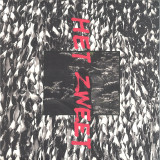
Modal Analysis proudly presents Het Zweet - Archives Volume 1: 1982-1988, a compilation of the Dutch outsider legend painstakingly picked from over 100 hours of unheard tape. An early electronic pioneer who deployed an array of homemade instruments alongside synths and a tape recorder to craft his searching sound, Marien Van Oers occupies a lonely branch on the tree of this music's early efforts, sliding between pounding industrial grooves, ambient fragments, and extended, entrancing compositions bridging this divide. Most closely akin to Muslimgauze, Test Dept. or Fad Gadget, who shared his outsider practice while remaining thoroughly entrenched in contemporary sounds, Het Zweet is striking for his diversity and for its meticulous composition, formed of carefully arranged layers of sonic detritus culled from his collection of homemade devices and electronic distortions. Finally rising to greater exposure since his death in 2013, Modal Analysis passionately continues this mission with our first volume of archives dedicated to the memory of this bold innovator gone before his time.
2022 Repress
14 years since it was originally released on Rephlex Records, Dopplereffekt's Calabi Yau Space (2007) finally gets a reissue on vinyl thanks to WeMe Records (following on their amazing reissue of Linear Accelerator). This album sees Dopplereffekt move even further out into their very own exploratory realm, where music and quantum physics meet. Eight tracks that when first released seemed challenging but with repeated exposure a strange almost supernatural event occurred as these new sounds and patterns gradually revealed a beauty and even simplicity about them. This is a brave album, epic in vision. An essential record for all fans of Techno in the sense that the term was originally intended.
Many Worlds Interpretation is a collection of cosmic Americana for electronics, guitar, and percussion culled from Jon Iverson’s extensive home-studio archive. 1984, Los Osos, California. In a small cinderblock cottage, hand-painted with bright psychedelic flora, Jon Iverson created vibrant new worlds. He spent long days and nights immersed in sound, perfecting home recording on his 8-track reel-to-reel, combining his love for kosmische and Berlin School electronics with an infatuation with ethnographic sounds and expansive guitar music. In a duo with fellow sonic traveler Thomas Walters, Iverson released missives from the studio on a self-titled LP released on country legend Guthrie Thomas’ Eagle Records. That release featured
three electro-acoustic compositions (“Naningo”, “River Fen”, and “Fox Tales”) as well as a gathering of guitar duo tapestries. Many Worlds Interpretation re-imagines those interplanetary works alongside several unreleased compositions that also feature synthesizer, guitar, and percussion, creating a re-visioned album which leans into Iverson’s electronic studio wizardry.
All songs have been carefully transferred from analog tape to high resolution digital, retaining their vintage studio warmth, but mixed and mastered for modern ears and audio systems. The album is pressed at 45rpm, further enhancing the audiophile experience.
Artist Statement
I worked in a Harley Davidson parts warehouse in the summer of 1976 in the San Francisco Bay Area. The goal was to save enough money to buy transportation for college and a Teac 4 track 1/4" reel to reel tape machine. By September there was a rusting monkey-vomit green car in the driveway and shiny new Teac with a Sony condenser microphone in the bedroom. At this point I had been playing guitar for a dozen years and like most children of the sixties, dreamed of joining
a band.
Went to college instead to study business.
But all was not lost. 1978-1979 was spent as Weird Al Yankovic's roommate and we recorded and created enough songs to play shows around San Luis Obispo, California, where we were attending college. Many of those recordings have yet to be heard by the public, including the first performances of My Bologna and many other parodies of pop songs of the day. We sent tapes to Dr. Demento, we auditioned for The Gong Show and were barred from playing at the local college after one memorable performance. Wild times.
I, however, was more intent on working on "serious" music, with albums from Vangelis, Tangerine Dream and Jean Michel Jarre providing inspiration. DJing at the local college radio station and then public radio outlet provided exposure to an endless stream of obscure albums (Sky Records from Germany was a particular favourite). Most of them would never make it to the air, but my buddies and I would pass them around like exotic treasure.
Fast forward a couple more years and I had picked up a Mini-Moog and eventually a Prophet V synthesizer as well as starting a collection of instruments from around the world. The Teac and synths formed the basis for a growing DIY studio that had taken over a modest-size garage (pictured on the cover) that had been converted into a two room cottage in Los Osos, California.
The Teac was eventually joined by a rented Otari 1/2" 8-track and then finally a vintage MCI JH-100 2" 16-track. The compositions on this album were recorded on these three machines between 1982 and 1989. At some point an Apple II computer with Alpha Syntauri sound card and keyboard were added and then later the first personal computer sampling hardware/software kit, the Decillionix DX-1. The DX-1 forms the rhythm track for “Fox Tales” and the Alpha Syntauri was programmed to create the pulsing synth for “Naningo”. “River Fen” was tracked with both the Alpha Syntauri and the Prophet V.
I knew this music wasn't commercial, but didn't care. It was inspiring working with the first computer-based synths and semi-pro gear. Home studios were still rare in the early 80s until the Tascam Portastudio blew the DIY door wide-open. But I was more interested in sound quality so stuck with reels of tape instead of lower fidelity cassettes.
During the time these songs were recorded, I was also collaborating with my good friend and mandolinist, Tom Walters. “River Fen”, “Naningo” and “Fox Tales”, were solo recordings that also ended up on the first Iverson & Walters album, First Collection. The other four pieces on this new LP were never fully finished or released until now.
— Jon Iverson, September 2022
- A1: C Brand - Wired For Games (Long Version)
- A2: Ritz - Workin' Out
- B1: Fonda Rae - Live It Up (Short Vocal Version)
- B2: Feel - Got To Have Your Lovin' (Short Vocal Version)
- B3: Mynk - Get Up An' Dance (Dance With Me) (Dance With Me)
- C1: Fatback - Spread Love
- C2: Glory - Let's Get Nice
- C3: Blaze - We Come To Jam
- D1: Body - Have Your Cake
- D2: Lonnie Youngblood - Sing A Song
• 1980s New York was where modern dance music took its first steps; a phoenix rising out of the ashes of disco’s over-exposure and demise. The underground scene was the very opposite of the celebrity-sprinkled commercialism of Studio 54 – “Lofts & Garages” looks at how the Spring label, with its brand new 1980s subsidiary Posse, reacted to the new movement.
• As an independent New York label, it was perfectly placed to understand new trends in the clubs; it worked with some of those who would go on to define the dance music of the era, and for a glorious summer tracked the important early work of Arthur Baker, Maurice Starr and Michael Jonzun. These began their careers with productions that included Ritz, Glory and Blaze – records that sounded perfect for 12-inch singles and mixed electronic instruments with a real feel for the dancefloor.
• Label mainstays Fatback were always searching for a new groove and kept an eye on the floor. Their final single for the label, ‘Spread Love’, was remixed by Morales and Munzibai. Fatback’s Bill Curtis and Gerry Thomas also produced the sought-after boogie single ‘Get Up An’ Dance (Dance With Me)’ for Mynk.
• Others featured include one of the most distinctive voices in dance music, Fonda Rae, with her single ‘Live It Up’, released here in its rare radio edit; veteran soul man Lonnie Youngblood with his gospel-influenced ‘Sing A Song’; Detroit dance pioneers C-Brand’s ‘Wired For Sound’ and Body’s ‘Have Your Cake’, which has an early mixing credit for dance music legend Timmy Regisford.
• These records may not have all worked on the floor of the Paradise Garage, but they were part of the energy that was given off by that and the rest of New York’s vibrant post-disco era.
Imperfect Stranger is the pseudonym of Glasgow based soundtrack composer and producer Kenny Inglis. “Everything Wrong is Right” is his debut solo album for Castles in Space.
Born in 1975, Kenny didn't listen to much music, unless it was the opening credits to a TV show or a film score that had caught his ear. "I loved the pre-title music on a lot of those 80's U.S. TV shows. From the family orientated stuff like The A-Team, to darker dramas such as The Equalizer. My mother would let me stay up to watch the opening sequence of the latter then send me to bed because the story would be too heavy for a kid. That left me with this hanging sense of ambiguity as to what would happen in that hour after the titles came up.”
Exposure to a work colleague’s tiny project studio in a kitchen cupboard was a lightbulb moment for him and the experience of utilising music technology as a way of writing and producing entire tracks stirred a wave of determination to chase a career in music using the opportunities that technology could offer. Kenny figured the best way to move forward was to start a small project studio and learn his craft as a recording engineer. "It was a bit of a shock to the system. I literally had no idea how to work any of the equipment. Kenny focused on learning as much about the craft as he could whilst winging his way through recording and mixing everyone from the likes of singer/songwriters to bands, to voiceovers artists and anything in between. "Eventually, I stopped writing the music I thought people would want to hear, and started writing the music I wanted to make. I didn't come from a music loving background, but I was always obsessed by the way music and film would interact - how music brings this atmosphere and tone to even the most mundane visual stuff. I wanted to capture that. I wanted to grab some of that ambiguity I felt from the TV shows of my childhood and make it into a project of some sort". That project was Spylab. A dark, downtempo project with a cinematic edge. The initial demo consisted of three tracks, with the melancholic 'This Utopia' leading the playlist.
"At the time you did demos on normal cassette tapes. I remember having this endless battle with the bias control to try and get the best sound I could on these little tapes. Ten went in the post one Monday morning, and the following Monday there were three offers from three different labels. Studio K7 were interested in a singles deal, as was Flying Rhino in London. But then there was an offer from a Chicago based label by the name of Guidance Recordings. They wanted an album, and were offering a $15,000 advance. It wasn't a difficult decision to make"
Writing and recording Spylab 'This Utopia' began in 1999. The album took a whole year to produce. The album was to catch the attention of Mary Anne Hobbs at Radio One. At the time Mary Anne was presenting The Breezeblock - a late Sunday night show with an eclectic playlist of alternative electronic music. Picking out the album's title track 'This Utopia', Mary Anne would go on to play it no less than 8 weeks in a row. A request for Spylab to DJ on the show was to follow. "I had never DJ'd before. I think I had a week to figure out how to do that and put a playlist together. I'm not entirely sure how I pulled that off.” In March 2001 the Spylab album was finally released to a hoard of excellent reviews. A North American live tour would follow. From the launch party in Los Angeles, to a sell out show at SXSW in Austin. "I then started a new project under the name Cinephile. It had some of the core elements of the Spylab sound but it was deeper, more cinematic.” Kenny received news that a track from the previous project Spylab had been requested by HBO for the first episode of a new TV drama called Six Feet Under. This was to become a major turning point in Kenny's career. The Spylab track 'Celluloid Hypnotic' dropped during a poignant party scene of the first Six Feet Under episode. Within a couple of days Kenny was getting requests for music from other music supervisors. "It was a chain reaction. The Six Feet Under sync was like the tip of an iceberg. One day I called CBS in America and they put me on to the CSI music supervisor and I managed to get on a call with him. I sent the Cinephile stuff out and within a few months I got this fax through from CBS - a quote request for one of the tracks for a potential use on CSI. It changed my life."
The tone and style of Kenny's music sat perfectly with the CSI score requirements. So much so he found himself part of a pool of incidental writers who worked on all three aspects of the franchise - CSI, CSI: NY, and CSI: Miami. This would continue until 2013, when the last of the series would come to an end.
"I was juggling a bunch of stuff for those ten years. Writing material for CSI, whilst releasing new Cinephile stuff and playing live. As Cinephile continued to gather pace, one of the tracks from Kenny's efforts on CSI was chosen for the Hollywood trailer for the Samuel L. Jackson film 'Lakeview Terrace'. Further trailers would follow, from Gangster Squad to Dead Man Down, Spike Lee's Undisputed Truth, to Fifty Shades Freed.
At the same time, Kenny picked up his first factual commissions in the UK, and this too would be the beginning of a regular run of fully scoring factuals and documentaries. By 2021, six of these had won BAFTAs. He also would find himself soundtracking adverts for the likes of Nike, Audi, and American AirlinesIn early 2020, Kenny made a return to focusing on his own music under the pseudonym Imperfect Stranger. A tweet from Colin Morrison from Castles In Space regarding a charity compilation album 'The Isolation Tapes' caught his eye. Kenny had made a start on his debut album as Imperfect Stranger and submitted the track 'Hymn To The Sun' (which would become the lead track on the album). Further discussions ensued, and the album found a home on CiS. "I had been doing TV and film stuff for almost ten years. It paid the bills and was as close to a 'real job' as I'd had, but I yearned to get back to writing for myself, so doing an album for Castles in Space was a joy.
“The music I write is like a diary. There's an authentic narrative to everything i do. I don't write tracks for the sake of writing. I write tracks to diarise and process the stuff that I've lived through, and the experiences that have come along with the passing years. That's what makes me tick. It's a very public and vulnerable way of expressing myself. If people want to know the real me, all they have to do is listen."
Previous album released on Dead Oceans. Previous album was a collaboration with Brian Eno. Past press coverage from Pitchfork, SPIN, The Guardian, Drowned in Sound, Dusted, The Quietus, and many more. Since the release of his last album 2017’s Finding Shore, a collaboration with Brian Eno pianist and singer-songwriter Tom Rogerson’s life has undergone a number of dramatic transformations. While writing his new album Retreat to Bliss, Rogerson had a child, lost a parent, and received his own diagnosis of a rare form of blood cancer. The new decade brought him from Berlin to the Suffolk of his childhood, composing profound pieces of minimal songwriting in the church next to his parents’ home. Rogerson studied composition at the Royal Academy of Music under mentors like Harrison Birtwistle, and he made his live debut as an improvising pianist in 2002, before releasing an improvised record with Reid Anderson (Bad Plus) and Mike Lewis (Happy Apple, Bon Iver) in 2004. He formed the band Three Trapped Tigers in 2007, expertly blending elements of electronic, jazz and noise rock into a cohesive whole. The band earned a reputation for innovative live shows and went on to perform and collaborate with artists like Brian Eno, Deftones, and the Dillinger Escape Plan. It was working with Eno, another Suffolk native, that eventually led Rogerson back to his roots and back to a place where he could write Retreat to Bliss, his solo debut album. “All my life, the piano has been my constant companion, my confessor, my best friend, and my worst enemy,” Rogerson explains. “I’ve always written music on and for the piano, but it felt too personal, too private to release.” Indeed, listening to Retreat to Bliss feels almost like eavesdropping, as though you’re crouched in the belfry of a Suffolk church, bearing witness to a form of musical bloodletting. For the first time in his noteworthy career, Rogerson has combined masterful piano playing and subtle electronics with the texture of his own voice, an attempt to express deeply private emotions that were difficult to articulate using instrumental music alone. “The last few years have brought some struggle, some joy, and a lot of change. My response has been to retreat to what I trust the most: the piano, my voice, and the landscape I grew up in. That’s how the album got its title, and how I came to be ready finally to release a solo record.” The eleven tracks that make up Retreat to Bliss were recorded by Leo Abrahams (Brian Eno, David Byrne, Grace Jones) over the course of just a few days, a process that emphasized spontaneity and the artist’s own commitment to improvisation. Secular yet devotional, intensely personal yet profound, the experience of listening to Retreat to Bliss seems to evade characterization. It’s physical and emotional, a glimpse into the mind of an artist who has chosen exposure over withdrawal, who uses his command of the piano to chart an unflinching path forward, never looking back. UK press campaign by Someone Great. Press Quotes "A meeting of minds that is full of rewarding surprises, challenging and surprising one another, and their listeners, with music that feels alive and wondrous…” Pitchfork // "Both mournful and dazzlingly optimistic, a taste of the conflict found so ofen in nature and reflected so elegantly across the course of the record.” The Line of Best Fit // "Many avant-garde instrumental albums exist to craf a mood; Rogerson and Eno merge these moods, sounds and themes together efortlessly and radiantly on Finding Shore” Exclaim // Track List 01 Descent 02 Oath 03 Buried Deep 04 Toumani 05 Drone Finder part 2 06 Chant 07 Rapture 1 08 Open Out Span Wide View 09 A Clearing 10 Retreat To 11 Coda
Neon Christ, the Atlanta hardcore luminaries founded by Alice in Chains singer William DuVall have announced the official release of 1984 for 17th September. This collaboration between Southern Lord Recordings/DVL Recordings was originally released on Record Store Day U.S.only, now to be made available more widely.
The package includes a full-colour gatefold sleeve and a 12-page oral history booklet featuring dozens of never-before-seen photographs. Heavyweight vinyl at 45 RPM for maximum fidelity.
Neon Christ formed in the fall of 1983 with William DuVall on guitar, Jimmy Demer on drums, Danny Lankford on bass, and Randy DuTeau on vocals. They made their debut in the early morning hours of New Year’s Day 1984. That March, they recorded their eponymous debut 10-song EP. Released in June ’84, the EP's songs exemplify the band's signature musical diversity, from DRI-style thrashers like "Parental Suppression" to the atmospheric improv of "After." A short east coast tour followed. On Labor Day 1984, the band recorded four tracks in the home studio of Nick Jameson, of Foghat fame. A few months later, "Ashes to Ashes" was included on the International Peace/War compilation released by MDC's R Radical Records, bringing the band worldwide exposure.
Neon Christ shared the stage with the luminaries of 80s hardcore including the Dead Kennedys, Circle Jerks, and Corrosion of Conformity. In 1985, the band added Shawn Devine on second guitar, as their sound and songs became slower, heavier, and more melodic. DuVall wrote an album's worth of songs in 1985, but only "Savior (Drawn In)" was ever recorded in what would be the band’s final studio session on December 26, 1985 (the master tapes were lost). Returning to the four-piece original lineup, the band played a handful of Atlanta shows and then took a break in March of 1986. A few months later, William moved to Santa Cruz, CA, to join BL’AST!, and Jimmy, Danny, and Randy formed Gardens of…William later founded jazz/punk/world improvisers No Walls. In 1999, he would form Comes With The Fall and move the band to Los Angeles, where he struck up a friendship and musical collaboration with Jerry Cantrell. William joined Alice in Chains as vocalist and guitarist in 2006. On February 2, 2008, Neon Christ reunited to headline the Ratlanta Punkfest 2.
To this day, the band members maintain a close friendship, as well as a desire to honour the legacy of the group. So when longtime fan Greg Anderson of Southern Lord contacted them about reissuing a deluxe edition of Neon Christ's 1984 sessions, "1984" quickly came to life. To remaster the original tapes using an all-analog process, William DuVall made multiple trips to Nashville to one of the few remaining studios maintaining the vintage technology to play and process the audio. Side one of "1984" features the original Neon Christ 7" EP, and side two contains the four songs of the Labor Day session
This is the demo recording sessions from Television in 1974 under Brian Eno's guidance. TheA SIDE demos were recorded at Good Vibrations Studios in NYC with Richard Hell on bass, and produced by Brian Eno and Richard Williams of Island Records.It also includes three live tracks from CBGB's in 1975 including the unreleased (I Look At You And Get A) Double Exposure, the band never recorded in studio. An abrasive 13th Floor Elevators number and the inonic Richard Hell (I Belong To The) Blank Generation It is fascinating listening to the early versions of these songs that eventually appeared on 'Marquee Moon'. Each versions are distinctly different having a 'harder edge' to them and closer to the final released editions. Sound Quality: Very good stereo
Houston’s reputation for developing first-class jazz acts is well-established, as a stream of young players have been distinguishing themselves for decades…among those musicians and mentors who stood tallest, Bubbha Thomas was no exception (and a major key-player) in this long tradition of talent.
Before becoming an artist and educator, Bubbha Thomas (born 1937) was a Fourth Ward kid who grew up in a music-filled household. In High School he divided his time between music & basketball (he excelled at both) and studied with jazz legend Conrad “Prof” Johnson. “Prof” would later bring jazz glory to Texas with the Kashmere Stage Band, the group of teenagers who would win the “Best High School Stage Band In The Nation” prize in Mobile, Alabama in 1972 and who were anthologized in 2006 on Now-Again’s ‘Thunder Soul’ (which led to the 2010 Jamie Foxx documentary of the same name).
After finishing college, Bubbha got drafted in the service (he was a Korean War veteran) and would return to Houston in the early 1960s where he found work as a session drummer for the Duke and Peacock labels. Thomas drummed on recordings by O.V. Wright, Buddy Ace and the Mighty Clouds of Joy. He was playing his own stuff and backing luminaries such as R&B singer Chuck Jackson and homegrown legends like Lightnin’ Hopkins. Bubbha Thomas also teamed up with some of his equally legendary peers (like guitarist Melvin Sparks & organist Leon Spencer) and eventually established his own group, the Jazz Merchants.
Bubbha learned every style that was thrown at him and he played straight-ahead jazz with renowned artists before the political and social upheaval of the late 1960s led him to a path first charted by Coltrane and Sun Ra…the result of these new found influences was the incredible spiritual jazz ensemble ‘The Lightmen’, who released four incredible recordings in the 1970s. Their first album ‘Free As You wanna be’ predates the deep-set, maverick jazz issued by the likes of Tribe and Strata East and is a harbinger of some of the best in the 1970s jazz underground. The Lightmen albums eventually fell out of print until 2017 when the Now-Again record label brought them back into circulation and generated new interest in Bubbha Thomas’ work.
Thomas had a storied career as a drummer and bandleader, but perhaps his most enduring work is that as founder of Houston’s Summer Jazz Workshop, a remarkable program that nurtured upcoming talent for generations...we can’t begin to count the number of young people who benefitted from the exposure to music-arts because of Bubbha Thomas and what he meant to the Houston music community. In his career he earned five Grammy nominations and authored a pair of books. Next to this he was also a writer/editor for several local newspapers, ran one of the first Houston African American Television shows and he hosted a radio program on KYOK. Impressive to say the least!
Bubbha Thomas passed away in March 2020 at the age of 82. It was obvious he was a principled, fiery & wise person…and any anger he felt at America’s (and the world’s) injustices he met with music, intellect, activism and unity!
Next to his work with ‘’The Lightmen’’, Bubbha also released the fantastic (solo) album ‘Life & Times’ in 1985. ‘Life & Times’ (which we are proudly presenting you today) is particularly interesting to boogie-enthusiasts because of its high doses of funky twerks, solid grooves, crazy synth work, soulful vocals and excellent drum-beats courtesy of Mr. Thomas himself. You’ll quickly find yourself shaking hips the moment the needle hits the first track! The whole album is backed by a fantastic cast of all-star players and includes Howard Harris (Ruth Copeland), Dwight Sills (Bobby Lyle - TLC), Jerry McPherson (Donna Summer), Leo Polk (Kashmere Stage Band), John Gordon (Strata East) and Jackie Simley (Queen Latifah - Lionel Richie). All of the above makes this LP an essential purchase for any self-respecting fan and collector.
Tidal Waves Music now proudly presents the FIRST ever vinyl reissue of this fantastic album (originally released in 1985 on Lightin’ Records). This rare record (original copies tend to go for large amounts on the secondary market) is now finally back available as a limited 180g vinyl edition (500 copies) complete with the original artwork.
Over the years, the sonic world of Heist has grown into a place where energetic house, live instruments and worldly electronics move together in the most natural way. We're very proud of the fact that we can showcase artists that cross boundaries or simply create their own universe, while keeping a strong connection with the identity of the label.
Our next release, the 'Exposures EP' by Teleseen, fits perfectly into this aesthetic. Teleseen is the main project of nomadic DJ, producer and multi-instrumentalist Gabriel Cyr and draws influence from deep house, afro house, samba, batucada as well as the experimentalism and sound system cultures of his home town NYC. His sound leans heavily on polyrhythmic programming and he's nothing short of a synth wizard. His 'Exposures EP' features 3 originals, and a remix by Berlin based Italian house guru Black Loops.
The record features a number of collaborators and recordings of various instruments, ranging from percussive sections to synths and guitar. This live approach to electronic music is one that is deeply rooted into Gabriel's work. His upcoming release on Soundway as 'Thaba' is another good example of this approach and also shows how diverse his sounds really is.
The title track is a thrilling synth affair with tribal-like chants running through a vocoder. The combination of handclaps, crunchy synths and steady drums make for a thrilling afro house track that hints towards early motor city electronics.
Black Loops is known for his deep grooves and built his fame with his releases on Freerange, Pets and Shall not Fade. His take on 'Exposures' sees him upping the tempo to a pacey 130 bpm, where an introvert vibe of reverbed hits and bleeps take you into full dream mode. He expertly chops up the original into a contemporary track that fits somewhere between high tempo tech-house and minimalistic deephouse.
On the flip we get to hear more of the sonic world Teleseen has to offer. 'Dekalb' is a track that seems impossible to box into a genre. Its mood is set by a lovely section of free-flowing Rhodes chords and the chopped vocals and open synth- bass give the track a whole new feel. It is that ballsy electronic edge combined with dreamy textures and live rhythms that give 'Dekalb' its unique vibe.
The final track of the EP -'Transfer'- takes us down to a mid-tempo percussive workout with a balearic twist. The steady electronic groove and the free flowing guitar take you to yet another corner of Teleseen's beautifully crafted universe.
Enjoy the music and play it loud!
Yours Sincerely,
Lars & Maarten
For their sophomore album, Chemical Reaction, Galaxians have stripped back the music and pumped up the vocals. Emma Mason's unstoppable voice elevates the group to a fully-formed musical act. This new LP is all about her voice.
Mason's powerhouse vocal on the West End Records-inspired Chemical Reaction beckons you onto the dancefloor. Jed Skinner's bright and breezy synth melodies allow the song to really breathe, whilst Sam Bell's front-and-centre conga groove (straight out of Double Exposure's My Love Is Free) and Matt Woodward's intricate rolls ramp up the track's energy and momentum. The shorter Mama Ghetto Vogue Edit is brought to life by Darren Pritchard, vogue dancer and mother of Manchester's House of Ghetto, who meets a neon wonderland in the electrifying video.
Elsewhere on the album, Heartbreaker champions female empowerment and personal freedom over a pounding boogie groove. It's a tight arrangement which drops into a delay-drenched Levanesque drum break before crescendoing back into a final chorus via one of Skinner's trademark JX-3P synth solos.
On the proto-house funk of Fight For Love, where Emma flexes her vocal chords to jaw-dropping effect, a failing relationship is thrust into the spotlight over a punchy Linn Drum groove. On the silky shuffle of after-hours jam Work It Out, which brings to mind the classic Sly & Robbie Compass Point productions, Emma croons about a lover, her voice cast in a softer, more subdued glow. Heat of the City sizzles with the essence of an urban summer, and is peppered with heart-stopping hand claps.
Third single Horizon sees the band in more reflective low-key mode, and could be their minor hit of the summer. There's some neat drum programming here, intertwined with Woodward's intricate fills and hi-hat playing.
On Not The Money, Mason's vocal shifts to a lower register in the mid-section, bringing to mind Grace Jones at her most commanding.
All in all it's a life-affirming experience, one born out of a sense of community and collaboration. Seven years on from their early explorations Chemical Reaction sees Galaxians retain sight of the principles that make their output, and dance music as a whole, so vital - commonality of experience, singular moments shared by a crowd, and rhythm as the best medicine.
'Ten Percent' is a full multi-track remix of the classic Double Exposure song from 1976. Originally mixed for 12’ by legendary producer Walter Gibbons, this rework has been executed by the elusive Robbie Casa Blanco and he’s given it more of a contemporary disco club feel with a brand new keyboard solo by the superbly talented Johnny Tomlinson, he is currently keyboardist for world-renowned music-maker Bonobo.
Dr. Packer is world renowned for his disco/nudisco reworks, this time he tackles the 1985 classic, 'Feel So Real', Steve Arrington, working it up into a chugging, grooving dance floor favourite, and finally seeing the light of day after much demand from music aficionados. You Got Me Loving You, Melba Moore was originally an album cut only running 03:28 min. , finally this get's the 12" treatment with that classic Dr. Packer sound.
Featured heavily by Melvo Baptiste on the Glitterbox show and highly sort after by the top DJ's in the world, this nu-disco/disco remix sees the light of day on this high quality piece of Vinyl.
- A1: My Happiness
- A2: I Don't Know
- A3: Bodies In The Rubbish
- A4: Lullaby For The Lovers
- A5: New Record
- A6: Last Night Dj Killed My Wife
- A7: I Love You
- A8: 20 Seconds Over Venice (And 6 Over Mestre)
- A9: Bob The Gentleman
- B1: Tricks To Survive
- B2: The Try
- B3: Chic One
- B4: Love We've Shared
- B5: Freak Song
- B6: Tomorrow
After a long time in the works, Mothball Record is proud to present a lost album from legendary Italian wave band: Ruins.
Hailing from Venice, Ruins are one of the pioneering artists of the Italian new wave scene beginning in the late seventies: an explosion of new and exciting art, music and film.
The tracks on 'New Record' were taken from the self-distributed, tape only release from 1983 'Side Roads'.
This album was timed directly before their most well-known releases in contemporary times, the 'Fire / Crime' 12' and the eponymous 4 track EP on Black Square.
Taken from the original master tapes and selected by Ruins themselves, the album should be listened as a whole to gain the full experience, but immediate 'must-hear' tracks are 'I Don't Know', 'I Love You' and 'Last Night DJ Killed My Wife' featuring early use of Roland TB303.
At times unsettling, beautiful, violent, harmonious, these songs will finally get the audience and exposure they deserve 35 years later.
The New York Downtown Producer/Composer Returns With His First New Album In 3 Years
EIGHTEEN: the year of release, 2018. EIGHTEEN: the age at which I first used a synthesizer.
In creating EIGHTEEN I worked independently in the studio, initially building up tracks with synthesizers and found sounds recorded in my daily comings and goings. After working with the tracks over a period of months,I shared them with a few musicians, who added their own instrumental layers. Though working independently, we all shared a similar working process: working in our personal recording spaces, as opposed to larger recording studios.
The musicians are: Gabe Gurnsey (drums) of Factory Floor, with whom I collaborated on the Beachcombing EP and performed live at London's ICA. I appear on Gabe's newly released album Physical;
Larry Saltzman (guitar) has played in my Love Of Life Orchestra since the 1970's. Well-known for his work with Arthur Russell ('Kiss Me Again', Flying Hearts), he is in high demand in NYC by acts such as Simon and Garfunkel;
Paul Nowinski, (bass) has played with LOLO since the 1980's. Paul has an impressive list of credits, including Les Paul, Keith Richards, Bernard Purdie and the Boston Pops; Matt Mottel, (electric piano), is the newest addition to the Love Of Life Orchestra. He is half the duo Talibam!, a leading act in the noise jazz scene; Lewin Barringer, (guitar), is a talented guitarist and producer in Philadelphia.
After mixing the final tracks, I brought the mixes to Berlin. There I worked with the brilliant mastering engineer Mike Grinser who helped to give the album a unified sound.
I think of this album as electronic music. It was created in my home studio, using analog and digital synthesizers, found sounds recorded on my phone, and instrumental parts contributed by friends. Finely crafted melodies and harmonies are set against subway noises, street construction, and distant foghorns. Sometimes there are sustained clusters, generated by my leaning against the keyboard. Deliberateness paired with randomness: this is what guided the artistic process.
This album is atypical for me as I am not playing saxophone. (I do play one reed instrument - a harmonica.) I grew up with the sax as my primary instrument. Yet my father was a radio journalist so the reel-to-reel tape recorder was a ubiquitous presence in the family home. From an early age,
I experimented with the tape machine: recording, overdubbing and splicing tape. I learned about Varese from Frank Zappa liner notes; I read John Cage's 'Silence.' Electronic music was on my radar.
My first exposure to an actual synthesizer came when I recorded my first single at the fabled Sound City Studio in Van Nuys, CA. The studio had a custom Neve board, but it also had a firstgeneration Moog modular synthesizer sitting unused in the maintenance room. I asked and they kindly let me experiment with it. Soon, I enrolled at the University of California - San Diego after I discovered they had separate studios for their Moog and Buchla systems. These large modular synthesizers were affordable then only by institutions and rock stars. But these would be soon eclipsed by smaller, cheaper synths in the 70's and early 80's. In the same way, recording studio technology became accessible in the 90's. . And thus the personal computer and digital audio allowed studio quality production in the home studio. Electronic music had become democratized.
Handmade music by way of digital technology: this is the music of EIGHTEEN
"For the final part of SchleiBen 5 - 8, Emotional Response welcomes two Scottish based artists to close out the series. In Jon Keliehor you have a world and music traveler with history from psychedelic rock to fourth world exposure, alongside one of the best electronic producers of the last decade, Lord Of The Isles. As the drummer of West Coast folk rock / psychedelic band The Daily Flash, Keleihor spent much of the mid-60 based in and out of Seattle and Los Angles, playing alongside the likes of Jefferson Airplane, Cream and The Doors, before an increasing interest in meditation and philosophies outside of the 'rock' realm led him to England in the early 70s where he become involved in dance theatre. Teaching Advanced Rhythmic Music Studies at the London Contemporary Dance School, his music composition style became influenced by his studies of world music. Finally settling in Glasgow for over 20 years, while running the Luminous Music label and Gamelan Naga Mas, his earlier recordings for labels like Indipop, Touch and Bruton have seen a recent revival, with music appearing recently on contemporaries Optimo Music and Invisible Inc. The wonderful recordings included here span over 3 decades, from sessions at the Luminous Studio at The Diorama Theatre, London in the early 80s, through to recent field-work based recordings in the Cairngorms. Reconfigured and updated, a common thread appears through the pieces - a sense of longing and appreciation - as Jon's knowledge of outer-national instrumentation alongside equally extensive travels around the globe gives the recordings a seamless blend of organic craft. The tonal consonances within unlikely combinations of instruments, with tuned glasses (tarang), tabla, jaw harps, clay flutes and ocarinas, Chinese instruments that include Xiao-Bo and Xiao-Ping, large Noah bells, small and larges gongs all employed, the recordings have been reconstructed, edited and updated via sampling and digital processing. Featuring the playing of John "Jhalib" Millar - the extraordinarily gifted musician and tabla player - who has appeared with an EP on sister label, Emotional Rescue (ERC029), sadly recently deceased, the contribution acts as a tribute and more. To close, the music of Lord Of The Isles is an excellent companion to Jon's work. Neil McDonald's list of club-based releases on labels CockTail D'Amor, Ene, Firecracker, Permanent Vacation, ESP Institute and Phonica is comprehensive and exemplary, however within his productions has often been an other-worldly element, a space between the beats and occasional fully ambient pieces. Approached originally for series one of SchleiBen, the 7 pieces included were worth the wait, a journey in themselves and the perfect completion. Spanning almost 5 years, the majority were written during an extended exile in the Cairngorms. The lifting, ethereal, but melodic nature of the music fits that aesthetic. Blue skies, snow, long walks, space to think, but with a longing and appreciation of family and friends. The solitary nature found in SchleiBen 8 and the geographical incidence of both artist's recordings including sessions in the Scottish Highlands fits the series ideals and is a nice closure. Enjoy and listen. "
Honey Soundsystem releases 'Cosmologist', the latest offering from our Resident DJ: Robert Yang aka Bézier. A multi-instrumentalist, Robert was trained in saxophone starting at age 10, before moving onto a Fender Telecaster after high school. After being exposed to Southern California rave culture in the late 90s, he moved onto DJing and collecting records. By the time he planted his roots in San Francisco in 2005, Robert had built an impressive analog synth-based studio, which also serves as the creative hub for his riveting live performances.
'Cosmologist' explores Robert's personal universe with three tracks that connect his varied musical lineages. "Cosmos", a celebration of the late 80s/early 90s KIIS FM universe, is built around an infectious freestyle hook that morphs into a seven minute tour of intersecting styles. "Ether" begins as gothic night-driving electro, but breaks into fantasy-scapes inspired by Italo and 1980s Japanese anime theme songs. The final track, "d. Quelle", clocks in at over 11 minutes, incorporating bebop jazz solos drawn from his early exposure to improvisation techniques by Charlie Parker, Cannonball Adderley, and Stan Getz. All songs have been mixed by Mark Pistel (Meat Beat Manifesto, Consolidated) at Room 5, San Francisco and EQed for vinyl by George Horn at Fantasy Studios.
On the final part of the Fokuz 050 series we have someone who could be described as a veteran in the Fokuz camp. Brother brings the quality as expected with a beatifull piece of music called 'Manna'. It's all about the subtle jazzy vibes on this one. Although Brother isn't the artist getting the most exposure, he proves again that he is definitely a force to be reckoned with.
'This Morning' is the highly anticipated release by dynamic duo 'Hybrid Minds' who already had support from some of the biggest names in the scene. Rolling drums, sensuous chords and a groovy bassline! The track also features Canadian producer/vocalist 'Grimm' adding his vocal flavour to this piece of topnotch production.